




 NFSIJ Home



Abstract
Introduction: Nutritional, functional, and sensory quality of complementary foods formulated from maize (Zea mays L), pigeon pea (Cajanus
cajan L), and crayfish (Astacus spp.) using fermentation and malting techniques were evaluated. Five composite blends were prepared and
analyzed for proximate composition, minerals, vitamins, anti-nutritional factors, functional properties and sensory attributes.
Results: It showed that protein (7.68–12.37%), fat (6.20–7.35%), and ash (1.83–2.84%) contents increased with higher inclusion of pigeon
pea and crayfish, while carbohydrate content decreased slightly (76.05 -72.72%). Fermentation and malting effectively reduced anti-nutritional
factors such as phytate (41.24-11.37mg/100g), oxalates (292.21165.25mg/100g), and saponins (1.29-1.83mg/100g), improving mineral
bioavailability. Mineral analysis revealed appreciable levels of calcium (169.43- 198.56mg/g), iron (4.32-11.33mg/g), magnesium (28.45-
91.32mg/g), potassium (159.50-431.73mg/g), and phosphorus ((108.32-423.13mg/g), especially in fortified blends. Vitamin content was
enhanced in malted samples, with thiamine (0.33–0.64 mg), riboflavin (0.23–0.44 mg), and niacin (2.42–4.60 mg) showing significant increases,
although vitamin A remained low (0.01-0.038mg). Functional properties, bulk density (0.66 -0.78g/ml), water absorption capacity (2.14-
3.12mg/g) and oil absorption capacities (1.02 -1.36mg/g), indicated suitability for infant porridge preparation. Sensory evaluation showed
high acceptability for blends with higher proportions of maize, pigeon pea, and crayfish (5.29-7.59). The amino acid profile revealed appreciable
levels of essential amino acids including leucine (6.81–8.21g/100g), isoleucine (3.85–4.32g/100g), lysine (6.00–6.38g/100g), methionine
(1.82–2.42g/100g), threonine (3.10–3.90g/100g), valine (3.91–4.58g/100g), tryptophan (0.65–0.78g/100g), arginine (5.10–6.28g/100g), and
glutamic acid (12.35–13.02g/100g), indicating improved protein quality across formulations. Malted samples generally showed slightly higher
essential amino acid levels than fermented samples.
Conclusion: The study concludes that maize–pigeon pea fortified with crayfish blends processed through fermentation and malting produce
nutrient-dense and acceptable complementary foods suitable for infant feeding, although vitamin A fortification is recommended for improved
nutritional adequacy.
Keywords:Complementary, food, Maize, Pigeon pea, Crayfish, Fermentation, Malting, nutrition.
Introductıon
Malnutrition among infants remains a growing concern, particularly in rural communities across many African countries. Adequate nutrition during infancy and early childhood is crucial for optimal growth, cognitive development, and longterm health outcomes [1]. The transition period between six months and two years when infants move from exclusive breastfeeding to complementary feeding is especially important. At this stage, weaning foods must supply adequate energy and essential nutrients to support rapid physiological development [2]. However, in several developing nations, including Nigeria, protein-energy malnutrition continues to contribute significantly to stunted growth, increased susceptibility to infections, and high infant mortality rates, largely due to the consumption of nutritionally poor complementary foods [3].
In many African settings, traditional complementary foods are predominantly cereal-based, with maize (Zea mays) being a common staple. Although maize provides a good source of carbohydrates and energy, it lacks sufficient quantities of essential amino acids such as lysine and tryptophan, which are necessary for proper protein synthesis and tissue growth in children [4]. Consequently, reliance on cereal-based gruels alone often results in protein deficiency and micronutrient inadequacies. This limitation highlights the need to enhance local weaning foods through fortification with nutrient-rich, affordable, and culturally acceptable ingredients.
Legumes, particularly pigeon pea (Cajanus cajan L.), offer a promising solution as protein enhancers in complementary feeding. Pigeon pea is rich in lysine and complements the amino acid profile of cereals, thereby improving overall protein quality in cereal-legume mixtures [5]. It also provides important vitamins, minerals, and dietary fiber that support digestion and energy utilization in infants. Appropriate processing techniques such as soaking, drying, and roasting help reduce anti-nutritional compounds like phytates and tannins, thereby improving nutrient bioavailability and making pigeon pea suitable for use in weaning formulations [6].
Crayfish (Astacus spp.) is another valuable ingredient due to its high-quality animal protein and essential minerals, including calcium, phosphorus, iron, and zinc, which are important for bone formation and immune function. The inclusion of animal protein in complementary diets has been shown to enhance growth, improve hemoglobin levels, and increase the absorption of key micronutrients [7]. Furthermore, crayfish contributes desirable sensory qualities such as flavor and aroma, which can improve the acceptability of fortified weaning foods among infants [8].
Recent studies have demonstrated that combining cereals, legumes, and animal protein sources can significantly improve the nutritional and functional properties of complementary foods [4,2]. These composite blends typically exhibit better protein quality, higher digestibility, and enhanced mineral content compared to traditional cereal-based formulations [9]. Despite these advantages, it is important to evaluate the nutritional composition, functional characteristics, and sensory attributes of such composite flours to determine their suitability for infant feeding. Parameters such as protein content, mineral levels, viscosity, bulk density, and taste play key roles in both nutritional performance and consumer acceptance. Therefore, this study aimed to formulate a complementary flour from maize, pigeon pea, and crayfish, and to comprehensively assess its quality, with the intention of providing a nutrient-rich, acceptable, and locally adaptable solution for infant nutrition in resource-limited settings.
Material and Methods
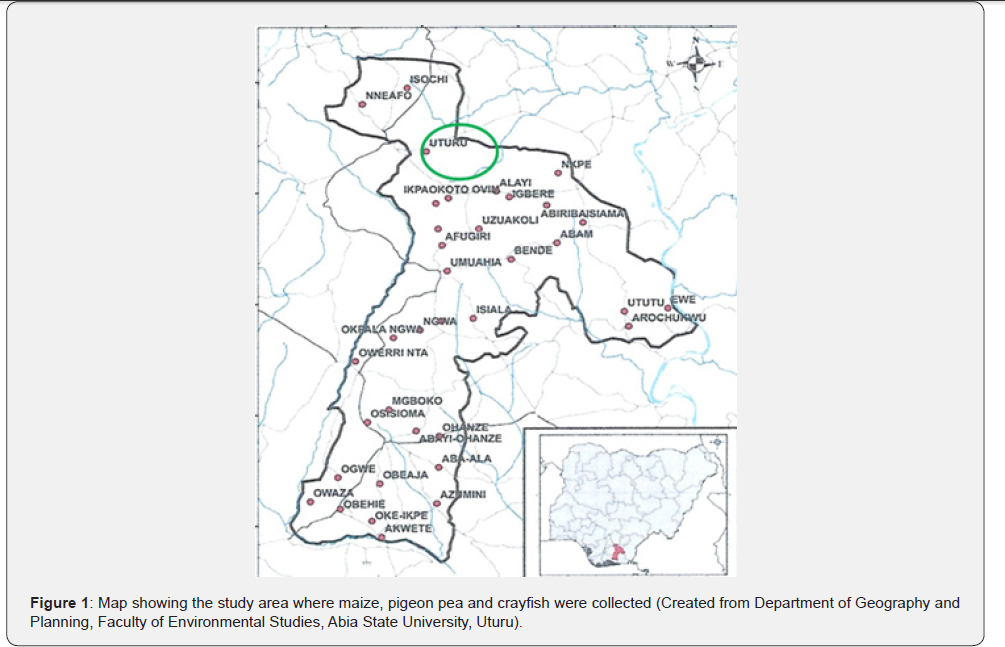
Maize (Zea mays L.) and pigeon pea (Cajanus cajan L.) seeds were obtained fresh from a local market in Uturu, Abia State, Nigeria. Dried crayfish (Astacus spp.) was sourced from the same market to maintain consistency in the materials used. All the samples were taken to the Department of Crop Science and Animal Science, Faculty of Agriculture, Abia State University, Uturu, where they were properly identified and verified to ensure their authenticity and suitability before further processing (Figure 1).
Sample Preparation of fermented, malted maize, pigeon pea and crayfish blends
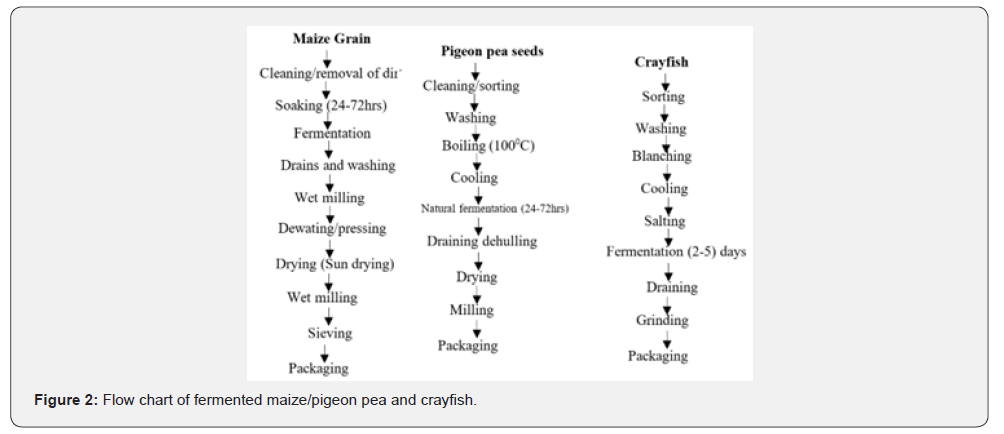
The maize grains were first thoroughly cleaned to remove dirts, stones, broken kernels, and other foreign materials. The cleaned grains were soaked in clean water for 12 hours to soften them and reduce anti-nutritional factors such as phytates. After soaking, the grains were allowed to germinate for 48 hours at room temperature to enhance protein digestibility and further reduce anti-nutritional compounds. The germinated maize grains were then oven dried at 60°C for 24 hours to lower the moisture content and prevent microbial growth, before being milled into fine flour using a laboratory hammer mill to ensure uniform particle size suitable for infant porridge.
Similarly, the pigeon pea seeds were cleaned to remove dirt, stones, and damaged seeds, and then soaked in clean water for 12 hours to soften. The soaked seeds were boiled for 20 minutes. After boiling, the seeds were oven-dried at 60°C until the moisture content was below 10%, and subsequently milled into fine flour for uniform incorporation into the composite blend. The crayfish (Astacus spp.) were carefully cleaned to remove sand, dirt, and impurities. The crayfish were oven-dried at 60°C for 24 hours to prevent microbial contamination, after which they were milled into powdered form to ensure even distribution in the maize– pigeon pea flour blend (Figures 2 & 3), (Tables 1 & 2).


Note: A= 60:30:10 fermented maize, fermented pigeon pea and fermented crayfish, B= 70:20:10 fermented maize, fermented pigeon pea and fermented crayfish, C= 80:10:10 fermented maize, fermented pigeon pea and fermented crayfish, D = 90 :5:5, E= fermented maize (control).
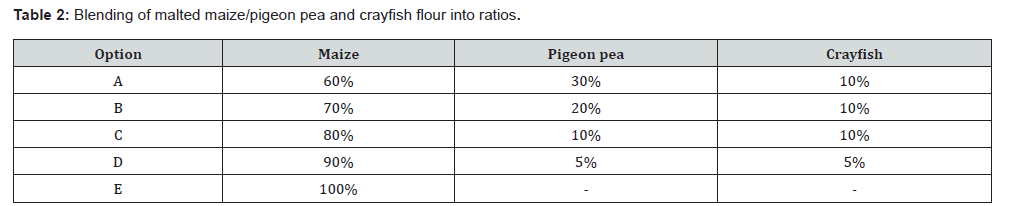
Note: A= 60:30:10 Malted maize, malted pigeon pea and crayfish, B= 70:20:10 malted maize, malted pigeon pea and crayfish, C= 80:10:10 malted maize, malted pigeon pea and crayfish, D = 90 :5:5, E= malted maize (control)
Formulation of composite flour
The fermented and malted maize, pigeon pea, and crayfish (Astacus spp.) flours were accurately weighed and mixed to create five composite blends for evaluation. The formulations were shown in the Figures 2 & 3 above. Option E served as the control consisting entirely of maize flour, while Options A–D contained varying ratios of pigeon pea and crayfish to evaluate their effects on nutritional and functional properties.” All ingredients in each blend were thoroughly mixed to ensure uniformity, and the resulting flours were stored in airtight polyethylene bags at room temperature until further analysis.
Nutritional Quality Evaluation
Proximate analysis
Determination of moisture content: The moisture content of the products and flour samples was determined according to the standard method of AOAC, [10]. The crucibles were washed thoroughly and dried in the oven at 100 0C for 1 hour. The hot dried crucibles were cooled in the desiccator. The weight (W1) was taken when cooled. Two grams of the sample was weighed into the crucible and the total weight (W2) was taken before and during drying at 100 0C until a constant weight (W3) was obtained.
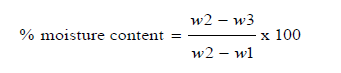
Where W1= Initial weight of empty crucible.
W2= Weight of crucible + weight of sample before
drying.
W3= Weight of dish + weight of sample after drying.
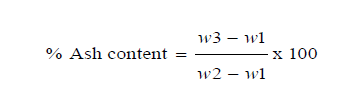
Determination of ash content: The ash content of the products and flour samples was determined according to the standard methods of AOAC [10]. The crucibles were thoroughly washed and dried in an oven at 100 0C for 1hour. The hot dried crucibles were cooled in the desiccator. The weight W1 was noted. Two grams of the sample was weighed into the crucible and the total weight (W2) was noted. The sample was charred on a Bunsen flame inside a fume cupboard. The sample was transferred into a preheated muffle furnace 5500C for 2 hours until a white or light grey ash was obtained. It was cooled in a desiccator and weight (W3) was recorded.
The ash content was calculated as follows:
Where W1= Initial weight of empty crucible.
W2= Weight of crucible + weight of sample before
ashing.
W3= Weight of dish + weight of sample after ashing.
Determination crude protein: The protein content of the samples was determined according to the standard method of AOAC [10] using kjeldahl method.
Digestion of Sample: The sample (2g) was weighed into kjeldahl flask. Anhydrous sodium sulphate (5g) or 4 tablets of kjeldahl catalyst was also added. Addition of kjeldahl tablet followed up. Addition of twenty-five milliliter (25ml) of concentrated tetraoxosulphate (vi) acid (H2 SO4) was done with few boiling chips. The flask with the content was heated in the fume chamber until solution becomes clear. The solution was cooled to room temperature after which it was transferred into a 250 ml volumetric flask and made up to level with distilled water.
Distillation: The distillation unit was cleaned and the apparatus set up. A 100 ml conical flask (receiving flask) containing 5l of 2 % boric acid was placed under the condenser, with the addition of drops of methyl red indicator. The digest (5 ml) was pipetted into the apparatus through a small funnel, washed down with distilled water, followed by the addition of 5 ml of 60 % NaOH (sodium hydroxide) solution. The digestion flask was heated until 100 ml of distillate (ammonium sulphate) was collected in the receiving flask. The solution from the receiving flask was titrated with 0.049 M H2 SO4 to a pink colour. The same procedure was carried out on the flask.
Calculation

Where Vs = volume (ml) of Acid required to titrate the sample
Vb= volume (ml) of acid required to titrate the blank
N acid = Normality of acid (0.1 N)
W= Weight of sample in gram
% Crude protein = % N x 6.25 (conversation factor)
Fat determination
The fat content of the sample was determined using the standard method of AOAC [10]. A soxhlet extractor with a reflux condenser and a 500 ml round bottom flask was fixed. Two gram (2 g) of the sample was weighed into a labeled thimble. Petroleum ether (300 ml) was filled into the round bottom flask. The extraction thimble was sealed with cotton wool. The soxhlet apparatus after assembling was allowed to reflux for about 6 hours. The thimble was removed with care. The petroleum ether that was collected in the top was drained into a container for reuse. When the flask was free of ether, it was removed and dried at 105 0C for 1hour in an oven. It was cooled in a desiccator and then weighed.
Calculation:

Crude fibre determination
The crude fibre content of the sample was determined using the standard method of AOAC [10]. Petroleum ether was used to defat 2 g of the sample. This was put in boiled 200ml of 1.25 % H2 SO4 and boiled for 30 minutes. The solution was filtered through linen or muslin cloth on a fluted funnel. It was washed with b5oiling water until it is free of acid. The residue was returned into 200 ml boiling NaOH and allowed to boil for 30 minutes. It was washed with 1 % HCl and then with boiling water, to free it of acid. The final residue was drained and then transferred to silica ash crucible (porcelain crucible) and dried in the oven at 100 0C to a constant weight. The sample was cooled and incinerated or ashed in a muffle furnace at 600 0C for 5 hours, cooled in a desiccator and weighed.
Calculation:

Determination of Carbohydrate
The carbohydrate content of the sample was determined by
difference according to AOAC [10] as follows:
% Carbohydrate= 100 - (% moisture + % ash + % protein + %
fat + %crude fibre).
Determination of Minerals
The mineral content of the test samples was determined by the dry ash extraction method as described by James, et al. [11]. Two grams of the sample was burnt to ashes in a muffle furnace (Ash determination). The resulting ash obtained was dissolved in 10mls of dilute 2m HCL solution and then made up to volume with distilled water. It was filtered and filtrate was used in specific analysis for different mineral element.
Determination of calcium and magnesium
Calcium and magnesium content of the test samples was determined by using versanate EDTA titremetric method described by James [11]. About 20mls of the extract was dispensed into a conical flask. Pinches of the masking agent sodium cyanide, potassium ferrous, cyanide was added followed by 0ml of ammonium indicator solution to bring the pH to 10.0 a point of which both calcium and magnesium forms complexes with EDTA. The mixture was shaken very well and then titrated against 0.02N EDTA solution using Erichrome Blade Tasan indicator. The color change was from deep red to a permanent blue end point. A blank reagent was also treated. The values obtained represent both calcium and magnesium in the test sample. A repeat titration was carried out to determine calcium alone in the test samples where by 10% NaoH was used in place of ammonia buffer and sole chrome dark blue indicator in place of Erichrome blade T. from the value obtained, the calcium and magnesium were calculated as experiment was also repeated two more times. Calcium and magnesium content were calculated separately using the formula.

Where:
W = Weight of sample analyzed
EW = Equivalent weight
Vf = Total volume of extract
N = Normality of EDTA= O.O2N
Va = Volume of extract titrated
T = Titre valueless blank.
Determination of phosphorus
Phosphorus in the sample was determined by the molydo vanadate colorimetric method described by James, [11]. One gram (1g) of the extract from the sample was dispensed into a test tube, the same volume of standard phosphorus solution as well as water was added into other test tube to serve as standard and mixed with equal volume of the Vandate molydo color reagent. They were left to stand for 15 minutes and measured in jenway electronic spectrophotometer at a wave length 0f 420nm with the reagent blank at zero. The phosphorus content of the sample was given by the formula:

Where:
W = Weight of sample ashed.
AS = Absorbance of test sample.
VT = Total volume of extract.
VA = Volume of extract analyzed.
C = Concentration of standard phosphorus solution.
Determination of potassium and sodium
Flame photometry was used to determine the concentrations of potassium and sodium as described by James, [11]. The instrument (photometer) was set up according to the manufacture’s instruction. The equipment was switched on and allowed to stay for about 10mins. The gas and air inlets were opened and the start knob was turned on. The equipment being self-igniting. After ignition, the flame was adjusted to a nonluminous (blue) flame. Meanwhile, standard potassium solutions were prepared separately and each was diluted to concentration of 2,4,6,8 and 10ppm. The appropriate fitter was selected i.e. for potassium. The highest concentrated standard solution (10ppm) was aspirated and its emission intensity adjusted to 100 units. Thereafter, starting with the least concentrated (2ppm), each standard solution was aspirated and caused to spray over the nonluminous butane gas flame. The emission intensity read directly on the instrument and the readings were recorded. Then the sample digests were also aspirated and their readings recorded. The emission intensities of the standards were plotted against their concentrations to obtain a standard curve, the using the curve to extrapolate the quantity of each potassium ions in the sample. The experiment was repeated two more times to get a mean concentration. The concentration of the test minerals was calculated as follows.

Where:
W = Weight of sample used
X = Concentrations (in ppm) from curve
VF = Total volume of extract
Va = Volume of the extract (digest) flamed
D = Dilution factor where applicable.
Determination of vitamin content
Determination of thiamine (Vitamin B1): Thiamine was determined spectrophotometrically [12]. 5g of the sample was homogenized in normal ethanolic sodium hydroxide solution. After that, the homogenate was filtered through Whatman No.42 filter paper. An aliquote 10mls of the filtrate was treated with equal volume of 0.1N potassium dichromate solution. Meanwhile, 10mls of standard thiamine solution was also treated with the dichromate solution as well with a reagent blank at zero. The absorbance of the sample and the standard were read in a spectrophotometer at a wavelength of 360nm. The formula below was used.

Where
W = Weight of sample analyzed
Au = Absorbance of sample
As = Absorbance of standard
C = Concentration of standard (mg/ml)
Vf = Total volume of extract
Va = Volume of extract analysed
Determination of the riboflavin (Vitamin B2): This vitamin was determined colorimetrically using the method described by Okwu & Ndu [12]. Five granules (5g) of each sample was extracted with 50mls of 50% ethanol and shaken for 1 hour. It was filtered through Whatman No. 42 filter paper. A portion of the extract (10mls) was mixed with equal volume of 5%KMnO4 solution, followed by 10mls of 30% hydrogen peroxide solution. It was allowed to stand in a hot water bath for 30minutes. Then 2mls of 40% sodium sulphate was added to it and was made up to 50ml with distilled water. Its absorbance was measured in a spectrophotometer at a wavelength of 520nm. A standard riboflavin solution was prepared and treated the same way as the sample. The formula below was used for its calculation.

Where
W = Weight of sample analyzed
Au = Absorbance of sample
As = Absorbance of standard
C = Concentration of standard (mg/ml)
Vf = Total volume of extract
Va = Volume of extract analyzed
Determination of Niacin (Vitamin B3): Niacin was determined by the Skaler colormetric method [12]. A measured weight of the sample (5g) was mixed with 30mls of normal H2 SO4 solution and shaken for 30 minutes. It was filtered to obtain the extract. The extract was made alkaline by adding 3 drops of conc. NH4OH. An aliquote of the extract (10mls) was treated with 5mls of normal potassium ferrocyanide solution, followed by 5mls of 0.02NH2 SO4 solution. It was allowed to stand for 5mins at room temperature before the absorbance was read at 470 mm. The niacin content was calculated using the formula below
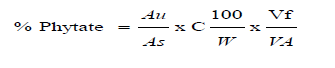
Where:
W= weight of sample analysed
Au= Absorbance of sample
As= Absorbance of standard and niacin solution
C= concentration (in mg/ml) of standard niacin solution
Vf= total volume of filtrate (extract)
Va= volume of extract analysed.
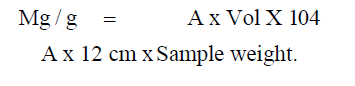
Determination of vitamin A: The vitamin A content in each sample was determined using the method by AOAC, [13] about 5 grams of the test sample was first homogenized using acetone solution with the aid of pestle and mortar, the solution was filtered after crushing, the filtrate was then extracted with petroleum spirit using separating funnel, two layers of both aqueous and solvent layer were obtained, the upper layer which contains vitamin A was washed very well with diluted water in order to remove residual water, it was later poured out to the volumetric flask through the tap of the separating funnel and made up to mark, the absorbance of the solution was read using a spectrophotometer at wavelength of 450 nanometer (mm)
'It was calculated as
Determination of Anti-Nutrients
Determination of Tannins: This was determined by Folin Denis colometric method. Five grams (5g) of the flour sample was put inside a volumetric flask and 50ml of distilled water was dispensed inside the volumetric flask. The mixture was shaken for 30 minutes at room temperature and filtered to obtain the extract. A standard tannic acid solution was prepared, 2ml of the standard solution and equal volume of distilled water were dispersed into a separate 50ml volumetric flasks to serve as a standard and reagent blank respectively. Then 2ml of each of the sample extracts was put in their respective labeled flask. The content of each flask was mixed with 35ml distilled water and 1ml of the Folin Denis reagent was added to each. This was followed by 2.5ml of saturated N2 CO3 solution. Therefore, each flask was diluted to the 50ml mark with distilled water and incubated for 90minutes at room temperature. Their absorbance was measured at 760nm in a spectrophotometer with the reagent blank at zero.
The tannin content was calculated as shown below:

Where, W = weight of sample
au = absorbance of test sample
as = absorbance of standard tanning solution
C = Concentration of standard tannin Solution
Vt = Total volume of extract
Va = Volume of extract analysed
Determination of oxalate: The titration method as described by Day and Underwood [14] was followed. 1g of sample was weighed into 100 ml conical flask. 75 ml 3 MH2 SO4 was added and stirred for 1 h with a magnetic stirrer. This was filtered using a Whatman No 1 filter paper. 25 ml of the filtrate was then taken and titrated while hot against 0.05 M KMnO4 solution until a faint pink colour persisted for at least 30 s. The oxalate content was then calculated by taking 1ml of 0.05 m KMnO4 as equivalent to 0.63 mg oxalate
Phytate Determination: This was carried out according to AOAC [15]. Two (2.0g) of the sample was weighed into a test tube. About 10ml of distilled water was added. The sample was extracted using 2ml of 0.2M HCl (aq). About 0.5ml of the extract was pipetted into a test tube fitted with glass stopper. Then, 1ml of the solution was added in the tube and covered with stopper. The tube was heated in a boiling water bath for 30 min and the tube was covered very well with the stopper for the first 15 min. Then the test tube containing the solution was cooled in ice water for 15min and allowed to adjust to room temperature. Then the content of the test tube was mixed very well and centrifuged for 30 min. About 1ml of the supernatant was transferred into another test tube and about 1.5ml of the solution was added. The absorbance at 420nm against distilled water was measured.

Au = absorbance of test sample
As = Absorbance of standard solution
C = concentration of standard solution
W = Weight of sample used
Vf = Total volume of extract
Va = Volume of extract
Determination of functional properties
The functional properties of the maize, pigeon pea, crayfish (Astacus spp.) composite flours were evaluated to determine their suitability for preparation of weaning porridge.
Bulk density: Bulk density was determined by filling a preweighed 10 mL graduated cylinder with a measured amount of each flour sample. The cylinder was gently tapped until no further change in the sample level was observed. Bulk density was calculated as the weight of the sample divided by its final volume (g/mL) and recorded
Swelling index: The swelling index was determined by placing 1 g of each flour sample into a 10 mL graduated cylinder and noting the initial dry volume. 5 mL of distilled water was added, and the sample was allowed to stand undisturbed for 1 hour. After standing, the volume of the hydrated sample and the supernatant was recorded.
Water absorption capacity (WAC): One gram of each flour sample was placed in a graduated centrifuge tube, and 10 mL of distilled water was added. The mixture was thoroughly mixed using a high-speed mixer for 30 seconds and allowed to stand at room temperature for 30 minutes. The sample was centrifuged at 3500 revolutions per minute for 30 minutes, and the water retained by the sample was measured
Oil absorption capacity (OAC): Oil absorption capacity was determined similarly by mixing 1 g of flour sample with 10 mL of vegetable oil in a graduated centrifuge tube. The mixture was blended using a high-speed mixer for 30 seconds, left undisturbed for 30 minutes, and centrifuged at 3500 revolutions per minute for 30 minutes. The volume of oil absorbed by the sample was recorded and expressed as a percentage.
Determination of amino acid
The amino acid profile of the samples was determined using the method described by Benitez [16] with slight modifications. The sample was dried to constant weight, defatted, hydrolyzed, evaporated using a rotary evaporator, and analyzed using an Applied Biosystems PTH Amino Acid Analyzer.
Defatting of sample
The sample was defatted using a chloroform–methanol mixture (2:1, v/v). Four grams (4 g) of the sample were weighed into an extraction thimble and extracted for 15 hours using a Soxhlet extraction apparatus according to AOAC [10].
Hydrolysis of the sample
A known weight of the defatted sample was weighed into a glass ampoule, and 7 mL of 6 N hydrochloric acid (HCl) was added. Oxygen was expelled by flushing nitrogen gas into the ampoule to prevent oxidation of sensitive amino acids such as methionine and cystine. The ampoule was sealed using a Bunsen burner flame and placed in an oven at 105°C ± 5°C for 22 hours. After hydrolysis, the ampoule was allowed to cool and then carefully broken open at the tip. The contents were filtered to remove humins. It should be noted that tryptophan is destroyed during hydrolysis with 6 N HCl. The filtrate was evaporated to dryness using a rotary evaporator. The residue was dissolved in 5 mL of acetate buffer (pH 2.0) and stored in plastic specimen bottles in a freezer until analysis.
Loading of Hydrolysate into Analyzer
An aliquot of 60 μL of the hydrolysate was loaded into the cartridge of the Applied Biosystems PTH Amino Acid Analyzer. The analyzer separates and quantifies free acidic, neutral, and basic amino acids present in the sample using ion-exchange chromatography.
Calculation of amino acid values
The chromatogram obtained from the analyzer was processed using an integrator attached to the system. The peak area for each amino acid is directly proportional to its concentration, and results were expressed in mg/100 g of sample.
Sensory Evaluation
The sensory attributes of porridges prepared from maize, pigeon pea, crayfish (Astacus spp.) composite flours were evaluated for appearance, aroma, taste, texture, and overall acceptability. Porridges were prepared by mixing 50 g of each flour with 250 mL of boiled water, stirred for 5 min, and cooled to 40–45°C. A semi-trained panel of 10–15 members assessed the samples using a 9-point hedonic scale of Iweh, (2006) (1 = dislike extremely, 9 = like extremely). Samples were coded to prevent bias, and panelists rinsed their mouths between evaluations. Mean scores were calculated and analyzed using one-way ANOVA at p < 0.05.
Statistical Analysis
All analyses were conducted in triplicate, and results were expressed as mean ± standard deviation (SD). Data obtained from proximate composition, mineral content, functional properties, and sensory evaluation were subjected to one-way analysis of variance (ANOVA) to determine significant differences among the composite flour blends. Where significant differences were observed, Tukey’s post-hoc test was used to separate means at a significance level of p < 0.05. Statistical analyses were performed using SPSS version 25.0
Results
Proximate Composition of fermented and malted complementary foods based on Maize, pigeon pea and crayfish blends. The proximate composition of the fermented and malted maize, pigeon pea, and crayfish (Astacus spp.) composite flours (Tables 3 & 4) shows how both the formulation ratios and processing methods affect the nutritional quality of the weaning foods. The differences observed among the blends can be linked to the individual contributions of maize, pigeon pea, and crayfish, as well as the impact of fermentation and malting on improving nutrient availability (Tables 3-16).
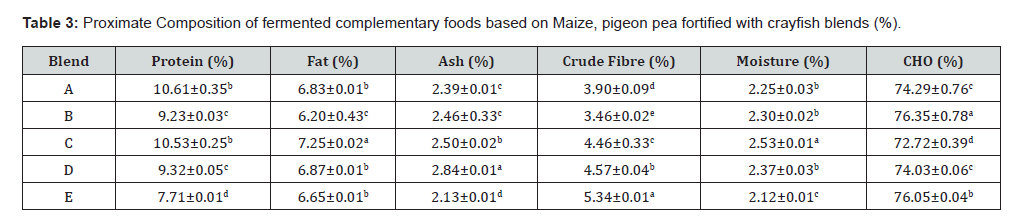
Note: Values with different superscripts within the same column are significantly different (P<0.05).A= 60:30:10 fermented maize, fermented pigeon pea and fermented crayfish, B= 70:20:10 fermented maize, fermented pigeon pea and fermented crayfish, C= 80:10:10 fermented maize, fermented pigeon pea and fermented crayfish, D = 90 :5:5, E= fermented maize (control)
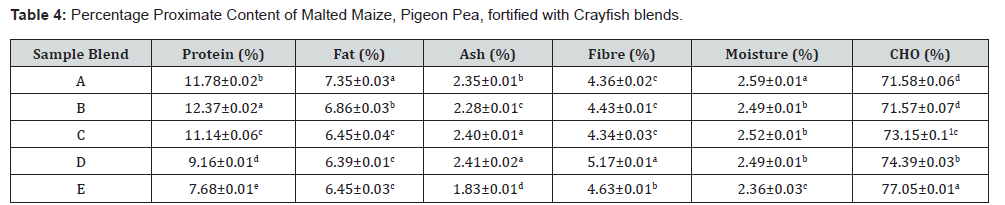
Note: Values with different superscripts within the same column are significantly different (P<0.05). A= 60:30:10 Malted maize, malted pigeon pea and crayfish, B= 70:20:10 malted maize, malted pigeon pea and crayfish, C= 80:10:10 malted maize, malted pigeon pea and crayfish, D = 90 :5:5, E= malted maize (control)
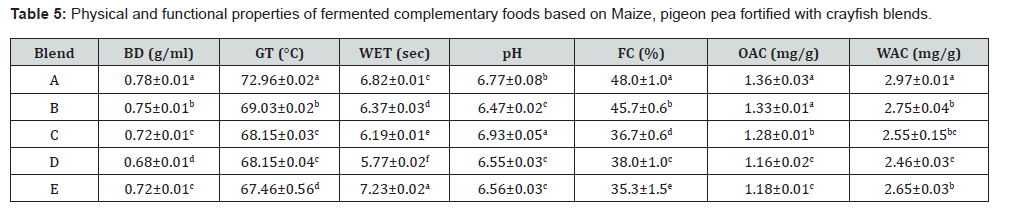
Note: Values with different superscripts within the same column are significantly different (P<0.05).A= 60:30:10 fermented maize, fermented pigeon pea and fermented crayfish, B= 70:20:10 fermented maize, fermented pigeon pea and fermented crayfish, C= 80:10:10 fermented maize, fermented pigeon pea and fermented crayfish, D = 90 :5:5, E= fermented maize (control); Bulk Density (BD), Gelation Temperature (GT), Wettability (WET), Hydrogen ion concentration (pH), Foaming Capacity (FC), Oil Absorption Capacity (OAC) and Water Absorption Capacity (WAC)

Note: Values with different superscripts within the same column are significantly different (P<0.05). A= 60:30:10 Malted maize, malted pigeon pea and crayfish, B= 70:20:10 malted maize, malted pigeon pea and crayfish, C= 80:10:10 malted maize, malted pigeon pea and crayfish, D = 90 :5:5, E= malted maize (control) Bulk Density (BD), Gelation Temperature (GT), Wettability (WET), Hydrogen ion concentration (pH), Foaming Capacity (FC), Oil Absorption Capacity (OAC) and Water Absorption Capacity (WAC)
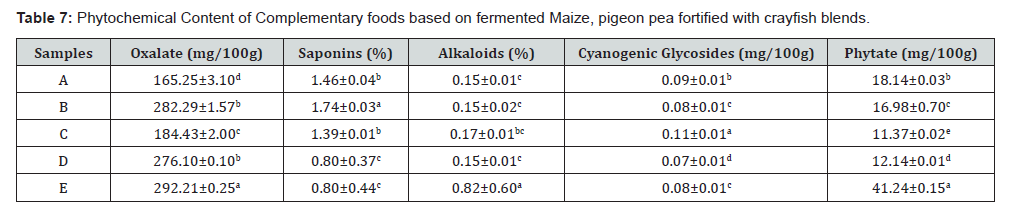
Note: Values with different superscripts within the same column are significantly different (P<0.05).A= 60:30:10 fermented maize, fermented pigeon pea and fermented crayfish, B= 70:20:10 fermented maize, fermented pigeon pea and fermented crayfish, C= 80:10:10 fermented maize, fermented pigeon pea and fermented crayfish, D = 90 :5:5, E= fermented maize(control)
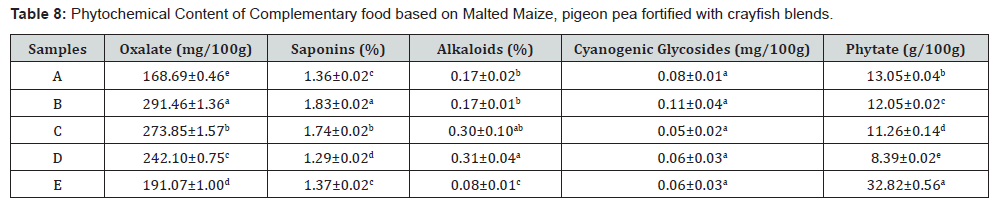
Note: Values with different superscripts within the same column are significantly different (P<0.05).A= 60:30:10 Malted maize, malted pigeon pea and crayfish, B= 70:20:10 malted maize, malted pigeon pea and crayfish, C= 80:10:10 malted maize, malted pigeon pea and crayfish, D = 90 :5:5, E= malted maize (control)
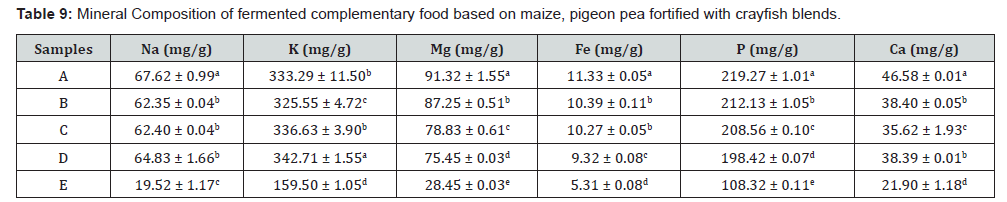
Note: Values with different superscripts within the same column are significantly different (P<0.05), A= 60:30:10 fermented maize, fermented pigeon pea and fermented crayfish, B= 70:20:10 fermented maize, fermented pigeon pea and fermented crayfish, C= 80:10:10 fermented maize, fermented pigeon pea and fermented crayfish, D = 90 :5:5, E= fermented maize (control). Ca= Calcium, Na= Sodium, K = Iron, Mg= magnesium, P= phosphorus, Fe= Iron

Note: Values with different superscripts within the same column are significantly different (P<0.05).A= 60:30:10 Malted maize, malted pigeon pea and crayfish, B= 70:20:10 malted maize, malted pigeon pea and crayfish, C= 80:10:10 malted maize, malted pigeon pea and crayfish, D = 90:5:5, E= malted maize (control). Ca= Calcium, Na= Sodium, K = Iron, Mg= magnesium, P= phosphorus, Fe= Iron

Note: Values with different superscripts within the same column are significantly different (P<0.05).A= 60:30:10 fermented maize, fermented pigeon pea and fermented crayfish, B= 70:20:10 fermented maize, fermented pigeon pea and fermented crayfish, C= 80:10:10 fermented maize, fermented pigeon pea and fermented crayfish, D = 90 :5:5, E= fermented maize (control), Vit = Vitamin
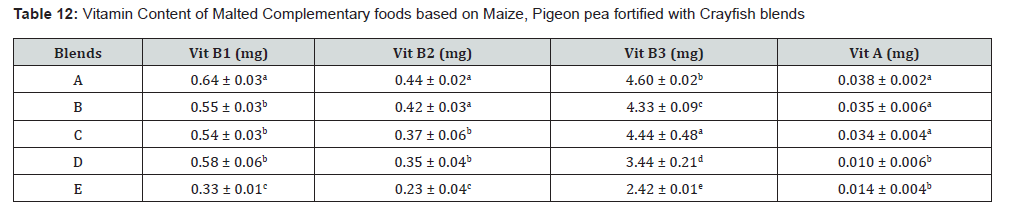
Note: Values with different superscripts within the same column are significantly different (P<0.05).A= 60:30:10 Malted maize, malted pigeon pea and crayfish, B= 70:20:10 malted maize, malted pigeon pea and crayfish, C= 80:10:10 malted maize, malted pigeon pea and crayfish, D = 90:5:5, E= malted maize (control). Vit = Vitamin
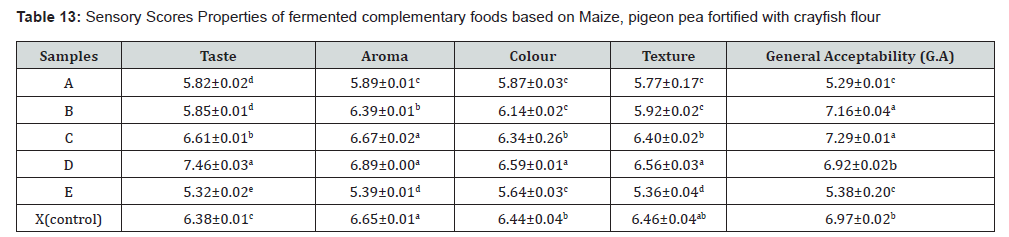
Note: Values with different superscripts within the same column are significantly different (P<0.05). A= 60:30:10 fermented maize, fermented pigeon pea and fermented crayfish, B= 70:20:10 fermented maize, fermented pigeon pea and fermented crayfish, C= 80:10:10 fermented maize, fermented pigeon pea and fermented crayfish, D = 90 :5:5, E= fermented maize (control), X = commercial weaning food available in the market.

Note: Values with different superscripts within the same column are significantly different (P<0.05).A= 60:30:10 Malted maize, malted pigeon pea and crayfish, B= 70:20:10 malted maize, malted pigeon pea and crayfish, C= 80:10:10 malted maize, malted pigeon pea and crayfish, D = 90:5:5, E= malted maize (control)
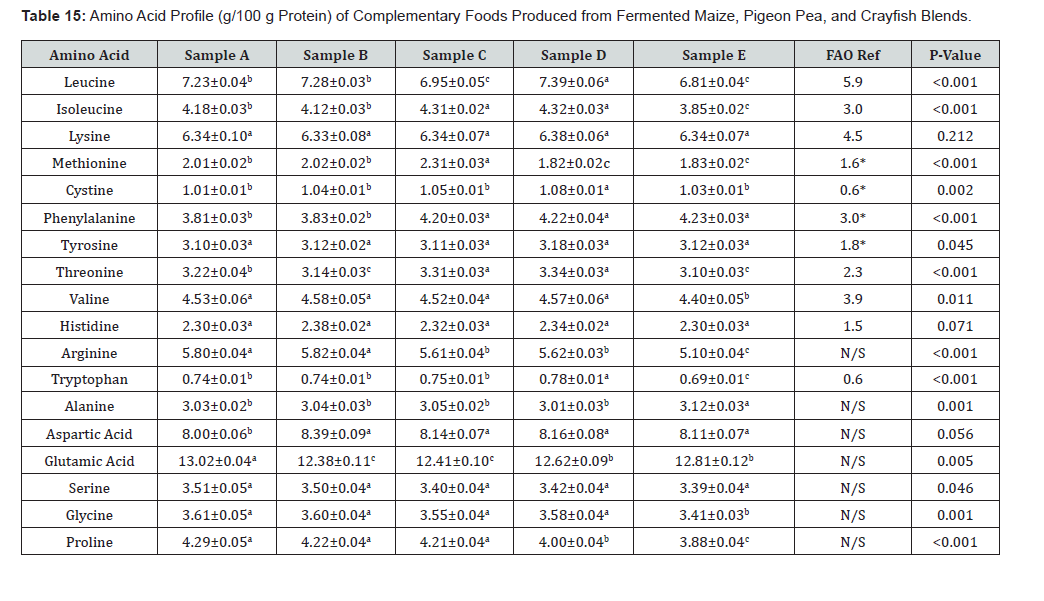
Values are Mean ± Standard Deviation (n=3). Means followed by different superscript letters in the same row are significantly different (P<0.05).
Values are Mean ± Standard Deviation (n=3). Means followed by different superscript letters in the same row are significantly different (P<0.05).
t16
The protein content ranged from 7.68% to 12.37%, with the highest values recorded in malted blends that contained higher proportions of pigeon pea (blend B). This increase can be attributed to the protein-rich nature of both pigeon pea and crayfish. Similar findings have been reported by Oluwafemi et al. [17] and Okoronkwo, [18], who observed that maize-based complementary foods enriched with legumes and crayfish had higher protein levels than those made from maize alone. In addition, processing methods such as fermentation and malting help improve protein digestibility by reducing anti-nutritional factors like phytates and tannins, thereby making the protein more available for infant utilization [19].
Fat content ranged between 6.20% and 7.35%, with higher values seen in blends containing more crayfish. This is expected since crayfish contributes essential lipids that increase the energy density of the food. These findings agree with Abdullahi et al. [20], who reported that adding seafood to cereal-based weaning foods enhances their energy value and supplies important fatty acids needed for infant growth and brain development. Ash content, which reflects the mineral composition, ranged from 1.83% to 2.84%. The higher ash values observed in blends with greater crayfish inclusion suggest an increase in minerals such as calcium and phosphorus. This supports the role of crayfish as a good mineral fortifier. Similar trends were noted by Akinola et al. [21], who reported improved mineral content in maize-based complementary foods enriched with legumes and seafood. Crude fiber values ranged from 3.46% to 5.34%, with higher levels found in blends containing more maize and pigeon pea. The fiber content falls within acceptable limits for infant foods and can support digestion and bowel movement without reducing the overall energy value. Onwuka [22] also noted that moderate fiber levels in complementary foods are beneficial for digestive health while still meeting energy needs. Moisture content ranged from 2.12% to 2.59%, indicating that the samples were properly dried. Low moisture levels are important for preventing microbial growth and ensuring longer shelf life. This observation is consistent with recommendations for storing cereal-based complementary foods [23].
Carbohydrate content ranged from 71.57% to 77.05% and tended to decrease slightly as protein and fat levels increased. This is expected, as higher protein and fat contributions reduce the proportion of carbohydrates in the overall composition. Oluwafemi et al. [17] reported a similar trend in maize-legumecrayfish blends, where carbohydrate levels decreased but overall energy content remained adequate for infant feeding. Likewise, Okoronkwo et al. [24] reported carbohydrate values ranging from 64.20% to 68.20% in fermented maize and African yam bean blends. Overall, the results show that fortifying maize with pigeon pea and crayfish improves the protein, fat, and mineral content of the composite flours, while still maintaining sufficient carbohydrate levels and energy value suitable for infant feeding.
Physical and functional properties of fermented and malted complementary food based on Maize, pigeon pea fortified with crayfish blends. The physical and functional properties of the fermented and malted maize, pigeon pea, and crayfish (Astacus spp.) composite flours are presented in Tables 5 & 6. These properties are important when considering their use for weaning porridges, as they directly influence texture, thickness, energy content, and how acceptable the food will be to infants. Bulk density values ranged from 0.66 to 0.78 g/ml across the different blends. Higher values were observed in samples with more maize (blend A), suggesting a more compact flour structure, which may increase the amount of energy per unit volume. On the other hand, blends with higher pigeon pea content showed lower bulk density, which could make the porridge lighter and easier for infants to consume. Onwuka [22] also noted that lower bulk density is desirable for improving the consistency and intake of weaning foods. The gelation temperature ranged from 63.18°C to 72.96°C, with malted samples generally showing slightly lower values. This reduction may be due to the breakdown of starch during malting, which can lower viscosity and improve digestibility. Similar observations have been reported by Adebowale et al. [25] in cereal-legume blends. Wettability values ranged from 5.77 to 7.23 seconds in fermented samples and from 6.38 to 6.64 seconds in malted samples. Higher wettability suggests that the flour disperses more easily in water, leading to smoother porridge with fewer lumps. This could be linked to changes in starch structure during processing. Akinola et al. [21] reported similar improvements in dispersibility when legumes and seafood were included in complementary foods, making preparation easier and enhancing acceptability. The pH values ranged between 6.32 and 6.93, indicating that the flours were slightly acidic, particularly in fermented samples. This mild acidity is likely due to the formation of organic acids during fermentation and may help improve shelf stability and reduce microbial growth [19]. The pH range observed is also considered safe for infant consumption. Foaming capacity ranged from 35.3% to 53.33% and tended to decrease as the protein content from pigeon pea and crayfish increased. Lower foaming capacity is actually beneficial in weaning foods, as excessive foam can reduce the density of the porridge and lower its energy value. Onwuka [22] also emphasized that moderate foaming is preferable for maintaining good porridge quality.
Oil absorption capacity (OAC) ranged from 1.02 to 1.36 mg/g in fermented samples and 1.15 to 1.34 mg/g in malted samples. Higher OAC values indicate a better ability of the flour to retain lipids, which can improve both the energy content and the mouthfeel of the porridge. The presence of crayfish likely contributed to this effect due to its fat content, in agreement with findings by Abdullahi et al. [20]. Water absorption capacity (WAC) ranged from 2.14 to 3.12 mg/g and reflects how well the flour can absorb water and swell during preparation. This property plays a key role in determining porridge thickness. Slightly lower WAC observed in some malted blends may be due to partial starch breakdown, which can make the porridge less thick and easier for infants to swallow and digest. Similar effects have been reported by Adebowale et al. [25] in malted cereal-legume formulations.
Phytochemical/ Anti-nutritional Content of Complementary foods based on fermented and malted Maize, pigeon pea fortified with crayfish blends. The phytochemical composition of the maize, pigeon pea fortified with crayfish (Astacus spp.) complementary flours, including both fermented and malted samples, is shown in Tables 7 & 8. These components are important because some of them, often referred to as anti-nutritional factors, can affect how well nutrients are absorbed in the body. Therefore, assessing their levels is necessary to ensure the safety and nutritional quality of weaning foods.
Oxalate content ranged from 165.25 to 292.21 mg/100 g in the fermented blends and from 168.69 to 291.46 mg/100 g in the malted blends. Higher values were generally found in samples with more pigeon pea. Although oxalates can interfere with calcium absorption, the levels observed here are within acceptable limits, especially since processing methods like fermentation help reduce their effect and improve mineral availability [26].
Saponin levels ranged between 0.80% and 1.83%, with slightly higher amounts in blends that contained more pigeon pea. While saponins can reduce protein digestibility by forming complexes with proteins, the amounts detected in this study are low and unlikely to pose any health concern for infants. Oke et al. [27] similarly reported that fermentation helps lower saponin content in cereal-legume foods. Alkaloid content ranged from 0.08% to 0.82%, with only minor variations across the samples. At these low levels, alkaloids are not considered harmful, although they may contribute slightly to taste, particularly bitterness. Adepoju et al. [28] reported comparable findings and noted that processing methods help reduce any negative sensory effects while maintaining nutritional quality.
Cyanogenic glycosides were present in very small amounts, ranging from 0.05 to 0.11 mg/100 g in all samples. These low levels suggest that fermentation and malting were effective in reducing potentially harmful compounds. Egbebi & Sanni [29] also observed that such processing methods significantly lower cyanogenic substances in cereal and legume-based foods, making them safe for consumption. Phytate content ranged from 8.39 to 41.24 mg/100 g, with higher values mostly seen in blends with little or no fortification. Since phytates can bind essential minerals and reduce their absorption, lower levels are desirable. The results suggest that fermentation and malting played a role in reducing phytate content, thereby improving mineral availability. This agrees with Onwuka et al. [30], who reported reduced phytate levels in processed maize-legume blends used for complementary feeding.
Mineral Composition of fermented and malted complementary food based on maize, pigeon pea fortified with crayfish blends. The mineral composition of the maize, pigeon pea, and crayfish (Astacus spp.) complementary flours, including both fermented and malted samples, is presented in Tables 7 & 8. Minerals such as sodium (Na), potassium (K), magnesium (Mg), iron (Fe), phosphorus (P), and calcium (Ca) play important roles in infant growth, bone formation, and normal body functions.
Sodium values ranged from 19.52 to 83.04 mg/g, while potassium ranged from 159.50 to 431.73 mg/g. Higher levels of these minerals were mostly observed in blends with greater crayfish content (sample A). This is expected since animal-based ingredients are good sources of essential minerals. Sodium and potassium are especially important for maintaining fluid balance and supporting proper nerve and muscle function in infants. Similar findings were reported by Adebayo et al. [31], who noted increased levels of these minerals in seafood-enriched complementary foods. Magnesium content ranged from 28.45 to 91.32 mg/g in fermented samples and from 65.03 to 83.62 mg/g in malted samples. Magnesium is essential for enzyme activity, muscle function, and bone development. The slight variation observed, particularly the lower values in some malted blends, may be due to interactions with remaining anti-nutritional factors such as phytates. Olapade et al. [32] also reported that processing can influence mineral availability while improving digestibility. Iron levels ranged from 4.32 to 11.33 mg/g, with higher values recorded in blends that contained more crayfish. Iron is crucial for the formation of hemoglobin and the prevention of anemia in infants. This trend is in line with the findings of Olagunju and Adeyemo [33], who reported that adding legumes and seafood to cereal-based foods significantly improves iron content.
Phosphorus content ranged from 108.32 to 423.13 mg/g, while calcium ranged from 21.90 to 198.56 mg/g. The inclusion of crayfish clearly contributed to the higher levels of these minerals, which are important for bone development and other metabolic processes. Similar improvements in calcium and phosphorus levels have been reported by Akinyele et al. [34] in fortified complementary foods. Processing methods also played a role in mineral availability. Fermentation may have caused slight reductions in some minerals due to leaching during processing, while malting likely improved mineral accessibility by reducing anti-nutritional compounds such as phytates and oxalates. This observation agrees with Ijarotimi [35], who highlighted that these processing techniques can enhance the overall nutritional value of complementary foods by making minerals more available for absorption.
Vitamin Composition of Fermented and Malted Complementary Foods Based on Maize, Pigeon Pea fortified with Crayfish Blends. The vitamin composition of the maize, pigeon pea fortified with crayfish (Astacus spp.) complementary foods, as shown in Tables 11 & 12, reveals that both the processing methods and the ingredient combinations had a clear effect on the levels of thiamine (B1), riboflavin (B2), niacin (B3), and vitamin A. These vitamins are important for energy production, growth, and overall body function in infants. Thiamine (vitamin B1) ranged from 0.16 to 0.54 mg in the fermented samples and increased to between 0.33 and 0.64 mg in the malted blends. The higher values seen after malting suggest that germination helped release more of the vitamin, likely due to enzymatic breakdown of complex compounds. This pattern agrees with Omemu et al. [36], who reported improved vitamin availability in malted cerealbased foods.
Riboflavin (vitamin B2) showed only small differences in the fermented samples (0.06–0.09 mg), but there was a noticeable increase in the malted blends (0.23–0.44 mg). This increase may be linked to biochemical changes during sprouting, which can promote vitamin synthesis. Similar findings were reported by Ajayi et al. [37] in studies involving processed cereal-legume foods. Niacin (vitamin B3) ranged from 2.04 to 3.52 mg in fermented samples and rose to 2.42–4.60 mg in malted blends. The improvement in niacin content after malting may be due to the release of bound forms of the vitamin, making it easier for the body to absorb. This observation is in line with Balogun et al. [38], who noted that malting enhances the availability of B-vitamins in plant-based foods. Vitamin A levels were generally low in both fermented (0.01–0.03 mg) and malted (0.010–0.038 mg) samples, although there was a slight increase in the malted products. This is expected, since cereals and legumes are not naturally rich in vitamin A. Adewale et al. [39] also pointed out that cereal-based complementary foods often require additional fortification to meet the vitamin A needs of infants.
Malted blends showed better vitamin levels than the fermented ones, suggesting that malting is more effective in improving vitamin availability. The addition of pigeon pea and crayfish also helped improve the overall micronutrient quality due to their complementary nutrient contributions. This supports the findings of Okoye et al. [40], who reported that combining cereals, legumes, and animal protein sources leads to better nutritional outcomes in complementary foods. Sensory Scores (Properties) of fermented and malted complementary foods based on Maize, pigeon pea fortified with crayfish flour.
The sensory qualities of the maize, pigeon pea, and crayfish (Astacus spp.) complementary flours, including both fermented and malted samples, are presented in Tables 13 & 14. The attributes evaluated taste, aroma, color, texture, and overall acceptability are very important, as they determine how well infants and caregivers will accept the food. Taste scores ranged from 5.32 to 7.46 for the fermented blends and from 5.37 to 7.32 for the malted ones. Blend D stood out in both cases, suggesting that a good balance of maize, pigeon pea, and crayfish gives a more pleasant flavor. This supports earlier findings by Adepoju et al. [28], who reported that combining legumes and seafood can improve taste by reducing the plain or slightly bitter flavor of cereals.
Aroma scores were generally higher in blends that contained moderate amounts of pigeon pea and crayfish, with values between 6.39 and 7.32. In some cases, these were comparable to or even better than the commercial sample (sample X). The improved aroma may be linked to fermentation and malting, which are known to produce compounds that enhance flavor and smell. Similar observations were made by Oke et al. [27] in fermented complementary foods.
Color scores ranged from 5.64 to 6.78, with better ratings seen in blends that included more pigeon pea and crayfish. The slightly darker and richer appearance from crayfish likely made the food more visually appealing. Akinola et al. [21] also noted that adding seafood to cereal-legume blends can improve their appearance and acceptance. Texture scores, which relate to how smooth and easy the porridge is to swallow, ranged from 5.36 to 6.93. Once again, Blend D had the highest scores, indicating a good balance that resulted in a smooth and appropriate consistency. Onwuka [22] similarly emphasized that proper processing, especially fermentation, helps improve the texture of weaning foods. General acceptability followed a similar pattern, with the highest scores recorded for blends that had well-balanced proportions of maize, pigeon pea, and crayfish particularly blends B and D (6.92–7.59). These blends performed as well as, or even better than, the commercial product (sample X), showing that locally produced formulations can compete favorably in terms of sensory quality. This agrees with Ijarotimi & Keshinro [26], who reported improved acceptance of fortified cereal-legume foods.
Finally, the results show that combining fermentation or malting with pigeon pea and crayfish fortification produces complementary foods that are not only nutritious but also appealing in taste, smell, appearance, and texture. The good sensory ratings suggest that these formulations could be well accepted for infant feeding in local settings. Amino Acid Profile (g/100 g Protein) of complementary foods based on fermented and malted maize, pigeon pea fortified with Crayfish flour.
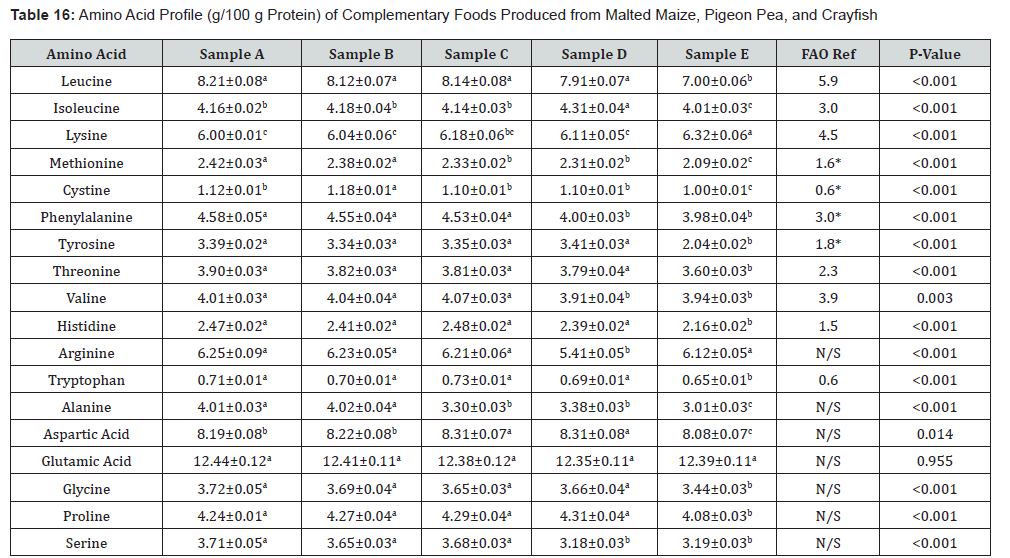
The amino acid profile (Tables 15 & 16) of the complementary food samples shows that blending of maize with pigeon pea and crayfish through fermentation and malting significantly improved protein quality. The presence of both essential and non-essential amino acids in all samples indicates that the formulations can support and improve dietary protein intake for infants. Leucine (6.81-8.21g/100g), isoleucine (3.85-4.32g/100g), and valine (3.91- 4.58g/100g) were relatively high across all samples, which is important for growth, maintenance of the body, tissue repair, and metabolic functions. Malted samples generally recorded slightly higher values than fermented ones. This agrees with Boye, et al., [41], who reported that plant proteins combined with processing methods such as germination show improved amino acid availability and nutritional quality. Similarly, FAO [42] emphasized that combining cereals with legumes and animal protein sources enhances essential amino acid balance in human diets. Lysine levels remained stable across samples (6.00-6.38g/100g), which is nutritionally significant because maize is naturally deficient in lysine. The inclusion of pigeon pea and crayfish likely contributed to this improvement which is even higher than WHO reference standard. This supports WHO [43], which highlighted that complementary foods should combine plant and animal proteins to correct limiting amino acids in cereal-based diets. Akpapunam & Darbe [44] also reported improved lysine content in cereal and legume blends used for infant feeding.
Methionine showed variation among samples (1.82-2.42g/100g) (Tables 15 & 16), with malted products recording slightly higher values (2.09-2.42g/100g), it may be due to enzymatic activity during germination that enhances protein breakdown. Similar findings were reported by Nkhata et al. [45], who observed that fermentation and germination improved amino acid availability by reducing complex protein structures. Tryptophan was slightly higher in fermented (0.69-0.78g/100g) samples compared to malted flour (0.65 -0.73g/100g), this may be attributed to microbial action during fermentation, which enhances protein hydrolysis. This observation aligns with Tamang et al. [46], who reported that fermentation improves nutritional quality and amino acid bioavailability in cereal-based foods.
Arginine (5.10 -6.25g/100g) and glutamic acid (12.35 -13.02g/100g) were among the most abundant amino acids across all samples. The high glutamic acid content is typical of plant-based proteins and contributes to both nutritional value and taste enhancement. FAO [42] noted that glutamic acid is usually the dominant amino acid in plant proteins, whereas Nkhata et al. [45] reported similar patterns in fermented and germinated cereal products. Non-essential amino acids such as alanine (3.01 – 4.02g/100g), glycine (3.41 – 3.72g/100g), serine (3.18 -3.71g/100g), proline (3.88 -4.31g/100g), and aspartic acid (8.00 -8.39g/100g) were also present in appreciable amounts. They help in the metabolic functions and protein structure. According to Aworh [47], traditional processing methods such as fermentation and malting improve overall amino acid distribution and digestibility in plant-based foods.
Fermentation and malting improved the amino acid composition of the complementary foods, malting slightly enhanced essential amino acids, while fermentation improved certain amino acids such as tryptophan. These findings are consistent with FAO [42], Boye et al. [41], and Nkhata et al. [45], who reported that bioprocessing techniques significantly improve protein quality in cereal, legume based complementary foods
Conclusion
This study showed that composite flours made from maize, pigeon pea, and crayfish, and processed through fermentation and malting, can serve as nutritious and suitable complementary foods for infants. The inclusion of pigeon pea improved the protein content, while crayfish contributed important minerals and healthy fats, helping to increase the overall energy and nutritional value of the blends. The protein quality of these blends are far higher (7.68 -12.37%) than the 10% protein limit for infants within the weaning age. Processing methods such as fermentation and malting also played an important role by reducing anti-nutritional factors like phytates, oxalates, and saponins, thereby improving nutrient availability and digestibility. In addition, the functional properties of the flours, including bulk density and their ability to absorb water and oil, suggest that they can produce smooth, energy-rich porridges that are appropriate for infant feeding. The sensory results further showed that blends with well-balanced proportions of maize, pigeon pea, and crayfish were generally well accepted and performed comparably to commercial products. The findings suggest that locally available ingredients, when properly processed and combined, can be used to produce safe, nutritious, and culturally acceptable complementary foods. However, further improvement, such as vitamin A fortification, may be necessary to fully meet all micronutrient requirements. These results highlight the potential of maize–pigeon pea–crayfish blends as affordable and effective options for improving infant nutrition, especially in low-resource settings.
Acknowledgement
We gratefully acknowledge the financial support provided by Tertiary Education Trust Fund (TETFund) for this research. The funding received was instrumental in facilitating the successful execution of this work. We sincerely appreciate TETFund’s commitment to promoting academic excellence and advancing research development in Nigeria. Our Institution, Abia State University, Uturu, we are always indebted to you for creating the condusive environment for tis Research, your continued support plays a vital role in strengthening scientific innovation and capacity building within tertiary institutions. The authors also extend their appreciation to all individuals and institutions who contributed, directly or indirectly, to the completion of this work.
Authors’ Contribution
OCU designed the study, developed the research topic, and wrote the introduction and literature review. He also contributed to the editing and discussion of the work. NNO wrote the materials and methods section, made corrections, and contributed to the discussion of some results. EHA proofread the manuscript, conducted most of the laboratory analyses, and provided the data generated from the bench.
Funding
This study was funded by Tertiary Education Trust Fund (TETFund) Nigeria with grant No TETFund/DR&D/CE/IBER/ ABSU/2025/008.
Declarations
Consent for publication: Not applicable.
Conflict of interest: Not applicable.
Ethics approval: Not applicable.
Consent to participate: Not applicable.
References
- World Health Organization (2023) Infant and young child feeding: Guidelines and recommendations. WHO, Switzerland.
- Moriconi E, Ricci F, Lorusso M (2023) Complementary feeding and nutritional requirements in early childhood. Nutrition and Growth 11(4): 205-218.
- Ilemobayo O, Kone F (2024) Protein-energy malnutrition and infant mortality in developing countries. Journal of Global Pediatric Health 15(1): 21-32.
- Adegbusi T, Olawale S, Adebayo J (2023) Nutritional enrichment of cereal-based weaning foods using legumes and animal protein sources. Journal of Food Science and Nutrition 12(3): 145-156.
- Bello M, Yusuf A, Kamal H (2023) Pigeon pea (Cajanus cajan) as a functional protein source in complementary foods for infants. African Journal of Food Science 17(2): 88-97.
- Obong U, Nwankwo E, Chukwu D (2024) Reduction of anti-nutritional factors in legumes through processing techniques. Journal of Food Processing and Preservation 48(2): e15432.
- Eze P, Abah I (2024) Role of animal protein in complementary feeding: Nutritional and functional benefits. International Journal of Child Nutrition 8(1): 34-46.
- Uche C, Okonkwo, F (2024) Sensory and nutritional evaluation of crayfish-fortified complementary foods. African Journal of Nutrition and Food Technology, 19(1): 57-68.
- Okoronkwo CU, Udensi EA, Okereke HC, Ndubuisi NO (2016) Amino acid profile and growth promoting response of fermented and germinated complementary foods based on maize and pigeon pea flour. Int J Innov Resear Dev 6(10):192-196
- AOAC (2010) Official Methods of Analysis (18th) Association of Official Analytical Chemists, MD, United States.
- James CS (1995) Analytical Chemistry of Foods. Blackie Academic, Professional, London.
- Okwu DE, Ndu O (2006) Spectrophotometric determination of vitamins in food samples. Journal of Food Chemistry and Nutrition 4(1): 12-20.
- AOAC (2003) Official Methods of Analysis (17th) Association of Official Analytical Chemists, Washington, DC.
- Day RA, Underwood AL (1986) Quantitative Analysis (5th) Prentice-Hall, United States.
- AOAC (1990) Official Methods of Analysis (15th) Association of Official Analytical Chemists, United States.
- Benitez LV (1989) Amino Acid and Fatty Acid Profiles in Aquaculture Nutrition Studies. p. 23-35. In: De Silva SS, Ed, Fish Nutrition Research in Asia. Proceedings of the Third Asian Fish Nutrition Network Meeting, Society Special Publication No. 4, Asian Fisheries Society, Philippines pp.166.
- Oluwafemi A, Akinola O, Eze P (2022) Proximate composition and acceptability of legume and crayfish-fortified maize complementary foods. Nigerian Journal of Nutrition 14(2): 55-67.
- Okoronkwo CU (2020) Physicochemical Characteristics, Anti-nutritional/ Phytochemical Properties of Germinated/Malted Complementary Foods Based on Maize and Pigeon Pea Flour in Eastern Nigeria. Annals of Food Processing and Preservation.
- Eze P, Abah E (2023) Effect of processing on protein digestibility and anti-nutritional factors in infant foods. Journal of Food Processing and Preservation 47(3): e16492.
- Abdullahi A, Bello O, Musa H (2023) Nutritional enhancement of cereal-based weaning foods with seafood: Implications for infant growth. Journal of Food Science and Nutrition 11(2): 45-56.
- Akinola O, Olawale F, Eze P (2023) Effects of legume and seafood fortification on functional and sensory properties of maize complementary foods. Food Science, Nutrition Research 15(2): 89-102.
- Onwuka GI (2005) Food Analysis and Instrumentation: Theory and Practice. Naphtali Prints, Nigeria.
- James WPT (2019) Healthy diet and nutrition recommendations. British Medical Journal (BMJ): 366, l4897.
- Okoronkwo CU, Agoha EEC, Ogodo AC, Nwachukwu NO (2014) Nutritional and physical properties of weaning food flour based on maize and African yam bean seeds. Int J Adv Eng Mgt 1(6).
- Adebowale KO, Oluwalana IB, Adebayo TA (2005) Functional properties of maize-legume complementary foods. African Journal of Food Science 3(4): 134-142.
- Ijarotimi O, S Keshinro O (2012) Anti-nutritional factors and sensory evaluation of fermented maize-legume weaning foods. International Journal of Nutrition and Food Sciences 1(5): 65-72.
- Oke M, Adeyemi O, Fashola O (2015) Reduction of saponins in cereal-legume blends by fermentation. Journal of Food Processing Technology 6(4): 248-254.
- Adepoju TL, Fashola O, Olayemi T (2018) Phytochemical and sensory evaluation of cereal-legume weaning foods. Journal of Nutrition and Food Security 7(1): 15-23.
- Egbebi A, Sanni L (2011) Reduction of cyanogenic glycosides in cereal-legume blends via fermentation and malting. African Journal of Food Science 5(7): 386-392.
- Onwuka GI, Eze P, Oladipo T (2014) Phytate reduction in maize-legume complementary foods via fermentation. African Journal of Food Science 8(5): 251-260.
- Adebayo A, Oke M, Olawale S (2019) Mineral enrichment of maize-legume-seafood complementary foods. Nigerian Journal of Food Science and Technology 11(1): 23-33.
- Olapade J, Adepoju T, Oladipo F (2020) Influence of processing on mineral availability in fortified complementary foods. Food Science, Nutrition Research 14(3): 112-124.
- Olagunju T, Adeyemo R (2017) Iron enrichment in cereal-legume-seafood complementary foods for infants. African Journal of Food Science 11(5): 178-186.
- Akinyele, T, Oladipo, T,Adejumo, O (2016) Mineral composition of cereal-legume-seafood blends for infant feeding. African Journal of Biotechnology, 15(8): 302-310.
- Ijarotimi OS (2013) Effects of fermentation and malting on mineral bioavailability in complementary foods. Journal of Nutrition and Food Science 3(1): 100-108.
- Omemu AM, Adeyemi SO, Eze CU (2023) Influence of malting on vitamin retention in cereal-based infant foods. Food Chemistry and Technology, 11(4): 332-341.
- Ajayi TO, Bello MA, Ige AO (2024) Effects of germination on B-vitamin content in cereal-legume complementary foods. Journal of Food Science and Nutrition Research 12(3): 145-154.
- Balogun SO, Akinola OO, Oladipo TT (2023) Impact of malting on B-vitamin bioavailability in plant-based food systems. International Journal of Food Nutrition and Safety 14(1): 21-30.
- Adewale OT, Olagunju TR, Fatoki O (2023) Vitamin A content and fortification needs of cereal-based complementary foods. African Journal of Food Science 17(2): 65-72.
- Okoye CN, Ikenna EA, Uche MF (2024) Nutritional improvement of complementary foods through cereal-legume-animal protein combinations. Journal of Nutritional Science and Food Technology 8(1): 50-59.
- Boye JI, Zare F, Pletch A (2010) Pulse proteins: Processing, characterization, functional properties and applications. Food Research International 43(2): 414-431.
- Food and Agriculture Organization (2013) Dietary protein quality evaluation in human utrition (FAO Food and Nutrition Paper No. 92) FAO.
- World Health Organization (2003) Global strategy for infant and young child feeding. WHO.
- Akpapunam MA, Darbe JW (1994) Chemical composition and functional properties of blends of maize and bambara groundnut flours for food formulation. Plant Foods for Hum Nutr. 46(2): 147-155.
- Nkhata SG, Ayua E, Kamau EH, Shingiro JB (2018) Fermentation and germination improve nutritional value of cereals and legumes through activation of endogenous enzymes. Food Science, Nutrition 6(8): 2446-2458.
- Tamang JP, Watanabe K, Holzapfel WH (2016) Diversity of microorganisms in global fermented foods and beverages. Frontiers in Microbiology 7: 377.
- Aworh OC (2015) Food safety issues in traditional African foods. Food Control 50: 223-231.

























