




 NFSIJ Home


Abstract
Millet grains have been a dietary staple in various regions for centuries, providing essential nutrients and contributing to food security. This paper explores millet grains’ nutritional value, health benefits, and culinary applications in contemporary food systems. Millets are characterized by their rich nutrient profile, including carbohydrates, proteins, dietary fiber, vitamins, minerals, and antioxidants. Their gluten-free nature makes them suitable for individuals with gluten intolerance. Moreover, millets exhibit numerous health benefits, such as aiding in weight management, managing diabetes, and reducing the risk of chronic diseases. Their versatility in cooking allows for the preparation of various millet-based dishes, including porridges, bread, and snacks. Additionally, millet grains can be processed into value-added products, contributing to economic sustainability. The review also highlights the potential of millets in addressing global food security and the need for further research to unlock their full nutritional potential. Millet grains, with their exceptional nutritional attributes and adaptability, have the potential to play a vital role in enhancing food and nutritional security worldwide. It embarks on exploration of the nutritional use of millet grains in the context of contemporary dietary needs and global challenges.
Keywords:Millet grains; Nutrition; Health benefits; Food security; Culinary applications; Gluten-free; Value-added products; Chronic diseases.
Introductıon
Minor millets, a diverse group of small-seeded cereal grains, have been cultivated for centuries across various regions of the world, particularly in Asia and Africa [1]. These underappreciated and often overshadowed crops, including finger millet (Eleusine coracana), foxtail millet (Setaria italica), proso millet (Panicum miliaceum), barnyard millet (Echinochloa spp.), little millet (Panicum sumatrense), and others, have played pivotal roles in the diets, cultures, and economies of numerous communities. Although labeled “minor” due to their lower global production compared to major staples like wheat, rice, and maize, these grains are anything but insignificant. In fact, minor millets are gaining increasing attention for their exceptional nutritional profiles, adaptability to diverse agro-ecological conditions, and potential to address pressing challenges related to food security, nutrition, and sustainable agriculture. This introduction provides an overview of the importance and relevance of minor millets, supported by key research findings. Minor millets have deep historical and cultural roots, with evidence of their cultivation dating back thousands of years [2]. They have been staples in the diets of indigenous communities across Asia and Africa, forming the basis for traditional dishes, bread, porridges, and fermented beverages. Finger millet, for instance, has been grown and consumed in parts of India and Africa for over 3,000 years, earning it the nickname “African millet” and “famine reserve crop” for its ability to withstand challenging growing conditions [3]. One of the defining characteristics of minor millets is their impressive nutritional composition. These grains are known for their high protein content, essential amino acids, dietary fiber, vitamins, and minerals. For instance, finger millet stands out for its superior protein quality and mineral content, making it an invaluable resource for addressing malnutrition in vulnerable populations [4]. Additionally, foxtail millet, proso millet, barnyard millet, and little millet contribute to dietary diversity and serve as excellent sources of essential nutrients. Minor millets exhibit remarkable resilience and adaptability to a wide range of agroecological conditions. They are often cultivated in regions where major cereal crops face challenges such as water scarcity and poor soil fertility. Their ability to thrive under such conditions makes them essential for ensuring food security in marginalized and environmentally vulnerable areas. Furthermore, their short growing seasons and efficient resource utilization make them ideal crops for smallholder farmers [5].
In an era of climate change and environmental degradation, minor millets are gaining recognition for their contributions to sustainable agriculture. These grains require significantly less water compared to water-intensive crops like rice [6]. Additionally, their growth cycle can be completed within a short period, reducing exposure to adverse weather events. The cultivation of minor millets aligns with principles of sustainable agriculture, contributing to the conservation of natural resources and the promotion of agro-ecological practices [7]. Minor millets offer a wealth of culinary possibilities. They can be used to create a wide range of traditional and modern dishes, from flatbreads and porridges to baked goods and brewed beverages. Their versatility in the kitchen adds diversity to diets and allows for innovative culinary creations. Chefs and food enthusiasts are increasingly exploring the potential of these grains in contemporary cuisine. The resurgence of interest in minor millets has spurred research and development efforts aimed at enhancing their production, nutritional quality, and market accessibility. International organizations, governments, and agricultural research institutions are recognizing the potential of minor millets in achieving food security and better nutrition for vulnerable populations [8]. The inclusion of these grains in policies and programs reflects a growing commitment to harness their benefits. As we delve deeper into this comprehensive review of minor millets, we will explore each variety’s unique attributes, nutritional significance, ecological adaptability, and their potential role in addressing contemporary food and nutrition challenges. Through a holistic examination of these remarkable grains and their diverse applications, we aim to shed light on their increasingly vital role in shaping a more sustainable, nutritious, and resilient global food system.
However, their recent resurgence on the global stage is not merely a resurgence of an age-old crop but a recognition of their unparalleled potential in addressing pressing issues related to nutrition, food security, and sustainable agriculture. Millet grains have gained recognition for their outstanding nutritional composition, resilience to adverse environmental conditions, and adaptability to a variety of agroecological zones.
Anatomical and Physical Characteristics
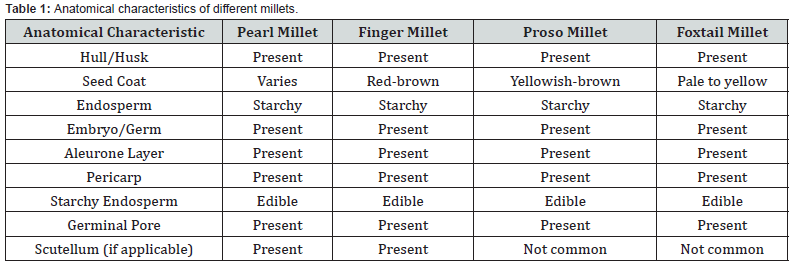
Millet plants are characterized by their simple, narrow leaves and sturdy stems. The leaves are typically elongated and slender, often with a prominent midrib running along their length. These leaves are arranged alternately along the stem, and their narrow structure allows for efficient photosynthesis. The stems of millet plants are generally cylindrical and upright, providing support for the inflorescences and grains. The anatomical structure of leaves and stems contributes to the overall resilience and adaptability of millet plants in various environmental conditions. Millet plants typically have fibrous root systems. These root systems consist of numerous thin roots extending from the base of the plant into the soil. The fibrous roots help anchor the millet plant in the ground and serve as a means of nutrient and water uptake. This root architecture is well-suited to millet growth in semi-arid regions with varying soil conditions. The fibrous roots also play a crucial role in preventing soil erosion, making millet cultivation environmentally sustainable. Millet inflorescences are distinctive, often taking the form of compact, spike-like structures. Within these inflorescences, individual millet flowers are small and inconspicuous. Each flower typically possesses both male and female reproductive organs, ensuring self-pollination or pollination by wind or insects. Millet flowers play a crucial role in the development of grains, which form at the base of each flower after successful pollination. The compact inflorescence structure maximizes the efficiency of seed production. Millet grains are the edible seeds produced by millet plants. They are typically small and characterized by a hard outer layer known as the husk or hull, which protects the inner endosperm. The grains vary in color, size, and shape among different millet varieties. For example, finger millet grains are small, elongated, and dark brown, while pearl millet grains are larger, rounder, and often pale in color. The grains contain the stored energy and nutrients required for germination and are the primary reason for cultivating millet crops. Millet plants exhibit a remarkable ability to adapt to diverse agroecological zones, including regions with limited water availability and high temperatures. Their anatomical features, such as the fibrous root system and efficient photosynthetic leaves, allow them to thrive under challenging conditions. Millets’ adaptability and resilience make them valuable crops for addressing food security and sustainable agriculture in various parts of the world. (Table 1).
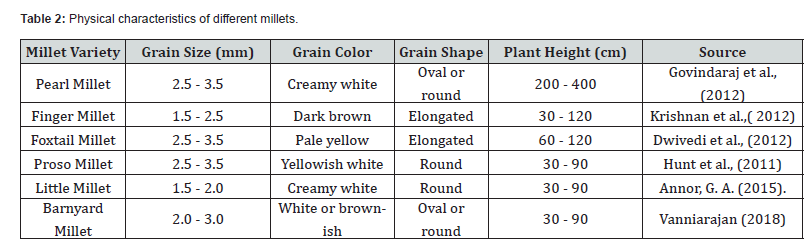
Millets, a group of small-seeded cereal grains, exhibit diverse physical characteristics that distinguish them from other staple crops. Pearl millet (Pennisetum glaucum), for instance, is known for its robust stature, with plants reaching heights ranging from 200 to 400 centimeters [9]. Its grains are medium to largesized, typically measuring between 2.5 to 3.5 millimeters in diameter and are creamy white or pale yellow in color [9]. In contrast, finger millet (Eleusine coracana) is characterized by its slender and upright growth, with plant heights varying from 30 to 120 centimeters [10]. Finger millet grains are small and elongated, often appearing dark brown or reddish-brown [10]. These variations in plant stature and grain size and color among millet varieties highlight the diversity and adaptability of these crops to different agro-ecological regions, making them valuable contributors to global food security and nutrition. (Table 2).
Millet’s Rich Nutritional Composition
Millet grains, including species like pearl millet (Pennisetum glaucum), finger millet (Eleusine coracana), and foxtail millet (Setaria italica), boast a nutritional profile that rivals, and in some cases, surpasses traditional staple grains like rice and wheat [11]. A critical aspect of their nutritional appeal is their relatively higher protein content. As highlighted by Saleh et al. [12] millets are rich in essential amino acids, particularly lysine and tryptophan, making them a valuable source of plant-based protein for those following vegetarian or vegan diets. Additionally, the high dietary fiber content found in millets has been associated with various health benefits, including improved digestive health, weight management, and a reduced risk of non-communicable diseases [13].
Carbohydrates
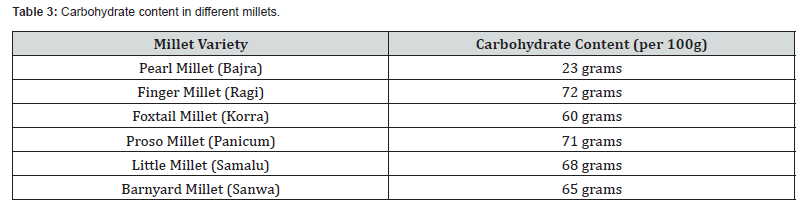
Millets are primarily composed of complex carbohydrates, making them an excellent source of sustained energy. These carbohydrates are in the form of starches, which are slowly digested, leading to a gradual release of glucose into the bloodstream. Pearl millet, for example, contains a substantial amount of complex carbohydrates [12]. These complex carbohydrates are a fundamental energy source for individuals in regions where millets are staple food. Millets are rich in dietary fiber, which plays a crucial role in digestive health and overall well-being. Dietary fiber adds bulk to the diet, aiding in regular bowel movements and promoting a sense of fullness. Pearl millet, for instance, contains around 8-12% dietary fiber [13]. The high fiber content in millets contributes to their potential health benefits, including weight management and improved glycemic control. Millets also contain resistant starch, a type of carbohydrate that resists digestion in the small intestine and reaches the colon mostly undigested. This can have various health benefits, including improved gut health. Foxtail millet (Setaria italica) has been found to contain significant levels of resistant starch. Many millet varieties have a low glycemic index (GI), which means they have a minimal impact on blood sugar levels when consumed. Pearl millet, for example, has a low GI, making it a suitable choice for individuals with diabetes or those looking to manage blood sugar levels, Kaur et al. (2014).
One of the distinctive features of millets is that they are naturally gluten-free. Gluten is a protein found in wheat, barley, and rye, and its absence in millets makes them suitable for individuals with celiac disease or gluten sensitivity. The carbohydrate profile of millets, characterized by complex carbohydrates, dietary fiber, resistant starch, and low GI, makes them a healthy choice for a balanced diet. Their carbohydrate composition aligns with dietary recommendations for improved glycemic control, weight management, and overall well-being (Table 3).
Proteins
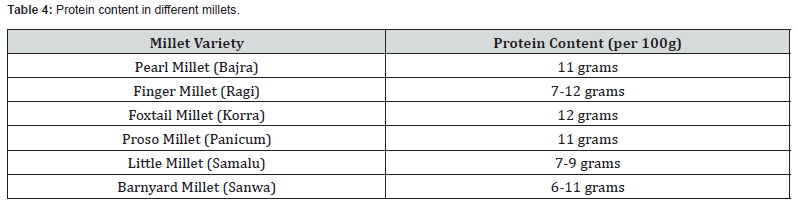
Protein are one of the most important constituents in millets. Pearl millet is accepted to contain around 11.6% protein, which is higher than the 7.2% protein tracked down in rice, 11.5% tracked down in grain, 11.1% tracked down in maize and 10.4% tracked down in sorghum [14]. Finger millet is known for its relatively higher protein content compared to other millet varieties, with levels ranging from 7% to 12% protein by weight [13]. It is particularly rich in essential amino acids such as lysine and threonine. Pearl millet typically contains around 7% to 12% protein. It is a good source of essential amino acids such as lysine, threonine, and valine. Foxtail millet generally has a protein content of approximately 12%. It is rich in threonine and valine. Proso millet typically contains around 11% protein. It is a source of essential amino acids including lysine and threonine. Little millet has a protein content of approximately 7% to 9%. It contains essential amino acids but at slightly lower levels compared to some other millets. Barnyard millet typically contains around 6% to 11% protein [13]. It is a source of essential amino acids but may have lower lysine content compared to finger millet or pearl millet (Table 4).
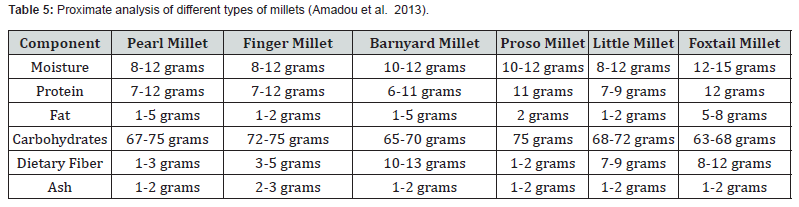
Proximate analysis is used for estimation of the quantitative of food and food substances including moisture, crude protein, total fat, total carbohydrate, and dietary fiber. The total dietary fiber content (22.0%) of finger millet grain was reported relatively higher than that of numerous other cereals (for example 12.6%, 4.6%, and 12.8% respectively for wheat, rice, maize, and sorghum [15] (Table 5).
Dietary fiber
Dietary fiber in millets adds bulk to the diet, which aids in regular bowel movements and helps prevent constipation. It also promotes a healthy gut by providing a substrate for beneficial gut bacteria [16]. High-fiber foods like millet can help with weight management by promoting a feeling of fullness and reducing overall calorie intake [17]. This can be beneficial for those looking to maintain or lose weight. The soluble fiber in millet can slow down the digestion and absorption of carbohydrates, leading to more stable blood sugar levels [18]. This is particularly important for individuals with diabetes or those at risk of developing the condition. Dietary fiber has been linked to improved heart health. It can help lower LDL (bad) cholesterol levels, reduce the risk of heart disease, and lower blood pressure [19]. A high-fiber diet, including millet, may reduce the risk of colorectal cancer and other digestive disorders by promoting a healthy colon [20]. Potassium, a mineral found in millet, can help regulate blood pressure by counteracting the effects of sodium in the diet [21]. The fermentation of dietary fiber by gut bacteria can produce shortchain fatty acids, which have various health benefits, including reducing inflammation and supporting immune function [22]. A high-fiber diet can help prevent conditions like hemorrhoids and diverticulitis by maintaining healthy bowel movements and reducing strain during bowel movements. To reap these benefits, it’s essential to incorporate a variety of millet-based foods into your diet, such as whole grains, millet flour, and millet-based dishes. Whole grains, in particular, retain the bran and germ layers, which are rich in dietary fiber and other nutrients.
Lipids
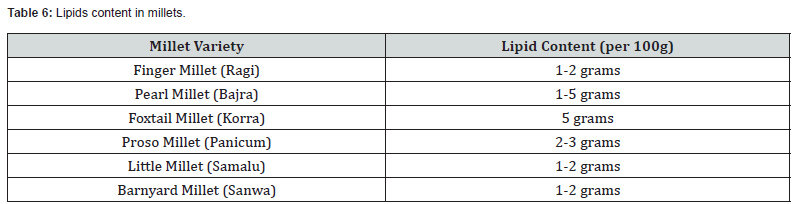
The lipid (fat) content in millets generally ranges from 1% to 5% on average. Fatty acids like palmitic acid, stearic acid, and linoleic acids appear high in quantity in pearl millet, while oleic acid is found to be a low percentage [23]. Lipids in millets add flavor and contribute to the desirable texture of various milletbased dishes. They can enhance the palatability of millet foods. Some vitamins and phytonutrients in millets are fat-soluble, meaning they are better absorbed in the presence of dietary fats. The presence of lipids in millet-based meals can aid in the absorption of these nutrients. Including moderate amounts of healthy fats in millet-based meals can enhance satiety, helping individuals feel full and satisfied after eating. Lipids are often used in cooking millets to prevent sticking to cookware and to enhance the flavor of the final dish. Common cooking fats include vegetable oil, ghee (clarified butter), and butter (Table 6).
Vitamins and minerals
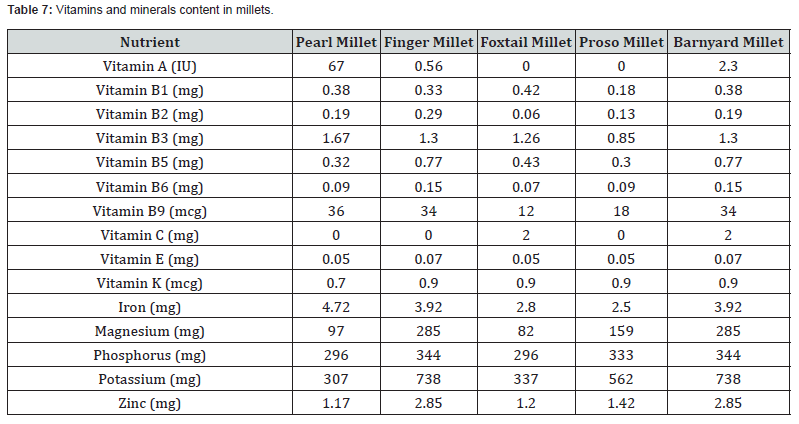
Millets are a rich source of vitamins and minerals. Pearl millet due to its good oil content is preferred as a decent resource for fat-soluble vitamin E (2 mg/100 g). Millets, especially finger millet, are good sources of iron. Iron is essential for the formation of hemoglobin, the protein responsible for transporting oxygen in the blood. Consuming millet can help prevent iron-deficiency anemia. Millets are rich in magnesium, which is important for muscle and nerve function, blood glucose control, and bone health. Adequate magnesium intake can contribute to a reduced risk of type 2 diabetes and cardiovascular diseases. Phosphorus is crucial for bone and teeth formation, energy metabolism, and maintaining a healthy pH balance in the body. Millets provide a good amount of phosphorus, supporting overall bone health. Potassium plays a vital role in maintaining healthy blood pressure levels, muscle contractions, and nerve function. Millets’ potassium content can help regulate blood pressure and reduce the risk of hypertension is essential for immune function, wound healing, and DNA synthesis. Millets, such as finger millet, are good sources of zinc, promoting a healthy immune system. Thiamine is crucial for converting food into energy and maintaining proper nerve function. Millets contain thiamine, which contributes to overall energy metabolism. Riboflavin plays a role in converting food into energy and supporting cell growth. Millets provide riboflavin, which is important for overall health and well-being. Niacin is essential for DNA repair, cell metabolism, and the production of certain hormones. Millets contain niacin, contributing to these vital processes. Pantothenic acid is involved in various metabolic processes, including the synthesis of fatty acids and cholesterol. Millets provide this essential B vitamin. Pyridoxine is important for brain development, immune function, and the synthesis of neurotransmitters. Millets contain vitamin B6, supporting these functions. Folate is crucial for DNA synthesis and cell growth. Adequate folate intake during pregnancy is essential for preventing neural tube defects. Millets contain folate, contributing to overall health. Although millets are not exceptionally high in vitamin C, some varieties, like foxtail millet, contain small amounts. Vitamin C is an antioxidant that supports the immune system and helps the body absorb iron from plant-based foods (Table 7).
Health Benefits of Millets
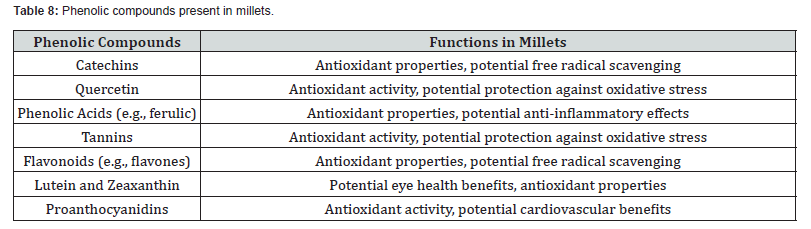
Millets are rich in essential nutrients, including carbohydrates, proteins, dietary fiber, vitamins, and minerals, making them a valuable addition to a balanced diet. Millets are naturally glutenfree grains, making them suitable for individuals with celiac disease or gluten sensitivities [12]. Millets contain dietary fiber, which aids in digestive health, reduces the risk of colon cancer, and helps manage blood sugar levels. Millets have a low glycemic index (GI), which means they cause a slower and more gradual increase in blood sugar levels, making them suitable for people with diabetes [24]. Millets contain various antioxidants, including phenolic compounds and flavonoids, which can help protect cells from oxidative damage and reduce the risk of chronic diseases. The consumption of millet has been associated with reduced risk factors for heart disease, such as lower cholesterol levels and improved lipid profiles. Millets, being high in fiber and low in fat, can promote satiety and help with weight management by reducing overall calorie intake. These health benefits highlight the nutritional value of millets and their potential to contribute to a healthy and balanced diet. However, individual health outcomes may vary, and it’s essential to include millets as part of an overall diverse and balanced diet for maximum benefits. Millets contain various phenolic compounds, which are natural antioxidants and have potential health benefits. The specific phenolic compounds present in millets can vary among different varieties and are influenced by factors such as growing conditions and processing methods. Ferulic acid is a widespread phenolic compound in millets and is known for its antioxidant properties. Catechins are flavonoid compounds found in millets that contribute to their antioxidant activity and potential health benefits. Quercetin is another flavonoid present in millet known for its antioxidant properties and potential protection against oxidative stress. Tannins are polyphenolic compounds found in millets that have antioxidant activity and may help protect cells from oxidative damage. Various phenolic acids, including p-coumaric acid and caffeic acid, are found in millets and contribute to their antioxidant properties [25]. Millets contain several types of flavonoids, which are known for their antioxidant and anti-inflammatory effects. These are polyphenolic compounds with antioxidant properties that contribute to the overall phenolic content of millets. The presence of these phenolic compounds in millet contributes to their potential health benefits, including their antioxidant and anti-inflammatory effects (Table 8).
A Solution to Nutritional Challenges
The World Health Organization (WHO) estimates that over 2 billion people worldwide suffer from micronutrient deficiencies, commonly referred to as “hidden hunger.” As noted by Pradeepa et al. [26], millet are rich source of essential vitamins and minerals, such as iron, zinc, calcium, and B vitamins, which play a crucial role in combatting these deficiencies. Their inclusion in diets, particularly in regions where malnutrition is prevalent, holds great promise for improving overall nutritional outcomes. Millets, often regarded as the “forgotten grains,” are emerging as a promising solution to the complex nutritional challenges that societies around the world face today. These ancient grains, cultivated for thousands of years, are redefining our approach to nutrition and sustainable agriculture. Millets boast a rich nutritional profile, encompassing a diverse range of essential nutrients such as carbohydrates, proteins, dietary fiber, vitamins, and minerals, offering a comprehensive solution to malnutrition [13]. Their gluten-free nature makes them a suitable choice for individuals with celiac disease or gluten sensitivities, addressing the increasing demand for gluten-free alternatives. With a low glycemic index and high dietary fiber content, millets facilitate better blood sugar management and digestive health [12]. Rich in antioxidants and phenolic compounds, millets also protect against oxidative stress and reduce the risk of chronic diseases [12]. Furthermore, their resilience in diverse agro-climatic conditions promotes sustainable agriculture, aiding in food security and environmental conservation. Millets are not just grains; they represent a holistic solution to nutritional challenges, embodying the potential for healthier diets and a more sustainable food future. In addition to their nutritional advantages, millets are champions of sustainability. These hardy grains have low water requirements, thrive in arid and semi-arid regions, and demonstrate resilience to climate change impacts [27]. The cultivation of millets contributes to biodiversity preservation, reduced greenhouse gas emissions, and sustainable land use practices. This makes millet a key player in the pursuit of sustainable agriculture, as recognized by the United Nations Food and Agriculture Organization (FAO).
Millets Grains for Food
Millets, often referred to as the “nutri-cereals,” have found a myriad of uses in the culinary world, offering a wealth of benefits that cater to both traditional and contemporary dietary preferences. These ancient grains, cultivated for thousands of years, have resurfaced as versatile ingredients that provide a nutritional and sustainable edge to a wide range of food products. One of the most common uses of millets is in the form of flour. Millet flours, such as those derived from finger millet (ragi), pearl millet (bajra), and sorghum, have gained popularity as gluten-free alternatives in baking. These flours are used to create a variety of baked goods, including bread, muffins, pancakes, and cookies. For individuals with celiac disease or gluten sensitivities, millet flour opens up a world of possibilities, allowing them to enjoy traditional baked goods without the discomfort of gluten consumption. Millets have a longstanding tradition of being transformed into nourishing porridges. Finger millet (ragi) porridge, in particular, is highly regarded for its nutritional value and digestibility. These porridges serve as wholesome and easily digestible breakfast options, making them a staple in many households. They offer a hearty and energizing start to the day, especially in regions where millets are prevalent. Millets have been creatively incorporated into snack items to provide healthier alternatives to traditional snacks. Millet chips, made from millet flour and other seasonings, offer a crunchy and flavorful option for snack enthusiasts. Puffed millet snacks, reminiscent of puffed rice, provide a light and satisfying munching experience. In India, finger millet (ragi) is transformed into traditional dishes like “ragi mudde,” dense dumplings served with vegetable curries, and “ragi porridge,” a highly nutritious breakfast item [13]. North India relies on pearl millet (bajra) to create “bajra roti,” a gluten-free flatbread that graces many tables. In China, millet congee, a porridge made from millet grains, is a common breakfast staple [25-27].
Korea combines foxtail millet and barnyard millet with rice to create “bap,” a mixed grain rice dish known for its health benefits. African cuisine features “toufou,” a dumpling-like dish made from millet flour, often paired with flavorful stews and sauces. Ethiopia boasts “injera,” a sourdough flatbread crafted from teff, a type of millet, integral to Ethiopian cuisine. Beyond these countries, millets serve as ingredients for gluten-free products in the United States, while millet-based snacks gain popularity in Western nations as healthier alternatives to traditional options. The adaptability of millets extends to international cuisines, gracing salads and beverages. As the world embraces millets, they continue to enrich global culinary traditions with their nutritional value and unique textures. Moreover, millet-based energy bars have gained popularity among health-conscious consumers, offering a convenient source of nutrition and sustained energy. Millets have made their way into the production of breakfast cereals. These include millet flakes, similar to oat flakes, and millet granola. These cereals offer a balanced and nutritious start to the day, with the added advantage of being gluten-free and rich in essential nutrients. Millet flour has been used to create glutenfree pasta and noodles, addressing the dietary needs of those with gluten sensitivities. These millet-based pasta and noodles retain their structure and texture when cooked, providing a satisfying dining experience. They are an excellent choice for those seeking alternatives to traditional wheat-based pasta. Millets have deep roots in traditional cuisines around the world. In India, pearl millet is used to make “bajra roti,” a flatbread that is a staple in many households. Foxtail millet and barnyard millet are used in Chinese and Korean cuisine, respectively. These traditional dishes not only showcase the versatility of millets but also highlight their cultural significance. Millet grains are utilized in the production of milletbased beverages. Millet milk, similar to almond or soy milk, has gained popularity among those seeking dairy alternatives. Milletbased smoothies provide a nutritious and refreshing option for health-conscious consumers. Millet flours are often blended with other gluten-free flours like rice flour, chickpea flour, and maize flour. These flour blends are used in various culinary applications, including baking, to create versatile and well-textured products. Beyond human consumption, millets serve as crucial ingredients in animal feed. Their nutritional content makes them valuable for livestock, contributing to sustainable agriculture and food production [12]. With growing awareness of their nutritional benefits, millets continue to inspire culinary innovation. Creative chefs and food entrepreneurs are exploring new millet-based products, from millet-based pizzas to millet-based baby foods. These innovations are expanding the presence of millets in the modern food industry. Millets have transcended their historical significance and have become versatile ingredients that cater to diverse dietary preferences and nutritional needs. Their use in various food products, from baked goods and breakfast cereals to traditional dishes and innovative culinary creations, underscores their value in promoting both nutrition and sustainability in the modern world.
Challenges of Food Security in Developing Countries
Millets offer practical solutions to several challenges of food security in developing countries, supported by research and practical implementation. Developing countries often face climate-related challenges such as droughts and erratic rainfall patterns. Millets, such as pearl millet and sorghum, are drought-resistant crops that can thrive in arid and semi-arid regions, making them a reliable food source even in adverse climate conditions [28]. Malnutrition and nutrient deficiencies are prevalent in many developing nations, leading to health issues. Millets are rich in essential nutrients, including protein, dietary fiber, vitamins, and minerals, making them valuable for addressing nutrient deficiencies and improving overall nutrition [13]. Rapid population growth in developing countries increases the demand for food production. Millets are highly productive and can yield significant amounts of food per unit of land. Their short growth cycle allows for multiple harvests in a year, helping meet the rising food demand. Water scarcity is a critical issue in many regions, affecting agricultural productivity. Millets require considerably less water compared to water-intensive crops like rice and wheat, making them suitable for water-scarce regions. Promoting millet cultivation can lead to water conservation and sustainable farming practices [29]. Soil degradation and erosion are common problems in agricultural areas. Millets have deep root systems that help prevent soil erosion and improve soil health. Their cultivation can contribute to soil conservation and sustainable farming practices. Monoculture and reliance on a limited number of staple crops can increase vulnerability to pests and diseases. Millets diversify cropping systems and reduce the risk of crop failures due to disease outbreaks. This diversity enhances food security by providing alternative sources of sustenance [30]. Smallholder farmers in developing countries often struggle with low incomes and poverty. Millet cultivation can provide income opportunities for farmers, as the demand for millets grows due to their nutritional value and versatility. This can contribute to poverty reduction and improved livelihoods [31]. Cultural heritage and traditional diets are at risk of being lost in the face of changing food habits. Millets often hold cultural significance and are part of traditional diets in many developing regions. Promoting millet consumption helps preserve cultural heritage while addressing food security challenges [13]. Millets offer practical and sustainable solutions to several food security challenges in developing countries. Their resilience, nutritional richness, and ability to adapt to diverse environmental conditions make them a valuable asset in ensuring food security and improving the well-being of vulnerable populations.
Future Prospects
The future prospects in enhancing the nutritional value of millets hold tremendous potential, as these ancient grains continue to gain recognition for their nutritional richness and sustainability. Biofortification efforts are underway to increase the micronutrient content of millets, particularly in regions where they are dietary staples. This involves breeding millet varieties with higher levels of essential vitamins and minerals, such as iron, zinc, and provitamin A, to combat micronutrient deficiencies [32]. Researchers are working to improve the protein content and quality of millets through breeding and biotechnological interventions. This includes enhancing the amino acid profile to ensure well-balanced and high-quality protein sources [33]. Millets are increasingly being incorporated into the production of functional foods and dietary supplements. These products are designed to address specific health concerns, such as heart health, digestive wellness, and immune support, by harnessing the bioactive compounds present in millets [34]. Chefs and food innovators are exploring diverse culinary applications of millets. Millet-based recipes, gourmet products, and gluten-free alternatives are gaining popularity, expanding consumer choices and accessibility [13]. The international trade of millet products is on the rise due to growing consumer awareness of their nutritional benefits. This trend presents economic opportunities for millet-producing regions and supports livelihoods [12]. The environmentally sustainable nature of millet cultivation, with its lower water requirements and reduced carbon footprint compared to other crops, aligns with global efforts to promote sustainable agriculture and mitigate climate change [35]. Ongoing research continues to unveil the health benefits and nutritional advantages of millets. As awareness spreads about their potential to address non-communicable diseases and improve overall well-being, adoption is expected to increase. The future of millet as a highly nutritious food source is marked by innovation, sustainability, and health-conscious consumer choices. These ancient grains are poised to play a significant role in addressing global nutritional challenges, offering a versatile and nutrient-dense dietary option for a healthier and more sustainable future [36-40].
Conclusion
The nutritional use of millet grains for food highlights the remarkable potential and versatility of these ancient grains in addressing contemporary dietary and nutritional challenges. Millets, including varieties such as pearl millet, finger millet, foxtail millet, proso millet, and barnyard millet, have emerged as nutritional powerhouses, offering a wide array of essential nutrients, dietary fiber, and bioactive compounds. Throughout this review, we have delved into the diverse nutritional composition of millets, their positive impact on health, and their adaptability to various culinary applications. From their role in blood sugar management to their contribution to digestive wellness and overall nutrition, millets have demonstrated their significance in promoting well-being. Moreover, millets offer a solution to address the rising concerns of gluten intolerance and the need for sustainable agriculture. Their gluten-free nature makes them accessible to individuals with celiac disease or gluten sensitivities, while their lower water requirements and reduced environmental footprint align with the goals of sustainable food production. Looking forward, the future prospects for millets are promising. Ongoing research and development efforts are focused on enhancing their nutritional content, expanding their use in functional foods, and increasing their global trade and export. These efforts position millet as a sustainable, health-conscious choice for individuals and a valuable resource for regions facing malnutrition and food security challenges. As we navigate a rapidly changing global food landscape, millets stand as a symbol of resilience and nutrition. They are not merely traditional grains; they are versatile, nutritious, and environmentally responsible food sources that deserve our attention and support. To fully realize the potential of millet, collaboration among policymakers, researchers, farmers, and consumers is essential. By promoting awareness, investing in research, and integrating millets into dietary and agricultural practices, we can harness the nutritional and ecological benefits of these extraordinary grains, contributing to a healthier and more sustainable food future.
References
- Chandra AK, Chandora R, Sood S, Malhotra N (2021) Global production, demand, and supply. In: Millets and Pseudo Cereals. Woodhead Publishing, India p. 7-18.
- Spengler RN (2019) Fruit from the Sands: The Silk Road Origins of the Foods We Eat. University of California Press, United States.
- Upadhyaya HD, Wang YH, Gowda CLL, Sharma S, Singh S (2013) Association mapping of maturity and plant height using SNP markers with the sorghum mini core collection. Theoretical and Applied Genetics 126(8): 2003-2015.
- Bhargava, A, Srivastava S (2013) Finger millet (Eleusine coracana) flour as a vehicle for fortification with zinc. International Journal of Food Science & Technology 48(9): 1904-1910.
- Padulosi S, Bergamini N, Lawrence T (2013) Minor millets as a central element for sustainably enhanced incomes, food security and rapid agricultural growth in marginal environments of Asia. In: Proceedings of the International Conference on Minor Millets: Genetic and Genomic Resources, Bioversity International, Europe 1: 6.
- Bhattarai N, Pollack A, Lobell DB, Fishman R, Singh B, et al. (2021) The impact of groundwater depletion on agricultural production in India. Environmental Research Letters 16(8): 085003.
- Ashoka P, Tripathi G, Panotra N, Sachan P, Singh P, et al. (2023) Buckwheat: An Advancing Crop for Future Generations. International Journal of Plant & Soil Science 35(22): 569-578.
- Bouis HE, Saltzman A (2017) Improving nutrition through biofortification: a review of evidence from Harvest Plus, 2003 through 2016. Global Food Security 12: 49-58.
- Govindaraj M, Rai KN, Shanmugasundaram P (2012) Molecular characterization of pearl millet inbred lines using microsatellite markers. Agricultural Sciences 3(5): 675-679.
- Krishnan V, Patil A (2012) Finger millet: Breeding and management. In: Millets and Sorghum: Biology and Genetic Improvement, John Wiley & Sons, United States pp. 239-252.
- Onyango AO (2016) Finger millet: food security crop in the arid and semi-arid lands (ASALs) of Kenya. World Environment 6(2): 62-70.
- Saleh ASM, Zhang Q, Chen J, Shen Q (2020) Millet Grains: Nutritional Quality, Processing, and Potential Health Benefits. Comprehensive Reviews in Food Science and Food Safety 19(1): 251-274.
- Hegde SV, Chandra TS, Sudha ML (2021) Finger millet (Eleusine coracana L.) - A Review on Nutritional and Nutraceutical Properties. Journal of Food Science and Technology 58(1): 38-44.
- Jha,A, Tripathi AD, Alam T, Yadav R (2013) Process optimization for manufacture of pearl millet-based dairy dessert by using response surface methodology (RSM) Journal of Food Science and Technology 50: 367-373.
- Shobana S, Malleshi NG (2007) Preparation and functional properties of decorticated fingermillet (Eleusine coracana). Journal of Food Engineering 79: 529-538.
- Ranum P, Peña-Rosas JP, Garcia-Casal MN (2014) Global maize production, utilization, and consumption. Annals of the New York Academy of Sciences 1312(1): 105-112.
- Tucker LA, Thomas KS (2009) Increasing total fiber intake reduces risk of weight and fat gains in women. The Journal of Nutrition 139(3): 576-581.
- Jideani AIO, Jideani VA (2011) Millet grains: Nutritional quality, processing, and potential health benefits. Comprehensive Reviews in Food Science and Food Safety 10(3): 193-208.
- Chandalia M, Garg A, Lutjohann D, von Bergmann K, Grundy SM, Brinkley LJ (2000) Beneficial effects of high dietary fiber intake in patients with type 2 diabetes mellitus. New England Journal of Medicine 342(19): 1392-1398.
- Burkitt DP, Trowell HC (1975) Refined Carbohydrate Foods and Disease: Some Implications of Dietary Fibre. Academic Press, United States.
- Sacks FM, Svetkey LP, Vollmer WM, Appel LJ, Bray GA, et al. (2001) Effects on blood pressure of reduced dietary sodium and the Dietary Approaches to Stop Hypertension (DASH) diet. N Eng J Med 344(1): 3-10.
- De Filippo C, Cavalieri D, Di Paola M, Ramazzotti M, Poullet JB, et al. (2010) Impact of diet in shaping gut microbiota revealed by a comparative study in children from Europe and rural Africa. PNAS 107(33): 14691-14696.
- Adeola O, Orban JI (1995) Chemical composition and nutrient digestibility of pearl millet (Pennisetum glaucum) fed to growing pigs. Journal of Cereal Science 22(2): 177-184.
- Ukpabi UJ, Ndidi US, Nwabueze RN, Okechukwu RI (2018) Glycemic Indices and Glycemic Load of Some Nigerian Foods. International Journal of Food Science 2018: 6917147.
- Tripathi G, Jitendrakumar PH, Borah A, Nath D, Das H, et al. (2023) A Review on Nutritional and Health Benefits of Millets. International Journal of Plant & Soil Science 35(19): 1736-1743.
- Pradeepa K, Sreerama YN (2019) Impact of Processing on the Phenolic Profiles of Foxtail Millet. Journal of Cereal Science 85: 231-237.
- Vetriventhan M, Azevedo VCR, Upadhyaya HD, Nirmalakumari A, Kane-Potaka J (2020) Milestones in Utilization of Pearl Millet and Sorghum: Grain Quality Improvement. Plant Breeding Reviews 43: 349-397.
- Reynolds MP, Quilligan E, Aggarwal PK, Bansal KC, Cavalieri AJ, et al. (2016) An integrated approach to maintaining cereal productivity under climate change. Global Food Security, 8, 9-18.
- Kumar S, Singhal KK, Kumar A (2016) Performance evaluation of pearl millet (Pennisetum glaucum) based cropping systems for sustainability in arid regions of Haryana, India. International Journal of Agriculture and Biology 18(1): 49-54.
- Jat RA, Datta A, Choudhary M, Yadav AK, Choudhary V, et al. (2019) Effect of diversified crop rotations on crop productivity, water use efficiency, and soil properties in a semi-arid region of India. Field Crops Research 233: 33-43.
- Devi P, Kumar S, Hegde PS, Swarnalath G, Chimmad VP (2019) Profitability and resource use efficiency of pearl millet (Pennisetum glaucum) cultivation in Karnataka. Indian Journal of Agricultural Sciences 89(4): 741-746.
- Pixley KV, Palacios Rojas N, Babu R (2013) Mutants, QTLs, and Participatory Plant Breeding for Increasing Provitamin A Content in Maize. International Journal of Agriculture and Biology 15(6): 1279-1288.
- Gupta S, Arora S, Walia S (2020) Enhancing the Nutritional Value of Millets Through Breeding and Biotechnological Approaches. In: Nutritional Composition of Food Legumes, Springer, Germany pp.429-452.
- Gujral HS, Sharma P, Bajaj R (2018) Millets: A Sustainable, Healthy, and Nutritious Food Source for the Future. In: Millets and Sorghum, CRC Press, United States pp. 261-281.
- Taylor JRN, Duodu KG (2017) Effects of Processing Sorghum and Millets on Their Phenolic Phytochemicals and Antioxidant Properties. Journal of the Science of Food and Agriculture 97(14): 4853-4861.
- Amadou I, Gounga ME, Le GW (2013) Millets: Nutritional composition, some health benefits and processing-A review. Emirates Journal of Food and Agriculture 501-508.
- Annor GA (2015) Millet Minor: Overview. Encyclopedia of Food Grains 199.
- Dwivedi SL, Ceccarelli S, Blair MW, Upadhyaya HD, et al. (2012) Landrace germplasm for improving yield and abiotic stress adaptation. Trends in Plant Science 17(12): 708-716.
- Hunt HV, Campana MG, Lawes MC, Park YJ, Bower MA, et al. (2011) Genetic diversity and phylogeography of broomcorn millet (Panicum miliaceum L.) across Eurasia. Molecular Ecology 20(22): 4756-4771.
- Vanniarajan C, Anand G, Kanchana S, Veeranan V, Giridhari A, et al. (2018) A short duration high yielding culture—Barnyard millet ACM 10145. Agricultural Science Digest 38(2): 123-126.

























