




 NFSIJ Home



Introductıon
Monotonous diets are likely to increase the risk of various chronic diseases. For example, a recent global study indicated elevated mortality as well as major cardiovascular disease risk when energy intake from carbohydrates exceeds 60 percent. This is particularly worrying for Ethiopia as recent estimates by the Ethiopian Public Health Institute suggest that 60-80 percent of the energy intake of children and adults comes from carbohydrates [1]. Meanwhile, cardiovascular diseases are among the top causes of premature mortality in the country [1]. Another indication of limited dietary quality is that micronutrient deficiencies in Ethiopia are widespread [2]. Diets high in fruits and vegetables are widely recommended for their health-promoting properties. Fruits and vegetables have historically held a place in dietary guidance because of their concentrations of vitamins, especially vitamins C and A; minerals, especially electrolytes; and more recently phytochemicals, especially antioxidants and dietary fiber.
According to World Health Organization (WHO) and Food and Agriculture Organization (FAO) guidelines, the recommended consumption of fruits and vegetables is at least 400 g/day. Despite irrefutable evidence of the benefits of frequent consumption of fruits, their consumption is very low in low and middle-income countries [3]. A recent analysis of children’s diet revealed that very few consume vitamin A-rich fruits and vegetables [4]. In Ethiopia, for example, the average household consumed 45 kg of Fruits and Vegetables [5]. This level is among the lowest in sub- Saharan Africa and is far from meeting the WHO recommendation of 146 kg per year [6]. A recent review has also shown that only about 2.4% adults meet the WHO recommendation of five servings of fruits and/or vegetables per day, leading to increased risk of nutrient deficiencies and chronic diseases [4]. The highest (~11%– 12%) Disability-Adjusted Life Years (DALYs) and Years of Life Lost (YLLs) were related to this low consumption of fruits [7].
According to EDHS [8], about 116,284.63 hectares of land is under fruit crops in Ethiopia. Bananas contributed about 57.95% of the fruit crop area followed by avocadoes that contributed 17.98% of the area. More than 8,436,238.66 quintals of fruits were produced in the country. Bananas, Mangoes Avocados, Papayas, and Oranges took up 63.94, 12.49%, 12.39%, 6.16% and 3.52% of the fruit production. Production of vegetables contribute only 2% of the total crops production. However, previous study on availability and consumption of fruits and vegetables in Ethiopia by Tsegaye et al [9] (s) found that, in Oromia 82% and 50% of Households do not produce fruit and vegetables respectively. This shows that production and consumption of fruits and vegetables are very low that may be attributed to low awareness about the health importance of the commodity to produce and consume.
Home gardens play an important role within the overall farming system. The fact that the majority owners of home garden show that gardening is considered important by farmer’s influences household food security and income generation. Home gardens provide a diversity of fresh foods that have diverse quality and quantity of nutrients available to a family in a low cost and sustainable manner. It equally contributes to the community health improvement. Semu [10] similarly found that adding fruits and vegetables to daily meal by producing through home gardening helps to stay healthy and contributes to dietary diversity [11].
Statement of the Problem
Ethiopian diets remain heavily cerealbased and inadequately diverse, resulting in persistent micronutrient deficiencies and a growing burden of dietrelated chronic disease. Fruit and vegetable production and consumption are far below international recommendations in Oromia, limiting access to dietary sources of vitamins A and C, essential minerals, fiber and phytochemicals that protect against malnutrition and non-communicable diseases. Home gardens, although widely practiced in some localities, are underutilized as a nutrition strategy because their potential is constrained by small plot sizes, seasonal rain dependence, limited irrigation, high postharvest losses, weak value chains and low uptake of nutritionsensitive practices. The absence of timely, localityspecific data on household consumption, garden practices, postharvest loss and sociocultural drivers prevents policy makers and implementers from designing targeted interventions that would increase intake of fruits and vegetables to meet WHO/FAO recommendations.
Low consumption of fruits and vegetables directly undermines micronutrient adequacy and increases population risk for vitamin A and vitamin C deficiencies and associated morbidity and mortality. Persistently high carbohydrate share of energy in typical diets amplifies cardio metabolic risk, so promoting fruit and vegetable intake is a highimpact nutritional lever. The aim of this study, therefore, is to reinforce and promote production and consumption of fruits and vegetables by availing relevant information to policy makers and implementers.
Objective
• To assess community’s perception, consumption and
production of fruits and vegetables
• To examine practice of home gardening in the study area
Materials and Methods
The study was conducted in Jimma zones of Oromia because of their production of fruits and vegetables as Jimma Zone produces fruits and vegetables largely. Jimma is a midaltitude, subtropical zone with climates and soils highly suitable for a wide range of fruits and vegetables, High prevalence of home gardens and crop diversity. According to CSA, Jimma zone produces 432,961 quintals of fruits and 615,661 quintals of vegetables which shows large production in the region. The structured questionnaire was developed by reviewing different previous literatures and the developed questionnaire was translated in to Afan Oromo and then used to collect the required data. Study design of community based cross sectional was used. The overall objective of the study and the possible risks and benefits of the study to the participating volunteers was clearly presented. When the participants were willing to take part in the study, verbal consent was taken. The data from the participant were obtained using oral interview. All the information collected from participants are kept confidential, in such a way that personal information will not be disclosed. Data was analyzed using SPSS at 95% confidence level and 5% margin of error. Descriptive statistics was used to determine frequency and percentage of the variables.
Results and Discussions
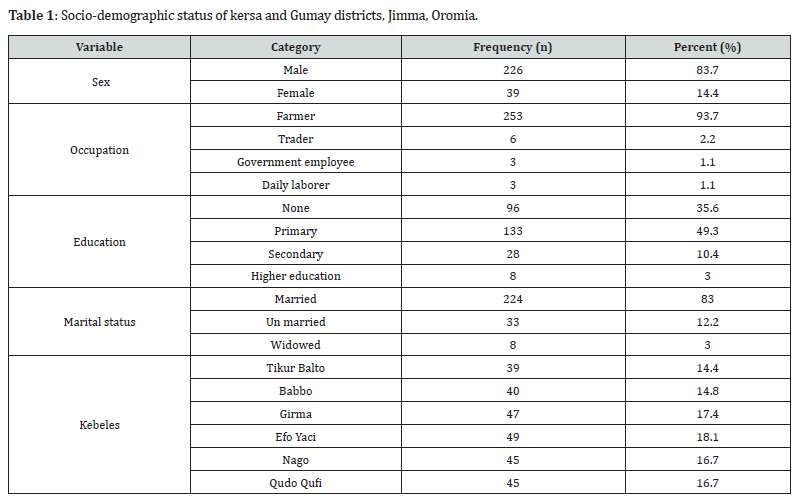
Socio demographic status of kersa and Gumay districts, Jimma, Oromia
The survey was conducted at Jimma Zone of Oromia region. Two districts were selected after rigorous discussion with zonal agricultural administration. Depending on their current production of fruits and vegetables two woredas namely Kersa and Gumay were selected and the survey was undertaken. Totally 270 respondents were interviewed. The respondents from Gumay (46.7%) district were higher than from Karsa (53.3%). As shown in the table below, the livelihood of most respondents are farmers (93.7%), whereas government employee and daily laborer only accounts 2.2%. Concerning educational status of the respondents most of them (49.3%) were stopped at primary school and 35.6% are not educated. Most of the respondents were male (83.7%) and only few female respondents were engaged in the study (14.4%).
Production and consumption of fruits and vegetables in kersa and Gumay districts
Household farm sizes in the study area ranges from 0.13hectare (1.1%) to 8 hectares (0.4%). Among them 16.6% have only 0.25 hectares of farm land, whereas 61.9% have 1 hectare and only 24.3% own farm land of 2-8 hectares.
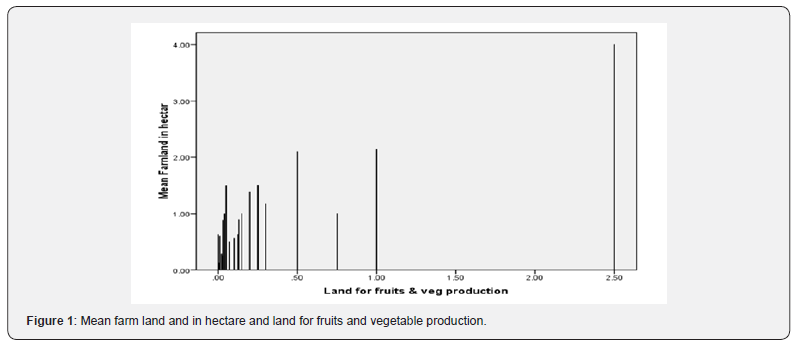
From the land they own most of the respondents use partially for production of fruits and vegetables. The maximum land area used for production of fruits and vegetables are 2.5 hectare. As shown in the graph below most of the farmland used for production of fruits and vegetables are less than 0.5 hectares.
The fact that most horticultural plots are <0.5 ha indicate a dominant smallholder regime with fragmented land use and limited scope for scaling horticultural enterprises. Small plot sizes constrain crop rotation, mechanization, irrigation installation, and investment in postharvest facilities, reducing the ability of households to produce consistent marketable surpluses and to diversify beyond a few hardy or highvalue crops.
National and zonal surveys repeatedly show that Ethiopian horticulture is dominated by smallholders cultivating small plots for both home consumption and local markets; similar patterns were described for Jimma and neighboring zones where average smallholder plots limit commercialization and valuechain integration [12-13]. These studies conclude that small plot size is a structural bottleneck to converting onfarm production into reliable commercial supply and predictable household nutrition gains.
Interventions that succeed should be tailored to smallplot realities which include promotion of intensive, highyielding practices (e.g., intercropping, highdensity planting), microirrigation technologies, and collective solutions (producer groups, village aggregation points) that permit pooled storage, grading and transport.
Production prevalence of fruits and vegetables
This study documents very high incidence of horticultural production: ~94% cultivate fruits and ~95% cultivate vegetables. Brassicas dominate the vegetable list (Ethiopian cabbage 93%, head cabbage 90%), while avocado (89%) and banana (88%) predominate among fruits. Secondary crops include tomato, carrot, onion and beetroot (Table 2).




National production profiles and zonal studies mirror these findings. Jimma Zone has long been identified as favorable for subtropical and tropical fruits (avocado, mango, banana) and brassica vegetables due to its climate and market orientation [12]. Adame et al. [13] (2022–2023) and other reviews note the same dominant crop groups at national scale and emphasize regional specialization driven by agro ecology and household preferences.
The crop mix reflects both nutritional and market logics. Brassicas contribute micronutrients and are suited to short cycles and small plots, while avocado and banana are highervalue perennial/tropical crops that can provide larger seasonal income but require different management and postharvest handling.
The overwhelming use of natural compost (83.7%) and low use of inorganic fertilizer (12.2%) combined with traditional weed control (62%) and dominant rain fed cultivation (71.5%) show low external input intensity. Low irrigation adoption (4.8% irrigation only; 19% mixed) leaves production vulnerable to intraseasonal rainfall variability and fruit abortion.
Multiple Ethiopian horticulture assessments record similar low input intensity among smallholders. National analyses highlight low fertilizer uses on horticultural plots relative to cereals, limited irrigation coverage, and a reliance on organic amendments and laborintensive practices [13-14].
Raising productivity requires careful promotion of integrated soil fertility management (combining compost, targeted inorganic fertilizer), training in Integrated Pest Management (IPM) to reduce losses and chemical dependency, and affordable microirrigation solutions to reduce climate risk.
Practice of home gardening in Kersa and Gumay districts
There are various methods to cultivate fruits and vegetables in home gardens, which suit different paces, finances, and personal preferences. Traditional in-ground gardening (flatbed) is the most common technique, where vegetables are directly planted in the soil. For people with limited space or bad soil quality, raised beds and container gardening offer flexible options. Additionally, innovative techniques such as vertical gardens and hydroponics are gaining popularity. However, in the current study sites due to absence of other home gardening methods, flatbed gardening method is considered.
Home gardening is highly prevalent in Kersa and Gumay: 90.7% of households maintain home gardens that supply fruits and vegetables for household consumption and local sale. Gardens combine shortcycle vegetables (kale, Ethiopian cabbage, carrots, tomatoes) with perennial fruits (avocado, banana), improving shortterm availability and dietary diversity while also producing surplus for market exchange.
Home gardens place micronutrientdense foods within easy reach of household members, reducing cash expenditures on fresh produce and buffering families against market price spikes and seasonal shortages. Evaluations of bundled homegarden interventions in Jimma show rapid uptake of improved practices and measurable increases in household vegetable consumption when seed, training, cookery demonstrations and postharvest support are combined [11]. Program reviews across Ethiopia indicate that supported garden households can increase percapita vegetable intake substantially (reported program increases ~120–150 g/day), and gardening households are often 2–3 times more likely to consume vitamin A–rich vegetables compared to nongarden households [11].
Four linked pathways explain garden impacts: (1) availability immediate access raises probability of consumption; (2) affordability home production reduces outofpocket spending; (3) behavior change cooking demonstrations and nutrition education convert availability into habitual intake; (4) income substitution sale of surplus increases purchasing power for other nutritious foods though excessive commercialization can reduce household retention of nutrientdense crops unless programs explicitly protect household food shares [8].
Water source for fruits and vegetables production
Gardens in the study area are predominantly rain fed (71.5%), with only a small share (4.8%) irrigated or mixedsource (19%), which concentrates production in the wet season and increases vulnerability to intraseasonal drought and rainrelated fruit abortion unless waterharvesting or microirrigation is introduced [11].
Water-source quality is also critical. Use of untreated wastewater or polluted surface water for irrigation can introduce microbial and chemical contaminants that negate nutrition and publichealth benefits, so simple waterprotection and safeirrigation practices should be integrated into garden support packages [11].
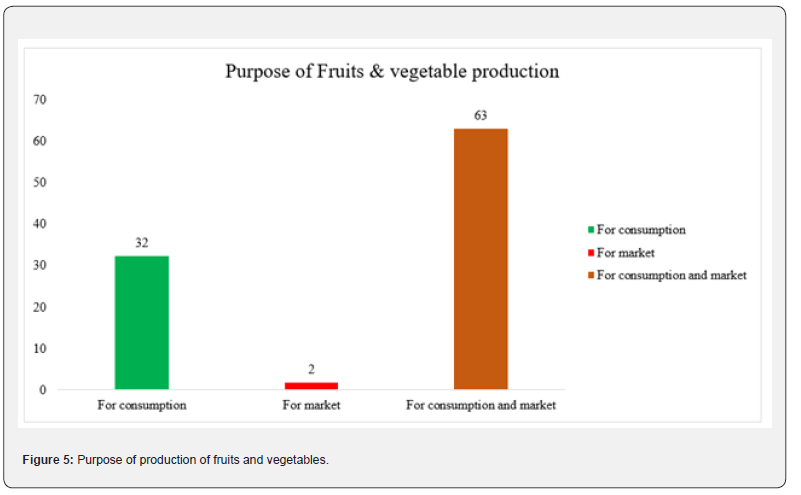
Only 32.2% of respondents in the study use garden produce exclusively for household consumption, with most households selling part of their output.
Market analyses in Kersa show that smallholders frequently sell highvalue produce to intermediaries unless aggregation, producer groups and better market information are available; these institutions reduce immediate distress sales, lower postharvest loss and improve producer returns while enabling households to retain minimum nutrition shares [8].
Perception of fruit and vegetable consumption in Kersa and Gumay districts
There are strong positive attitudes toward fruits and vegetables: 57% ranked fruits and vegetables ahead of staples (cereals, pulses) when asked which they preferred, 97.8% reported liking fruits and vegetables, and only 2.2% stated a dislike. Nonetheless, 24% still prefer other foods to fruits and vegetables, indicating that positive attitude does not uniformly translate into preference or frequent consumption [8]. Comparison with regional and national literature.
Perceptions recorded here mirror broader Ethiopian patterns in which awareness of health benefits for fruits and vegetables is widespread but perceived affordability and accessibility remain barriers to regular consumption. National reviews note that consumers commonly recognize the nutritional value of horticultural foods but prioritize staples because of cost, cultural meal patterns, and seasonal availability [8].
Program evaluations in Oromia similarly found that while gardenparticipant households reported improved attitudes and knowledge about fruits and vegetables, actual consumption increases depended on affordability, seasonality, and targeted behaviorchange activities [15].
Three interrelated factors help explain why positive perception does not always lead to higher intake in this study area: (1) economic constraints- even when valued, fruits and vegetables are sometimes judged less affordable than staples; (2) seasonal supply and preservation- limited offseason availability and high postharvest loss reduce practical access; (3) cultural and culinary patterns-many households prefer to consume produce mixed with staples rather than as standalone items, which can lower perceived permeal intake despite frequent use in cooking.
Because awareness is high, interventions should shift from basic knowledge provision toward removing access and affordability barriers and enabling behavior change through practical supports: nutritionsensitive marketing and pricing interventions, seasonextension (irrigation, preservation) technologies, and cooking demonstrations that model affordable, acceptable ways to increase portion sizes of fruits and vegetables in daily meals. Evidence from regional program evaluations shows that coupling garden support with cooking demonstrations and market linkages produces larger, sustained consumption gains than knowledgeonly approaches [15].



Measurement and research considerations Perception data are valuable but must be triangulated with quantitative intake measures and market/price monitoring to understand the drivers of consumption. Future work should disaggregate perceptions by income, gender and season, and investigate how perceived affordability correlates with actual expenditures and intrahousehold allocation to capture who benefits when produce is available [15].
Consumption of fruits and vegetables in Kersa and Gumay districts
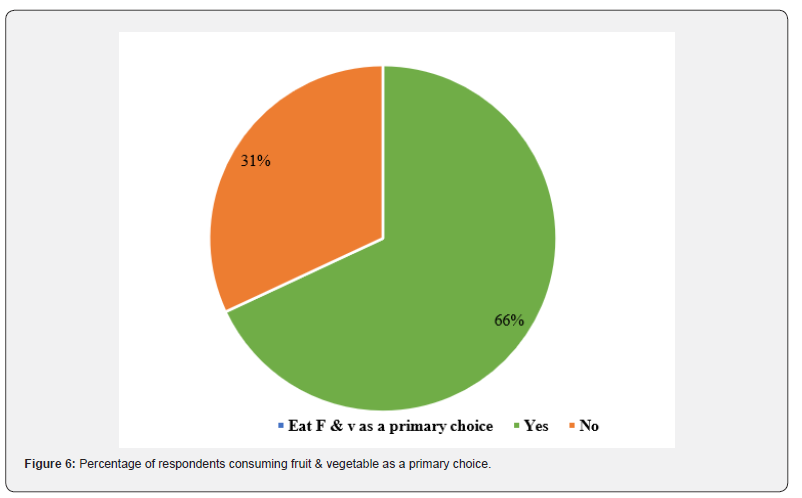
Fruit and vegetable consumption in Kersa and Gumay remains well below global recommendations despite high local production incidence. Households report a generally positive attitude toward produce: 66.3% indicate fruits and vegetables are a primary choice.
97.8% say they like fruits and vegetables only 2.2% report dislike. However, most consumption occurs mixed with staple dishes rather than as standalone portions, with about 72% preferring produce served together with other foods. Frequency data show only 18% of respondents eat fruits and vegetables daily, while the plurality eats them about three times weekly; small minorities report only one or two occasions weekly. These patterns result in mean intakes substantially below the WHO minimum of 400 g/day for combined fruits and vegetables. National dietary surveys and regional studies [13][16] show similar shortfalls. Home gardens have been shown in Ethiopia and other lowincome settings to increase consumption and diversity, but effect sizes vary by intervention quality, market pressure to sell produce, seasonality and knowledge of preparation methods [14]. Reported mean intakes for fruit ≈1.47 servings/day, vegetables ≈1.94 servings/day with medians 1.0 and 2.0 respectively, and only small fractions meeting the WHO target (≥5 servings/day) indicate a substantial consumption gap despite high production prevalence. Approximately 20% report zero fruit intake and 15% zero vegetable intake daily. Home gardening prevalence (90.7%) increases availability and diversity but does not by itself guarantee adequate intake.
Most of the respondents like consumption of fruits and vegetables. However, about 5% of the respondents who reported they like consuming fruits and vegetables only consume once in a week. This gap shows that having interest for consumption does not guarantee consumption. Other factors that minimize the accessibility hinders consumption. The highest consumption percentage (31.5%) is recorded for 3 times consumption per week.
The gap between positive perception and inadequate intake mirrors national evidence that Ethiopians consume less than recommended levels of fruits and vegetables and that diets remain cerealcentric (teff, maize, sorghum) across rural areas [17-18]. Reviews and regional analyses identify the same constraints seen in Kersa and Gumay-seasonal scarcity, affordability limits, high postharvest loss and cultural meal patterns that favor staples over fresh produce areas [17]. Market analyses from Kersa likewise document limited and informal value chains that depress producer returns and constrain steady market supply, reinforcing seasonal and price barriers to household consumption [8].
Its shown in the above (Table 3) that vegetables producers consume 3.96 days/week and households that do not produce consume vegetable 3.25 days/week. Similarly, Fruits producer households consume 4.02 days/week and non- Fruits producers consume 2.67 days/week. Therefore, the pattern shows that Households that produce fruits/vegetables consume more frequently. Chi-square test (production vs frequency categories) shows its highly significant (p < 0.001), confirming that production status is strongly associated with higher consumption frequency. From this it can easily be concluded that Production boosts consumption: Households that grow their own fruits/vegetables eat them more often. Fruits show stronger effect; non-producers consume fruits much less frequently compared to producers.
Association of socio demography status with practice of home gardening
As shown in the table below, from the total of 228 male respondents, 215 (79.6%) produce home gardening and 13.3% of females practice home gardening in the study areas. Similarly, most of the respondents practicing home gardening are married one (77.4%). Concerning the relationship between education and home gardening most of the respondents practicing home gardening are those from primary education.
Respondents from 36 to 40 years of age mostly practice home gardening than other age category. Whereas respondents less than 25 years of age have less engagement in practicing home gardening.
Chi-squere test showed that there is no statistically significant association between home gardening practice and sex, marital status, education level, or age in this sample (p > 0.05 for all). Although socio-demographic status is not limited to these, among there is no relation between socio-demographic status and practice of home gardening in the present study.
Postharvest loss of fruits and vegetables
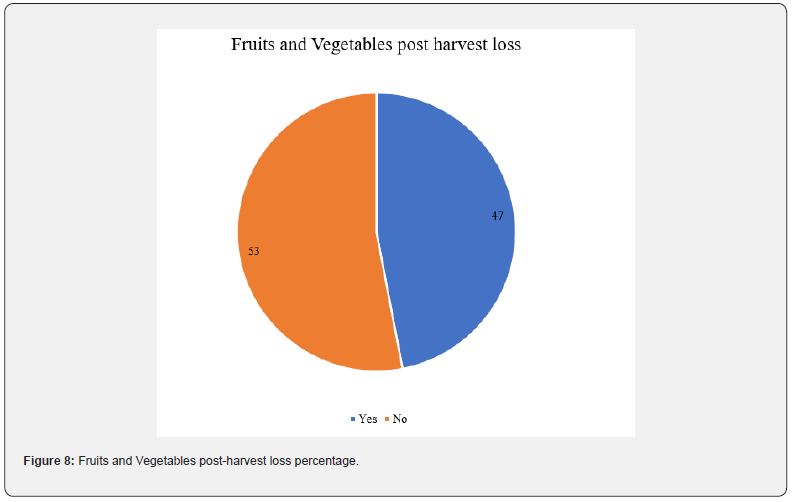
The total postharvest loss of horticultural crops, including fruits and vegetables, at various stages: harvesting, storage, transportation, and marketing ranges from 15 to 70%. Postharvest loss of vegetables alone is about 40%. Fruits like mango, banana, papaya, avocado, sweet orange, etc., take the largest share of the total postharvest loss [19]. High postharvest loss is a major proximate driver of low consumption. The study’s estimated 47% loss closely aligns with documented national horticultural loss ranges and substantially reduces the quantity available for household consumption and sale [17].
Losses are concentrated in perishable fruits (mango, banana, papaya, avocado), which are also often the most nutrientdense; thus, postharvest inefficiencies translate directly into lost nutritional value for communities. Market studies in Kersa highlight weak aggregation, limited coldchain options and informal trader dominance, which together accelerate spoilage and force early sales at low prices, reducing both household food retention and the incentive to invest in quality production [8].
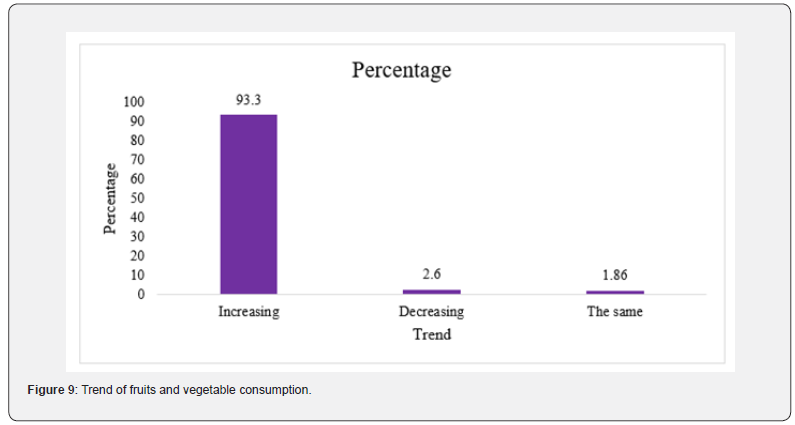
The Ethiopian Statista shows that there is growth in the market for both fruits and vegetables, with increasing consumer spending and gradually rising per capita volume consumption. Similarly, more than 90% of the respondents in the present study reported that there is an increase in consumption of fruits and vegetables from previous years.
However, production and productivity have been decreasing due to water shortages, pest/disease pressure, lack of improved varieties, poor extension, and animals damaging crops which matches with prior diagnostic studies in Jimma and broader Ethiopia. Asfaw et al. [12] (Jimma ARC) identified pests, disease and informal marketing as primary constraints for avocado and mango; Adame et al. [13] and other reviews emphasize drought vulnerability, weak processing industries and knowledge gaps as systemic barriers.
Preference rankings and nutritional relevance of fruits and vegetables
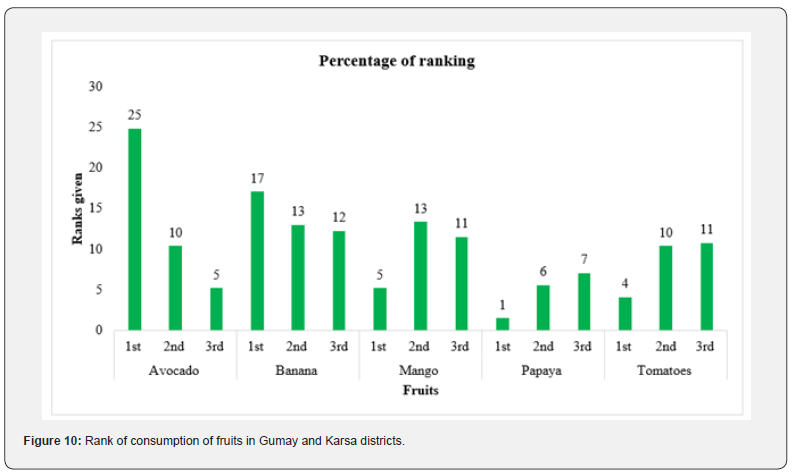
Respondents express positive attitudes toward fruits and vegetables (97.8% like them; 66.3% consider them a primary food). Respondents rank avocado and banana highest among fruits and onion and carrot highest among vegetables. These preferences matter for nutrition programming because avocado provides healthy fats and fatsoluble vitamin delivery (improving absorption of provitamin A), while carrots and leafy brassicas contribute provitamin A and vitamin C-key targets for reducing micronutrient deficiencies. Prior literature notes that aligning promotion with locally preferred items increases adoption and sustained consumption, so the Kersa/Gumay preference profile supports prioritizing these commodity lines in garden and market interventions [17].
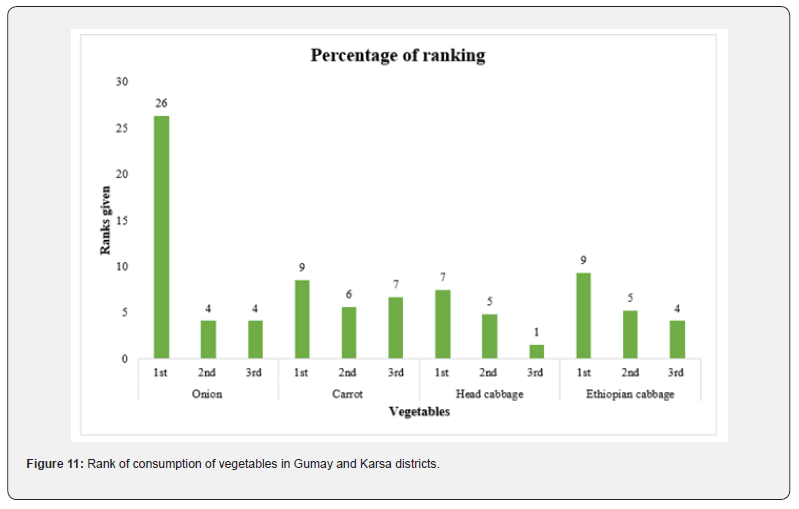
Similarly, respondents were ranked vegetables according to their interest of consumption. Accordingly, onion was ranked first by 26% of the respondents. Carrot was ranked 1st only by 8.5% of the respondents. Head cabbage and Ethiopian cabbage were less preferred [20-21].
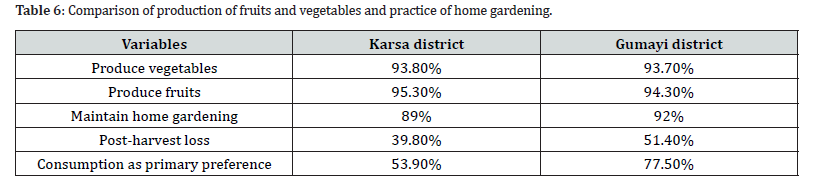
Comparison of production of fruits and vegetables and practice of homegardening between Kersa and Gumay districts
As shown in the table below, the percentage production of fruits and vegetables are almost similar in both districts. In addition, production of home gardening has similarity with very small difference (89% and 92%). However, post-harvest loss shows difference and its high in Gumayi district. This is attributed to transport infrastructure & distance to market, Storage conditions.
Concerning consumption of fruits and vegetables as primary preference respondents from Gumayi districts showed high interest [22].
Drivers of the perception–consumption gap
Several interacting factors explain why favorable perceptions
do not yield sufficient intake in this study. For instance,
• Affordability and seasonality: produce is perceived as
less affordable and is seasonally scarce, so households ration or
prioritize staples during lean months [17].
• Commercialization pressure: families sell surplus for
cash, sometimes selling the most desirable, nutrientdense items
first, leaving less nutritious or lowervalue items for household use
[8].
• Limited knowledge translation: only 24% received
cooking demonstrations, so many households may lack practical
skills to prepare vegetables and fruits in nutrientretentive,
appealing ways, lowering consumption even when produce is
available [17].
Conclusion and Recommendations
Conclusion
The study conducted in Kersa and Gumay districts of Jimma Zone, Oromia revealed that fruits and vegetables play a critical role in household food systems, income generation, and nutrition, yet production and consumption remain below potential due to structural, economic, and knowledge-related barriers.
Socio-demographic data show that the community is dominated by smallholder male farmers with limited education and landholding sizes averaging less than 1 hectare, reflecting a predominantly subsistence-based production system. Although over 90% of households produce fruits and vegetables and maintain home gardens, the land allocated for horticulture is small (<0.5 ha in most cases), constraining productivity and diversification.
Crop mix patterns show dominance of Ethiopian cabbage, head cabbage, tomato, carrot, garlic, onion, and beetroot among vegetables, and avocado and banana among fruits, crops that are both nutritionally valuable and locally adapted. However, production practices are characterized by low input use, heavy dependence on compost and rain-fed systems, and minimal irrigation adoption, exposing farmers to seasonal variability and yield instability.
Home gardening is widespread (90.7%) and contributes substantially to household food security and dietary diversity, yet it is still limited by inadequate irrigation, pest challenges, and poor postharvest handling. Despite high awareness (97.8% like fruits and vegetables) and positive attitudes, actual consumption remains below WHO recommendations (400 g/day). Most households consume fruits and vegetables only two to three times weekly, often mixed with staples, rather than as distinct food portions.
Persistent postharvest losses (≈47%), limited value chain integration, and seasonal market gaps reduce both household consumption and income from horticultural crops. Moreover, affordability, cultural food patterns, and weak market and extension linkages further widen the gap between favorable perception and practical intake.
In summary, the findings confirm that Kersa and Gumay households value and produce horticultural crops, but systemic constraints small landholdings, limited irrigation, low input use, poor postharvest systems, and socio-economic factors restrict both productivity and nutritional benefits.
Recommendations
• Promote intensive production systems suited to
small plots including intercropping, vertical gardening, and highdensity
planting of nutrient-rich crops (carrot, cabbage, tomato,
leafy greens).
• Enhance access to improved varieties of fruits and
vegetables adapted to local agro-ecologies to raise productivity
and resilience to pests/diseases.
• Scale up micro-irrigation and water harvesting
technologies to enable year-round production and reduce
vulnerability to seasonal droughts.
• Establish village-level aggregation and storage
facilities (shade, evaporative coolers, and crates) to reduce
postharvest losses.
• Integrate nutrition education and cooking
demonstrations into horticulture programs to translate
awareness into practice and promote regular consumption.
• Investigate economic and cultural determinants of
fruit and vegetable consumption to design targeted interventions.
• Pilot community-level interventions combining
production, nutrition education, and marketing to assess impact
on diet diversity and income.
References
- Misganaw A, Tilahun N, Kebede D, Gizachew A, Amare D, et al. (2017) National mortality burden due to communicable, non-communicable, and other diseases in Ethiopia, 1990–2015: findings from the Global Burden of Disease Study 2015. Popul Health Metr.
- Jimma University. Homegarden vegetables production for nutritional security and household income source; CANAG feature story and project reports, Jimma University (Jimma experience and program evaluations).
- Miller V, Salim Y, Clara C, Mahshid D, DanielJ C, et al. (2016) Availability, affordability, and consumption of fruits and vegetables in 18 countries across income levels: findings from the Prospective Urban Rural Epidemiology (PURE) study. Lancet Glob Health 4(10): e695-703.
- Baye K, Kennedy G (2020) Estimates of dietary quality in infants and young children (6–23 months): Evidence from demographic and health surveys of 49 low- and middle-income countries. Nutrition 78: 110875.
- Worku A, Yohannes AM, Tiffany K, Anne W, Robert A, et al. (2017) Associations of childhood, maternal and household dietary patterns with childhood stunting in Ethiopia: proposing an alternative and plausible dietary analysis method to dietary diversity scores Nutr J 17(1): 14.
- Lisa CS, Marie TR, Aida N (2005) Why Is Child Malnutrition Lower in Urban Than in Rural Areas? Evidence from 36 Developing Countries. World Development 33(8): 1285-1305.
- Melaku, Christina F (2016) Global, Regional, and National Cancer Incidence, Mortality, Years of Life Lost, Years Lived with Disability, and Disability-Adjusted Life-Years for 29 Cancer Groups, 1990 to 2016.
- Ibrahim G, Yadeta B, Ibrahim A. Analysis of vegetables market performance in Kersa district, Jimma zone, Ethiopia. Jimma University Open Access Institutional.
- Tsegamariam T, Abeba A (2025) Trends in Cabbage Production in Ethiopia. Agricultural Statistics Review.
- Mahshid D, Andrew M, Xiaohe Z, Sumathi S, et al. (2017) Association of fats and carbogydrates intake with cardiovascular disease and mortality in 18 countries from five continents a prospective cohort study Lancet 390(10107): 2050-2062.
- Melkamu M (2020) Homegarden vegetables production for nutritional security and household income source.
- Asfaw E, Erko B, Temasgen M, Achamyelh K (2020) Production and Marketing Constraints of Major Sub‑Tropical Fruits in Jimma Zone, South West Ethiopia. IJRRIS 7(1): 1-7.
- Adame MY, Tolesa GN, Workneh TS (2023) Consumption pattern, processing, exporting status and policy prospects of fruit and vegetables in Ethiopia: A review. Journal of Food Science and Nutrition.
- (2019) FAO Ethiopia country horticulture and home garden project reports.
- Ebrahim E (2017) Determinants of Fruit and Vegetable Supply and Marketing Problems in Ethiopia. A Review Senior Seminar.
- Gashaw T, et al. (2019) Fruit and Vegetable Consumption in Ethiopia: A Review. Ethiopian Public Health literature.
- Yusufe A, Mawardi YA, Getachew NT, Tilahun SW (2022) Consumption pattern, processing, exporting status and policy prospects of fruit and vegetables in Ethiopia: A review.
- Tadele F, Derbew B (2015) A Review on Production Status and Consumption Pattern of Vegetables in Ethiopia. JBAH 5(21).
- Obse FE et al. (2022) Postharvest Losses of Horticultural Crops in Ethiopia.
- Kebebe F, Kebebew Z, Bekele D, Bato Y (2025) Vegetation Composition, Richness, and Diversity in Homegarden Agroforestry Systems, Jimma zone, Daagu. International Journal of Basic and Applied Research.
- WHO/FAO (2002) Diet, Nutrition and the Prevention of Chronic Diseases. Joint technical report.
- Fayisa D (2021) Assessment of market information among vegetable producers: selected woredas of Jimma Zone thesis, Jimma University.

























