




 NFSIJ Home



Abstract
Objective: To investigate the association between micronutrient deficiencies indicative of malnutrition and altered serum metal profiles in children presenting with febrile seizures (FS) at Shaikh Zaid Hospital, Larkana, Pakistan.
Methodology: In this case-control study, 1–12-year-old children diagnosed with FS (cases) and age-matched healthy controls were randomly enrolled from the outpatient department after obtaining written informed consent. A structured questionnaire captured sociodemographic, clinical, and nutritional data. Anthropometric assessment classified nutritional status, Serum concentrations of zinc, iron, magnesium, calcium, and copper were measured using atomic absorption spectrometry. Data were analyzed using SPSS v22.0 and GraphPad Prism; independent t-tests and chi-square tests assessed intergroup differences (P < 0.05 deemed significant).
Results: Of the enrolled children, FS cases (n=100) were predominantly male (33, 66%) and female (17, 36%) aged 1–12 years, and underweight (70% vs in controls; P < 0.01), with most belonging to low-socioeconomic households in Larkana District-reflecting chronic protein-energy malnutrition and micronutrient inadequacy. Clinically, cases exhibited high fever (mean 102 °C), seizure duration of 5–15 minutes, recurrence twice monthly, predominantly in evenings, with peak incidence in summer. Serum analysis revealed significantly lower concentrations of zinc (0.21 ± 0.10 μg/dL vs. 1.70 ± 0.66 μg/dL; P < 0.001), iron (0.17 ± 0.07 μg/dL vs. 1.11 ± 0.66 μg/dL; P < 0.001), magnesium (11.28 ± 4.34 mg/dL vs. 22.65 ± 7.84 mg/dL; P < 0.01), and calcium (65.33 ± 0.96 mg/dL vs. 91.12 ± 0.84 mg/dL; P < 0.003) in FS patients compared to controls, alongside markedly elevated copper (2.22 ± 0.51 μg/dL vs. 1.58 ± 0.68 μg/dL; P < 0.001). Deficiencies persisted across all age strata without significant variation.
Conclusion: This work demonstrated that metal elements concentration of Zinc, Iron, Magnesium and Calcium were significantly decreased, whereas the concentration of Copper was significantly increased in Febrile seizure patients. elevated copper may reflect compensatory inflammatory responses or disrupted metal homeostasis secondary to malnutrition. These findings underscore malnutrition as a modifiable risk factor for FS, warranting targeted nutritional interventions in vulnerable pediatric populations.
Keywords:Febrile seizures; Malnutrition; Micronutrient deficiency; Zinc; Iron; Trace elements; Pediatric neurology
Introductıon
Febrile seizures (FS) are defined as convulsions triggered by fever in neurologically healthy children aged 6 months to 5 years, typically manifesting in two phases: a tonic phase with generalized body rigidity followed by a clonic phase characterized by rhythmic jerking movements. Globally, FS affect 2–5% of young children, yet in resource-constrained regions like Pakistan, the interplay between environmental stressors and nutritional deficiencies may amplify incidence and severity. Malnutritionencompassing protein-energy undernutrition and micronutrient deficits-affects over 30% of Pakistani children. creating a vulnerable neurodevelopmental milieu that lowers the seizure threshold during febrile illnesses.
Emerging evidence links micronutrient imbalances to neuronal hyperexcitability: zinc deficiency impairs GABAergic inhibition and antioxidant defenses; iron insufficiency disrupts myelin synthesis and dopamine metabolism; magnesium depletion compromises NMDA receptor regulation; and calcium shortfall destabilizes synaptic transmission. Conversely, elevated copper, often observed in inflammatory or malnourished states, inhibits Mg²⁺-ATPase and Na⁺/K⁺-ATPase, disrupting ionic homeostasis and promoting epileptiform discharges. In Pakistan, where dietary diversity is limited by poverty and food insecurity, chronic undernutrition may exacerbate these metal dysregulations, particularly in rural districts like Larkana [1].
The recent estimates of population of Pakistan exceed 140 million, whereas the total number of trained neurologists in Pakistan is estimated to be less than 30 verbal communications at the annual meeting of Pakistan International Neuroscience Society (PINS) in year of 2001. There are approximately 350 neurologists of Pakistani origin in North America (Data collected by PINS from various directories of neurologists 2001). Based on the available data, it is estimated that 1.38 million people are suffering from epilepsy in Pakistan, which makes it one neurologist available for every 46200 sufferers of seizures [1]. Despite a high epilepsy burden-estimated at 1.38 million cases with only one neurologist per 46,200. no prior studies in Pakistan have examined serum metal profiles in FS within the context of malnutrition and environmental factors. This case-control study at Shaikh Zaid Hospital, Larkana, addresses this critical gap by integrating anthropometric assessment, dietary history (including pica behavior and water quality), and serum analysis of zinc, iron, magnesium, calcium, and copper. By correlating metal concentrations with nutritional status, socioeconomic variables, and clinical FS patterns, we aim to elucidate malnutrition as a modifiable risk factor, paving the way for targeted micronutrient interventions, enhanced public awareness, and novel preventive strategies in underserved pediatric populations.
Methodology
The Patients of FS with 1 to 12 years age presented in outdoorpatient departments of Shaikh Zaid Hospital, Shaheed Mohtarma Benazir Bhutto Medical University, Larkana, this Study has been approved by the ethical committee of SMBBMU under the (ref. no SMBBMU/ERB/16). The samples were randomly selected, total number of patients were hundred (N=100), out of them fifty (N=50), FS patients (33 males and 17 females) were randomly selected during January to December 2021. Total (N=50) number of controls with same age, gender and locality matched were also selected for the comparison. The serum samples were stored at -4ºC until further analysis. Serum metals contents such as, Zn, Fe, Cu, Mg and Ca were determined by Hitachi atomic absorption spectrometer (Z-2000 Hitachi, Japan) using manufacture`s recommended methods. All glassware’s were soaked overnight in 20% Nitric acid (HNO3) and wash away three times with deionized double-distilled water, purchased from E. Merck, Germany [2]. The standard questionnaires were filled through interview from FS patients and control, to get information regarding their socio-demographic, such as dietary habits, lifestyle and history of recurrence etc..
Comparison of FS patients with control groups was measured by standard t-test. Association and correlation of FS patient with different groups i.e. gender wise frequency and age wise duration of episodes, some metals analysis of FSs patient was assessed by ANOVA, P <0.05 was considered statistically significant.
Results
Demographical study of Febrile Seizure patients in different districts of southern Sindh
Present study was conducted at Shaikh Zaid Hospital, Larkana, Sindh. Majority of FS patients were male (66%) compare to female (36%) and resident of Larkana and other districts, and their mean age was 4 years. FS patients showed 70% were underweight, 20% were normal and only 10% were overweight compare to their control groups (Figure 1A). This study further explores the lifestyle of FS patients and found out significant differences. The active lifestyle of FS patients shows 40% and sedentary showed 60% compare to control groups, which accounts for 90% and 10% respectively. Furthermore, water type also show impact on Febrile seizure, we found out that Majority of FS patients were consuming underground water, which account for 80% and 20% compare with their control groups 76% and 24% from total N=50 FS patients respectively (Figure 1 B). Current study further explores the PICA behavior of the FS patients, our data showed significant Positive PICA behavior in FS patients, among n=50 patients showed 68% positive and their control group which accounts for 40%, whereas Negative PICA behavior accounts for 32% compare with their negative control which showed 60% in non FS patients. Heredity also contributing through playing its role in febrile seizures. During our study we found out that 48% of FS patients were positive heredity compares to control which only accounts for 10%, moreover negative heredity showed 52% compare with control group (90%) (Figure 1 C).
Most of FS patient`s parents were farmer by their occupation. Mostly of FS patients were admitted in summer season as compare to other sessions. We found that Most of FS patient`s body temperature was 102ºc during recurrence time. Also, the time duration of recurrence was 1 to 15 minutes in evening and the episodes of getting recurrence was 2 times per month.
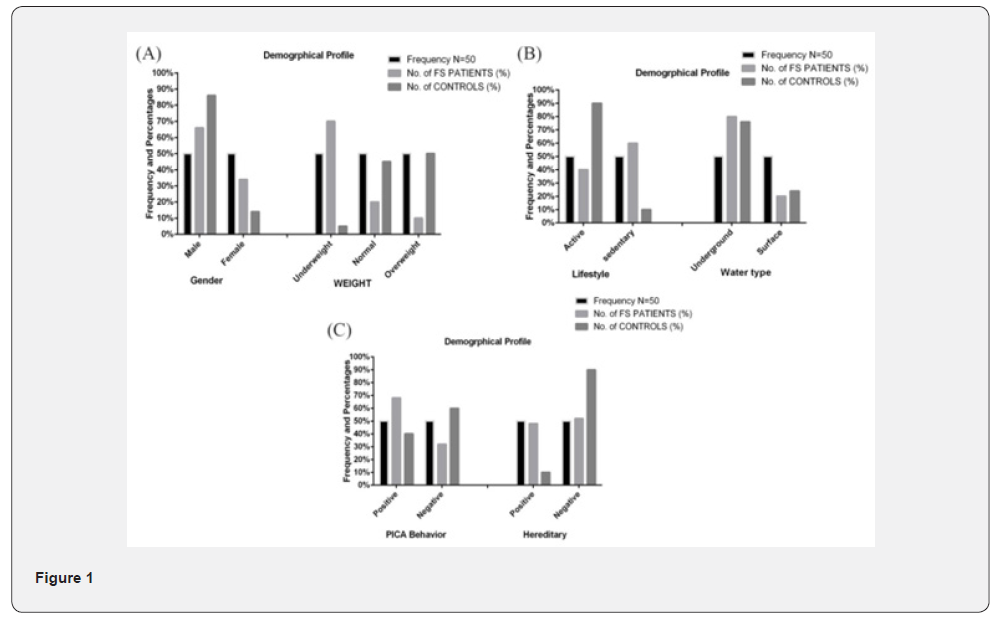
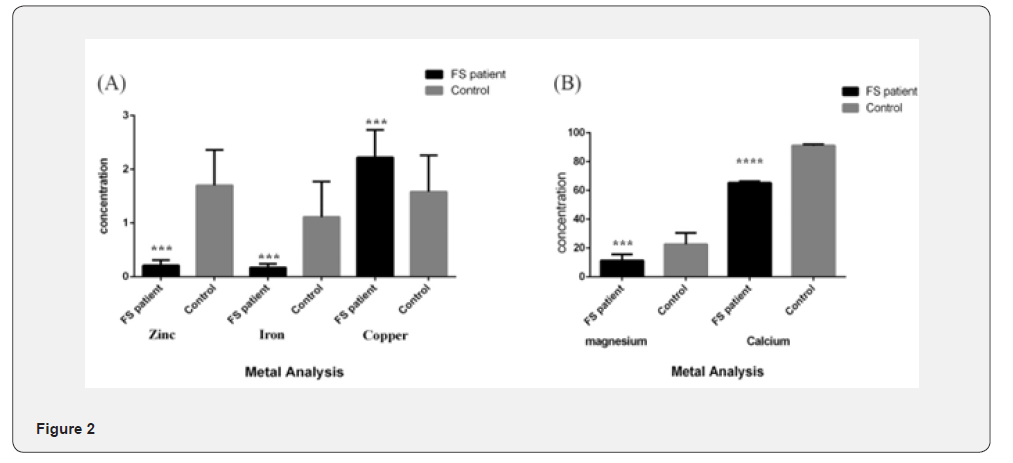
Figure 1 Shows the demographical Profile of Febrile Seizure patients, (A) shows the graphical representation of Genders where Male FS patients were in majority and high number of FS patients were underweight, (B) moreover, the lifestyle of FS patients were compromised as the number of active lifestyle were discovered in control groups. (C) the PICA behavior were observed in FS patients and it shows significant elevation compare to negative behavior, whereas heredity doesn’t show any significant effect on FS patients. Most FS patients came from farming families, indicating a possible link to lower socioeconomic status and limited access to balanced nutrition. Additionally, most cases occurred during the summer, with average recorded body temperatures reaching 102°F during seizure recurrence. Episodes typically lasted 1 to 15 minutes and occurred around twice per month, primarily in the evening.
Comparison and Correlation of some metal elements in patients with Febrile Seizures
The Socio-Demographic characteristics of N=50 patients have been identified and serum metal analysis were done in all febrile patients, five major elements have been selected for analysis, Zinc, Iron, Copper, magnesium and Calcium. Further analysis of elements were categorize in different parameters, Gender, lifestyle, age groups, PICA behavior, family history, body temperature, duration of seizures episodes (<5min, >5min, morning, evening, <2 seizure/month and >20 seizure/month).
In Figure 2 the metal elements analysis of Zinc, Iron, Copper, magnesium and Calcium of FS patients (N=50) showed significant changes with their respective control group (N=50), Zinc (P=0.0001) and Iron (P=0.0001) elements levels were significantly decreased, however the level of Copper (P=0.0001) was elevated significantly (Figure 2A). Furthermore, low level of expressions of magnesium (P=0.0001) and Calcium (P=0.0001) have been noticed compared to their control groups (Figure 2 B).
Figure 2 (A) Metal analysis of N=50 Febrile seizure patients with their respective control groups, Zinc and iron shows significant decreased levels in FS patients, however copper concentration shows significant inversely proportional in the graph. (B) Magnesium and Calcium levels were also found significant decreased levels in FS patients. These trace metal imbalances strongly reflect underlying nutritional deficiencies common in malnourished populations. Low levels of zinc, iron, magnesium, and calcium are well-documented indicators of micronutrient malnutrition and can compromise neurological function and immune responses in young children. The elevated copper levels may further disturb neural signaling and metabolic balance. These findings reinforce the role of malnutrition, particularly micronutrient deficiencies as a potential contributing factor in the development and severity of febrile seizures in children.
Metal analysis of different Parameters of Febrile Seizure
Genders Metal Analysis (Male and Female)
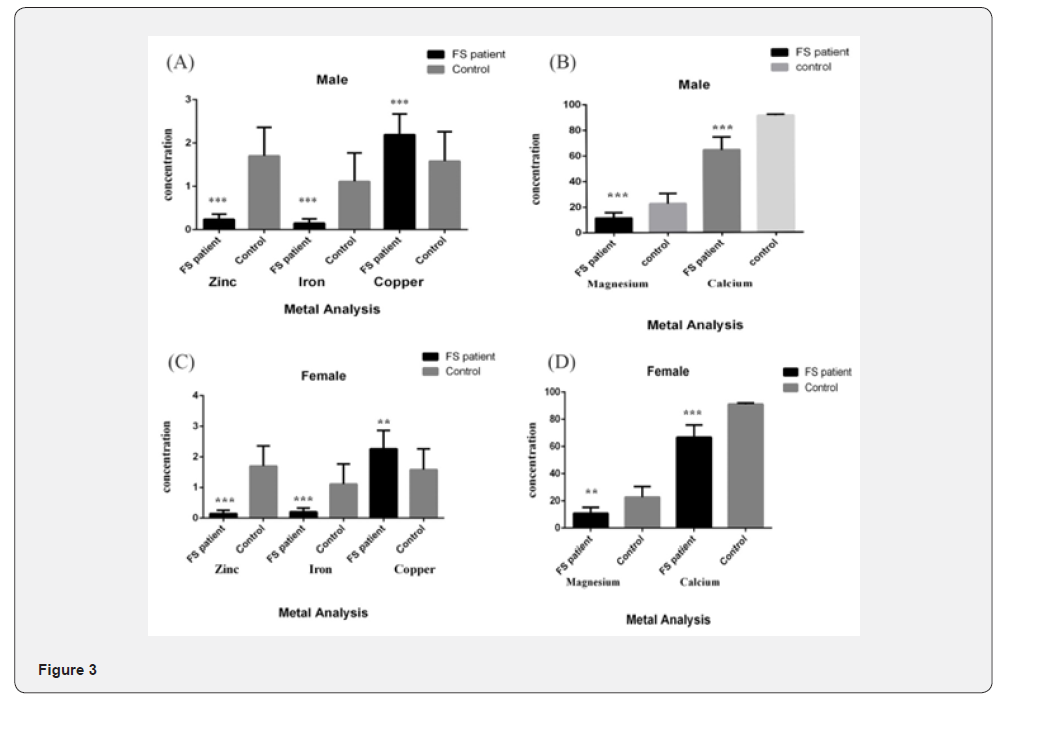
To validate our studies further we categorize our data into the Gender basis male and female (N=50). Upon the analysis of metal elements we found out that in male FS patients (N=33) Zinc (P=0.0001) Iron (P=0.0001), Magnesium (P=0.0001) and Calcium (P=0.0001) levels were significantly decreased related to their respective control groups, however the level of Copper (P=0.0001) was significantly increased compared to control (Figure 3 A and B). Moreover, in female FS patients (N=17) the expression level of Zinc (P=0.0001), Iron (P=0.0001), Magnesium (P=0.001) and Calcium (P=0.0001) were found significantly reduced to their respective control group. Conversely the expression level of Copper were found significantly amplified compare with control group (P=001) (Figure 3 C and D).
We further analyzed both (Male and Female) group with each other to see any significant changes of Metal elements between the both groups, however there wasn’t any significant changes have been observed between the groups (P=0.2). These findings suggest that both male and female children with FS are equally affected by deficiencies in essential micronutrients. Such widespread reduction in key trace elements, regardless of gender strongly points to underlying malnutrition, particularly micronutrient malnutrition, as a major contributing factor in FS. This reinforces the need for early nutritional screening and dietary intervention in at-risk pediatric populations.
Figure 3 (A and B) the level of Zinc, Iron, magnesium and calcium of male FS patients were significantly decreased and the level of copper element was found highly increased compare to the control group. Moreover (C and D) shows that Zinc, Iron, magnesium and calcium levels were significantly reduced and the level of copper element was found highly improved compare to the control group in female FS patients.
Metal Analysis of Febrile Seizure patients on the basis of lifestyle (Sedentary and Active)
Our Study already confirmed that 60% of Febrile seizure patients lifestyle is sedentary showed in (Figure 1B) to further validate our results we analyzed availability the metal elements and their role in lifestyle of patients of FS. We took cohort of the FS patients (N=32) with sedentary lifestyle and elements were analyzed, the patients with sedentary life showed that the concentration of Zinc (P=0.0003) and iron (P=0.00002) were significantly lessened in FS patients compare to control group. However the copper concentration of FS patients were high (P=0.0004) compare with control group (Figure 4A). Additionally, magnesium (P=0.0001) and calcium (P=0.0001) levels were significantly decreased (Figure 4B). These deficiencies suggest a possible nutritional imbalance, as sedentary children especially in low-income populations, may also have inadequate dietary intake, poor absorption, or limited physical development, all of which contribute to malnutrition.
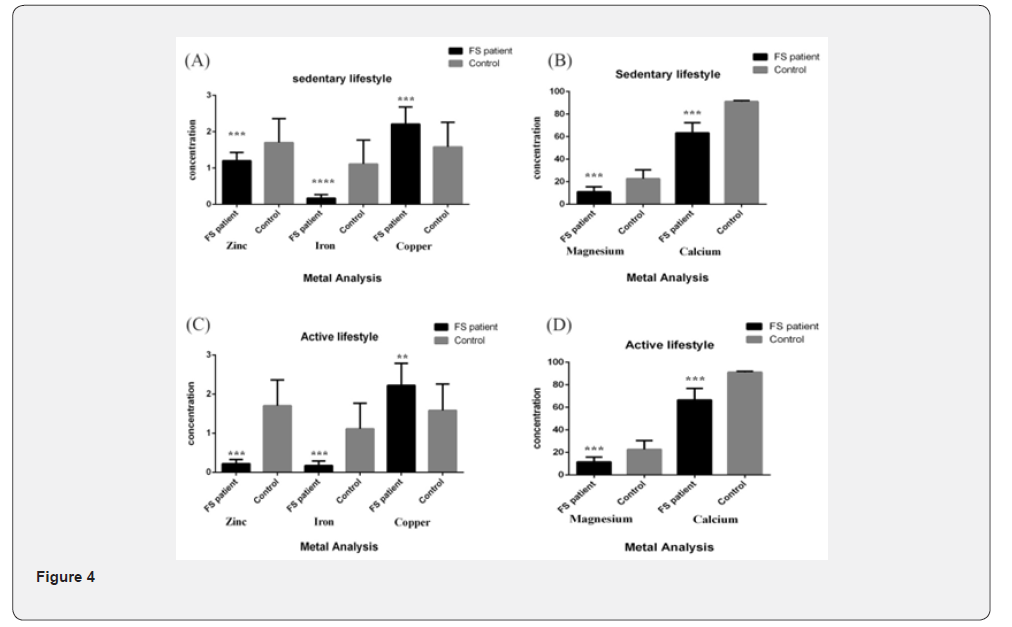
Another cohort of FS patients (N=18) with Active lifestyle were also studied and their metal analysis have been done for supporting conclusion, we found that Zinc (P=0.0007) Iron (P=0.0003), Magnesium (P=0.0002) and Calcium (P=0.0001) levels were significantly diminished related to their respective control groups, however the level of Copper (P=0.008) was significantly increased compared to control (Figure 4 C and D).
Further analysis were done on both cohort with each other to see any significant changes of Metal elements that play their role in sedentary and active lifestyle between the both sets, however there wasn’t any significant difference have been detected between the groups (P=0.66). This indicating that trace metal deficiencies are prevalent among FS patients regardless of activity level. This widespread micronutrient imbalance reinforces the role of malnutrition, particularly hidden hunger and subclinical deficiencies as a common, underlying factor in FS, independent of lifestyle.
Figure 4 (A and B) the level of Zinc, Iron, magnesium and calcium of FS patients with sedentary lifestyle were found considerably decreased and the level of copper element was found highly augmented compare to the control group. Moreover (C and D) shows that Zinc, Iron, magnesium and calcium levels were significantly reduced and the level of copper element was found extremely improved compare to the control group in Active FS patients.
Metal Analysis of Febrile Seizure patients on the basis of PICA Behavior (With PICA Behavior and Without PICA Behavior)
Metal elements analysis of febrile patients with PICA behavior were also done in our study to validate our previous result in (Figure 1 C), we tried to find out the role of these elements linked with PICA behavior. If any disturbance in regulation of metal elements contributes in changes in behavior, however we found didn’t found out any significant changes in elements that lead to any contribution in behavior changes in FS patients, but there could be a home for another study with different elements which might play role in PICA behavior. Our results showed that the FS patients (N=34) with PICA behavior were significantly reduction in Zinc (P=0.0009), Iron (P=0.00001), magnesium (P=0.0003) and Calcium (P=0.001), however the elevated levels for Copper elements have been observed (P=0.0001) related with their control group, (Figure 5 A and B).
Moreover, FS patients without PICA behavior (N=18) showed the expression level of Zinc (P=0.0006), Iron (P=0.0001), Magnesium (P=0.0004) and Calcium (P=0.0001) were found significantly abridged to their respective control group. On the other hand the expression level of Copper were found significantly improved compare with control group (P=0.003) (Figure 5 C and D).
Moreover, we also analyzed both (PICA and without PICA behavior) group with each other to see any significant changes of Metal elements between the both groups, however there wasn’t any significant changes have been observed between the groups (P=0.7). This suggesting that micronutrient deficiencies are widespread among all FS patients, regardless of behavioral symptoms. Although PICA behavior is classically associated with micronutrient deficiency-particularly of zinc and ironthis study found that metal imbalances were present in both groups. These findings highlight that malnutrition, especially hidden micronutrient deficiencies, may be a systemic issue in the pediatric FS population studied, potentially contributing not only to seizure susceptibility but also to developmental and behavioral concerns.
Figure 5 (A and B) the level of Zinc, Iron, magnesium and calcium of FS patients with PICA behavior were found significantly diminished and the level of copper element was found highly improved compare to the control group. Moreover (C and D) shows that Zinc, Iron, magnesium and calcium levels were significantly abridged and the level of copper element was found extremely improved compare to the control group in FS patients with without PICA behavior.
The Socio-Demographic characteristic with metals analysis and it was concluded that in Age-wise comparison Copper concentration was significantly increased moreover, the zinc, Iron, Magnesium and Calcium concentration were decreased in FS patients less or equal to 5 years old, as compared to more than 5 years age. In comparison of water types, we found that the serum metals content of surface water drinkers was higher in Zinc, Iron, and copper as compare to underground water, while magnesium and calcium concentration is lower in surface water as compare to underground water.
The comparison of FS patients body temperature we found that the significantly decreased concentration of Copper but nonsignificantly increased concentration of Zinc, Iron, and calcium of less than 102°c body temperature. In serum metals content comparison between time duration of recurrence which have lower or equal to 5 minutes and more than 5 minutes significantly decreased concentration of Iron but non-significantly increased concentration of Zinc and Calcium recurrence time less or equal to 5 minutes as compare to recurrence more than 5 minutes, but the concentration of Iron, Copper and magnesium was higher in FS patients who were get recurrence time less or equal to 5 minutes as compare to those who get recurrence more than 5 minutes.
The comparison of serum metals contents of seizures episodes per month we found that the significantly decreased concentration of Zinc and Magnesium in the FS patients who get 1 to 2 episodes of seizures per in month as compare to more than 2 episodes of seizures in per month, while the non-significantly increased concentration of Iron, Copper and Calcium in FS patients who had 1 to 2 episodes of seizures per in month as compare to more than 2 episodes of seizures in per month. The serum metals content episodes in morning and evening we found the non-significantly increased concentration of Zinc, Iron, Copper and Calcium in the FS patient of Seizure episode morning as compared to FS patient of seizure episode in evening, the comparison and correlation of some metal elements of FS patients are shown in supplementary file Table 2 [3].
Discussion
• Zinc: In literature review it was found that [4-5] that Zn level was found significantly lower in patients of simple FSs than in controls. [6] also reported that Serum Zn in patients was significantly lower than the control. Also, in [7] study, it was reported that patients with idiopathic intractable epilepsy had significantly decreased levels of serum Zn in comparison with healthy children. Present study supports the previous studies [4- 8].
• Iron: Previous studies also found low levels of serum iron, similar to present study and concluding that low body iron plays an important role in brain metabolism, can down regulate halting many substantial functions of brain and could lead to FS [9-13]. Present study also shows that the concentration of Iron was lower in FS patient as compared to controls.
• Copper: In previous studies it was reported that the main cause of high concentration of copper was due to intake of anticonvulsants drugs which had high concentration of copper, we also found in previous study that the serum Cu levels in FS patients undergoing treatment with anticonvulsants drugs were significantly higher than the control group that is consistent with other studies, reported the high concentration of copper in serum is due to use of those AEDs, increased hepatic synthesis, or due to the decreased breakdown or both Cu binding proteins, altered intestinal absorption, and altered excretion patterns, changes in the distribution among body tissues, or a combination of these factors [14-16].
• Magnesium: In this study Table 2 (supplementary) we found that concentration of magnesium was significantly decreased in FS patients as compared to controls. Similar findings have been reported earlier, which found that the mean serum concentration of Mg and Zn was significantly lower in the children with febrile convulsion [17-22].
• Calcium: A study reported that 48 children with FSs had low serum Calcium (P<0.05) and Iron (P<0.001) as compared to age matched control [19].
Conclusion
Profound undernutrition, evidenced by high prevalence of underweight status and depleted essential micronutrients (zinc, iron, magnesium, calcium), strongly correlates with febrile seizures in this cohort, likely exacerbating neuronal hyperexcitability and seizure threshold reduction. Conversely, elevated copper may reflect compensatory inflammatory responses or disrupted metal homeostasis secondary to malnutrition. These findings underscore malnutrition as a modifiable risk factor for FS, warranting targeted nutritional interventions in vulnerable pediatric populations.
Recommendation
It is recommended based on present study that FS patients should be advised by practitioners to go through the metal content analysis and must prescribe the multivitamin tablets along with usual treatment of FS. They must be advised to improve their diet and physical activity.
References
- Siddiqui TS (2002) Febrile convulsions in children: relationship of family history to type of convulsions and age at presentation. J Ayub Med Coll Abbottabad 14(4): 26-28.
- Channa NA, Khand F, Soomro AM (2012) Comparison of serum calcium, copper and iron levels in serum samples from gallstone patients and control subjects.
- Manfredini R, Vergine G, Boari B, Faggioli R, Borgna-Pignatti C (2004) Circadian and seasonal variation of first febrile seizures. The Journal of pediatric 145(6): 838-9.
- Aly I, Kmal HM, Soliman DR, Mohamed MH (2014) Iron profile parameters and serum zinc and copper levels in children with febrile convulsions in Banha. J Am Sci 10(7): 320-7.
- Gattoo I, Harish R, Quyoom Hussain S (2015) Correlation of serum zinc level with simple febrile seizures: A Hospital based Prospective Case Control Study. International journal of pediatrics 3(2.2): 509-15.
- Seven M, Basaran SY, Cengiz M, Unal S, Yuksel A (2013) Deficiency of selenium and zinc as a causative factor for idiopathic intractable epilepsy. Epilepsy research 104(1-2): 35-9.
- Saad K, Hammad E, Hassan AF, Badry R (2014) Trace element, oxidant, and antioxidant enzyme values in blood of children with refractory epilepsy. International Journal of Neuroscience 124(3): 181-6.
- Naseer MR, Patra KC (2017) Correlation of serum iron and serum calcium levels in children with febrile seizures. International Journal of Contemporary Pediatrics 2(4): 406-10.
- Billoo A (2005) Association between iron deficiency anemia and febrile seizures. Journal of the College of Physicians and Surgeons--Pakistan: JCPSP 15(6): 338-40.
- Jun YS, Bang HI, Yu ST, Shin SR, Choi DY (2010) Relationship between iron deficiency anemia and febrile convulsion in infants. Korean journal of pediatrics 53(3): 392-6.
- Saeed T (2013) Association of iron deficiency anaemia and febrile seizures in children. Journal of Rawalpindi Medical College 17(2): 175-7.
- Fallah R, Tirandazi B, Karbasi SA, Golestan M (2013) Iron deficiency and iron deficiency anemia in children with febrile seizure. Iranian journal of pediatric hematology and oncology 3(1): 200.
- Ilhan A, Uz E, Kali S, Var A, Akyol O (1999) Serum and hair trace element levels in patients with epilepsy and healthy subjects: does the antiepileptic therapy affect the element concentrations of hair? European journal of neurology 6(6): 705-9.
- Mishra OP, Singhal D, Upadhyay RS, Prasad R, Atri D (2007) Cerebrospinal fluid zinc, magnesium, copper and gamma-aminobutyric acid levels in febrile seizures. Journal of Pediatric Neurology 5(1) :39-44.
- Lozoff B, Jimenez E, Smith JB (2006) Double burden of iron deficiency in infancy and low socioeconomic status: a longitudinal analysis of cognitive test scores to age 19 years. Archives of pediatrics & adolescent medicine 160(11): 1108-13.
- Ganesh R, Janakiraman L (2008) Serum zinc levels in children with simple febrile seizure. Clinical pediatrics 47(2): 164-6.
- Lee J-H, Kim JH (2012) Comparison of serum zinc levels measured by inductively coupled plasma mass spectrometry in preschool children with febrile and afebrile seizures. Annals of laboratory medicine 32(3): 190-3.
- Akbayram S, Cemek M, Büyükben A, Aymelek F, Karaman S, et al. (2012) Major and minor bio-element status in children with febrile seizure. Bratislavske lekarske listy 113(7): 421-3.
- Rabbani MW, Ali I, Latif HZ, Basit A, Rabbani MA (2013) Serum zinc level in children presenting with febrile seizures. Pakistan journal of medical sciences 29(4): 1008.
- Pannerselvam K, Raju P, Mani S, Reddy SM, Sekar P (2017) Serum zinc levels in children with simple febrile seizures. International Journal of Contemporary Pediatrics 2(4): 424-7.
- Ehsanipour F, Talebi-Taher M, Harandi N, Kani K (2009) Serum zinc level in children with febrile convulsion and its comparison with that of control group. Iranian journal of pediatrics 19(1): 65-8.
- Amiri M, Farzin L, Moassesi ME, Sajadi F (2010) Serum trace element levels in febrile convulsion. Biological trace element research 135(1-3): 38-44.

























