




 NFSIJ Home



Abstract
Background: Rapid development of the food market makes it necessary to study and structure it, in order to determine further ways of creating new products with improved quality (in particular, oils from peach cultivars) and thus to develop a craft technology.
Materials and Method: The quality characteristics have been studied in peach stones of the cultivars Cardinal, Nectarine, Flamingo, Moldavsky (harvested in 2020, 2021, and 2022), and of their mixture (25 % of each variety), which are prospective raw materials for fat-and-oil products. Stones from different peach cultivars and their mixtures and fat-and-oil products made from them differ in their quality indicators, depending on the cultivar and crop year. The research involved analysis of the physicochemical, functional, and technological parameters, as well as establishing technological conditions, determining the fatty acid composition, and sensory evaluation.
Results and Discussion: The study provides a basis for a craft technology of producing oils from the kernels of stones of various peach cultivars harvested in 2020, 2021, and 2022. The most suitable cold pressing modes (extra virgin) have been chosen for kernels obtained from different cultivars. Crushed peach kernels should be wet-treated and heat-treated at 40–50 °C for 15–20 min. During extraction by pressing, it is recommended that the crushed kernels (extraction mash) should not be heated above 50-60 °C for 5–7 min. The effectiveness of pressing has been established to be 33–47 % of oil. The thickness of an oilcake piece determines the effectiveness of pressing extraction. The thinner the oilcake piece, the more effective the pressing is: the load withstanding time, the compressive force, and the loading rate are significantly reduced, and the yield of oil increases. Thus, the most effective parameters of the pressing extraction stage for the kernels of all the peach cultivars are: residual oil content in the oilcake 5.0-6.0 %, oil yield 94.0 %, oilcake thickness 33.0 mm, load withstanding time 3.0 min, compressive force 10.0 kN, loading rate 5.0 kN/cm.
Conclusions: The proposed technological mode of producing oils allows retaining the original fatty acid composition of the raw material to the maximum extent. After determining the fatty acid composition of oils produced from the kernels of peach stones and their mixtures (harvested in 2020, 2021, and 2022), it was shown that the difference in ω-6 PUFA was 2.8 % and that in ω 9 MUFA was 1.9 %, depending on the cultivar.
Keywords:Peach stones; Kernels; Peach-kernel oil; Oilcake; Fatty acid composition
Abbreviations: PPs: Poly Phenols
Introductıon
Every year, the food industry produces a large amount of waste. This opens a new study area aimed at minimizing and effectively controlling this problem based on the zero-waste approach. Fruits are a wholesome food essential for a healthy diet, so they play a special role in consumers’ market baskets. Stone fruits have undeniable advantages as they include many early-ripening varieties. Drupes considered the most popular in Ukraine and worldwide are plums, cherries (in particular, sweet cherries), peaches, and apricots [1]. Several scientists have considered food market development and food production and consumption [2,3,4].
According to the latest data from the FAO, in 2022, peaches and nectarines were the leaders in the global production of drupes (26.4 million metric tons). Plums ranked second (12.4 million metric tons), followed by apricots (3.8 million metric tons), cherries and sweet cherries (2.8 million metric tons). The most important producers of peaches and nectarines are such countries as China (16.8 million metric tons, which makes 63.6% of the total volume), Italy (1.2 million metric tons, or 4.5%), Turkey (1.0 million metric tons, or 3.8%), Greece (0.9 million metric tons, or 3.4%), Spain (0.9 million metric tons, or 3.4%). Together, these countries make up 78.4% of the global peach and nectarine markets [5,6,7].
According to Ukraine’s State Statistics Service, in 2018- 2022, the amount of stone fruits from all types of industries in Ukraine averaged 543,000 metric tons. Most drupes are grown in homesteads (96.0% in 2022). The rest come from horticultural enterprises [8,9,10]. In 2022, prior to the war, the Kherson region was the leader in stone fruit production in Ukraine. Its share of the total yield was 30%, which was over 4,500 metric tons. The Odessa region grew up to 20% of drupes (3,000 metric tons on average), the Vinnytsia region grew over 15% (2,500 metric tons), the Zaporizhzhia region up to 10% (1,500 metric tons on average). The average of the stone fruits produced by farming enterprises in these regions totalled over 70% [1].
The processing of drupes (and peaches as well) leaves many by-products such as skins, pomace, and stones. Although they are high in bioactive components, they are often disposed of as waste. There are several methods to reclaim valuable components from peach-based by-products: solvent extraction, ultrasonic extraction, alkaline and acid hydrolysis. Owing to their antioxidant, antimicrobial, and anti-inflammatory properties, these compounds have proved to be useful in the food, pharmaceutical, and cosmetic industries. Additionally, these waste products can be used to manufacture functional ingredients, natural colourants, and dietary supplements. Alternative applications include using them as animal feed, compostable materials, and biofuels [11].
These bioactive components are essential for their antinociceptive, antitoxic, anti-inflammatory, antibacterial, antioxidant, antimicrobial, nutraceutical, and pharmaceutical effects. The percentage and reclamation of compounds present in PFW and other waste materials from peaches were also evaluated. Data were presented on their economic value, chemical composition, bioactive compounds, biological importance, functional properties, nutritional and non-nutritional applications, and PFW valorization [12]. Rough calculations showed that the first oil from the kernels of peach stones was obtained approximately two thousand years ago. Having been familiar with this oil for so long, mankind has found its applications in various aspects of both official and alternative medicine [13,14].
Oil from the kernels of peach stones can be labelled with certified names such as Prunus persica, peach kernel oil, and oleum persicorum. The most valuable essential oil is only manufactured from ripe fruits – to be precise, from the kernels of their stones. The shell of stones is quite hard, so extracting a kernel is a laborious task. This is followed by cold press extraction of the kernels and multiple filtrations to remove plant residues and unwanted substances from the oil composition. This oil has a rich light-yellow colour and a bright flavour profile but is mostly directed into the beauty industry and bypasses shops. In most cases, the manufacturing process involves an additional sequence of operations: hydration, neutralization, and bleaching. This is why the products found in retail outlets are normally refined and consumer adapted. They are pale-coloured and have a specific non-intense smell and tender flavour [13,14].
Review of Literature
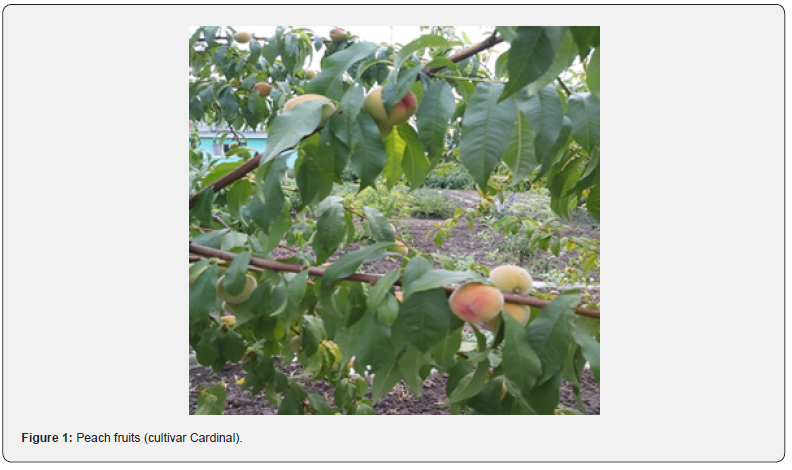
The peach (Prunus persica) yields 8–14% of stones from its fruits. The stone is very hard. It is composed of a thick-walled shell-like coating, a kernel, and a film that covers it. The kernel only accounts for 10–15% of the stone’s total weight and contains 35–46% of oil [13,14]. The quality of drupes, namely peach fruits, is provided by State Standard 21833-76. The fruits of each commercial variety must belong to the same pomological group, be fully developed, clean, free from damage, disease, and excessive external moisture and off-odours, and meet the standards for the appearance of the product, including those for the size of drupes. Figure 1 shows the peach fruits of the cultivar Cardinal.
There are approximately 5,000 peach cultivars worldwide.
They differ in several features and belong to different groups. Of
these, 34 are local to Ukraine [13,14]. The production classification
based on the fruits’ certain features groups the peach cultivars as
follows.
• True peaches (table varieties) – the fruits are fuzzyskinned,
the flesh is tender, fibrous, and juicy. Within this group,
clingstone varieties are sometimes singled out (Pavia types).
• Cings (varieties for canning) – the fruits are fuzzyskinned,
the flesh is gristly (dense and tough), and the stone is not
easily removed.
• Nectarines – peaches with the smooth (non-fuzzy) skin.
Clingstone varieties are known as brunions.
• Flat peaches (pan tao peaches, doughnut peaches) – the
fruits are oblate in shape.
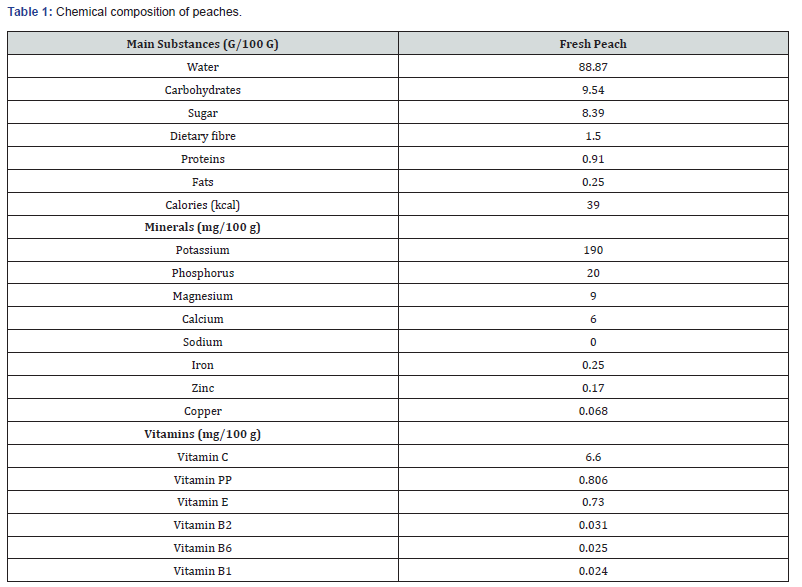
Peach fruits fall into white-fleshed and yellow-fleshed categories based on the colour of their flesh. They are classified as small (50–70 g on average), sub-medium (71–90 g), medium (91–130 g), super-medium (131–160 g), large (161–200 g), and super-large (over 200 g) [15]. Table 1 lists the properties and chemical composition of peaches. Peach fruits contain flavonoids, carotenoids, sugar (their proportion in some cultivars can be up to 15–20%), organic acids (tartaric, malic, quinic, citric), essential oils, vitamins, salts of different minerals. Of the latter, the one mostly represented in peaches is potassium. 100 grams of fresh fruit contains about 15% of a person’s daily need for this mineral, and 100 g of dried peaches about 15%. Also, peaches contain iron, magnesium, phosphorus, zinc, but their amount in 100 g of fresh fruits only supplies 3–4% of the daily need. The skin of the fruit is higher in mineral salts and flavonoids than the flesh is. Of the vitamins, the most significant is the presence of vitamins C and E (100 g supply up to 10% of the daily need), although those of the B group are well-represented too (B2, B6, B3/PP, B1 – up to 4%). The kernels of stones contain fatty acids (up to 57%), essential oils, amygdalin, several acids (oleic, nonacosylic, palmitic, etc.), salts of potassium and iron [15].
There is a tradition of consuming different parts of the peach tree (fruits and their skins, flowers, twigs, leaves, gum, and kernels) as food and medicine. However, when obtaining and processing fruits, large quantities of valuable bioactive groups (such as phenolic compounds) are not used. For this reason, scientists from Greece have researched the antioxidant properties of two cultivars of ripe and unripe peaches using cloud-point extraction [16]. Prunus persica, commonly known as the peach, is a member of the Rosaceae family and is cultivated in many regions worldwide. Botanically, it is a stone fruit [17]. Currently, there are approximately 400 cultivars [18, 19]. Peach is not an annual crop, and its fruits grow on perennial trees (Mannino, 2022). The cultivation of peaches is especially significant in the Mediterranean region [20].
When harvested, these fruits do not require further maturation and are immediately edible. In addition, the best time for their gathering can be determined by direct visual observation based on changes in skin colour [21,22]. With consumers, fresh fruits are as popular as processed fruits with added value in the form of juices, jellies, and/or preserved fruits [23]. The phytochemical composition of P. persica fruits is determined by the cultivar and genotype, rootstock, climate and geographical environment, agrotechnology, weather, stage of maturity when harvested, and storage conditions [24]. Peaches contain various essential compounds, including minerals, carbohydrates, dietary fibre, organic acids, and vitamins [25]. Dietary fibre found in peaches is a valuable component present both in the skin and in the flesh. This cellular tissue has proved to have beneficial effects on the gastrointestinal tract [26].
In addition, peaches contain numerous antioxidants, such as vitamin A, vitamins of the B and C complex, carotenoids, phenolic acids, flavonoids, and anthocyanins [24,25]. In their composition, several polyphenols have been identified, including catechins, neochlorogenic and chlorogenic acids, epicatechin, and derivatives of cyanidin and quercetin [27]. However, one can see that their content varies significantly with the cultivar [26]. Studies have shown that the phenolic compounds found in peaches have various health benefits, including antioxidant, antiproliferative, chemopreventive, and anti-inflammatory properties [28]. The advantages of this fruit include beneficial cardiovascular, ophthalmological, dental, and anti-diabetic effects [29]. studied the vasorelaxant action of P. persica twigs on isolated thoracic aortae in rats [30].
However, when processing fruits, many leaves containing important bioactive groups remain unused.[31] studied the cytotoxic, antimicrobial, and inhibitory action of nitrogen oxide in supercritical carbonate extracts of Prunus persica leaves [31]. Other researchers have considered the preparation and characterization of polyelectrolyte composite films of peach gum/chitosan with dual cross-linking networks for antibacterial packing [32]. It is effective to use peach gum to prepare UVresponsive peelable pressure-sensitive adhesives for nondestructive fabrication of ultrathin electronics [33]. Zeng et al. synthesized amphiphilic peach gum polysaccharide as a robust host for the efficient encapsulation of methylene blue and methyl orange dyes from water [34]. Some researchers have studied the physicochemical and rheological properties and in vitro hypoglycemic activities of polysaccharide fractions of peach gum [35].
However, most scientists are interested in the waste from peach and nectarine processing – in peach stone kernels as raw materials for valuable oil and oilcake [36]. To obtain low-acid oils, sound stones should be stored and processed in batches and prevented from mixing with sulphated stones. The stones of peaches, apricots, etc. vary in their quality, are markedly different in size, and have very hard shells. The fat content in the shell is only 0.3–0.5% [15]. Serbian researchers have studied the fatty acid composition and physical properties of stones and kernels from different peach cultivars as biomarkers of origin and ripening time [37]. Other researchers have studied peach stones and kernels as potential plant-based functional food ingredients [38].
In [39] carried out microwave-assisted extraction of bioactive components from peach waste and described bioactivity degradation by polynomial regression. They also considered the phytochemical properties of the waste by-products of peaches and studied their optimization and storage stability [40].[41] modelled the recovery of biocompounds from peach waste assisted by pulsed electric fields or thermal treatment (2021) and optimized the antioxidant biocompound recovery from peach waste extraction assisted by ultrasound or microwaves (2020). Indian scientists have assessed phytochemical screening by Fourier Transform Infrared spectroscopic analysis of peach seed biomass from the Uttarakhand region [42]. [43] investigated the green synthesis and characteristics of silver nanoparticles using peach pomace with a natural deep eutectic solvent and a plasma-liquid process. Researchers from Bulgaria (2021) studied the metabolic profile and α-glucosidase-, α-amylase-, lipase-, and acetylcholinesterase-inhibitory activities of eight peach varieties [44].
To better understand pyrolysis for upscaling purposes, kinetic characterization of the process is necessary for every feedstock. Laboratory experiments make it possible to identify apparent kinetic models [45,46] evaluated the oxidative stability, thermal behaviour, antioxidant activity, phenolic content, and physicochemical properties of nectarine kernel oil. In oil obtained from the kernels of apricots, peaches, plums, and cherries grown in Uzbekistan, the fatty acid composition was investigated [47]. Today’s medical science makes use of peach constituents as a feedstock component for health and beauty aids and as a raw material to make carrier oils for some medicines. For example, kernels from the stones of drupes are processed into peach kernel oil used in pharmaceutics to dissolve water-insoluble substances, prepare solutions for injections, and make the base for liquid ointments (liniments).
Indications for peach kernel extracts include cardiovascular disorders, intoxication, fatiguability sleep disorders, digestion problems, respiratory diseases, gynaecological pathologies (heavy menstrual bleeding and irregular periods, fibrocystic breast changes, hormone-dependent pathologies, and benign proliferation such as endometriosis and uterine fibroids), anaemia, and thyroid disorders. According to the directions, these preparations should be administered as 2–4 drops every day for preventive purposes. During treatment, the dosage is usually increased by 5–7 times. Folk medicine uses peach stone kernels. In South-West Asia, peach kernel oils, decoctions, and infusions were used to treat eye diseases; in Africa and later in America, they were administered to treat fever, bronchitis, and asthma; in Central Asia, they are remedies for migraine and kidney stone disease, and, when applied externally, for skin conditions [48].
Compared with the traditional therapy for atopic dermatitis in children, the combined use of vitamins A, E, D, and peach oil applied onto the skin results in a far sooner decrease in skin symptoms such as drying/flaking, xerosis/hyperkeratosis, lichenification, erythema/hyperaemia, oedemata/papules, excoriations/scratches, microvesiculation, exudation/oozing, haemorrhagic and serous crusting, and hyperpigmentation[49]. Kernels of apricot and peach stones are commercial unprocessed remedies used in numerous prescriptions of Kampo, traditional Japanese medicine [50], and in traditional Chinese medicine, they are used, respectively, for blood stasis and as cough relievers/ expectorants [51].
Professional cosmetologists use the moisturizing and anti-inflammatory properties of peach extracts that contain phytosterols, fatty and essential oils, carotenoids, trace elements, and vitamins. The raw material for these oily extracts is fruits. Manufacturers recommend that they cure skin dryness, erythema, and oedema, and lighten the skin gently. These are often added to anti-ageing masks, creams, and lotions. Peach-derived components are used to care for almost the entire body (face, hands, and hair). Shampoo formulae include peach-based phytocomponents to eliminate skin dryness and nourish and fortify hair. Curative cosmetics also exploit the wound-healing properties of this fruit. Peach kernel oil is beneficial for eczema, psoriasis, dermatitis, and skin burns.
Polyphenols (PPs) are well-known dietary antioxidants. Recently, they have aroused much interest as a means of preventing skin ageing and hyperpigmentation caused by ultraviolet solar radiation. An anti-ageing skin-whitening cosmeceutical cream was developed using an ethanol extract of Prunus persica (L.) leaves [52]. Scientists from Uzbekistan studied the physicochemical properties of apricot and peach oils obtained from local fruits and their use in the formula of creams. The researchers developed a massage cream formula based on apricot and peach oils. 10–15% of the oil used in the cream’s composition allows obtaining a product of higher quality meeting the standards [53]. Maatallah and other researchers considered peach-derived by-products as sources of minerals, phenols, and volatile compounds [54].
One of the current problems is the development of new domestic technologies to manufacture special-purpose foods aimed at safeguarding and improving people’s health. Modern scientific experience in special-purpose diets proves that if a person regularly consumes compounds that reduce neutral lipids in the blood, this can prevent atherosclerosis-related disorders such as coronary artery disease, myocardial infarction, hyperlipidaemia, and obesity. Thus, an innovative direction in the fat-and-oil industry is to manufacture diacylglycerol-enriched and lipid-structured fat-and-oil products containing acyls of medium-chain saturated and ω-3, ω-6, and ω-9 polyunsaturated acids. The most rational approach to developing special-purpose fat products consists in constructing dispersed systems, namely dietary supplements containing various physiologically active ingredients with compositions that impart predetermined properties to foods.
However, there are still not enough scientifically grounded approaches to develop technologies for special-purpose fatty products with therapeutic and preventive properties. A solution to the fundamental applied scientific problem lies in creating effective theory-based methods of manufacturing special-purpose fat-and-oil products, namely dietary supplements and medications based on them. Researchers from Uzbekistan have studied the content of fatty acids, proteins, vitamins, minerals, and fats in bioactive substances isolated from the stones of peaches grown in their country’s climate. To this end, scientists synthesized fatty acid methyl esters from oils under study. The bioactive substances extracted from peach stones are used as supplements in the food industry [55, 56] focused on developing an environmentally friendly method of valorizing excessive biowaste (peach skins, stones) into special-purpose products. [57] studied the utilization of these, mostly unresearched, by-products as alternative sources of valuable components, thus stimulating the circular bioeconomy approach by developing new foods. The processing of stones (actually, of their kernels) yields large volumes of oil, increases the performance of the basic equipment, reduces its wear, and allows the most rational industrial use of both the de-oiled press cake and shells [58-59].
A review of the literature indicates that the lipid composition of peach kernel oil depends on the method used to obtain it and on the varietal characteristics of a peach. Adequate analysis of processing peach stones into oil and press cake from their kernels is a problem that remains to be solved. As a result, it has been found prospective to investigate peach stones as feedstock for fatand- oil products. A topical research direction is to develop new technologies and improve the existing ones to obtain and process nonconventional oil-containing raw materials of plant origin (peach stone kernels), which allows the production of oil and oilcakes with high food and biological value.
The data obtained from the literature show how prospective it is to study the varietal features of peaches to establish the differences in their oil content and their physicochemical parameters, and to improve the technology of obtaining oil from peach kernels, oilcake, and crumbled peach stone shells. Experimental procedure. The purpose of this study was to develop a technology for obtaining oils from kernels of stones of different peach cultivars (harvested in the Odesa region and Moldova in 2020, 2021, and 2022) [] and their mixture, with their quality characteristics and fatty acid composition retained. This was achieved by developing new process conditions, regulating the pressing duration, and studying the indicators of quality.
The Objectives of the Study:
1. To study the quality indicators of the kernels of stones of
different peach cultivars (harvested in 2020, 2021, and 2022) and
their mixture.
2. To develop a craft technology for obtaining oil from kernels
of stones of different peach cultivars (grown in the Odesa region
and Moldova) and their mixture.
3. To analyse the fatty acid composition of the oils obtained.
The quality parameters of the oil raw material, upon its arrival at the production site, are immediately checked to determine the quality of the material, evaluate its economic benefits, and establish the technological process.
Materials and Methods of Research
The following cultivars typical were selected as the source of the kernels of peach stones that became the raw materials for oil: Cardinal, Nectarine, Flamingo, and Moldavsky (harvested in 2020, 2021, and 2022) . This complies with State Standard of Ukraine (DSTU) 7546:2014. The mass fraction of moisture was measured by a rapid method involving single time keeping of the kernels and the hard covering of peach stones in a drying chamber at a certain temperature and preset duration, according to DSTU 4811:2007.
The mass fractions of the impurities and oil admixtures were determined according to DSTU ISO 658:2006.
The volumetric mass of the peach stones was determined according to DSTU ISO 658:2006. The length of a stone was determined according to DSTU ISO 658:2006. The weight of 1000 stones were measured according to DSTU ISO 658:2006. Oil was obtained by cold pressing on a laboratory hydraulic press (U1 EPM). Prior to pressing, the crushed peach stone kernels underwent wet-heat treatment in a bain-marie.
The mass fraction of moisture in the crushed material was measured using a rapid drying method or an electrical moisture meter (according to DSTU ISO 771:2006).
The thickness of the peach oilcake piece was measured according to DSTU ISO 5500:2005. This measurement is necessary to monitor the operation of the press daily as well as when testing new presses.
The fat content in the peach kernels, oilcake, and pores of the crushed material was determined by exhaustive extraction in a Soxhlet extractor according to DSTU ISO 7577:2014. The acid number was determined according to utility model patent No. 107906 Ukraine MPK G01N 33/03 (2006.01). The oil obtained before pressing (in the Soxhlet extractor) and after pressing the kernels of stones of different peach cultivars using the above methods was placed in a 250 cm3 conical flask.
Three to five grams of the fat analysed were weighed with
accuracies down to 0.01 g and heated in a bain-marie, then 50 cm3
of neutralized alcohol/hexane mixture was poured into the vessel
to fill it up, and the sample was stirred. The resulting solution,
continuously stirred, was quickly titrated with a potassium or
sodium hydroxide (C (KOH) = 0.1 mol/dm3) solution until it became
distinctly pink and could keep the colour for 30s. During titration
with a potassium or sodium hydroxide solution, the quantity of
alcohol in the alcohol/hexane mixture should be five times larger
than the volume of the potassium or sodium hydroxide solution
to avoid hydrolysis of the soap formed. The acid number (AN; mg
KOH/g) was calculated using the following formula:
AN=(V∙k∙c(KOH)∙〖M(KOH)〗_eq)/m (1)
where V is the volume of the KOH or NaOH solution used for
titration, cm3;
k is the correction coefficient for the alkali solution to be
expressed in terms of an exact 0.1 mol/dm3;
m is the weight of the oil under study, g;
c (KOH) is the molar concentration of the alkali, 0.1 mol/dm3;
M (KOH)eq is the molar equivalent mass equal to 56.11 g/mol
[60].
The smell, taste, colour, and transparency of the oil from the kernels of stones of different peach varieties were determined according to DSTU 8842:2019. The fatty acid composition of the peach kernels and cold-pressed oils was determined by gas–liquid chromatography on a Hewlett Packard HP-6890 gas chromatograph, according to DSTU ISO 5508:2001. All numerical data obtained were processed using Excel from the Microsoft Office 2007 service software package. The numerical data were presented in the form of the arithmetic mean and the standard deviation (M±m) [61].
Results and their Discussion
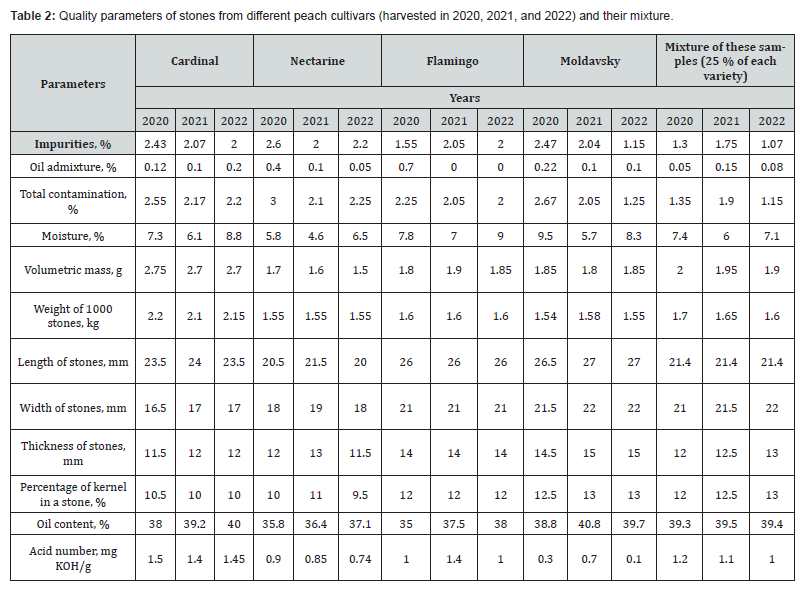
Peach stone kernels of the following cultivars were considered: Cardinal, Nectarine, Flamingo, Moldavsky (harvested in 2020, 2021, and 2022), and their mixture. Table 2 lists the quality parameters of the stone kernels for each peach variety and their mixture. Table 2 shows that the stones from different cultivars and from their mixture have different quality indicators depending on the cultivar and year of harvesting. The research results have shown that the total contamination was the highest in Nectarine (3.00% in 2020). The moisture content has been found to range from 4.60 to 9.00% in the cultivars considered.
The volumetric mass is the highest in the stones of Cardinal harvested in 2020, which means that they are the largest. This cultivar also had the highest weight of 1,000 stones. If a stone is large and heavy, this implies high indicators of nutritional value and germ development. A Nectarine stone has been found to be 20 mm long, which is shorter as compared with the other cultivars, whereas a stone of Moldavsky is 27 mm long, which is longer than in other cultivars. Oil content is considered one of the key parameters of peach stone kernels to be further processed in the fat-and-oil industry. This parameter is the highest in the kernels of Moldavsky harvested in 2021 (40.80%), and the lowest in the kernels of Flamingo harvested in 2020 (35.0%).
The acid number indicates that all the peach stone kernel samples considered meet the Grade 1 standard, according to State Standard of Ukraine (DSTU) 7546:2014: not above 3.0 mg KOH/g. This number is the highest in the Cardinal stone kernels (2020) – 1.50 mg KOH/g, and the lowest in the Moldavsky stone kernels (2022) – 0.10 mg KOH/g. The next stage of the research consisted in determining the conditions of the stages of pressing the kernels from peach stones of different cultivars (harvested in the Odesa region and Moldova in 2020, 2021, and 2022) and their mixture. The hulls of the drupe stones are hard and strong. To crack it more easily, a water/salt solution (3:1) was applied, which resulted in softening of the hull and, thus, its easier separation. Subsequently, the softened stones were cracked.
When the stones crack, the kernels are separated from their outer covering. The physical properties and mechanical strength of stones determine how effectively they are cracked. A kernel high in moisture is tightly pressed against the hull walls. Cracking a stone with increased moisture inevitably leads to unwanted crushing of the kernel itself and the formation of many choppings, and much effort is required to destroy the hull. When a stone is dried until its moisture content reaches 11–12%, the kernel becomes smaller. This results in an air-filled space between the kernel and its covering. When cracking stones, this space allows adjusting the crushing rolls so that destruction of the hull leaves the kernel undamaged and pressed upon but slightly. Virtually in each case, the width of the space between the rolls must not exceed the thickness of a cracked stone. With a space of approximately 80% of a stone’s thickness, the hull is only deformed but not destroyed.
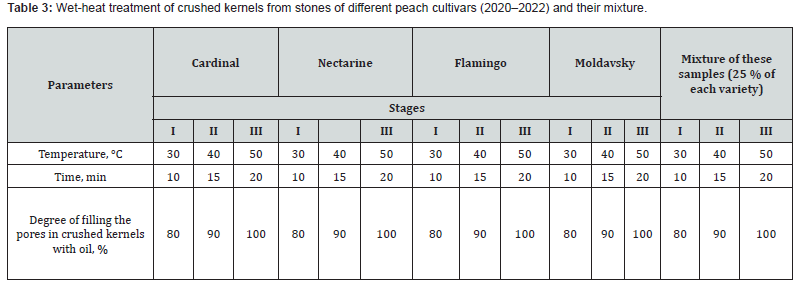
Crushed mass of kernels was obtained from the peach stones by comminuting them as finely as to achieve an undersized of 90–95% for a screen with 1 mm meshes. During stone processing, it is practical to apply wet-heat treatment to the crushed kernels before they enter the press, thereby overcoming or noticeably weakening the forces that bind oil with the upper parts of the crushed kernels and facilitating its separation from the oil-free components. Table 3 presents data on how the degree of filling the pores in crushed kernels with oil depends on the parameters of the wet-heat treatment (temperature and duration).
From Table 3, one can see that moisturizing is the most effective at the second and third stages, as compared with the first stage. The crushed kernels of the stones of the peach cultivars Cardinal, Nectarine, Flamingo, Moldavsky, and their mixture had the treatment temperature 40–50°C for 15–20 min. Also, in all the cultivars and in their mixture, the pores in the crushed kernels were completely open and filled with oil by 90% at the second stage and by 100% at the third stage. This creates favourable conditions for further processing stages. The obtained mash was pressed. This was carried out in steps with a certain pressure maintained and the duration observed. Table 4 shows how the pressing conditions (loading rate, compressive force, and load withstanding time) determine its effectiveness.
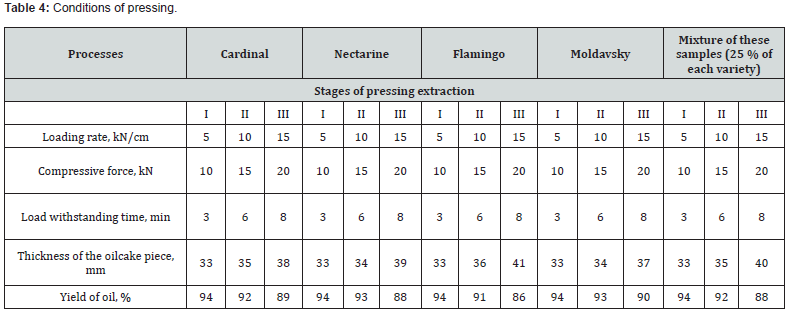
The thickness of an oilcake piece is a major indicator of the operation of a press and yield of oil. The determination of this parameter allows the daily monitoring of press operation and is necessary when testing new presses. Table 6 shows that the thickness of an oilcake piece determines the effectiveness of the pressing. The thinner the piece, the more effectively it is pressed: the load withstanding time, compressive force, and loading rate decrease significantly, whereas the yield of oil increases. Therefore, for all varieties of peach kernels, the first stage of pressing is the most effective: with the residual oil content in the cake 5.0–6.0%, the output of oil is 94.0%, the thickness of oilcake is 33.0 mm, the load withstanding time is 3.0 min, the compressive force is 10.0 kN, and the loading rate is 5.0 kN/cm.
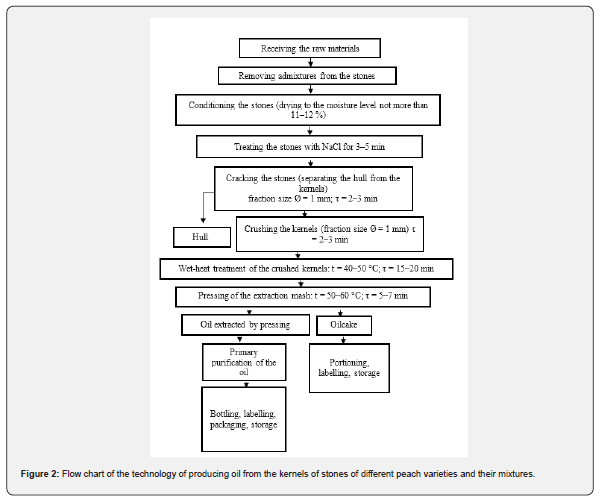
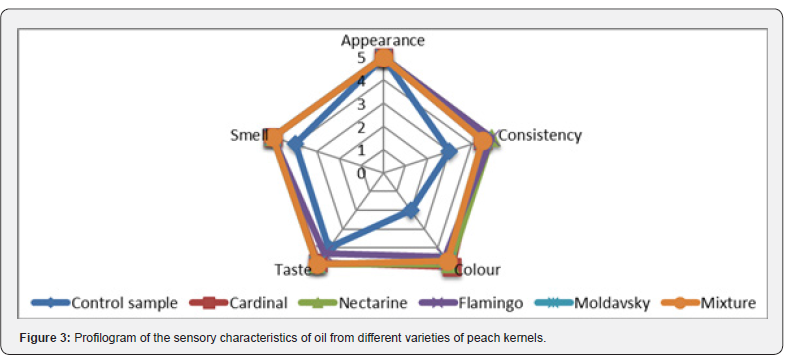
Oil pressed out of kernels of stones of different peach varieties contains many suspended particles, particularly those of minerals. The mechanical impurities were cleared by sedimentation. The oil can then be stored or used for further purposes. Oilcake is good as food and animal feed and can be used to manufacture dietary supplements, activated carbon, cosmetic products, or as a fertilizer. Figure 2 shows a flow chart of the proposed technology for producing oil from kernels of stones of different peach varieties and their mixture, with the experimentally confirmed process conditions described above. Sensory studies of oil from different varieties of peach kernels (harvested in 2020–2022) and their mixture have been conducted. The results are shown in Figure 3. The taste and smell of oils from the kernels of stones of different peach cultivars depend on the type and quality of the processed raw materials (oil obtained from defective kernels can taste unpleasant and smell stale), the production method (pressing or solvent extraction), and the operational modes of the equipment. The colour of vegetable oils is due to the presence of colouring agents (pigments) in their composition, such as carotenoids and chlorophyll. Transparency is the parameter showing that the vegetable oil at 20°C is free from turbidity or suspended matter that is seen with the naked eye and can degrade the product’s appearance and quality.
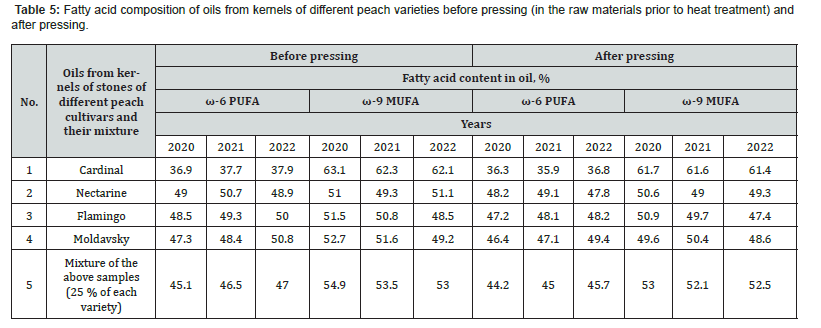
In the profilogram, one can see that the oil from the Cardinal kernels, by a complex of parameters, is rated the highest (4.9), the oil from the Nectarine kernels comes second (with an average score of 4.8), and the Flamingo and Moldavsky oils received 4.76 and 4.75 respectively. The lowest sensory rating was that of the mixture of these cultivars (4.7). According to the data from the literature, different varieties of peach stones have unique chemical compositions, are high in polyunsaturated linoleic acid of the ω-6 class (50% to 80%) and monounsaturated oleic acid of the ω-9 class (15% to 25%) and contain smaller quantities of saturated palmitoleic acid and other saturated acids. This made it necessary to determine the fatty acid composition (FAC) in the oil samples from different varieties of peach kernels and their mixture. The fatty acid compositions of the studied oils before pressing (in the raw materials prior to heat treatment) and after pressing are listed in Table 5.
The analysis of the fatty acid composition of the oils has resulted in the data presented in the table and confirmed that applying the proposed technology (Extra Virgin) allows retaining the FAC. In the cultivars harvested in 2020, Cardinal oil contained up to 98.4% of ω-6 PUFA and 97.8% of ω-9 MUFA; Nectarine oil, respectively, up to 98.4% and 99.2%; Flamingo oil, respectively, up to 97.3% and 98.8%; and Moldavsky oil, respectively, up to 97.3% and 98.8%. The oil from the mixture contained up to 98.0% of ω-6 PUFA and 96.5% of ω-9 MUFA, as compared with the initial content. In the cultivars harvested in 2021, Cardinal oil contains up to 95.2% of ω-6 PUFA and 98.9% of ω-9 MUFA; Nectarine oil, respectively, up to 96.8% and 99.4%; Flamingo oil, respectively, up to 97.5% and 97.8%; Moldavsky oil, respectively, up to 97.6% and 97.8%; while the oil from the mixture contains up to 96.8% of ω-6 PUFA and 97.4% of ω-9 MUFA.
In the cultivars harvested in 2022, Cardinal oil contains up to 97.1% of ω-6 PUFA and 98.9% of ω-9 MUFA; Nectarine oil, respectively, up to 97.8% and 96.5%; Flamingo oil, respectively, up to 96.4% and 97.7%; Moldavsky oil, respectively, up to 96.4% and 97.7%; and the oil from the mixture contains up to 97.2% of ω-6 PUFA and 99.0% of ω-9 MUFA. The difference in the results of determining the fatty acid composition of oils from kernels of peaches harvested in 2020–2022 and their mixture was 2.8% for ω-6 PUFA and 1.9% for ω-9 MUFA, depending on the cultivar. Based on the findings of this research, the proposed technology of oils from different varieties of peach kernels was introduced into the production process at Odesa Factory of Kernel and Vegetable Oils TOV AVA and recommended for the manufacture of craft vegetable oils.
Conclusions and Prospective Research
Stones of the peach cultivars Cardinal, Nectarine, Flamingo, Moldavsky (harvested in 2020, 2021, and 2022) and their mixture have been studied as promising raw materials for fat-and-oil products. The quality indicators of the stones varied depending on the cultivar and harvest year. Technology has been developed to obtain oil from the kernels of peach stones of a number. Appropriate process conditions were selected to obtain extra virgin oil via cold pressing. It has been found most practical to carry out wet-heat treatment of crushed peach kernels for 15– 20 min at 40–50°C. The thickness of the oilcake determines the effectiveness of pressing. The thinner the oilcake piece, the more effectively it is pressed: the load withstanding time, compressive force, and loading rate decrease significantly, whereas the yield of oil increases.
So, pressing stage 1 has been found the most effective for the kernels of all varieties of peach stones and their mixture: with the residual oil content in the cake 5.0–6.0%, the yield of oil 94.0%, the thickness of the oilcake 33.0 mm, the load withstanding time 3.0 min, the compressive force 10.0 kN, and the loading rate 5.0 kN/cm. When extracting oil by pressing, heating the crushed stones (extraction mash) to over 50–60°C for more than 5–7 min must be avoided. It has been established that the kernels of stones of the cultivars Cardinal, Nectarine, Flamingo, Moldavsky, and their mixture contain 35.0–40.8% of oil. It has been found that the fatty acid composition of fat-and-oil products is retained. The difference in the results of determining the fatty acid composition of oils from kernels of peaches harvested in 2020–2022 and their mixture was 2.8% for ω-6 PUFA and 1.9% for ω-9 MUFA, depending on the cultivar.
The sensory assessment showed that, based on the complex of parameters, the average score of the oil from Cardinal kernels was the highest (4.9), followed by the oil from Nectarine kernels, with an average rating of 4.8. The oils from Flamingo and Moldavsky kernels received 4.76 and 4.75 respectively. The lowest sensory rating was that of the mixture of these cultivars – 4.7. As a result, it has been established that, irrespective of the year of harvest, peach cultivars of the Odesa region and Moldova allow obtaining high-quality oils. Thus, it is highly topical to utilize stones from different peach cultivars and their mixture, as well as to apply the proposed technology to manufacture craft oils. Based on the findings of this research, the proposed technology of extra virgin oils from different varieties of peach kernels was introduced into the production process at Odesa Factory of Kernel and Vegetable Oils TOV AVA and recommended for the manufacture of craft oils. A promising direction of research is the comprehensive study of the sensory characteristics and fatty acid composition of oilcakes from the kernels of various peach cultivars and their mixture.
References
- Salo I, Zavalniuk O, Skakun V (2024) Stone fruit crops market development in Ukraine and throughout the world. AIC Economics and Management 1: 85-94.
- Kernasyuk YV (2020) Horticulture industry: development, trends and prospects. Agribusiness today: newspaper of entrepreneurs of the agricultural complex 17: 14-19.
- Cherevko OV, Franiv IA, Korpalo IR (2021) Innovative and investment development of the fruit and berry industry in the regions of Ukraine. Economy and Society 28.
- Galat L (2021) State financial support for the horticulture industry as a factor in increasing its competitiveness. Tavria Scientific Bulletin. Series: Economics.
- Sakun AJ, Pantyuk IA (2020) Implementation of marketing activities at enterprises producing fruit and berry products. Tavria Scientific Bulletin. Series: Economics 1: 154-161.
- Salo I, Kopytets N, Cheremisina S, Voloshyn V (2022) Inuence of economic cycles on the development of elements of the industry structure of the food market. IOP Conf. Series: Earth and Environmental Science 949.
- Stasyuk BB (2023) Trends in changes in the fruit and berry market of Ukraine. Bulletin of the Ukrainian Fruit and Berry Association. Economic Sciences Series 2(102): 286-296.
- Kozina TV (2023) The potential of horticulture and directions of its effective use in the conditions of Podillya. Podilskyi visnyk: agriculture, technology, economy 1(38): 20-25.
- Simakhina GO, Kaminska SV, Lytvynets LF (2020) Characteristics of resource components of an innovative enterprise to produce frozen fruits and berries. Scientific Works of the National University of Chemistry and Technology 26: 125-133.
- Protzman E (2023) Stone Fruit: World Markets and Trade 19: 1-8.
- Nikoletta Solomakou, Aikaterini M Drosaki, Kyriakos Kaderides, Ioannis Mourtzinos, Athanasia M Goula (2024) Valorization of Peach By-Products: Utilizing Them as Valuable Resources in a Circular Economy Model. Department of Food Science and Technology, School of Agriculture, Forestry and Natural Environment, Aristotle University, 54124 Thessaloniki, Greece 16(3): 1289.
- Imran M, Khan MK, Ahmad MH, Ahmad RS, Javed MR, et al. (2022) Valorization of Peach (Prunus persica) Fruit Waste. In Mediterranean Fruits Bio-Wastes: Chemistry, Functionality and Technological Applications; Ramadan, M.F., Farag, M.A., Eds.; Springer International Publishing: Cham, Switzerland 589-604.
- Association "Ukrsadprom" Electronic resource. Access mode:
- (2020) Food and Agricultural Organization of the United Nations (FAOSTAT).
- Kotlyar EO, Gladkih RD (2023) Prospects for obtaining oil from the kernels of different varieties of peaches. Scientific Bulletin of the S.Z. Gzhytskyi Lviv National University of Biotechnology. Series: Food Technologies 25(99): 75-79.
- Ioannis Giovanoudis, Vassilis Athanasiadis, Theodoros Chatzimitakos, Dimitrios Kalompatsios, Martha Mantiniotou, et al. (2023) Antioxidant Capacity in Two Different Cultivars of Ripe and Unripe Peaches Utilizing the Cloud-Point Extraction Method 5(4): 2139-2154.
- Gedük AŞ, Atsız S (2022) LC-MS/MS Phenolic Composition of Peach (Prunus persica (L.) Batsch) Extracts and an Evaluation of Their Antidiabetic, Antioxidant and Antibacterial Activities. S Afr J Bot 147: 636-645.
- Rudke CRM, Zielinski AAF, Ferreira SRS (2023) From Biorefinery to Food Product Design: Peach (Prunus persica) By-Products Deserve Attention. Food Bioprocess Technol 16(6): 1197-1215.
- Li Y, Wang L (2020) Genetic Resources, Breeding Programs in China, and Gene Mining of Peach: A Review. Hortic. Plant J 6(4): 205-215.
- Manganaris GA, Minas I, Cirilli M, Torres R, Bassi D, Costa G (2022) Peach for the Future: A Specialty Crop Revisited. Sci Hortic 305: 111390.
- Mannino G, Ricciardi M, Gatti N, Serio G, Vigliante I, et al. (2022) Changes in the Phytochemical Profile and Antioxidant Properties of Prunus persica Fruits after the Application of a Commercial Biostimulant Based on Seaweed and Yeast Extract. Int J Mol Sci 23(24): 15911.
- Anthony BM, Minas IS (2025) Redefining the Impact of Preharvest Factors on Peach Fruit Quality Development and Metabolism: A Review. Sci Hortic 297: 110919.
- Veerappan K, Natarajan S, Chung H, Park J (2021) Molecular Insights of Fruit Quality Traits in Peaches, Prunus persica 10(10): 2191.
- Bento C, Gonçalves AC, Silva B, Silva LR (2022) Peach (Prunus persica): Phytochemicals and Health Benefits. Food Rev Int 38: 1703-1734. FV
- Mihaylova D, Desseva I, Popova A, Dincheva I, Vrancheva R, et al. (2021) GC-MS Metabolic Profile and α-Glucosidase-, α-Amylase-, Lipase-, and Acetylcholinesterase-Inhibitory Activities of Eight Peach Varieties. Molecules 26(14): 4183.
- Mihaylova D, Popova A, Desseva I, Manolov I, Petkova N, et al. (2021) Comprehensive Evaluation of Late Season Peach Varieties (Prunus persica L.): Fruit Nutritional Quality and Phytochemicals. Molecules 26(9): 2818.
- Jung KM, Kim SY, Lee GW, Kim ID, Park YS, et al. (2020) Quality Characteristics and Antioxidant Activity of Unripe Peach (Prunus persica L. Batsch) Extracts with Distilled Water Coupled with Ultrasonication and Prethanol-A. Int J Fruit Sci 20: 111-122.
- Gu X, Xue L, Lu L, Xiao J, Song G, et al. (2021) Melatonin Enhances the Waterlogging Tolerance of Prunus persica by Modulating Antioxidant Metabolism and Anaerobic Respiration. J. Plant Growth Regul 40: 2178-2190.
- Hussain SZ, Naseer B, Qadri T, Fatima T, Bhat TA (2021) Peach (Prunus persica) – Morphology, Taxonomy, Composition and Health Benefits. In Fruits Grown in Highland Regions of the Himalayas: Nutritional and Health Benefits; Hussain, SZ, Naseer, B, Qadri, T, Fatima, T, Bhat, TA, Eds.; Springer International Publishing: Cham, Switzerland 207-217.
- Kan J, Chen C, Huo T, Xie W, Hui Y, et al. (2020) Polyphenolic-enriched peach peels extract regulates lipid metabolism and improves the gut microbiota composition in high fat diet-fed mice. Journal of Functional Foods 72: 104082.
- Koyu H, Kazan A, Nalbantsoy A, Yalcin HT, Yesil-Celiktas O (2020) Cytotoxic, antimicrobial and nitric oxide inhibitory activities of supercritical carbon dioxide extracted Prunus persica leaves 47(1): 569-581.
- Ying Chen, Yunyue Ye, Zhu Zhu, Bo Xu, Linghan Meng, et al. (2024) Preparation and characterization of peach gum/chitosan polyelectrolyte composite films with dual cross-linking networks for antibacterial packaging. International Journal of Biological Macromolecules 261(Pt 1): 129754.
- Ziwei Liu, Shan Chen, Ye Wan, Xin Miao, Qunchao Zhang, ET AL. (2022) Efficient utilization of peach gum to prepare UV-responsive peelable pressure-sensitive adhesives for non-destructive fabrication of ultrathin electronics 612: 155748.
- Sihua Zeng, Jisuan Tan, Xu Xu, Xiaohua Huang, Li Zhou (2020) Facile synthesis of amphiphilic peach gum polysaccharide as a robust host for efficient encapsulation of methylene blue and methyl orange dyes from water 154: 974-980.
- Jiaxin Chen, Mo Zhou, Meng Liu, Jinfeng Bi (2022) Physicochemical, rheological properties and in vitro hypoglycemic activities of polysaccharide fractions from peach gum. Carbohydrate Polymers 296: 119954.
- Kotlyar EO, Yegorov BV, Levchuk IV (2024) Sensory characteristics of oil and fat products obtained from different varieties of peaches. Scientific works, NUKhT 31(6): 110-123.
- Marija Koprivica, Dušanka Milojković-Opsenica, Milica Fotirić Akšić, Aleksandra Dramićanin, Kristina Lazarević (2022) Fatty acids composition and physical properties of stones and kernels from different peach cultivars as biomarker of origin and ripening time. European Food Research and Technology 10: 2471-2482.
- Neeraj Kumari, Radha, Manoj Kumar, Sunil Puri, Baohong Zhang, Nadeem Rais, et al. (2023) Peach (Prunus persica (L.) Batsch) seeds and kernels as potential plant-based functional food ingredients: A review of bioactive compounds and health-promoting activities. Food Bioscience 102914.
- Kurtulbaş E, Sevgen S, Samli R, Şahin S (2022) Microwave-assisted extraction of bioactive components from peach waste: Describing the bioactivity degradation by polynomial regression. Biomass Conversion Biorefinery 1: 3.
- Kurtulbaş E, Şahin S (2022) Phytochemical properties in the waste by-products of peach: Optimization and storage stability studies. Biomass Conversion and Biorefinery 1: 3.
- Plazzotta S, Ibarz R, Manzocco L, & Martín-Belloso O (2021) Modelling the recovery of biocompounds from peach waste assisted by pulsed electric fields or thermal treatment. Journal of Food Engineering 290: 110196.
- Shukla RK, Kant R (2020) Assessment of phytochemical screening by fourier transform infrared spectroscopic analysis of peach (Prunus persica) seed biomass from Uttarakhand region of India. Journal of Applied and Natural Science 12(4): 519-524.
- Skiba M, Vorobyova V (2022) Green synthesis and characterization of silver nanoparticles using Prunus persica L. (peach pomace) with natural deep eutectic solvent and plasma-liquid process 76(9): 5789-5806.
- Mihaylova D, Popova A, Desseva I, Petkova N, Stoyanova M, et al. (2021) Comparative Study of Early- and Mid-Ripening Peach (Prunus persica L.) Varieties: Biological Activity, Macro-, and Micro- Nutrient Profile. Foods 10: 164.
- Angelos-Ikaros Altantzis, Nikolaos-Christos Kallistridis, George Stavropoulos, Anastasia Zabaniotou (2021) Apparent Pyrolysis Kinetics and Index-Based Assessment of Pretreated Peach Seeds. Department of Chemical Engineering, Aristotle University of Thessaloniki 9(6): 905.
- Sodeifian G, Sajadian, SA (2021) Antioxidant capacity, physicochemical properties, thermal behavior, and oxidative stability of nectarine (Prunus persica var. nucipersica) kernel oil. Journal of Food Processing and Preservation 45(2): 1-11.
- Normakhmat R (2021) Fatty acid composition and physicochemical parameters of stone fruit kernel oils. Food Industry 3: 40-42.
- Nazhmitdinov HB, Olimov SM, Bakhromova BZ (2022) Useful properties of the fruit - peach. Oriental Renaissance: Innovative, educational, natural and social sciences Scientific Journal Impact Factor Advanced Sciences Index Factor 2(9): 327-332.
- Mochulskaya ON, Chornomydz IB, Hlushko KT, Krytsky IA, Goshchinsky PV, et al. (2023) Clinical effect of applying peach oil with vitamins A, E, D externally on the skin of children with atopic dermatitis. Modern Pediatrics. Ukraine 2(130): 96-103.
- Tatsuya Shirahata, Asuna Kanazawa, Marina Uematsu, Hiroyuki Fuchino, Noriaki Kawano, et al. (2022) Near-Infrared Metabolic Profiling for Discrimination of Apricot and Peach Kernels 70(12): 863-867.
- Kajino A, Wenming B, Yoshimura N, Takayanagi M (2021) Identification of peach and apricot kernels for traditional Chinese medicines using near-infrared spectroscopy. Vibrational Spectroscopy 113: 103202.
- Eman S Mostafa, Ahmed Maher, Dalia A Mostafa, Sameh S Gad, Mahmoud AM Nawwar, et al. (2021) A Unique Acylated Flavonol Glycoside from Prunus persica (L.) var. Florida Prince: A New Solid Lipid Nanoparticle Cosmeceutical Formulation for Skincare 10(3): 436.
- Khakimova ZA, Usmonova FK, Ruzibaev AT (2020) Study of the physicochemical properties of apricot and peach kernel oils of local origin and their use in the formulation of cosmetic creams. Universum: technical sciences: electronic sciences. Journal 8(77): 39-42.
- Maatallah S, Dabbou S, Castagna A, Guizani M, Hajlaoui H, et al. (2020) Prunus persica by-products: A source of minerals, phenols and volatile compounds. Sci. Hortic 261: 109016.
- Eshmatov FX, Rejepov QJ, Ismoilov JA (2022) Extraction of biologically active substances frompeach kernels and use as an additive in the food industry. Texas Journal of Agriculture and Biological Sciences 3: 23-29.
- Şahin S, Bilgin M (2022) Valorization of peach (Prunus persica L.) waste into speciality products via green methods. Biomass Conversion and Biorefinery 12(1): 1-10.
- Carla Roana Monteiro Rudke, Acácio Antônio Ferreira Zielinski, Sandra Regina Salvador Ferreira (2023) From Biorefinery to Food Product Design: Peach (Prunus persica) By-Products Deserve Attention. Food and Bioprocess Technology 16(6): 1197-1215.
- Eliseeva T, Yampilsky, O (2020) Peach (lat. Persicus). Journal. edaplus.snfo 3(13): 2-14.
- Plazzotta S, Ibarz R, Manzocco L, Martín-Belloso O (2020) Optimizing the antioxidant biocompound recovery from peach waste extraction assisted by ultrasounds or microwaves. Ultrasonics Sonochemistry 63: 104954.
- Polumbryk MO, Osypenkova II, Kotlyar EO (2019) Physicochemical methods for studying the quality of food products. ONAHT.
- Topchiy, OA, Kotlyar, EO, Tkachenko, NA, Sevastyanova, OV, Makovska, TV Method for determining the acid number: patent for utility model 107906 Ukraine: MPK G01N 33/03 (2006.01). owner ONAKHT. No. u2016 12837; appl. 2016; publ. 24.06. 2016, Bull. No. 12

























