




 AIBM Home




The Mystery Behind Superstitious Healing: An Ethnobotanical and Scientific Exploration of Traditional Medicinal Plants, Healing Beliefs, Spiritual Practices and Biodiversity Conservation Among the Tribal Communities of Dimoria Block, Assam
Garima Bora*, Barasha Devi and Mrinal Kumar Das
PhD. Scholar, Botany, Assam downtown University, Guwahati, Assam, India
Professor, Botany, Assam downtown University, Guwahati, Assam, India
Submission:October 06, 2026; Published: October 23, 2026
*Corresponding author: Garima Bora, PhD. Scholar, Botany, Assam downtown University, Guwahati, Assam, India
How to cite this article: Garima B, Barasha D, Mrinal Kumar D. The Mystery Behind Superstitious Healing: An Ethnobotanical and Scientific Exploration of Traditional Medicinal Plants, Healing Beliefs, Spiritual Practices and Biodiversity Conservation Among the Tribal Communities of Dimoria Block, Assam. Adv Biotech & Micro. 2026; 19(5): 556022. DOI:10.19080/AIBM.2026.19.556022
Abstract
Traditional plant-based healthcare remains an important component of primary healthcare among several indigenous and rural communities of Assam. The Kamrup Metropolitan District's Dimoria Block is very rich in ethnomedical knowledge; according to current ethnobotanical research, 80 medicinal plant species are utilised locally to treat 56 human illnesses. Twenty-five medicinal species were identified in a previous field study conducted among the Garo people in the Dimoria tribal belt. The study also included traditional preparations that included juices, pastes, decoctions, cooked vegetables, and oral plant products. In this article, twenty typical plants from Dimoria are reviewed, and the degree to which traditional beliefs and behaviours are supported by science is assessed. The plant portion used, preparation, time and route of administration, potential pharmacological mechanisms, and conditions in which ingestion may be harmful are all discussed in detail. Evidence suggests that numerous traditional practices have reasonable or scientifically confirmed biological foundations. Andrographis paniculata is used to treat inflammatory respiratory symptoms, Curcuma longa for inflammatory pain, Psidium guajava leaves for diarrhoea, Zingiber officinale for nausea, Scoparia dulcis for glucose management, and Murraya koenigii for antihyperglycemic activity. However, ethnomedicinal use should not be mistaken for clinical efficacy. Averrhoa carambola may cause oxalate nephropathy and neurotoxicity; Jatropha gossypifolia contains irritating phorbol derivatives; Melia azedarach fruits contain poisonous meliatoxins; and improperly processed the calcium-oxalate raphides in Amorphophallus paeoniifolius can cause inflammation. Traditional knowledge should be conserved while being subjected to botanical verification, phytochemical inquiry, pharmacological testing, toxicity evaluation, and controlled clinical trials.
Keywords: Ethnobotany; Garo; Dimoria; Assam; Tribal Medicine; Medicinal Plants; Traditional Knowledge; Phytotherapy; Scientific Validation; Plant Toxicity
Introduction
Traditional medicine represents the accumulation of ecological and empirical knowledge gained through long-term interactions between populations and their environment. Medicinal plants have long played an important role in basic care in India, particularly among rural and forest-dependent people. Northeast India is known as one of the country's key centres of biological and cultural variety, with Assam having a particularly rich repository of traditional ethnomedicinal knowledge Das [1]; Vedavathy [2]. Dimoria Block, located in the southeast section of Kamrup Metropolitan District, Assam, is home to various villages and forest-fringe settlements where traditional healthcare methods mix with modern treatment. An ethnobotanical study conducted in Dimoria interviewed 140 knowledgeable people and documented 80 medicinal plants from 45 botanical categories that are utilised to treat 56 human ailments. Leaves accounted for around 60% of all plant parts recorded, with Zingiber officinale, Mimosa pudica, Curcuma longa, Psidium guajava, and Azadirachta indica having high usage values. The study also found high informant consensus for various disease categories, implying that certain treatments are consistently selected by the community Kalita [3]. An earlier study focused on the Garo population of the Dimoria tribal area. Sharma and Chetri investigated 20 Garo families in Senabor village and identified 25 medicinal plant species from 23 families. Traditional preparations included fresh juice, soaked-water preparations, pastes, decoctions, cooked vegetables, and honey-based mixes. Gastrointestinal illnesses, skin problems, bodily ache, fever, and genitourinary ailments were among the most commonly treated Sharma & Chetri [4].
The term "superstition" should be used with caution in scientific discussions. A traditional belief is not always unreasonable because its initial explanation is spiritual or cultural. Some behaviours may have evolved as a result of frequent observation of biological effects, despite the fact that the community lacked modern knowledge of microbes, phytochemistry, and pharmacology. However, the fact that a technique is traditional does not imply that it is useful or safe. The proper scientific technique is to distinguish between cultural belief, traditional empirical use, pharmacological plausibility, experimental validation, and clinical proof.
Traditional Beliefs and Their Possible Scientific Basis
Many Dimoria medicines are provided in accordance with culturally established guidelines regarding plant part, timing of administration, and preparation procedure. Some cures, for example, are consumed first thing in the morning on an empty stomach, while others are made into curry or applied topically. These practices may occasionally have a practical explanation. There are pharmacological and ecological reasons for the regular usage of leaves. Phenolics, flavonoids, terpenoids, alkaloids, and other secondary metabolites involved in plant defence are found in leaves, which are renewable organs. The medicinal plant's mortality can also be decreased by harvesting its leaves rather than its roots or bark. Other Assamese investigations, such as those conducted among the Jaintia, Garo, Hajong, and Sonowal Kachari people, are in line with the prevalence of leaves in Dimoria ethnomedicine Sajem & Gosai [5]; Deb [6]; Ghosh [7]; Singh [8].
Why are traditional medicines commonly taken in the morning?
The preference for early morning administration, sometimes before breakfast and on an empty stomach, is one of the most intriguing customs connected to indigenous plant medicine. Early-morning medicines, particularly those made from bitter medicinal plants, are documented in the Dimoria ethnomedical literature Sharma & Chetri [4].
The practice may have various cultural and practical reasons. Firstly, collecting in the morning allows for the plant to be observed in natural light. Leaves can be examined for pests, caterpillars, eggs, fungal issues, damaged areas, or other unwanted materials. This is especially important when gathering medicinal herbs directly from forests, gardens, fields, and roadsides. Secondly, the tradition of collecting on an empty stomach may stem from the belief that medicine is absorbed more effectively when food is not present. Modern pharmacology supports the idea that food can affect the absorption and metabolism of numerous compounds, although this impact varies significantly among different substances. Thus, there is no singular scientific principle that states all herbal medicines are more effective when taken on an empty stomach. Third, morning administration creates a consistent therapeutic ritual. A person wakes, collects or receives the medicine, prepares it, prays and consumes it before beginning the day's activities. Such regularity may improve adherence to the traditional practice.
Most significantly, remembering God is frequently a part of the practice. As a result, the act of medicine contains a spiritual component. The person may pray or think of the local god or God in order to seek healing or protection before consuming the preparation. It is not appropriate to view this as a pharmacological mechanism. Instead, it upholds the transfer of traditional knowledge and symbolises the cultural meaning of healing. Therefore, ethnobotany, spirituality, behaviour, and pharmacology can all be considered at the junction of the morning ritual.
The mystery of bitter medicines
In traditional medicine, bitter medicinal plants have a specific place. Strong medicinal plants include Scoparia dulcis and Andrographis paniculata. It is possible to take their bitterness as proof that the plant has therapeutic properties. A fascinating link between bitterness and physiology has been discovered by modern research. TAS2Rs, or bitter taste receptors, are not just found on the tongue. The digestive system and other tissues also contain them. These receptors can affect metabolic and gastrointestinal functions and take role in chemosensory signalling Avau & Depoortere, 2016; Behrens & Meyerhof, 2011; Yin, 2024. Recent research has also examined TAS2Rs may be involved in gut-vascular and metabolic pathways, according to recent studies that looked at the connection between bitter-receptor signalling, vascular control, and hypertension (Wei et al., 2026).
This does not imply that bitter medications always raise blood pressure. Indeed, certain bitter-receptor pathways may have actions that reduce blood pressure or dilate blood vessels. However, when eaten in excess or on an empty stomach, concentrated herbal remedies can produce gastrointestinal distress in those who are vulnerable. Therefore, while the traditional claim that "bitter medicines cause high blood pressure" cannot be applied to all bitter plants, the warning against taking large amounts of bitter medicines may have a physiological basis. This is an important example of the mystery surrounding traditional medicine: the observation may be meaningful even when the traditional explanation differs from modern physiology.
Traditional belief about avoiding green herbs at night
The propensity for eating green vegetables and medicinal herbs throughout the day rather than at nite is another intriguing cultural tradition. There is no solid scientific proof that regular green veggies get toxic after dusk. As a result, this idea shouldn't be promoted as a universal biological law. Nonetheless, a useful explanation is conceivable. Medicinal herbs are frequently gathered from plants that may still have insects, larvae, caterpillars, eggs, and other critters adhered to their leaves. These pollutants might be less noticeable if plants are gathered or prepared in dimly lit areas. Careful cleaning and examination are made possible by daylight. Similar emphasis is placed on thoroughly cleaning leafy greens and eliminating obvious contamination prior to eating in contemporary food safety guidelines. As a result, the custom may have started out as a food safety regulation tailored to a time when artificial lighting was either non-existent or scarce. Plants might be gathered, examined, and cleaned by the community during the day and eaten in the morning or during the day. Therefore, the scientific interpretation should be: Daytime collection and preparation may have historically decreased the likelihood of consuming unnoticed insects, foreign material, contaminated plant parts, or incorrectly identified species; nighttime consumption itself has not been shown to make green herbs toxic. This is a particularly intriguing illustration of a belief that may have an underlying ecological and practical rationale despite appearing superstitious.
The cultural meaning of prayer and remembrance of god
Because it shows that traditional medicine cannot be fully comprehended through pharmacology, the practice of contemplating God before taking therapeutic plants merits special study. For the practitioner, medicine might be more than just a chemical. Healing might be seen as ultimately reliant on supernatural blessing, and the plant could be considered a part of God's creation. Therefore, praying before taking the medication can symbolise appreciation, faith, and reverence for the natural world. Prayer cannot be used as evidence of the plant's improved pharmacological efficacy from the standpoint of biomedical science. However, behaviour, adherence, emotional state, and group identification can all be impacted by the ceremony. As a result, traditional medicine's cultural and scientific interpretations can coexist and enhance each other. While ethnobotany investigates why and how the community uses the plant in customary ways, pharmacology studies the chemical compounds found in the plant and their effects on the human body. While ecology concentrates on the natural habitat, distribution, and conservation of the plant, anthropology takes into account the cultural meanings and social value connected to these behaviours. Spiritual traditions also shed light on ideas regarding divine blessing, healing, and the holy value of medical procedures. Because each viewpoint adds to a more comprehensive understanding of the interaction between people, plants, culture, environment, and spirituality, a thorough understanding of Dimoria's traditional medicine necessitates taking into account all of these interrelated elements.
Plants with Relatively Strong Scientific Support
Bitter plants and the concept of "cleansing"
Traditionally, bitter plants like Andrographis paniculata and Scoparia dulcis have been linked to "cleansing," stomach issues, or the restoration of equilibrium in the body. Pharmacological research offers reasonable explanations for some observed effects, even though the conventional notion of cleansing is not similar to a contemporary physiological process. Andrographolide and similar diterpenoids with immunomodulatory and anti-inflammatory properties are found in Andrographis. When compared to a placebo, a standardised A. paniculata preparation improved a number of symptoms in 223 adults with simple upper respiratory infections in a randomised, double-blind clinical trial Saxena [9]. As a liver tonic and to relieve stomach irritation, the Garo practice documented in Dimoria entailed soaking the entire A. paniculata plant in water and consuming 50–100 mL on an empty stomach Sharma & Chetri [4]. However, specific pharmaceutical activities are supported by the scientific evidence rather than the broad notion of a "liver cleanser." As a result, rather than being fully validated, the conventional observation should be characterised as having some scientific backing.
Turmeric and the traditional treatment of pain
Turmeric rhizome paste has a long cultural history of being used to treat bone or body pain. In Dimoria, fresh juice combined with honey was eaten for stomach issues, and Curcuma domestica, a popular synonym for Curcuma longa, was applied as a paste for body/bone discomfort Sharma & Chetri [4]. Curcuminoids, especially curcumin, have an impact on a number of cytokine-related and inflammatory signaling pathways, including NF-κB. Standardized C. longa formulations may lessen knee osteoarthritis symptoms, according to human clinical study. C. longa extract was studied in 120 individuals with painful osteoarthritis of the knee in a randomized, placebo-controlled study Madhu [10]. Therefore, there is a plausible pharmacological basis for Dimoria's claim that turmeric preparations help lessen musculoskeletal discomfort, even though unrefined domestic turmeric paste cannot be compared to a standardized clinical extract.
Guava leaves and diarrhoea
One of the most scientifically validated Dimoria practices is the use of young guava leaves for diarrheal sickness and dysentery. For bloody dysentery, Sharma and Chetri reported taking about two tablespoons of leaf juice two or three times a day Sharma & Chetri [4]. Tannins, flavonoids, and other phenolic substances found in guava leaves can affect microbial development and intestinal motility. Guava leaf decoction was studied in adults with acute infectious diarrhoea in an Indian randomized clinical study. The 14-leaf preparation produced better improvement in stool frequency and consistency than oral-rehydration treatment alone, with participants recovering within approximately 72 hours compared with 120 hours in controls Birdi [11]. Earlier randomized clinical work also demonstrated intestinal antispasmodic activity of a standardized guava-leaf preparation Lozoya [12]. This is an important example of how an indigenous practice can precede biomedical confirmation. Nevertheless, blood in stool, persistent diarrhoea, dehydration or fever requires medical evaluation; plant remedies should not delay treatment of dysentery.
Ginger and digestive disorders
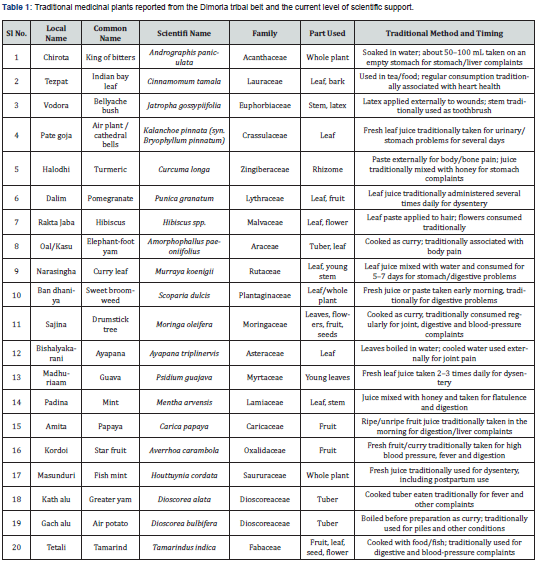
Ginger is among the most highly valued medicinal plants in Dimoria, and the wider Dimoria survey reported Zingiber officinale as having the highest use value (UV = 0.89) Kalita [3]. Ginger preparations are traditionally used for indigestion, flatulence, nausea and respiratory complaints. Its biological activity is associated with gingerols, shogaols and related compounds that affect gastrointestinal motility, inflammation and sensory pathways. Controlled clinical trials have demonstrated that ginger can reduce nausea and vomiting, including nausea during pregnancy Vutyavanich [13]; Smith [14]. Therefore, the traditional association of ginger with digestive comfort has considerable scientific plausibility. (Table 1)
Among the documented medicinal plants, Dioscoreaceae is the most represented family, with two species, Dioscorea alata and Dioscorea bulbifera, highlighting the cultural importance of wild yams as both food and medicine. The remaining 18 families are represented by one species each, indicating considerable taxonomic diversity and suggesting that traditional healthcare practices are not dependent on a single plant lineage. Families such as Zingiberaceae, Rutaceae, Lauraceae, and Lamiaceae are also traditionally valued for their aromatic and bioactive constituents, which may contribute to their importance in indigenous healthcare practices. (Figure 1 & 2)
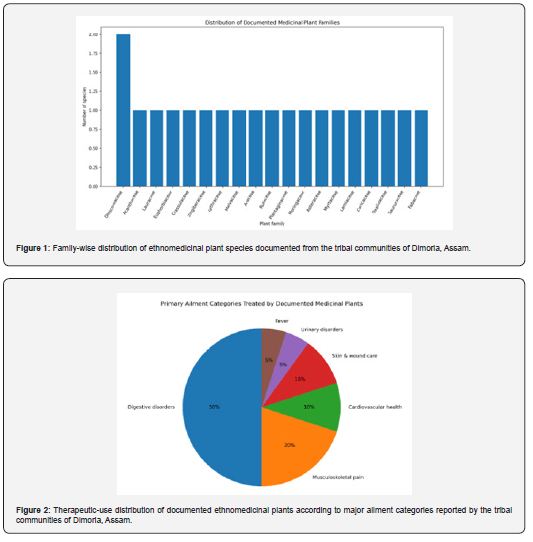
The ethnomedicinal practices documented from the tribal communities of Dimoria reveal a diverse, food-linked, and predominantly digestive-health-oriented traditional healthcare system. Digestive disorders constituted the major therapeutic category (50%), with several documented species used traditionally for stomachache, dysentery, indigestion, liver-related complaints, and flatulence; important examples include Andrographis paniculata, Murraya koenigii, Mentha arvensis, Psidium guajava, and Scoparia dulcis. The prominent use of these plants suggests that gastrointestinal ailments are among the common health concerns addressed through traditional remedies. A strong food–medicine relationship was also observed, as several medicinal plants, including turmeric (Curcuma longa), drumstick (Moringa oleifera), curry leaf (Murraya koenigii), tamarind (Tamarindus indica), elephant-foot yam (Amorphophallus paeoniifolius), and star fruit (Averrhoa carambola), are regularly consumed as vegetables, spices, fruits, or food ingredients, reflecting the traditional concept of “food as medicine,” in which dietary practices contribute to maintaining health and preventing illness.
Musculoskeletal ailments represented an important secondary category (20%), with plants such as Curcuma longa, Amorphophallus paeoniifolius, Moringa oleifera, and Ayapana triplinervis traditionally used for joint pain, body pain, bone-related complaints, and inflammation, indicating the continued importance of herbal remedies for age-related and occupational health problems. Furthermore, the representation of 19 botanical families among the documented species, with only Dioscoreaceae represented by two species and the remaining families by one species each, demonstrates considerable botanical diversity and provides a broad range of plant resources for traditional healthcare. Such diversity may enhance the resilience of indigenous healthcare systems by providing multiple plant-based alternatives for different health conditions and seasonal availability. Overall, the findings highlight the rich traditional medicinal knowledge of the tribal communities of Dimoria and demonstrate a close relationship between biodiversity, dietary practices, and healthcare, emphasizing the need for systematic documentation, conservation, and scientific validation of indigenous plant knowledge for future pharmacological research and sustainable biodiversity management.
Traditional Preparation Methods and Scientific Interpretation the traditional methods recorded in Dimoria include:
a. Fresh juice: Leaves or soft plant material are crushed and expressed. This method may preserve water-soluble compounds but also produces an unstandardized dose.
b. Soaked-water preparation: Plant material is kept in water, and the resulting infusion is consumed. This resembles a cold infusion.
c. Decoction: Plant material is boiled in water. Heat can extract polar compounds, but excessive heating can also degrade heat-sensitive constituents.
d. Paste: Fresh plant material is crushed and applied externally. This is common for wounds, swelling and skin disorders.
e. Cooked vegetable/curry: Plants such as Moringa oleifera and Amorphophallus paeoniifolius are incorporated into food. Cooking may reduce some antinutritional or irritant compounds.
f. Honey-containing preparation: Honey is sometimes used as a vehicle with ginger or turmeric. Besides improving palatability, honey itself possesses antimicrobial and soothing properties, although this does not establish that every plant-honey combination is therapeutically effective.
g. Topical washing: Plant material is boiled in water, and the cooled preparation is used to wash affected areas.
Why Some Traditional Medicines Should Not Be Consumed
Scientific evaluation is particularly important because some traditional plants contain pharmacologically active compounds that can become toxic at inappropriate doses.
Averrhoa carambola
Star fruit deserves particular emphasis because its traditional use for hypertension and digestive complaints can conflict with modern safety evidence. Star fruit contains high concentrations of oxalate and the neuroactive compound caramboxin. Numerous human cases of acute kidney injury and neurological toxicity have been reported. A clinical report from Guwahati Medical College described acute oxalate nephropathy following star-fruit ingestion, demonstrating that this is directly relevant to the Assam population Sarma [15]. People with chronic kidney disease should not consume star fruit medicinally. Large amounts should also be avoided during dehydration and on an empty stomach. Toxicity can occur even in people without previously diagnosed renal disease, although risk is substantially greater in renal impairment Yasawardene [16].
Jatropha gossypifolia
The traditional use of Jatropha gossypifolia latex as an external wound preparation should not be interpreted as evidence that the plant is safe internally. Jatropha species contain phorbol derivatives capable of causing irritation and biological toxicity. Research specifically identified highly irritant phorbol derivatives in J. gossypifolia Adolf [17]. Therefore, latex should never be swallowed, and application to large, deep or infected wounds should be avoided without medical assessment.
Melia azedarach
Although Melia azedarach was traditionally included among plants used around bathing or for skin purposes, internal consumption is problematic. Meliatoxins are toxic tetranortriterpenes identified in M. azedarach fruits Oelrichs [18]. Poison-centre data also demonstrate gastrointestinal and neurological effects after ingestion, particularly involving berries (McLellan et al., 2020). Thus, the berries should not be consumed as a household medicinal preparation.
Amorphophallus paeoniifolius
Elephant-foot yam is an important food plant, but raw plant material can cause intense itching and burning because of calcium-oxalate raphides. The traditional practice of cooking the tuber is therefore more than a culinary preference; it can be understood as an important detoxification/processing step. Raw tuber or inadequately processed material should not be consumed.
Dioscorea species
Wild yams may contain variable concentrations of antinutritional or bioactive compounds depending on species and variety. Consequently, the traditional practice of boiling and cooking Dioscorea bulbifera before consumption should be maintained. A wild or unidentified yam should never be eaten solely because it resembles a recognized edible species.
Traditional Knowledge, Biodiversity and Conservation
The medicinal-plant tradition of Dimoria has significance beyond healthcare. It also contributes to the conservation of biological and cultural diversity. When a community knows that a particular plant is useful for treating an ailment, the plant gains cultural value. People learn to recognize its habitat, season, morphology and appropriate harvesting method. This knowledge can reduce accidental destruction and encourage the cultivation of useful species around homes. The Dimoria study itself emphasizes the importance of documenting traditional plant knowledge because such knowledge is disappearing and because conservation planning requires understanding which plants communities use (Kalita et al., 2024). Traditional knowledge can therefore function as a form of living biodiversity documentation.
The relationship is not automatically positive. Excessive harvesting, commercialization, habitat destruction and increasing demand can threaten medicinal species. WHO guidance has long recognized the need for conservation and sustainable use of medicinal plants, including cultivation, appropriate collection and protection of wild populations. Recent international policy discussions similarly recognize that traditional medical knowledge can contribute to biodiversity conservation and sustainable use and emphasize the importance of involving knowledge-holding communities in research and conservation mechanisms. Thus, preserving traditional medicinal knowledge can simultaneously help preserve language, cultural identity, ecological knowledge and plant biodiversity.
Discussion: Superstition or Hidden Science?
The most fascinating question is whether the traditional practices should be called superstition or science. The answer is neither exclusively. Some beliefs are cultural and spiritual and cannot be experimentally tested in the same way as a chemical reaction. Other practices may contain observations that can be investigated scientifically. Still others may be harmful despite having been used traditionally for generations. (Table 2)
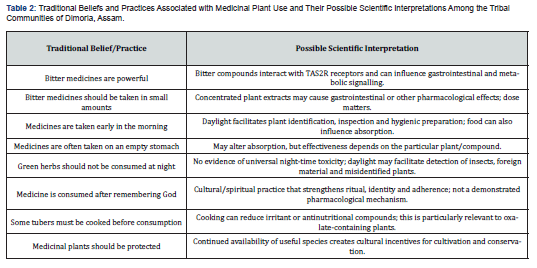
These examples demonstrate why the word "superstition" should be treated as a starting point for investigation rather than as a synonym for falsehood. Traditional knowledge is often generated without controlled experiments, but it can still contain useful empirical observations. Conversely, a practice may have survived culturally without having a therapeutic effect. Only systematic scientific investigation can distinguish these possibilities.
Why Traditional Scientific "Validation" Must Be Interpreted Carefully
Scientific validation exists on a continuum: Traditional use → ethnobotanical consensus → phytochemical evidence → in-vitro activity → animal experiments → human observational studies → randomized clinical trials.
Most Dimoria remedies currently occupy the first three stages. A smaller number have experimental support, while only a few such as ginger, guava and standardized Andrographis or turmeric preparations have meaningful clinical evidence. This distinction is critical. For example, an extract of Scoparia dulcis reduced blood glucose and increased insulin secretion in diabetic rats Latha [19], but this does not establish that a person with diabetes can safely replace prescribed medication with fresh Scoparia juice. Similarly, experimental antihyperglycaemic activity of Murraya koenigii leaves in rats cannot be interpreted as proof that curry-leaf juice cures diabetes Arulselvan [20]. The same principle applies to traditional claims about "liver cleansing," "blood purification," curing gonorrhoea, leprosy or cancer. Such terminology belongs to a traditional explanatory framework unless supported by appropriately designed biomedical studies.
Cultural Significance and Conservation
Traditional medicine is not merely a collection of recipes; it represents a system of ecological knowledge involving plant identification, seasonality, habitat, harvesting and preparation. Research among the Garo, Jaintia, Hajong and other indigenous communities of Assam demonstrates that medicinal knowledge is often transmitted orally through older knowledgeable people and traditional practitioners Sajem & Gosai [5]; Deb [6]; Das [1]. The recent Dimoria study also showed that traditional medicinal knowledge remains extensive, with high use values and informant consensus for several plant species and disease categories Kalita [3]. However, the authors appropriately emphasized that further safety and efficacy studies are required. This is especially important because increasing commercialization, habitat loss and replacement of traditional healthcare practices may simultaneously cause both knowledge erosion and unsustainable harvesting. Conservation should therefore include medicinal-plant gardens, community documentation, herbarium vouchers, training in botanical identification and cultivation of frequently harvested species. Traditional knowledge should be documented with informed participation and appropriate recognition of community intellectual rights [21-26].
Limitations
The present article is a literature-based synthesis rather than a new ethnographic survey. Local plant names may vary between villages and linguistic communities, and the same vernacular name can sometimes refer to different botanical species. Consequently, botanical identification should always be confirmed through voucher specimens and consultation with local experts before a medicinal plant is included in a scientific pharmacological study. Another limitation is that scientific validation is unequal among the twenty plants. Some have human clinical evidence, while others have only laboratory or animal data. The presence of a bioactive compound does not establish clinical efficacy. Traditional dosage also varies according to plant part, preparation, season and individual practitioner. Therefore, the traditional amounts mentioned in ethnobotanical reports should not be interpreted as standardized therapeutic doses.
Conclusion
The medicinal plant traditions of tribal communities in Dimoria Block represent a valuable interaction between cultural belief, empirical observation and biodiversity. The available evidence suggests that some traditional beliefs have a meaningful scientific basis. The use of Andrographis paniculata for inflammatory respiratory complaints, turmeric for inflammatory pain, guava leaves for diarrhoea, ginger for nausea, and several plants for digestive disorders is supported to varying degrees by pharmacological or clinical research. At the same time, the scientific evaluation demonstrates that traditional remedies cannot automatically be classified as safe. Averrhoa carambola, Jatropha gossypifolia and Melia azedarach illustrate important risks, while proper cooking of Amorphophallus paeoniifolius and Dioscorea species demonstrates how traditional processing may itself have a scientifically meaningful safety function. The most appropriate conclusion is therefore neither to reject indigenous medicine as superstition nor to accept every traditional claim as scientifically proven. Instead, Dimoria's traditional knowledge should be regarded as a research hypothesis generated by generations of community experience. Future research should combine ethnobotany, phytochemistry, pharmacology, toxicology and controlled clinical trials while respecting community ownership and cultural context. Such an approach could identify genuinely useful plant-derived therapies while protecting the population from toxic, ineffective or inappropriate self-medication.
References
- Das M (2016) Documentation of medicinal plants of tribes of Assam. Assam Institute of Research for Tribals and Scheduled Castes.
- Vedavathy S (2003) Scope and importance of traditional medicine. Indian Journal of Traditional Knowledge 2(3): 236-239.
- Kalita M, Alam SM, Jelil SN (2024) An ethnobotanical study of traditionally used medicinal plants: Case study from Assam, India. Ethnobotany Research and Applications 27: 1-25.
- Sharma C, Chetri A (2020) Documentation of traditional medicinal plants used by Garo tribe in Dimoria tribal belt of Assam. International Journal of Innovative Research in Science, Engineering and Technology.
- Sajem AL, Gosai K (2006) Traditional use of medicinal plants by the Jaintia tribes in North Cachar Hills district of Assam, northeast India. Journal of Ethnobiology and Ethnomedicine 2: 33.
- Deb AK (2012) Medico-religious plants used by the Hajong community of Assam, India. Journal of Ethnopharmacology 143(3): 787-800.
- Ghosh S (2019) Ethnomedicinal knowledge of the Garo community of two villages in western Assam, India. Journal of Ethnopharmacology.
- Singh (2026) Innate knowledge of herbal medicine among the Sonowal Kachari tribe of Lakhimpur district, Assam, India. Journal of Ayurveda and Integrative Medicine 17(2): 101260.
- Saxena RC, Singh R, Kumar P, Yadav SC, Negi MPS, et al. (2010) A randomized double-blind placebo-controlled clinical evaluation of extract of Andrographis paniculata in patients with uncomplicated upper respiratory tract infection. Phytomedicine 17(3-4): 178-185.
- Madhu K, Chanda K, Saji MJ (2013) Safety and efficacy of Curcuma longa extract in the treatment of painful knee osteoarthritis: A randomized placebo-controlled trial. Inflammopharmacology 21(2): 129-136.
- Birdi TJ, Daswani PG, Brijesh S, Tetali P, Natu AA, et al. (2020) A randomized open label efficacy clinical trial of oral guava leaf decoction in patients with acute infectious diarrhoea. Journal of Ayurveda and Integrative Medicine 11(2): 163-170.
- Lozoya X, Reyes-Morales H, Chávez-Soto MA, Martínez-García MC, Soto-González Y, et al. (2002) Intestinal anti-spasmodic effect of a phytodrug of Psidium guajava folia in the treatment of acute diarrheic disease. Journal of Ethnopharmacology 83(1-2): 19-24.
- Vutyavanich T, Kraisarin T, Ruangsri R (2001) Ginger for nausea and vomiting in pregnancy: Randomized, double-masked, placebo-controlled trial. Obstetrics & Gynecology 97(4): 577-582.
- Smith C, Crowther C, Willson K, Hotham N, McMillian V (2004) A randomized controlled trial of ginger to treat nausea and vomiting in pregnancy. Obstetrics & Gynecology 103(4): 639-645.
- Sarma B (2016) Acute kidney injury associated with ingestion of star fruit: Acute oxalate nephropathy. Indian Journal of Nephrology 26(6): 446-448.
- Yasawardene P, Jayakody W, Weerasinghe P (2021) Nephrotoxicity and neurotoxicity following star fruit (Averrhoa carambola) ingestion: A narrative review. Transactions of the Royal Society of Tropical Medicine and Hygiene 115(9): 947-955.
- Adolf W, Opferkuch HJ, Hecker E (1984) Irritant phorbol derivatives from four Jatropha species. Phytochemistry 23(1): 129-132.
- Oelrichs PB, Hill MW, Vallely PJ, MacLeod JK, Molinski TF (1983) Toxic tetranortriterpenes of the fruit of Melia azedarach. Phytochemistry 22(2): 531-534.
- Latha M, Pari L (2004) Effect of an aqueous extract of Scoparia dulcis on blood glucose, plasma insulin and some polyol pathway enzymes in experimental rat diabetes. Brazilian Journal of Medical and Biological Research 37(4): 577-586.
- Arulselvan P, Senthilkumar GP, Sathish Kumar D, Subramanian S (2006) Anti-diabetic effect of Murraya koenigii leaves on streptozotocin induced diabetic rats. Die Pharmazie 61(10): 874-877.
- Khan BA, Abraham A, Leelamma S (2002) Hypoglycemic and antihyperglycemic activity of Murraya koenigii leaves in diabetic rats. Journal of Ethnopharmacology 82(2-3): 111-116.
- Melchior J, Spasov AA, Ostrovskij OV, Bulanov AE, Wikman G (2000) Double-blind, placebo-controlled pilot and phase III study of activity of standardized Andrographis paniculata Herba Nees extract fixed combination in the treatment of uncomplicated upper-respiratory tract infection. Phytomedicine 7(5): 341-350.
- Singh B, Borthakur SK, Phukan JK (2014) A survey of ethnomedicinal plants utilized by the indigenous people of Garo Hills with special reference to the Nokrek Biosphere, Meghalaya, India. Journal of Herbs, Spices & Medicinal Plants 20.
- World Health Organization (2021) WHO technical document on the interactions of herbal medicines with other medicines. World Health Organization.
- Latha M, Pari L, Sitasawad S, Bhonde R (2004) Insulin-secretagogue activity and cytoprotective role of the traditional antidiabetic plant Scoparia dulcis. Life Sciences 75(16): 2003-2014.
- Latha M, Pari L, Sitasawad S, Bhonde R (2004) Scoparia dulcis, a traditional antidiabetic plant, protects against streptozotocin-induced oxidative stress and apoptosis in vitro and in vivo. Journal of Biochemical and Molecular Toxicology 18(5): 261-272.