




 AIBM Home



Climate-Resilient Horticulture: Integrating Physiological Adaptation, Technological Innovation, and Policy Frameworks for Sustainable Food Systems, a Mini Review
Usman Mohammed Ali*
Department of Plant Science, Faculty of Agriculture, Wollega University, Shambu, Ethiopia
Submission:July 27, 2026; Published: August 26, 2026
*Corresponding author: Usman Mohammed Ali, Department of Plant Science, Faculty of Agriculture, Wollega University, Shambu, Ethiopia
Abstract
Climate change poses an existential threat to global horticulture, impacting the yield, quality, and economic stability of high-value fruit, vegetable, and ornamental crops through heat stress, phenological disruptions, and extreme weather events. This mini-review synthesizes current research to evaluate strategies for building climate resilience in horticultural systems. The analysis examines physiological impacts on crops and explores foundational plant adaptation mechanisms, from molecular signaling to epigenetic regulation. Innovative applied strategies are highlighted, emphasizing the promise of CRISPR-Cas9 for precision breeding, epigenetic modulation for stress memory, and AI-driven precision horticulture for optimized resource management. Crucially, the review argues that technological and biological advances are insufficient without supportive policy frameworks and effective knowledge dissemination. This analysis concludes that fostering climate-resilient horticulture requires an integrated approach that synergizes physiological knowledge, cutting-edge technology, and proactive policies. Strategic investments and interdisciplinary collaboration are imperative to ensure the sustainability and productivity of horticultural systems, safeguarding nutritional security in a changing climate.
Keywords: Climate-Resilient Horticulture; Abiotic Stress; CRISPR-Cas9; Precision Agriculture; Sustainable Food Systems
Abbreviations: ABA: Abscisic Acid; JA: Jasmonic Acid; SA: Salicylic Acid; SCP: Single-Cell Proteomics; MAS: Marker-Assisted Selection; GS: Genomic Selection; CAP: Common Agricultural Policy; AI: Artificial Intelligence
Introduction
Climate change represents the most significant challenge facing global horticultural production systems in the 21st century. The intersection of rising temperatures, atmospheric CO₂ levels, and extreme weather events has created unprecedented challenges for horticulturists worldwide. Recent data indicates that changing weather patterns are already affecting the yield and quality of special crops, with potentially devastating consequences for global food security [1]. The horticulture sector, encompassing fruit, vegetable, ornamental, and medicinal plants, is particularly vulnerable to climatic fluctuations due to the precise environmental requirements of many high-value species. The physiological processes of horticultural crops are intensely sensitive to environmental conditions, making them valuable bioindicators of climate change impacts while simultaneously presenting unique adaptation challenges [2]. The significance of horticulture in global agricultural systems cannot be overstated. Despite occupying less than 1% of agricultural land, horticultural crops contribute approximately 30% of agricultural GDP and are vital sources of essential nutrients, vitamins, and antioxidants for human diets. This disproportionate economic and nutritional value makes understanding climate impacts on horticultural systems a critical research priority [3].
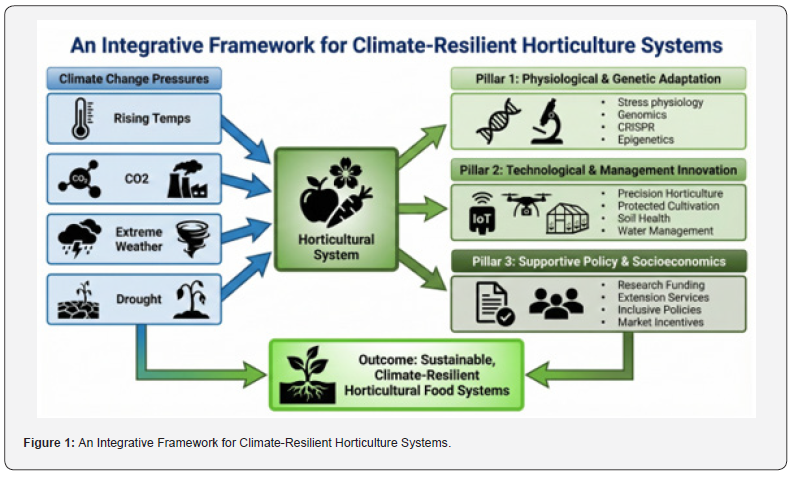
This mini review synthesizes current knowledge on the impacts of climate change on horticultural crops and evaluates innovative strategies for building resilience. Specifically, it aims to: (1) detail the physiological and phenological disruptions caused by climate change; (2) explore resilience mechanisms from molecular to ecosystem levels; (3) review cutting-edge adaptation technologies and breeding approaches; and (4) discuss enabling policy and socioeconomic frameworks. A key objective is to propose an integrative model that links these domains for effective climate adaptation. The literature search was conducted using databases like Google Scholar, Scopus, and Web of Science, focusing on peer-reviewed articles published between 2019 and 2025, using keywords such as 'climate-resilient horticulture,' 'CRISPR,' 'abiotic stress,' and 'precision agriculture. (Figure 1)
Climate Change Impacts on Horticultural Crops
Direct physiological effects
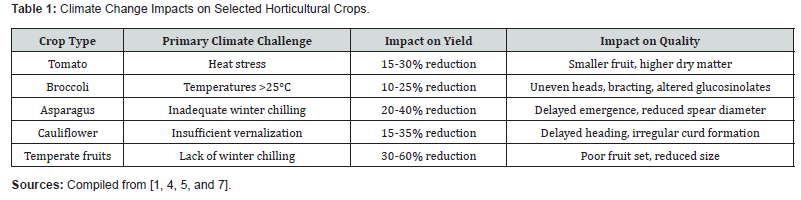
The physiological processes of horticultural crops are intensely sensitive to environmental conditions, particularly temperature. Research demonstrates that elevated temperatures accelerate plant development rates, often resulting in undesirable traits and reduced market quality [4]. For instance, tomato fruits developed under heat stress are typically smaller with higher dry matter content but reduced market acceptability. In broccoli, temperatures as low as 25°C can cause malformations such as uneven heads with oversized flower buds and bracting in sensitive cultivars [1]. These morphological changes directly impact market yield and economic returns for producers.
Beyond morphological changes, climate factors significantly alter the biochemical composition of horticultural products. Studies have shown that high temperatures can produce inhomogeneous and less sweet broccoli heads, while simultaneously increasing flavonol content and shifting glucosinolate composition in florets. These changes affect not only sensory qualities but also the nutritional value of produce [5]. Similarly, elevated CO₂ levels have been associated with alterations in nutrient profiles, including potential decreases in essential micronutrients such as magnesium, and zinc in leafy vegetables [6]. These nutritional shifts represent a significant concern for food security and public health.
Phenological disruptions
Climate change interferes critically with thermal requirements for key physiological processes in perennial horticultural crops. Many temperate species require specific accumulation of cold temperatures to break dormancy or initiate flowering. For asparagus, dormancy consists of two phases: induction of dormancy through accumulation of cold temperatures (0-7°C) and breaking of dormancy through accumulation of high temperatures. Research indicates that warmer temperatures during the first dormancy phase extend the length of the second dormancy phase, leading to delayed and reduced yields [1]. Similarly, inadequate winter chilling in fruit trees results in irregular flowering patterns and substantially reduced fruit set.
The vernalization requirements of vegetable crops such as cauliflower are equally vulnerable to warming temperatures. Head induction in cauliflower occurs only after a period at 7-10°C, and higher temperatures may induce significant delays in heading. One study demonstrated that head formation occurred 49 days later when temperature increased just 2.9°C above ambient [7]. Such phenological disruptions cause substantial irregularities in market supply, with periods of shortage followed by oversupply, creating economic instability throughout the supply chain from producers to consumers. Beyond crop-specific impacts, common physiological responses to heat and drought stress include oxidative damage, membrane instability, reduced photosynthetic efficiency, and hormonal imbalances, which collectively lead to yield and quality losses. (Table 1)
Extreme weather events
The increasing frequency and intensity of extreme weather events compound the challenges posed by gradual climatic changes. Heat waves, frost events, drought, and flooding all negatively impact horticultural production systems [8]. The probability of heat waves has doubled in Europe over recent decades, with further increases predicted in both frequency and duration [9]. Such events cause immediate physiological damage to crops, including sunscald, wilting, flower abortion, and reduced photosynthetic capacity.
The year 2018 provided a dramatic example, with temperatures reaching unprecedented levels across Europe, including typically moderate regions of Central and Northern Europe. These conditions resulted in substantial yield losses across multiple horticultural commodities despite intensive irrigation efforts. Similarly, unseasonal frost events during critical growth stages can devastate production, as demonstrated by the 2017 frost events in Europe that resulted in an estimated €3.3 billion in agricultural losses [10]. The compounding effects of multiple stress events throughout a growing season create cumulative impacts that exceed the effects of any single stressor alone.
The dual role of elevated CO₂
While often discussed as a driver of climate change, elevated CO₂ can have direct, complex effects on horticultural crops. For leafy vegetables like lettuce and spinach, elevated CO₂ can stimulate photosynthesis and increase biomass [35]. However, this 'CO₂ fertilization effect' is often accompanied by a dilution of essential micronutrients like zinc and iron, potentially leading to 'hidden hunger' [6]. Furthermore, the benefits are frequently negated under concurrent heat or water stress, highlighting the need to study interactive effects.
Foundations of Resilience: From Molecular to Physiological Adaptation
Molecular and physiological adaptation
Plants have evolved sophisticated innate mechanisms for stress resilience at molecular, biochemical, and physiological levels. Understanding these mechanisms is crucial for developing climate-resilient horticultural systems. At the molecular level, plants activate complex signaling networks involving hormones such as abscisic acid (ABA), jasmonic acid (JA), and salicylic acid (SA) in response to stress. These signaling pathways trigger the expression of protective genes and synthesis of compatible solutes like proline, glycine betaine, and sugars that maintain cellular homeostasis under stress conditions [11].
Recent research in molecular horticulture has identified numerous genes associated with stress tolerance in various crops. For instance, the AP2L2 genes in wheat and triticale have been manipulated using CRISPR-Cas9 technology to develop shorter plants without compromising grain quality or yield [12,13]. Similarly, single-cell proteomics (SCP) methods have been pioneered to analyze proteins within individual plant cells, providing unprecedented resolution in understanding plant responses to environmental stresses [14]. These technological advances for understanding plant biology offer exciting opportunities for enhancing climate resilience in horticultural crops through precision breeding.
Epigenetic modifications
Epigenetic mechanisms represent another layer of plant adaptation to environmental stress. DNA methylation, histone modification, and small RNA-mediated gene regulation allow plants to rapidly adjust their gene expression patterns without altering DNA sequences [15,16]. These modifications can provide transgenerational stress memory, potentially enabling offspring to better withstand stress conditions experienced by parent plants. Research on epigenetic responses to abiotic stress in horticultural crops is still emerging but represents a promising frontier for developing climate-resilient production systems. Studies on tomato and brassica species have demonstrated that pre-exposure to mild stress can induce epigenetic changes that enhance tolerance to subsequent, more severe stress events. This phenomenon, known as priming or hardening, offers practical applications for nursery production systems [17]. The potential to develop epigenetic markers for breeding programs or to incorporate epigenetic priming into commercial production practices represents an exciting avenue for future research and application in climate-resilient horticulture.
Applied Strategies for Resilience: Breeding, Technology, and Management
Breeding for climate resilience
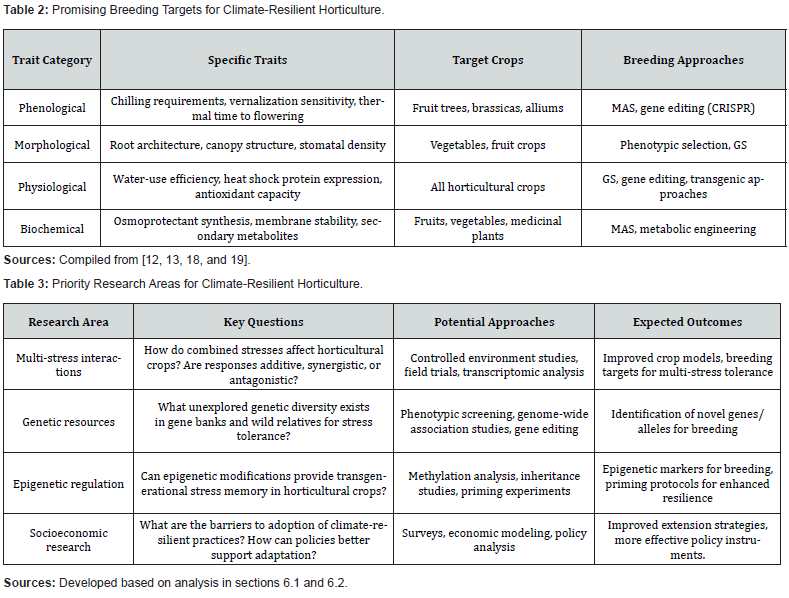
Genetic improvement represents the most promising long-term strategy for adapting horticultural crops to climate change. Modern breeding programs increasingly focus on developing cultivars with enhanced resilience to multiple stresses while maintaining yield and quality characteristics. Traditional breeding approaches are being complemented by molecular techniques such as marker-assisted selection (MAS), genomic selection (GS), and genetic engineering to accelerate the development of improved cultivars [18,19].
Recent advances in genome editing technologies, particularly CRISPR-Cas9, have revolutionized crop improvement efforts. These tools allow precise modifications of key genes controlling stress responses without introducing foreign DNA, potentially circumventing regulatory hurdles associated with transgenic approaches. The development of short-stature wheat and triticale through manipulation of AP2L2 genes demonstrates the potential of these technologies for crop improvement [12]. In horticulture, similar progress is being made. For instance, CRISPR has been used to knock out the SIAGO7 gene in tomato to enhance drought tolerance [36], and to edit CaMLO genes in pepper to confer resistance to powdery mildew, a disease exacerbated by climate shifts [37]. Similar approaches are being applied to horticultural crops to enhance drought tolerance, heat resistance, or alter phenological requirements (Table 2).
Technological and management solutions
Beyond genetic improvement, numerous technological innovations offer opportunities for enhancing climate resilience in horticultural systems. Protected cultivation technologies, including advanced greenhouse and indoor production systems, provide unprecedented control over environmental conditions. Modern precision horticulture approaches leverage sensors, drones, and IoT technologies to monitor crop status in real-time, enabling precise application of water and nutrients to meet plant needs while minimizing resource use [20-22].
Case Study: IoT-based water management in arid regions: A practical example of precision horticulture is the deployment of IoT sensor networks in Israeli avocado orchards. Soil moisture sensors provide real-time data to a central system, which triggers drip irrigation only when needed. This has led to 20-30% water savings while maintaining yield, demonstrating the potential for climate adaptation in water-scarce regions [21]. Key barriers to wider adoption include high initial costs and the need for technical skills, highlighting the importance of supportive policies and training programs.
Water management strategies are particularly critical in addressing climate challenges. Waterwise gardening practices, also called xeriscaping, are gaining renewed interest [23]. These approaches include soil building, mulching, and delivering water at the soil level rather than overhead. Additionally, systems to collect and utilize rainwater or greywater can significantly reduce irrigation demands. Research demonstrates that native plants introduced through rewilding initiatives require less maintenance and reduce the need for pesticides, herbicides, and supplemental water [24].
Soil health and ecosystem management
Soil building has emerged as a foundational practice for climate-resilient horticulture. Healthy soils with high organic matter content exhibit improved water retention, nutrient availability, and resilience to extreme weather events. Practices such as adding compost, manure, and cover crops help replenish nutrients that soils may lack. The trend toward sustainable and organic practices includes composting, natural fertilizers, and organic pest control, which preserve gardens as eco-friendly sanctuaries [25].
The integration of native plants into horticultural systems supports broader ecosystem resilience. Natives are specially adapted to grow in the areas where they evolved, just as native fauna is [26]. A more balanced ecosystem provides numerous benefits, including abundant populations of beneficial wildlife that help control pests. Providing bountiful food sources draws predatory insects, keeping down populations of nuisance insects [27]. This approach aligns with the growing trend toward wildlife-friendly gardens that include pollinator plants, bird feeders, and insect hotels [24].
Policy and Socioeconomic Considerations
Institutional support and research funding
Government policies and funding play a crucial role in driving innovation and progress in climate-resilient horticulture [28]. Strategic investments from public institutions support cutting-edge research, development of sustainable agricultural practices, and the improvement of crop yields and resilience. Policies that prioritize climate adaptation, food security, and technological advancement help guide research priorities and ensure alignment with national and global needs. The dominance of U.S.-based institutions in agricultural research with 260 scientists in the 2025 ranking of plant science and agronomy researchers highlight the importance of sustained public investment in research [29].
International collaboration is equally essential for addressing the global challenge of climate change. The European Union has implemented numerous policies supporting climate-smart agriculture, including the Common Agricultural Policy (CAP) which increasingly emphasizes environmental sustainability [30]. Similarly, developing countries are implementing national adaptation plans that include support for climate-resilient agriculture [31]. These policy frameworks provide essential guidance and resources for transitioning toward more sustainable horticultural production systems. Beyond the EU and U.S., several developing nations have launched initiatives. India's National Mission on Sustainable Agriculture includes a 'Climate Resilient Horticulture' component promoting stress-tolerant varieties and micro-irrigation [38]. In Kenya, horticulture, a major export sector, is being supported through policies that incentivize rainwater harvesting and the use of shade nets, directly addressing climate vulnerabilities [39].
Knowledge dissemination and extension services
Effective knowledge transfer systems are critical for implementing climate resilience strategies in commercial horticulture. Extension services play a vital role in bridging the gap between research institutions and practitioners. However, traditional extension models face challenges in addressing the rapid pace of climate change and the complexity of adaptation strategies. Innovative approaches, including digital extension platforms and peer-to-peer learning networks, are emerging to address these challenges.
The role of online education in advancing plant science and agronomy research is growing by expanding access to education, collaboration, and innovation [29]. Through flexible, remote learning platforms, students and professionals worldwide can engage with the latest scientific developments. Many programs offer virtual labs, data analysis tools, and research opportunities that mirror traditional settings, allowing learners to contribute to ongoing studies or initiate their own projects [32]. These developments are particularly valuable for professionals in remote areas or developing countries where access to traditional educational resources may be limited.
Future Directions and Research Priorities
Emerging research frontiers
Several emerging research frontiers hold particular promise for advancing climate-resilient horticulture. The application of artificial intelligence (AI) and machine learning in predictive modeling, crop monitoring, and decision support systems represents a rapidly advancing field. These technologies can integrate complex environmental and plant physiological data to provide real-time management recommendations and predict future climate impacts with unprecedented accuracy [33,34].
Advancements in genomics and gene editing continue to accelerate the development of climate-resilient cultivars. The increasing availability of genome sequences for minor horticultural crops enables targeted improvement of species previously neglected by genetic research. Similarly, developments in phenotyping technologies, including hyperspectral imaging and laser scanning, allow rapid assessment of plant responses to environmental stresses, facilitating the identification of valuable traits for breeding programs.
Research gaps and challenges
Despite significant progress, important research gaps remain in understanding and addressing climate impacts on horticultural systems. Most research has focused on individual stress factors under controlled conditions, yet under field conditions, crops typically experience multiple simultaneous stresses. The interactive effects of combined stresses such as heat and drought, or elevated CO₂ and nutrient deficiency represent a critical research need for developing truly climate-resilient production systems.
The socioeconomic dimensions of climate adaptation in horticulture require greater research attention. Understanding barriers to adoption of resilient practices, developing effective policy instruments, and designing economically viable adaptation strategies are essential for successful implementation of technical solutions. Participatory approaches that engage stakeholders throughout the research process can help ensure that adaptation strategies are practical, economically viable, and socially acceptable (Table 3).
Conclusion
This review has synthesized the profound threats that climate change poses to global horticulture, a sector of disproportionate nutritional and economic importance. The evidence is clear: rising temperatures, altered CO₂ levels, and extreme weather events are causing significant physiological disruptions, yield reductions, and quality deterioration in high-value fruit, vegetable, and ornamental crops. However, a pathway to resilience is emerging through the integrated application of physiological knowledge, technological innovation, and supportive policy frameworks. As illustrated in our conceptual model, success hinges on synergizing these domains by leveraging insights into molecular and epigenetic adaptation to inform precision breeding, which in turn is enabled by smart technologies and de-risked through effective socio-economic policies.
Looking forward, strategic research and implementation must be prioritized to bridge critical gaps. Future efforts should focus on three key areas: (1) multi-stress interactions: Advancing beyond single-stress studies to understand the complex, synergistic effects of combined heat, drought, and elevated CO₂ under real-world field conditions. (2) Adoption economics: Quantifying the cost-benefit ratios of resilience technologies for smallholders and developing scalable business models to facilitate widespread uptake. (3) Policy instrument design: Creating effective subsidy schemes, insurance products, and incentive structures that de-risk the transition to climate-smart horticultural practices.
Ultimately, securing a sustainable and productive future for horticulture demands an unprecedented interdisciplinary collaboration. Bridging the fields of plant physiology, data science, genomics, socioeconomics, and policy analysis is no longer optional but essential. By harnessing cutting-edge science, empowering stakeholders through knowledge dissemination, and fostering international cooperation, the global horticulture community can not only adapt to a changing climate but also contribute to its mitigation. The time for concerted, integrated action is now.
References
- Bisbis MB, Gruda NS, Blanke MM (2019) Securing horticulture in a changing climate a mini review. Horticulturae 5(3): 56-70.
- Bacelar E, Pinto T, Anjos R, Morais MC, Oliveira I, et al. (2024) Impacts of climate change and mitigation strategies for some abiotic and biotic constraints influencing fruit growth and quality. Plants 13(14): 1942-1960.
- Ahmed M, Babayola M, Bake ID (2024) Role of horticultural crops in food and nutritional security: A review. J Nutr Food Process 7(8).
- Fahad S, Bajwa AA, Nazir U, Anjum SA, Farooq A, et al. (2017) Crop production under drought and heat stress: plant responses and management options. Front Plant Sci 8(1147): 1-25.
- Gmižić D, Šola I (2025) Developmental and temperature-driven variations in metabolic profile and antioxidant capacity of broccoli (Brassica oleracea var. cymosa). Plants 14(12): 1825-1840.
- Wang X, Zhang S, Li H, Du Laing G, Odlare M, et al. (2025) Elevated CO2 decreases micronutrient Zn but not Fe in vegetables - evidence from a meta-analysis. Front Plant Sci 16(1509102): 1-15.
- Rosen A, Hasan Y, Briggs W, Uptmoor R (2018) Genome-based prediction of time to curd induction in cauliflower. Front Plant Sci 9(78): 112.
- Ebi KL, Vanos J, Baldwin JW, Bell JE, Hondula DM, et al. (2021) Extreme weather and climate change: population health and health system implications. Annu Rev Public Health 42: 293-315.
- World Meteorological Organization (2022) Temperatures in Europe increase more than twice global average.
- Pfleiderer P, Menke I, Schleussner CF (2019) Increasing risks of apple tree frost damage under climate change. Climatic Change 157(3): 515-525.
- Das S, Shil S, Rime J, Kayia Alice A, Yumkhaibam T, et al. (2025) Phytohormonal signaling in plant resilience: advances and strategies for enhancing abiotic stress tolerance. Plant Growth Regul 105(3): 329-360.
- Chen F, Chen L, Yan Z, Xu J, Feng L, et al. (2024) Recent advances of CRISPR-based genome editing for enhancing staple crops. Front Plant Sci 15(1478398): 1-20.
- Zhang C, Hegarty J, Padilla M, Tricoli DM, Dubcovsky J, et al. (2025) Manipulation of the microRNA172-AP2L2 interaction provides precise control of wheat and triticale plant height. Plant Biotechnol J 23(2): 333-335.
- Clark NM, Elmore JM, Walley JW (2022) To the proteome and beyond: advances in single-cell omics profiling for plant systems. Plant Physiol 188(2): 726-737.
- Miryeganeh M (2025) Epigenetic mechanisms driving adaptation in tropical and subtropical plants: insights and future directions. Plant Cell Environ 48(5): 3487-3499.
- Tresas T, Isaioglou I, Roussis A, Haralampidis K (2025) A brief overview of the epigenetic regulatory mechanisms in plants. Int J Mol Sci 26(10): 4700-4720.
- Liu H, Able AJ, Able JA (2022) Priming crops for the future: rewiring stress memory. Trends Plant Sci 27(7): 699-716.
- Mmbando GS (2025) Exploring the capacity of modern biotechnology to enhance climate smart crop production in Africa. Discov Agric 3(48): 1-15.
- Pixley KV, Cairns JE, Lopez-Ridaura S, Ojiewo CO, Dawud MA, et al. (2023) Redesigning crop varieties to win the race between climate change and food security. Mol Plant 16(10): 1590-1611.
- Ahmed N, Zhang B, Deng L, Bozdar B, Li J, et al. (2024) Advancing horizons in vegetable cultivation: a journey from age-old practices to high-tech greenhouse cultivation a review. Front Plant Sci 15(1357153): 1-25.
- Goddek S, Körner O, Keesman KJ, Tester MA, Lefers R, et al. (2023) How greenhouse horticulture in arid regions can contribute to climate-resilient and sustainable food security. Glob Food Sec 38(100701): 1-12.
- Tiwari NJ, Dubey S, Kumar A, Amala E, Sangmesh P, et al. (2025) A comprehensive review on protected cultivation of horticultural crops: advances and sustainability. Int J Environ Clim Change 15(2): 466-476.
- Ismaeil EMH, Sobaih AEE (2022) Assessing xeriscaping as a retrofit sustainable water consumption approach for a desert university campus. Water 14(11): 1681.
- Gruda N, Bisbis M, Tanny J (2019) Impacts of protected vegetable cultivation on climate change and adaptation strategies for cleaner production - A review. J Clean Prod 225: 324-339.
- Khan MT, Aleinikovienė J, Butkevičienė LM (2024) Innovative organic fertilizers and cover crops: perspectives for sustainable agriculture in the era of climate change and organic agriculture. Agronomy 14(12): 2871-2890.
- Tartaglia ES, Aronson MF (2024) Plant native: comparing biodiversity benefits, ecosystem services provisioning, and plant performance of native and non-native plants in urban horticulture. Urban Ecosyst 27(6): 2587-2611.
- Ndakidemi B, Mtei K, Ndakidemi P (2016) The potential of common beneficial insects and strategies for maintaining them in bean fields of Sub-Saharan Africa. Am J Plant Sci 7(3): 425-436.
- Ali UM (2024) Climate-smart horticultural practices: building resilience in a changing environment: a scoping review. Agric For Fish 13(5): 202-209.
- com (2025) World online ranking of best plant science & agronomy scientists - 2025 report.
- Doukas YE, Salvati L, Vardopoulos I (2023) Unraveling the European agricultural policy sustainable development trajectory. Land 12(9): 1749-1765.
- United Nations Development Programme (2025) What are National Adaptation Plans and why do they matter?
- Reyes RL, Isleta KP, Regala JD, Bialba DMR (2024) Enhancing experiential science learning with virtual labs: A narrative account of merits, challenges, and implementation strategies. J Comput Assist Learn 40(6): 3167-3186.
- Sheikh M, Iqra F, Ambreen H, Pravin KA, Manzoor I, et al. (2024) Integrating artificial intelligence and high-throughput phenotyping for crop improvement. J Integr Agric 23(6): 1787-1802.
- Kaya C (2025) Optimizing crop production with plant phenomics through high-throughput phenotyping and AI in controlled environments. Food Energy Secur 14(3): e70050.
- Huang Y, Zhang X, Ma X (2025) Spinach yield and quality response to elevated soil carbon dioxide. Front Plant Sci 16: 1636651.
- Kushwaha SB, Nagesh CR, Lele SS, Viswanathan C, Prashat GR, et al. (2025) CRISPR/Cas technology in vegetable crops for improving biotic, abiotic stress and quality traits: Challenges and opportunities. Sci Hortic 341: 113957.
- Das R, Bhatt SS, Kathuria S, Singh R, Chhabra G, et al. (2023) Artificial intelligence and internet of things based technological advancement in domain of horticulture 4.0. 2023 IEEE Devices for Integrated Circuit (DevIC) 207-211.
- Aryal JP, Sapkota TB, Khurana R, Khatri-Chhetri A, Rahut DB, et al. (2020) Climate change and agriculture in South Asia: Adaptation options in smallholder production systems. Environ Dev Sustain 22(5): 5045-5075.
- African Food Fellowship (n.d.) The current state of micro and small enterprises in horticulture in Kenya.

























