




 AIBM Home



Scientific Exploration of Nanoparticles: Structure, Synthesis, and Applications
Nokwanda Promise Myeni1, Nolwazi Lady-Peace Hlabisa1, Dipika Dwarka2, Tonderai Matambo3 and Freedom Tshabuse1*
1Department of Biochemistry and Microbiology, University of Zululand, Private Bag X1001. KwaDlangezwa 3886, South Africa
2Department of Biotechnology and Food Technology, Durban University of Technology, KwaZulu-Natal, South Africa
3Institute for the Development of Energy for African Sustainability, University of South Africa, Roodepoort, South Africa
Submission:June 27, 2025; Published: July 11, 2025
*Corresponding author:Freedom Tshabuse, Department of Biochemistry and Microbiology, University of Zululand, Private Bag X1001. KwaDlangezwa 3886, South Africa
How to cite this article:Nokwanda Promise Myeni, Nolwazi Lady-Peace Hlabisa, Dipika Dwarka, Tonderai Matambo and Freedom Tshabuse. Scientific Exploration of Nanoparticles: Structure, Synthesis, and Applications. Adv Biotech & Micro. 2025; 19(1): 556002.DOI:10.19080/AIBM.2025.19.556002
Abstract
Nanoparticles have emerged as a transformative advancement in modern research, having many uses in medicine, engineering, and environmental science. This review explores their historical developments, structural composition, synthesis techniques, and pharmacological potential. The conceptual roots of nanotechnology trace back to Richard Feynman’s 1959 lecture and were later formalized by Norio Taniguchi in 1974. However, evidence of ancient nanotechnology exists on Roman dichroic glass, medieval stained-glass windows, and Ayurvedic medicine. Structurally, nanoparticles comprise of a core, shell, and surface layers, each influencing their physicochemical behavior. Various synthesis approaches encompassing physical, chemical, and biological enable their fabrication, each with specific advantages. Biologically synthesized nanoparticles, in particular, offer eco-friendly and biocompatible options. Pharmacologically, nanoparticles exhibit antimicrobial, antioxidant, anticance, and anti-inflammatory activities, with silver and iron nanoparticles showing significant promise due to their size, shape-depended properties, and high reactivity. Their potential in drug delivery, targeted therapies, and infection control highlights the transformative power of nanotechnology across disciplines. As research in this field advances, nanoparticles are poised to play an increasingly vital role in science and industry.
Keywords: Antimicrobial activity; Cytotoxicity; Green synthesis; Nanoparticles
Abbreviations: DMF: Dimethylformamide; PVP: Polyvinylpyrrolidone; SDS: Sodium Dodecyl Sulfate
Introduction
Nanoparticles comprise organic matter, carbon, metal oxide or metal and have particle sizes ranging from 1 to 100 nm. They exhibit unique chemical, physical, and biological characteristics compared with larger-scale particles. This results from increased reactivity or stability in a chemical process, large surface-area-to-volume ratio, and increased mechanical strength. These unique properties have allowed nanoparticles to be possible candidates in various applications such as cancer treatments, antimicrobials, antioxidants, and anti-inflammatory agents [1]. These exceptional applications of nanoparticles have encouraged scientists to apply various chemical, physical, and biological methods to synthesize functional nanoparticles. Physical and chemical methods of synthesizing nanoparticles can produce nanoparticles with a narrow size range and morphology. Still, these methods are quite costly, require potentially hazardous chemicals and are additionally accountable for various biological risks [2]. In contrast, the green synthesis methods are economical, environmentally friendly, prevent waste production and pollution, efficient, and save time and energy [2]. This article reviews the synthesis of nanoparticles and their pharmacological application as antimicrobial, anticancer, antioxidant, and anti-inflammatory agents in therapeutics.
History and Timeline of Nanotechnology
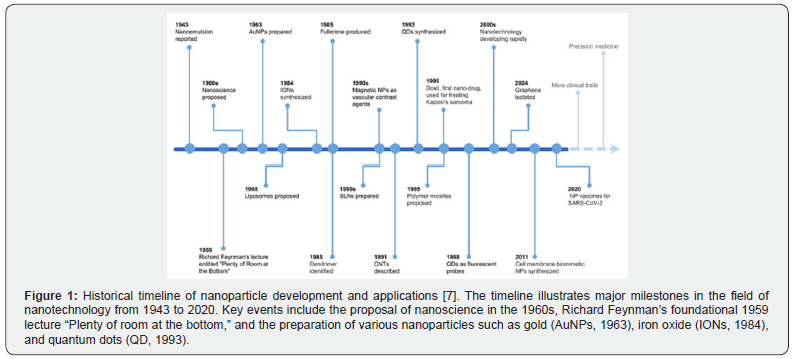
The 1965 physics Nobel Prize Laureate, Richard Feynman is the originator of modern nanotechnology and is known as the father of modern nanotechnology. “There’s Plenty of Room at the Bottom” was the title of a lecture he presented at Caltech in the American Physical Society meeting in 1959, where he proposed the idea of manipulating matter at the atomic size [3]. This innovative concept triggered new thoughts, which led Feynman’s hypothesis to be later proven to be correct [3]. In 1974, a Japanese scientist, Norio Taniguchi, defined the term “nanotechnology” as” nanotechnology mainly comprises the processing of separation, consolidation, and deformation of materials by one atom or one molecule” [4]. Following the discovery made by Feynman of nanotechnology, numerous researchers became interested in this new field, which led to the development of two approaches for synthesising nanomaterials. These are bottom-up and top-down approaches that vary in speed, quality, and cost [4].
Nanotechnology has existed since ancient times and is not as modern as it appears today. Among the most compelling instances of nanotechnology from ancient times is the Lycurgus Cup, a Roman glass artefact dating back to the 5th century, crafted from a dichroic glass that exhibits colour-shifting properties upon exposure to light [5]. Another great example is the stained-glass windows that were found in several churches during medieval times and comprised a combination of glass of metal particles that are nano sized. Chinese porcelain is a Chinese art known as a family rose is also nanotechnology as it is composed of gold nanoparticles of sizes between 20 and 60 nm [6]. The Ayurvedic medicine Bhasmas, popularly known in the Indian subcontinent since the 7th century AD was extensively used to treat many illnesses. Bhasmas are nanoparticles produced biologically and recommended for use with several other Ayurvedic medicines. Based on such evidence, it can be deduced that even though nanotechnology was not yet known as nanotechnology, it still existed in ancient times [6] (Figure 1).
Nanoparticle Structure and Synthesis: Techniques and Applications
Structure of nanoparicles
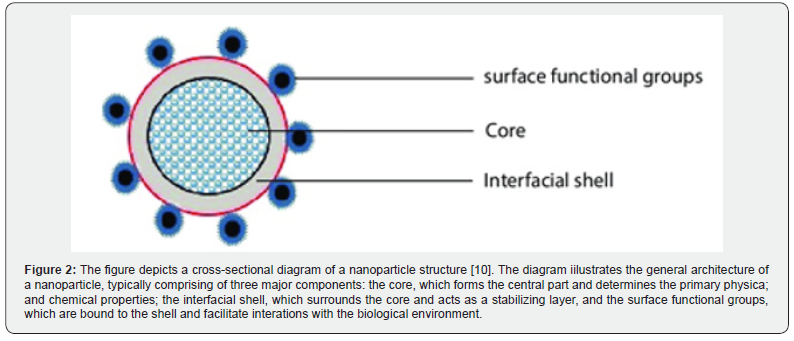
The dimensionality of nanoparticles, categorized by their shape, encompasses zero-dimensional, one-dimensional, two-dimensional, and three-dimensional classifications [8]. Scientists discovered that the physio-chemical characteristics of materials can be affected by size, which made them realize the importance of these nanoparticles [5]. Nanoparticles comprise three layers, namely the core, shell layer, and surface layer, and are complex molecules. The core is labelled as a nanoparticle itself, and provides functional properties like antimicrobial or magnetic activity, while a shell enhances stability and biocompatibility, and a surface can be chemically modified for targeted delivery [9] (Figure 2).
Synthesis of nanoparticles
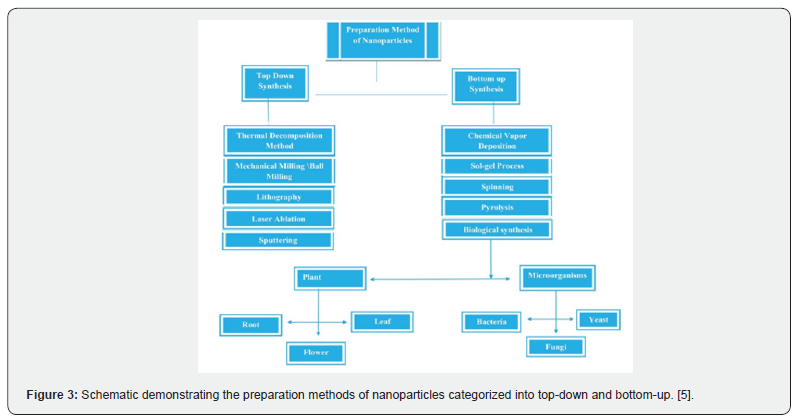
Nanoparticles can be synthesized using different chemical, physical, and biological methods. The most suitable method can be chosen based on the type of properties desired for the final product, the chemical nature of the nanoparticles, and the economic viability of the fabrication steps [11]. Nanoparticles have two basic approaches to their synthesis. The top-down approach breaks down large materials into smaller components and turns them into nanoparticles [12]. Nanoparticles fabricated using this approach are produced within a limited time. The bottom-up method involves the collection of the smallest atoms to form larger molecules that eventually form nanoparticles [13]. This approach can produce particles that are homogenous with well-defined crystallographic and surface structures based on molecular recognition and molecular self-assembly concepts [14] (Figure 3).
Physical synthesis technique of nanoparticles
The physical methods used in synthesizing nanoparticles are primarily a “top-down” approach in which the materials are con densed down using a variety of physical techniques [15]. These methods involve the application of high-energy radiation, mechanical pressure, and electrical or thermal energy to cause material corrosion, condensation, evaporation or melting to produce nanoparticles [16]. Metal atoms are first vaporized during the physical synthesis process, after which they condense on various supports and undergo reorganization, and assemble to form miniature clusters of metallic nanoparticles [17]. Physical methods can produce nanoparticles with high purity and a distinct shape [17]. However, this approach frequently calls for highly advanced equipment, which is costly, high pressure and temperature, and the machines consume a lot of space [18].
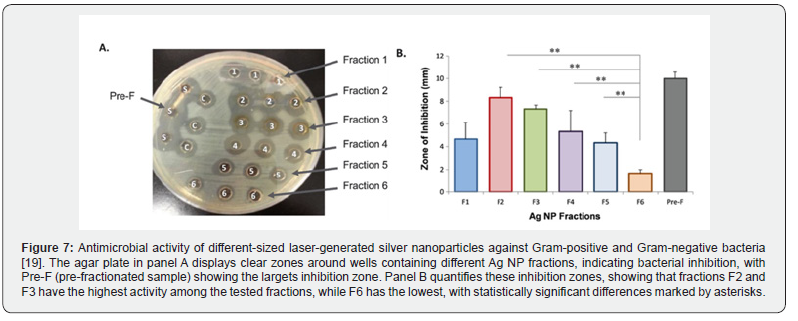
Silver nanoparticles are synthesized using the laser ablation method in the study by [19], where silver plates with dimensions of 25 mm × 25 mm × 2 mm and purity of 99.9% are sterilized using ethanol and autoclaved in deionized water. The sterile plates are then placed in a glass vessel containing 20 mL of deionized water each, with a 2 mm level higher than the silver samples. A Nd: YV04 laser operated in picosecond pulses with a wavelength of 1064 nm is used for ablation at a high scanning speed v = 250 mm/s with a pulse repetition of 200 kHz and an average power of 9.12 W. However, the laser-ablation-generated silver nanoparticle size has an unknown effect on antibacterial activity and toxicities to human cells; therefore, a sucrose gradient was used to separate the silver nanoparticles into different size fractions.
Chemical synthesis technique of nanoparticles
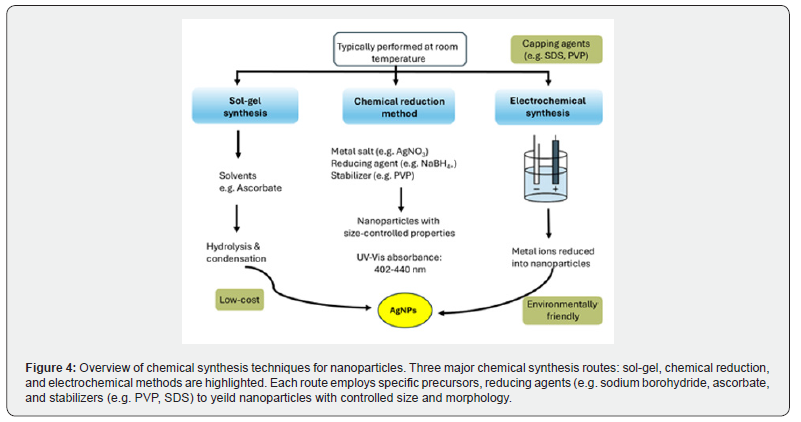
In the chemical synthesis method, organic and inorganic solvents such as ascorbate, sodium citrate, element hydrogen, tollen reagent, polyol process, sodium borohydride, and N.N-dimethylformamide (DMF) are used as chemical reducing agents. This method is usually performed at room temperature [20]. Chemical methods include sol-gel, electrochemical, and chemical reduction of nanoparticles. These methods are commonly used for the synthesis of silver nanoparticles, and they obtain nanoparticles at low cost and are non-toxic [21]. The synthesis of silver nanoparticles was described using agents such as sodium borohydride as reducing agents at room temperature and polyvinylpyrrolidone (PVP) and silver nitrate as stabilizing agents. The results showed that PVP with concentrations less than 1.0% and greater than 5.0% had very broad peaks compared to PVP with concentrations ranging from 1.0% to 5.0% and had a strong plasmon resonance band between 402 and 440 nm [22]. Iron oxide doped with nickel was synthesized using the co-precipitation method, where sodium dodecyl sulfate (SDS) was used as a capping agent [23]. (Figure 4)
Biological synthesis technique of nanoparticles
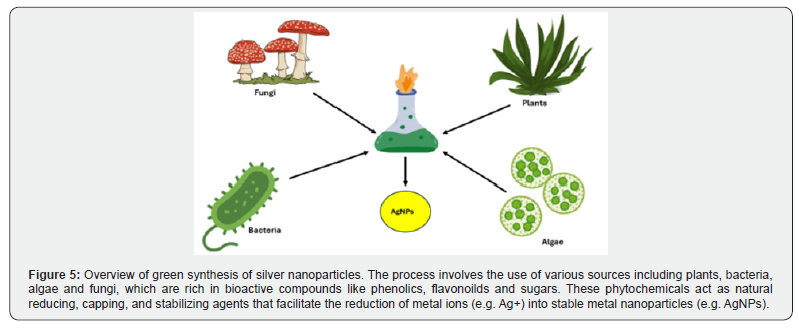
Green nanotechnology enhances the idea of using antimicrobial effects in nanomedicine, as this is achieved through the use of biological nanoparticles synthesized from the plant extract, which are non-toxic, thus green nanotechnology is a promising solution for application in medicine and agriculture [24]. The biological synthesis of nanoparticles uses bacteria, fungi, algae, and plants, which is a green technology that ensures clean, safe, non-toxic, and environmentally friendly nanoparticles [25]. The plant extracts used in the synthesis of nanoparticles as capping and stabilizing agents, rendering them non-toxic, simple, cost-efficient, biocompatible, and can inactivate bacteria through the cellular membrane [24]. Plant-derived nanoparticles have biomolecules such as proteins, glycoproteins, fatty acids, lipids, flavonoids, phenolics, and sugars that have significant control over the formation of free radicals [26]. Biologically synthesized silver nanoparticles have shown high yield, solubility, and stability. Nevertheless, the utilization of biological reagents makes the synthesis procedure more complex. However, biological preparation of nanoparticles is one of the most promising procedures because it is low-cost and non-toxic [21]. Silver nanoparticles were synthesized using Eucalyptus camaldulensis and Terminalia arjuna plant extracts as a capping and reducing agent [27]. Silver nanoparticles were synthesized from the cell-free extract of polysiphonia algae as a reducing agent [28] (Figure 5).
Pharmacological Activities of Nanoparticles
Compared to larger materials, nanoparticles possess exceptional chemical, physical, biological, thermal, and mechanical characteristics [29]. The fields of biology and research use some of these properties, such as anti-microbial, antioxidant, anti-inflammatory, and anti-cancer [30]..
Nanoparticles as antimicrobial agents
The significant morbidity and mortality associated with viral and bacterial diseases globally have emerged as a major medical concern. Approximately 50% of the population in developing countries get bacterial infections with over 3 million deaths recorded yearly [31]. Bacteria are ubiquitous and adhere to surfaces, ultimately resulting in the formation of biofilms making curing infectious diseases difficult because they possess antibiotic resistance [32]. Mechanical blockage in fluid systems occurs as biofilms promote corrosion on metallic surfaces [33,34]. Medical equipment and operating rooms are also susceptible to bacterial colonization, which can cause nosocomial infections. In contrast, viruses enter and multiply within the host cell, in which the metabolic pathways in the host cell then become affected by the virus- evolving genome and consequently cause infection. Thus, the development of methods that are effective against infectious illnesses, such as antimicrobial agents is imperative, [35].
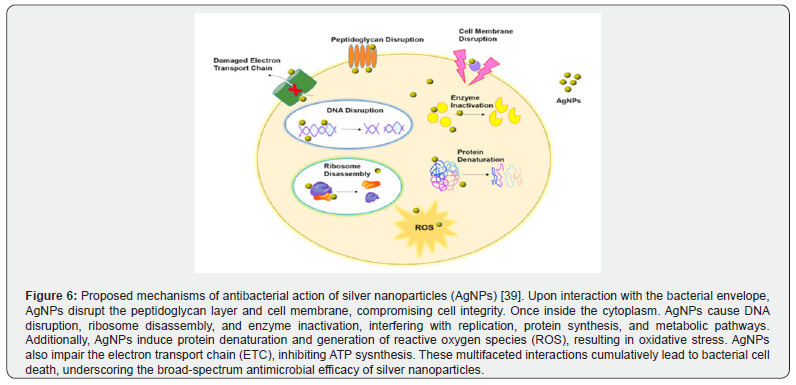
Infections can be tackled using several antimicrobial agents; however, these agents have limitations. Conventional antimicrobial drugs have low water solubility, poor oral bioavailability and stability, low transportation rate across cellular membranes, systemic adverse effects, and lack of targeting thus affecting their efficiency. Insufficient and improper administration of traditional antimicrobial agents has resulted in pathogens becoming drug-resistant and the generation of biofilms, which are well-organized microbial communities [11]. Pathogenic microorganisms are antimicrobial-resistant when they can survive even after being exposed to drugs that are typically designed to destroy them. Therefore, nanoparticles were introduced to counter multidrug- resistance mutants and microbial resistance [36]. The surface morphology, size, crystal structure, charge, and zeta potential are some of the physicochemical properties of nanoparticles that allow them to have antimicrobial activity [37]. Their small size allows them to easily penetrate the bacterial cell wall to demonstrate antimicrobial activity [32]. Bacterial membrane damage can occur after the nanoparticles have attached and bound electrostatically to the bacterial cell wall, resulting in a modification of the membrane potential and depolarization. Impaired respiration, interruption of energy transfer, ion imbalance inside the bacteria, and ultimately cellular lysis occur as the bacterial cell becomes damaged [38] (Figure 6).
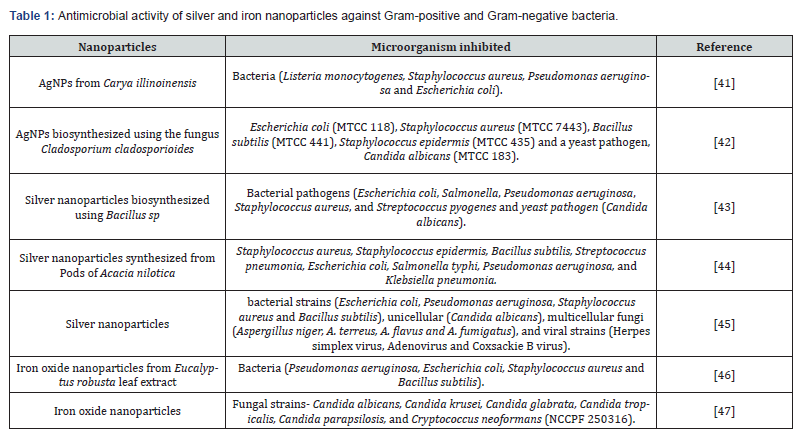
Iron nanoparticles can be used in drug delivery, magnetic hypothermia, MRI contrast agents, neurodegenerative diseases, and personalized medicine. Silver nanoparticles have antibacterial activity against Staphylococcus aureus and Bacillus subtilis., which are microorganisms used in the study [40]. The detrimental antimicrobial activity to the survival of bacterial cells is led by the release of ions by green nanoparticles. The silver nanoparticles stabilized with Moringa oleifera showed inhibition of Gram-negative bacteria (Klebsiella pneumonia and Pseudomonas aeruginosa) and Gram-positive bacteria (Staphylococcus aureus) at a 25μg mL-1 concentration and Escherichia coli and Enterococcus faecalis were inhibited at 12.5 μg mL-1 in the study by Moodley et al., 2018.
In the study by [19], silver nanoparticles synthesized from laser-ablation and cut into different fragments by sucrose gradient centrifugation were tested for their antimicrobial activity against Escherichia coli and Pseudomonas aeruginosa and the results showed that the smallest nanoparticles (15 to 50 nm) had the inhibition size of 8 mm for P. aeruginosa and 1.5 mm for E. coli. In contrast, the largest nanoparticles (30 to 200 nm) showed the weakest inhibitory activity, with 0.8 mm for P. aeruginosa and 0.7 mm for E. coli. Other researchers have evaluated the antibacterial effectiveness of differently sized laser-generated nanoparticles against E. coli. In this case, the reverse relationship between nanoparticle size and antibacterial activity was also studied. The 19 nm nanoparticle showed the most potent antibacterial activity. This is due to smaller silver nanoparticles can induce a greater number of reactive oxygen species (ROS), thus enhancing their effectiveness against E. coli. (Figure 7) (Table 1).
Nanoparticles as antioxidant agent
Antioxidants are substances that are synthetic or natural and can hinder or avert cell damage caused by oxidants (free radicals, reactive oxygen species, reactive nitrogen species, and other unstable molecules) [48]. They are important for the prevention of harmful effects of oxidation, damaging living organisms such as brain damage, atherosclerosis, and cancer [49]. The ability of enzymatic and non-enzymatic antioxidants to remove harmful substances is valuable for the control of a range of chronic illnesses, including diabetes, cancer, nephritis, AIDS, metabolic disorders, and neurodegenerative conditions [26]. The oxidative activity is influenced by the antimicrobial activity and the release of nanoparticles into the biological environment [50]. Antioxidant properties are exhibited by various metal and metal oxide nanoparticles, carbon nanotubes, and polymer-loaded antioxidant nanoparticles. For instance, green synthesized silver nanoparticles from Achillea millefolium L. were reported by [51] to have superior antioxidant activity compared to the conventional antioxidant, ascorbic acid.
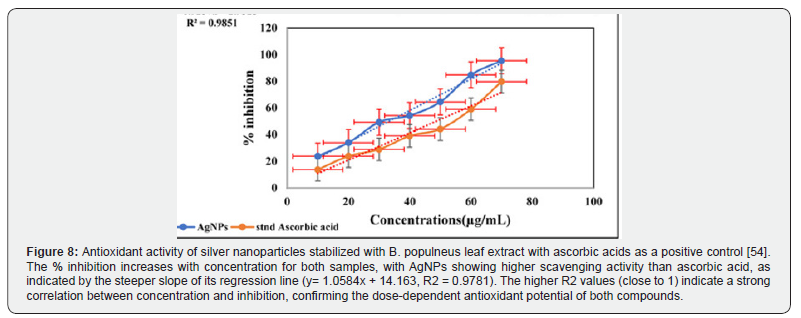
Silver nanoparticles synthesized from Catharanthus roseus leaf extract also showed strong in vitro antioxidants using a DPPH scavenging assay [52]. Iron nanoparticles synthesized using Eucalyptus robusta leaf extract produced an antioxidant effect by inhibiting DPPH radicals [46]. In another report, total antioxidant activity (TAC) and DPPH were inhibited by green synthetic Fe2O3 and Fe3O4-NPs [53]. In the study by [54], the antioxidant activity was determined using a free radical scavenging assay whereby the change in colour of DPPH (2,2-diphenyl-1-picrylhydrazyl) solution containing silver nanoparticles synthesized from Brachychitosa populneus leaf extract. The observed colour change from violet to light yellow indicated the antioxidant activity of the synthesized silver nanoparticles. The antioxidant activity was quantified using a spectrophotometer and silver nanoparticles showed an inhibition of 23% to 95% compared to ascorbic acid with inhibition of 13% to 79% in the same concentration ranging from 10 to 70 μg/mL (Figure 8).
Nanoparticles s anticancer agents
Due to the progression, variable disease presentation, and recurrence of cancer, it has become one of the most challenging diseases clinically [55]. The development of unorthodox, efficient, and straightforward cancer treatment therapies is essential. Chemotherapy is an important part of cancer therapy, however, this chemical therapy has many side effects. Efficiency, zero side effects, and simplicity have been showed by nanoparticles [56]. Chemotherapy employs cytotoxic substances to inhibit abnormal cell growth. The side effects of such treatment include toxicity, extreme allergic reactions, neuronal disintegration, and severe pain [57]. There is also a high chance of cancer recurrence after tumour removal when surgical therapy is used [56]. Cancer treatments presently use the unique biochemical properties of nanoparticles. The increased reactive surface area of nano-scale molecules improved optical properties, and ease of synthesis improve their therapeutic efficiency compared to drugs and pharmaceuticals of small molecules [58,55].
Nanoparticles, such as silver, gold, and copper have been reported to have anti-cancer properties [58]. Silver nanoparticles have been assessed in different studies for their anticancer activity on various cancer cell lines based on studies of the reduction of cell viability and motility, impairment of MMP-2 and MMP-9 activity resulting in apoptosis and autophagy-induced cell death, and promotion of ROS [55]. Examples include silver nanoparticles synthesized using Dendropanax morbifera leaf extract that exhibited impressive anticancer activity against A549 human lung cancer cells in vitro by encouraging apoptosis yet demonstrating less cytotoxicity to Haacht human keratinocytes [59]. Silver nanoparticles from pods of Acacia nilotica exhibited anticancer activity against two colon cancer cell lines, SW620 and SW480 [44]. Piper betel leaves extract-mediated iron oxide nanoparticles exert a cytotoxic effect on A549 lung cancer cells in a concentration-dependent manner [60]. The anticancer activity of silver nanoparticles using MTT assay, different concentrations of silver nanoparticles were used against MCF-7 cell lines, and the results showed that the average cell viability of MCF-7 cell decrease with an increase in the concentration of silver nanoparticles [28].
Nanoparticles as anti-inflammatory agents
The body’s instant response to factors such as invasion by foreign particles or pathogenic microorganisms, hormonal imbalance, infection, internal injury, or malfunction in the internal organ is known as inflammation. This response can also be triggered by obesity, contact with environmental toxins, or food sensitivity [29]. Non-steroidal anti-inflammatory drugs (NSAIDs) are used to treat inflammation and are commercially accessible but possess several side effects such as bleeding, stomach ulcers, cardiovascular strokes, and disruption of the gastric mucosal layer, which restricts their application for the treatment of chronic inflammation [61]. The low dissolution rate of drugs in blood plasma due to the poor aqueous solubility of the majority of NSAIDs further limits drug absorption within biological [62].
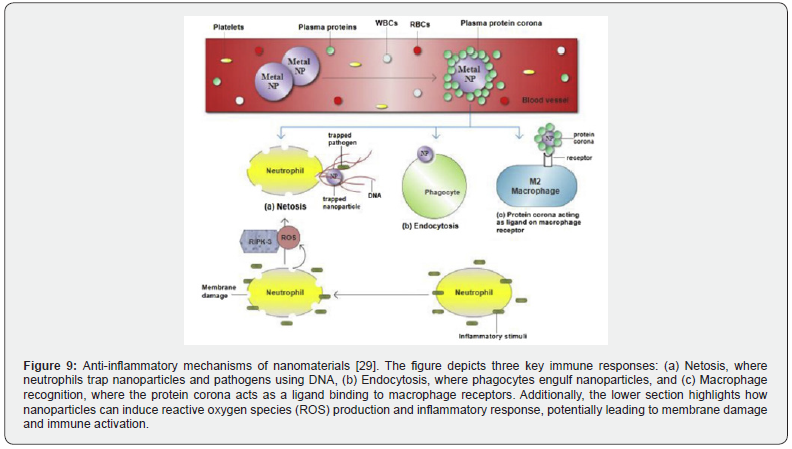
As a result of slow absorption, the effects of NSAID’s on the initiation of anti-inflammation, antipyretic, and analgesic are delayed in the case of acute inflammation. Hence, the development of innovative nanoformulations that demonstrate better anti-inflammatory actions while exhibiting lower side effects is important [61]. For a couple of years, nanoparticles have been explored for their promising anti-inflammatory activity. Compared to larger particles, nanoparticles have a high surface-area-to-volume ratio, making them efficient at inhibiting enhancers of inflammation such as cytokines and enzymes that aid in inflammation. Anti-inflammatory properties have been found in numerous metal and metal oxide nanoparticles such as silver, iron oxide, gold, zinc oxide [29].
The anti-inflammatory activity of silver nanoparticles capped with Belladonna’s mother tincture was reported in the study by [63] The silver nanoparticles showed effective inhibition of the denaturation of BSA protein. The increase in concentration of silver nanoparticles increased an inhibiting level of protein denaturation, therefore, the Belladonna capped silver nanoparticles were used successfully in the inhibition of BSA protein denaturation. Silver nanoparticles synthesized using the fruit extract of Prunus serrulata showed anti-inflammatory activity in RAW264.7 cell lines by inhibiting pro-inflammatory cytokines and inflammatory mediators [64]. Silver nanoparticles capped by the phytochemicals of Eichhornia crassipes leaf extract showed significant anti-inflammatory effects against protein denaturation [65] (Figure 9).
Cytotoxicity and Safety Assessment of Nanoparticles in Biomedical Application
Nanoparticles have cytotoxic activity and can act as nanocarriers to deliver therapeutic compounds, such as proteins, drugs, immune agents, and nucleic acids. These applications are applied in biomedical trials and may support the development of cancer therapy [66]. The growing biomedical application of nanoparticles has also raised concerns about their safety and toxicity [67]. Nanoparticles have been documented to exhibit significant cytotoxicity to mammalian cells because of their interaction with biomolecules that generate reactive oxygen species as part of defence mechanisms, leading to oxidation damage to lipids, proteins, and DNA [68]. The cytotoxicity effect of nanoparticles can be influ enced by different factors, including size, surface area, composition, aggregation, wettability substance type, and dose [67]. The nanoparticles are applied in biomedical and healthcare, therefore it is important to determine their cytotoxicity [69]. The potential risk of silver nanoparticles on their biological system may assist in the development of safe and effective antimicrobial products in the future [50]. Exposure of cells to silver nanoparticles may lead to alterations in cell morphology, decreased cell viability, elevated lactate dehydrogenase release, and cell necrosis [70]. The concentration of nanoparticles within the cellular compartment should be maintained at a level that does not exceed a specific threshold [68].
The effect of iron nanoparticles on the human epithelial cell MCF-7 cells was evaluated using an MTT assay to determine the cell viability of MCF-7 against different concentrations of Fe2O3 nanoparticles. The results showed that the increase in the concentration of Fe2O3 resulted in a decrease in the cell viability of MCF-7 cells [71]. The cytotoxicity assay of Belladonna stabilized silver nanoparticles on PBCM cells was also evaluated and the results maintained a cell viability of 60% at the highest concentration of 100 μM which shows that there is minor toxicity from silver nanoparticles, whereas lower concentrations maintained a cell viability of 75%, which implies that there is no toxicity [63]. The toxicity test was performed by [19] using silver nanoparticles against HDFc and human lung adenocarcinoma cell line (A459) to determine the size-dependent nanoparticles toxicity of laser ablation synthesized nanoparticles. Different fraction of laser ablation was used, and the results showed that the laser silver nanoparticles had no significant toxicity compared to the control (no nanoparticles added), implying that there was a lack of size-dependent toxicity to the cells used for the study [72-80].
Conclusion
The article delves into the synthesis of nanoparticles and their multifaceted roles in therapeutics, highlighting their effectiveness as antimicrobial, anticancer, antioxidant, and anti-inflammatory agents. Compared to their larger counterparts, nanoparticles exhibit remarkable properties in areas such as chemistry, physics, biology, thermal behaviour, and mechanical strength. Nanoparticles have garnered significant attention from researchers in recent years because of their unique and versatile physicochemical properties, exhibiting characteristics such as anticancer, anti-inflammatory, antioxidant, and antimicrobial capabilities. The antimicrobial activity of nanoparticles is influenced by several factors, including their size, charge, and surface area; the large surface area of nanoparticles exposes bacteria to a greater surface area, leading to their inactivation. Nanoparticles, with their antimicrobial activity, have found widespread application across industries, including healthcare and household products. Nanoparticles exhibit cytotoxic activity, making them potential agents for targeting and destroying diseased cells, and can also function as nanocarriers for delivering therapeutic compounds, including proteins, drugs, immune agents, and nucleic acids, directly to target sites within the body. The applications of these technologies extend into the realm of biomedical trials, potentially playing a crucial role in advancing cancer treatment methodologies. Therefore, it can be concluded that nanoparticles have the potential to play a key role in the pharmaceutical industry.
Acknowledgements
We would like to express our sincere gratitude to the leadership of the Department of Biochemistry and Microbiology at the University of Zululand for their invaluable support in providing us with the facilities and a supportive environment.
- Ealia SAM, Saravanakumar MPA (2017) Review on the classification, characterisation, synthesis of nanoparticles and their application. IOP conference series: materials science and engineering IOP Publishing 032019.
- Qasim S, Zafar A, Saif MS, Ali Z, Nazar M, et al. (2020) Green synthesis of iron oxide nanorods using Withania coagulans extract improved photocatalytic degradation and antimicrobial activity. Journal of Photochemistry and Photobiology B: Biology 204: 111784.
- Pisano R, Durlo A (2023) Feynman’s Frameworks on Nanotechnology in Historiographical Debate. Handbook for the Historiography of Science. Springer.
- Bayda S, Adeel M, Tuccinardi T, Cordani M, Rizzolio F, et al. (2019) The history of nanoscience and nanotechnology: from chemical-physical applications to nanomedicine. Molecules 25: 112.
- Ijaz I, Gilani E, Nazir A, Bukhari A (2020) Detail review on chemical, physical and green synthesis, classification, characterizations and applications of nanoparticles. Green Chemistry Letters and Reviews 13: 223-245.
- Singh A, Dubey S, Dubey HK (2019) Nanotechnology: The future engineering. Nanotechnology 6: 230-233.
- Xu H, Li S, Liu Y-S (2022) Nanoparticles in the diagnosis and treatment of vascular aging and related diseases. Signal Transduction and Targeted Therapy 7: 231.
- Kumar A, Sulaiman J, Kumar P, Chowdhury S, Sreenivasa S (2024) Novel Advancements in the Field of Nanostructured Materials: Zero-, One-, Two-and Three-Dimensional Materials. International Journal of Maritime Engineering 1: 209-218.
- Chatterjee K, Sarkar S, Rao KJ, Paria S (2014) Core/shell nanoparticles in biomedical applications. Advances in colloid and interface science 209: 8-39.
- Razack S, Duraiarasan S (2020) A Way to Create a Sustainable Environment: Green Nanotechnology - With an Emphasis on Noble Metals.
- Mercan D-A, Niculescu A-G, Grumezescu A-M (2022) Nanoparticles for antimicrobial agents’ delivery-An up-to-date review. International Journal of Molecular Sciences 23: 13862.
- Ren J (2019) Research on green synthetic iron nanoparticles. IOP Conference Series: Materials Science and Engineering, IOP Publishing 022025.
- Escudero A, Carrillo-Carrión C, Romero-Ben E, Franco A, Rosales-Barrios C, et al. (2021) Molecular bottom-up approaches for the synthesis of inorganic and hybrid nanostructures. Inorganics 9: 58.
- Pareek V, Bhargava A, Gupta R, Jain N, Panwar J (2017) Synthesis and applications of noble metal nanoparticles: a review. Advanced Science, Engineering and Medicine 9: 527-544.
- Gour A, Jain NK (2019) Advances in green synthesis of nanoparticles. Artificial cells, nanomedicine, and biotechnology, 47: 844-851.
- Imran HJ, Hubeatir KA, Aadim KA, Abd DS (2021) Preparation methods and classification study of nanomaterial: A review. Journal of Physics: Conference Series IOP Publishing 012127.
- Khandel P, Yadaw RK, Soni DK, Kanwar L, Shahi SK (2018) Biogenesis of metal nanoparticles and their pharmacological applications: present status and application prospects. Journal of Nanostructure in Chemistry 8: 217-254.
- Agarwal H, Kumar SV, Rajeshkumar S (2017) A review on green synthesis of zinc oxide nanoparticles-An eco-friendly approach. Resource-Efficient Technologies 3: 406-413.
- Korshed P, Li L, Liu Z, Mironov A, Wang T (2019) Size‐dependent antibacterial activity for laser‐generated silver nanoparticles. Journal of Interdisciplinary Nanomedicine 4: 24-33.
- Deepak P, Amutha V, Kamaraj C, Balasubramani G, Aiswarya D, et al. (2019) Chemical and green synthesis of nanoparticles and their efficacy on cancer cells. Green synthesis, characterization and applications of nanoparticles. Elsevier.
- Bruna T, Maldonado-Bravo F, Jara P, Caro N (2021) Silver nanoparticles and their antibacterial applications. International Journal of Molecular Sciences 22: 7202.
- Malina D, Sobczak-Kupiec A, Wzorek Z, Kowalski Z (2012) Silver Nanoparticles Synthesis with Different Concentrations of Polyvinylpyrrolidone. Digest Journal of Nanomaterials & Biostructures (DJNB) 7.
- Singh SP, Singh AK, Gupta J (2022) Synthesis of nickel-doped iron oxide nanoparticles by Co-precipitation method and investigation of its structural and opto-electronic properties. Materials Today: Proceedings 66: 1890-1896.
- Umair M, Altaf S, Muzaffar H, Iftikhar A, Ali A, et al. (2022) Green nanotechnology mediated silver and iron oxide nanoparticles: Potential antimicrobials. Agrobiol Rec 10: 35-41.
- Salvadori MR (2019) Processing of nanoparticles by biomatrices in a green approach. Microbial Nanobionics: Volume 1, State-of-the-Art 1-28.
- Kuppusamy P, Yusoff MM, Maniam GP, Govindan N (2016) Biosynthesis of metallic nanoparticles using plant derivatives and their new avenues in pharmacological applications-An updated report. Saudi Pharmaceutical Journal 24: 473-484.
- Liaqat N, Jahan N, Anwar T, Qureshi H (2022) Green synthesized silver nanoparticles: Optimization, characterization, antimicrobial activity, and cytotoxicity study by hemolysis assay. Frontiers in Chemistry 10: 952006.
- Moshfegh A, Jalali A, Salehzadeh A, Sadeghi Jozani A (2019) Biological synthesis of silver nanoparticles by cell‐free extract of Polysiphonia algae and their anticancer activity against breast cancer MCF‐7 cell lines. Micro & Nano Letters 14: 581-584.
- Agarwal H, Nakara A, Shanmugam VK (2019) Anti-inflammatory mechanism of various metal and metal oxide nanoparticles synthesized using plant extracts: A review. Biomedicine & Pharmacotherapy 109: 2561-2572.
- Govindappa M, Hemashekhar B, Arthikala M-K, Rai VR, Ramachandra Y (2018) Characterization, antibacterial, antioxidant, antidiabetic, anti-inflammatory and antityrosinase activity of green synthesized silver nanoparticles using Calophyllum tomentosum leaves extract. Results in Physics 9: 400-408.
- Baranwal A, Srivastava A, Kumar P, Bajpai VK, Maurya PK, et al. (2018) Prospects of nanostructure materials and their composites as antimicrobial agents. Frontiers in microbiology 9: 422.
- Shaikh S, Nazam N, Rizvi SMD, Ahmad K, Baig MH, et al. (2019) Mechanistic insights into the antimicrobial actions of metallic nanoparticles and their implications for multidrug resistance. International journal of molecular sciences 20: 2468.
- Boudarel H, Mathias J-D, Blaysat B, Grédiac M (2018) Towards standardized mechanical characterization of microbial biofilms: analysis and critical review. NPJ biofilms and microbiomes 4: 17.
- Narenkumar J, Alsalhi MS, Arul Prakash A, Abilaji S, Devanesan S, et al. (2019) Impact and role of bacterial communities on biocorrosion of metals used in the processing industry. Acs Omega 4: 21353-21360.
- Rosli NA, Teow YH, Mahmoudi E (2021) Current approaches for the exploration of antimicrobial activities of nanoparticles. Science and technology of advanced materials 22: 885-907.
- Susanti D, Haris MS, Taher M, Khotib J (2022) Natural products-based metallic nanoparticles as antimicrobial agents. Frontiers in Pharmacology 13: 895616.
- Wang L, Hu C, Shao L (2017) The antimicrobial activity of nanoparticles: present situation and prospects for the future. International journal of nanomedicine 1227-1249.
- Beyth N, Houri-Haddad Y, Domb A, Khan W, Hazan R (2015) Alternative antimicrobial approach: nano-antimicrobial materials. Evidence-based complementary and alternative medicine 2015.
- Allawadhi P, Singh V, Khurana A, Khurana I, Allwadhi S, et al. (2021) Silver nanoparticle based multifunctional approach for combating COVID-19. Sensors International 2: 100101.
- Aadil KR, Pandey N, Mussatto SI, Jha H (2019) Green synthesis of silver nanoparticles using acacia lignin, their cytotoxicity, catalytic, metal ion sensing capability and antibacterial activity. Journal of Environmental Chemical Engineering 7: 103296.
- Bakht Dalir SJ, Djahaniani H, Nabati F, Hekmati M (2020) Characterization and the evaluation of antimicrobial activities of silver nanoparticles biosynthesized from Carya illinoinensis leaf extract. Heliyon 6(3): e03624.
- Hulikere MM, Joshi CG (2019) Characterization, antioxidant and antimicrobial activity of silver nanoparticles synthesized using marine endophytic fungus-Cladosporium cladosporioides. Process biochemistry 82: 199-204.
- Ghiuță I, Cristea D, Croitoru C, Kost J, Wenkert R, et al. (2018) Characterization and antimicrobial activity of silver nanoparticles biosynthesized using Bacillus species. Applied Surface Science 438: 66-73.
- Alduraihem NS, Bhat RS, Al-Zahrani SA, Elnagar DM, Alobaid HM, et al. (2023) Anticancer and antimicrobial activity of silver nanoparticles synthesized from pods of Acacia nilotica. Processes 11(2): 301.
- Hasanin M, Elbahnasawy MA, Shehabeldine AM, Hashem AH (2021) Ecofriendly preparation of silver nanoparticles-based nanocomposite stabilized by polysaccharides with antibacterial, antifungal and antiviral activities. BioMetals 34: 1313-1328.
- Vitta Y, Figueroa M, Calderon M, Ciangherotti C (2020) Synthesis of iron nanoparticles from aqueous extract of Eucalyptus robusta Sm and evaluation of antioxidant and antimicrobial activity. Materials science for energy technologies 3: 97-103.
- Atul Kumar M, Sharma A, Maurya IK, Thakur A, Kumar S (2019) Synthesis of ultra small iron oxide and doped iron oxide nanostructures and their antimicrobial activities. Journal of Taibah University for Science 13: 280-285.
- Bedlovičová Z, Strapáč I, Baláž M, Salayová A (2020) A brief overview on antioxidant activity determination of silver nanoparticles. Molecules 25(14): 3191.
- Negahdari R, Bohlouli S, Sharifi S, Maleki Dizaj S, Rahbar Saadat Y, et al. (2021) Therapeutic benefits of rutin and its nanoformulations. Phytotherapy Research 35(4): 1719-1738.
- Zhang T, Wang L, Chen Q, Chen C (2014) Cytotoxic potential of silver nanoparticles. Yonsei medical journal 55(2): 283-291.
- Yousaf H, Mehmood A, Ahmad KS, Raffi M (2020) Green synthesis of silver nanoparticles and their applications as an alternative antibacterial and antioxidant agents. Materials Science and Engineering: C 112: 110901.
- Al-Shmgani HS, Mohammed WH, Sulaiman GM, Saadoon AH (2017) Biosynthesis of silver nanoparticles from Catharanthus roseus leaf extract and assessing their antioxidant, antimicrobial, and wound-healing activities. Artificial cells, nanomedicine, and biotechnology 45(6): 1234-1240.
- Abdullah JAA, Eddine LS, Abderrhmane B, Alonso-González M, Guerrero A, et al. (2020) Green synthesis and characterization of iron oxide nanoparticles by pheonix dactylifera leaf extract and evaluation of their antioxidant activity. Sustainable Chemistry and Pharmacy 17: 100280.
- Naveed M, Batool H, Rehman SU, Javed A, Makhdoom SI, et al. (2022) Characterization and evaluation of the antioxidant, antidiabetic, anti-inflammatory, and cytotoxic activities of silver nanoparticles synthesized using Brachychiton populneus leaf extract. Processes 10(8): 1521.
- Alangari A, Alqahtani MS, Mateen A, Kalam MA, Alshememry A, et al. (2022) Iron oxide nanoparticles: Preparation, characterization, and assessment of antimicrobial and anticancer activity. Adsorption Science & Technology 1-9.
- Vishwakarma S, Patel V, Prakash S (2023) Applications and Synthesis of Nanoparticles in Nanotechnology.
- Wadhwa R, Paudel KR, Chin LH, Hon CM, Madheswaran T, et al. (2021) Anti‐inflammatory and anticancer activities of Naringenin‐loaded liquid crystalline nanoparticles in vitro. Journal of food biochemistry 45(1): e13572.
- Halevas E, Pantazaki A (2018) Copper nanoparticles as therapeutic anticancer agents. Nanomed Nanotechnol J 2: 119-139.
- Wang C, Mathiyalagan R, Kim YJ, Castro-Aceituno V, Singh P, et al. (2016) Rapid green synthesis of silver and gold nanoparticles using Dendropanax morbifera leaf extract and their anticancer activities. International Journal of Nanomedicine 11: 3691-3701.
- Yoonus J, Resmi R, Beena B (2021) Evaluation of antibacterial and anticancer activity of green synthesized iron oxide (α-Fe2O3) nanoparticles. Materials Today: Proceedings 46: 2969-2974.
- Agarwal H, Shanmugam V (2020) A review on anti-inflammatory activity of green synthesized zinc oxide nanoparticle: Mechanism-based approach. Bioorganic chemistry 94: 103423.
- Kumar R, Singh A, Garg N, Siril PF (2018) Solid lipid nanoparticles for the controlled delivery of poorly water soluble non-steroidal anti-inflammatory drugs. Ultrasonics sonochemistry 40: 686-696.
- Das P, Ghosal K, Jana NK, Mukherjee A, Basak P (2019) Green synthesis and characterization of silver nanoparticles using belladonna mother tincture and its efficacy as a potential antibacterial and anti-inflammatory agent. Materials Chemistry and Physics 228: 310-317.
- Singh P, Ahn S, Kang J-P, Veronika S, Huo Y, et al. (2018) In vitro anti-inflammatory activity of spherical silver nanoparticles and monodisperse hexagonal gold nanoparticles by fruit extract of Prunus serrulata: A green synthetic approach. Artificial cells, nanomedicine, and biotechnology 46(8): 2022-2032.
- Prabakaran A, Mani N (2019) Anti-inflammatory activity of silver nanoparticles synthesized from Eichhornia crassipes: An in vitro Journal of Pharmacognosy and Phytochemistry 8(4): 2556-2558.
- Ahmed MD, Maraz KM, Shahida S, Tarannum R, Khan RA (2021) A review on the synthesis, surface modification and drug delivery of nanoparticles. Global Journal of Engineering and Technology Advances 08(02): 032-045.
- Abbasi R, Shineh G, Mobaraki M, Doughty S, Tayebi L (2023) Structural parameters of nanoparticles affecting their toxicity for biomedical applications: a review. Journal of Nanoparticle Research 25(3): 43.
- Ratan ZA, Mashrur FR, Chhoan AP, Shahriar SM, Haidere MF, et al. (2021) Silver nanoparticles as potential antiviral agents. Pharmaceutics 13(12): 2034.
- Ahmadi S (2020) Mathematical modeling of cytotoxicity of metal oxide nanoparticles using the index of ideality correlation criteria. Chemosphere 242: 125192.
- Li L, Bi Z, Hu Y, Sun L, Song Y, et al. (2021) Silver nanoparticles and silver ions cause inflammatory response through induction of cell necrosis and the release of mitochondria in vivo and in vitro. Cell biology and toxicology 37(2): 177-191.
- Kanagesan S, Hashim M, Tamilselvan S, Alitheen N, Ismail I, et al. (2013) Synthesis, characterization, and cytotoxicity of iron oxide nanoparticles. Advances in Materials Science and Engineering.
- Cao W, Chen H-D, Yu Y-W, Li N, Chen W-Q (2021) Changing profiles of cancer burden worldwide and in China: a secondary analysis of the global cancer statistics 2020. Chinese medical journal 134(7): 783-791.
- Dadwal A, Baldi A, Kumar Narang R (2018) Nanoparticles as carriers for drug delivery in cancer. Artificial cells, nanomedicine and biotechnology 46: 295-305.
- Dallavalle S, Dobričić V, Lazzarato L, Gazzano E, Machuqueiro M, et al. (2020) Improvement of conventional anti-cancer drugs as new tools against multidrug resistant tumors. Drug Resistance Updates 50: 100682.
- Hembram KC, Kumar R, Kandha L, Parhi PK, Kundu CN (2018) Therapeutic prospective of plant-induced silver nanoparticles: application as antimicrobial and anticancer agent. Artificial cells, nanomedicine, and biotechnology 46: 38-51.
- Oehler JB, Rajapaksha W, Albrecht H (2024) Emerging Applications of Nanoparticles in the Diagnosis and Treatment of Breast Cancer. Journal of Personalized Medicine 14(7): 723.
- Sameena V, Thoppil J (2022) Green synthesis of silver nanoparticles from Euphorbia and its biological activities. Nanotechnology for Environmental Engineering 7: 377-392.
- Shalaby EA, Shanab SM, El-Raheem WMA, Hanafy EA (2022) Biological activities and antioxidant potential of different biosynthesized nanoparticles of Moringa oleifera. Scientific reports 12(1): 18400.
- Shestovskaya MV, Luss AL, Bezborodova OA, Makarov VV, Keskinov AA (2023) Iron Oxide Nanoparticles in Cancer Treatment: Cell Responses and the Potency to Improve Radiosensitivity. Pharmaceutics 15(10): 2406.
- Takáč P, Michalková R, Čižmáriková M, Bedlovičová Z, Balážová Ľ, et al. (2023) The Role of Silver Nanoparticles in the Diagnosis and Treatment of Cancer: Are There Any Perspectives for the Future? Life 13(2): 466.

























