




 PBSIJ Home



Abstract
It has been observed throughout the study that there is a significant correlation between Internet Addiction and mental health. The extant literature shows that excessive use of Internet leads to significant effects on mental health. One hundred and thirty youth were taken to complete the study. The main aim of the study was to examine how Internet Addiction affects mental health during the COVID-19 pandemic.
Keywords:Internet addiction; Mental health; Covid 19; Pandemic
Background of Study
Round the Globe, the Coronavirus disease (COVID-19) outbreak has significantly disrupted normal life. Social distancing policy during COVID-19 pandemic requires people to spend most of their time at home, thus increasing Internet usage. Limited social interaction with other people may lead to loneliness and an increased risk of mental health. In this study, the researchers will examine how the excessive usage of the internet affects mental health among people during the COVID-19 Pandemic. The present study is indispensable for different reasons. The findings will be of great importance for counselors, community health workers and health psychologists. And simultaneously the findings of the study will benefit the people in general.
Introduction
The internet has become an integral part of modern-day life, and the global population using the internet has grown to almost 3.8 billion [1]. Over the past few years, the study of the correlation between excessive internet use and mental disorders has advanced [2,3], in a pioneering study, defined Internet Addiction (IA) as an impulse control disorder that does not involve any intoxicant. Thus, IA is psychological reliance on the internet, regardless of the type of activities pursued after logging in [4]. IA leads to impairment of various life functions [2]. Internet gaming disorder (IGD) is a consequence of IA, which is defined as uncontrolled internet gaming activity with negative impacts on psychosocial functions [5]. Various diagnostic criteria for IA have been proposed henceforth [6].
Mental health is defined as a state of well-being in which every individual realizes his or her full potential; can cope with the normal stresses of life; can work productively and fruitfully; and is able to make a contribution to her or his community [7]. As reported by WHO 2001 [8] mental health consists of subjective well-being, perceived self-efficacy, autonomy, competence, inter-generational dependence, as well as self-actualization of a person’s intellectual and emotional potential, among others. Young individuals are unable to be successful in academic as well as personal life efficiently if they are battling a mental health difficulty, for instance, depression or unsteady feeling due to academic, social or family pressures.
Review of Literature
[9] conducted a study on internet addiction, mental health and academic performance of adolescents. The students from the University of Delhi were chosen from a list of applicants collected from each of the three schools using simple random selection. The IA test scale developed by Young; the Depression, Anxiety and Stress short scale was used to assess IA; the mental health correlates, were measured separately. The frequency of IA was 25.3 per cent, according to the findings. In this study, the mean (standard deviation) age of the participants was 19.1 (1.02 years), with 62.1 per cent of the participants being male. The typical household income in India was INR 50,000 per year. IA was shown to be strongly related with higher family income, more screen time, being constantly online, and having a longer amount of time spent on the internet per week. The following factors were shown to be independent predictors of IA: depression, anxiety, stress, higher length of internet usage per week, and being constantly online.
[10] conducted a study on internet addiction among undergraduate medical students between the ages of 18 and 20 years in order to better understand the phenomenon. Both addicted internet users (score 50) and non-addictive internet users (score 50) were compared for environmental stressors and lifestyle variables such as sleep, eating pattern, physical activity, and hobbies in order to determine which group was more addictive. When compared to non-addictive internet users, the findings of the study revealed that the addictive internet user group experienced statistically significant impairment of sleep (94.11 per cent vs 45.2 per cent), excessive daytime sleepiness (88.23 per cent vs 39.72 per cent), and the presence of environmental stressors (76.47 per cent vs 36.98 per cent).
[5] The study is to determine the relationship between violent behaviour and Internet addiction as well as online behaviours in teenagers. The research included a total of 9405 teenagers. According to the results of the research, teenagers with Internet addiction who watched violent television shows were more likely to engage in aggressive behaviour over the preceding year than those who did not. It was shown to be more important among adolescents in junior high schools than it was among adolescents in senior high schools. Aggressive behaviour was shown to be linked with online chatting, adult sex web watching, online gaming, online gambling, and bulletin board systems, among other things.
The research aimed at evaluating the impact of internet addiction on loneliness among teenagers. The participants of the research were within the age range 16 to 18 years old from India. Two categories were identified dependents and non-dependents. Significant behavioural and functional use differences were found between the two groups. Dependents were found to postpone other tasks to spend time online, lose sleep owing to late-night logons and believe life would be dull without the internet. The findings of the current research showed that on loneliness 42 measure, substantial disparities were observed between the two groups, with the online dependents rating higher than the noninternet dependants.
The study was reviewed in order to determine whether or not there are gender variations in internet addiction. The research included 391 students, both male and female, who were all enrolled in school. Approximately 19.02 (1.450) years separated the mean age of the pupils. The study’s results showed that men were more hooked to the internet than females, according to the findings. According to the study’s data, the average amount of time spent on the internet by students was 1.29(1.251) hours per day on average. The results of the internet addiction test showed that 57.3 per cent of participants were classified as normal users, 35.0 per cent as mildly addicted, 7.4 per cent as moderately hooked, and 0.3 per cent as seriously addicted to the internet.
[4] conducted a study on gender differences in which 609 teenagers in the tenth and eleventh grades, as well as their parents, were recruited from five high schools in Seoul, Korea, and participated in the study. It was discovered via the study’s findings that Korean boys and girls behaved differently when it came to using the Internet. Girls were more likely than boys to use the Internet to watch online education courses and to blog more often and for a longer period of time than 48 males, while boys were more likely than girls to use the Internet to play Internet games. According to the findings, the routes were the same for both males and girls. Closeness and conflict in parent-child interactions were shown to be important for teenage adjustment, and they had a major impact on the connection between adolescent Internet usage and academic and behavioural outcomes in the study.
Significance of Study
The previous psychological research studies conducted on Internet Addiction and mental health have contributed a lot to benefit the people living, but a great number of studies are still needed in this area. In this study, the researchers will examine how excessive usage of the internet affects the mental health of people during the COVID-19 Pandemic. The present study is indispensable for different reasons. The findings will be of great importance for counselors, community health workers and health psychologists. And simultaneously the findings of the study will benefit the people in general. So, in this study, the researchers will make an attempt to look into how Internet Addiction affects mental health during the COVID-19 pandemic.
Objectives of the study
The title of the present study is “Internet Addiction and mental
health during COVID-19 Pandemic”. To achieve the purpose of this
study, the following objectives have been set:
i. To examine the difference between male and female
Kashmiri youth on the scores of Internet Addiction.
ii. To examine the difference between male and female
Kashmiri youth on the scores of mental health.
iii. To examine the difference between Rural and urban
Kashmiri youth on scores of Internet Addiction.
iv. To examine the difference between Rural and Urban
Kashmiri youth on the scores of Mental health.
v. To examine the relationship between Internet Addiction
and mental health among Kashmiri youth.
Hypotheses
In the direction of available literature (textbooks/theses/
journals/Internet) concerning the mean difference and
relationship of internet addiction with mental health, the
following hypotheses were formulated:
H1: There will be a difference between male and female
Kashmiri youth on Internet Addiction.
H2: There will be a difference between male and female
Kashmiri youth on Mental health.
H3: There will be a difference between Rural and Urban
Kashmiri youth on Internet Addiction.
H4: There will be a difference between Rural and Urban
Kashmiri youth on Mental health.
H4: There will be a relationship between Internet Addiction
and Mental health among Kashmiri Youth.
Methods
Research design
Research design has been defined by different social scientists in several ways. All these definitions emphasize systematic methodology in collecting accurate information for interpretation and hence the current research is correlational in nature.
Sampling and sample
During the ongoing pandemic, it was not possible to interact physically with the participants, so an attempt was made to collect the data via Google Forms, and the convenient sampling technique was employed to approach the participants. The sample for the present investigation comprised of Kashmiri youth. The total sample comprised of (N=130) Kashmiri youth with an equal number of Males (N=65) and Females (N=65). The mean age of the youth was 26.69 years with 16 years as minimum and 38 years as a maximum. The basic demographic characteristics of youth, namely age, gender, qualification were considered to ensure homogeneity in the sample.
Measures
Internet addiction test
The Internet Addiction Test (IAT) was developed by. The IAT total score is the sum of the ratings given by the examinee for the 20 item responses. Each item is rated on a 5-point scale ranging from 0 to 5. The maximum score is 100 points. The higher the score is, the higher is the severity of your problem. Total scores that range from 0 to 30 points are considered to reflect a normal level of Internet usage; scores of 31 to 49 indicate the presence of a mild level of Internet addiction; 50 to 79 reflect the presence of a moderate level; and scores of 80 to 100 indicate a severe dependence upon the Internet.
Mental health inventory
Mental Health Inventory standardized was used in present research work. The scale comprised of 56 items (32 false keyed and 24 true keyed with six dimensions viz. perception of reality, positive self-evaluation, integration of personality, autonomy, group-oriented attitudes and environmental mastery. It is a 5-point, Likert type response, where the subject has to be chosen from the category as labeled; Always, very often, Sometimes, Rarely and Never. Marked responses are to be assigned for True keyed (positive statements) 5,4,3,2,1 and for False keyed (Negative statements) 1, 2, 3, 4, 5. The scale has a minimum score of 56, and a maximum score of 224. The neutral point is at 140. Scores below 140 indicate poor mental health while scores above 140 reflect good mental health. The reliability of the mental health inventory based on split-half method was 0.73. Further, the reliability was verified on the target sample and Cronbach’s Alpha was found to be 0.87, which confirms that the scale has good reliability [11,12].
Procedure
Participants were approached via different online platforms viz email, Whatsapp, Facebook and many more. Consent was sought from the participants to complete the usefulness of the study and requested with due respect to extending their cooperation for fulfillment of the study. They were assured of confidentiality that their identity would not be disclosed at any stage.
Statistical analysis
Keeping in view the nature of the data, research design and objectives of the present study, t-test and Pearson Product Moment Correlation was used. The analyses were carried out by using the software IBM SPSS 20.
Results and Discussion
The total number of male and female participants was 130. The mean score for Internet Addiction was 81.33 with a standard deviation of 14.31. The mean score for Mental health was 60.26 and the standard deviation 17.30. The minimum age of the Kashmiri youth was 16 and the maximum age was 38.
Table 1shows the t-value of Internet Addiction (t=6.42*) significant at .05 level. This indicates that male and female Kashmiri youth significantly differ at the level of internet addiction. The results indicate that males are more addicted to the internet than females. Thus, our hypothesis, which states that there will be a difference between male and female Kashmiri youth on internet addiction is supported. Table 2 further shows the t-value of mental health (t=-10.38*) significant at .05 level. This indicates that male and female Kashmiri youth significantly differ at the level of mental health. The results indicate that males are low in mental health than females. Thus, our hypothesis, which states that there will be a difference between male and female Kashmiri youth on mental health is supported.



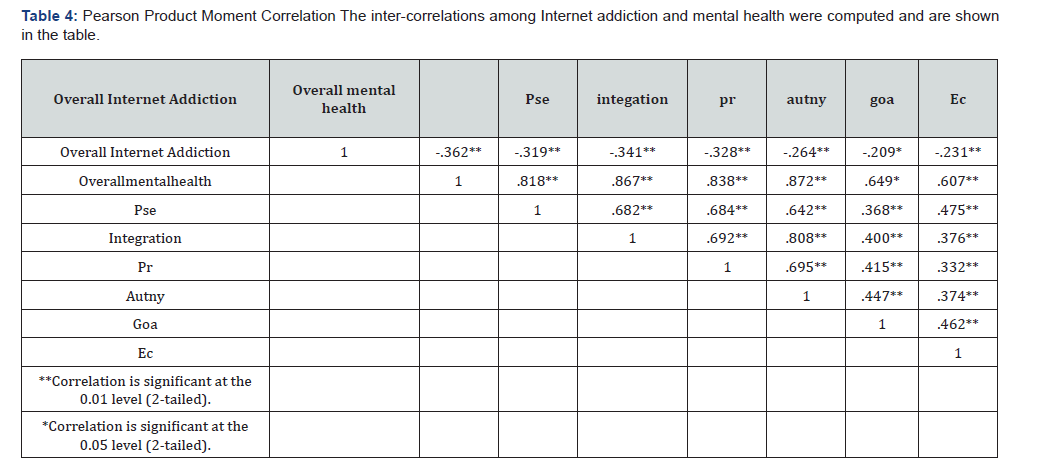
Table 3 shows the t-value of Internet Addiction (t=3.44*) significant at .05 level. This indicates that rural and urban Kashmiri youth significantly differ at the level of internet addiction. The results indicate that urban youth are more addicted to the internet than rural youth. Thus, our hypothesis, which states that there will be a difference between rural and urban Kashmiri youth on internet addiction is supported.
Table 4 further shows the t-value of Mental health (t=.802*) significant at .05 level. This indicates that rural and urban Kashmiri youth significantly differ at the level of mental health. The results indicate that urban youth are lower at mental health than rural youth. Thus, our hypothesis, which states that there will be a difference between rural and urban Kashmiri youth on Mental health is supported.
The internet addiction was negatively and significantly related to mental health and its dimensions (positive self-evaluation, perception of reality, integration of personality, autonomy, grouporiented attitudes and environmental mastery). The correlation between internet addiction and overall mental health is -.362 significant at 0.005 level of significance, while the correlation coefficient of internet addiction and the dimensions of mental health were varying from -.209 significant at 0.001 level of significance to -.341 significant at 0.005 level of significance. It can be inferred that when internet addiction increases (linearly), the mental health decreases among Kashmiri youth. “A systematic review of literature on effect of internet used on students in India.” This study thus supports that the issue of internet addiction is becoming a major health problem in India. Thus, our hypothesis is supported.
This present study presents; Internet addiction has a significant effect on mental health. This study finds different opinions regarding male and female Kashmiri youth belonging to rural or urban areas. As per research analysis, the researchers found a negative correlation between internet addiction and mental health. It may be due to:
i. Internet Addictive Behavior leads to negative feelings
like depression, anxiety, loneliness, struggling in sleep, confused
mind and lack of appetite.
ii. Youth while searching and studying online get attracted
to using social networking sites, and many a time they forget why
they are using these sites and many a time student are not able to
deliver their work in the specified time frame.
iii. Excessive usage of the internet also leads to young
people wasting time playing games and chatting online on social
media applications.
iv. Because of excessive usage of the internet, youth give
less priority to studies, co-curricular activities, leisure activities
and sport or exercise. They easily ignore their parents, family
members and friends.
v. People often say good morning to their phone screen
and feel pleasure to spend excessive time on social networking
sites. Eventually, people use social networking sites to the extent
that it negatively influences their mental health, and of youth in
particular.
Implications
The findings of this study have significant implications and
are presented in the following paragraphs.
i. During the covid -19 Kashmiri youth are affected by the
ongoing pandemic in the state which has long-lasting effect on the
mental health of the nation’s builders.
ii. Use and Misuse of Internet mapping programs are to be
introduced in colleges, which will help to learn how to manage
their usage of the Internet for the holistic development of mental
health.
Conclusion
i. Internet Addiction seems to be one of the significant
correlates of mental health, so it needs to be studied and
considered by conducting a longitudinal study.
ii. Future researchers need to keep on exploring the
factors such as social support, emotional regulation, social belief,
openness to change, social maturity etc., that make people living
during pandemic enough strong to deal with life challenges.
References
- Tripathi A (2017) Impact of internet addiction on mental health: an integrative therapy is needed. Integrative Medicine International 4(3-4): 215-222.
- Widyanto L, Griffiths M (2006) ‘Internet addiction’: a critical review. International Journal of Mental Health and Addiction 4(1): 31-51.
- Young KS (2004) Internet addiction: A new clinical phenomenon and its consequences. American Behavioral Scientist 48(4): 402-415.
- Kim S, Noh D (2019) The current status of psychological intervention research for Internet addiction and Internet gaming disorder. Issues in Mental Health Nursing 40(4): 335-341.
- Ko CH, Yen JY, Chen SH, Wang PW, Chen CS, et al. (2014) Evaluation of the diagnostic criteria of Internet gaming disorder in the DSM-5 among young adults in Taiwan. Journal of Psychiatric Research 53: 103-110.
- Young K (2009) Internet addiction: Diagnosis and treatment considerations. Journal of Contemporary Psychotherapy 39(4): 241-246.
- World Health Organization (2014) Social determinants of mental health.
- The world health report 2001 - Mental Health: New Understanding, New Hope. WHO.
- Singh D (2014) A Systematic Review of Literature on effect of Internet Use on Students in India. Online International Interdisciplinary Research Journal.
- Anwar E (2014) Internet addiction among secondary school children and its relation with their academic achievements. Indian J Res 3: 72-74.
- Gliem JA, Gliem RR (2003) Calculating, interpreting, and reporting Cronbach’s alpha reliability coefficient for Likert-type scales. Midwest Research-to-Practice Conference in Adult, Continuing, and Community Education.
- Mazman SG, Usluel YK (2011) Gender differences in using social networks. Turkish Online Journal of Educational Technology Tojet 10(2): 133-139.

























