




 PBSIJ Home



Abstract
Aim: The aim of this study was to explore and investigate burnout, working hours, equity, fatigue, mental health, sleeping disorders, low
salary issues among security employees.
Methods: A cross-sectional design conducted and the sample size was based on 3,846 private security forces. The method included Maslach
Burnout Inventory (MBI), Depression Anxiety Stress Scale (DASS-21), Patient Health Questionnaire- PHQ-15, Fatigue Assessment Scale (FAS) and
the Epworth Sleepiness Scale (ESS). Univariate and multivariate stepwise regression analyses were used for statistical analysis.
Results: significant differences (p<0.001), between burnout case and normal subjects regarding age group, gender, educational level,
occupational status, smoking cigarettes, number working hours, weekly work rotation, experience and subcontracting company contract. The
prevalence of issues encountered by burnout cases significantly differences (p<0.001) included: low back pain, neck Pain, transportation problem,
low salary, poor environmental hazard desolate and unsafe environment, job insecurity, unexpected workload, work accident, oppressive
behavior in residence complex, professional burnout. Prevalence of mental health symptoms is significantly higher compared to normal
subject included PHQ -15 somatic symptoms (p<0.00), fatigue (p<0.001) depression (p<0.001), anxiety (p<0.001), stress (p<0.001) Epworth
sleepiness disorder (p<0.001), Emotional exhaustion (EE) (p< 0.001), Depersonalization (DP) (p=0.041), and Personal accomplishment (PA)
(p< 0.001). Additionally, Table 5 gives Maslach burnout symptoms by sleeping disorders with the respect of emotional exhaustion (p= 0.033),
depersonalization (p<0.001), and personal accomplishment (p< 0.001). Multivariable stepwise regression analysis revealed that decreased
concentration and attention (p<0.001), heavy work-load (p<0.001), low back pain (p<0.001), sleeping disorder (p<0.001), pessimistic view about
future (p<0.001), anxiety (p<0.001), cigarette smoking (p<0.001), low salary (p<0.001), decrease in appetite (p<0.001), income (p<0.001), low
salary (p<0.001), depression (p=0.013), education level (p<0.023), bad risky environment (p=0.035), and personal accomplishment (p=0.041)
were considered as the main predictor risk factors associated with burnout after adjusting for age and gender.
Conclusion: The study highlights significant occupational and psychological challenges for private security personnel in Turkey, including
irregular hours, inadequate rest, mental distress, and limited support.
Keywords:Private security personnel; Burnout, Fatigue; Illegal working hours; Mental health; Equity; Low salary
Introduction
Burnout is a specific syndrome resulting from prolonged exposure to occupational stress, particularly in professions that involve emotionally demanding interactions with others [1]. Christina Maslach defined burnout as a psychological condition characterized by three dimensions: emotional exhaustion, depersonalization, and a reduced sense of personal accomplishment. These arise as responses to chronic workplace stress, especially in roles that require direct engagement with people [2-4]. Three key aspects of the burnout are Emotional exhaustion (EE) involves feeling emotionally drained and overwhelmed by work, Depersonalization (DP) is marked by emotional detachment, a dehumanized view of clients, and a cynical or negative attitude toward one’s work. Reduced personal accomplishment (PA) includes feelings of stagnation, incompetence, and unfulfillment. This manifests as low motivation, declining self-esteem, and reduced productivity. These components together reflect the complex nature of burnout and its impact on personal and professional well-being.
Private security refers to protection services provided by private security organizations to prevent crime, safeguard lives and property, and maintain order at their employers’ facilities [5]. The sector consists of registered private companies that specialize in offering commercial services—both domestically and internationally—for the protection of people, assets, and premises in compliance with the law [5]. Private security agencies began to emerge in the late 20th century, experiencing significant growth in the early 21st century. In most Western countries, these agencies are tasked with maintaining public order and protecting critical national infrastructure, including banks, embassies, and airports [6]. Private security officers also perform duties not typically carried out by public police, such as conducting surveillance, safeguarding information, and managing risks [5,6].
Security forces and police work is thought to be stressful and is associated with poor physical and mental health outcomes, including burnout over time [7,8]. Police work is highly stressful and linked to poor physical and mental health, including burnout [9-12], studies showed significant prevalence rates: in the U.S. [9], and in the European Union (EU), [12,13]. Private security involves registered companies that provide services to prevent crime, protect people and assets, and maintain order in accordance with the law such as banks, embassies, and airports-especially in Western countries [14-16].
Working in the private security sector is like policing in most Western countries; security workers have almost identical responsibilities and perform similar tasks [12-17]. Private security workers perform tasks similar to police officers but lack official legal authority granted by the state. They operate mainly in protected areas and specific situations, receive less training, have less involvement in organizational decisions, and are generally less valued by society compared to police officers. [4-5,18]. The aim of this study was to explore and investigate illegal working hours, burnout, fatigue, mental health, sleeping disorders; low salary is prevalent among security employees.
Subjects and Methods
Participants and procedure
This cross-sectional study conducted in different private sectors in Istanbul. Turkey has 967,183 registered private security guards, making them the third largest workforce after the military and police. The study includes security personnel working in businesses, shopping malls, Apt. and housing estates, universities, Foundation Universities, consulates, professional and international institutions, hospitals and private institutions in Istanbul. The sample size calculated assuming a stress and burnout prevalence of 20%, a confidence interval of 99% and a margin of error of 1,5% is 4,575 people. The sample size was based on a total of 4,475 individuals and 3,846 participants completed the questionnaire (85% response rate). A multistage, cluster sampling method was used, and the Kaiser-Meyer-Olkin Measure of Sampling Adequacy was 0.854.
Measures
Maslach burnout inventory (MBI)
The MBI questionnaire includes three scales: 9-item emotional exhaustion (EE) scale, 5-item depersonalization (DP) scale and 8-item personal accomplishment (PA) scale. The burnout symptoms is assessed by the respondent on a 7-point Likert-type scale (0 = never, 1 = a few times a year or less, 2 = once a month or less, 3 = several times a month, 4 = once a week, 5 = several times a week, 6 = every day) [2].
The depression anxiety stress scale (DASS-21)
The DASS-21 is a 21-item scale developed by Lovibond & Lovibond [21] and validated by Luceño-Moreno [22], reporting three subscales including seven items (ranging from 0 to 3). In this study we employed the validated Turkish translation of the tool and the reliability coefficients of the subscales were all valid for depression (α=.85), anxiety (α=.80), and stress (α=.78).
Patient health questionnaire- PHQ-15
The PHQ-15 is a scale [22] used to assess the severity of somatic symptoms for diagnosing somatoform disorders. It covers 15 common physical symptoms that represent over 90% of outpatient complaints (excluding upper respiratory symptoms). Scores are categorized as Minimal (0-4), Low (5-9), Medium (10- 14), and High (15-30).
The fatigue assessment scale (FAS)
The FAS is a 10-item self-report questionnaire [23] and used to assess general fatigue. In sum: FAS scores 10 – 21 = no fatigue (normal) and FAS scores 22 – 50 = fatigue. A total FAS score < 22 indicates no fatigue (normal), and a score ≥ 22 indicates fatigue.
Epworth sleepiness scale (ESS)
Assessment of sleep-related drowsiness was carried out using the Epworth Sleepiness Scale (ESS) [8, 25]. Each item is scored on a scale from 0, indicating no tendency to fall asleep, to 3, indicating a high likelihood of dozing off. The total possible score ranges from 0 to 24, with classifications as follows: normal daytime alertness (0–7), mild drowsiness [8–9], moderate sleepiness [10-15], and severe sleepiness [16-24,25].
Statistical analysis
All data analyzed using SPSS version 25.0 (SPSS Inc., Chicago, IL, USA). The distribution of variables was analyzed using the Kolmogorov-Smirnow test. The significance level of differences between two groups assessed using independent Student’s t tests. Differences between categorical variables determined using the chi-square test. Multivariate stepwise regression analysis was used to predict and determine potential risk factors after adjusted for age and gender and other potential.
Results
Table 1 gives participants’ characteristics related burnout symptoms and results indicates significant differences (p<0.001), between burnout and normal subjects regarding age group, gender, educational level, occupational status, smoking cigarettes, number working hours, weekly work rotation, experience and subcontracting company contract.
Table 2 shows prevalence of issues encountered by security officer causes and their frequency by burnout significantly differences (p<0.001) included: low back pain, neck Pain, transportation problem, low salary, poor environmental hazard desolate and unsafe environment, job insecurity, unexpected workload, work accident, oppressive behavior in residence complex, professional burnout. Also, prevalence of WHO depression was higher among burnout subjects than normal subjects (p<0.001).
Table 3 presents prevalence of mental health symptoms by burnout. As can be seen from table burnout is significantly higher compared to normal subject included PHQ -15 somatic symptoms (p<0.00), fatigue (p<0.001) depression (p<0.001), anxiety (p<0.001), stress (p<0.001) and Epworth sleepiness disorder (p<0.001).
Table 4 shows prevalence of Maslach burnout symptoms by burnout and there were statistically significantly higher among the burnout compared to normal subjects with the respect of Emotional exhaustion (EE) (p< 0.001), Depersonalization (DP) (p=0.041), and Personal accomplishment (PA) (p< 0.001). Additionally, Table 5 gives Maslach burnout symptoms by sleeping disorders with the respect of emotional exhaustion (p= 0.033), depersonalization (p<0.001), and personal accomplishment (p< 0.001).
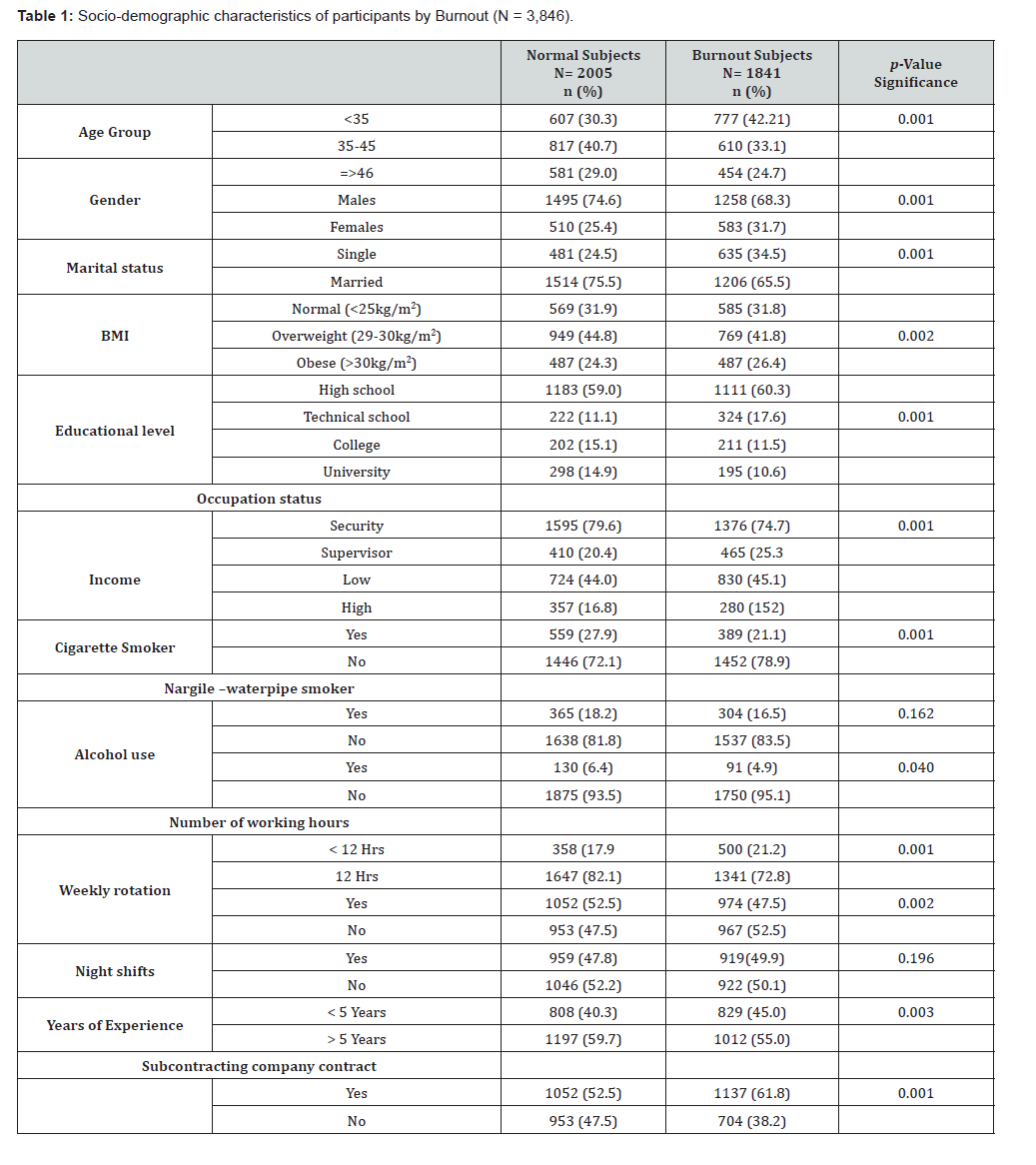
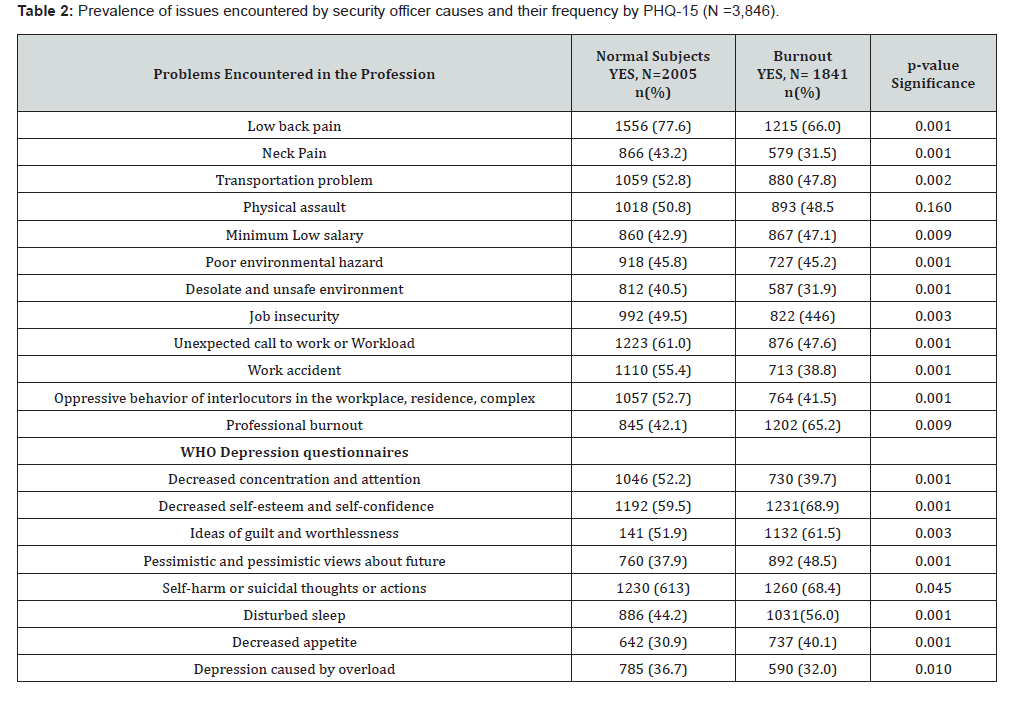
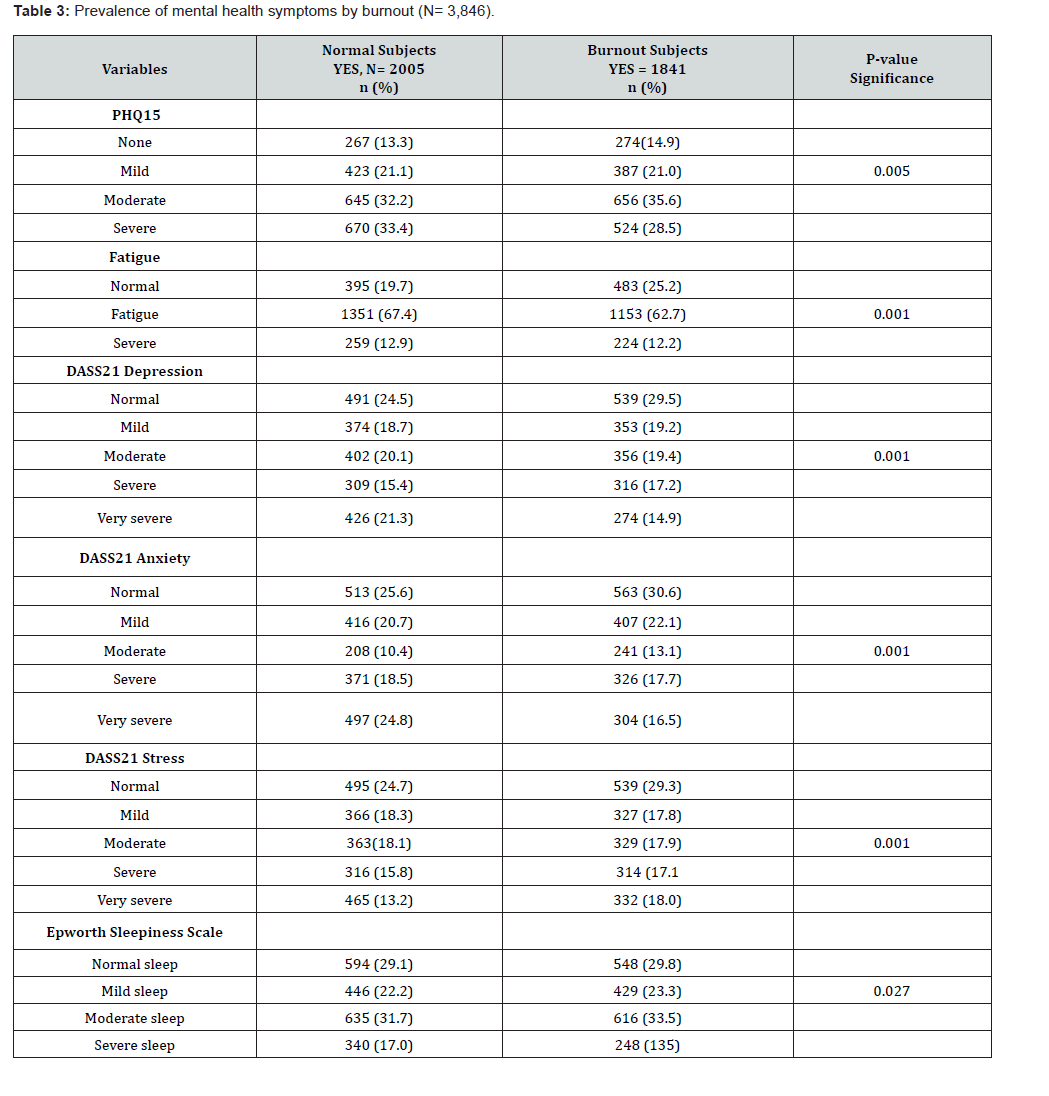
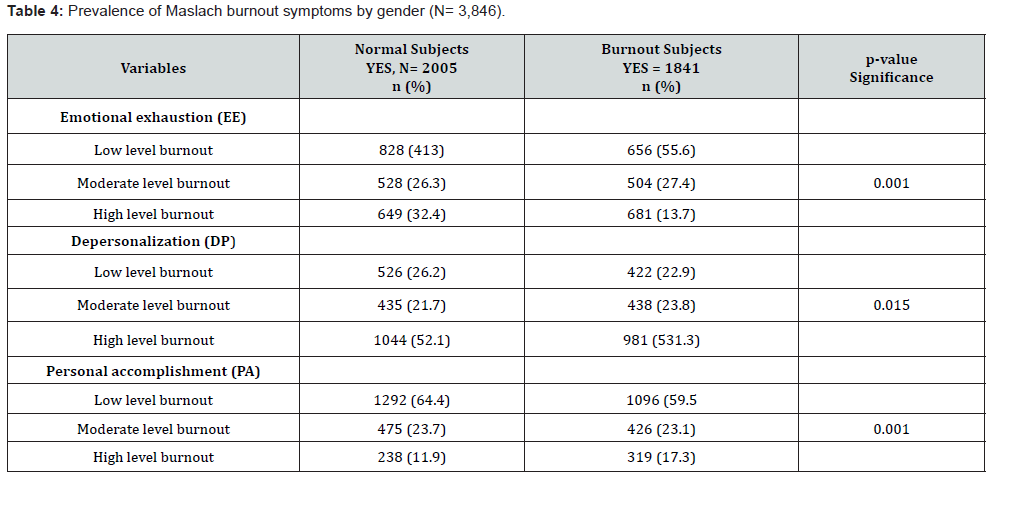
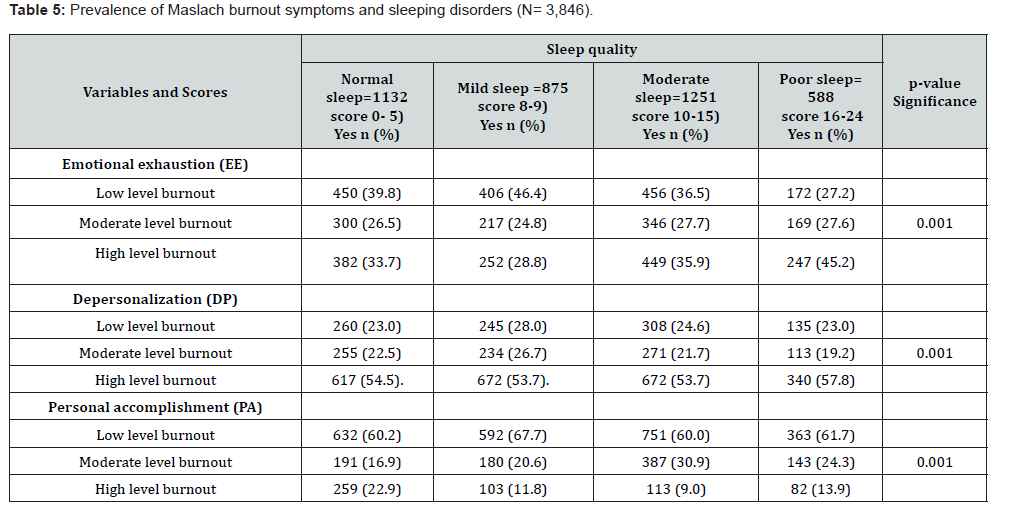
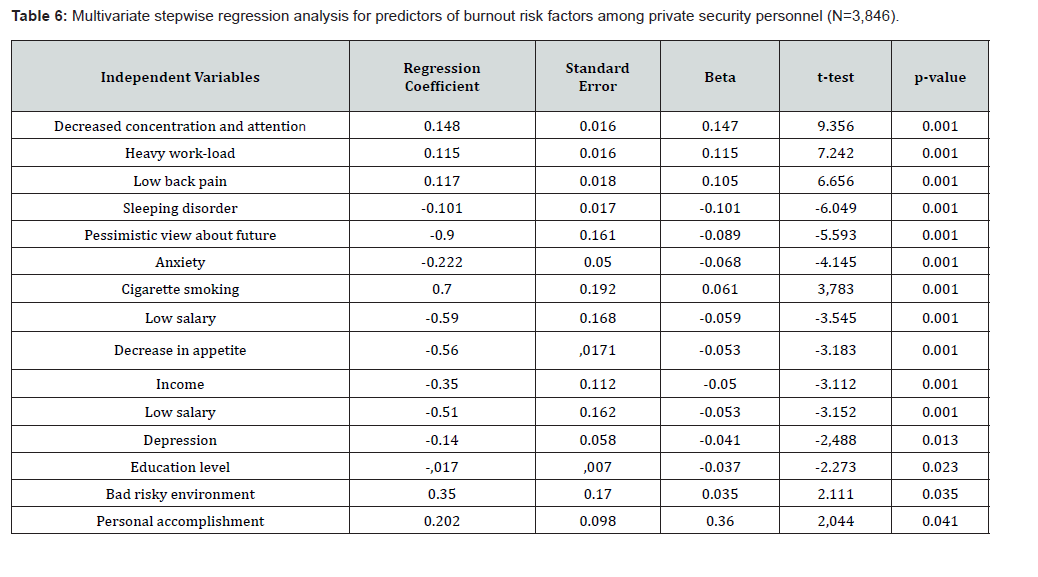
Table 6 shows the relationship between burnout and mental health using multivariate stepwise regression analysis. It can be seen from this table that decreased concentration and attention (p<0.001), heavy work-load (p<0.001), low back pain (p<0.001), sleeping disorder (p<0.001), pessimistic view about future (p<0.001), anxiety (p<0.001), cigarette smoking (p<0.001), low salary (p<0.001), decrease in appetite (p<0.001), income (p<0.001), low salary (p<0.001), depression (p=0.013), education level (p<0.023), bad risky environment (p=0.035), and personal accomplishment (p=0.041) were considered as the main predictor risk factors associated with burnout after adjusting for age and gender.
Discussion
In a country such as Turkey, which has experienced extensive economic, political, and social reforms—along with military and police restructuring—the hierarchy of job stressors is expected to differ from that in more developed countries. While it is impossible to eliminate all workplace stressors within a private company, identifying them is essential to reducing exposure and preventing the onset and progression of burnout syndrome [4- 6]. Private security officers primarily focus on crime prevention within areas assigned to them by the private security commission and operate under limited authority, similar to the rights any citizen has in response to a crime [4-6]. Continuous exposure to high-pressure environments and potentially traumatic incidents has also been linked to cognitive impairments and heightened anxiety among security workers [19,20]. The elevated depression and anxiety scores observed in this study, especially among those with poor sleep quality, align with these outcomes and point to the psychological vulnerability of this workforce [8].
Police officers in large cities face heightened stress levels, including a greater risk of developing post-traumatic stress disorder (PTSD). PTSD is a mental health condition triggered by experiencing or witnessing an extremely stressful or traumatic event. Symptoms may include flashbacks, nightmares, severe anxiety, and intrusive, uncontrollable thoughts about the incident. Burnout can result in serious professional consequences such as reduced productivity, rule violations, and impaired judgment, as well as personal difficulties like strained relationships and increased aggression [20,21].
The study shows that private security personnel in Turkey face serious health risks due to long, irregular working hours, heavy workloads, burnout, mental health problems, and sleep disturbances which is consistent with previous studies [28,29]. Night shifts and extended schedules disrupt their circadian rhythms, leading to fatigue and sleep disorders [8]. These findings align with global research, highlight a high rate of sleep problems and daytime sleepiness, particularly among those with longer shifts and little control over their schedules [30].
Our results corroborate these findings, indicating a high prevalence of sleep-related problems and daytime sleepiness among participants, especially those reporting longer shifts and low schedule control. Security personnel often operate under irregular and extended work schedules, particularly night shifts, which disrupt circadian rhythms and have been strongly associated with increased levels of fatigue and sleep disorders Furthermore, insufficient organizational support and adverse job characteristics have been found to exacerbate psychological strain, often culminating in burnout characterized by emotional exhaustion, depersonalization, and reduced personal accomplishment [27,28].
The study finds that insufficient support, poor job conditions, and high demands significantly contribute to burnout among security staff, especially men, who score higher on all burnout measures. International research shows private security workers often face worse mental health than other professions, a problem intensified during crises like COVID-19 due to job insecurity, irregular shifts, and understaffing [13, 27-29]. These effects are most severe for those working illegal or excessively long hours without proper rest.
In most Western countries, work in the private security sector closely resembles police work, as security personnel often share similar responsibilities and perform comparable tasks [30]. The main distinction lies in the fact that police officers possess legal authority granted by the state [31], whereas private security personnel, while holding powers similar to those of the police, can exercise them only within protected areas and under specific circumstances. Employees in the private security sector generally have less involvement in decision-making regarding work organization, receive less training than police officers, and are often less valued by society [10-13].
Research consistently shows that private security officers receive less training than their state police counterparts [32] also, study by Cihan [6] further notes that, in many cases, their training is inadequate.
Unregulated work hours in private security harm not only personal well-being but also job performance, emergency response, and public safety [27,28]. Without effective coping systems, workers face greater burnout and mental health risks [19,20]. The study calls for urgent reforms, including limiting excessive hours, improving health monitoring, providing psychological support, and fostering supportive workplaces to enhance well-being, job satisfaction, and workforce sustainability. Such interventions not only improve individual well-being but also contribute to job satisfaction and sustainable workforce management in the security sector [13,30]. Burnout harms both professional and personal life, leading to reduced work performance, poor relationships, and social isolation. It is related to physical health problems such as pain, digestive issues, heart disease, headaches, insomnia, chronic fatigue, and greater susceptibility to infections, ultimately lowering security employees’ quality of life [32].
In summary, this study highlights a pressing need to recognize and respond to the interconnected issues of overwork, psychosocial strain, and health risks among private security personnel in Turkey. Organizational measures should promote dignity, fair pay, and employee involvement in decisions to boost job satisfaction and reduce work strain.
Limitations and Strengths
This study has several limitations. Firstly, this cross-sectional study exclusively focused on private security officers. Secondly, excluding those engaged in governmental settings. Thirdly, the sample size of security officers may restrict the generalizability of these findings. Fourthly, the reliance on self-reported data introduces potential biases such as recall bias, social desirability bias, and subjective perceptions of complaint significance. Despite these limitations, the study offers valuable insights on the challenges faced by private security personal in Turkey, which may suggest future interventions aimed at enhancing working conditions and job satisfaction.
Conclusion
This study presents a comprehensive overview of the occupational and psychosocial risks faced by private security personnel in Turkey. The findings indicate that irregular and long working hours, insufficient rest periods, heavy workloads, low wages, job insecurity, and poor working conditions are significantly associated with burnout, anxiety, depression, sleep disorders, and physical health problems. A significant proportion of participants exhibited emotional exhaustion, depersonalization, and a decrease in personal accomplishment; symptoms such as back and neck pain, attention and concentration problems, and pessimism about the future were particularly prominent. Study has revealed that burnout syndrome, mental health issues, and sleep disorders are widespread and severe among private security personnel, and that this situation has negative effects at individual, organizational, and societal levels. The data obtained indicates an important public health issue that requires urgent action by policymakers and employers.
References
- Maslach C, Jackson SE, Leiter M (1996) Maslach Burnout Inventory (3rd edn). Palo Alto, CA: Consulting Psychologists Press.
- Brady KJS, Ni P, Sheldrick RC, Trockel MT, Shanafelt TD, et al. (2020) Describing the emotional exhaustion, depersonalization, and low personal accomplishment symptoms associated with Maslach Burnout Inventory subscale scores in US physicians: an item response theory analysis. J Patient Rep Outcomes 4(1): 42.
- García Rivera BR, Olguín Tiznado JE, Aranibar MR, Ramírez Barón MC, Camargo Wilson, et al. (2020) Burnout Syndrome in Police Officers and Its Relationship with Physical and Leisure Activities. Int J Environ Res Public Health 17(15): 5586.
- Uçkun C, Yüksel A, Demir B (2012) The Role of the Private Security Sector in Türkiye and its Position in the World. Ejovoc (Electronic Journal of Vocational Colleges) 2(2): 22-30.
- Aydın AH (2002) Özel Güvenlik Teşkilatı: Kuruluşu, Görevleri, Yetkileri. Polis Bilimleri Dergisi Cilt 4(1-2): 143-1624.
- Cihan A (2012) The private security industry in Turkey: Officer characteristics and their perception of training sufficiency. Security Journal 29(2): 169-184.
- Ogińska Bulik N, Juczyński Z (2021) Burnout and posttraumatic stress symptoms in police officers exposed to traumatic events: the mediating role of ruminations. Int Arch Occup Environ Health 94(6): 1201-1209.
- Bener A, Morgul E, Tokaç M, Ventriglio A, Jordan TR (2024) Sleep quality, quality of life, fatigue, and mental health in COVID-19 post-pandemic Türkiye: a cross-sectional study. Front Public Health 12: 1250085.
- McCarty WP, Aldirawi H, Dewald S, Palacios M (2019) Burnout in blue: an analysis of the extent and primary predictors of burnout among law enforcement officers in the United States. Police Q 22(3): 278-304.
- Backteman Erlanson S, Padyab M, Brulin, C (2013) Prevalence of burnout and associations with psychosocial work environment, physical strain, and stress of conscience among Swedish female and male police personnel. Police Pract Res Int J 14(6): 491-505.
- Figueiredo Ferraz H, Gil Monte PR, Queirós C, Passo F (2014) Validação fatorial do "Spanish Burnout Inventory" em policiais Portugueses.Psicol Reflexão e Crítica 27(2): 291-299.
- Davidović D, Kešetović Ž (2009) Comparative overview of private security sector legislation in EU countries. SPZ 53(2)
- Varker T, Dennison MJ, Bancroft H, Forbes D, Nursey J, et al. (2023) Mental health, operational stress, and organizational stress among sworn and unsworn police personnel. Traumatology 29(2): 330
- Baljak M (2015) The role of private security agency in the 21st century. Defendology 1: 22-30.
- Sheard I, Burnett M, St Clair Thompson H (2019) Psychological distress constructs in police with different roles. Int J Emerg Serv 8(3): 264-279.
- Thirion AP, Pintar CA (2023) Burnout in the workplace: A review of data and policy responses in the EU. Luxembourg: Publications Office of the European Union; 2018 Preprints.
- Galanis P, Fragkou D, Katsoulas TA (2021) Risk factors for stress among police officers: a systematic literature review. Work 68(4): 1255-1272.
- Aguayo R, Vargas C, Cañadas GR (2017) Fuente, E.I. Are socio-demographic factors associated to burnout syndrome in police officers? A correlational meta-analysis. An Psicol 33(2): 383-392.
- De la Fuente Solana EI, Aguayo Extremera R, Vargas Pecino C, Cañadas de la Fuente GR (2013) Prevalence and risk factors of burnout syndrome among Spanish police officers. Psicothema 25(4): 488-493.
- Queiro C, Passos F, Bártolo A, Marques AJ, da Silva CF, et al. (2020) Burnout and Stress Measurement in Police Officers: Literature Review and a Study With the Operational Police Stress Questionnaire. Front. Psychol 11: 587.
- Lovibond SH, Lovibond PF (1995) Manual for the Depression Anxiety Stress Scales. (2nd edn), Sydney: Psychology Foundation
- Johns MW (1991) A new method for measuring daytime sleepiness: The Epworth Sleepiness Scale Sleep 14(6): 540-545.
- De Vries, Michielsen HJ, Van Heck GL, Drent M (2004) Measuring fatigue in sarcoidosis: the Fatigue Assessment Scale (FAS). Br J Health Psychol 9: 279-291.
- Mastracci SH, Adams IT (2019) It’s not depersonalization, It’s emotional labor: examining surface acting useof-force with evidence from the US. Int J Law Crime Just 61:100358.
- Bener A, Morgul E, Tokaç M, Ventriglio A, Jordan TR (2024) Sleep quality, quality of life, fatigue, and mental health in COVID-19 post-pandemic Türkiye: a cross-sectional study. Front Public Health 12: 1250085.
- Duxbury L, Bardoel A, Halinski M (2021) ‘Bringing the badge home’: exploring the relationship between role overload, work-family conflict, and stress in police officers. Polic Soc 31: 997-1016.
- Testoni I, Nencioni I, Ronconi L, Alemanno F, Zamperini A (202) Burnout Reasons for Living and Dehumanisation among Italian Penitentiary Police Officers. Int J Environ Res Public Health 17(9): 3117.
- Lesmez Peralta JC, Contreras Pacheco OE, Reyes Rodríguez JF (2022) Subjective vitality of night workers: Association with physical and mental health. Problems and Perspectives in Management 20(1): 277.
- Brooks SK, Greenberg N (2022) Mental health and wellbeing of border security personnel: scoping review. Occupational Medicine 72(9): 636-640.
- Varker T, Dennison MJ, Bancroft H, Forbes D, Nursey J, et al. (2023) Mental health, operational stress, and organizational stress among sworn and unsworn police personnel. Traumatology 29(2): 330.
- Cobbina JE, Nalla MK, Bender KA (2016) Security officers’ attitudes towards training and their work environment. Security Journal 385-399.

























