




 PBSIJ Home



Abstract
Background: This randomized controlled trial (RCT) had two objectives: 1) to evaluate the efficacy, safety, and efficiency of the Healing Drawing Procedure (HDP) group trauma treatment intervention in reducing posttraumatic stress disorder (PTSD) symptoms among gender-based violence (GBV) survivors and sex workers living in Yangon, Myanmar, and 2) to explore the efficacy, safety, and efficiency of non-specialized mental health providers (MHPs), also referred to as frontline workers, administering the HDP group trauma treatment intervention after receiving training in the treatment intervention through the Trauma Healing Training Program (THTP). 23 adult women with a mean age of 38.15 years old participated in the study. A two-arm longitudinal RCT design was applied, comparing a treatment group (TG) and a waitlist control group (CG) at three time points.
Repeated measures ANOVA indicated a significant main effect of time, F (2, 42) = 12.75, p < .001, η² = 0.378, but no significant interaction between time and group was found. The Treatment group (n = 10) showed a large reduction in PCL-5 scores from pre-treatment assessment (M = 42.00, SD = 16.97) to post-training assessment (M = 32.00, SD = 13.89), with a continued decrease at follow-up assessment (M = 31.00, SD = 13.26), indicating sustained effects of the intervention. In the Control group (CG) no significant differences were observed throughout the different measurements. The results of the study examining the effectiveness of the HDP program in reducing PTSD symptoms among women in Yangon, Myanmar, revealed significant effects in the Treatment group (TG) compared to the Control group (CG). Findings highlight the success of non-specialized MHPs in the provision of the treatment intervention, resulting in the reduction of individuals’ PTSD symptoms within two populations where the need for mental health treatment is very high and resources are quite low.
Keywords:Healing Drawing Procedure (HDP); Trauma Healing Training Program (THTP); posttraumatic stress disorder (PTSD); non-specialized mental health providers (MHPs); frontline workers; mental health psychosocial support (MHPSS); low-and-middle-income countries (LMIC); Adaptive Information Processing (AIP)-Informed; gender-based violence (GBV) survivors, sex workers.
Introduction
Gender-based violence (GBV) remains a pervasive issue across Myanmar, with some estimates suggesting that half of all people identifying as women and girls having experienced at least one form of GBV in their lifetime [1,2]. GBV can include physical, emotional, sexual, and financial abuse, including intimate partner violence (IPV), enacted based on an individual’s gender or sexual orientation [1]. It can occur in a range of settings, including within the home and workplace, particularly for individuals engaged in informal or stigmatized labor such as sex work. While sex work is not necessarily violent, many sex workers face legal and social marginalization, which increases their vulnerability to GBV and creates to barriers to protection both within their personal and work life [3].
Myanmar, a country of approximately 54 million people, is undergoing significant demographic and economic shifts, including climate-related displacement, and rising poverty, with more than two-thirds of the population considered economically insecure, subsequently accelerating rural-to-urban migration [4]. These shifts are felt acutely in the urban center of Yangon, the economic and cultural hub of the country, which has a population of over 5 million [5]. These overlapping dynamics have disproportionately affected the lives of women, girls, and gender-diverse individuals, leading to chronic stress and heightened exposure to GBV [6]. This is especially true for women working in the informal economy, including sex work [3].
Exposure to GBV is strongly associated with mental health challenges, including increased symptoms of anxiety, depression, suicidal ideation, and post-traumatic stress disorder (PTSD) [7]. Research from Myanmar consistently shows that exposure to violence, combined with social, political, and economic stressors, is associated with clinically significant rates of mental health conditions [8-12]. One population study estimated that one in three people in Myanmar experience symptoms consistent with a mental health disorder [13]. One study focusing on sex workers identifying as women in Yangon found that exposure to violence by clients and employers, especially economic abuse, was significantly associated with symptoms of anxiety and depression [14]. Similar findings have been reported among individuals exposed to IPV in the Yangon region [15], suggesting that the association between GBV exposure and mental health distress in Myanmar is comparable with global research findings [16].
The link between GBV exposure and posttraumatic stress disorder (PTSD) is well-documented in the literature [7,16-19]. According to the ICD-11, PTSD is defined as exposure to a highly distressing event or events, including sexual violence, followed by symptoms such as intrusions, flashbacks, nightmares, insomnia, emotional numbness, self-isolation, hypervigilance, and avoidance of internal and external triggers that resemble aspects of the traumatic event(s) [20]. In attempts to manage the distress associated with the trauma, many individuals turn to substance use, which can create additional health burdens [21].
Despite the scale of mental health need, the health infrastructure in Myanmar is significantly insufficient to meet this demand. According to the WHO [22], Myanmar only has one specialized mental health provider (specialized MHP) for every 100,000 people. Untreated PTSD and related conditions can pose a significant economic burden due to both direct costs, such as emergency health care, and indirect costs, including reduced workforce participation and lost wages [23]. These realities underscore the need for innovative strategies to expand access to care.
Task-sharing offers one such strategy. It refers to “the formalized redistribution of care typically provided by those with more specialized training (e.g. psychiatrists, psychologists) to individuals, often in the community, with little or no formal training (e.g., community/lay health workers, peer support workers)” [24]. Both the WHO and the International Society for Traumatic Stress Studies (ISTSS) recognize task–sharing as a promising approach to addressing PTSD in low-and-middle-income countries (LMICs) [25,26]. Trauma-focused interventions that trained lay professionals have demonstrated effective in these LMICs [25,27,28].
The AIP Theoretical Model
The Adaptive Information Processing (AIP) model posits that memory networks of stored experiences are the basis of both mental health and pathology across the clinical spectrum [29]. When experiences are adequately processed and adaptively stored, they form adaptive long-term memory networks, which then become the foundation for learning and resilience in the future [29]. When adverse experiences are inadequately processed and maladaptively stored (due to concurrent elevated sympathetic nervous system arousal states), they form pathogenic memories, and are stored in pathogenic memory networks, with other memories similar in their components. This results in present-day symptoms being “triggered” by aspects of the adverse experience(s) (e.g., PTSD, anxiety, depression, irritability, and emotional reactivity) [29]. These pathogenic memory networks can be targeted and reprocessed through the facilitation of the patient’s innate Adaptive Information Processing system, resulting in the subsequent modification of the memory, allowing for integration with existing adaptive memory networks. The net result is decreased symptomology and enhancement of adaptive learning and mental health [29]. The AIP theoretical model is the foundation of all treatment interventions in the THTP.
Posttraumatic Stress Disorder
Posttraumatic stress disorder (PTSD) is a pervasive mental health disorder causing extreme psychological and physiological distress. PTSD symptoms include intrusion symptoms (nightmares and flashbacks), avoidance symptoms, negative alterations in cognitions and mood, and arousal symptoms, resulting in deterioration in daily functioning, with symptoms developing or being exacerbated after the experience of a Criterion A traumatic event(s) [30]. Increased arousal and intrusion symptoms related to PTSD also correlate with sleep disturbances and overall lower quality of life [31,32]. These functional impairments often lead to a deterioration of personal and professional relationships, additional health problems, and may result in devastating and long-lasting impacts on individuals, their families and consequently, on society as a whole [33].
The Trauma Healing Training Program
This study was conducted as part of the development of the Trauma Healing Training Program (THTP). With task-sharing at the core of this training program, the THTP is being developed to contribute task-sharing solutions to the global mental health care crisis, particularly in LMICs. This training is being developed specifically to equip non-specialized mental health providers (MHPs) with high-quality training and supervision in AIP-informed trauma processing interventions to administer these treatment interventions to affected populations safely and effectively. With quality training and effective tools, the intention is for non-specialized MHPs to begin narrowing the gap between the desperately needed mental health services and the availability of mental health services within their communities.
The THTP is a two-week training program that includes training and supervision in a suite of two AIP-informed group trauma treatment interventions, and two AIP-informed individual trauma treatment interventions. The THTP is comprised of the Acute Stress Syndrome Stabilization for Groups (ASSYST-G) and the Healing Drawings Procedure (HDP) as group interventions, and the Acute Stress Syndrome Stabilization for Individuals (ASSYST-I) and the Protocol for Paraprofessionals (PROPARA) as individual interventions. The suite of these four interventions empowers non-specialized MHPs to offer a symptom-based trajectory stepped care approach to bringing vital mental health treatment interventions to local affected populations within their communities.
Fieldwork is conducted with all interventions taught within the THTP. This also includes in-person supervision and support of the THTP trainer, a specialized MHP. Specifically, trainees received a two-day in-person training in the HDP, which includes a demonstration of the HDP, a didactic portion defining trauma and recognizing its impact, learning self-soothing skills, and an understanding of the window of tolerance and working memory theory. The training also includes practicum experience where the trainees practice the HDP with each other before going into the field to provide the intervention with community members under the supervision of and with the support of the THTP trainer. In-person supervision and feedback from the trainer is provided throughout the training as well as during all fieldwork. All trainees collaborated with the THTP trainer regarding how to make the administration of the HDP, along with other tools taught within the THTP, successful within the Myanmar context and culture in general, and more specifically for GBV survivors and sex workers.
Healing Drawing Procedure Group Treatment Intervention
The HDP is modeled exclusively after the evidence-based Eye Movement Desensitization and Reprocessing Integrative Group Treatment Protocol for Ongoing Traumatic Stress (EMDR-IGTPOTS) developed and rigorously field-tested by Jarero, et al. [34- 37]. Similar to the EMDR-IGTP-OTS, the HDP is a scripted intervention incorporating elements of art therapy and utilizes the EMDR-Butterfly Hug method as a form of self-administered bilateral stimulation (BLS) to process traumatic material [38,39].
Previous Treatment Intervention Studies
The EMDR Group Treatment Protocol adapted for Ongoing Traumatic Stress (EMDR-IGTP-OTS,) upon which the HDP is modeled, was initially developed by members of the Mexican Association for Mental Health Support in Crisis (AMAMECRISIS) when they were overwhelmed by the extensive need for mental health services after Hurricane Pauline ravaged the coasts of Oaxaca and Guerrero in 1997 [35]. This study is the third research study designed to demonstrate the effectiveness of the HDP provided by non-specialized MHPs participating in the THTP [39, 40]. However, there are numerous published studies demonstrating the safety and efficacy of the EMDR-IGTP-OTS [34-37], including the EMDR-IGTP-OTS being provided by frontline workers, or non-specialized MHPs [40-41].
One study that is also a part of the development of the THTP, examined a training of non-specialist MHPs in the THTP and their successful provision of the ASSYST-G with Syrian refugees in Lebanon. [42]. The development and implementation of task-sharing focused protocols in the field of trauma treatment is of paramount significance, given the breadth of impact from trauma on a global level. This is particularly urgent need in many high-need, low-resourced areas where social and political instability exacerbate the already adverse conditions [43,44].
Objective
This randomized controlled trial had two objectives: 1) to evaluate the efficacy, safety and efficiency of the Healing Drawing Procedure (HDP) group trauma treatment intervention in reducing posttraumatic stress disorder (PTSD) symptoms among adult survivors of gender-based violence and sex workers living in Yangon, Myanmar, and 2) to explore the efficacy, safety, and efficiency of non-specialized MHPs being trained in and administering the HDP group trauma treatment intervention as part of the task-sharing focused Trauma Healing Training Program (THTP).
Method
Study design
To measure the effectiveness of the HDP on the dependent variable, PTSD symptoms, this study used a two-arm longitudinal randomized controlled trial (RCT) design. For ethical reasons (providing the treatment intervention to all participants), a waitlist/ delayed treatment control group design, comparing immediate treatment and waitlist/delayed treatment groups, was selected. PTSD symptoms were measured at three time points for all participants in the study: Time 1, pre-treatment assessment; Time 2, post-treatment assessment (seven days after the last administration of the treatment intervention was provided to the TG); Time 3 follow-up (30 days after the last administration of the treatment intervention was provided to the TG). For ethical reasons, the HDP was provided to all participants in the Control group (CG) after all participants completed Time 3 follow-up assessments.
Ethics and Research Quality
For this study, the research proposal was reviewed and approved by the EMDR Mexico International Research Ethics Review Board (also known in the United States of America as an Institutional Review Board) in compliance with the International Committee of Medical Journal Editors recommendations, the Guidelines for Good Clinical Practice of the European Medicines Agency (version 1 December 2016), and the Helsinki Declaration as revised in 2013.
Participants
This study was conducted between February 26 and April 4, 2025, in the city of Yangon, Myanmar. A total of 23 adult females ages 20-55 years old (M= 38.15) living in or near Yangon, Myanmar, met inclusion criteria and were able to complete full participation in the study. Women were recruited for this study through a team of blind-to-the-study social workers affiliated with a local humanitarian organization operating throughout the city of Yangon. This partner organization has requested that their name be withheld from this publication as they wish to continue their work anonymously to protect themselves and the women who participated in this study.
The partner organization offers varying types of assistance to survivors of GBV as well as sex workers throughout Yangon. All the women recruited for the study also participate in programs and services offered though the partner organization, and recruitment of participants was conducted through these programs. All the women participated voluntarily, and written informed consent that was translated from English to Burmese was signed. Research assistants read the consent to participants to ensure comprehension of the study’s purpose, procedures, potential benefits, and risks as literacy levels of the participants varied widely. Participants were offered the chance to ask any questions they had about the consent or the research study in general. Due to the length of travel for the women from various locations within the city to the research site, all participants were provided with a small transportation allowance for each time they traveled to the research site, either for one of the assessment times or to receive the HDP treatment intervention. Participants assigned to the CG were also provided the travel allowance to receive the HDP treatment intervention after the conclusion of the study. Participants were advised that they would not receive any compensation for their participation in the study. All participants signed the written consent in accordance with the Mental Capacity Act 2005.
The inclusion criteria for the study were: (a) being an adult 18 years old or older, (b) being a participant of the programs and services offered by the partner organization, (c) having experienced GBV or experience as a sex worker (d) voluntarily participating in the study, (e) not receiving other specialized trauma therapy, and (f) not receiving psychopharmacotherapy for PTSD symptoms. Exclusion criteria were: (a) ongoing self-harm/suicidal or homicidal ideation, (b) diagnosis of schizophrenia, psychotic, or bipolar disorder, (c) diagnosis of a dissociative disorder, (d) organic mental disorder, (e) a current, active chemical dependency problem, (f) significant cognitive impairment (e.g., severe intellectual disability, dementia), (g) presence of uncontrolled symptoms due to a medical illness.
Instrument for Psychometric Evaluation
To measure PTSD symptom severity and treatment response, we used the Posttraumatic Stress Disorder Checklist for DMS-5 (PCL-5) provided by the National Center for PTSD (NCPTSD), with the time interval for symptoms to be the past week. This weekly administered version of PCL-5 is largely comparable to the original monthly version [45]. The PCL-5 was translated into Burmese by native Burmese speakers through the Yangon School of Social Work, and blind-to-the-study research assistants were trained in the administration the measurement tool. The time interval for symptoms focused on the past week. The screening tool contains twenty items and respondents indicated how much they have been bothered by each PTSD symptom over the past week, using a 5-point Likert scale ranging from 0=not at all, 1=a little bit, 2=moderately, 3=quite a bit, and 4=extremely. A total-symptom score of 80 can be obtained by summing the items. The sum of the scores yields a continuous measure of PTSD symptom severity and can serve as a screening tool for detecting a probable PTSD diagnosis. While the PCL-5 does not contain full diagnostic capability, a score of 31-33 or higher suggests a probable determination of a PTSD diagnosis based on DSM-5 diagnostic criteria [46].
Procedure
Enrollment, Assessments, Data Collection, and Confidentiality of Data
Ten blind-to-the-study research assistants (RAs) were recruited by the Yangon School of Social Work and volunteered to work as RAs for this study. The RAs were trained by the corresponding author of this study in completing the consent form, the Burmese language PCL-5, as well as how to help participants identify the worst memory of their experiences either as a GBV survivor or as a sex worker. RAs worked with participants in a one-on-one interview format for all three assessment times.
A manual simple randomization with a 1:1 allocation ratio was used to divide all participants into the Treatment Group (TG) of 10 individuals or the waitlist Control group (CG) of 13 individuals. For ethical reasons, the participants in the CG received the same HDP intervention, conducted by trainees from the HDP training, after all three assessment times had been completed and this study had been concluded. During Time 1, pre-treatment assessment, RAs met with each participant individually to explain the project and ensure they understood all elements of the informed consent form before signing it. Participants were informed that all participation was voluntary and that they could withdraw from the study at any time without fear of repercussion. Participants were informed that they would receive a small transportation allowance, but otherwise would not be compensated for their time and participation in any way other than to receive the HDP treatment either as part of the TG or one month later as part of the CG.
To identify the worst memory of their experiences as a GBV survivor or as a sex worker, they would focus on for the study, the RAs asked participants to play a mental movie of, or to review, all of their experiences with GBV or as a sex worker, and to select their worst memory (the Index Event). The Index Event was written down on a note card in Burmese to aid in ensuring participants were able to focus on the same memory and answer the assessment instruments during all three assessment times as well as during the HDP treatment intervention. Demographic information, age, gender, contact information, and how long ago the memory occurred were also recorded.
For all assessment times, the RAs used the same notecards with the written Index Event to ensure participants were answering the PCL-5 questions and measuring the severity of their symptoms, within the previous week, based on the same previously identified worst memory of their experiences with GBV or as a sex worker. Time 1 pre-treatment assessment was obtained the week before the TG received the HDP intervention. Time 2 post-treatment assessment was conducted with all participants seven days after the TG received the HDP treatment intervention, and Time 3 follow-up was conducted 30 days after the TG received the HDP. The CG received the HDP treatment intervention several days after Time 3 data was collected. All data was collected, stored, and handled in full compliance with the EMDR Mexico International Research Ethics Review Board requirements to ensure confidentiality. Each study participant gave their consent to collect their data, which was strictly required for study quality control. All procedures for handling, storing, destroying, and processing data were in compliance with the Data Protection Act 2018. All people involved in this research project are subject to professional confidentiality.
Treatment
Over the course of two days, participants received six administrations of the HDP treatment intervention as a group to reprocess pathogenic memories that were an average of 94.1 months old (7.8 years old). Participants received a total of six hours of treatment. All administrations of the intervention were done in Burmese with native Burmese speakers. A different team member from the THTP training team volunteered to administer each set of the HDP while three to four other team members served as the Emotional Protection Team (EPT), per the 1:10 adult participant to EPT ratio required for the HDP treatment intervention. The remaining team members who were not participating either as the leader or part of the EPT observed or assisted with administrative tasks. Throughout both days, all team members served either as the leader, or as an EPT member, and many served in both roles.
Non-specialized MHPs and Treatment Fidelity
The team of 16 non-specialized MHPs, who participated in the THTP, are MHPSS workers within the partner organization or are associated with the Yangon School of Social Work to provide services within their communities. The provider team successfully administered the HDP intervention to two separate participant groups, the TG and the CG, as part of the fieldwork portion of the THTP. The THTP trainers are licensed mental health professionals in the United States, EMDRIA Approved Consultants, and EMDR Therapy Basic Trainers. The HDP intervention provided to the TG was supervised and supported by the THTP trainers to ensure fidelity to the training. Consequently, the provider team was able to successfully provide the HDP intervention to the CG without supervision.
Treatment Safety
Treatment safety was defined as the absence of adverse effects, events, or worsening of symptoms. Participants were instructed to inform providers or RAs immediately if they experienced adverse effects, events, or worsening of symptoms. No adverse reactions were reported or identified by the providers during the treatment intervention administration, nor by the RAs during subsequent post-treatment assessment times.
Examples of the Pathogenic Memories Treated with the HDP
Examples of pathogenic memories treated during the HDP sessions included many experiences of: a) “being beaten by my husband,” b) memories of being beaten and/or cheated out of money by clients, and c) contracting HIV.
Trainees’ Experience with the HDP Treatment Intervention
Very often, discussion and publications of utilizing task-sharing to address the very large gap between mental health services needed and services available focus on whether non-specialized MHPs or frontline workers can safely and effectively provide mental health treatment interventions [47]. As Sangraula et al. [47] point out, the impact of this approach on the non-specialized MHPs must also be considered. In their review of the literature, Sangraula et al. noted mixed results regarding the personal impact on non-specialized MHPs, though they found the pressure to provide services within very high need - low resource settings to be the main issue when dissatisfaction was expressed. They also found that many non-specialized MHPs identified various positive personal impacts related to their being trained in different mental health interventions. [47].
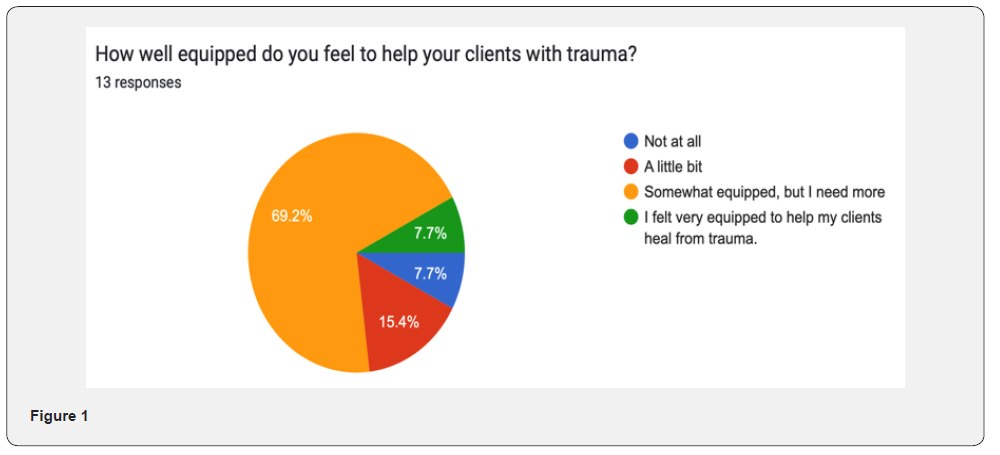
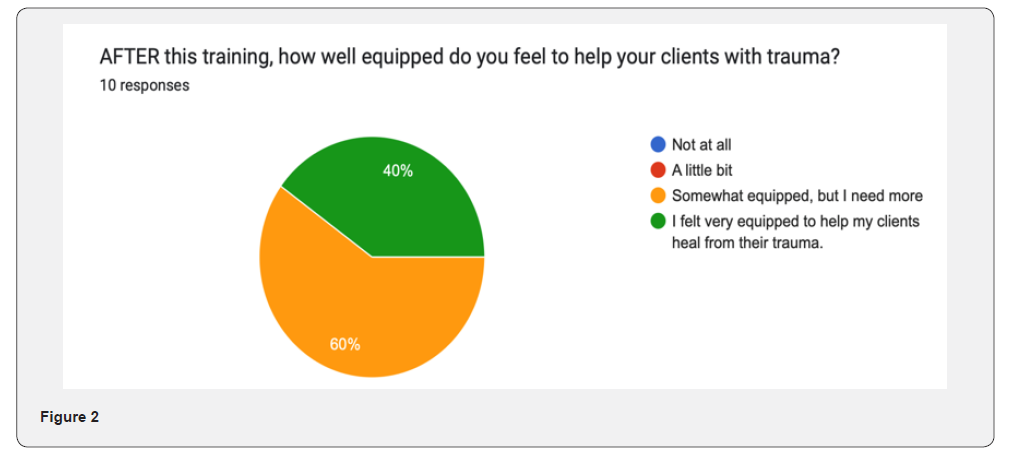
As a standard part of the THTP, trainees complete a pre-training/ post-training survey to measure the impact they experience after taking part in THTP training. Data from this team trained in Yangon showed that the number of trainees indicating they felt “a little prepared, but I need more” to help their clients with trauma, reduced from 69.2% to 60%, and those indicating that they felt very equipped to help their clients with trauma rose from 7.7% to 40%. Responses to this same question indicating “Not at all,” or “A little bit,” fell to 0% (Figures 1 & 2).
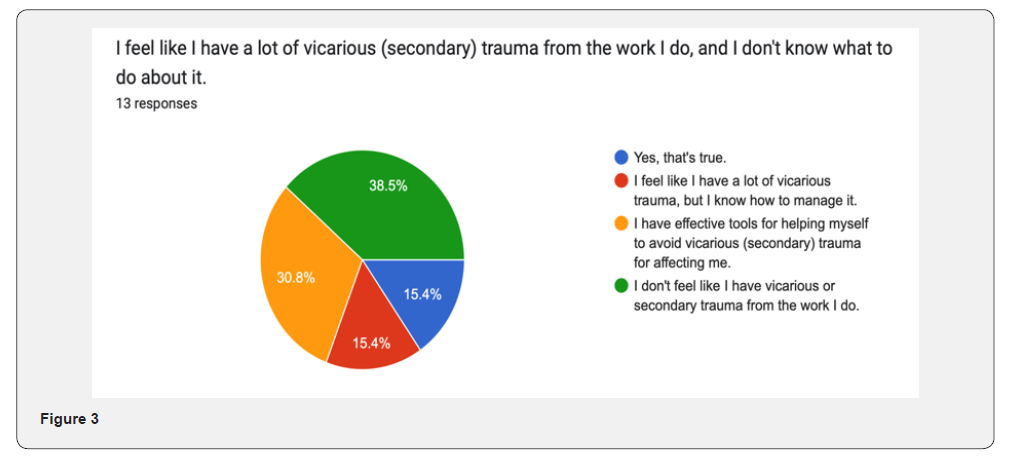
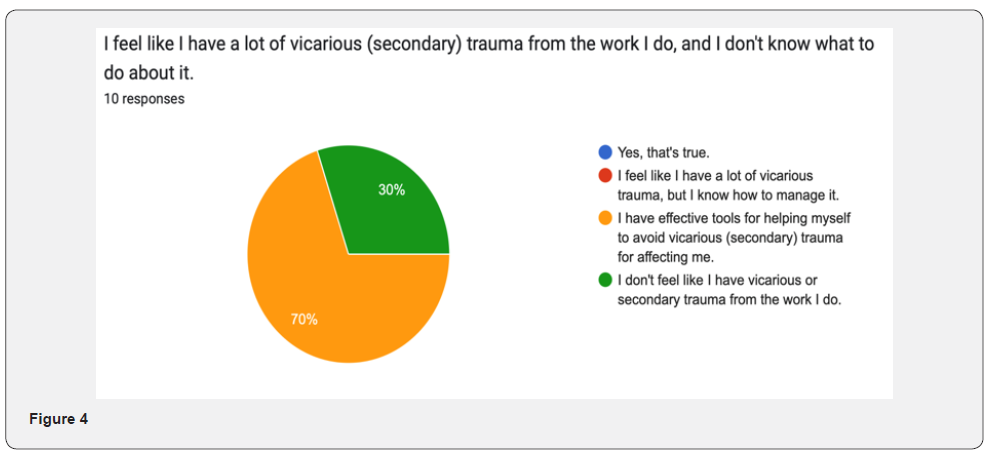
When asked to reflect on their own levels of vicarious trauma from their work, and rate the statement “I feel like I have a lot of vicarious (secondary) trauma from the work I do, and I don’t know what to do about it,” those reporting either, “Yes, that’s true,” or “I feel like I have a lot of vicarious trauma, but I know how to manage it,” fell from 15.4% to 0%. Those reporting, “I have effective tools for helping myself to avoid vicarious (secondary) trauma from affecting me,” rose from 30.8% to 70% (Figures 3 & 4).
Statistical Analyses
A repeated measures analysis of variance (ANOVA) was conducted to compare changes in PTSD over time between the Treatment group (TG) and the Control group (CG). The effect size for the ANOVA was reported using partial eta squared (η²). To further examine differences between and within groups, independent samples t-tests (between groups) and paired samples t-tests (within groups) were performed at each time point. Cohen’s d was calculated to estimate the standardized effect size for these comparisons, with values of 0.2, 0.5, and 0.8 indicating small, medium, and large effects, respectively.
Results
Repeated measures ANOVA indicated a significant main effect of time, F (2, 42) = 12.75, p< .001, η² = 0.378, suggesting overall symptom reduction across both groups, but no significant interaction between time and group was found. Independent Samples t-tests comparing groups showed no significant difference between groups at pre-treatment assessment. Independent samples t-tests revealed that the Treatment group (TG) scored significantly lower than the Control group (CG) at post-treatment assessment (t (21) = –2.78, p = .011, Cohen’s d = –1.11) and at follow-up assessment (t (21) = –2.45, p = .023, Cohen’s d = –0.98), demonstrating large effect sizes. Paired comparisons within the Treatment group (TG) also showed significant decreases in symptoms with large effect sizes between T1 and T2: (t (9) = -3.61, p =.00, Cohen’s d = –0.72); and between T1 and T3: (t (9) = -3.16, p = .011, Cohen’s d = –1.00). The Treatment group (n = 10) showed a large reduction in PCL-5 scores from pre-treatment (M = 42.00, SD = 16.97) to post-treatment (M = 32.00, SD = 13.89), with a continued decrease at follow-up (M = 31.00, SD = 13.26), indicating sustained benefits of the intervention. In contrast, the Control group (n = 13) demonstrated minimal change across time points, with scores remaining relatively stable (T1: M = 47.00, SD = 10.62; T2: M = 46.00, SD = 11.42; T3: M = 43.00, SD = 11.19). See Table 1 and Figure 1. Age did not differ significantly between groups, with an overall mean age of 38.15 years (SD = 7.55).

Discussion
This randomized controlled trial had two objectives: 1) to evaluate the efficacy, safety, and efficiency of the Healing Drawing Procedure (HDP) group trauma treatment intervention in reducing posttraumatic stress disorder (PTSD) symptoms among survivors of GBV and sex workers living in Yangon, Myanmar, and 2) to explore the effectiveness, safety, and efficiency of non-specialist MHPs being trained in and delivering the HDP group trauma treatment intervention. This project was done as part of the development of the task-sharing focused Trauma Healing Training Program (THTP), which is being developed to bring safe and effective mental health treatment interventions to high-need, low-resource contexts, specifically in low-and-middle-income countries (LMICs).
A total of 23 adult female participants met the inclusion criteria and participated in the study. Participants’ ages ranged from 20-55 (M=38.15 years old). Repeated measures ANOVA revealed a significant main effect of time, indicating that PTSD symptoms decreased significantly over time for both groups. There was also a marginally significant main effect of group, suggesting that the treatment group had lower overall symptom levels compared to the control group. However, the interaction between time and group was not statistically significant, indicating that both groups followed similar trajectories of improvement over time.
Independent samples t-tests showed no significant difference between groups at pre-treatment assessment, confirming comparable starting levels. At post-treatment and follow-up assessments, the Treatment group (TG) demonstrated significantly lower symptom scores than the Control group (CG), with large effect sizes (Cohen’s d = - 1.11 and Cohen’s d = -0.98, respectively). These findings suggest that the HDP program led to meaningful reductions in PTSD symptoms immediately following the intervention and these effects were largely maintained at follow-up. Within-group analyses revealed a large reduction in symptoms from pre-treatment to post-treatment for the Treatment group (Cohen’s d = - 0.72), with continued improvement at follow-up (Cohen’s d = -1.00). In contrast, the Control group showed minimal changes.
The results of this study support that this project was successful in training non-specialized MHPs to effectively and safely provide the HDP group trauma treatment intervention, and that the trainees were successful in the provision of the HDP treatment intervention, reducing participants’ posttraumatic stress disorder (PTSD) symptoms. Due to the transient nature of many individuals in Myanmar at this time, and the costly distances required to meet with and follow up with these participant populations, it is quite difficult to explore more qualitative information from participants to provide a solid explanation of these subtle and interesting differences.
Regarding this study’s secondary objective, exploring the efficacy and safety of non-specialized MHPs being trained in and delivering the HDP group trauma treatment intervention as part of the task-sharing focused THTP, the study results highlight the success of non-specialized MHPs in the provision of the treatment intervention, resulting in the reduction of individuals’ PTSD symptoms within two populations where the need for mental health treatment is very high and resources are quite low. Also, regarding the safety of the THTP trainees themselves, not only were they able to safely provide the HDP intervention to the study participants, but also reported high rates of feeling well equipped to continue helping clients with suffering from the impacts of trauma, as well as feeling that they have tools to avoid developing vicarious trauma. These factors also contribute to the safety element of this study.
Conclusion, Limitations, and Future Directions
This study’s results show that the provision of the HDP group trauma treatment intervention by non-specialized MHPs effectively reduced the severity of PTSD symptoms for adult females with pathogenic memories associated with GBV and sex work. While the PCL-5 does not have full diagnostic capability, according to [46], a score of 31-33 or higher suggests a probable determination of a PTSD diagnosis based on DSM-5 diagnostic criteria. In this study, participants in the TG had an average PCL-5 score of 42 at Time 1 pre-treatment assessment, indicating that if given a diagnostic assessment they would most likely meet criteria for a diagnosis of PTSD. In the TG, the average PCL-5 score reduced to 32 at Time 2, seven days after the final HDP treatment intervention administration, and to an average score of 31 at Time 3, the thirty-day follow up. This shows promising signs for non-specialized MHPs to substantially reduce the severity of participants’ PTSD symptoms. It is relevant to mention that the sample size was small, which may have limited statistical power, particularly for detecting interactions.
The study also showed that non-specialized MHPs safely provided the HDP group trauma treatment intervention. Participants reported no adverse effects or events during the treatment intervention administration or at any of the assessment times. None of the participants showed clinically significant worsening/exacerbation of symptoms according to their PCL-5 scores or self-report.
Reports in a pre/post impact survey completed by THTP trainees also suggest that the HDP is a provider-friendly treatment intervention that can be successfully applied by non-specialized MHPs, yielding positive treatment results. Non-specialized MHPs successfully administering the HDP treatment intervention resulting in the reduction of the participants’ PTSD symptoms also facilitates provider confidence and motivation. This emphasizes the feasibility of non-specialized MHPs providing trauma treatment interventions to high-needs, low-resourced populations in LMICs, where the prevalence of and access to specialized MHPs is limited, while also having a positive impact on the non-specialized MHPs.
Due to the unpredictable and transient nature of living in Myanmar, utilizing a larger sample size, or conducting a six- or twelve-month follow-up was not possible. Therefore, to further enhance the robustness of this study, we recommend future randomized controlled trials to include a larger sample size along with a longer follow-up period whenever possible to evaluate the long-term impacts of this treatment intervention by non-specialized MHPs. It should also be taken into the consideration that recruited participants were already engaged in some capacity with social services provided by the partner organization. There is a possibility that these specific participants may be qualitatively different than others in the population, due to the fact that they were accessing social, and material supports, therefore potentially skewing the generalizability of the intervention’s effectiveness to others in this population. Lastly, there is potential for social desirability bias as it is possible that participants may alter their responses to appear more favorable or more compliant, especially if they have a pre-existing relationship with the organization who provides supports.
The research team attempted to limit these issues by recruiting independent RAs who were unknown to the participants and not affiliated with the partner organization or any of their services in any way. Also, as part of the informed consent that was read to all participants before they signed it, participants were informed of how their responses to the assessments would be kept confidential by the RAs and the research team and that no one from the partner organization would have access to any of their responses or information.
References
- Buchanan C (2022) Preventing gender-based violence in Myanmar. Institute for Democracy and Electoral Assistance.
- Network G E (2015) Behind the silence: Violence against women and their resilience: Myanmar. Yangon, Myanmar: Gender Equality Network.
- Thu AN (2024) Challenges faced by female sex workers in Myanmar: Legal barriers and rights protection (Case study in Yangon).
- (2024). Threat to livelihoods deepens as Myanmar economic outlook remains weak. World Bank.
- Fan P, Chen J, Fung C, Zaw N, Zutao O, et al. (2022) Urbanization, economic development, and environmental changes in transitional economies in the global south: a case of Yangon. Ecol Process 11(1): 65.
- Koning SM (2024) Protracted Chains of Violence: How Chronic Conflict and Displacement Structure Intimate Partner Violence at the Thailand-Myanmar Border. Popul Res Policy Rev 43: 11.
- Millan Alanis JM, Carranza Navarro F, de León Gutiérrez, Paloma CL, Andrea F, et al. (2021) Prevalence of suicidality, depression, post-traumatic stress disorder, and anxiety among female sex workers: a systematic review and meta-analysis. Archives of women's mental health 24(6): 867-879.
- Aye WT, Lien L, Stigum H, Hla Hla W, Tin O, et al. (2020) The prevalence of mental distress and the association with education: a cross-sectional study of 18-49-year-old citizens of Yangon Region, Myanmar. BMC Public Health 20(1): 94.
- Carroll D, Wulan N, Swe ZY, Aye Aye M, Sanda S et al. (2021) Mental health of adolescents in Myanmar: A systematic review of prevalence, determinants and interventions. Asian Journal of Psychiatry 61: 102650.
- Falb KL, McCormick MC, Hemenway D, Anfinson K, Silverman JG (2013) Suicide ideation and victimization among refugee women along the Thai-Burma border. Journal of Traumatic Stress 26(5): 631–635.
- Global Burden of Disease (GBD) Collaborative Network. Global Burden of Disease Study 2016 (GBD 2016) Disability-Adjusted Life Years and Healthy Life Expectancy 1990–2016. Seattle, United States. Institute for Health Metrics and Evaluation (IHME), 2017
- Lim AG, Stock L, Shwe Oo EK, Jutte DP (2013) Trauma and mental health of medics in eastern Myanmar's conflict zones: a cross-sectional and mixed methods investigation. Conflict and Health 7(1): 15
- Fan X, Ning K, Ma TS, Yadanar A, Hein M, et al. (2024) post-traumatic stress, depression, and anxiety during the 2021 Myanmar conflict: A nationwide population-based survey. The Lancet Regional Health Southeast Asia 26:100396.
- Kanayama Y, Yamada H, Yoshikawa K, Aung KW (2022) Mental Health Status of Female Sex Workers Exposed to Violence in Yangon, Myanmar. Asia Pacific Journal of Public Health 34(4):354-361.
- Aye WT, Lien L, Stigum H, Schei B, Sundby J, et al. (2020). Domestic violence victimisation and its association with mental distress: a cross-sectional study of the Yangon Region, Myanmar. BMJ open 10(9): e037936.
- White SJ, Sin J, Sweeney A, Salisbury T, Charlotte W, et al. (2023). Global Prevalence and Mental Health Outcomes of Intimate Partner Violence Among Women: A Systematic Review and Meta-Analysis. Trauma, Violence, & Abuse 25(1): 494-511.
- Hyland P, Murphy J, Shevlin M, Frédérique V, Eoin M, et al. (2017). Variation in post-traumatic response: the role of trauma type in predicting ICD-11 PTSD and CPTSD symptoms. Soc Psychiatry Psychiatr Epidemiol 52: 727–736.
- Kessler RC, Aguilar Gaxiola S, Alonso J, Benjet C, Bromet EJ, et al. (2017) Trauma and PTSD in the WHO World Mental Health Surveys. European Journal of Psychotraumatology 8 sup5.
- Park JN, Decker MR, Bass JK, Galai N, Tomko C, et al. (2019) Cumulative Violence and PTSD Symptom Severity Among Urban Street-Based Female Sex Workers. Journal of Interpersonal Violence 36(21-22): 10383-10404.
- World Health Organization. (2019/2021). Post-traumatic stress disorder. International statistical classification of diseases and related health problems 11th EDT.
- Roxburgh A, Degenhardt L, Copeland J (2006) posttraumatic stress disorder among female street-based sex workers in the greater Sydney area, Australia. BMC Psychiatry 6: 24.
- World Health Organization (2022) Addressing mental health in Myanmar.
- Von der Warth R, Dam J, Grochtdreis T, König HH (2020) Economic evaluations and cost analyses in posttraumatic stress disorder: a systematic review. European Journal of Psychotraumatology 11(1): 1753940.
- Le PD, Eschliman EL, Grivel MM, Tang J, Cho YG, et al. (2022) Barriers and facilitators to implementation of evidence-based task-sharing mental health interventions in low- and middle-income countries: a systematic review using implementation science frameworks. Implementation science: IS 17(1): 4.
- Kaminer D, Booysen DD, Kristensen CH, Ellis B, Anushka R, et al. (2023) Improving Access to Evidence-Based Interventions for Trauma-Exposed Adults in Low-And Middle-Income Countries: An International Society for Traumatic Stress Studies (ISTSS) Briefing Paper 37(4): 563-573.
- World Health Organization (2007) Task shifting rational redistribution of tasks among health workforce teams: global recommendations and guidelines.
- Al Tamimi, Leavey G (2022) Community-Based Interventions for the Treatment and Management of Conflict-Related Trauma in Low-Middle Income, Conflict-Affected Countries: a Realist Review. Journ Child Adol Trauma 15(2): 441-450.
- Mabunda D, Oliveira D, Sidat M, Maria T, Vasco C, et al. (2022) Cultural adaptation of psychological interventions for people with mental disorders delivered by lay health workers in Africa: scoping review and expert consultation. Int J Ment Health Syst 16(1): 14.
- Shapiro F (2018) Eye movements desensitization and reprocessing. Basic principles, protocols, and procedures (Third edition). Guilford Press
- American Psychiatric Association (2013) Diagnostic and statistical manual of mental disorders (5th). Arlington VA
- Slavish DC, Briggs M, Fentem A, Messman BA, Contractor AA (2022) Bidirectional associations between daily PTSD symptoms and sleep disturbances: a systematic review. Sleep Med Rev 63: 101623.
- Burgos A, Bargiel Matusiewicz KM (2018) Quality of life and PTSD symptoms, and temperament and coping with stress. Front Psychol 9: 2072.
- Romero DE, Anderson A, Gregory JC, Potts CA, Jackson A, et al. (2020) Using neurofeedback to lower PTSD symptoms. NeuroRegulation 7(3): 99-106.
- Jarero I Artigas L (2009) EMDR integrative group treatment protocol. Journal of EMDR Practice & Research 3(4): 287-288.
- Jarero I, Artigas L, Hartung J (2006) EMDR integrative treatment protocol: A post-disaster trauma intervention for children & adults. Traumatology 12(2): 121-129.
- Jarero I, Artigas L, Uribe S, García LE (2016) The EMDR Integrative Group Treatment Protocol for Patients with Cancer. Journal of EMDR Practice and Research 10(3): 199-207
- Smyth Dent K, Walsh SF, Smith S (2020) Field Study on the EMDR Integrative Group Treatment Protocol for Ongoing Traumatic Stress with Female Survivors of Exploitation, Trafficking and Early Marriage in Dhaka, Bangladesh. Psychology and Behavioral Science International Journal 15(3): 1-8.
- Artigas L, Jarero I (2014). The Butterfly Hug. In: M Luber (Ed.) Implementing EMDR Early Mental Health Interventions for Man-Made and Natural Disasters Springer: New York, USA 23: 127-130.
- Smith S, Sadykova A, Givaudan M (2024) Clinical control trial on the healing drawing procedure (HDP) trauma treatment intervention provided by non-specialist mental health providers to vulnerable children living in Taraz, republic of Kazakhstan. International Journal of Psychology and Behavioral Science.
- Lino L, Bigel C, Smith S, Mainthow N, Givaudan M, et al. (2025) Randomized Controlled Trial on the Healing Drawing Procedure (HDP) Group Trauma-Sensitive Treatment Intervention Provided by Non-Specialized Mental Health Providers to Internally Displaced People Living in the Cabo Delgado Province of Northern Mozambique Psychol Behav Sci Int J 23(1): 556101.
- Jarero I, Rake G, Givaudan M (2017) EMDR Therapy Program for Advanced Psychosocial Interventions Provided by Paraprofessionals. Journal of EMDR Practice and Research 11(3):122-128.
- Smith S, Todd M, Givaudan M, (2023) Clinical trial on the ASSYST for groups treatment intervention provided to Syrian refugees living in Lebanon. International Journal of Psychology and Behavioral Science 20(2): 556033.
- Karyotaki E, Araya R, Kellser RC, Waqas A, Bhana et al. (2022) Association of task-shared psychological interventions with depression outcomes in low-and-middle-income countries; A systematic review and individual patient data meta-analysis. JAMA Psychiatry, 79(5): 430-443.
- Xiong T, Wozney L, Olthuis J, Rathore S, McGrath P (2019) A Scoping Review of the Role and Training of Para-professionals Delivering Psychological Interventions for Adults with Post-traumatic Stress Disorder, Journal of Depression and Anxiety, 8(3): 342
- Darnell CB (2025) Psychometric evaluation of the weekly version of the PTSD checklist for DSM-5. Sage .
- Weathers FW, Litz BT, Keane TM, Palmieri PA, Marx BP, et al. (2013) The PTSD Checklist for DSM-5 (PCL-5).
- Sangraula M, Chauhan J, Best C, McEneaney C, Shah C, et al. (2024). The impact of task-sharing scalable mental health interventions on non-specialist providers: a scoping review. Cambridge Prisms: Global Mental Health 11: e134.

























