



 PBSIJ Home



Abstract
Affective well-being in the workplace, which encompasses employees’ emotional states, moods, and feelings, is crucial for both individuals and organizations. It can significantly influence job performance, job satisfaction, organizational commitment, and overall productivity. Undoubtedly, low levels of the concept under study, can have a negative effect in a number of ways. Employees who experience positive emotions and moods are more likely to be motivated, engaged, and productive. Happy workers are more likely to exhibit higher levels of productivity and creativity, contributing to better performance outcomes. Similarly, employees with high levels of well-being are more effective in their roles, which can lead to improved organizational performance. Affective well-being is closely linked to job satisfaction. Employees who feel good about their work and work environment are more likely to be satisfied with their jobs. This satisfaction reduces turnover intentions and enhances employee retention. When employees experience positive emotions at work, they may develop a stronger emotional attachment to their organization. This attachment, or organizational commitment, leads to greater loyalty and a willingness to go above and beyond their job requirements. In this thesis, affective well-being was thoroughly studied, using the quantitative research method. It was found that AWB in the Greek context can be influenced by the supportive climate and aspects of the psychological empowerment of the employees.
Keywords:Affective well-being; Supportive climate Psychologica empowerment; Psychological empowerment; Work life balance
Abbreviations:JCM: Job Characteristics Model; SDT: Self-Determination Theory; OCBs: Organizational Citizenship Behaviors
Introduction
Affective well-being can positively impact job performance and productivity. Employees who experience positive emotions and moods are more likely to be motivated, engaged, and productive. According to Lyubomirsky, King and Diener (2005), happy workers are more likely to exhibit higher levels of productivity and creativity, contributing to better performance outcomes. Similarly, Wright and Cropanzano (2000) found that employees with high levels of well-being are more effective in their roles, which can lead to improved organizational performance. Affective well-being is closely linked to job satisfaction. Employees who feel good about their work and their work environment are more likely to be satisfied with their jobs. This satisfaction can reduce turnover intentions and can enhance employee retention. Judge and Kammeyer-Mueller [1] highlighted that job satisfaction, influenced by affective well-being, is a significant predictor of employee retention. High levels of job satisfaction also found to lead to lower absenteeism and presenteeism, where employees are physically present but not fully engaged in their work [2]. When employees tend to experience positive emotions at work, they can develop a stronger emotional attachment to their organization. This attachment, or a form of organizational commitment, can lead to stronger loyalty levels and a willingness to go above and beyond their job requirements. Meyer, Stanley, Herscovitch, and Topolnytsky [3] found a positive relationship between affective well-being and organizational commitment. Committed employees are more likely to engage in organizational citizenship behaviors, which can contribute to the overall effectiveness and cohesion of the organization [4].
Positive affective states may also enhance interpersonal relationships in the workplace. Employees with high affective well-being are more likely to engage in prosocial behaviors, such as helping colleagues and exhibiting empathy. These behaviors can foster a collaborative and supportive work environment. Research by Barsade and Gibson (2007) has indicated that positive emotions tend to improve social interactions and team dynamics, which are essential for effective teamwork and organizational harmony. Affective well-being can also stimulate creativity and innovation. Positive emotions can enhance cognitive flexibility and the formation of openness to new ideas, which are critical for creative problem-solving. Amabile, Barsade, Mueller, and Staw [5] found that positive affect is positively related to creativity in the workplace. Employees who feel good are more likely to take risks, think outside the box, and develop innovative solutions, driving organizational innovation and competitive advantage. Affective well-being in the workplace is essential for fostering a productive, satisfied, and committed workforce. Organizations that prioritize and enhance affective well-being through supportive climates, positive leadership, and employee development programs are likely to see significant benefits in overall performance and employee well-being.
In the present thesis, emphasis was placed on the concept of
affective well-being, because:
i. It was found from analyzing the relevant literature that
it is a concept that has not been studied in the Greek context
(therefore there can be an important research gap)
ii. The complexity of the relevant concept was also
understood, which makes its thorough investigation important,
in various contexts of reference (such as the context of Greek
workers)
Literature review
The importance of effective well-being in the workplace and its relationship with psychological empowerment, work-life balance and supportive climate
The importance of affective well-being
The protection, maintenance and improvement of the well-being of modern workers is considered an issue of central importance, which strongly concerns the governments, the institutions and the organizations worldwide [6]. The increase in the complexity of the lives of individuals and workers, due to the rapid technological development and modernization, has led to the need of achievement of human well-being. Nevertheless, the achievement of the above objective can deal with difficulties in practice, as significant obstacles exist, while the nature of the challenges becomes increasingly complex and unpredictable. Some issues that may threaten the well-being of individuals are (among others), new technologies, the dominance of social media, the rising cost of living, the volatility and vulnerability of jobs, racial inequalities, etc. The concept of well-being has been studied a lot, while the scientific debate has been concerned with its various manifestations and components, such as the affective, the subjective, the overall, etc. [7]. A variety of factors can significantly affect a person’s well-being: personal life, family life, levels of health, material well-being, sense of fulfillment, existence of meaning, etc.
Nevertheless, working life can hold a prominent place in a person’s overall well-being. Individuals tend to spend long hours on tasks that become increasingly demanding in the context of survival (they have to accomplish them, in order to get paid and “survive”). Therefore, the quality of the work life and the work environment can significantly affect overall well-being [7]. A series of studies have shown that variables and situations such as low job involvement, workaholism, burnout and low levels of job satisfaction tend to be negatively related to the well-being of employees (Braucheli, Schaufeli, Jenny, Füllemann & Bauer, 2013; [8]). In addition, low levels of well-being have been associated with low levels of job satisfaction, higher chances of experiencing burnout, low levels of work engagement, low levels of health, stress and depression ([9]; Tang, Siu & Chueng, 2014; Yang, Suh, Lee & Son, 2018). At the other extreme, high levels of well-being have been associated with a higher degree of satisfaction with work and life in general, better mental and physical health, work efficiency, etc.
Makikangas, Kinnunen, Feldt and Shaufeli [10] have emphasized that the majority of researches have dealt with the negative aspects of these concepts, such as burnout, work stress, etc., and that few researches have thoroughly dealt with the positive ones. Aspects, such as affective well-being or the overall well-being of employees, can be crucial. As it has been emphasized elsewhere, academic research at the management level has rather focused on job satisfaction, engagement, organizational commitment, loyalty, etc. This may represent an important research gap as more and more workers are increasingly concerned with their emotional work experiences. In a survey conducted with a sample of over 5000 people, it was found that one third of workers highlighted that affective well-being is the most important dimension of their overall well-being, while 95% claimed that it significantly affects their professional productivity [11].
Of the total 8 dimensions of well-being studied, affective wellbeing had the highest perceived importance (considered the most important dimension of well-being by the sample) and appeared to have the greatest impact on productivity. Therefore, the concept under study deserves to be investigated thoroughly, at the same time that much academic emphasis has been given to the concept of job satisfaction. In the above research, eight dimensions of overall well-being were taken into account: physical, emotional, social, economic, professional, intellectual, spiritual and environmental. Spiritual well-being is not necessarily about adopting specific ideas, but it is seen as a means of connecting to a “higher power” or a “sense of oneness with other beings and humanity” [12]. The concept under study appeared to be the first in importance in all nine countries surveyed: Argentina, Brazil, Chile, Germany, Italy, Mexico, Spain, the United Kingdom and the United States. Furthermore, the same appeared to be true, regardless of age, work environment, seniority, sexual orientation/identity and gender [11].
Individual happiness is consistently considered one of the most important dimensions of overall occupational well-being (Van Horn et al. 2004; [7]). This, as it has been highlighted, may be especially true for new generations of workers, such as Millenials ([13]; Ng et al. 2010). Compared to previous generations of workers, millennials appear to have specific attitudes and expectations (on average) regarding the working conditions and behaviors [14]. They have often been described as a narcissistic generation (Pew Research Center, 2007), characterized by low organizational commitment and “work ethic” [15]. In the same context, they may switch to other organizations that may offer better conditions, development opportunities, etc. and possibly emphasize work/life balance and quality free time. Nevertheless, they are considered to be characterized by high self-confidence and a focus on various fulfillments and goal completion [16], which has been confirmed in a number of studies, in different cultures and settings [17]. Young workers have been found to experience significant job benefits through increased autonomy and empowerment ([18]; Yap & Badri, 2020). Friendships and work relationships of an emotional nature have been considered as an important influencing factor of work mixing and enhancing the flow of operational processes, within organizations [19]. Often, there may be frictions at the organizational functional level, which may be due to “deep” feelings of animosity or competitiveness between departments or individuals within departments. Leadership can contribute to sharpening or softening such feelings by ensuring the conditions that lead to an overall sense of gratitude.
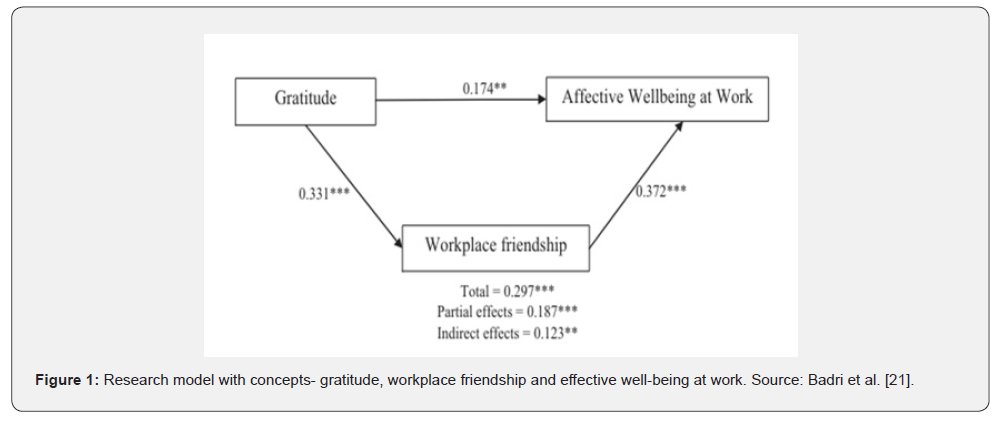
Yap and Badri (2020) found that work friendships tend to enhance AWB among millennial workers. Individuals are likely to have various experiences, which may be viewed as positive/ negative, important/insignificant, or desirable/undesirable [20]. In the Figure below, the research model of Badri et al. [21] can be seen, where workplace friendships appeared to play an important mediating role, regarding the relationship between employee gratitude (for the organization) and AWB. Therefore, gratitude for the organization can strengthen friendships within the workplace, but also AWB. The above is based on the analysis of empirical data from 272 millennial workers. Furthermore, the above findings complement existing studies on the relationship between gratitude and AWB ([22]; Nezlek et al. 2017; Toussaint and Friedman, 2009) (Figure 2).
Theoretical foundations of the concept of affective well-being at work
Something very important in relation to the concept under study, is the existence of 3 different schools of thought/views or groups of theories (dispositional, activity, telic). As someone can easily see, the concept of happiness is very important and has occupied a number of philosophers and social scientists. The first group of theories has emphasized that affective well-being has to do with deep, structural predispositions of individuals [23]. In the same context, there are people who may feel uncomfortable in positive situations. The big 5 model has established that the dimension of extroversion tends to be related to the experience of positive emotions (enthusiasm, alertness, joy, etc.), while the dimension neuroticism with corresponding negative ones (anxiety, anxiety, etc.) [24]. In the same context, one can imagine that there are people (who may be customers or employees for example) who tend to be constantly dissatisfied and possessed by negative emotions. Possibly a small percentage, but extremely consistent. In the same context, this knowledge can be practically important for managers of smaller teams, as they will be able to effectively manage team members with high degrees of neuroticism or extroversion. In addition, the activation or mental stimulation that results from corresponding activities, can contribute to the experience of positive emotions. Long ago, Aristotle emphasized that happiness is about participating in virtuous, good actions. Based on the above, the importance of the concept of work empowerment can be perceived. Perceived control over basic work conditions and the experience of autonomy can lead to the reduction of barriers/frictions that tend to prevent the feeling of high activation levels.
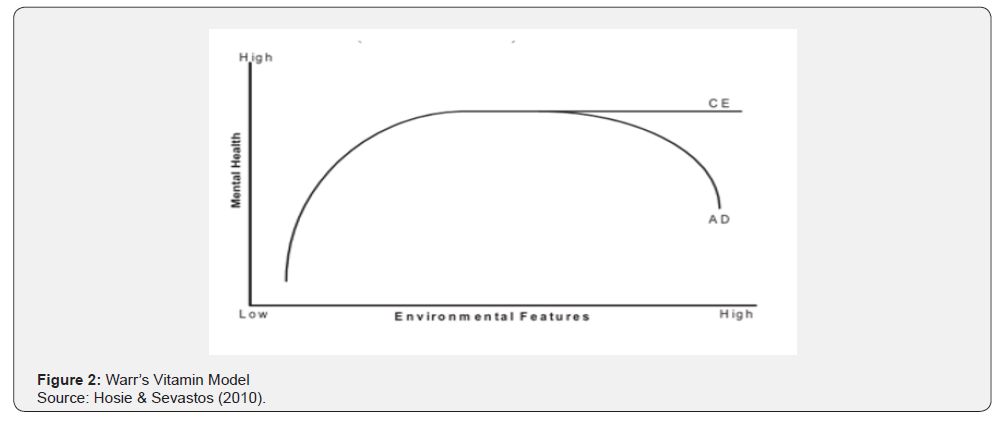
The job strain model focuses on work demands and work control, while high demands and a low degree of autonomy can lead to cumulatively high levels of strain and stress. Activity theories have been based on the research of physiologists, physiological psychologists, and psychophysiologists [25]. The telic (end state) theories argue that affective well-being is related to the satisfaction of certain individual needs, such as competence, aspiration, etc. A popular theory is the Vitamin model Warr, (1987, 2007). The author argued that twelve variables tend to influence the affective well-being of employees. Warr’s Vitamin Model is a well-known framework in occupational psychology that likens the effects of job characteristics on mental health to the effects of vitamins on physical health. The model, developed by Peter Warr, suggests that just as vitamins are essential for physical wellbeing, certain job characteristics are crucial for psychological well-being. However, similar to vitamins, an optimal level of these job characteristics is beneficial, but excessive amounts can be harmful. Decrement (AD) Vitamins, can be the aspect of job demands (moderate job demands can be stimulating, but excessive demands can lead to stress and burnout), job variety, certain level of variety is beneficial, but too much variety can become overwhelming), environmental clarity, availability of money, physical security, supportive supervision etc.
The analogy of vitamins helps explain how job characteristics
affect mental health:
i. CE Vitamins: Like essential vitamins that must be
consumed regularly in optimal amounts, CE vitamins need to
be present at appropriate levels to maintain psychological wellbeing.
Too little of these characteristics can lead to deficiencies in
well-being, but excessive amounts generally do not cause harm.
ii. AD Vitamins: Similar to certain vitamins that can be
harmful in large doses, AD vitamins can have negative effects if
they exceed optimal levels. For instance, while some job demands
are necessary to keep employees engaged, excessive demands can
lead to stress and burnout (Warr, 1987).
Supportive climate
People born between 1980 and 2000 are known as millennials and it has been estimated that by 2025, millennials will make up the 75% of the global workforce (Brant & Castro, 2019). In the present thesis, this fact was taken seriously, as the vast majority of employees are millennials. Therefore, it is very important to introspect on this particular generation, as it constitutes the main bulk of workers worldwide. In addition, it seems that there is a trend for relatively significant differences between different generations (for example between millennials, Gen-Z, etc.). Generations may show significant differences in perceptions, attitudes and behaviors due to a number of factors (such as the rapid development of technology, differences in the acquisition of new information, etc.). Rather, a trend has emerged where younger workers are less “conservative” at work. This means that they tend to move more easily (between organizations that offer new jobs), not to cling to businesses based on feelings of gratitude, etc. (they may not feel beholden to a business simply because it offered them a job). Several studies have demonstrated the importance of millennial workers’ subjective experiences in the workplace. In these surveys, it has been suggested that as a group they tend to place more value on their emotional experiences when evaluating their overall satisfaction and when deciding whether to stay (or not) with an organization [26]..
Younger workers who experience high levels of emotional well-being at work are more likely to be more creative, resilient and socially competent [21]. Above all, however, they are more likely to remain committed to their work and organization [27]. Therefore, improving the emotional well-being of millennial employees has become a key challenge for organizational managers. Millennials have grown up in an era where there is a “24/7” access to information and news, increased “social surveillance” and a significant increase in the reporting of largescale ethical scandals, while social media has become extremely important at the societal level [28].
This can mean the following:
a) initially that younger workers are less willing to
accept and internalize “negative work practices/conditions”,
such as irritable executives, overall perceived unfairness within
organizations, etc.
b) secondly, that they tend not to forgive corresponding
attitudes and behaviors. Younger workers don’t “feel gratitude”,
simply because they work in a stable environment, they may ask
for much more. In fact, they have many electronic ways to find
moral support. Various groups on the internet may offer similar
knowledge, support and guidance.
Generational differences in the workplace were a central theme of the survey, which was conducted by the Ethics Resource Center. The study found that millennials tend to notice more inappropriate behavior in the workplace. Therefore, older workers may not focus on “unethical or indecent” behaviors, as they may consider that it is not “their job to deal with such events”, or that they will get into trouble, etc. According to Ernst and Young’s (2017) Asia-Pacific Report, more than 80% of millennials do not want to work for organizations that engage in unethical practices, such as fraud, bribery and corruption. Previous research has shown that millennials also value clear and ethical rules and share matching expectations [29]. This may mean that younger employees want to know at a very early stage (at the recruitment level for example, where the psychological contract begins to be formed), what is the “personality” of the organization they are dealing with.Since millennials are considered to be sensitive to ethical issues, it can be argued that millennials will experience more positive emotions in an organization with a positive, ethical climate (positive climate can also refer to perceived solidarity among members, or the amount of organizational support).
Qualls and Puto (1989) emphasized that the ethical climate within an organization refers to individuals’ perceptions of the processes, practices, values, and norms that govern ethical decision-making in an organization. Mayer et al. (2010) argued that ethical climate can be understood as “the holistic impression that individuals have about the ethical policies, practices and procedures in an organization”. The ethical climate within an organization includes the shared beliefs and values of employees regarding various ethical issues. It can also be seen as a moral code that guides the organization about what is right and wrong. Situational tension theory suggests that a strong ethical climate is about clearly communicating and providing consistent information about the range of ethical behavior that an organization considers collectively acceptable and the existence of efforts to adhere to it. Employees may feel uncertain about their ethical obligations if there are no clear and there are unambiguous ethical standards within organizations. These standards will be shaped by the organizational climate and become visible when the need arises. This uncertainty can lead to unclear and ambiguous moral expectations. Ambiguity at this level has been recognized as a negative variable, in relation to organizational reality [30] and often occurs when employees are uncertain about their job expectations and responsibilities. Researchers have defined an organization’s ethical climate as the existence and consolidation of a shared view of “what constitutes ethically acceptable behavior” and how ethical problems should be addressed and controlled. A robust, ethical climate can help reduce employee ambiguity and insecurity, thus reducing psychological stress/conflict and improving affective well-being.
In addition, ethical climates may facilitate decision-making by reducing internal uncertainty and favoritism. According to prevailing morality, people tend to reward moral behaviors and punish immoral ones to ensure a sense of justice [31]. In cases where there is a pervasive sense of injustice, the results tend to be extremely negative collectively (lack of cohesion, conflicts, suspicion of new conflicts, uncertainty, etc.). Organizational justice is one of the most important influencing factors of occupational well-being. A supportive organizational climate has numerous benefits for both employees and organizations: Employees who feel supported are more likely to be satisfied with their jobs, which can lead to higher levels of engagement and commitment (Rhoades & Eisenberger, 2002). When employees perceive that their organization values and supports them, they are more likely to develop a strong emotional attachment to the organization [32]. Supportive environments enable employees to perform at their best, leading to improved individual and organizational performance [33]. Employees in supportive climates are less likely to leave the organization, reducing turnover rates and associated costs. They also contribute to better physical and mental health among employees, which can result in fewer sick days and lower healthcare costs.
Psychological empowerment
Psychological empowerment in the workplace has emerged as
a pivotal construct in organizational behavior, representing a state
where employees feel a sense of control over their work and its
outcomes. This sense of control is often linked to higher levels of
job satisfaction, organizational commitment, and performance. In
this thesis, the concept was used for 2 reasons:
a) First of all, because it has been closely linked to job
satisfaction, which can be considered a concept “close” to affective
well-being.
b) Also, because an indirect relationship was found in a
series of related papers read by the researcher.
Psychological empowerment can be understood through four key dimensions: meaning, competence, self-determination, and impact, as delineated by Thomas and Velthouse [34]. These dimensions collectively shape an individual’s intrinsic motivation and engagement in their job roles.
i. Dimensions of Psychological Empowerment
a) Meaning: Meaning refers to the degree to which
employees perceive their work as valuable and aligned with their
personal values. When employees find their work meaningful,
they are more likely to be intrinsically motivated and committed
to their roles [35].
b) Competence: Competence involves the belief in one’s
ability to perform tasks successfully. It is akin to self-efficacy,
where employees feel confident in their skills and capabilities to
meet job demands [36].
c) Self-determination: Self-determination pertains to the
sense of having control over one’s work and decisions. It reflects
autonomy and the ability to choose how to carry out tasks [37].
d) Impact: Impact is the degree to which employees believe
their actions can influence organizational outcomes [35].
The theoretical underpinnings of psychological empowerment are rooted in various psychological and motivational theories. One of the primary theories is the Job Characteristics Model (JCM) proposed by Hackman and Oldham (1976), which suggests that certain job characteristics, such as task significance and autonomy, can enhance intrinsic motivation and job satisfaction. Psychological empowerment aligns with this model by emphasizing the importance of meaningful work and autonomy. Another relevant theory is Self-Determination Theory (SDT) by Deci and Ryan (1985), which posits that intrinsic motivation is driven by the fulfillment of basic psychological needs for autonomy, competence, and relatedness. Psychological empowerment addresses these needs by fostering a sense of control (self-determination), efficacy (competence), and meaningful work (relatedness) [35] model of psychological empowerment integrates these dimensions into a coherent framework, highlighting their interconnections and collective impact on employee motivation and performance. This model has been widely adopted in organizational research and practice, providing a robust basis for understanding and enhancing psychological empowerment in the workplace. Several factors contribute to the development of psychological empowerment in the workplace. Organizational culture plays a significant role, where supportive and participative cultures are more likely to foster empowerment. Leadership style is another crucial antecedent; transformational and empowering leadership styles are associated with higher levels of psychological empowerment among employees [38].
Job design is also a key factor, where jobs that offer autonomy, variety, and opportunities for meaningful contributions enhance psychological empowerment. The consequences of psychological empowerment are profound and multifaceted. Empirical research has consistently shown that empowered employees exhibit higher levels of job satisfaction, organizational commitment, and job performance (Seibert, Wang, & Courtright, 2011). Empowered employees are also more likely to engage in organizational citizenship behaviors (OCBs), which are discretionary behaviors that contribute to organizational effectiveness [35]. Additionally, psychological empowerment is linked to lower levels of job stress and burnout, as employees with a sense of control and competence are better equipped to handle job demands and challenges. This, in turn, contributes to better overall well-being and reduces turnover intentions [34]. Despite the benefits of psychological empowerment, organizations may face challenges in implementing empowerment initiatives. Resistance to change, lack of management support, and inadequate resources can hinder empowerment efforts. Additionally, cultural differences may influence the effectiveness of empowerment strategies, as employees from different cultural backgrounds may have varying perceptions of empowerment [39]. The relationship between psychological empowerment and affective well-being in the workplace has garnered significant attention in organizational psychology and human resource management research. Psychological empowerment, characterized by a sense of meaning, competence, self-determination, and impact, is closely linked to employees’ affective well-being, which encompasses their emotional responses and overall mental health at work. This relationship is pivotal in understanding how organizational practices can enhance employee satisfaction, reduce stress, and foster a positive work environment.
Work life balance
Work-life balance is a critical aspect of modern organizational practices and employee well-being. It refers to the equilibrium between professional responsibilities and personal life, ensuring that neither domain excessively impinges on the other. Achieving a proper work-life balance is essential for employees’ mental health, job satisfaction, and overall productivity. This balance has become increasingly significant in contemporary workplaces due to changing work dynamics, technological advancements, and evolving societal expectations. Work-life balance is defined as the ability to effectively manage the demands of both professional and personal life. It involves allocating time and energy to work responsibilities while also dedicating sufficient time to family, social activities, and personal interests. Greenhaus and Beutell (1985) describe work-life balance as the absence of conflict between work and family roles, where participation in one role does not hinder performance in the other. The importance of work-life balance is underscored by its impact on various aspects of employees’ lives and organizational outcomes. For employees, a balanced life promotes mental and physical health, reduces stress, and enhances job satisfaction and personal fulfillment (Allen et al., 2000).
For organizations, fostering work-life balance leads to increased employee engagement, reduced turnover, higher productivity, and a positive organizational reputation (Kossek & Ozeki, 1998). Organizations can implement various strategies to promote work-life balance among employees. Flexible Working Arrangements and the offering of flexible work schedules, telecommuting options, and compressed workweeks allows employees to manage their work and personal responsibilities more effectively [40]. Implementing policies such as parental leave, childcare support, and wellness programs can alleviate the pressures of balancing work and family life. These policies demonstrate an organization’s commitment to employees’ well-being [41]. Despite the numerous benefits and strategies, achieving work-life balance remains challenging due to various factors. High-performance expectations, long working hours, and the pressure to be constantly available can undermine worklife balance efforts. Organizations need to balance productivity demands with employee well-being.
Methodology
Research philosophy and research method
Firstly, the important concept of the research paradigmhas
analyzed, which refers to the overall conceptual framework
shared by a community of scientists and which provides them
with a model for examining problems and finding solutions.
According to Kuhn (1981) the term refers to a research culture,
with a set of beliefs, values and assumptions, concerning the
nature and conduct of research. Kuhn by using the concept of
“paradigm” meant the theoretical perspective which: is accepted
by the community of scientists of a scientific field, is based on the
previous knowledge inherent in this field and directs the research
through:
a) choices about what is worth exploring
b) the formulation of hypotheses to explain the observed
phenomenon and
c) determining the most appropriate research techniques
According to [42] the research paradigm consists of the general theoretical assumptions and laws, as well as the applicable techniques adopted by the members of a particular scientific community. More specifically, it consists of the theoretical assumptions and formulated rules, the usual ways of applying the fundamental commandments in a variety of situations, the tools and techniques used to formulate the above in regards to social reality, the general principles that guide the work of scientists and the general methodological guidelines on how the research work should be done. The central goal of the social sciences, in addition to the description of social reality, is the explanation and understanding of its various aspects and dimensions. Explanation and understanding are two fundamental concepts, as they have been linked to the most important research methods -explanation with the quantitative method and understanding/ deepening with the qualitative method.
Measures
Below the variables of the research tool can be seen. The construct of Supportive climate consists of 8 items and was derived from Kim KY, Atwater L, Jolly P, Ugwuanyi I, Baik K, Yu J (2021). The items are «Workgroup members show a great deal of concern for each other, Workgroup members are supportive of each other, Workgroup members are friendly and approachable, Workgroup members look out for the welfare of each other, There is a feeling of trust between members of my workgroup, Workgroup members trust each other, If given the opportunity, my workgroup members would not take advantage of each other, Workgroup members foster an atmosphere of nonthreatening cooperation among members». The construct of work-life balance was derived from Brough P, Timms C, O’Driscoll M, Kalliath T, Siu O, Sit C, Lo D (2014). It consists of the following 4 items, “I currently have a good balance between the time I spend at work and the time I have available for non-work activities, I don’t have a difficulty balancing my work and non-work activities, I feel that the balance between my work demands and non-work activities is currently about right, Overall, I believe that my work and nonwork life are balanced”.
The concept of empowerment was used from the paper of [35]. The 9 items are: « The work I do is very important to me, My job activities are personally meaningful to me, The work I do is meaningful to me, I am confident about my ability to do my job, I am self-assured about my capabilities to perform my work activities, I have mastered the skills necessary for my job, I have significant autonomy in determining how I do my job, I can decide on my own how to go about doing my work, I have considerable opportunity for independence and freedom in how I do my job, my impact on what happens in my department is large, I have a great deal of control over what happens in my department, I have significant influence over what happens in my department». Lastly, the construct of affective well-being was taken from the paper of [7]. The items are-« My job made me feel relaxed, my job made me feel enthusiastic, my job made me feel optimistic, my job made me feel cheerful, my job made me feel calm, my job made me feel contented, my job made me feel worried, my job made me feel depressed, my job made me feel gloomy, my job made me feel tense, my job made me feel miserable, my job made me feel uneasy».
Conclusion-suggestions
In the present thesis, the very important concept of the affective well-being of employees was studied. Supportive climate, empowerment (which has 4 dimensions) and work-life balance were considered as independent variables. Something important that became apparent is that work-life balance did not have a significant statistical effect on the affective well-being of employees in the Greek reference context. This may mean that in Greece, workers face much more serious, “structural” problems. Therefore, work-life balance can be a relative “luxury”, when other, deeper/structural conditions are not satisfied. The supportive climate appeared to be the most important influencing variable of the dependent variable. For an employee to feel that he/she is working in an environment where a climate of cooperation and mutual support has been established may be the most important element.
This implies that the goal is the establishment of a climate where employees not only support each other, but also exchange knowledge, experiences, perspectives, etc. A matching environment can increase affective well-being, not only because employees feel safe, but also because there are organic conditions for selfdevelopment and growth. An immediate presumption is that all employees must feel that their work has meaning and significance in relation to the organizational mission and performance. This can be accomplished easily-leadership should not only offer rewards, but specifically address each department’s contribution to overall performance. For example, the contribution of front office workers (in a service company) in regards to strengthening the brand image and overall organizational performance can be mentioned. A sense of meaning and perceived autonomy can be linked to soft management skills. In general, it can be emphasized that managers who do not have significant soft skills, may rely more on centralization, control, etc. Therefore, something of great importance can be the development of the soft skills of managers, even at the level of recruitment and selection. It is no longer understood that there may be managers in high positions who only have hard skills (control etc.). Some suggestions will be presented below, in relation to the reinforcement of the concept under study in organizations.
Enhancing affective well-being in the workplace is crucial for fostering a positive work environment, improving employee satisfaction, and boosting productivity. Affective well-being refers to the emotional states and feelings that individuals experience in their work environment.
In order for the organizations to enhance affective well-being
the following are proposed:
a) Creation of a positive work environment where
supportive leadership can be ensured.
b) Promotion of diversity and inclusion
c) Opportunities for professional growth
d) The encouragement of open communication
e) The provision of meaningful work.
References
- Judge TA, Kammeyer-Mueller JD (2012) Job attitudes. Annual Review of Psychology 63: 341-367.
- Johns G (2010) Presenteeism in the workplace: A review and research agenda. Journal of Organizational Behavior 31(4): 519-542.
- Meyer JP, Stanley DJ, Herscovitch L, Topolnytsky L (2002) Affective, continuance, and normative commitment to the organization: A meta-analysis of antecedents, correlates, and consequences. Journal of Vocational Behavior 61(1): 20-52.
- Organ DW, Ryan K (1995) A meta-analytic review of attitudinal and dispositional predictors of organizational citizenship behavior. Personnel Psychology 48(4): 775-802.
- Amabile TM, Barsade SG, Mueller JS, Staw BM (2005) Affect and creativity at work. Administrative Science Quarterly 50(3): 367-403.
- Badri SKZ (2019) Affective Well-Being in the Higher Education Sector: Connecting Work-Life Balance with Mental Health, Job Satisfaction and Turnover Intention Issues inside the Academia Setting. International Journal of Happiness and Development 5(3): 225-241.
- Warr P (1990) The measurement of well-being and other aspects of mental health. Journal of Occupational Psychology 63: 193-210.
- Feldt T, Huhtala M, Kinnunen U, Hyvönen K, Mäkikangas A, et al. (2013) Long-term patterns of effort-reward imbalance and over-commitment: Investigating occupational well-being and recovery experiences as outcomes. Work & Stress 27(1): 64-87.
- Atanes ACM, Anderioni S, Hirayama MS, Montero-Marin J, Barros VV, et al. (2015) Mindfulness, Perceived stress and subjective well-being: A correlational study in primary care health and professionals. BMC Complemetary and Alternative Medicine 15: 303.
- Makikangas A, Kinnunen U, Feldt T, Shaufeli (2016) The longitudinal development of employee well-being: A systematic review. Work & Stress 3(1): 46-70.
- WEF (2023) How employers can make emotional well-being a top priority.
- Scott E (2024) How Spirituality Can Benefit Your Health and Well-Being Finding balance in and connection with something bigger.
- McGinni J, Ng ES (2016) Money talks or millennials walk: the effect of compensation on nonprofit millennial workers sector-switching intentions. Review of Public Personnel Administration 36(3): 283-305.
- Kaifi BA, Nafei WA, Khanfar NM, Kaifi MM (2012) A multi-generational workforce: managing and understanding millennials. International Journal of Business and Management 7(24): 88.
- Marston C (2009) Myths about millennials: Understand the myths to retain millennials.
- Menon US, Alamelu C (2018) Millennial Learners-is a new teaching strategy required. Research Journal of English Language and Literature (RJELAL) 6(1): 110-113.
- Alsop R (2008) The Trophy Kids Grow up: How the Millennial Generation is Shaking up the Workplace, John Wiley and Sons.
- Gallie D (Ed.) (2007) Employment Regimes and the Quality of Work, Oxford University Press, Oxford.
- Gates TR, Rich T, Blackwood R (2019) Workplace friendships among social work, counseling, and human service educators: exploring the impact of sexual orientation and friendships in workplace empowerment. Journal of Workplace Behavioral Health 34(1): 20-37.
- Prizmic-Larsen Z, Kaliterna-Lipovcan L, Larsen R, Brkljacic T, Brajša-Žganec A (2019) The role of flourishing in relationship between positive and negative life events and affective wellbeing. Applied Research in Quality of Life 15(5): 1413-1431.
- Badri SKZ, Yap WM, Ramos HM (2022) Workplace affective wellbeing: gratitude and friendship in helping millennials to thrive at work. Int J Organ Anal 30(2): 479-498.
- Mairean C, Turliuc MN, Arghire D (2019) The relationship between trait gratitude and psychological wellbeing in university students: the mediating role of state and the moderating role of state gratitude. Journal of Happiness Studies 20(5): 1359-1377.
- Brown KA, Mitchell TR (1993) Organisational obstacles: Links with financial performance, customer satisfaction and job satisfaction in a service environment. Human Relations 46(6): 725-757.
- Costa PT, McCrae RR (1987) Validation of the five-factor model of personality across instruments and observers. Journal of Personality and Social Psychology 52(1): 81-90.
- Gardner DG, Cummings LL (1988) Activation theory and job design: Review and reconceptualization. Research in Organizational Behavior 10: 81-122.
- García GA, Gonzales-Miranda DR, Gallo O, Roman-Calderon JP (2019) Employee involvement and job satisfaction: A tale of the millennial generation. Empl Relat 41(3): 374-388.
- Yuniasanti R, Abas NAH, Hamzah H (2019) Employee turnover intention among millennials: the role of psychological well-being and experienced workplace incivility. HUMANITAS: Indonesian Psychol J 16(2): 74-85.
- VanMeter RA, Grisaffe DB, Chonko LB, Roberts JA (2013) Generation Y’s ethical ideology and its potential workplace implications. J Bus Ethics 117: 93-109.
- Curtin PA, Gallicano T, Matthews K (2011) Millennials’ approaches to ethical decision making: A survey of young public relations agency employees. Pub. Relations J 5: 1-22.
- De Clercq D, Haq IU, Azeem MU (2019) Role ambiguity and perceptions of unfair performance appraisals: mitigating roles of personal resources. Asia Pac J Hum Resour 57(2): 150-173.
- Agrawal RK (2017) Do ethical climates impact trust in management? A study in Indian context. Int J Organ Anal 25(5): 804-824.
- Meyer JP, Allen NJ (1991) A three-component conceptualization of organizational commitment. Human Resource Management Review 1(1): 61-89.
- Parker SK, Williams HM, Turner N (2006) Modeling the antecedents of proactive behavior at work. Journal of Applied Psychology 91(3): 636-652.
- Thomas KW, Velthouse BA (1990) Cognitive elements of empowerment: An “interpretive” model of intrinsic task motivation. Academy of Management Review 15(4): 666-681.
- Spreitzer GM (1995) Psychological empowerment in the workplace: Dimensions, measurement, and validation. Academy of Management Journal 38(5): 1442-1465.
- Bandura A (1997) Self-efficacy: The exercise of control. New York: Freeman.
- Deci EL, Ryan RM (2000) Intrinsic motivation and self-determination in human behavior. New York: Plenum.
- Avolio BJ, Walumbwa FO, Weber TJ (2009) Leadership: Current theories, research, and future directions. Annual Review of Psychology 60: 421-449.
- Hofstede G (1980) Culture's consequences: International differences in work-related values. Beverly Hills, CA: Sage.
- Hill EJ, Hawkins AJ, Ferris M, Weitzman M (2001) Finding an extra day a week: The positive influence of perceived job flexibility on work and family life balance. Family Relations 50(1): 49-58.
- Allen TD, Johnson RC, Kiburz KM, Shockley KM (2013) Work–family conflict and flexible work arrangements: Deconstructing flexibility. Personnel Psychology 66(2): 345-376.
- Chalmers A (1982) What Is This Thing Called Science? Hackett Publishing.

























