



 PBSIJ Home



Abstract
The influence of Covid-19 on mental health of employees and its impact on the work culture in the textile sector has been investigated. The objective has been to study the influences of Covid-19 on mental Health of workers and to assess the impact of mental health on organizational Work Culture. Available literature has been reviewed. It was concluded that there is a significant impact of Covid-19 on the mental health of employees. Employees faced mild to severe symptoms of depression, anxiety and distress due to prolonged working hours, change in work dynamics, isolation etc. The impact of mental health of employees also affected the work culture in organizations to some extent. A shift in work culture dynamics has been observed due to work from home and virtual mode of communication during Covid-19 pandemic. The investigation sheds light on how Covid-19 has affected employees working in different industries and locations and how the impact of their mental health has changed the work culture of organization.
Keywords:Employees; Mental health; Textile sector; Work culture
Introduction
This work seeks to understand health personnel made up of doctors, nurses, psychologists, biochemists, physiotherapists..., since in one way or another all members of the team share equivalent mechanisms and work situations, which does not imply that there are specific differences, self-understanding , rationalize as much as possible and think of solutions for a problem in professional practice that affects different societies worldwide for the well-being of people who suffer and those who care for them. Burnout syndrome (BOS) is characterized by: physical, mental and emotional exhaustion, depersonalization and low sense of personal accomplishment [1].
It is prevalent and recognized as an important problem of the health team that cares, in the fields of geriatrics, psychiatry, emergency care, surgical care and intensive care and in people with chronic pathologies such as diabetes, cancer, cardiovascular... [2]. It manifests the psychological, economic, and work pressure in the environment of professional practice, which reduces the quality of life of health personnel and can even cause drug abuse, physical illness, depression or death and affects the quality of care [3].
There would be a third of health professionals who suffer from BOS, which, being a slow process and difficult to detect in its initial stage, leads to catastrophic consequences [4-7]. Its prevalence varies depending on the definition we use. A national study of US general surgery residents found that estimates ranged from 3.2% to 91.4%, and 43.2% of respondents [8]. Azoulay E & collaborators [9] studied the prevalence of symptoms of anxiety and depression or severe exhaustion in health professionals who worked in Intensive Care Units during the COVID 19 pandemic, observing that it affected 46.5%, 30.2% and 51%, respectively, of professionals, and varied significantly between regions.
Paradigm Shifts in a Changing World
It is important to be impartial in making decisions, but this should not prevent us from asking ourselves about what the relationship is between what we wanted to be as health professionals, what is the duty that we assume when taking our oath, what are we doing, what are the changes, where we are going. Aware of the difficulties and learning to enjoy without joy, it will be very difficult to persevere in this profession.
Luis Risco talks to us about the vision of the “doctor” which in one way or another encompasses the health team. The Figure 1 and role that society attributes to the health team today is changing. The word “doctor” no longer has that traditional similarity with that of the priest, an empathetic function. This has perhaps irreversibly reformulated the structure of the doctor-patient-society relationship and also the “ethos” of the health professional. Its consequences have not been sufficiently studied or explained. It is likely that even within the same “medical” body there is not full awareness of how different the way different generations of professional’s experience medicine is. The contractual relationship between the health team and the patient is intervened by a third party, the administered medicine, who act as modulators of that relationship without having the same interest as the professionals and the patient in the result in terms of health. Indicators that the doctor and the health team experience substantial changes in their practice. It is possible that the “ethos” of the health professional has migrated from the empathetic character that invested him with another that is very similar to that of a provider of a “service”. The “client”, in the most extreme situation, would be alone before himself, with the support of nothing more than someone who provides him with technical support and who is not responsible for doing more than what he is essentially prescribed to do in those terms. With the loss of the empathetic character of the profession, with the change in the “ethos” of the health team [10].
Importance of the Health of the Personnel Who Care for the Elderly
Population aging brings with it an increasing number of older adults (EL) who live with chronic diseases and take medications on a regular and chronic basis. MAs have a higher risk of developing drug-related complications due to: frailty, multimorbidity, altered pharmacokinetics, pharmacodynamics and a higher proportion of polypharmacy, predisposing to a higher risk of potentially inappropriate prescribing (PIP), erroneous diagnoses and controls [11,12]. PIP involves prescribing drugs with real or potential harm from the therapy, recognizing it and obtaining the greatest benefits implies knowledge and psycho-emotional stability [13]. PIP increases the risk of undesirable clinical consequences: adverse drug events, functional impairment, falls, cognitive impairment, medication noncompliance, and mortality [14].
We see that the health of the professional team that cares for AM must be valued and cared for to avoid complications that affect a wide spectrum of people and organizations..
Concept of Burn out Syndrome (BOS)
We will conceptualize SBO as a response to chronic work stress, associated with characteristics of the work activity that develops progressively that alters the psychophysical, work and social environment of the health team with heterogeneous affectation according to the psychophysical, social and cultural characteristics of the same. From a psychological point of view, it causes damage at a cognitive, emotional (depression, anxiety) and attitudinal level, translated into negative behaviours of frustration, cynicism, loss of motivation towards work, commitment to peers, patients, their families, and changes. Physical symptoms characterized by chronic fatigue that lead to a decrease in work capacity [15,16]. We highlight the mind-body relationship, understanding the human being as a biopsychical and social entity. Psychological changes (anxiety, depression) are related to diseases often understood as only organic manifestations affecting or causing cardiovascular diseases, metabolic syndrome, cancer..., with social implications: decreased productivity, including interrupted relationships, reduced educational and work opportunities and increased likelihood of substance abuse, suicide and suicide [17-20].
It is important to keep in mind when these problems would originate, international reviews, since the rates of excessive alcohol and cannabis consumption by medical students range between 7% and 56% and between 17% and 47%8, respectively. Similarly, rates of tobacco use and NPS range from 9% to 27%12– 14, and from 5% to 29% [21.22] . A 2016 study of U.S. medical students found that nearly one-fifth reported heavy drinking, which was associated with depression, suicidality, and other substance use [23]. This marks the need to educate to avoid SBO due to the consequences of work stress.
Dimensions and Complications of Burnout Syndrome (BOS)
Emotional dimension: emotional exhaustion: manifested as
feelings and sensations of exhaustion due to the psychological
efforts made at work or tiredness, chronic fatigue, lack of strength.
A manifest difficulty in adapting to the work environment due to
lack of emotional energy to face work tasks [24-34]. Cynicism and
depersonalization: the interpersonal component of SBO, presents
a response of detachment, indifference and unconcern towards
the work being done and/or the people who receive it. There are
negative or inappropriate attitudes and behaviours, irritability,
loss of idealism and interpersonal avoidance generally towards
colleagues, patients and/or their families and organizational
structure. Emotional exhaustion, a state reached due to overload
of mental and work effort, associated with the burden of assuming
conflicts, responsibilities or adverse stimuli of an emotional or
cognitive nature. It is a slow incubation process that culminates
when the person collapses. Breakdown that results in a situation
of paralysis, deep depression and sometimes can also manifest
with somatic symptoms. It is experienced as psychophysical
fatigue, from which the person feels that they never recover.
When it occurs there is a feeling of heaviness, the impossibility of
moving forward. You fall into an inertia that is difficult to get out
of when associated with feelings of helplessness [1,5,35]. Feelings
of depersonalization, a key element of SBO, characterized by loss
of concern for the patient, their own person, and distant and
cynical responses toward those they provide service, including
their own colleagues [1,5,35,36]. Low self-esteem, there is a
direct relationship between self-esteem and personal fulfillment,
and an inverse relationship with emotional exhaustion and
depersonalization. Which would favor the appearance of SBO
and, on the contrary, the high level of self-esteem would play a
protective role against SBO [1,5,35-37].
A. “Moral” suffering: The concept of moral suffering comes
from psychiatrist Jonathan Shay, who studied the experiences of
war veterans returning from Vietnam [28]. Shay’s definition of
moral injury falls into three components: it is present when (1)
there has been a betrayal of what is morally right; (2) by someone
in authority and (3) in a high-risk situation. Following Shay,
many other academics and doctors (mostly psychologists and
psychiatrists) began to write about how members of the health
team are affected by situations that go beyond their actions, in our
case seeing how patients deteriorate over time due to despite our
efforts especially in chronic pathologies and AM [28-30].
B. Physical dimension: Appearance of arterial
hypertension and its renocardiocerebral consequences, increase
in stress hormones associated with metabolic syndrome,
cardiovascular disease, decrease in the immune system, infectious
diseases, fatigue... [38,39].
C. Social dimension: Affectation of the social-family
dimension: The work-family conflict in the field of health
highlighted by Greenhaus et al., reported that changes in the work
environment, contact time and quality of family contact were
interrelate with couple separations [40,41]. Frone and Michael
et al. found that good family support reduces people’s negative
experiences in the workplace [42]. If conflicts exceed the ability to
assimilate them, the work-family relationship is associated with
SBO [43].
Affectation of the social-labor dimension: Zhang Y et al. [44] in their research work, observed that job satisfaction and burnout syndrome are relevant factors that affect the turnover intention of doctors, and there may be partial mediation effects of burnout. occupational, mainly through emotional exhaustion, within the impact of job satisfaction on turnover. This suggests that improvements in job satisfaction can be expected to reduce physicians’ intentions to quit both through the intermediary role of burnout and through the direct route. Which is associated with similar conflicts at the level of different institutions [44,45].
Decreased work quality: reflected in a negative professional self-evaluation and doubts about the ability to perform the job effectively, a greater tendency to evaluate results negatively. Decreased productivity and capabilities, low self-esteem and lower coping skills [27].
Evolutionary History of Burnout Syndrome (BOS)
It is important to consider SBO in its evolutionary history, as a developing process, with a progressive reduction in levels of commitment, to apathy and the negative consequences of distress in all dimensions of the human being [31,32]. Its early recognition will prevent personal suffering from the sufferer’s environment and society. It is difficult for those who make up the medical team, from secretaries to authorities, to maintain a level of work that adapts to the different types of personalities presented by patients, their families, authorities, colleagues, changes in working conditions, permanent evolution of medical knowledge, unstable conditions...without becoming exhausted, the “worker” must adopt forms of protection. Distancing can relieve “workers” of hyperactivity, but at the cost of the frustration that arises from a lower response to the challenges of working. In the long term, it leads to a reduced perception of effectiveness, giving way to passive coping strategies, present in the worn fascita. The parallelism between the evolution of the syndrome and the different facets raises the need to implement lines of preventive and therapeutic intervention on BOS, understanding the facets as stages in the development of the syndrome Montero-Marín J. Burnout syndrome and its different manifestations clinics: A proposal for intervention [33,34].
Circumstances that Facilitate the Appearance and Development of SBO
SBO is primarily due to exposure to working conditions and not personal characteristics such as a personality trait. Your burnout triggers would be work factors (whether complexity of the task, prolonged “confrontation” with human suffering, structure or relationships with patients, family members, bosses and/or colleagues). Although organizational factors are per se capable of generating burnout, certain individual factors would act as moderating variables. Thus, personal aspects such as, for example, lack of self-confidence or lack of effective coping mechanisms to avoid stress would play a situational role. On the other hand, personal characteristics: optimism or active coping, can reduce or even slow down the negative effect of organizational factors on burnout and its consequences.
As a study, the circumstances that would promote, trigger and/or maintain SBO would be: (1) organizational factors: workload, work break, compensation, emotional demands involved and (2) personal factors: worker personality or coping strategies (3) health care problems: high work intensity, lack of stability, stressors such as exhaustion, high work pressure, long work hours, heavy workload, low job satisfaction, treating chronic pathologies where, despite care, people present a progressive deterioration due to their intrinsic cause and aging, or severity that present that it surpasses the available treatments, the socioeconomic difficulties to face them, the lack of incentive mechanisms and low promotion prospects [46,47].
Situational Factors
Organizational factors related to SBO
Work-related stress is complex, according to the World Health Organization as stated in its definition of SBO: the response that people can have when they are presented with work demands and pressures that do not correspond to their knowledge and abilities and that They challenge your ability to cope” [48]. It affects workers in different situations and is due to lack of support from supervisors and other colleagues or having little control over work processes, lack of resources, poor working conditions [49,50].
The relationship between stress level and job performance is bidirectional: the perceived pressure can be useful to keep the person alert, motivated, able to work and learn, but, when it exceeds a certain threshold, it is excessive or unmanageable, causing distress [51]. Thus, the workspace plays a central role in the development of SBO. Mainly anxiety or depressive disorders, in these cases “psychological first aid” (PAP) is an early intervention to reduce acute discomfort and facilitate adaptation after exposure to trauma. It is based on five elements: (1) promoting a sense of security, (2) calm, (3) personal and collective efficacy, (4) connection and (5) hope. It involves providing humanistic and practical support, while emphasizing the provision of information, comfort, practical assistance and making referrals as necessary. Unlike traditional psychotherapy, PAP can be taught to people with limited clinical experience, making it a first-line psychosocial support approach [52,53].
Work overload
When the workload, quantitatively and qualitatively, is excessive, it requires sustained effort, generating physiological and psychological costs. That can trigger exhaustion and psychological distancing from work as a self-defense mechanism [54].
Emotional labour
Emotional work is the psychological process to self-regulate emotions and display those “desired” by patients, family, colleagues, and the organization. It involves controlling or hiding negative emotions such as anger, irritation or discomfort to comply with the rules or demands of the organization and objectives of the job, as well as the exhibition of unfelt emotions, such as sympathy towards patients, family members, although the reality the opposite is felt, or tranquillity in situations in which what is felt is disgust or fear [55,58]. In working with MA, it is common to deal with people with neurodegenerative diseases without an effective causal treatment, other chronic diseases that present a progressive deterioration, which implies emotional education to accompany and mitigate injuries, it is also a cause for consultation states. depressive, anxiety that if not managed the emotional transfer that this entails affects the acting professional [59].
Lack of job autonomy-Empowerment
Lack of freedom at work when performing tasks, as well as the inability to influence decisions that affect work, taken as a collective action, is associated with higher levels of SBO. On the contrary, if the professional has autonomy and control over his or her work, exhaustion decreases and there are higher achievement rates [54]. Research found negative relationships between SBO and empowerment, such that the greater the empowerment perceived by workers, the lower the levels of burnout experienced [60]. Sato C et al. [61] analyzed the impact on a Canadian health team in the pandemic of COVID-19 that affected their mental health and well-being. Evidence indicates that the mental health of healthcare professionals is negatively affected by serious situations, reporting sleep disturbances, fatigue, anxiety, depressive symptoms, suicidal ideation and post-traumatic stress, fibromyalgia. experiences repeated intense stressors and reduced social life. The empowerment of the situation by the health team strengthens their capabilities, confidence, vision and leadership, helping them overcome moments of crisis [61,62].
Inadequate supervision and perception of injustice and lack of support
The perception of inadequate supervision by being: excessively directive, unfair by focusing only on the negative aspects without valuing achievements and efforts, or at the other extreme, not at all directive or non-existent, which does not provide solutions, increases the risk of SBO. On the contrary, fair treatment, recognizing strengths and helping to solve weaknesses of the health team, avoid and reduce emotional exhaustion, thus workers are less likely to develop BOS symptoms [41,63-65].
Unhealthy Work Schedules
Working conditions that make it difficult to reconcile family and professional life, such as shift work, high rotations, night work, little time for consultations, long working hours or a large amount of overtime are triggers of SBO. And, they are related to sleep disorders, heart problems, health problems, job dissatisfaction, decreased attention and performance, as well as an increased risk of accidents [54,64].
Personal Factors that Modulate Burn Out Syndrome (BOS)
Personality influences how people perceive their work environment, manage and cope with demands, work resources and perform their work [66-68]. Other personality characteristics that influence the development of BOS are the “locus of control”, referring to the degree to which people believe they have control over events and their lives (internal locus of control) and the degree to which they believe events occur due to external causes such as chance or the decisions of others. (external locus of control), thus a high degree of control expectations are frustrated in a changing environment generating SBO [69]. The greater the “external locus of control,” the greater the likelihood of developing burnout, especially in ambiguous or novel situations, in which people believe they have little or no possibility of “controllability.” The type A behaviour pattern, characterized by competitiveness, impulsivity, impatience and aggressiveness, is related to emotional exhaustion, depersonalization factors that would lead to SBO [70]. The involvement of the person is important, excessive participation as a powerful trigger, especially when it may be impossible to achieve the goals, but also their lack of commitment compromises the quality of the work, we see how each factor has margins of action, little is insufficient, much is harmful.
Synthesis of personality traits associated with SBO: uncontrolled extraversion, neuroticism, conscientiousness in its excessive form [71].
Protective factors for SBO:
I. Extraversion with control of words
II. Kindness
III. Conscientiousness, or the tendency to behave
responsibly and persistently, reduces the likelihood of burnout
IV. Open mind, characterized by openness to experiences
that represent aspects related to breadth of interests and creativity,
also has protective effects on burnout, since it is positively
associated with professional effectiveness and negatively with
depersonalization.
V. Friedman & Rosenman type B personality [70],
characterized by being relaxed, happy, patient and carefree. They
hardly get stressed, even in highly stressful situations. People love
being with them because they are entertaining and happy.
VI. External locus of control:
Facilitating factor: people think they have control over events
and their lives.
VII. Neuroticism or emotional instability, people with less
emotional stability will be more likely to suffer burnout.
VIII. Type B Personality
IX. internal locus of control: people think that events occur
due to external causes such as chance or the decisions of others
Is it possible to face this problem?
Estrategias de afrontamiento
La capacidad de las personas para discernir y adoptar estrategias de afrontamiento tiene un impacto ”sanador” en su salud mental, relacionado con menor depresión, ansiedad y sus consecuencias. Poder seleccionar e implementar estrategias de afrontamiento adecuadas a cada tarea y características personales del equipo de salud influyen favorablemente en los resultados de la salud biopsicosocial y la calidad del trabajo. En algunos, la capacidad de elegir e implementar estrategias de afrontamiento de manera efectiva es un factor protector, mitigando la gravedad de los síntomas del SBO, promoviendo la salud y el bienestar. En otros, la incapacidad o dificultad para seleccionar e implementar estrategias de afrontamiento efectivas exacerbaría las condiciones de salud mental, agravando la depresión y la ansiedad. Comprender y ayudar a seleccionar e implementar estrategias de afrontamiento efectivas es de suma importancia en el campo de la investigación e intervención en salud mental [72-76]. El afrontamiento centrado en el problema actúa sobre la situación estresante y el afrontamiento centrado en las emociones trata de modificar las respuestas emocionales negativas ante eventos estresantes. La evidencia sugiere que, la evitación y el afrontamiento centrado en las emociones, solamente, lo exacerbarían y el afrontamiento activo y centrado en el problema reduciría los efectos del SBO. Así mismo, la búsqueda de apoyo social, la reevaluación y el apoyo profesional tienen efectos protectores sobre el SBO [77,78].
Prevention
Personal level. Resilience Development
Resilience, a multidimensional construct that reflects the personal qualities that allow a person to adapt, transform difficulties into learning and internal strengths, managing to grow in the face of adversity [79]. Maintains or recovers biopsychophysical health during or after adversity: traumatic events, challenging life circumstances, critical life transition or physical illness [80]. Its development in the health team protects against psychological damage, providing higher levels of happiness, well-being, compassion, satisfaction and job retention [81,82]. Especially in health workers in geriatric services in Italy during the COVID-19 pandemic [83] and in long-term nursing homes [84]. For health professionals, resilience training would improve the ability to cope with SBO, based on combined mindfulness exercises and cognitive-behavioral therapy and assessment of one’s own and others’ experiences [85].
Institutional Level:
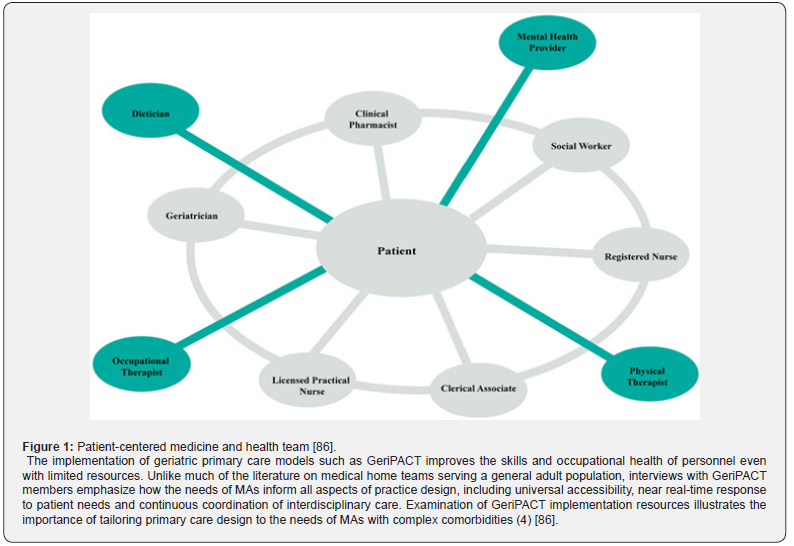
Solimeo SL et al. [86] show us the importance of generating
special programs according to the needs of the health team, such
as the “GeriPACT” program. First, they identified resources at the
level of facilities, clinics and health teams, their interaction with
the patient and with each other, forming a network. Resources
within each level reflect how the needs of MAs with complex
comorbidities intersect with general population primary care
medical home practice. The implementation of GeriPACT is
facilitated by attention to patient characteristics, such as cognitive
impairment, ambulatory limitations, or the social support services
available at the institution.
Multidirectional, effective and competent communication of the health team-patient-family-health organization is a central dimension [87]. It is positively correlated with “adherence to treatment”, satisfaction, empathy, good psychophysical and social health outcomes and therefore lower SBO [88]. Verbal and nonverbal communication skills are fundamental in the health teampatient- family-organization relationship [89]. Eye and physical contact are effective tools in non-verbal communication with patients [90]. To address the challenges related to the care of MA with associated pathologies, especially cognitive impairment, it is useful since multimodal communication skills are effective in geriatric care because humans use verbal and non-verbal modes when communicating [91]. As was also observed, by Gineste & Marescotti [92], in settings of hospitals and MA residences in Europe (France, Italy, Spain, Portugal, Switzerland, Germany and Belgium) and Asia (Singapore, South Korea and Japan) in recent years 40 years.
It consists of multimodal and comprehensive communication, with a humanist philosophy, highlighting respect for freedom, autonomy and personal dignity. Focused on four elements of communication: face-to-face interaction, verbal communication, tactile interaction and assistance in standing [45].
Multimodal communication is combining communication modalities to which is added the use of interactive methods such as streaming (Learning to Live Program). The health team must use at least two of the communication modes simultaneously: face-to-face interaction, verbal communication and tactile interaction in order to achieve positive effects on people with cognitive impairment and their caregivers [93]. The program includes weekly 1-hour videoconferences for 4 weeks that teach the methodology and the foundations of communication skills. Each videoconference is followed by weekly training with the participant. The training program was delivered to each individual health team member and it was seen that training in this methodology increased the time spent on interpersonal communications with satisfaction for both parties [45].
Positive leadership and a little more
In the COVID-19 pandemic, due to numerous and severe cases of SBO in nurses, transferable to the entire health team, the need was seen to develop special programs in order to: reduce stress, restructuring, cognitive rethinking, counselling. about grief, which in some cases led to suicide, recognizing and admitting the symptoms of SBO. This program was built on strong interpersonal relationships outside of work.
Positive social interactions with a spouse, a friend, a family member, a colleague have the ability to reduce stress. Sørensen et al found that having adequate social support modified work and non-work stress [94]. That is why people need a relationship in which the person can talk about the stressors and the listener can understand and empathize. Gallagher et al found that giving and receiving emotional support modified stress [95]. Bryson and Bogart also found that social support helped people cope with rare and complex diseases [96].
Nurses and the entire healthcare team need social and emotional support from family, friends, and coworkers. Because, people who go through stressful life events require the team that assists them to be compassionate and affectionate, which becomes more difficult if they are exhausted [97].
The healthcare team needs to balance work stress with fun times with family or friends. Kelly et al took leaders and two qualitative themes emerged: emotional burnout and negative impact on work-life balance [98]. They noted the need to plan days off to accommodate positive time, take advantage of the experience. The boundaries between work and home can be blurred by the gradual advancement of the mission.
The work environment is critical when evaluating and/ or managing SBO and work quality, a work environment where workers feel happy/fulfilled/valued by leaders and their peers is a healthy environment where they are productive and engaged. It is necessary to create a culture where the healthcare team takes care of themselves and supports each other while working in a fast-paced environment to reduce SBO.
La comunicación abierta, la empatía y la escucha activa son fundamentales para brindar apoyo a sus pares. Es posible que un líder no pueda eliminar inmediatamente un factor estresante del entorno, pero puede brindar apoyo emocional auténtico, que puede disminuir y ayudar al afrontamiento del SBO. Los jefes deben ofrecer apoyo externo, según corresponde [99].
Synthesis to prevent and treat Burn out Syndrome [100].
Tasks of Labor Services:
a. Create decent working conditions that convey concern,
care and security.
b. Create conditions of catharsis in the teams. Structure
them in technical meetings.
c. Share responsibility for decisions.
d. Establish conditions of trust in teams (relaxed non-work
meetings, joining and farewell rituals).
e. Democratic (non-authoritarian) leadership styles.
f. Supervision styles that strengthen one’s own resources.
g. Non-confrontational conflict resolution.
h. Support from the institution for continuous training.
i. Ideological community, shared theoretical framework,
or organizational culture common to all members.
j. Activation and strengthening of support networks,
professional consultancies.
k. Generation of decompression instances: seminars,
training workshops, professional meetings.
Personal self-care tasks
i. Timely registration and visibility of discomfort: record
basic needs, thirst, hunger, tiredness, pain.
ii. Emptying and decompression of contents with strong
emotional impact: sharing with others, among peers, people who
understand and contain.
iii. Maintaining contamination-free areas: having activity
spaces absolutely free of work themes (“doing something for the
pleasure of doing it”).
iv. Avoid saturating personal support networks.
v. Do not contaminate personal spaces, partners, children
and friends with work content. Take care of family relationships
and give them real time.
vi. Professional training: It is a requirement inherent to
the usual task and protects against burnout. Receive training in
those theoretical perspectives and models that provide adequate
instrumental skills.
vii. Place responsibility where it belongs: Avoid taking
excessive responsibility for yourself and avoid blaming others.
viii. Development of spirituality: Trust and believe in
something greater than oneself.
Discussion
Population aging is associated with a greater number of MA with physical and social frailty, complex morbidities, including diabetes, cancer, cardiovascular involvement, loss of functional independence, dementia and delirium in the context of aging [101]. For example, the management of behavioral and psychological symptoms of cognitive impairment or delirium, alone or associated with other morbidities, in health care generates special difficulties such as refusal of care, in some cases, in the face of an undeniable need for care. Medically, the dilemma arises as to whether the person should be cared for or not, since the limits of independence in decision-making are sometimes clear because the dementia is evident, requiring judicial help, but in most cases cases these limits are blurry. Thus, the health team faces complex situations that exceed the “medical” scope, which is a source of conflict and SBO [102-104]. Burnout among health personnel who care for AM is growing due to this type and other factors such as the pluripathology of AM [104]. Thus, at times when MAs have a greater need to communicate with their doctors, their cognitive and physical changes make this need the most difficult to achieve, increasing the need for health care of the care team [45].
Empathy, emotional intelligence and supportive behaviours are elements to improve care results [105]. Emotional intelligence and empathy can help improve moral sensitivity and caring behaviours [106]. They are relevant in the “medical” act, such as the empowerment of the work that gives the medical “ethos” its dignity, but they are also a source of SBO when we must face pain, the loss of functional capacity, when the magnitude of the problem exceeds the capacities of attention and death [107].
Resistance and resilience, natural human capacities, are related to available resources, training and the life stress of a job where the health team is exposed to suffering [108]. Personcentered variables and socio-contextual factors, such as prior experiences, beliefs, education, and culture, can promote them. Therefore, cross-cultural biopsychosocial perspectives that address multiple losses, death, and grief can make dying, as Bermejo said, “an archipelago, characterized precisely by being united by what it separates” [109].
In this work we have tried to convey the personal experience, members of the health team, as a geriatrician and gerontologist, of the gerontology committee group, the Institute of Cellular Biology of the National University of Córdoba, when selecting the topics and bibliography. And convey our vision on how to confront SBO. We think that education understood as training the person to face the problem of MA must incorporate self-reflection and group reflection, keeping in mind that those who work in situations where their physical and emotional health is compromised must prepare for it and be helped in this work. We developed a management course for older adults with diabetes for which we created a manual [110] and a program of outreach, support and training with AM based on workshops on biopsychic and social activities and the health team, “Learning to Live Program” [111] with the support of the Faculty of Medical Sciences of the National University of Córdoba, the Argentine Diabetes Society and the Villa Carlos Paz Diabetic Friends Group Foundation. In which we learned and taught that living involves commitment which brings joy and pain. Both inextricably linked. Being prepared to travel a long road requires preparation, dedication and acceptance of life.
Conclusion
Learning to recognize how work affects us helps us recognize its significance, face it with dignity, perseverance, dedication and thus be able to provide quality work to the society that calls us to prevent, solve and alleviate psychophysical and social suffering, of the health team and the community.
References
- Maslach C, Schaufeli WB, Leiter MP (2001) Job burnout. Annu Rev Psychol 52: 397-422.
- Ksiazek I, Stefaniak TJ, Stadnyk M, Ksiazek J (2011) Burnout syndrome in surgical oncology and general surgery nurses: a cross-sectional study. Eur J Oncol Nurs 15(4): 347-350.
- Hyman SA, Michaels DR, Berry JM, Schildcrout JS, Mercaldo ND, et al. (2011) Risk of burnout in perioperative clinicians: a survey study and literature review. Anesthesiology 114(1): 194-204.
- Han S, Shanafelt TD, Sinsky CA, Awad KM, Dyrbye LN, et al. (2019) Estimating the attributable cost of physician burnout in the United States. Ann Intern Med 170(11): 784-790.
- Edú-Valsania S, Laguía A, Moriano JA (2022) Burnout: A Review of Theory and Measurement. Int J Environ Res Public Health 19(3): 1780.
- Farokhmanesh K, Shamsalinia A, Kordbageri MR, Saadati K, Ebrahimi Rad R, et al. (2024) Design and psychometrics of the family caregivers burnout inventory of older adults with chronic disease. Front Public Health 12: 1449273.
- Wang J, Wang W, Laureys S, Di H (2020) Burnout syndrome in healthcare professionals who care for patients with prolonged disorders of consciousness: a cross-sectional survey. BMC Health Serv Res 20(1): 841.
- Hewitt DB, Ellis RJ, Hu YY, Cheung EO, Moskowitz JT, et al. (2020) Evaluating the association of multiple burnout definitions and thresholds with prevalence and outcomes. JAMA Surg 155(11): 1043-1049.
- Azoulay E, De Waele J, Ferrer R, Staudinger T, Borkowska M, et al. (2020) Symptoms of burnout in intensive care unit specialists facing the COVID-19 outbreak. Ann Intensive Care 10(1): 110.
- Risco L (2009) Apuntes Sobre La Configuración Actual Del Ethos Médico. Acta bioeth 15(2) 15(2).
- Lau S, Lun P, Ang W, Tan KT, Ding YY (2020) Barriers to effective prescribing in older adults: applying the theoretical domains framework in the ambulatory setting - a scoping review. BMC Geriatr 20(1): 459.
- Mallet L, Spinewine A, Huang A (2007) The challenge of managing drug interactions in elderly people. Lancet 370(9582): 185-191.
- Cahir C, Fahey T, Teeling M, Teljeur C, Feely J, et al. (2010) Potentially inappropriate prescribing and cost outcomes for older people: a national population study. Br J Clin Pharmacol 69(5): 543-552.
- Hanlon JT, Schmader KE, Koronkowski MJ, Weinberger M, Landsman PB, et al. (1997) Adverse drug events in high risk older outpatients. J Am Geriatr Soc 45(8): 945-948.
- Maslach C, Leiter MP (1976) Bumout Hum Behav 5: 16-22.
- Bouza E, Gil-Monte PR, Palomo E, Cortell-Alcocer M, Del Rosario G, et al. (2020) Síndrome de quemarse por el trabajo (burnout) en los médicos de España. Rev Clínica Española 220: 359-363.
- Vigo D, Thornicroft G, Atun R (2016) Estimating the true global burden of mental illness. Lancet Psychiatry 3(2): 171-178.
- Yeshaw Y, Mossie A (2017) Depression, anxiety, stress, and their associated factors among Jimma University staff, Jimma, Southwest Ethiopia, 2016: A cross-sectional study. Neuropsychiatr Dis Treat 13: 2803-2812.
- Morres ID, Hatzigeorgiadis A, Stathi A, Comoutos N, Arpin-Cribbie C, et al. (2019) Aerobic exercise for adult patients with major depressive disorder in mental health services: A systematic review and meta-analysis. Depress. Anxiety 36(1): 39-53.
- Paredes-Céspedes DM, Vélez N, Parada-López A, Toloza-Pérez YG, Téllez EM, eet al. (2024) The Effects of Nature Exposure Therapies on Stress, Depression, and Anxiety Levels: A Systematic Review. Eur J Investig Health Psychol Educ 14(3): 609-622.
- Bahji A, Danilewitz M, Maser B, Guerin E, Frank E (2022) Association between substance use and professional outcomes among medical students: Findings from a Canadian cross-sectional survey. Can J Addict 13(4): 32-43.
- Gignon M, Havet E, Ammirati C, Traullé S, Manaouil C, et al. (2015) Alcohol, Cigarette, and Illegal Substance Consumption Among Medical Students: A Cross-Sectional Survey. Workplace Health Saf 63(2): 54-63.
- Martinez S, Tal I, Norcross W, Newton IG, Downs N, et al. (2016) Alcohol use in an academic medical school environment: A UC San Diego Healer Education Assessment and Referral (HEAR) Report. Ann Clin Psychiatry Off J Am Acad Clin Psychiatr 28(2): 85-94.
- Ezura M, Sawada K, Takushima Y, Igarashi A, Teng L (2023) A systematic review of the characteristics of data assessment tools to measure medical doctors' work-related quality of life. J Mark Access Health Policy 11(1): 2234139.
- Fucuta-de-Moraes ML, Ruths JC (2023) Prevalence of symptoms of burnout syndrome in primary health care professionals. Rev Bras Med Trab 2023 21(1): e2023813.
- Thun-Hohenstein L, Höbinger-Ablasser C, Geyerhofer S, Lampert K, Schreuer M, et al. (2021) Burnout in medical students. Neuropsychiatr 35(1): 17-27.
- Lepnurm R, Nesdole R, Dobson RT, Peña-Sánchez JN (2016) The effects of distress and the dimensions of coping strategies on physicians' satisfaction with competence. SAGE Open Med 4: 2050312116643907.
- Shay J (2014) Moral injury. Psychoanalytic Psychology 2: 182-191.
- Sherman M, Klinenberg E (2024) Beyond burnout: Moral suffering among healthcare workers in the first COVID-19. Soc Sci Med 340: 116471.
- Perni S, Pollack LR, Gonzalez WC, Dzeng E, Baldwin MR (2020) Moral distress and burnout in caring for older adults during medical school training. BMC Med Educ 20(1): 84.
- Montero-Marín J (2016) El síndrome de burnout y sus diferentes manifestaciones clínicas: Una propuesta para la intervención [The burnout syndrome and its various clinical manifestations: A proposal for intervention]. Anest Analg Reanim 29: 1-16.
- Wilson V, Campanella C, Parisi C, Díaz-Gerevini GT, Priotto S (2024) Disestrés en adultos mayores diabéticos: un aporte para su comprensión y enfoque. Pinelatinoamericana 4(3): 153-162.
- Montero-Marin J (2016) The burnout syndrome and its various clinical manifestations: A proposal for intervention. Anest Analg Reanim 29(1): 4.
- Demarzo M, García-Campayo J, Martínez-Rubio D, Pérez-Aranda A, Miraglia JL, et al. (2020) Frenetic, under-challenged, and worn-out burnout subtypes among Brazilian primary care personnel: Validation of the Brazilian “burnout clinical subtype questionnaire”(BCSQ-36/BCSQ-12). Int J Environ Res Public Health 17(3): 1081.
- Lipsa JM, Rajkumar E, Gopi A, Romate J (2024) Effectiveness of psychological interventions for compassion fatigue: a systematic review and meta-analysis. J Occup Health 66(1): uiae061.
- Greig Undurraga D, Ximena Fuentes Martínez X (2009) "Burnout" o Agotamiento en la Práctica Diaria de la Medicina. Rev Chil Cardiol. Rev Chil Cardiol 28: 403-407.
- Contreras-Camarena C (2021) Autoestima y síndrome de burnout en médicos de unidades críticas. Estudio correlacional. Hospital Nacional Dos de Mayo.
- lves LCS, Monteiro DQ, Bento SR, Hayashi VD, Pelegrini LNC, et al. (2019) Burnout syndrome in informal caregivers of older adults with dementia: a systematic review. Dement Neuropsychol 13: 415-421.
- Otero LMR (2016) Burnout syndrome in family caregivers of dependentes. Int J Asian Soc Sci 6: 12-20.
- Greenhaus J, Beutell N (1985) Sources of conflict between work and family roles. Acad Manage Rev 10(1): 76-88.
- Yang S, Liu D, Liu H, Zhang J, Duan Z (2017) Relationship of work-family conflict, self-reported social support and job satisfaction to burnout syndrome among medical workers in southwest China: A cross-sectional study. PLoS One 12(2): e0171679.
- Pudasaini S, Schenk L, Möckel M, Schneider A (2022) Work-life balance in physicians working in two emergency departments of a university hospital: Results of a qualitative focus group study. PLoS One 17(11): e0277523.
- Martini M, Converso D (2012) Burnout study in the healthcare: relationship with the patients and work-family relationship as demands and resources. G Ital Med Lav Ergon 34(1 Suppl A): A41-A50.
- Zhang Y, Feng X (2011) The relationship between job satisfaction, burnout, and turnover intention among physicians from urban state-owned medical institutions in Hubei, China: a cross-sectional study. BMC Health Serv Res 11: 235.
- Kobayashi M, Katayama M, Hayashi T, Hashiyama T, Iyanagi T, et al. (2023) Effect of multimodal comprehensive communication skills training with video analysis by artificial intelligence for physicians on acute geriatric care: a mixed-methods study. BMJ Open 13(3): e065477.
- Wen Z, Xu J, Yu J, Huang X, Ni Y (2023) Effects of work-family conflict on turnover intention among primary medical staff in Huaihai Economic Zone: a mediation model through burnout. Front Psychiatry. 14: 1238315.
- Wang J, Wang W, Laureys S, Di H (2020) Burnout syndrome in healthcare professionals who care for patients with prolonged disorders of consciousness: a cross-sectional survey. BMC Health Serv Res 20(1): 841.
- Leka S, Cox T, Griffiths A (2003) Work Organization and Stress: Systematic Problem Approaches for Employers, Managers and Trade Union Representatives. World Health Organization; Geneva, Switzerland.
- Karam E, Kovess Masfety V (2022) We Share More Attributes than We Think: The Crucial Input of Epidemiology. World Psychiatry 21(3): 475-476.
- Adriaenssens J, De Gucht V, Maes S (2015) Determinants and prevalence of burnout in emergency nurses: A systematic review of 25 years of research. Int J Nurs Stud 52(2): 649-661.
- Bryant C, Fairbrother G, Fenton P (2000) The Relative Influence of Personal and Workplace Descriptors on Stress. Br J Nurs 9: 876-880.
- Catapano P, Cipolla S, Sampogna G, Perris F, Luciano M, et al. (2023) Organizational and Individual Interventions for Managing Work-Related Stress in Healthcare Professionals: A Systematic Review. Medicina (Kaunas) 59(10): 1866.
- Wang L, Norman I, Xiao T, Li Y, Li X, et al. (2024) Feasibility and acceptability of a culturally adapted psychological first aid training intervention (Preparing Me) to support the mental health and well-being of front-line healthcare workers in China: a feasibility randomized controlled trial. Eur J Psychotraumatol 15(1): 2299195.
- Maslach C, Leiter MP (2017) New insights into burnout and health care: Strategies for improving civility and alleviating burnout. Med Teach 39(2): 160-163.
- Kim H, Kim JS, Choe K, Kwak Y, Song JS (2018) Mediating effects of workplace violence on the relationships between emotional labour and burnout among clinical nurses. J Adv Nurs 74(10): 2331-2339.
- Mustafa M, Santos A, Chern GT (2016) Emotional intelligence as a moderator in the emotional labour-burnout relationship: Evidence from Malaysian HR professionals. Int J Work Organ Emot 7: 143-164.
- Brittle B (2020) Coping Strategies and Burnout in Staff Working with Students with Special Educational Needs and Disabilities. Teach Teach Educ 87: 102937.
- Shin H, Park YM, Ying JY, Kim B, Noh H, et al. (2014) Relationships between Coping Strategies and Burnout Symptoms: A Meta-Analytic Approach. Prof Psychol Res Pract 45: 44-56.
- lves LCS, Monteiro DQ, Bento SR, Hayashi VD, Pelegrini LNC, et al. (2019) Burnout syndrome in informal caregivers of older adults with dementia: a systematic review. Dement Neuropsychol 13: 415-421.
- Orgambídez A, Almeida H (2019) Core burnout and power in portuguese nursing staff: An explanatory model based on structural empowerment. Workplace Health Saf 67(8): 391-398.
- Sato C, Adumattah A, Abulencia MK, Garcellano PD, Li AT, et al. (2022) COVID-19 Mental Health Stressors of Health Care Providers in the Pandemic Acceptance and Commitment to Empowerment Response (PACER) Intervention: Qualitative Study. JMIR Form Res 6(3): e35280.
- Kaya Ç, Altınkurt Y (2018) Role of psychological and structural empowerment in the relationship between teachers’ psychological capital and their levels of burnout. Educ Sci Egit Ve Bilim 42: 193.
- Laschinger HKS, Borgogni L, Consiglio C, Read E (2015) The effects of authentic leadership, six areas of worklife, and occupational coping self-efficacy on new graduate nurses’ burnout and mental health: A cross-sectional study. Int J Nurs Stud 52(6): 1080-1089.
- Cacchione PZ (2020) Moral distress in the midst of the COVID-19 pandemic. Clin Nurs Res 29(4): 215-216.
- Boland LL, Mink PJ, Kamrud JW, Jeruzal JN, Stevens AC (2019) Social support outside the workplace, coping styles, and burnout in a cohort of EMS providers from Minnesota. Workplace Health Saf 67(8): 414-422.
- Pérez-Fuentes MDC, Molero Jurado MDM, Martos Martínez Á, Gázquez Linares JJ (2019) Burnout and engagement: Personality profiles in nursing professionals. J Clin Med 8(3): 286.
- Galaiya R, Kinross J, Arulampalam T (2020) Factors associated with burnout syndrome in surgeons: A systematic review. Ann R Coll Surg Engl 102(6): 401-407.
- Kim LE, Jörg V, Klassen RM (2019) A meta-analysis of the effects of teacher personality on teacher effectiveness and burnout. Educ Psychol Rev 31(1): 163-195.
- Rotter JB (1966) Generalized expectancies for internal versus external control of reinforcement. Psychol Monogr Gen Appl 80(1): 1-28.
- Friedman HS, Booth-Kewley S (1987) "Personality, Type a behavior, and coronary heart disease: The role of emotional expression". J Pers Soc Psychol 53(4): 783-792.
- Moyano Díaz E, Icaza G, Mujica V, Núñez L, Leiva E, et al. (2011) Type A Behavior Pattern, Anger and Cardiovascular Disease (CVD) in Chilean Urban Population. Rev latinoam 2011.
- Adriaenssens J, De Gucht V, Maes S (2015) Determinants and prevalence of burnout in emergency nurses: A systematic review of 25 years of research. Int J Nurs Stud 52: 649-661.
- O’Connor K, Neff DM, Pitman S (2018) Burnout in mental health professionals: A systematic review and meta-analysis of prevalence and determinants. Eur Psychiatry 53: 74-99.
- Lee HF, Kuo CC, Chien TW, Wang YR (2016) A meta-analysis of the effects of coping strategies on reducing nurse burnout. Appl Nurs Res 31: 100-110.
- Friganović A, Selič P, Ilić B, Sedić B (2019) Stress and burnout syndrome and their associations with coping and job satisfaction in critical care nurses: A literature review. Psychiatr. Danub 31(Suppl 1): 21-31.
- Xu RH, Chen C (2024) Moderating Effect of Coping Strategies on the Association Between the Infodemic-Driven Overuse of Health Care Services and Cyberchondria and Anxiety: Partial Least Squares Structural Equation Modeling Study. J Med Internet Res 26: e53417.
- Boland LL, Mink PJ, Kamrud JW, Jeruzal JN, Stevens AC (2019) Social support outside the workplace, coping styles, and burnout in a cohort of EMS providers from Minnesota. Workplace Health Saf 67: 414-422.
- Costa B, Pinto IC (2017) Stress, burnout and coping in health professionals: A literature review. J Psychol Brain Stud 14: 1-8.
- Wang C, Grassau P, Lawlor PG, Webber C, Bush SH, et al. (2020) Burnout and resilience among Canadian palliative care physicians. BMC Palliat Care 19(1): 169.
- Mallon A, Mitchell G, Carter G, Francis McLaughlin D, Linden M, et al. (2023) Exploring Resilience in Care Home Nurses: An Online Survey. Healthcare (Basel) 11(24): 3120.
- Ang SY, Hemsworth D, Uthaman T, Ayre TC, Mordiffi SZ, et al. (2018) Understanding the influence of resilience on psychological outcomes—Comparing results from acute care nurses in Canada and Singapore. Appl Nurs Res 43: 105-113.
- Badu E, O’Brien AP, Mitchell R, Rubin M, James C, et al. (2020) Workplace stress and resilience in the Australian nursing workforce: A comprehensive integrative review. Int J Ment Health Nurs 29(1): 5-34.
- Mangialavori S, Riva F, Froldi M, Carabelli S, Caimi B, et al. (2022) Psychological Distress and Resilience among Italian Healthcare Workers of Geriatric Services during the COVID-19 Pandemic. Geriatr Nurs 46: 132-136.
- Mallon A, Mitchell G, Carter G, McLaughlin DF, Brown Wilson C (2023) A rapid review of evaluated interventions to inform the development of a resource to support the resilience of care home nurses. BMC Geriatr 23(1): 275.
- Kunzler AM, Helmreich I, Chmitorz A, König J, Binder H, et al. (2020) Psychological interventions to foster resilience in healthcare professionals. Cochrane Database Syst Rev 7(7): CD012527.
- Solimeo SL, Steffen MJA, Gardner EE, Adjognon O, Shin MH, et al. (2020) Using the PACT Resources Framework to Understand the Needs of Geriatric Primary Care Teams. J Am Geriatr Soc 68(9): 2006-2014.
- Michie S, Miles J, Weinman J (2003) Patient-centredness in chronic illness: what is it and does it matter? Patient Educ Couns 51(3): 197-206.
- Clever SL, Jin L, Levinson W, et al. (2008) Does doctor-patient communication affect patient satisfaction with hospital care? Results of an analysis with a novel instrumental variable. Health Serv Res 43: 1505-1519.
- Henry SG, Fuhrel-Forbis A, Rogers MAM, et al. (2012) Association between nonverbal communication during clinical interactions and outcomes: a systematic review and meta-analysis. Patient Educ Couns 86: 297-315.
- Cocksedge S, George B, Renwick S, et al. (2013) Touch in primary care consultations: qualitative investigation of doctors’ and patients’ perceptions. Br J Gen Pract 63: e283-e290.
- Kobayashi M, Ito M, Iwasa Y, Motohashi Y, Edahiro A, et al. (2021) The effect of multimodal comprehensive care methodology training on oral health care professionals’ empathy for patients with dementia. BMC Med Educ 21(1): 315.
- Sumioka H, Shiomi M, Honda M, et al. (2021) Technical challenges for smooth interaction with seniors with dementia: lessons from humanitude. Front Robot AI 8: 650906.
- Giang TA, Koh JEJ, Cheng LJ, et al. (2022) Effects of humanitude care on people with dementia and caregivers: a scoping review. J Clin Nurs 3.
- Sørensen JB, Lasgaard M, Willert MV, et al. The relative importance of work-related and non-work-related stressors and perceived social support on global perceived stress in a cross-sectional population-based sample. BMC Public Health 21(1): 543.
- Gallagher S, O’Súilleabháin PS, Smith MA (2021) The cardiovascular response to acute psychological stress is related to subjectively giving and receiving social support. Int J Psychophysiol 164: 95-102.
- Bryson BA, Bogart KR (2020) Social support, stress, and life satisfaction among adults with rare diseases. Health Psychol 39(10): 912-920.
- Squellati R, Zangaro GA (2022) Eight Ways Nurses Can Manage a Burnt-Out Leader. Nurs Clin North Am 57(1): 67-78.
- Kelly LA, Lefton C, Fischer SA (2019) Nurse leader burnout, satisfaction, and work-life balance. J Nurs Adm 49(9): 404-410.
- Squellati R, Zangaro GA (2022) Eight Ways Nurses Can Manage a Burnt-Out Leader. Nurs Clin North Am 57(1): 67-78.
- Greig Undurraga D, Ximena Fuentes Martínez (2009) "Burnout" o Agotamiento en la Práctica Diaria de la Medicina Rev Chil Cardiol 28: 403-407.
- Han QYC, Rodrigues NG, Klainin-Yobas P, Haugan G, Wu XV, et al. (2022) Prevalence, risk factors, and impact of delirium on hospitalized older adults with dementia: a systematic review and meta-analysis. J Am Med Dir Assoc 23(1): 23-32.
- Tible OP, Riese F, Savaskan E (2017) Best practice in the management of behavioural and psychological symptoms of dementia. Ther Adv Neurol Disord 10: 297-309.
- Salluh JIF, Wang H, Schneider EB, et al. Outcome of delirium in critically ill patients: systematic review and meta-analysis. BMJ 2015;350:h2538.
- Salluh JIF, Wang H, Schneider EB, et al. (2015) Outcome of delirium in critically ill patients: systematic review and meta-analysis. BMJ 350: h2538.
- Jing M, Chui P, Chong MC, Maoting T (2024) The effects of community-based education programs on empathy, emotional intelligence, and caring behaviors among nursing students: a scoping review. Front Med (Lausanne) 11: 1479466.
- Suazo I, Pérez-Fuentes MDC, Molero Jurado MDM, Martos Martínez Á, Simón Márquez MDM, et al. (2020) Moral sensitivity, empathy and prosocial behavior: implications for humanization of nursing care. Int J Environ Res Public Health 17(23): 8914.
- Kagawa-Singer M (1998) The cultural context of death rituals and mourning practices. Oncol Nurs Forum 25(10): 1752-1756.
- Bonanno GA, Galea S, Bucciarelli A, Vlahov D (2007) What predicts psychological resilience after disaster? The role of demographics, resources, and life stress. J Consult Clin Psychol 75(5): 671-682.
- Giménez-Llort L, Torres-Lista V, Oghagbon EK, Pereira HVFS, Gijsberts MHE, et al. (2022) Editorial: Death and Mourning Processes in the Times of the Coronavirus Pandemic (COVID-19). Front Psychiatry 13: 922994.
- Díaz Gerevini GT, Parisi C, Avila MB (2024) Manual de Manejo del Adulto mayor con Diabetes Mellitus. Lambert Academic Publishing 2024.
- Gustavo Tomás Díaz, Cintia Campanella, Gabriela Angelina Reartes, Cristina López, Santiago Priotto, et al. (2021) Efectos beneficiosos del programa “Aprendiendo a vivir” sobre la salud psicoafectiva de adultos mayores diabéticos y no diabéticos de Carlos Paz, Córdoba, Argentina en tiempos de pandemia de COVID-19 Pinelatam 26-35.

























