




 OFOAJ Home



Abstract
Treated wastewater has become increasingly important in arid countries such as Oman, where water scarcity drives the need for sustainable water reuse. This study presents a comprehensive evaluation of treated wastewater quality from 217 wastewater treatment plants (WWTPs) across Oman’s 11 governorates, conducted by the Environment Authority (EA). The objective was to analyse physical, chemical, and microbiological parameters in treated effluent from WWTPs across Oman and compare the results against national and international standards. Findings indicated that most WWTPs operate within acceptable limits, with consistently high compliance for acidity (pH), total dissolved solids (TDS), major ions, and heavy metals. However, variability was observed in suspended solids (SS), nutrient levels, and microbial indicators, especially during seasonal periods of high load. Also, results revealed that while some governorates achieved high rates of compliance, most notably Musandam (89%), Al-Buraimi (86%), Dhofar (85%), and North Al-Batinah (85%), other governorates achieved lower rates - South Al-Sharqiyah recorded the lowest level of compliance (81%). Nevertheless, even 81% is significantly higher than the Oman Vision 2040 national target of 75%. But there were worryingly high levels of exceedances in some cases linked to salinity, electrical conductivity (EC), microbial contamination (E. coli, faecal coliforms), nutrients (NH₃-N, NO₃-N), and metals (Cr, Ag, B). These exceedances have been attributed to industrial discharges, operational inefficiencies, inadequate disinfection, and elevated organic loading. The study provides evidence of the generally high quality of treated wastewater in Oman, but also evidence of a few cases of serious pollution together with a discussion of their causes and of measures that should be taken to deal with them.
Keywords: Treated wastewater; Water reuse; Wastewater quality assessment; Heavy metals; Microbiological contamination; Irrigation sustainability; Environmental monitoring; Oman
Abbreviations: APHA: American Public Health Association; BOD: Biochemical oxygen demand; CFU: Colony-Forming Unit; COD: Chemical Oxygen Demand; EA: Environment Authority; EC: Electrical Conductivity; E.coli: Escherichia coli; FAO: Food and Agriculture Organization; RO: reverse osmosis; SAR: Sodium Adsorption Ratio; SS: Suspended Solid; STP: Sewage Treatment Plant; TDS: Total dissolved solids; UV: Ultraviolet radiation; WHO: World Health Organization; TKN: Total Kjeldahl Nitrogen
Introduction
Rationale
Water scarcity represents one of the most pressing environmental challenges in arid and semi-arid regions [1,2]. Oman, characterized by limited freshwater resources and increasing water demand driven by population growth, urbanization, and industrial expansion, has been compelled to adopt sustainable water management measures [3-5]. Treated wastewater has consequently become a strategic water source in the country’s national environmental and economic planning, particularly within the framework of Oman Vision 2040 [6].
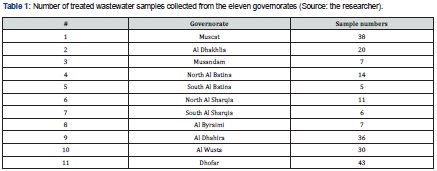
Wastewater treatment plants (WWTPs) across the country play a vital role in producing treated water suitable for agriculture, park and landscape irrigation, industrial cooling, and recharge of groundwater in selected zones –but not human consumption. Ensuring that treated effluent meets national environmental standards is critical to safeguarding public health, preventing soil degradation, and avoiding environmental pollution [7,8]. This study evaluates effluent quality in 217 WWTPs across Oman to determine compliance levels and identify systemic challenges influencing treatment performance (Table 1). The 217 WWTPs commonly employ four stages of treatment: primary sedimentation; secondary biological treatment; tertiary filtration; and UV radiation for chlorination disinfection.
In 2024, the Environment Authority (EA) established a nationwide monitoring program to evaluate treated wastewater quality from major WWTPs. This study builds on the findings of that program and provides a scientific assessment of current treated wastewater quality trends, risks, and opportunities.
Historical Overview of Treated Wastewater Use in the Arabian Gulf and Oman
Arabian Gulf countries like Oman are located in one of the most arid regions of the world, with an average annual per capita water availability of approximately 500 m³, compared to the global average of about 6,000 m³ [9,10]. Agricultural water demand, which accounts for more than 80% of total water consumption, is largely met through intensive abstraction of groundwater resources. This has resulted in a substantial imbalance between groundwater withdrawal (27.8 billion m³) and natural recharge rates (5.3 billion m³), leading to severe and ongoing groundwater depletion [9-12].
In response to these challenges, Gulf countries have made significant investments in the development of non-conventional water resources, particularly seawater desalination and the reuse of treated wastewater. The total seawater desalination capacity of the six GCC countries in 2020 was 97.2 million cubic metres per day (MCM/d), which is nearly 40% of the global total. The total wastewater treatment capacity across the Gulf Cooperation Council (GCC) region has been estimated at approximately 10.07 billion cubic meters per day [13].
The Sultanate of Oman has transformed its system of wastewater treatment since 1970. Before then, wastewater disposal relied largely on conventional and localized methods such as the use of soak pits or anaerobic septic tanks. During the 1980s, the first small-scale wastewater treatment plants were established within government institutions [14]. With accelerating urban growth in the 1990s, the country expanded the construction of centralized wastewater treatment plants in major cities and initiated the reuse of treated effluent for irrigating public gardens and green spaces [15-17]. Between 2000 and 2010, the sector underwent a major institutional transformation marked by the establishment of specialized service companies and the adoption of advanced treatment technologies, including tertiary treatment processes [15]. Over the past decade, Oman has continued to enhance its wastewater infrastructure and to consolidate the management of the water and wastewater sectors. As a result, treated wastewater production in Oman increased from 108.62 million cubic meters in 2022 to 119.48 million cubic meters in 2024. During the same period, consumption rose from 57.29 million cubic meters to 59.16 million cubic meters. The gap between production and consumption indicates considerable unused treated wastewater. The fact is, despite the severe water scarcity in Oman, only 39% of treated wastewater is currently reused in Arab Gulf Countries, while the remainder is discharged into the marine environment. Treated wastewater is primarily utilized for landscape irrigation and other non-potable applications: its reuse for irrigating food crops and fodder is limited due to health, social, religious, and environmental concerns [18]. This underscores the need to strengthen and expand reuse strategies [19].
Oman’s System of Regulating Treated Wastewater Reuse
Oman’s wastewater management policy is currently administered by an integrated environmental framework which comprises three tiers: Royal Decrees governing environmental protection; Ministerial Decisions establishing wastewater standards; and Technical Guidelines specifying limits for physicochemical, microbiological, and toxicological parameters. These limits, which are set out in Ministerial Decision 145/93, are the key national regulations in Oman guiding wastewater reuse and discharge and were established to ensure the protection of public health and the environment, to minimize potential adverse impacts on water resources and soil quality, and to standardize evaluation and monitoring methodologies across the Sultanate. They provide a robust regulatory framework with well-managed treatment systems that are sufficiently stringent to identify operational deficiencies, emerging risks, and issues requiring technical intervention or system upgrades. Their validity is confirmed by their close alignment with internationally recognized guidelines and best practices such as the benchmarks established by the United Nations’ World Health Organization (WHO) and the United States Environmental Protection Agency (USEPA) [20].
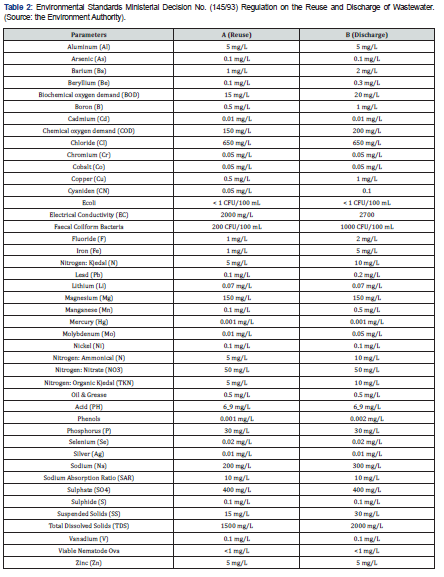
In Oman, the EA leads the monitoring program, supported by the Directorate General for Environmental Compliance and the Directorate for Environment Quality. The EA performs field sampling, enforcement, and reporting in accordance with the environmental standards established under Ministerial Decision No. 145/93. Table 2 lists these standards for the 21 main parameters.
Scientific Contribution and Novelty
This study makes four important and original contributions to the field of wastewater reuse in arid and semi-arid regions. First, to the authors’ knowledge, this is the first nationwide, statistically validated assessment of treated wastewater quality across all governorates of Oman. As such, it represents one of the most comprehensive nationwide empirical assessments of treated wastewater quality in the Middle East, encompassing data from 217 wastewater treatment plants across all administrative regions of Oman. Unlike previous studies, which are mostly site-specific or geographically limited, this research adopts an integrated national-scale approach. This enables the identification of spatial patterns, regional disparities, and key system-level performance drivers.
Second, the study advances methodological approaches in the field by integrating compliance assessment with multivariate statistical techniques, including analysis of variance (ANOVA), correlation modeling, and cluster analysis. This approach provides deeper insights into the relationships between physicochemical and microbiological parameters, moving beyond descriptive analysis toward a more systemic understanding of wastewater quality variability.
Third, the research introduces a data-driven classification of treatment performance across governorates. It links observed water quality exceedances to influencing factors such as industrial discharge characteristics, infrastructure age, treatment configurations, and climatic variability. This integrated analytical framework is both robust and replicable, offering a valuable model for other water-scarce countries aiming to optimize wastewater reuse strategies.
Finally, the study contributes new empirical evidence on the interaction between desalination-related processes and wastewater salinity dynamics—an underexplored issue in Gulf countries. In doing so, it expands current understanding of the water–wastewater nexus in hyper-arid environments.
Materials and Methods
This research had two main phases: the desk-based phase and the fieldwork phase.
Desk-Based Phase
The desk-based phase consisted of a set of preparatory and analytical steps and activities, as follows:
a) Inventory of wastewater and industrial effluent treatment plants across all governorates, excluding security and military entities.
b) Preparation of the tender draft, publishing it on the Authority’s website, and receiving proposals from interested companies.
c) Evaluation of the submitted proposals, selection of the appropriate laboratory, and awarding the project’s implementation contract.
Entry of analytical results from both phases into an Excel database, followed by a comprehensive review, analysis, and comparison of the results against the standards adopted by the Authority, in accordance with Ministerial Decision No. 145/93.
Fieldwork Phase
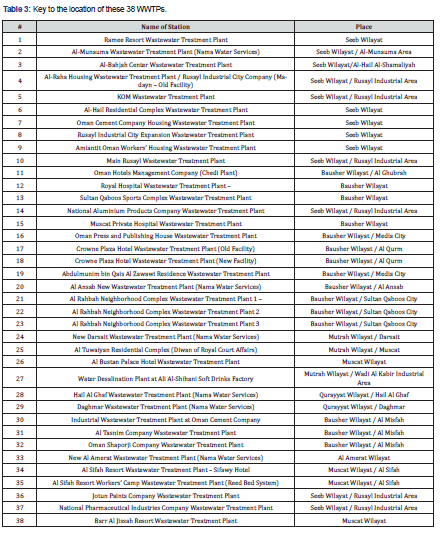
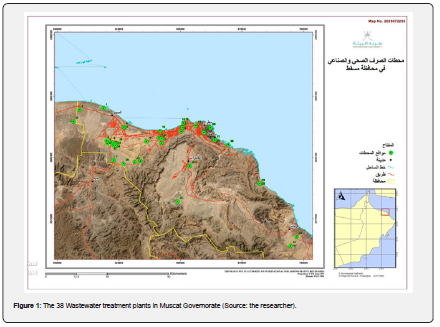
Field visits were conducted during 2024 -2025 in all targeted treatment plants to collect treated wastewater samples in accordance with approved scientific protocols that ensured the accuracy of results and the integrity of analytical procedures. A total of 217 wastewater treatment plants (municipal, industrial, and mixed) were surveyed across all 11 governorates of Oman: Muscat, Dhofar, Al-Dakhiliyah, Al-Dhahirah, Al-Buraimi, Musandam, North Al-Sharqiyah, South Al-Sharqiyah, North Al-Batinah, South Al-Batinah, and Al-Wusta. Sampling coverage by governorates ranged from 5 to 43 plants, depending on population density and industrial activity. Figure 1 shows the location of the 38 plants in the Governorate of Muscat (Table 3).
Sampling Procedures
Field teams collected one composite effluent sample from each plant in accordance with Food and Agriculture (FAO) and American Public Health Association (APHA) protocols. Samples were taken from accessible outlets immediately after treatment. Separate sterilized bottles were used for chemical and microbiological parameters. Chemical and physical samples were stored in cooled containers for laboratory transfer. Field data were recorded using standardized sampling forms to ensure chain-of-custody documentation. There were three analytical parameters: physical (pH, EC, TDS, SS, and Turbidity); chemical (COD, BOD, Ammonia, Nitrate, Nitrite, Total Nitrogen, Phosphate, Chlorides, Sulfates, Fluoride, and Heavy Metals); and microbiological (Total Coliforms, Fecal Coliforms, E. Coli, and Viruses) [21].
Laboratory Analysis
Laboratory analyses followed APHA guidelines for agricultural irrigation, and national reuse standards. Data were compiled and processed using Microsoft Excel and R statistical tools. Five statistical methods were employed: descriptive statistics (means, medians, range, and standard deviation); compliance assessment (proportion of samples meeting MD 145/93 limits); inter-governorate comparisons (one-way ANOVA to test regional variation); correlation analysis (Pearson coefficients to identify relationships between key parameters such as TDS–EC, Na–SAR, B–TDS); and outlier identification (Tukey method to detect extreme exceedances). The significance threshold was set at p < 0.05).
Results
This study was conducted to evaluate the environmental status of wastewater treatment plants of all 11 governorates of the Sultanate of Oman by assessing their compliance with national and international standards. In doing so, the research has found that while the general quality of treated wastewater is high, some treatment plants had significant exceedances that could pose potential risks to the environment or limit the suitability of treated water for subsequent uses, particularly in agricultural applications.
National Picture
Overall, a rate of 84% national compliance with treated wastewater standards is encouraging. The highest rate of compliance was in Musandam (89%); and the lowest was in South Al-Sharqiyah (81%). Rates of compliance were strongly influenced by four factors: industrial discharges, treatment technology, the age of the infrastructure, and seasonal fluctuations (notably in Dhofar).
Regional Picture
The regional picture is divided into three sets of results – physical; chemical; and microbiological parameters.
Physical Parameters
The analysis of physical parameters focused on four primary physical indicators: Total Suspended Solids (TSS), Total Dissolved Solids (TDS), Electrical Conductivity (EC), and Sodium Absorption Ratio (SAR). Results were compiled from hundreds of samples collected from different governorates.
Findings on physical parameters revealed considerable variation in treated wastewater quality across the country. For example, Figure 2 shows the variation in TSS values across eight of the Governorates:
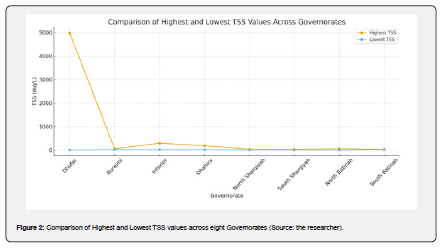
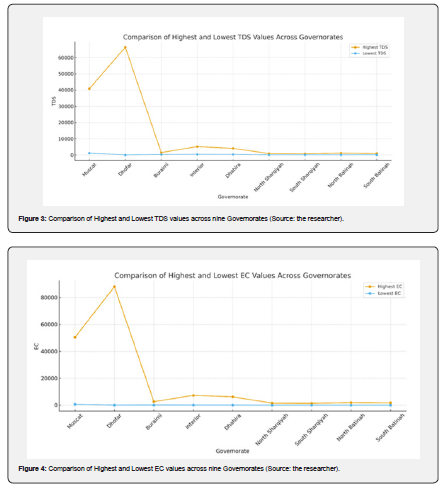
Figure 3 shows the variation in TDS values across nine Governorates:
Figure 4 shows the variation in EC values across nine Governorates
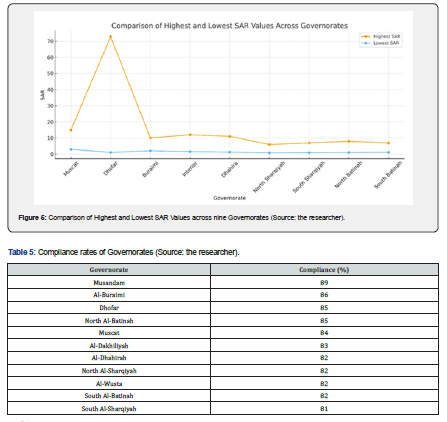
Figure 5 shows the variation in SAR values across nine of the Governorates:
Regional Overview of Physical Parameters
One striking result is that Dhofar Governorate recorded the highest concentrations in most physical parameters, particularly at the Dhofar Desalination Plant, which greatly exceeded permissible limits for all measured indicators. For example, the value reached for TSS was 4990 mg/L compared to the permissible limit of 15 mg/L; for TDS it was 66,340 mg/L compared to the permissible limit of 1500 mg/L; for EC it was 88,031 µS/cm compared to the permissible limit of 2000 mg/L; and for SAR it was 72.9 compared to the permissible limit of 10 mg/L. These were by far the highest recorded values nationwide and indicate substantial cause for concern, requiring an urgent review of treatment and discharge processes in the Dhofar Desalination Plant. On the other hand, the Dhofar Fishery Industries Plant registered the lowest values of TDS (42 mg/L) and EC (70 µS/cm) in the entire study.
Chemical Parameters
A comprehensive chemical assessment was conducted across wastewater treatment plants (WWTPs) in all governorates of Oman to evaluate the suitability of treated effluent for reuse applications. The results revealed substantial spatial variability across chemical parameters, as the following paragraphs explain, reflecting differences in influent composition, industrial contributions, and treatment efficiency among facilities.
Sodium (Na)
Sodium is a key determinant of irrigation water quality due to its influence on soil structure and permeability. The highest sodium concentration was recorded at the Dhofar Desalination Plant - 19,100 mg/L compared to the permissible limit of 200 mg/L - followed by the National Aluminium Products Company in Muscat which was 15,400 mg/L. Elevated concentrations were also observed in Musandam, particularly at Bukha WWTP which was 253mg/L. In contrast, several plants in North and South Al Sharqiyah and Al Batinah maintained sodium levels at <100 mg/L which is well within the recommended reuse threshold of 200 mg/L.
Boron (B)
Boron levels exceeded agricultural limits in several locations. The highest concentration was found in industrial sites in Muscat - a massive 15,400 mg/L compared to the permissible limit of 0.5 mg/L. Plants in Dhofar also exhibited elevated levels (4.97–2.95 mg/L) Most WWTPs in northern Oman remained within the recommended limit of 0.5 mg/L.
Chromium (Cr)
Chromium concentrations were generally low except at some industrially affected sites. The highest concentration was recorded at the STP Camp in Barr Al Jissah - 5.8 mg/L compared with the recommended limit of 0.05mg/L, indicating possible exposure to chromium-bearing industrial waste streams. Most WWTPs in the Central and Buraimi governorates showed concentrations of <0.1 mg/L, well within the recommended limit of 0.05mg/L.
Nitrogen Ammonical (NH₃-N)
Nitrogen Ammonical levels varied widely and serve as an indicator of incomplete nitrification. The leachate treatment plant at Al-Multaqa recorded the highest value nationally - 214 mg/L compared to the permissible limit of 5 mg/L - followed by several industrial labor-camp WWTPs (40–50 mg/L). Plants in the eastern and Al Batinah regions generally reported concentrations of <10 mg/L.
Nitrate (NO₃-N)
The highest nitrate concentration was measured at the Rusayl Industrial Expansion Plant - 206 mg/L compared to the permissible limit of 50 mg/L - indicative of advanced organic degradation or industrial inputs. Elevated values were also found at Oman Shapoorji (101 mg/L) and Hayl Residential Complex (83.9 mg/L). Other regions demonstrated much lower nitrate levels (<20 mg/L).
Organic Nitrogen (TKN)
Organic nitrogen, serving as an indicator of residual undegraded organic matter, peaked at Al Hamra WWTP in Al Dakhiliyah (54.4 mg/L) and Adam WWTP (49.7 mg/L) compared to the permissible limit of 5 mg/L. Exceptionally high values were recorded at the leachate treatment facility (231 mg/L) due to concentrated load characteristics.
Fluoride (F)
The highest fluoride concentrations were reported in the Central Governorate, where the Contractor’s Camp plant measured 8.4 mg/L, far exceeding the recommended level of 1 ng/L. Several plants in Al Buraimi also showed elevated levels (1.64–1.91 mg/L). Most other facilities remained within acceptable limits [22].
Silver (Ag)
Silver concentrations were notably high in Musandam, especially at tourism-related WWTPs - 0.52–0.77 mg/L - compared to the permissible limit of 0.01 mg/L. Additional exceedances were observed in the Central Governorate, where levels reached 4.08 mg/L, exceeding national standards by more than 400-fold.
Sulphate (SO₄²⁻)
Sulphate levels were highest at Hamra Al-Duroo, WWTP (1205 mg/L) and Camp 208 in Al Dakhiliyah (510 mg/L), compared to the permissible limit of 400 mg/L, reflecting neighbouring industrial or sulphur-reducing microbial processes. Other regions showed moderate to low sulphate concentrations.
Sulphide (S²⁻)
Excess sulphide —an indicator of anaerobic conditions—was recorded at the Daleel Field WWTP (21.5 mg/L), followed by concentrations between 3–5 mg/L at several desert-camp WWTPs compared to the permissible limit of 1 mg/L, though most municipal plants reported sulfide values of <1 mg/L. In addition, there have been recurrent exceedances of biochemical oxygen demand (BOD) and chemical oxygen demand (COD) at several treatment plants, particularly those receiving mixed wastewater streams (domestic and industrial). Technical assessment indicated that these exceedances were primarily associated with the discharge of industrial wastewater without adequate pre-treatment prior to entering the sewer network; operation of treatment plants beyond their design capacity; and/or reduced efficiency of biological treatment processes. In general, elevated levels of certain organic and chemical pollutants were observed in areas with high industrial activity, whereas relatively stable effluent quality was recorded at plants receiving exclusively domestic wastewater. This observed pattern demonstrates that the characteristics of influent sources are a critical determinant of the final treated wastewater quality.
Regional Overview of Chemical Parameters
The chemical dataset identifies clear spatial patterns across Oman:
Regions with the Highest Chemical Exceedances
a) Muscat: Elevated Na, B, Cr, NH₃-N, NO₃-N due to industrial and leachate sources.
b) Dhofar: High Na and B linked to desalination and power-plant discharges.
c) Central Governorate: Highest fluoride concentrations.
d) Musandam: Highest silver concentrations.
e) Al Dakhiliyah/ Al Dhahirah: Elevated sulphate, sulphide and TKN levels.
Regions with the Lowest Chemical Concentrations
a) North & South Al Sharqiyah
b) North Al Batinah
c) Several plants in Al Buraimi and Al Dhahirah
These patterns reflect differences in industrial activity, wastewater composition, and treatment technologies implemented across the country.
Microbiological Parameters
A comprehensive assessment of microbiological indicators—including Escherichia coli (E. coli), faecal coliforms, and viable nematode ova—was conducted across wastewater treatment plants in all governorates of Oman [23]. The results highlight substantial spatial variation in biological contamination levels, with several regions consistently exceeding national and international reuse standards.
Escherichia coli (E. coli)
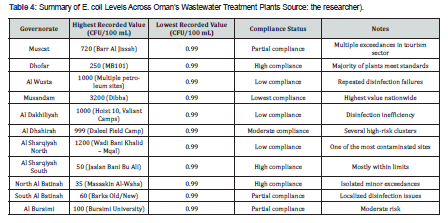
E. coli concentrations varied markedly among the surveyed facilities (Table 4). The highest concentration was observed in Dibba, Musandam (3200 CFU/100 mL), which was the highest recorded nationwide, massively exceeding the permissible limit of CFU/100 mL. Elevated values were also documented in Al Wusta, where several petroleum-related facilities reported levels up to 1000 CFU/100 mL, as well as in Al Dakhiliyah, particularly at Hoist-10 and multiple Valiant Camps (1000 CFU/100 mL). In Muscat, notable exceedances were recorded at Barr Al Jissah Resort (720 CFU/100 mL) and Hayl Al Ghaf (650 CFU/100 mL), while in Al Sharqiyah North, the Wadi Bani Khalid (Mqal) facility reported 1200 CFU/100mL. A comparison of these findings with operational data and monthly performance reports indicated that such exceedances coincided with instability in disinfection dosing, reduced efficiency of chlorination and/or ultraviolet (UV) disinfection units, and inadequate routine maintenance practices.
Conversely, several facilities showed full compliance with the standard, including Dima Wa Al-Tayyeen, Al Qabil, Al Sharqiyah University, and UTAS Ibra, all recording 0.099 CFU/100 mL, which were the lowest national values.
Note that the occurrence of identical values (0.99) across all laboratory report results reflects the Method Detection Limit (MDL) or the Limit of Quantification (LOQ) adopted by the laboratory, rather than the actual measured concentration of the analyte. Accordingly, reporting a value of 0.99 signifies that the concentration of the element in the analyzed samples was either below the instrument’s reliable quantitative measurement limit or below the analytical capability of the applied method.
Faecal Coliforms
Faecal coliform levels exhibited similar spatial variability. The highest concentration was detected in Dibba, Musandam (3500 CFU/100 mL), exceeding the permissible limit of ≤200 CFU/100 mL by 1750%. Additional major exceedances were observed in Al Wusta (>1000 CFU/100 mL), Al Dakhiliyah Hoist-10 and Valiant Camps: 1000 CFU/100 mL), and Al Sharqiyah North (Wadi Bani Khalid, 1500 CFU/100 mL).
Muscat, Barr Al Jissah and Hayl Al Ghaf reported 800 CFU/100 mL, while South Al Batinah, Barka Old and Rustaq exhibited 400 CFU/100 mL and 300 CFU/100 mL, respectively.
Despite these hotspot exceedances, most facilities across Dhofar, North Al Batinah, and parts of Muscat remained within the regulatory limit, with levels of < 0.99 CFU/100 mL (Figure 6).
Viable Nematode Ova
All samples from all regions returned zero ova/L, fully complying with WHO’s reuse guideline (≤1 ova/L). This consistent performance reflects the effectiveness of primary sedimentation and solid–liquid separation units in removing helminth ova, which typically adhere to sludge particles [24].
Regional Overview of Microbiological Parameters
a) Highest microbiological risk regions: Musandam, Al Wusta, Al Dakhiliyah, Al Sharqiyah North, and selected sites in Muscat and Dhofar.
b) Regions with the strongest microbiological performance: Dhofar (majority of plants), North Al Batinah, South Al Sharqiyah, and several plants in Muscat.
c) Parasite-related safety: All regions showed complete removal of nematode ova, indicating high reliability for agricultural reuse where helminth transmission risk is critical.
Overall Comparison Between Governorates in their compliance with water treatment reuse regulations. Table 5 shows the 11 Governorates’ respective rates of compliance
Statistical Validation of Results
a) ANOVA confirmed significant variation among governorates (p < 0.01).
b) Cluster analysis grouped governorates based on similar pollution profiles:
i. Cluster 1: Muscat, North Al-Batinah (industrial)
ii. Cluster 2: Al-Dakhiliyah, Al-Dhahirah (mixed domestic/industrial)
iii. Cluster 3: Musandam, Al-Buraimi (highest efficiency)
c) Regression models showed that:
i. TDS predicts EC with 94% accuracy,
ii. SAR increases linearly with Na concentration (R² = 0.88)
These validations indicate strong internal consistency and clear systemic patterns across plants [25].
Discussion
The results demonstrate a generally high level of treated wastewater quality in Oman which can be attributed to ongoing upgrades in wastewater treatment plant (WWTP) infrastructure, including modernization of equipment, capacity expansion, and the adoption of advanced treatment technologies, all of which have enhanced process efficiency and reliability. In parallel, better operational practices—such as improved operator training, standardized procedures, preventive maintenance, and optimized process control—have contributed to stable and consistent treatment performance. The expanded implementation of tertiary treatment processes, including advanced filtration and polishing stages, has further improved effluent quality by reducing suspended solids, nutrients, and residual contaminants. Additionally, increased emphasis on disinfection and systematic monitoring has strengthened microbial control, ensured regulatory compliance, and enabled early detection of performance deviations. Finally, effective nutrient removal, particularly of nitrogen and phosphorus, has reduced environmental risks and supported the safe reuse of treated wastewater in agriculture, thereby reinforcing its sustainability and public health protection.
A key insight emerging from this study is that treated wastewater quality in Oman is not randomly variable; rather, it follows a structured and system-driven pattern. The observed spatial differences in compliance are strongly associated with identifiable determinants, including industrial load intensity, treatment plant configuration, infrastructure age, and climatic variability. This finding reframes wastewater performance from being viewed as isolated plant-level inefficiencies to a broader systems perspective, where effluent quality reflects the interaction between upstream economic activities and downstream treatment capacity.
The results further suggest the presence of what may be termed an “industrial signature” in treated wastewater. Distinct chemical profiles—such as elevated concentrations of sodium, boron, chromium, and nitrogen species—can be linked to specific types of industrial activity within each governorate. This concept introduces a novel analytical lens for interpreting wastewater quality data, enabling the indirect identification of pollution sources based on effluent characteristics and supporting the design of more targeted regulatory and control strategies.
In addition, the study highlights the underexplored influence of climatic variability on wastewater treatment performance in arid regions. For example, the pronounced fluctuations observed in Dhofar during the monsoon season demonstrate how seasonal hydrological changes can significantly alter influent composition, hydraulic loading, and treatment efficiency. This finding contributes to the growing body of research on climate-resilient wastewater systems and underscores the importance of incorporating seasonal dynamics into treatment plant design and operational planning in monsoon-influenced arid environments.
However, despite the overall success, five key causes for concern remain. First, industrial discharges continue to breach chemical water quality parameters, particularly salinity and heavy metals, as industrial effluents often contain elevated concentrations of dissolved salts and trace metals that place additional stress on municipal treatment systems not designed for such loads. Second, inadequate or inconsistent disinfection practices remain a major driver of microbial exceedances, where insufficient contact time, suboptimal dosing, or equipment malfunction can result in elevated levels of pathogenic indicators in treated effluents. Third, aging treatment systems, especially in older municipal wastewater treatment plants, face structural and technological limitations that hinder effective nutrient removal, leading to challenges in meeting increasingly stringent discharge and reuse standards for nitrogen and phosphorus. Fourth, wastewater generated from tourism and hospitality facilities presents recurring operational issues, as detergents, cleaning chemicals, and irregular hydraulic and organic loading patterns disrupt biological treatment processes and reduce overall treatment efficiency. Finally, climatic conditions, particularly seasonal phenomena such as the Dhofar monsoon, introduce variability in influent characteristics and flow rates, which can adversely affect treatment performance and lead to major fluctuations in effluent quality.
Although the overall compliance rate of 84% indicates generally satisfactory system performance, the analysis reveals that compliance-based metrics alone may obscure critical localized risks. Extreme exceedances in specific parameters—such as salinity, microbial contamination, and heavy metals—suggest that a limited number of high-impact failures can pose disproportionate environmental and public health risks. This challenges the adequacy of aggregate compliance indicators and supports the adoption of risk-based assessment frameworks that account for both the frequency and severity of exceedances.
From a policy perspective, the findings support a transition from uniform regulatory enforcement toward a more differentiated, risk-based governance approach. The identification of governorate-specific pollution profiles and treatment challenges indicates that a “one-size-fits-all” regulatory model is suboptimal. Instead, tailored strategies—such as stricter industrial pre-treatment requirements in high-risk regions and enhanced disinfection protocols in microbiologically sensitive areas—are likely to yield more effective environmental and operational outcomes.
Beyond its scientific contributions, this study also offers significant practical advancements for wastewater management and reuse policy. By integrating nationwide monitoring data with statistical modeling, it enables a shift from reactive, compliance-based management toward proactive, risk-informed and granular regulation. The identification of parameter-specific exceedance hotspots, combined with their linkage to operational and industrial drivers, provides a robust decision-support framework for regulators to prioritize interventions, optimize resource allocation, and strengthen enforcement mechanisms.
Moreover, the findings support the development of adaptive management strategies, including predictive monitoring systems, targeted infrastructure upgrades, and differentiated regulatory controls based on treatment plant typology (municipal, industrial, or mixed systems). This reflects a broader transition toward intelligent wastewater governance aligned with circular economy principles and sustainable water resource management in arid regions.
Conclusion
The national project for monitoring the quality of treated wastewater in the Sultanate of Oman is one of the country’s leading initiatives for the sustainable management of water resources, exemplifying the principle of the circular economy by optimizing the use of non-conventional water sources. The implementation of this project forms part of the continuous efforts of the Environment Authority and relevant institutions to ensure that treated wastewater serves as a safe and efficient resource capable of meeting the rapidly growing demands across various sectors. By providing comprehensive datasets and analytical insights, the current study supports this national project, serving as a key national reference for policymakers, researchers, and stakeholders interested in treated wastewater quality and reuse.
Field and laboratory analyses conducted across all governorates revealed that all governorates easily met the national target for 2025—derived from Oman Vision 2040—set at 75%, with an overall compliance average of 84%. This reflects a notable achievement in treatment system performance and environmental oversight. However, there was significant variation in the quality levels of treated effluent, which is attributable to differences in treatment technologies, the characteristics of influent wastewater, the age and condition of treatment infrastructure, and differences in operational efficiency among plants including limitations in automated control systems. Some findings revealed worrying levels of pollution. For example, in Dhofar, 4 out of 43 plants fell below the required 75% level; in North Al Batinah, 2 out of 14 plants showed non-compliance; in Muscat, 6 of 37 plants fell below the target; in Al Dakhiliyah, 2 of 20 plants did not meet the required threshold; non-compliance was recorded in 9 of 36 plants in Al Dhahirah; in 6 out of 30 plants in Al Wusta; in 2 out of 11 plants in North Al Sharqiyah; in 2 out of 6 plants in South Al Batinah; and in 1 out of 6 plants in South Al Sharqiyah. These results highlight the need for technological upgrades, the adoption of smart monitoring systems to identify specific shortfalls, and the integration of AI-based predictive analytics to enhance treatment efficiency and reduce pollutant levels.
Beyond its national scope, this study offers a transferable framework applicable to other water-scarce regions facing similar challenges in wastewater reuse. The integration of large-scale monitoring, statistical validation, and policy-oriented interpretation provides a scalable model for countries seeking to enhance water security through non-conventional water resources.
Importantly, the findings help bridge the gap between environmental monitoring and strategic water management by demonstrating how empirical data can inform regulatory reform, infrastructure investment, and long-term sustainability planning. In this context, the study supports evidence-based policymaking and reinforces the role of treated wastewater as a critical component of climate-resilient water systems.
Furthermore, the study provides new insights into the dynamics of treated wastewater quality by demonstrating that variability across Oman is structured, predictable, and linked to identifiable system drivers rather than being purely reactive or random. By introducing the concepts of industrial signature, climate-sensitive performance, and risk-weighted compliance, the research advances both scientific understanding and policy development in wastewater management.
Conceptually, the study moves beyond compliance reporting by explicitly linking water quality variations to underlying system drivers, including industrial discharge characteristics, treatment technologies, infrastructure age, and climatic influences. Practically, it delivers a decision-support framework that enables regulators to identify critical exceedance hotspots, prioritize interventions, and transition toward risk-based, data-driven wastewater governance.
These contributions support the development of adaptive, region-specific management strategies and have direct implications for achieving water security and sustainability objectives under Oman Vision 2040.
Recommendations
Seven recommendations are proposed to enable the national wastewater management system to deal with the minority of plants which fell short of the standard environmental standards.
Establishing a National Integrated Wastewater Quality Assessment Framework.
This framework would combine large-scale monitoring, advanced statistical modeling, and driver-based interpretation to support evidence-based granular decision-making in water-scarce countries. It provides a structured and scalable approach for improving wastewater management, enhancing regulatory effectiveness, and supporting long-term water security.
Strengthening Routine Monitoring and Surveillance
Regular, systematic monitoring of municipal and industrial wastewater treatment plants should be undertaken to ensure sustained compliance with environmental regulations. Expanding the monitoring framework to include higher-frequency temporal measurements will enhance the EA’s ability to detect operational fluctuations and emerging risks.
Improving Operational Efficiency and Infrastructure Performance
A formal operational directive is needed to support treatment plants exhibiting unsatisfactory levels of performance. This includes implementing technical and engineering enhancement programs focused on optimizing physical, chemical, and microbiological treatment units, modernizing aging treatment infrastructure, and aligning plant operations with contemporary international best practices.
Mandating Connection of Small-Scale Treatment Units to Centralized Networks
To improve uniformity in treated effluent quality, a regulatory requirement should be introduced requiring facilities with small-scale treatment units to connect to the central wastewater network when such services become available. This measure will reduce the level of decentralized inefficiencies and improve system-wide environmental performance.
Developing an Integrated Digital Environmental Data Platform
A national digital platform consolidating environmental quality datasets—specifically treated wastewater parameters—should be established. Incorporating advanced analytical and predictive modeling tools will enable proactive environmental planning and support evidence-based decision-making.
Requiring Industrial Facilities to Implement On-site Primary Treatment
A mandatory regulation should be issued requiring all industrial facilities to install primary treatment systems prior to discharging wastewater into centralized treatment networks. This will reduce high-strength industrial loads and enhance the operational stability and treatment efficiency of central facilities.
Promoting Public Awareness and Community Engagement
Awareness and education programs highlighting the importance of maintaining treated wastewater quality, as well as the environmental and public health consequences of contamination, should be developed. Enhancing public understanding will help foster responsible practices and support the long-term sustainability of national water resources.
Author Contributions
All authors contributed to the paper’s conceptualization. The first draft of the manuscript was written by AA-K; the design of the project was shared between AA-K, TG; the literature search was caried out by RA-Ab; the data was analyzed by RA-Ab, AA-H; the initial writing of the MSS was done by AA-K, SA-S; the critical editing of the MSS was done by TG; the revision of the MSS was performed by AA-K, RA-Ab, SA-A, SA-S; the review of the article was provided by AA-K; TG and RA-Ab; and the submission of the paper was done by TG. All authors read and approved the final manuscript.
References
- Carballo MF, Burbano MN, Barzola QX, Montalvo JM, Mero CP (2022) What do we know about water scarcity in semi-arid zones? A global analysis and research trends. Water 14(17): 2685.
- Wada Y, Beek VLPH, Kempen VCM, Reckman JWTM, Vasak S, et al. (2010) Global depletion of groundwater resources. Geophysical Research Letters 37(20).
- UNFCCC (2019) Second National Communication of the Sultanate of Oman. United Nations Framework Convention on Climate Change. Submitted to: United Nations Framework Convention on Climate Change. Ministry of Environment and Climate Affairs, Oman.
- Boluwade A (2021) Impacts of climatic change and database information design on the water-energy-food nexus in water-scarce regions. Water-Energy Nexus 4: 54-68.
- Research K (2025) Oman water treatment and sustainable water management market report.
- Nama Water Services (2025) Oman’s water and wastewater investment plan aligned with Oman Vision 2040 Omanet.
- Ministry of Regional Municipalities and Water Resources (2020) Integrated Master Plan for the Water Sector (2015–2040). Muscat, Oman.
- Al-Mamun A, Hamid O, Al-Sabti A, Choudri BS, Baawain MS (2020) Public perceptions of reusing treated wastewater for urban and industrial applications: challenges and opportunities. Environment, Development and Sustainability 22(3): 1859-1871.
- Food and Agriculture Organization (FAO) (2023) AQUASTAT database: Renewable internal freshwater resources per capita. Rome: FAO.
- World Bank (2023a) World Development Indicators: Annual freshwater withdrawals. Oman. Washington, DC: World Bank.
- World Bank (2023b) Renewable internal freshwater resources per capita. World Development Indicators.
- Ministry of Agriculture, Fisheries and Water Resources (Oman) (2021) National Water Resources Assessment Report. Muscat: Sultanate of Oman.
- Sherif M, Liaqat MU, Baig F, Al-Rashed M (2023) Water resources availability, sustainability and challenges in the GCC countries: An overview. Heliyon 9(10): e20543.
- EA [Environment Authority of Oman] (2025) National Treated Wastewater Monitoring Report. Oman.
- Khaliq JAS, Ahmed M, Al-Wardy M, Al-Busaidi A, Choudri BS (2017) Wastewater and sludge management and research in Oman: An overview. Journal of the Air and Waste Management Association 67(3): 267-278.
- Water H (2016) Annual Report. Muscat, Sultanate of Oman.
- Ministry of Regional Municipalities and Water Resources & Nama Group (2020) Integrated Master Plan for the Water Sector in the Sultanate of Oman (2015–2040). Muscat, Oman.
- Qureshi AS (2020) Challenges and Prospects of Using Treated Wastewater to Manage Water Scarcity Crises in the Gulf Cooperation Council (GCC) Countries. Water 12.
- Ministry of Agriculture, Fisheries and Water Resources (2024) Annual Report. Sultanate of Oman.
- WHO (2011) Guidelines for Drinking water Quality. In: (4th).
- Zhang M, Jiao T, Chen S, Zhou W (2023) A review of microbial nitrogen transformations and microbiome engineering for biological nitrogen removal under salinity stress. Chemosphere 341: 139949.
- Gehr R, Leduc R (1992) Assessing effluent fluoride concentrations following physicochemical wastewater treatment. Canadian Journal of Civil Engineering 19(4): 649-659.
- Federigi I, Salvadori R, Lauretani G, Leone A, Lippi S, et al. (2024) Wastewater treatment plants performance for reuse: Evaluation of bacterial and viral risks. Water 16(10): 1399.
- Smet JM, Pascual MJ, Trapote A (2017) Model of suspended solids removal in the primary sedimentation tanks for the treatment of urban wastewater. Water 9(6): 448.
- World Bank (2021) Wastewater Reuse and Water Security in the Middle East and North Africa. Washington, DC: World Bank.

























