




 OFOAJ Home



Abstract
Barotrauma, a condition caused by the pressure changes experienced during the capture of fish from depth, is a major contributor to fisheries post-release mortality. Recompression is a practice commonly used by recreational fishers to reduce this mortality by relieving the main effects of barotrauma, excessive buoyancy resulting from hyperinflation or rupture of the swim bladder, and gas embolisms. Two common recompression methods are ‘venting’ and ‘descender devices’, however previous results derived from releasing treated fish into cages have provided equivocal support for their use. This study therefore used a novel biotelemetry approach to examine the effects of these relief methods on post-release behaviour and depth selection in a recreationally important fish species, Australasian snapper Chrysophrys auratus. All fish were angled and then released untreated, after venting, or using a descender device (release weight). The severity of barotrauma increased with capture depth. Regardless of treatment or depth, immediate post-release behaviour of all but one individual (an untreated fish which floated) was to swim towards the seafloor. Descent rate was significantly faster using a release weight, but similar for vented and untreated releases. Descent rate was most variable for vented fish. Regardless of treatment or water depth, after returning to depth all individuals remained in close proximity to the seafloor. Unless the fish is unable to submerge by itself, this clearly demonstrates that the post-release depth preference for barotrauma-affected snapper is near the seafloor, which is facilitated by both barotrauma relief methods, albeit at different rates. However, the likely impact of increased handling required for both relief methods on post-release behaviour, indicate that untreated release is preferred. If the fish is unable to submerge by itself, a descender device is supported as the most appropriate method for release as it imitates the “natural” post-release behaviour and depth preference of the fish, whilst avoiding physical trauma associated with venting.
Keywords:Sparidae; Discard mortality; Catch and release; Recompression; Buoyancy
Introduction
A major contributor to post-release mortality in fish caught from deep water is barotrauma, a condition resulting from rapid pressure changes that occur through forced ascent during capture. In physoclistous fish (those lacking an anatomical connection between the swim bladder and the alimentary tract [1]), decreasing pressure causes gas within the swim bladder to expand, resulting in the hyperextension of the swim bladder and potential rupture, releasing the gas into the cranial and peritoneal cavities. Except for some physoclistous carangids [2], released gas cannot escape to the external environment and leads to various injuries including organ crushing or torsion, abdominal distension, stomach eversion, intestinal prolapse, haemorrhaging, exophthalmia and rupture of the body wall [3-7]. Other effects include the formation of gas embolism in tissues, various behavioural impairments, and excess buoyancy [8,9]. Barotrauma can significantly increase the mortality rates of released fish [3,4,10,11] and can therefore undermine the value of releasing affected fish.
Recompression (or repressurization) is a practice commonly used by recreational fishers to increase discard survival in physoclistous fish species under catch and release (C&R) conditions after suffering barotrauma [12,13]. Recompression involves any method that relieves the main effects of barotrauma, excessive buoyancy resulting from hyperinflation or rupture of the swim bladder, and gas embolisms. If a fish is able to return to a depth such that expanded swim bladder gases, and gas bubbles in tissue, are recompressed, the fish will be relieved of excessive buoyancy and the risk of gas embolisms forming reduced. Without mitigation by fishers, many excessively buoyant fish are unable to swim back to depth and are left floating on the surface [13], where they are susceptible to additional deleterious effects such as predation, sunburn, boat strike, thermal stress and suffocation [4,9,14-16]. Two of the most popular techniques for recompression of barotrauma-affected fish are: (i) ‘venting’ (or ‘fizzing’) – where the body wall is pierced by a hypodermic needle or similar to release the excess gas trapped inside the swim bladder or body cavity, and; (ii) ‘descender devices’ – where the fish is lowered back to a chosen depth before being released using a device tethered to the surface [17]. Various studies on recompression using these methods for release have provided ambiguous results regarding post-release mortality: some indicating improvements to survival (e.g. [4,8,15]), others concluding that survival is unaffected (e.g. [12,13,18,45]), whilst others have indicated decreased survival (e.g. [13,19]).
In order to be considered effective, barotrauma relief methods should rapidly resolve (or reduce) barotrauma symptoms and enable fish to resume natural behaviour as quickly as possible [20]. In order to assess the effectiveness of recompression as a barotrauma treatment, an understanding of post-release behaviour after release must first be established. In most studies to date, this has been attempted using fish released into cages after capture and lowered back to depth (e.g. [21,22]), thereby introducing artificial spatial restriction to their movement and potentially introducing a confounding influence on behaviour and recovery [6,7]. An alternative approach involves releasing fish into ‘bathy-cages’ that includes more of the water column, thus allowing a better understanding of the vertical orientation of fish post-release (e.g. [13,23]). Whilst such increased vertical choice is important for assessing the effectiveness of recompression on survival and recovery, the use of bathy-cages is still a method that spatially confines the fish, restricting their movement and therefore potentially affecting their behaviour and recovery. Indeed, it has been suggested that releasing fish into bathy-cages may aggravate any existing disorientation, as the fish has no choice but to descend [24]. The ability of the fish to choose their vertical distribution within bathy-cages is also restricted by the depth range encompassed by the structure itself; in some cases fish released into bathy-cages were caught from deeper water than the maximum vertical extent of the structure (e.g. [13, 23]). Consequently, understanding of the post-release behaviour of barotrauma-affected fish is limited, particularly the depths the fish choose to occupy after release. The use of biotelemetry via tags attached to released fish which measure various biological and environmental parameters (e.g. depth, temperature, activity, acceleration, movement) offers a potential solution to gaining a better understanding of the post-release behaviour of barotraumaaffected fish that avoids cage artifacts and also approximates the most natural behavioural characteristics of the fish [25,26,27]. For example, [24] showed that some released walleye Sander vitreus tagged with biologgers floated back to the surface or became disoriented on the lake bottom after being subjected to various barotrauma relief techniques, and using acoustic telemetry [28] found that mulloway Argyrosomus japonicus individuals treated for barotrauma relief used much shallower depths after release than untreated fish. Previously, archival biologgers and acoustic transmitters have been used to examine post-release behaviour after recreational C&R, however these methods are generally costly and logistically challenging to deploy (e.g. [25,29,30]), restricting how many individuals can be practically monitored, and the generality of observed post-release behaviour patterns. In addition, such methods often require extensive handling for surgical implantation or external attachment of tags, providing an additional factor which may affect behaviour (e.g. [25,28,31,32]).
Australasian snapper Chrysophrys auratus (Forster, 1801) is one of southern Australia’s most economically and socially important teleost species. As a consequence of their highly regarded table qualities, snapper has a long history of exploitation by commercial fisheries [33,34], and their ability to grow to large sizes (>130 cm and >20 kg; [33]) has resulted in an iconic status among recreational fishers. Snapper are found in estuaries as well as coastal marine waters to depths of 200 m [33], where they are a highly sought-after target species for recreational fishers [35], often suffering barotrauma during capture [6,23]. Due to management regulations and the high popularity of voluntary recreational C&R angling, approximately 75% of the 760,000 snapper estimated captured by recreational fishers in New South Wales (NSW) in 2013/14 alone, were subsequently released [35]. If post-release mortality for the species is significant, such high release rates may be a risk to sustainable fisheries for the species and the efficacy of management regulations in place.
A need therefore exists to understand the impacts of different recompression methods on the behaviour and depth preferences of released fish if the effectiveness of these methods is to be assessed. From an animal welfare perspective, it is likely that both recompression methods examined here are more contentious than releasing fish without any recompression method attempted (“untreated”; [23]). Consequently, we undertook a series of field trials where externally-attached depth-sensitive acoustic transmitters were used to gain insights into the post-release behaviour and depth preferences of snapper after being angled from depth and released using two common recompression methods: i) venting, ii) using a descender device (a ‘release weight’), and compared with iii), untreated release. The novel approach described here also requires minimal handling associated with transmitter attachment, and cost, by permitting the same transmitter to be used sequentially on multiple individuals.
Material and Methods
Capture of experimental animals
Snapper for use in post-release behaviour and depth preference trials were caught from research vessels using conventional angling methods (hook and line with lures (Shimano LucanusTM, Berkley GulpTM) or dead baits (eastern school prawns Metapenaeus macleayi, southern calamari Sepioteuthis australis, Australian sardines Sardinops sagax). Multiple fishers angled at the same time, which on occasions where multiple fish were captured simultaneously, necessitated fish to be kept in a live well prior to being released separately. Snapper were caught from several locations in the Port Stephens-Great Lakes Marine Park (Cabbage Tree Island – 32°41’18”S 152°13’32”E, Big Seal Rock - 32°27’46”S 152°33’11”E, Little Seal Rock - 32°28’27”S 152°32’49”E, Broughton Island - 32°37’18”S 152°20’21”E; Figure 1A), as well as several locations in Port Hacking (Dolans Bay - 34°03’55”S 151°06’19”E, South West Arm - 34°04’52”S 151°06’21”E) and just offshore (Jibbon Head - 34°04’46”S 151°10’40”E, Bate Bay - 34°03’20”S 151°10’48”E; Figure 1B).
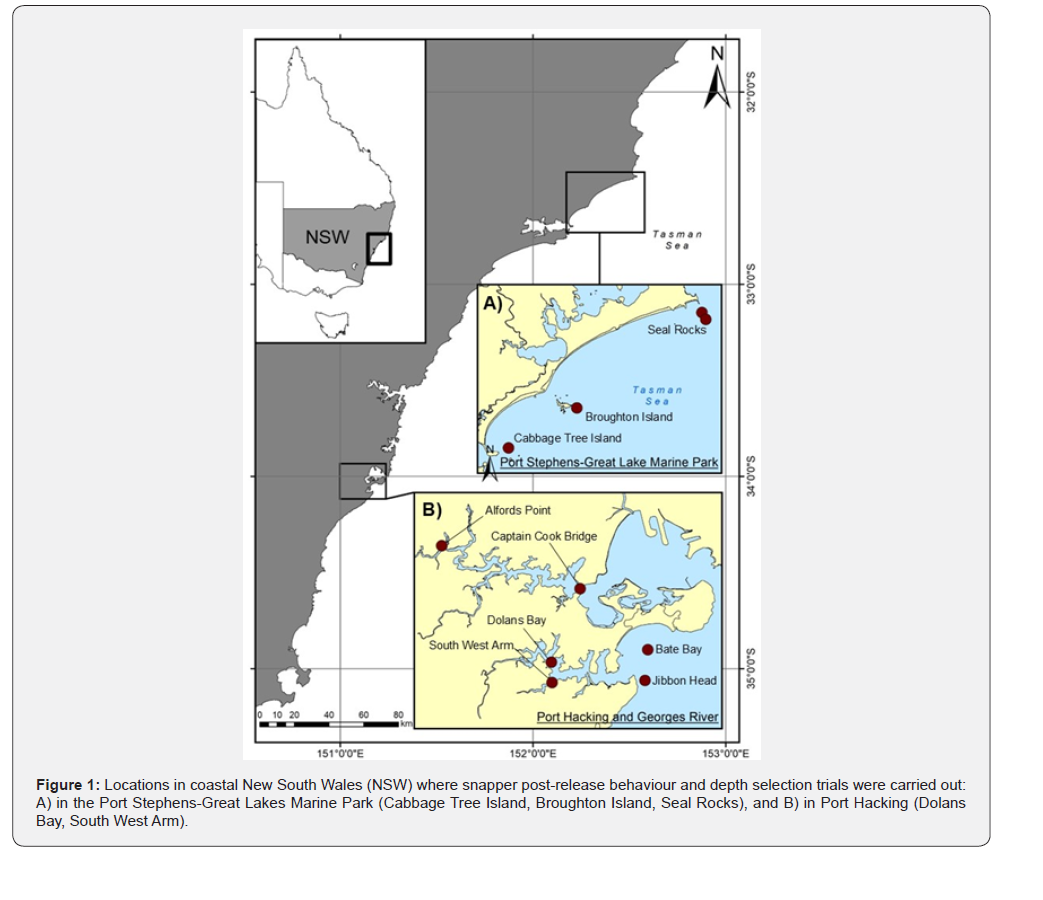
Water depth and time were recorded immediately after a fish was hooked. The time was again recorded as the fish was landed (with a knotless landing net – Shimano EnvironetTM), allowing calculation of the amount of time taken from hooking to landing (hereafter ‘fight time’). Once on board the research vessel, the length of the fish was measured (FL – fork length; to the nearest 0.1 cm) and hooking location recorded along with any barotrauma symptoms. A depth-sensitive acoustic transmitter (V9P, 81 kHz, Ø 9 mm, length 40.5 mm; Innovasea, Boston, MA) was then attached using a small folding t-bar anchor tag (9 mm TBA; Hallprint Fish Tags, South Australia) inserted just beneath the skin of the fish ventral to the dorsal fin rays [36]. The transmitter was tethered via fine braided fishing line (Shimano PowerPro™; 10 lb test, Ø 0.15 mm) to a dedicated rod and reel on board the vessel.
Treatment, release and monitoring
A randomly chosen treatment was then applied to each fish prior to release: i) venting – a scale was removed and an 11 gauge hypodermic needle was used to puncture the body wall of the fish releasing any excess gas resulting from swim bladder overexpansion or rupture, ii) using a release weight (500 g; Sunset Sinker Supplies, Neerabup, Western Australia) – attached to the fish using a fine barbless hook inserted carefully through the skin of the upper jaw of the fish; the fish returned to depth using another rod and reel, at which point the release weight was jerked free detaching the fish, or iii) ‘untreated’ – returned to the water immediately after transmitter attachment. The time at release was recorded in order to calculate the time taken between landing and release for each fish (hereafter ‘surface duration’).
With the reel in ‘free-spool’ mode, the behaviour exhibited by each fish immediately after release was recorded – if the fish swam away quickly with strong tail beats, swam away slowly with weaker tail beats, sank without beating its tail, or floated on the surface. Approximately once every second, the attached transmitter produced an acoustic signal relaying the depth of the fish which was received by a VH165 omni-directional hydrophone connected to a VR100 mobile receiver (Innovasea, Boston, MA) on board the vessel. Each fish was followed (with the reel in ‘freespool’ mode so as to put minimum tension on the tether line) for several minutes after release, before engaging the reels drag which immediately detached the transmitter from the fish by pulling the folding t-bar tag from just under the skin. The transmitter was then retrieved for attachment to the next fish released.
Barotrauma symptoms
The presence of external barotrauma symptoms was recorded for each fish when brought on board the vessel: exophthalmia, corneal emphysema, haemorrhage (cornea, gills, fins or skin), a distended abdomen, bloodshot cloaca, anal prolapse, stomach eversion, body wall rupture (inferred by bubbles escaping from the body cavity), rippled skin and excessive buoyancy [36]. The number of fish with each symptom was then summarised by capture depth range (10-20 m, 20-40 m, >40 m).
Immediate post-release behaviour
For the untreated and vented treatments, the number of fish to exhibit each type of immediate post-release behaviour (i.e. quickly swam away, swam away more slowly, floated or sank) was then summarised by capture depth range as described above. As the release weight treatment involved the fish being attached to the device and physically lowered to the seafloor, it was not necessary to record the immediate post-release behaviour of this group.
Post-release return to depth profiles and descent rates
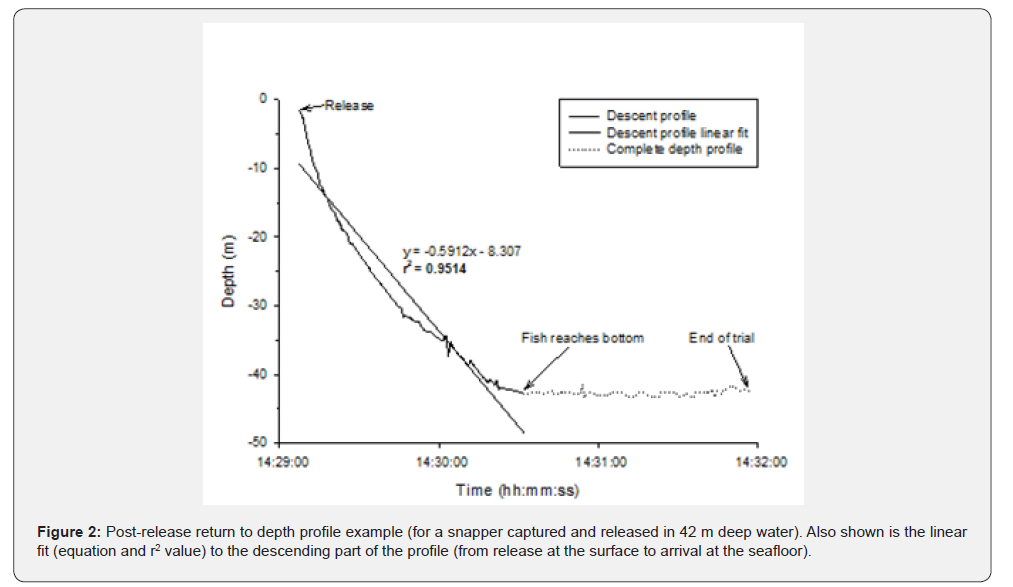
For each trial, recorded depth data were downloaded from the VR100 and plotted against time after release to visually represent the depth occupied by each fish for several minutes following release (hereafter a post-release ‘return to depth profile’). A descent rate over the time the fish took to reach the seafloor (using the water depth recorded at release) was then calculated (m.min-1) using the descending part of the depth profile recorded for each fish in each trial (Figure 2). By averaging all the trials within each release treatment, a mean descent rate for each treatment was then calculated. This mean descent rate was then compared between treatments using a single factor analysis of variance (ANOVA). The variability in descent rate for each fish was estimated by fitting a linear regression to the descending part of the depth profile and calculating an r2 value (Figure 2). A high r2 value indicated that the regression fitted the data well and corresponded to a relatively constant descent. Conversely, a low r2 value indicated a poor fit to the data and corresponded with a more variable descent. By combining the values for each fish within a release treatment, a mean value for each treatment was calculated and compared using a single factor ANOVA as described above.
Results
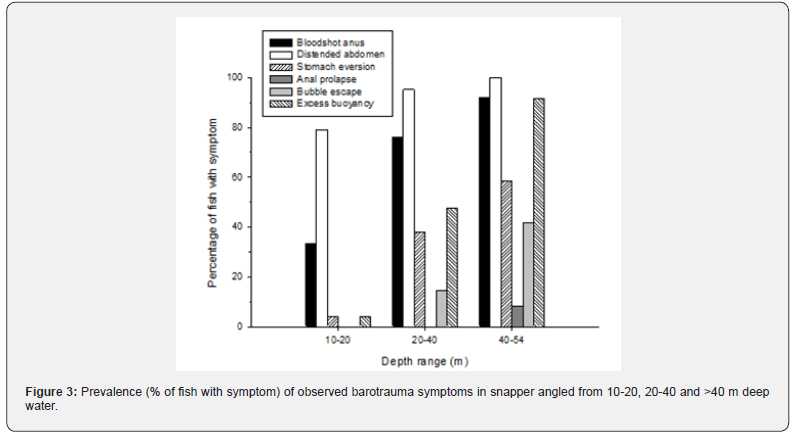
The post-release behaviour and return to depth profiles of 57 snapper were recorded after capture from water depths ranging from 10.0 to 54.0 m (Table 1). Due to the difficulty in locating snapper in water depth >40 m, more releases were done in 10-20 m (n=24) and 20-40 m (n=21) deep water than in >40 m deep water (n=12). The average size of released snapper was 36.2 ± 2.1 cm FL, ranging between 14.2 and 68.6 cm FL. Generally, larger fish were caught (and released) from 20-40 m depths (mean 47.3 ± 2.7 cm FL) than from 10-20 m (28.1 ± 3.4 cm FL) or >40 m (32.8 ± 2.4 cm FL; Table 1). This was also reflected by the longer mean fight times (2.7 ± 0.3 min) for fish caught in 20-40 m deep water; more than twice as long as mean fight times for fish caught from 10-20 m (1.3 ± 0.3 min) or >40 m (1.3 ± 0.1 min; Table 1). The average surface duration was 3.9 ± 0.4 min (range 0.5-15.0 min).
Barotrauma symptoms
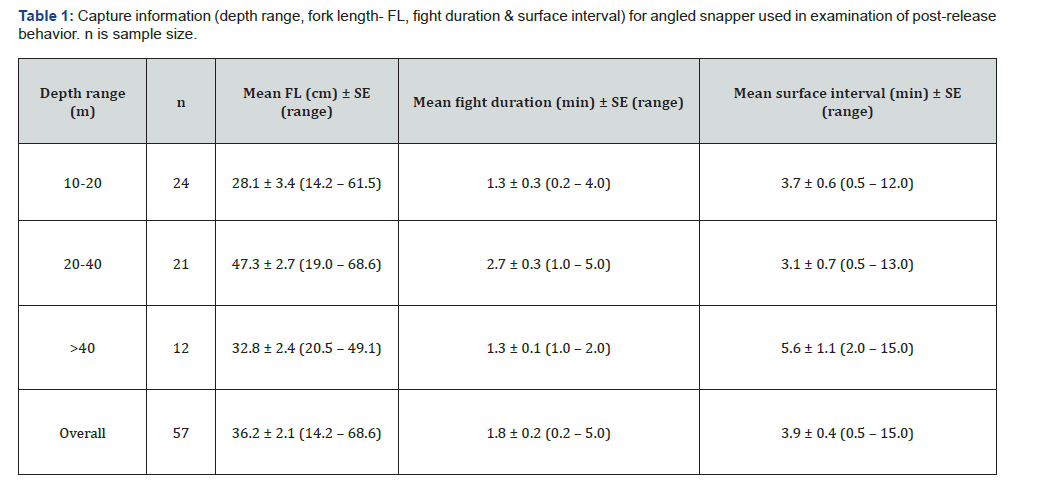
The incidence of all observed barotrauma symptoms increased with capture depth (Figure 3). The prevalence of fish with a bloodshot cloaca increased from 33% for fish caught in 10- 20 m, 76% in 20-40 m, to 92% in >40 m deep water. The most frequently observed symptom was a distended abdomen and occurred in 90% of fish caught overall but also increased with capture depth from 79% in 10-20 m, to 95% in 20-40 m and 100% in >40 m deep water. The incidence of stomach eversion was just 4% in fish caught from 10-20 m deep water, increasing to 38 and 58% from 20-40 and >40 m depths, respectively. Excess buoyancy observed in fish when held in a live well before release was observed in only 4% of fish captured from 10-20 m, but increased to 48% of fish from 20-40 m, and 92% of fish from >40 m deep water (Figure 3). Body wall rupture was only observed in fish captured from >20 m deep water (14 and 42% of fish from 20-40 and >40 m, respectively). Anal prolapse was only observed in 8% of fish caught from water depths of >40 m. No other barotrauma symptoms were observed.
Release treatments
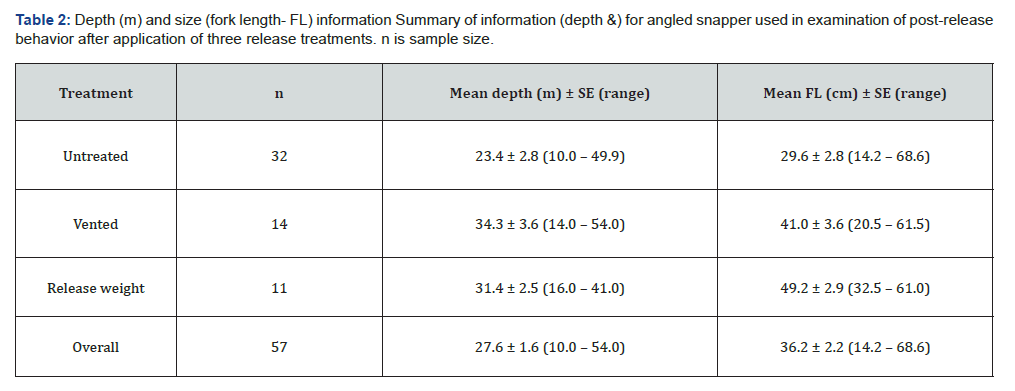
The practical difficulties in venting or using a release weight to release juvenile snapper in estuaries necessitated that all such fish were released untreated. This resulted in a larger sample size (n=32) for untreated releases, a shallower average release depth (23.4 ± 2.8 m) and smaller mean fish size (29.6 ± 2.8 cm FL) than for the other treatments (Table 2). Despite this, trials using all three release treatments were undertaken on fish of comparable sizes and in similar depth ranges (Table 2). Furthermore, it also became clear after some initial releases that the only treatment that affected the ability of the fish to return to depth was an untreated release, and consequently this treatment was also used most often (n=32) compared with venting (n=14) or using a release weight (n=11).
Immediate post-release behaviour
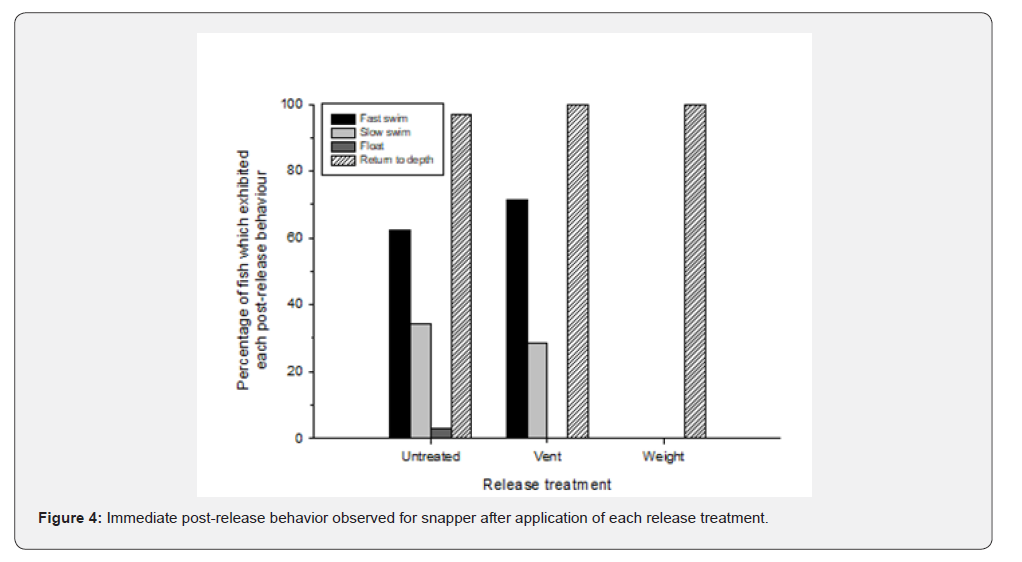
The behaviour most often observed in vented or untreated snapper immediately after release was to swim downwards through the water column towards the seafloor which occurred in 98% of these releases (Figure 4). The majority (65%) of these released fish swam away quickly with strong tail beats and a further 33% swam away more slowly. The only fish which did not swim towards the seafloor when released was an untreated fish that was caught in 25.4 m deep water and floated inverted on the surface for ~8 min after release. The strength of the swimming behaviour after release varied with both release treatment and capture depth (Figure 4). The majority (92%) of fish caught in 20- 40 m deep water swam away powerfully compared with 52 and 60% of fish caught from 10-20 and >40 m deep water, respectively. Strong swimming behaviour on release occurred in 63% of untreated releases and in 71% of vented releases (Figure 4). In the remaining releases (34 and 29% of untreated and vented fish, respectively), fish were observed to swim towards the seafloor, but considerably more slowly. No vented or untreated fish sank.
Post-release return to depth profiles
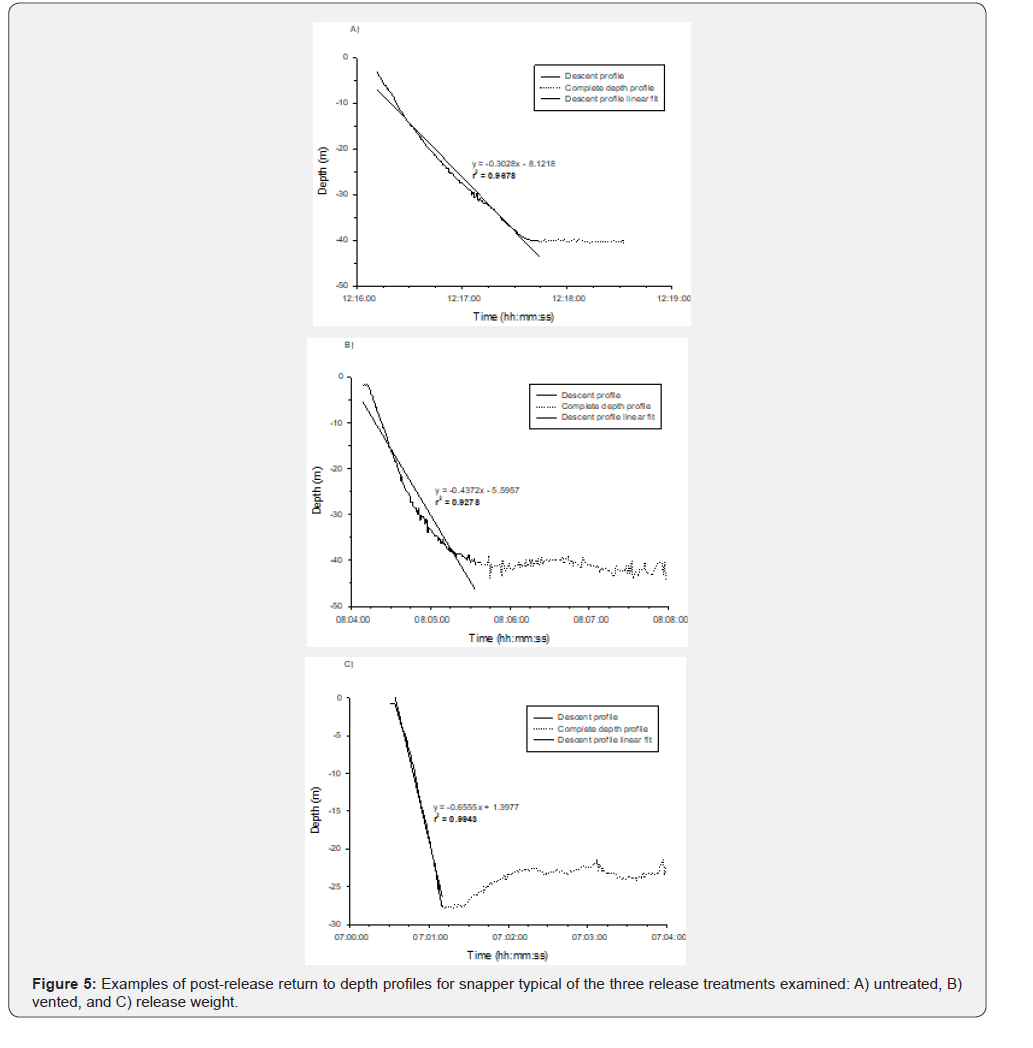
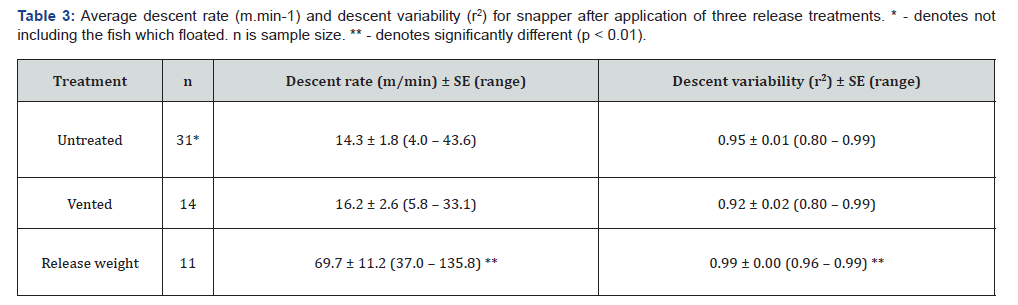
The post-release return to depth profiles indicated that all bar one snapper (which floated), irrespective of capture depth or release treatment, successfully returned to depth. Example post-release return to depth profiles (Figure 5) demonstrate substantial variation in both the rate of descent and variability in descent between release treatments, but also some consistent patterns. The return to depth profiles for fish that were released untreated (Figure 5A) consistently indicated descent to occur at a reasonably constant rate from release at the surface to arrival at depth in the vicinity of the seafloor. On reaching this depth, all fish remained in close proximity to the seafloor for the rest of the trial. For fish that were released after being vented (Figure 5B), descent was shown to be overall slightly faster than for fish that were released untreated, but their post-release return to depth profiles were often punctuated by multiple variations in descent. This variability was reflected by the lower (although not significantly) combined r2 value for vented releases (0.92 ± 0.02), when compared to that for untreated releases (0.95 ± 0.01; Table 3). This is shown in the example post-release return to depth profile for a fish which was released after being vented (Figure 5B); the profile characterised by an initial rapid descent to ~30 m depth, and then a conspicuous decrease in descent from ~30 m to the seafloor at ~40 m. As expected, the return to depth profiles for fish that were released using a release weight (Figure 5C) showed a fast descent through the water column with very little variability as the fish were pulled steadily to the seafloor by the 500 g release weight. Importantly, in several trials where fish were detached from the release weight on reaching the seafloor, the return to depth profiles showed the depth occupied by the fish to decrease slightly after release weight detachment (Figure 5C).
Post-release descent rates and variability in descent
For treatments where the fish descended using their own propulsion, the average rate of descent was similar for fish released untreated (14.3 ± 1.8 m.min-1) and after venting (16.2 ± 2.6 m.min-1; Table 3). As fish released using a release weight were pulled steadily towards the seafloor by the 500 g release weight, the mean descent rate for this group was significantly higher (69.7 ± 11.2 m.min-1) than for untreated or vented fish (ANOVA; F2,55= 39.1, p < 0.001). The r2 value calculated from the regression fitted to the descending part of the return to depth profile for each trial also demonstrated that fish released using a release weight unsurprisingly had the most consistent rate of descent (0.99 ± 0.00) with the least variability (range 0.96-0.99), significantly higher than for fish released untreated or after venting (ANOVA; F2,55 = 7.2, p < 0.01; Table 3). The descent of fish released untreated was far more variable reflected by a mean r2 value of 0.95 ± 0.01 and a range of 0.80 to 0.99, a result of some untreated fish descending at a relatively consistent rate (e.g. Figure 5A), in contrast to other fish which descended at variable speeds during their overall descent to the seafloor. This was even more evident for fish that were vented prior to release, possessing the lowest mean r2 value (0.92 ± 0.02; range 0.80-0.99)..
Discussion
This study clearly demonstrates that immediate post-release behaviour in snapper was to swim towards the seafloor and, after returning to depth, remain in close proximity to the seafloor, regardless of capture depth or barotrauma relief treatment. This is consistent with previous attempts to understand post-release behaviour and depth preferences after application of barotrauma relief methods in many fish species (e.g. [24,27]), but not others (e.g. [20,28]).
Symptoms
Previous relevant work on snapper has shown that the species suffers barotrauma when caught from water as shallow as ~10 m with the incidence of externally visible barotrauma symptoms increasing with water depth [6,16,21,22,23]. This includes many of the same symptoms recorded in this study, such as stomach eversion, abdominal distension, anal prolapse and excessive buoyancy. Many of the observations made here were consistent with observations recorded for snapper in both hyperbaric chamber experiments [6] and field studies [23]. In hyperbaric chamber experiments, 50-100% of fish decompressed from simulated 30 m water depth possessed a distended abdomen [6], similar to the 79-95% of fish in the present study angled from 20- 40 m depth. Similarly, all snapper caught from water depths of >15 m were observed to possess a bloated abdomen in field trials where fish were caught from depth and released into cages [23].
Experiments using hyperbaric chambers indicate that snapper caught from >14 m deep water are likely to suffer swim bladder rupture [6,36]. Such rapid release of gas into the abdominal cavity can cause stomach eversion, with the potential for this to occur increasing with the volume of gas released. The volume of swim bladder gas is determined by the acclimation depth of the fish, with increasing acclimation depth resulting in the release of larger gas volumes during forced ascent. This likely caused the increasing incidence of stomach eversion (and excessive buoyancy) that occurred with increasing depth in this study. Similarly, hyperbaric chamber observations of the escape of gas via body wall rupture in the area around the cloaca resulted in 34% of fish being negatively buoyant when depressurized from simulated 30 m water depth [6] and was also observed in 28% of fish on approach to the surface when caught from >20 m deep water in this study.
Post-release behaviour and depth choice
The behaviour observed in almost all (98%) snapper immediately after release was to swim downwards through the water column towards the seafloor, regardless of capture depth, surface interval or treatment prior to release, an almost identical rate to that found for untreated Atlantic cod Gadus morhua after release (97.8%; [37]). The only fish (released untreated) in this study which did not exhibit this behaviour was so excessively buoyant that it floated on the surface unable to submerge. Similarly, in 45 out of the 46 untreated and vented releases, again regardless of surface interval, release treatment or capture depth, the fish returned through the entire water column to the immediate vicinity of the seafloor and remained in close proximity for the remainder of the monitoring period. Typical of benthopelagic species, snapper in this study chose to occupy depths slightly above the seafloor, consistent with in situ observations of the species by divers [38] and as recorded by baited remote underwater video systems (BRUVS; [39,40]). Notably, no fish were observed to float back to the surface after being recompressed (e.g. [24]). This clearly demonstrates that the post-release depth preference for barotrauma-affected snapper is near the seafloor, and unless the fish cannot successfully submerge, will descend through the entire water column to do so. Using descender devices (like release weights) to achieve this is therefore supported by these results to be a suitable recompression method as it imitates the “natural” post-release behavioural preference of the fish to return to the vicinity of the seafloor, particularly if the buoyancy of the fish prevents successful submersion.
Rapid mitigation of many of the potentially harmful effects of barotrauma (e.g. stomach eversion, exophthalmia, organ displacement, embolisms) is required in order to maximise the post-release survival of affected fish [6,23]. Despite having a relatively high resilience to barotrauma [6,16,23], hyperbaric chamber trials on snapper have shown that some mortality can occur if individuals are not recompressed, compared to zero mortality when individuals were recompressed following simulated capture [6]. Recompressing fish to capture depth has also been shown to relieve the effects of barotrauma and increase post-release survival in many other diverse species (e.g. [4,8,15,18,41]).
All three of the release methods examined in this study were shown to eventually allow the majority of fish to successfully achieve recompression to depth, however the speed at which this occurred varied between methods. On average, releasing fish without a barotrauma-mitigation treatment achieved return to depth the slowest (although not statistically). Venting the fish prior to release immediately alleviated excessive buoyancy by releasing excess gas from the body cavity, permitting this treatment group to return to depth faster than when released untreated, a pattern consistent with other work on potential barotrauma mitigation methods for snapper [23]. Returning fish to depth using a release weight resulted in the fastest return to depth, by virtue of the fish being pulled rapidly through the water column by a heavy lead weight. Achieving return to depth as quickly as possible has been shown to likely be beneficial to survival, including lowering the potential for pelagic predation, accessing cooler temperatures with higher dissolved oxygen levels at depth, reducing energy expenditure via removing (release weight) or minimizing (venting) the requirement for active swimming to return to depth, and reduced potential for boat strike, predation or sun exposure if unable to submerge due to excessive buoyancy [1,14,42].
In spite of the considerable between-fish variability in descent rates shown by the post-release return to depth profiles for each of the release treatments, there were some differences which occurred consistently between treatments that potentially reflect the variable handling required for each release treatment. The return to depth profiles for fish released without treatment indicate that the descent of this group was at a relatively constant rate from release at the surface until the fish reached the seafloor. In comparison, fish that were vented prior to release descended slightly faster overall, but their descent was far more variable often with multiple increases and decreases in descent speed. We propose that this may be, at least in part, a consequence of the stress induced by the increased handling required to successfully vent the fish (including removal from the live well, physical restraint, identification of venting location and scale removal), in addition to the physical trauma associated with the requirement for a localized puncture wound and penetration of the body cavity by the venting device to occur [23]. Several studies have also highlighted the potential for mortality to occur if application of poor venting technique results in inadvertent puncture of the spinal cord or internal organs (e.g. [3,4,43]). Similarly, the stress induced by the extensive handling required to attach the fish to a descender device (e.g. insertion of the hook of a release weight through the skin of the upper or lower jaw), followed by that induced by descending through the water column at high speed to the seafloor, may be considerable. Indeed, several studies have suggested that a restrained fish attached to a descender device may attract predators on descent as well as after detachment when the fish is potentially disoriented on the seafloor (e.g. [23,24,44]). Finally, general handling-related injuries associated with routine C&R angling have also been previously shown to play a large role in the failure of barotrauma-affected rockfish Sebastes spp. [9] and Atlantic cod [37] to successfully submerge when released [45].
Conclusions and Recommendations
Immediate post-release behaviour (for vented and untreated fish) was to actively swim downwards towards the seafloor, regardless of capture depth, surface interval or treatment. For all fish that reached the seafloor, via the fish’s own propulsion or via a release weight, consistent behaviour was to remain in close proximity to the seafloor. Recompression is therefore achieved by all three release treatments examined in this study. The variability in time taken to return the fish to depth among these release methods may provide an initial basis for prioritization of use by fishers, however other factors should be considered when choosing a recompression method for barotrauma-affected snapper. The higher descent speed found for fish released after being vented or using a release weight may support the use of these methods over untreated release, however the potential for increased handling-related stress and injury likely outweighs the minor benefit of returning the fish to depth slightly quicker than if released untreated. Therefore, in order to successfully recompress a barotrauma-affected snapper, whilst minimizing handling-related stress and injury, an untreated release is considered optimal. However, if the fish cannot submerge, release using a descender device will ensure return to depth, as it imitates the “natural” post-release behaviour and depth preference of the fish, whilst avoiding physical trauma associated with venting.
In this study, we examined immediate behaviour and depth preference post-release, but other aspects of the behaviour of released fish once they have returned to depth may also be important. For example, despite using video-equipped cages, both [8] and [46] observed that approximately half of the Sebastes spp. caught were unable to orient vertically after recompression. It has also been shown that the choice of barotrauma-mitigation method has a strong influence on the prevalence of orientation loss after recompression, which may influence mortality [24]. Future work could therefore consider the use of biologgers equipped with acceleration, temperature, as well as pressure sensors to determine the orientation of fish, their depth use, and locomotor activity post-release.
We also monitored fish for only a short period post-release (~minutes), however numerous studies have shown that multiple behaviours may occur after that which occurs immediately after release [47,48]. For example, [47] showed that Pacific cod Gadus macrocephalus returned to shallower water after an initial escape dive to refill their swim bladders, followed by a gradual descent which can take several days – termed a ‘recuperation’ period. Future work should therefore also consider longer term monitoring (hours-days) than that undertaken here to better understand the post-release behaviour of angled fish after barotrauma mitigation and recompression.
Snapper can grow to relatively large sizes (>20 kg and >130 cm: [33]) and barotrauma effects have been shown to be influenced by fish size in several species (e.g. [9,49,50]). Any future work examining the post-release behaviour of snapper after the application of barotrauma mitigation measures should therefore, if possible, be attempted using larger individuals than those in this study. Snapper are also found in water depths of up to 200 m in southern Australia where they are targeted by commercial and recreational fishers [33]. Capture depth has been demonstrated to be the most important factor affecting the development of deleterious injuries and survival in the vast majority of studies into barotrauma in fish (e.g. [7,18,28]), including snapper [6,23]. Future work into the effects of different recompression methods on post-release behaviour in snapper should therefore include fish caught from greater water depths than those examined in this study.
Acknowledgement
We thank Alistair Becker and three anonymous reviewers for constructive comments on earlier drafts of this manuscript. We are grateful to Ben Doolan, Cameron Doak, Daniel Johnson and David Barker for assistance with field work. Many thanks to Matt Taylor for assistance in preparing the map figure. This study was funded by the NSW Saltwater Recreational Fishing Trust (RFT Project No. DPI60) and the NSW Department of Primary Industries and Regional Development. This work was carried out under NSW Animal Care and Ethics approval No. 09/07.
References
- Strand E, Jørgensen C, Huse G (2005) Modelling buoyancy regulation in fishes with swimbladders: bioenergetics and behaviour. Ecol. Modell 185(2-4): 309-327.
- Hughes JM, Rowland AJ, Stewart J, Gill HS (2016) Discovery of a specialised anatomical structure in some physoclistous carangid fishes which permits rapid ascent without barotrauma. Marine biology 163(8): 169.
- Rummer JL, Bennett WA (2005) Physiological effects of swim bladder overexpansion and catastrophic decompression on red snapper. Trans Am Fish Soc 134(6): 1457-1470.
- Jarvis ET, Lowe CG (2008) The effects of barotrauma on the catch-and-release survival of southern California nearshore and shelf rockfish (Scorpaenidae Sebastes). Can J Fish Aquat Sci 65: 1286-1296.
- Pribyl AL, Schreck CB, Kent ML, Parker SJ (2009) The differential response to decompression of three species of nearshore Pacific rockfish. N Am J Fish Manage 9(5): 1479-1486.
- Hughes JM, Stewart J, Collins D (2019a) Experimental hyperbaric chamber trials reveal high resilience to barotrauma in Australian snapper (Chrysophrys auratus). Fish Res 212: 172-182.
- Hughes JM, Stewart J, Collins D (2019b) Simulated catch-and-release using experimental hyperbaric chamber trials reveal high levels of delayed mortality due to barotrauma in mulloway (Argyrosomus japonicus). J Exp Mar Biol Ecol 516: 89-102.
- Hannah RW, Matteson KM (2007) Behavior of nine species of Pacific rockfish after hook-and-line capture recompression, and release. Trans Am Fish Soc 136: 24-33.
- Hannah RW, Parker SJ, Matteson KM (2008) Escaping the surface: the effects of capture depth on submergence success of surface-released Pacific rockfish. North Am. J Fish Manage 28: 694-700.
- Diamond SL, Campbell MD (2009) Linking "sink or swim" indicators to delayed mortality in red snapper by using a condition index. Marine and Coastal fisheries: Dynamics, Management, and Ecosystem Science 1(1): 107-120.
- Rodgveller CJ, Malecha PW, Lunsford CR (2017) Long-term Survival and Observable Healing of Two Deepwater Rockfishes, Sebastes, after Barotrauma and Subsequent Recompression in Pressure Tanks. U.S. Dep. Commer. NOAA Tech. Memo. NMFSAFSC 359 p. 37.
- Wilde GR (2009) Does venting promote survival of released fish? Fisheries 34(1): 20-28.
- Brown IS, McLennan M, Mayer D, Campbell M, Kirkwood J, et al. (2010) An improved technique for estimating short-term survival of released line-caught fish, and an application comparing barotrauma-relief methods in red emperor (Lutjanus sebae Cuvier 1816). Journal of Experimental Marine Biology and Ecology 385(1-2): 1-7.
- Gravel MA, Cooke SJ (2008) Severity of barotrauma influences the physiological status, postrelease behavior, and fate of tournament-caught smallmouth bass. N Am J Fish Manag 28(2): 607-617.
- Pribyl AL, Schreck CB, Kent ML, Kelley KM, Parker SJ (2012) Recovery potential of black rockfish, Sebastes melanops Girard, recompressed following barotrauma. Journal of Fish Diseases 35(4): 275-286.
- McLennan MF, Campbell MJ, Sumpton WD (2014) Surviving the effects of barotrauma: assessing treatment options and a ‘natural’remedy to enhance the release survival of line caught pink snapper (Pagrus auratus). Fisheries management and ecology, 21(4): 330-337.
- Bartholomew A, Bohnsack JA (2005) A review of catch-and-release angling mortality with implications for no-take reserves. Reviews in Fish Biology and Fisheries 15: 129-154.
- St John J, Syers CJ (2005) Mortality of the demersal West Australian dhufish, Glaucosoma hebraicum (Richardson 1845) following catch and release: The influence of capture depth, venting and hook type. Fisheries Research 76(1): 106-116.
- Burns KM, Koenig CC, Coleman FC (2002) Evaluation of multiple factors involved in release mortality of undersized red grouper, gag, red snapper, and vermilion snapper. Mote Marine Laboratory Technical Report No. 790. p. 53.
- Eberts RL, Zak MA, Manzon RG, Somers CM (2018) Walleye responses to barotrauma relief treatments for catch-and-release angling: short-term changes to condition and behavior. J Fish Wildl Manag 9(2): 415-430.
- Stewart J (2008) Capture depth related mortality of discarded snapper (Pagrus auratus) and implications for management. Fisheries Research 90(1-3): 289-295.
- Lenanton R, Wise B, St John J, Keay I, Gaughan D (2009) Maximising Survival of Released Undersize West Coast Reef Fish. Final FRDC Report (Project 2000/194). Department of Fisheries, North Beach, Western Australia, Australia pp. 126.
- Butcher PA, Broadhurst MK, Hall KC, Cullis BR, Raidal SR (2012) Assessing barotrauma among angled snapper (Pagrus auratus) and the utility of release methods. Fisheries Research 127-128: 49-55.
- Madden JC, LaRochelle L, Burton D, Danylchuk SC, Danylchuk AJ, et al. (2024) Biologgers Reveal Unanticipated Issues With Descending Angled Walleye With Barotrauma Symptoms. Canadian Journal of Fisheries and Aquatic Sciences 81(2): 212-222.
- Donaldson MR, Arlinghaus R, Hanson KC, Cooke SJ (2008) Enhancing catch and release science with biotelemetry. Fish and Fisheries 9(1): 79-105.
- Curtis JM, Johnson MW, Diamond SL, Stunz GW (2015) Quantifying delayed mortality from barotrauma impairment in discarded red snapper using acoustic telemetry. Mar Coast Fish 7(1): 434-449.
- Wegner NC, Portner EJ, Nguyen DT, Bellquist L, Nosal AP, et al. (2021) Post-release survival and prolonged sublethal effects of capture and barotrauma on deep-dwelling rockfishes (genus Sebastes): implications for fish management and conservation. ICES J. Mar Sci 78(9): 3230-3244.
- Butcher PA, Broadhurst MK, Cullis BR, Raidal SR (2013) Physical damage, behaviour and post-release mortality of Argyrosomus japonicus after barotrauma and treatment. Afr J Mar Sci 35(4): 511-521.
- Dolton HR, Jackson AL, Drumm A, Harding L, Ó Maoiléidigh N, et al. (2022) Short-term behavioural responses of Atlantic bluefin tuna to catch-and-release fishing. Conserv Physiol 10.
- Skomal GB (2007) Evaluating the physiological and physical consequences of capture on post-release survivorship in large pelagic fishes. Fisheries Management and Ecology 14: 81-89.
- Bridger CJ, Booth RK (2003) The effects of biotelemetry transmitter presence and attachment procedures on fish physiology and behavior. Reviews in Fisheries Science 11(1): 13-34.
- Pollock KH, Pine WE III (2007) The design and analysis of field studies to estimate catch-and-release mortality. Fisheries Management and Ecology 14(2): 123-130.
- Kailola PJ, Williams MJ, Stewart PC, Reichelt RE, McNee A, et al. (1993) Australian Fisheries Resources. Commonwealth of Australia (Bureau of Resource Sciences), Canberra, Australia, pp. 422.
- Rogers T, Stewart J, Bell J, Garland A, Jackson G, et al. (2024) Snapper Chrysophrys auratus. In: Roelofs A, Piddocke T, (eds) Status of Australian Fish Stocks Reports 2024, Fisheries Research and Development Corporation, Canberra.
- West LD, Stark KE, Murphy JJ, Lyle JM, Doyle OFA (2015) Survey of recreational fishing in New South Wales and the ACT.
- Hughes JM, Stewart J (2013) Assessment of barotrauma and its mitigation measures on the behaviour and survival of snapper and mulloway. NSW DPI-Fisheries Final Report Series pp. 138.
- Ferter K, Weltersbach MS, Humborstad OB, Fjelldal PG, Sambraus F, et al. (2015) Dive to survive: effects of capture depth on barotrauma and post-release survival of Atlantic cod (Gadus morhua) in recreational fisheries. ICES Journal of Marine Science 72(8): 2467-2481.
- Edgar GJ (2008a) Pagrus auratus. Reef Life Survey. Australian Marine Life, New Holland, Sydney.
- Harasti D, Williams J, Mitchell E, Lindfield S, Jordan A (2018) Increase in Relative Abundance and Size of Snapper Chrysophrys auratus Within Partially-Protected and No-Take Areas in a Temperate Marine Protected Area. Front Mar Sci 5: 208.
- Williams J, Jordan A, Harasti D, Davies P, Ingleton T (2019) Taking a deeper look: Quantifying the differences in fish assemblages between shallow and mesophotic temperate rocky reefs. PLoS ONE 14(3): e0206778.
- Parker SJ, McElderry HI, Rankin PS, Hannah RW (2006) Buoyancy regulation and barotrauma in two species of nearshore rockfish. Trans Am Fish Soc 135: 1213-1223.
- Overton AS, Manooch CS, Smith JW, Brennan K (2008) Interactions between adult migratory striped bass (Morone saxatilis) and their prey during winter off the Virginia and North Carolina Atlantic coast from 1994 through 2007. U.S. National Marine Fisheries Service Fishery Bulletin 106: 174.
- Haggarty DR (2019) A review of the use of recompression devices as a tool for reducing the effects of barotrauma on rockfishes in British Columbia. Canadian Science Advisory Secretariat.
- Danylchuk SE, Danylchuk AJ, Cooke SJ, Goldberg TL, Koppelman J, et al. (2007) Effects of recreational angling on the post-release behavior and predation of bonefish (Albula vulpes): the role of equilibrium status at the time of release. J Exp Mar Biol Ecol 346(1-2): 127-133.
- Eberts RL, Somers CM (2017) Venting and Descending Provide Equivocal Benefits for Catch-and-Release Survival: Study Design Influences Effectiveness More than Barotrauma Relief Method. North American Journal of Fisheries Management 37: 612-623.
- Rankin PS, Hannah RW, Blume MT, Morgan MTJ, Heidel JR (2017) Delayed effects of capture-induced barotrauma on physical condition and behavioral competency of recompressed yelloweye rockfish, Sebastes ruberrimus. Fisheries Research 186: 258-268.
- Nichol DG, Chilton EA (2006) Recuperation and behaviour of Pacific cod after barotrauma. ICES Journal of Marine Science: Journal du Conseil 63(1): 83-94.
- Van Der Kooij J, Righton D, Strand E, Michalsen K, Thorsteinsson V, et al. (2007) Life under pressure: insights from electronic data-storage tags into cod swimbladder function. ICES Journal of Marine Science 64: 1293-1301.
- Burns KM, Restrepo V (2002) Survival of reef fish after rapid depressurization: field and laboratory studies. American Fisheries Society Symposium 30: 148-151.
- Rudershausen PJ, Buckel JA, Williams EH (2007) Discard composition and release fate in the snapper and grouper commercial hook-and-line fishery in North Carolina, USA. Fish Manage Ecol 14: 103-113.

























