




 OFOAJ Home



Abstract
Marine biofouling, defined by the rapid colonization of submerged surfaces by microbial biofilms followed by macrofouling organisms, represents a significant ecological and operational challenge across shipping, aquaculture, and marine infrastructure. It increases hydrodynamic drag, reduces system efficiency, facilitates pathogen transmission, and promotes the spread of invasive species, resulting in substantial economic and environmental burdens. Conventional biocidal coatings, while effective, pose ecological risks due to toxicity, bioaccumulation, and sediment contamination, driving the search for sustainable alternatives. This review examines the impacts of biofouling and evaluates emerging biological strategies, including enzymatic treatments, bioactive peptides, engineered microbial consortia, and marine-derived secondary metabolites, which inhibit microbial adhesion, disrupt biofilm formation, and prevent macrofouler settlement with reduced environmental impact. The role of marine microbial biofactories, scalable bioprocessing techniques, and advanced surface engineering is highlighted to enhance antifouling efficacy, while regulatory frameworks, climate-linked policies, and digital monitoring tools such as blockchain-based cleanliness passports are discussed to illustrate the evolving governance landscape. Evidence from recent studies indicates that integrating biotechnological innovation, ecological insight, and policy support can substantially mitigate biofouling effects, improve operational performance, and promote sustainable maritime practices. This review emphasizes that holistic, interdisciplinary approaches are essential for effective, environmentally responsible, and economically viable marine biofouling management.
Keywords:Marine biofouling; Antifouling strategies; Biofilms; Marine microorganisms; Sustainability
Highlights:•Examines eco-friendly biological approaches for controlling marine biofouling
•Evaluates microbial, enzymatic, and peptide-based antifouling innovations
•Discusses regulatory frameworks and climate-linked policies for sustainable management
Introduction
Marine biofouling is a complex ecological phenomenon in which diverse microbial and macro-organismic communities rapidly colonize submerged artificial surfaces, initiating within minutes through the formation of organic conditioning films that promote microbial adhesion and extracellular polymeric substance production [1]. Early microbial colonizers shape surface chemistry and drive biofilm maturation, while interspecies interactions generate emergent traits such as stress tolerance, enhanced biomass, and strong adhesion, which are critical in fluctuating marine environments [2]. This microbial layer subsequently facilitates macrofouling, as organisms like barnacles, mussels, tubeworms, bryozoans, and kelp settle onto pre-conditioned surfaces, increasing surface roughness, weight, and resilience [3]. Marine biofouling imposes significant operational, economic, and environmental burdens across maritime sectors, including shipping, aquaculture, and marine renewable energy, by increasing drag, reducing efficiency, and elevating maintenance costs [4].
Emerging bio-based and multispecies strategies, including engineered microbial consortia and living coatings, offer environmentally friendly alternatives to traditional biocidal approaches, while tools such as biofouling databases support informed management decisions [5]. Collectively, these advances highlight the need for integrated biotechnological and ecological approaches to develop sustainable, data-driven antifouling solutions.
Biofouling is a pervasive biological challenge in aquaculture, impacting both shellfish and finfish systems through complex ecological, mechanical, and economic pathways [6]. The accumulation of algae, tunicates, sponges, bryozoans, polychaetes, and microbial films on cages, nets, and other structures impairs water flow, reduces oxygen supply, obstructs waste removal, and limits feeding efficiency, leading to stress, hypoxia, and increased mortality [7]. In shellfish, fouling causes physical damage, mechanical interference, and competition for space and food, while in finfish, dense biofouling disrupts cage stability, increases drag and static loads, and acts as a reservoir for pathogenic microorganisms [8]. Economically, fouling management can consume up to 20% of operational costs, elevate energy use, increase maintenance requirements, and reduce growth and harvest yields, with additional hidden costs from disease, mortality, and environmental impacts such as habitat alteration and the spread of non-indigenous species [9]. These multifaceted effects highlight that biofouling is a major constraint to sustainable, efficient, and profitable aquaculture, underscoring the urgent need for integrated prevention and mitigation strategies.
Marine biofouling is a complex ecological and industrial challenge, driven by the rapid colonization of submerged surfaces by diverse microbial and macro-organismic communities, which leads to significant environmental, operational, and economic impacts across shipping, aquaculture, marine infrastructure, and biodiversity management [10]. The persistence and structural heterogeneity of microbial biofilms make them highly resistant to conventional cleaning, prompting the development of innovative biological prevention strategies, including the use of bioactive peptides, enzymatic treatments, and engineered microbial consortia, which offer precise, low-toxicity alternatives to traditional biocides [11]. Marine ecosystems, rich in chemically diverse secondary metabolites, along with underexplored marine microorganisms, provide promising sources of eco-friendly antifouling compounds, while bioprocess engineering and microbial fermentation enable scalable production without harming natural habitats [12]. Biofouling exacerbates hydrodynamic drag, fuel consumption, greenhouse gas emissions, pathogen spread, invasive species transport, and infrastructure degradation, emphasizing the need for integrated mitigation strategies [13]. Collectively, these advances underscore the importance of combining biological, engineering, and ecological approaches to develop sustain sustainable,effective, and environmentally responsible antifouling solutions.
Growing environmental concerns over the ecological impacts of biocidal antifouling coatings have accelerated global policy reforms aimed at promoting sustainable marine biofouling management [14]. The widespread use of copper-based and booster biocides has led to elevated metal concentrations in coastal sediments, raising toxicity and bioaccumulation risks and prompting stricter regulations in countries such as South Korea [15]. Regulatory fragmentation across regions, including divergent frameworks in the EU, Asia, and North America, complicates industry compliance and slows adoption of eco-friendly innovations such as enzymatic, bio-based, and low-toxicity coatings, highlighting the need for harmonized global standards and improved verification tools [16]. The integration of climate-related policies, including emissions monitoring, carbon trading, and performance-based standards, further incentivizes clean-hull practices and the adoption of antifouling technologies that enhance operational efficiency while reducing environmental impacts [17]. Emerging digital tools, such as blockchain-based cleanliness passports, support transparency and enforcement, signaling a shift toward a comprehensive, technologically enabled regulatory framework that aligns environmental stewardship with economic and operational objectives in maritime industries [18].
Marine Biofouling
Marine biofouling is a multifaceted ecological phenomenon characterized by the rapid colonization of submerged artificial surfaces by diverse microbial and macro-organismic communities, reflecting one of the most persistent challenges in marine environments (Figure 1). Biofouling initiates within minutes of immersion when organic conditioning films form on surfaces, facilitating the attachment of pioneering bacteria, diatoms, and microalgae that collectively generate a polymer-rich matrix of extracellular polymeric substances (EPS) [1]. These early colonizers shape the biochemical landscape of the surface, influencing subsequent settlement patterns and determining how the biofilm matures into a structurally complex and taxonomically diverse community [19]. As interspecies interactions intensify, competitive and cooperative networks emerge [20]. Some bacteria inhibit larval settlement via antagonistic metabolites, whereas others stimulate macrofouler recruitment through highly specific chemical cues [21]. This intricate web of microbial relationships underscores the centrality of multispecies dynamics in establishing stable biofilms, where emergent traits such as stress tolerance, enhanced biomass accumulation, and improved adhesion arise from synergistic cooperation [22]. Such traits are especially important in fluctuating marine environments where hydrodynamic forces, nutrient gradients, and temperature variations continually challenge biofilm persistence.
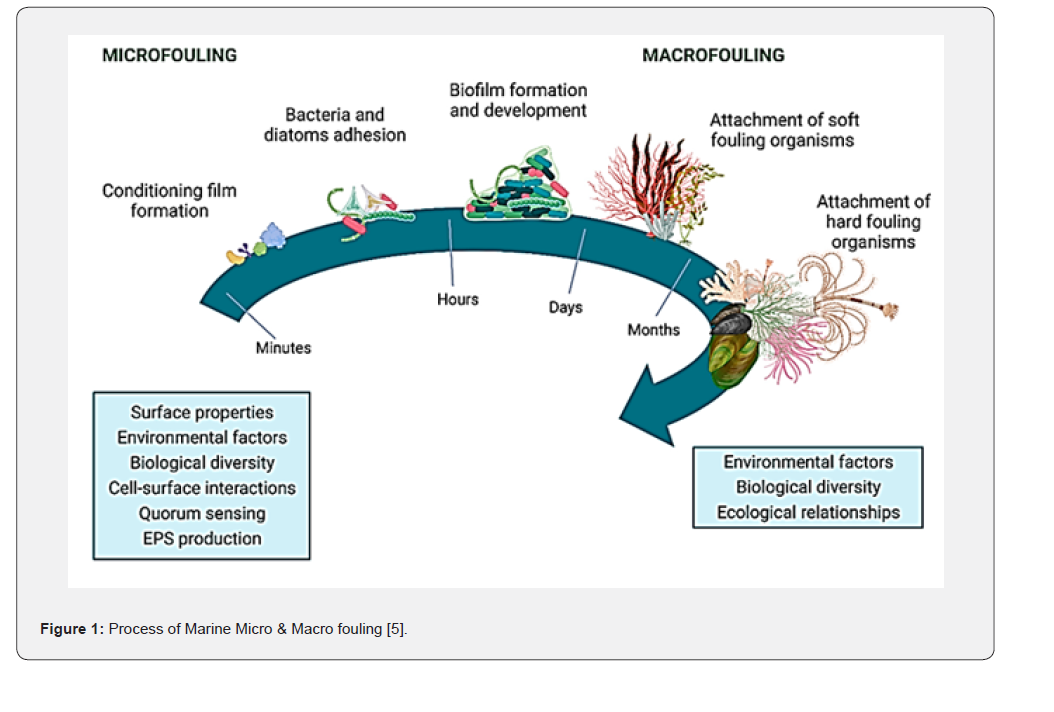
Beyond the microbial phase, biofouling expands into macrofouling as larger organisms, including barnacles, mussels, tubeworms, bryozoans, and kelp, settle onto pre-conditioned surfaces, often guided by bacterial signatures that signal suitable habitat [2]. The transition from microfouling to macrofouling dramatically increases surface roughness, thickness, and weight, creating a multilayered and resilient coating that is highly resistant to mechanical removal [23]. As a result, marine biofouling represents not merely a biological attachment process, but a dynamic ecological succession shaped by environmental conditions, interkingdom signaling, and emergent community properties, concluding as a mature assemblage that exerts profound operational and ecological consequences [24].
Marine biofouling poses substantial operational, economic, and environmental burdens across maritime industries, making its management a critical priority for sectors such as shipping, aquaculture, and marine renewable energy [25]. For large-scale installations, including offshore wind turbines, tidal devices, vessel hulls, and aquaculture cages, biofouling increases drag, reduces hydrodynamic performance, and elevates fuel consumption, while also adding structural loading through increased mass and biofouling thickness [26]. Emerging bio-based strategies seek to replace or supplement traditional biocidal coatings by leveraging living organisms or naturally derived mechanisms for fouling resistance [4]. Recent research into multispecies biofilm communities demonstrates that engineered microbial consortia can form cohesive, resilient, and physicochemically robust living coatings capable of preventing larval settlement without releasing harmful metabolites [27]. Complementary efforts, such as European biofouling databases, provide industry stakeholders with spatially resolved information on species distributions, fouling intensity, and associated risks to support informed site selection and maintenance planning [28]. Together, these scientific advancements demonstrate a promising shift toward eco-friendly, regenerative, and data-driven antifouling solutions, recognizing that the future of marine biofouling control lies in integrating biotechnological innovation with comprehensive environmental knowledge [29].
Impacts of Biofouling
Biofouling represents one of the most pervasive biological challenges in aquaculture, producing complex ecological, mechanical, and economic impacts on both shellfish and finfish farming operations (Table 1). The buildup of algae, tunicates, sponges, bryozoans, hydroids, polychaetes, and microbial films on artificial structures causes severe operational inefficiencies by increasing drag, weight, and the frequency of maintenance interventions [30]. Although in rare cases biofouling can enhance primary pro ductivity, facilitate settlement, or offer temporary protection from predators for shellfish, these benefits are insufficient to offset the widespread negative consequences across aquaculture systems [31]. Obstruction of water flow through nets and cages is particularly harmful, as reduced water exchange impairs oxygen delivery, waste removal, and feed dispersal, ultimately lowering animal performance and elevating stress levels [6]. In addition, accumulated fouling biomass increases static and hydrodynamic loads on floating structures, contributing to cage deformation, structural fatigue, and heightened risk of infrastructure failure. When combined with intensified disease transmission and the harboring of pathogenic bacteria, viruses, and parasites within fouling communities, biofouling presents significant animal health concerns [32]. Global cost analyses indicate that managing fouling consumes substantial portions of operational budgets, often exceeding 15% of total production expenditures. Consequently, while biofouling is a natural ecological process, its cumulative impacts make it one of the primary biological constraints limiting efficient, profitable, and sustainable aquaculture, highlighting the need for effective mitigation strategies [33].
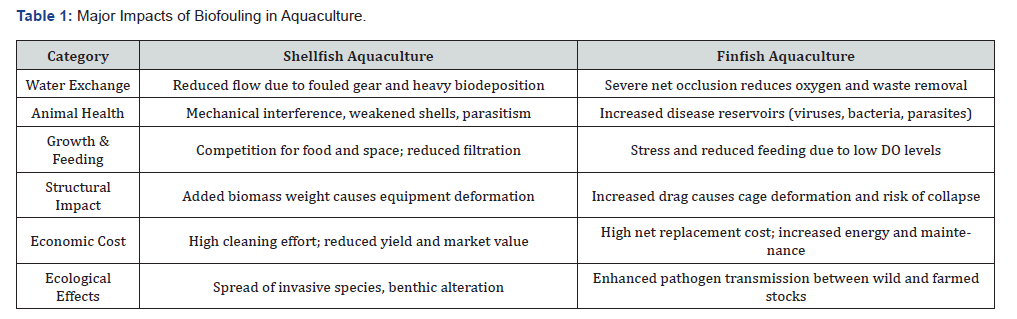
In shellfish aquaculture, biofouling manifests through multiple interconnected pathways that compromise physiology, product quality, and operational efficiency [34]. Physical damage caused by endolithic polychaetes, such as Polydora and Boccardia, results in shell burrowing, blistering, deformation, and weakening, which reduces shell integrity and increases vulnerability to predation and disease [6]. Mechanical interference arises when fouling organisms, including hydroids, tunicates, barnacles, and macroalgae, restrict shell valve movement, limiting feeding, respiration, and filtration efficiency, which can lead to significant mortality under severe infestations [7]. Biological competition further exacerbates production challenges, as dominant fouling organisms compete with farmed shellfish for food and space, particularly when filter feeders such as Ciona intestinalis or Mytilus edulis share similar particle size preferences and clearance rates [35]. Environmental modification adds to these pressures, with heavy fouling reducing water exchange, increasing biodeposition, and altering nutrient dynamics, potentially reshaping benthic ecosystems and facilitating the spread of non-indigenous species [33]. Additional biomass also increases drag on ropes, nets, panels, and floats, resulting in equipment deformation, crop losses, and higher maintenance demands [36]. Collectively, these effects underscore that biofouling significantly reduces growth, aesthetics, yield, and ecosystem stability in shellfish aquaculture, emphasizing the need for integrated prevention and management approaches.
In finfish aquaculture, biofouling introduces critical operational constraints by affecting water exchange, disease dynamics, and cage stability, ultimately compromising fish welfare and farm productivity (Zrnčić, 2022). Net occlusion caused by dense fouling communities reduces hydrodynamic flow, decreasing oxygen supply and impairing the removal of waste and excess feed, a problem that is particularly pronounced in high-density net-pen systems [37]. As stocking densities increase, oxygen demand rises, and fouling-induced reductions in water flow can quickly lead to hypoxic conditions, with dissolved oxygen levels below 5 mg per liter impairing growth and levels below 2 mg per liter causing mortality [38]. Biofouling communities also serve as reservoirs and vectors for pathogenic microorganisms, including viruses such as IPN and IHNV, bacterial pathogens such as Vibrio spp., and parasites including blood flukes (Cardicola forsteri) and cestodes (Gilquinia squali), facilitating transmission between wild and farmed populations and increasing disease outbreaks [8]. Heavy fouling further imposes physical stress on cages by increasing drag and static load, reducing functional cage volume, and intensifying crowding stress [39]. These structural effects elevate ammonia concentrations per unit volume and raise the likelihood of catastrophic net failures that can lead to fish escapes [6]. Consequently, fouling pressure in finfish aquaculture significantly elevates operational risks while reducing animal performance and system resilience, emphasizing the importance of advanced antifouling technologies and optimized hydrodynamic design.
The economic and operational consequences of biofouling across aquaculture are substantial, reflecting increased labor demands, higher energy consumption, frequent equipment replacement, and significant yield losses [40]. In shellfish farms, fouling management can account for 14-20% of total operational costs, while growth reductions of more than 40% and annual financial losses reaching hundreds of thousands of euros have been reported in regions such as Scotland [31]. In finfish farms, fouling on aeration devices, HDPE floats, and net structures increases energy consumption, with paddlewheel aerators drawing up to 50% more power when fouled, thereby elevating electricity costs and maintenance requirements [9]. Net replacement and antifouling reapplication further add to financial burdens, with medium-sized salmon farms investing over €120,000 annually in fouling control [41]. Beyond direct costs, fouling-induced mortality events, disease outbreaks, and structural failures cause hidden economic losses by reducing harvest volumes, lowering product quality, and increasing regulatory compliance expenses [42]. Additionally, the ecological impacts of biodeposition, habitat alteration, and the spread of non-indigenous species introduce long-term environmental remediation costs that extend beyond farm boundaries [43]. These economic and operational pressures illustrate that biofouling is more than a biological nuisance; it is a multifaceted challenge requiring proactive, integrated, and sustainable control strategies that balance ecological responsibility with economic viability.
Innovations and Environmental Implications of Marine Biofouling and Its Control Strategies
The growing complexity and persistence of microbial biofilms on industrial, medical, and environmental surfaces have prompted the development of innovative biological prevention strategies that provide safer and more targeted alternatives to conventional physical and chemical treatments [44]. Biofilms exhibit strong resistance to cleaning agents due to their structural heterogeneity and protective extracellular matrix, making early-stage prevention significantly more effective than post-formation removal [10]. Recent research has highlighted approaches such as the adsorption of bacteriocins, nisin, and other bioactive peptides onto abiotic surfaces to reduce initial bacterial adhesion [45]. Enzymatic mixtures that degrade polysaccharides, proteins, and structural linkages within the biofilm matrix have also shown high efficacy, with enzymes such as endoglycosidases (Endo H) specifically removing Staphylococci and E. coli from glass and fabric surfaces [46]. Other advances include the use of colanic-acid–degrading enzymes from Streptomyces, which disrupt EPS synthesis and inhibit further colonization. These strategies represent a shift from harsh disinfectants toward precision biological tools that target molecular pathways critical for adhesion and biofilm formation [47]. Importantly, these bioactive approaches exhibit lower environmental toxicity, making them suitable for food-contact surfaces and medical sanitation. However, limitations remain, including stability issues, cost-intensive purification, and challenges with surface immobilization [48]. Therefore, integrating enzymatic and peptide-based bioinhibitors with advanced surface engineering is essential to achieve long-term, scalable biofilm control. Overall, refining these biological strategies represents a significant step toward sustainable and highly selective biofilm prevention solutions.
Marine ecosystems, with extraordinary biodiversity encompassing 34 of the planet’s 36 known phyla, provide a vast source of chemically diverse secondary metabolites with strong ecological roles and anti-fouling potential [49]. Many benthic organisms, including sponges, algae, tunicates, and mollusks, employ biochemical defense systems to prevent colonization by algae, bacteria, and invertebrate larvae, enabling survival in competitive environments [50]. These defenses include mucus secretion, surface sloughing, microstructural features, and bioactive metabolites that disrupt settlement cues and inhibit epibiont attachment. Laboratory studies have identified numerous marine-derived antifouling compounds, many of which are patented, showing potent inhibitory effects against barnacle larvae, bryozoans, and microbial biofilms, suggesting strong potential as eco-friendly antifouling agents [11]. A major limitation is that most studies are conducted under controlled laboratory conditions rather than natural marine environments, meaning observed concentrations and activity may not fully reflect real-world scenarios [51]. Additionally, natural metabolites are often produced in small quantities, limiting direct extraction and commercial application. This challenge has driven interest in scalable production via bioprocess engineering and microbial fermentation [52]. Marine microbes, including bacteria and fungi involved in host symbioses, can be genetically manipulated and cultivated for consistent metabolite yields, representing untapped chemical diversity capable of generating novel antifouling compounds without harming marine ecosystems [3]. Ultimately, marine secondary metabolites offer substantial potential as environmentally benign antifouling agents, but further research integrating ecological studies, molecular insights, and sustainable production techniques is required to fully realize this potential.
Marine microorganisms including bacteria, fungi, and cyanobacteria are increasingly recognized as prolific yet underexplored sources of structurally unique bioactive compounds capable of addressing significant biomedical and antifouling challenges [53]. Less than 5% of marine microbial species have been formally identified, despite their enormous metabolic diversity and the discovery of nearly one thousand new microbial compounds in a single year. These microorganisms thrive in extreme environments, such as deep ocean trenches, hydrothermal vents, and nutrient-poor waters, driving the evolution of specialized metabolites like terpenoids, peptides, alkaloids, and mixed-origin compounds [54]. Many of these metabolites serve vital ecological functions, including chemical defense, spatial competition, and symbiotic interactions, particularly in soft-bodied hosts that depend entirely on microbial partners for protection [12]. The biomedical relevance of these compounds is already evident, with several marine-derived molecules entering clinical trials for cancer, infection control, and inflammation suppression, including Didemnin-B, the first natural marine compound tested in human cancer trials. However, natural extracts from marine macro-organisms are typically produced in trace amounts, making direct harvesting ecologically unsustainable and economically impractical [55]. Bioprocess engineering has therefore emerged as the main strategy for scalable production through fermentation, metabolic engineering, and controlled cultivation of marine microorganisms. These methods enable genetic modification for improved yield, structural optimization, and pathway reconstruction, bypassing ecological exploitation [56]. Consequently, marine microbes are increasingly recognized as renewable biofactories with immense potential for industrial- scale production of antifouling and therapeutic compounds, underscoring their central role in future drug discovery and sustainable antifouling innovation.
Marine biofouling imposes significant environmental and economic impacts across global shipping, aquaculture, marine infrastructure, and biodiversity management, highlighting the need for integrated and sustainable mitigation strategies [43]. Biofouling increases hydrodynamic drag on vessels, raising fuel consumption and greenhouse gas emissions, with power losses reaching up to 85% under severe calcareous fouling, contributing to elevated GHG levels reported by IMO assessments [13]. Additionally, biofouling facilitates the transport of invasive aquatic species via hulls and ballast water, threatening ecosystem stability, economic assets, and native biodiversity [26]. Despite international regulations on ballast water management, hull-mediated species transfer remains a major concern, underscoring the need for enhanced monitoring, predictive modeling, and site-specific management protocols [56]. Microplastics released from paint erosion and maintenance further exacerbate environmental contamination near harbors. Marine infrastructure including offshore wind turbines and aquaculture nets, suffers from reduced lifespan, bio-corrosion, sensor interference, and increased operational costs, with maintenance expenditures reaching up to 30% of total lifecycle costs in the renewable energy sector [28]. In aquaculture, fouled nets act as reservoirs for pathogens, increasing fish mortality and operational burdens. These cumulative impacts demonstrate that effective antifouling solutions must integrate biological, engineering, and ecological approaches rather than relying solely on conventional biocidal coatings [57]. Addressing the multidimensional challenges of biofouling requires innovative, environmentally friendly, and system-wide strategies that balance ecological protection with operational efficiency across marine sectors.
Regulatory Transitions and Policy Evolution in Marine Biofouling Management
Rising global concerns over the ecological impacts of biocidal antifouling coatings have heightened the urgency for policy reforms aimed at ensuring the long-term sustainability and safety of marine environments. Copper-based coatings remain the most widely used commercial biocides, yet their extensive application has caused significantly elevated copper concentrations in coastal waters, particularly in enclosed bays and high-salinity areas with limited water exchange [14]. Multiple studies report that sediment copper levels can reach up to twenty times above natural baselines due to the accumulation of eroded paint particles, which degrade slowly and persist in benthic ecosystems [58]. While laboratory analyses often overestimate environmental concentrations through acid digestion of samples, projected ocean acidification trends may increase metal solubility and toxicity. Alongside copper, booster biocides such as DCOIT and Selektope face growing scrutiny over their bioaccumulation potential, raising uncertainty regarding long-term regulatory approval [26]. For example, South Korea has imposed stringent restrictions, limiting certain biocide concentrations in coatings to less than 1 percent by weight, establishing a precedent for other regulators [15]. These developments highlight that reliance on toxic antifouling agents is increasingly unsustainable, as ecological risk assessments intensify, and international oversight grows [59]. In summary, mounting evidence underscores a global shift toward stricter biocide regulation driven by environmental risks, cumulative toxicity, and the urgent need for sustainable antifouling alternatives.
The fragmented regulatory landscape governing antifouling coatings presents substantial challenges for industry compliance and the global advancement of environmentally responsible biofouling control technologies. In the European Union, biocidal products are regulated under the Biocidal Products Regulation, which requires rigorous environmental risk assessments based on standardized leaching and release-rate tests [60]. However, these protocols differ markedly from regulatory frameworks in Asia, North America, and other maritime regions [16]. This lack of harmonization leads to prolonged approval cycles, duplicated bureaucratic procedures, and limited market access for emerging antifouling solutions, slowing the adoption of innovations such as enzymatic, bio-based, or low-toxicity surface technologies [61]. The issue becomes increasingly critical with the growing use of remotely operated vehicle cleaning systems, which demand regulatory clarity regarding waste capture, disposal methods, and contamination thresholds [62]. Lessons from ballast water management, where globally recognized limits on organism discharge and mandated offshore exchange protocols were successfully implemented, demonstrate that unified standards can enhance compliance and environmental protection when adopted internationally [17]. Additionally, improved verification tools, particularly those assessing organism viability rather than mere presence, are essential for ensuring meaningful adherence to future regulations. In conclusion, addressing regulatory fragmentation through standardized global frameworks is crucial to supporting innovation, accelerating environmentally safe adoption, and ensuring coherent protection against marine biofouling worldwide.
The incorporation of climate policy into marine biofouling regulation represents a pivotal shift in how governments and international organizations balance operational efficiency, environmental responsibility, and long-term sustainability in maritime transport. Performance-based standards such as the Energy Efficiency Existing Ship Index and the Carbon Intensity Indicator require vessels to monitor, document, and report annual emissions, creating a direct incentive for maintaining clean hulls and effective antifouling management [62]. Beginning in 2025, ships operating to and from the EU will also be subject to an emissions trading scheme, obliging them to purchase carbon allowances proportional to their greenhouse gas output, which could substantially increase the financial burden of operating fouled vessels [18]. These policies indirectly drive the maritime sector to adopt antifouling technologies that reduce drag and fuel consumption, aligning environmental stewardship with economic incentives [63]. Emerging innovations such as blockchain-based digital cleanliness passports offer a transformative approach to compliance auditing by providing decentralized, tamper-proof records of cleaning history, inspections, and maintenance intervals. Such tools enhance transparency and enable authorities to enforce antifouling standards more efficiently while minimizing fraudulent reporting [64]. Collectively, these climate-linked regulations and digital verification mechanisms indicate a future in which biofouling management is intrinsically connected to global carbon reduction goals and technological modernization. In summary, the integration of environmental policy, digital monitoring, and antifouling innovation marks a decisive step toward an integrated regulatory framework designed to minimize ecological harm while promoting sustainable maritime operations.
Conclusion
Marine biofouling is a complex and persistent challenge that exerts wide-ranging ecological, operational, and economic impacts across shipping, aquaculture, and marine infrastructure. The initial colonization of submerged surfaces by microbial biofilms, followed by the settlement of macrofoulers such as barnacles, mussels, and algae, significantly reduces hydrodynamic efficiency, increases drag and fuel consumption, and accelerates structural degradation. In aquaculture systems, biofouling compromises water exchange, oxygen supply, and feeding efficiency, while also serving as a reservoir for pathogens and invasive species, which elevates disease risk and threatens ecosystem stability. Collectively, these effects underline the critical importance of developing sustainable and effective antifouling strategies to maintain operational performance and protect marine environments.
Recent advances in biological antifouling strategies offer promising alternatives to traditional biocidal coatings. Approaches including bioactive peptides, enzymatic treatments, engineered microbial consortia, and secondary metabolites derived from marine organisms provide targeted inhibition of biofilm formation while minimizing ecological toxicity. These methods exploit specific molecular pathways involved in microbial adhesion and biofilm development and can be combined with advanced surface engineering and scalable bioprocess technologies to enhance long-term efficacy. By leveraging natural defense mechanisms and precision biotechnological tools, these solutions not only mitigate biofouling but also reduce the environmental footprint associated with conventional chemical coatings, supporting the transition toward sustainable maritime operations.
The evolution of regulatory frameworks and climate-linked policies has further reinforced the need for integrated biofouling management. Stricter biocide limits, performance-based emission standards, and harmonization of global regulatory practices create incentives for cleaner hull maintenance and the adoption of environmentally safe antifouling technologies. Emerging digital monitoring solutions, such as blockchain-based cleanliness passports, enhance transparency and compliance by providing secure, verifiable records of maintenance, inspections, and antifouling interventions. These mechanisms facilitate effective enforcement, support innovation in sustainable antifouling technologies, and help align operational practices with broader environmental protection and climate mitigation goals.
Overall, addressing the challenges posed by marine biofouling requires a holistic approach that integrates biotechnological innovation, ecological understanding, and regulatory support. By combining these elements, it is possible to achieve antifouling solutions that maintain operational efficiency, protect marine biodiversity, and promote economic sustainability. Such integrated strategies provide a robust framework for mitigating the multifaceted impacts of biofouling, ultimately contributing to environmentally responsible and resilient marine industries worldwide.
Acknowledgement
The authors would like to thank every person and department who helped throughout this research.
References
- Vanysacker L, Boerjan B, Declerck P, Vankelecom IF (2014) Biofouling ecology as a means to better understand membrane biofouling. Applied Microbiology and Biotechnology 98(19): 8047-8072.
- Dang H, Lovell CR (2016) Microbial surface colonization and biofilm development in marine environments." Microbiology and Molecular Biology Reviews 80(1): 91-138.
- Wang Z, Wang X, Huang Y, Hou B (2023) Metagenomic insights into nutrient and hypoxic microbial communities at the macrofouling/steel interface leading to severe MIC. npj Materials Degradation 7(1): 41.
- Mathew NT, Kronholm J, Bertilsson K, Despeisse M, Johansson B (2020) Environmental and economic impacts of biofouling on marine and coastal heat exchangers. In: EcoDesign and Sustainability II: Social Perspectives and Sustainability Assessment, Singapore: Springer Singapore, pp. 385-398.
- Diender M, Olm IP, Sousa DZ (2021) Synthetic co-cultures: novel avenues for bio-based processes. Current Opinion in Biotechnology 67: 72-79.
- Valdez GE, Córdova MLR, Albores FV, Emerenciano MG, Baeza AM, et al. (2023) The biofouling process: The science behind a valuable phenomenon for aquaculture. Reviews in Aquaculture 15(3): 976-990.
- Kumar S, Paul T, Sarkar P, Kumar K (2025) Environmental Factors Affecting Aquatic Animal Health. In: Management of Fish Diseases, Singapore: Springer Nature Singapore. pp. 171-188.
- Saha SC (2024) Biofouling: a threat in marine fish culture and remedies. Vidyasagar College for Women 15.
- Das S, O’Connell MG, Xu H, Bernstein R, Kim JH, et al. (2022) Assessing advances in anti-fouling membranes to improve process economics and sustainability of water treatment. ACS ES&T Engineering 2(11): 2159-2173.
- Baysal A, Saygin H (2024) Biofouling: Status and challenges in the marine environment. In: Nanotechnology to Monitor, Remedy, and Prevent Pollution pp. 485-508.
- Liu HY, Prentice EL, Webber MA (2024) Mechanisms of antimicrobial resistance in biofilms. npj Antimicrobials and Resistance 2(1): 27.
- Srinivasan R, Kannappan A, Shi C, Lin X (2021) Marine bacterial secondary metabolites: A treasure house for structurally unique and effective antimicrobial compounds. Marine Drugs 19(10): 530.
- Chen QP, Bi CW, Zhang ZX, Zhao YP (2023) Hydrodynamic effect of different biofouling types on aquaculture netting. Ocean Engineering 279: 114430.
- Wu S, Wu S, Xing S, Wang T, Hou J, et al. (2024) Research progress of marine anti-fouling coatings. Coatings 14(9): 1227.
- Falfushynska H, Lewicka K, Rychter P (2024) Unveiling the Hydrochemical and Ecotoxicological Insights of Copper and Zinc: Impacts, Mechanisms, and Effective Remediation Approaches. Limnological Review 24(4): 406.
- Mäkelä MR, Brännström H, Weckroth M, Kohl J, Viana DSG, et al. (2024) Valuable biochemicals of the future: The outlook for bio-based value-added chemicals and their growing markets.
- Kostiuk A (2025) Regulatory Considerations and Challenges for Bioproduct Innovations.
- Boçe TM, Hoxha J (2025) Blockchain for Sustainable Development: A Systematic Review. Sustainability 17(11): 4848.
- Hadfield MG, Freckelton M, Nedved BT (2025) Marine bacterial biofilms: Shaping surface communities. Annual Review of Microbiology 79(1): 427-448.
- Bronstein JL, Sridhar H (2024) Connecting and integrating cooperation within and between species. Philosophical Transactions B 379(1909): 20230203.
- Bilodeau SM, Hay ME (2022) Chemical cues affecting recruitment and juvenile habitat selection in marine versus freshwater systems. Aquatic Ecology 56(2): 339-360.
- Wang X, Liu M, Yu C, Li J, Zhou X (2023) Biofilm formation: mechanistic insights and therapeutic targets. Molecular Biomedicine 4(1): 49.
- Pistone A, Scolaro C, Visco A (2021) Mechanical properties of protective coatings against marine fouling: A review. Polymers 13(2): 173.
- Liang H, Shi X, Li Y (2024) Technologies in marine antifouling and anti-corrosion coatings: a comprehensive review. Coatings 14(12): 1487.
- Suprobo Y, Riyanto R, Herawati S (2025) Sustainable Biofouling Mitigation: Advancing Maritime Efficiency and Environmental Protection. Journal of Biological Education Indonesia (Jurnal Pendidikan Biologi Indonesia) 11(1): 208-217.
- Weber F, Esmaeili N (2023) Marine biofouling and the role of biocidal coatings in balancing environmental impacts. Biofouling 39(6): 661-681.
- Yu S, Lu X, Lu H (2025) Marine microbial biofilms on diverse abiotic surfaces. Frontiers in Marine Science 12: 1482946.
- Xavier FC, Araujo FC, Batista D, Messano LVD, Mizrah D, et al. (2025) Managing the risk of marine bioinvasion via biofouling: trends in methods of assessment, policy, and legislation. Ocean and Coastal Research 73: e25021.
- Xu K, Xiao X, Wang L, Lou M, Wang F, et al. (2024) Data‐Driven materials research and development for functional coatings. Advanced Science 11(42): 2405262.
- Chou LM (2021) Enhancing Marine Biodiversity with Artificial Structures. In: Sustainable Engineering Technologies and Architectures.
- Hopkins G, Davidson I, Georgiades E, Floerl O, Morrisey D, et al. (2021) Managing biofouling on submerged static artificial structures in the marine environment–assessment of current and emerging approaches. Frontiers in Marine Science 8: 759194.
- Kolur NF, Zeinoddini M, Harandi MA, Abi FA, Jadidi P (2021) Effects of soft marine fouling on wave-induced forces in floating aquaculture cages: physical model testing under regular waves. Ocean Engineering 238: 109759.
- David AA (2021) Climate change and shell-boring polychaetes (Annelida: Spionidae): Current state of knowledge and the need for more experimental research. The Biological Bulletin 241(1): 4-15.
- Jafari M, Vanoppen M, Van Agtmaal JMC, Cornelissen ER, Vrouwenvelder JS, et al. (2021) Cost of fouling in full-scale reverse osmosis and nanofiltration installations in the Netherlands. Desalination 500: 114865.
- Spencer LH, Martinelli JC, King TL, Crim R, Blake B, et al. (2021) The risks of shell‐boring polychaetes to shellfish aquaculture in Washington, USA: a mini‐review to inform mitigation actions. Aquaculture Research 52(2): 438-455.
- Rawson PD (2025) Shell-boring polychaete infections of bivalves. Diseases of Bivalves pp. 251-264.
- Georgiades E, Scianni C, Davidson I, Tamburri MN, First MR, et al. (2021) The role of vessel biofouling in the translocation of marine pathogens: management considerations and challenges. Frontiers in Marine Science 8: 660125.
- Uma A (2025) Pathogen and Disease Transmission in Aquatic Animals. In: Management of Fish Diseases, 19-55. Singapore: Springer Nature Singapore.
- Mishra A, Kim HS, Kumar R, Srivastava V (2024) Advances in Vibrio-related infection management: an integrated technology approach for aquaculture and human health. Critical Reviews in Biotechnology 44(8): 1610-1637.
- Bloecher N, Floerl O (2021) Towards cost‐effective biofouling management in salmon aquaculture: a strategic outlook. Reviews in Aquaculture 13(2): 783-795.
- Castañeda TL, Sanz DS, García S, Trueba A (2021) Analysis of biofouling economic impact on the Cantabria fishing fleet. In: Oceans, San Diego-Porto IEEE p. 1-6.
- Tsotsios D, Moutopoulos DK, Lattos A, Michaelidis B, Theodorou JA (2023) Impacts of the establishment of biofoulants on greek aquaculture: farmers’ Expert knowledge. Journal of Marine Science and Engineering 11(5): 1077.
- Arndt E, Robinson A, Hester S, Woodham B, Wilkinson P, et al. (2021) Factors that influence vessel biofouling and its prevention and management. Final report for CEBRA Project.
- Shineh G, Mobaraki M, Bappy PMJ, Mills DK (2023) Biofilm formation, and related impacts on healthcare, food processing and packaging, industrial manufacturing, marine industries, and sanitation–a review. Applied Microbiology 3(3): 629-665.
- Rather MA, Gupta K, Bardhan P, Borah M, Sarkar A, et al. (2021) Microbial biofilm: A matter of grave concern for human health and food industry. Journal of Basic Microbiology 61(5): 380-395.
- Anumudu C, Hart A, Miri T, Onyeaka H (2021) Recent advances in the application of the antimicrobial peptide nisin in the inactivation of spore-forming bacteria in foods. Molecules 26(18): 5552.
- Kim JS, Lim MC, Kim SM, Lee JY (2023) Extracellular matrix-degrading enzymes as a biofilm control strategy for food-related microorganisms. Food Science and Biotechnology 32(12): 1745-1761.
- Al-Madboly LA, Aboulmagd A, El-Salam MA, Kushkevych I, El-Morsi RM (2024) Microbial enzymes as powerful natural anti-biofilm candidates. Microbial Cell Factories 23(1): 343.
- Sun L, Xu B, Tao Y, Liang Y, Chen X (2025) Exploring Intervention Strategies for Microbial Biofilms in the Food Industry Based on a Biomolecular Mechanism Perspective: Recent Advances and Emerging Trends. Foods 14(24): 4192.
- Fernandes S, Gomes IB, Simões M, Simões LC (2024) Novel chemical-based approaches for biofilm cleaning and disinfection. Current Opinion in Food Science 55: 101124.
- Su Y, Yrastorza JT, Matis M, Cusick J, Zhao S, et al. (2022) Biofilms: formation, research models, potential targets, and methods for prevention and treatment. Advanced Science 9(29): 2203291.
- Yin W, Xu S, Wang Y, Zhang Y, Chou SH, et al. (2021) Ways to control harmful biofilms: prevention, inhibition, and eradication. Critical Reviews in Microbiology 47(1): 57-78.
- Tan LT (2023) Impact of marine chemical ecology research on the discovery and development of new pharmaceuticals. Marine Drugs 21(3): 174.
- Morgan RN, Ali AA, Alshahrani MY, Aboshanab KM (2023) New insights on biological activities, chemical compositions, and classifications of marine actinomycetes antifouling agents. Microorganisms 11(10): 2444.
- Suresh A, Immanuel G (2023) Antifouling activity of microorganisms associated with the marine organisms. Novel Research in Microbiology Journal 7(4): 2064-2080.
- Saini N, Sirohi AAR, Saini N, Wadhwa P, Kaur P, et al. (2023) Marine-derived natural products as anticancer agents. Medicinal Chemistry 19(6): 538-555.
- Nurhalimi NI, Adim SA, Md Noor N, Abas A (2025) Marine biofouling and antifouling: a decade of systematic review on the environmental risks to coastal water systems. Biofouling 41(10): 965-980.
- Kontus O, Kotta J (2025) Sustainable marine coatings: comparing the costs, benefits, and impacts of biocidal and biocide-free paints. Coatings 15(8): 931.
- Carrier AJ, Carve M, Shimeta J, Walker TR, Zhang X, et al. (2023) Transitioning towards environmentally benign marine antifouling coatings. Frontiers in Marine Science 10: 1175270.
- Li L, Hong H, Cao J, Yang Y (2023) Progress in marine antifouling coatings: Current status and prospects. Coatings 13(11): 1893.
- Simón SM, Yedra AFGDL, Zarragoitia MO, Marchini A (2025) Past, present and (possible) future of biofouling regulatory instruments within the international marine environmental protection framework. Environmental Sciences Europe 37(1): 127.
- Putra NR, Sahlan S, Nugroho WH, Widodo W, Mujahid ASU, et al. (2025) Natural sustainable coatings for marine applications: advances, challenges, and future perspectives. Green Processing and Synthesis 14(1): 20250035.
- Ergin A, Ergin MF (2021) The role of antifouling coating in the marine industry. Research & Reviews in Engineering 53.
- Nwuzor IC, Idumah CI, Nwanonenyi SC, Ezeani OE (2021) Emerging trends in self-polishing anti-fouling coatings for marine environment. Safety in Extreme Environments 3(1): 9-25.

























