




 OFOAJ Home



Abstract
This study included the feeding of Clausocalanus laticeps (Farran, 1929) of crustacean zooplankton (Calanoida), by studying the structure of the Mandible and the gut content of this previous species to determine its favorite food. 76 samples have been collected vertically in period between March and October 2021. The samples were also accompanied with different hydrophysical and hydrochemical measurements in three regions that differ from each other with their environmental properties. The number of members of (C. laticeps) that were studied reached (71) individuals, of which (52) are female and (19) are male. On the other hand, studying its mandible structure, and knowing the content of the gut of the aforementioned species helped in expanding knowledge about the conditions and strategies of feeding it under the influence of environmental factors. The number of algae species (phytoplankton) that C. laticeps fed reached (7) species, of which (4) belong to the Dinophyceae, (2) species to Bacillariophyceae earth, and (1) only one species to the group Cryptophyceae. The highest average number of Dinophyceae was (1500), followed by Bacillariophyceae (420) individuals, then the group of Cryptophyceae (140) individuals.
Keywords:Feeding; Mandible; Gut Content; Hydrophysical; Hydrochemical Measurements
Introduction
Crustacean zooplankton is a Heterotrophic and is an important component of marine ecosystems [1] through the primary role it plays in the food web [2]. Copepods are major components of marine food chains and operate either directly or indirectly as food sources for most commercially important fish [3], and their oral appendices have evolved to suit the nature and quality of their food [4]. On the other hand, the jaw’s leg movement towards the mouth creates a stream of water that raises the pressure inside the mouth, which leads to water entering with food [5], and others are equipped with a special filtration system through which it filters the food particles entering with Water stream [6]. Copepods generally tend to feed on a mixed diet in their natural environment, especially in the first few layers (0-50) m [7], and the survival and success of copepods over the years may be due to their ability to determine prey [8], and the selection of the preferred and most abundant food in the surrounding environment [9].
Copepodes are dominant creatures in marine zooplankton [1]. Their diets often include large proportions of Bacillariophyceae that have Silesian structures to protect. Despite this protection, there are many species of copepods that are capable of breaking and shattering these structures with high efficiency even the most supported and protected species [10]. The composition and shape of mandible teeth at copepods also differ by species, and studies using electron microscopy have revealed These teeth are of complex microscopic structures that contain in their composition silica, and this explains their ability to destroy the structures of Bacillariophyceae [11].
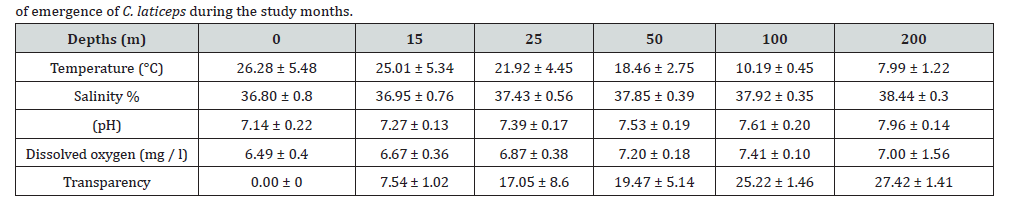
Various environmental factors such as temperature, salinity, dissolved oxygen, pH, and transparency affect marine copepods and their nutritional activity [5], and the concentration and distribution of food particles in the surrounding medium [12].
The objectives of this study were:
a) feeding for C. laticeps, determine the intestinal content
of food
b) study the shape and composition of its species, under
the influence of various environmental factors
The importance of research lies through clarifying the environmental and nutritional requirements of the studied species, which constitutes a basic rule that facilitates the prediction of the status of these species in terms of productivity, as they are of economic importance and constitute a major food for fish, crustaceans and many other marine creatures.
Materials and Methods
Study area and sample collection
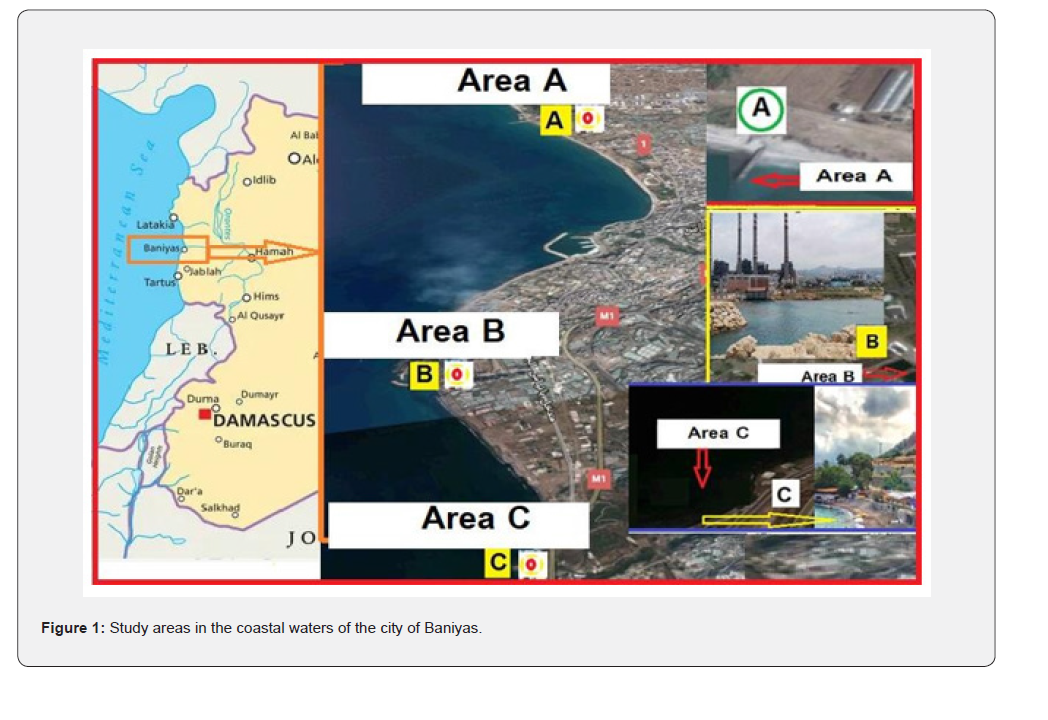
The species collection processes were carried out from the three study areas that were chosen in the coastal waters of the city of Baniyas, which differ from each other in environmental terms, as shown in (Figure 1).
Sanitation area (A)
It is located opposite the Baniyas National Hospital (35°12’09.0”N 35°57’08.0”E), where the sewage of the hospital and the neighborhoods of Al-Morouj flows into a unified liquefaction line (a major sewage line), where its estuary ends in the coastal waters of a city, and this beach is away from the second area (the thermal station area) at a distance of 7 km.
The Thermal Station area (Estuary of hot water) (B)
This region is located opposite the electrical power station in Baniyas (35°10’13.0”N 35°55’21.0”E). The thermal plant is 5 km from the third clean area. The thermal water resulting from the cooling of the station and the steam of the boilers that unite with it is poured into marine waters.
Prince Beach Chalets area (C)
This site is characterized by its cleanliness and lack of exposure to pollution (35°09’02.0”N 35°55’20.0”E).
Each area is divided into three sites (stations)
Zone A. Stations : A3-A2-A1.
Zone B. Stations : B3-B2-B1.
Zone C. Stations : C3-C2-C1.
The process of collecting samples of the two species in each
site was as follows:
a) The first location: (50-0) m, (50-25) m, (25-0) m.
b) The second location: (100-0) m, (100-50) m, (50-25) m,
(25-0) m.
c) The third location: (200-0) m, (200-100) m, (100-50) m,
(50-25) m, (25-0) m.
The depth varies according to the distance of each station from the beach.
For the measurement of water parameters, temperature (t), salinity (s), dissolved oxygen concentration, pH, and transparency were recorded using advanced modern devices. Temperature, salinity, and dissolved oxygen were measured with the Hanna Instruments HI9812-5 device and the DO Meter AZ Instrument AZ-8403. Water transparency was assessed using the Seki disk. A statistical analysis was performed to calculate the mean and standard deviation of these parameters using SPSS software.
Zooplankton samples were collected using a global zooplankton collection net equipped with a 200 μm mesh of the WP2 Closing type. The net was operated with a closing device to obtain the required samples. A submersible lens with magnification was used to study specimens of the species Clausocalanus laticeps, which were preserved in 4% formalin. A microscopic needle was utilized to extract the mandible for further analysis.
The study was conducted in the laboratories of Damascus University, Syria. The intestine of the zooplankton species was carefully removed and analyzed separately. The phytoplankton present in the zooplankton intestine were identified by preparing microscopic preparations and examining them under a microscope. Phytoplankton species were classified using taxonomic keys based on the references of Sarmach [13], Plinski [14], and Pankow [15].
Results
Description of the species
Male: The length of the male (0.7-0.9mm) and in terms of its overall appearance is very similar to the female. The front end of the head was round, while the abdomen extended, and the fifth leg of the legs had a four-legged left leg. As for the right hand, it is atrophied (Figure 2).
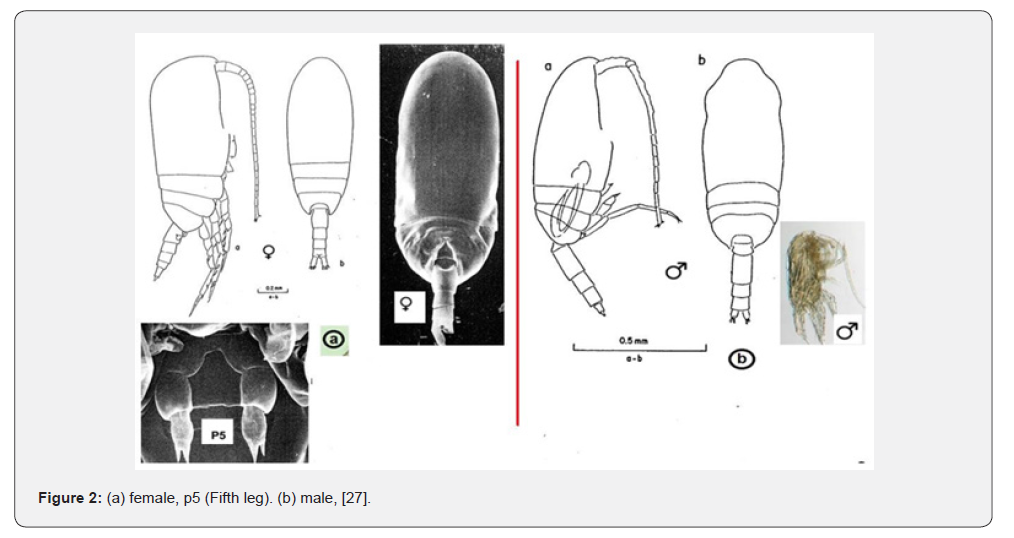
Female: The length of the female (1.1-1.2mm), the front end of the head was round, fifth of the legs has a single branch and two parts (Figure 2).
Feeding of C. laticeps. appeared in all study areas and stations, and the total number of individuals studied was (64) individuals, of which (44) are female and (20) male is distributed at different depths, and this explains that this species has wide environmental adaptation. Eurybiont with the values of different environmental factors as shown in (Table 1).
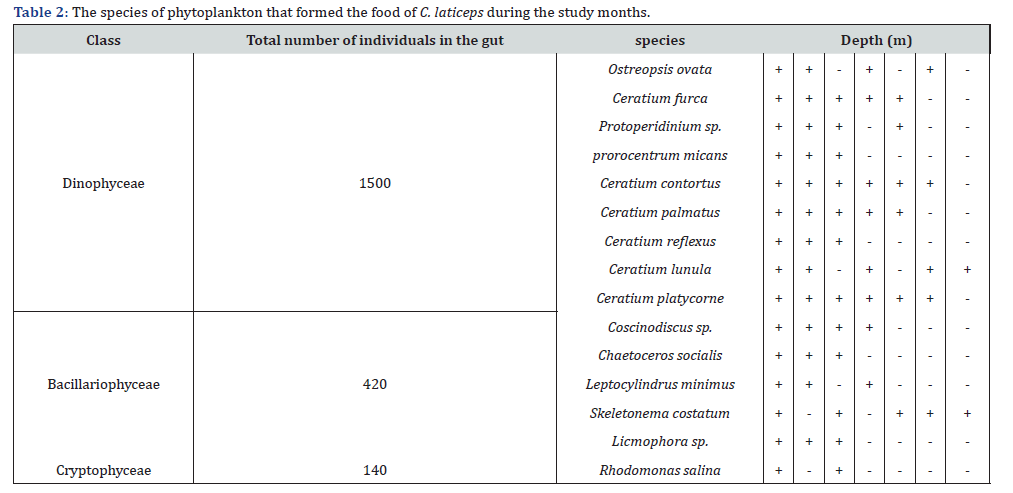
Dinophyceae recorded the highest value, with an average of 1500 individuals within the gut, as shown in (Table 2), compared to the rest of the groups. This made Dinophyceae the main food source for the studied species, followed by Bacillariophyceae with 420 individuals in the gut, and then Cryptophyceae with 140 individuals, as shown in (Table 2).
The results show that zooplankton exhibit generalist feeding behavior, consuming a wide variety of phytoplankton based on what is available in different depth zones. Dinoflagellates like Ceratium spp. and Ostreopsis ovata were more common in surface waters (25-0m), while diatoms such as Chaetoceros socialis and Skeletonema costatum dominated in deeper zones, suggesting that zooplankton feed on different species depending on the environmental conditions. Interestingly, species like Ceratium contortus and Ceratium palmatus were found across all depth zones, indicating that zooplankton might selectively feed on these due to their high nutritional value. The presence of Rhodomonas salina (a type of Cryptophyceae) in the zooplankton gut also points to feeding in areas with fluctuating nutrient conditions, possibly suggesting local eutrophication (Table 2).
Discussion
The largest presence of species was recorded in the 0-50 meter depth layer, as reported by [16]. This finding is attributed to the abundance of nutrients in this layer, which serves as the primary productivity zone where phytoplankton perform photosynthesis [17]. Factors such as marine currents, wave movement, and significant changes in environmental conditions, combined with the influx of nutrient-rich estuary drainage into station A1, create an optimal environment for the studied species. Conversely, the absence of the species at station B1 can be explained by the presence of hot water from the cooling systems of turbines and boilers, which create inhospitable conditions for the species.
The study corroborates findings from numerous international studies [11,18-21], identifying C. laticeps as herbivorous [22], with a particular preference for Dinophyceae [23,24]. Analysis of intestinal content (Figure 3) from individuals within the 0-50 meter layer revealed a diet comprising various species, highlighting a tendency towards mixed feeding strategies due to the high availability of diverse food sources in this layer [25]. At greater depths (100-200 meters), C. laticeps exhibited a dietary shift towards a single food source, primarily Bacillariophyceae [10], likely due to the limited presence of phytoplankton in these low-light, nutrient-poor environments [3].
The current study further indicates that the layers with depths of 0-50 meters, 25-50 meters, and 0-15 meters are richest in phytoplankton species, particularly Dinophyceae, on which C. laticeps predominantly feeds. The favorable conditions in these layers, including the presence of light and suitable temperatures, support phytoplankton growth, unlike the deeper layers where lower light and temperature conditions inhibit phytoplankton presence [23].
Additionally, observations of the gut structure of C. laticeps revealed a preference for Ceratium reflexus as a primary food source. In the shallow layers, C. laticeps feeds on multiple species, including Ceratium palmatus and Ceratium reflexus, where higher temperatures and lower salinity prevail [17]. Occasionally, it also consumes Skeletonema costatum, Rhodomonas salina, and Ceratium lunula. In deeper layers, C. laticeps tends to rely on a single species, such as Bacteriastrum furcatum Shadbolt, due to the colder temperatures and higher salinity [25].
Environmental factors, particularly temperature and salinity, play a significant role in influencing the feeding conditions and strategies of C. laticeps. This study adapted to the availability of food in the surrounding medium [17]. The diet of C. laticeps includes large proportions of Bacillariophyceae, which possess protective silicic structures. Despite these defenses, C. laticeps can efficiently break and destroy these structures, including the most protected Bacillariophyceae species [26]. This capability is attributed to the shape of its mandible teeth, which have short, sharp edges designed for grinding Bacillariophyceae and other phytoplankton species (Figure 3).
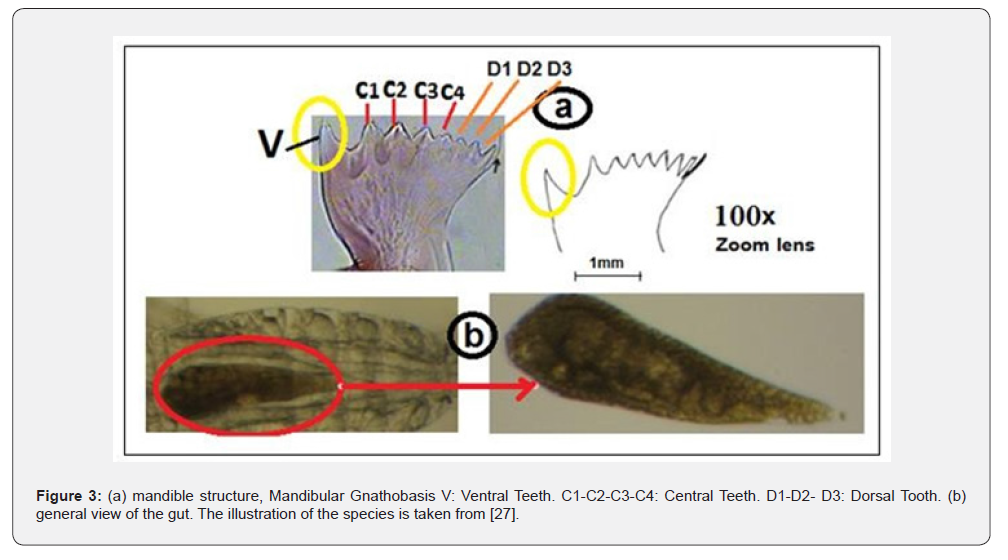
Electron microscope studies [11,18-21] reveal that the mandible teeth have a nanostructure containing a small amount of amorphous silica and a significant percentage of crystalline silica arranged in a network of micro-keratin fibers [5]. These fibers likely play a crucial role in the feeding process [22]. The ventral tooth (V) (Figure 3) is essential in C. laticeps and other copepods, especially Calanoida, varying by species. The maxilla (MxI) is crucial for holding and processing food particles, preventing their escape, and facilitating their entry into the organism’s body [25]. Additionally, the maxillipeds (MxP) play a significant role in collecting and transporting food particles within the body through their movement and interaction with water currents [17,27].
Conclusion
C. laticeps, along with other copepods, plays a crucial role in marine food webs. These organisms form an essential link between phytoplankton and secondary consumers, highlighting their significance in maintaining the balance and productivity of marine ecosystems.
References
- Al-Hanoun K, Mayya W (2020) Feeding of Paracalanus parvus (Claus, 1863) Order Calanoida (Copepoda) in the coastal waters of Baniyas (Eastern Mediterranean). SSRG Int J Agric Env Sci 7(4): 54-61.
- Frangou SI, Bianchi M, Christaki U, Christou ED, Giannakourou A et al. (2002) Carbon flow in the planktonic food web along a gradient of oligotrophy in the Aegean Sea (Mediterranean Sea). J Mar Syst 33: 335-353.
- Khodami S, Salas MNF, Arbizu MP (2020) Genus-level molecular phylogeny of Aegisthidae Gisbrecht, 1893 (Copepoda: Harpacticoida) reveals morphological adaptations to deep- sea and pelagic habitats. BMC Evol Biol 20: 1-17.
- Battuello M, Sartor RM, Brizio P, Nurra N, Pessani D, et al. (2017) The influence of feeding strategies on trace element bioaccumulation in copepods (Calanoida). Ecol Indic 74: 311-320.
- Sługocki Ł (2020) Variability of mandible shape in the freshwater glacial relict Eurytemora lacustris (Poppe, 1887) (Copepoda, Calanoida, Temoridae). Crustaceana 93: 337-353.
- Mageed AAA (2006) Spatio-temporal variations of zooplankton community in the hypersaline lagoon of Bardawil, North Sinai, Egypt. Egypt J Aquat Res 32(1): 168-183.
- Maps F, Record NR, Pershing AJ (2014) A metabolic approach to dormancy in pelagic copepods helps explaining inter- and intra-specific variability in life-history strategies. J Plankton Res 36: 18-30.
- Kang YS, Kim JY, Kim HG, Park JH (2002) Long‐term changes in zooplankton and its relationship with squid, Todarodes pacificus, catch in Japan/East Sea Fish Oceanogr 11(6): 337-346.
- Kim YO, Shin K, Jang PG, Choi HW, Noh JH, et al. (2012) Tintinnid species as biological indicators for monitoring intrusion of the warm oceanic waters into Korean coastal waters. Ocean Sci J 47: 161-172.
- Michels J, Gorb S (2015b) Mandibular Gnathobases of Marine Planktonic Copepods - Structural and Mechanical Challenges for Diatom Frustules. In: Evolution of Lightweight Structures (C. Hamm, Ed.). Springer, Dordrecht.
- Tyrell AS, Jiang H, Fisher NS (2020) Copepod feeding strategy determines response to seawater viscosity: videography study of two calanoid copepod species. J Exp Biol 223(13).
- Brosset P, Lloret J, Muñoz M, Fauvel C, Van Beveren E, et al. (2016) Body reserves mediate trade-offs between life-history traits: new insights from small pelagic fish reproduction. R Soc Open Sci 3: 160202.
- Sarmach K (1989) Freshwater Plant Plankton Poland. Academy of Sciences Warsaw-Krakow. pp. 496.
- Plinski M (1988) Algae of the Gulf of Gdańsk - Key to species identification. Part IV. Prunellae. Gdań pp. 183.
- Pankow CH (1976) Algenflora der Ostsee II: Plankton. In: Verlag pp. 493.
- El Arraj L, Tazi O, Somoue L, Hilmi K, Serghini M, et al. (2017) Diversity and copepods’ composition off Moroccan Atlantic Coast (Northwest Africa): A Review. Eur Sci J 13: 272-293.
- Kaji T, Song C, Murata K, Nonaka S, Ogawa K, et al. (2019) Evolutionary transformation of mouthparts from particle-feeding to piercing carnivory in viper copepods: Review and 3D analyses of a key innovation using advanced imaging techniques. Front Zool 16: 1-14.
- Jiang H, Paffenhöfer GA (2004) Relation of behavior of copepod juveniles to potential predation by omnivorous copepods: an empirical-modeling study. Mar Ecol Prog Ser 278: 225-239.
- Giesecke R, González HE (2004) Mandible characteristics and allometric relations in copepods: a reliable method to estimate prey size and composition from mandible occurrence in predator guts. Rev Chil Hist Nat 77(4): 607-616.
- Tiselius P, Saiz E, Kiørboe T (2013) Sensory capabilities and food capture of two small copepods, Paracalanus parvus and Pseudocalanus Limnol Oceanogr 58(5): 1657-1666.
- Michels J, Gorb SN (2015a) Mandibular gnathobases of marine planktonic copepods – feeding tools with complex micro- and nanoscale composite architectures. Beilstein J Nanotechnol 6: 674-685.
- Cornils A, Held C (2014) Evidence of cryptic and pseudocryptic speciation in the Paracalanus parvus species complex (Crustacea, Copepoda, Calanoida). Front Zool 11: 1-17.
- Wolny JL, Egerton TA, Handy SM, Stutts WL, Smith JL, et al. (2020) Characterization of Dinophysis (Dinophyceae, Dinophysiales) from the mid‐Atlantic region of the United States. J Phycol 56(2): 404-424.
- Ibahim AMM (2014) Marine plankton and Ceratium species in the west coast of the Red Sea. Blue Biotechnol J 3: 295.
- Komeda S, Ohtsuka S (2020) New genus and species of calanoid copepods (Crustacea) belonging to the group of Bradfordian families collected from the hyperbenthic layers off Japan. ZooKeys 951: 21-35.
- D Agostino VC, Hoffmeyer MS, Degrati M (2020) Morphology of the mandibular gnathobases of the copepods Calanus australis and Calanoides carinatus: Evidence of omnivory. Zool Anz 286: 64-71.
- Al-Hanoun KS, Zaeni A (2020) Practical Book - Zooplankton. In: (2nd ), Directorate of University Books and Publications, Tishreen University Publications pp. 276.

























