




 OFOAJ Home



Abstract
The present study investigates the length–weight relationship (LWR) and condition factor (K) of four commercially important freshwater fish species i.e., Labeo catla, Labeo rohita, Labeo calbasu and Oreochromis niloticus from two irrigation reservoirs, Gollapalli and Jeedipalli, located in Ananthapuramu District, Andhra Pradesh, South India. A total of 256 individuals were collected from local fishermen between March 2022 and April 2025 to assess growth patterns and habitat influence on fish health. The regression exponent (b) values ranged from 2.13 for L. rohita to 2.23 for O. niloticus, all below the cube law value (b = 3.0), indicating negative allometric growth, where fish become relatively lighter with increasing length. The coefficient of determination (R²) values ranged from 0.763 to 0.921, demonstrating a moderate to strong correlation between length and weight. Mean condition factor (K) and relative condition factor (Kn) values were greater than 1, reflecting the good health and favorable ecological status of fishes in both reservoirs. Comparatively higher ‘b’, R², Kn and K values in Jeedipalli suggest more productive environmental and feeding conditions than in Gollapalli. This study provides the first detailed LWR estimates for these species from the reservoirs of Andhra Pradesh, contributing valuable baseline data for FishBase and regional fishery records. The findings emphasize that LWR and K-factor analyses are reliable bioindicators for evaluating fish growth, health status, and environmental quality, offering essential insights for the sustainable management and conservation of freshwater fish resources in South India.
Keywords:Length–weight relationship; Fulton’s condition factor; Gollapalli Reservoir; Jeedipalli Reservoir; Ananthapuramu; Fisheries biology; Growth parameters
Abbreviations: LWR: Length-weight relationship; TL: Total length; g: Gram; cm: Centimeter; r: Correlation coefficient; R2: Coefficient of determination; K: Mean condition factor; Kn: Relative condition factor; ‘a’ and ‘b’: regression constants
Introduction
Fish constitute an exceptional source of high-quality protein, omega-3 fatty acids, vitamins, and essential minerals, playing a crucial role in human nutrition and food security [1-4]. India ranks third among the world’s top fish-producing nations, with the state of Andhra Pradesh emerging as the leading contributor, achieving an impressive production exceeding four million metric tons in 2024 [5]. Owing to its vast inland water resources, skilled aquaculture farmers, and strong governmental support, Andhra Pradesh has earned the distinction of being the “Aqua Hub of India” [6]. The state is endowed with extensive riverine and inland aquatic systems, including rivers, reservoirs, lakes, tanks, canals, and ponds that sustain a rich freshwater biodiversity [7,8]. Andhra Pradesh is particularly renowned for its premium Pulasa fish from the River Godavari and highly profitable Catla farms yielding up to ₹150,000 per acre annually. The state’s fisheries sector is prioritizing the culture of Catla, Tilapia and Murrel, with productivity from a single pond reaching as high as 20 tonnes of fish [6]. Despite this remarkable productivity, the per capita fish consumption in the state remains only 8.07 kg, substantially lower than the World Health Organization’s recommended 18 kg [9]. Several studies have been conducted on fish biodiversity in various aquatic systems of Andhra Pradesh [8,10-14]. However, ichthyofaunal data from certain reservoirs and lakes remain limited or outdated, warranting updated investigations. Gollapalli and Jeedipalli reservoirs are two major irrigation projects located in the arid regions of Ananthapuramu District, Andhra Pradesh, constructed to meet the water demands of the region. Assessing the fish population health and growth in such reservoirs is essential for sustainable fishery management. The length-weight relationship (LWR) and condition factor (CF) are indispensable tools in fishery biology, providing critical insights into species growth patterns, stock structure, ecological status, and overall well-being [15-17]. While LWR helps understand morphometric growth and biomass estimation, the CF serves as an indicator of fish health, reproductive status, and environmental conditions, reflecting the influence of food availability, parasitism, and water quality [18-24]. Together, LWR and CF analyses form a powerful framework linking fish morphology, physiology, and ecology, offering a holistic understanding of fish populations in relation to their habitats [17,25-27]. Variations in these parameters mirror the interaction between biotic and abiotic factors and serve as a diagnostic measure of environmental stress [26,28,29]. Therefore, the present study aims to establish baseline data on the LWR and condition factor (K) of four commercially important freshwater species- Labeo catla, Labeo rohita, Labeo calbasu, and Oreochromis niloticus from the Gollapalli and Jeedipalli reservoirs of Ananthapuramu District, Andhra Pradesh, South India.

Materials and Methods
Study area
The Gollapalli Reservoir (14.1991ºN, 77.5831ºE) is an irrigation project situated in Gollapalli village of the Penugonda constituency, Ananthapuramu District, Andhra Pradesh. It was constructed as part of the Jalayagnam project in 2016 and receives water through the Handri–Neeva Sujala Sravanthi (HNSS) canal originating from the Srisailam Reservoir (Figure 1). Similarly, the Jeedipalli Reservoir (14.6874ºN, 77.2664ºE), also an irrigation project under Jalayagnam, was commissioned in 2012 and receives its water supply from the same HNSS canal network. Jeedipalli serves as a balancing reservoir, regulating and distributing Krishna River water to the Penna, Krishna, and Palar basins across the Rayalaseema districts of Ananthapuramu, Chittoor, and Kadapa in Andhra Pradesh. The reservoir further pumps water to the Vedavathi River, a tributary of the Krishna River (Figure 2).
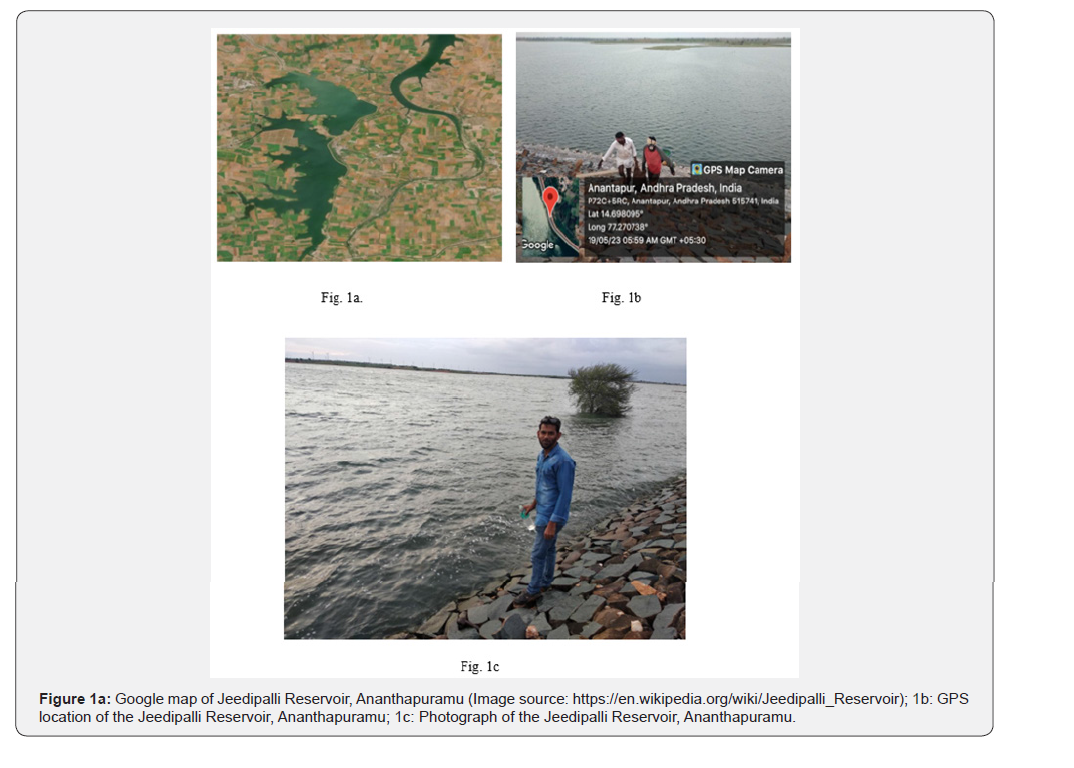
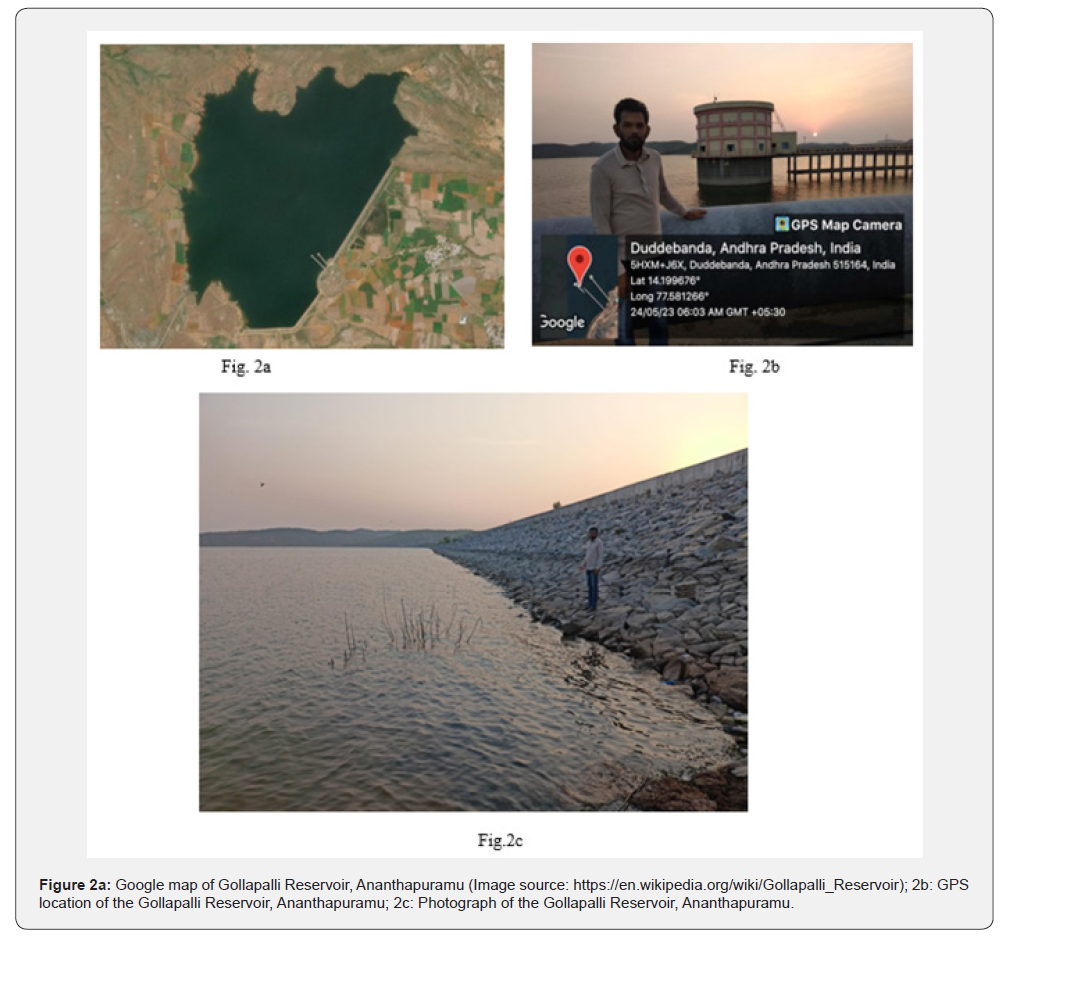
Fish sampling
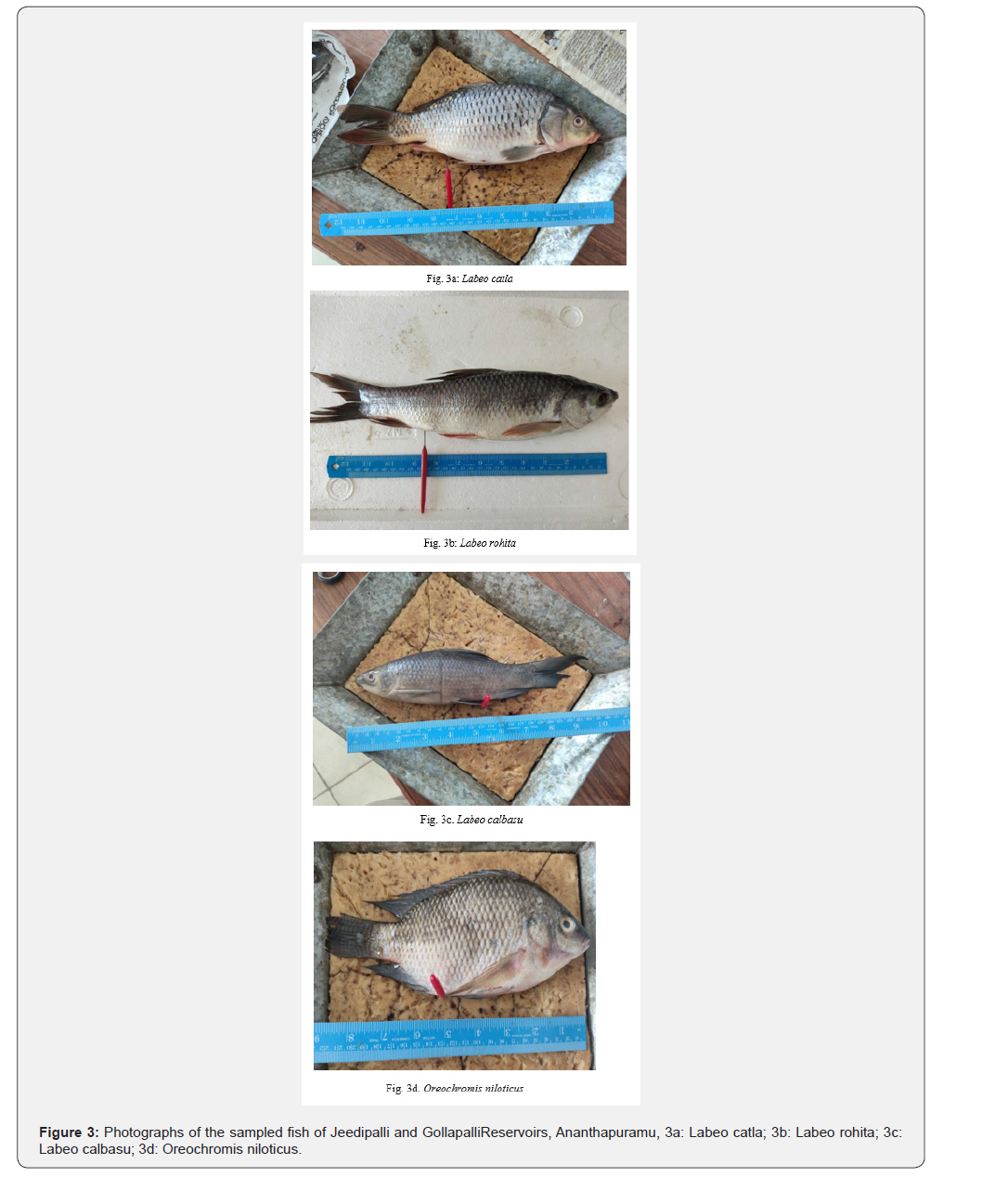
A total of 256 fish specimens representing four species were collected monthly between March 2022 and April 2025 from the fish landing centers of Gollapalli and Jeedipalli reservoirs. The studied taxa included three cyprinid species- Labeo catla (n = 25; Figure 3a), Labeo rohita (n = 39; Figure 3b), Labeo calbasu (n = 19; Figure 3c) and one cichlid species, Oreochromis niloticus (n = 173; Figure 3d). Fresh specimens were preserved in 10% formalin and transported to the laboratory for morphometric analysis. The total length (TL) of each specimen was measured using a digital vernier caliper (precision: 0.01 cm), and the body weight (W) was recorded to the nearest 0.001 g using a standard analytical balance (Thermomate, 10 Kg-SF-400A). Species identification followed the taxonomic keys of Jayaram [30], Talwar and Jhingran [31], Froese and Pauly [32].
The length-weight relationship (LWR) was performed following Le Cren [33],
The LWR was converted into logarithmic expression:
Log W= Log a + b Log L
Where ‘W’ is weight of the fish in grams (g), ‘L’ is the length in cm. ‘Log a’ is the intercept of the regression line and ‘b’ is the slope of the regression line.
The relative condition factor (Kn), indicating the well-being or robustness of fish, was determined using Le Cren’s (1951) formula:
Kn = W / aLb is the expected weight derived from the LWR
The coefficient of correlation ‘r’ was anticipated to verify the degree of linear relationship between the length and weight samples. It is calculated using the following formula:
Additionally, the Fulton’s condition factor (K) or ponderal index was computed following Wooton [34] as:
K = 100 × W/L3
where W is the fish weight (g) and L is the total length (cm). The constant 100 is used to bring the K value near unity. All statistical analyses were performed using Microsoft Excel 2010.
Results and Discussion
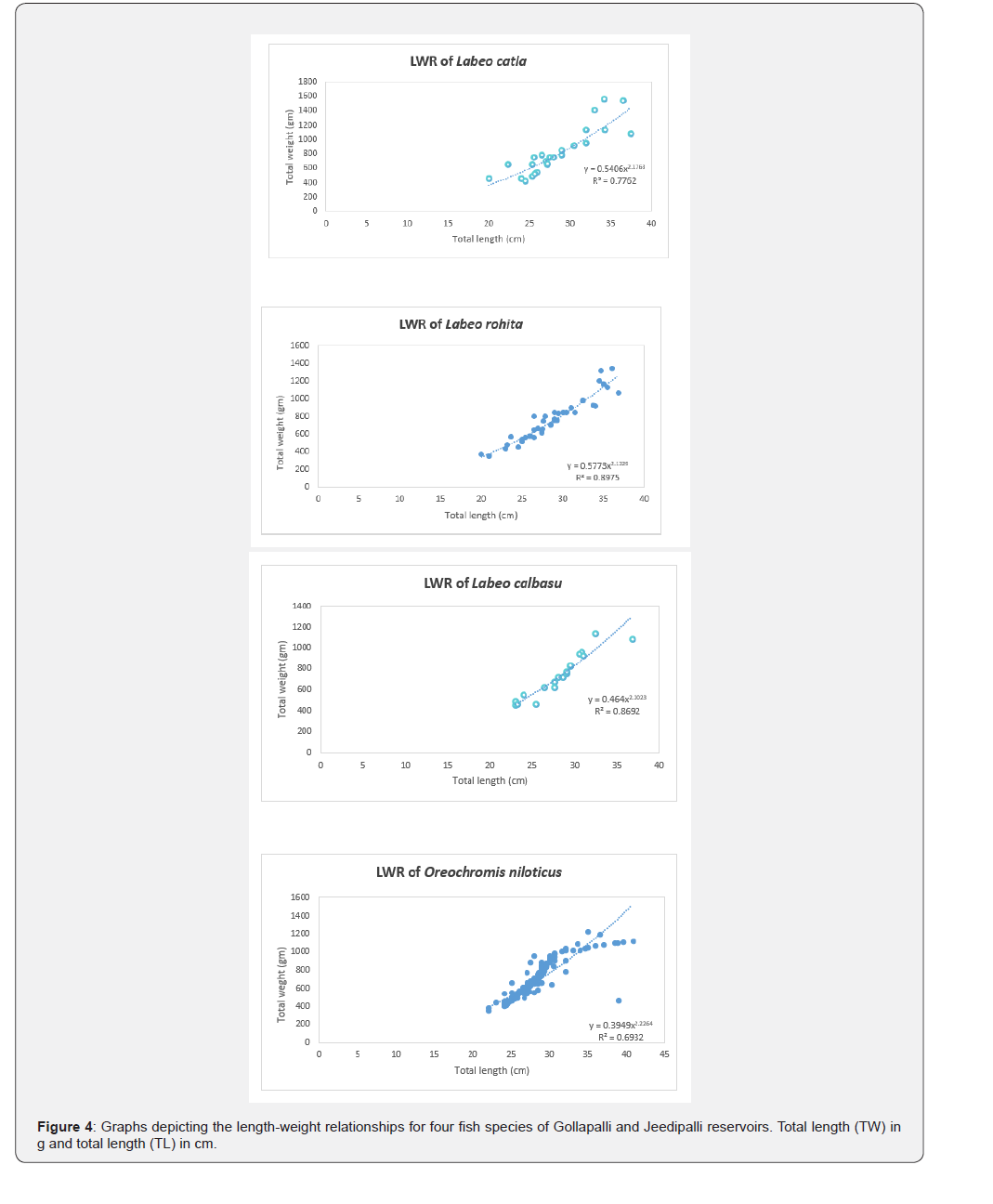
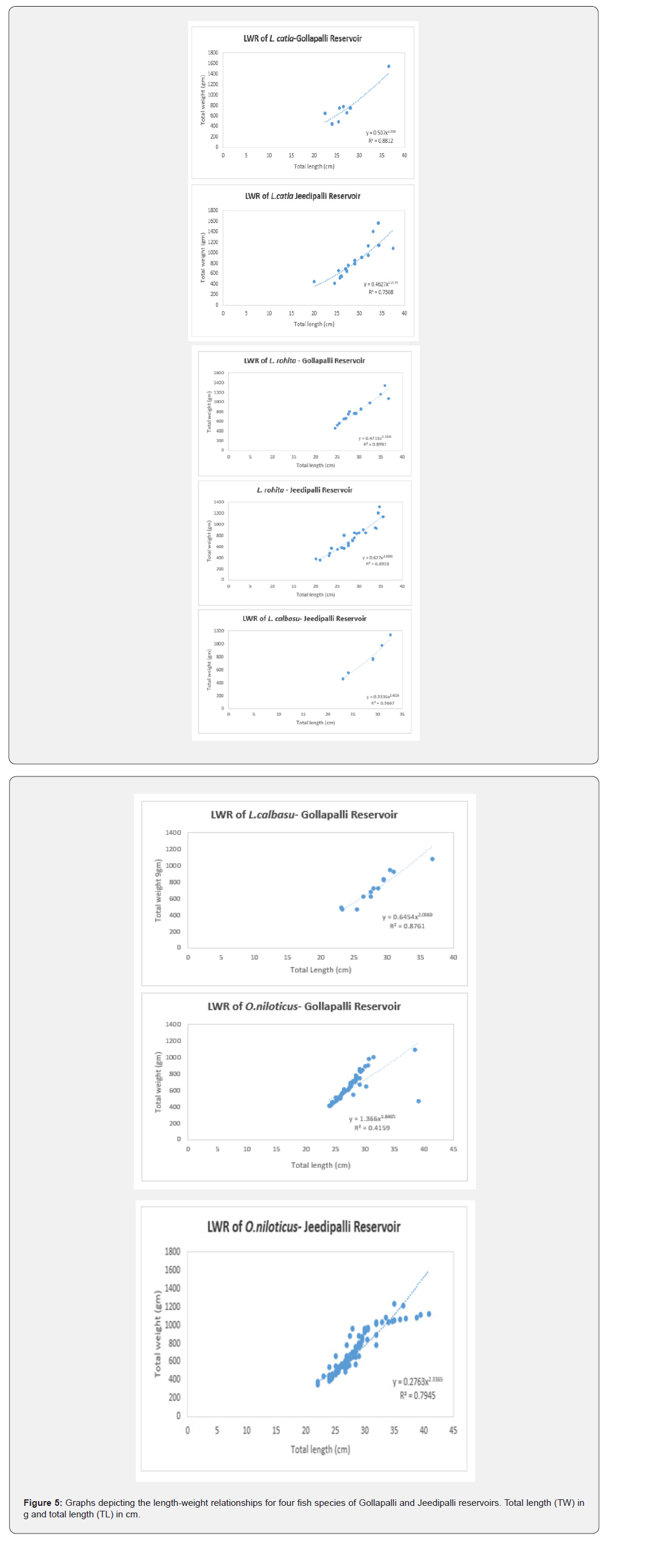
Table 1 presents the descriptive statistics and estimated parameters of the length–weight relationships (LWRs)- regression constants ‘a’ and ‘b’, correlation coefficient (r), coefficient of determination (R²), and condition factor (K)- for four freshwater fish species (Labeo catla, Labeo rohita, Labeo calbasu, and Oreochromis niloticus) collected from Gollapalli and Jeedipalli reservoirs, Ananthapuramu District, Andhra Pradesh. In L. catla, total length (TL) ranged from 20.0 to 37.5 cm (28.41 ± 4.37 cm) with body weights of 418–1560 g (823.96 ± 326.78 g). L. rohita showed TL values between 20.0–36.8 cm (28.7 ± 4.20 cm) and body weights between 354–1345 g (764.89 ± 247.81 g). L. calbasu exhibited TL values from 23.0–36.7 cm (28.15 ± 3.52 cm) and weights of 456–1135 g (739.00 ± 208.20 g), whereas O. niloticus recorded TL values of 22.0–40.8 cm (27.82 ± 3.33 cm) and body weights of 350–1232 g (666.85 ± 197.25 g). The regression exponent ‘b’ values ranged from 2.132 (L. rohita) to 2.226 (O. niloticus), which are below the ideal cube law value (b = 3.0), indicating negative allometric growth. This implies that fish increase in length faster than in weight. The correlation coefficient (r) ranged between 0.868 and 0.945, indicating a strong positive correlation between total length and body weight. The coefficient of determination (R²) values ranged from 0.763 (O. niloticus) to 0.921 (L. rohita), suggesting that 76–92% of the variation in body weight was explained by total length. Between reservoirs, the ‘b’ values in Jeedipalli ranged from 2.108 to 2.420 with R² between 0.739 and 0.883, while in Gollapalli, the ‘b’ values varied from 1.840 to 2.206 with R² between 0.474 and 0.847 (Table 2). Although both reservoirs exhibited negative allometric growth (b < 3), Jeedipalli showed higher ‘b’ and R² values, indicating a stronger length–weight relationship and better environmental conditions. The mean condition factor (K) and relative condition factor (Kn) ranged from 3.06 ± 0.399 (O. niloticus) to 3.54 ± 0.821 (L. catla) and 1.003 ± 0.084 (L. calbasu) to 1.01 ± 0.179 (L.catla) respectively, reflecting the good health and favorable feeding conditions of the fishes in both reservoirs (Table 3). The present findings reveal that all four fish species exhibit negative allometric growth (b < 3), consistent with several studies conducted on Indian freshwater fishes [26,35-47]. Negative allometry indicates that fish gain weight at a slower rate than length, often linked to environmental and biological factors such as food availability, sex, maturity, or parasitic infection [33,48-54]. The relatively higher ‘b’ and R² values observed in Jeedipalli Reservoir suggest more stable environmental conditions, higher nutrient availability, and lower ecological stress, which may have promoted better somatic growth. Conversely, the lower values recorded in Gollapalli Reservoir could be attributed to environmental stressors such as water quality fluctuations, lower primary productivity, higher parasitic loads, or limited feeding resources, which reduce the weight gain relative to length. The strong correlation coefficients (r > 0.8) and R² values above 0.763 confirm a significant relationship between length and weight in all species, implying that total length can serve as a reliable predictor of biomass in these reservoirs. The unexplained variation (8-24%) may be due to interspecific and intraspecific factors such as breeding cycle, gonadal development, and microhabitat variability, as reported by Bagenal and Tesch [18], Riedel et al. [55], Faradonbeh et al. [56], Basak and Hadiuzzaman [57], Famoofo and Abdul [58]. The mean condition factor (K) values above 3 in all species indicate healthy physiological status and adequate energy reserves [59]. The higher K observed in L. catla (3.54 ± 0.821) suggests a better adaptation and resource utilization efficiency, while O. niloticus (3.06 ± 0.399) with lower K may experience greater ecological or parasitic stress. According to Gonzalez et al. [60], Jisr et al. [61], Ndaiye et al. [62], Baek et al. [63], Seiyaboh et al. [64], Hossain et al. [65], relative condition factor, Kn > 1 reflects good feeding intensity and favorable ecological conditions. Overall, the LWR and K-factor analysis demonstrates that Jeedipalli Reservoir provides a more productive and stable habitat, whereas Gollapalli Reservoir shows signs of moderate environmental constraints. These findings align with previous studies showing that fish growth and condition are highly dependent on water quality, food resources, and ecosystem balance [38,53,66].


Conclusion
The study concluded that all four freshwater fish species- Labeo catla, Labeo rohita, Labeo calbasu, and Oreochromis niloticus exhibited negative allometric growth (b < 3) in both reservoirs. The stronger LWR and higher K-values in Jeedipalli indicate better environmental quality, food availability and lower ecological stress compared to Gollapalli. Therefore, variations in growth patterns between reservoirs are likely driven by habitat quality, feeding conditions, and ecological balance. These results confirm that LWR parameters and condition factors can serve as reliable indicators of fish health and habitat productivity in freshwater systems.
Summary
This study assessed the length-weight relationships and condition factors of four freshwater fish species from Jeedipalli and Gollapalli reservoirs in Ananthapuramu District, Andhra Pradesh. The results revealed negative allometric growth (b < 3) in all species, indicating that body weight increases more slowly than length. Strong correlations (r = 0.868 - 0.945) and moderateto- very high R² values (0.763 - 0.921) demonstrate a clear relationship between length and weight. The higher ‘b’, R², and K values in Jeedipalli Reservoir suggest better ecological conditions and fish health compared to Gollapalli. These findings highlight the importance of LWR and K-factor analyses as essential tools for evaluating fish population dynamics, habitat quality and environmental stability in freshwater ecosystems.
References
- Mishra SP (2020) Significance of fish nutrients for human health. Int J Fisheries Aquat Res 5(3): 47-49.
- Alp EE, Yeşilsu AF (2021) Fish Protein and Its Derivatives: Functionality, Biotechnology and Health Effects. Aquatic Food Stud 1(1): AFS13.
- Selamoglu Z, Naeem MY (2023) Fish as a significant source of nutrients. J Pub Health Nutr 6(4): 1-14.
- Singh RD, Arambam K, Singh AM, Singh SK (2025) Health and Nutritional Benefits of Fish as Human Food. In: Sundaray JK, Rather MA, Ahmad I, Amin A (eds) Food Security, Nutrition and Sustainability Through Aquaculture Technologies. Springer, Cham.
- ICFS- International collective in support of Fishworkers (2024) India: Andhra Pradesh emerges as the largest fish producing state in India for the year 2024.
- Perfect Aquafeeds (2023) Fish Farming in Andhra Pradesh: The Blue Revolution of India. Webpost.
- Sugunan VV (1995) Reservoir fisheries of India. FAO Fisheries Technical Paper. No. 345. Rome, FAO, pp. 423.
- CICFRI (1998) Central Inland Capture Fisheries Research Institute. Ecology and fisheries of selected reservoirs of Andhra pradesh. 85, ISSN 097()"616 X.
- Fishery News (2023) Andhra Pradesh leads in Fishery production, yet falls short in consumption: A call for healthier eating habits.
- Chandrasekhar SVA (2004) Fish fauna of Hyderabad and its environs. Zoos’ Print Journal 19(7): 1530-1533.
- Rao CAN, Deepa J, Hakeeel M (2011) Comparative account on icthyofauna of Pocharam and Wyra lakes of Andhra Pradesh, India. J Threaten Taxa 3(2): 1564-1566.
- Devi KR, Indra TJ (2012) Check list of the native freshwater fishes of India. Zool Sur. Ind.
- Rao RR, Rao SM (2015) Checklist and economic classification of freshwater fishes of the Madduvalasa reservoir in Palakonda division, Srikakulam district, A.P, India. Int J Faun and Biol Stud 2(1): 25-29.
- Sanapala C, Pedda LC, Babu K, Paidi S, Priya KK (2022) The study on fish diversity of Madduvalasa reservoir Srikakulam district, Andhra Pradesh, India. Int J Fisher Aquat Stud 10(2): 122-124.
- Karachle PK, Stergiou KI (2012) Morphometrics and Allometry in Fishes. In: Morphometrics, InTech.
- Blackwell BG, Brown ML, Willis DW (2000) Relative weight (Wr) status and current use in fisheries assessment and management. Rev Fish Sci 8(1): 1-44.
- Li Y, Feng Mi, Huang L, Zhang P, Wang H, et al. (2023) Weight–Length Relationship Analysis Revealing the Impacts of Multiple Factors on Body Shape of Fish in China. Fishes 8: 269.
- Bagenal TB, Tesch FW (1978) Age and growth. In: Begenal T, editor. Methods for assessment of fish production in fresh waters. 3rd ed IBP Handbook No. 3. Oxford: Blackwell Publishing Science Publications, pp. 101-136.
- Anene A (2005) Condition factor of four cichlid species of a man-made lake in Imo State, Southeastern Nigeria. Turk J Fish Aquat Sci 5(1): 43-47.
- Mazumder SK, Das SK, Bakar Y, Ghaffar MA (2016) Effects of temperature and diet on length-weight relationship and condition factor of the juvenile Malabar blood snapper (Lutjanus malabaricus Bloch & Schneider, 1801). J Zhejiang Univ Sci B 17(8): 580-590.
- Kizhakudan SJ (2023) Finfish fisheries and tools for assessing fish biology ICAR-Central Marine Fisheries Research Institute International Workshop-cum-Training on Fisheries Management and Aquaculture. p. 69-78.
- Hathal BA, Nawwab Al-Deen FM, Bilal SJ (2023) The impact of parasitic Helminths on length-weight relationship and condition factor of two fish species from Lesser Zab River at Altun-Kupri/ Kirkuk Province, Iraq. J Wildlif Biodiver 7(4): 63-74.
- Hasegawa R, Poulin R (2025) Effect of parasite infections on fish body condition: a systematic review and meta-analysis. Int J Parasitol 55(8-9): 417-426.
- Berrouk H, Sid A, Lahoual A, Sahtout F, Kaouachi N, et al. (2023) Effect of parasitic copepods on the length-weight relationship and the condition factor of crucian carp (Carassius carassius) in the Beni-Haroun Dam, Mila City, Northeast Algeria. Anim Res Int 19(3): 4625-4633.
- Sonowal S, Singh MK, Patir B, Gogoi A (2021) Feeding behaviour, growth and condition factor of three small indigenous fish species, Anabas testudineus (Bloch, 1792), Lepidocephalichthys guntea (Hamilton, 1822) and Mystus vittatus (Bloch, 1794) from Brahmaputra Basin, Assam. NeBIO 12(1).
- Chandran R, Singh RK, Singh A, Ganesan K, Thipramalai TAK, et al. (2023) Evaluating the influence of environmental variables on the length-weight relationship and prediction modelling in flat head grey mullet, Mugil cephalus Linnaeus, 1758. PeerJ 11: e14884.
- Ragheb E (2023) Length-weight relationship and well-being factors of 33 fish species caught by gillnet from the Egyptian Mediterranean waters off Alexandria. Egypt J Aquat Res 49(3): 361-367.
- Alam M, Syeda J, Muhammad H, Moumita D, Goutham BMP, et al. (2013) Length-length relationship, length-weight relationship and condition factor of freshwater fish species of Bangladesh. AACL Bioflux 6. 498-509.
- Aneesh KKV, Thomy R, Manjebrayakath H, Sudhakar M (2018) Length– weight relationships of 11 deep-sea fishes from the western Bay of Bengal and Andaman waters, India. J Appl Ichthyol 34(4): 1048-1051.
- Jayaram KC (1981) The Freshwater Fishes of India, Pakistan, Bangladesh, Burma and Sri Lanka-A Hand Book, Director, Zoological Survey of India, Kolkata, India, pp. 386.
- Talwar PK, Jhingran AG (1991) Inland fisheries of India and adjacent countries. In: Reviews in Fish Biology and Fisheries 1-2: 1-158.
- Froese R, Pauly D (2023) In: (Eds.), FishBase. World Wide Web Electronic.
- Le Cren ED (1951) The length-weight relationship and seasonal cycle in gonad weight and condition factor in the perch (Perca fluviatilis). J Anim Ecol 20: 201-219.
- Wooton RJ (1992) Fish ecology tertiary level biology. In: London: Blackie pp. 212.
- Das SK (2006) Small scale rural aquaculture in Assam, India: A case study. Naga Worldfish Cent Q 29(1-2): 42-47.
- Karna, SK, Sahoo D, Panda S (2012) Length Weight Relationship (LWR), Growth estimation and Length at maturity of Etroplus suratensis in Chilka Lagoon, Orissa, India. Int Journal of Environmental Sciences 2.
- Khan MA, Khan S, Miyan K (2012) Length-weight relationship of giant snakehead, Channa marulius and stinging catfish, Heteropneustes fossilis from the River Ganga, India. J Appl Ichthyol 28(1): 154-155.
- Datta SN, Kaur VI, Dhawan A, Jassal G (2013) Estimation of length-weight relationship and condition factor of spotted snakehead Channa punctata (Bloch) under different feeding regimes. Springerplus 2: 436.
- Bhatta B, Goswami MM (2014) Length-Weight relationship and condition factor of Channa aurantimaculata (Musikasinthorn, 2000) studied in a riparian wetland of Dhemaji District, Assam, India. J Res Biogr 3(8): 1147-1152.
- Kashyap A, Awasthi M, Arshad M, Serajuddin M (2015) Length-weight, length-length Relationship and condition factor of freshwater murrel, Channa punctatus from Northern and Eastern regions of India. World J Fish Mar Sci 7(3): 164-170.
- Das GB, Kumar AS, Thangaradjou T, Kumar MN, Kumar TS, et al. (2017) Length-weight relationship for 15 commercially important fish species of Portonovo Coast, Tamil nadu, Southeast of India. Int J Oceanogr Aquac 1(3): 1-5.
- Deori DJ, Abujam S, Dakua S, Laishram S (2017) Investigation on feeding, growth and condition factor of certain ornamental fish from Brahmaputra River at Dibrugarh, Assam, India. Fish Sci 11(3): 43-47.
- Jena D, Panda A, Datta MK, Parhi J, Tripathy PS, et al. (2019) Length–weight relationships of four indigenous fish species from Brahmaputra River, Assam, India. J Appl Ichthyol 35(4): 1053-1055.
- Kalita M, Choudhury H, Saikia A, Sarma D (2018) Length-weight relationships of four endemic snakeheads [Channa andrao Britz, 2013, Channa aurantimaculata Musikasinthorn, 2000, Channa bleheri Vierke, 1991, and Channa stewartii (Playfair, 1876)] from the Brahmaputra drainage, northeast India. J Appl Ichthyol 34(6): 1367-1368.
- Rahman M, Islam M, Hossain M, Hasan M, Khatun D, et al. (2019) Morphometric and meristic characteristics of the Banded gourami, Trichogaster fasciata (Bloch and Schneider, 1801) in a wetland ecosystem from Northwestern Bangladesh. Jordan J Biol Sci 12(5): 561-566.
- Borah S, Bhattacharjya BK, Saud BJ, Yadav AK, Debnath D, et al. (2017) Length–weight relationship of six indigenous fish species from Deepor beel, a Ramsar site in Assam, India. J Appl Ichthyol 33(3): 655-657.
- Bakhtiyar Y, Andrabi S, Wani GB (2023) Length-weight relationship and condition factor of seven fish species in Manasbal Lake, Kashmir, India. Croatian Journal of Fisheries 81: 13-22.
- Thomas J, Venu S, Kurup BM (2003) Length-weight relationship of some deep-sea fish inhabiting the continental slope beyond 250m depth along the West Coast of India. Naga Worldfish Cent Q 26(2):17-21.
- Froese R (2006) Cube law, condition factor and weight–length relationships: History, meta-analysis and recommendations. J Appl Ichthyol 22 (4): 241-253.
- Mir JI, Mir FA (2012) Length-weight relationship and condition factor of Rosy Barb, Puntius conchonius (Hamilton, 1822) from river Jhelum in Kashmir valley, India. Adv Biol Res 6(5): 186-190.
- Muhammad H, Iqbal Z, Bashir Q, Hanif MA (2017) Length-weight relationship and condition factor of cat fish species from Indus River, Pakistan. Punjab Univ J Zool 32(1): 35-38.
- Sheikh J, Borgohain D, Deka RN (2017) A comparison on the length-weight relationship and relative condition factor of Parambassis ranga (Hamilton, 1822) and Chanda nama (Hamilton, 1822) of Dora Beel (wetland) of Assam, India. Int J Fauna Biol Stud 4(3): 89-92.
- Singh MK, Sonowal S, Saikia C (2021) A Study on Length-Weight Relationship and Condition Factor of Three Important Freshwater Fish Species of Maijan Beel, Dibrugarh, Assam, India. Asian J Biol Life Sci 10 (3): 662-666.
- Ravikumar T, Neethiselvan N, Jayakumar N (2023) Length-weight relationships and fulton’s condition factor (K) for 29 demersal reef fishes caught by Longline. Thalassas 39: 1263-1270.
- Riedel R, Caskey LM, Hurlbert SH (2007) Length-weight relations and growth rates of dominant fishes of the Salton Sea: implications for predation by fish-eating birds. Lake Reserv. Manage 23: 528-535.
- Faradonbeh MZ, Eagderi S, Ghojoghi F (2015) Length-weight relationship and condition factor of seven fish species of Totkabon River (Southern Caspian Sea basin), Guilan, Iran. Int J Aquat Biol 3(3): 172-176.
- Basak SS, Hadiuzzaman M (2019) Length-weight relationship (LWR), condition factor (K) and relative condition factor (KN) of Kalibaus fish Labeo calbasu (Hamilton, 1822) of Kaptai Lake, Rangamati. Bangl Int J Fisher Aquat Stud 7(5): 231-235.
- Famoofo OO, Abdul WO (2020) Biometry, condition factors and length-weight relationships of sixteen fish species in Iwopin fresh-water ecotype of Lekki Lagoon, Ogun State, Southwest Nigeria. Heliyon 6(1): e02957.
- Lizama Mde L, Ambrósio AM (2002) Condition factor in nine species of fish of the Characidae family in the upper Parana River floodplain, Brazil. Braz J Biol 62(1): 113-124.
- Gonzalez AAF, De La Cruz Aguero G, De La Cruz Aguero J (2004) Length– weight relationships of fish species caught in a mangrove swamp in the Gulf of California (Mexico). J Appl Ichthyol 20(2): 154-155.
- Jisr, N, Younes G, Sukhn C, El-Dakdouki MH (2018) Length-weight relationships and relative condition factor of fish inhabiting the marine area of the Eastern Mediterranean city, Tripoli-Lebanon. Egypt J Aquat Res 44(4): 299-305.
- Ndiaye W, Diouf K, Samba O, Ndiaye P, Panfili J, et al. (2015) The length-weight relationship and condition factor of white grouper (Epinephelus aeneus, Geoffroy Saint Hilaire, 1817) at the south-west coast of Senegal, West Africa. Int J Adv Res 3(3): 145-153.
- Baek SH, Jang MH, Yoon JD, Kim JH, Park SH, et al. (2015) Length-weight relationships of 19 freshwater fishes from the Daechung Reservoir in South Korea. J Appl Ichthyol 31(5): 937-938.
- Seiyaboh EI, Harry GA, Izah SC (2016) Length-weight relationship and condition factor of five fish species from river brass, Niger Delta. Biotechnol Res 2(4): 187-192.
- Hossain MY, Hossen MA, Ahmed ZF, Hossain MA, Pramanik MNU, et al. (2017) Length–weight relationships of 12 indigenous fish species in the Gajner Beel floodplain (NW Bangladesh). J Appl Ichthyol 33(4): 842-845.
- Moslen M, Miebaka CA (2017) Length-weight relationship and condition factor of Mugil cephalus and Oreochromis niloticus from a Tidal creek in the Niger Delta, Nigeria. Arch Agri Environ Sci 2(4): 287-292.

























