




 OAJGGM Home



Abstract
Alzheimer's disease (AD) is the most prevalent age-associated neurodegenerative disease and has become one of the most serious public health issues worldwide, given that currently available therapeutics against AD demonstrate only limited effectiveness, and drug delivery into the brain is highly problematic due to the existence of the blood-brain barrier (BBB). Exosomes, naturally secreted extracellular vesicles that act as mediators in cell-cell communications, have recently been attracting tremendous interest as a sort of brain-targeting nanocarrier system, benefiting from excellent biocompatibility, low immunogenicity, intrinsic BBB-transporting capability, and diverse cargo loading capacity. In this review, the up-to-date development in exosome-mediated drug delivery for AD with a focus on exosome biogenesis, BBB-transporting mechanism, and engineered exosome-based systems toward efficient BBB targeting is comprehensively summarized. The use of exosome-delivered small molecules, RNA-based therapeutics, proteins, or enzymes against amyloid deposition, tau pathology, neuroinflammation, oxidative stress, neuronal dysfunction, etc. are summarized in detail. Diverse strategies such as genetic, chemical, and hybrid modifications of exosomes are discussed with the aim of enhancing targeting accuracy and efficacy of exosome-delivered therapeutic agents. Limitations of exosome-based delivery systems, such as scale-up manufacturing, loading efficiency, heterogeneity, and quality control of exosomes, and approval and regulation, are further analyzed. It can be concluded that various research findings demonstrate great promising potential of exosome-based delivery systems for future therapeutics of AD, although much further mechanistic study and clinical investigation are required for their ultimate translation into the clinic.
Keywords: Alzheimer's disease; Exosomes; Drug delivery; Blood–brain barrier; Engineered exosomes; Nanomedicine; Neurodegenerative disorders
Introduction
Age, reflecting the progressive decline of physiological function, is the single largest risk factor for most noninfectious diseases such as Alzheimer's Disease (AD). As the global population ages and the health care burden of AD patients grows, research into AD is developing at an ever-increasing rate [1]. Dementia is what older people fear more than any other disease condition [2,3]. Clinically, AD is characterized by intracellular accumulation of tau protein aggregates and extracellular deposition of A plaques [4]. The success of trials targeting reduction of these aberrant protein deposits has, to date, only shown modest disease-modifying benefits [5,6] and there is still an unmet need for further treatments aimed at preventing, slowing, and treating AD.
However, most candidate therapeutic agents have difficulty crossing the BBB, and even when they do, they may not reach therapeutic levels in the brain [7]. In practical terms, this situation is part of the reason why there have been very few effective treatments for NDDs. With the advent of nanotechnology, various drug delivery methods have been developed. For instance, liposomes [8], solid lipid nanoparticles [9], and polymer nanoparticles [10], have been developed to allow intracranial drug delivery. Nevertheless, there remain significant drawbacks to these technologies, including issues related to scalability, rapid clearance by the body's mononuclear phagocyte system, and toxicity [11,12]. Consequently, there remains a pressing need for alternative delivery mechanisms, especially since natural nanovesicles, such as exosomes, seem to be much more promising as drug delivery vehicles.
As for exosomes, with diameters ranging between 40 and 160 nm, they are naturally occurring vesicles generated from the endosomal system that arise through invagination of the plasma membrane, thus generating early endosomes that mature to multivesicular bodies (MVBs), which fuse with the plasma membrane, releasing the exosomes into the extracellular space and hence becoming a vital component of intercellular communication [13-15]. Being as such because of the mechanism of generation of exosomes and its inherent capability of delivering drugs, exosomes have proven to be an ideal drug delivery vehicle with various benefits over traditional drug delivery vehicles such as minimal immunogenicity, biocompatibility, lack of toxicity, and structural stability among others, especially for diseases requiring continuous drug delivery like NDDs, while production and targeting capability of exosomes have made them even more attractive for the purposes of CNS drug delivery [15-18].
Notably, beyond acting as carriers for delivering substances into target cells, exosomes have been modified to deliver various therapeutic molecules such as proteins, nucleic acid-based drugs, gene editing, adeno-associated viruses, and chemical drugs [15-19]. Importantly, exosomes take part in biological processes associated with physiology within the nervous system, where they are responsible for regulating the growth, development, and remolding of neurons. Furthermore, exosomes have been found to participate in mediating neuroinflammation and immune responses and play a part in maintaining vascular integrity and modulating BBB permeability, which is crucially important for neurodegenerative disorders, where dysfunction of the BBB is one of the biggest issues for therapeutic intervention [20-23]. In addition, by delivering biologically active compounds, exosomes can control gene expression and signal transduction pathways, and eventually affect the survival of neurons, as well as their structure and function [20].
In this review, our objective is to provide a comprehensive discussion of the current advances and approaches that can be taken in the use of exosomes for delivering drug molecules to treat AD. In this regard, our focus will be on the generation of exosomes, the biological nature of exosomes, the crossing ability of exosomes across different biological barriers like the BBB, and their use as nanocarriers for delivery of bioactive agents, including small molecules, nucleic acids, and proteins. More importantly, we will emphasize recent studies regarding the use of engineered exosomes as targeted nanocarriers that can deliver drugs directly into the brain to treat AD, along with the therapeutic benefits observed in the treatment of AD. We will also discuss existing challenges for clinical applications of exosomes, along with future perspectives.
Biology and Biogenesis of Exosomes
Among EVs, exosomes are the most intensely researched because of their distinctive biogenesis mechanism and significant involvement in cell-cell communications that influence their composition, content, and behavior inside recipient cells [24,25]. The biogenesis process of exosomes entails formation of early endosomes by plasma membrane invaginations and subsequent transformation of the latter into MVBs containing ILVs; the next step involves fusion of MVBs with lysosomes for their degradation or plasma membranes for their expulsion into the extracellular environment in the form of ILVs [26,27].
Exosome biogenesis can be controlled by ESCRT-dependent and ESCRT-independent mechanisms. The ESCRT complex (composed of ESCRT-0, ESCRT-I, and ESCRT-II complexes) regulates the processes of cargo selection, endosomal sorting, and membrane budding necessary for ILV formation and MVB maturation [26,28]. In parallel, the ESCRT-independent pathways use lipid-based mechanisms and interaction of membrane proteins like tetraspanins (CD9, CD63, and CD81) along with induction of membrane curvature by production of ceramide through neutral sphingomyelinase 2 (nSMase2) activity to induce ILV formation [29,30]. These complementary pathways ensure efficient vesicle biogenesis and cargo packaging under both physiological and stress conditions.
The molecular structure of exosomes reflects their cell source and consists of a cholesterol, sphingolipid, ceramide and phospholipid-rich lipid bilayer and various molecules in the contents, such as proteins, nucleic acids, and lipids. Frequently contained proteins include tetraspanins, heat shock proteins, and signaling proteins; contained nucleic acids such as mRNAs and miRNAs [31-33]. This complex cargo enables exosomes to control the gene expression and signaling pathways of receiving cells, which then leads to their function in physiological or pathological mechanisms and potential roles as a new diagnostic and therapeutic system [33].
Beyond understanding biogenesis and molecular composition, exosome isolation from a variety of biological fluids is paramount for experimental and clinical investigation as source dictates yield, accessibility and relevance to disease. Most common sources come from blood (plasma, serum) for convenience and relevance to system-wide pathologies [34]. Samples from blood cellular fractions (platelets, red blood cells and white blood cells) are readily available and relevant to normal physiology and immunity [51]. Non-invasive sampling sources include urine (relevant to kidney/urinary track function) and, more specifically for nervous system diseases such as AD, Cerebrospinal fluid (CSF) [35,36]. Saliva, breast milk and conditioned media derived from cell cultures are also possible sources [37-39].
Compared to conventional synthetic nanocarriers such as liposomes, polymeric nanoparticles, micelles, solid lipid nanoparticles, and dendrimers, which are likely to suffer problems such as toxicity, immunogenicity, low biocompatibility, and low efficiency in tissue targeting, etc., exosomes possess some merits to overcome these weaknesses [40-44]. Exosomes, naturally occurring nanovesicles with strong biocompatibility, low immunogenicity, long circulation, and natural targeting capacity, can efficiently carry and deliver their cargo through enzymatic degradation and physiological clearance [43,45]. The composition of the membranes ensures uptake into target cells, as well as intercellular communications through the delivery of their proteins and nucleic acids, and they differ from most synthetic vectors in that they can also be immune-shielded and pass biological barriers such as the blood-brain barrier, thus being desirable for drug delivery to the CNS [46-48]. These characteristics have already established exosomes as one of the most promising candidates among next-generation nanocarriers for specific therapy.
Role in CNS and BBB Transport
Within the CNS, exosomes play a role in mediating cell-to-cell communication between different cells, such as neurons, astrocytes, microglia, and oligodendrocytes, and are able to mediate communication between neuronal homeostasis, synaptic plasticity, neuroinflammation, and cellular signaling pathways via the transfer of proteins, lipids, and nucleic acids. These characteristics of exosomes, including their capacity to cross the BBB, have received considerable attention in the development of therapeutic applications targeting the CNS.
The BBB is a highly selective barrier that controls the passage of molecules between the systemic circulation and the CNS. Molecules crossing the BBB could undergo passive diffusion or an active process; the nature and extent of the transfer depend on the physicochemical nature of molecules: molecular weight, lipophilicity, plasma protein binding, flow to the brain, and so on. Passive diffusion is mainly limited to lipophilic small molecules such as oxygen and carbon dioxide. Most drugs, however, require specialized mechanisms such as carrier-mediated transport, receptor-mediated transport, efflux pumps, and adsorptive transcytosis to cross the BBB [49-54].
One of the unique properties of exosomes is their capacity to cross the BBB both bidirectionally from circulation to the brain and vice versa. This characteristic makes exosomes very attractive candidates for CNS drug delivery [55]. Although the precise mechanisms by which exosomes cross the BBB remain an area of active investigation, current evidence strongly suggests that transcytosis is the primary route [34,55]. By transcytosis, the exosomes are taken into the cells, transferred across the intracellular space rather than passing through the paracellular space. After being taken into the cells, they are then transferred through the endothelial cell and released into the brain parenchyma, or alternatively, the exosomes stay in the endothelial cell and can then influence endothelial cell signaling and BBB function [34,55,56].
There are several reported mechanisms of how exosomes may communicate with the specific target cells in the brain. These include the process mediated via signaling of cell-surface receptors, membrane fusion, micropinocytosis, receptor-mediated endocytosis with movement through MVBs, and the pathways associated with lipid rafts, which control membrane functions and cell communication [35,36]. The exosomal cargo might then cause some intracellular signaling cascades to occur, to be degraded through the lysosomes, or be incorporated into the newly budding MVBs, thus controlling the recipient cell [35,36]
Numerous experimental investigations employing fluorescently labeled exosomes have significantly increased our understanding of how exosomes traverse the BBB and their subsequent distribution within the central nervous system [37,38]. These studies suggest that exosomes initially bind and fuse with brain endothelial cells and then are transported transcytotically through them [39,57]. Evidence also indicates that exosome transport capacity may be related to size and density, with lower-density exosome subpopulations having increased preferential accumulation in the luminal side of endothelial cells and high-density exosome subpopulations being present more prominently in the abluminal side after transcrossing the BBB [58,59]. All these findings confirm the unique nature of exosomes that are capable of overcoming the first hurdle of neurotherapeutics and open up more opportunities to utilize natural nanocarriers for drug delivery to the central nervous system.
Because BBB dysfunction, neuroinflammation, and subsequent neuronal loss are central to AD, exosomes — given their natural capacity for crossing the BBB and transferring therapeutic cargos to targeted brain cells — appear to be an ideal vehicle for targeted drug delivery and potential disease-modifying therapeutics.
Exosome-Based Drug Delivery Strategies in Alzheimer’s Disease
Small-molecule AD drugs suffer from their poor bioavailability, long half-life for elimination and metabolism, and poor blood-brain barrier penetration. BBB represents one of the biggest barriers to the delivery of therapeutics to the central nervous system, greatly limiting clinical translation of neuroprotective agents that have promising neuroprotective effects. Among those natural nano-carriers that show potential to surmount those challenges, exosomes have proved to be outstanding with their unique BBB-crossing capability, biocompatibility, and low immunogenicity, as well as the ability to protect therapeutic payload from enzymes.
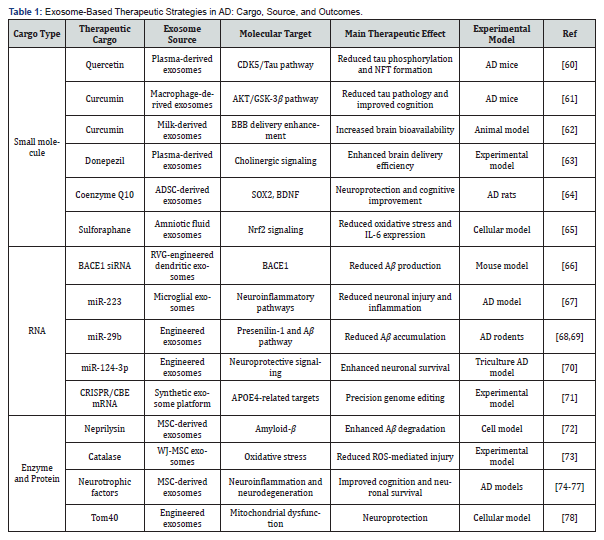
Indeed, increasing evidence suggests that exosomes improve the brain accumulation and therapeutic effects of small-molecule agents in AD models. Exosomes derived from plasma promote the brain accumulation of quercetin to inhibit cyclin-dependent kinase 5 (CDK5) phosphorylation of tau and decrease neurofibrillary tangle formation in an AD mouse model [60]. Meanwhile, the BBB permeability of curcumin-loaded exosomes from macrophages is increased via receptor-mediated transcytosis, and tau pathology is alleviated by activating the AKT/GSK-3 signaling pathway, thereby improving neuronal function [61]. In line with these results, bovine milk exosomes were found to highly increase brain accumulation of curcumin over usual delivery routes, thus corroborating the role of exosomes in enhancing the pharmacokinetic profiles of insoluble compounds [62].
Apart from the use of natural phytochemicals, exosomal delivery platforms have also been used for drugs or bioactive compounds that are relevant in clinical practice. Indeed, it has been demonstrated that donepezil-loaded plasma exosomes are superior in terms of brain targeting efficiency than the drug in free form [63], and adipose-derived mesenchymal stem cell exosomes loaded with coenzyme Q10 can help alleviate cognitive impairment as well as regulate neuroprotective mediators such as SOX2 and BDNF in experimental AD models [64]. Furthermore, exosomes isolated from human amniotic fluid with an entrapment of sulforaphane were found capable of Nrf2 activation, inhibition of IL-6 production, and protection of neurons from oxidative stress-induced injury [65].
Taken together, these findings illustrate that exosome delivery platforms not only increase stability and circulation time of small compounds but also dramatically increase the brain barrier permeability and effectiveness. Consequently, exosome-mediated small-molecule delivery appears to be a prospective nanotechnology approach for AD treatment.
In addition to other approaches targeting AD, RNA-based therapeutics are also exciting disease-modifying strategies since RNA is able to achieve precise regulation of genes that contribute to amyloid genesis, tau pathology, neuroinflammation, and neuronal dysfunction. As ideal vectors for delivery of RNA in the body, exosomes are favored due to their natural mechanism of nucleic acid transport, low immunogenicity, favorable biocompatibility, and intrinsic potential to permeate through the blood-brain barrier. The work of Alvarez-Erviti et al was influential in demonstrating the use of exosomes in delivering therapeutic RNA to the brain. They modified dendritic cell-derived exosomes to express rabies virus glycoprotein (RVG) peptide fused to Lamp2b, which allows exosomes to target neurons. Then they loaded BACE1-targeting siRNA into modified exosomes by electroporation and delivered the engineered exosomes to the brain of AD mouse model via intravenous administration, successfully knocking down the expression of BACE1 in neurons, microglia, and oligodendrocytes in the brain [66]. BACE1 is a major enzyme in processing amyloid. Therefore, this research is an important proof-of-concept to deliver therapeutic RNA to treat AD via exosomes.
In addition to siRNA, exosomes have been increasingly utilized as delivery systems for therapeutic microRNAs to inhibit multiple pathogenic pathways in parallel. Exosome-mediated delivery of miR-223 decreased microglial-neuronal interaction and accordingly inhibited neuroinflammation and neuronal damage in AD models [67], suggesting exosomal miRNA in regulating neuroimmune reactions. Targeting delivery of miR-29 increased miR-29 in the hippocampus, inhibited its downstream targets, reduced A-induced neurotoxicity, and ameliorated impairment of learning and memory functions [68]. Furthermore, an experimental report demonstrated that somatostatin-receptor-targeted, exosome-carrying miR-29b-2 and modified exosome can successfully enter the BBB, resulting in a decrease in presenilin-1 levels and subsequently reducing A-amyloid in brains [69].
Exosome-based RNA therapeutics have seen further development with new discoveries, wherein the overexpression of exosome loading with miR-124-3p mimics resulted in neuroprotection via modification of neuronal signaling pathways [70]. In addition, custom exosome-based platforms have been successfully designed to deliver CRISPR guide RNAs and cytosine base editor (CBE) mRNA, enabling site-specific genome editing associated with neurodegenerative diseases [71]. Taken together, these discoveries highlight the use of exosomal delivery of RNA species as an efficient and flexible approach to site-specific genetic manipulation, opening the door to disease-modifying therapies otherwise unachievable by standard pharmacology.
Biologics such as proteins and enzymes are promising therapeutic candidates in the treatment of AD because they are able to directly affect pathogenic pathways that are difficult to control by typical small molecules. The efficient delivery of such biologics can be achieved by using exosomes as the vehicles since exosomes provide protection for protein cargo, allow transport across the blood-brain barrier, and deliver the cargo to the specific location in the central nervous system.
One of the most promising cases for biologics delivery is via exosomes to deliver NEP, which is one of the important enzymes that degrade A. Katsuda et al proved that there are naturally abundant enzyme-active NEP on adipose tissue-derived mesenchymal stem cells exosomes, and when co-cultured with neuronal cells, the uptake of exosomes lowered both intracellular and extracellular A levels and upregulated NEP expression in neurons [72]. This study suggests that enzyme delivery using exosomes directly helps to ameliorate the intrinsic A degradation system.
Exosome-bound catalase has also attracted attention due to its potent antioxidant activity. Wharton's jelly mesenchymal stem cell-derived exosomes were reported to transfer catalase and reduce oxidative stress, and provide a neuroprotective effect in neurodegenerative disease [73]. In addition to specific enzymes, a variety of neurotrophic and regenerative proteins are delivered by exosomes. Neurotrophic factor-containing mesenchymal stem cell-derived exosomes were reported to reduce neuroinflammation and support neuron survival and enhance cognitive performance in an experimental AD model [74]. Treatment with exosomes has also been reported to restore synaptic plasticity, improve neurogenesis, regulate neuronal and astrocyte activity, and restore metabolic performance in AD brain [75-77].
In conclusion, these studies indicate that the targeted delivery of proteins and enzymes by exosomes offers a potential therapeutic strategy to address both the amyloid pathology, oxidative stress, and neuroinflammation, as well as neuronal dysfunction in AD simultaneously (Table 1).
Engineered Exosomes for Targeted Therapy
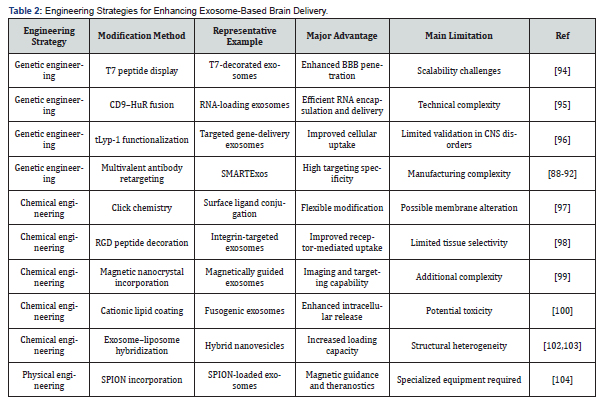
As exosomes naturally possess biocompatibility and low immunogenicity, and the ability to permeate many biological barriers (e.g., the blood-brain barrier, BBB), they are regarded as ideal carriers for targeted therapy [79-82]. Some exosome surface engineering strategies have been designed to increase exosome therapeutic performance and target specific tissues by using a ligand-receptor-mediated recognition mechanism to make strong interactions with target cells (Table 2) [83-85].
Genetic engineering
Of the techniques mentioned, genetic engineering is the most intensively studied. By expressing targeting peptides/proteins on the membrane of exosomes using genetically engineered donor cells, engineered exosomes with better targetability can be manufactured [86,87]. A lot of experiments revealed that the technique can function; for example, T7 peptide-modified exosomes for glioma targeting, curcumin-loaded exosomes functionalized with retinol-binding protein, RNA-delivery vehicles engineered with a fusion protein of CD9-HuR, tLyp-1-functionalized exosomes, and multivalent antibody-retargeted exosomes (SMARTExos) showed superior cellular targeting and therapeutic efficacy in animal models [79,88-96].
Chemical engineering
Alternative methods for exosome functionalization via the chemical modification of the exosomal membrane with covalent or noncovalent peptides, proteins, lipids, polymers, or aptamers are also demonstrated with chemical engineering approaches [97]. Common chemical conjugation strategies include click chemistry, receptor-ligand recognition, electrostatics, and hydrophobic interactions [97]. Successfully targeting-improved methods were presented by cyclic RGD peptide [98], magnetic nanocrystal cluster [99], cationic lipid [100], heart-homing peptide [101], as well as an engineered exosome-liposome hybrid system [94,97,102,103].
Physical engineering
Furthermore, a physical modification strategy has also been developed to refine targeting and imaging capacity. Magnetic guidance and the tissue-specific accumulating ability and theranostic effect have been demonstrated after engineering SPIONs in the exosomes, which can be applicable for treating glioblastoma and diabetes [98,104]. All the strategies aforementioned make great efforts on the improvements in target-specific accumulation of exosomes.
However, many limitations restrict the application of engineered exosomes in clinical practice. Modifications should be carefully adjusted so that the vesicles would not aggregate, damage the structure, or lose biological function [104]. On the other hand, mass production, purification of modified exosomes from unmodified ones, and standardization of manufacturing procedures are still required to overcome these limitations [105-108]. Exosomes derived from different sources, containing different cargo and administered by various routes, have shown a variety of therapeutic effects, so standard operating processes are needed to overcome the variations and make use of therapeutic effects fully [107,108].
Besides surface modification techniques, exosomes are also largely exploited as promising nanocarriers for drug loading and transport against AD. The therapeutic compounds of various forms-small molecules, natural compounds, proteins, and nucleic acids-have been loaded into engineered exosomes, which can cross the BBB and effectively target brain tissues [61,78,109-112]. Exosomes have been found to be capable of inhibiting tau phosphorylation, reducing A aggregate formation, modulating microglia activation, and reducing neuroinflammation.
Brain targeting mechanisms (natural + receptor-based + hybrid)
In addition to specificity targeting the brain, diverse engineering approaches have been successfully used to improve the delivery efficiency for nervous diseases. Factors including lipid composition and cell-binding surface molecules of the exosomes can determine the targeted delivery efficiency. Exosomal integrins, tetraspanins, and certain types of lipid can interact with brain microvascular endothelial cells (BMECs) and improve the translocation across the blood-brain barrier (BBB) [113-118]. Macrophage-derived exosomes interact with the C-type lectin receptor via the LFA-1 protein to enhance BBB permeation and uptake by the endothelial cell [114,118]. On the other hand, endothelial internalization efficiency and transendothelial transport were influenced by exosomal lipid content [113].
In addition to their composition, the cellular source of exosomes significantly influences their biodistribution and brain tropism. Exosomes produced from NSCs, brain endothelial cells, or astrocytes were proven to be delivered to the CNS more efficiently than exosomes from non-neural origin [119-123]. Importantly, MSC-derived exosomes also exhibit homing properties towards inflammatory sites in the brain and towards neurons. It was shown that after intranasal administration in AD mouse models, MSC-derived exosomes accumulated in the hippocampus, the region where neuronal loss is significant in AD patients [124]. These phenomena suggest that exosomes can home in on disease-specific molecular information in the pathological brain environment, thereby enabling more targeted therapy.
Given these natural targeting properties, there have been significant efforts to modify exosome surfaces with brain-targeting ligands to enable receptor-mediated endocytosis and BBB transcytosis. Transferrin-, neural cell adhesion molecule-, rabies virus glycoprotein (RVG) peptide-, and other target molecule-modified exosomes have been shown to promote brain accumulation and neuronal transport in vivo [125,126]. More recently, an approach combining the advantages of exosomes and artificial nanomaterial has emerged. The exosome-gold nanoparticle constructs and exosome-liposome hybrid nanoplatforms were designed to enhance BBB traversal efficiency and therapeutic efficacy in diseases model [127,128].
In summary, these combined effects, resulting from intrinsic bio-tropism, surface engineering with a receptor-mediated approach, and a hybrid nanotechnology-based strategy, have greatly improved the efficiency and accuracy of exosomes-mediated brain delivery. Therefore, these strategies are complementary and applicable for the development of a novel generation of exosome-based drugs against AD to deal with BBB-associated limitations.
Challenges and Limitations
>Exosome-based AD treatment has made great strides, but there are still a lot of obstacles to overcome before it can be used clinically. One critical issue is the absence of standardized methods for the isolation, purification, characterization, and loading of exosomes, which results in remarkable disparity among studies. Another issue is that the exosome population is highly heterogeneous, with diversity depending on the donor cell source, culture conditions, and isolation methods. Quality control and reproducibility are then impeded. Another significant challenge is the scale-up of manufacturing, since the quantity of exosomes prepared by existing methods is insufficient for clinical applications and is difficult to make batch-to-batch uniform.
Although modification of exosomes enhances brain targeting efficiency, controlled and precise delivery of exosomes in the complicated brain microenvironment is still challenging. Surface modification can achieve better targeting specificity, but it may affect their inherent biological activity, biodistribution, and stability. Besides, the long-term safety, immunogenicity, and pharmacokinetics of multiple doses are not fully understood. In addition, other concerns include off-target effects, non-specific loading and distribution of the cargo, and difficulty with in vivo tracking.
More research is needed on developing a scalable manufacturing platform, universal quality-control guidelines, and new engineering designs that enhance targeting efficiency while maintaining biological function. A new generation of experimental models, such as organoids and humanized models of AD, might help discover novel mechanisms and improve the translation of the findings into clinical treatments.
Conclusion and Future Perspectives
Designing effective treatments for AD is currently one of the largest issues in medicine. Even though many approaches have been taken to target Amyloid beta aggregation, tau pathogenesis, inflammation and oxidation, drugs and therapies are often limited due to the complex and multifactorial nature of AD as well as the lack of drugs penetrating to the brain; therefore, exosomes, which are biologically friendly, possess native intercellular communication mechanisms, and can pass through the BBB, is a novel drug delivery system overcoming a key limitation in the central nervous system therapeutics.
Numerous studies have reported the successful delivery of various therapeutic cargo substances using exosome-based systems: these range from small-molecule drugs and nucleic acids to proteins, enzymes, and relatively new tools like gene editing technologies. It is crucial that exosome-based platforms can achieve concurrent regulation of multiple disease mechanisms associated with AD, such as amyloid protein deposition, hyperphosphorylated tau and subsequent protein aggregates, inflammatory responses, mitochondrial abnormalities, and impaired synapse function. Engineering of exosomes in recent times has greatly enhanced targeting capability, drug loading efficiency, and therapeutic outcomes by moving exosome technology from a naturally occurring extracellular vesicle system to a custom-designed nanomedicine platform tailored for specific diseases.
Even though there is such promise demonstrated from the preclinical research study, the translation of these preclinical findings into a useful clinical therapy has not been a simple journey. Present data have predominantly come from cell culture and animal models, and this still needs to be applied to AD patients to support a reliable therapeutic application. Several barriers have continuously been shown to block the translational pathway, such as the heterogeneity of exosomes, lack of standardized protocols for exosome isolation and characterization, inefficiency in cargo loading, poor scalability and variability, and insufficient data on long-term biodistribution and safety profiles. Moreover, it has not yet been sufficiently established whether donor cell type, production settings, or administration routes could impact the therapeutic effects.
Looking forward, the success of exosome therapeutics could be attributed to advancements in nanotechnology, synthetic biology, artificial intelligence-enabled design processes, and precision medicine. With the incorporation of gene editing techniques such as CRISPR technology, disease-specific targeting ligands, and theranostics into engineered exosomes, an approach where simultaneous diagnosis, therapy, and monitoring are possible for AD can be developed. Moreover, induced pluripotent stem cell engineering, brain organoids, organ-on-a-chip techniques, and humanized disease models may serve as more accurate predictors for assessing the safety and efficacy of potential treatments.
Another future avenue that warrants investigation and differs from enhancing BBB penetration would be to acquire cell-specific targeting ability to deliver drugs specifically to neurons, microglia, or astrocytes, or to a certain pathological niche within the complex AD brain microenvironment. Specific targeting to any one cell type or pathological region can thus have a beneficial impact while limiting off-target effects. Future research should also encompass comparative studies of exosomes with well-established nanocarriers such as liposomes and polymeric nanoparticles.
In summary, exosome-based drug delivery technology has rapidly evolved into a very promising field in the AD therapeutics area. While many scientific and translational issues still exist, development in exosome engineering, cargo design, and manufacturing processes has enabled us to explore a wide array of possibilities. Exosomes, being a type of biological nanovesicles, can become a viable precision-delivery system for AD treatment through careful mechanistic study, standardization, and clinical validation.
References
- Xia X, Jiang Q, McDermott J, Han JDJ (2018) Aging and Alzheimer's disease: Comparison and associations from molecular to system level. Aging Cell 17(5).
- Mehegan L, Rainville C (2021) AARP Survey on the Perceptions Related to a Dementia Diagnosis: Adults Age 40+. Washington, DC: AARP Research.
- Watson R, Fisher RS, Bryant J, Mansfield E (2023) Dementia is the second most feared condition among Australian health service consumers: results of a cross-sectional survey. BMC Public Health 23(1): 876.
- Probst A, Langui D, Ulrich J (1991) Alzheimer's disease: a description of the structural lesions. Brain Pathology 1(4): 229-239.
- Aisen P, Cummings J, Doody R, Kramer L, Salloway S, et al. (2020) The future of anti-amyloid trials. The Journal of Prevention of Alzheimer's disease 7(3): 146-151.
- Haass C, Selkoe D (2022) If amyloid drives Alzheimer disease, why have anti-amyloid therapies not yet slowed cognitive decline? PLoS biology 20(7).
- Shahjin F, Chand S, Yelamanchili SV (2020) Extracellular Vesicles as Drug Delivery Vehicles to the Central Nervous System. J Neuroimmune Pharmacol 15(3): 443-458.
- Qu M, Lin Q, He S, Wang L, Fu Y, et al. (2018) A brain targeting functionalized liposomes of the dopamine derivative N-3,4-bis(pivaloyloxy)-dopamine for treatment of Parkinson's disease. J Control Release 277: 173-182.
- Huang Q, Wang S, Liu Z, Rao L, Cheng K, et al. (2026) Engineering exosomes for targeted neurodegenerative therapy: innovations in biogenesis, drug loading, and clinical translation. Theranostics 16(1): 545-579.
- Loureiro JA, Gomes B, Fricker G, Coelho MAN, Rocha S, et al. (2016) Cellular uptake of PLGA nanoparticles targeted with anti-amyloid and anti-transferrin receptor antibodies for Alzheimer's disease treatment. Colloids Surf B Biointerfaces 145: 8-13.
- Banskota S, Yousefpour P, Chilkoti A (2017) Cell-Based Biohybrid Drug Delivery Systems: The Best of the Synthetic and Natural Worlds. Macromol Biosci 17(1).
- Martano S, Matteis VD, Cascione M, Rinaldi R (2022) Inorganic Nanomaterials versus Polymer-Based Nanoparticles for Overcoming Neurodegeneration. Nanomaterials (Basel) 12(14).
- Kalluri R, LeBleu VS (2020) The biology, function, and biomedical applications of exosomes. Science 367(6478).
- Mondal J, Pillarisetti S, Junnuthula V, Saha M, Hwang SR, et al. (2023) Hybrid exosomes, exosome-like nanovesicles and engineered exosomes for therapeutic applications. J Control Release 353: 1127-1149.
- Rehman FU, Liu Y, Zheng M, Shi B (2023) Exosomes based strategies for brain drug delivery. Biomaterials 293: 121949.
- Turturici G, Tinnirelo R, Sconzo G, Geraci F (2014) Extracellular membrane vesicles as a mechanism of cell-to-cell communication: advantages and disadvantages. Am J Physiol Cell Physiol 306(7): 621-633.
- Mehryab F, Rabbani S, Shahhosseini S, Shekari F, Fatahi Y, et al. (2020) Exosomes as a next-generation drug delivery system: An update on drug loading approaches, characterization, and clinical application challenges. Acta Biomater 113: 42-62.
- Liao W, Du Y, Zhang C, Pan F, Yao Y, et al. (2019) Exosomes: The next generation of endogenous nanomaterials for advanced drug delivery and therapy. Acta Biomater 86: 1-14.
- Tan A, Rajadas J, Seifalian AM, (2013) Exosomes as nano-theranostic delivery platforms for gene therapy. Adv Drug Deliv Rev 65(3): 357-367.
- Zappulli V, Friis KP, Fitzpatrick Z, Maguire CA, Breakefield XO (2016) Extracellular vesicles and intercellular communication within the nervous system. J Clin Invest 126(4): 1198-1207.
- Yu T, Xu Y, Ahmad MA, Javed R, Hagiwara H, et al. (2021) Exosomes as a Promising Therapeutic Strategy for Peripheral Nerve Injury. Curr Neuropharmacol 19(12): 2141-2151.
- Hobson MI, Green CJ, Terenghi G (2000) VEGF enhances intraneural angiogenesis and improves nerve regeneration after axotomy. J Anat 197(4): 591-605.
- Gupta A, Pulliam L (2014) Exosomes as mediators of neuroinflammation. J Neuroinflammation 11: 68.
- Krylova SV, Feng D (2023) The machinery of exosomes: biogenesis, release, and uptake. International journal of molecular sciences 24(2): 1337.
- Lau NCH, Yam JWP (2023) From exosome biogenesis to absorption: key takeaways for cancer research. Cancers 15(7): 1992.
- Wang L, Liu H, Chen G, Wu Q, Xu S, et al. (2024) Bubble ticket trip: exploring the mechanism of miRNA sorting into exosomes and maintaining the stability of tumor microenvironment. International Journal of Nanomedicine 19: 13671-13685.
- Li XX, Yang LX, Wang C, Li H, Shi DS, et al. (2023) The roles of exosomal proteins: classification, function, and applications. International journal of molecular sciences 24(4): 3061.
- Frankel E, Audhya A (2018) ESCRT-dependent cargo sorting at multivesicular endosomes. Seminars in cell & developmental biology. Elsevier.
- Van Niel G, Angelo G, Raposo G (2018) Shedding light on the cell biology of extracellular vesicles. Nature reviews Molecular cell biology 19(4): 213-228.
- Wei D, Zhan W, Gao Y, Huang L, Gong R, et al. (2021) RAB31 marks and controls an ESCRT-independent exosome pathway. Cell research 31(2): 157-177.
- Lee YJ, Shin KJ, Chae YC (2024) Regulation of cargo selection in exosome biogenesis and its biomedical applications in cancer. Experimental & Molecular Medicine 56(4): 877-889.
- Liu M, Wen Z, Zhang T, Zhang L, Liu X, et al. (2024) The role of exosomal molecular cargo in exosome biogenesis and disease diagnosis. Frontiers in Immunology 15: 1417758.
- Mukerjee N, Bhattacharya A, Maitra S, Kaur M, Ganesan S, et al. (2025) Exosome isolation and characterization for advanced diagnostic and therapeutic applications. Materials Today Bio 31: 101613.
- Saeedi S (2019) The emerging role of exosomes in mental disorders. Transl Psychiatry 9(1): 122.
- Pol JS, Gosselet F, Deweer SD, Pottiez G, Karamanos Y (2020) Targeting and Crossing the Blood-Brain Barrier with Extracellular Vesicles. Cells 9(4).
- Matsumoto J, Stewart T, Banks WA, Zhang J (2017) The Transport Mechanism of Extracellular Vesicles at the Blood-Brain Barrier. Curr Pharm Des 23(40): 6206-6214.
- Tofaris GK (2017) A Critical Assessment of Exosomes in the Pathogenesis and Stratification of Parkinson's Disease. J Parkinsons Dis 7(4): 569-576.
- Qu M, Lin Q, Huang L, Fu Y, Wang L, et al. (2018) Dopamine-loaded blood exosomes targeted to brain for better treatment of Parkinson's disease. J Control Release 287: 156-166.
- Tian T, Zhu YL, Hu HF, Wang YY, Huang NP, et al. (2013) Dynamics of exosome internalization and trafficking. J Cell Physiol 228(7): 1487-1495.
- Babaei M, Kashanian S, Salemi Z (2026) Optimization of the Redox-Sensitive Doxorubicin-Loaded Chitosan-Based Nanoparticles by Box–Behnken Experimental Design. Pharmaceutical Chemistry Journal 59(11): 1260-1267.
- Babaei M, Kashanian S, Salemi Z, Zhaleh H (2023) Redox-Sensitive Targeted Doxorubicin-Loaded Chitosan-based Nanoparticles to Treat Breast Cancer. J Popul Ther Clin Pharmacol 30(4): 267-282.
- Yassemi A, Kashanian S, Babaei M, Samavati SS, Zhaleh H (2026) Mucoadhesive TMC-coated solid lipid nanoparticles for oral co-delivery of docetaxel and curcumin: formulation optimization, in vitro characterization, and cytotoxic evaluation. 3 Biotech 16(6): 251.
- Bunggulawa EJ, Wang W, Yin T, Wang N, Durkan C, et al. (2018) Recent advancements in the use of exosomes as drug delivery systems. J Nanobiotechnology 16(1): 81.
- Khalid AD, Rehman NU, Tariq GH, Ullah S, Buzdar SA, et al. (2023) Functional bioinspired nanocomposites for anticancer activity with generation of reactive oxygen species. Chemosphere 310: 136885.
- Shao J, Zaro J, Shen Y (2020) Advances in Exosome-Based Drug Delivery and Tumor Targeting: From Tissue Distribution to Intracellular Fate. Int J Nanomedicine 15: 9355-9371.
- Antimisiaris SG, Mourtas S, Marazioti A (2018) Exosomes and Exosome-Inspired Vesicles for Targeted Drug Delivery. Pharmaceutics 10(4): 218.
- Tenchov R, Sasso JM, Wang X, Liaw WS, Chen CA, et al. (2022) Exosomes - Nature's Lipid Nanoparticles, a Rising Star in Drug Delivery and Diagnostics. ACS Nano 16(11): 17802-17846.
- Amiri A, Bagherifar R, Dezfouli EA, Kiaie SH, Jafari R, et al. (2022) Exosomes as bio-inspired nanocarriers for RNA delivery: preparation and applications. J Transl Med 20(1): 125.
- Quaegebeur A, Lange C, Carmeliet P (2011) The neurovascular link in health and disease: molecular mechanisms and therapeutic implications. Neuron 71(3): 406-424.
- Banks WA (2009) Characteristics of compounds that cross the blood-brain barrier. BMC Neurol 9 Suppl 1(Suppl 1): S3.
- Abbott NJ, Friedman A (2012) Overview and introduction: the blood-brain barrier in health and disease. Epilepsia 53 Suppl 6(06): 1-6.
- Barar J, Rafi MA, Pourseif MM, Omidi Y (2016) Blood-brain barrier transport machineries and targeted therapy of brain diseases. Bioimpacts 6(4): 225-248.
- Bellettato CM, Scarpa M (2018) Possible strategies to cross the blood-brain barrier. Ital J Pediatr 44(2): 131.
- Siegel GJ, Agranoff BW, Albers RW, Fisher SK, Uhler MD, et al (1981) Basic neurochemistry. In: Little, Brown Boston.
- Banks WA, Sharma P, Bullock KM, Hansen KM, Ludwig N, et al. (2020) Transport of Extracellular Vesicles across the Blood-Brain Barrier: Brain Pharmacokinetics and Effects of Inflammation. Int J Mol Sci 21(12).
- Console L, Scalise M, Indiveri C (2019) Exosomes in inflammation and role as biomarkers. Clin Chim Acta 488: 165-171.
- Toth AE, Holst MR, Nielsen MS (2020) Vesicular Transport Machinery in Brain Endothelial Cells: What We Know and What We Do not. Curr Pharm Des 26(13): 1405-1416.
- Wang YI, Abaci HE, Shuler ML (2017) Microfluidic blood-brain barrier model provides iv vivo-like barrier properties for drug permeability screening. Biotechnol Bioeng 114(1): 184-194.
- Haqqani AS, Thom G, Burrell M, Delaney CE, Brunette E, et al. (2018) Intracellular sorting and transcytosis of the rat transferrin receptor antibody OX26 across the blood-brain barrier in vitro is dependent on its binding affinity. J Neurochem 146(6): 735-752.
- Qi Y, Guo L, Jiang Y, Shi Y, Sui H, et al. (2020) Brain delivery of quercetin-loaded exosomes improved cognitive function in AD mice by inhibiting phosphorylated tau-mediated neurofibrillary tangles. Drug Deliv 27(1): 745-755.
- Wang H, Sui H, Zheng Y, Jiang Y, Shi Y, et al. (2019) Curcumin-primed exosomes potently ameliorate cognitive function in AD mice by inhibiting hyperphosphorylation of the Tau protein through the AKT/GSK-3β Nanoscale 11(15): 7481-7496.
- Aqil F, Munagala R, Jeyabalan J, Agrawal AK, Gupta R (2017) Exosomes for the Enhanced Tissue Bioavailability and Efficacy of Curcumin. Aaps J 19(6): 1691-1702.
- Silva RO, Counil H, Rabanel JM, Haddad M, Zaouter C, et al. (2024) Donepezil-loaded nanocarriers for the treatment of Alzheimer’s disease: Superior efficacy of extracellular vesicles over polymeric nanoparticles. International Journal of Nanomedicine 19: 1077-1096.
- Sheykhhasan M, Amini R, Asl SS, Saidijam M, Hashemi SM, et al. (2022) Neuroprotective effects of coenzyme Q10-loaded exosomes obtained from adipose-derived stem cells in a rat model of Alzheimer's disease. Biomedicine & Pharmacotherapy 152: 113224.
- Shahlaei M, Saeidifar M, Zamanian A (2023) Molecular docking and In-Ovo analysis of human amniotic fluid extracellular vesicles loaded with sulforaphane: A potential therapy for neurological disorders. Colloids and Surfaces A: Physicochemical and Engineering Aspects 670: 131619.
- Erviti AL, Seow Y, Yin H, Betts C, Lakhal S, et al. (2011) Delivery of siRNA to the mouse brain by systemic injection of targeted exosomes. Nat Biotechnol 29(4): 341-345.
- Wei H, Zhu Z, Xu Y, Lin L, Chen Q, et al. (2024) Microglia-derived exosomes selective sorted by YB-1 alleviate nerve damage and cognitive outcome in Alzheimer’s disease. Journal of Translational Medicine 22(1): 466.
- Jahangard Y, Monfared H, Moradi A, Zare M, Zadeh JM, et al. (2020) Therapeutic effects of transplanted exosomes containing miR-29b to a rat model of Alzheimer’s disease. Frontiers in Neuroscience 14: 564.
- Lin EY, Hsu SX, Wu BH, Deng YC, Wuli W, et al. (2024) Engineered exosomes containing microRNA-29b-2 and targeting the somatostatin receptor reduce presenilin 1 expression and decrease the β-amyloid accumulation in the brains of mice with Alzheimer’s disease. International journal of nanomedicine 19: 4977-4994.
- Évora A, Garcia G, Rubi A, Vitis ED, Matos AT, et al. (2025) Exosomes enriched with miR-124-3p show therapeutic potential in a new microfluidic triculture model that recapitulates neuron–glia crosstalk in Alzheimer’s disease. Frontiers in pharmacology16: 1474012.
- Teter B, Campagna J, Zhu C, McCauley GE, Spilman P, et al. (2024) Successful gene editing of apolipoprotein e4 to e3 in brain of alzheimer model mice after a single iv dose of synthetic exosome-delivered crispr. bioRxiv.
- Katsuda T, Tsuchiya R, Kosaka N, Yoshioka Y, Takagaki K, et al. (2013) Human adipose tissue-derived mesenchymal stem cells secrete functional neprilysin-bound exosomes. Scientific reports 3(1): 1197.
- Santos BV, Carvalho LRPD, Godoy MAD, Batista AF, Saraiva LM, et al. (2019) Extracellular vesicles derived from human Wharton’s jelly mesenchymal stem cells protect hippocampal neurons from oxidative stress and synapse damage induced by amyloid-β oligomers. Stem cell research & therapy 10(1): 332.
- Rahbaran M, Zekiy AO, Bahramali M, Jahangir M, Mardasi M, et al. (2022) Therapeutic utility of mesenchymal stromal cell (MSC)-based approaches in chronic neurodegeneration: a glimpse into underlying mechanisms, current status, and prospects. Cellular & molecular biology letters 27(1): 56.
- Chen YA, Lu CH, Ke CC, Chiu SJ, Jeng FS, et al. (2021) Mesenchymal stem cell-derived exosomes ameliorate Alzheimer’s disease pathology and improve cognitive deficits. Biomedicines 9(6): 594.
- Zaldivar REE, Sapiéns MAH, Mercado YKG, Ávila SS, Pinedo UG, et al. (2019) Mesenchymal stem cell-derived exosomes promote neurogenesis and cognitive function recovery in a mouse model of Alzheimer’s disease. Neural Regeneration Research 14(9): 1626-1634.
- Zhang J, Buller BA, Zhang ZG, Zhang Y, Mei L, et al. (2022) Exosomes derived from bone marrow mesenchymal stromal cells promote remyelination and reduce neuroinflammation in the demyelinating central nervous system. Experimental Neurology 347: 113895.
- Sayeed N, Sugaya K (2022) Exosome mediated Tom40 delivery protects against hydrogen peroxide-induced oxidative stress by regulating mitochondrial function. PLoS One 17(8): e0272511.
- Chen H, Wang L, Zeng X, Schwarz H, Nanda HS, et al. (2021) Exosomes, a new star for targeted delivery. Frontiers in Cell and Developmental Biology 9: 751079.
- Nouri Z, Barfar A, Perseh S, Motasadizadeh H, Maghsoudian S, et al. (2024) Exosomes as therapeutic and drug delivery vehicle for neurodegenerative diseases. J Nanobiotechnology 22(1): 463.
- Ma YN, Hu X, Karako K, Song P, Tang W, et al. (2024) Exploring the multiple therapeutic mechanisms and challenges of mesenchymal stem cell-derived exosomes in Alzheimer's disease. Biosci Trends 18(5): 413-430.
- Zhang S, Yang Y, Lv X, Zhou X, Zhao W, et al. (2024) Exosome Cargo in Neurodegenerative Diseases: Leveraging Their Intercellular Communication Capabilities for Biomarker Discovery and Therapeutic Delivery. Brain Sci 14(11).
- Luarte A, Bátiz LF, Wyneken U, Lafourcade C (2016) Potential Therapies by Stem Cell-Derived Exosomes in CNS Diseases: Focusing on the Neurogenic Niche. Stem Cells Int.
- Zhao S, Bátiz LF, Wyneken U, Lafourcade C (2024) Targeted delivery of extracellular vesicles: the mechanisms, techniques and therapeutic applications. Mol Biomed 5(1): 60.
- Yang Q, Li S, Ou H, Zhang Y, Zhu G, et al. (2024) Exosome-based delivery strategies for tumor therapy: an update on modification, loading, and clinical application. J Nanobiotechnology 22(1): 41.
- Yu Y, Li W, Mao L, Peng W, Long D, et al. (2021) Genetically engineered exosomes display RVG peptide and selectively enrich a neprilysin variant: a potential formulation for the treatment of Alzheimer's disease. J Drug Target 29(10): 1128-1138.
- Yue Y, Dai W, Wei Y, Cao S, Liao S, et al. (2024) Unlocking the potential of exosomes: a breakthrough in the theranosis of degenerative orthopaedic diseases. Front Bioeng Biotechnol 12: 1377142.
- Kučuk N, Primožič M, Knez Z, Leitgeb M (2021) Exosomes Engineering and Their Roles as Therapy Delivery Tools, Therapeutic Targets, and Biomarkers. Int J Mol Sci 22(17).
- Bliss CM, Parsons AJ, Nachbagauer R, Hamilton JR, Cappuccini F, et al. (2020) Targeting Antigen to the Surface of EVs Improves the In Vivo Immunogenicity of Human and Non-human Adenoviral Vaccines in Mice. Mol Ther Methods Clin Dev 16: 108-125.
- Shi X, Cheng Q, Hou T, Han M, Smbatyan G, et al. (2020) Genetically Engineered Cell-Derived Nanoparticles for Targeted Breast Cancer Immunotherapy. Mol Ther 28(2): 536-547.
- Si C, Gao J, Ma X (2024) Engineered exosomes in emerging cell-free therapy. Front Oncol 14: 1382398.
- Wang Q, Li T, Yang J, Zhao Z, Tan K, et al. (2022) Engineered exosomes with independent module/cascading function for therapy of Parkinson's disease by multistep targeting and multistage intervention method. Advanced Materials 34(27): 2201406.
- Yang Y, Hong Y, Cho E, Kim GB, Kim IS (2018) Extracellular vesicles as a platform for membrane-associated therapeutic protein delivery. J Extracell Vesicles 7(1): 1440131.
- Kim G, Kim M, Lee Y, Byun JW, Hwang DW, et al. (2020) Systemic delivery of microRNA-21 antisense oligonucleotides to the brain using T7-peptide decorated exosomes. J Control Release 317: 273-281.
- Li Z, Zhou X, Wei M, Gao X, Zhao L, et al. (2019) In Vitro and in Vivo RNA Inhibition by CD9-HuR Functionalized Exosomes Encapsulated with miRNA or CRISPR/dCas9. Nano Lett 19(1): 19-28.
- Bai J, Duan J, Liu R, Du Y, Luo Q, et al. (2020) Engineered targeting tLyp-1 exosomes as gene therapy vectors for efficient delivery of siRNA into lung cancer cells. Asian J Pharm Sci 15(4): 461-471.
- Choi H, Choi Y, Yim HY, Mirzaaghasi A, Yoo JK, et al. (2021) Biodistribution of Exosomes and Engineering Strategies for Targeted Delivery of Therapeutic Exosomes. Tissue Eng Regen Med 18(4): 499-511.
- Jia G, Han Y, An Y, Ding Y, He C, et al. (2018) NRP-1 targeted and cargo-loaded exosomes facilitate simultaneous imaging and therapy of glioma in vitro and in vivo. Biomaterials 178: 302-316.
- Qi H, Liu C, Long L, Ren Y, Zhang S, et al. (2016) Blood Exosomes Endowed with Magnetic and Targeting Properties for Cancer Therapy. ACS Nano 10(3): 3323-3333.
- Nakase I, Futaki S (2015) Combined treatment with a pH-sensitive fusogenic peptide and cationic lipids achieves enhanced cytosolic delivery of exosomes. Sci Rep 5: 10112.
- Vandergriff A, Huang K, Shen D, Hu S, Hensley MT, et al. (2018) Targeting regenerative exosomes to myocardial infarction using cardiac homing peptide. Theranostics 8(7): 1869-1878.
- Tian T, Zhang HX, He CP, Fan S, Zhu YL, et al. (2018) Surface functionalized exosomes as targeted drug delivery vehicles for cerebral ischemia therapy. Biomaterials 150: 137-149.
- Lee J, Lee H, Goh U, Kim J, Jeong M, et al. (2016) Cellular Engineering with Membrane Fusogenic Liposomes to Produce Functionalized Extracellular Vesicles. ACS Appl Mater Interfaces 8(11): 6790-6795.
- Zhuang M, Du D, Pu L, Song H, Deng M, et al. (2019) SPION-Decorated Exosome Delivered BAY55-9837 Targeting the Pancreas through Magnetism to Improve the Blood GLC Response. Small 15(52): e1903135.
- Luan X, Sansanaphongpricha K, Myers I, Chen H, Yuan H, et al. (2017) Engineering exosomes as refined biological nanoplatforms for drug delivery. Acta Pharmacologica Sinica 38(6): 754-763.
- Fayazi N, Sheykhhasan M, Asl SS, Najafi R (2021) Stem Cell-Derived Exosomes: a New Strategy of Neurodegenerative Disease Treatment. Mol Neurobiol 58(7): 3494-3514.
- Matei AC, Antounians L, Zani A (2019) Extracellular Vesicles as a Potential Therapy for Neonatal Conditions: State of the Art and Challenges in Clinical Translation. Pharmaceutics 11(8).
- Fan XL, Zhang Y, Li X, Fu QL (2020) Mechanisms underlying the protective effects of mesenchymal stem cell-based therapy. Cell Mol Life Sci 77(14): 2771-2794.
- Yuyama K, Takahashi K, Usuki S, Mikami D, Sun H, et al. (2019) Plant sphingolipids promote extracellular vesicle release and alleviate amyloid-β pathologies in a mouse model of Alzheimer's disease. Sci Rep 9(1): 16827.
- Zhao X, Ge P, Lei S, Guo S, Zhou P, et al. (2023) An exosome-based therapeutic strategy targeting neuroinflammation in Alzheimer’s disease with berberine and palmatine. Drug Design, Development and Therapy pp. 2401-2420.
- Wang Z, Gao C, Zhang L, Sui R (2024) Novel combination of Olesoxime/Resveratrol-encapsulated exosomes to improve cognitive function by targeting amyloid β-induced Alzheimer's disease: investigation on in vitro and in vivo Inflammopharmacology 32(4): 2613-2628.
- Zhai L, Shen H, Sheng Y, Guan Q (2021) ADMSC Exo-MicroRNA-22 improve neurological function and neuroinflammation in mice with Alzheimer's disease. J Cell Mol Med 25(15): 7513-7523.
- Soliman HM, Ghonaim GA, Gharib SM, Chopra H, Farag AK, et al. (2021) Exosomes in Alzheimer's Disease: From Being Pathological Players to Potential Diagnostics and Therapeutics. Int J Mol Sci 22(19).
- Sattarov R, Havers M, Orbjörn C, Stomrud E, Janelidze S, et al. (2024) Phosphorylated tau in cerebrospinal fluid-derived extracellular vesicles in Alzheimer’s disease: a pilot study. Scientific Reports 14(1): 25419.
- Plavec TV, Klemenčič K, Kuchař M, Malý P, Berlec A (2023) Secretion and surface display of binders of IL-23/IL-17 cytokines and their receptors in Lactococcus lactis as a therapeutic approach against inflammation. European Journal of Pharmaceutical Sciences 190: 106568.
- Kim HI, Park J, Zhu Y, Wang X, Han Y, et al. (2024) Recent advances in extracellular vesicles for therapeutic cargo delivery. Experimental & Molecular Medicine 56(4): 836-849.
- Nandi A, Counts N, Chen S, Seligman B, Tortorice D, et al. (2022) Global and regional projections of the economic burden of Alzheimer's disease and related dementias from 2019 to 2050: A value of statistical life approach. eClinicalMedicine 51.
- Sandau US, Magaña SM, Costa J, Nolan JP, Ikezu T, et al. (2024) Recommendations for reproducibility of cerebrospinal fluid extracellular vesicle studies. Journal of Extracellular Vesicles 13(1): 12397.
- Galluzzi S, Marizzoni M, Babiloni C, Albani D, Antelmi L, et al. (2016) Clinical and biomarker profiling of prodromal Alzheimer's disease in workpackage 5 of the Innovative Medicines Initiative PharmaCog project: a 'European ADNI study'. J Intern Med 279(6): 576-591.
- Sun Y, Liu G, Zhang K, Cao Q, Liu T, et al. (2021) Mesenchymal stem cells-derived exosomes for drug delivery. Stem Cell Research & Therapy 12(1): 561.
- Yamashita T, Takahashi Y, Takakura Y (2018) Possibility of Exosome-Based Therapeutics and Challenges in Production of Exosomes Eligible for Therapeutic Application. Biological and Pharmaceutical Bulletin 41(6): 835-842.
- Fernandes M, Lopes I, Magalhães L, Sárria MP, Machado R, et al. (2021) Novel concept of exosome-like liposomes for the treatment of Alzheimer's disease. Journal of Controlled Release 336: 130-143.
- Bei J, Morales EGM, Gan Q, Qiu Y, Husseinzadeh S, et al. (2023) Circulating exosomes from Alzheimer’s disease suppress VE-cadherin expression and induce barrier dysfunction in recipient brain microvascular endothelial cell. bioRxiv.
- Perets N, Betzer O, Shapira R, Brenstein S, Angel A, et al. (2019) Golden Exosomes Selectively Target Brain Pathologies in Neurodegenerative and Neurodevelopmental Disorders. Nano Lett 19(6): 3422-3431.
- Stockmann J, Verberk IMW, Timmesfeld N, Denz R, Budde B, et al. (2020) Amyloid-β misfolding as a plasma biomarker indicates risk for future clinical Alzheimer’s disease in individuals with subjective cognitive decline. Alzheimer's Research & Therapy 12(1): 169.
- Kapogiannis, D, Boxer A, Schwartz JB, Abner EL, Biragyn A, et al. (2015) Dysfunctionally phosphorylated type 1 insulin receptor substrate in neural-derived blood exosomes of preclinical Alzheimer's disease. Faseb j 29(2): 589-596.
- Xu M, Feng T, Liu B, Qiu F, Xu Y, et al. (2021) Engineered exosomes: desirable target-tracking characteristics for cerebrovascular and neurodegenerative disease therapies. Theranostics 11(18): 8926-8944.
- Contreras GM, Thakor AS (2023) Extracellular vesicles in Alzheimer’s disease: from pathology to therapeutic approaches. Neural Regeneration Research 18(1): 18-22.

























