



 OAJGGM Home



Abstract
Aging involves a progressive decline in physiology, chronic low-grade inflammation, and increased oxidative stress, all of which contribute to cardiovascular, metabolic, gastrointestinal, and neurodegenerative disorders. Dietary phenolic compounds have attracted interest as regulators of redox balance and inflammation, especially in older adults. Babassu mesocarp (Attalea speciosa Mart. ex Spreng) is a culturally significant Brazilian food source rich in fiber and phenolic compounds—particularly flavanols and proanthocyanidins—with antioxidant and anti-inflammatory properties documented in preclinical studies, including our own. This narrative review outlines the biological mechanisms connecting aging and oxidative stress, explores the role of dietary phenolics in modulating these pathways, and reviews emerging evidence on babassu mesocarp. Although preclinical data indicate significant antioxidant and anti-inflammatory effects, human studies are limited, and no clinical trials have assessed the use of babassu mesocarp in older adults. Further research is necessary to determine its bioavailability, safety, and long-term efficacy before recommending it as a nutritional strategy for healthy aging.
Keywords:Antioxidant; Bioactive compounds; Flavanols; Nutrition; Older adults
Introduction
Aging is a universal process defined by gradual and irreversible functional decline, increasing vulnerability to disease, and loss of physiological resilience [1]. Biological aging reflects cumulative damage to macromolecules, organelles, cells, and tissues, shaped by genetic predispositions, environmental exposures, and lifestyle factors across the lifespan. Among the theories explaining this process, the Free Radical Theory proposed by Harman remains central, attributing aging to the accumulation of damage caused by reactive oxygen and nitrogen species (ROS/RNS) generated during normal metabolism [2].
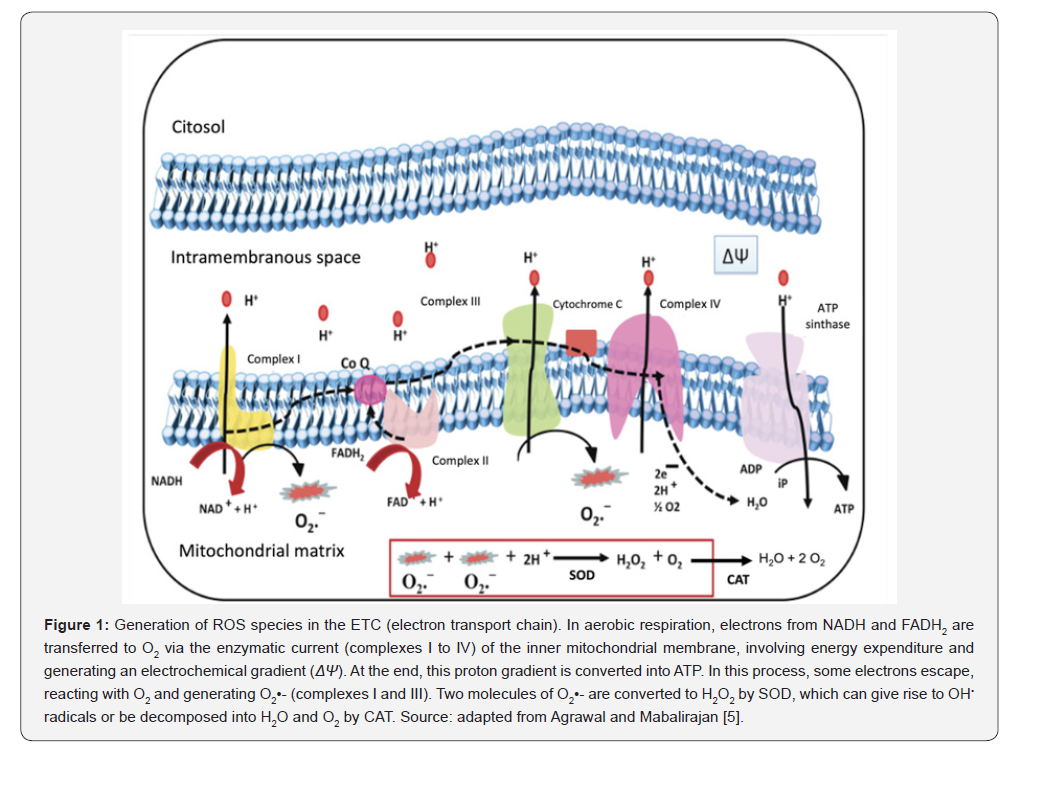
ROS such as superoxide (O₂•−), hydrogen peroxide (H₂O₂), hydroxyl radicals (•OH), and peroxynitrite (ONOO⁻) are continuously produced by mitochondrial respiration and enzymatic pathways (Table 1) [3]. Under homeostatic conditions, enzymatic and non-enzymatic antioxidant systems - including SOD (superoxide dismutase), CAT (catalase), GPx (glutathione peroxidase), and dietary antioxidants - maintain redox balance (Figure 1). However, increased ROS production or impaired antioxidant capacity leads to oxidative stress (OS), damaging lipids, DNA, proteins, and cellular structures [4,5].
Contemporary aging frameworks incorporate OS into broader hallmarks of aging, including mitochondrial dysfunction, cellular senescence, altered intercellular communication, genomic instability, telomere attrition, loss of proteostasis, and epigenetic alterations. OS directly contributes to many of these hallmarks while amplifying downstream pathological processes [3].
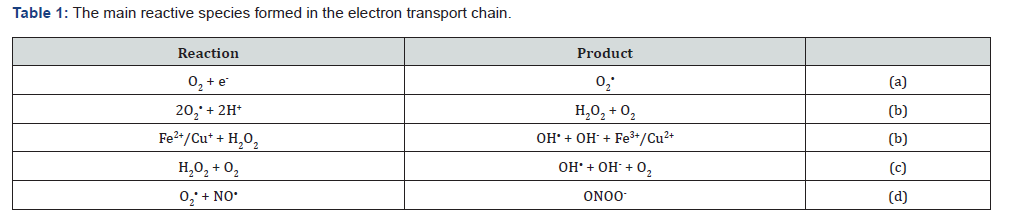
Monoreduction of O₂, generation O₂ •; (b) dismutation reaction, reducing the oxidative potential of O₂ •, giving rise to H₂O₂, which is also reactive; (b) Fenton reaction; (c) Haber-Weiss reaction; (d) ONOO- formation; Cu: cooper; Fe: iron; H+: hydrogen: H₂O₂: hydrogen peroxide; e-: electron; NO•: nitric oxide; O₂: oxygen; O₂ •: superoxide radical; OH•: hydroxyl radical; ONOO-: peroxynitrite. Source: adapted from Jomova et al. [4].
Excessive ROS formation is implicated in cardiovascular disease, cancer, diabetes, neurodegeneration, frailty, and sarcopenia [6,7]. Moreover, biological aging interacts with social and functional vulnerabilities commonly seen in older adults, such as reduced appetite, xerostomia, dysphagia, masticatory impairment, anorexia, and polypharmacy [8,9]. These conditions often lead to insufficient intake of antioxidants and essential nutrients, exacerbating oxidative and inflammatory states.
Nutrition plays a crucial modulatory role in this context. Dietary phenolic compounds - particularly flavonoids - have been recognized for their antioxidant, anti-inflammatory, and redoxmodulating properties [10,11]. Flavanols such as catechin and epicatechin, widely present in cocoa, tea, grapes, and berries, also occur in Brazilian biodiversity matrices such as babassu mesocarp and have demonstrated beneficial effects on redox homeostasis [12-14].
Babassu (Attalea speciosa Mart. ex Spreng syn. Orbignya phalerata) is a culturally and economically important palm species native to Brazil. Its mesocarp flour (FMB) is traditionally used to treat gastritis and wounds. Phytochemical studies show that babassu mesocarp contains high levels of bioactive compounds [13,15]. In this sense, babassu mesocarp may represent a valuable nutritional and potential therapeutic resource for supporting redox balance in older adults. However, clinical evidence is lacking, bioavailability remains poorly characterized, and regulatory status has evolved only recently [16].
This narrative review reorganizes current knowledge on aging biology, oxidative stress, dietary phenolics, and babassu mesocarp. It provides an integrated framework to support future research and explore whether babassu mesocarp could be developed as a nutritional adjunct for healthy aging.
Biological Foundations of Aging and Oxidative Stress
Aging is strongly influenced by cumulative biochemical insults driven by ROS/RNS generated during metabolic activity. Under physiological conditions, endogenous antioxidant defenses - including enzymatic and non-enzymatic components - maintain a dynamic redox equilibrium. However, with advancing age, mitochondrial efficiency declines, antioxidant capacity weakens, and the imbalance between oxidants and defenses results in OS, also named ‘distress’ [6,7].
The free radical theory and redox imbalance
The Free Radical Theory of Aging [2] remains a foundational concept explaining how ROS/RNS progressively impair cellular structures. As metabolism continues across decades of life, mitochondria become both the primary source and major target of ROS. When antioxidant defenses fail to neutralize these species, molecular targets - including DNA, proteins, and lipids - experience cumulative damage [4].
This persistent oxidative burden contributes to cellular senescence, mitochondrial dysfunction, and chronic inflammation. The transition from balanced redox signaling to oxidative damage is central to the pathophysiology of age-related decline. While redox imbalance reflects the biochemical dimension of aging, its interaction with inflammatory signaling forms a second major axis: the oxidation–inflammation cycle [17].
The oxidation–inflammation cycle (inflammaging)
Inflammaging describes the chronic, low-grade inflammation characteristic of aging. OS promotes this state through activation of redox-sensitive transcription factors such as TNF-α and NF-κβ, increasing the production of pro-inflammatory cytokines. In turn, inflammatory mediators enhance mitochondrial ROS generation, creating a self-perpetuating cycle. This cycle accelerates tissue damage, loss of physiological reserve, and susceptibility to chronic diseases [3].
This bidirectional mechanism is critical for understanding why older adults exhibit greater inflammatory responses to metabolic, environmental, and nutritional stressors.
Biomarkers and regulation of the redox system
Biomarkers are essential for quantifying oxidative burden
and evaluating nutrient or phytochemical interventions. The most
widely used include:
a) Malondialdehyde, an indicator of lipid peroxidation
b) Reduced and oxidized glutathione ratio, reflecting
cellular redox state
c) SOD, CAT, and GPx activities, representing enzymatic
antioxidant responses.
These biomarkers appear consistently across studies evaluating oxidative stress in aging and are crucial tools for interpreting the effects of dietary bioactive compounds, including our recent findings [15,18-20].
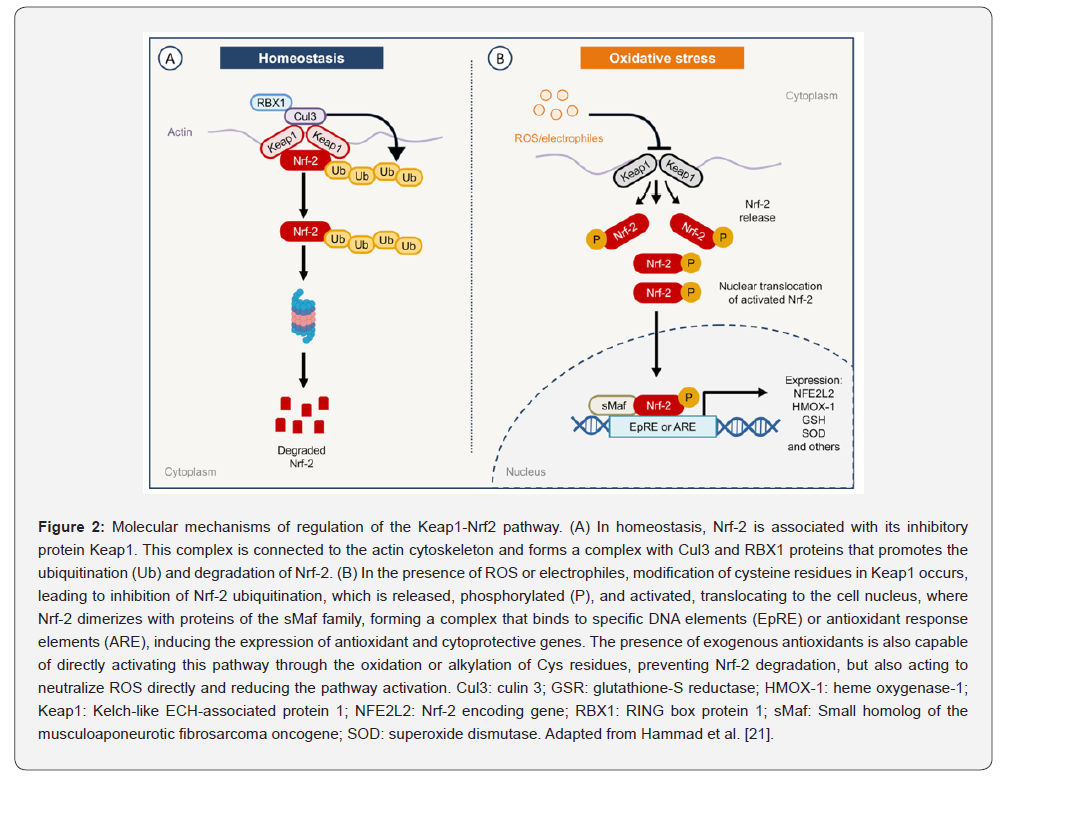
Among antioxidant regulators, Nrf-2 (nuclear factor erythroid 2–2-related factor 2) is a key transcription factor. Under normal conditions, Nrf-2 is kept in the cytoplasm by Keap1 for degradation. When oxidative or electrophilic stress occurs, specific cysteine residues in Keap1 are modified, preventing Nrf- 2 degradation. This allows Nrf-2 to bind to antioxidant response elements (AREs) and promote the expression of detoxifying enzymes (Figure 2). In aging organisms, reduced Nrf-2 activation has been observed, leading to weaker antioxidant defenses and greater vulnerability [21].
Diet, Phenolic Compounds, and Aging
Nutrition plays a central role in modulating oxidative and inflammatory pathways. Diets rich in fruits, vegetables, and plantbased foods provide phenolic compounds capable of influencing redox signaling, inflammatory cascades, endothelial function, and metabolic homeostasis - mechanisms particularly relevant in older populations [12].
Phenolic compounds and subgroups
Phenolic compounds are a diverse group of secondary plant metabolites capable of donating hydrogen atoms or electrons to stabilize ROS/RNS [10]. Their health effects stem from antioxidant, anti-inflammatory, anti-microbial, and signalingmodulatory properties [11]. Epidemiological evidence associates regular phenolic intake with improved markers of cardiovascular health, reduced oxidative stress, and decreased chronic disease risk.
The efficacy of phenolics depends on structural characteristics such as hydroxylation patterns, glycosylation, and polymerization, which influence bioactivity and absorption [22].
Flavonoids constitute one of the most extensively studied phenolic classes. Their beneficial effects are attributed to their ability to atenuate oxidative damage, influence endothelial nitric oxide signaling, and regulate inflammatory pathways. Major sources include cocoa, grapes, berries, and tea [12].
Bioavailability of phenolic compounds
The biological activity of phenolics depends on their bioavailability - absorption, metabolism, distribution, and excretion. Flavanols, a subgroup of flavonoids, undergo extensive transformations in the gastrointestinal tract, including phase II conjugation and metabolism by gut microbiota. These processes generate metabolites with distinct bioactivities [22]. Several organs and tissues metabolize flavonoids, including the liver, kidneys, lungs, and adipose tissue. However, the liver is the main site of modification of these compounds into more soluble forms. Since they are not easily absorbed, some of them need to be metabolized to become bioactive [23].
After absorption and transport to the liver, cytochrome P450 enzymes and glucuronyltransferases, sulfotransferases, and glutathione-S-transferase will be responsible for the oxidation and conjugation of some flavonoids with organic molecules, transforming them into glucuronic acid or sulfate. In adipose tissue, flavonoids can act on inflammation and lipid metabolism [24].
Once in hepatocytes, the main membrane proteins responsible for the uptake of flavonoids are organic anion transporter proteins (OATs), such as OAT1B1, whose expression is influenced by the presence of phytochemicals in the extracellular medium. In the kidneys, OAT3 is responsible for intracellular removal and urinary excretion. They can also be excreted along with bile into the intestinal lumen [22,25].
Considering food matrices, bioavailability varies widely. Fibrous or starchy matrices, such as BMF, may modulate or impair the release, solubility, and interaction of phenolics with digestive enzymes. This complexity underscores the importance of characterizing babassu phenolics not only chemically but also in terms of absorption and metabolism [26].
Babassu Mesocarp: Ethnobotany, Chemistry, and Pharmacology
Babassu is a palm species native to Brazil with deep cultural and economic importance. The BMF has been traditionally used to treat gastritis, gastrointestinal discomfort, and wounds [26], reflecting long-standing empirical recognition of its healing properties.
Botanical and Cultural Context
Babassu palms dominate extensive ecological regions and support extractive communities, particularly the coconut breakers, whose livelihoods rely on harvesting and processing kernels and mesocarp, while the epicarp and endocarp are industrially processed for biofuel, for example (Figure 3) [27]. The mesocarp flour is widely prepared in artisanal form and used in regional culinary and medicinal practices [28].
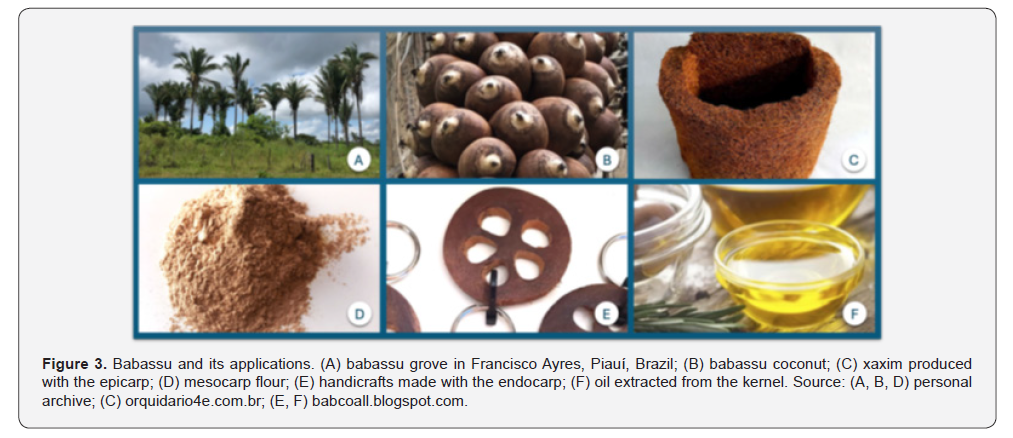
Despite this strong traditional foundation, scientific understanding of babassu mesocarp remains limited, and modern nutritional databases still exclude its chemical composition. This disconnect reinforces the importance of systematically studying regional biodiversity matrices [29,30].
Chemical Composition of Babassu Mesocarp
Phytochemical analyses demonstrate that babassu mesocarp contains carbohydrates, dietary fiber, proteins, phenolic compounds, and lipids in varying proportions. Studies highlight substantial levels of total phenolics, flavonoids, proanthocyanidins, phytosterols, and polysaccharides that may contribute to its biological activity [13,15,18,31,32]. Flavanols such as catechin and epicatechin are of particular interest due to their welldocumented antioxidant and anti-inflammatory properties.
Hydroethanolic babassu mesocarp extracts (BME) show particularly high flavonoid concentrations. One of our recent analytical investigations demonstrated a total flavonoid content of 9.9 g/g in BME - approximately 22.5 times higher than crude mesocarp flour [15]. This suggests that extraction methods significantly influence phenolic yield and may affect biological activity. However, the phenolic profile remains incompletely characterized, and variability across extraction techniques complicates comparisons between studies.
Pharmacological properties of babassu mesocarp
Babassu mesocarp has been traditionally valued for its medicinal properties, and modern studies corroborate several of these effects associated with extracts or isolated fractions of the mesocarp. Below, the pharmacological properties relevant to aging and OS are synthesized.
Antioxidant activity and metal chelation
Several studies demonstrate that babassu mesocarp extracts have the potential to reduce oxidative damage. Ethanolic, aqueous, and hydroalcoholic extracts have demonstrated strong free radical scavenging, reducing lipid peroxidation, but are limited to chemical reactions and crude extracts [31-33]. Our most recent findings are the first to describe the antioxidant activity of the BME previously submitted to an in vitro digestion process, simulating human physiological conditions. In a cell model (HepG2 human hepatocytes) exposed to the oxidative damage caused by H2O2, the digested extract reduced ROS synthesis and improved mitochondrial membrane potential [18]. In animal models, we also evidenced the antioxidant effect by modulating the GSH levels in Zophobas morio larvae, and the protective effect in Artemia salina nauplii exposed to K2 Cr2 O7 [15].
Anti-inflammatory activity
Traditional uses of babassu mesocarp for inflammation are supported by limited experimental data. Maia & Rao [34] demonstrated anti-inflammatory potential, while Barroqueiro et al. [35] identified immunomodulatory effects through suppression of nitric oxide production and regulation of macrophage activity. These results align with typical flavanol-mediated inhibition of NF-κβ and modulation of cytokine signaling [17].
Given that aging is accompanied by chronic low-grade inflammation, these properties are particularly relevant. By attenuating inflammatory pathways, babassu mesocarp may theoretically reduce the propagation of OS and inflammation characteristic of older adults.
Antimicrobial and wound-healing effects
Studies reporting activity against bacteria, fungi, and protozoa are more consistent. Mesocarp extracts show antimicrobial potential against pathogenic strains [35] and leishmanicidal activity [36,37]. Wound healing properties observed in fibroblast and animal models include stimulated collagen deposition and reduced inflammation [38,39]. These effects may result from combined antioxidant, immunomodulatory, and polysaccharidemediated actions.
Antitumor and metabolic effects
Rennó et al. [40] observed antitumor activity in cell lines exposed to babassu extracts. Additionally, metabolic effects such as glycemic modulation and improved inflammatory profiles have been suggested [33]. Although clinical confirmation remains absent, we also evidenced the hypoglycemic effects of BME in obese C57BL6 mice at a low dose. At a moderate dose, BME was able to reduce appetite and weight loss [19].
Safety and toxicity
Toxicological evidence indicates that babassu mesocarp is safe at high doses in healthy animal models. No signs of acute toxicity were reported in mice receiving up to 5 g/kg of ethanolic extract [41]. Similarly, aqueous extract doses up to 3 g/kg showed no impairment in locomotion or motor coordination [42]. Human data remain limited: a trial acute administering 0.4 g/kg/day of aqueous extract after strenuous exercise found no changes in OS or muscle damage biomarkers [43].
However, it is important to consider that older adults often have chronic diseases and some level of frailty, which can predispose them to a higher risk of toxicity. In this sense, we recently demonstrated that the BME up to 200 mg/kg was safe to healthy mice after a 28-day treatment. Nonetheless, when the same strain was induced to metabolic disorders, typical of aging, the same dose proved to be toxic and even lethal [19]. These findings underscore its general safety at low doses, though long-term human studies - particularly in older adults with multimorbidity - are needed.
Nutritional and Functional Relevance for Older Adults
Older adults face nutritional challenges that heighten vulnerability to oxidative stress, including reduced appetite or weight gain, impaired digestion and absorption, polypharmacy, decreased sensory perception, and oral health [8,9]. These factors compound the intrinsic oxidative and inflammatory burden of aging, making dietary strategies particularly relevant.
Since the babassu mesocarp carries phenolics together with fiber and polysaccharides, its potential benefits may extend beyond classical antioxidant mechanisms; however, it depends on how BMF will be offered: crude, cooked, or processed to concentrate its bioactive compounds, as in extracts [44].
Nutritional Supplements (Current Evidence and Limitations)
Dietary supplements represent a substantial segment of the global nutrition market and are widely used for health promotion, including among older adults. They typically contain vitamins, minerals, polyphenols, phytochemicals, or other bioactive compounds intended to support metabolic and physiological functions [45,46]. However, their regulation varies considerably across countries, and clinical evidence supporting efficacy is often limited.
Many supplements marketed for antioxidant or antiinflammatory purposes claim to modulate OS or enhance immune function. Nonetheless, the effectiveness of such products depends on factors including dosage and bioavailability of active constituents, stability and interactions within the formulation, individual metabolic differences, presence of comorbidities and polypharmacy, especially in older adults.
Phenolic-rich extracts from plants with long traditional use are frequently incorporated into encapsulated supplement formulations, though scientific validation is often incomplete or absent. According to your findings, babassu mesocarp is among the plants that have been informally suggested as candidates for supplement development; however, no babassu-based nutritional supplement is currently supported by clinical evidence [16].
Thus, despite its promising antioxidant and anti-inflammatory properties, further research is necessary to determine appropriate dosing, metabolic effects, and safety, particularly for older adults who are more susceptible to adverse reactions.
Final Considerations
This narrative review examined the biological mechanisms linking aging, oxidative stress, and chronic inflammation, and integrated existing evidence on dietary phenolic compounds - especially flavonoids - which may modulate these pathways. Within this context, babassu mesocarp (Attalea speciosa) emerges as an underexplored but culturally significant Brazilian food matrix with notable antioxidant, anti-inflammatory, antimicrobial, healing, and metabolic properties demonstrated in preclinical research.
However, significant limitations remain. The chemical composition of babassu mesocarp is not fully characterized, and variations in extraction methods lead to inconsistent phenolic yields [13,15,47]. Toxicological assessments suggest that metabolic status influences tolerance, with signs of toxicity observed in compromised animal models [19]. Crucially, no clinical trials have evaluated the antioxidant and metabolic effects of babassu mesocarp in humans, and there is no evidence regarding its long-term safety, bioavailability, or efficacy as a nutritional intervention for older adults.
Given these gaps, babassu mesocarp cannot yet be recommended as a dietary supplement or therapeutic resource. Nonetheless, the combination of traditional use, biochemical richness, and promising preclinical results justifies further investigation. Future studies should prioritize comprehensive phytochemical profiling, standardized extraction methods, and well-designed clinical trials - particularly involving older adults, who stand to benefit most from interventions targeting OS and inflammation.
Babassu mesocarp represents a culturally relevant and scientifically promising component of Brazilian biodiversity with potential implications for geriatric nutrition. Advancing the evidence base will be essential to determine whether this traditional food matrix can contribute meaningfully to strategies aimed at promoting healthy aging.
Statements and Declarations
Acknowledgements and funding information
ND, MCAS, TMR, and JMCS are grateful to the public Brazilian agencies “Coordenação de Aperfeiçoamento de Pessoal de Nível Superior” [CAPES (Finance code 001)], “Fundação de Amparo à Pesquisa do Piauí” [FAPEPI (#58431.PGR1014.57854.10072024)], and “Conselho Nacional de Desenvolvimento Científico e Tecnológico” [CNPq (#167563/2024-6) and (#309109/2022-1)], for their personal scholarships, respectively.
Competing interests
The authors declare that they have no competing financial interests or personal relationships that could have appeared to influence the work reported in this paper.
Authorship contribution statement
ND: conceptualization, investigation, writing – review & editing, intellectual input; MCAS, TMR, and ABSS: conceptualization, investigation, intellectual input; JMCS: conceptualization, writing – review & editing, intellectual input, supervision, project administration. All authors read and approved the final manuscript.
References
- Magalhães JP (2011) The biology of aging: a primer. In: Stuart-Hamilton I, editor. An Introduction to Gerontology. New York: Cambridge University Press p. 21-43.
- Harman D (1956) Aging: a theory based on free radical and radiation chemistry. J Gerontol 11(3): 298-300.
- Álvares SM, Erro AB, Garcia EC, Alberro A, Antoñanzas AS, et al. (2020) Relevance of oxidative stress and inflammation in frailty based on human studies and mouse models. Aging 12(10): 9982-9999.
- Jomova K, Alomar SY, Alwasel SH, Nepovimova E, Kuca K, et al. (2024) Several lines of antioxidant defense against oxidative stress: antioxidant enzymes, nanomaterials with multiple enzyme-mimicking activities, and low-molecular-weight antioxidants. Arch Toxicol 98: 1323-1367.
- Agrawal A, Mabalirajan U (2016) Rejuvenating cellular respiration for optimizing respiratory function: targeting mitochondria. Am J Physiol Lung Cell Mol Physiol 310: L103-L113.
- Krata N, Zagożdżon R, Foroncewicz B, Mucha K (2018) Oxidative stress in kidney diseases: the cause or the consequence? Arch Immunol Ther Exp (Warsz) 66(3): 211-220.
- Baumann CW, Kwak D, Liu HM, Thompson LV (2016) Age-induced oxidative stress: how does it influence skeletal muscle quantity and quality? J Appl Physiol 121(5): 1047-1052.
- Neri AL, Yassuda MS, Araújo LFD, Eulálio MDC, Cabral BE, et al. (2013) Methodology and social, demographic, cognitive, and frailty profiles of community-dwelling elderly from seven Brazilian cities: the FIBRA Study 29(4): 778-792.
- Raymond JL, Morrow K (2022) Nutrition in the stages of life. In: Krause, Mahan: Food, nutrition and diet therapy. (15th), Rio de Janeiro: Guanabara Koogan pp. 1208.
- Hassimoto NMA, Lajolo FML (2017) Polyphenols. In: Cominetti C, Rogero MM, Horst MA, (eds.), Nutritional Genomics: from fundamentals to molecular nutrition. Barueri: Manole pp. 230-242.
- Terao J (2009) Dietary flavonoids as antioxidants. Forum Nutr 61: 87-94.
- Manach C, Scalbert A, Morand C, Rémésy C, Jiménez L (2004) Polyphenols: food sources and bioavailability. Am J Clin Nutr 79: 727-747.
- Holanda AC (2020) Bioaccessibility of polyphenols present in the mesocarp and kernel of babassu. Braz J Develop 6(4): 19237-19247.
- Silva VC, Barboza JR, Dutra RP, Batista MCA, Veras KS, et al. (2017) Identification of phenolic compounds by LC/MS-MS and antioxidant and anti-tyrosinase activities of the Attalea speciosa Mart. ex Spreng. Mesocarp. J Chem Pharm Res 9(1): 267-275.
- Debia N, Sousa ABS, Melo BACD, Sousa AAD, Nobre TA, et al. (2025) Toxicological safety, antioxidant effect, and chemoprotection of babassu mesocarp extract in preclinical studies. J Toxicol Environ Health A 88(18): 727-747.
- Debia N, Castro IO, Sousa ABS, Oliveira VAD, Negreiros HA, et al. (2024) Comprehensive preclinical studies on the bioactivity of Orbignya phalerata (Babassu) and its derived products: a systematic review. Futur J Pharm Sci 10: 11.
- Silva WJM, Ferrari CKB (2011) Metabolismo mitocondrial, radicais livres e envelhecimento. Rev Bras Geriatr Gerontol 14(3): 441-451.
- Debia N, Nunes AM, Sousa JMC, Lotsch FP (2025) Lipid profile, toxicity, and antioxidant potential of flavonoid-rich babassu mesocarp extract after simulated human digestion. Drug Chem Toxicol.
- Debia N (2025) Antioxidant, genotoxicological, chemoprotective and metabolic modulating potential of the hydroalcoholic extract of babassu mesocarp. Teresina, Brazil: Federal University of Piauí.
- Yang K, Cao F, Xue Y, Tao L, Zhu Y, et al. (2022) Three classes of antioxidant defense systems and the development of postmenopausal osteoporosis. Front Physiol 13: 840293.
- Hammad M, Raftari M, Cesário R, Salma R, Godoy P, et al. (2023) Roles of oxidative stress and Nrf2 signaling in pathogenic and non-pathogenic cells. Antioxidants (Basel) 12(7): 1371.
- Rathaur P, Johar K (2019) Metabolism and pharmacokinetics of phytochemicals in the human body. Curr Drug Metab 20(14): 1085-1102.
- Pestana DCM, Fiamoncini J (2024) Metabolismo de fitoquímicos em mamí In: Fiamoncini J, Demarque DP, Crnkovic CM, (edts.), Fitoquímicos em alimentos, fármacos e medicamentos. Santana de Parnaíba: Manole pp. 187-199.
- Lila MA, Freeman BB, Grace M, Kalt W (2016) Unraveling anthocyanin bioavailability for human health. Annu Rev Food Sci Technol 7: 375-393.
- Riha J (2015) Effects of anthocyans on the expression of OATPs in human hepatocytes. Food Funct 6: 772-779.
- Souza MHSL, Monteiro CA, Figueredo PMS, Nascimento FRF, Guerra RNM (2011) Ethnopharmacological use of babassu in communities of babassu nut breakers in Maranhão, Brazil. J Ethnopharmacol 133: 1-5.
- Sousa HR, Lima SI, Neris LML, Silva AS, Nascimento AMSS, et al. (2023) Innovative hydrogels made from babassu mesocarp for technological application in agriculture. J Mol Liq 376: 121463.
- Carrazza LR (2012) Ma Technological manual for the complete utilization of the babassu fruit. Brasília: p. 68.
- NEPA-UNICAMP (2011) Brazilian Food Composition Table. In: (4th), Campinas: NEPA pp. 161.
- TBCA-USP (2023) Brazilian Food Composition Table.Version 7.2. São Paulo: USP.
- Silva CG, Herdeiro RS, Mathias CJ, Panek AD, Silveira CS, et al. (2005) Evaluation of antioxidant activity of Brazilian plants. Pharmacol Res 52: 229-233.
- Silva APS, Sousa GFD, Freitas R, Nunes LCC (2012) Evaluation of the acute toxicity of the aqueous extract of the mesocarp of Orbignya phalerata. Rev Cubana Plant Med 17(4): 393-401.
- Lima RC (2023) Green ultrasound-assisted extraction of bioactive compounds of babassu mesocarp: antioxidant capacity and antimicrobial activity. Appl Food Res 3: 100331.
- Maia MBS, Rao VS (1989) Anti-inflammatory activity of Orbignya phalerata in rats. Phytother Res 3(5): 170-174.
- Barroqueiro ESB, Prado DS, Barcellos PS, Silva TA, Pereira WS, et al. (2016) Immunomodulatory and antimicrobial activity of babassu mesocarp improves survival in lethal sepsis. Evid Based Complement Alternat Med.
- Bezerra JL, Costa GC, Lopes TC, Carvalho ICDS, Patrício FJ, et al. (2006) Evaluation of the in vitro leishmanicidal activity of medicinal plants. Rev Bras Farmacogn 16(Supl): 631-637.
- Silva MCP, Brito JM, Ferreira ADS, Vale AAM, Santos APAD, et al. (2018) Antileishmanial and immunomodulatory effect of babassu-loaded PLGA microparticles: A Useful Drug Target to Leishmania amazonensis Infection. Evid Based Complement Alternat Med.
- Silva CES, Santos OJD, Filho JMR, Tabushi FI, Kume MH, et al. (2015) Effect of Carapa guianensis and Orbignya phalerata in colonic healing in rats. Rev Col Bras Cir 42(6): 399-406.
- Torres OJM, Santos OJD, Moura RSD, Serra HO, Ramos VP, et al. (2018) Activity of Orbignya phalerata and Euterpe edules in the prevention and treatment of peptic ulcer in rats. ABCD Arq Bras Cir Dig 31(3): e1390.
- Rennó MN, Barbosa GM, Zancan P, Veiga VF, Alviano CS, et al. (2008) Crude ethanol extract from babassu: cytotoxicity on tumoral and non-tumoral cell lines. An Acad Bras Cienc 80(3): 467-476.
- Barroqueiro ESB, Barbosa GM, Zancan P, Veiga VF, Alviano CS, et al. (2011) Evaluation of acute toxicity of babassu mesocarp in mice. Braz J Pharmacogn 21(4): 710-714.
- Silva APS, Cerqueira GS, Nunes LCC, Freitas RMD (2012) Effects of an aqueous extract of Orbignya phalerata on locomotor activity and motor coordination in mice and as antioxidant in vitro. Pharmazie 67(3): 260-263.
- Moura RC, Silva AS, Rossi FE, Batista MCC, Barros EML, et al. (2020) Effect of acute babassu mesocarp flour supplementation on aerobic capacity, oxidative stress, and muscle damage in recreational runners: A randomized, crossover, placebo-controlled study. Int J Dev Res 10(7): 37761-37766.
- Lima ACS (2020) Bioactive compounds in food. In: Cominetti C, Cozzolino SMF (eds.), Biochemical and physiological bases of nutrition. Barueri: Manole pp. 606-636.
- Gonçalves TJM (2019) BRASPEN guideline for nutritional therapy in aging. BRASPEN J 34(Suppl 3): 2-58.
- Volkert D, Beck AM, Cederholm T, Jentoft AC, Hooper L, et al. (2022) ESPEN practical guideline: clinical nutrition and hydration in geriatrics. Clin Nutr 41: 958-989.
- Godinho JWLS (2017) Validation study of Attalea speciosa: ethnopharmacology and chemistry. [Master’s dissertation]. São Luís, Brazil: Federal University of Maranhã

























