




 JOJUN Home



Abstract
Introduction: Chronic kidney disease (CKD) is a major public health problem. Renal replacement by dialysis is a therapeutic modality. Hepatitis B virus (HBV) infection is frequently associated.
Objective: To determine the prevalence and factors associated with HBV in patients with CKD.
Materials and Methods: This was a descriptive and analytical cross-sectional study with retrospective data collection over a period of 4 years, on patients followed for CKD at the hemodialysis stage infected with HBV in the Nephrology-Dialysis Department of the Zinder National Hospital (HNZ).
Results: 21 patients with chronic kidney failure infected with HBV were present out of the 109 screened for HBV, i.e. a prevalence of carriage of 19.27%. The mean age was 35.63±16.03 years with a male predominance. The medical history was high blood pressure and diabetes with 66.67% and 9.52%. Asthenia, vomiting, and abdominal pain were functional signs in 38.10% each. Cytolysis was found in 14.28% (n=3) on ALT and 19.05% (n=4) on AST. There was no co-infection with HCV and HIV and no patients had a viral replication assessment. The lesions responsible for CKD were glomerular nephropathies in 66.67% (n=14), vascular nephropathy in 14.29% (n=3), tubulointerstitial nephropathy in 9.52% (n=2) and diabetic nephropathy in 9.52% (n=2). The mean duration of hemodialysis was 3.71±3.18 months with a rhythm of 2 sessions per week in 66.67% (n=14). All patients benefited from blood transfusion with an average of at least 4 blood bags in 52% (n=11). In terms of evolution, death occurred in 33% (n=7) after a 4-month follow-up. In multivariate analysis, multiple transfusion was statistically associated with the occurrence of HBV (p=0.0010).
Conclusion: HBV is common in CKD. The treatment must be multidisciplinary.
Keywords:Chronic kidney disease; Hemodialysis; Hepatitis B; Zinder National Hospital; Abdominal pain
Keywords:CKD: Chronic Kidney Disease; HBV: Hepatitis B Virus; HNZ: Zinder National Hospital; GFR: Glomerular Filtration Rate; HBV: Hepatitis B Virus; TDF: Tenofovir Disoproxil Fumarate; PAN: Polyarteritis Nodosa
Introduction
Chronic kidney disease (CKD) is defined as abnormalities in kidney structure or function, present for at least 3 months, with health implications [1]. The classification of CKD is based on its cause, glomerular filtration rate (GFR), and the nature of albuminuria [1]. The role of these three elements of the classification is to monitor the affected individuals and thus to assess the severity of the disease [1]. The management of kidney disease depends on its stage of progression. At the stage of replacement dialysis treatment, several functions performed by the kidneys are altered, including that of cleaning waste products and metabolizing drugs [1]. Chronic kidney disease is a major global public health problem. The prevalence of CKD varies from one geographical area to another and within the same country [2]. In fact, about 850 million people have kidney diseases worldwide, most of whom live in low- and middle-income countries, with a prevalence of more than 10% [3].
Chronic kidney disease affects approximately 700 million people worldwide [3]. In France, more than 5% of the population suffers from chronic kidney failure and its prevalence is increasing [4]. Reduced immunity during CKD and associated care such as frequent blood transfusions and dialysis expose patients to infections, including hepatitis B virus (HBV) infection [5]. Also, during HBV infection, immunological mechanisms involving viral antigens and specific anti-HBV antibodies are thought to be responsible for several extra-hepatic manifestations such as HBV glomerulonephritis and polyarteritis nodosa (PAN) [6]. The same is true of antiviral treatment with tenofovir disoproxil fumarate (TDF), which is reported to be associated with rare cases of proximal renal tubular dysfunction, usually occurring after months or years of treatment for chronic viral hepatitis B [7]. HBV infection can progress on its own, independently of the course of kidney disease, and can lead to chronic complications such as cirrhosis and hepatocellular carcinoma and eventually death.
These deaths may be wrongly associated with kidney disease, when in fact they were the progressive complications of hepatitis B that needed to be detected in time [8]. The prevalence of viral hepatitis B in chronic kidney disease varies from 9.2% in Burkina Faso [9] to 12.2% in Guinea [10]. In Niger, in the absence of national prevalence studies, the prevalence of hepatitis B in target populations varied between 8.4 and 20% [11-13]. However, this prevalence is not well known in patients with chronic renal failure who are on hemodialysis. In view of the high prevalence of HBV in certain target groups, we initiated this work to determine the prevalence and associated factors of HBV infection in patients with chronic kidney failure on hemodialysis at the Nephrology Department of the National Hospital Zinder.
Materials and Methods
This was a descriptive and analytical cross-sectional study with retrospective data collection over a period of 4 years from April 01, 2020, to March 31, 2024, carried out at the Nephrology- Dialysis Department of the Zinder National Hospital (HNZ). The study population consisted of all patients treated in the department for chronic kidney disease at the hemodialysis stage in whom hepatitis B virus infection was demonstrated. Patients with chronic kidney disease on hemodialysis with positive serology other than hepatitis B virus were excluded from the study. The diagnosis of HBV was made using a rapid immunochromatographic migration test on agar.
Patients were enrolled in the dialysis cohort after depositing a sum of one hundred and fifty thousand CFA francs to cover all dialysis sessions. The variables collected were sociodemographic characteristics (age, sex, occupation, origin, marital status), medical-surgical history, physical signs, additional examinations, types of kidney damage and course of progression. The data had been entered and analyzed using Excel and Epi info version 7 software. Prognostic associations were made using the Epi info software with a significance threshold for p-value <0.05. The study was carried out anonymously and in accordance with the Declaration of Helsinki.
Results
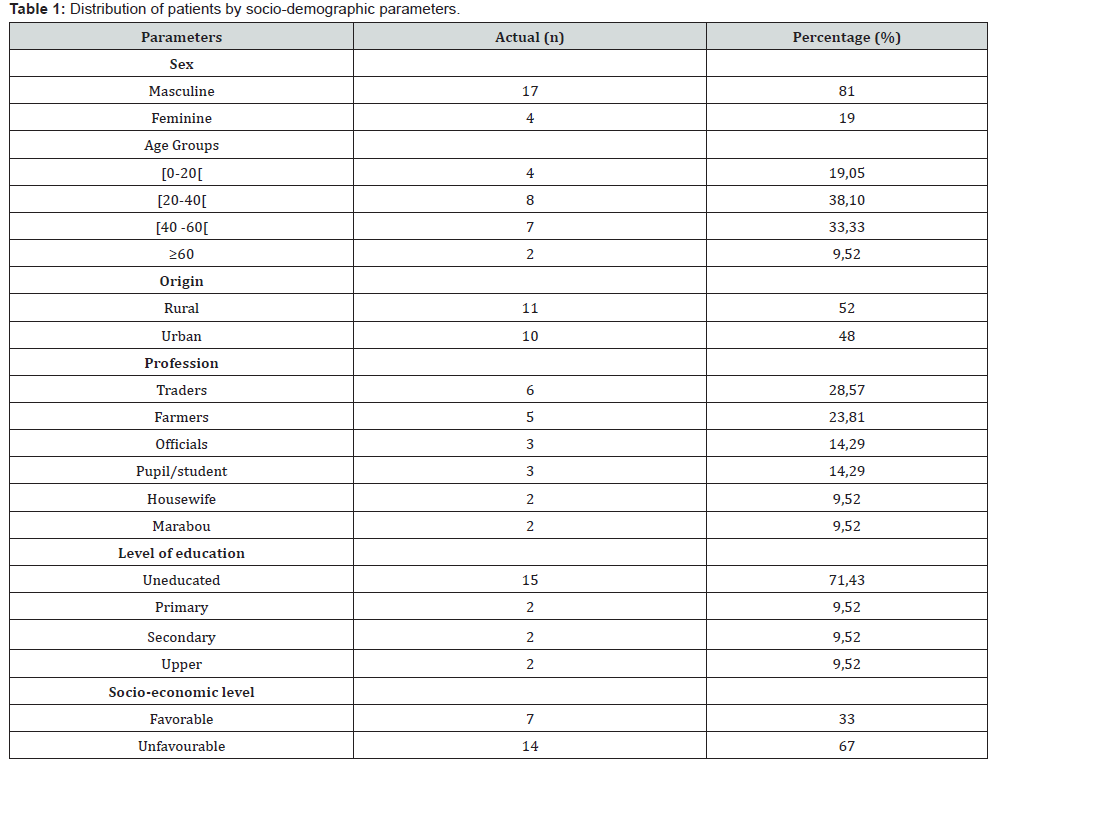
During the study period, 135 patients with chronic kidney failure undergoing hemodialysis were analyzed, of whom 109 had been screened for viral hepatitis B. HBsAg was positive in 21 patients, resulting in a carriage prevalence of 19.27%. The mean age was 35.63±16.03 years, with extremes ranging from 14 to 70 years. The 20-60 age group accounted for 71.43% (n=15). The predominance was male with a sex ratio of 4.26. Patients were from rural areas in 52% (n=11). Patients without a fixed income (farmers, high school/student, marabout, housewife) were in the majority with 85.71% (n=18). Civil servants represented 14.29% (n=3). Patients with an unfavorable socioeconomic status accounted for 67% (n=14). Uneducated patients were in the majority 71.43% (n=15) (Table 1). The medical history was high blood pressure and diabetes with 66.67% and 9.52% respectively.
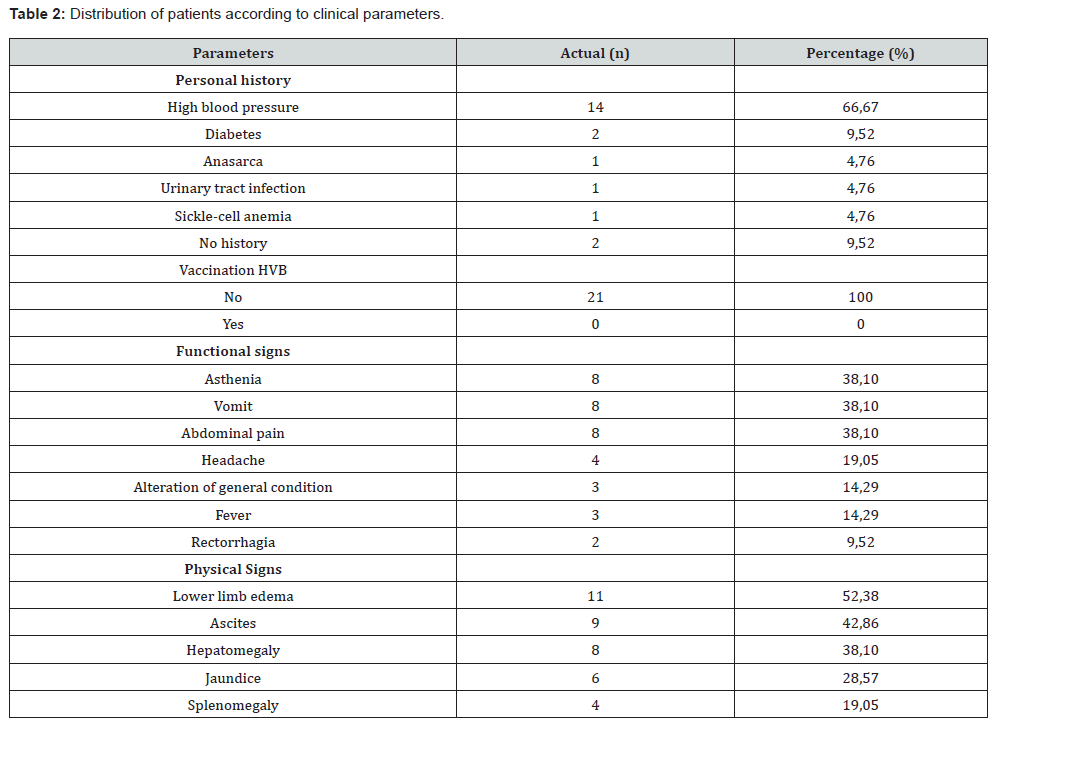
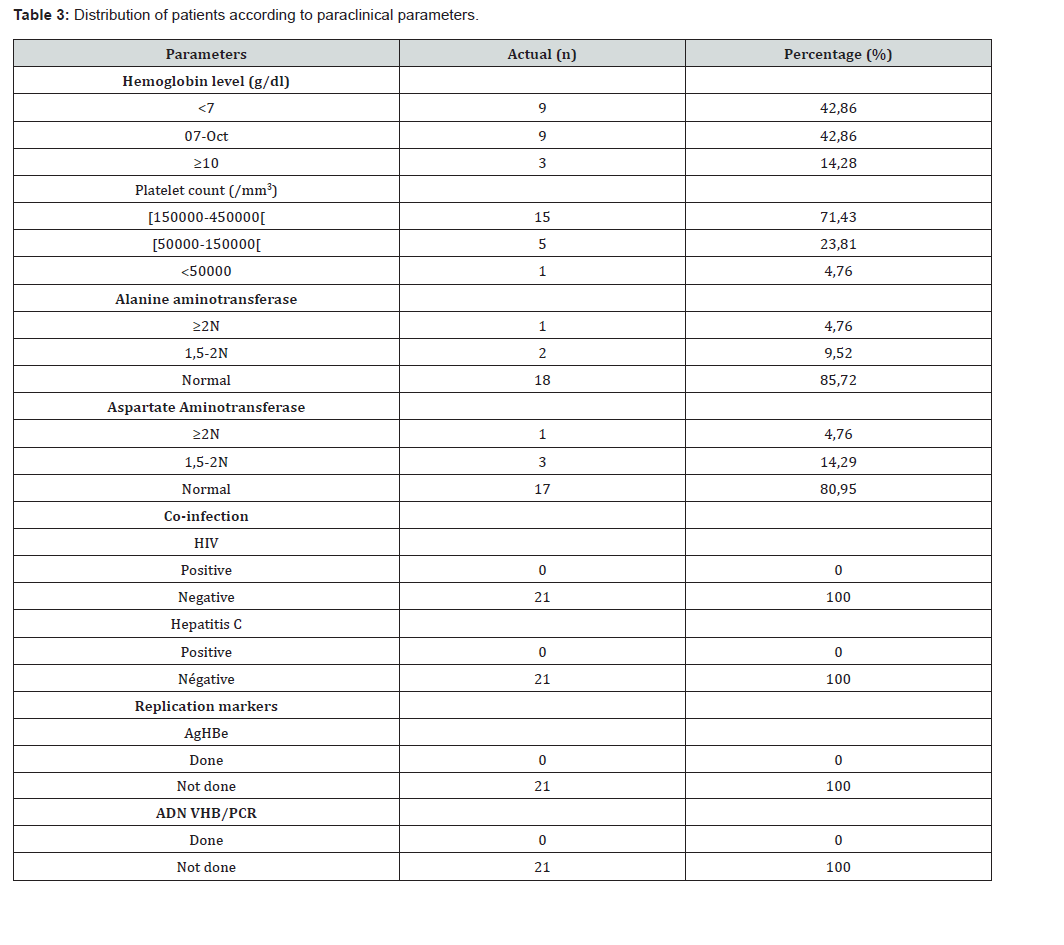
No patient had received vaccination against the hepatitis B virus. Functional signs on admission were asthenia, vomiting, and abdominal pain with 38.10% each. On physical examination, patients had lower limb edema, ascites, hepatomegaly, and jaundice in 52.38%, 42.86%, 38.10, and 28.57%, respectively (Table 2). Paraclinically, the complete blood count showed anaemia in 85.72% (n=18), which was severe in 42.86% (n=9) and thrombocytopenia in 28.57% (n=6). Cytolysis was found in 14.28% (n=3) on alanine aminotransferase and in 19.05% (n=4) on aspartate aminotransferase, respectively. There was no coninfection with hepatitis C and human immunodeficiency virus. No patient had benefited from a viral replication assessment. Ultrasound was performed on all of our patients. Hepatomegaly was found in 28.57% (n=6).
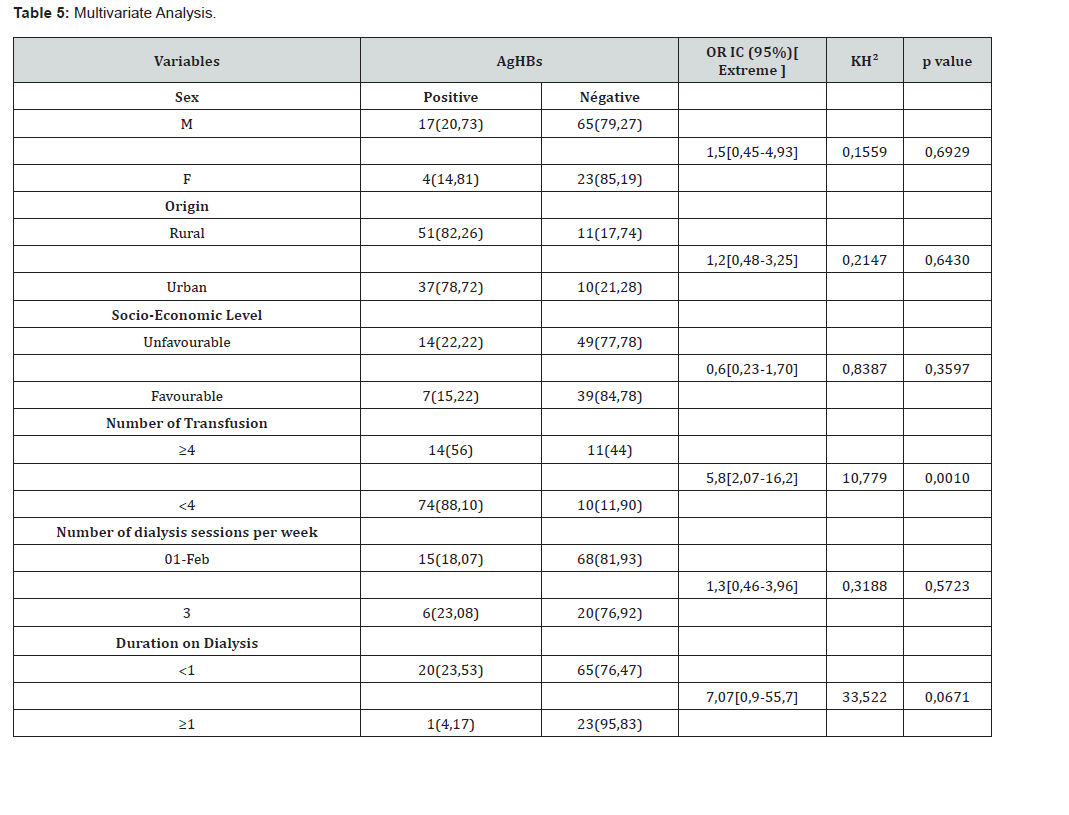
Hepatomegaly was heterogeneous in one patient, i.e. 4.76%. No patient had benefited from an alfa-fetoprotein assay (Table 3). The types of lesions responsible for chronic kidney disease were chronic glomerular nephropathy in 66.67% (n=14), chronic vascular nephropathy in 14.29% (n=3), chronic tubulointerstitial nephropathy in 9.52% (n=2) and diabetic nephropathy in 9.52% (n=2) (Table 4). Therapeutically, all patients had received at least two dialysis sessions per week. The mean duration of hemodialysis was 3.71±3.18 months with extremes of 1 and 13 months and a rhythm of 2 sessions per week in 66.67% (n=14). All patients received a blood transfusion with an average transfusion of at least 4 blood bags per person in 52% (n=11). Progressively, the death of patients occurred in 33% (n=7) after a 4-month followup. In multivariate analysis, transfusion of more than 4 bags was statistically associated with the occurrence of viral hepatitis B (OR= 5.81 [2.07-16.27]; Chi²=10.7792; p=0.0010).

Discussion
We conducted a cross-sectional retrospective data collection study to determine the prevalence and factors associated with hepatitis B virus infection in patients followed at the HNZ Nephrology-Dialysis Department for chronic kidney disease (CKD) at the hemodialysis stage. Indeed, during CKD, immune dysregulation, iterative blood transfusions and hemodialysis practices are real factors that can lead to the transmission of viral infections, including hepatitis B virus infection. The retrospective nature of our study constitutes a real limitation in the use of patient files and in particular in the absence of certain data necessary for the diagnosis, management and follow-up of our patients. During our study, we analyzed the records of 21 patients infected with HBV out of a total of 109 patients screened and followed for chronic kidney failure hemodialysis, i.e. a prevalence of carriage of 19.27%. Our prevalence is higher than that found in Burkina Faso [9], Guinea [10], Syria [15], Iran [16, 17], Gaza [18] and during a systematic review and meta-analysis on the prevalence and factors associated with HBV and HCV infection among hemodialysis patients in Africa [14] with 12.2% respectively; 9,2%; 3,2%; 0,09%; 13,8%; 8.1% and 9.88%.
All of these studies were conducted in areas of medium and high hepatitis B endemicity, but the difference could be explained by the study population that is not at the hemodialysis stage in Burkina Faso and Guinea, a low use of blood transfusion due to better accessibility of erythropoietin, and the routine hepatitis B vaccination program in chronic kidney disease in the other studies. Indeed, none of our patients had received vaccination against hepatitis B and a routine HBV vaccination program for this target population combined with better accessibility of erythropoietin could reduce our prevalence. The young age (35.63±16.03 years), the male predominance (sex ratio 4.26), the rural origin, the low socioeconomic level and the low level of education of our patients were nothing special. Similar findings were made in studies conducted in contexts identical to ours [9,10,16-18].
Indeed, the male sex is recognized as a factor in exposure to HBV infection, while the rural origin, low socioeconomic level and low level of education exposes the patient to delay in the use of care with the use of traditional medicine, thus aggravating kidney disease [9,10,16,17,18]. High blood pressure and diabetes were the antecedents found in our patients. Our results are similar to those found in many studies [1,3,4]. Indeed, high blood pressure and diabetes (proteinuria) are major risk factors for deteriorating kidney function [1,3,4]. Our patients did not have co-infection with HCV and/or HIV. Co-infection with HCV was 4.6%; 22,1%; 4,6%; 0,18%; 17.09% and 23.04% respectively in Guinea, Syria, Iran, Gaza [10,15-18] and during a systematic review and metaanalysis on the prevalence and factors associated with HBV and HCV infection among hemodialysis patients in Africa [14]. Factors associated with HCV transmission, including injection drug use, may explain the importance of this co-infection [10,15,14,16,17,18].
For co-infection with HIV, our results are like those found in other studies [14,15,16,18]. Indeed, huge projects are being recorded in many countries to reduce the prevalence of HIV infection [14,15,16,18]. Our patients had not benefited from the usual check-up when diagnosing and monitoring patients with chronic hepatitis B, in particular the viral replication test and the search for complications (cirrhosis and/or cancer) by performing an abdominal ultrasound and measuring the alfa-fetoprotein. This could be explained by the low socioeconomic level of our patients who are faced with the inherent expenses of two long-term conditions. The mean duration of hemodialysis was 3.71±3.18 months with extremes of 1 and 13 months. Longer average durations than ours were found in Iran with 30.68 months and 25 months [16,17]. These average hemodialysis durations are correlated with the duration of patients in the cohort and therefore with patient survival.
The short stay of our patients in the cohort explains the high mortality of our patients of the order of 33% (n=7) after a 4-month follow-up follow-up. This could be due to the severity of the kidney disease at the time of diagnosis, the insufficient means of our patients to deposit the deposit for dialysis and the insufficient number of machines, the non-compliance with dialysis treatment, thus limiting the stay of patients in the cohort. All these inadequacies resulted in the death of patients. Transfusion of more than 4 bags was statistically associated with HBV infection in our study. Other studies have found a statistical association between transfusion and HBV infection [16,18]. The systematic review and meta-analysis on the prevalence and factors associated with HBV and HCV infection among hemodialysis patients in Africa found the duration of dialysis as the risk factor for the occurrence of HBV infection in patients with chronic kidney disease on hemodialysis.
Conclusion
Hepatitis B virus (HBV) infection is common in patients with renal failure at the hemodialysis stage. Repeated transfusions during renal failure are significantly associated with the occurrence of HBV infection. Both morbidities may evolve independently and worsen the prognosis of patients. Routine hepatitis B vaccination of this target population could help reduce the prevalence of this morbid association. Multidisciplinary management involving nephrologists and hepatologists is therefore necessary to improve the quality of life of patients.
Authors’ Contributions
All authors declare that they have read and approved of the manuscript.
References
- Kidney Disease: Improving Global Outcomes (KDIGO) CKD Work Group (2024) KDIGO 2024 Clinical Practice Guideline for the Evaluation and Management of Chronic Kidney Disease. Kidney Int 105(4S): S117-S314.
- Glassock RJ, Warnock DG, Delanaye P (2017) The global burden of chronic kidney disease: estimates, variability and pitfalls. Nat Rev Nephrol 13(2): 104-114.
- Francis A, Harhay MN, Ong ACM, Tummalapalli SL, Ortiz A, et al. (2024) chronic kidney disease and the global public health agenda: an international consensus. Nat Rev Nephrol. juill 20(7): 473‑485.
- Verhelst D (2018) Characteristics and epidemiology of chronic kidney disease. Soins 63(826): 14-16.
- Pol S, Vallet-Pichard A (2008) Chronic hepatitis B: rare situations: dialysis, kidney transplantation and pre-emptive treatments in immunosuppressive situations. Gastroenterol clin et biol 1(32): 34-41.
- Terrier B, Cacoub P (2011) Hepatitis B virus, immunological extrahepatic manifestations and risk of viral reactivation. Journal of Internal Medicine 32(10) :622–627.
- Fernandez-Fernandez B, Montoya-Ferrer A, Sanz AB, Sanchez-Niño MD, Izquierdo MC, et al. (2011) Tenofovir nephrotoxicity: 2011 update. AIDS Res Treat 2011: 354908.
- Schiller A, Timar R, Siriopol D, Timar B, Bob F, et al. (2015) Hepatitis B and C virus infection in the hemodialysis population from three romanian regions. Nephron 129(3): 202-208.
- Bonzi Y, Guenguané A, Ouedraogo AN, Coulibaly G (2021) Factors associated with viral hepatitis B in a population of chronic kidney patients before the terminal stage in the Nephrology and Hemodialysis Department of the University Hospital Center.... Nephrology & Therapeutics 17(5): 388.
- Diakité F, Baldé MS, Bah AB, Traoré M, Cherif I, et al. (2019) Seroprevalence of viral hepatitis B and C, and human immunodeficiency virus in chronic kidney disease patients at the Nephrology Department of Donka National Hospital. Rev Afr Internal Medicine 6: 28-33.
- Ousmane A, Alhousseyni MD, Laouali HA, Yahaya I, Ousseini A, et al. (2018) Risk factors and prevalence of HBs antigen in pregnant women and their newborns in Niamey, Niger. Health Sciences and Disease 19(3): 27-31.
- Mayaki Z, Dardenne N, Kabo R, MoutschenM, Sondag D, et al. (2013) Seroprevalence of infection markers among blood donors in Niamey (Niger). Rev Epidemiol Public Health 61(3): 233-240.
- Séhonou J, Kpossou AR, Amanda TO, Sokpon CNM, Vignon RK, et al. (2018) Viral hepatitis B and renal failure: prevalence and factors associated with the National Hospital and University Center of Cotonou. Pan Afr Med J 31: 121.
- Adane T, Getawa S (2021) The prevalence and associated factors of hepatitis B and C virus in hemodialysis patients in Africa: A systematic review and meta-analysis. Plos one 16(6): e0251570.
- Altinawe J, Akkawi ME, Kharrat Helu N, Hassan Q, Nattouf AH (2024) Seroprevalence and risk factors of HBV, HCV and HIV among hemodialysis patients: a multicenter cross-sectional study from Damascus Syria. BMC Infectious Diseases 24(1): 289.
- Khorrami MB, Amali A, Sadeghi M, Riahi-Zanjani B (2023) The prevalence of HBV, HCV, and HIV among hemodialysis patients in a tertiary care hospital in Mashhad, Iran. The Journal of Infection in Developing Countries 17(08): 1146-1151.
- Shamsdin SA, Fatahi MR, Ansari AR, Safarpour AR (2022) Prevalence of HBV, HCV, and HIV Infections among Patients Undergoing Hemodialysis in Fasa, Iran: A Six-Year Follow-up Study. Middle East J Dig Dis 14(3): 317-322.
- El-kader Y El-Ottol A, Elmanama AA, Ayesh BM (2010) Prevalence and risk factors of hepatitis B and C viruses among haemodialysis patients in Gaza strip, Palestine. Virol J 7: 210.

























