




 JOJUN Home



Abstract
Backround: Citrate-containing dialysis concentrate (e.g., Citrasate®) may reduce the need for systemic anticoagulation for intermittent hemodialysis in hospitalized patients at risk of bleeding.
Methods: 1021 intermittent hemodialysis sessions (in 276 patients; 87 females (32%), mean age 62.1±17.7 years) performed with Citrasate® were retrospectively assessed. Dialysis sessions initiated without heparin (group 1; n=741) were opposed to sessions with reduced doses of heparin (group 2; n=280). The outpatient dialysis protocols were compared with in-hospital performance regarding dialysis time and clotting events. Potential risk factors for clotting events were assessed via adjusted logistic regression.
Results: No systemic anticoagulation was required in 722 dialysis sessions (71%). Cumulative less heparin in group 1 during the dialysis session (35±242 IU vs. 2912±1866 IU in group 2; p<0.001) was accompanied by a shorter dialysis time (3:27±0:47 h vs. 3:45±0:45 h; p<0.001), more frequent clotting events (12% vs. 7%; p=0.018), but no clotting-associated premature termination (9% vs. 6%; p=0.716). Compared with the outpatient dialysis protocol, the heparin dose was reduced by 88% (p<0.001; n=196 patients) accepting a hemodialysis time of 3:42 ± 0:44 h (outpatient 4:20 ± 0:25 h; p<0.001). The complete omission of heparin at the beginning of the dialysis session doubled the clotting risk (OR 1.996; 95% CI 1.10–3.63). In all hemodialysis sessions with clotting events (n=108; 11%), a mean dialysis time of more than 3 hours was monitored.
Conclusions: With the use of Citrasate®, intermittent hemodialysis without or with reduced doses of heparin is feasible for a temporary clinically sufficient dialysis time of largely 3.5 hours.
Keywords:Hemodialysis; Citrate-containing dialysate; Anticoagulation; Heparin; Clotting
Introduction
Systemic anticoagulants are essential for preventing clotting events during hemodialysis, a common complication leading to the discontinuation of dialysis or its premature termination [1,2]. Extracorporeal circulation with direct contact between the blood and tube surfaces stimulates procoagulant mediators, resulting in clot formation [3,4]. Unfractionated heparin and low-molecular-weight heparin are used as standards for anticoagulation during dialysis [1]. The main side effects of heparin are bleeding events, allergic reactions, heparin-induced thrombocytopenia (HIT 1 and HIT 2), alopecia, hyperlipidemia, and osteoporosis [5-10]. A well-established alternative, which is mainly used in intensive care units for continuous hemodialysis, is regional anticoagulation via citrate.
Citrate is administered directly into the blood in the extracorporeal circuit, where it forms a reversible chelate complex with calcium ions. This reduces the local calcium concentration and leads to regional anticoagulation, which needs to be reversed by postfilter infusion of calcium [11-14]. When a citrate-containing dialysis concentrates such as Citrasate®, as invented by Advanced Renal Technologies Inc. (USA), free citrate ions from the dialysate diffuse across the dialysis membrane into the blood and bind free calcium ions there, forming calcium-citrate complexes [15]. Simultaneously, free calcium ions diffuse from the blood to the dialysate, again forming calcium‒citrate complexes. Both effects lower the free calcium concentration on the blood side, resulting in reduced local coagulation activation according to the manufacturer’s information [15].
The calcium-citrate complexes dissociate after entering the blood circuit and maintain a stable serum calcium level. Free citrate is rapidly converted to bicarbonate and thus does not provide relevant systemic anticoagulation [16,17]. Calcium infusions to reverse the anticoagulant effect are usually not necessary other than in continuous veno-venous hemodialysis. The effectiveness of dialysis and its effects on hemodynamics using citrate-containing dialysate were described previously [18-21]. Citrate-containing dialysate is well tolerated and associated with similar changes in blood chemistry as common dialysate does without affecting mortality rates [19,22]. Furthermore, as Citrasate® contains less than 10% acetate compared with standard dialysate, side effects of acetate, such as those described in the 1980s during hemodialysis, are much less likely [23,24].
Acetate-associated side effects such as hypotension, headache, or hypoxemia mainly apply to women, who tend to have a lower muscle mass and consequently a reduced capacity to metabolize acetate to acetyl-coenzyme A. In a recent prospective, multicenter, randomized and cross-sectional study, less arterial hypotension was observed when citratecontaining dialysate was used instead of acetate-containing dialysate, while no differences in the efficiency of dialysis were detected [25]. Furthermore, an increase in the lean mass index of 0.96±2.33 kg/m², along with an improvement in nutritional status caused using citrate-containing dialysate, was reported by the authors. Hospitalized dialysis patients, who are already at increased risk of bleeding, might require surgical, endoscopic or angiographic interventions or suffer from acute disorders of blood coagulation or active bleeding [26]. The administration of systemic anticoagulation for hemodialysis is contraindicated in these patients. Previous reports on the sensible use of Citrasate® in intermittent hemodialysis without or with reduced systemic anticoagulation are heterogeneous and limited to smaller study cohorts [21,27-34]. Thus, the current study aims to investigate the possibility and potential limitations of heparin-free dialysis treatment using Citrasate® in a larger patient cohort, particularly regarding clotting events, reasons for premature dialysis termination, bleeding events and the dose of heparin required.
Materials and Methods
All intermittent dialysis sessions from 2013 to 2016 (n=1021) in 294 patients conducted at our University Hospital using Citrasate® (MTN Neubrandenburg GmbH, Germany, Nipro Medical Europe) as dialysis concentrate were analyzed retrospectively. In all these dialysis sessions analyzed, the dialysis staff assessed an increased risk of bleeding in advance based on the medical records, which justified the primary use of citrate-containing dialysate. Citrasate® consists of 139.75 mmol/l Na, 1.25 or 1.5 mmol/l Ca, 0.5 mmol/l Mg, 2.0 mmol/l K, 106 mmol/l Cl, 0.3 mmol/l acetate, 0.8 mmol/l citrate, 37.4 mmol/l HCO3, and 1 g/l glucose [15]. Patients with incomplete dialysis protocols or the use of alternating dialysis concentrates were excluded (n=18). If systemic anticoagulation was used other than heparin, the dialysis session was excluded from analyses of quantitative doses of heparin (n = 48).
The data collection was based on periprocedural dialysis documentation. Baseline and laboratory data were taken from the electronic patient records (SAP GUI Copyright SE 1993– 2022; Lauris/Nexus Swisslab GmbH, Berlin, Germany). Dialysis machines used were the 5008 CorDiax by Fresenius Medical Care®, Bad Homburg, Germany (FMC). The filters used were FX8 (low flux), FX 60, and FX 80 (both high flux) by FMC®. The dialysate flow rate was set at 500 ml/min. Sessions with hemodiafiltration were usually performed as post-dilution hemodiafiltration (96%), reflecting the standard of care at our dialysis unit. On the basis of the semiquantitative score of clotting events applied by De Troyer et al. [35], three categories of clotting events were assessed: (i) indirect signs of clotting, such as increasing transmembrane pressure, increasing venous pressure or preemptive administration of additional heparin; (ii) macroscopic clots in the extracorporeal circuit; and (iii) premature termination of the dialysis session due to clotting events, including the need to change the bloodline system or the dialyzer.
For retrospective analysis, we differentiated two groups of dialysis sessions depending on the anticoagulation strategy: a first group for dialysis sessions without any systemic anticoagulation at the beginning (group 1) and a second group receiving additional systemic anticoagulation despite the use of citrate-containing dialysate (group 2). For the dialysis sessions of the first group, an explicitly high risk of bleeding complications was assumed, mostly associated with acute medical interventions (e.g., surgery), resulting in a decision against the administration of systemic anticoagulation and favoring citrate-containing dialysate. In contrast, low-dose systemic anticoagulation was necessary for either (acute) medical reasons in the second group, where both an elevated clotting risk or high threat of thrombotic events (e.g., shunt thrombosis) and an increased risk of bleeding were assumed. Information for these assumptions was routinely taken from the hospital patient’s medical record and the outpatient dialysis protocol (if provided), where the patient’s comorbidities as well as the regular necessary dose of anticoagulation were stated.
This represents our standard procedure; however, the individual reasons for or against systemic anticoagulation were not assessed. In general, for the dialysis sessions in group 2, a lower dosage of heparin than in the outpatient setting was administered. The combination of (low-dose) heparin and citrate-containing dialysate should balance the risks of bleeding and clotting and thereby facilitate intermittent hemodialysis. The dialysis sessions of group 1 with clotting events are labeled subgroup C1. Among the dialysis sessions of C1, we differentiated those with a completely heparin-free dialysis protocol (C1hepfree) and those in which clotting occurred despite the administration of heparin during the dialysis session (C1hepdemand). Subgroup C2 comprises the dialysis sessions of group 2 with clotting events.
Statistics were performed using Chi-Square-, Mann- Whitney-U-, or Kruskal-Wallis-Test as appropriate. Risk factors for clotting events were assessed by binary multivariable logistic regression (inclusion model). The variables included were age (years), male sex (reference: female), vascular access (central venous catheter; reference: arteriovenous fistula), hemodiafiltration (reference: hemodialysis), acute kidney failure (reference: end-stage kidney failure), dialysis duration (per 10 minutes), ultrafiltration rate (per 100 ml/h), session of group 1 (reference: group 2), medication with vitamin K antagonist reference: no), and antiplatelet medication (reference: no). Missing data was excluded from the final model. Statistical significance was generally considered for p < 0.05. The software used for the statistical analysis was IBM SPSS Statistics version 26. The study was conducted in accordance with the Declaration of Helsinki and was reviewed and approved by the local ethics committees. Individual written informed consent was not needed because of the retrospective design and anonymized data analysis.
Results
Dialysis protocol data using Citrasate®
A total of 1021 dialysis sessions in 276 patients were analyzed. No relevant baseline differences were noted between group 1 (with heparin) and group 2 (without heparin at the beginning of the dialysis session), except for a tendency toward a greater body mass index in patients in group 2 (Table 1). The mean effective dialysis duration and relevant dialysis parameters are presented in Table 2. In the first group, low-flux dialyzers were used more frequently, with a shorter effective and a shorter prescribed dialysis time, a higher mean blood flow rate, lower doses of heparin (if administered on demand during the course of the dialysis session), and more clotting events than were observed in the second group when additive anticoagulation was used (p=0.018; Table 2). No difference in the frequency of clotting-induced dialysis discontinuation was observed between groups 1 and 2 (p=0.716; Table 2).
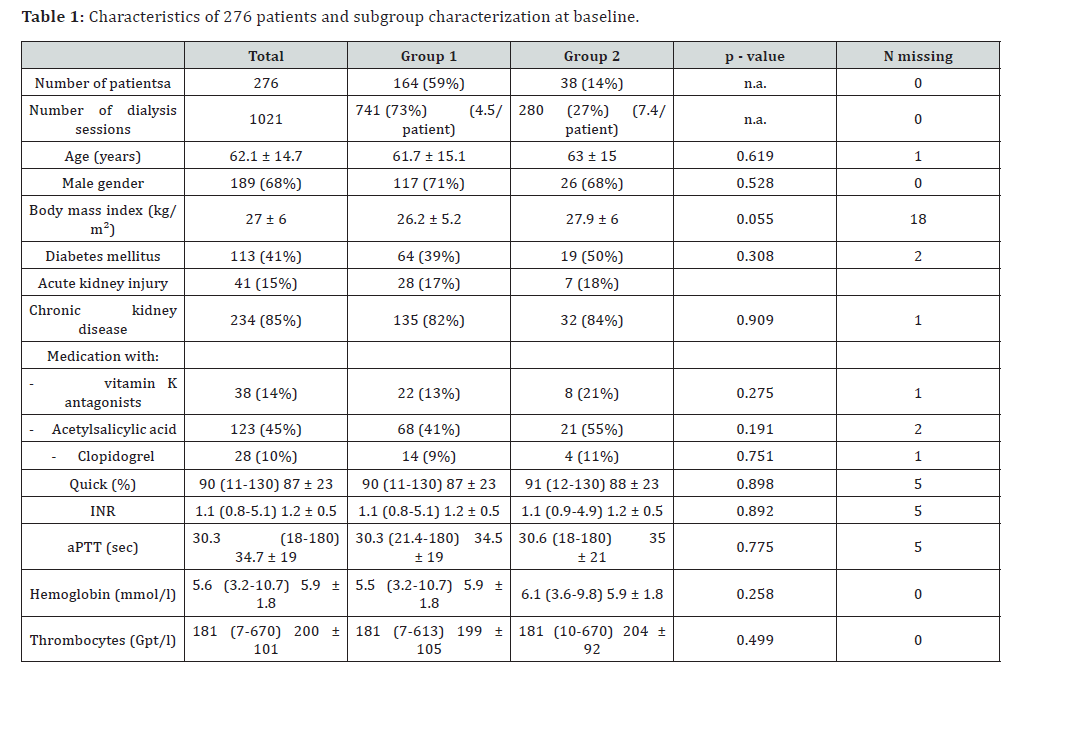
Values are given in n (%), mean ± standard deviation, or median (min–max), aPTT: activated Partial Thromboplastin Time, INR: International Normalized Ratio patients with more than one dialysis session and matching criteria of both group 1 and group 2 are not subcategorized.
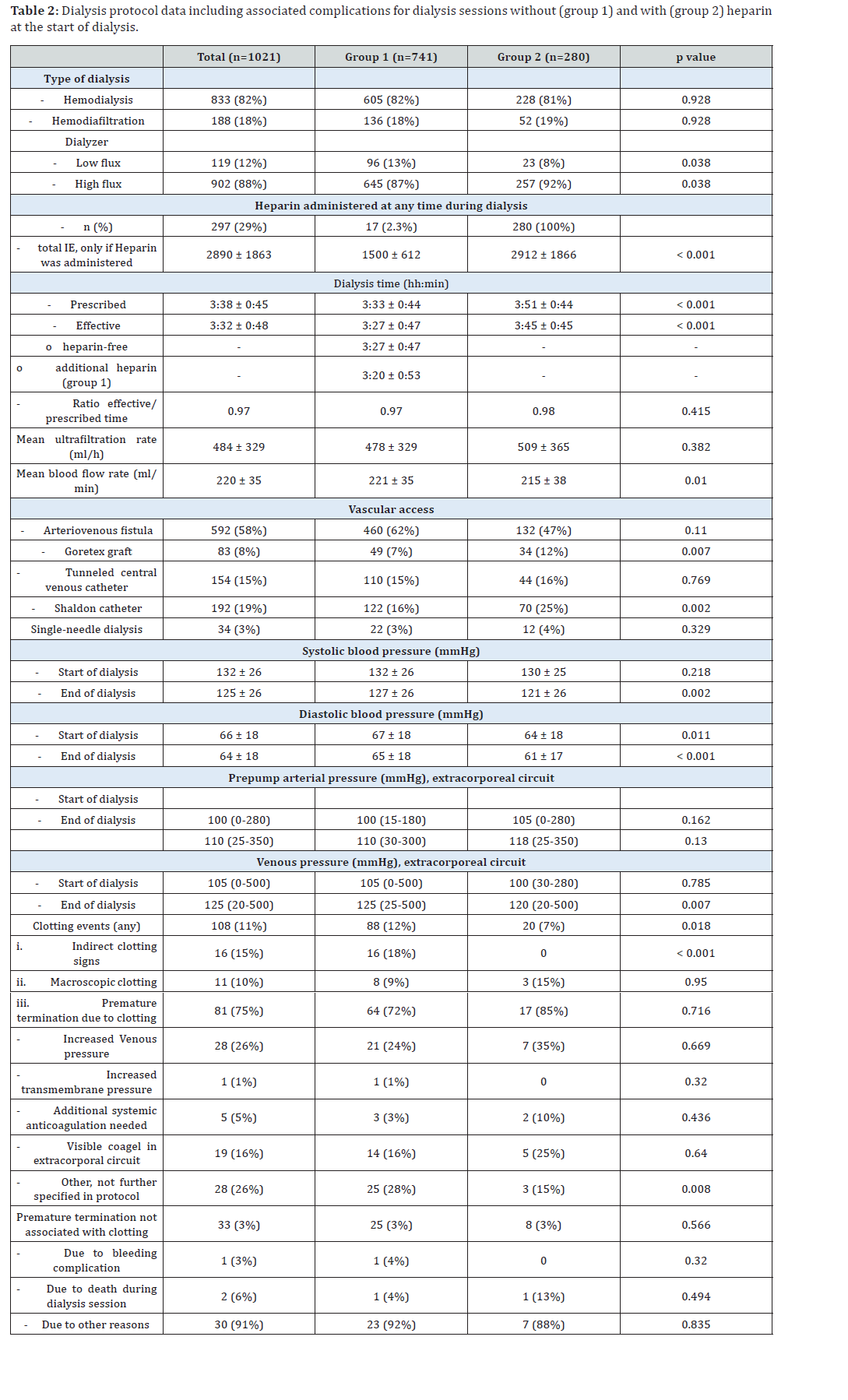
Values are given in n (%), mean ± standard deviation or median (min–max).
The main difference in the occurrence of clotting events was indirect clotting signs rather than macroscopic clotting events (Table 2). The mean prescribed and effective dialysis time differed by 6 minutes in both groups 1 and 2. Correlation analysis revealed a positive correlation between the administered dose of heparin and the effective duration of dialysis (r = 0.172, p < 0.001). No episode of citrate-associated hypocalcemia was recorded. Clotting occurred in 108 (11%) of all dialysis sessions. Among those, n=88 (81%) was allocated primarily to Group 1 (= Group C1; Table 3). During the dialysis sessions in group 1, heparin was administered secondarily in 17 dialysis sessions (2.3%). In these studies, impending clotting was monitored and led to the administration of heparin (group C1hepdemand; Table 3). Based on the number of coagulation events (n=88) in group 1, 71 (81%) patients had clots without receiving any heparin (group C1hepfree; Table 3).
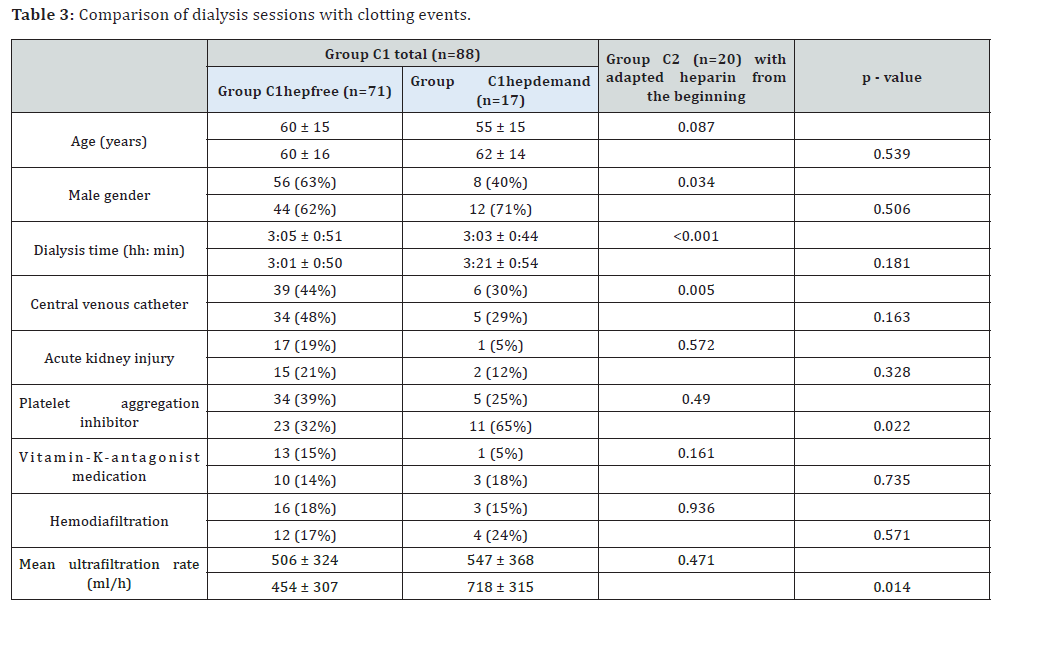
The values are given in n (%), mean ± standard deviation.
However, despite (imminent) clotting, patients who received heparin during the dialysis session (group C1hepdemand) tended to have a 20-minute longer effective dialysis time than patients with clots without any heparin (201 ± 54 min in group C1hepdemand versus 181 ± 50 min in group C1hepfree; p=0.181; Table 3). Furthermore, the mean ultrafiltration rate was significantly higher (718 ± 315 ml/min in group C1hepdemand versus 454 ± 307 ml/min in group C1hepfree; p=0.014; Table 3). Between sessions with detected clotting with and without heparin at the beginning of the dialysis session (group C1 versus group C2) the effective dialysis time differed not clinically relevant, although statistically significant (185min ± 0:51 versus 183 min ± 44; p<0.001; Table 3). Approximately half of the dialysis sessions with clotting and without initial systemic anticoagulation (group C1) had a central venous catheter for vascular access (44% versus group 2: 30%; p=0.005; Table 3).
Comparison of Outpatient and In-Hospital Dialysis
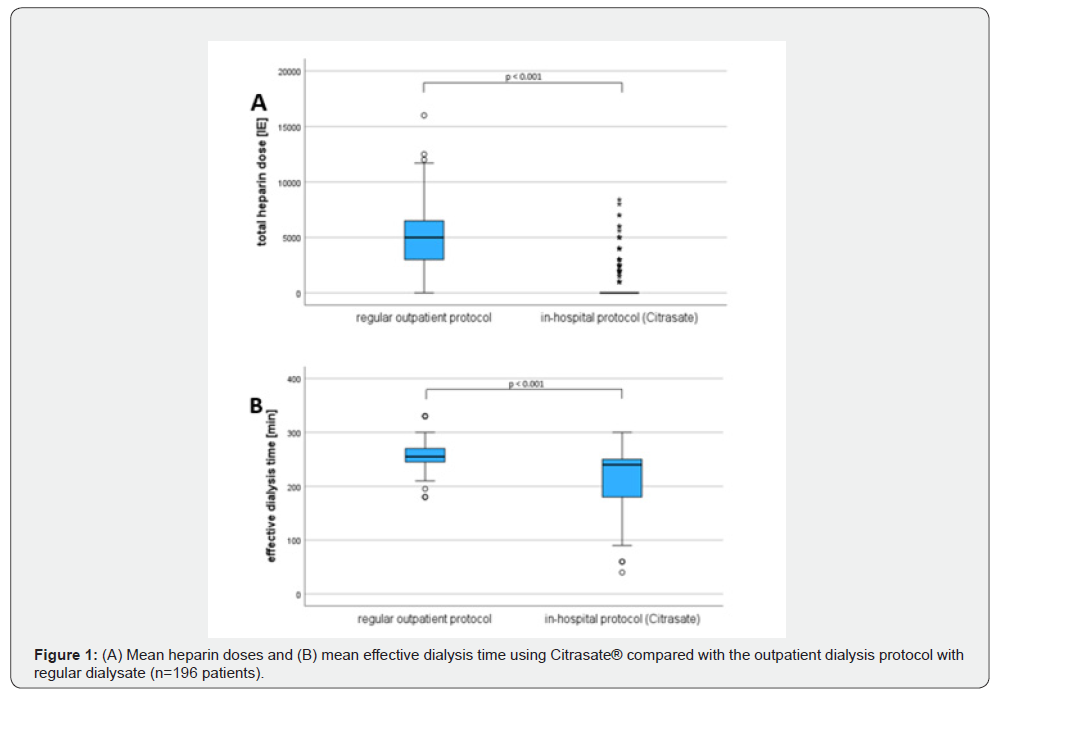
A total of 234 patients (85%) with kidney failure were on chronic outpatient hemodialysis therapy prior to hospitalization (without any use of Citrasate®). For 198 (85%) of these, the outpatient dialysis protocols were available and could be compared with the in-hospital regimen using Citrasate®. Two patients (1%) received systemic anticoagulation other than heparin and were excluded from this analysis. In 196 patients who underwent a total of 647 in-hospital dialysis sessions, heparin doses were reduced by 88% compared with their outpatient dialysis regimen (4650 ± 2982 IU outpatient vs. 550 ± 1265 IU in-hospital; p<0.001); however taking into account a 38 min shorter effective dialysis duration (260 ± 25 min outpatient vs. 222 ± 44 min in-hospital; p<0.001) (Figure 1). The mean heparin dose in all patients in group 2 was 2907 ± 1863 IU per session, which was 35 ± 25 IU/kg body weight. Compared with the outpatient heparin dose, this reflects a reduction of 45% and 47% (mean 5307 ± 3960 IU; 66 ± 46 IU/kg body weight; p=0.002) in patients who’s in-hospital dialysis sessions were all allocated to Group 2.
Factors Associated with Clotting
If dialysis sessions were initiated without heparin (Group 1), the clotting risk was doubled compared with an adjusted dose regimen of heparin (Group 2; OR 1.997; p=0.024; Table 4). For every ten minutes of longer dialysis time, the risk of clotting increased by 6%. (OR 1.057; p=0.05; Table 4). Central venous catheters used for dialysis access tended to be associated with increased clotting risk (OR 1.706; p=0.072; Table 4). The use of vitamin K antagonists did not significantly affect clotting risk according to the adjusted regression. Notably, if patients were on vitamin K antagonists, the heparin dose administered was significantly lower than that given to patients without such therapy (375 IU ± 912 IU versus 702 IU ± 1549 IU; p = 0.003).
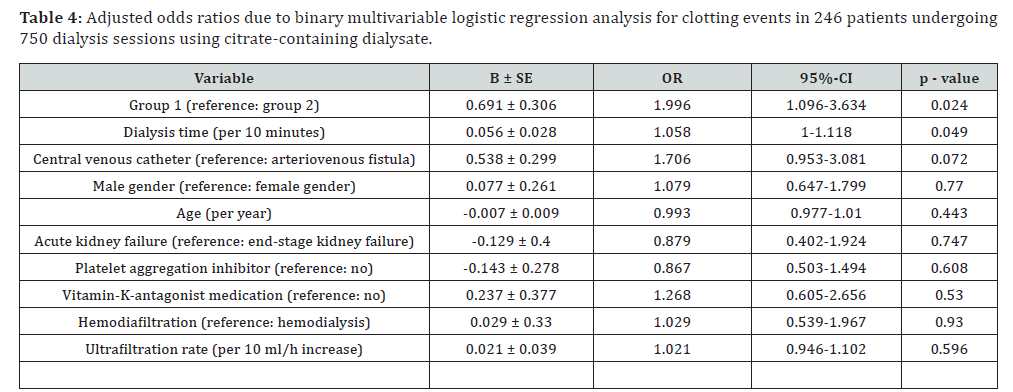
B=regression coefficient; SE=standard error; OR= Odds Ratio; interactions were not modeled.
Discussion
Patients with kidney failure are at excess risk for bleeding events [26,36]. As heparin and its derivatives, which are commonly used for systemic anticoagulation during hemodialysis, further increase the risk of bleeding, alternatives are required especially for hospitalized patients undergoing interventional or surgical procedures. This retrospective study with a representative number of more than 1000 dialysis sessions demonstrates that intermittent hemodialysis in hospitalized patients using a citrate-containing dialysate is a reasonable alternative to reduce heparin doses if some limitations are considered. Differentiating patients without (group 1) or with (group 2) systemic anticoagulation at the start of their dialysis session, baseline characteristics were similar in both groups except for a tendentiously higher body mass index (BMI) in the second group.
A higher BMI was associated with increased thromboembolic risk and a greater body distribution volume, which may have affected the physician’s prescription of heparin [37]. The lower blood flow rate in the dialysis sessions of the second group seemed to be associated with a more frequent use of central venous catheters as vascular dialysis access encompassing a higher risk for clotting as recently shown in a cross-sectional study [35]. According to Virchow’s triad, lower blood flow, especially through thin-lumen plastic lines, is related to an increased risk of clotting, requiring intensified anticoagulation. Nearly half of the patients without initial anticoagulation but with clotting events during hemodialysis had a central venous catheter for vascular access, indicating that these patients were at special risk. The extracorporeal venous pressure at the end of the dialysis session was lower in patients in the second group, indicating less micro clotting after the administration of heparin.
A total of 741 dialysis sessions (71%) were conducted without any systemic anticoagulation. This is remarkable, as most previous studies involved smaller patient cohorts or used only moderately reduced doses of heparin. The findings of these studies are heterogeneous. A retrospective Belgian cohort study comprising 94 patients was able to reach a dialysis duration of 4:00 h (240 minutes) in 81% (n=309 treatments) of patients by using Citrasate® without adding systemic anticoagulation but with a heparin-coated dialyzer [28]. In contrast, 11 (48%) of 23 patients necessitated the administration of tinzaparin after having started the dialysis session with Citrasate® without systemic anticoagulation, resulting in a mean dialysis time of 210 minutes. In total, a 40% reduction in the tinzaparin dose compared with the patient’s standard dialysis protocol was observed [27].
In our study, only uncoated dialyzers were used. Among all the dialysis sessions that were initiated without systemic anticoagulation, only 19 (2.5%) required the administration of heparin during the course, thereby reaching a similar mean effective dialysis time of 207 minutes. Although clotting events could be averted in only 2 of these dialysis sessions, the other 17 tended at least toward a longer effective dialysis time. Additionally, these patients had comparably high ultrafiltration rates, which illustrates a certain impact of the ultrafiltration rate on the formation of clots during hemodialysis. Both the effective and the prescribed dialysis time were shorter in heparin-free initiated dialysis sessions, suggesting that the treating physician supposed in advance that a shorter dialysis duration would be achieved or would be sufficient when deciding against additional anticoagulation.
The fact that, in both groups, the prescribed and effective dialysis durations differed equally by 6 minutes confirms this assumption. One bleeding complication was observed during a dialysis session started without anticoagulation; obviously, a high bleeding risk was assessed in advance. For chronic hemodialysis patients, regular heparin doses were reduced by 88% compared with their outpatient dialysis standard protocol. Concurrently, the mean dialysis time was 38 minutes shorter. Even in group 2, where heparin was administered individually from the beginning of the dialysis session, the doses were largely reduced by 45% of the regular outpatient dose. Sands and colleagues reported no loss of dialysis effectiveness when Citrasate® was used, with a mean dialysis time of 3:40 h and a 33% reduction in heparin [32]. Since a sufficient urea clearance index (Kt/V) is not the primary aim in hospitalized dialysis patients, a dialysis duration of approximately 3.5 hours using Citrasate® can be considered effective enough when, on the other hand, the risk of periinterventional bleeding is not further increased.
The same holds true for patients with acute kidney injury, who, on the one hand, require a slow increase in dialysis efficiency and, on the other hand, are usually dialyzed daily. The clotting event rates were with 12% (group 1) and 7% (group 2) in the same range (8%) than reported previously in a heparin-free trial [29], however, they were clearly greater than the rates (3.1- -5.1%) when heparin was not or was only partly reduced [32]. Compared with the administration of reduced heparin doses, the omission of heparin at the start of the dialysis session (group 1) doubled the clotting risk, indicating that the anticoagulant effect of Citrasate® is limited to a certain extent. Furthermore, per ten minutes of longer dialysis time, the clotting risk increased by 6%, matching findings of increased clotting rates of up to 19% in patients with a dialysis duration of >4:00 h [28]. In line with previous findings, clotting was not associated with age, sex, or ultrafiltration rate [28].
However, in our study, clotting events were less frequently associated with premature dialysis termination (group 1: 8%; group 2: 6%) than reported previously (15%), potentially due to shorter prescribed dialysis durations [28]. Our study is mainly limited by its retrospective design without predefined criteria for group allocation and target dialysis time, which does not allow statements about potentially longer dialysis durations than those prescribed. Unfortunately, the precise reasons for or against the administration of heparin and the use of Citrasate® were not documented in most cases, including the initial assessment concerning the assumed risk of bleeding and the potential risk of coagulation events. Furthermore, the study design does not allow any assumptions about the endpoint of reduction in bleeding complications. When outpatient dialysis protocols were compared with in-hospital data, patients without available outpatient protocols were excluded from this set of analyses to reduce potential bias. Moreover, we assumed that outpatient dialysis sessions proceeded as stated in the outpatient protocol without complications.
Conclusion
In conclusion, this study provides evidence that by using Citrasate®, further systemic anticoagulation is not necessarily required to reach a dialysis time of largely 3:30 hours accepting a moderately increased rate of clotting events after 3 hours. The administration of low heparin doses in addition to the use of Citrasate® may allow longer dialysis durations and reduce clotting events while still balancing the bleeding risk. Patients with an outpatient need of > 5300 IU heparin per dialysis session, those who have a central venous catheter as vascular access or those with the clinical need for longer dialysis durations may benefit from the combination of Citrasate® and additional low heparin doses (e.g., 2000-3000 IU) with close monitoring for active bleeding events to achieve a sufficient dialysis session. Experienced dialysis staff should carefully select patients for heparin-free hemodialysis. Thorough assessment of individual clotting risk and close monitoring for impending clot formation are necessary; however, in the event of unexpected clotting before the planned duration of dialysis is reached, a moderate increase in the dose of systemic anticoagulation should be considered for the next dialysis session if there are no strict contraindications.
Acknowledgments
The authors would like to thank the numerous regional and supraregional outpatient nephrologists for their good and longstanding cooperation and patient referrals.
Conflict of Interest
The authors declare that they have no competing interests
Declarations
Ethics Statement: The study was conducted in accordance with the Declaration of Helsinki and was reviewed and approved by the local ethics committees (University Hospital Jena; Nr. 5454-02/18). Individual written informed consent was not needed because of the retrospective design and anonymized data analysis.
Availability of Data and Materials: The datasets used and/ or analysed during the current study are available from the corresponding author on reasonable request.
Authors’ Contributions
JR wrote the manuscript and supported the statistical evaluation. JP and MB performed the main research and statistical evaluation. MS and GW were responsible for hemodialysis patient care and provided expert knowledge.
References
- Ashby D, Borman N, Burton J, Corbett R, Davenport A, Farrington K, et al. (2019) Renal Association Clinical Practice Guideline on Haemodialysis. BMC Nephrol 20(1): 379.
- European Best Practice Guidelines Expert Group on Hemodialysis ERA (2002) Section V Chronic intermittent haemodialysis and prevention of clotting in the extracorporal system. Nephrol Dial Transplant 17 (7): 63-71.
- Fischer KG (2007) Essentials of anticoagulation in hemodialysis. Hemodial Int 11(2): 178-189.
- Claudel SE, Miles LA, Murea M (2021) Anticoagulation in hemodialysis: A narrative review. Semin Dial 34(2): 103-115.
- Greinacher A, Zinn S, Wizemann, Birk UW (1996) Heparin-induced antibodies as a risk factor for thromboembolism and haemorrhage in patients undergoing chronic haemodialysis. Lancet 348(9029): 764.
- Sitter T, Spannagl M, Banas B, Schiffl H (1998) Prevalence of heparin-induced PF4-heparin antibodies in hemodialysis patients. Nephron 79(2): 245-246.
- Carrier M, Rodger MA, Fergusson D, Doucette S, Kovacs MJ, et al. (2008) Increased mortality in hemodialysis patients having specific antibodies to the platelet factor 4-heparin complex. Kidney Int 73(2): 213-219.
- Nasstrom B, Stegmayr B, Gupta J, Olivecrona G, Olivecrona T (2005) A single bolus of a low molecular weight heparin to patients on haemodialysis depletes lipoprotein lipase stores and retards triglyceride clearing. Nephrol Dial Transplant 20(6): 1172-1179.
- Wiemer J, Winkler K, Baumstark M, Marz W, Scherberich JE (2002) Influence of low molecular weight heparin compared to conventional heparin for anticoagulation during haemodialysis on low density lipoprotein subclasses. Nephrol Dial Transplant 17(12): 2231-2238.
- Lai KN, Ho K, Cheung RC, Lit LC, Lee SK, et al. (2001) Effect of low molecular weight heparin on bone metabolism and hyperlipidemia in patients on maintenance hemodialysis. Int J Artif Organs 24(7): 447-455.
- Kindgen-Milles D, Brandenburger T, Dimski T (2018) Regional citrate anticoagulation for continuous renal replacement therapy. Curr Opin Crit Care 24(6): 450-454.
- Apsner R, Buchmayer H, Gruber D, Sunder-Plassmann G (2005) Citrate for long-term hemodialysis: prospective study of 1,009 consecutive high-flux treatments in 59 patients. Am J Kidney Dis 45(3): 557-564.
- Cubattoli L, Teruzzi M, Cormio M, Lampati L, Pesenti A (2007) Citrate anticoagulation during CVVH in high risk bleeding patients. Int J Artif Organs 30(3): 244-252.
- Buturovic-Ponikvar J (2016) Is Regional Citrate Anticoagulation the Future of Hemodialysis? Ther Apher Dial 20(3): 234-239.
- GmbH AARTMN (2017) The Renal Replacement Therapy with CITRASATE®.
- Bauer E, Derfler K, Joukhadar C, Druml W (2005) Citrate kinetics in patients receiving long-term hemodialysis therapy. Am J Kidney Dis 46(5): 903-907.
- Monchi M (2017) Citrate pathophysiology and metabolism. Transfus Apher Sci 56(1): 28-30.
- Kossmann RJ, Gonzales A, Callan R, Ahmad S (2009) Increased efficiency of hemodialysis with citrate dialysate: a prospective controlled study. Clin J Am Soc Nephrol 4(9): 1459-1464.
- Ahmad S, Callan R, Cole JJ, Blagg CR (2000) Dialysate made from dry chemicals using citric acid increases dialysis dose. Am J Kidney Dis 35(3): 493-499.
- Gabutti L, Lucchini B, Marone C, Alberio L, Burnier M (2009) Citrate- vs. acetate-based dialysate in bicarbonate haemodialysis: consequences on haemodynamics, coagulation, acid-base status, and electrolytes. BMC Nephrol 10: 7.
- Richtrova P, Mares J, Kielberger L, Trefil L, Eiselt J, et al. (2017) Citrate-Buffered Dialysis Solution (Citrasate) Allows Avoidance of Anticoagulation During Intermittent Hemodiafiltration-At the Cost of Decreased Performance and Systemic Biocompatibility. Artif Organs 41(8): 759-766.
- Urena-Torres P, Bieber B, Guebre-Egziabher F, Ossman R, Jadoul M, et al. (2021) Citric Acid-Containing Dialysate and Survival Rate in the Dialysis Outcomes and Practice Patterns Study. Kidney 360 2(4): 666-673.
- Vinay P, Prud'Homme M, Vinet B, Cournoyer G, Degoulet P, et al. (1987) Acetate metabolism and bicarbonate generation during hemodialysis: 10 years of observation. Kidney Int 31(5): 1194-1204.
- Ruder MA, Alpert MA, Van Stone J, Selmon MR, Kelly DL, et al. (1985) Comparative effects of acetate and bicarbonate hemodialysis on left ventricular function. Kidney Int 27(5): 768-773.
- De Sequera Ortiz P, Perez Garcia R, Molina Nunez M, Munoz Gonzalez RI, Alvarez Fernandez G, et al. (2019) Prospective randomised multicentre study to demonstrate the benefits of haemodialysis without acetate (with citrate): ABC-treat Study. Acute effect of citrate. Nefrologia (Engl Ed) 39(4): 424-433.
- Janssen MJ, van der Meulen J (1996) The bleeding risk in chronic haemodialysis: preventive strategies in high-risk patients. Neth J Med 48(5):198-207.
- Stegmayr BG, Jonsson P, Mahmood D (2013) A significant proportion of patients treated with citrate containing dialysate need additional anticoagulation. Int J Artif Organs 36(1): 1-6.
- Francois K, Wissing KM, Jacobs R, Boone D, Jacobs K, et al. (2014) Avoidance of systemic anticoagulation during intermittent haemodialysis with heparin-grafted polyacrilonitrile membrane and citrate-enriched dialysate: a retrospective cohort study. BMC Nephrol 15: 104.
- Cheng YL, Yu AW, Tsang KY, Shah DH, Kjellstrand CM, et al. (2011) Anticoagulation during haemodialysis using a citrate-enriched dialysate: a feasibility study. Nephrol Dial Transplant 26(2): 641-646.
- Wolfgang Weiss JB, Hartmut Wolf, Peter Ahrenholz (2017) Decrease of inflammation and bleeding times in chronic dialysis patients by long-term use of citrate-enriched dialysate.
- Leung KC, Tai DJ, Ravani P, Quinn RR, Scott-Douglas N, et al. (2016) Citrate vs. acetate dialysate on intradialytic heparin dose: A double blind randomized crossover study. Hemodial Int 20(4): 537-547.
- Jeffrey J Sands, Peter Kotanko, Jonathan H Segal, Chiang-Hong Ho, Len Usvat, et al. (2012) Effects of citrate acid concentrate (citrasate(R)) on heparin N requirements and hemodialysis adequacy: a multicenter, prospective noninferiority trial. Blood Purif 33(1-3): 199-204.
- Buturovic-Ponikvar J, Cerne S, Gubensek J, Ponikvar R (2008) Regional citrate anticoagulation for hemodialysis: calcium-free vs. calcium containing dialysate - A randomized trial. International Journal of Artificial Organs 31(5): 418-424.
- Gubensek J, Buturovic-Ponikvar J, Ponikvar R (2007) Regional citrate anticoagulation for single-needle hemodialysis: a prospective clinical study. Blood Purif 25(5-6): 454-456.
- De Troyer M, Wissing KM, De Clerck D, Cambier ML, Robberechts T, et al. (2022) Risk for excessive anticoagulation during hemodialysis is associated with type of vascular access and bedside coagulation testing: Results of a cross-sectional study. Front Med (Lausanne) 9: 1009748.
- Lutz J, Menke J, Sollinger D, Schinzel H, Thurmel K (2014) Haemostasis in chronic kidney disease. Nephrol Dial Transplant 29(1): 29-40.
- Camm AJ, Sabbour H, Schnell O, Summaria F, Verma A (2022) Managing thrombotic risk in patients with diabetes. Cardiovasc Diabetol 21(1): 160.

























