




 JOJUN Home



Abstract
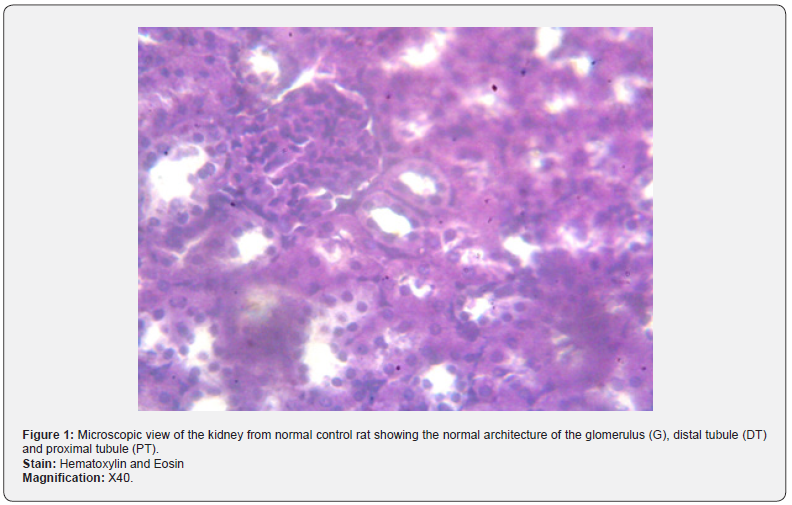
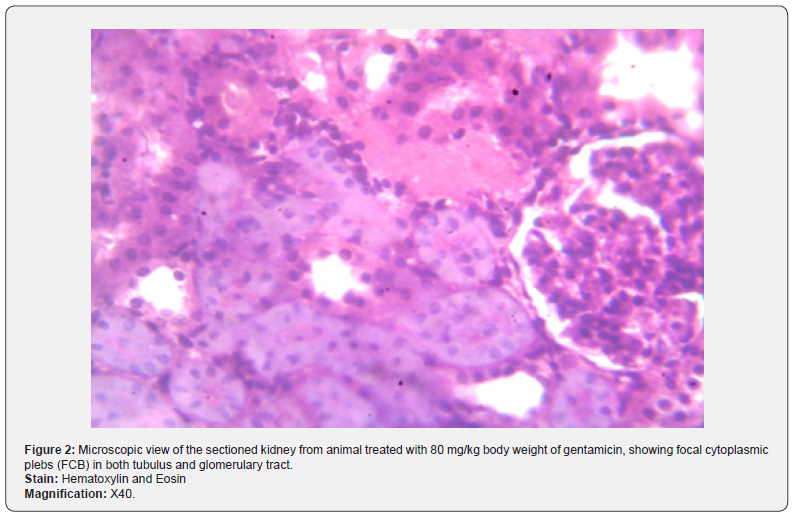
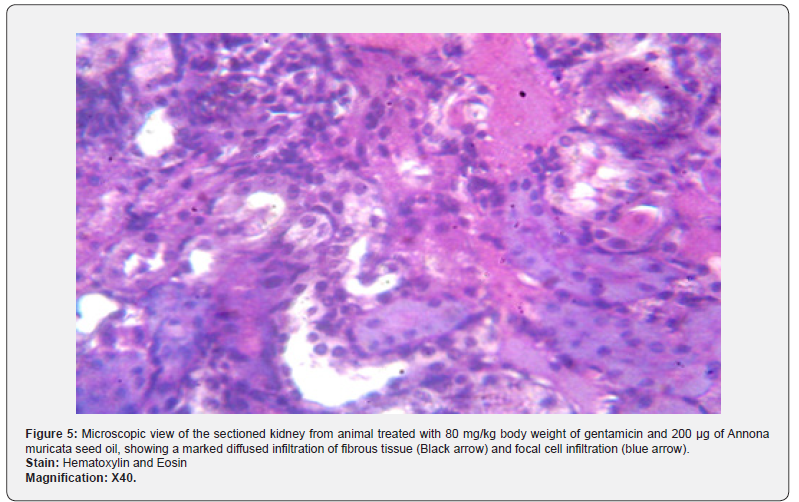
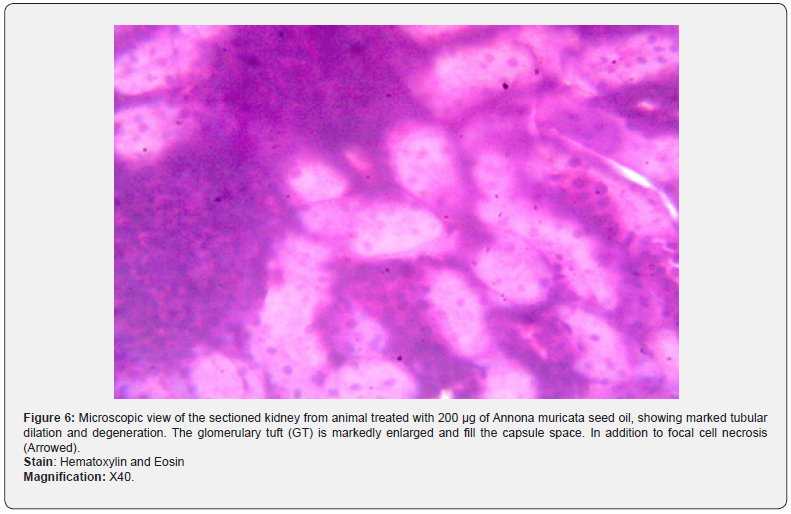
The kidney is an essential organ in the biological system; this is because it participates in the maintenance of the body’s homeostasis as seen in its action such as detoxification, excretion of drugs as well as toxins. Therefore, the kidney is often a major target organ for exogenous toxicants. This study investigated the nephrotoxic effects of Annona muricata (soursop) seed oil and its interplay with gentamicin, a widely used aminoglycoside antibiotic. Using 30 albino Wistar rats divided into six experimental groups, the research evaluates the histopathological changes in kidney microstructure after exposure to varying doses of gentamicin and Annona muricata seed oil. The seeds obtained from Annona muricata fruits pulp utilized for this research work were purchased from Anyigba market, Dekina Local Government Area, Kogi State, Nigeria. Animals were then sacrificed twenty-four (24) hours after the last administration via the dissecting kits. The dead rats were dissected, and the kidneys were obtained from the Rattus norvegicus and stored in 20 mls sample bottles that have been marked according to groups for easy identification of rats. These sample bottles contained in them 10% formalin which fix and preserve the kidneys for subsequent histopathological analysis. Histopathological examination was then carried out on the harvested organs. Results revealed dose-dependent renal damage, including tubular dilation, necrosis, and fibrous tissue infiltration. Microscopic view of the kidney of normal control rat revealed normal architecture of the glomerulus (G), distal tubule (DT) and proximal tubule (PT). Microscopic view of the sectioned kidney of animal treated with 80 mg/kg body weight of gentamicin, revealed focal cytoplasmic plebs (FCB) in both tubulus and glomerulary tract. Microscopic view of the sectioned kidney from animal treated with 200 μg of Annona muricata seed oil revealed marked tubular dilation and degeneration. The glomerulary tuft (GT) was markedly enlarged and fill the capsule space. The findings underscore the potential risks of Annona muricata seed oil consumption and highlight its nephrotoxic synergy with gentamicin. The study advocates cautious use of Annona muricata products and emphasizes the need for further research to isolate its bioactive components for safer therapeutic applications.
Keywords:Annona muricata; Gentamicin; Nephrotoxicity; Histopathology; Kidney; Toxicity
Introduction
The kidney is an essential organ in the biological system; this is because it participates in the maintenance of the body’s homeostasis as seen in its action such as detoxification, excretion of drugs as well as toxins [1,2]. Therefore, the kidney is often a major target organ for exogenous toxicants. In situations of nephrotoxicity, a kidney specific disorder in which the kidney’s function is truncated owing to actions of some toxic chemicals or drugs, which is often of importance in the medical sciences [3]. Over time, the sources of toxicity as well as specific adverse effect mediated by toxins have been unravelled via the utilization of toxicity test [4]. The extent to which a particular chemical substance (toxin) or mixture can induce damage to an organism which could either be targeted towards a whole organism or a particular target cell have been of importance globally, since the certain deleterious alterations in populations of the world all over have been linked to this phenomenon. Gentamicin with the molecular formular of C21H43N5O7 was discovered in 1963 from the bacteria micromonospora purpurea which is a type of aminoglycoside that is potent against bacteria, mostly gramnegative bacteria. Gentamicin is administered intravenously against diseases such as bone infections, endocarditis, pelvic inflammatory damage, meningitis, urinary tract infections, sepsis and pneumonia etc [5]. It has been reported that patients treated with gentamicin for a long time and at high doses showed severe renal damage as indicated by the presence of cast cells (proteins) in the urine or the level of serum creatinine, resin Blood Urea Nitrogen (BUN) and oliguria. Because of this, the utilization of gentamicin is often restricted to situations of life-threatening gram-negative infections since it can instigate some alterations such as nephrotoxicity (kidney problems) as well as some inner ear problems.
Annona muricata of the family of Annonaceae, is an evergreen plant that possesses an unclear origin, but it is believed to be a native of the Americas and tropical regions (Institute of pacific island forestry, 2008). This plant is named differently by different regions of the globe. Example: Dutch (Soursap, Sorsaka, Zuurzak); English (Durian Blanda, Custard apple, Soursop); Portuguese (Coracao-derainha, Graviola); Spanish (Guanabana); Igbo (Shawa shop); Yoruba (Shapshap); Housa (Shawam shap) Igala (Matamana) [6]. The name sour soup is given to the Annona muricata plant because of its sour and sweet flavours and its large fruit pulp. Annona muricata has been predominantly utilized in the world over as a constituent of folk medicine that cut across the utilization of its leaves in situations ranging from less severe conditions such as headaches, diabetes, hypertension, liver problems, insomnia, to severe conditions such as dysentery, inflammation and spasm [7]. The Annona muricata plant has been a potent source of a wide range of phytochemical in which alkaloids and essential are of importance. This is because of their large distribution in the Annona muricata plant [8]. In addition, another class of phytochemical known as actogenins has been isolated from different parts of the plant [9]. These acetogenins have been discovered to possess potent cytotoxic properties against a couple of tumours cell lines [10]. Furthermore, extracts from Annona muricata leaf have been shown to possess potent molluscidal and antioxidant attributes [11]. There is paucity of information on the effect of Gentamicin and the ameliorative properties of Annona muricata seed oil on the kidney. Therefore, this study aimed at assessing the histopathological state of kidney microstructure following exposure to gentamicin and Annona muricata seed oil in albino rats
Materials and Method
Sample Collection
The seeds obtained from Annona muricata fruits pulp utilized for this research work were purchased from Anyigba market, Dekina Local Government Area, Kogi State, Nigeria whereas all other materials utilized for this research work were obtained from Biochemistry Laboratory, Faculty of Natural Sciences and Histology Laboratory, Faculty of Health Sciences Kogi State University, Nigeria. Also, enough Gentamicin produced in North China Pharmaceutical Co., Ltd, China, was purchased.
Experimental Animals
Thirty (30) male Albino Wister Rats (Rattus norvengicus) weighing between (90-120 g) were obtained from the animal house of the Department of Veterinary Medicine, University of Nigeria, Nsukka, Enugu State, Nigeria. They were transferred to the animal house of the biochemistry department kogi state university and allowed to acclimatize for four weeks prior to the experiment. The animals were kept under standard conditions; a well-ventilated animal room with temperatures between 27-30oC under 12 hours’ day/light photoperiod regimen and access to feed and water ad libitum, promoting weight gain resulting in weight between (160-220g).
Extraction of Annona muricata Seed Oil
Annona muricata seeds weighing about 444.31 g obtained from Annona muricata fruit pulp were washed and allowed to dry at room temperature for about 7 weeks which was followed by the removal of the epicarp from the mesocarp (dehulling). The mesocarp was reduced to fine particles via the Philips blender (HR 2810/A) to obtain a fine pulverized seed. After which cold press solvent extraction technique described by [12,13] was used. The pulverised seeds obtained after blending were separated into two thimbles and immersed in two beakers, each containing 1.25 L at n-hexane kept under room temperature for 24 hours. n-hexane extract of Annona muricata seed grits were subjected to heating at a temperature of 60oC using the steam water bath placed in the fume cupboard, thus leaving behind the extracted oil after n-hexane total evaporation. The extract was a centrifuge via the Uniscope Laboratory Centrifuge (SM800-B) at a rate of 4000 rpm for 8 minutes to separate extraneous materials, thus obtaining a pure oil sample.
Experimental Design
Thirty (30) acclimatized male albino wistar rats (Rattus norvegicus) weighing about (200-220) g were fed with rats’ pellet (Grower’s finisher) and water throughout the experiment. The experimental animals utilized during this research were handled in line with the international ethical guideline for the care of Laboratory animals. In this research, the rats were randomly divided into six groups, with each group consisting of five rats.
The categories of groups utilized in this research are
highlighted as follows:
Group A (Control)
Group B (Gentamicin)
Group C (Gentamicin +Annona muricata seed oil)
Group D (Gentamicin + Annona muricata seed oil)
Group E (Gentamicin + Annona muricata seed oil
Group F (Annona muricata seed oil)
*Group A (Control) consisted of five rats. This group of rats
served as normal control, and they were administered with
nothing except feed and water ad libitum.
*Group B (Gentamicin) consisted of five rats; this group was
administered with gentamicin injection at a dose of 80 mg/Kg
body weight in the intraperitoneal space for 6 consecutive days.
*Group C (Gentamicin +Annona muricata seed oil) consisted
of five rats with each rat to be given a combined administration
of gentamicin and Annona muricata oil at a dose of 80 mg/kg
BW and 50 μg respectively in the intraperitoneal space for 6
consecutive days.
*Group D (Gentamicin +Annona muricata seed oil) consisted
of five rats with each rat given a combined administration of
gentamicin and Annona muricata oil at a dose of 80 mg/kg BW and
100 μg respectively in the intraperitoneal space for 6 consecutive
days.
*Group E (Gentamicin +Annona muricata seed oil) consisted of
five rats with each given a combined administration of gentamicin
and Annona muricata oil at a dose of 80 mg/kg BW and 200 μg
respectively in the intraperitoneal space for 6 consecutive days.
*Group F (Annona muricata seed oil) is a group of five rats; this
group of rats were treated with Annona muricata oil exclusively
at a dose of 200 μg in the intraperitoneal space for 6 consecutive
days.
Animal Sacrifice and Organ Harvest
Rats in all the groups had access to feed and water ad libitum for six days, and at the end of the administration, animals were fasted overnight but allowed access to water ad libitum. Animals were then sacrificed twenty-four (24) hours after the last administration via the dissecting kits. The dead rats were dissected, and the kidneys were obtained from the Rattus norvegicus and stored in 20 mls sample bottles that have been marked according to groups for easy identification of rats. These sample bottles contained in them 10 % formalin which fix and preserve the kidneys for subsequent histopathological analysis.
Histopathological Analysis
Sequel to organ collection and storage in 10 % formalin at room temperature, the tissue was further reduced to a sizable thickness: about 3 mm in diameter with a surgical blade. The reduced tissue was placed in a tissue cassette labelled according to groups for easy identification then placed in a tissue basket. The tissue basket containing the tissue was placed in a tissue bucket containing formal Salin (90 ml water, 10 mls of formalin and 0.9 grams of NaCl) to keep the tissue in a lifelike state. Tissue processing is an automated process utilizing the YD-14P1.8 automatic tissue processor; this process entails a three-step process; Paraffin wax dispensed from paraffin wax dispenser was used to form bed for the in filtered tissue, a process carried out in the tissue tray. Paraffin wax embedded tissue was allowed to assume a constant temperature of about 6o C then technically removed from the tissue tray, then sectioned on XD-335AT semiautomatic microtome at a diameter of 0.005 mm forming ribbons which were suspended in XH-1001 tissue floating bath at a temperature of 36oC. Tissue ribbons floating on the tissue floating bath were collected via glass slide, the reason for floating the tissue ribbons was to enhance adhesion of the ribbons to the glass slide prior to staining. After staining, light microscopic examination via a digital microscope fused with an image scope, of the tissue sections from the kidney in all groups were performed and image representation of the typical histological profile were examined.
Results
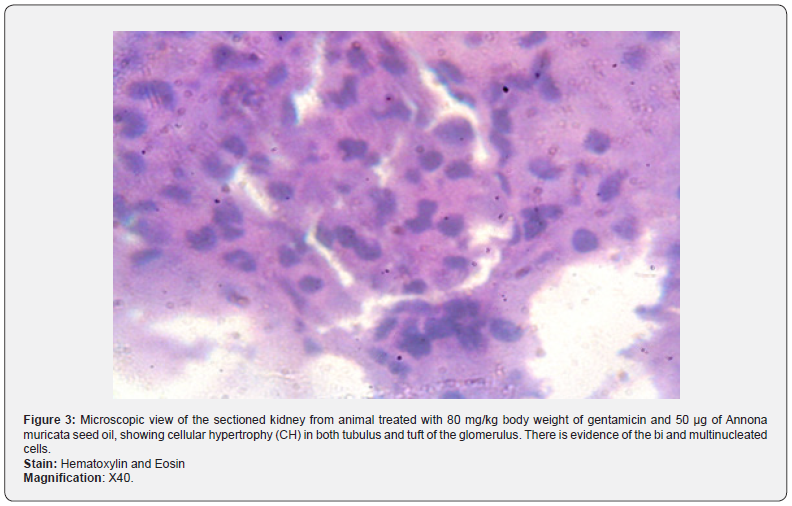
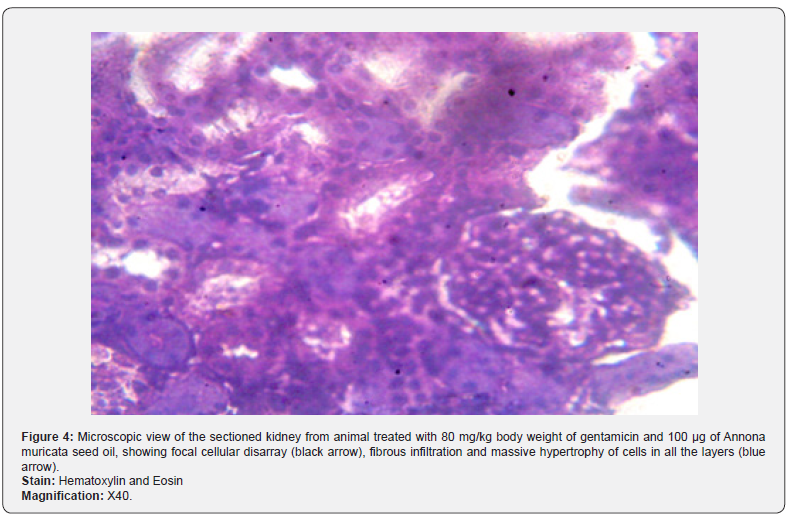
Histopathological Examination of Kidney Microstructure of the Different Groups of Albino Rats (Figure 1, Figure 2, Figure 3, Figure 4, Figure 5 and Figure 6).
Discussion
The kidney is an essential organ in the biological system; this is because it participates in the maintenance of the body’s homeostasis as seen in its action such as detoxification, excretion of drugs as well as toxins. Therefore, the kidney is often a major target organ for exogenous toxicants. In situations of nephrotoxicity, a kidney specific disorder in which the kidney’s function is truncated owing to actions of some toxic chemicals or drugs, which is often of importance in the medical sciences. Gentamicin, which is an aminoglycoside antibiotic targeted at a wide range of gram-negative bacteria is often implicated in situations of renal damage when administered in higher doses. Drug induced nephrotoxicity is clearly associated in acute renal damage such as cytoplasmic plebs in tubules and the glomerulary tract as well as cellular hypertrophy and ballooning of the tubules resulting in renal failure. Phyto- compounds have been reported to be of beneficial importance in addition to essential oil (plant products). Conventionally, essential oil is utilized in the production of chemotherapy as well as other forms of treatment vested with healing properties. However, a list of available plant and plant products are toxic as a result of some toxicants that are present in these plants. Examples of plants with these toxic properties include: Ricus communis, Simmondsia chinensis and Jatropha curcas.
Toxicity attributed to some naturally occurring plants is because of the presence of some toxicants present in them. For example, Ricus communis (Castor plant) possesses a protein known as ricin; a glycoprotein lectin made of two (2) chains; A and B linked by a disulfide bond which can prevent protein synthesis [14]. Similarly, Jatropha curcas (Jatropha plant) is a potent toxic oil with a marked presence of the toxicant known as toxalbumin cavin; a lectin dimer with a marked cytotoxic effect. In addition, Simmondsia chinensis (Jojoba oil) has in its seed oil a toxicant known as simmondsin. These toxicant present in plant and plants often act as an inner protective mechanism against parasitic agents. The extent to which toxicant present in plants (especially seeds) can affect the biological system is does-dependent. For example, in the study conducted, it can be inferred that animals administered with 200 μg of Annona muricata seed oil showed highest histological damage as compared to the irreversible damage caused by animals administered with 50 μg of the oil. Similarly, in a study conducted by [15,16], it was discovered that the oral median lethal dose of crude Jojoba wax was more than 160 g/kg body weight of mice. Also, discovered that Jatropha seed oil administered to two (2) goats had varying effects; two (2) goats were administered with 10 g/kg body weight and 20 g/kg body weight for eight (8) days, it was discovered that the administered with 10 g/kg body weight recovered after Jatropha oil withdrawal. On the contrary, that receiving 20 g/kg body weight was euthanized. In addition, it has been discovered that the consumption of a single fruit of castor plant is sufficient to induce severe vomiting and a marked depression of the central nervous system.
Toxicity induced by toxicants can either be acute or chronic. In acute cases, intoxication can be associated with vomiting and cytoplasmic plebs. However, in chronic situations vital tissues such as kidneys, liver and the viscera tissues are damaged (as in the case of Castor oil, Jatropha oil and Jojoba oil). Histopathological analysis has become the mainstream of medical predisposition in recent times unravelling issues associated with toxicants as against the practice of the utilization of biomarkers. This is because biological tissues must be severely damaged to show noticed availability of these markers in the serum. For example, serum creatinine a potent test of kidney function indicating chronic kidney diseases is insufficient because its rise in the blood will only be sufficient when severe damage has been done to the kidneys. In addition, Alanine transaminase; an enzyme responsible for the catalysing of transamination reactions of alanine in the liver is increased in the serum only when severe damage has been done (like cirrhosis). Thus, histopathology comes handy in onsets of toxicity. From the study carried out, Annona muricata oil cannot be consumed even at low doses because of the fear of bioaccumulation, but more studies on beneficial areas like as a potent cytotoxic agent targeted against parasite. In addition, Annona muricata oil like Jatropha oil has experienced huge successes in combustion trials and as a result projected to be a potent source of biodiesel.
Conclusion
From the experiment and results at our disposal, it can therefore be concluded that Annona muricata seed oil is toxic at the doses studied since it is able to induce nephrotoxicity both in combination with gentamicin and when administered alone.
References
- Ferguson M, Vaidya V, Bonventre J (2003) Biomarker of nephrotoxic acute kidney injury. Mol Cell 245(3): 182-193.
- Jacintha Ijeoma Ossai, Okpanachi Nuhu Oyibo, Anne Okonta, Christian Isioma Okonta, Ejike Success Nkwachi, et al. (2025) Assessment of Nephrotoxicity and Hepatotoxicity in HIV-Positive Subjects on Antiretroviral Therapy (ART) in Nsukka Senatorial Zone, Nigeria. J Hum Virol Retrovirol 12(1): 5-
- Finn W, Porter G (2003) Urinary biomarkers and nephrotoxicity, clinical nephrotoxin (2nd edi): 621-655.
- Parasurama S (2013) Toxicology screening. J Pharm Pharm 2(2): 74-79.
- The America society of health system pharmacist (2015) Gentamicin sulphate.
- Orewa C, Mutua A, Kindt R, Jamnadass R, Anthony S (2009) Annona muricata tree reference. Agroforestry database (4): 1-
- Stasi P, Hiruma-lima C (2002) Plantas medicinais na amazoniae na meta atlantica (2nd edi): 87-112.
- Kossouoh C, Moudachirou M, Adjakidje V, Chalchat C, Figuérédo G (2007) Essential oil chemical composition of Annona muricata L. Leaves from benin. J Essent Oil Res (19): 307-309.
- Cave A, Fingadere B, Laurens A, Corles D (1997) Acetogenins from annonaceae. Forlschr: Chem.Org.Naturist (70): 281-288.
- Chang F, Liaw C, Lin C, Chou C, Chiu H, et al. (2003) New adjacent bis-tetrahydrofuran annonaceous acetogenins from Annona muricata. Planta Med 69(3): 241-246.
- Santos A, Santana A (2001) Mollucidal properties of some species of annona. Phytomedicine 8(2): 115-120.
- Hyilmaz E, Buket A (2013) Cold press/ solvent extracted citrus limon seed oil: yield and properties. J for Food Sci Technology (5): 1-10.
- Souza R, Benassi E, Silva R, Afonso S, Scarminio I (2009) Enhanced extraction yields and mobile phase separations by solvent mixtures for the analysis of metabolites in Annona muricata L. Leaves. J Sep Sci 32(23-24): 4176-4185.
- Le T (2013) First and for the USMLE step 1. MC Graw-Hill medical.
- Yaron A (1982) Physiological toleration of jojoba wax in laboratory animals. J Soc Cosmet Chem (33): 5-6.
- Rasheedat Adebayo B, Abimbola Oladosu M, Adondua Abah M, Sule Akande I, Matilda Adekoya, et al. (2025) Comparative Biochemical and Pharmacological Assessment of Expired and Unexpired Diclofenac on Egg Albumin-Induced Inflammation in Wistar Rats. Curr Trends Pharma Clinical Trials 8(1): 180095.

























