




 GJTLH Home



Abstract
This article examines the role of global partnerships in advancing cultural tourism in Bangladesh, with particular attention to the contributions of the United Nations World Tourism Organization (UNWTO) and the United Nations Educational, Scientific and Cultural Organization (UNESCO). Bangladesh possesses substantial cultural and historical resources, but their tourism potential remains constrained by challenges related to heritage management, infrastructure, institutional support, community participation, and sustainable tourism practices. The study therefore investigates how international organizations, government institutions, and local communities contribute to cultural tourism development and heritage preservation.
A quantitative research design was employed using a structured questionnaire and a five-point Likert scale. Data were collected from 214 respondents, with the sample largely consisting of young respondents, undergraduate students, and individuals from lower-income groups. The analysis included frequency distributions, descriptive statistics, correlation analysis, regression analysis, and ANOVA-based hypothesis testing.
The findings indicate generally moderate to positive perceptions of UNWTO, UNESCO, government support, community participation, and cultural tourism development. The regression model produced an R value of .509 and an R² of .259, indicating that the predictors explained 25.9% of the variance in the dependent variable. Hypothesis testing showed that UNWTO involvement was significantly associated with cultural tourism growth but not sustainable outcomes. In contrast, UNESCO support, government support, and community participation were significantly associated with both sustainable outcomes and cultural tourism growth.
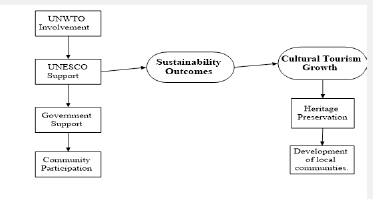
Overall, the study highlights the importance of cooperation among international organizations, government institutions, and local communities for strengthening cultural tourism, preserving heritage, and supporting local socioeconomic development in Bangladesh Figure 1.
Keywords: Global partnerships; UNWTO; UNESCO; Culture; Tourism; Heritage; Bangladesh
Introduction
Cultural tourism has become a major part of the global tourism sector as the number of tourists seeking out the offering of various cultures and heritage has grown. The contribution of the United Nations World Tourism Organization (UNWTO) and the United Nations Educational, Scientific and Cultural Organization (UNESCO) to the formulation of policies and frameworks for the sustainable development of cultural tourism on a global scale is crucial in this context [1]. The case of Bangladesh is unique in terms of history, culture, and their significance, particularly in relation to tourism. Although the country has the potential to make cultural tourism a success, it has come across some difficulties in doing this. UNWTO and UNESCO have assigned importance to incorporating the cultural aspects into the strategies of tourism as a means of promoting economic growth as well as preservation of cultural identity and cultural heritage [2]. The partnership between these organizations is designed to give countries such as Bangladesh guidelines and assistance for increasing their cultural tourism products, so as to ensure that this tourism has a positive impact on local communities, and that their cultural heritage is protected [3]. This study is designed to find out the actual effect of UNWTO and UNESCO activities on the cultural tourism in Bangladesh. It aims to diagnose the problems or opportunities that can be found in this context and to examine the possibilities of international organizations to support Bangladesh's journey towards becoming a leading cultural holiday destination. The findings of this research will help to understand the role of global organizations in local tourism development in a context rich with cultural diversity and richness such as Bangladesh through literature analysis and data analysis.
Objectives
The major targets of the research on the role of UNWTO and UNESCO which has been done in the context of cultural tourism development in Bangladesh are:
i. To understand the issues and opportunities of cultural tourism in Bangladesh.
ii. To assess how well the UNWTO and UNESCO efforts have been able to influence cultural tourism development in Bangladesh.
iii. To come up with a model of sustainable cultural tourism development in Bangladesh incorporating the guideline and support given by UNWTO and UNESCO.
iv. To understanding of how cultural tourism preserving cultural heritage and benefiting local communities.
5. Literature Review
About UNWTO
The United Nations World Tourism Organization is the cool aunt of the tourism world, UNWTO. It acts as the international platform for tourism, and provides an opportunity for countries and tourism stakeholders to promote sustainable and responsible tourism [4]. In essence they are the ones who ensure travelling is not solely about the checklists of various famous landmarks, but also about preserving, celebrating and disseminating various world cultures [5].
About the UNESCO
UNESCO is an abbreviation for the United Nations Educational, Scientific and Cultural Organization and, as a specialized agency of the United Nations. The organization was founded in 1945, and its main tasks were to promote cooperation among the nations, in the field of education, science, culture and communication [6]. The main goal of UNESCO is to contribute significantly towards the promotion of peace, the elimination of poverty, sustainable development and facilitation of intercultural dialogue [7]. The work of the organization is carried out through the following activities: Protection and conservation of world cultural and natural heritage, Promotion of universal education, Development of scientific knowledge and innovation [8]. In the context of the growth of cultural tourism, the United Nations Educational, Scientific, and Cultural Organization (UNESCO) applies a substantial amount of impact on the promotion and protection of cultural assets in countries all over the world. The United Nations Educational, Scientific and Cultural Organization (UNESCO) has been busy to gather, preserve and showcase Bangladesh's abundant cultural heritage with the aim of attracting visitors from all over the world [9]. The United Nations Educational, Scientific and Cultural Organization (UNESCO) has played an important role in Bangladesh as a more significant cultural tourist destination by implementing various programs and projects [10].
Collaboration of UNWTO and Bangladesh
The United Nations World Tourism Organization (UNWTO) is an important stakeholder for fostering and encouraging the development of cultural tourism globally. In this respect, UNWTO's participation has played a vital role in realizing cultural tourism as a pivotal element for economic development and social development in the context of Bangladesh where there are rich cultural heritage and vibrant traditions [11]. In this segment, the meaning of culture tourism in Bangladesh is discussed and the activities taken by UNWTO to embrace the development of culture tourism in all the member countries with particular focus on Bangladesh is explored. It also explores the partnership between the UNWTO and the Government of Bangladesh, lifts up success stories, identifies challenges and opportunities as well as future prospects and recommendations for continued UNWTO support in cultural tourism development in Bangladesh [12].
Success stories and impact of UNWTO'S efforts in cultural tourism in Bangladesh
Here are some specific ways in which the success stories and impact of UNWTO'S efforts in cultural tourism development in Bangladesh are mentioned:
Showcase of cultural tourism projects
UNWTO has contributed significantly to the development of cultural tourism in Bangladesh by conducting several projects, highlighting the country's rich heritage and traditions. The case of the UNESCO World Heritage Site, Bagerhat historic city, is an exceptional case. Thanks to the support of UNWTO, this forgotten city has been revitalized and turned into a big tourist attraction [13]. Preservation efforts, along with enhancing infrastructure and amenities for visitors, have turned Bagerhat into a top spot for an immersive cultural experience [14].
Positive economic and social outcomes
The efforts of UNWTO in cultural tourism development have had a positive impact on the economy and society of Bangladesh. The growth of the tourist sector has offered employment prospects to the local population, mainly in the service sector (spa, hotels, and handicraft industry) [15]. This improves the livelihoods of the people and helps reduce poverty and improve economic growth [16]. Furthermore, cultural tourism has helped to create an identity and sense of pride among the people of Bangladesh and has encouraged intercultural understanding and appreciation.
Strengthening Brand Image of Bangladesh
UNWTO through its projects and activities has been instrumental in enhancing the brand value of Bangladesh as a cultural tourism destination. Events of cultural heritage sites, traditional crafts and unique cultural festivals have attracted worldwide interest and recognition [17]. These travelers are now more familiar with the range of cultural events that are offered in Bangladesh and have helped to boost numbers, as well as generate positive recommendations.
UNESCO'S initiatives for cultural tourism development in Bangladesh
UNESCO promotes cultural tourism development in Bangladesh by an integrated approach with a focus on sustainable tourism, conservation of cultural heritage, development of tourism infrastructure, community involvement and governance of responsible tourism [18]. It helps in the identification and promotion of cultural heritage sites to boost tourism value and raise awareness and pride about them among the local community. UNESCO also fosters direct involvement of local communities and relevant actors in the protection of heritage and the equitable sharing of its benefits, through cooperation [19]. Moreover, its sustainable tourism approach has helped it integrate and empower women and other marginalized groups and foster collaboration with the authorities and the tourism industry to reduce the environmental and cultural footprint of tourism. In summary, UNESCO's efforts are focused on creating a sustainable, responsible, and inclusive cultural tourism industry to ensure the preservation of Bangladesh's cultural heritage for future generations.
UNESCO’S role in capacity building and training programs
One of the most critical areas of UNESCO's involvement in cultural tourism is the creation of capacity building and training programs for those involved in the tourism industry [20]. The aim of these programs is to equip the people working in the tourist sector in Bangladesh with knowledge and skills to promote and manage cultural tourism in the country effectively [21]. UNESCO has been promoting cultural tourism in Bangladesh by offering capacity building program for the tourism professionals. The programs boost the knowledge and skills of tour guides and tour operators, particularly regarding historical sites and cultural practices and indigenous traditions, thus making them more authentic and informative [22]. UNESCO further supports hospitality and customer service training to enhance service quality and visitor satisfaction to stimulate a return visit and positive recommendations [23]. UNESCO further promotes tourism marketing and promotion skills, such as through digital platforms, campaigns and promotion events, to enable tourism professionals to reach out to wider audiences and promote Bangladesh's heritage to them effectively.
Research Gap
Through literature review, several significant gaps are found in the field of cultural tourism development in Bangladesh with respect to the roles played by both organizations, the UNWTO and UNESCO. There is limited empirical evidence that has been found in already existing studies regarding the outcomes of the community level, especially what the actual economic and cultural benefits are to the community [24]. There is also a lack of longitudinal studies that focus on long term sustainability and impacts of tourism initiatives. Moreover, there has been little focus on the degree of local stakeholder involvement in decision making, and digital technologies and innovative tourism tools have been under-studied. Comparative studies are also very limited between Bangladesh and other countries which leave limited scope for international benchmarking [25]. Lastly, past studies focus primarily on the successful programs and there has been a lack of critical analysis of failures, restrictions or unexpected side effects. These gaps point to the need of a more in-depth empirical study on how UNWTO and UNESCO have contributed to the sustainable development of cultural tourism in Bangladesh.
Significance of the Research
In academic and practical perspectives, the study, titled as “The Role of UNWTO and UNESCO in Cultural Tourism Development: An Empirical Study on Bangladesh” is of great value. Although the literature has reflected the part played by the UNWTO and UNESCO in the promotion of cultural tourism and protection of heritage in the world, we could not find much empirical work to emphasize the role of these two organizations specifically in the context of Bangladesh [26]. This research aims to fill the gap by studying the impact of the combined efforts of these international organizations along with the Government of Bangladesh on the development and sustainability of cultural tourism. It evaluates their efforts to develop policies, engage in heritage conservation, involve the community, and strengthen their ability to do so, and uses both theoretical approaches and practical examples. Bangladesh has a great diversity of cultural and historical assets and the effectiveness of global-local partnerships in developing tourism is significant [27]. Furthermore, with the growing emphasis on sustainable and inclusive tourism worldwide, this study provides relevant findings on the challenges, successes and recommendations for improvement. The research outlines the socio-economic effects on the local community and the importance of international mechanisms and supports in guiding policies, heritage management and tourism planning. It also adds to the general debate on sustainable cultural tourism in developing countries and on the strategic function of the global institutions.
Theoretical Background
It is based on several interrelated theoretical frameworks whose development is supported through the collaboration of international organizations and national stakeholders in the development of cultural tourism. Several theories are related with each other to support the conceptual model. The Sustainable Tourism Development Theory gives a great importance to a balance between tourism development and its impact on the environment, cultural values, and the well-being of the community [28]. Collaboration between UNWTO, UNESCO, the government and local communities is a key aspect of the Stakeholder Theory [29]. Both the Cultural Capital Theory and the Destination Competitiveness Theory provide understanding into the economic and symbolic importance of cultural heritage and infrastructure, marketing and policy and cultural assets in building the destination competitiveness, respectively [30]. Last, but not least, Empowerment Theory centers on community involvement, resource building, and resource access. Both the theories give a holistic understanding of cultural tourism development in Bangladesh.
Conceptual Model & Hypothesis
The conceptual framework shows how the contribution of UNWTO involvement, the support and assistance of UNESCO, Government support and community participation contribute to the growth of cultural tourism. Sustainability outcomes form a hub that connects these institutional and community aspects to tourism development. Overall, the framework highlights the importance of fostering cooperation, engaging stakeholders, and adopting sustainable practices to enhance the preservation of heritage assets and support the development and vitality of local communities.
Hypotheses development
H1: UNWTO involvement has a significant positive effect on sustainable outcomes and cultural tourism growth in Bangladesh.
H2: UNESCO support has a significant positive effect on sustainable outcomes and cultural tourism growth in Bangladesh.
H3: Government support positively influences the development of sustainable outcomes and cultural tourism in Bangladesh.
H4: Community participation has a significant positive effect on sustainable outcomes and cultural tourism growth.
Methodology
Research design
The present research was a quantitative type of research to explore the role of global partnership in promoting cultural tourism in Bangladesh especially United Nations World Tourism Organization (UNWTO) and United Nations Educational, Scientific and Cultural Organization (UNESCO). The methodological approach was based on the article that was uploaded, which utilized a quantitative approach through questionnaire and content analysis with statistical techniques [31]. The study aimed to analyze the impact of the activities and support provided by international organizations on cultural tourism development along with the national and local factors. The study focused particularly on the following factors that are important in the context of cultural tourism development in Bangladesh, including: UNWTO support, UNESCO support, Government support, Community participation, Infrastructure development, Tourism marketing and cultural heritage site management.
Data collection
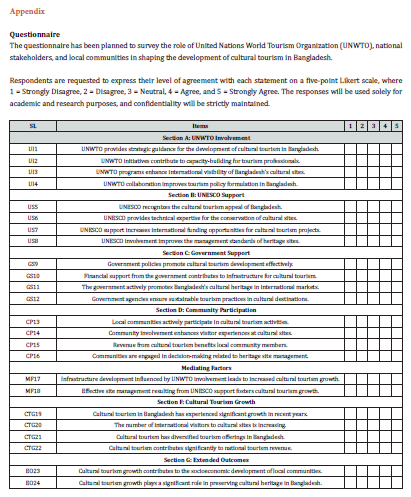
A structured questionnaire survey was used to gather primary data. The questionnaire aimed to gather quantitative answers from the people who have knowledge, experience, or involvement in tourism and cultural heritage activities. The article used a questionnaire survey to upload and quantified the subjective opinions of respondents for quantitative analysis in the same way. The survey was divided into two main parts. The first section gathered the demographic data of the respondents including their sex, age, occupation, education level, and income. The second section included statements that evaluated the respondents' perception and feelings about the role of UNWTO and UNESCO and the factors affecting cultural tourism development in Bangladesh. The statements were rated on a 5-point Likert scale from 1 = Strongly Disagree to 5 = Strongly Agree. This is based on measurement procedure as described in uploaded article where the 15 statements on Likert scale were evaluated on five levels of response.
Sample size and sampling technique
In the quantitative survey 100 respondents were sampled, following the sampling structure of the uploaded article. The respondents in the present study were selected through purposive sampling method, which aimed to select the people with relevant knowledge and experience in tourism, cultural heritage, UNESCO related heritage issue, UNWTO activities and cultural tourism development in Bangladesh. This was believed to be suitable as it was felt that the study needed respondents to be able to evaluate institutional and stakeholder issues, and not just the general population.
Measurement of variables
The conceptual framework and literature on cultural tourism development and the roles of international and national stakeholders were the basis for the development of the questionnaire. The eight constructs measured were: UNWTO Support, UNESCO Support, Government Support, Community Participation, Infrastructure Development, Tourism Marketing, Site Management and Cultural Tourism Development. These constructs included institutional support, heritage conservation, community involvement, infrastructure, marketing, site management and tourism and socio-economic outcomes. Multiple statements on five-point Likert scale were used to measure all constructs.
Sources of data
Both primary and secondary sources of data were used in the study. The questionnaire survey was used to collect primary data. Where appropriate, relevant information was also obtained through the discussions with academics, professionals and stakeholders in the tourism sector. Secondary information was obtained from:
i. Published research papers;
ii. Books and textbooks;
iii. Heard accounts from international tourism and heritage organizations;
iv. Industry reports and newsletters; and
v. Websites and online resources relevant to the topic.
This mix of data sources is similar to the general data source structure of the article uploaded, which included questionnaire and journal articles, research papers, annual reports, newspapers, textbooks, websites, industry newsletters and research reports.
Analysis and Discussion
Frequency statistics
Tables [1-5] The demographic frequency statistics provide an overview of the characteristics of the 214 respondents participating in the study. The results show that the sample is predominantly male, young, undergraduate, student-based, and concentrated in the lower-income categories.
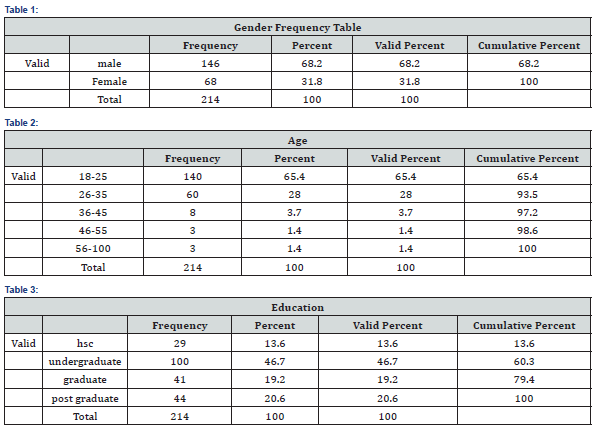
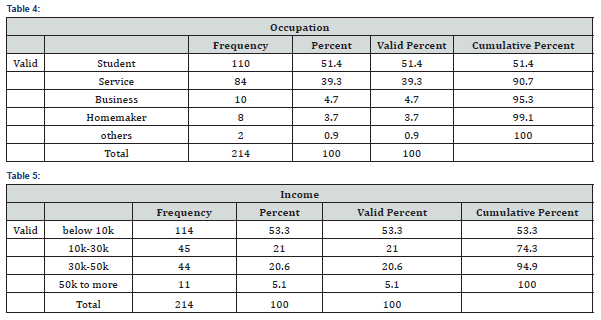
Specifically, 68.2% of respondents are male, making males the dominant gender category. In terms of age, 65.4% belong to the 18–25 years group, while the cumulative percentage of respondents aged 18–35 reaches 93.5%. Regarding education, 46.7% are undergraduates, making this the largest educational category. In terms of occupation, 51.4% are students, followed by 39.3% employed in service, indicating that these two groups account for the overwhelming majority of the sample. Finally, 53.3% of respondents have an income below 10,000, while 74.3% fall below the 30,000-income level.
Therefore, the frequency analysis indicates that the dataset is strongly represented by young respondents with undergraduate-level education, particularly students, and respondents with relatively lower income levels. This demographic profile should be considered when interpreting subsequent statistical analyses because the perceptions and responses obtained from the sample may largely reflect the views of these dominant respondent groups.
Descriptive analysis
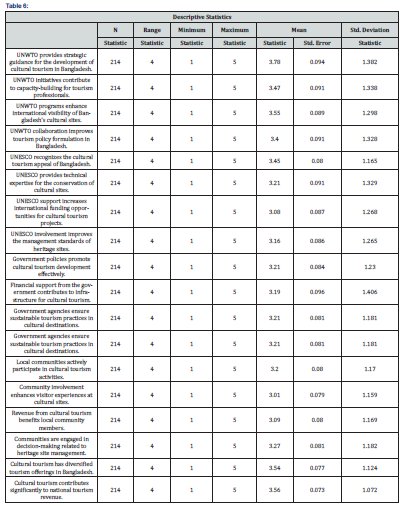
Table 6 Overall, the descriptive statistics indicate that the respondents generally express moderate to positive perceptions regarding the role of UNWTO, UNESCO, government institutions, local communities, and cultural tourism in Bangladesh. The findings suggest that respondents particularly recognize the strategic, economic, and socioeconomic contributions of cultural tourism, while perceptions concerning infrastructure development associated with UNWTO involvement and some aspects of UNESCO support remain comparatively moderate.
Regression
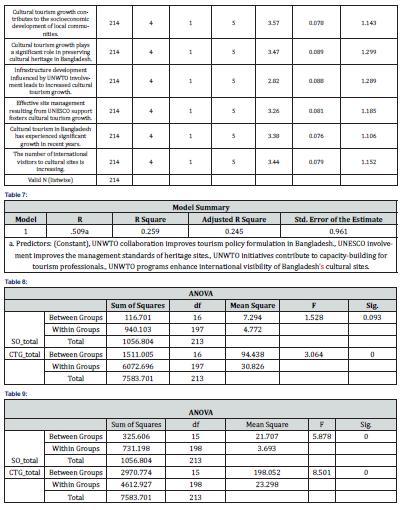
Table 7 The regression model demonstrated a moderate multiple correlation between the predictors and the dependent variable (R = .509). The model explained 25.9% of the variance in the dependent variable (R² = .259), while the adjusted R² indicated that the model accounted for 24.5% of the variance after adjusting for the number of predictors (adjusted R² = .245). The standard error of the estimate was 0.961, indicating the extent of deviation between the observed and predicted values.
Correlation
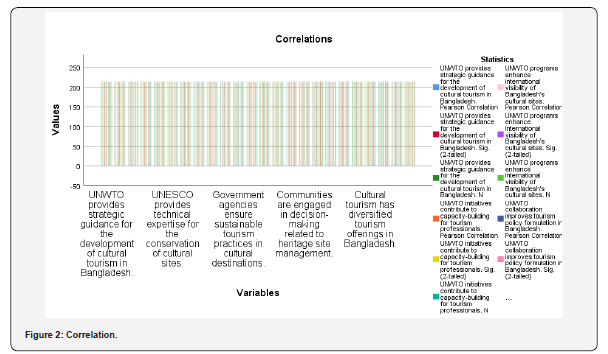
Figure 2 The correlation analysis examines the relationships among UNWTO strategic guidance, UNESCO technical expertise, government support for sustainable tourism practices, community engagement in heritage-site decision-making, and diversification of tourism offerings in Bangladesh. The SPSS output presents Pearson Correlation, Sig. (2-tailed), and N for assessing the direction, strength, significance, and number of observations for each relationship. Overall, the analysis presents that governmental, and community-related factors are associated with cultural tourism development. However, the displayed figure shows the actual numerical correlation coefficients (r), significance values (p), or sample size (N) clearly, so the strength and statistical significance of each individual relationship reported from this figure alone. This correlation analysis provides the basis for the subsequent regression analysis.
Test of hypothesis
Test 1: UNWTO involvement, sustainable outcomes and cultural tourism growth
H1: UNWTO involvement has a significant positive effect on sustainable outcomes and cultural tourism growth in Bangladesh.
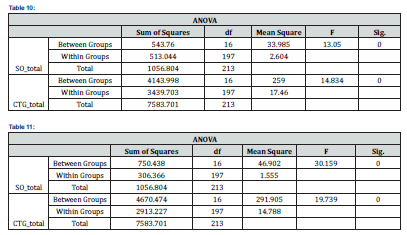
H0: UNWTO involvement has no significant effect on sustainable outcomes and cultural tourism growth in Bangladesh Table 8.
Interpretation: The ANOVA results show that UNWTO involvement does not have a statistically significant effect on sustainable outcomes (SO), as F (16,197) = 1.528, p = .093 > .05. However, UNWTO involvement has a statistically significant effect on cultural tourism growth (CTG), as F (16,197) = 3.064, p < .001. Therefore, H1 is partially supported, while H0 is partially retained.
Test 2: UNESCO support, sustainable outcomes and cultural tourism growth
H1: UNESCO support has a significant positive effect on sustainable outcomes and cultural tourism growth in Bangladesh.
H0: UNESCO support has no significant effect on sustainable outcomes and cultural tourism growth in Bangladesh Table 9.
Interpretation: The ANOVA results indicate that UNESCO support has a statistically significant effect on both sustainable outcomes (SO), F (15, 198) = 5.878, p < .001, and cultural tourism growth (CTG), F (15,198) = 8.501, p < .001. Therefore, H1 is supported, indicating significant relationships between UNESCO support and both sustainable outcomes and cultural tourism growth in Bangladesh.
Test 3: Government support influences sustainable outcomes and cultural tourism growth
H1: Government support positively influences the development of sustainable outcomes and cultural tourism in Bangladesh.
H0: Government support does not positively influence the development of sustainable outcomes and cultural tourism in Bangladesh Table 10.
Interpretation: The ANOVA results indicate that government support has a statistically significant effect on both sustainable outcomes (SO), F (16,197) = 13.050, p < .001, and cultural tourism growth (CTG), F (16,197) = 14.834, p< .001. Therefore, H1 is supported, indicating that government support significantly influences sustainable outcomes and cultural tourism growth in Bangladesh.
Test 4: Community participation positively influences sustainable outcomes and cultural tourism growth
H1: Community participation has a significant positive effect on sustainable outcomes and cultural tourism growth.
H0: Community participation has a negative effect on sustainable outcomes and cultural tourism growth Table 11.
Interpretation: The ANOVA results indicate that community participation has a statistically significant effect on both sustainable outcomes (SO), F (16, 197) = 30.159, p < .001, and cultural tourism growth (CTG), F (16, 197) = 19.739, p < .001. Therefore, H1 is supported, indicating that community participation significantly influences sustainable outcomes and cultural tourism growth.
Summary of Data Analysis
The data analysis was conducted using responses from 214 participants. The demographic results show that the sample was predominantly male (68.2%), aged 18–25 years (65.4%), undergraduate students (46.7%), students by occupation (51.4%), and respondents with an income below 10,000 (53.3%). Descriptive statistics indicate generally moderate to positive perceptions regarding UNWTO, UNESCO, government support, community participation, and cultural tourism development. The regression analysis produced R = .509, R² = .259, and adjusted R² = .245, indicating that the predictors explained 25.9% of the variance in the dependent variable. The hypothesis testing further showed that UNWTO involvement significantly influenced cultural tourism growth but not sustainable outcomes, whereas UNESCO support, government support, and community participation significantly influenced both sustainable outcomes and cultural tourism growth. Overall, the findings provide empirical support for the important roles of UNESCO, government institutions, and local community participation in sustainable outcomes and cultural tourism growth in Bangladesh.
UNWTO'S Initiatives to Promote Cultural Tourism in Bangladesh
UNWTO supports the development of cultural tourism in Bangladesh in partnership, policy development, capacity building, research, marketing and heritage conservation and sustainable tourism [32]. It offers technical assistance and knowledge to formulate sustainable cultural tourism strategies and training programs and workshops build the capacity of tourism specialists, government authorities and local communities. UNWTO also promotes research, data gathering and knowledge sharing to enhance evidence-based tourism planning and knowledge of tourist preferences and market trends. Through international marketing, networking, and promotional activities, it helps increase awareness of Bangladesh’s cultural attractions. Furthermore, UNWTO promotes the safeguarding of cultural heritage, the fair distribution of tourism benefits and the creation of cultural routes and itineraries that link key historical and cultural sites [33].
Way of Preservation of Cultural Tourism
UNESCO has been assisting the country in the development of cultural tourism by providing technical assistance, financial support and capacity building in the conservation and restoration of cultural heritage sites in Bangladesh. It also helps to recognize and protect key World Heritage properties including the Historic Mosque City of Bagerhat and the Ruins of the Buddhist Vihara at Paharpur, which helps to raise consciousness about World Heritage conservation and boost their tourist potential [34]. Moreover, UNESCO also fosters cultural festivals and events to promote the nation's cultural diversity, which helps the communities and visitors to experience the culture of the nation and at the same time preserve and promote the national culture.
Conclusion
The contribution made by UNESCO and UNWTO in cultural tourism development in the country of Bangladesh is irreplaceable. Their work has helped to make Bangladesh's cultural heritage known to the world, bringing in more tourists and providing sustainable tourism. There are, however, continuing difficulties that offer opportunities for more joint work and innovation. Overall, the partnership between UNWTO and UNESCO in the field of cultural tourism in Bangladesh has the potential to make a significant impact in the future, helping to preserve and promote this unique cultural heritage for years to come. To conclude, UNESCO's involvement in the creation of cultural tourism in Bangladesh has been a pivotal factor in the preservation and promotion of the country's cultural heritage. One of the UNESCO's initiatives to promote the sustainability, respectfulness and mutual benefits of tourism is the development of a cultural tourism development framework, the identification and promotion of cultural heritage sites and the development of collaboration with local communities [35]. By supporting the preservation efforts and organizing cultural festivals and events, UNESCO helps to enhance the cultural value of Bangladesh as a tourist destination while at the same time protecting its unique cultural heritage for future generations [36].
References
- Thakur B, Mittal N (2025) Role of the United Nations Educational, Scientific and Cultural Organization (UNESCO), the Organization for Economic Cooperation and Development (OECD) and Global EdTech Standards in Shaping Artificial Intelligence and Cyber Law Curriculum Policies: A Com. International Annals of Criminology 63(4): 754-767.
- Bakhshiyeva K (2026) Some Aspects of Cultural Heritage Preservation in International Tourism. Scientific Bulletin 16(2): 299-304.
- Novalita R, Khairani C, Yanis M, Masri M (2026) Developing Local Wisdom–Based Tourism Products in Bireuen Regency, Aceh Province: Integrating Cultural Heritage, Community Empowerment, And Sustainable Tourism Strategies. Geojournal Of Tourism and Geosites 67(3): 2092-2107.
- Gabriel E (2026) Accessible Ocean Tourism in Travel, Tourism, and Recreation: Bridging Policy and Practice for Inclusive and Sustainable Destinations. Journal of Travel, Tourism and Recreation 6(1): 1-3.
- Talukder MD, Kumar S, Das IR (2024) Tourism Sector Sustainable Development: Evidence from Kuakata, Bangladesh. In Green Management: A New Paradigm in the World of Business. Emerald Publishing Limited.
- Betsa M (2025) Ukraine’s Unique Experience at UNESCO (On the 80th anniversary of the creation of the United Nations Educational, Scientific and Cultural Organization). Diplomatic Ukraine 26: 778.
- Valavanidis A (2026) Sustainable Development Goals (SDG), United Nations, 2015, Shared Blueprint for World Peace and Prosperity 1: 1-39.
- He Q, Butdisuwan S (2025) The Balance Between Guzheng Education and Cultural Heritage Protection, Innovation, and Sustainable Development. Interdisciplinary Academic and Research Journal 5(5): 543-552.
- Salkoye M, Mastouri R, Kargari N (2023) Evaluation of the Suspension Decision of Hydropower Dam in the United Nations Educational Scientific and Cultural Organization (UNESCO) World Natural Heritage Registered Forest (The Case of Shafarood Dam, Iran). Journal of Law and Sustainable Development 11(11): e2263.
- Lin L, Spaulding S (2022) Historical Dictionary of the United Nations Educational, Scientific and Cultural Organization (UNESCO).
- Amiriddinova M (2026) Exploring the Role of Cultural Heritage Tourism in Uzbekistan's Advanced Economics and Pedagogical Technologies 3(3): 73-78.
- Hossain M (2025) Sustainable Ecotourism in Bangladesh: A SWOT Analysis of Ecotourism Destinations. International Journal of Multidisciplinary Research and Growth Evaluation 6(2): 1146-1163.
- Kumar MBTIRDS (2025) From Digital Production to Digital Society in Hospitality: Industry 5.0 Perspectives. In Business Challenges and Opportunities in the Era of Industry 5.0. Emerald Publishing Limited.
- Ngozi O, Ndubueze OJ, Nneka OJ, Anulika E, Abiodun J, et al. (2026) Leveraging Educational Artificial Intelligence to Transform Cultural Tourism Learning: A Multidisciplinary Model for Enhancing Visitors’ Experience and Heritage Preservation. International Journal of Advanced Multidisciplinary Research and Studies 6(2): 133-1341.
- Habchak N (2026) Tourism Development of Southern Africa Within the System of the African Tourism Region. The Scientific Issues of Ternopil Volodymyr Hnatiuk National Pedagogical University. Series: Geography 61(1): 105-122.
- Rahmasari A, Khoir F, Noviandari I, Putri A (2026) The Effects of Economic Growth, The Minimum Wage, and the Unemployment Rate on the Number of People Living in Poverty in East Java, 2020–2024. Eduvest - Journal of Universal Studies 6(7): 8487-8497.
- Etoh D (2026) Cultural Festivals as Living History: The Role of Traditional Events in Cameroon’s Tourism Development. International Journal of Research and Innovation in Social Science 10(3): 4984-4995.
- Li G, Halim N, Liu M (2026) From community participation to responsible governance in cultural heritage tourism: A systematic literature review. Journal of Nusantara Studies (JONUS) 11(2): 209-227.
- Vézina B, Harris D (2025) Ensuring Equitable Access to Heritage: The Need for an International Standard under the Auspices of UNESCO. International Journal of Documentary Heritage 2(1): 9.
- Cao Y (2026) A Study on the Development of Cultural and Creative Industries under the Background of Cultural-Tourism Integration. International Journal of World Economic Research 2(1): 30-38.
- Paatlan S, Gupta P (2023) The Impact of Cultural Knowledge and Communication Skills of Tourist Guides on Destination Satisfaction. International Journal of Research 10(3).
- Dobrіanska N, Lebedieva V, Liganenko M, Shekera S, Salenko L (2026) Historical Prerequisites for the Development of Event Tourism and their Impact on Modern Requirements for Tourist Formalities, Quality and Safety of Excursions and Trips. Energy Saving. Power Engineering. Energy Audit 7(222): 280-296.
- Arya A, Singh N, Sachan S (2025) Investigating the Factors Influencing Hospitality Guests Satisfaction: A Study on Service Quality, Customer Relations, and Return Business. Avahan: A Journal on Hospitality and Tourism 13(1): 10-19.
- Ngubeni P, Ijoma G, Mearns K, Semenya K, Ogola H (2026) Beyond tokenism: Participatory governance deficits and community exclusion in South African heritage tourism. African Journal of Hospitality, Tourism and Leisure 15: 958.
- Ahmed I, Sikder M, Dipa T (2026) A Comparative Study of Kohinoor Chemical Company Limited and Marico Bangladesh Limited.
- Rahaman N, Zeveke O (2026) A Competency-Based Strategic Model for Entry-Level Professional Training in the Bangladesh Tourism Industr. Gostinichnoe Delo (Hotel Business), pp. 506-512.
- Faria T, Bashir M, Uddin M, Sarkar P, Das S, et al. (2026) Value Creation in Cultural Tourism Experiences Along with Local Stakeholders: A Case Study of Lalbagh Fort at Dhaka, Bangladesh. Asian Business Research Journal 11: 1-11.
- Mtshali L, Mamba S, Ramraj A (2026) Sustainable Eco-Tourism for Cultural Preservation and Community Development, pp. 435-452.
- Mertha IW, Yunita P, Tirtawati N (2025) Creating Quality Tourism Destinations: The Crucial Role of Community Participation and Government Support in Batur UNESCO Global Geopark - Bali. E-Journal of Tourism 12(2): 178-197.
- Tsavdaridou D, Papadaki E (2026) Cultural Governance and Destination Identity: Examining Sustainability Practices in Greek Cultural Heritage Institutions. Heritage 9(8): 334.
- Savchuk S, Bakiko I, Faidevych V, Khomych A (2026) Methodological approach to mathematical and statistical processing in sports research. Scientific Journal of National Pedagogical Dragomanov University Series 15 Scientific and Pedagogical Problems of Physical Culture (Physical Culture and Sports 6(206).
- Seal P, Konar R, Yadav N (2026) Sustainable, Responsible, and Regenerative Tourism Development. Bentham Books.
- Sahin M, Olğun T (2026) The Role of Tourism in Cultural Heritage Conservation: Historical Faith-Based Travel Routes in Diyarbakır/Suriçi Analyzed Through the Isovist Method. Journal of Yüzüncü Yıl University Institute of Natural and Applied Sciences 31: 55-70.
- Imran M (2024) Safeguarding-Governmentally of the Cultural Heritage: Democratizing, Conserving, and Representing the Past(S) of Global South.
- Alejandro K (2026) Aligning Local Tourism Development with the Sustainable Development Goals: A Qualitative Documentary Analysis of Tourism Policies in Isabela Province. Asian Research Journal of Education 3(1): 6-15.
- Antonenko V (2025) Development of Tourist Destinations Based on the Use of the Intangible Cultural Heritage of Ukraine as a Tool for Creating a Unique Ethnocultural Brand. Socio-Cultural Management Journal 7(2): 65-90.