




 GJIDD Home



Abstract
Specific and validated developmental assessments centered on cognitive and socio-emotional abilities are necessary to implement personalized behavioral and functional intervention programs for adults with autism spectrum disorders (ASDs) and severe intellectual disabilities (IDs), aiming to enhance their social communication and autonomy. The Socio-emotional Cognitive Evaluation Battery (SCEB), a psychometrically validated tool created for children with ASD and developmental ages under two years, was applied to adults with ASD and substantial developmental delay, corresponding to levels inferior to 24 months of age.
The goal was to describe these individuals’ cognitive and socio-emotional development profile and its heterogeneity and conduct the first psychometric analysis for validating the test. Ninety adults (59 men and 31 women with a mean age of 39 years) with ASD and severe ID were recruited from 17 medico-social services dedicated to this population. The participants were examined by trained psychologists using SCEB-A and familiar professionals using the Vineland-II questionnaire.
The profile of this group of adults revealed lower developmental levels in some domains, such as expressive language, vocal and gestural imitation, and symbolic play, and higher developmental levels in spatial relations, behavior regulation, joint attention, and affective relation. Psychometric analyses demonstrated adequate inter-rater reliability and convergent and divergent validity. This novel instrument is useful and relevant for assessing this clinical population’s cognitive and socio-emotional development, enabling professionals to implement intervention programs and cognitive and social remediation.
Keywords: Socio-emotional Cognitive Evaluation Battery for Adults; Psychometric Validation; Autism Spectrum Disorder; Severe Intellectual Disability
Abbreviations: ASDs: Autism Spectrum Disorders; IDs: Intellectual Disabilities; SCEB: Socio-emotional Cognitive Evaluation Battery
Introduction
Specific developmental assessments of cognitive and socio-emotional abilities are needed to develop a behavioral and functional intervention program for adults with autism spectrum disorders (ASDs) and severe intellectual disabilities (IDs), aiming at improving their autonomy and social relationships. Many instruments are available to assess children with ASD (e.g., intelligence, memory, and adaptive scales, executive function, and the ory of mind tests), including instruments for children with severe ID [1]. However, few validated instruments are available to assess the cognitive and socio-emotional development of adults with ASD and severe ID, and whose developmental age is inferior to two years. The professionals accompanying these adults are more interested in their functional skills, which are applied in daily life and allow these individuals to live as independently as possible in their communities.
However, it is still necessary to perform an overall examination of the cognitive and socio-emotional abilities known to develop during the first two years of life, and which are always delayed and disturbed in these adults. This is because determining their abilities and developmental levels empowers professionals to propose personalized interventions and coaching, allowing these disabled individuals to adapt to their environment and enhance their autonomy and quality of life [2]. The individual examination of a person in a silent and soberly decorated room allows the experienced psychologist to closely examine the disabled adult’s abilities more easily.
This examination is appropriate for adults who are often disturbed by sensorial and social stimuli and who exhibit anxiety, hyperactivity, and attention disorders that may prevent the expression of cognitive and communicative skills in daily life. Thus, once these abilities and their profile have been assessed and demonstrated in a stimulus-free environment, a support program can be envisaged, considering the concrete characteristics of the individual. There are specific and validated scales to assess emotional development in adults with ASD and severe ID and mental development equivalent to ages from 1 month to 6 years [3-6].
However, there are no specific tests that combine the assessment of both cognitive and socio-emotional abilities and focus on only ages 4–24 months. Thus, the Socio-emotional Cognitive Evaluation Battery (SCEB), initially created for children, was considered relevant to this adult population and was applied in a clinical research context [7]. This study aimed to elucidate the cognitive and socio-emotional developmental profiles of adults with ASD and severe ID and whose developmental ages were equal to or below 24 months. Furthermore, this study aimed to conduct the first statistical analysis for the SCEB-A psychometric validation.
Methods
Participants
This study involved 90 adults with ASD and a very low cognitive development level, evidencing severe ID (59 men and 31 women, with an average age of 39 years; minimum = 18 years; maximum = 67.5 years). These 90 individuals were recruited during 2022, 2023, and 2024 from 17 clinical services (specialized reception homes, SRH) specializing in the care and education of adults with ASD and severe ID and in situations of high dependency, helping them lead independent lives in a clinical research context [7]. The French National Authority for Health [8] states that, in an SRH, each adult must benefit from an individualized program elaborated in coordination and agreement with professionals and the individual’s parents (or family).
Autism Spectrum Disorder (ASD) Diagnosis
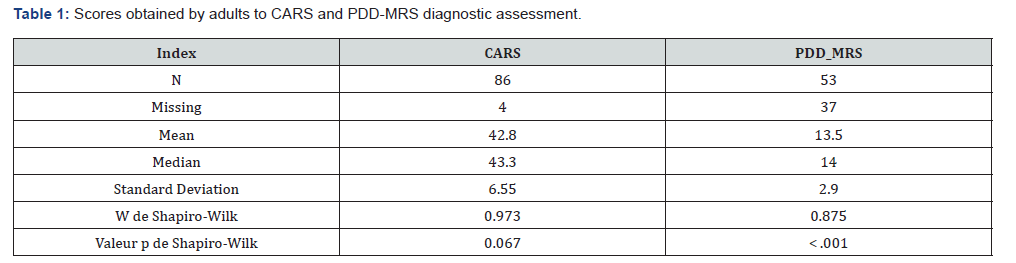
ASD was diagnosed using the DSM-5 criteria [9], including difficulties in social communication and interactions and some restrictive, repetitive behaviors or interests with atypical sensorial reactivity. Quantitative diagnostic assessments were conducted using PDD-MRS [10]. This quantitative diagnostic assessment tool for ASD was validated in a French clinical population [11] and is generally used to diagnose ASD in adults with mild, moderate, or severe ID.
This tool produces a score between 0 and 19, with a minimum cut-off score of 10 indicating ASD. In addition, we used CARS [12] to determine the degree of severity of the autistic symptomatology and thus confirm the ASD diagnosis of the adults. The cut-off score for ASD was 30 (Table 1). A Kruskal-Walli’s test was performed on the PDD-MRS and CARS scores of both male and female groups (Table 2). There were no significant differences in CARS and PDD-MRS ranks by gender (CARS: c2 (1, n = 86) = 0.01, p = 0.916; PDD MRS: c2 (1, n = 53) = 0.02, p = 0.864).

Intellectual Disability (ID) Diagnosis
All the adults were considered to have a severe or profound ID, based on the clinical judgement by experienced psychologists and psychiatrists. No standardized intelligence test could be used for these severely delayed adults. Thus, SCEB-A was used to determine each adult’s cognitive development level and confirm their ID.
Among the participants, some individuals were affected by various somatic and/or genetic disorders (epilepsy, n = 26; Down syndrome, n = 3 (one of them also had epilepsy); Sotos syndrome, n = 3; Dravet syndrome, n = 1; Pierre Robin syndrome, n = 1; 22q11.2 deletion syndrome, n = 1; hypothyroidy, n = 2), which were associated with behavioral (aggressiveness, n = 18) and mental (anxiety, n = 28; depression, n = 3) comorbidities.
Cognitive and Socio-Emotional Development Assessment
We used the SCEB to assess the cognitive development of the 90 adults with ASD. This instrument was initially created for children with ASD and developmental ages between 4 and 24 months [13-15] and was also used for children with neurodevelopmental and genetic disorders [16,17]. The French National Authority for Health has recommended the SCEB. This tool has been used for adults in clinical studies [18-22, 7] and longitudinal case reports (e.g., a case of an elderly adult with ASD and severe ID) [23,24]. The SCEB comprises 16 scales divided into two areas: cognitive and socio emotional. The cognitive area comprises seven scales: self-image, symbolic play, schemata relationship to objects, operational causality, means/ends, spatial relationships, and object permanence.
The socio-emotional area includes nine scales: behavior regulation, social interaction, joint attention, expressive and receptive language, vocal and gestural imitation, affective relationship, and emotional expression. Each scale is composed of hierarchical items that determine four cognitive and socio-emotional development levels. Level 1 corresponds to the age range of 4–8 months; Level 2, to 8–12 months; Level 3, to 12–18 months; and Level 4, to 18–24 months. A score of 0 was given when Level 1 was not reached. The score for overall development is the average of the 16-domain level (GDL) scores. The cognitive development score is the average of the seven-domain scores (CDL).
Furthermore, the socio-emotional development score is the average of the nine-domain scores (SDL). A median score can also be calculated. Heterogeneity indexes for overall, cognitive, and socio- emotional functions were also estimated. These indexes corresponded to the means of differences (absolute value) between all the level scores (0–4) of each of the 16 domains, multiplied by 10. They ranged from 0 (no heterogeneity) to 21 (maximum heterogeneity). Psychologists trained in using SCEB-A examined the participants. Each adult was assessed by the psychologist employed at each of the 17 institutions. The examination was conducted in a dedicated room, considering the individual’s attention, availability, and fatigue, and was filmed (prior agreement obtained). The videos of the examinations were used in agreement with the psychologist and the adult or their legal guardian for the interrater reliability study.
Measurement of Socio-Adaptive Development
The second version of the VABS, VABS-II [25,26] was used to conduct the convergent validity study. Socio-adaptive development was assessed by the psychologist and educator responsible for the adult’s individualized program. VABS-II is a hetero-questionnaire exploring four domains organized into nine subdomains: communication (receptive, expressive, and written), daily living (personal, domestic, and community), socialization (interpersonal relationships, adaptation, and play/leisure), and motor skills (gross and fine). Motor skills are only assessed if the person’s chronological age is less than 7 years. VABS-II has been used in France for people with chronological ages from 1 to 90 years.
After the assessment, the raw scores corresponding to the sum of the item scores in each sub-dominant are calculated. These raw scores can be used to obtain the scale scores of each subdomain in a specific norm table in the VABS-II manual. The sum of the scale scores of the three subdomains in each domain is used to obtain the standard note in another norm table in the VABS-II manual. The standard note and scale scores indicate the individual’s rank in the individual’s chronological age group. The development age equivalent (DAE) can be obtained from the raw scores of each subdomain and varies in the French adaptation from <1 year to 18 years or more (see the tables of the VABS-II manual).
The DAE was calculated based on the sample and corresponded to the mean chronological age (in years and months) of the sample’s population. In the US version, DAEs vary from 1 month to 18 years or more. The US version allows for determining DAEs between 1 and 12 months, but the French adaptation does not. Thus, in this study, which used the French version, we attributed a DAE of 8 months when the raw score corresponded to < 1 year to perform the statistical analysis. We did not use the written communication DAE because 87 of 90 adults did not achieve the minimum DAE of 3 years and 6 months. Furthermore, we only used the DAE values for the convergent validity study.
Results
Psychometric Validation Study
Inter-Rate Reliability Study of the Ratings of the Developmental Levels of the SCEB-A
The SCEB for children has been validated in psychometric and developmental validation studies [13-15]. Here, an inter-rater fidelity study was conducted using video recordings of 29 SCEB-A examinations conducted by five of the 17 partner psychologists to ensure that the SCEB-A item ratings were valid. Based on the analysis of the content, characteristics, and quality, only 15 SCEB-A examination videos of the adults (12 men and 3 women), taken by two psychologists from two different institutions, were used. These videos were analyzed by the third author, who, blind to the scores rated by these two psychologists, independently rated the behaviors of each of the 15 adults and assigned scores using the SCEB-A protocol. The scores of these double SCEB-A ratings were reported on an Excel file and were subjected to an inter-rater statistical reliability analysis, the results of which are summarized in the following paragraphs.
The Inter-Rater Reliability Analysis Examines the Data from Different Complementary Perspectives:
1) Score-level agreement (repeated measures - non-parametric
test: χ² Friedman): There were no significant differences in
median levels of development according to the raters.
2) Rank equivalence between scores (Spearman rank correlations):
All inter-rater correlations were highly positive (1.0 to
0.71; mean = 0.89).
3) Structural equivalence (Spearman rank correlations
between the intra-judge matrices of rank correlations of the 16
developmental level scores produced using SCEB-A): A high correlation
was observed between the two tables of intervariable
correlations according to the raters (r(105) = 0.74, p = < 0.001).
In conclusion, the raters considered that there was similar intra-individual differentiation and a similar organization of inter-individual differences (the lowest convergence values concerned the “self-image” (r = 0.71) and “receptive” (r = 0.75) domains, with developmental levels not showing significant differences. Thus, the inter-rater reliability data show excellent reproducibility of the evaluations.
Characteristics of the Mean Profile of Cognitive and Socio- Emotional Development of the 90 Adults
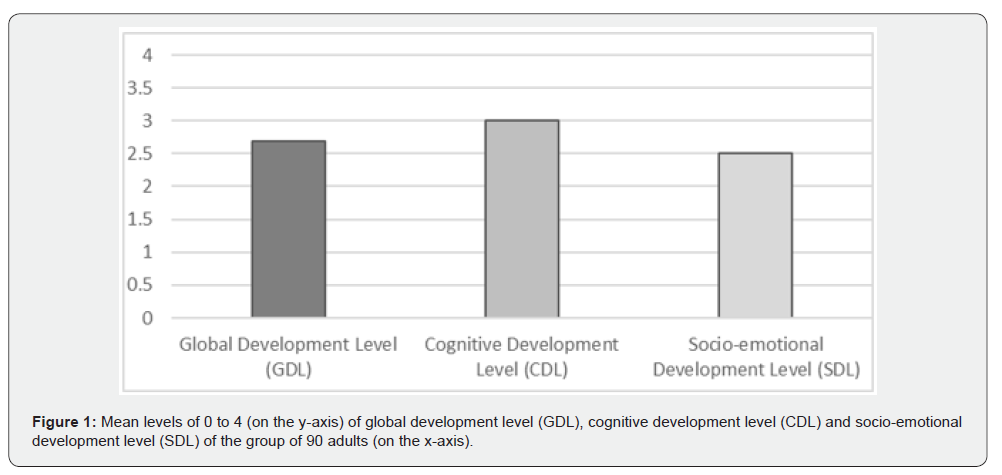
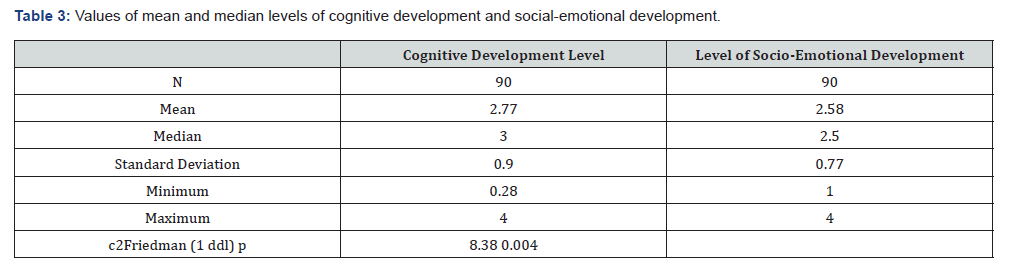
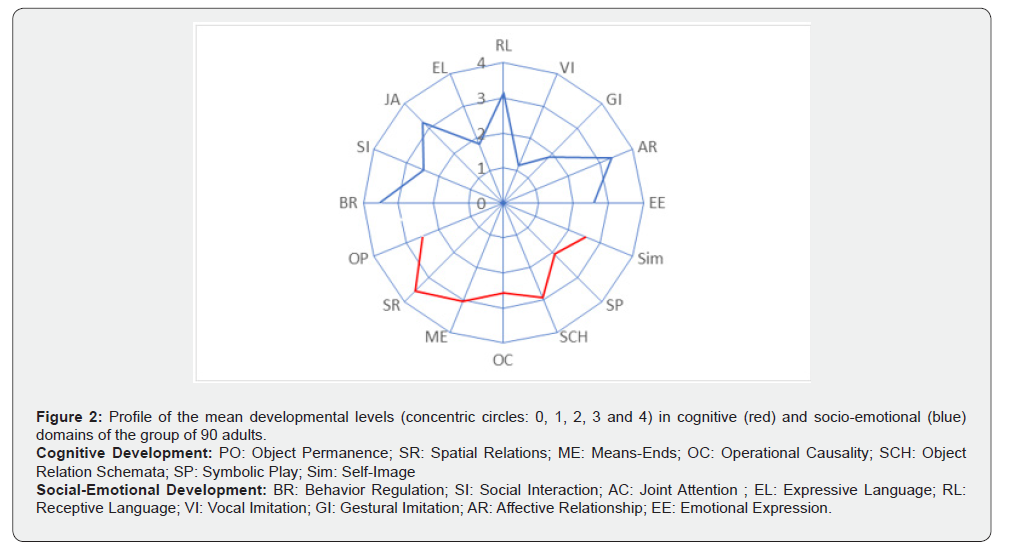
Figure 1 illustrates the mean global, cognitive, and socio-emotional development levels of the 90 adults. The mean score of the global developmental level (GDL = 2.7) corresponded to the developmental age of 8–12 months. The mean scores of cognitive (CDL = 2.8) and socio-emotional (SDL = 2.6) developmental levels were practically equivalent. Developmental heterogeneity was demonstrated by the significant differences between the median levels of cognitive and socio-emotional development (Table 3). Figure 2 presents the mean cognitive and socio-emotional development profile of the group of 90 adults.
Heterogeneity of the Participants’ Cognitive and Socio-emotional Development
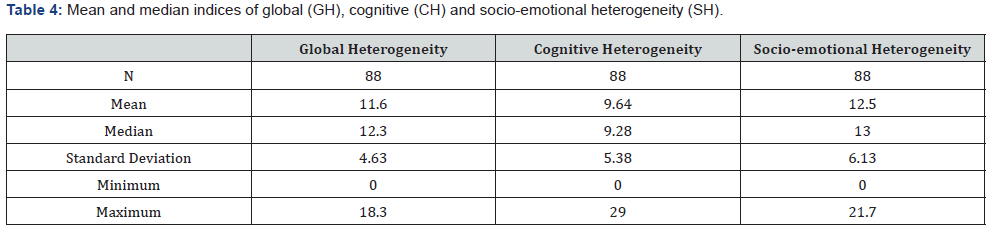
Table 4 presents the indices of overall cognitive and socio- emotional heterogeneity. The overall developmental heterogeneity was substantial (median GH = 12.3). Furthermore, the socio-emotional heterogeneity (median SH = 13) was significantly greater than the cognitive heterogeneity (median CH = 9.28) (χ2 Friedman (1, N = 88) = 11.0, p < 0.001).
Identification of the Domains with the Lowest and Highest Levels
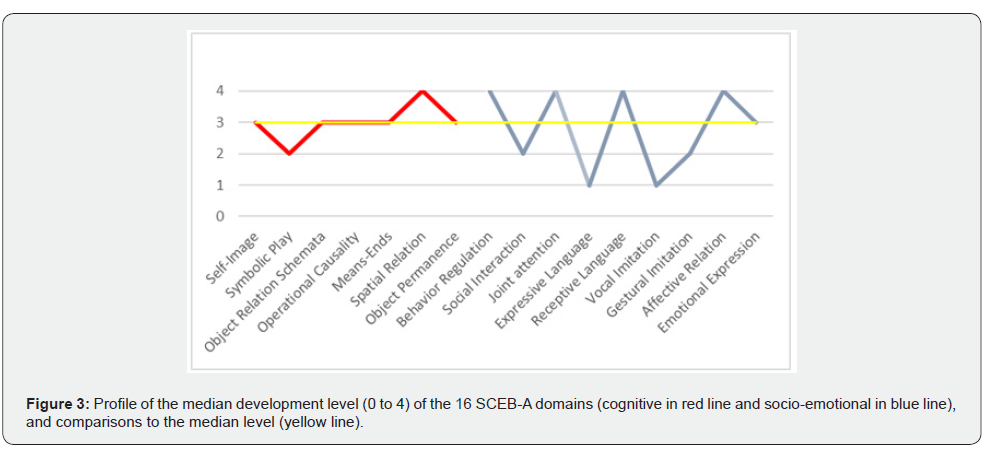
The analysis compared the median developmental level of all 16 domains with the median developmental level of each domain (Figure 3). The five domains with levels below the median developmental level (yellow line) were symbolic play (cognitive area), and social interaction, expressive language, vocal imitation, and gestural imitation (socio-emotional area).
Convergent Validity Study
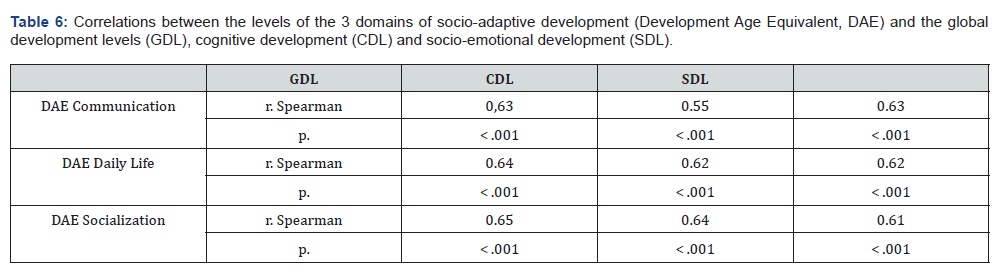
A convergent validity study was conducted by analyzing the relationships between the levels of cognitive and socio-emotional development (SCEB-A) and those of socio-adaptive development, assessed using Vineland-II [25,26]. We used the DAEs of the domains and subdomains for the analysis, except for the DAE of the written communication subdomain. Table 5 presents the global DAE and the DAEs of the three domains of socio-adaptive development of the 88 adults (missing two data). The DAE in months of the socialization domain (15.6) was lower than those of the other two domains (χ2 Friedman (1, N = 88) = 131, p < 0.001): communication (17.4) and autonomy in daily life (38.7).The correlation analysis between the mean DAE scores of the three domains of Vineland-II and the GDL, CDL, and SDL of SCEB-A shows that they are high, fairly homogeneous, and significant (Table 6).
Divergent Validity
Discriminate validity was demonstrated by studying the correlations between the severity of autism, assessed using the CARS, and the global, cognitive, and socio-emotional development levels of the SCEB-A. The correlations were significantly negative (Table7). Thus, the more severe the autistic symptomatology, the lower the overall developmental levels.


Factorial Analysis
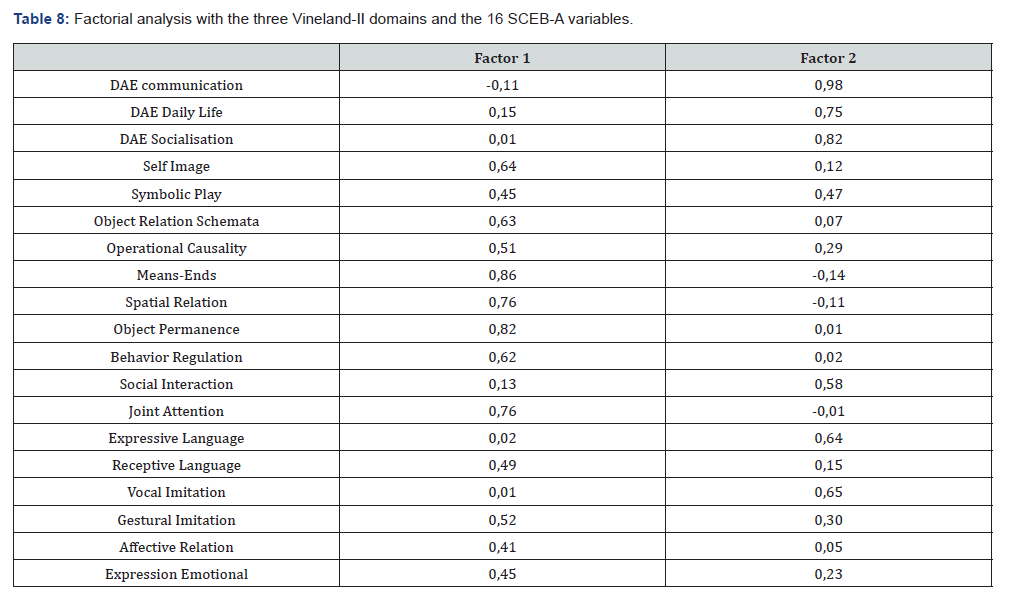
A factorial analysis (maximum likelihood with oblimin rotation) was conducted with all three Vineland-II domains and all 16 SCEB-A variables. Two correlated factors (phi = 0.49) were extracted (29.1% and 22.4% of variance explained) (Table 8). Factor 1 regrouped only domains corresponding to some cognitive and socio-communicative abilities, assessed using the SCEB-A. Factor 2 comprised three Vineland-II socio-adaptive domains and symbolic play (cognitive area), and social interaction, expressive language, and vocal and gestural imitation (socio-emotional area) of SCEB-A. Therefore, Factor 1 may be named “cognitive and communicative abilities,” and Factor 2, “social and autonomy abilities.”
Discussion
Diagnosing ASD in adults with severe and multiple handicaps is difficult because the differentiation between ID and ASD behavioral manifestations is unclear. However, the PDD-MRS and CARS combined allowed us to diagnose this clinical population as ASD. Thus, adapting the modified ADOS-2 version [27] and the DiBAS-R [28,29] for older people with ASD and ID would be of interest. Moreover, as this clinical population cannot be examined with standardized intelligence tests, professionals were asked to determine the severity of these adults’ IDs, based on these individuals’ communication and autonomy behaviors. A substantial developmental delay and severe ID were confirmed by the very low cognitive development levels, determined using the SCEB-A.
The cognitive and socio-emotional developmental profile of the adults was determined. In the cognitive area, symbolic play exhibited the lowest developmental level, whereas spatial relations exhibited the highest development, and the cognitive profile was heterogeneous. In the socio-emotional area, social interaction, expressive language, and vocal and gestural imitation exhibited lower developmental levels than other abilities such as behavior regulation, joint attention, receptive language, and affective relation. Furthermore, developmental heterogeneity was higher in the socio-emotional area.
This pattern of cognitive and socio-emotional heterogeneities was also observed in children with ASD [30-32]. Although the SCEB-A is not an ASD diagnosis tool, pattern similarities demonstrate that cognitive and socio-emotional dysfunction in children with ASD, severe ID, and developmental levels inferior to 2 years persisted into adulthood. Future studies should compare the selected groups of children and adults with ASD who were examined using the SCEB to describe their developmental trajectories from infancy to adulthood and highlight an eventual developmental pattern in autism.
This study proves that SCEB-A exhibits adequate psychometric qualities, such as reliability and convergent and divergent validity. Factorial analysis that included both cognitive socio-emotional and adaptive development variables shows evidence of two factors: Factor 1 (“cognitive and communicative abilities”) and Factor 2 (“social and autonomy abilities”). These factors differentiated cognition and communication skills from social and autonomy abilities and thus highlighted that these two dimensions should be distinguished. Moreover, while Factor 1 comprised only cognitive and socio-emotional abilities assessed using the SCEB-A, Factor 2 was mainly composed of communication, socialization, and autonomy in daily life, behaviors associated with abilities such as social interaction, expressive language, vocal, and gestural imitation. This association may imply that, as in children with ASD [33], the acquisition of autonomy and socialization behaviors in daily life in these adults is related to these specific socio-verbal interactions and imitation abilities.
Conclusion
This study applied the SCEB used for children with ASD, with or without developmental delay, to adults with developmental ages under 2 years to describe their developmental profile and present a preliminary psychometric validation. Using this tool on adults revealed a heterogeneous developmental profile characterized by deficits in symbolic play and social communication, expressive language, and imitation abilities, but adequate spatial relation, behavior regulation, joint attention, and affective relation abilities.
Moreover, statistical and psychometric analyses demonstrated that the SCEB-A presented adequate reliability and convergent and divergent validity. Therefore, the SCEB-A can be used by professionals to assess cognitive and socio-emotional development in adults with ASD and severe ID, and whose developmental level is equivalent to ages between 4 and 24 months.
Acknowledgments
We thank all adults with autism and severe intellectual disability and their families. Moreover, we thank all the collaborative authors and their medico-social services for partnering with Université Paris Cité. We also thank Fondation Perce-Neige for its logistical and financial support.
Funding
Funds from Fondation Perce-Neige (Number H03R4057 - P5 Psycho - EA4057 – LPPS) and Societies and et Humanities, Université Paris Cité (Budget Restreint, Impact Optimal ATRIUM S&H) are acknowledged.
Authors’ Contributions Statement
Management of the collaborative working group (examiners and medico-social services (CWG)): JLA. Cognitive and adaptive assessments: CWG. Supervision and double rating of videotapes: RB and JLA. Developmental and quantitative diagnostic data collection: JLA, RB, and CWG. Study design: JLA, RB, and ET.
Data Analysis: ET. Writing: JLA, RB, and ET.
All three authors have read and approved this final manuscript.
Conflict of Interest
The authors declare that the submitted work was carried out in the absence of any personal, professional, or financial relationships, and thus does not to have any conflict of interest.
References
- Braconnier ML, Siper PM (2021) Neuropsychological assessment in autism spectrum disorder. Current Psychiatry Reports 23(10): 63.
- Mason D, McConachie H, Garland D, Petrou A, Rodgers J, et al. (2018) Predictors of quality of life for autistic adults. Autism Research 11(8): 1138-1147.
- Sappok T, Budczies J, Bölte S, Dziobek I, Dõsen A, et al. (2013) Emotional development in adults with autism and intellectual disabilities: a retrospective, clinical analysis. Plos One 8(9): e74036.
- Sappok T, Barrett BF, Vandevelde S, Heinrich M, Poppe L, et al. (2016). Scale of emotional development—short. Research in Development Disabilities 59: 166-175.
- Vandevelde S, Morisse F, Dõsen A, Poppe L, Jonckheere B, et al. (2014) The scale for emotional development-revised (SED-R) for persons with intellectual disabilities and mental health problems: development, description, and reliability. International Journal of Developmental Disabilities.
- Meinecke T, Flachsmeyer M, Sappok T (2024) Validation of the Scale of Emotional Development-Short (SED-S) in healthy adults with an intellectual disability. Journal of Clinical Medicine 13(17): 5113.
- A Jean-Louis Adrien, Romuald Blanc, Eric Thiébaut (2025a) Profile and development of adaptive behavior in adults with autism spectrum disorder and severe intellectual disability. Frontiers in Psychiatry 15: 1470466.
- Haute Autorité de Santé, HAS et ANESM (2017) Trouble du spectre de l’autisme: interventions et parcours de vie de l’adulte. Argumentaire scientifique. Saint-Denis, La Plaine.
- American Psychiatric Association (2013) Diagnostic and statistical manual of mental disorders (5th Ed.). Arlington, VA: American Psychiatric Publishing. Paris, P.U.F.
- Kraijer DW, de Bildt A (2005) The PDD-MRS: an instrument for identification of autism spectrum disorders in persons with mental retardation. Journal of Autism and Developmental Disorders 35(4): 499-513.
- Kraijer DW (2018) PDD-MRS: Echelle d’évaluation des TSA chez les personnes avec déficience intellectuelle. Adaptation française, Bizet, E, Hogrefe France, Paris.
- Schopler E, Reichler R, and Renner B (1998) The Childhood Autism Rating Scale (CARS) (1988) Los Angeles: Western Psychological Services. French adaptation by Rogé B (1989) Echelle d'évaluation de l'autisme infantile, Issy-les-Moulineaux : Editions d'Application Psychotechnique (EAP).
- Adrien JL (2007) Manuel de la Batterie d’Evaluation Cognitive et Socio-émotionnelle (BECS), Pearson-ECPA, Paris.
- Thiébaut E, Adrien JL, Blanc R, Barthélémy C (2010) The Social Cognitive Evaluation Battery (SCEB) for children with autism: a new tool for the assessment of cognitive and social development in children with autism spectrum disorders. Autism Research and Treatment 2010: 875037.
- Thiébaut E, Paulais MA, Blanc R, Gattegno MP, Adrien JL (2021) Sensibilité développementale théorique et empirique des items de la BECS pour l’évaluation du développement psychologique de jeunes enfants au développement typique. (Theoretical and empirical genetic sensitivity of SCEB items for assessment of young typically developing children). Psychologie Française 67(1): 71-76.
- Taupiac E, Lacombe D, Thiébaut E, Michel G, Adrien JL, et al. (2021) Psychomotor, cognitive and socio-emotional developmental profiles of children with Rubinstein-Taybi syndrome and severe intellectual disability. Journal of Intellectual and Developmental Disability. J Intellect Dev Disabil 46(1): 80-89.
- Krieger AE, Devouche E, Paulais MA, Nader-Grosbois N, Sankey C, et al. (2022) Specificity of cognitive and socio-emotional developmental profiles in children with Down syndrome presenting diagnosis of autism spectrum disorder. Global Journal of Intellectual and Developmental Disabilities 10(2): 555783.
- Azoulay S., Gattegno MP, Thiébaut E, Leynet A, Lapeyre Q, et al. (2019) Etude préliminaire du développement cognitif et socio-émotionnel d’adultes ayant un trouble du spectre de l’autisme (TSA) associé à un handicap intellectuel (HI) sévère, à l’aide de la BECS adapté Communication présentée au Congrès de la Société Française de Psychologie, Poitiers 4-6.
- Adrien JL, Blanc R (2022) L’évaluation du développement cognitif et socio-émotionnel d’adultes ayant untrouble du spectre de l’autisme (TSA) et un handicap intellectuel (HI) sévère, à l’aide de la BECS adapté Premières pratiques cliniques et perspectives scientifiques. Communication affichée présentée au Colloque Scientifique de l’Apajh 86 et Arapi, « Agir à tous les âges de la vie. Agir pour une vie de qualité ». Palais des Congrès du Futuroscope, Chasseneuil-du-Poitou, 11 et 12 mai 2022.
- Adrien JL, Blanc R, Thiébaut E, Baudoin C, Van Tornhout M, et al. (2024a) Étude préliminaire du développement cognitif et socio-émotionnel d’adultes ayant un trouble du spectre de l’autisme et un handicap intellectuel sévère (soumis à Revue Francophone de Déficience Intellectuelle).
- Adrien JL, Blanc R, Thiébaut É (2024b) Étude du développement cognitif, socio-émotionnel et adaptatif d’adultes avec TSA et Handicap Intellectuel sévè Communication orale présentée au Congrès National 2ème édition du GNCRA, Rouen p: 13-14.
- Adrien JL, Gattegno MP, Blanc R, Paulais MA, Thiébaut É (2024c) L’évaluation du développement cognitif et socio-émotionnel des enfants ayant un trouble du spectre de l’autisme à l’aide de la Batterie Evaluation Cognitive et Socio-émotionnelle (BECS). In JL Adrien and MP Gattegno, Évaluer le trouble du spectre de l’autisme chez l’enfant et l’adolescent, De Boeck Supérieur, Louvain-La-Neuve pp: 85-102.
- Adrien JL, Nézereau C, Wolff M, Wardi MD, Gattegno MP, Blanc R (2025b) Evolution of cognitive and socio-emotional skills in an elderly woman with autism spectrum disorders and severe intellectual disability receiving individualised support based on the CHIPPS program: a clinical case report. Submitted to Journal of Intellectual & Developmental Disability.
- Nézereau C, Wardi MD, Gattegno, MP, Blanc R, Adrien JL (2025) Evolution of personal autonomy behaviors in an elderly woman with ASD and severe intellectual disability receiving individualized support based on the CHIPPS program: a clinical case report. Submitted to International Journal of Developmental Disability (accepted with minor modifications).
- Sparrow SS, Cicchetti D, Balla DA (2005) Vineland Adaptive Behavior Scales, Second Edition (Vineland-II) (2005) APA PsycTests 1(6).
- Sparrow SS, Cicchetti DV, Balla DA (2015) Vineland-II, Echelles de comportement adaptatif Vineland, seconde édition. Paris: Pearson France-ECPA.
- Tager-Flusberg H, Plesa Skwerer D, Joseph RM, Brukilacchio B, Decker J, et al. (2017) Conducting research with minimally verbal participants with autism spectrum disorder. Autism 21(7): 852-861.
- Mutsaerts CG, Heinrich M, Sterkenburg PS, Sappok T (2016) Screening for ASD in adults with ID-moving toward a standard using the DiBAS-R and the ACL. Journal of Intellectual and Disability Research 60(5): 512-522.
- Heinrich M, Böhm J, Sappok T (2017) Diagnosing Autism in Adults with Intellectual Disability: Validation of the DiBAS-R in an Independent Sample. J Aut Dev Dis 48(2): 341-350.
- Adrien JL, Bernard MA, Thiébaut E, Gattegno MP, Blanc, et al. (2016) Le profil du développement cognitif et socio-émotionnel d'enfants atteints de Troubles du Spectre Autisme (TSA) associé à un léger retard global du développement, âgés de 19 mois à 36 mois diffère-t-il de celui d’enfants avec TSA associé à une déficience intellectuelle (DI) sévère et âgés de 7 ans à 14 ans? Quelles implications pour les pratiques d’évaluation et d’intervention? Devenir 28(3): 255-272.
- Bernard MA, Thiébaut E, Mazetto C, Nassif MC, de Souza MTCC, et al. (2016) L’hétérogénéité du développement cognitif et socio-émotionnel d’enfants atteints d’autisme en lien avec la sévérité des troubles. Revue de Neuropsychiatrie de l’Enfance et de l’Adolescence 64: 376-382.
- Bernard Paulais MA, Mazetto C, Thiébaut E, Nassif MC, Costa Coehlo de Souza MT, et al. (2019) Heterogeneities in cognitive and socio-emotional development in children with autism spectrum disorder and severe intellectual disability as a comorbidity. Front Psychiat 10: 508.
- Salceanu C, Lăcătuș L (2022) Social skills, communication and autonomy in children with autism. Technium Social Sciences Journal 30(1): 442-456.

























