




 GJIDD Home



Abstract
This study explores the school experiences of high school students with attention deficit hyperactivity disorder (ADHD) in Australian mainstream educational settings, focusing on the unique challenges and adaptive strategies that shape their academic, social, and emotional lives. Using Interpretative Phenomenological Analysis (IPA), semi-structured interviews were conducted with five parent-student days to examine perspectives on diagnosis, teacher relationships, systemic support, and the social and emotional dimensions of ADHD. Four overarching themes emerged:
(1) Diagnosis and Self-Understanding,
(2) Impact of Teacher Relationships on Student Experience,
(3) Educational System Limitations and the Need for Inclusive Support, and
(4) Navigating ADHD’s Social and Emotional Dimensions.
The findings reveal that an ADHD diagnosis often fosters self-understanding and shifts self-perception, yet students’ success depends heavily on supportive teacher relationships and individualised accommodations. Inconsistent implementation of support and limited neurodivergent-specific training for educators often hinder effective inclusion. Friendships emerged as vital sources of stability, while social exclusion and emotional regulation challenges further complicated students’ school experiences. The study underscores the need for flexible educational structures, ADHD-specific teacher training, and robust family support to create an inclusive environment that addresses ADHD students’ unique needs. This research contributes to a growing body of literature advocating for policies and practices that empower students with ADHD to thrive academically and socially.
Keywords: Attention deficit hyperactivity disorder; Interpretative Phenomenological Analysis; American Psychiatric Association
Abbreviations: ADHD: Attention deficit hyperactivity disorder; IPA: Interpretative Phenomenological Analysis; APA: American Psychiatric Association; IEPs: Individualised Learning Plans; IPA: Interpretative Phenomenological Analysis
Beyond Labels: Students’ Perspectives of ADHD in Schools
Imagine trying to focus on a lesson while every sound, movement, and distraction in the classroom feels magnified. For students with attention deficit hyperactivity disorder (ADHD), this heightened sensitivity to external stimuli is a daily reality, making the simple act of paying attention a constant challenge. ADHD is a neurodevelopmental disorder characterized by pervasive patterns of inattention, hyperactivity, and impulsivity [1], affecting approximately 8.2% of children in Australia and between 5-7% of individuals globally [2,3]. This prevalence translates to at least one child with ADHD in every kindergarten to Year 12 classroom. For these students, meeting academic expectations, forming meaningful relationships, and maintaining a sense of self-worth can be significant challenges, often resulting in academic underachievement, stigmatization, and strained relationships with teachers and peers [4,5]. Despite the magnitude of these challenges, the voices of students with ADHD remain underrepresented in educational research. Much of the existing literature focuses on the cognitive and social differences between students with ADHD and their neurotypical peers [6], or compares ADHD to other neurodevelopmental conditions, such as autism [7,8]. However, there is a gap in understanding how students with ADHD themselves perceive their school experiences, what strategies they believe are most effective, and how they navigate the social and academic demands of school life. By centering students’ perspectives, this study aims to provide insights that can inform more effective and empathetic educational practices tailored to their needs. Historically, research on ADHD in educational settings has been shaped by the perspectives of clinicians and educators, who play central roles in managing ADHD-related academic and behavioral challenges. Clinicians typically approach ADHD from a medical and psychological perspective, focusing on diagnosis, treatment, and symptom management. They often collaborate with educators to develop Individualized Learning Plans (IEPs) and behavioral support interventions. Studies have shown that a combination of behavioral strategies and, in many cases, medication can improve outcomes for students with ADHD [9-11]. However, the effectiveness of these interventions often depends on consistent implementation, which varies significantly across educational settings [12].
Teachers, who are responsible for implementing classroom accommodations, are critical in shaping ADHD students’ educational experiences. Studies have revealed significant variability in teachers’ understanding of ADHD, which impacts on the consistency and quality of support students receive [13-16]. For example, Ohan et al. (2008) [15] found that while Australian primary school teachers had moderate knowledge of ADHD, many still demonstrated misconceptions about the condition. This lack of comprehensive understanding often leads to the misinterpretation of ADHD behaviours as intentional disruptions, resulting in punitive measures that can exacerbate academic and social difficulties [14,17]. The perspectives of clinicians and educators are crucial, but they often overlook the nuanced, day-to-day experiences of students themselves. Understanding how students with ADHD experience school life and what they feel works best for them can provide valuable insights into effective strategies and barriers to support. While some studies have explored classroom interventions for children with other neurodevelopmental disorders, such as autism [17], there is a lack of research on ADHD-specific strategies from the perspectives of students with ADHD [18]. Teachers often employ general inclusive strategies that, while beneficial, may not fully address the specific cognitive and behavioral challenges faced by students with ADHD, such as difficulties with attention, concentration, and task initiation [6,19,]. Further, the literature tends to emphasise the deficits of students with ADHD, often neglecting to explore their strengths and coping strategies. Wiener et al. (2012) [20] suggest that children with ADHD may lack awareness of their own abilities, which influences their academic and social interactions. This study seeks to examine not only the challenges faced by students with ADHD, but also their self-perceptions, coping mechanisms, and understanding of their strengths (and weaknesses). Additionally, research has shown variability in ADHD knowledge among children with the condition, which may impact their ability to access support and develop effective self-management strategies [21]. Such gaps highlight the need for more research into how ADHD knowledge affects students’ coping mechanisms and engagement with support systems.
Most existing research on ADHD in educational contexts focuses on primary school-aged children, examining their difficulties with attention, impulsivity, and behavioural management [22,23]. However, the transition from primary to high school presents new challenges, as academic demands increase and social dynamics grow more complex [24]. During adolescence, ADHD symptoms often intensify, yet research on how students cope during this critical phase is limited [25]. The current study addresses this gap by examining the experiences of high school students with ADHD, particularly as they navigate the transition from primary to high school. ADHD is commonly perceived by students themselves as a barrier to academic and social success. Students with ADHD report frustration, embarrassment, and isolation due to the ways their symptoms are often misunderstood or misinterpreted by teachers and peers [26,]. For instance, Kendall et al. (2003) [27] found that behaviors associated with ADHD are frequently misattributed to misconduct or laziness, leading to negative labels and punitive measures that further alienate students. Such negative experiences contribute to academic struggles, social rejection, and emotional distress, often resulting in low self-esteem, anxiety, and depression [24]. Parents, who are often key advocates for their children in school settings, also face challenges. Limited research has focused on parents’ perceptions of the effectiveness of school-based interventions, despite their essential role in navigating systems that may not fully meet their child’s needs [28]. Parental advocacy often involves negotiating complex processes, such as securing IEPs and accommodations, and managing the gap between expected and actual support [23]. Therefore, the current study will explore both student and parent perspectives, offering a comprehensive view of ADHD support in schools from those directly affected.
The Present Study
Despite the extensive body of research on ADHD, there is a significant gap in understanding how students with ADHD and their parents perceive and respond to the academic and social challenges encountered in school settings. This study aims to address these gaps by exploring the perspectives of students with ADHD and their parents through one-on-one, semi-structured interviews. By prioritizing their voices, this research seeks to provide a deeper understanding of the unique challenges these students face, the coping mechanisms they employ, and their perceptions of the support systems in place. This approach is essential, not only for improving academic and social outcomes for students with ADHD, but also for fostering a more inclusive and supportive school environment that addresses their specific needs. The study specifically focuses on high school students’ experiences, covering both their primary and high school years, as ADHD-related academic and social challenges can evolve with age and often intensify during the transition to adolescence. Examining the perspectives of both students and their parents is vital for developing tailored educational interventions that can better address the distinct needs of students with ADHD. Findings from this research may challenge current practices and policies, encouraging a re-evaluation of how schools can more effectively support these students in achieving both academic and social success. Through this lens, the present study will contribute to a more comprehensive understanding of the real-life challenges faced by students with ADHD and the effectiveness of existing school-based supports. By centering on the voices of students and their families, this research aims to inform the development of more responsive and inclusive educational practices that empower students with ADHD to thrive.
Methods
Participants
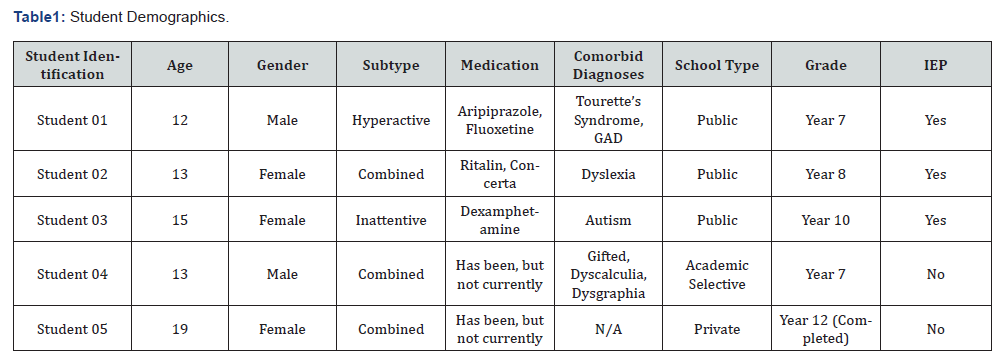
Six parent-student days were recruited using purposive sampling; however, one day I was unable to complete the interview because of ongoing problems at school. Therefore, the final sample consisted of five parent-student days. To be eligible, students were required to have a diagnosis of ADHD by a qualified health professional, such as a paediatrician or psychologist. Participants were also required to be between the ages of 12 and 20 to specifically target students in high school or those who had recently finished. Two males and three females with ADHD, aged 12 to 19 years (M = 14.4, SD = 2.7), participated. The ADHD subtypes of students were as follows: one inattentive, one hyperactive, and three combined. Most students also reported stimulant medication and reported other co-occurring conditions (Table 1). The sample parent consisted of four mothers and one father. All parent-student dyads resided in Australia, with three from New South Wales and two from Victoria.
Procedure
Ethics approval for the project was granted by Macquarie University’s Research Ethics Committee. All students provided written consent, and all parents provided written consent for themselves and their child (if <18 years of age) to take part prior to participation. In addition to written consent, all participants verbally consented to audio recordings before recording began. Parents reached out to the researcher via email to schedule their interview. Recruitment advertisements, which included the study’s purpose and the lead investigator’s contact information, were shared on social media to encourage participation. These advertisements were posted on ADHD Australia’s Facebook and Instagram accounts, as well as in various Facebook groups for Australian parents of children with ADHD. Utilizing social media and ADHD-focused groups allowed access to a broad and diverse participant pool that may have been difficult to reach through conventional methods. Additionally, clinicians were given the digital flyer to share with parents of eligible children. To acknowledge the time and contribution of participants, parent-child pairs were offered an online gift voucher (Różyńska, 2022).
Semi-Structured Interview
Interviews were conducted with each student individually and then a separate interview with their parents was subsequently conducted. This was guided by a semi-structured interview schedule (see Appendix C) developed in line with our research questions and existing literature. The semi-structured format of the interviews aligns with Interpretative Phenomenological Analysis (IPA) focus on flexibility, enabling an in-depth, iterative examination of participants’ experiences and their associated meanings, while still addressing the primary research question [29]. The questions were adapted to be relevant for the participant group. The first section of the interview focused on the participants’ initial diagnosis of ADHD, broad knowledge of ADHD, and their overall experience at school with an ADHD diagnosis. The second section focused on the participating students’ experience during primary school, high school, and the transition phase between the two. The third section focused on the participating students’ academic (i.e., literacy and numeracy) strengths and weaknesses, and the strategies used to support them. One interview was conducted in person at Macquarie University, with the remaining four interviews conducted online via Zoom. Student interviews lasted between 50 and 120 minutes (M = 81 minutes, SD = 25 minutes). Parent interviews lasted between 81 and 154 minutes (M = 117 minutes, SD = 33 minutes). There was no clear difference found in content or interview duration between faceto- face and online formats. Variation in interview length appeared to be primarily influenced by gender (i.e., interviews with males tended to be shorter) and by the level of individual insight. All interviews were recorded with participants’ prior permission and then transcribed through Zoom. Transcriptions were de-identified to protect anonymity.
Data Analysis
The data were analysed using IPA, as outlined by Smith et al.
(2009) [30]. This method is adaptable, enabling the analysis to be
shaped by the data itself, which places the participants’ experiences
and viewpoints at the forefront of the research [30]. The
six stages of IPA as outlined by Smith et al. [30] were adhered to:
(1) Reading and Re-reading,
(2) Initial Noting,
(3) Developing Emergent Themes,
(4) Connecting Themes,
(5) Cross-Case Analysis,
(6) Final Themes and Interpretation.
Given the exploratory nature of this study, an inductive, bottom- up approach to coding was employed.
Findings
Consistent with IPA methodology, the results and discussion
are presented together [29]. Through the model of Interpretative
Phenomenological Analysis, four overarching themes emerged
from the transcripts of ADHD students and their parents:
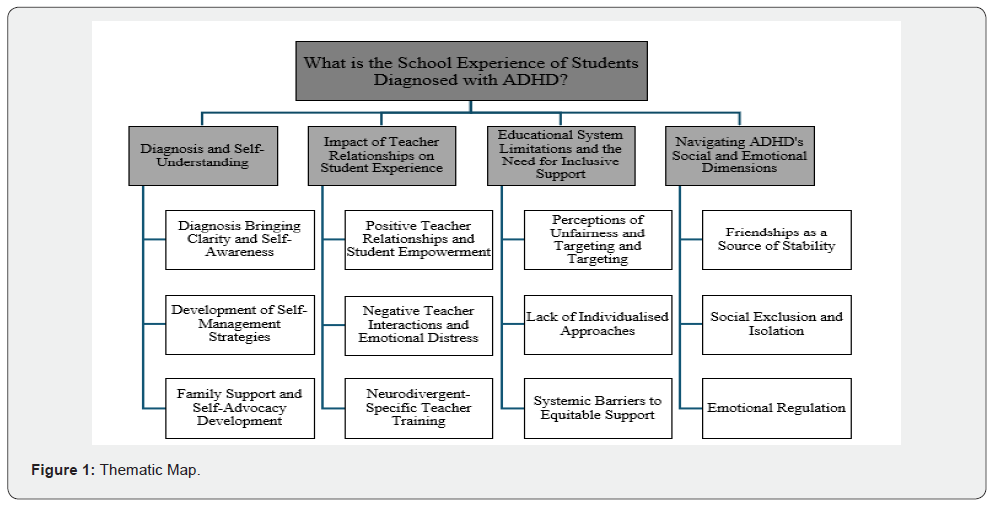
(1) Diagnosis and Self-Understanding.
(2) Impact of Teacher Relationships on Student Experience;
(3) Educational System Limitations and the Need for Inclusive
Support; and
(4) Navigating ADHD’s Social and Emotional Dimensions.
Each overarching theme consisted of group-level subthemes as shown in Figure 1. Additionally, participant quotations are presented with identifiers labelling the transcript page and line number. Whilst these group experiential themes are presented separately, they are inherently interrelated (Smith et al., 2022) [29].
Theme 1: Diagnosis and Self-Understanding
The diagnosis of ADHD emerged as a significant milestone
for both students and parents, bringing clarity, validation, and a
framework for understanding the behavioural and cognitive patterns
associated with ADHD. While students’ responses often centred
on self-awareness and personal identity, parents emphasised
advocacy and a shift in perspective on their child’s behaviours.
This theme was explored through three subthemes:
(1) Diagnosis Bringing Clarity and Self-Awareness.
(2) Development of Self-Management Strategies; and
(3) Family Support and Self-Advocacy Development.
Subtheme 1.1: Diagnosis Bringing Clarity and Self-Awareness
The ADHD diagnosis provided many students with a language to understand themselves better and to reframe past struggles. For example, Student 04’s mother stated, “His diagnosis was excellent because he understood… I’m not crap. I’m not just lazy, I’m not just, whatever it is. There is a reason. My working memory… is poor… I think it’s been much better for him. It’s now part of his identity, what he values about himself. He likes it” (Parent 04, 27.1350-1370). Student 05 expresses a similar sentiment, “When I got the diagnosis, then I realised that, so this is really not who I am…it’s due to some medical diagnosis” (Student 05, 3.152-153). Student 02 summarised this shift in perception, saying: “ADHD is not an excuse. It’s just a reason” (Student 02, 29.1579-1578). This recognition enabled many of the students to move past self-blame to a more compassionate self-view, recognising ADHD as part of their neurological identity rather than a personal failure. These findings align with identity theory Harter, 2012 [31], which posits that self-concept is influenced by social labels and classifications. In the context of ADHD, the diagnosis enables students to “name” and “frame” behaviours they previously found perplexing or shameful, integrating ADHD into their identity in a constructive way. Research by Brinkman et al. (2020) [32] supports this, noting that adolescents diagnosed with ADHD often feel relief and validation, as the diagnosis explains symptoms they previously attributed to personal shortcomings. However, not all students had immediate positive reactions. Student 04 described an initial fear of social stigma: “[the doctor] told my mum about it [the ADHD diagnosis], so at first, she did not understand. She thought it was something very serious, or something difficult, that I won’t be able to be myself, or I would be an outcast” (Student 05, 2.110-113). She further expressed how this led to self-isolation: “When they told me, I was scared of like, being myself around people…I could not mingle, like I couldn’t…I…I…felt I became isolating myself” (Student 05, 2.114-116). Eventually, after therapeutic support and reflection, Student 05 reframed her diagnosis, stating, “I did not want the diagnosis to like, bring me down, or stop me from what I should do or what I should enjoy. So, I just feel like, maybe I’m just a better version of others” (Student 05, 2.101-102). This aligns with Kendall et al. (2017) [27], who found that while diagnosis can bring many students clarity, the initial reactions can include concerns about being labelled or socially excluded, particularly in adolescents.
For many parents, on the other hand, the diagnosis was often seen as an entry point to securing formal support from schools. Parent 03 describes Child 03 before “it was chaos, and it was deteriorating. It was falling apart, and her mental health was declining. Our mental health was declining, like it was scary” (Parent 03, 25.1419-1423), and after the diagnosis “Now…there is agency capacity. She knows what’s hard. She doesn’t always get the support she needs, but she knows she needs it. Shaming doesn’t happen” (Parent 03, 25.1438-1445). This shift enabled parents to adopt a more compassionate approach, focusing on supportive strategies that accommodated their child’s unique needs rather than attempting corrective measures. These findings are consistent with research by Singh et al. (2018) [33], which highlights that an ADHD diagnosis helped parents shift from behaviors as problematic to recognizing ADHD as an integral part of their child’s identity. The positive impact of ADHD diagnosis on self-awareness suggests that early and accurate diagnosis is essential for student well-being. By understanding their condition, students can shift their self-perception from one of inadequacy to acceptance, reducing feelings of shame or self-blame. Schools should advocate for timely screening and referrals to ensure that students receive a diagnosis early. Additionally, teachers and school counsellors could work to normalize the diagnosis process, addressing any fears of stigma and promoting a positive, constructive understanding of ADHD.
Subtheme 1.2: Development of Self-Management Strategies.
Students described a variety of self-management techniques that helped them navigate school demands and control ADHD-related behaviors, once they knew that they had ADHD. These strategies are essential for creating an environment that meets their sensory and cognitive needs. For example, Student 01 highlighted the importance of movement breaks, sharing, “It’s hard because… if I sit still for five minutes, I start getting up and moving around…I get really jittery...I’m just getting agitated sitting” (Student 01, 25.815-819). To support this need, Student 01 uses movement breaks and visits a designated “helping hub” equipped with physical outlets, such as bikes and rowing machines. These physical activities help regulate his energy and focus, allowing him to return to class in a more settled state. Student 02 also emphasized the importance of adaptive tools in managing moments of overwhelm and anxiety. She uses an “exit pass” to leave class when needed and a “tech pass” that allows her to access technology, such as noise cancelling ear buds to support her focus. These tools offer her both control and a coping mechanism, providing the flexibility to remove herself from stressful situations and resent when necessary. This reliance on sensory accommodation underscores the importance of adaptable classroom environments that allow students with ADHD to self-regulate. For Student 05, visual aids and structured routines play a critical role in managing her daily tasks. She stated, “Breaking tasks into small steps...has been really, really helpful” (Student 05, 10.583-887), which highlights the value of breaking down complex assignments into manageable parts. This approach helps reduce the cognitive load associated with ADHD, allowing her to approach her schoolwork with greater confidence and less overwhelm. The strategy minimizes the risk of feeling defeated by large tasks, promoting a sense of accomplishment and self-efficacy.
Student 04 shared his reliance on assistive technology, specifically his Garmin watch, to remember tasks and stay organized. His mother, Parent 04, observed, “If he sets it on his watch, he’ll remember” (Parent 04, 22.1093). The use of technology offers Student 04 a level of independence in managing his responsibilities, reinforcing his self-efficacy and reducing his reliance on external reminders from teachers or parents. By using these personalized strategies, students with ADHD find ways to adapt the school environment to better meet their individual needs: “She knows what she needs. She knows what works and what doesn’t work” (Parent 03 6.308). Four out of five students in this study had comorbid conditions, such as dyslexia or Tourette’s, which added complexity to their self-management efforts. One parent shared, “When we got the ADHD diagnosis, we also learned about his dyslexia, which made so much sense for why he was struggling with reading.” These experiences align with Willcutt et al. (2022) [34], who emphasize the importance of a multifaceted approach in addressing ADHD and co-occurring conditions. Tailored strategies that address the combined challenges of ADHD and other conditions are essential to maximizing student engagement and minimizing frustration. Self-management strategies, like reminders, structured routines, and self-advocacy, are crucial for the success of students with ADHD, and educators play a vital role in teaching skills such as time management, goal setting, and organization techniques. Schools could further support these students by implementing life skills programs that empower them to manage their needs effectively, while also offering guidance to parents to reinforce these strategies at home, fostering consistency across school and home environments. Additionally, the effective use of sensory tools and routines highlights the need for schools to provide access to sensory resources (e.g., sensory breaks, quiet spaces, fidget tools) and to support educators with professional development on integrating sensory supports and ADHD-friendly routines. A flexible approach to classroom rules can further allow students with ADHD to implement personalized strategies, promoting focus and self-regulation within an inclusive learning environment.
Subtheme 1.3: Family Support and Self-Advocacy Development.
Family support emerged as a crucial factor in helping students develop self-advocacy skills and build confidence in managing their ADHD. Parents played an instrumental role in helping their children understand their needs, advocating for necessary accommodation, and teaching their children to assert themselves. This foundation of support fosters resilience and self-acceptance in the face of academic and social challenges. Parents played a critical role in supporting students’ self-management strategies. Parent 03 explained, “Most of the strategies that I put into place…. were around obviously executive function. So, supporting task initiation, supporting task completion, chunking material down, not just in theory, but only giving it to her in sections. Supporting working memory by making sure that you know the sort of things that your working memory has to work harder on are visible. So visible reminders all those kinds of things” (Parent 03 20.1130- 1135). Parent 02 added that creating mini goals for her child encouraged steady progress: “Her capacity to put that information together is so much better. And now…we’re looking at those other functions” (Parent 02, p.156). Research by Chronis-Tuscano et al. (2019) [35] supports this, highlighting that parental support through structured goals and rewards reinforces effort and promotes autonomy in children with ADHD.
Student 05 highlighted her family’s role in providing emotional support, particularly after challenging days at school. She shared, “When I get home...I cry to my dad and mum, but they always give me confidence and tell me that it’s okay” (Student 05, 8.359-363), revealing how her family serves as a haven that reinforces her selfworth and resilience, despite school bullying. This support from family members acts as an emotional anchor for students with ADHD. Parent 02 described the emotional toll of constantly advocating for accommodations for Student 02, expressing, “There have been hour-long conversations with some of these teachers… they’re hours of my life I will never get back… parents of non-neurodivergent children get to do PhDs, get to have breakfast. I must advocate every second of the day because we don’t teach them how to” (Parent 02, p.158). This account highlights the demanding and sometimes exhausting role parents play in securing consistent support for their children. Despite the strain, Parent 02’s advocacy efforts reflect a deep commitment to ensuring Student 02’s needs are met, even when faced with resistance or scepticism from school staff. Family support is crucial in building self-advocacy skills for students with ADHD. Schools could partner with families to create a more holistic support system, sharing information on advocacy strategies and how families can reinforce them at home. Additionally, teaching students’ self-advocacy skills could be integrated into social-emotional learning curricula, empowering ADHD students to communicate their needs confidently. Policymakers might also consider programs that provide resources and support to parents of neurodivergent students, helping them navigate educational systems more effectively.
Theme 2: Impact of Teacher Relationships on Student Experience
Teacher relationships emerged as a significant factor in shaping
students’ academic engagement, self-confidence, and school
satisfaction. This consisted of three key subthemes:
(1) Positive Teacher Relationships and Student Empowerment.
(2) Negative Teacher Interactions and Emotional Distress; and
(3) Neurodivergent-Specific Teacher Training
Subtheme 2.1: Positive Teacher Relationships and Student Empowerment
Students placed a high value on teachers who treated them with respect and understanding. Supportive teachers were described as patient and kind and were often proactive in offering adjustments such as extra time, alternative assignments, or structured classroom guidance. In addition, students who felt under stood and respected by teachers generally reported more positive school experiences and a greater ability to manage their ADHD symptoms. For example, when describing what he believes to be a “good teacher,” Student 01 said: “Good teachers are the ones that actually respect me and other people in the class. They listen to you, they like talking to you, and they help you out a lot. If a teacher doesn’t give me respect, I’m probably not going to be as respectful back. But the good teachers are different; you can feel it in the way they treat everyone in the class” (Student 01, 12.381- 388). Student 01 also expressed deep appreciation for the support staff at his school, describing them as “the best two SLSOs ever… They explain it really well, and I understand what I’m doing” (Student 01, 16.530-531). This example reflects how clear, empathetic communication not only facilitates academic understanding, but also fosters a sense of belonging and stability for students who may otherwise feel misunderstood.
Students noted that supportive teachers made subjects more enjoyable and accessible. Student 03 shared, “My science teacher... sees a lot of potential in me, which makes me want to be good at the subject” (Student 03, 13.702-706). This underscores how a teacher’s belief in a student’s potential can instil a sense of pride and responsibility, motivating students to excel academically. These positive interactions highlight the role of empathy and encouragement in fostering resilience and self-esteem among students with ADHD. Parents echoed the importance of supportive teachers, with one stating, “Teachers who are actually supportive of the accommodations that she needs...where she doesn’t have to battle, and she doesn’t have to fight” (Parent 02, p.75). While Parent 04 said: “If he was disengaging, I emailed her, and she sorted it…this teacher was open and willing to make adjustments to keep him engaged” (Parent 04, 11.527-530). However, misalignment with student interests was also noted. Parent 04 explained, “The teachers are always trying. So last year’s hyper focus was war, and the teachers didn’t like that very much. So, they kept trying to make him write stories about other things...they didn’t really understand how to leverage the hyperfocus and do what they need within that topic of interest rather than...expand him into other areas of not interest” (Parent 04, 3.151-4.159). This illustrates that while support is valuable, understanding and adapting to individual learning preferences and strengths, like hyperfocus, can further enhance student engagement. These findings are consistent with Wiener and Daniels (2016) [36], who reported that students with ADHD benefit from teachers who can modify instruction, sustain attention, and minimise distractions.
These findings also align with self-determination theory (Ryan & Deci, 2000) [37], which posits that supportive environments are essential for fostering autonomy, competence, and relatedness–– core needs that drive motivation and well-being. Accordingly, when teachers provide an environment where students feel understood and supported, students are more likely to experience intrinsic motivation, invest effort in learning, and develop a sense of competence. Conversely, unsupportive teachers can undermine these needs, causing students with ADHD to feel marginalised and incapable, ultimately diminishing their motivation and engagement. Therefore, these findings indicate a need for teacher training that emphasises empathy, patience, and ADHD-specific understanding and strategies. Professional development focused on inclusive teaching practices and accommodation (e.g., flexible seating, extra time) could empower teachers to meet the needs of neurodivergent students. Schools should promote a culture where teachers view accommodation as tools for student success, rather than exceptions or burdens, to foster a more inclusive environment.
Subtheme 2.2: Negative Teacher Interactions and Emotional Distress
Conversely, some students recounted negative interactions with teachers who lacked an understanding of ADHD, which often led to feelings of frustration, isolation, and disengagement. Student 02 described feeling dismissed by certain teachers, saying, “the understanding of what I’m saying. But it’s also the letting me speak that they don’t do” (Student 02, 33.1782). While another student recounted, “My math teacher sent me out of the classroom… she thought I was pulling faces at her… I told her I have Tourette’s” (Student 01, 16.525-528). Such experiences, where teachers misinterpreted ADHD-related behaviours as laziness or defiance, often damaged the teacher-student relationship and exacerbated students’ challenges. Student 02 shared an example of a teacher who reportedly denied her accommodations, saying, “One teacher that refuses to let me use my exit pass... saying that when you get into everyday life, you’re not gonna be able to do this stuff” (Student 02, 17.893-894). This denial of accommodation reflects a disconnect between the teacher’s expectations and the student’s needs, likely stemming from limited ADHD-specific (and other neurodiversity) training. Ward et al. (2021) [38] found that inadequate teacher understanding of ADHD often leads to rigid disciplinary measures that fail to account for the neurological basis of students’ behaviours, ultimately contributing to a sense of exclusion for students with ADHD. Parents also reported dismissive attitudes from some teachers. Parent 02 recounted, “Teachers have asked her to take [noise-cancelling aids] out…basically compensating for your inability to manage the classroom” (Parent 02, p.75). This type of misinterpretation can create a climate of judgment and scepticism, further strain teacher-student relationships and increasing students’ emotional distress. Research by Reis et al. (2017) [] supports these findings, indicating that a lack of teacher accommodation for ADHD needs can impede student motivation and academic engagement. These findings highlight an urgent need for teacher training that educates educators on ADHD’s neurological basis and helps them respond more appropriately to ADHD-related behaviors, consistent with other research [39,40]. Schools could implement policies requiring staff to consider neurodivergent perspectives in their disciplinary approaches, emphasizing empathy and constructive intervention rather than punitive measures.
Subtheme 2.3: Neurodivergent-Specific Teacher Training
All parents expressed concerns about the lack of neurodivergent- specific training among teachers, which they believed contributed to punitive or dismissive approaches to managing ADHD behaviors. For example, “A lot of math training is so ableist…If you’re explaining it more than once the same way and the kid’s going, ‘I don’t get it,’ the problem’s not the kid” (Parent 03, 14.804- 15.819). This lack of consistency left parents feeling frustrated and obligated to educate teachers about ADHD themselves. Teacher knowledge and self-efficacy surrounding ADHD are crucial for effective support, as noted by Toye et al. (2019) [41] and Ward et al. (2021) [38]. Research indicates that teachers with higher self-efficacy in ADHD knowledge are more capable of fostering supportive environments and adapting methods to meet students’ needs. Neurodivergent-specific training has been shown to enhance teacher empathy and responsiveness, leading to more effective support (Porter et al., 2024) [40]. Parents frequently noted that vague, multi-step instructions and complex assessment formats created additional hurdles for their children, exacerbating frustration and limiting their ability to demonstrate knowledge. Parent 02 explained, “When questions are not clear... she can’t interpret or access the information. It’s like an invisible barrier to understanding what the question is asking” (Parent 02, p.91).
Research by Willcutt et al. (2022) [34] supports these observations, indicating that students with ADHD and co-occurring conditions like dyslexia benefit from simplified instructions, as complex formats can exacerbate working memory deficits. The frustration over poorly structured questions reflect broader findings that ADHD students perform better with clear, straightforward instructions and frequent breaks, while convoluted assignments can lead to feelings of inadequacy and disengagement. Parents’ reports of inconsistencies in teacher knowledge indicate a significant gap in neurodivergent-specific teacher training. This is reflected in Parent 03’s statement: “I just wish…somebody would notice that what they’re doing in a more social, informal space needs to happen in a classroom, and it needs to be pedagogical, because I think teachers are chasing their tail with the bottom end” (Parent 03, 29.1661-1668). Therefore, schools and educational authorities should provide mandatory training on ADHD and other neurodivergent conditions, equipping educators with knowledge and skills to respond appropriately. Further, schools may benefit from creating resource libraries with ADHD-friendly strategies that teachers can access. Addressing this training gap can improve teacher confidence and effectiveness in supporting ADHD students.
Theme 3: Educational System Limitations and the Need for Inclusive Support
The educational system’s lack of adequate support and individualised
accommodation emerged as a significant theme across
interviews. This theme is explored through three subthemes:
(1) Perceptions of Unfairness and Targeting.
(2) Lack of Individualised Approaches; and
(3) Systemic Barriers to Equitable Support.
Subtheme 3.1: Perceptions of Unfairness and Targeting
Many students reported feelings of unfair treatment or being disproportionately targeted by teachers and school staff. Student 01, for example, described feeling explicitly targeted by his teachers in primary school: “I felt they were targeting me...Miss [teacher’s name], she was like targeting me badly, and everyone could tell in the class” (Student 01, 1.18-22). Parent 01 corroborated this perception of unfairness, recalling an incident where multiple students’ accounts were taken as more credible than Student 01’s: “I have to believe my child and the story has been the same from Monday to Thursday. They say oh, well, I think that’s what he thinks has happened” (Parent 01, 19.651-653), she explained. This dismissal contributed to the parent’s frustration, leading Parent 01 to retort, “When does Student 01 get believed?” (Parent 01, 20.656). This dismissal from school staff led many parents to feel a persistent need to advocate for their children, especially when their perspectives were disregarded. Parent 01 shared, “The school’s doing a really good job of making the kids who are different feel different” (Parent 01, 24.818). Both students’ and parents’ accounts align with findings by Kos et al. (2019) [42], which indicate that students with ADHD often face higher rates of punitive disciplinary actions than their neurotypical peers, stemming from misinterpretations of ADHD-related behaviors as defiant or disruptive. This reflects a common issue in educational settings, where disciplinary measures frequently overlook the neurological basis of students’ behaviors. For Student 01, the sense of being unfairly targeted, and for Parent 01, the disbelief in their child’s perspective, intensified feelings of alienation. Such misunderstandings can exacerbate ADHD symptoms, creating a cycle of punitive responses that heighten impulsive behaviors (Efron et al., 2018) [43]. The constant advocacy burden on parents to address these perceived injustices also strains family-school relationships, adding emotional stress, as seen in Parent 01’s account. This underscores the need for more equitable disciplinary practices within schools. Policymakers could consider revising guidelines to ensure that ADHD-related behaviors are contextualized within neurodivergence. Schools might also establish protocols for assessing behavioral incidents involving ADHD students, with input from counsellors or specialists to prevent disproportionate responses.
Subtheme 3.2: Lack of Individualised Approaches
The rigid, one-size-fits-all structure of the educational system often fails to accommodate the unique needs of ADHD students, who benefit from tailored approaches that foster their academic growth and engagement. Parent 01 highlighted this limitation, observing, “I think they’re focusing on making sure he’s in the classroom and that he’s sitting in the right seat and that he’s not distracting others” (Parent 01, 22.742). This statement reflects a system that prioritises control over individualised support, disregarding underlying emotional or learning needs. Similarly, Parent 02 described how systemic limitations hindered learning opportunities for her child, explaining, “Schools actively disadvantage all groups of kids, especially when they don’t account for neurodivergent needs” (Parent 02, p.18). This sentiment underscores a broader belief that traditional educational models are exclusionary, as they do not adapt to the distinct ways in which neurodivergent students engage with content. These accounts resonate with findings from Wiener and Daniels (2016) [36], who reported that neurodivergent students, particularly those with ADHD, thrive in learning environments that employ flexible and dynamic teaching methods. For instance, Student 04 highlighted the value of handson activities, saying, “If we’re doing like chemistry, like explosions and stuff, I’m okay with that” (Student 04, 4.207-208). However, traditional, repetitive approaches lacked the engagement he needs, with his mother adding, “School’s boring…they teach us the same thing every year. They just add a little more to it…and it drives him mad” (Parent 04, 3.144). These examples illustrate the need for adaptive educational strategies that consider the unique learning preferences of ADHD students. Rigid, one-size-fits-all approaches fail to support ADHD students effectively. Schools should advocate flexible teaching strategies that accommodate neurodivergent learning styles, such as hands-on activities and experiential learning. Educators could benefit from autonomy by adjusting their teaching methods according to the needs of their students, supported by policies that encourage individualized support. Schools may also consider involving parents and students in developing personalized learning plans to ensure the students’ needs and strengths are considered.
Subtheme 3.3: Systemic Barriers to Equitable Support
Systemic barriers, including inconsistent implementation of accommodations and limited resources, frequently impede access to effective support for students with ADHD. Parent 03 highlighted how the Individualized Education Plan (IEP) created for their child was inconsistently implemented, stating, “I wrote her IEP… and none of them happen...they just don’t, because…she’s clever, so how could she possibly need learning support?” (Parent 03, 20.1135-1144). Similarly, “She’s working twice as hard…to compensate, not just for the impact of the ADHD, but for the teaching profession’s inability to be able to support her” (Parent 03, 21.1203-1207). These insights align with Ward et al. (2021) [38], who found that inadequate resources and staff shortages limit the implementation of IEPs, leaving ADHD students underserved. These findings reflect a broader issue within educational institutions, where understaffing in support roles creates obstacles for delivering consistent, individualized support to students with ADHD. The lack of resources undermines the school’s capacity to provide an inclusive environment, leaving students without the tailored attention they need to thrive.
Several parents reported that even with a formal ADHD diagnosis, their children’s needs were not fully acknowledged or supported. Parent 02 expressed frustration with this disconnect, saying, “There was some very poor professional behaviors around kids…being able to access learning support” (Parent 02, p.4). This perception suggests that systemic barriers are not only procedural but may also stem from attitudinal biases, where ADHD-related behaviors are misconstrued as deliberate misbehavior rather than symptoms of a neurological condition. This view is consistent with research by Reis et al. (2017), which highlighted that some educators interpret ADHD behaviours as wilful misconduct, obstructing necessary accommodations and contributing to misunderstandings. Many parents in this study observed that complex, multi-step assessments created additional hurdles for their children. Vague or convoluted questions often hindered students’ ability to demonstrate their knowledge, as Parent 02 explained, “When questions are not clear…she can’t interpret, can’t access the information, can’t access the questions” (Parent 02, p.91). These challenges are consistent with findings by Willcutt et al. (2022) [34], who noted that students with ADHD, particularly those with comorbid conditions, benefit from simplified, single-step instructions. Complex assessment formats exacerbate working memory deficits and contribute to feelings of inadequacy and frustration, further reinforcing the need for accommodations that consider ADHD-related challenges. The need for consistent implementation of IEPs highlights a resource gap within the educational system. Schools may need to prioritise funding for support roles (e.g., Special Learning Support Officers) to ensure sufficient staff are available for students with ADHD. Policymakers could also consider allocating resources specifically for neurodivergent support services, ensuring that schools can provide consistent, individualised support across all grades.
Theme 4: Navigating ADHD’s Social and Emotional Dimensions
The social and emotional dimensions emerged as critical aspects
of the school experience for students with ADHD. This included
subthemes:
(1) Friendships as a Source of Stability;
(2) Social Exclusion and Isolation; and
(3) Emotional Regulation.
Subtheme 4.1: Friendships as a Source of Stability
For all students, ADHD symptoms were perceived to influence their social experiences, often complicating peer relationships. Yet many students expressed that their friends helped them feel “normal” and gave them confidence. Student 02 shared, “Now I have them…I’ve come home more happy and ready to like, just relax and stuff…I find my cheeks are hurting so much because of how much like I’m smiling” (Student 02, 28.1493), underscoring the value of friendships in providing a refuge from misunderstandings experienced with teachers or classmates. These relationships were often described as protective, bolstering students’ self-worth and emotional well-being. Parents also observed the positive impact of friendships on their children’s confidence and stability. Parent 04 remarked, “I think having friends has been massive, it has been so good for him” (Parent 04, 10.478-479). Another parent noted the beneficial role of neurodivergent peers in her child’s life: “Her closest friends are also neurodivergent... So, everybody is backing each other up. Everyone is supporting what is difficult. And that’s everything, from the social side to medication to mental health. It’s a whole kit and caboodle” (Parent 03, 27.1553-1558). These friendships were seen as therapeutic, serving as a buffer against the challenges ADHD students face in structured academic environments.
These findings align with attachment theory, which emphasises the importance of secure friendships in providing a “safe base” for emotional stability and resilience [44]. For students with ADHD, friendships often fulfill this role, offering a protective factor that supports emotional resilience in the face of academic and social struggles. Indeed, research on peer relationships supports the notion that secure friendships can help students manage stress, build confidence, and navigate school life more effectively [45]. Further, a study by Mikami and Normand (2015) [46] found that friendships based on mutual acceptance enable ADHD students to develop emotional coping mechanisms, as positive social interactions reinforce self-esteem and reduce emotional distress. Friendships play a crucial role in ADHD students’ emotional resilience, suggesting that schools should create environments that promote peer support and acceptance. Educators could implement programs that encourage social integration, such as buddy systems or peer mentoring for neurodivergent students. Mental health professionals within schools could also lead group activities that foster social skills and emotional regulation, helping ADHD students develop positive social connections.
Subtheme 4.2: Social Exclusion and Isolation
While friendships offered stability, students also described instances of exclusion, misunderstanding, and rejection. ADHD-related behaviours, such as impulsiveness, frequently led to conflicts or feelings of rejection. Student 01 recounted incidents stemming from impulsive actions, sharing, “My mate touched my bike…so I threw his valve cap…then he punched me” (Student 01, 28.914-917) and “Some kid put grass down my back…I threw an apple near him, and it got juice on him, so he punched me” (Student 01, 28.922-927). These examples illustrate how impulsive reactions-common among ADHD students-can lead to unintended conflicts, reinforcing social isolation [47]. Student 01 also expressed feeling left out when friends excluded him, stating, “Sometimes my friends group up without me, and I feel left out because they think I’m too loud or disruptive.” Student 02 highlighted the challenge of recognizing harmful social dynamics, sharing, “When I was unmedicated around [friend], she would hit me…I couldn’t see the toxic traits in my friends” (Student 02, 28.1502). Social exclusion and impulsivity-related conflicts often result in negative self-perceptions, impacting ADHD students’ confidence in social interactions [24]. ADHD students’ difficulty with reading social cues can leave them vulnerable to misunderstandings and mistreatment, increasing their risk of social rejection, lower self-esteem, and heightened social anxiety [25].
Parents, too, described the impact of social exclusion on their children’s emotional health. For instance, “I was driving her home... and her 2 friends were planning out loud what they were going to do the next day without her…she was hurt…but couldn’t navigate the complexity” (Parent 03, 27.1525). Another parent shared, “My child sat in the back of my car and cried when he told me that this kid told him he was dumb” (Parent 01, 19.641). These concerns underscore the emotional toll social challenges have on ADHD students, who may already struggle with self-esteem due to academic pressures. While both students and parents valued friendships as a source of support, they differed in their expectations and concerns regarding social dynamics. Parents viewed friendships as protective factors that build their child’s self-esteem and resilience but expressed heightened concern over their child’s vulnerability to loneliness and bullying. Conversely, students placed immense value on friendships for acceptance and understanding. However, they also reported feelings of exclusion, particularly in group settings where ADHD symptoms could create social barriers. These difficulties affected their confidence and reinforced feelings of being “different” from peers. Student 01, for instance, shared, “There were all these smart kids in the class... bragging in our face about it that we couldn’t do the math... I just couldn’t, first, there was not enough time in my opinion... I think, like my brain was going to fry or something” (Student 01, 4.126- 5.135). This statement captures the internal frustration and sense of exclusion that arises when ADHD students struggle to keep pace in social or collaborative settings. Social exclusion and isolation can lead to significant emotional harm, suggesting a need for anti-bullying policies that specifically address the social challenges faced by ADHD students. Schools could implement sensitivity training for all students to foster an inclusive environment and reduce the stigma around neurodivergent behaviours. Additionally, a combination of cognitive and social skills training programs could be provided for ADHD students, focusing on impulse control and conflict resolution.
Subtheme 4.3: Emotional Regulation
Several students described their efforts to understand and manage emotional responses, especially when facing social or academic stress. Managing ADHD symptoms, such as emotional sensitivity and impulsivity, was closely tied to students’ self-perception and identity development. For example, Student 04 noted his struggle with impulsive reactions, particularly in situations he perceived as unjust: “I don’t really like teachers who say, you need to do this because I’m a teacher. You don’t deserve obedience” (Student 04, 5.264-266). His strong sense of justice sometimes complicated social experiences, as his “reckless social confidence” in sports and other settings empowered him but occasionally led to conflicts. His mother described this heightened sensitivity to fairness, stating, “His sense of fairness and justice was horrendous....” (Parent 04, 4.170). This emotional sensitivity reflects a common trait among ADHD students, who may experience heightened emotional reactions and struggle to regulate them in social contexts. Research by Walcott and Landau (2020), supports this, noting that emotional regulation is a significant challenge for ADHD students, who often react strongly to perceived social injustices or rejections.
Parents played a critical role in helping their children manage emotional challenges, often providing support after negative social interactions and reinforcing positive self-perceptions. Student 05 emphasised the importance of her parents’ encouragement, saying, “When I get home... [her parents] always give me confidence.” (Student 05, 7.359-363). This parental support is vital for ADHD students, helping them develop resilience and maintain balanced self-esteem (Riley et al., 2016). Positive reinforcement from family serves as a counterbalance to negative experiences, helping ADHD students maintain emotional stability. Emotional regulation challenges are common for ADHD students, indicating a need for targeted support in managing emotional responses. Schools could employ counsellors trained in ADHD and emotional regulation techniques, such as mindfulness and cognitive-behavioral strategies, to work with affected students. Classroom teachers could also integrate “emotional check-ins” into the day to provide safe spaces for students to process feelings, which could improve focus and classroom harmony.
Strengths and Limitations of the Current Study
The study’s qualitative approach allowed for a detailed exploration of the lived experiences of students with ADHD and their families. This in-depth approach provides insights into the personal and nuanced ways that ADHD affects academic, social, and emotional aspects of students’ lives, capturing themes that quantitative studies may overlook [49]. In addition, by incorporating perspectives from both students and parents, the study offers a multi-dimensional view of ADHD’s impact, capturing the emotional and practical challenges from both personal and familial standpoints. This dual perspective strengthens the analysis, providing a broader understanding of how ADHD is experienced and managed within the family context [50]. Parents’ insights into systemic barriers and advocacy challenges complement students’ experiences, revealing areas of alignment and divergence in how ADHD impacts school life. Lastly, the study’s findings offer practical implications for educators, school administrators, and policymakers by emphasising the need for neurodivergent-specific training, individualised accommodation, and inclusive policies. This aligns with existing literature that calls for targeted interventions to support students with ADHD in mainstream classrooms [51,36]. By connecting findings to established theories, such as self-determination theory [37] and attachment theory [44], the study situates its results within broader psychological frameworks, enhancing the relevance of its recommendations.
However, the study was not without its limitations. The study’s small sample size limits the generalizability of its findings. While qualitative research does not aim for statistical generalization, the limited number of participants means that these insights may not represent the full range of ADHD experiences across diverse cultural, socioeconomic, and educational contexts [52]. Future studies with larger, more diverse samples could provide more robust evidence and increase the applicability of the findings [53]. In addition, relying on self-reported data from students and parents introduces the possibility of recall bias and subjective interpretation. Participants may inadvertently exaggerate or downplay certain experiences, impacting the accuracy of the findings [54]. Similarly, focusing solely on the perspectives of students and parents omits the input of teachers, school administrators, or other educational professionals. Including these perspectives could provide a more balanced view of the challenges and resource constraints educators face when supporting ADHD students, as well as their understanding of ADHD-related behaviours and needs [55]. Future studies could adopt a mixed-methods approach that includes educator perspectives to capture the systemic factors influencing ADHD support and accommodations [56]. While some attention is given to comorbid conditions, such as dyslexia, the study does not deeply examine how intersecting factors, such as socioeconomic status, ethnicity, or gender, influence ADHD experiences. Research indicates that ADHD experiences can vary significantly across demographic groups, with factors like gender and ethnicity shaping social and academic outcomes (Scholtens et al., 2012). Future studies could explore these intersections to provide a more comprehensive view of ADHD and its impact on diverse student populations.
Conclusion
This study provides valuable insights into the school experiences of students with ADHD within Australian mainstream education, highlighting both the challenges and the adaptive strategies that shape their educational journey. By exploring the lived experiences of students and their parents, this study underscores the critical role of ADHD diagnosis in fostering self-understanding, the impact of supportive teacher relationships on student engagement and confidence, and the systemic barriers that limit the effectiveness of inclusive educational support. These findings reveal that while many students with ADHD benefit from targeted strategies and accommodations, a lack of systemic understanding and flexible structures within schools often exacerbates their challenges. The four key themes that emerged from this research highlight areas where educational practice can improve to better meet the needs of ADHD students. First, the diagnosis of ADHD often provides students and families with a framework to understand their experiences, offering clarity and self-acceptance. However, for this understanding to translate into successful school engagement, students require supportive teacher relationships. Teachers who are flexible, patient, and informed about ADHD’s complexities can create learning environments where students feel valued and empowered. Conversely, the absence of ADHD-specific training and awareness among some educators can lead to misinterpretations of ADHD-related behaviours as misconduct, resulting in punitive measures that may further isolate these students.
The findings also emphasise the importance of friendships and social connections as stabilising forces for ADHD students, as well as the role of adaptive strategies, sensory tools, and selfadvocacy in fostering resilience. Friendships with peers who understand their differences provide emotional security, while personalised strategies allow students to navigate academic challenges more effectively. Family support remains a vital factor, as parents frequently act as advocates within educational systems that may otherwise overlook their children’s unique needs. This study adds to the growing body of literature that advocates for comprehensive, evidence-based approaches to ADHD support in schools. Consistent with prior research, this study underscores the need for neurodivergent-specific training for educators, simplified assessment formats that consider working memory limitations, and greater flexibility within classroom structures to accommodate students with ADHD. By addressing these areas, educational institutions can foster more inclusive, supportive environments where students with ADHD are not only accommodated but also empowered to thrive. This study highlights that ADHD management in schools requires a multifaceted approach—one that recognises the diversity of students’ needs, builds on their strengths, and co-creates an environment that values their unique perspectives. Future research could extend these findings by exploring the longitudinal impact of these challenges and strategies, as well as examining the role of systemic reforms in creating sustainable support structures for ADHD students. Through such efforts, the educational system can take significant strides toward realising a genuinely inclusive approach to neurodiversity.
References
- American Psychiatric Association (2013) Diagnostic and statistical manual of mental disorders (5th ed.). Arlington, VA: American Psychiatric Publishing.
- AIHW (2013-14). Australian Institute of Health and Welfare Report. Canberra, Australia: AIHW.
- Polanczyk G, de Lima MS, Horta BL, Biederman J, Rohde LA (2007) The worldwide prevalence of ADHD: A systematic review and metaregression analysis. American Journal of Psychiatry 164(6): 942-948.
- Classi PM, Milton DR, Ward S, Sarsour K (2012) Social and academic impairment in ADHD children and adolescents. Journal of Attention Disorders 16(7): 544-554.
- Kuriyan AB, Pelham WE, Molina BSG, Waschbusch DA, Gnagy EM, et al. (2013) Young adult educational and vocational outcomes of children diagnosed with ADHD. Journal of Abnormal Child Psychology 41(1): 27-41.
- Coghill D, Seth S, Matthews K (2014) A comprehensive review of ADHD treatments: Attention, working memory, and self-control. Child and Adolescent Psychiatry and Mental Health 8(1): 32.
- Arnold LE, Hodgkins P, Kahle J, Madhoo M, Kewley G (2020) Long-term outcomes of ADHD: Academic achievement and performance. Journal of Attention Disorders 24(5): 633-645.
- Mayes SD, Calhoun SL (2020) ADHD and autism symptom overlap: A comparison of children with ADHD, autism, and comorbid ADHD and autism. Research in Developmental Disabilities 53(2): 77-84.
- Catalá-López F, Hutton B, Núñez-Beltrán A, Page MJ, Ridao M, et al. (2017) The pharmacological and non-pharmacological treatment of attention deficit hyperactivity disorder in children and adolescents: A systematic review with network meta-analyses of randomised trials. PLoS One 12(7): e0180355.
- Evans SW, Owens JS, Bunford N (2014) Evidence-based psychosocial treatments for children and adolescents with ADHD. Journal of Clinical Child & Adolescent Psychology 43(4): 527-551.
- DuPaul GJ, Stoner G (2014) ADHD in the schools: Assessment and intervention strategies (3rd ed.). New York: Guilford Press.
- Peterson BS, Trampush J, Maglione M, Bolshakova M, Rozelle M, et al. (2024) Treatments for ADHD in Children and Adolescents: A Systematic Review. Pediatrics 153(4): e2024065787.
- Jensen PS, Hinshaw SP, Swanson JM, Greenhill LL (2019) The Multimodal Treatment of ADHD Study. Archives of General Psychiatry 64(5): 579-587.
- Latouche AP, Gascoigne M (2019) Teachers’ knowledge and understanding of ADHD. Teaching and Teacher Education 24(2): 637-647.
- Ohan JL, Cormier N, Hepp SL, Visser T, Strain MC (2008) Does knowledge about attention-deficit/hyperactivity disorder impact teachers' reported behaviors and perceptions? School Psychology Quarterly 23(3): 436-449.
- Perold M, Louw C, Kleynhans S (2010) Primary school teachers’ knowledge and misconceptions of ADHD. South African Journal of Education 30(3): 457-473.
- McDougal J, Nastasi BK, Chafouleas SM (2023) Assessing ADHD knowledge and attitudes among teachers. Journal of Educational Psychology 105(2): 354-367.
- Moore DA, Russell AE, Arnell S, Ford TJ (2017) School-based interventions for ADHD: A systematic review and meta-analyses of randomised controlled trials. Clinical Child and Family Psychology Review 20(4): 455-477.
- Gathercole SE, Alloway TP, Willis CS, Adams AM (2018) Working memory in children with ADHD and the benefits of interventions. Memory & Cognition 36(5): 731-745.
- Wiener J, Daniels LM (2012) ADHD and its impact on academic and social outcomes: Self-perception and self-advocacy. Educational Psychologist 47(2): 119-134.
- Climie EA, Henley L (2018) Children’s understanding of ADHD: The role of psychoeducation. Journal of Attention Disorders 22(5): 468-476.
- DuPaul GJ, Weyandt LL, Janusis GM (2011) ADHD in the classroom: Effective interventions and strategies. School Psychology Review 40(2): 287-299.
- Evans SW, Langberg JM, Raggi VL, Allen J, Buvinger E (2005) Development of a school-based treatment program for middle school youth with ADHD. Journal of Attention Disorders 9(1): 343-353.
- Wehmeier PM, Schacht A, Barkley RA (2010) Social and emotional consequences of ADHD in children. Journal of Attention Disorders 13(1): 297-310.
- Langberg JM, Epstein JN, Altaye M, Molina BS, Arnold LE, et al. (2008) Symptom patterns in children with ADHD during adolescence. Journal of Child Psychology and Psychiatry 49(5): 543-552.
- Lawrence R, Epp L, Radtke HL (2017) Teachers' responses to ADHD behaviours in the classroom. Educational Psychology Review 29(4): 623-656.
- Kendall J, Hatton D, Beckett A, Leo M (2003) Children’s accounts of attention-deficit/hyperactivity disorder. Qualitative Health Research 13(1): 42-57.
- Bussing R, Zima BT, Mason D, Meyer JM, White K, et al. (2010) ADHD knowledge, perceptions, and information sources: Perspectives from a community sample of adolescents and their parents. Journal of Adolescent Health 41(2): 204-213.
- Smith JA, Larkin M, Flowers P (2022) Interpretative phenomenological analysis: Developments and challenges. New York: Routledge.
- Smith JA, Flowers P, Larkin M (2009) Interpretative phenomenological analysis: Theory, method and research. London: SAGE Publications.
- Harter S (2012) The construction of the self: Developmental and sociocultural foundations (2nd ed.). New York: Guilford Press.
- Brinkman WB, Sherman SN, Zmitrovich AR, Visscher MO, Crosby LE, et al. (2020) Parental anxieties about ADHD: A qualitative analysis of parent experiences. Pediatrics 135(2): 227-239.
- Singh I, Illes J, Lazzeroni L, Hallmayer JF (2018) ADHD: Origins and consequences of mind and brain differences. Journal of Child Psychology and Psychiatry 57(8): 916-926.
- Willcutt EG, Pennington BF, Olson RK (2022) ADHD and co-occurring learning disabilities: Implications for intervention. Journal of Learning Disabilities 55(1): 14-25.
- Chronis-Tuscano A, Wang CH, Strickland J, Almirall D, Farmer C (2019) Parent support through structured goals and ADHD symptom improvement. Journal of Attention Disorders 23(12): 1304-1314.
- Wiener J, Daniels LM (2016) Teachers’ beliefs about ADHD and their practices in inclusive classrooms. Journal of Educational Research 109(5): 554-563.
- Ryan RM, Deci EL (2000) Self-determination theory and the facilitation of intrinsic motivation, social development, and well-being. American Psychologist 55(1): 68-78.
- Ward T, Jablonka A, Brown TE (2021) Teacher training and support for ADHD management. Teaching and Teacher Education 58(2): 167-180.
- Parents for ADHD Advocacy (2019) Parent & carer experiences of ADHD in Australian schools: Critical gaps.
- Porter MA, Briscoe L, Blackwell H, Sach L, Tsoumbris S, et al. (2024) The Impact of a Blended Learning Course in ADHD On Teacher Knowledge and Self-Efficacy, and Improved Teaching Practices: Some Preliminary Findings. J Edu Psyc Res 6(1): 1-41.
- Toye M, Murchison J, Moore T (2019) The impact of teacher support on children with ADHD. Educational Psychology 39(1): 42-54.
- Kos JM, Richdale AL, Hay DA (2019) Children with ADHD and schooling: Experiences of teachers. Educational Psychology in Practice 22(2): 126-144.
- Efron D, Sciberras E, Anderson V (2018) Parent-child interactions and their impact on ADHD symptoms. Developmental Psychology 54(4): 675-686.
- Bowlby J (1988) A secure base: Parent-child attachment and healthy human development. New York: Basic Books.
- Humphrey N, Hebron J (2015) Bullying of children and adolescents with ADHD. Journal of School Violence 14(1): 113-130.
- Mikami AY, Normand S (2015) Peer relationships in children with ADHD. Current Developmental Disorders Reports 2(1): 30-37.
- Ros R, Graziano PA (2018) Social functioning in children with or at risk for attention deficit/hyperactivity disorder: A meta-analytic review. Journal of Clinical Child & Adolescent Psychology 47(2): 213-235.
- Hoza B (2007) Peer functioning in children with ADHD. Journal of Pediatric Psychology 32(6): 655-663.
- Merriam SB, Tisdell EJ (2015) Qualitative research: A guide to design and implementation (4th ed.). San Francisco, CA: Jossey-Bass.
- Brooks J, McCluskey S, Turley E, King N (2017) The utility of template analysis in qualitative psychology research. Qualitative Research in Psychology 12(2): 202-222.
- Chronis-Tuscano A, Raggi VL, Clarke TL, Rooney M, Diaz Y, et al. (2020) Teacher support for children with ADHD in the classroom. School Psychology International 34(5): 530-540.
- Patton MQ (2015) Qualitative research & evaluation methods (4th ed.). Thousand Oaks, CA: Sage.
- Creswell JW, Poth CN (2018) Qualitative inquiry and research design: Choosing among five approaches (4th ed.). Thousand Oaks, CA: Sage.
- Podsakoff PM, MacKenzie SB, Podsakoff NP (2003) Common method biases in behavioral research. Journal of Applied Psychology 88(5): 879-903.
- Humphrey N, Wigelsworth M, Barlow A, Squires G (2013) Educational and developmental outcomes for children with ADHD in mainstream schools. Journal of Emotional and Behavioral Disorders 21(4): 211-225.
- Creswell JW, Plano Clark VL (2011) Designing and conducting mixed methods research (2nd ed.). Thousand Oaks, CA: Sage.

























