




 CRDOJ Home



Abstract
Metformin, a first-line therapy for type 2 diabetes mellitus, has long been attributed its glucose-lowering effect through activation of AMP-Activated Protein Kinase (AMPK). However, emerging evidence reveals multiple AMPK-independent mechanisms underlying its diverse metabolic, anti-inflammatory, anti-cancer, and anti-aging effects. Beyond suppression of hepatic gluconeogenesis, metformin modulates mitochondrial complex I, reduces Reactive Oxygen Species (ROS) generation, and alters cellular redox balance. These actions influence autophagy, mitochondrial biogenesis, and epigenetic remodeling, including DNA methylation and histone lactylation, thereby impacting gene expression and immune regulation. Metformin also regulates non-coding RNAs, modulating cancer proliferation and metabolism. Independent of AMPK, it attenuates fibrosis, cardiovascular remodeling, renal injury, and neurodegeneration through redox and signaling modulation. Additionally, metformin interacts with the gut microbiota to shape systemic metabolic and inflammatory responses. Collectively, these findings position metformin as a multifaceted therapeutic agent that extends well beyond glycemic control, with implications for precision medicine across metabolic, oncologic, cardiovascular, and aging-related disorders.
Keywords: Metformin; AMPK-independent mechanisms; Mitochondria; Epigenetics; Inflammation; Aging; Gut microbiota
Introduction
Metformin is a long-standing oral antidiabetic agent, primarily used for Type 2 Diabetes Mellitus (T2DM). Derived from plants of the genus Galega as a biguanide, it is globally recognized as the first-line therapy for T2DM due to its efficacy and safety. Its main clinical action is lowering blood glucose by suppressing hepatic gluconeogenesis without causing significant hypoglycemia. It also improves insulin sensitivity by enhancing peripheral glucose uptake and utilization, maintaining glycemic control [1].
Metformin is valued for affordability, safety, and minimal side effects. Beyond glycemic control, it supports weight neutrality or modest loss, reduces cardiovascular risk, and improves lipid profiles, acting as both a glucose-lowering agent and metabolic modulator [2]. Despite decades of use, its precise molecular mechanisms are still under study, with research expanding from glucose metabolism to broader systemic effects [3].
AMPK: The Canonical Pathway of Metformin Action
Metformin indirectly activates AMPK, a central energy sensor, by inhibiting mitochondrial complex I and increasing AMP levels [4]. AMPK suppresses hepatic gluconeogenesis and lipogenesis while promoting peripheral glucose uptake and fatty acid oxidation, aligning metabolism with energy demands and improving insulin resistance [5]. It also inhibits mTORC1, linking metabolism to cell growth and contributing to anticancer and anti-inflammatory effects [6]. However, metformin’s effects are not solely AMPK-dependent, as full activation often requires suprapharmacological doses, highlighting parallel non-AMPK mechanisms in vivo [4].
Emerging Recognition of Non-AMPK Mechanisms
Metformin’s effects extend beyond AMPK. Genetic studies show AMPK is not essential for glucose lowering, highlighting alternative pathways including mitochondrial function, ROS signaling, and epigenetic modifications [7,8]. These multifaceted actions contribute to tissue-specific responses in metabolic, oncologic, cardiovascular, and aging contexts. Understanding these mechanisms is key for optimizing clinical use and developing novel therapeutics that mimic or enhance metformin’s broad effects [9].
Inhibition of Mitochondrial Complex I
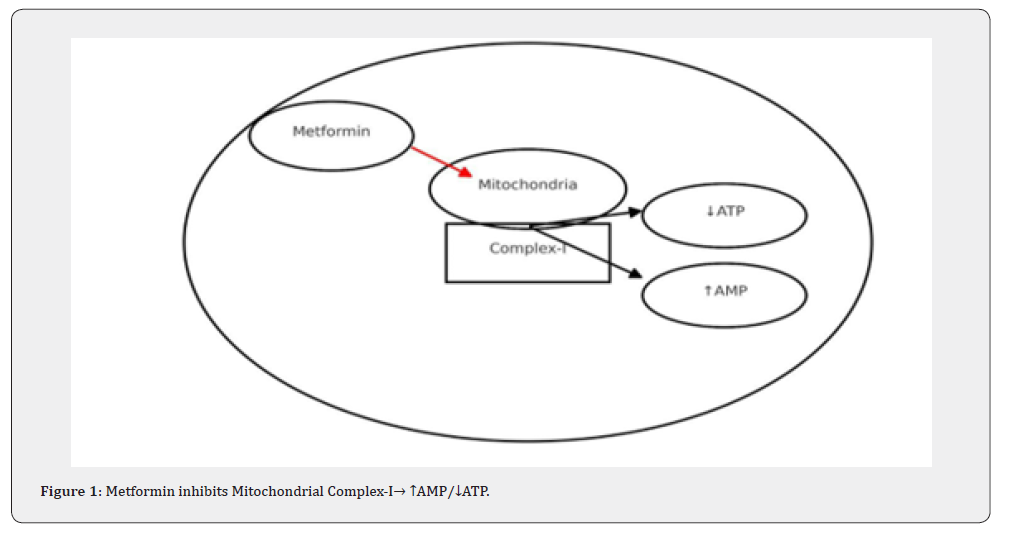
Metformin inhibits mitochondrial complex I, disrupting electron transport, reducing ATP production, and altering the AMP/ATP ratio. While this can trigger AMPK, evidence shows metformin’s mitochondrial effects also influence metabolism independently of AMPK [4]. The resulting bioenergetic stress prompts compensatory metabolic shifts, such as increased glycolysis, affecting lipid metabolism, glucose utilization, and reactive species signaling [2]. Complex I inhibition is modest, ensuring therapeutic safety [7]. This modulation underlies metformin’s improvement of insulin sensitivity, reduction of hepatic gluconeogenesis, and contributes to anticancer and cardioprotective effects [4] (Figure 1).
ROS Modulation and Redox Balance
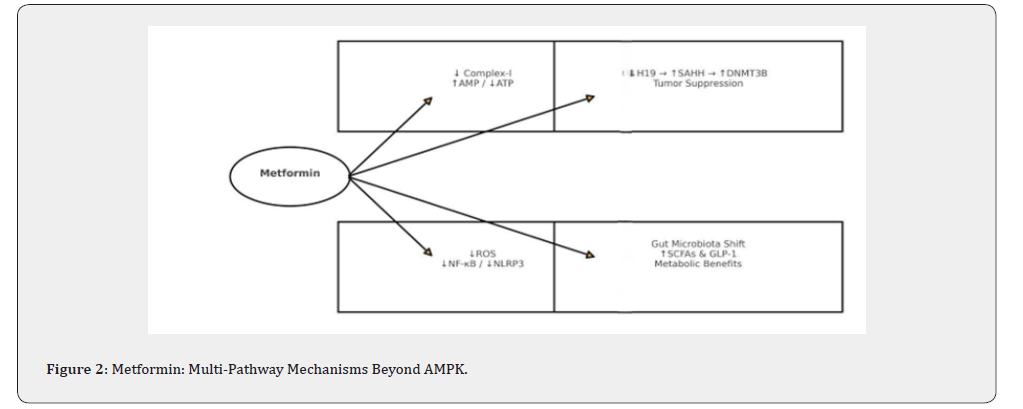
Metformin partially inhibits mitochondrial complex I to reduce ROS, limiting oxidative damage to lipids, proteins, and DNA [10,11]. It also modulates redox-sensitive pathways, including H3K18 histone lactylation, decreasing neutrophil recruitment and inflammation [12]. This redox-epigenetic regulation extends metformin’s protective effects to inflammation-driven diseases, linking mitochondrial function to cellular homeostasis beyond its metabolic role [11]. Metformin’s effects on mitochondria extend beyond complex I inhibition, encompassing regulation of mitochondrial dynamics, biogenesis, and quality control like mitophagy. These actions maintain cellular energetics and prevent dysfunction implicated in age-related and inflammatory diseases [13].
In renal disease models, metformin enhances mitochondrial function, reduces oxidative stress, and suppresses inflammatory pathways, slowing progression of Acute Kidney Injury (AKI) and chronic kidney disease (CKD) [13]. Similar protective effects occur in autoimmune conditions such as systemic lupus erythematosus (SLE), where metformin restores mitochondrial homeostasis in immune cells, lowering ROS production and inflammation [14].
Metabolic dysfunction in cirrhosis and cardiovascular diseases is also linked to mitochondrial deficits. Metformin restores mitochondrial bioenergetics and counters oxidative stress via AMPK-independent pathways, supporting its therapeutic potential across multiple organ systems [15] (Figure 2).
Metformin and Epigenetic Regulation: DNA Methylation and Non-coding RNAs
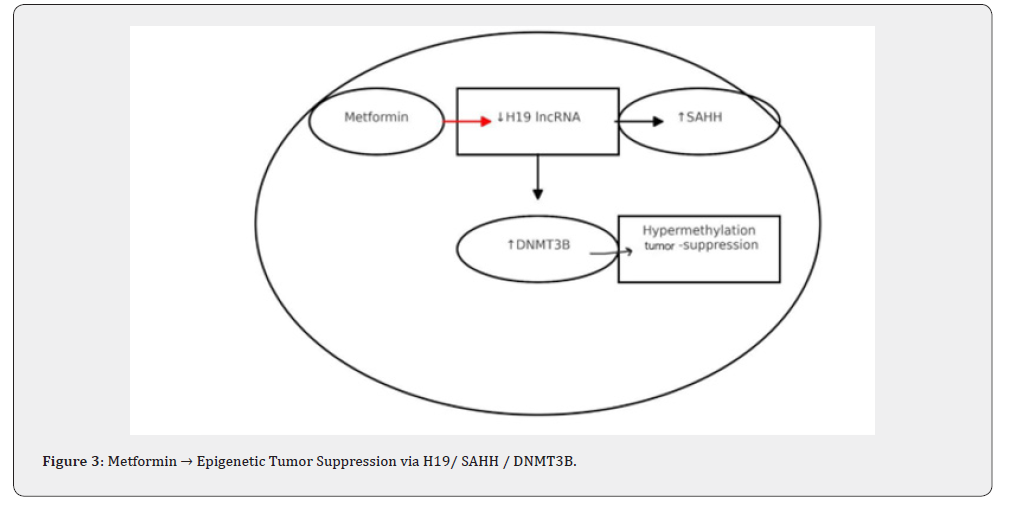
Metformin modulates genome-wide DNA methylation via SAHH. By promoting degradation of lncRNA H19 through AMPK activation, SAHH is released from inhibition, enhancing DNMT3B activity and hypermethylating tumor-promoting genes [16]. This reduces cancer cell proliferation and invasiveness, with DNA methylation changes validated in endometrial cancer tissues, highlighting metformin’s potential as an antineoplastic and epigenetic therapy alongside its antidiabetic effects [16].
Metformin influences the regulatory landscape of non-coding RNAs (ncRNAs), including microRNAs (miRNAs) and long noncoding RNAs (lncRNAs), which mediate key cellular processes in cancer and metabolic disorders. Through alteration of ncRNA expression profiles, metformin modulates tumor cell proliferation, apoptosis, angiogenesis, and metabolism, further contributing to its anticancer properties [17].
In particular, metformin’s ability to regulate specific miRNAs impacts pathways involved in cell cycle control and energy metabolism, while modulation of lncRNAs like H19 plays a direct role in epigenetic and transcriptional control. These regulatory effects open avenues for personalized cancer therapies, where metformin-based interventions may be tailored according to ncRNA signatures in patients, potentially improving therapeutic response and overcoming resistance [17] (Figure 3).
Epigenetic Implications Beyond Cancer
Metformin’s epigenetic effects extend to non-oncologic contexts such as fibrosis and wound healing. By modulating DNA methylation and histone modifications, it reduces fibrosisrelated gene expression, promotes collagen synthesis, accelerates wound healing, and limits pathological tissue remodeling [18]. Suppression of ROS production and alterations in histone lactylation further highlight its role in immune modulation and systemic anti-inflammatory effects [12].
Metformin’s Anti-inflammatory and Antioxidant Effects Beyond AMPK
Modulation of Oxidative Stress and ROS
Metformin exhibits antioxidant effects independent of AMPK by suppressing ROS generation, reducing oxidative stress and tissue damage. By decreasing histone H3K18 lactylation, it epigenetically regulates inflammatory gene expression and neutrophil recruitment, as shown in zebrafish models [12]. Lower oxidative stress also protects endothelial function and diminishes leukocyte-endothelium interactions, mitigating vascular complications in diabetes and cardiovascular diseases [11].
Inhibition of Pro-inflammatory Signaling
In breast carcinoma cells overexpressing HER2, metformin suppresses p70S6K1 and mTOR signaling independently of AMPK, reducing tumor proliferation and survival in vitro and in vivo [19]. It also inhibits STAT3 phosphorylation, modulating oncogenic transcription and metastasis [20].
Metformin induces autophagy through AMPK-dependent and independent mechanisms, degrading damaged organelles and limiting oncogenic signaling [21]. It also triggers G0/G1 cell cycle arrest by downregulating cyclins and upregulating inhibitors, as seen in multiple myeloma where AMPK activation represses mTORC1/2, promoting autophagy and inhibiting growth [22].
Beyond cancer cell-autonomous effects, metformin modulates the tumor microenvironment. It enhances NK cell cytotoxicity by inhibiting CXCL1 in head and neck carcinoma [23] and downregulates PD-L1 via AMPK-mediated phosphorylation, facilitating its degradation and improving T-cell mediated tumor clearance [24].
Metformin inhibits NF-κB and NLRP3 inflammasome pathways, reducing cytokine production, immune activation, and recurrent inflammatory flares [8,25]. By regulating mitochondrial ROS, metformin shifts immune responses in autoimmune diseases like SLE, restoring mitochondrial homeostasis, reducing inflammation, and lowering autoantibody production [8,14].
Anti-Cancer Effects Beyond AMPK: Metformin suppresses mTOR signaling and downstream targets such as p70S6K1 and STAT3 via AMPK-dependent and independent pathways, limiting protein synthesis, cell growth, and tumor progression [26].
Metformin promotes anti-aging via AMPK-independent pathways by activating SIRT proteins, inhibiting NF-κB, and suppressing mTOR signaling, enhancing autophagy and cellular homeostasis [27,28]. It also activates Nrf2, boosting antioxidant defenses and reducing ROS-driven cellular aging.
Effects on Cellular Senescence and Frailty
Emerging genetic evidence through Mendelian randomization studies supports a causal link between metformin targets, notably mitochondrial complex I, and reduced frailty index in aging populations. This association is partially mediated by improvements in body weight and glycemic control but also implicates direct mitochondrial mechanisms in delaying frailty and physiological deterioration [29].
Such findings illuminate the potential of metformin to mitigate cellular senescence-a hallmark of aging-through modulation of energetic and stress pathways beyond AMPK, which may translate into delayed onset or reduced severity of age-related conditions.
Neuroprotection and Cognitive Improvement
Metformin has demonstrated neuroprotective effects in aging models, alleviating neurocognitive impairment partially via AMPK-independent activation of Brain-Derived Neurotrophic Factor (BDNF) and phosphoinositide 3-kinase (PI3K) signaling [30]. This axis is critical for synaptic plasticity, neuronal survival, and cognitive function, suggesting that metformin supports neural resilience during aging.
In the context of neurodegenerative disorders such as Alzheimer’s disease (AD), metformin’s impact has been explored for its dual actions in modulating metabolic and environmental risk factors. It influences insulin signaling, adipocytokine pathways, and potentially interacts with herpesvirus triggers implicated in AD pathology, positioning it as a candidate therapy with multifaceted neuroprotective potential [31].
Metformin in Cardiovascular and Renal Therapeutics: Non-AMPK Pathways
Metformin protects the heart by inhibiting TGF-β/Smad3 signaling, reducing fibrosis, improving diastolic function, and suppressing collagen synthesis in cardiac fibroblasts [32]. These actions occur independently of AMPK, highlighting alternative molecular targets. Additionally, metformin enhances endothelial function by lowering oxidative stress and inflammation, further reducing cardiovascular risk in diabetic and non-diabetic patients [11].
Telomere Stabilization and Vascular Aging: Telomere dysfunction drives cellular senescence and vascular aging, contributing to atherosclerosis. Metformin stabilizes telomeres via AMPK-dependent phosphorylation of PGC-1α, enhancing telomerase activity and telomere maintenance [33]. This prevents vascular smooth muscle cell senescence and reduces atherosclerotic plaque formation, offering a strategy to delay vascular aging beyond glycemic control.
Renoprotection and Chronic Kidney Disease
Metformin provides renoprotection in acute kidney injury and chronic kidney disease by suppressing renal inflammation, preserving mitochondrial function, and modulating cellular energy dynamics [13]. These AMPK-independent mechanisms protect against tissue injury and fibrosis, supporting its potential role in managing diabetic and non-diabetic kidney diseases
Metabolic Modulation and Gut Microbiota Interaction
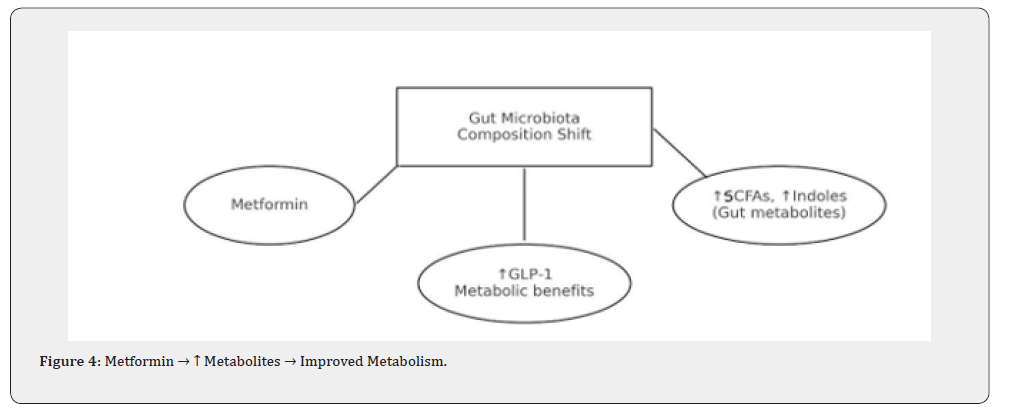
Metformin significantly influences gut microbiota composition and metabolomic profiles, key contributors to metabolic homeostasis. In T2DM mice, it restores tryptophan metabolites like Indole-3-Lactic Acid (ILA) and Indole-3-Propionic Acid (IPA), aryl hydrocarbon receptor ligands involved in metabolic regulation [34]. These changes correlate with shifts in bacterial genera such as Dubosiella, Turicibacter, and Alistipes, highlighting a complex interplay between host metabolism, microbiota, and metformin.
Metformin selectively inhibits hepatic gluconeogenesis by modulating cellular redox balance via mitochondrial function and electron transport. These redox-dependent effects occur at clinically relevant concentrations without strong AMPK activation, highlighting alternative pathways for glucose lowering [9]. This explains discrepancies between preclinical and clinical findings and underscores metformin’s multifactorial metabolic regulation [3].
Metformin with fermentable fibers enhances metabolic benefits via synergistic effects on the gut microbiome. Preclinical studies show fibers boost glucose tolerance, while microbial metabolites like short-chain fatty acids improve insulin sensitivity and reduce inflammation [35], supporting microbiome-targeted strategies alongside metformin (Figure 4).
Molecular Targets and Signaling Pathways Beyond AMPK
Metformin suppresses mTORC1 via AMPK-mediated RAPTOR phosphorylation and requires TSC2 for full inhibition, modulating anabolic and inflammatory gene programs beyond AMPK [36]. AMPK activation also involves mitochondria-derived RNS and c-Src/PI3K signaling, highlighting redox-kinase interplay in systemic metabolic and vascular effects [4].
In oral squamous cell carcinoma, metformin downregulates LSF and Aurora-A kinase, inhibiting proliferation and metastasis independently of AMPK, supporting its use as adjunct cancer therapy [37].
Epigenetic and Tissue Repair Effects
Metformin modulates DNA methylation and histone modifications to suppress fibrosis-related genes, enhance collagen synthesis, accelerate wound healing, and limit pathological remodeling [12,18]. ROS suppression and altered histone lactylation further regulate immune responses and systemic inflammation.
References
- Goel S, Singh R, Singh V, Singh H, Kumari P, et al. (2022) Metformin: Activation of 5 AMP-activated protein kinase and its emerging potential beyond anti-hyperglycemic action. Frontiers in Genetics.
- Viollet B, Guigas B, Garcia NS, Leclerc J, Foretz M, et al. (2011) Cellular and molecular mechanisms of metformin: an overview. Clin Sci 122(6): 253-270.
- LaMoia TE, Shulman GI (2020) Cellular and Molecular Mechanisms of Metformin Action. Endocr Rev 42(1): 77-69.
- Zou M, Krikpatrick SS, Davis BJ, Nelson JS, Wiles WG, et al. (2004) Activation of the AMP-activated Protein Kinase by the Anti-diabetic Drug Metformin in Vivo. J Biol Chem 279(42): 43940-43951.
- Fryer LG, Patel AP, Carling D (2002) The Anti-diabetic Drugs Rosiglitazone and Metformin Stimulate AMP-activated Protein Kinase through Distinct Signaling Pathways. J Biol Chem 277(28): 25226-25232.
- Li W, Saud SM, Young MR, Chen G, Hua B (2015) Targeting AMPK for cancer prevention and treatment. Oncotarget 6: 7365-7378.
- Rena G, Pearson ER, Sakamoto K (2013) Molecular mechanism of action of metformin: old or new insights? Springer Diabetologia 56(9): 1898-1906.
- Apostolova N, Iannantuoni F, Gruevska A, Muntan J, Rocha M, et al. (2020) Mechanisms of action of metformin in type 2 diabetes: Effects on mitochondria and leukocyte-endothelium interactions. Redox Biol.
- Hur KY, Lee M (2015) New mechanisms of metformin action: Focusing on mitochondria and the gut. Asian Association for the Study of Diabetes 6(6): 600-609.
- Chaudhari K, Wang J, Xu Y, Winters A, Wang L, et al. (2020) Determination of metformin bio-distribution by LC-MS/MS in mice treated with a clinically relevant paradigm. PLoS ONE 15(6): e0234571.
- Bu Y, Peng M, Tang X, Xu X, Wu Y, et al. (2022) Protective effects of metformin in various cardiovascular diseases: Clinical evidence and AMPKdependent mechanisms. J Cell Mol Med 26(19): 4886-4903.
- Zhou R, Ding RC, Yu Q, Qiu CZ, Zhang HY, et al. (2024) Metformin Attenuates Neutrophil Recruitment through the H3K18 Lactylation/Reactive Oxygen Species Pathway in Zebrafish. Antioxidants 13(2): 176.
- Corremans R, Vervaet BA, Dhaese PC, Neven E, Verhulst A (2018) Metformin: A Candidate Drug for Renal Diseases. Int J Mol Sci 20(1): 42.
- Poznyak AV, Orekhov NA, Churov AV, Starodubtseva IA, Beloyartsev DF, et al. (2024) Mitochondrial Dysfunction in Systemic Lupus Erythematosus: Insights and Therapeutic Potential. Diseases 12(9): 226.
- Wicek M, Adam A, Studnicki R, Zubrzycki I (2025) Exploring Cirrhosis: Insights into Advances in Therapeutic Strategies. Int J Mol Sci 26(15): 7226.
- Zhong T, Men Y, Lu L, Geng T, Zhou J, et al. (2016) Metformin alters DNA methylation genome-wide via the H19/SAHH axis. Oncogene 36(17): 2345-2354.
- Zhang Y, Wu Y, Liu Z, Yang K, Lin H, et al. (2024) Non-coding RNAs as potential targets in metformin therapy for cancer. Cancer Cell Int 24(1): 333.
- Shojaeian A (2024) Harnessing the Power of Non-diabetic Benefits of Metformin Derived from Galega officinalis: Focus on Wound Healing. Journal of Wound Management and Research 20(3): 212-218.
- Martin VA, Ferraros OC, Menndez JA (2009) The antidiabetic drug metformin suppresses HER2 (erbB-2) oncoprotein overexpression via inhibition of the mTOR effector p70S6K1 in human breast carcinoma cells. Cell Cycle 8(1): 88-96.
- PrezRevuelta I (2014) Metformin lowers Ser-129 phosphorylated -synuclein levels via mTOR-dependent protein phosphatase 2A activation. Springer Nature.
- Zamanian M, Golmohammadi M, Yumashev A, Hjazi A, Toama MA, et al. (2024) Effects of metformin on cancers in experimental and clinical studies: Focusing on autophagy and AMPK/mTOR signaling pathways. Cell Biochem Funct 42(4): e4071.
- Wang Y, Xu W, Yan Z, Zhao W, Mi J, et al. (2018) Metformin induces autophagy and G0/G1 phase cell cycle arrest in myeloma by targeting the AMPK/mTORC1 and mTORC2 pathways. J Exp Clin Cancer Res 37(1): 63.
- Crist M, Yaniv B, Palackdharry S, Lehn MA, Medvedovic M, et al. (2022) Metformin increases natural killer cell functions in head and neck squamous cell carcinoma through CXCL1 inhibition. J Immunother Cancer 10(11): e005632.
- Cha J, Yang WH, Xia W, Wei Y, Chan LC, et al. (2020) Abstract A16: Metformin is a potential nontoxic adjuvant to enhance the efficacy of non-PDL1/PD-1 targeting immune therapies. Cancer Immunol Res.
- Gaal O, Joosten L, Crian T (2025) Targeting innate immune memory: a new paradigm for gout treatment. Exploration of Musculoskeletal Diseases.
- Khan SS, Rangraze IR, Wali AF, Jhancy M, Attia RA, et al. (2025) Repurposing Metformin in Precision Oncology: Mechanistic Insights, Biomarker-Guided Strategies, and Translational Imperatives. Medicina 61(9): 1577.
- Zhang T, Zhou L, Makarczyk MJ, Feng P, Zhang J (2025) The Anti-Aging Mechanism of Metformin: From Molecular Insights to Clinical Applications. Molecules 30(4): 816.
- Zhao Z (2025) A Review of Metformin''s Anti-aging Mechanisms. None.
- Chen T, Liu YL, Qiu HN, Lin CY, Wu F, et al. (2025) Metformin reduces the risk of frailty: evidence from a Mendelian randomization study. Diabetol Metab Syndr 17(1): 239.
- Ameen O, Samaka R, Elsoud AR (2022) Metformin alleviates neurocognitive impairment in aging via activation of AMPK/BDNF/PI3K pathway. Sci Rep 12(1): 17084.
- Georgiou N, Zanos P, Onisiforou A (2025) Metformin Shows Greater Potential Than Semaglutide in Reducing Alzheimers Risk in Diabetes Type II via Dual Actions: Tackling Disease Pathways and Environmental Herpesvirus Triggers. bioRxiv.
- Xiao H, Ma X, Feng W, Fu Y, Lu Z, et al. (2010) Metformin attenuates cardiac fibrosis by inhibiting the TGF1Smad3 signalling pathway. Cardiovasc Res 87(3): 504-513.
- Sung JY, Kim S, Park S, Kim J, Choi H (2024) Telomere stabilization by metformin mitigates the progression of atherosclerosis via the AMPK-dependent p-PGC-1 pathway. Exp Mol Med 56(9): 1967-1979.
- Xie Y, Li X, Meng Q, Li J, Wang X, et al. (2024) Interplay between gut microbiota and tryptophan metabolism in type 2 diabetic mice treated with metformin. Microbiol spectr 12(10): e0029124.
- Deehan EC, Ramirez CE, Triador L, Madesen KL, Prado CM, et al. (2021) Efficacy of metformin and fermentable fiber combination therapy in adolescents with severe obesity and insulin resistance: study protocol for a double-blind randomized controlled trial. Trials 22(1): 148.
- Nostrand JLV, Hellberg K, Luo EC, Nostrand ELV, Dayn A, et al. (2020) AMPK regulation of Raptor and TSC2 mediate metformin effects on transcriptional control of anabolism and inflammation. Genes Dev 34(19-20): 1330-1344.
- Chen C, Tsai HT, Chuang HC, Shiu LY, Su LJ, et al. (2017) Metformin disrupts malignant behavior of oral squamous cell carcinoma via a novel signaling involving Late SV40 factor/Aurora-A. Sci Rep 7(1): 1358.

























