



 CRDOJ Home



Practice and Correlates of Diabetic Mellitus Management Among the Bayelsans
Ekanem, Christiana Dominic, Owonaro Peter A* and Eniojukan F Joshua
Faculty of Pharmacy, Dept of clinical pharmacy and pharmacy practice, Niger Delta University Amassoma, Nigeria
Submission: June 24, 2024; Published: July 05, 2024
*Corresponding author: A owonaro, Faculty of Pharmacy, Dept of clinical pharmacy and pharmacy practice, Niger Delta University Amassoma, Nigeria
How to cite this article: Ekanem, Christiana D, Owonaro Peter A, Eniojukan F J. Practice and Correlates of Diabetic Mellitus Management Among the Bayelsans. Curre Res Diabetes & Obes J 2024; 17(4): 555967.DOI: 10.19080/CRDOJ.2024.17.555967
Abstract
Diabetes mellitus is a chronic metabolic disorder characterized by elevated blood glucose levels which leads, over time, to serious damage to the end organs. This research aimed to assess the knowledge, attitude, practice, and confounding factors regarding diabetes mellitus among Bayelsans. A Stratified random sampling method was used to select four hundred (400) participants who were assessing the three randomly selected hospitals in Yenagoa and Ogbia LGAs of Bayelsa state. A questionnaire on knowledge attitude and practice (KAP) and confounding factors of diabetes mellitus was completed and data was analyzed using SPSS Version 23 software. In this study, the majority of respondents were male 221(55.3%); the majority (35.8%) were in the age group of above50 years; 20.5% were in the age group of 21-30 years, 17.8% were in the age group of 41-50 years; 22.5% were single, 51.2% were married, 25.8% were divorced or widowed; approximately 60% had formal education, while 12.5% and 15.5% had O and A Levels respectively; 55.5% were Christians, 32% were Muslims. The overall mean (standard deviation) of the knowledge, attitude, practice, and confounding factors was 2.20+0.9, 3.75+0.97, 2.26+0.99, and 2.6+0.9 respectively. Data showed poor adherence to diabetic practices. Some respondents only use herbs for treatment. Significant relationships between young and old concerning knowledge, attitude, practices, and confounding factors were demonstrated in the study. This cross-sectional descriptive study revealed an average level of knowledge of diabetes, a low level of attitude toward diabetic care, and a poor level of diabetic practices among the participants in the study. The study also demonstrated significant relationships between young and old concerning knowledge, attitude, practices, and confounding factors among diabetics. It is suggested that effective health education interventions are needed to improve diabetes knowledge, attitude, and practices, particularly regarding lifestyle modifications, weight loss, proper adherence to prescribed medications, and dietary management.
Keywords:Diabetics; Bayelsa; Knowledge; Attitude; and Practice
Abbreviation:KAP: Knowledge Attitude and Practice; DM: Diabetes Mellitus; GDM: Gestational Diabetes Mellitus; FMC: Federal Medical Centre; NDUTH: Niger Delta University Teaching Hospital; CKC: Christ the King Catholic; DKT: Diabetes Knowledge Test
Introduction
Diabetes is a chronic, metabolic disease characterized by elevated blood glucose levels (or blood sugar), which leads over time to serious damage to the end organs such as the heart, blood vessels, eyes, kidneys, and nerves [1]. To reduce morbidity and mortality of the people affected with diabetes, there is a need for proper awareness regarding diabetes mellitus and its complications. Diabetes mellitus (DM) is also seen as a chronic metabolic disorder characterized by high blood sugar resulting from defects in insulin production, insulin action, or both.
Type 1 Diabetes mellitus is characterized by the destruction of beta cells in the pancreas, typically secondary to an autoimmune process. The result is the absolute destruction of beta cells, and consequentially, insulin is absent or extremely low (Iradukunda et al, 2021). Gestational diabetes mellitus (GDM) is a serious pregnancy complication in which women without previously diagnosed diabetes mellitus develop chronic hyperglycemia during gestation. In most cases, this hyperglycemia is the result of impaired glucose tolerance due to pancreatic β-cell dysfunction on a background of chronic insulin resistance. Risk factors for GDM include being overweight, obesity, advanced maternal age, and family history or any form of diabetes [2]. The purpose of this study is therefore to assess the knowledge, attitude, practice, and confounding factors of type 1& 2 diabetes mellitus in three randomly selected hospitals in Bayelsa state.
Method
Study site: The study area for this research is Federal Medical Centre Yenagoa (FMC), Niger Delta University Teaching Hospital Amassoma (NDUTH), Christ the King Catholic Hospital Imiringi (CKC).
Study design: A hospital-based cross-sectional descriptive study of KAP was used.
Sampling technique: A Stratified random sampling method was used in this study.
Data collection: Self-structured validated “Diabetes Knowledge Test (DKT)” questionnaire was used as an instrument to collect field data. The instrument was validated and certified by the competent authority. It was created and printed in hard copies and distributed also in hard copies to collect data from patients with Diabetes mellitus in Bayelsa state.
Data analysis: IBM SPSS Version 27, GraphPad insta3.0, and Microsoft Excel were used to analyze field data. Descriptive statistics such as Frequency, mean and standard deviation were used on variables and further presented in chats.
Ethical consideration: Approval and permission were obtained from Research and Ethics Committee Federal Medical Centre Yenagoa, Niger Delta University Teaching Hospital Amassoma, and Christ the King Catholic Hospital Imiringi, all in Bayelsa state.
Results
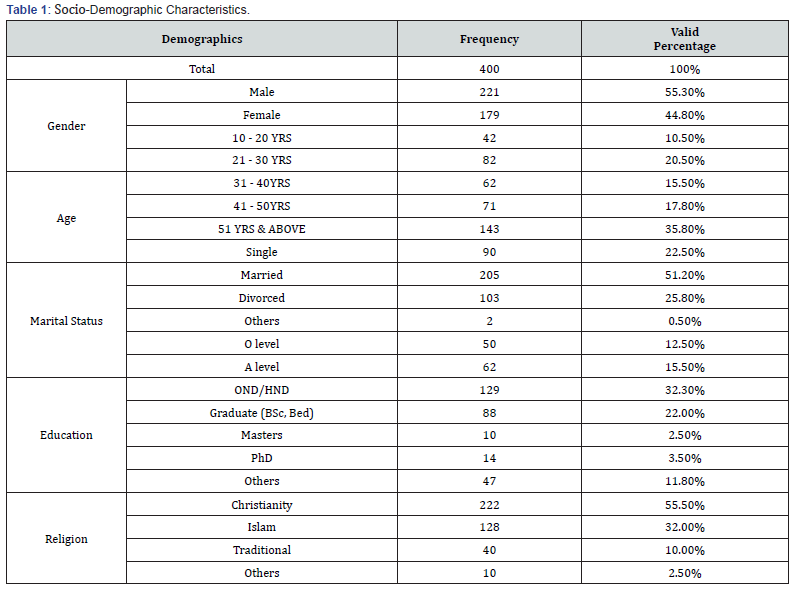
In this study, the majority were male; 221(55.3%) and female were 179(44.8%), the socio-demographic characteristics of the study group are as follows: 10.5% of the diabetics are in the age group category of 10-20 years, 20.5% of diabetics are in the age group category of 21-30 years, 15.5% of diabetics are in the age group category of 31-40 years, 17.8% of the diabetics are in the age group category of 41-50years and 35.8% of the diabetics are in the age group category of above 50 years and were the most affected age group, which shows that age plays a vital role in diabetes mellitus. In terms of marital status, 51.2% were married, 22.5% were single, and 25.8% were divorced or widowed. Approximately 60% of the participants had formal education, while 12.5% and 15.5% had O and A Levels respectively. Men 55.3% of diabetics were most affected in the study, which seems to be the same across the globe. 55.5% were Christians, 32% were Islam and 10% were traditional worshippers.
Table 1 below shows the socio-demographic characteristics of the study group indicated by the frequency and percentage of scores by the participants.
Table 2 below shows the level of diabetic practices among various age groupings regarding diabetes mellitus indicated by the percentage of scores by the participants.
Table 3 below shows the level of diabetic practices regarding diabetes mellitus indicated by the frequency and percentage of scores by the respondents.
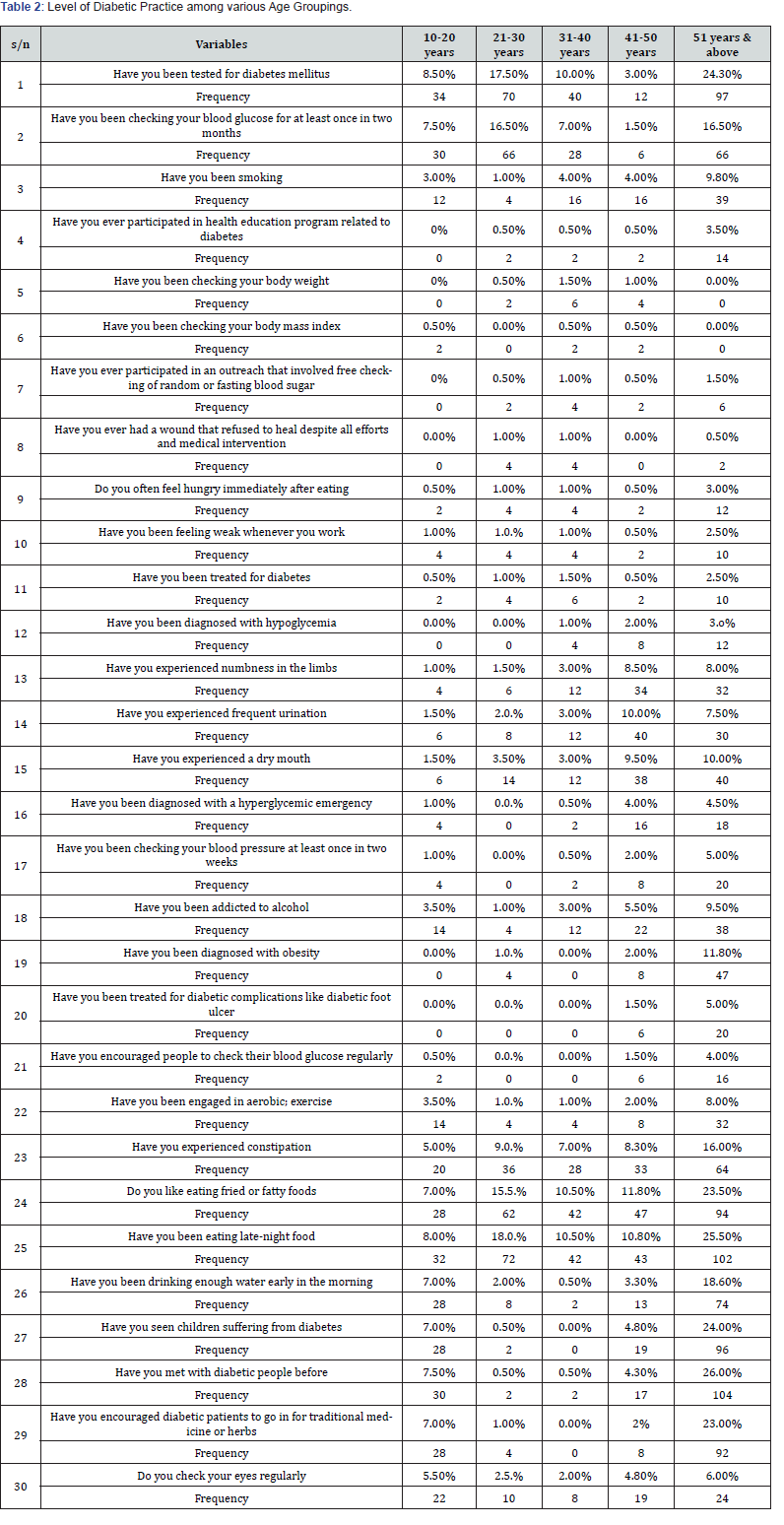
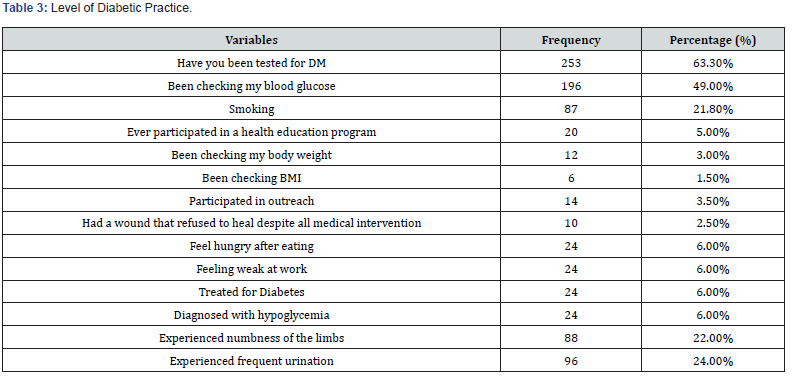
The overall level of diabetic practices of the respondents was sub-optimal as only a few of them were found to demonstrate a good level of diabetic practice. Findings revealed that a greater percentage of the Participants demonstrated a poor level of diabetic practices regarding various aspects of diabetes specifically shown in the data. 21.8%were addicted to smoking, 22.5% were addicted to alcohol, and 14.8% were diagnosed with obesity.
Regarding diabetic practices, a little less than half (49%) could check their blood glucose regularly, less than one-tenth (8.0%), one-fifth (20.8%), respectively had regular checks of their, Blood Pressure, and eye, about 3.0%, and 1.5% respectively had a regular check of body weight and BMI. This is corroborated by the findings of [3,4]. They reported that more than half of the study subjects never had their blood sugar checked, over 50% of the study subjects were not involved with any preventive measures, about 65% used to take refined sugar liberally, and a large majority (80%) had no regular exercise activity. This study is also similar to findings from Eberechukwu et al, (2016) which revealed that only 31.1% had their eye examined regularly the rest had not been to an eye clinic due to lack of funds, time, no ocular problems and not having been referred to an eye doctor.
Findings also showed that; 5.0%, 3.5%, 15.5%m 6.0%, and 2.5%, respectively had ever participated in health education programs, outreaches, engaged in aerobic exercise, being diagnosed with hypoglycemia, and had wounds that refused to heal despite all medical interventions. Data also showed that 68.3% and 72.3% were addicted to fried or fatty foods and latenight meals
Discussion
The characteristic descriptors of the participants considered in the study include age, gender, education, marital status, and religion. From the study above, male participants were more than female participants. The study further cuts across several age groupings in which the highest participants in this study were within the age category of 51 years and above who formed about 35.8% of the participants. The age category of (21 to 30 years) was next to them, forming about 20.5% of the total participants while the least participating group was the adolescents (10 to 20 years).
The study for the assessment of practice and correlates of diabetes mellitus management among the Bayelsans showed that 24% of the participants who had an average level of diabetic practices were in the age category of 51 years and above, 8.0% and 16.0% of the participants within that age group constantly experienced numbness of the limbs and constipation respectively. This data is in line with studies carried out by [5-7], in which age, poor dietary habits, physical inactivity, positive family history, and educational status were significantly associated with Type 2 Diabetes mellitus in both sexes.
The overall level of diabetic practices of the respondents was sub-optimal as only a few of them were found to demonstrate a good level of diabetic practices. Findings also revealed that a greater percentage of the Participants demonstrated a poor level of diabetic practices regarding various aspects of diabetes mellitus specifically shown in the data. 21.8% were addicted to smoking, 22.5% were addicted to alcohol, and 14.8% were diagnosed with obesity. This data corroborates the findings of Iradukunda et al, (2021), Rendall et al, [8-10] in which the majority of the participants were addicted to smoking, alcohol consumption, and diagnosed with obesity.
The data also revealed a little less than half (49%), less than one-tenth (8.0%), one-fifth (20.8%), 3.0%, and 1.5% respectively had regular checks of their blood glucose, Blood Pressure, eye, body weight, and BMI. This study is similar to findings from [11,12], and Eberechukwu et al, (2016) which revealed that only very few respondents had their blood pressure and blood glucose regularly checked and only31.1% had their eye examined regularly the rest had not been to an eye clinic due to lack of funds, time, no ocular problems and not having been referred to an eye doctor. Findings also showed that; 5.0%, 3.5%, 15.5% 6.0%, and 2.5%, respectively had ever participated in health education programs, and outreaches, engaged in aerobic exercise, diagnosed with hypoglycemia, and had wounds that refused to heal despite all medical interventions. Data also showed that 68.3% and 72.3% were addicted to fried / fatty foods and late-night meals. This is also in line with studies carried out by [4,13]. Even though the level of education was significantly and positively associated with knowledge, the association of gender, age, and attitude with knowledge was not significant. Herath also reported that the attitude towards diabetes was poor in the majority (90%) and the level of education had no significant effect on attitude. Also, more than a half of the study subjects never had their blood sugar checked. About half of the study subjects were not involved with any preventive measures and, about 65% used to take refined sugar liberally and a large majority (80%) had no regular exercise activity.
In the study, the overall mean (standard deviation) of the knowledge, attitude, practice and confounding factors was 2.20 +0.9, 3.75 +0.97, 2.26 +0.99 and 2.6 +0.9 respectively. Data also showed poor adherence to diabetic practices. Some respondents 26.3% only use herbs for treatment and only 20.5% were compliant with their prescribed medications. Significant relationships between young and old concerning knowledge, attitude, practices, and confounding factors were demonstrated in the study. The majority had either moderate knowledge of diabetes mellitus or above moderate knowledge of diabetes mellitus and even though level of education is significantly and positively associated with knowledge of diabetes mellitus, their level of education has no significant effect on attitude towards diabetic care and practices. This is in line with the findings of [4,5,14] in which the majority demonstrated either moderate or above moderate knowledge of diabetes, yet the respondents had poor attitude of diabetic care and their high level of education had no significant effect on attitude towards diabetic care.
With the analyzed clinical data of the participants in the study, 44.0%, 42.9%, 23.3%, 25.0%, and 16.7%, of the participants were sometimes involved in alcohol intake, smoking, diagnosed with obesity, have had wounds that refused to heal and had been treated for diabetic complications respectively. This study is similar to the findings of [13,15], and [2]. Also, the majority of the participants had co-morbidities: 85.5%, 7.8%, 8.3%, 38%, 56.3%, 33.8% and 1.00% had, Hypertension, congestive heart failure, liver disease, HIV/AIDS, high cholesterol level tuberculosis and kidney disease respectively. This study is also in line with the findings by [2], and Iradukunda et al, (2021) work on the assessment of diabetic complications and associated factors in a Tertiary Hospital in Rwanda, using A 5-Year Facility- based Cross-sectional study with Retrospective charts review of 246 participants.
Iradukunda reports 48.5%, 24.2%, 52.4%, and 56.3%, of alcohol intake, smoking, obesity, and family history respectively as recorded diabetes mellitus risk factors. Also, in this study, analyzed data showed that a fifth (20%), about a third (29.0%) of the respondents. had been diagnosed with diabetes; less than a year, and less than five years ago respectively. Also, about a third (30.5%), about one-fifth (17.0%), a fifth (20.3%), and one-tenth (12.0%) had been diagnosed with diabetes less than ten years ago, more than ten years ago, during pregnancy, and diagnosed as a child respectively. A study by Eberechukwu et al, (2016) revealed that 68.9% of respondents had been diabetic for 5 years or less. Eberechukwu et al 2016 also reported that only 31.1% had had their eyes examined; the rest had not been to an eye clinic due to lack of funds, time, no ocular problems and not having been referred to an eye doctor.
Conclusion
This cross-sectional descriptive study revealed an average level of knowledge of diabetes, a low level of attitude toward diabetic care, and a poor level of diabetic practices among the participants in the study. The study also demonstrated significant relationships between young and old concerning knowledge, attitude, practices, and confounding factors among diabetics [16- 50].
Study Limitation
This cross-sectional descriptive study has been able to detail the level of knowledge, attitude, practice, and confounding factors of diabetes among diabetics in Bayelsa state. Areas of strength and lapses have been noted and identified; the top most is that there is an average level of knowledge of diabetes among the participants.
Weaknesses identified were seen in the negative attitude towards diabetic care and poor diabetic practices among them. There are some misconceptions in attitude toward diabetic care; some use herbs only for treatment. The study also demonstrated significant relationships between young and old concerning knowledge, attitude, practices, and confounding factors among diabetics in Bayelsa state. However, their high level of education had no significant effect on their attitude towards diabetic care and practices.
Recommendation
The study suggested that effective health education interventions are needed to improve diabetic practices, particularly regarding lifestyle modifications, weight loss, proper adherence to prescribed medications, and dietary management. Health professionals must step up in the awareness campaign strategy.
Contribution to Knowledge
This study helps to identify gaps in knowledge and misconceptions, allowing for targeted educational interventions to improve understanding and awareness of diabetes and its complications. The study also provides information on the effectiveness of current practices and interventions, by identifying areas for improvement.
Acknowledgment
There was no conflict of interest among the authors. The researchers appreciated the participants, statistician, and the researcher for the time.
Conflict of Interest
There was no conflict of interest among the Researchers.
References
- World Health Organisation world diabetes day (2022) The priorities of people living with diabetes in advocacy to the Global Diabetes.
- Jasmine FP, Joanna LS, Philip NB, Clare MR, Mark HV (2018) The Pathophysiology of Gestational Diabetes Mellitus. Int J Mol Sci 19(11): 3342.
- Angelique Iradukunda, Shallon K, Nelson S, Andrew K, Jean DK (2021) Diabetic complications and associated risk factors; A-5 Year Facility-based retrospective study at a tertiary Hospital in Rwanda Med J 14: 4801-4810.
- Herath HMM, Weerasuinghe NP, Dias H, Weerarathna TP (2017) Knowledge, attitude and practice related to diabetes mellitus among the general public in Galle district in Southern Sri Lanka: a pilot study BMC Public Health 17(1): 535.
- Alaofè H, Hounkpatin WA, Djrolo F, Ehiri J, Rosales C (2021) Knowledge, attitude, practice and associated factors among patients with type 2 diabetes in Cotonou, Southern Benin. BMC Public Health 21(1): 339.
- Abebe SM, Berhane Y, Worku A, and Assefa A (2014) Diabetes mellitus in North West Ethiopia: a community-based study. BMC Public Health 14: 97.
- Ekpenyong CE, Akpan U, Ibu JO, Nyebuk DE (2012) Gender and age specific prevalence and associated risk factors of type 2 diabetes mellitus in Uyo metropolis, South Eastern Nigeria. Diabetologia Croatica 41(1).
- Rendall MS, Weden MM, Fernandes M, Vaynman I (2012) Hispanic and black US children's paths to high adolescent obesity prevalence. Pediatric Obesity 7(6): 423-435.
- Skinner AC, Skelton J (2014) Prevalence and Trends in Obesity and Severe Obesity Among Children in the United States, 1999-2012. JAMA Pediatrics 168(6): 561-566.
- Ogden CL, Carroll MD, Kit BK, Flegal KM (2013) Prevalence of obesity among adults: United States, 2011-2012. NCHS Data Brief 131: 1-8.
- Berhane TA, Yami A, Alemseged F, Tilahun Yemane, Leja Hamza (2014) Prevalence of lipodystrophy and metabolic syndrome among HIV positive individuals on highly anti-retroviral and antidiabetic agents.
- Bollu M, Nalluri KK, Prakash AS, Lohith MN, Venkataramarao (2015) Study of knowledge, attitude, and practice of general population of Guntur toward silent killer diseases: hypertension and diabetes. Asian J Pharm Clin
- Norris JM, Naughton MJ, Yi-Frazier JP, Morgan TM, Seid M, et al. (2020) Diabetes in youth study. Journal of Diabetes and its Complications 34: 107676.
- Corinna W, Marianne R, Maretha le R, Jacques R (2019) Diabetes-related knowledge, attitude and practices (KAP) of adult patients with type 2 diabetes mellitus in the Free State province, South Africa. 32(4): 83-90.
- Silvio EI, Richard MB, John BB, Michaela DE, Ferannini MN, et al. (2015) Management of hyperglycemia in type 2 diabetes, 2015: a patient-centered approach: update to a position statement of the American Diabetes Association and the European Association for the Study of Diabetes. Diabetes Care 38(1): 140-149.
- Adam (2020) Table for Determining Minimum Returned Sample Size for a Given Population Size for Continuous and Categorical Data Population.
- Aguiree F, Brown A, Cho NH (2013) IDF Diabetes Atlas, International Diabetes Federation, Basel, Switzerland, World Health Organization, “Waist circumference and waist-hip ratio. Tech Rep, Report of a WHO Expert Consultation, Geneva, Switzerland.
- Al Dawish MA, Robert AA, Braham R, Al Hayek AA, Al Saeed A, et al. (2016) Curr Diabetes mellitus in Saudi Arabia: a review of the recent literature. Curr Diabetes Rev 12(4): 359-368.
- Al-Maskari F, El-Sadig M, Al-Kaabi JM, Afandi B, Nagelkerke N (2013) Knowledge, attitude and practices of diabetic patients in the United Arab Emirates. Yeatts KB. PLoS One 8: e52857.
- Al-Mutawaa KA, Farghaly AH, Nasir R, Loares AM, Skaroni I, et al. (2022) Level of knowledge, attitude and practice towards diabetes among nationals and long-term residents of Qatar: a cross-sectional study. BMJ Open 12(2): e052607.
- American Diabetes Association (2014) Diagnosis and classification of diabetes mellitus. Diabetes Care 37(Suppl 1): S81-S90.
- Andrew EU, Baba MM, Mansur AR, Ibrahim DG, Fabian HP, et al. (2018) Prevalence and Risk Factors for Diabetes Mellitus in Nigeria: A Systematic Review and Meta-Analysis. Diabetes Ther 9(3): 1307-1316.
- Beyerlein A, Wehweck F, Ziegler AG, Pflueger M (2013) Respiratory Infections in Early Life and the Development of Islet Autoimmunity in Children at Increased Type 1 Diabetes Risk: Evidence From the BABYDIET Study. JAMA Pediatric 167(9): 800-807.
- Borchers AT, Uibo R, et al. (2010) The geoepidemiology of type 1 diabetes. Auto Immune.
- Causes of diabetes (2014) National Diabetes Information Clearinghouse (NDIC) 14: 5164.
- Chang SA (2012) Smoking and type 2 diabetes mellitus. Diabetes & Metabolism J 36(6): 399-403.
- Charles PQ, Laurel AH, James DL, Angela MC, Ninah SA, et al. (2007) A comperative study on pharmacoepidemiology. Medical therapy for diabetes is associated with increased used of lower endoscopy 16(11): 1195-202.
- Chawla SP, Kaur S, Bharti A, Ravinder G, Manjeet K, et al. (2019) Impact of health education on knowledge, attitude, practices and glycemic control in type 2 diabetes mellitus, J Family Med Prim Care 8(1): 261-268.
- Centers for Disease Control and Prevention, National Diabetes Statistics Report (2017) Atlanta, GA, USA, Centers for Disease Control and Prevention, US Dept of Health and Human Service.
- Chawla SP, Kaur S, Bharti A, Ravinder G, Manjeet K, et al. (2019) Impact of health education on knowledge, attitude, practices and glycemic control in type 2 diabetes mellitus, J Family Med Prim Care 8(1): 261-268.
- D'Angeli MA, Merzon E, Valbuena LF, Tirschwell D, Paris CA, et al. (2010) BA.Environmental factors associated with childhood-onset type 1 diabetes mellitus: an exploration of the hygiene and overload hypotheses. Arch Pediatr Adolesc Med 164(8): 732-738.
- Kapoor D, Bhardwaj AK, Kumar D, Raina SK (2014) Prevalence of diabetes mellitus and its risk factors among permanently settled tribal individuals in tribal and urban areas in northern state of sub-Himalayan region of India. Int J Chronic Dis 2014: 380597.
- Delgado V, Borlaug BA, Bax JJ. Nat Rev Cardiol (2021) Diabesity: the combined burden of obesity and diabetes on heart disease and the role of imaging. Nat Rev Cardiol 18(4): 291-304.
- Fatema K, Hossain S, Natasha K, Chowdhury HA, Akter J, et al. (2017) Knowledge attitude and practice regarding diabetes mellitus among Nondiabetic and diabetic study participants in Bangladesh BMC Public Health 17(1): 36.
- Galler, A., Stange, T., et al. (2010) Incidence of childhood diabetes in children aged less than 15 years and its clinical and metabolic characteristics at the time of diagnosis: data from the Childhood Diabetes Registry of Saxony, Germany. Horm Res Paediatr 74(4): 285-291.
- Howard S (2014) Diabetes and the environment.
- Kapoor D, Bhardwaj AK, Kumar D, Raina SK (2014) Prevalence of diabetes mellitus and its risk factors among permanently settled tribal individuals in tribal and urban areas in the northern state of the sub-Himalayan region of India. Int J Chronic 14: 380597.
- Khardori R (2014) Type 1 Diabetes Mellitus.
- Melville N Early (2013) Upper-Respiratory Infections Linked to Type 1 Diabetes. Medscape. Medical News.
- Panamonta O, Thamjaroen J, Manat P, Naree P, Chatchai S (2011) The rising incidence of type 1 diabetes in the northeastern part of Thailand. J Med Assoc Thai 94(12): 1447-1150.
- Rajaei E, Jalali MT, Shahrabi S, Asnafi AA (2020) Neonatal diabetes, and secondary causes publication pages; 2.3+ billion citations diabetes, neonatal diabetes.
- Riley L, Guthold R, Cowan M, Stefen S, Lubna B, et al. (2016) The World Health Organization STEPwise approach to noncommunicable disease risk-factor surveillance: methods, challenges, and opportunities. Am J Public Health 106(1): 74-78.
- Rudasingwa GJE (2012) Clinical patterns and complications of African diabetic patients: Preliminary Data from Kigali University Teaching Hospital, Rwanda.
- Saeedi P, Petersohn I, Salpea P, Belma M, Suvi K, et al. (2019) Global and regional diabetes prevalence estimates for 2019 and projections for 2030 and 2045: results from the International Diabetes Federation Diabetes Atlas, (9th edition). Diabetes Res Clin Pract 157: 107843.
- Seifu W, Woldemichael K, Tsehaineh B (2015) Prevalence and risk factors for diabetes mellitus and impaired fasting glucose among adults aged 15-64 years in Gilgel Gibe Field Research Center, Southwest Ethiopia, 2013: through a WHO step-wise approach. MOJ Public Health 2(4): 136-143.
- Holman N, Young B, Gasbye R (2015) Current prevalence of Type 1 and Type 2 diabetes in adults and children in the UK. Diabet Med 32(9): 1119-1120.
- Skrodeniene E, Marciulionyte D, Padaiga Z, Edita J, Valiva SK, et al. (2010) HLA class II alleles and haplotypes in Lithuanian children with type 1 diabetes and healthy children (HLA and type 1 diabetes). Medicina (Kaunas) 46(8): 505-510.
- Torres-Avilés F, Carrasco E, Icaza G, Pérez-Bravo F (2010) Clustering of cases of type 1 diabetes in high socioeconomic communes in Santiago de Chile: spatio-temporal and geographical analysis. Acta Diabetol 47(3): 251-257.
- World Health Organization, World Health Day (2013) A Global Brief on Hypertension, World Health Organization, Geneva, Switzerland.
- Megerssa YC, Gebre MW, Birru SK, Goshu AR, Tesfaye DY (2013) Prevalence of undiagnosed diabetes mellitus and its risk factors in selected institutions at Bishoftu Town, East Shoa, Ethiopia. J Diabetes & Metabolism S12: 008.

























