




 ASM Home




Abstract
Indonesia’s transition toward the Data Tunggal Sosial dan Ekonomi Nasional (DTSEN) represents a major reform in the governance of social assistance by consolidating previously fragmented socioeconomic databases and introducing a dynamic welfare-ranking architecture. This qualitative literature review examines the conceptual foundations, potential benefits, accuracy challenges, governance risks, and policy requirements associated with DTSEN-based decile targeting. The study synthesizes 63 peer-reviewed journal articles published from 2020 through 2026 together with recent Indonesian regulations and official statistical documentation. Particular attention is given to a widely circulated ‘2026 decile table’ that associates deciles with fixed expenditure thresholds and stereotypical household assets. Comparison with official information indicates that such representations should not be interpreted as the formal DTSEN classification because official deciles constitute relative and dynamic welfare rankings derived from multiple socioeconomic characteristics. The review identifies substantial potential benefits from data integration, reduced duplication, improved program coordination, dynamic updating, and stronger evidence-based targeting. However, these benefits coexist with measurement error, welfare volatility, geographic heterogeneity, exclusion and inclusion errors, digital inequality, privacy risks, institutional fragmentation, and limited citizen understanding. The article proposes an Accurate–Fair–Adaptive–Accountable (AFAA) framework in which targeting quality depends not merely on statistical classification but also on continuous updating, contextual validation, accessible grievance mechanisms, human oversight, data protection, independent evaluation, and transparent communication.
Keywords: DTSEN; Social Assistance; Welfare Targeting; Decile Classification; Proxy Means Testing; Social Registry; Inclusion Error; Exclusion Error; Data Justice; Indonesia
JEL Classification: I38; I32; H53; C55; D63
Introduction
Background
Targeting is one of the most consequential problems in the governance of social protection. Whenever governments provide benefits selectively rather than universally, they must determine which individuals or households qualify, how their socioeconomic conditions are assessed, how rapidly eligibility responds to changing circumstances, and how classification errors can be corrected. These questions become particularly important in countries with large informal economies, considerable regional heterogeneity, incomplete income records, and rapidly changing household welfare. Indonesia displays all of these characteristics. Consequently, social-assistance effectiveness depends not only on the amount of public expenditure allocated to programs but also on the quality of information used to identify intended beneficiaries [1,2].
Indonesia has developed an extensive portfolio of social-protection programs, including Program Keluarga Harapan (PKH), food assistance, subsidized health insurance, education support, and various temporary or emergency transfers. Empirical research has demonstrated that well-designed Indonesian social assistance can improve education, health, consumption, nutritional outcomes, and household resilience. Long-term experimental evidence on PKH, for example, has demonstrated important cumulative human-capital effects, while research on food assistance has identified improvements in dietary diversity and consumption outcomes [3-5]. Educational transfers can also influence schooling, labor-market participation, and educational aspirations among young people, illustrating why exclusion from benefits can have consequences beyond short-term income support [6,7]. Recent evidence on PKH and village-level cash assistance further indicates that social transfers can contribute to poverty reduction and household welfare, although outcomes remain sensitive to program design and implementation quality [8,9].
The effectiveness of these interventions nevertheless depends on correctly identifying populations in need. Indonesia has historically operated several socioeconomic databases, including the Data Terpadu Kesejahteraan Sosial (DTKS), Registrasi Sosial Ekonomi (Regsosek), and Data Pensasaran Percepatan Penghapusan Kemiskinan Ekstrem (P3KE). Fragmentation among databases can generate duplicate records, contradictory assessments, incomplete coverage, and coordination difficulties. Bappenas describes DTSEN as an effort to integrate Regsosek, DTKS, P3KE, and other relevant administrative data into a common socioeconomic information architecture designed to support planning, implementation, and evaluation [10].
This transition is therefore much more than an administrative renaming exercise. DTSEN potentially changes how the Indonesian state constructs knowledge about household welfare, how different ministries identify program beneficiaries, and how local and national institutions interact in the delivery of social protection. Similar experiences internationally suggest that integrated administrative databases can reduce discretion and favoritism while increasing consistency, although the benefits depend strongly on the quality, currency, and governance of underlying information [11].
The scale of DTSEN is substantial. In April 2026, BPS reported that DTSEN Volume 2 covered approximately 95.3 million families and 289.3 million individuals, incorporating demographic updates and results from field verification. BPS also reported that the update reduced its measured inclusion-error rate to approximately 0.06 percent and altered the welfare classification of tens of thousands of families [12]. Because this figure comes from an official administrative report rather than an independent peer-reviewed impact evaluation, it should be interpreted as a BPS-reported operational result, not as definitive independent evidence of national targeting performance.
A central feature of contemporary public discussion is the use of deciles to describe welfare positions. In the official Cek Bansos explanation, ten deciles each represent approximately 10 percent of Indonesian families, with Decile 1 representing the lowest welfare group and Decile 10 the highest. Socioeconomic variables used in welfare classification include employment, education, housing conditions, electricity access, and asset ownership. Decile status is explicitly described as dynamic and subject to updating and recalculation [13,14].
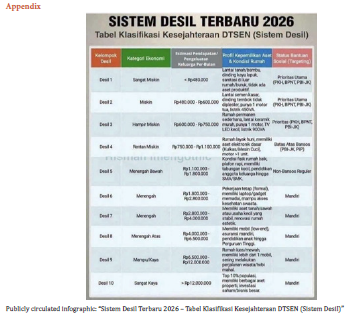
This official explanation has important implications for interpreting the publicly circulated infographic reproduced in the Appendix. The infographic, entitled ‘Sistem Desil Terbaru 2026’, assigns fixed monthly expenditure ranges to the ten deciles—for example, less than Rp480,000 for Decile 1 and more than Rp12 million for Decile 10—alongside categorical descriptions of household assets and predetermined social-assistance status. Such a representation is analytically useful because it demonstrates how a technically complex welfare-ranking system may be simplified in public circulation. However, it should not be treated as an official DTSEN classification table because BPS explains that a decile represents a relative position in the welfare distribution rather than a fixed nominal expenditure figure [15].
The distinction is fundamental. A welfare decile answers the question ‘where does a household stand relative to other households?’ rather than merely ‘how many rupiah does the household spend?’ Furthermore, official DTSEN information indicates that welfare grouping uses multiple demographic and socioeconomic characteristics, including education, employment, housing quality, sanitation and drinking-water access, health and disability, asset ownership, and business ownership [14]. Consequently, any fixed national table that mechanically equates a particular rupiah interval or a specific consumer asset with a DTSEN decile risks creating misunderstanding.
This issue demonstrates that targeting is simultaneously a statistical and a governance problem. Even an increasingly sophisticated database can produce poor social outcomes if it is interpreted incorrectly, updated too slowly, inaccessible to citizens, or insufficiently responsive to shocks. Research on digital welfare systems similarly shows that technological sophistication does not automatically eliminate exclusion. Digitalization can increase efficiency while simultaneously producing new forms of opacity, administrative burden, inequality of access, and data-related vulnerability [16-20]. Broader reviews of social-protection delivery likewise show that administrative and informational barriers can prevent eligible populations from receiving intended benefits [21].
Urgency of the Study
The urgency of accurate social-assistance targeting arises first from distributive consequences. Inclusion errors allocate scarce resources to households that do not meet intended eligibility criteria, whereas exclusion errors deny benefits to households that should receive them. These errors are not necessarily symmetrical in their welfare consequences. Excluding an extremely poor household may create substantially greater social harm than incorrectly including a household immediately above an eligibility threshold. Therefore, statistical accuracy should not be evaluated independently from the welfare costs associated with different errors [22].
Second, household welfare is inherently dynamic. Employment can disappear, agricultural income can fluctuate, food prices can rise, family members can become ill or disabled, households can migrate, and disasters can rapidly convert previously secure families into vulnerable ones. Research on targeting under fluctuating income demonstrates that the effectiveness of targeting instruments can deteriorate when welfare changes faster than eligibility information [23]. Indonesian research on adaptive social protection similarly shows that vulnerability during disasters does not perfectly correspond to poverty status under normal conditions, while pandemic-era evidence highlights the importance of household and family coping strategies when formal protection is incomplete [24,25].
Third, Indonesia’s exceptional geographic diversity complicates national welfare classification. Housing materials, electricity access, land ownership, vehicle ownership, occupational structure, and living costs can carry different welfare meanings in metropolitan Jakarta, agricultural Java, plantation communities, coastal regions, mountainous areas, or remote eastern islands. Indonesian PMT research indicates that incorporating area-level characteristics can improve classification in some settings but may not generate uniform improvements everywhere, demonstrating the importance of contextual validation [26]. Evidence on the changing mix of formal and informal social security in rural Indonesia further reinforces the need to interpret welfare indicators within local institutional and livelihood contexts [27].
Fourth, integrated data create both new opportunities and new responsibilities. Centralizing information can increase interoperability and reduce duplication, but errors can also become scalable: an incorrect record in a widely used integrated registry can affect eligibility for several programs simultaneously. Digitized welfare systems therefore require strong privacy safeguards, transparency, accountability, and accessible channels through which individuals can correct inaccurate records [28-30].
Research Gap, Objectives, and Questions
The emerging literature on social assistance contains extensive research on proxy means testing, conditional cash transfers, integrated administrative data, machine learning, digital welfare governance, and adaptive social protection. However, these strands are often examined separately, even though Indonesia’s welfare regime increasingly combines programmatic expansion with digital and administrative integration [31]. Research specifically assessing DTSEN is understandably still limited because the architecture is new and continues to be updated. Consequently, there is a need to connect mature theoretical and comparative knowledge about targeting with Indonesia’s rapidly evolving institutional arrangements.
This article therefore aims to critically synthesize recent literature and official evidence regarding the benefits, challenges, governance implications, and policy safeguards associated with DTSEN-based decile targeting. To operationalize this objective, the review addresses four research questions. First, how does DTSEN’s integrated and decile-based welfare-ranking architecture reshape social-assistance targeting governance in Indonesia? Second, what benefits can DTSEN potentially provide for improving targeting accuracy, integration, and social-protection effectiveness? Third, what statistical, socioeconomic, geographical, institutional, digital, ethical, and communication challenges may undermine its effectiveness? Fourth, what policy safeguards are required to make targeting accurate, fair, adaptive, transparent, contestable, and accountable?
The article contributes by reframing targeting accuracy as a broader socio-technical governance outcome and by proposing an Accurate–Fair–Adaptive–Accountable (AFAA) Targeting Framework. The framework is intended as an integrative analytical device that connects statistical performance with distributive fairness, dynamic responsiveness, and institutional accountability rather than treating these dimensions as separate policy problems.
Literature Review
Conceptual Foundations of Social-Assistance Targeting
Targeting arises when public programs differentiate between potential recipients rather than providing identical benefits universally. Governments may use verified means tests, proxy means tests, categorical criteria, geographic targeting, community selection, self-targeting, or combinations of these mechanisms. Each approach involves trade-offs among administrative cost, informational requirements, transparency, manipulation risks, coverage, and accuracy [32,33].
Verified means testing theoretically provides a direct assessment of resources but is difficult where earnings are informal, variable, or incompletely documented. Proxy means tests therefore estimate welfare using observable variables correlated with income or consumption, such as housing quality, household composition, education, occupation, and assets. PMT systems can create standardized decision rules, but no set of observable proxies perfectly represents multidimensional or rapidly changing deprivation [34,35].
Hybrid targeting attempts to combine the advantages of statistical models and contextual information. Follett and Henderson [33] argue that combining different targeting sources can outperform reliance on a single mechanism under appropriate institutional conditions. This is particularly relevant in Indonesia because local officials and communities may possess information about recent shocks that has not yet entered administrative databases, while centralized statistical systems can constrain arbitrary local discretion.
Simplification also matters. Complex eligibility rules can create administrative mistakes, discourage applications, and produce inconsistent local implementation. Evidence from social-pension targeting suggests that criteria that are easier to verify can reduce exclusion, although simplified rules improve poverty targeting only if the criteria remain strongly related to genuine deprivation [36].
Targeting therefore involves both horizontal efficiency—distinguishing eligible from ineligible households—and vertical efficiency—concentrating resources where social welfare gains are highest. Dietrich, Malerba and Gassmann [22] demonstrate that conventional predictive metrics can obscure the social-welfare damage generated by biased data or unequal classification errors. An algorithm that looks statistically accurate in aggregate may still systematically disadvantage groups for whom exclusion has particularly severe consequences.
Inclusion Error, Exclusion Error, and the Limits of “Accuracy”
A common approach to targeting performance is to compare predicted eligibility with a benchmark welfare measure. Inclusion error usually refers to the proportion of beneficiaries who do not satisfy intended eligibility criteria, while exclusion error refers to eligible households that receive no benefit. Yet these indicators depend on the threshold chosen and on what is considered the “true” welfare state.
This creates a fundamental difficulty. Poverty is not directly observable in the same way as age or biological sex. Consumption data contain measurement error; household structures change; informal income is volatile; and vulnerability cannot always be inferred from current expenditure. Hillebrecht, Klonner and Pacere [37] show that poverty targeting is dynamic rather than static, while Beuermann et al. [23] emphasize that targeting mechanisms face a moving welfare distribution when incomes fluctuate.
Administrative systems also influence behavior. One concern is that households may strategically change or misreport observable characteristics if they understand the scoring criteria. However, evidence from a nationwide Indonesian experiment found limited distortionary behavioral responses to PMT-related asset criteria, suggesting that the mere presence of proxy-based targeting does not necessarily create large-scale strategic asset manipulation [34].
Nevertheless, aggregate accuracy rates should be interpreted carefully. They can conceal false negatives concentrated among remote populations, persons with disabilities, migrants, female-headed households, or families whose livelihoods are not well captured by standard proxies. Targeting analysis therefore increasingly requires subgroup error rates and welfare-weighted measures rather than a single national percentage [22].
Welfare Deciles as Relative Rankings
A decile is fundamentally a distributional concept. If households are ordered from lowest to highest welfare and divided into ten groups of broadly equal size, each group constitutes a decile. It follows that being in a particular decile is intrinsically relative: a family’s ranking depends not only on its own resources but also on the position of other families in the reference distribution.
This differs from an absolute poverty line. A poverty line specifies a threshold, generally grounded in minimum consumption needs or another normative standard. A household can move above or below an absolute poverty line because its real welfare changes even if other households remain unchanged. By contrast, a relative rank can change because the wider distribution changes.
The official Cek Bansos description reflects this ranking logic by identifying ten welfare groups, each comprising approximately 10 percent of families, while emphasizing that decile status is dynamic and periodically recalculated [13]. BPS has also explicitly stated that per capita expenditure should not be equated mechanically with a decile because the latter represents a relative position rather than a fixed nominal amount [15].
This distinction matters for policy communication. If people believe that a household spending Rp700,000 per month must always be in a particular national decile, they may perceive a different administrative classification as evidence of error or unfairness. In reality, classification can depend on a broader socioeconomic profile and changes in the reference distribution. Misunderstanding can therefore undermine trust even when the technical process is operating as intended.
Social Registries and Integrated Administrative Data
Integrated social registries seek to move beyond program-specific beneficiary lists by creating a reusable socioeconomic information infrastructure. Such systems potentially reduce repeated data collection, facilitate cross-program coordination, enable households to be considered for multiple interventions, and improve emergency responsiveness.
International evidence illustrates the institutional benefits of better administrative data. Haseeb and Vyborny [11] found that replacing discretionary selection with database-supported targeting in Pakistan reduced favoritism and transfers to wealthier households and improved perceptions of program fairness. This finding is relevant to DTSEN because one of the promises of a single socioeconomic data architecture is to establish consistent eligibility information across institutions.
Yet integration creates dependencies. If multiple programs rely on the same incorrect household record, one error can propagate throughout the welfare system. The relevant governance question is therefore not whether a single database is inherently superior, but whether the integrated system has strong processes for verification, updating, auditing, correction, and institutional accountability.
Bappenas’s description of DTSEN explicitly identifies the integration of Regsosek, DTKS, P3KE, and other data sources and recognizes the importance of interoperability and periodic updating [10]. BPS reporting likewise indicates that the 2026 update incorporated demographic validation, field verification, and information supplied by government institutions and subnational authorities [12]. These mechanisms suggest movement from a static beneficiary list toward a continuously maintained social registry.
Statistical Prediction, Machine Learning, and Context
Advances in computational methods have expanded the range of data potentially useful for targeting. Aiken et al. [38], for example, show that machine-learning models using mobile-phone information can improve humanitarian targeting in settings where conventional household survey data are limited. Altındağ et al. [39] demonstrate the importance of model design and external validation when administrative data are used to target humanitarian assistance.
Such methods are attractive because nonlinear algorithms can detect interactions among variables that conventional scoring systems may overlook. Yet predictive improvement does not resolve the normative question of whom a program ought to prioritize. Models learn patterns contained in historical data; if those data underrepresent certain populations or use imperfect outcome labels, machine learning can reproduce or amplify existing disparities [22].
For Indonesia, contextual heterogeneity is especially important. Wobcke and Mariyah [35] show that machine learning and data augmentation can contribute to PMT development, whereas Mariyah and Wobcke [26] find that area-level features have differing usefulness across rural, semi-urban, and urban environments. Musaddad and Kriswibowo [40] similarly explore big-data and machine-learning approaches for reducing mistargeting within PKH administration. These findings support experimentation but also underline the need for regional validation rather than assuming that one national specification will behave identically everywhere.
Adaptive Social Protection
Traditional social assistance frequently identifies beneficiaries from information collected at a particular point in time. This creates a mismatch when vulnerability is dynamic. The COVID-19 pandemic demonstrated how rapidly previously non-poor households could experience income loss. Suryahadi, Al Izzati and Yumna [41] document the important poverty-mitigating role of Indonesian social-protection responses during the pandemic, while Yuda et al. [42] show that Southeast Asian welfare systems expanded temporary interventions in response to the crisis.
Natural disasters create similar problems. Indonesia faces substantial exposure to earthquakes, floods, droughts, volcanic activity, climate-related shocks, and other hazards. Gasior et al. [24] find that the existing social-protection architecture may not automatically protect all groups most vulnerable to major shocks, suggesting the need for adaptive instruments.
Dynamic registries can contribute to adaptive social protection by reducing the lag between welfare deterioration and administrative recognition. However, a “dynamic” database is only as dynamic as its actual updating process. BPS field reports in 2026 illustrate the practical importance of ground checks and cross-institutional cooperation while also reporting application difficulties, differing understandings of concepts, and respondent resistance.
Data Justice and the Digital Welfare State
The increasing use of digital information systems transforms the relationship between citizens and the welfare state. Henman [43] argues that digital social policy should be understood as a substantive institutional transformation rather than merely the digitization of existing paperwork, while Ball et al. [44] show that digital welfare delivery changes street-level discretion and organizational relationships. Comparative work also emphasizes that digital welfare systems can generate new risks of discrimination, exclusion, and inequality when access to technology or administrative capacity is uneven [19,20].
Digitalization can make registration faster, facilitate interoperability, reduce repetitive administrative processes, and enable rapid program expansion. Evidence from Indonesia’s Pre-Employment Card indicates that digital delivery can increase efficiency and responsiveness while simultaneously generating challenges related to the digital divide and technical access [18]. Research on digital self-service further shows that poorly designed systems can transfer learning and compliance work to citizens, whereas thoughtful redesign can reduce administrative burden and improve completion of benefit-related processes [45-47].
Data justice scholarship stresses that the relevant questions extend beyond data accuracy. It asks who is represented, which indicators define need, who can challenge classifications, how data are reused, and who bears the consequences of errors [48]. Studies of digital social protection demonstrate that authentication, digital identity, and automated decision systems can create exclusion when technological requirements or administrative processes are difficult to navigate [16,17,49]. Evidence that administrative burdens are socially unequal further suggests that apparently neutral procedures can reproduce disparities in access if they impose greater learning, compliance, or psychological costs on already disadvantaged groups [50].
Legal and ethical concerns are equally important. Choroszewicz and Mäihäniemi [28] highlight data-protection problems associated with automated public-sector decision-making, while Rachovitsa and Johann [30] use the Dutch SyRI case to illustrate the human-rights implications of opaque welfare algorithms. Jørgensen [29] emphasizes the need to understand data rights as part of digital welfare-state governance. Research on digital public services additionally shows that transparency, accountability, and explainability must be designed as socio-technical properties rather than treated as automatic consequences of publishing technical information [51,52]. Thus, greater integration should be accompanied by privacy protection, purpose limitation, accountable access, understandable explanations, and meaningful avenues of appeal.
Method
Qualitative Literature Review Design
This study employs a qualitative literature review (QLR) rather than a systematic literature review. The objective is interpretive synthesis: to connect conceptual, empirical, technological, institutional, and policy evidence and develop an integrated explanation of the implications of DTSEN-based targeting. The review therefore does not claim exhaustive retrieval of every publication, does not employ PRISMA, does not conduct meta-analysis, and does not use a formal systematic-review risk-of-bias instrument.
This choice is consistent with methodological literature that treats literature reviews as independent scholarly studies capable of theory development and critical synthesis when selection procedures and analytical logic are made explicit [53,54]. Rather than asking how many studies show a particular numerical effect, the present study asks how different bodies of evidence illuminate the institutional conditions required for accurate and equitable targeting.
Source Identification
The academic evidence base consists of 63 peer-reviewed journal articles published from 2020 through 2026. Literature was identified iteratively through combinations of terms including social assistance targeting, proxy means testing, social registry, poverty targeting, Indonesia social protection, conditional cash transfers, machine learning poverty targeting, inclusion error, exclusion error, adaptive social protection, digital welfare state, data justice, and algorithmic fairness. The review used iterative keyword discovery and citation chaining rather than an exhaustive database protocol, which is consistent with its qualitative and integrative purpose.
Priority was given to articles in established international and Indonesian peer-reviewed journals and to research directly relevant to Indonesia, targeting methodology, social registries, administrative data, adaptive social protection, and digital governance. Sources were retained when they contributed conceptual clarification, empirical evidence, methodological insight, or a relevant comparative mechanism, and bibliographic details were cross-checked against publisher or DOI records where available. The review deliberately emphasized recent scholarship, while avoiding the claim of exhaustive coverage that would be required for a systematic literature review.
Official documents were treated separately from peer-reviewed scholarship. These included BPS, Kemensos/Cek Bansos, and Bappenas information regarding DTSEN architecture, classification, updating, and implementation. Official evidence was used to establish current institutional arrangements rather than to substitute for independent scholarly evaluation.
Documentary Analysis of the Publicly Circulated Infographic
The publicly circulated infographic reproduced in the Appendix was analyzed as a documentary artefact representing a popular interpretation of the ‘2026 decile system’. Its principal claims were compared with official descriptions of DTSEN. Particular analytical attention was given to four characteristics: fixed expenditure intervals, categorical labels such as ‘very poor’ and ‘very rich’, deterministic descriptions of asset ownership, and apparently predetermined program eligibility.
This treatment is methodologically important because accepting the infographic at face value would incorrectly transform an unofficial representation into institutional evidence. The comparison indicates that its fixed nominal thresholds conflict with official descriptions of deciles as relative and dynamic welfare rankings, and therefore the infographic is treated as an object of analysis rather than as an authoritative classification scheme [13,15].
Thematic Synthesis
Evidence was coded iteratively around the following themes: data integration, welfare measurement, decile interpretation, targeting accuracy, inclusion error, exclusion error, socioeconomic dynamics, spatial heterogeneity, digitalization, institutional coordination, privacy, transparency, grievance redress, citizen understanding, and adaptive social protection. These initial codes were then consolidated into higher-order themes that captured recurring relationships among technical accuracy, institutional capacity, distributional fairness, and citizen-facing governance.
The analysis then connected these themes through comparative interpretation. Evidence from Indonesia was prioritized where available, while international studies were used to identify general mechanisms or institutional risks relevant to DTSEN.
Limitations
This article does not independently estimate the accuracy of DTSEN and cannot establish its causal effect on poverty or beneficiary outcomes. Because DTSEN remains new and operationally evolving, the peer-reviewed literature directly evaluating its 2025–2026 implementation is necessarily limited. Official administrative claims, including BPS’s reported decline in inclusion error, are therefore clearly distinguished from independent empirical evaluation [12]. This limitation reinforces the need for future independent validation using household-level and program-specific outcome data.
Results: Thematic Findings
Theme 1: DTSEN Represents a Transformation in Social-Protection Data Governance
The first major finding is that DTSEN should be understood as an institutional information architecture, not merely as a beneficiary list. The integration of Regsosek, DTKS, P3KE, population records, and other administrative sources addresses a longstanding structural weakness in which different programs could rely on partially inconsistent lists. Bappenas explicitly positions DTSEN as an integrated source intended to improve planning, implementation, and evaluation [10].
This transformation potentially generates several advantages. First, common household identification can reduce duplication. Second, program administrators can coordinate interventions around a shared understanding of socioeconomic status. Third, information collected for one legitimate governmental purpose may—subject to appropriate governance and authorization—contribute to more coherent planning across social protection, housing, education, and related services. The potential for cross-sectoral use increases the value of integration, but it also strengthens the case for purpose limitation, transparent governance, and accountable data-sharing arrangements [10,51].
International evidence supports the institutional value of administrative targeting systems. Haseeb and Vyborny [11] show how standardized household data can constrain patronage and increase confidence in distribution. Yet the Indonesian case is more complex because scale magnifies both benefits and risks. The more programs rely on DTSEN, the more important accurate updates, clear institutional responsibilities, and rapid correction mechanisms become.
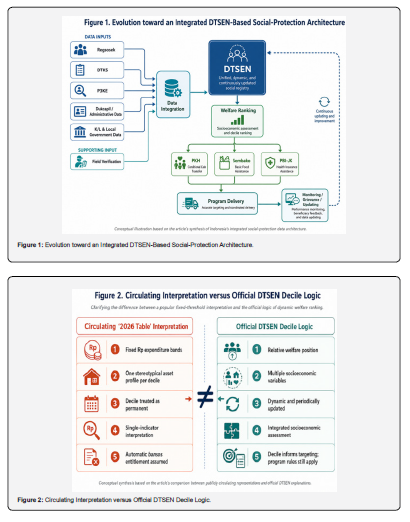
Figure 1 conceptualizes the transition from fragmented social-assistance databases toward an integrated DTSEN architecture. Rather than presenting DTSEN as the final stage of a linear technical process, the figure emphasizes that effective targeting requires continuous flows between national statistical systems, administrative records, local verification, program agencies, and citizens.
As Figure 1 illustrates, the quality of the architecture depends on feedback. A “single database” that only receives information occasionally would eventually reproduce the weaknesses of earlier static lists. By contrast, an integrated registry becomes genuinely dynamic when program delivery, field findings, civil-registration events, administrative changes, and citizen corrections feed back into subsequent welfare assessments.
Theme 2: A DTSEN Decile Is Not a Fixed Rupiah Category
The second finding concerns conceptual clarity. Official Cek Bansos information defines deciles as ten welfare groups, each corresponding to roughly 10 percent of Indonesian families, with Decile 1 at the bottom and Decile 10 at the top. The same official source emphasizes that welfare ranking is based on socioeconomic variables and that decile positions can be updated [13].
BPS has separately emphasized that per capita expenditure and decile status are not identical concepts: a decile is a relative distributional position rather than a permanently fixed nominal expenditure value [15]. This distinction directly affects how the publicly circulated infographic should be interpreted and why its numerical thresholds should not be treated as official DTSEN rules.
The graphic’s intuitive appeal is understandable. Fixed rupiah values provide apparently simple answers to citizens asking, “Which decile am I in?” Asset descriptions such as ownership of a motorcycle, refrigerator, laptop, car, or land likewise make abstract welfare categories appear concrete. Yet this simplification risks replacing a multidimensional, dynamic ranking with deterministic stereotypes. A household can own an old motorcycle because transportation is essential to its livelihood while remaining economically vulnerable; another household may lack a vehicle but have high income in a city with extensive public transportation. Asset meaning is contextual rather than universal.
Figure 2 contrasts the circulating fixed-threshold interpretation represented by the publicly circulated infographic reproduced in the Appendix with the officially described DTSEN logic. The contrast is essential for preventing misinformation from becoming embedded in academic analysis.
The main implication of Figure 2 is not simply that one table is inaccurate. It reveals a broader communication challenge. Where eligibility systems become increasingly statistical, governments need to provide citizens with understandable explanations of concepts, criteria, updating mechanisms, and appeal procedures. Otherwise, unofficial simplifications may fill the information vacuum.
Theme 3: Integrated Data Can Improve Targeting Consistency
The third theme concerns potential benefits. Combining several databases can improve identity matching, eliminate obvious duplication, reconcile conflicting records, and establish a common basis for program decisions. BPS’s 2026 update illustrates the operational use of demographic validation and field verification within DTSEN maintenance [12]. These mechanisms are consistent with the broader objective of moving from fragmented beneficiary lists toward an integrated social registry.
These processes are particularly relevant because social-assistance records become obsolete quickly. Births, deaths, marriages, migration, occupational changes, disability, and changes in business ownership can alter household composition and welfare. An integrated architecture permits administrative events to become part of the updating ecosystem rather than waiting entirely for another large-scale survey.
Improved consistency may also reduce administrative burden. Repeatedly collecting similar information for each program consumes government resources and imposes costs on citizens. Integrated registries can facilitate interoperability, although this benefit depends on clear rules governing lawful data use and privacy [29,43].
Research from Indonesia demonstrates why improved targeting matters. PKH has generated important long-run effects [3], social assistance helped mitigate pandemic-related poverty [41], and food-transfer reform has affected dietary diversity [5]. Thus, improving beneficiary identification is not merely an administrative efficiency exercise; it affects access to interventions capable of changing human development outcomes.
Theme 4: Targeting Accuracy Can Improve, but No Registry Eliminates Error
DTSEN’s integration and updating create the potential for lower error rates, but “single data” should not be interpreted as “perfect data.” Statistical welfare estimates contain uncertainty because the underlying concept—household welfare—is complex and partially latent.
BPS reported an inclusion-error rate of approximately 0.06 percent following the 2026 Volume 2 update [12]. This is potentially encouraging but requires careful interpretation. Independent evaluation would need to clarify the benchmark definition, population denominator, program scope, method of validation, treatment of borderline cases, and whether exclusion error changed simultaneously. The figure should therefore be understood as an operational administrative indicator rather than a comprehensive independent estimate of national targeting accuracy.
Reducing inclusion error alone is not sufficient. A system can remove many incorrectly included households while also excluding needy families if thresholds or data are imperfect. Poverty-targeting studies therefore recommend jointly analyzing coverage, inclusion error, exclusion error, sensitivity, specificity, and distributional consequences [22,55].
Furthermore, the target itself moves. Beuermann et al. [23] demonstrate that performance differs when household income fluctuates, while Hillebrecht, Klonner and Pacere [37] emphasize the dynamics of poverty targeting. The policy implication for DTSEN is that accuracy should be interpreted as a continuously produced property rather than an attribute permanently achieved on the date a database is released.
Theme 5: Geographic Heterogeneity Complicates National Classification
Indonesia’s regional diversity creates a major methodological challenge. Observable household characteristics do not have identical welfare implications everywhere. Land ownership may signify considerable wealth in one locality but represent a small, low-productivity agricultural plot in another. Housing materials vary with climate and local construction traditions, while the usefulness of a motorbike may reflect poor public transport rather than high disposable income. Research on rural social-security arrangements also shows that formal programs interact with local moral economies and informal support systems, further complicating nationally uniform interpretations of welfare indicators [27].
Mariyah and Wobcke [26] demonstrate that area-level variables can affect PMT performance differently across rural, semi-urban, and urban districts. Wobcke and Mariyah [35] similarly emphasize that data augmentation and machine learning can improve prediction only when context and data quality are adequately considered.
The result is a tension between national comparability and local validity. A common national framework is valuable because it reduces arbitrary local standards, but excessive uniformity may overlook spatial differences. The solution is not necessarily to return to discretionary local selection. Instead, national models can be complemented by contextual validation, local ground checks, regional error analysis, and transparent correction mechanisms.
Haseeb and Vyborny’s [11] findings are instructive in this respect: reducing unrestricted discretion can improve fairness, but administrative systems still require local institutional capacity. Similarly, Follett and Henderson [33] show why hybrid mechanisms can combine statistical consistency with additional information.
Theme 6: Inclusion and Exclusion Errors Have Unequal Social Consequences
The sixth finding is that targeting errors should be evaluated through their consequences, not merely their counts. When an affluent household incorrectly receives a transfer, public resources are inefficiently allocated and public trust may decline. When a severely deprived household is incorrectly excluded, however, the consequences may include food insecurity, inability to pay health costs, school withdrawal, debt, or asset depletion.
Dietrich, Malerba and Gassmann [22] therefore argue for attention to the social-welfare damage of biased predictions. This approach is especially relevant to programs aimed at the poorest deciles. A classification system that achieves a high average accuracy rate may still perform poorly from an equity perspective if its remaining errors disproportionately affect highly vulnerable groups.
Selective inclusion can also influence community relations. Della Guardia, Lake and Schnitzer [56] show that narrowly targeted transfers can have unintended consequences for social cohesion when neighboring households perceive beneficiary selection as unfair. In Indonesia, where community perceptions and village-level social relations remain significant, transparent explanations and credible appeal procedures are therefore components of program legitimacy.
Research also challenges simplistic assumptions about beneficiaries. Habibullah et al. [57] find that long-standing PKH participation cannot simply be reduced to dependency stereotypes. Peters [58] similarly analyzes how conditional transfer systems can shape categories and narratives surrounding the “poor.” Yuda, Habibullah and Nurhadi [59] emphasize the paradoxical relationship between stigma and welfare-rights claiming. These studies imply that decile labels should be communicated carefully so that statistical categories do not become social identities.
Theme 7: Household Welfare Changes Faster than Conventional Administrative Cycles
Household vulnerability often develops between major data-collection exercises. A worker can be dismissed, a small enterprise can fail, a crop can be lost, or a family can incur catastrophic health expenditure within weeks. These events can dramatically change actual welfare without immediately changing administrative records.
This is why DTSEN’s dynamic design is potentially important. Official Cek Bansos information states that incorrect decile status may be proposed for updating through village or kelurahan institutions, local social offices, or the Cek Bansos application, after which welfare classification can be periodically recalculated [13]. The existence of multiple update channels is therefore an important institutional feature, although their practical effectiveness depends on accessibility and implementation capacity.
However, the existence of an update channel does not itself guarantee responsiveness. Citizens must know the procedure, have access to it, trust it, and receive a decision within a reasonable time, while local authorities require sufficient staff and clear verification guidance. Research on digital self-service and third-party assistance shows that when procedures become complex or highly digitalized, administrative burdens can shift toward claimants and local intermediaries rather than disappear [45,60]. These findings imply that a technically available correction channel must also be usable in practice.
Adaptive social protection therefore requires both a dynamic database and a dynamic institutional workflow. Gasior et al. [24] show that groups vulnerable to shocks do not always coincide with conventional poverty categories. Al Izzati, Suryadarma and Suryahadi [61] further demonstrate that cash transfers can influence short-term behavior and preferences, reinforcing the need to understand assistance within changing household contexts rather than static categories.
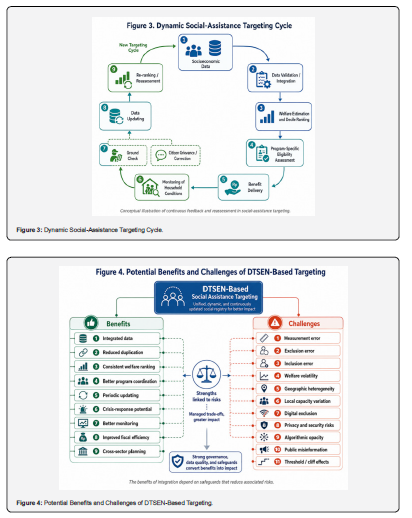
Figure 3 presents targeting as a feedback cycle rather than a one-time selection event. This conceptualization is particularly appropriate for DTSEN because maintaining accuracy requires repeated movement through data collection, ranking, delivery, observation, correction, and reassessment.
The figure highlights that error correction is not peripheral to targeting. It is part of the targeting mechanism itself. A system without a functioning feedback loop may be accurate at one moment but progressively inaccurate thereafter.
Theme 8: Digitalization Generates Efficiency but Also New Forms of Exclusion
DTSEN operates within a broader transformation toward digital government. Digital integration can accelerate matching, improve audit trails, and facilitate cross-program coordination. Indonesian experience with the Pre-Employment Card shows that digital systems can enable rapid rollout and revisable program administration, while experimental evidence from other welfare contexts shows that well-designed digital processes can reduce administrative burden when digitalization is accompanied by process redesign rather than merely moving existing procedures online [18,47].
Nevertheless, digitalization can shift rather than eliminate administrative burdens. Citizens may need adequate devices, connectivity, digital literacy, identification documents, and an understanding of online procedures. Bielefeld [62] demonstrates how digitalized welfare systems can affect marginalized populations differently, while Safarov [49] introduces the concept of administrative literacy to explain how people navigate complex digital welfare institutions. Related evidence shows that digital self-service can increase learning and compliance costs and that such burdens may be distributed unequally across social groups [45,46,50].
Carswell and De Neve [16] show that biometric and digital social-protection mechanisms may simultaneously increase transparency and generate mediation or exclusion. Palacio Ludeña [17] similarly demonstrates how people can fall through the cracks of digital infrastructures even when systems are designed to improve administrative coverage.
Indonesia should therefore retain multiple correction channels. An application-based grievance mechanism is valuable, but it should complement rather than replace village, kelurahan, social-office, and assisted-service channels. This is particularly important for older people, persons with disabilities, remote communities, and households with limited digital connectivity. Evidence from digitally mediated welfare systems shows that third-party and face-to-face support may remain essential when citizens encounter complex administrative requirements [45,60].
Theme 9: Privacy, Security, and Function Creep Become More Important as Integration Expands
Integrated socioeconomic data can include personal identification, family structure, employment, education, housing, health or disability characteristics, assets, and government-program participation. The concentration of such data creates significant public value but also raises the cost of misuse or security failure.
Bappenas explicitly links DTSEN development with Indonesia’s One Data framework and personal-data protection requirements [10]. Yet regulatory compliance should be treated as a minimum rather than the endpoint of data governance. As social registries become more integrated and reusable across policy domains, governance arrangements must address not only security but also legitimate purpose, proportionality, and institutional accountability.
Choroszewicz and Mäihäniemi [28] emphasize data protection in automated public administration, while Jørgensen [29] frames digital welfare in terms of citizens’ data rights. Rachovitsa and Johann [30] show that welfare analytics can become legally and ethically problematic when opaque risk-scoring systems expand beyond narrowly defined purposes. Research on public-sector algorithms further indicates that transparency and explainability are context-dependent and must be accompanied by meaningful accountability mechanisms that citizens can understand and use [51,52].
For DTSEN, key principles should therefore include purpose limitation, data minimization, role-based access, audit logs, security by design, and clear retention rules. Data collected because they improve legitimate welfare targeting should not automatically become available for unrelated surveillance or punitive purposes. This concern—often described as function creep—is especially relevant when a registry becomes increasingly central to government.
Theme 10: Public Understanding Is Part of Targeting Quality
One of the most distinctive findings emerging from analysis of the publicly circulated infographic is that communication quality is inseparable from targeting quality. Citizens generally do not observe statistical models, matching algorithms, administrative integration, or model-validation procedures. They observe an outcome: a decile number and whether they received assistance.
If official explanations are difficult to access, unofficial tables can become intuitive substitutes. The infographic reproduced in the Appendix provides precise numerical thresholds and familiar asset descriptions, making it easier to understand than a probabilistic, multidimensional ranking. Yet simplicity can be misleading.
The solution is not to disclose confidential household data or publish technical models in a form inaccessible to non-specialists. Rather, government communication should explain in plain language that: (1) a decile is a relative welfare ranking; (2) no single consumer asset automatically determines a decile; (3) decile status can change; (4) decile position informs targeting but does not necessarily create automatic entitlement to every program; and (5) households can request data correction.
BPS’s April 2026 communication, which distinguishes per capita expenditure from decile status, is therefore an important example of concept clarification [15]. Such communication should be repeated consistently through national agencies, local governments, social-assistance facilitators, village institutions, and public digital platforms. Repetition across channels is important because technical classifications gain legitimacy only when citizens can understand how they relate to program eligibility and how they can be corrected.
Figure 4 synthesizes the principal benefits and challenges identified by the review. It demonstrates why DTSEN should neither be presented as a technological panacea nor dismissed because classification errors cannot be completely eliminated.
The figure shows that many strengths and risks are causally connected. Integration can increase consistency but also magnify errors. Digitalization can accelerate updating but create access barriers. Standardization can reduce arbitrary discretion but overlook contextual conditions. Effective policy therefore requires safeguards that capture benefits while limiting these associated risks.
Theme 11: Accuracy Requires Hybrid Verification and Independent Evaluation
The literature does not support an exclusive reliance on either centralized algorithms or unrestricted local discretion. Local targeting can capture contextual information, but it may also be vulnerable to favoritism. Statistical targeting can increase consistency but may miss rapidly changing or locally specific deprivation. Hybrid approaches seek to combine these informational strengths [33].
DTSEN’s use of field verification provides a foundation for hybrid validation. Official reporting indicates that field verification forms part of the updating architecture alongside administrative-data integration [12]. What is additionally needed is systematic use of verification results to evaluate where statistical rankings fail, which groups are affected, and whether recurring errors point to model, data, or implementation problems.
Independent assessment is equally important. Official administrative monitoring serves operational management, whereas independent researchers can examine model performance, geographic disparities, vulnerable populations, and unintended effects. The BPS-reported 0.06 percent inclusion-error rate should therefore motivate further validation rather than terminate evaluation [12]. Independent replication is particularly important for separating improvements in data cleaning from broader improvements in beneficiary-level outcomes.
Useful indicators include inclusion and exclusion rates, program coverage, precision, sensitivity, frequency of successful appeals, time required for correction, regional variation, demographic disparities, error concentration among vulnerable groups, and movement around eligibility thresholds. Such multidimensional evaluation is more informative than a single headline accuracy figure.
Discussion and Analysis
DTSEN as a Socio-Technical Governance Reform
The evidence provides a clear answer to the first research question. DTSEN reshapes social-assistance targeting by creating a shared socioeconomic information infrastructure that connects statistical classification, administrative data, national program management, subnational verification, and citizen interaction. Its significance therefore lies not merely in assigning families to Deciles 1–10 but in changing the informational architecture through which government interventions are planned and implemented.
This interpretation is consistent with scholarship on the digital welfare state. Henman [43], van Toorn, Henman and Soldatić [63], and Zakharova, Jarke and Kaun [64] demonstrate that digitalization changes relations of care, control, administrative discretion, and institutional responsibility. Consequently, the success of DTSEN cannot be evaluated solely through database engineering.
A technically sophisticated model applied to obsolete information will still misclassify households. An accurate ranking combined with inaccessible grievance mechanisms can still create injustice. An integrated database with weak privacy controls can generate new risks. A statistically defensible system that citizens cannot understand can still lose legitimacy. Thus, accurate targeting is produced through the interaction of technology, institutions, personnel, rules, and citizens.
The Efficiency–Fairness Paradox
The second and third research questions reveal a tension between efficiency and fairness. Standardized data can reduce arbitrary discretion and improve fiscal targeting, as international evidence demonstrates [11]. However, a highly selective system inevitably produces boundary problems. Two nearly identical households can receive different treatment if one lies just above a threshold.
This “cliff effect” becomes politically and ethically significant when programs are valuable. Research on Indonesia shows that transfers can improve health, schooling, consumption, and resilience [3-6]. Losing eligibility because of a small rank difference can therefore have meaningful welfare effects.
Programs should consequently avoid interpreting the decile as an unquestionable binary truth. Ranking is information used in policy; it is not welfare itself. Program-specific eligibility rules can incorporate additional categorical criteria, vulnerability factors, transitional arrangements, or reassessment mechanisms.
Henderson and Follett [32] argue for targeting that considers human capabilities, which is particularly relevant when conventional poverty proxies inadequately reflect disability, care responsibilities, or access to essential services. Asri et al. [36] also show that formal targeting criteria must remain substantively related to deprivation rather than being chosen only because they are administratively easy to verify.
Dynamic Targeting Should Replace the Idea of Permanent Welfare Categories
The notion of a “permanent decile” is inconsistent with both theory and official DTSEN principles. Families move through economic states because employment, prices, family composition, health, assets, and shocks change. Decile mobility should therefore be expected rather than automatically interpreted as an administrative anomaly.
The policy objective should not be to freeze households into stable categories but to ensure that mobility reflects genuine changes and that classification responds to those changes sufficiently rapidly. Hillebrecht, Klonner and Pacere [37] and Beuermann et al. [23] both reinforce the importance of temporal dynamics in targeting.
Dynamic updating also matters for development policy beyond traditional poverty relief. Yuliani and Nasrudin [65], for example, examine how conditional transfers influence transitions away from agriculture, while Pritadrajati [66] studies whether social assistance affects employment, formality, and mobility. These findings indicate that welfare programs operate within changing livelihood trajectories.
An adaptive system should therefore distinguish between genuine improvement and temporary fluctuation. Immediately removing support after a short-lived earnings increase can create instability. A policy option is to introduce reassessment periods or graduated benefit reduction for households near selected thresholds.
Accuracy Should Be Evaluated Through the Lens of Data Justice
The conventional targeting question asks: “Did the system classify this household correctly?” Data justice asks additional questions: “Whose reality was represented in the data? Who defined the indicators? Who is more likely to be missing? Who can understand the decision? Who can correct it? Who bears the consequences of error?”
Dencik and Sánchez-Monedero [48] emphasize that data justice concerns the distribution of benefits and burdens produced through data systems. This perspective is especially important for a national registry of enormous scale.
For example, a person with a disability may live in a household whose asset profile appears relatively adequate while facing exceptional healthcare or mobility costs. A small landholder may possess a nominally valuable asset but experience seasonal cash poverty. An informal worker can display reasonable consumption in one month and no earnings the next. Treating such complexities as “noise” risks systematically underrepresenting vulnerability.
Accessibility also matters. Safarov [49] shows that administrative literacy shapes people’s ability to navigate digital welfare services, while Bielefeld [62] highlights the unequal lived experience of digitalized social security. Indonesian digital-welfare evidence similarly identifies both efficiency and digital-divide challenges [18].
An equitable DTSEN architecture should therefore be technologically advanced but institutionally plural: digital channels for those who can use them, assisted and face-to-face channels for those who cannot, and proactive outreach for populations least likely to initiate appeals themselves. This approach is consistent with evidence that administrative burdens and digital barriers can fall disproportionately on groups with fewer resources or lower administrative capacity, making channel diversity a substantive equity safeguard rather than a convenience [50,60].
Toward an Accurate–Fair–Adaptive–Accountable Targeting Framework
The synthesis leads to a four-pillar framework designed to answer the fourth research question. The AFAA framework treats accuracy, fairness, adaptiveness, and accountability as jointly necessary dimensions of targeting quality because improvement in one dimension can be undermined when another remains weak.
Accurate
Accuracy requires reliable identity matching, current socioeconomic information, context-sensitive statistical modelling, field validation, deduplication, and independent performance testing. It also requires measuring exclusion and inclusion simultaneously rather than celebrating improvements in only one indicator.
Fair
Fairness requires examining who bears targeting errors. Program evaluation should report outcomes by geography, disability status, household structure, livelihood, and other relevant dimensions where legally and methodologically appropriate. Borderline cases and cliff effects require special attention.
Adaptive
Adaptiveness requires continuous updating, rapid incorporation of administrative events, shock-responsive mechanisms, and accessible citizen correction. Data should be capable of changing as people’s circumstances change.
Accountable
Accountability requires understandable explanations of decisions, auditable access to data, privacy safeguards, institutional responsibility, human oversight, transparent methodologies, functioning grievance systems, and independent evaluation. Because technical explanations alone do not guarantee public understanding or trust, accountability should combine explainability with contestability and accessible institutional remedies [51,52].
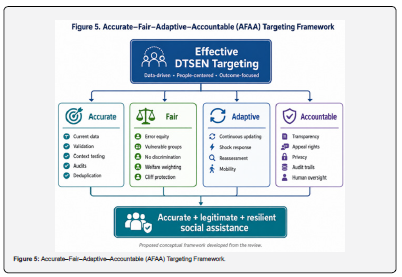
Figure 5 presents the proposed AFAA Framework, which constitutes the principal conceptual contribution of this review. The framework shifts evaluation away from the narrow question of whether DTSEN produces an accurate decile number toward the broader question of whether the complete targeting system generates socially legitimate decisions.
The four pillars are mutually dependent. Accuracy without accountability may create technically defensible but opaque decisions. Fairness without accurate information may become arbitrary. Adaptiveness without data governance may expand privacy risk. Accountability without adequate technical capacity may produce transparent but ineffective administration. Sustainable targeting therefore requires simultaneous attention to all four dimensions.
Policy Implications
First, Indonesia should institutionalize continuous data-quality management rather than treating each DTSEN release as a completed product. Data quality should be monitored using explicit indicators covering completeness, timeliness, identity consistency, inclusion error, exclusion error, successful corrections, and regional variation.
Second, independent targeting audits should become routine. Universities, research institutions, and other qualified evaluators should periodically compare DTSEN classifications with high-quality socioeconomic survey or field-validation data. Evaluation should specifically examine whether errors are concentrated among particular regions or vulnerable groups, because aggregate accuracy can conceal unequal social-welfare losses [22,50].
Third, a multi-channel grievance and appeal system should be institutionalized. Digital applications should remain available, but village and kelurahan offices, local social agencies, assisted service desks, and outreach mechanisms are necessary to prevent digital inequality from becoming welfare exclusion. Evidence on digital administrative burden supports retaining human assistance and multiple access pathways rather than assuming that online self-service is equally usable by all claimants [45,60].
Fourth, correction procedures need measurable service standards. Citizens should know that an appeal has been received, what evidence is required, when verification will occur, and when a decision should be expected. Complaints should also be analyzed collectively because repeated grievances from one area may identify systematic rather than individual errors.
Fifth, national consistency should be accompanied by spatial validation. Predictive relationships should be periodically reassessed across rural, urban, remote, agricultural, industrial, and island settings. Mariyah and Wobcke [26] provide an important methodological rationale for examining area-level heterogeneity rather than assuming uniform model performance.
Sixth, program administrators should avoid treating a decile as the sole determinant of every welfare intervention. Decile ranking should inform program targeting, while specific programs can appropriately consider disability, age, pregnancy, child status, disaster exposure, educational circumstances, or other legitimate vulnerabilities. The official Cek Bansos system itself demonstrates that deciles inform different program targeting arrangements rather than operating as a single universal entitlement rule.
Seventh, government agencies should develop a coordinated public communication protocol explaining the meaning of deciles. The publicly circulated infographic examined in this article shows how quickly apparently precise but oversimplified representations can become persuasive. Public information should explicitly state that fixed national rupiah intervals should not be assumed to define DTSEN deciles. BPS’s clarification that per capita expenditure is not synonymous with decile status is a useful starting point [15].
Eighth, data protection should be embedded throughout the DTSEN lifecycle. Access should follow role-based principles, data use should remain proportionate to legitimate public purposes, sensitive information should be protected through strong technical safeguards, and access should be logged and auditable. These measures are crucial as DTSEN becomes useful to an expanding set of policy sectors, and they should be complemented by clear explanations of automated or data-driven decisions where such processes materially affect eligibility [30,51,52].
Ninth, Indonesia should develop transition protection for households near eligibility boundaries where appropriate. Short reassessment windows, tapered benefits, or temporary continuation after minor welfare-ranking changes could prevent sudden benefit losses triggered by temporary income fluctuation. Such safeguards are particularly relevant when household welfare is volatile and targeting performance changes as incomes move over time [25,30,51].
Finally, targeting quality should be connected with broader social-protection adequacy. Even perfect identification cannot compensate for insufficient coverage, inadequate benefits, weak public services, or structural causes of poverty. The goal should therefore be a better-targeted and more adaptive social-protection system rather than an administrative pursuit of classification accuracy for its own sake [67,68].
Conclusion
Indonesia’s DTSEN represents an important transformation in social-protection governance. By integrating previously fragmented socioeconomic information and creating a common welfare-ranking architecture, it offers substantial potential to improve beneficiary identification, reduce duplication, strengthen coordination, support adaptive interventions, and increase consistency across social programs.
The principal finding of this review is nevertheless that a single database does not create a single, unquestionable truth about household welfare. Poverty and vulnerability are multidimensional, geographically heterogeneous, and dynamic. Statistical models operate with imperfect proxies; administrative records become outdated; and classification thresholds inevitably produce borderline cases.
The publicly circulated ‘2026 decile’ infographic provides an instructive example of another challenge: the distance between technical systems and public understanding. Its fixed monetary thresholds and stereotypical household profiles should not be interpreted as the official DTSEN taxonomy. Official information instead describes deciles as relative, dynamic welfare rankings generated from multiple socioeconomic characteristics. Clear communication of this distinction is essential to public trust.
DTSEN’s benefits are therefore conditional. Integration can reduce fragmentation but magnify shared errors. Digitalization can accelerate administration but exclude people with limited access. Statistical standardization can reduce discretionary favoritism but overlook local heterogeneity. Frequent updating can improve responsiveness but increase data-governance demands. These are not reasons to reject DTSEN; they are reasons to govern it carefully.
The proposed Accurate–Fair–Adaptive–Accountable framework provides a comprehensive basis for doing so. Accuracy requires validated and current information. Fairness requires assessing who bears the consequences of classification errors. Adaptiveness requires a registry that responds to welfare changes and shocks. Accountability requires transparency, privacy safeguards, human oversight, independent evaluation, and effective grievance mechanisms.
Ultimately, the appropriate benchmark for DTSEN is not whether every Indonesian household can be assigned a precise decile number. The more consequential question is whether Indonesia can build a continuously improving social-protection information system that translates data into accurate, equitable, responsive, understandable, and legitimate public decisions. Achieving that objective will require sustained collaboration among BPS, social-protection agencies, local governments, communities, researchers, and citizens.
References
- Nugroho A, Amir H, Maududy I and Marlina I (2021) Poverty eradication programs in Indonesia: Progress, challenges and reforms. Journal of Policy Modeling 43(6): 1204-1224.
- Pertiwi C, Oktarina A, Suprianto Y, Widjajawati E, Alkadri A, et al. (2025) The effectiveness of social assistance distribution policy for extreme poverty eradication in Indonesia’. Journal of Indonesian Economy and Business 40(3): 343-362.
- Cahyadi N, Hanna R, Olken BA, Prima RA, Satriawan E, et al. (2020) Cumulative impacts of conditional cash transfer programs: Experimental evidence from Indonesia. American Economic Journal: Economic Policy 12(4): 88-110.
- Aizawa T (2020) Joint impact of the conditional cash transfer on child nutritional status and household expenditure in Indonesia. Journal of Human Capital 14(1): 122-164.
- Rammohan A and Tohari A (2024) Food vouchers and dietary diversity: Evidence from social protection reform in Indonesia. Food Security 16(1): 161-184.
- Wardani AN, Baryshnikova NV and Jayawardana D (2022) Do secondary school children stay in school and out of the labour market in the presence of an educational cash transfer? Education Economics 30(6): 612-623.
- Hartarto RB, Wardani DTK and Azizurrohman M (2021) A qualitative study of conditional cash transfer and education aspirations: Evidence from Yogyakarta. Journal of Social Service Research 47(6): 776-785.
- Hudang AK, Hariyanto T and Handoyo RD (2024) Does conditional cash transfer deliver? The Indonesian evidence on PKH. Business: Theory and Practice 25(2): 447-457.
- Aulia AF, Nasruddin CH, Johantri B and Arifin B (2026) Does Village Direct Cash Assistance (BLT Dana Desa) reduce poverty? Evidence from the Village Fund Program in Indonesia. Review of Development Economics 30(3): 2098-2119.
- Kementerian PPN/Bappenas (2025) Data Tunggal Sosial dan Ekonomi Nasional: Solusi Perencanaan Pembangunan yang Lebih Tepat Sasaran.
- Haseeb M and Vyborny K (2022) Data, discretion and institutional capacity: Evidence from cash transfers in Pakistan. Journal of Public Economics 206: 104535.
- Badan Pusat Statistik (BPS) (2026a) DTSEN Update Enhances Targeting Accuracy.
- Kementerian Sosial Republik Indonesia (2026) Cek Bansos Kemensos: Keterangan DTSEN dan Desil.
- Badan Pusat Statistik (BPS) (2026c) Variabel Pengelompokan Kesejahteraan Masyarakat.
- Badan Pusat Statistik (BPS) (2026b) Pengeluaran Per Kapita Tidak Sama dengan Desil.
- Carswell G and De Neve G (2022) Transparency, exclusion and mediation: How digital and biometric technologies are transforming social protection in Tamil Nadu, India. Oxford Development Studies 50(2): 126-141.
- Palacio Ludeña MG (2021) Falling through the cracks: Digital infrastructures of social protection in Ecuador. Development and Change 52(4): 805-828.
- Nguyen P, Considine M, Putra F and Sanusi A (2025) Digital welfare-to-work in the global south: A case of Indonesian pre-employment card program. Australian Journal of Social Issues 60(2): 473-489.
- Larasati ZW, Yuda TK and Syafa’at AR (2023) Digital welfare state and problem arising: An exploration and future research agenda. International Journal of Sociology and Social Policy 43(5/6): 537-549.
- Larsson KK (2021) Digitization or equality: When government automation covers some, but not all citizens. Government Information Quarterly 38(1): 101547.
- Javed W and Mumtaz Z (2024) South Asia’s unprotected poor: A systematic review of why social protection programs fail to reach their potential. PLOS Global Public Health 4(6): e0002710.
- Dietrich S, Malerba D and Gassmann F (2024) Predicting social assistance beneficiaries: On the social welfare damage of data biases. Data & Policy 6: e3.
- Beuermann DW, Hoffmann B, Stampini M, Vargas DL and Vera-Cossio D (2025) Shooting a moving target: Evaluating targeting tools for social programs when income fluctuates. Journal of Development Economics 172: 103395.
- Gasior K, Wright G, Barnes H and Noble M (2024) Adaptive social protection in Indonesia: Stress-testing the effect of a natural disaster on poverty and vulnerability. Social Policy & Administration 58(3): 505-520.
- Yuda TK and Munir M (2023) Social insecurity and varieties of family resilience strategies during the COVID-19 pandemic. International Journal of Sociology and Social Policy 43(7/8): 756-776.
- Mariyah S and Wobcke W (2025) Evaluating area-level features for proxy means test models: Evidence from rural, semi-urban and urban districts in poverty targeting. Journal of Computational Social Science 8: 74.
- Vel JAC and Warren C (2024) The changing social security mix in rural Indonesia: Between state welfare and moral economy. Legal Pluralism and Critical Social Analysis 56(3): 534-556.
- Choroszewicz M and Mäihäniemi B (2020) Developing a digital welfare state: Data protection and the use of automated decision-making in the public sector across six EU countries. Global Perspectives 1(1): 12910.
- Jørgensen RF (2023) Data and rights in the digital welfare state: The case of Denmark. Information, Communication & Society 26(1): 123-138.
- Rachovitsa M and Johann N (2022) The human rights implications of the use of AI in the digital welfare state: Lessons learned from the Dutch SyRI case. Human Rights Law Review 22(2): ngac010.
- Yuda TK and Kühner S (2023) Bringing Indonesia into the global welfare regime debate: A literature review and future research agenda. Asian Social Work and Policy Review 17(2): 103-114.
- Henderson H and Follett L (2022) Targeting social safety net programs on human capabilities. World Development 151: 105741.
- Follett L and Henderson H (2023) A hybrid approach to targeting social assistance. Journal of Development Economics 160: 103002.
- Banerjee A, Hanna R, Olken BA and Sumarto S (2020) The (lack of) distortionary effects of proxy-means tests: Results from a nationwide experiment in Indonesia. Journal of Public Economics Plus 1: 100001.
- Wobcke W and Mariyah S (2023) Machine learning and data augmentation in the proxy means test for poverty targeting. Statistical Journal of the IAOS 39(4): 961-977.
- Asri V, Michaelowa K, Panda S and Paul SB (2022) The pursuit of simplicity: Can simplifying eligibility criteria improve social pension targeting? Journal of Economic Behavior & Organization 200: 820-846.
- Hillebrecht M, Klonner S and Pacere NA (2023) The dynamics of poverty targeting. Journal of Development Economics 161: 103033.
- Aiken E, Bellue S, Karlan D, Udry C and Blumenstock JE (2022) Machine learning and phone data can improve targeting of humanitarian aid. Nature 603: 864-870.
- Altındağ O, O’Connell SD, Şaşmaz A, Balcıoğlu Z, Cadoni P, et al. (2021) Targeting humanitarian aid using administrative data: Model design and validation. Journal of Development Economics 148: 102564.
- Musaddad AA and Kriswibowo A (2021) Optimalizing big data in reducing miss-targeting Family Hope Program (PKH) in Sidoarjo District with approach machine learning. IJCCS (Indonesian Journal of Computing and Cybernetics Systems) 15(1): 99-110.
- Suryahadi A, Al Izzati R and Yumna A (2021) The impact of COVID-19 and social protection programs on poverty in Indonesia. Bulletin of Indonesian Economic Studies 57(3): 267-296.
- Yuda TK, Kim M, Pholpark A and Bin Aedy Rahman HN (2022) Unmasking the social policy responses of COVID-19 in four Southeast Asian nations: Institutional patterns and policy adjustment. Asia Pacific Journal of Social Work and Development 32(4): 294-317.
- Henman PWF (2022) Digital social policy: Past, present, future. Journal of Social Policy 51(3): 535-550.
- Ball S, McGann M, Nguyen P and Considine M (2023) Emerging modes of digitalisation in the delivery of welfare-to-work: Implications for street-level discretion’, Social Policy & Administration 57(7): 1166-1180.
- Madsen CØ, Lindgren I and Melin U (2022) The accidental caseworker: How digital self-service influences citizens’ administrative burden. Government Information Quarterly 39(1): 101653.
- Fox A, Feng W and Reynolds M (2023) The effect of administrative burden on state safety-net participation: Evidence from food assistance, cash assistance, and Medicaid. Public Administration Review 83(2): 367-384.
- Kalucza J and Sievert M (2024) Alleviating administrative burden through digitalization and redesign: A laboratory experiment on student financial aid in Germany. International Journal of Social Welfare 33(4): 786-805.
- Dencik L and Sánchez-Monedero J (2022) Data justice. Internet Policy Review 11(1).
- Safarov N (2024) Administrative literacy in the digital welfare state: Migrants navigating access to public services in Finland. Social Policy and Society 23(4): 908-921.
- Cuffey J, Newby K and Smith S (2024) Social inequity in administrative burdens: Evidence from the Supplemental Nutrition Assistance Program (SNAP). Public Administration Review 84(2): 338-356.
- Saldanha DMF, Dias CN and Guillaumon S (2022) Transparency and accountability in digital public services: Learning from the Brazilian cases. Government Information Quarterly 39(2): 101680.
- de Bruijn H, Warnier M and Janssen M (2022) The perils and pitfalls of explainable AI: Strategies for explaining algorithmic decision-making. Government Information Quarterly 39(2): 101666.
- Paul J and Criado AR (2020) The art of writing literature review: What do we know and what do we need to know? International Business Review 29(4): 101717.
- Kraus S, Breier M, Lim WM, Dabić M, Kumar S, et al. (2022) Literature reviews as independent studies: Guidelines for academic practice. Review of Managerial Science 16(8): 2577-2595.
- Schnitzer P and Stoeffler Q (2024) Targeting social safety nets: Evidence from nine programs in the Sahel. Journal of Development Studies 60(4): 574-595.
- Della Guardia A, Lake M and Schnitzer P (2022) Selective inclusion in cash transfer programs: Unintended consequences for social cohesion. World Development 157: 105922.
- Habibullah H, Yuda TK, Setiawan HH and Susantyo B (2024) Moving beyond stereotype: A qualitative study of long-standing recipients of the Indonesian conditional cash transfers (CCT/PKH). Social Policy & Administration 58(1): 108-121.
- Peters R (2024) Conditional cash transfers and the produced poor in Indonesia. Current Anthropology 65(3): 528-553.
- Yuda TK, Habibullah H and Nurhadi N (2024) Stigma paradox and welfare rights claiming. Forum for Development Studies 51(2): 289-300.
- Rode A (2024) Access to social rights under tension: The growing role of third-party actors in dealing with the administrative burden and its implications. International Journal of Social Welfare 33(4): 819-831.
- Al Izzati R, Suryadarma D and Suryahadi A (2023) Do short-term unconditional cash transfers change behaviour and preferences? Evidence from Indonesia. Oxford Development Studies 51: 291-306.
- Bielefeld S (2024) Digitalisation and the welfare state: How First Nations people experienced digitalised social security under the Cashless Debit Card. Journal of Sociology 60(3): 599-617.
- van Toorn G, Henman P and Soldatić K (2024) Introduction to the digital welfare state: Contestations, considerations and entanglements. Journal of Sociology 60(3): 507-522.
- Zakharova I, Jarke J and Kaun A (2024) Tensions in digital welfare states: Three perspectives on care and control. Journal of Sociology 60(3): 540-559.
- Yuliani E and Nasrudin R (2024) The effects of the Indonesian conditional cash transfer program on transition out of agriculture. World Development 173: 106425.
- Pritadrajati D (2023) Does social assistance disincentivise employment, job formality, and mobility? Labour Economics 84: 102398.
- van Toorn G and Cox L (2024) Digital citizenship and disability in the COVID era. New Media & Society 26: 1249-1267.
- van Toorn G (2024) Inclusion interrupted: Lessons from the making of a digital assistant by and for people with disability. Government Information Quarterly 41: 101900.