




 ASM Home



Abstract
Keywords:Sacred heart of jesus; Cardiovascular revolution; Anatomical realism; Physiologically; Christian spirituality; Mysticism; Gertrude of helfta
Introduction
Devotion to the Sacred Heart of Jesus represents one of the most significant manifestations of Western Christianity, both for its theological dimension and its symbolic richness. Throughout history, this image has functioned as a visual condenser of fundamental concepts such as divine love, redemptive suffering, and compassion, becoming a central element of modern religious sensibility [1,2].
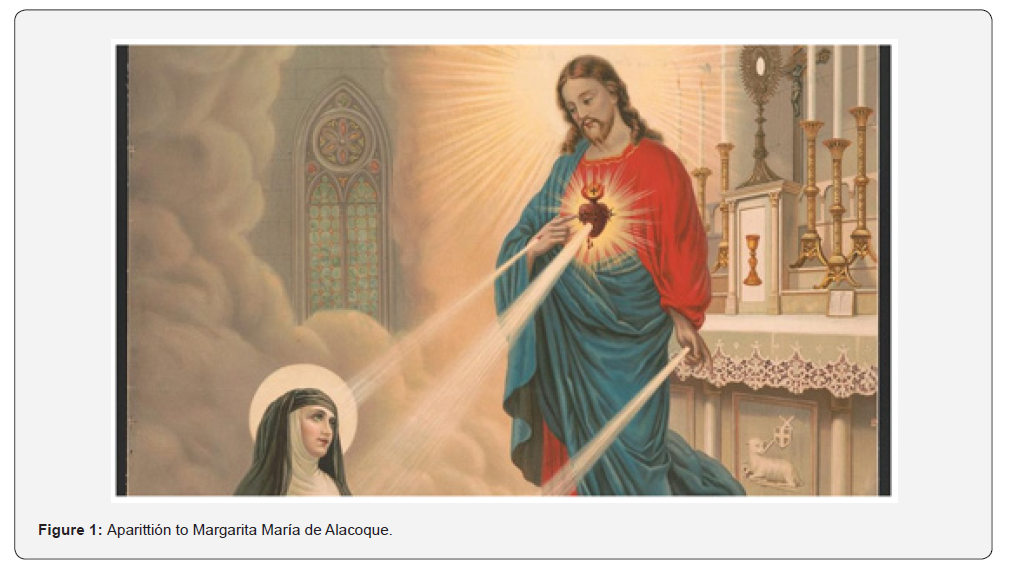
However, beyond its strictly spiritual dimension, the Sacred Heart has been deeply influenced by cultural and scientific transformations, especially by the development of medical knowledge concerning the human heart. From the Middle Ages to the present day, the heart has been the subject of multiple interpretations oscillating between the mystical and the biological (Figure 1). Advances in medicine-from the Galenic tradition to William Harvey’s cardiovascular revolution-modified its representation, granting it greater anatomical realism [3,4]. In particular, beginning in the seventeenth century, the heart came to be conceived as a dynamic and functional organ, which encouraged the progressive incorporation of new anatomical features into religious art. In this way, the iconography of the Sacred Heart evolved from symbolic forms toward more naturalistic and faithful representations, in which the organ appears as a tangible, emotionally charged, and physiologically recognizable entity [5].
This study adopts an interdisciplinary approach that integrates art history, theology, and medicine with the aim of demonstrating that this symbol has not been static, but rather an image shaped under the influence of changes in the understanding of the human body itself [6,7].
The Theological Origins of the Devotion
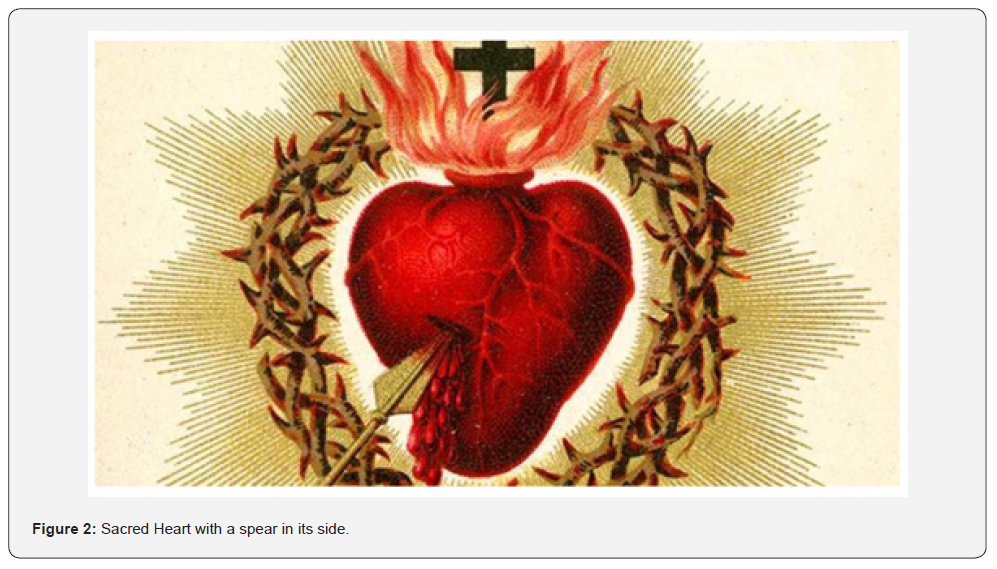
The devotion to the Sacred Heart has its roots in biblical tradition and early Christian spirituality, where the heart symbolizes human interiority and the relationship with God [8]. In many sacred texts, the heart is not merely a physical organ but the place where the moral and spiritual life of individuals is formed (Figure 2).
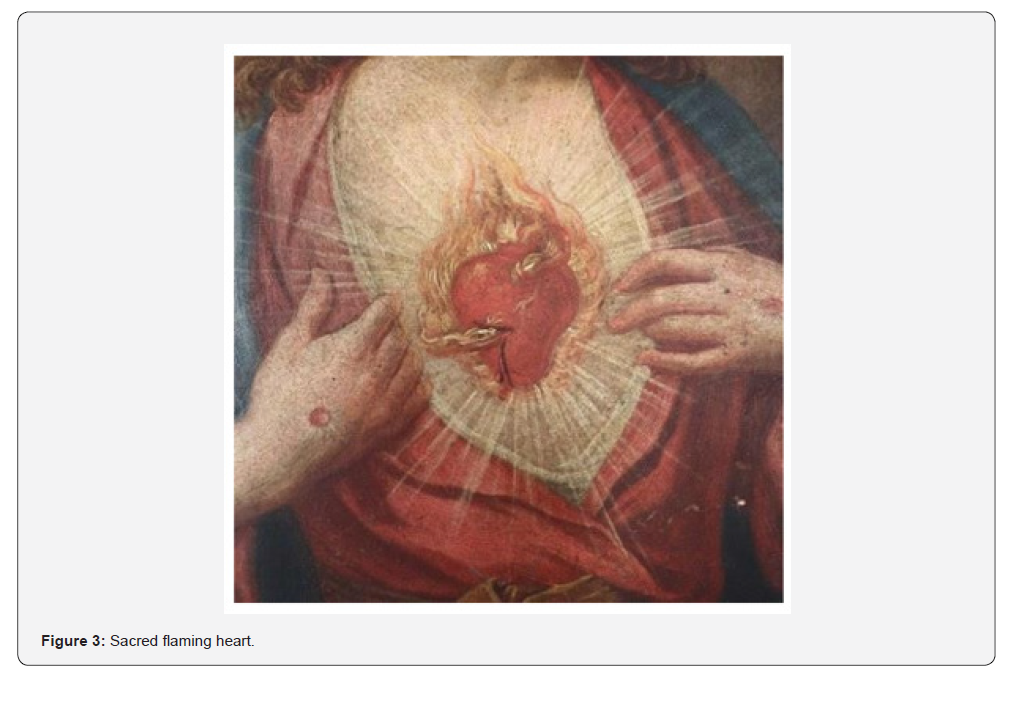
During the Middle Ages, Christian mysticism developed this idea by linking Christ’s heart with the wound in his side as a sign of redemptive love [6]. Authors such as Bernard of Clairvaux and Bonaventure deepened this spirituality, while the visions of mystics such as Gertrude of Helfta consolidated the image of the heart as a spiritual refuge [1]. The institutionalization of the devotion took place during the seventeenth and eighteenth centuries following the revelations of Margaret Mary Alacoque, which describe a flaming heart, wounded and crowned with thorns [9]. This devotion was promoted by the Society of Jesus and officially recogKeywords nized by Pius IX, later receiving theological consolidation through Pius XII’s encyclical Haurietis aquas in the twentieth century [10].
From a theological perspective, Christ’s heart is understood as an expression of both his human and divine love within a single symbol, which enabled its veneration through a concrete corporeal reality (Figure 3). This facilitated the development of an explicit iconography, especially from the nineteenth century onward, when the heart acquired greater anatomical realism and stronger visual expressiveness.
The Influence of Medical Science on Iconography
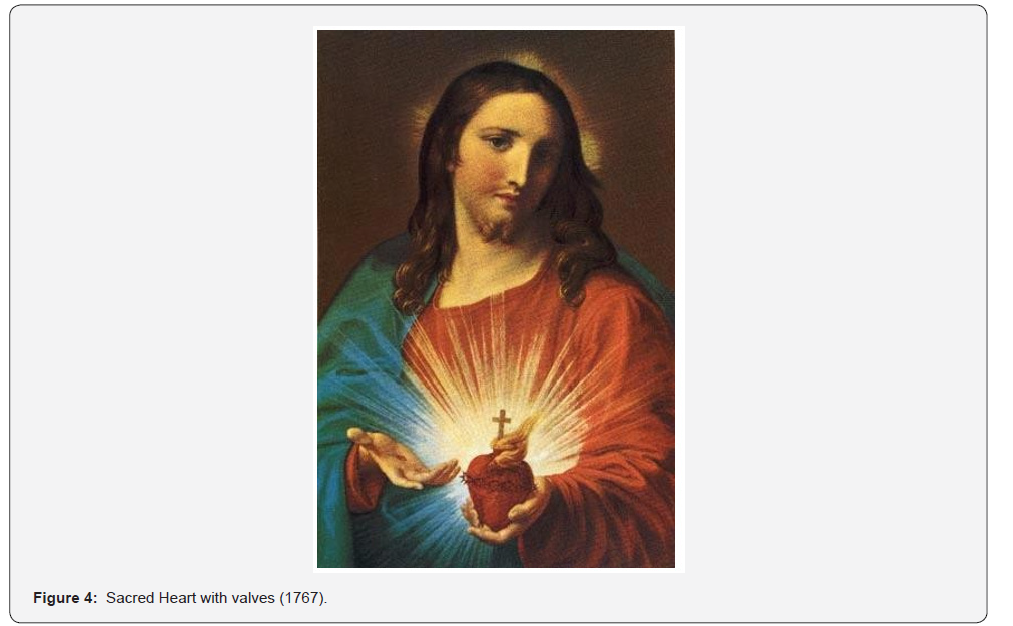
The transformation of the iconography of the Sacred Heart of Jesus cannot be understood without considering the impact of advances in modern medicine. Beginning in the eighteenth century, developments in anatomy and physiology introduced new ways of understanding the human body, which were soon reflected in religious art (Figure 4). A key moment in this process was the discovery of blood circulation, which redefined the heart as the center of a dynamic system responsible for pumping blood throughout the organism [3]. This new conception profoundly influenced visual culture, encouraging a more realistic and functional representation of the organ.
As previously noted, throughout the eighteenth-century artists began incorporating more precise anatomical details into their representations of the Sacred Heart, including chambers, blood vessels, and muscular textures [5]. This process was made possible through the dissemination of illustrated anatomical atlases, which provided detailed visual models of the human body [11]. In the nineteenth century, this tendency reached its peak in popular devotional iconography, where the heart appears as a bleeding, pulsating organ fully integrated into Christ’s body [12]. These images clearly reflect the influence of medical knowledge, but they also respond to a religious sensibility that valued corporeality and suffering as means of identification with the divine.
As previously noted, throughout the eighteenth-century artists began incorporating more precise anatomical details into their representations of the Sacred Heart, including chambers, blood vessels, and muscular textures [5]. This process was made possible through the dissemination of illustrated anatomical atlases, which provided detailed visual models of the human body [11]. In the nineteenth century, this tendency reached its peak in popular devotional iconography, where the heart appears as a bleeding, pulsating organ fully integrated into Christ’s body [12]. These images clearly reflect the influence of medical knowledge, but they also respond to a religious sensibility that valued corporeality and suffering as means of identification with the divine.
The Contemporary Aesthetics of the Sacred Heart
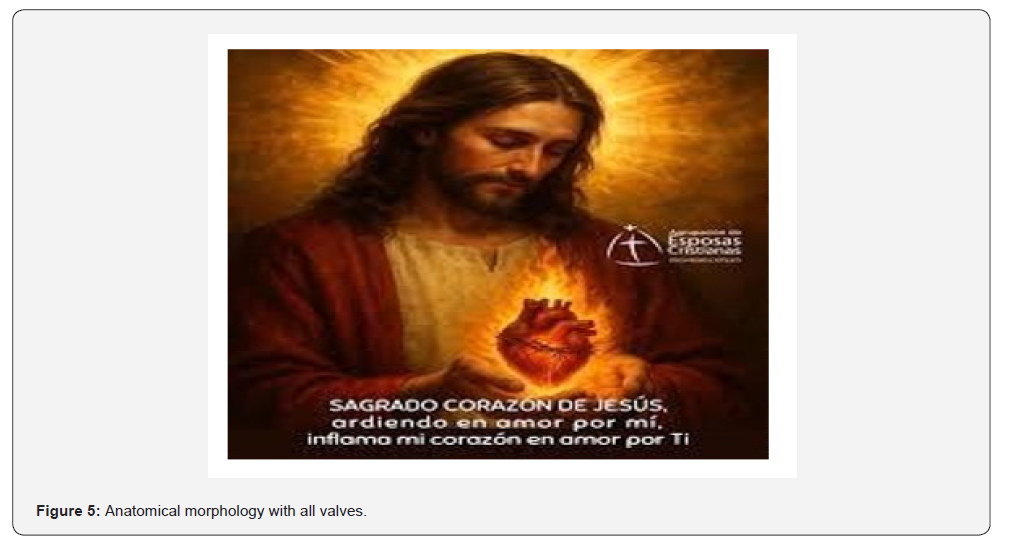
During the twentieth and twenty-first centuries, the image of the Sacred Heart has undergone profound transformation, adapting to new cultural, artistic, and social contexts. Following the Second Vatican Council, sacred art experienced a renewal that favored more abstract and symbolic forms, reducing the emphasis on the anatomical representation of the heart [13]. In theological discourse, the image has been reinterpreted as a symbol of compassion, solidarity, and commitment to human suffering (Figure 5). In this sense, Christ’s wounded heart becomes a metaphor for the pain of the world and for the ethical response that such suffering demands [4,14].
In the field of contemporary art, the Sacred Heart has been the object of multiple appropriations, ranging from institutional critique to aesthetic reinterpretation. These proposals challenge the boundaries between the sacred and the profane, demonstrating the symbol’s capacity to generate new meanings [15]. Indeed, within the new digital environment, its circulation through social media and popular visual formats has expanded its reach, although it has also contributed to its symbolic simplification [16]. From post-secular perspectives, the Sacred Heart is interpreted as an emblem of shared vulnerability and an ethics of care, maintaining its relevance in a world marked by fragmentation and the search for existential meaning [5].
Conclusion
The Sacred Heart of Jesus constitutes a paradigmatic example of the interaction between theology, art, medicine, and visual culture. Its historical evolution demonstrates that it is not a fixed symbol, but rather a dynamic image that has responded to changes in the understanding of the body and in forms of religious sensibility. The incorporation of anatomical elements into its representation, especially from the nineteenth century onward, reflects the influence of modern medicine on sacred art, giving rise to a “symbolic anatomization” of the heart [17,18]. This process expresses a culture that valued the visibility of the body as a form of knowledge and truth [19-24].
In contemporary times, the Sacred Heart has transcended strictly religious contexts, adapting to new languages and settings. Its persistence as a symbol demonstrates its capacity for reinterpretation and its enduring relevance as an image that articulates the human and the divine, pain and love, the visible and the transcendent [22].
Ultimately, this sacred image may be understood as a liminal image that condenses multiple dimensions of human experience. Over the years, its development has evolved significantly, and its study requires multidisciplinary approaches capable of understanding both its historical complexity and its continuous transformation within the framework of contemporary culture.
References
- Coste R Le Cœur du (1997) Christ dans la tradition chré Paris : Desclée.
- Fye WB (1995) The origin of the heart as a symbol: Part I. Clin Cardiol 18(10): 655-659.
- Poynter FNL (1969) William Harvey and the circulation of the blood. London: Macdonald.
- Porter R (1997) The greatest benefit to mankind: A medical history of humanity. New York: WW Norton.
- Fye WB (1996) The origin of the heart as a symbol: Part II. Clin Cardiol 19(2): 112-116.
- Bynum CW (1991) Fragmentation and redemption: Essays on gender and the human body in medieval religion. In: New York: Zone Books.
- Belting H (1994) Likeness and presence: A history of the image before the era of art. Chicago: University of Chicago Press.
- Dufour LX (1983) Vocabulary of Biblical Theology. In: (4th), Barcelona: Herder.
- Bainvel J (1910) Devotion to the Sacred Heart of Jesus. In: The Catholic Encyclopedia. New York: Robert Appleton Company.
- Pius XII (1956) Haurietis aquas: Encyclical on devotion to the Sacred Heart. Vatican City: Vatican Press.
- Persaud TVN, Loukas M, Tubbs RS (2014) A history of human anatomy. In: Thomas CC, Springfield.
- Zanetti L (2013) Il culto del Sacro Cuore di Gesù: storia, spiritualità, teologia. Bologna: EDB.
- O’Kane S (2007) Sacred space and the arts: Contemporary trends. Chicago: Liturgy Training Publications.
- Sobrino J (2001) The Principle of Mercy. In: Search of the Christian Heart. Madrid: Trotta
- Kleinfeld P (2010) Sacred and scandalous: Andres Serrano and the boundaries of religious art. J Relig Art 8(1): 25-39.
- Campbell HA (2012) Digital religion: Understanding religious practice in new media worlds. In: New York: Routledge.
- Gombrich EH (1984) The sense of order: A study in the psychology of decorative art. In: London: Phaidon.
- Kemp M (2000) Visualizations: The nature book of art and science. In: Berkeley: University of California Press.
- Foucault M (1973) The birth of the clinic: An archaeology of medical perception. In: New York: Vintage.
- González M (2017) The image of the Sacred Heart as a cultural brand in contemporary fashion. Rev Estét Cult Vis 5(2): 113-129.
- Morales D (2020) Popular iconography and resistance: the Sacred Heart in Latin American street art. Cuad Arte Relig 14: 71–94.
- Belting H (2011) An anthropology of images: Picture, medium, body. In: Princeton: Princeton University Press.
- Belting H (2001) Likeness and presence. In: Chicago: University of Chicago Press.
- Boff L (2003) Passion of Christ, Passion of the World. In: Santander: Sal Terrae.

























