




 ASM Home



Abstract
This study examines thematic connections in the field of international business strategies, focusing on the importance of adapting to local markets. Through bibliometric analysis, the centrality of international trade as a key knowledge hub is highlighted, reinforcing the connection between innovation (Cluster 1) and trade networks (Cluster 4). In addition, essential conceptual bridges are identified between sustainable development (Cluster 2) and economic growth (Cluster 3), through ESG strategies, which act as a unifying factor between social responsibility and business efficiency. The connection of entrepreneurship with technological solutions confirms the necessity for “glocal” approaches – global innovations with local application. The study highlights that understanding cultural and purchasing specificities is crucial for the successful implementation of international strategies, laying the foundation for a more resilient and adaptive global business.
Key words: International Trade; ESG Strategies; Glocalization; Entrepreneurship; Global Business; Bibliometric Analysis
Introduction
Many academics studied the field of international business and global market, mentioning a change of the recent years, especially in the way of thinking and acting [1]. In a rapidly evolving global business environment, the dynamics of global strategies have become complex. These complexities of conducting business activities are amplified on a global scale as the world becomes increasingly interconnected through advances in communication and transportation technologies [2].
In a globalizing environment such as the contemporary environment, all businesses are trying to cope with various challenges. One challenge is to find a balance between achieving economies of scale through global formalization and the need to adapt to the specific requirements of local markets [3]. The solution to this challenge can be provided by the term "glocalization". This strategy recognizes the need for local adaptation, the adaptation of business activities and includes local, international, multinational and global strategy approaches (Svensson, 2001). Glocalization recognizes that in order to implement a global strategy, firms must take into account the specificities of the local market, while at the same time maintaining global coherence in their operations.
The academic literature highlights that successful implementation of adaptation strategies in local markets requires a complex understanding of the dynamics between global integration and local responsiveness. Many research studies claim that [4]. The international business environment is examined in detail by researchers and they argue that firms need to develop resources and capabilities that enable them to respond effectively to local conditions [5]. Also, the strategies of global formalization and localization of marketing and how these two dimensions can be balanced are extensively examined by researchers [6]. Strategy became crucial for international business, aiming to achieve long term sustainability for the company [7].
The main purpose of this research is to systematically mapping and analyzing the field of adaptation of international business strategies to the reality of local markets through a bibliometric approach. In the existing literature, there are researches that examine international business strategies in local markets in detail but there is no systematic mapping that highlights the research trends through a bibliometric analysis and this research intends to fill this gap. According to the literature, researchers have mainly focused on the analysis of "glocalization" and the balance between local reality and global response but a comprehensive analysis of thematic clusters, the interconnections between them and with other research fields as well as the analysis of emerging trends has not been carried out. In particular, the research seeks to highlight the main research trends of the last five years (2020-2024) through the analysis of keyword co-occurrences. The research questions that this research seeks to answer are as follows.
i. In the field of international business adaptation to local markets, which trends are considered emerging according to the co-occurrence analysis over the last five years?
ii. What are the main thematic clusters forming around the term "Adapting international business strategies to local market realities"?
iii. Which clusters show the strongest literature links in research on the localization of international firms and which thematic areas could be "bridges" between different research fields?
By answering the above research questions, this research seeks to provide value to the academic community and to professionals working in the field of international business. The results of the research will provide a comprehensive picture of the evolution of the field by highlighting the thematic areas that act as bridges to other fields and in the future may identify new research directions. Also, for professionals in the field, it will highlight current research trends that can be adapted and applied to the local market. This research can be a useful tool as businesses today face many challenges in balancing global strategies with local habits and constant geopolitical changes and technological advances are constantly changing the landscape for international businesses.
Methodology
Bibliometric analysis is a quantitative approach that evaluates and monitors the current state of published research in a scientific field [8]. Bibliometric analyses improve the quality of evaluation by enabling a systematic, reproducible, and transparent process [9]. Bibliometric analysi’s methodologies apply graph theory and statistical tools to analyze bibliographic data, including performance analysis and science mapping [10]. Drawing conclusions about the interconnection of articles and analyzing their citations and co-citations with other articles are also considered key techniques in bibliometric analysis. According to Dzikowski [11], the goal of science mapping is to reveal the structure and dynamics of scientific fields. Furthermore, the basis of bibliometric analysis is the objective methodology for drawing qualitative conclusions, which is why it is considered superior to traditional methods of analysis (e.g., thematic reviews) for drawing important conclusions related to the development and progress of research, emerging trends and research areas, and the main issues in a research field [8,12]. According to Kajikawa et al. [13], traditional methods are mainly based on subjective selection of literature and classification of research based on certain predetermined parameters, resulting in the evolutionary aspect of research not being taken into account. Considering that the main purpose of this research is to map and analyze the field of adaptation of international business strategies to the reality of local markets, and specifically the emerging trends in this area, the method of bibliometric analysis was adopted, which involves analyzing the keywords used by authors in articles published over the last five years. The adoption of this approach is considered ideal, as it allows conclusions to be drawn from a large number of articles in the global bibliography.
Many studies have used bibliometric techniques in various fields to identify emerging trends in a field and, more generally, the evolution and progress of the field [14]. In this article, a typical bibliometric approach used in these studies is followed to assess the subjective intellectual structure of the field of international business adaptation to local markets, which is developing and is considered to be largely unexplored.
The technique used and on which the present research is based is keyword co-occurrence analysis or co-word analysis, which depicts the links between keywords and thematic clusters [15,16]. Co-word analysis is a widely used text mining technique that analyzes the links between keywords in the documents used in the study [17]. This analysis is based on the assumption that words that co-occur in the same review documents are related to each other [16]. In this study, Vosviewer software was used to create a network map that shows the frequency with which words appear and those that appear frequently together. To create this co-word map, Vosviewer performs several steps. First, it monitors the frequency with which pairs of keywords appear together in the documents being studied. Each time the software finds that two or more words are associated with each other in the same document, it creates a link. Vosviewer then creates a table with the number of all pairs of keywords extracted from the database used in the research, and this data creates a map that visualizes the similarities between the keywords in the literature. The distance between any two elements on the map reflects the similarity or relationship between them with great accuracy [18]. The visualized relationships between the elements provide clarity and ease of interpretation that other bibliometric software programs do not offer. The scientific maps created are used to identify the thematic groups and thematic areas that emerge in scientific fields over time [17,19]. With regard to the nodes and the color of each node, the software tracks the publication dates of all documents containing a given keyword and then calculates the average year of occurrence of the keyword throughout the specified timeline and assigns a color to the node of each word on the map according to the time series. The darker nodes are related to topics studied in older literature, while the lighter nodes refer to more recent literature [15].
In this study, keywords from 671 documents extracted from the Scopus database were analyzed. The Scopus database was selected as the main search tool due to its prevalence in the academic community and its reliability in terms of selection criteria [9]. Furthermore, according to Zhao & Strotmann [20], Scopus provides 60% greater coverage than other databases and includes open access journals as well as publications from a wide range of scientific disciplines.
The documents selected were found using two keywords: "International Business" and "Local Market." This search yielded 671 documents in English that contained the above terms in their title, keywords, or abstract. The 671 documents that came up only cover the period from 2020 to 2024. This restriction was imposed because the main purpose of the research is to reveal emerging trends in the adaptation of international businesses to local markets, and a longer time frame would not yield timely results.
Next, as mentioned above, Vosviewer software was used, specifically the co-occurrence analysis technique. A CSV file was created from the Scopus database and then uploaded to the Vosviewer software. It was decided to display all keywords with at least 10 occurrences in the review documents. Of the 3,826 keywords that appeared in all review documents, 32 had at least 10 occurrences, two of which were rejected as they were ambiguous and could cause inaccuracies in the research results. According to Smalheiser & Torvik [21], bibliometric reviews analyze bibliographic metadata rather than research findings, and ambiguous information in the dataset must be identified and eliminated in order to achieve accurate and timely results. Thus, 30 keywords related to the field of study and 4 thematic groups were identified, and from these data, the 3 research questions posed at the beginnings of the study were answered.
Results
This section presents the results of the bibliometric analysis and the co-occurrence analysis technique used in this research. Specifically, it presents the emerging trends according to the co-occurrence analysis of the last five years, the main thematic groups that are formed around the field of international business adaptation to local markets, the clusters that show the strongest links in the literature on research into the localization of international businesses, and the thematic areas that could serve as "bridges" between different fields of research. The scope of this analysis covers all available documents from the last five years, as the aim of the study is to obtain an overview of developments in research on the localization of international companies.
The study identifies 671 documents, of which 426 are scientific articles, 93 conference papers, 90 book chapters, 22 reviews, 21 books, 12 conference reviews, 3 editorials, 2 notes, 1 retracted, and 1 data paper. The co-word analysis technique is applied to gain a deeper understanding of the key issues in the localization of international businesses, current developments, and future research trends.
Emerging Trends and important patterns
Internationalization of businesses with a focus on local adaptation
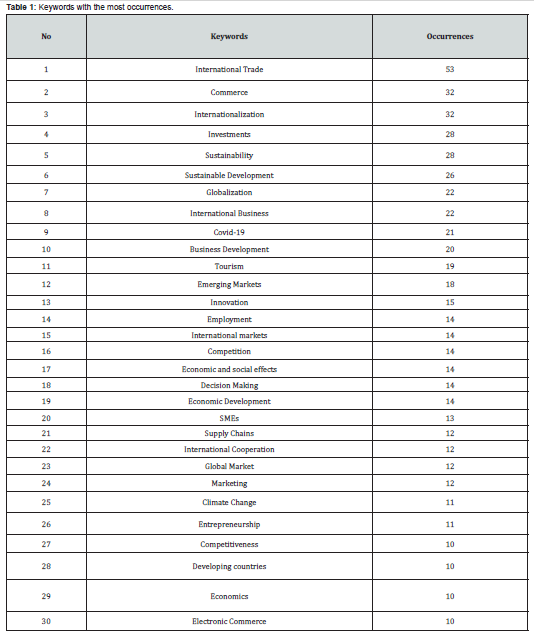
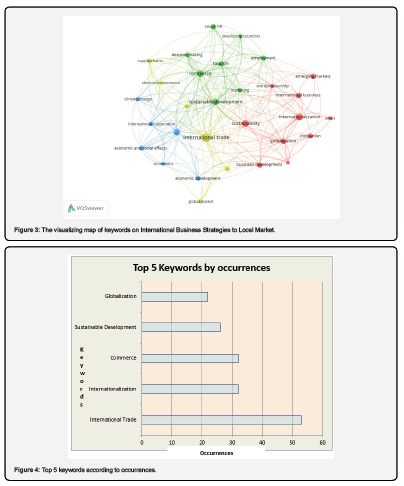
According to Figure 3, keywords such as internationalization, international business, international trade, and globalization appear, indicating intense academic interest in how businesses operate globally, as well as the need for differentiation according to local needs and the need for flexibility. The frequency with which the above keywords appear (see Table 1) reflects the intense academic interest in internationalization issues, such as various internationalization models. For example, the "Uppsala Model" is a theoretical framework that shows the stages that companies should follow in order to expand internationally and how, by going through each stage, they increase their knowledge of foreign markets by committing more resources to them [22] or the "Born Globals" which includes companies that, immediately after their establishment, aim to enter international markets without first trying to establish themselves in the domestic market and then expand [23]. Strategies for entering new markets are another subject of research by the academic community, specifically which strategies companies could use to enter international markets, such as subsidiaries, joint ventures, and exports of services or products. Finally, adapting products or services to different social, cultural, economic, and institutional environments could also be an important subject of analysis for academics in terms of the localization of international businesses. All companies operating in a global context are looking for new markets, low production costs, strategic partnerships, and new technologies. However, the most important factor is the adaptation of their strategies to local conditions.
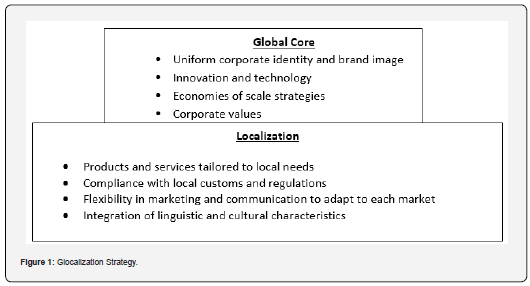
The resulting trend is "glocalization," which requires market research at the local level, the creation of flexible supply chains, local partnerships, and the adaptation and development of technology for analyzing the new data that emerges (Figure 1).
E-commerce and digital transformation
Digital transformation is a trend that could be crucial in adapting international businesses to local markets, as it can provide solutions for adapting products and services to local needs at low cost and with great flexibility. The frequency of keywords such as Electronic commerce, Commerce, Supply Chains, and Global Market (see Table 1) reflects the focus of academics on the digitization of commercial activity, access to new remote markets, and the adaptation of the supply chain to local service needs.
The emerging trend is a focus on e-commerce, which according to Sharma et al. [24] is part of the digital transformation. Through e-commerce, companies avoid the high costs of physical presence, and digital marketing can achieve targeted local adaptation at low cost. In addition, investing in services such as analytics and big data to monitor consumer preferences is an important tool for the localization of international businesses, and adapting supply chains with blockchain and logistics platforms can facilitate the monitoring of local distribution. Finally, adapting to the cultural habits of each market, for example, translated and localized websites facilitates entry into new markets.
Sustainability and adaptation to local needs.
In order to achieve sustainability in local markets, international companies must now adapt to the social and economic needs of the markets they are entering. Terms such as sustainability, sustainable development, and economic and social effects (see Table 1) reflect the intense academic interest in green innovation, environmental standards, local community support, working conditions, the circular economy, growth through investment, etc. Nowadays, the ecological and socio-economic dimensions play a crucial role in the localization of international companies, as according to many laws, international companies are required to comply with strict sustainability standards (European Green Deal), many consumers use eco-friendly products, demand low prices, better working conditions (fair trade), recycling practices, partnerships with local producers and local SMEs, investments in infrastructure and social projects.
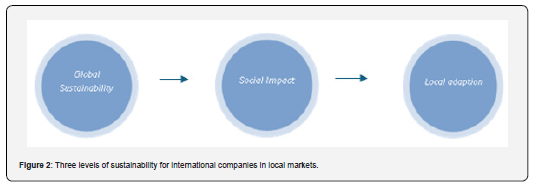
Sustainability is now a trend for international companies, which should use it as a tool to adapt to local markets. Global sustainability strategies should be balanced with the needs of each local community. For example, collaborations with local businesses, local producers, the creation of new jobs for citizens, cheaper and greener solutions. Applying sustainability in adapting international businesses to local markets will increase their competitiveness and create strong relationships and bonds with citizens (Figure 2).
New markets and partnerships
The entry and adaptation of international companies into new and developing markets requires partnerships with local entrepreneurs and local small and medium-sized enterprises (SMEs). The keywords Emerging Markets, Developing Countries, SMEs, and Entrepreneurship indicate the trend toward growth opportunities in emerging markets and developing countries, as there are opportunities for immediate economic growth, a large number of new consumers, and consumers with purchasing power. In order to achieve immediate adaptation to a developing market, cooperation with local SMEs is considered crucial, as they already know the market, account for a large part of local employment and local production, already use technological tools such as e-commerce and social media platforms, and can contribute to the dissemination of innovation and the creation of local ecosystems. In such a collaborative ecosystem, international companies can leverage and gain access in many existing tools (e-commerce platforms) and practices of local SMEs and achieve immediate and successful adaptation to developing markets.
Resilient Glocalization
According to the results, the keyword Covid-19 appears frequently in the review documents (see Table 1). This means that a large part of the research concerns the changes that have occurred and the adaptation of the strategies and policies of international companies. The Covid-19 pandemic has revealed many risks but also opportunities for development and readjustment. For example, the pandemic revealed many risks in the global supply chain, such as dependence on a single supplier and country, which created several problems when some of these countries went into lockdown and were unable to export products. There was no flexibility in the supply chain and no contingency plans to deal with this crisis. There was also a just-in-time system that did not work, as many countries suspended or reduced their routes, resulting in long delays in product deliveries. Now, in order to reduce these risks, companies are turning to partnerships with multiple suppliers from different countries and to nearshoring and reshoring practices. This repatriation of production greatly reduces the above risks, as production now takes place in the home country or in neighboring countries, reducing dependence on distant suppliers and mitigating the risks associated with global disruptions [25]. In addition to adapting supply chains after the pandemic, international companies have also adopted Industry 5.0 technologies such as Augmented Reality (AR), Artificial Intelligence (AI), Internet of Things (IoT), collaboration tools, big data, etc., which increase the efficiency and resilience of businesses in localization and enable faster local adaptation of products/services at a lower cost. Finally, after the pandemic, international companies have readjusted their policies and now emphasize health, sustainability, and safety, increasing confidence in the personalization of experiences. The trend emerging from the use of digital tools, flexible production models, partnerships with local producers and SMEs, and the omnichannel strategy is Resilient Glocalization. International companies are now turning to the use of technology, in marketing and in adapting products and services to local customs, which reduces risk, builds trust with local consumers, and strengthens social legitimacy, achieving Resilient Glocalization.
Innovation and competitiveness
In order to be competitive in local markets, businesses need innovation. This is demonstrated by the large number of appearances of the keywords innovation, competitiveness, competition, and investments (see Table 1). Innovation is now an important cog in the wheel of competitiveness and concerns not only technological solutions but also the ability to understand and integrate local markets, which is achieved through local market research. Companies that understand cultural, social and consumer characteristics can design relevant products. In addition, companies that collaborate with local entrepreneurs and SMEs can create new products and strengthen their competitiveness in relation to other international companies that do not have the same flexibility. Finally, in global markets, technology is the same everywhere and available to everyone. What differentiates companies is their understanding of the local market, the information and knowledge gained through experience. The resulting trend is innovation based largely on experience gained and understanding of the local market, and less on R&D. Companies that use technology, have flexible strategies, invest, experiment, adapt quickly, and innovate have a competitive advantage as they build trust with customers, create better experiences for them, and produce products tailored to the needs of the local market.
Thematic Clusters
It is particularly important for international companies aiming to globalize to adapt their strategies to the requirements of the local market in which they intend to operate. The process of adapting international companies to local markets is not a uniform process but one that is influenced by different factors, mainly economic, social, institutional, and environmental [26]. This section presents the thematic clusters around the term "Adaptation of international business strategies to local market realities" as formed by the Vosviewer software on which this research was based. The data obtained from the analysis of the thematic clusters show that the localization of international companies in local markets is linked to four axes, each of which forms a different thematic/research field. The clusters were created based on the frequency of keyword occurrences and the content of each term. The main purpose of this section is to understand the thematic areas that contribute to a comprehensive analysis of the factors that determine how international companies adapt their strategies so that there is a balanced planning of global direction with local characteristics.
Cluster 1: Business Development and Innovation in the International Environment
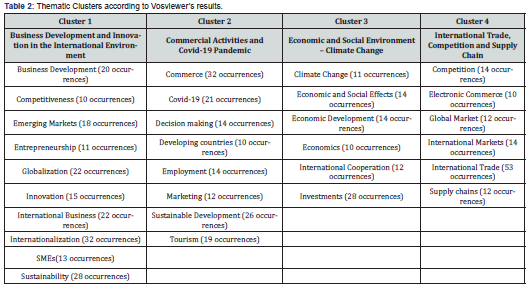
According to the results, the terms appearing in Cluster 1 focus mainly on business development, innovation, competitiveness, international business, and globalization in general. Terms such as "internationalization" (32 occurrences), "globalization" (22 occurrences), "international business" (22 occurrences), "business development" (20 occurrences), and "sustainability" (32 occurrences) demonstrate the critical importance of developing new strategies or adapting existing ones, the development of innovative practices and business models by international companies so that they can be applied flexibly in different environments. Furthermore, according to Table 2, small and medium-sized enterprises (SMEs) also appear a significant number of times in Cluster 1. This indicates the need for SMEs to adapt to local markets, which can be achieved through cooperation between international companies and SMEs and through internal upgrades such as the development of new strategies, technological upgrades, staff training, and adaptation to local needs. External cooperation with international companies could be considered necessary as SMEs acquire new standards, introduce new technologies and practices, and strengthen their market position. Finally, the term "Sustainability," which has the highest number of occurrences (32), suggests that all international companies must take into account all social and environmental parameters. In summary, Cluster 1 argues that the adaptation of international companies to local markets is based on the implementation of innovative practices and continuous development that focuses mainly on the conditions prevailing in local markets and, more generally, on global trends.
Cluster 2: Commercial Activities and Covid-19 Pandemic
Cluster 2 contains terms related to trade, such as "Commerce" (32 occurrences), "Tourism" (19 occurrences), and "Marketing" (12 occurrences). International trade activities are a challenge, especially for multinational companies, as constant changes in global competition and the speed at which economies change require flexibility and adaptability [27,28]. Trade-related keywords such as "commerce," "marketing," and "tourism" underscore how important it is for companies to have knowledge of the local market and be flexible in adapting their products, services, and overall operations to consumer needs. Knowledge of the local market gives a competitive advantage over businesses that follow the same strategies everywhere. It is noted that the term Covid-19 appears a large number of times (21 occurrences). This is due to the fact that the pandemic has significantly affected businesses and forced them to formulate their strategies at the local level, taking into account all health and socio-economic challenges. The pandemic showed international companies how important flexibility is in adapting international strategies. The need for strategies of flexibility and adaptation to changing conditions is also shown by the term "decision making" (14 occurrences). Finally, the term "Sustainable Development" (26 occurrences) reinforces the importance of creating more resilient and sustainable business models that take into account the environmental and socioeconomic footprint of activities. Companies are called upon to adopt practices that reduce their resource and energy footprint, find practices that favor the circular economy, and promote social cohesion. Cluster 2 highlights the importance of sustainable development, which includes addressing external challenges that alter local market conditions.
Cluster 3: Economic and Social Environment – Climate Change
In Cluster 3, we find the terms "economic development" (14 occurrences), "investments" (28 occurrences), "economic and social effects" (14 occurrences), "international cooperation" (12 occurrences), and "climate change" (11 occurrences). These terms appearing in cluster 3 reflect the relationship between climate change and the economy, focusing on social and economic impact, investments, development, and economic cooperation. Climate change has negative consequences for agriculture, tourism, and energy, reducing living standards, the labor market, and, more generally, a country's productivity. Business strategies can no longer be considered autonomous but are directly linked to the global ecological and economic environment. Successful strategies must now take into account environmental challenges, which vary from market to market but are closely linked to global issues. New types of growth are now seen as necessary, as economic progress should not come at the expense of the environment. Innovative technologies, green investments, and sustainable production and consumption patterns should now be considered priorities. International cooperation, which is a key word in Cluster 3, is considered essential for international companies to achieve sustainable development goals. Cooperation includes the transfer of know-how, financial support, and capacity building, mainly in countries most affected by climate change and its impacts. The connection between climate, economy, and cooperation is a fundamental axis for the future, where sustainable development is a critical priority for all developed societies.
Cluster 4: International Trade, Competition and Supply Chain
Cluster 4 includes terms such as "International Trade" (53 occurrences), "International Markets" (14 occurrences), "Competition" (14 occurrences), "Supply Chains" (12 occurrences), "Global Market" (12 occurrences), and "Electronic commerce" (10 occurrences). These terms suggest that businesses now need practices that allow them to adapt and succeed in an ever-changing market. In today's world, the business world is characterized by speed, constant change, and complexity. In order for businesses to survive in such a world of technological innovation and globalization, flexibility in international markets is considered crucial.
International trade is the term that appears most frequently, and this is due to the decisive role it plays in interactions and exchanges of goods, services, and ideas between countries. In recent years, cross-border competition has increased as tariffs have been reduced, free trade zones have been created, and technological infrastructure has been developed, making it easier to enter foreign markets. Of course, opening up markets carries risks, as there are price fluctuations, uncertainty, geopolitical issues, and exchange rate instability. International companies should plan and adapt their strategies according to the challenges they face, diversify their imports and exports, and have a thorough understanding of the policies prevailing in each market. International businesses are also required to be constantly on the lookout for innovative products or services, marketing, and processes in general. Assessments of production costs, distribution, and understanding of supply and demand trends can give a company a significant competitive advantage. Competition has increased and companies need to be vigilant, as competition is not only between international companies but also involves small and medium-sized enterprises, which are competing for market share in certain sectors through digital platforms.
E-commerce can completely transform traditional borders as it can bring together businesses and consumers from all over the world. E-commerce platforms allow all businesses to participate in international markets with low entry costs, at high speed, and with the ability to detect consumer preferences. To achieve this, businesses need to invest in technology, data security, digital marketing, logistics, and after-sales services. Rapid access to products is directly linked to the need for flexible and efficient supply chains that can respond immediately to changes in demand or unforeseen disruptions, such as natural disasters or health crises.
The supply chain can provide a significant competitive advantage, as delivery speed, quality, and reliability satisfy customers. To achieve this, of course, companies need to continuously invest in technology and innovation, as well as in data management.
Cluster 4 focuses mainly on international competition, the supply chain, e-commerce, and, more generally, the operation of businesses in the global market. International trade now has a broader meaning and does not only concern the exchange of goods between countries, but also value chain networks, geographical dispersion of activities, and technological innovation. Overall, Cluster 4 reveals an organised environment of international business practices, where trade, competition, markets, supply chains and technology form the foundation of success in today's extroverted economy.
Thematic Bridges in Business Internationalization
This section presents the clusters that show the strongest connections in the literature on the localization of international businesses. In addition, the thematic areas that form "bridges" between different research fields are revealed according to the results of the Vosviewer software.
The study of the localization of international companies is constantly evolving, as it is a dynamic field where economic, social, and environmental issues intersect, as reflected in the thematic clusters that emerge in the literature (see Table 2). The network of keywords depicted in the three-dimensional map created by the Vosviewer application (see Figure 3) reveals that research activity focuses mainly on topics such as international trade, innovation, sustainable development, and crisis management, such as the Covid-19 pandemic, while also serving as a "bridge" between different scientific fields.
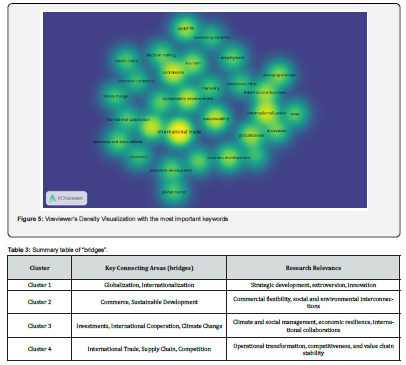
According to Table 2, certain thematic areas cut across clusters, creating strong links in the relevant literature. This means that some keywords are not related to only one thematic cluster but are related to other clusters at the same time. Specifically, these are areas that act as common points connecting different thematic areas, allowing research results and knowledge to spread from one field to another. Concepts such as internationalization, sustainable development, investments, and competition can be linked to strategic planning with the social, technological, and environmental parameters of entrepreneurship. This approach creates a dynamic framework for synergies that generates new knowledge and practical tools for businesses seeking to adapt to local markets.
According to the results extracted from the Vosviewer software, the connection of specific clusters causes strong connecting thematic areas in the literature on the localization of international companies. Furthermore, interconnected concepts create certain "bridges" between different fields.
The strongest thematic areas are those that, according to the results, have the highest number of occurrences (see Table 3). The term "International Trade" has the highest number of occurrences with 53, followed by the terms "Internationalization" and "commerce" with 32 occurrences. Next is the term "Sustainable Development" with 26 occurrences, and finally the term "Globalization" with 22 occurrences. As shown in Figure 3, these fields appear as central nodes that are points of convergence for various research flows, connecting terms from different clusters, which indicates the criticality of these concepts (Figures 4&5).
The Vosviewer map (Figure 3) illustrates the connections between keywords. As can be seen, there are clusters that form relatively autonomous units without many connections to the keywords of other clusters (for example, the red cluster, which is cluster 1), while some keywords have a central position and extensive connections to other fields.
"International Trade" is in the centre of the map and has the most connections with terms from different clusters. However, it has the strongest connection with the terms competition, markets, emerging markets and sustainable development. Sustainable Development is closely linked to both the economic and social-environmental clusters, acting as a thematic bridge between business strategy, climate, and social impacts. The strongest links for the term Sustainable Development are International Trade, Sustainability, and Commerce. The term "Internationalization" is mainly linked to Cluster 4, which concerns International Trade, competition, and the supply chain, but it can also serve as a bridge to other clusters, such as business development and innovation (Cluster 1), as internationalization requires new strategies and innovation. In addition, internationalization also serves as a bridge for Cluster 2 and Cluster 3, but according to the results, the strongest links are with the terms international trade and international markets, which belong to Cluster 4. The term commerce is a "bridge" mainly to economics (Cluster 3) but also to international networks and competition (Cluster 4) due to the related theme of "electronic commerce" and international commercial activities. The strongest links for the term commerce are "investments" and "Supply Chain". Finally, the term "Globalization" is linked to all other Clusters, but according to Vosviewer, the links are not as strong except for the term "International Trade." It also has a strong link to the terms "internationalization" and "business development," which, however, belong to the same Cluster.
More specifically, the four clusters shape the research landscape as follows:
Cluster 1: Innovation, development, and internationalization are concepts that are strongly linked to the strategy of extroversion and expansion into local markets. The term "internationalization" is the thread that links business development with broader geo-economic trends.
Cluster 2: Commercial activities and crisis situations, such as the Covid-19 pandemic, shape the framework of adaptability and flexibility in internationalization. The terms "commerce" and "sustainable development" are bridges between economic strategy and socio-environmental implications.
Cluster 3: Climate change and socio-economic impacts are areas that require international resource management and cooperation (International Cooperation).
Cluster 4: Competitiveness and supply chains are the basis of localization strategies.
According to Figure 3 and the above results (see Table 3), "International Trade" acts as a bridge between competition, extroversion, and sustainability, while the term "Internationalization" acts as a bridge for growth strategies with the international environment. As for "Sustainable Development," it acts as a bridge between the social and environmental dimensions and business strategies, while the term "Globalization" connects Clusters 1, 2, and 4 with global trends such as sustainability and green transition, technological developments, strengthening of trade protectionism, etc.
Therefore, research on the adaptation of international companies to local markets bridges scientific fields such as business strategy, economic and social sciences, environmental management, and technological innovation with keywords that serve as connecting links.
This research highlights the importance of a multidisciplinary approach with certain keywords that serve as a "bridge" for new research connections, especially topics such as sustainable development, international trade, and international networking. Combining these with practical application in international business strategy creates a new framework that can lead to the development of new theories and new tools for more effective and rapid adaptation to local markets.
Conclusion
This research highlights critical trends and dynamic themes surrounding the adaptation of international companies to local markets. The results were obtained through a bibliometric analysis conducted using Vosviewer software and the co-occurrence analysis technique. The conclusions are summarized around the concept of "glocalization," which, as confirmed by the recent literature used, is a mature strategy for the coexistence of the global and local environments as a tool for competitiveness and resilience.
The number of published documents analyzed was 671, which indicated that research on the adaptation of international companies to local markets revolves around six emerging trends, which are internationalization, digital transformation, sustainability, new markets, collaboration, and innovation. Each of these is linked to theoretical and practical issues that make up a multidimensional research ecosystem.
In the field of business strategy, internationalization and local adaptation emerge as the main interactive relationship. Terms such as internationalization, globalization, and international business appear quite frequently, indicating that research focuses on the development of flexible business models that can integrate local markets without altering the global identity of companies. Digital transformation, such as e-commerce, plays a critical role in local differentiation. This transition to the digital world enhances accessibility and speed of entry into new markets, but also helps to adapt to cultural specificities. New technologies such as blockchain, big data, and logistics play a decisive role in the creation of flexible and responsive supply chains. Sustainability is considered a key strategy in the local implementation process. The terms sustainability, sustainable development, and economic and social effects highlight the need for green and socially responsible entrepreneurship. International companies are therefore called upon to align themselves with institutional frameworks such as the European Green Deal (EGD), while seeking to develop strong ties with local communities through investment and partnerships. The trend towards partnerships in emerging markets is evidenced by the presence of the terms SMEs, developing countries and emerging markets. Collaboration between international companies and small and medium-sized enterprises (SMEs) can accelerate adaptation and knowledge sharing in local markets, allowing for the integration of innovations that are already established in local markets. This strengthens the socio-economic impact of international companies. A new reality has emerged with the Covid-19 pandemic. Companies adapted their supply chain strategies by diversifying their suppliers, reshoring their production, and integrating Industry 5.0 technologies. The combination of smart technology and human resilience highlighted by the crisis has strengthened local flexibility and customer relationships. Finally, innovation is the connecting link between all of the above trends. According to the data analysis, competitiveness is not only about technology but mainly about the ability of companies to understand the cultural and social directions of local markets. Now, adaptation through knowledge of the local market is considered the central lever of growth.
With regard to thematic clusters, the results revealed four main pillars:
i. Development and innovation in the international environment. Here, sustainability and small and medium-sized enterprises (SMEs) play a decisive role as they promote modernization.
ii. The Covid-19 pandemic and commercial activity. The emphasis is mainly on sustainability, flexibility, and decision-making in times of crisis.
iii. Socio-economic environment and climate change. International cooperation and green development determine the level of competitive development.
iv. International trade, competition, and the supply chain determine the operational dimension of global strategy. E-commerce is a powerful tool for entering and adapting to new markets.
The analysis of thematic bridges demonstrates the existence of synergies and connections between the terms. The central nodes, as shown in Figure 3, consist of international trade, internationalization, commerce, and globalization. These central nodes connect different fields, from management strategy to environmental and social economics. The importance of these terms is not related to their frequent appearance in publications, but rather to their role as important mechanisms for the production of knowledge and integrated business approaches.
In summary, the field of localization of international businesses is evolving into a multidisciplinary system of knowledge that combines business strategy, technology, social responsibility, and sustainability. The new structure of global business thinking is now glocalization.
References
- Goulas A (2021) An initial study on Business Clusters in the context of territorial development. Annals of the University of Craiova, XXVI (LXII).
- Hasanah L (2024) Global Strategies: Navigating the complexities of international business in a connected world. Advances in Business & Industrial Marketing Research 2(1).
- Song J (2021b) Global standardization and local adaptation of marketing ---A critical review of the literature. Journal of Business Administration Research 4(2).
- Goulas A (2022) Special markets for local agro food products. Annals of the University of Craiova, XXVII (LXIII).
- Ferreira MP, Li D, Serra FaR, & Armagan S (2008) Adaptation to the international business Environment: A resource advantage perspective. DOAJ (DOAJ: Directory of Open Access Journals).
- Sinha S (2022) International Marketing of Global Brands: Balancing localization and standardization. Journal for ReAttach Therapy and Developmental Diversities.
- Hunger D, and Wheelen T (2004) Introduction in the strategic management.
- Chawla RN, & Goyal P (2021) Emerging trends in digital transformation: a bibliometric analysis. Benchmarking an International Journal 29(4): 1069-1112.
- Caviggioli F & Ughetto E (2018) A bibliometric analysis of the research dealing with the impact of additive manufacturing on industry, business and society. International Journal of Production Economics 208: 254-268.
- Kumar S, Lim WM, Pandey N, & Westland JC (2021) 20 years of Electronic Commerce Research. Electronic Commerce Research, 21(1): 1-40.
- Dzikowski P (2018) A bibliometric analysis of born global firms. Journal of Business Research 85: 281-294.
- Strozzi F, Colicchia C, Creazza A, & Noè C (2017) Literature review on the ‘Smart Factory’ concept using bibliometric tools. International Journal of Production Research 55(22): 6572-6591.
- Kajikawa Y, Ohno J, Takeda Y, Matsushima K, & Komiyama H (2007) Creating an academic landscape of sustainability science: an analysis of the citation network. Sustainability Science 2(2): 221-231.
- Padilla-Ospina AM, Medina-Vásquez JE, & Rivera-Godoy JA (2018) Financing innovation: A bibliometric analysis of the field. Journal of Business & Finance Librarianship 23(1): 63-102.
- Van Eck NJ, & Waltman L (2014) Visualizing bibliometric networks. In: Springer eBooks, pp. 285-320.
- Narong DK, & Hallinger P (2023) A keyword Co-Occurrence Analysis of research on service learning: conceptual FOCi and emerging research trends. Education Sciences 13(4): 339.
- Chen X, Zou D, & Xie H (2020) Fifty years of British Journal of Educational Technology: A topic modeling based bibliometric perspective. British Journal of Educational Technology 51(3): 692-708.
- Van Eck NJ, Waltman L, Dekker R, & Van Den Berg J (2010) A comparison of two techniques for bibliometric mapping: Multidimensional scaling and VOS. Journal of the American Society for Information Science and Technology 61(12): 2405-2416.
- Zupic I, & Čater T (2014) Bibliometric methods in management and organization. Organizational Research Methods 18(3): 429-472.
- Zhao D, & Strotmann A (2015) Analysis and visualization of citation networks. In Synthesis lectures on information concepts, retrieval, and services.
- Torvik VI, & Smalheiser NR (2009) Author name disambiguation in MEDLINE. ACM Transactions on Knowledge Discovery From Data 3(3): 1-29.
- Hult GTM, Gonzalez-Perez MA, & Lagerström K (2019) The theoretical evolution and use of the Uppsala Model of internationalization in the international business ecosystem. Journal of International Business Studies 51(1): 38-49.
- Wadeson N (2020) Internationalisation theory and Born Globals. Multinational Business Review 28(4): 447-461.
- Sharma R, Srivastva S, & Fatima S (2023) E-Commerce and digital transformation: trends, challenges, and implications. International Journal for Multidisciplinary Research 5(5).
- Miguel AF, Riccardi MP, García-Muiña FE, Del Hoyo APF, Veglio V, et al. (2024) From Global to GLocal: Digital Transformation for reshoring more agile, resilient, and sustainable supply chains. Sustainability 16(3): 1196.
- Kormakova I, Kruhlyanko A, Peniuk V, Ursakii Y, & Verstiak O (2023) Actual strategies for businesses penetrating foreign markets in the modern economy: globalisation aspect. International Journal of Professional Business Review 8(5): e02148.
- Porter ME (2023) Changing patterns of international competition. In Routledge, eBooks, pp. 61-86.
- Kirby A (2023) Exploratory Bibliometrics: using VOSViewer as a preliminary research tool. Publications 11(1): 10.

























