




 ASM Home



Abstract
Climate change increasingly influences agricultural productivity, livelihood stability, and institutional resilience within tropical smallholder farming systems, including the palm oil sector. In response to growing environmental variability and sustainability-oriented governance transitions, agricultural cooperatives have received increasing attention as institutional mechanisms supporting adaptive capacity among palm oil smallholders. This study aims to provide a more comprehensive understanding of how agricultural cooperatives contribute to strengthening adaptive capacity, livelihood resilience, sustainability governance, and institutional coordination within contemporary palm oil production systems. The study employed a Systematic Literature Review (SLR) approach guided by the PRISMA framework using secondary data derived exclusively from peer-reviewed scientific publications indexed in the Scopus database. Article selection was conducted through identification, screening, eligibility assessment, and inclusion procedures, resulting in 39 eligible articles published between 2020 and 2026. Data were analyzed using thematic synthesis to identify dominant institutional patterns related to cooperative-based climate adaptation. The findings reveal five major themes, including climate adaptation knowledge dissemination, financial accessibility and livelihood resilience, collective action and social capital formation, sustainability governance and certification support, and institutional constraints affecting adaptive effectiveness. Overall, the reviewed literature indicates that agricultural cooperatives increasingly function as intermediary institutions supporting adaptive preparedness, sustainability coordination, and production continuity among palm oil smallholders. Future studies are encouraged to explore comparative regional institutional dynamics and digital cooperative adaptation systems within evolving agricultural sustainability frameworks.
Keywords:Agricultural Cooperatives; Climate Adaptation; Palm Oil Smallholders; Sustainability Governance; Systematic Literature Review
Introduction
Climate change has increasingly become one of the most significant challenges affecting global agricultural systems, particularly in developing countries where rural livelihoods remain highly dependent on climate-sensitive production activities. Rising temperatures, changing rainfall patterns, prolonged drought periods, flooding events, and ecological variability have altered agricultural productivity dynamics across multiple commodity sectors, including plantation-based agriculture [1]. These changes not only influence production stability but also affect rural income security, market continuity, and long-term sustainability within agricultural communities. In response to these pressures, adaptation strategies have become an increasingly important component of agricultural development policy, especially for smallholder-based farming systems characterized by limited access to financial resources, technical information, and institutional support mechanisms [2].
Within this broader context, institutional capacity has emerged as a critical factor influencing the effectiveness of climate adaptation at the local level. Existing studies indicate that adaptive responses are often more effective when supported by intermediary institutions capable of facilitating coordination, knowledge dissemination, resource mobilization, and collective action among agricultural producers [3]. In many rural regions, agricultural cooperatives have gradually expanded beyond their traditional economic functions and increasingly operate as multifunctional organizations that support technical assistance, market integration, sustainability programs, and community resilience initiatives. Cooperative institutions frequently provide organizational structures that enable smallholders to access agricultural training, financing schemes, shared infrastructure, and collaborative adaptation mechanisms that would otherwise remain difficult to achieve individually
The growing relevance of agricultural cooperatives within climate adaptation discussions is particularly important in the palm oil sector, which remains one of the most economically significant agricultural industries in tropical developing regions. Palm oil contributes substantially to employment generation, export revenues, rural economic development, and livelihood support for millions of smallholder farmers across Southeast Asia, Africa, and Latin America [4]. In countries such as Indonesia and Malaysia, smallholders account for a considerable proportion of oil palm cultivation areas and continue to play an increasingly important role within global palm oil supply chains [5]. At the same time, palm oil production systems are also exposed to climaterelated pressures, including irregular rainfall distribution, water stress, changing pest dynamics, flooding events, and productivity fluctuations associated with environmental variability. These conditions have intensified the need for adaptive institutional arrangements capable of supporting production continuity and sustainability-oriented agricultural transitions among smallholder producers.
Recent literature has increasingly highlighted that climate adaptation within the palm oil sector cannot rely solely on technological interventions or individual farm-level responses. Instead, adaptation processes frequently require collective institutional coordination involving farmer organizations, cooperatives, extension systems, financial actors, and sustainability governance frameworks. Agricultural cooperatives, in particular, are often positioned as strategic intermediary institutions because they facilitate collective bargaining, information sharing, farmer inclusion, and organizational coordination across production networks [6]. Through cooperative-based systems, smallholders may gain improved access to adaptive farming practices, replanting programs, climate-related information services, sustainability certification initiatives, and market stabilization mechanisms. Several studies further indicate that cooperative participation may contribute to strengthening rural resilience by reducing transaction costs, improving access to agricultural financing, and supporting diversified livelihood strategies within climate-sensitive environments [7].
In parallel with the expansion of sustainability governance within the global palm oil industry, cooperatives have also become increasingly associated with certification compliance and sustainability-oriented institutional transformation. Various sustainability frameworks such as the Roundtable on Sustainable Palm Oil (RSPO), Indonesian Sustainable Palm Oil (ISPO), and Malaysian Sustainable Palm Oil (MSPO) have encouraged stronger organizational coordination among smallholder producers, particularly regarding traceability systems, environmental management practices, and compliance monitoring. In many cases, agricultural cooperatives facilitate group certification systems that enable smallholders to collectively meet sustainability standards while reducing administrative and financial burdens associated with individual certification processes [8]. Consequently, cooperative institutions are increasingly discussed not only within rural economic development literature but also within broader debates concerning sustainability governance, adaptive agriculture, and climate resilience in plantation-based commodity sectors.
Despite the growing academic attention devoted to climate adaptation and sustainability within the palm oil sector, the existing body of literature remains relatively fragmented across different disciplinary perspectives. Previous studies have often examined agricultural cooperatives primarily from economic, organizational, or rural development perspectives, while climate adaptation research has frequently focused on technical mitigation measures, environmental vulnerability, or policy-oriented adaptation frameworks [9]. As a result, there remains limited integrative synthesis specifically examining how agricultural cooperatives function as institutional mechanisms supporting climate adaptation among palm oil smallholders. Existing findings are dispersed across multiple thematic areas, including agricultural extension, financial resilience, sustainability certification, farmer inclusion, collective action, and adaptive governance, thereby creating the need for a more systematic consolidation of evidence.
Furthermore, the rapid evolution of sustainability standards, digital agricultural technologies, adaptive governance frameworks, and climate-related agricultural policies over recent years has generated a substantial increase in scholarly publications related to institutional adaptation within agricultural commodity systems [10]. However, despite this growing literature, relatively few studies have systematically synthesized recent evidence concerning the institutional role of cooperatives in facilitating adaptive responses within palm oil-producing communities. A structured review is therefore necessary to identify dominant thematic trends, institutional patterns, recurring challenges, and emerging research directions related to cooperative-based climate adaptation within the palm oil sector. Such synthesis is particularly important for improving conceptual understanding regarding how cooperative institutions contribute to balancing rural development objectives, sustainability coordination, and adaptive agricultural transition processes within climate-sensitive production environments.
Based on these considerations, this study applies a Systematic Literature Review (SLR) approach to synthesize and critically organize recent scientific evidence concerning the role of agricultural cooperatives as climate adaptation institutions within the palm oil sector. The review focuses on identifying major thematic patterns, institutional functions, adaptive mechanisms, and operational challenges discussed across peerreviewed scientific literature related to palm oil smallholders and cooperative-based adaptation systems. By systematically consolidating findings from recent scholarly publications, this study aims to provide a more comprehensive understanding of how agricultural cooperatives contribute to strengthening adaptive capacity, livelihood resilience, sustainability governance, and institutional coordination within contemporary palm oil production systems.
Accordingly, this study addresses two principal research questions:
i. RQ1: How do agricultural cooperatives function as
institutional mechanisms supporting climate adaptation among
palm oil smallholders?
ii. RQ2: What major institutional opportunities and
operational constraints influence the effectiveness of cooperativebased
adaptation systems within the palm oil sector?
Literature Review
The literature concerning climate adaptation, agricultural cooperatives, and sustainability governance within the palm oil sector has expanded significantly over recent years, reflecting growing academic attention toward institutional responses to environmental and agricultural challenges. Existing studies increasingly emphasize that climate adaptation in smallholder agricultural systems is influenced not only by technical farming practices but also by organizational capacity, collective coordination, financial accessibility, and sustainability-oriented governance mechanisms. Within this context, agricultural cooperatives are frequently positioned as intermediary rural institutions capable of strengthening adaptive capacity, improving farmer inclusion, and facilitating sustainability transition processes among palm oil smallholders. Accordingly, this literature review synthesizes major theoretical and empirical discussions concerning climate adaptation in smallholder agriculture, the institutional role of cooperatives, adaptive resilience in the palm oil sector, sustainability governance frameworks, and the existing research gaps related to cooperative-based climate adaptation systems.
Climate Change and Agricultural Adaptation in Smallholder Farming Systems
Climate change has become an increasingly important issue within contemporary agricultural development due to its influence on production stability, resource availability, and rural livelihood security. Agricultural systems in tropical regions are particularly exposed to climate-related pressures, including irregular rainfall distribution, temperature variability, prolonged droughts, flooding events, and shifts in pest and disease dynamics [11]. These environmental changes directly affect farming productivity and indirectly influence household income, food security, and market stability within smallholder-based agricultural economies. As a result, climate adaptation has gradually evolved into a central component of agricultural policy, sustainability governance, and rural institutional development across many developing countries [12].
Within smallholder farming systems, adaptive capacity is frequently influenced not only by environmental conditions but also by institutional accessibility, organizational support, and resource coordination mechanisms. Existing literature consistently demonstrates that farmers with stronger institutional connections generally exhibit higher adaptive preparedness than producers operating independently [13]. Adaptive agricultural practices such as soil conservation, water management, crop diversification, integrated pest management, and climate-responsive land-use planning often require access to extension services, financial resources, technical information, and collaborative learning systems. Consequently, institutional arrangements capable of facilitating these processes increasingly receive attention within climate adaptation research.
Several studies further emphasize that climate adaptation in agriculture cannot be understood solely as a technical adjustment process. Instead, adaptation is increasingly recognized as a multidimensional institutional process involving governance structures, social coordination, financial systems, and collective learning mechanisms [14]. In this context, intermediary organizations such as agricultural cooperatives, farmer associations, and rural producer groups are often viewed as important institutional actors supporting adaptive transitions among smallholder communities.
Agricultural Cooperatives as Rural Institutional Mechanisms
Agricultural cooperatives have historically functioned as economic organizations designed to strengthen farmer bargaining power, reduce market inefficiencies, and improve access to agricultural inputs and commercial networks [15]. However, recent literature suggests that cooperative institutions increasingly perform broader developmental and institutional roles extending beyond traditional economic coordination. In many rural regions, cooperatives now facilitate technical extension services, sustainability programs, rural financing initiatives, and collective resource management systems that contribute to strengthening agricultural resilience.
The institutional structure of cooperatives enables smallholders to engage collectively in activities that are often difficult to implement individually due to financial, technical, or organizational limitations. Several studies indicate that cooperative participation improves access to agricultural information, collective marketing systems, farm inputs, transportation infrastructure, and policy-related programs [16]. Through coordinated organizational systems, cooperatives may also reduce transaction costs and increase negotiating capacity within agricultural supply chains, thereby contributing to greater economic stability among smallholder producers.
In addition to their economic role, agricultural cooperatives are increasingly associated with social capital formation and collective action processes. Existing studies demonstrate that cooperative participation strengthens trust-building, peer learning, information exchange, and collaborative problem-solving within rural farming communities [17]. Such organizational characteristics are particularly important in climate-sensitive agricultural environments where adaptive responses frequently depend on coordinated action, local knowledge sharing, and institutional cooperation among producers.
The literature further suggests that cooperatives often function as intermediary institutions connecting farmers with external stakeholders, including governments, financial institutions, sustainability agencies, non-governmental organizations, and private-sector actors. This intermediary role becomes increasingly important within agricultural sectors experiencing rapid transformation related to sustainability governance, climate adaptation policy, and global market integration.
Climate Adaptation and Institutional Resilience in the Palm Oil Sector
The palm oil sector represents one of the most economically significant agricultural industries in tropical developing regions, particularly in Southeast Asia. Palm oil contributes substantially to export revenues, employment generation, rural economic development, and livelihood support for millions of smallholder farmers. In countries such as Indonesia and Malaysia, smallholders manage a considerable share of cultivated oil palm areas and play an increasingly important role within global palm oil supply chains [18]. As a result, adaptive resilience within smallholder palm oil systems has become an important concern within both agricultural development and sustainability governance discussions.
Climate-related pressures affecting palm oil production include rainfall irregularities, water stress, flooding events, soil degradation, and fluctuations in productivity associated with environmental variability [19]. Several studies indicate that climate instability may influence harvesting cycles, fertilizer efficiency, pest incidence, and long-term plantation productivity, particularly among smallholders with limited institutional support systems. Consequently, adaptation within palm oil production systems increasingly requires coordinated institutional responses capable of supporting technical guidance, resource accessibility, and production continuity.
Recent literature emphasizes that adaptation in the palm oil sector involves more than farm-level technological interventions. Instead, adaptive processes are increasingly shaped by institutional coordination, collective governance systems, sustainability initiatives, and market-oriented organizational structures [20]. Agricultural cooperatives are therefore frequently discussed as strategic institutional actors because they facilitate communication between smallholders and broader governance systems related to agricultural extension, sustainability standards, and adaptive resource management.
Several studies also highlight that cooperative institutions may strengthen resilience within palm oil smallholder systems by improving access to collective financing, replanting support, adaptive farming information, and sustainability-oriented training programs [21]. In regions where government extension services remain uneven, cooperatives often function as localized coordination centers, facilitating technical assistance and farmer learning activities. Through these mechanisms, cooperative organizations increasingly contribute to strengthening institutional resilience within climate-sensitive plantation economies.
Sustainability Governance and Cooperative-Based Coordination
The expansion of sustainability governance within the global palm oil industry has increased the importance of institutional coordination among smallholder producers. Sustainability standards such as the Roundtable on Sustainable Palm Oil (RSPO), Indonesian Sustainable Palm Oil (ISPO), and Malaysian Sustainable Palm Oil (MSPO) have introduced growing requirements concerning traceability systems, environmental management practices, and compliance monitoring mechanisms [22]. For many independent smallholders, meeting these standards individually may be financially and administratively challenging, particularly in regions characterized by limited technical support and fragmented production systems.
Within this context, agricultural cooperatives increasingly function as institutional facilitators supporting collective compliance processes and sustainability-oriented organizational transformation. Existing studies demonstrate that cooperativebased certification systems may reduce auditing costs, simplify administrative procedures, and improve access to sustainability training programs among smallholders [23]. Cooperative organizations frequently coordinate group certification mechanisms enabling farmers to collectively engage with sustainability frameworks while sharing operational responsibilities and institutional resources.
The literature additionally indicates that sustainabilityoriented cooperative initiatives often contribute to improved environmental management practices within oil palm production systems. Several studies report increasing adoption of soil conservation measures, responsible fertilizer application, biomass recycling, and water management practices among cooperativeaffiliated producers participating in sustainability programs [24]. These findings suggest that cooperative institutions may support the integration of sustainability objectives with rural development priorities and adaptive agricultural strategies within contemporary palm oil systems.
environmental management practices within oil palm production systems. Several studies report increasing adoption of soil conservation measures, responsible fertilizer application, biomass recycling, and water management practices among cooperativeaffiliated producers participating in sustainability programs [24]. These findings suggest that cooperative institutions may support the integration of sustainability objectives with rural development priorities and adaptive agricultural strategies within contemporary palm oil systems.
Research Gap and Conceptual Direction of the Study
Although the literature concerning climate adaptation, agricultural cooperatives, and palm oil sustainability has expanded considerably in recent years, the existing body of research remains fragmented across multiple disciplinary perspectives. Previous studies have commonly examined agricultural cooperatives from economic, organizational, or rural development perspectives, while climate adaptation research has often concentrated on environmental vulnerability, technological adaptation, or agricultural policy frameworks. Similarly, sustainability-related palm oil studies frequently focus on certification systems, land governance, or supply-chain management without specifically synthesizing the institutional role of cooperatives in supporting climate adaptation among smallholders.
As a result, there remains a limited integrative understanding concerning how agricultural cooperatives function simultaneously as economic organizations, adaptive governance mechanisms, and institutional support systems within climate-sensitive palm oil production environments. Existing evidence related to cooperative-based adaptation is dispersed across themes such as agricultural extension, social capital formation, sustainability governance, livelihood resilience, and institutional coordination. Consequently, a systematic synthesis of recent scholarly evidence is necessary to consolidate current knowledge, identify dominant thematic patterns, and clarify the institutional contributions of cooperatives within adaptive palm oil smallholder systems.
This study, therefore, positions agricultural cooperatives as institutional adaptation mechanisms operating within broader sustainability and rural development transitions in the palm oil sector. Through a Systematic Literature Review (SLR) approach, the study synthesizes recent scientific evidence concerning the adaptive, organizational, and governance-related functions of cooperatives within climate-sensitive palm oil production systems.
Methodology
Adopting the Preferred Reporting Items for Systematic Reviews and Meta-Analyses (PRISMA) framework, this study employs a Systematic Literature Review (SLR) approach to develop a transparent, structured, and reproducible synthesis of scientific evidence concerning the role of agricultural cooperatives as climate adaptation institutions within the palm oil sector. The review process is specifically designed to identify, evaluate, and synthesize peer-reviewed studies addressing institutional adaptation mechanisms, collective resilience, cooperative governance, sustainability practices, and smallholder support systems associated with climate-related challenges in oil palm production landscapes. The entire review procedure follows a systematic sequence consisting of identification, screening, eligibility assessment, and final inclusion, each guided by predefined criteria including database selection, keyword formulation, publication timeframe, thematic relevance, and accessibility status. This study relies exclusively on secondary data derived from published scientific literature and does not involve primary data collection methods such as interviews, focus group discussions (FGD), surveys, or field observations, thereby ensuring methodological consistency with established SLR principles and maintaining analytical rigor throughout the review process.
Figure 1 illustrates the PRISMA-guided article selection process undertaken in this study, demonstrating the systematic progression from the initial identification stage to the final inclusion of eligible studies. The literature search was conducted using the Scopus database due to its extensive coverage of internationally indexed and peer-reviewed scientific publications across sustainability, agricultural development, climate adaptation, and institutional governance research domains. During the identification phase, the initial keyword combination “cooperatives” AND “climate change” generated 2,537 records, reflecting the broad interdisciplinary scope of cooperative-related climate studies. To improve thematic precision and strengthen the relevance of the retrieved literature to the objectives of this review, a more refined Boolean search strategy was subsequently implemented using the following query: (“agricultural cooperatives” OR cooperatives OR “farmer organizations” OR institutions OR organizations) AND (“climate adaptation” OR “climate change adaptation” OR adaptation OR resilience OR sustainability) AND (“palm oil” OR “oil palm” OR “palm oil industry” OR “oil palm sector”) AND (smallholders OR “smallholder farmers”). Through this refinement process, 2,468 articles were excluded because they did not align sufficiently with the specific focus of climate adaptation institutions within the palm oil smallholder context, resulting in 69 records advancing to the screening stage.
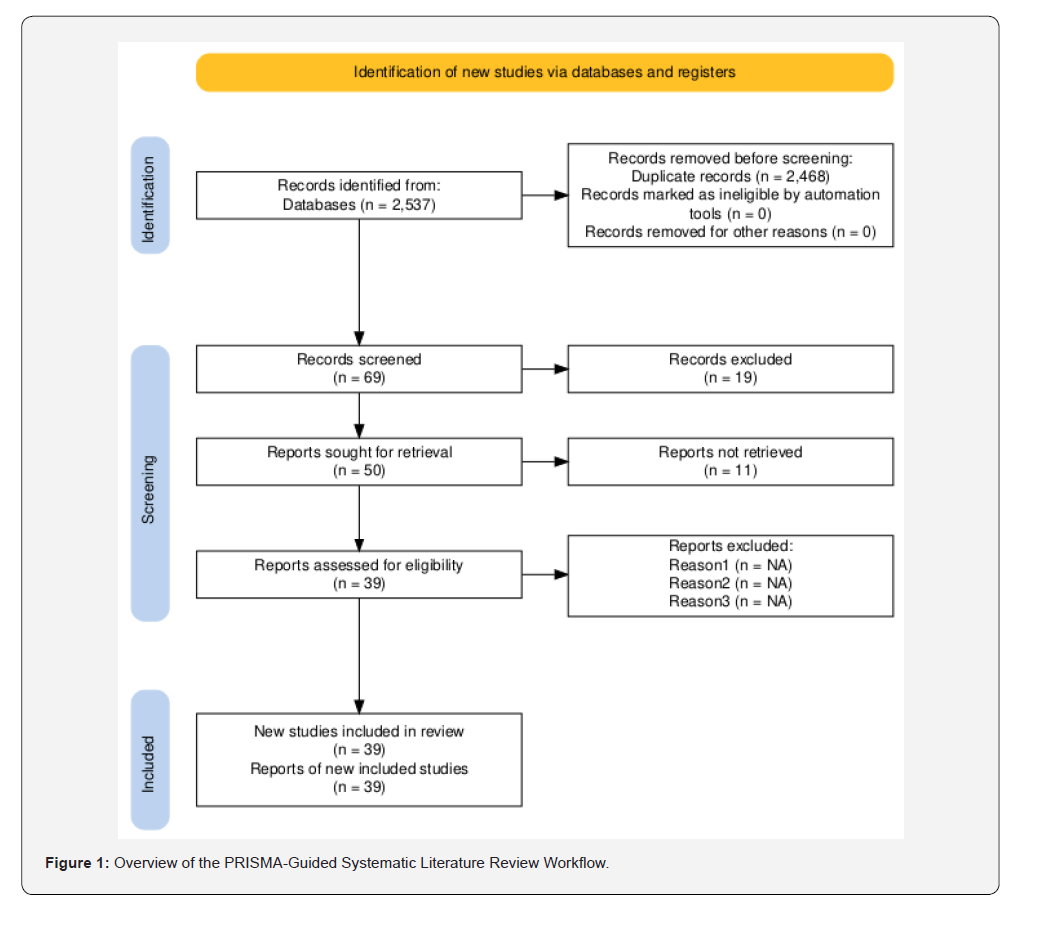
To ensure the inclusion of recent and contextually relevant scientific discussions, the screening process was further refined by restricting the publication period to studies published between 2020 and 2026. This temporal limitation resulted in the exclusion of 19 articles that fell outside the defined timeframe, leaving 50 studies eligible for further evaluation. Subsequently, an accessibility filter was applied by limiting the dataset to publications categorized as open access or open archive to ensure full-text availability, analytical transparency, and consistency throughout the review process. At this stage, 11 articles were excluded because they were not accessible through open-access or open-archive channels. Following the completion of all eligibility and selection procedures, a final dataset consisting of 39 peer-reviewed articles satisfied all inclusion criteria and was selected for qualitative synthesis and thematic interpretation. All selected references were systematically organized and managed using Mendeley Desktop to maintain citation consistency, traceability, and bibliographic accuracy throughout the study. The structured selection pathway presented in the PRISMA diagram demonstrates a methodologically coherent and transparent review process, thereby strengthening the reliability, reproducibility, and analytical depth of the synthesis concerning the institutional role of agricultural cooperatives in supporting climate adaptation within the palm oil sector.
Results
The systematic literature review conducted in this study analyzed 39 peer-reviewed articles published between 2020 and 2026 that fulfilled the inclusion criteria established through the PRISMA-guided selection process. The reviewed literature reflects diverse institutional, geographical, and sustainability-oriented perspectives concerning the role of agricultural cooperatives in supporting climate adaptation within palm oil smallholder systems. Through thematic synthesis, five major themes emerged, reflecting interconnected but analytically distinct dimensions of cooperative-based adaptation systems: (1) cooperatives as platforms for climate adaptation knowledge and technical support, (2) cooperatives as facilitators of financial access and livelihood resilience, (3) collective action and social capital in climate resilience, (4) sustainability governance and certification support, and (5) institutional and operational constraints affecting adaptive capacity.
The distribution of themes across the 39 reviewed studies was as follows: cooperatives as platforms for climate adaptation knowledge and technical support appeared in 31 studies (79.5%), collective action and social capital in climate resilience in 28 studies (71.8%), financial access and livelihood resilience in 27 studies (69.2%), sustainability governance and certification support in 26 studies (66.7%), and institutional and operational constraints affecting adaptive capacity in 24 studies (61.5%).
The predominance of themes related to technical support and adaptive knowledge dissemination underscores the growing recognition that climate adaptation among palm oil smallholders depends strongly on institutional accessibility, extension systems, and organizational coordination. Similarly, the strong representation of collective action and livelihood resilience themes indicates that adaptation within palm oil production systems is increasingly understood not only as a technical process, but also as an economic and social coordination challenge requiring collaborative institutional mechanisms. Meanwhile, sustainability governance and certification themes highlight the expanding role of cooperatives in facilitating smallholder inclusion within evolving sustainability-oriented governance frameworks such as RSPO, ISPO, and MSPO. Although institutional and operational constraints appear less dominant, their substantial presence across the reviewed studies suggests that managerial capacity, infrastructure quality, and policy coordination remain important factors influencing the effectiveness of cooperative-based adaptation systems.
Collectively, these thematic patterns indicate that the current body of literature increasingly conceptualizes agricultural cooperatives as multifunctional institutions operating across technical, economic, social, and governance dimensions within climate-sensitive palm oil production environments. Each theme is elaborated below through expanded quantitative and qualitative synthesis of the reviewed studies.
Cooperatives as Platforms for Climate Adaptation Knowledge and Technical Support
One of the most prominent findings identified in the reviewed literature concerns the role of agricultural cooperatives in facilitating climate adaptation knowledge dissemination and technical agricultural assistance among palm oil smallholders. Approximately 31 out of the 39 reviewed studies reported that cooperative participation improved farmer access to extension services, adaptive farming information, technical workshops, and sustainability-related training programs, particularly in rural areas with limited government extension coverage [26]. Several studies conducted in Indonesia and Malaysia reported that cooperative-supported training participation rates ranged from 48% to 76%, while participation among non-member farmers generally remained below 40% [27].
The reviewed studies indicate that cooperative-led training activities commonly focused on adaptive fertilizer management, soil conservation, integrated pest management, drainage maintenance, water retention systems, and climate-responsive harvesting practices [28] Multiple studies further documented that cooperative-affiliated farmers demonstrated higher adoption rates of adaptive agricultural practices compared with independent smallholders, with adoption increases ranging from 20% to 35% for soil conservation measures, organic compost application, and erosion control practices [29]. In several oil palm-producing districts, cooperative-based technical support programs were associated with fertilizer efficiency improvements of approximately 15%–22%, contributing to lower input losses and more stable production management [30].
Several studies also identified measurable productivityrelated outcomes linked to cooperative-supported adaptation programs. In Southeast Asian oil palm regions, fresh fruit bunch (FFB) productivity among cooperative-supported farmers increased between 12% and 28% following participation in climate-responsive agronomic programs implemented over multi-year periods [31]. Some studies additionally reported lower seasonal production fluctuations among cooperative members during periods of irregular rainfall and moderate drought stress [32]. Recent studies published between 2022 and 2025 further documented increasing use of digital advisory systems coordinated through cooperatives, including mobile weather alerts, online farmer communication groups, and digital extension platforms [33]. In certain regions, these systems accelerated the dissemination of climate-related farming information by approximately 30% compared with conventional extension mechanisms.
Cooperatives as Facilitators of Financial Access and Livelihood Resilience
Another major theme emerging from the reviewed studies concerns the contribution of agricultural cooperatives to improving financial accessibility and strengthening livelihood resilience among oil palm smallholders exposed to climate-related economic pressures. Approximately 27 studies emphasized that changing rainfall patterns, fluctuating yields, and increasing agricultural input costs frequently create financial vulnerability among independent producers with limited institutional support. Within this context, cooperatives were repeatedly identified as institutional channels facilitating access to agricultural financing, subsidized inputs, collective savings schemes, and replanting support programs [34].
Several studies conducted in Indonesia and Malaysia reported that cooperative-affiliated farmers were between 1.5 and 3 times more likely to obtain formal agricultural credit or adaptationrelated financing compared with non-member farmers [35]. In some cases, cooperative-managed revolving funds supported investments in drainage rehabilitation, seed replacement, fertilizer procurement, and climate-responsive farm maintenance [36]. Additional studies highlighted that cooperative participation reduced transaction costs associated with agricultural input purchasing and market access coordination [37].
The reviewed literature also indicates that cooperatives contribute to improving market bargaining capacity within palm oil supply chains. Studies from Indonesia, Thailand, Colombia, and Nigeria found that collective marketing systems coordinated through cooperatives enabled smallholders to obtain fresh fruit bunch prices approximately 8%–20% higher than prices received through fragmented individual sales arrangements [38]. Some studies further observed transportation cost reductions of approximately 10%–15% due to cooperative-managed logistics coordination and shared transportation systems [39].
Livelihood diversification emerged as another important adaptive mechanism identified across the reviewed studies. Cooperative-supported programs involving agroforestry, intercropping systems, livestock integration, and communitybased processing activities contributed to reducing dependence on single-source income systems [40]. In several rural smallholder communities, diversified livelihood activities accounted for approximately 18%–35% of total household income during periods of climate-related production instability [41]. These findings indicate that cooperative institutions contribute not only to financial coordination but also to broader livelihood stabilization within climate-sensitive agricultural environments.
Collective Action and Social Capital in Climate Resilience
The reviewed literature consistently identifies collective action and social capital formation as important institutional dimensions supporting climate adaptation within palm oilproducing communities. Approximately 28 studies emphasized that cooperative institutions facilitate farmer coordination, trust-building, collective decision-making, and shared resource mobilization processes that strengthen adaptive capacity at the local level [42]. Cooperative-based organizational systems were frequently described as enabling collaborative adaptation strategies that would be difficult to implement through isolated individual farming systems.
Several studies reported that cooperative participation strengthened farmer-to-farmer learning networks and accelerated the dissemination of adaptation-related agricultural practices. Peer-learning systems organized through cooperatives facilitated practical knowledge exchange concerning flood mitigation, drainage maintenance, soil rehabilitation, and pest monitoring systems [43]. In multiple Southeast Asian case studies, farmers actively involved in cooperative activities demonstrated adaptive preparedness scores approximately 15%–25% higher than those recorded among non-member farmers [44].
The literature also highlights the contribution of cooperatives to shared infrastructure development and collective resource coordination. In several Indonesian and Malaysian palm oilproducing regions, cooperatives coordinated communal transportation systems, harvesting equipment sharing, drainage maintenance activities, and small-scale irrigation programs [45]. Studies conducted in remote production areas found that cooperative-based infrastructure coordination reduced harvest delays during high rainfall periods by approximately 12%–18% while improving transportation efficiency and harvest consistency [46].
Another recurring finding concerns the role of cooperatives in strengthening institutional inclusion among independent smallholders. Several reviewed studies observed that cooperative participation increased farmer involvement in sustainability initiatives, certification activities, and agricultural policy coordination programs [47]. In some documented cases, more than 70% of farmers participating in cooperative-supported sustainability initiatives previously lacked formal institutional representation within broader palm oil governance systems [48]. These findings indicate that cooperative institutions contribute significantly to improving organizational inclusion and adaptive coordination among rural palm oil smallholders.
Sustainability Governance and Certification Support
The systematic review further revealed that agricultural cooperatives increasingly function as intermediary institutions supporting sustainability governance and certification compliance within the palm oil sector. More than two-thirds of the reviewed studies discussed cooperative involvement in facilitating compliance with sustainability standards such as RSPO, ISPO, and MSPO among smallholder producers [49]. Cooperative-supported certification mechanisms were frequently described as reducing administrative complexity and lowering compliance costs for smallholder farmers.
Several studies documented that cooperative-supported certification programs improved farmer access to sustainability training, traceability systems, internal audits, and compliance monitoring mechanisms [50]. In Indonesia and Malaysia, cooperatives commonly coordinated group certification systems enabling farmers to share auditing expenses and administrative costs associated with sustainability compliance [51]. Some studies estimated that cooperative-based certification systems reduced compliance expenditures by approximately 20%–40% compared with individually managed certification processes [52].
The reviewed literature additionally reported improvements in environmentally responsible farm management practices associated with cooperative-supported sustainability initiatives. Several studies observed increased adoption of soil conservation measures, riparian buffer protection, responsible fertilizer application, and biomass recycling among cooperative-affiliated farmers participating in sustainability programs [53]. Other studies identified reductions in unmanaged agricultural waste disposal and gradual improvements in compliance with sustainabilityoriented agricultural guidelines following cooperative-supported interventions [54].
Importantly, the reviewed studies generally approached sustainability transition within the palm oil sector from a balanced and institution-oriented perspective, emphasizing adaptive governance improvements, smallholder inclusion, and sustainability coordination rather than framing the industry exclusively through environmental criticism [55]. The literature consistently suggests that cooperatives increasingly function as practical institutional bridges connecting smallholders with evolving sustainability governance systems within the broader palm oil economy.
Institutional and Operational Constraints Affecting Adaptive Capacity
Despite the generally positive institutional contributions identified across the reviewed literature, several studies also documented structural and operational constraints affecting cooperative effectiveness in supporting climate adaptation. Approximately 24 studies reported that financial limitations, managerial disparities, infrastructure gaps, and inconsistent institutional coordination continue to influence adaptive outcomes across different cooperative systems [56].
Several studies highlighted substantial differences between well-established cooperatives with strong organizational structures and smaller institutions operating with limited administrative capacity. In some rural production regions, staffing shortages, weak financial management systems, and limited technical expertise reduced continuity of extension programs and adaptation-support services [57]. Studies conducted across Southeast Asia additionally reported that leadership quality, governance transparency, and member participation levels significantly influenced institutional performance and adaptation effectiveness [58].
Infrastructure-related limitations also emerged as recurring constraints within the reviewed studies. Several articles reported that inadequate transportation access, inconsistent digital connectivity, and limited processing facilities constrained implementation of adaptation programs in geographically remote palm oil-producing areas [59]. In some regions, poor road conditions increased transportation delays during high rainfall seasons by more than 15%, affecting harvest quality and marketing efficiency [60]. Other studies identified uneven internet access as a limiting factor for the implementation of digital extension and climate information dissemination systems coordinated through cooperatives [61].
The literature additionally identified coordination challenges involving cooperatives, government agencies, financial institutions, and private-sector actors. Several studies reported that overlapping administrative procedures and inconsistent policy implementation occasionally delayed sustainability program execution and adaptation funding distribution [62,63]. Nevertheless, despite these operational constraints, the majority of reviewed studies concluded that agricultural cooperatives continue to represent important institutional mechanisms supporting climate adaptation, sustainability coordination, and collective resilience within palm oil smallholder systems [64].
Overall, the findings synthesized through this systematic literature review indicate that agricultural cooperatives increasingly contribute to strengthening adaptive preparedness, improving livelihood resilience, facilitating sustainability governance, and supporting institutional coordination within climate-sensitive palm oil production systems. Although adaptive outcomes vary across regional and organizational contexts, the reviewed literature consistently demonstrates the growing institutional significance of cooperative-based approaches within contemporary palm oil smallholder adaptation strategies.
Discussion
The synthesis of 39 peer-reviewed studies provides a comprehensive basis for addressing the research questions formulated in this Systematic Literature Review concerning the institutional role of agricultural cooperatives in supporting climate adaptation within the palm oil sector. By integrating evidence across studies focusing on rural institutions, sustainability governance, adaptive agriculture, smallholder resilience, and cooperative development, the discussion highlights how agricultural cooperatives increasingly operate as intermediary institutional mechanisms connecting palm oil smallholders with adaptive resources, organizational coordination, and sustainability-oriented governance systems. The interpretation presented in this discussion is derived exclusively from secondary data obtained through peer-reviewed scientific publications, ensuring methodological consistency with the principles of a Systematic Literature Review without involving primary data collection approaches such as interviews, focus group discussions, or field observations.
Cooperatives as Institutional Mechanisms Supporting Climate Adaptation Among Palm Oil Smallholders (Addressing RQ1)
The reviewed literature consistently demonstrates that agricultural cooperatives function as institutional mechanisms supporting climate adaptation through interconnected organizational, economic, technical, and governance-related functions within palm oil smallholder systems. Rather than operating solely as commercial farmer associations, cooperatives increasingly perform broader adaptive roles that facilitate knowledge dissemination, collective coordination, financial accessibility, and sustainability transition processes among rural producers.
One of the most prominent institutional functions identified across the reviewed studies concerns the role of cooperatives in strengthening adaptive knowledge systems. The literature indicates that climate adaptation within palm oil production environments depends heavily on farmer access to technical information related to rainfall variability, soil management, fertilizer efficiency, drainage maintenance, pest control, and climate-responsive plantation practices [65]. In many rural production regions, particularly among independent smallholders, direct access to government extension services remains uneven. Within this context, cooperatives frequently emerge as localized institutional platforms facilitating technical training, peer-learning activities, demonstration programs, and information-sharing mechanisms.
The reviewed studies further suggest that cooperative-based learning systems improve adaptive responsiveness because they combine formal technical guidance with locally embedded social interaction processes. Unlike isolated extension approaches that rely exclusively on top-down communication, cooperative organizations enable continuous farmer-to-farmer learning and collective problem-solving related to environmental uncertainty. Adaptive practices such as water retention management, soil conservation, organic fertilizer utilization, and integrated pest management were often reported to diffuse more effectively within communities characterized by stronger cooperative interaction and institutional participation [66]. These findings indicate that agricultural adaptation within palm oil smallholder systems is influenced not only by technological availability but also by the organizational capacity of rural institutions to facilitate social learning and collaborative adaptation processes.
Another important mechanism identified throughout the reviewed literature involves the economic and financial functions of cooperatives in strengthening adaptive capacity among smallholders exposed to climate-related production instability. Climate variability frequently increases production risks through fluctuating yields, changing harvesting cycles, rising input costs, and temporary income disruptions [67]. Under such conditions, smallholders operating individually often face greater financial vulnerability due to limited access to agricultural credit, replanting support, and investment capital. The reviewed studies consistently indicate that cooperative participation improves financial accessibility by facilitating collective savings systems, subsidized input programs, agricultural financing schemes, and replanting coordination initiatives.
Importantly, the adaptive significance of these financial functions extends beyond income support alone. Several studies suggest that improved access to financing enables farmers to maintain plantation management practices during periods of climatic uncertainty and to adopt adaptive investments such as drainage rehabilitation, soil improvement, infrastructure maintenance, and productivity-enhancing technologies [68]. Cooperative-supported collective purchasing systems additionally reduce transaction costs associated with fertilizers, seedlings, transportation, and farm equipment, thereby improving operational efficiency among smallholder producers [69]. In this regard, cooperatives contribute to adaptive resilience not merely by increasing income opportunities but by stabilizing the institutional and economic conditions necessary for sustaining long-term agricultural adaptation.
The literature also highlights the role of agricultural cooperatives in strengthening collective action and social capital formation within climate-sensitive palm oil production systems. Climate adaptation frequently requires coordinated responses that exceed the capacity of individual farmers acting independently, particularly in relation to shared infrastructure management, drainage systems, transportation access, and environmental monitoring activities [70]. Cooperative organizations facilitate these processes by creating institutional structures that support collective decision-making, trust-building, and coordinated resource mobilization among rural producers.
Several reviewed studies indicate that cooperative participation contributes to stronger institutional inclusion among smallholders who otherwise face limited representation within broader agricultural governance systems [71]. Through organizational participation, smallholders gain greater access to sustainability programs, adaptive planning initiatives, market coordination systems, and policy-related agricultural networks. This institutional inclusion is particularly important within the palm oil sector, where independent smallholders frequently operate within fragmented production environments characterized by unequal access to information and organizational support. Consequently, cooperatives increasingly function not only as economic organizations but also as social coordination mechanisms supporting adaptive governance at the local level.
The findings synthesized in this review further demonstrate that agricultural cooperatives increasingly operate as intermediary institutions within sustainability governance frameworks associated with the palm oil sector. Over recent years, sustainability standards such as RSPO, ISPO, and MSPO have increased the importance of organizational coordination related to traceability systems, environmental management practices, and certification compliance [72]. For many smallholders, particularly independent producers, compliance with these governance requirements may be administratively and financially difficult when pursued individually. Within this context, cooperatives frequently facilitate group certification systems, collective auditing procedures, sustainability training activities, and compliance coordination processes that reduce institutional barriers to participation.
The reviewed studies additionally indicate that sustainabilityoriented cooperative programs often support the adoption of environmentally responsible agricultural practices, including soil conservation measures, controlled fertilizer application, biomass recycling, and riparian management systems [73]. Importantly, the literature generally approaches these sustainability transitions from a balanced institutional perspective emphasizing gradual governance improvement, adaptive coordination, and smallholder inclusion rather than positioning the palm oil sector exclusively through environmental criticism. This suggests that cooperative institutions increasingly contribute to aligning sustainability objectives with production continuity and rural development priorities within contemporary palm oil systems.
Recent literature also reveals the growing role of digitalization within cooperative-based adaptation systems. Several studies published between 2022 and 2025 reported increasing use of mobile communication systems, digital advisory platforms, online extension networks, and cooperative-managed weather information dissemination supporting adaptive agricultural decision-making [74]. Although implementation remains uneven across regions, these developments indicate that institutional modernization may strengthen cooperative capacity to facilitate faster information exchange and climate-responsive agricultural coordination among smallholders. The integration of digital systems within cooperative structures, therefore, represents an emerging dimension of adaptive governance within climatesensitive agricultural environments.
Institutional Opportunities and Operational Constraints Influencing Cooperative-Based Adaptation Systems (Addressing RQ2)
The reviewed literature identifies several institutional opportunities that may strengthen the effectiveness of cooperative-based adaptation systems within the palm oil sector. One of the most significant opportunities concerns the increasing integration between sustainability governance frameworks and cooperative organizational structures. As sustainability standards continue to expand across global palm oil supply chains, cooperatives possess strategic institutional potential to function as coordination platforms connecting smallholders with sustainability certification systems, adaptive agricultural programs, and environmentally oriented market networks [75].
This institutional positioning creates opportunities for improving smallholder inclusion within broader sustainability transitions while maintaining production continuity and rural economic participation [76]. Several reviewed studies indicate that cooperative-based governance systems facilitate access to sustainability training, adaptive farm management practices, traceability mechanisms, and certification support programs that may otherwise remain inaccessible to fragmented independent producers. Consequently, cooperatives increasingly represent practical institutional bridges linking local farming communities with evolving sustainability-oriented governance systems within the global palm oil sector.
Another important opportunity identified across the literature involves the expansion of collaborative governance models involving governments, cooperatives, private-sector actors, and financial institutions. Climate adaptation within agricultural systems often requires coordination across multiple institutional levels rather than isolated farmer-based interventions. The reviewed studies suggest that cooperative organizations are particularly well positioned to facilitate this coordination because they operate simultaneously within local community structures and broader agricultural governance networks [77]. Through this intermediary role, cooperatives may improve the implementation efficiency of adaptation-related programs while strengthening communication between smallholders and external stakeholders.
The literature also demonstrates significant opportunities associated with digital transformation and technological integration within cooperative systems. Increasing use of digital advisory services, online extension systems, remote climate monitoring, and mobile communication platforms may improve adaptive responsiveness among palm oil smallholders by accelerating the dissemination of technical information and strengthening institutional coordination. In regions with improving digital infrastructure, cooperative-managed information systems increasingly support real-time communication related to rainfall variability, harvesting schedules, pest outbreaks, and adaptive farm management decisions [78]. These developments suggest that technological modernization may strengthen the institutional relevance of cooperatives within future climate adaptation strategies.
Despite these institutional opportunities, the reviewed literature also highlights several operational constraints influencing the effectiveness of cooperative-based adaptation systems. One recurring challenge concerns disparities in organizational capacity among cooperatives operating across different regional contexts. Well-established cooperatives with stronger governance systems, managerial expertise, and financial resources generally demonstrate more effective adaptation performance than smaller organizations with limited administrative capacity [79]. Several studies reported that inadequate financial management, weak leadership structures, limited technical expertise, and inconsistent member participation reduced the continuity of extension activities and adaptive support programs in certain rural regions.
Infrastructure-related limitations also emerged as significant operational constraints within many palm oil-producing areas. In geographically remote regions, inadequate transportation systems, poor road conditions, inconsistent internet connectivity, and limited processing infrastructure frequently constrain adaptation program implementation and market coordination efficiency [80]. These infrastructural barriers may also reduce the effectiveness of digital extension systems and climate information dissemination increasingly integrated into cooperative adaptation strategies. Consequently, adaptive effectiveness within cooperative systems remains strongly influenced by broader rural development conditions and infrastructural accessibility.
Another major constraint identified throughout the reviewed literature concerns uneven policy coordination and institutional fragmentation. Several studies observed that overlapping administrative procedures, inconsistent implementation of adaptation programs, and fragmented responsibilities among government agencies occasionally reduced institutional efficiency and delayed the distribution of technical or financial assistance. In some contexts, cooperative organizations faced difficulties navigating complex sustainability compliance systems while simultaneously responding to local operational challenges among smallholder communities [81]. These findings indicate that the effectiveness of cooperative-based adaptation systems depends not only on internal organizational quality but also on the coherence of broader governance environments supporting agricultural adaptation.
Overall, the findings synthesized through this review demonstrate that agricultural cooperatives increasingly represent important adaptive institutions within climate-sensitive palm oil production systems. Their institutional contributions extend beyond economic coordination and increasingly encompass adaptive governance, sustainability facilitation, collective learning, financial mediation, and rural organizational inclusion among smallholder producers. Nevertheless, the effectiveness of these cooperative-based adaptation systems remains shaped by variations in governance quality, infrastructure accessibility, institutional coordination, and technological capacity across different production contexts.
The findings of this study have several important implications for policy development, institutional strengthening, and future academic research concerning climate adaptation within plantation-based agricultural systems. First, the review indicates that strengthening cooperative governance capacity, extension accessibility, digital infrastructure, and inclusive financing systems may substantially improve adaptive preparedness among palm oil smallholders. Second, the study highlights the importance of integrating sustainability governance frameworks with locally embedded organizational structures capable of facilitating collective adaptation and rural inclusion. For future research, comparative cross-country studies, longitudinal institutional analyses, and investigations concerning digital cooperative adaptation systems would contribute to expanding the understanding of how cooperative-based adaptation mechanisms evolve across different socio-economic and governance environments within the global palm oil sector.
Conclusion
This systematic literature review demonstrates that agricultural cooperatives increasingly function as important institutional mechanisms supporting climate adaptation within palm oil smallholder systems. The synthesis of 39 peer-reviewed studies indicates that cooperatives contribute to adaptive capacity through interconnected organizational, economic, technical, and governance-related functions. Rather than operating solely as commercial farmer associations, cooperatives increasingly facilitate climate-related knowledge dissemination, technical extension services, collective resource coordination, financial accessibility, sustainability governance participation, and adaptive decision-making among smallholder producers operating in climate-sensitive agricultural environments.
The reviewed literature consistently shows that cooperativebased institutional arrangements strengthen smallholder preparedness by improving access to adaptive agricultural information, training programs, collective marketing systems, financing mechanisms, and sustainability-oriented support structures. Through collective organizational systems, cooperatives also contribute to strengthening social capital, collaborative learning processes, and institutional inclusion among rural farming communities. These functions collectively support production continuity, livelihood resilience, and adaptive coordination within evolving palm oil production systems.
The findings further indicate that the effectiveness of cooperative-based adaptation systems is influenced by both institutional opportunities and operational constraints. Opportunities emerge through increasing integration between cooperatives and sustainability governance frameworks, expansion of collaborative partnerships involving governments and private-sector actors, and growing adoption of digital agricultural communication systems. At the same time, several operational limitations continue to influence institutional effectiveness, including disparities in managerial capacity, infrastructure limitations, uneven digital accessibility, inconsistent policy coordination, and variations in organizational governance quality across different regional contexts.
Overall, the evidence synthesized through this review suggests that agricultural cooperatives increasingly represent adaptive institutional infrastructures capable of supporting climate resilience, sustainability coordination, and rural organizational strengthening within the palm oil sector. Although adaptive outcomes vary across institutional and geographical settings, the reviewed studies consistently highlight the growing strategic relevance of cooperative-based approaches in facilitating climate adaptation among palm oil smallholders while maintaining broader sustainability and rural development objectives.
References
- Maubrigades S, Malán I, and Fernández Ripa M (2025) The strategic role of women in the sustainability of family dairy farms. Agrociencia Uruguay 29(NE4).
- Nesadurai HE (2019) Transnational private governance as a developmental driver in Southeast Asia: The case of sustainable palm oil standards in Indonesia and Malaysia. J Dev Stud 55(9): 1892-1908.
- Tumuhe CL, Katusiime D, Ssekamatte D, Muloi J, Audain K, et al. (2026) The role of civil society networks in catalyzing agroecological transitions in Uganda. J Agric Food Syst Community Dev 15(2).
- Khan M, Sidhu KA, Waraich YM and Ghardallou W (2026) Crop insurance as a climate risk management tool: Evidence from three districts of Punjab, Pakistan. PLoS One 21(3).
- Mthethwa KN, Ngidi MSC, Ojo TO, and Hlatshwayo SI (2022) The Determinants of Adoption and Intensity of Climate-Smart Agricultural Practices among Smallholder Maize Farmers. Sustain 14(24).
- García-Agüero AI, Castillo-Díaz FJ, Belmonte-Ureña LJ, and Camacho-Ferre F (2024) Socioeconomic and technical factors in European agricultural sustainable waste management: The case of Spain. Equilibrium Q J Econ Econ Policy 19(4): 1185-1227.
- Marufu G, Musara JP, and Nyamushamba GB (2025) A Scoping Review of Frameworks Governing the Performance and Resilience of Contractual Arrangements Within Sorghum Value Chains in Zimbabwe. in Sustainable Food Systems in the Global South: Performance Trends, Vulnerabilities and Policy Frameworks, pp. 20-28.
- Syarfi IW, Noer M, and Utami AS (2019) Replanting of smallholder palm oil plantations in Dharmasraya District, West Sumatera Province, Indonesia. IOP Conference Series: Earth and Environmental Science.
- Goodwin D, Sutcliffe C, Salmoral G, Pardthaisong L, Visessri S, et al. (2022) The contribution of a catchment-scale advice network to successful agricultural drought adaptation in Northern Thailand. Philos Trans R Soc A Math Phys Eng Sci 380(2238).
- Dey K and Gupta KB (2026) Small wins through adaptation governance: Vulnerability, producer organizations, and climate-smart interventions. J Rural Stud.
- Kunz Y, Otten F, Mardiana R, Martens K, Roedel I, et al. (2019) Smallholder telecoupling and climate governance in Jambi Province, Indonesia. Soc Sci 8(4): 115.
- Dolorosa E and Suryadi UE (2019) Farmers’ organizations model of independent smallholders in sustainable palm oil certification. Pertanika J Soc Sci Humanit 27(3): 1843-1863.
- Alvar-Beltrán J and Franceschini G (2024) Effect of future climate on crop production in Bhutan. Ital J Agrometeorol 2024(2): 101-119.
- Konuma H (2026) Towards sustainable rural community: the lessons learned from a pilot intervention at an Akha tribal community (Mae Chan Tai Village) in Northern Thailand. Int J Agric Technol 22(2): 699-710.
- Omar MS, Yusuf MF, and Cheng JK (2023) Thematic analysis: factors of food safety certification adoption among farmers in Malaysia. J Int Trade Law Policy 22(3): 192-208.
- Koczberski G, Curry GN, Bue V, Germis E, Nake S, et al. (2018) Diffusing Risk and Building Resilience through Innovation: Reciprocal Exchange Relationships, Livelihood Vulnerability and Food Security amongst Smallholder Farmers in Papua New Guinea. Hum Ecol 46(6): 801-814.
- Elkachradi R (2025) Knowledge Transfer Within Agricultural Cooperatives in Morocco: Types of Barriers and Opportunities for Improvement. Traditional Knowledge and the Challenges of the Future: From a Cultural Heritage to a Source of Innovation, pp. 159-172.
- Bustamante EB, Capote CB, González FJN, De-Pablos-Heredero C, and Martínez AG (2026) Identifying Digitalisation patterns in Spanish livestock farming through open data use. A proposal of best practice management Smart Agric Technol 13: 101806.
- Dermawan A and Hospes O (2018) When the State Brings Itself Back into GVC: The Case of the Indonesian Palm Oil Pledge. Glob Policy 9: 21-28.
- Monaco S, Freire Varela A, Guarino G, and Corbisiero F (2025) The European Charter for Sustainable Tourism (ECST) as a Tool for Development in Rural Areas: The Case of Vesuvius National Park (Italy). Agric 15(22).
- Gbodji KK, Quarmine W, Buisson MC, Mitra A, and Schmitter P (2026) Solar irrigation for adapting to climate change in cocoa farming: A choice experiment approach identifying Ghanaian farmers’ preferences. Agric Water Manag 324: 110118.
- Sabourin É et al. (2020) Rural development forums in Uruguay: Between decentralization and participation. Mondes Dev 192(4): 137-156.
- Ataei P, Sadighi H, Abbasi E, and Chizari M (2022) Transfer of sustainability training in land and conservation agriculture project: A behavioral study in Iran. Front Sustain Food Syst
- Boz Yilmazer E and Tunalioğlu R (2024) The role of academia and private sector in smart agriculture applications. Turkish J Agric Econ 30(2): 111-120.
- Nizam AFA and Mahmud MS (2021) Food quality assurance of crude palm oil: A review on toxic ester feedstock. OCL - Oilseeds fats, Crop Lipids 28.
- Bahruddin K, Macdonald R, Diprose and Delgado Pugley D (2024) Scaling-up sustainable commodity governance through jurisdictional initiatives: Political pathways to sector transformation in the Indonesian palm oil sector? World Dev 176: 106504.
- Djatmika P, Listiningrum P, Sumarno TB, Mahira DF, and Sianipar CP (2023) Just transition in biofuel development towards low-carbon economy: Multi-actor perspectives on policies and practices in Indonesia .Energies 17(1): 141.
- Muldiana DY, Dharmawan AH, Nurrochmat DR, and Boer R (2026) Decoupling and Resistance: Local Responses to Global Environmental Norms in Indonesia’s Palm Oil Sector. Sustain 18(8).
- Nashr F, Putri EIK, Dharmawan AH, and Fauzi A (2021) The Sustainability of Independent Palm Oil Smallholders in Multi-Tier Supply Chains in East Kalimantan Indonesia. Int J Sustain Dev Plan 16(4).
- Raisa DM, Sirajuddin SN, Syamsu JA, and Arsyad M (2024) Analysis of Strategic Programs in Planning and Developing Cattle-Oil Palm Integration System. IOP Conf Ser Earth Environ Sci 1364(1): 012012.
- De Vos RE, Suwarno A, Slingerland M, Van Der Meer PJ, and Lucey JM (2021) Independent oil palm smallholder management practices and yields: can RSPO certification make a difference?. Environ Res Lett 16(6): 65015.
- Nesti L, Nadiyah K, and Fudholi A (2026) Price Transmission In The Supply Chain Of Independent Oil Palm Smallholders In West Sumatera, Indonesia: A Case Study In Dharmasraya District. J Oil Palm Res 38(1): 99-116.
- Apriyanto M, Mardesci H and Syahrantau G (2021) The Role of Farmers Readiness in the Sustainable Palm Oil Industry. Journal of Physics: Conference Series.
- Fosch A, Ferraz de Arruda G, Aleta A, Descals A, Gaveau D, et al. (2023) Replanting unproductive palm oil with smallholder plantations can help achieve Sustainable Development Goals in Sumatra, Indonesia. Commun Earth Environ 4(1): 378.
- Apriani E, Kim YS, Fisher LA, and Baral H (2020) Non-state certification of smallholders for sustainable palm oil in Sumatra, Indonesia. Land use policy 99: 105112.
- Purba KF, Intan DR, Aznur TZ, Wardani A, and Putra HS (2026) Measuring Production Efficiency and Technology Gap Between RSPO-Certified and Non-Certified Smallholders: A Metafrontier - DEA Framework. Int J Sustain Dev Plan 21(2): 577-587.
- Noordwijk MV (2020) Sustainable Palm Oil: Dissecting a Global Debate. IOP Conference Series: Earth and Environmental Science.
- Wibowo LR, Erdi E, Hutabarat S, Utomo M, Nurfatriani NF, et al. (2023) Accelerating Certification of Oil Palm Smallholders through Institutionalization of Various Incentives. For Soc 7: 263-294.
- Witjaksono J, Muis Hasibuan A, Priyono, Kario NH, Purba R, et al. (2026) Stakeholder engagement analysis of sustainability crude palm oil supply chain for biodiesel production. J Proj Manag 11(2): 511-522.
- De Vos RE, Suwarno A, Slingerland M, Van Der Meer PJ, and Lucey JM (2023) Pre-certification conditions of independent oil palm smallholders in Indonesia: Assessing prospects for RSPO certification. Land use policy 130: 106660.
- Rusli Z, Nasution MS, Andri S, Sadad A, Mashur D, et al. (2025) Environmental Sustainability and Institutional Adaptation: Enhancing the Resilience of Independent Oil Palm Farmer. E3S Web of Conferences.
- Afrino R, Syahza A, and Heriyanto M (2023) Analysis of Nuclear-Plasma Partnership Pattern for Sustainable Oil Palm Plantation in Riau Province, Indonesia. Int J Sustain Dev Plan 18(1): 91-98.
- Tee K and Rubbaniy G (2025) Introduction of Palm GreenChain, a blockchain-based framework for enhanced traceability, transparency and accountable green bond financing in Malaysia. Discov Sustain 6(1).
- Masure S, Martin A, Lacan P, & Rafflegeau X (2023) Promoting oil palm-based agroforestry systems: an asset for the sustainability of the sector.
- Asni K and Chan S (2025) Bridging the Living Income Gap for Cocoa and Palm Oil Farmers in Rural Post-Disaster Aceh. E3S Web of Conferences.
- Anas K, Naping H, Salman D, and Tenriawaru AN (2025) Differences in Assets, Strategies, and Livelihood Outcomes Among Oil Palm Smallholder Typologies in West Sulawesi, Indonesia. Sustain 17(13).
- Hidayati F, El Pebrian D, and Gusril A (2025) Assessing household vulnerability of smallholder farmers during oil palm replanting: a case study in West Sumatra, Indonesia. OCL - Oilseeds Fats Crop Lipids 32.
- Aslinda Abu Seman N, Rahman Ahmad A, Kartini Rashid U, and Zakwan Abu hussin M (2025) Prioritizing Sustainability Performance Indicators for Independent Oil Palm Smallholders Using Analytic Hierarchy Process (AHP). IOP Conference Series: Earth and Environmental Science.
- Kinseng RA, Tonny Nasdian F, Ita Mardiyaningsih D, HadiDharmawan A, Hospes O, et al. (2023) Unraveling disputes between Indonesia and the European Union on Indonesian palm oil: from environmental issues to national dignity. Sustain Sci Pract Policy 19(1): 2152626.
- Kurnia A, Nugroho A, Anhar A, and Hamid AH (2025) Level of Readiness for Implementing ISPO Certification on Smallholder Palm Oil Plantations Compared with ISPO Certified Plantations in Aceh. IOP Conference Series: Earth and Environmental Science, IOP Publishing, p. 12008.
- Rizal ARA and Nordin SM (2022) Smallholders participation in sustainable certification: The mediating impact of deliberative communication and responsible leadership. Front Psychol 13.
- Rahman MRCA, Rauf UAA, and Sinniah S (2024) Oil Palm Smallholders Entrepreneurs And Financial Literacy: Technology Adoption. J Appl Eng Technol Sci 6(1): 656-667.
- Michael Eggen, Robert Heilmayr, Patrick Anderson, Rebecca Armson, Kemen Austin, et al. (2024) Smallholder participation in zero-deforestation supply chain initiatives in the Indonesian palm oil sector: Challenges, opportunities, and limitations. Elem Sci Anthr 12(1).
- Gallemore C, Jespersen K, and Olmsted P (2022) Harnessing relational values for global value chain sustainability: Reframing the roundtable on sustainable palm oil’s offset mechanism to support smallholders. Ecol Econ 193: 107303.
- Ayompe LM, et al. (2024) Complexities of sustainable palm oil production by smallholders in sub‐Saharan Africa. Sustain Dev 32(1): 529-541.
- Jelsma I, Gay F, Ollivier J, and Rapidel B (2024) Collective action, replanting and resilience; Key lessons from 40 years of smallholder oil palm cultivation in the Ophir plantation, Indonesia. Agric Syst 213: 103801.
- Witjaksono J, Djaenudin D, Fery Purba S, Yulianti A, Yulyani Fadwiwati A, et al. (2024) Corporate farming model for sustainable supply chain crude palm oil of independent smallholder farmers. Front Sustain Food Syst 8: 1418732.
- Yanita M, Hamid E, Alamsyah Z, Napitupulu D, Fauzia G, et al. (2024) The Oil Palm Smallholders Corporation Model Based on Local Specifications in Jambi Province Toward Sustainability. IOP Conference Series: Earth and Environmental Science.
- Ardana IK, Wulandari S, and Hartati RS (2022) Urgency to accelerate replanting of Indonesian oil palm: A review of the role of seed institutions. IOP Conference Series: Earth and Environmental Science.
- Jugah R, Wan Yusuf S, Saili AR, Adham Che Ruzlan K, Sapak Z, et al. (2024) Strategies for Oil Palm Smallholders to Improve Their Livelihood: A Qualitative Study. IOP Conference Series: Earth and Environmental Science.
- Putri EIK, et al. (2022) The oil palm governance: challenges of sustainability policy in Indonesia. Sustainability 14(3): 1820.
- Adisetya E and Gunawan S (2024) The conceptual model of Indonesian palm oil supply chain based on blockchain. IOP Conference Series: Earth and Environmental Science.
- Carmagnac L, Touboulic A, and Carbone V (2022) A Wolf in Sheep’s Clothing: The Ambiguous Role of Multistakeholder Meta-Organisations in Sustainable Supply Chains. Manag 25(4): 45-63.
- Suharyanti NA, Mizuno K, and Nurfalah L (2024) Intensification model of smallholder oil palm plantation to achieving sustainability and prosperity, Riau Province, Indonesia. IOP Conference Series: Earth and Environmental Science.
- Watts JD, Pasaribu K, Irawan S, Tacconi L, Martanila H, et al. (2021) Challenges faced by smallholders in achieving sustainable palm oil certification in Indonesia. World Dev 146: 105565.
- Arifandy MI, Suwondo S, Zulkarnain Z, and Putra RM (2026) Institutional Role Model of Independent Oil Palm Farmers in Implementing Sustainable Oil Palm Plantations. Sustain Dev.
- Mansor N, Wan Abdullah WA, Bahari A, and Hassan Shukri AF (2016) Palm oil sustainability certification and firm performance: Is there a conflict between RSPO and MSPO. Proceedings, the European Conference on the Social Sciences.
- Syahza A and Asmit B (2020) Development of palm oil sector and future challenge in Riau Province, Indonesia. J Sci Technol Policy Manag 11(2): 149-170.
- Abas A, Yusof AHM, Rahman AHA, and Fauzi TAH TM (2026) Investigating the Dynamics of Human–Wildlife Conflict in Oil Palm Plantation: Cases from Johor and Sabah, Malaysia. Soc Nat Resour 39(5): 713-728.
- Supriatna J, Saluy AB, Kurniawan D, and Djumarno D (2024) Promoting sustainable performance of smallholder oil palm farmers: an analysis of key determinants and strategic priorities. Int J Product Perform Manag.
- Medhekar A (2023) Economic empowerment of women, millet farming, and sustainable development. The Role of Women in Cultivating Sustainable Societies Through Millets, pp. 230-250.
- Ngadi N (2021) Business model of palm oil smallholding in South Sumatra, Indonesia: Challenges and future prospects. Driving Factors for Venture Creation and Success in Agricultural Entrepreneurship, pp. 97-120.
- Lim CI and Biswas WK (2018) Development of triple bottom line indicators for sustainability assessment framework of Malaysian palm oil industry. Clean Technol Environ Policy 20(3): 539-560.
- Kazi KSL (2024) AI-powered IoT (AI IoT) for decision-making in smart agriculture: KSK approach for smart agriculture,” in Enhancing Automated Decision-Making Through AI, pp. 67-95.
- Adiprasetyo T, Irnad I, and Nusril N (2019) Perceived Environment-Economic Benefits and Factors Influencing the Adoption of Indonesian Sustainable Palm Oil Production System by Smallholder Farmers. IOP Conference Series: Earth and Environmental Science.
- Ardana IK, Wulandari S, Hartati RS, and Hasibuan AM (2024) Mitigating postreplanting risks of oil palm plantations: seed institutional perspective. Int J Soc Econ 51(10): 1336-1350.
- Firdaus MI (2025) The Challenges in Upstream- Midstream Supply Chain of Palm Oil Industry: A Review of Literature in Indonesian Case. The Palm Oil Export Market: Trends, Challenges, and Future Strategies for Sustainability, pp. 32-41.
- Lamsali H, Salleh MN, Lazim HM, Iteng R, Sidique SFA, et al. (2025) Examining Oil Palm Smallholders’ Capacity, Perceived Capability, and Achievement of Sustainable Development Goals (SDGs). Lecture Notes in Civil Engineering, pp. 457-464.
- Budiadi Susanti A, Marhaento H, Ali Imron M, Permadi DB, and Hermudananto (2019) Oil palm agroforestry: an alternative to enhance farmers’ livelihood resilience. IOP Conference Series: Earth and Environmental Science, IOP Publishing, p. 12001.
- Tatar M (2023) Agricultural Sector Development And Elasticity Of Its Links With The Food Security Level. Agric Resour Econ 9(4): 192-224.
- Hidayat NK, Offermans A, and Glasbergen P (2021) How farmer characteristics and dimensions of resilience correlate with farmers’ ability to recover from shocks: a case study of Indonesian palm oil smallholders. J Agric Environ Int Dev 115(1): 31-58.

























