




 ASM Home



Abstract
Since its emergence in the early 1980s, service design has developed into an essential interdisciplinary field driven by social change, digital transformation, and user-centered innovation. This study aims to systematically review the literature on service design from inception through 2024 using bibliometric analysis to assess its evolution. Employing citation, co-citation, co-authorship, and co-occurrence analyses on 1,258 articles from the Scopus database, the research maps the temporal growth, thematic development, and collaboration networks in the field. Findings indicate a sustained increase in publications, with the highest concentration in Europe and North America, led by institutions such as Politecnico di Milano and Delft University of Technology. Theoretical advancements center on Service-Dominant Logic, co-creation, and customer experience, with major scientific outlets reflecting the field’s integration across management, design, innovation, and sustainability. Keyword and thematic analyses reveal trends in participatory design, digital technologies (including AI and blockchain), and sustainability integration. The study underscores the strategic role of service design in addressing systemic challenges through interdisciplinary collaboration and technology-enabled innovation. It also highlights the need for enhanced international cooperation to consolidate the scientific foundation and promote further development. These insights provide valuable guidance for future re-search agendas, strategic initiatives, and policy formulation in service design.
Keywords:Service Design; Emerging Trends; Bibliometric Analysis; Content Analysis; Cita-Tion Analysis; Co-Citation Analysis; Co-Authorship Analysis; Co-Occurrence Analysis
Abbreviations:QFD (Quality Function Deployment); AI (Artificial Intelligence); ISSN (International Standard Serial Number); RQ (Research Question); CSV (Comma-Separated Values); CBR (Case-Based Reasoning); PSS (Product Service System); ESG (Environmental, Social and Governance); IDE (Integrated Development Environment)
Introduction
Three fundamental documents laid the foundation for the concept of service design, marking the academic beginnings of the field. Shostack [1] examined distinctions be-tween services and products, analyzing their interrelationship and proposing methods of visualization to enhance service design. Similarly, Wilson and Gonzalez [2] investi-gated challenges in bus service design, focusing on existing system problems and recom-mending improvements in structure and delivery. Kocur and Hendrickson [3] approached service design from an optimization perspective, looking at factors like route structures and trip distances, and integrating demand with service quality. These pioneering works were the first to introduce the term ‘service design’ into the academic literature, catalyzing its evolution as a distinctive area of research.
Roughly a decade later, Scheuing and Johnson [4] advanced the term in the con-text of New Service Development, outlining service design as a step focused on idea generation and concept formulation. By the mid-1990s, service design began to be recognized as a discipline within the design field due to growing interest from design scholars exploring its applicability to the service sector [5]. In the past two decades, scholarly attention to service innovation has intensified, positioning service de-sign as a research priority [6].
Contemporary service design centers on analyzing the customer experience and exploiting customer touchpoints across the evolving service journey [7,8]. Consumers have become recognized as co-creators of their service experiences, driving much of the complexity within service systems [8]. Service design brings together interdisciplinary methodologies and theoretical frameworks drawn from human-centered and affective design, both of which emphasize understanding user needs, behaviors, and emotions in order to improve service interaction [9]. Design thinking is also fundamental, providing a structured approach to complex problem-solving [10], while principles from participatory and co-design [11] support collaborative modes of innovation and user involvement within the design process.
A range of bibliometric analyses exist for closely related terms such as customer experience [12], value co-creation [13], service innovation [14], co-design [15], and design thinking [16]. However, no systematic and comprehensive bibliometric study has been conducted specifically on service design as a broader, independent concept. This results in a significant gap in the thorough documentation of key topics, leading researchers, related concepts, institutions, or countries, which hinders the ability of scholars and practitioners to leverage existing knowledge or map the intellectual landscape of the field.
A range of bibliometric analyses exist for closely related terms such as customer experience [12], value co-creation [13], service innovation [14], co-design [15], and design thinking [16]. However, no systematic and comprehensive bibliometric study has been conducted specifically on service design as a broader, independent concept. This results in a significant gap in the thorough documentation of key topics, leading researchers, related concepts, institutions, or countries, which hinders the ability of scholars and practitioners to leverage existing knowledge or map the intellectual landscape of the field.
The paper’s primary contribution is articulated through four
research questions:
i. (RQ1): How has service design scholarship unfolded
over time, and what emerging directions and high‑frequency
keywords reveal its shifting intellectual landscape?
ii. (RQ2): Across which domains has service design taken
root, which ones dominate the field, and what motivations,
practices, and performance themes characterize its application?
iii. (RQ3): Which scholars, institutions, and countries are
shaping the evolution of service design research, and how are
their collaborative networks transforming the field?
iv. (RQ4): Which journals and landmark publications exert
the strongest influence on service design research, and how do
their citation patterns reveal the field’s intellectual foundations?
Consequently, this study aims to shed light on the dynamic evolution of the field, revealing the trends, methods, and solutions that shape its interdisciplinary nature. It maps all stages of development from the sector’s inception to the present day, guiding professionals and researchers to important projects, theoretical axes, and international academic collaborations. It also analyzes issues related to the application of service design, high-lighting the most influential researchers, countries, and institutions, thereby supporting new interdisciplinary research initiatives.
A clearer understanding of the structure of scientific contributions in service design is expected to inform future research, aid knowledge transfer, and foster systematic advancement in the field. To achieve this, bibliometric analysis was chosen as the method-ology—to elucidate the evolution, reveal research gaps, assess scientific influence, and encourage interdisciplinarity in service design. Drawing on data from Scopus, the study employs tools such as VosViewer, Claude AI, and Python to map themes, collaborations, and networks of academic influence.
The anticipated outcomes are to identify phases in the evolution of service design, analyze application areas and recent trends, highlight major authors and journals, measure collaboration between researchers and institutions, and establish a structured frame-work for future research and knowledge consolidation. Ultimately, the integration of ser-vice design and innovation is poised to increase the societal and organizational impact of service research, effectively addressing important realworld challenges [19].
Theoretical Framework
Exploring Service Design: Key concepts
Service design is a relatively new interdisciplinary field that involves understanding clients, service providers, their context, and social practices to develop service system elements and interactions [20]. It includes teams with diverse perspectives working together on problem solving [19]. Originating in marketing studies in the 1980s [1], service design has been adopted by management to improve customer relationships and service quality [21]. It has evolved into a method combining multicultural and social aspects of hu-man interaction (Clack & Ellison, 2019).
While service design methodologies have traditionally borrowed from related fields [22], the field now possesses a mature, integrated, and autonomous methodological framework. Service designers help visualize, articulate, and coordinate overlooked aspects, think of new solutions, and analyze user needs and behaviors to create possible future services [20]. According to Stickdorn & Schnei-der [23], service design aims to improve service quality through collaboration among customers, service providers, and stakeholders. Understanding services as complex systems requires a holistic approach. Co-creation, involving users, employees, and stake-holders, aligns solutions with user needs across the customer journey [24]. The goal is to create useful, easy-to-use, and engaging services for users and efficient, effective, and discreet services for providers [25].
Service design has a human centred approach focused on understanding human experiences for better customer journey experiences [24]. This aligns with the service-dominant logic that shifts focus from production units to ‘use value’ and ‘value within context,’ where value arises when customers integrate provider resources with their own within a context [26-28].
Service design is crucial in service innovation, a complex multi-phase process of idea generation, project design, new service design, and implementation [29,30]. Design Thinking, emphasizing iterative and interdisciplinary processes, is key to understanding customer needs and creating innovative solutions [31]. With technological advances, service design is vital for improving user experience and relevance, emerging as a method for service innovation in design
Materials and Methods
Mapping and Data Selection
The mapping and selection of articles was carried out in two phases.
Phase One: Search and Filtering
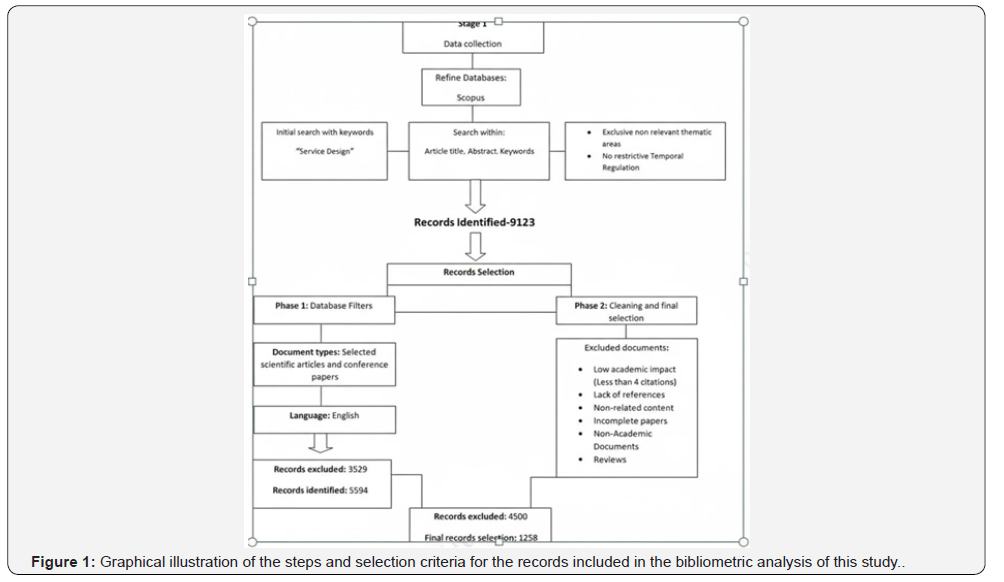
The process of identifying relevant publications began with the formulation of the search query: TITLE-ABS-KEY (‘service design’). The search was limited to titles, abstracts, and keywords, resulting in a total of 9,123 articles being retrieved. No time restriction was applied to the publication of the papers in order to fully capture the evolution of the concept of ‘service design’ from its first appearance until the end of 2024.
The filters provided by the database were used to exclude articles from fields that were not relevant (e.g. veterinary medicine, immunology and physics). The fields selected included information systems, business administration, engineering, social sciences, arts, humanities, etc. In addition, only journal articles and conference papers were included due to the rigorous review process [13] and faster dissemination of new ideas respectively [32]. In contrast, they were excluded.
i. Book chapters [13].
ii. Reviews [33].
iii. Articles in languages other than English [13].
With the application of these restrictions, the number of articles has been reduced from 9123 to 5736.
Phase Two: Cleaning and Final Selection
A time-consuming but thorough and efficient review of titles, abstracts and keywords was then conducted to remove irrelevant articles, reducing the number to 2681. Then, based on previous bibliometric analyses, additional exclusion criteria were applied (see Table 1)
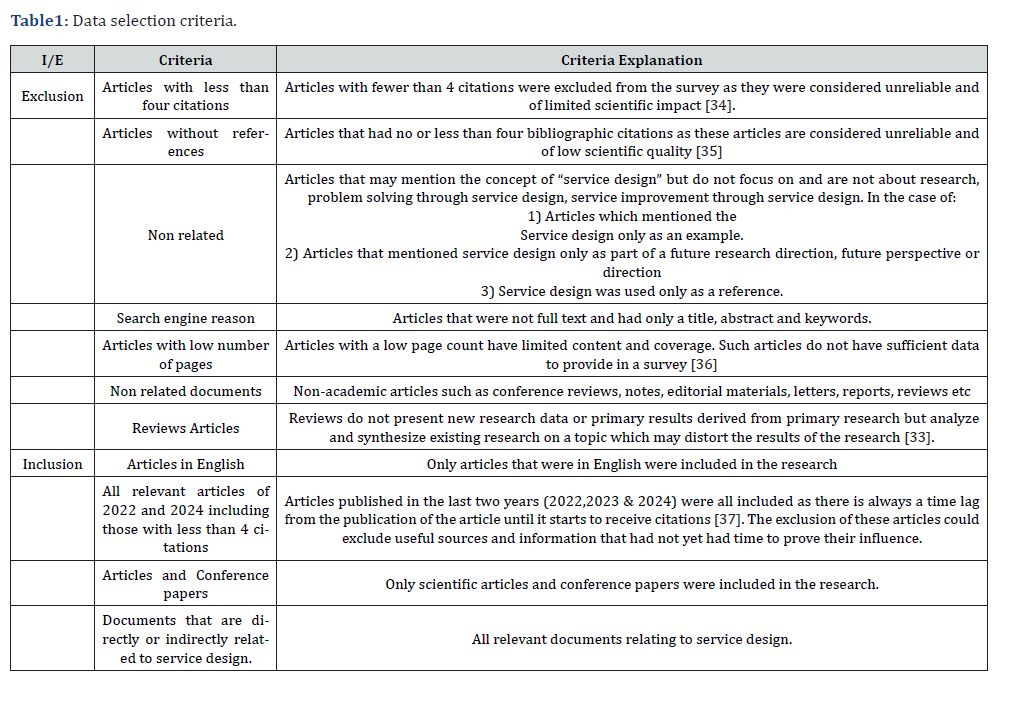
i. Low Academic Impact: Articles with fewer than four
citations were e xcluded, with the exception of the 2022 and 2023
publications [38].
ii. Low Extent: Articles with fewer than four pages were
excluded [36,39].
iii. Conference posters: excluded due to limited information.
The final selection included 1,258 articles, which were recorded in an Excel file. Data such as title, author, keywords, journal title, document type, number of references, abstract, ISSN and link were entered. The file was used for targeted analysis and retained as a resource for future reference.
The selection process resulted in a total of 1,258 articles that formed the basis for the extraction of the results. The filters and exclusion criteria applied ensured the quality and relevance of the articles to the field we were researching as well as ensured the quality of the research.
The final selection included 1,258 articles, which were recorded in an Excel file. Data such as title, author, keywords, journal title, document type, number of references, abstract, ISSN and link were entered. The file was used for targeted analysis and retained as a resource for future reference
The selection process resulted in a total of 1,258 articles that formed the basis for the extraction of the results. The filters and exclusion criteria applied ensured the quality and relevance of the articles to the field we were researching as well as ensured the quality of the research (see Figure 1).
Methodological framework and analysis tools
For this study, Scopus, one of the most widely used databases for bibliometric analysis, was employed. This database is recognized for its rigorous selection standards and re-liability [40]. According to Echchakoui [41], Scopus, developed by Elsevier, is an indispensable tool for bibliometric analysis due to its extensive accessibility and coverage—about 60% more than other databases—and its inclusion of open-access journals and multiple disciplines [42].
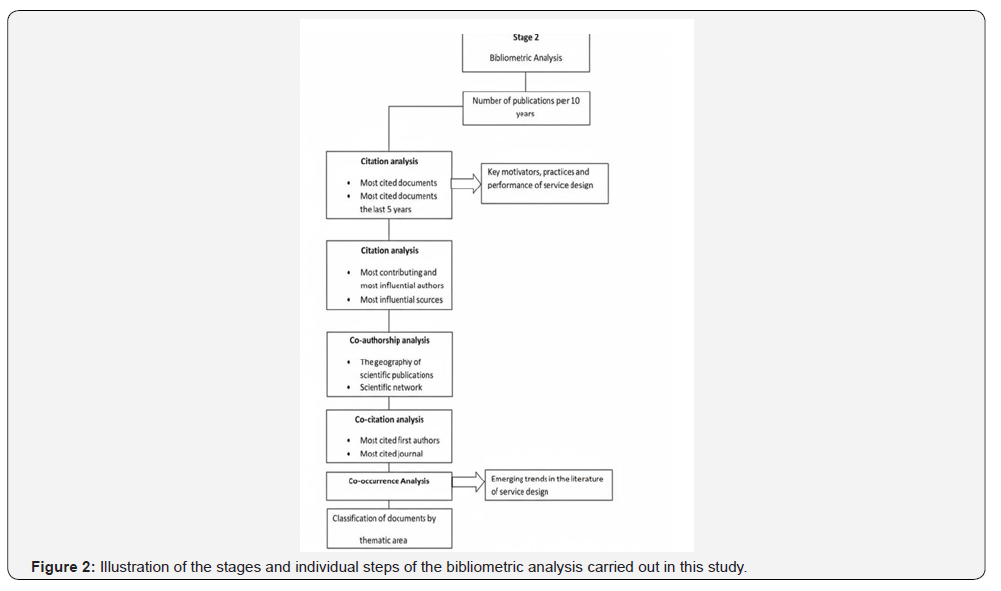
The primary tool used for data visualization was VOSviewer software 1.6.19, selected for its ability to map and analyze complex networks such as author collaborations, key-word relationships, and citation patterns. It efficiently processes CSV data extracted from Scopus and applies clustering techniques useful for dataset comparisons [43,44]. In this study, VOSviewer was applied for citation, co-citation, co-authorship, and co-occurrence analyses. Specifically, it supported the co-word analysis (RQ1) and analyses for RQ3 and RQ4, identifying collaborations among authors, institutions, and countries, as well as determining key journals, influential and productive authors, and highly cited publications (see Figure 2). The software’s local movement algorithm detects relationships among publications, citations, and keywords, revealing scientific networks across authors, journals, institutions, and nations [43,44].
To ensure accuracy in identifying authors, sources, and affiliations, Python programming was used. Since authors’ names often appear inconsistently across articles, Python was applied via Google CoLaboratory (Google Colab) to clean and consolidate the data. Google Colab is a web-based Python IDE that supports collaborative programming and facilitates data analysis [45]. Its compatibility with Python’s analytical libraries and its userfriendly interface makes it an effective environment for generating ac-curate bibliometric outputs [46].
Content analysis was used to identify emerging trends in service design. The Claude AI tool analyzed article titles and abstracts, categorizing them by dominant concepts and themes to ensure consistency in thematic classification [47]. Claude AI was instrumental in addressing RQ1, focusing on emerging trends in service design, and RQ2, which explored its application areas, motivations, practices, and performance.
General results and the annual evolution of publications (RQ1) were derived directly from Scopus filters. The combined use of Scopus, VOSviewer, Python, and Claude AI pro-vided an integrated methodology that enabled a comprehensive understanding of the literature on service design. This approach highlights both the core aspects and evolving directions of the field, offering a clear picture of its development and future trajectory.
Bibliometric analysis as a research method
Bibliometric analysis is a quantitative and meta-analytic research method used to assess the production, development, and intellectual structure of scientific literature [48]. It applies mathematical and statistical techniques to evaluate re-search performance, national R&D productivity, academic quality, and institutional collaboration [49]. By examining citation and co-citation patterns, bibliometrics identifies thematic connections, influential works, and emerging research fields [13,50]. This approach assumes that re-searchers publish in peer-reviewed journals aligned with their thematic focus [51]. Overall, bibliometric analysis enables the recognition of leading contributors, core journals, and key trends shaping the evolution of a discipline [13]. Accordingly, this study employs bibliometric methods to trace the evolution of service de-sign, emphasizing its principal themes, authors, journals, and areas of application.
Citation analysis: It is a key method for mapping scientific publications and identifying influential works [52]. It measures productivity across authors, journals, institutions, and countries based on citation frequency [17,52]. The number of citations indicates an article’s impact [51], making this method the most objective way to evaluate scholarly influence [53]. However, although citation analysis provides information on the relative influence of publications, it does not reveal networks of connections among re-searchers [54].
Co-authorship analysis: Co-authorship analysis studies how scholars collaborate within a research field, revealing intellectual and social connections among them [53]. It serves as a reliable method for mapping research collaborations across disciplines [55]. When authors co-sign a publication, it indicates a formal collaboration and shared intellectual effort [53]. Such collaborations have increased due to greater methodological and theoretical complexity and often enhance re-search quality and insight [53]. Overall, co-authorship analysis identifies main research partners and outlines the formal networks of academic collaboration [55].
Co-citation analysis: Co-citation analysis is a scientific mapping method based on the idea that publications frequently cited together share similar themes [56]. It examines how often two papers are cited jointly, revealing intellectual relationships between them [13]. This technique identifies subject clusters and key publications within a field [53]. By focusing on highly cited works, co-citation analysis excludes newer or niche studies, making it particularly useful for business scholars seeking established knowledge bases [53].
Co-occurrence analysis: Co-word analysis differs from other mapping techniques by focusing on the actual content of publications rather than citations [50]. It studies the frequency and co-occurrence of keywords in titles, abstracts, or full texts to reveal thematic trends [53]. Words that often appear together indicate related research themes, similar to co-citation analysis. However, its limitations include ambiguity and the presence of overly general terms. According to Donthu et al. [53], co-word analysis should be applied to specific studies and is particularly useful for predicting emerging research trends.
Results
This section presents the results of the bibliometric analysis. In particular, it presents the general results which are a summary of the quantitative results, the number of publications per year showing the chronological distribution of publications, the articles cited more than other authors, the most influential and most productive authors, the journals with the highest citations per article, the institutions with the highest citations per paper, and the countries with the highest productivity. In addition, this analysis provides net-works of co-citations, journals, first authors, and their respective groups. The goal of this study is to gain a comprehensive perspective on the evolution of service design.
Citation Analysis
General Results
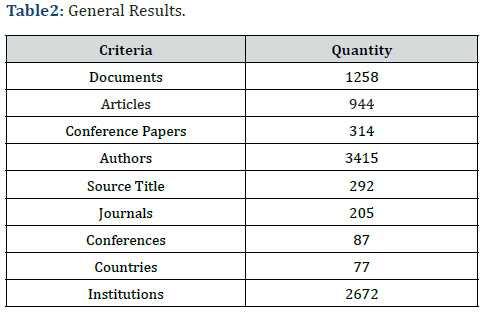
The study identifies 1258 documents, 944 articles and 314 conference papers. The authors identified are 3415 authors associated with 138 institutions in 77 countries and published in 292 source titles, 205 of which are journals and 87 of which are scientific conferences (see Table 2).
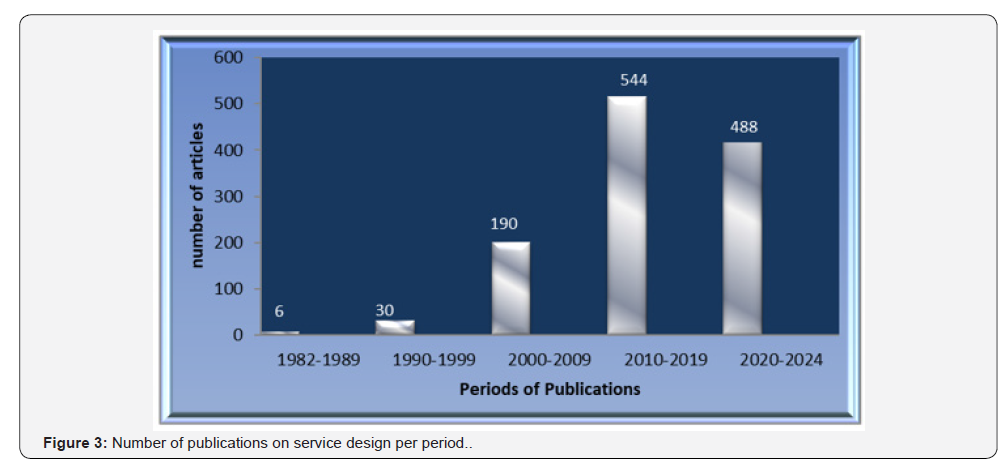
Number of publications per ten years
This section presents a chronological classification of publications (see Figure 3). The classification of publications covers the period from 1982 to 2024 and is divided into five stages. The research started in 1982, as it is the year of the first publications related to ser-vice design. Specifically, articles by Shostack [1], Wilson & Gonzalez [2] and [3] are the first three articles found in the literature and their content was related to service design.
The chronological classification of publications from 1982 to 2024 reveals steady growth in the field of service design across five stages. The first period (1982–1989) shows minimal activity with only six papers, indicating limited recognition. During the second period (1990–1999), publications increased slightly to 30, marking gradual acceptance. A significant rise occurred in the 2000s (2000–2009) with 190 publications, reflecting rapid development of the field. The following decade (2010–2019) recorded the highest output with 544 papers, confirming the field’s dynamic expansion. In the current period (2020–2024), 488 papers have already been published, suggesting that by 2029, the total is likely to double, continuing the upward trend.
Most Cited Documents
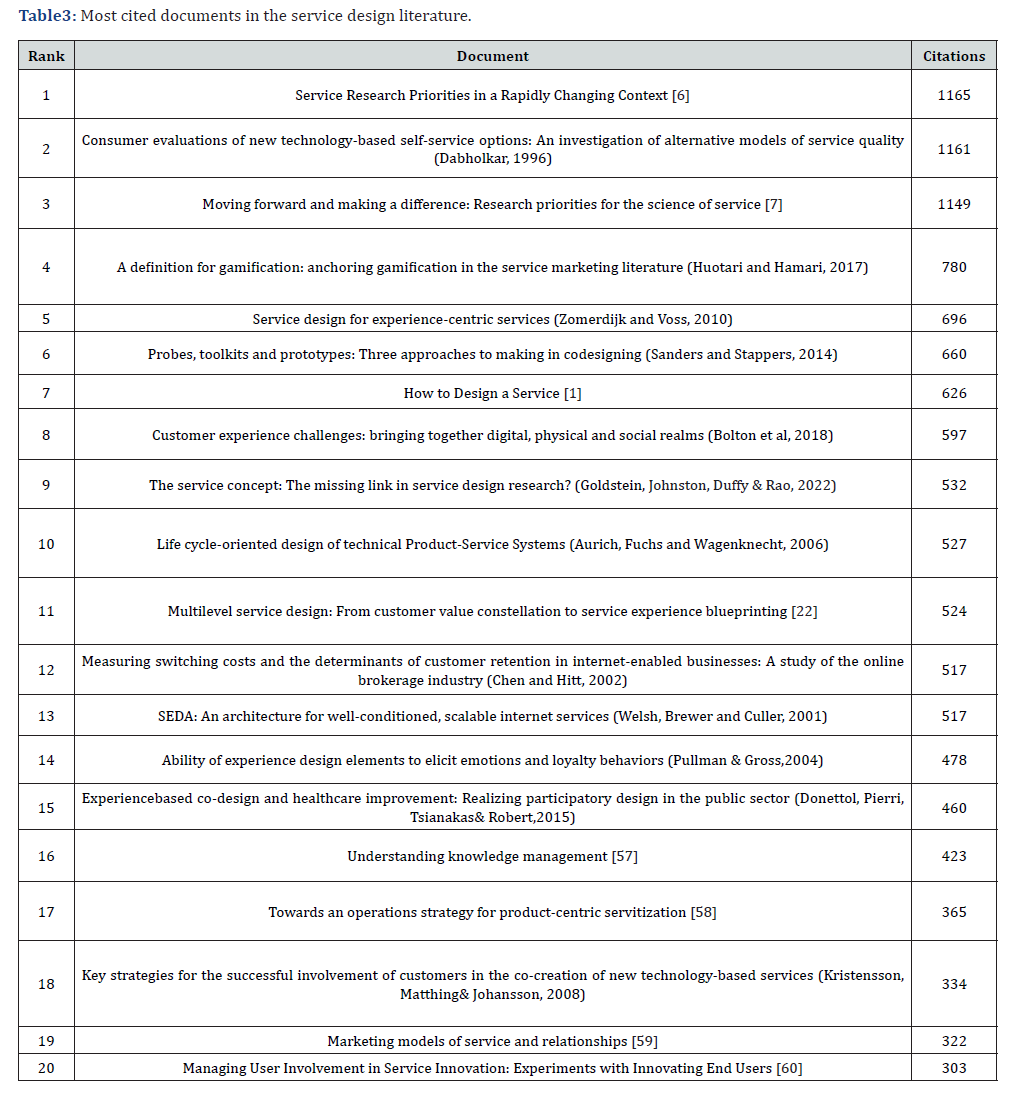
The identification of top articles in this study was based on citation metrics drawn from the Scopus database. Of the initial 2,681 articles examined in the second selection phase, 974 (approximately 36.34%) that did not receive any citations were excluded, with the exception of those published in 2022, 2023, and 2024, which were all retained regard-less of the number of citations. Consequently, the final data set consisted of 1,258 articles, each of which had at least four citations, except for the 181 from the last three years.
The article with the greatest impact on the literature is highlighted by Ostrom and colleagues [6], with 1,165 citations (see Table 3). This is a work that aims to identify critical research areas capable of advancing the service industry for the benefit of customers, organizations, and society, focusing on research priorities in an ever-changing environment due to technological developments. This is followed by the article by Dabholkar (1996) with 1,161 citations, which examines consumer evaluations of new technology based self-service options and alternative service quality models. Also noteworthy is the contribution of Ostrom and colleagues [7], with 1,149 citations.
Most cited documents the last five years
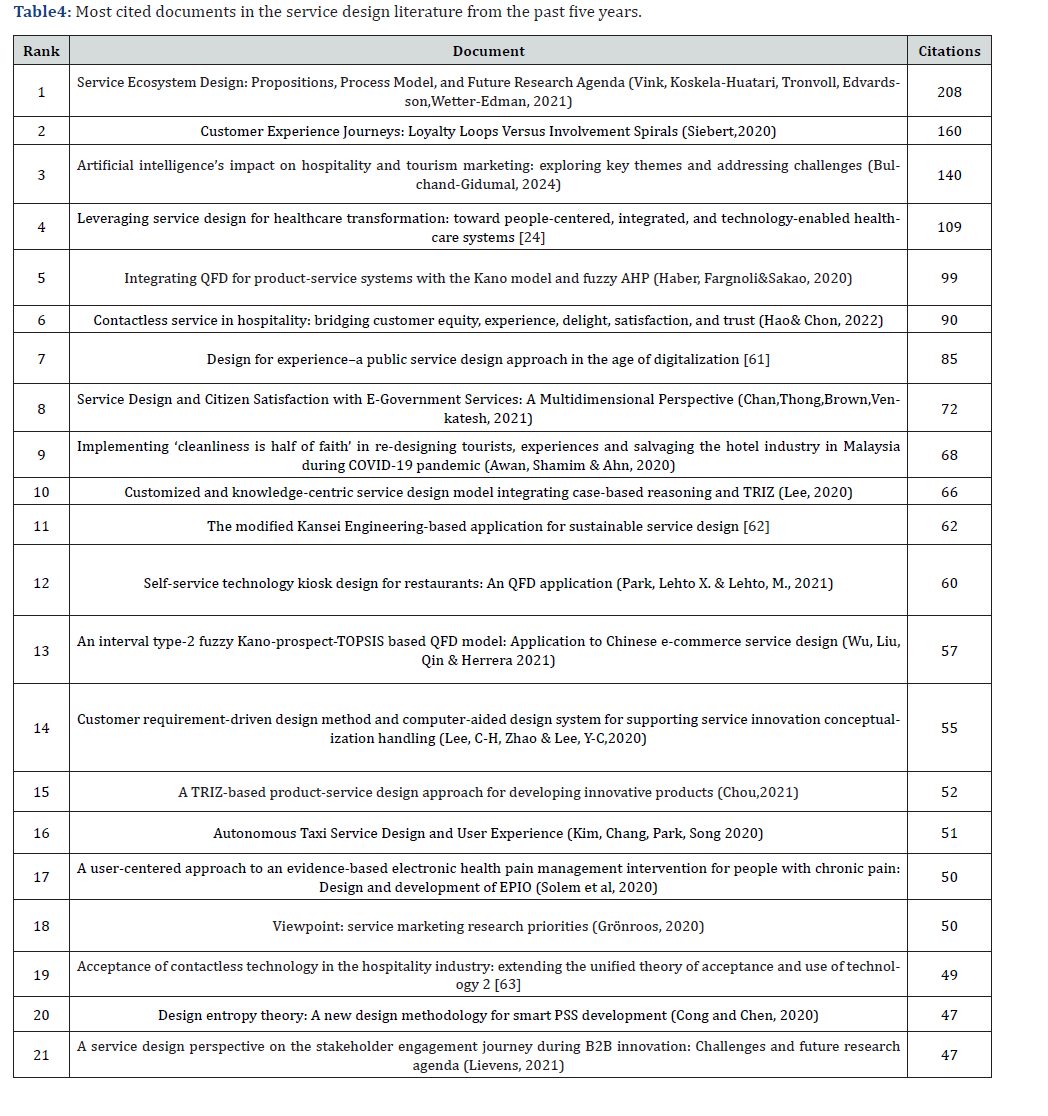
An analysis of the most frequently cited documents from the last five years (2020-2024) allows for more valid conclusions to be drawn about emerging trends in ser-vice design, its driving factors, practices, and performance. The article “Service Ecosystem Design: Propositions, Process Model, and Future Research Agenda” (Vink et al., 2021) has the highest number of citations, with 208, and focuses on service design at the ecosystem level, proposing a more systemic and long-term framework for complex environments with multiple stakeholders. This is followed by Siebert’s (2020) work, “Customer Experience Journeys: Loyalty Loops Versus Involvement Spirals,” with 160 citations, while in third place is “Artificial intelligence’s impact on hospitality and tourism marketing: exploring key themes and addressing challenges” (Bulchand-Gidumal, 2024), with 140 citations. Fourth in the ranking is “Leveraging service design for healthcare transformation: toward people-centered, integrated, and technology-enabled healthcare systems” [24], with 109 citations (see Table 4).
Key motivators, practices and performance of service design
Key motivators
i. Transition from Product-Centric to Human-Centric Design:
Service design is fundamentally motivated by the shift towards human-centered approaches, regarded as essential for innovation and personalized service creation [60,63]. Active user involvement has be-come increasingly significant due to service complexity and technological advancement, as highlighted by Patricio et al. [24] and Chan et al. (2021).
ii. Resolving Complex Systemic Challenges:
Organizations adopt service design methods to address complexity and interdependencies within multi-actor systems. Traditional reductionist approaches are insufficient, as discussed by Vink et al. (2021).
iii. Digital Transformation and Technological Integration:
The integration of digital technologies—accelerated post- COVID-19—acts as a central motivator. Technology-enabled services, AI, and contactless interactions are pivotal for contemporary user experience design (Bulchand-Gidumal, 2024; Park et al., 2021; Trisch-ler J. & Trischler W.J., 2021).
Core Practices
The main practices that emerge from the analysis of the most important articles of the last five years on service design are:
i. Systematic Approach to Service Ecosystem Design:
a) The development of a multi-level process model that
examines institutional provisions is fundamental to the
systemic approach to service design (Vink et al. 2021).
b) The use of service-dominant logic contributes to
understanding the interdependencies between participants
in the service ecosystem (Vink et al. 2021).
c) Collective design processes that involve multiple actors
and stakeholders are considered crucial for institutional
innovation and long-term transformative impact (Lievens,
2021).
ii. Customer Journey Management:
a) The adoption of loyalty loops, as an appropriate strategy for
certain categories of services, enhances customer retention in
instrumental services (Siebert, 2020).
b) Involvement spirals are an appropriate model for
recreational services, linking engagement and experience
(Siebert, 2020).
c) Smooth vs. sticky journeys models reflect the differentiation
in the nature of ser-vices and require different management
strategies (Siebert, 2020).
iii. Integration of methodologies and tools:
a) The development of Quality Function Deployment (QFD)
facilitates the translation of customer requirements into
functional characteristics of products and services (Haber,
Fargnoli & Sakao, 2020).
b) The application of the Kano model allows for the
categorization of customer needs and the identification of key
expectations (Wu et al, 2021).
c) The TRIZ methodology acts as a tool for innovative problem
solving in complex service environments (Lee, 2020).
d) Customer Journey Mapping offers a systematic analysis of
touchpoints and experiences (Siebert, 2020).
iv. User-centered Design Process:
a) Stakeholder workshops and usability testing are structured
processes of collective design and evaluation (Lievens, 2021).
b) The use of new technologies enhances the experiential and
personalized approach to service design (Lee, 2020).
c) Interdisciplinary collaboration between designers,
technologists, and end users is crucial for the effectiveness
and acceptance of innovative solutions (Lee, 2020).
Performance outcomes
i. Improved Customer Experience
a) The implementation of service design practices aims to
increase customer satisfaction and trust (see Table 4) [63].
b) Enhancing customer value is achieved through an integrated
approach to value, brand, and relationship management (see
Table 4) (Grönroos, 2020).
c) Personalizing experiences leads to delight, providing a
competitive advantage (see Table 4) [63].
ii. Organizational Benefits
a) The redesign of business processes brings about a
significant improvement in operational efficiency (see Table
4) (Lee, 2020).
b) The implementation of service design methodologies
enhances the competitive-ness of the organization (see Table
4) [63].
c) Accelerating innovation and reducing time to market are
achieved through im-proved tools and processes (see Table 4)
(Haber, Fargnoli & Sakao, 2020).
d) The use of Case-Based Reasoning (CBR) promotes
knowledge-centered service de-sign (see Table 4) (Lee, 2020).
iii. Systemic Improvements
a) The integration of integrated care into the healthcare sector
leads to enhanced efficiency and quality of services (see Table
4) [24].
b) Adopting sustainable service design solutions allows
environmental criteria to be integrated into the operation of
organizations (see Table 4) [62].
c) Successful digital transformation and increased adoption of
innovative services are a strategic benefit (see Table 4) [62].
Service design is proving to be a strategic tool for organizations seeking sustainable competitive advantage through humancentered innovation. Its success depends on the adoption of a systems approach, technology integration, and the collaboration of multiple stakeholders. Service design plays an important role in creating holistic user experiences that integrate physical, digital and social dimensions, enhancing user satisfaction and loyalty. Modern practices such as QFD, Kanzo models etc. are critical to translate user needs into functional features and promote innovation.
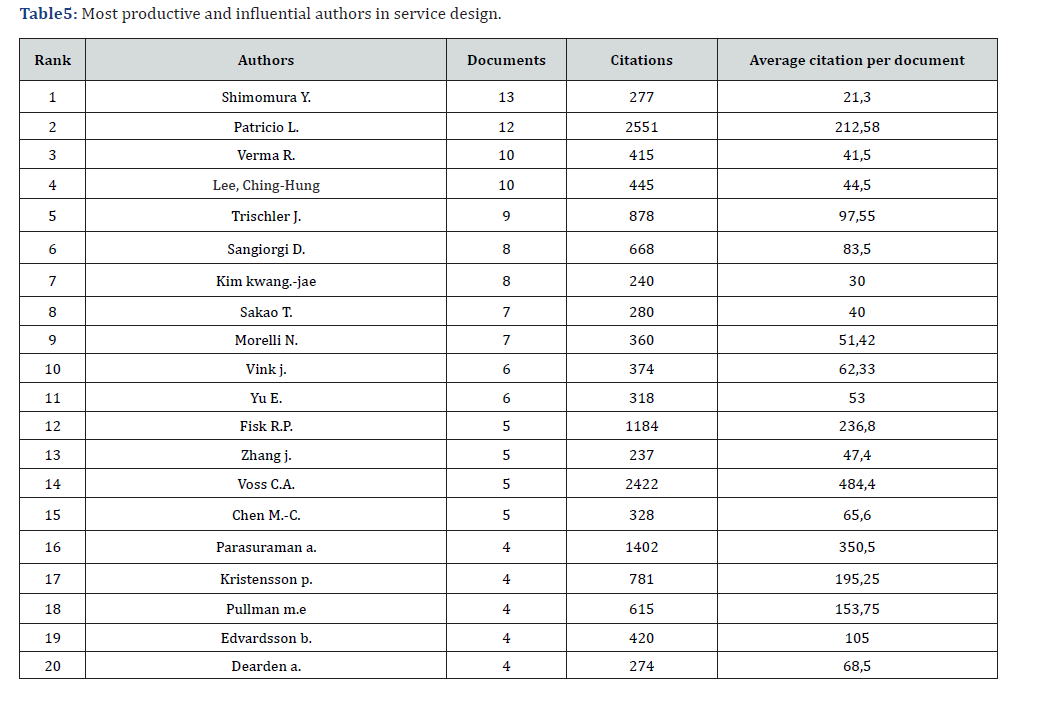
Most contributing and most influential authors
The analysis identifies Patricio (2,551 citations) and Voss (2,422 citations) as the most cited authors in service design, followed by Parasuraman (1,402 citations). Shimomura is the most prolific, with 13 publications, while Patricio and Verma have published 12 and 10 articles, respectively. Despite a higher publication count, Shimomura, Verma, Lee, and Trischler are less influential in terms of citations per article compared to Voss (484.4), Parasuraman (350.5), and Fisk (236.8), who exhibit the greatest impact in the field (See Table 5).
Most Influential Sources
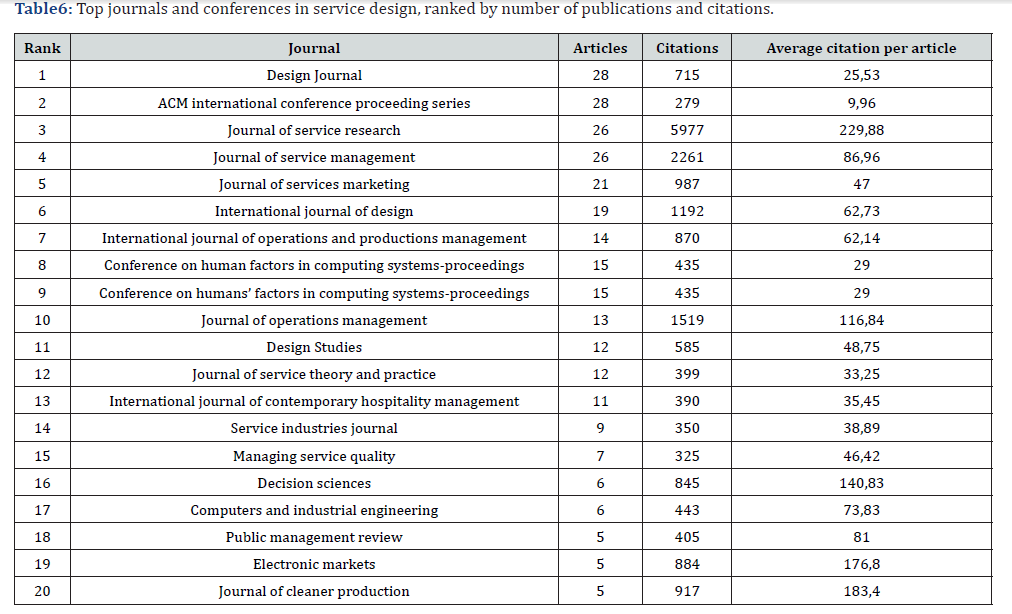
This survey analyzes 1,258 papers published in 292 sources (205 journals, 87 conferences), assessing productivity and impact by publication and citation counts. Only 49 sources (5.96%) have at least five publications, while the majority (94%) published fewer than five, indicating concentration in key outlets. The “Journal of Service Research” ranks as most influential (229.88 citations per article, 5,977 citations), followed by “Journal of Cleaner Production” (183.4 citations per article) and “Electronic Markets” (176.8 citations per article). “Design Journal” and “ACM International Conference Proceedings Series” contribute the most articles. No journal exclusively covers service design; rather, relevant research is dispersed across interdisciplinary journals in management, marketing, and design. This reflects service design’s dynamic, interdisciplinary nature and highlights the need for dedicated scientific platforms in the field (see Table 6).
Co-authorship Analysis
The geography of scientific publications
This section examines the main sources of scientific research on service design, focusing on institutional relationships and geographical collaborations between researchers in the field (Caviggioli & Ughetto, 2019). The analysis covers institutions (universities, re-search centers, organizations), allowing the identification of areas with a high concentration of knowledge and innovation, as well as interconnections through international collaborations [65].
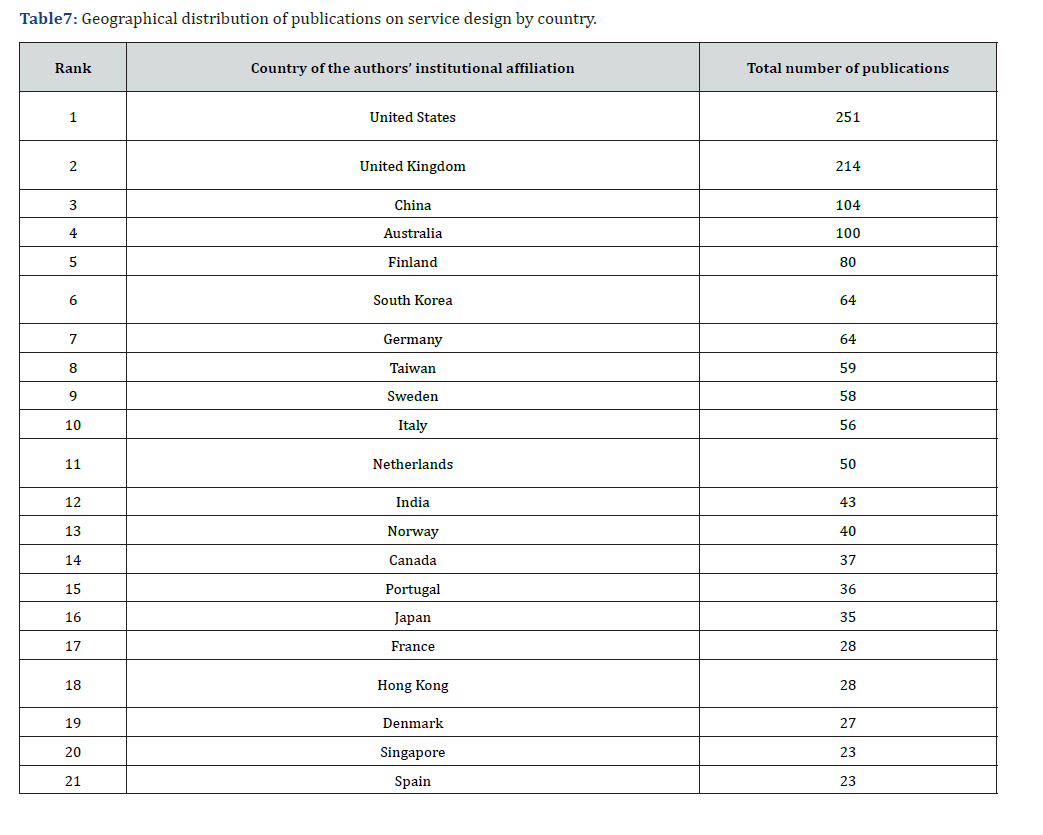
The research identified 2,672 institutions and 76 countries active in service design. Of these, 30 are European, 2 are in Oceania, 7 are in America, 26 are in Asia, and 11 are in Africa. Europe has the highest percentage of publications (47.22%), followed by Asia (24.26%), America (18.88%), Oceania (7.29%), and Africa (2.33%). The US and the UK lead in terms of number of articles (251 and 214, respectively), while China (104), Australia (100), Finland (80), South Korea and Germany (64).
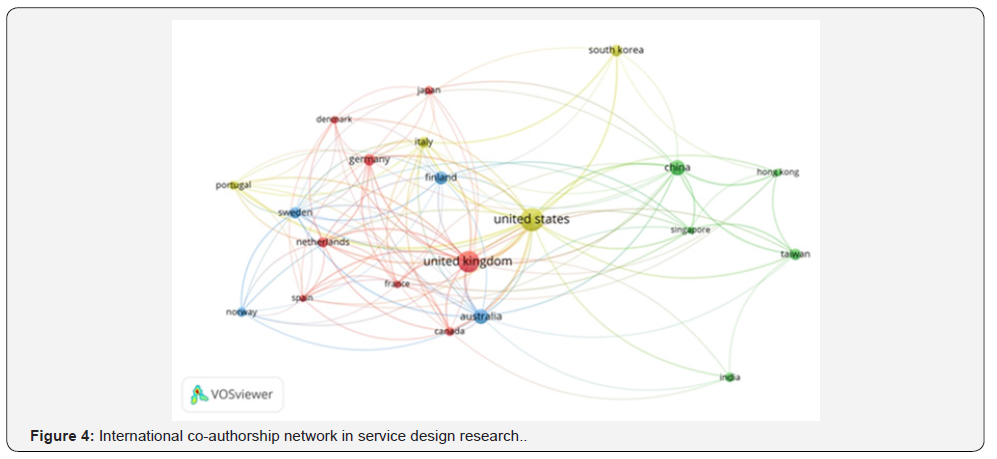
Furthermore, the US and the UK have the strongest networks of international collab-orations, with the UK linked to 19 countries and the US to 20 (see Figure 4). They are followed by Australia with 16, Italy and Germany with 15, Sweden, China, and the Nether-lands with 14 partner countries. The analysis shows that research activity is concentrated in developed countries with mature infrastructure and innovation strategies, while countries such as Bosnia and Herzegovina, Bahrain, Oman, Kazakhstan, and Costa Rica ap-pear isolated from broader international networks, which may limit the international im-pact of their results.
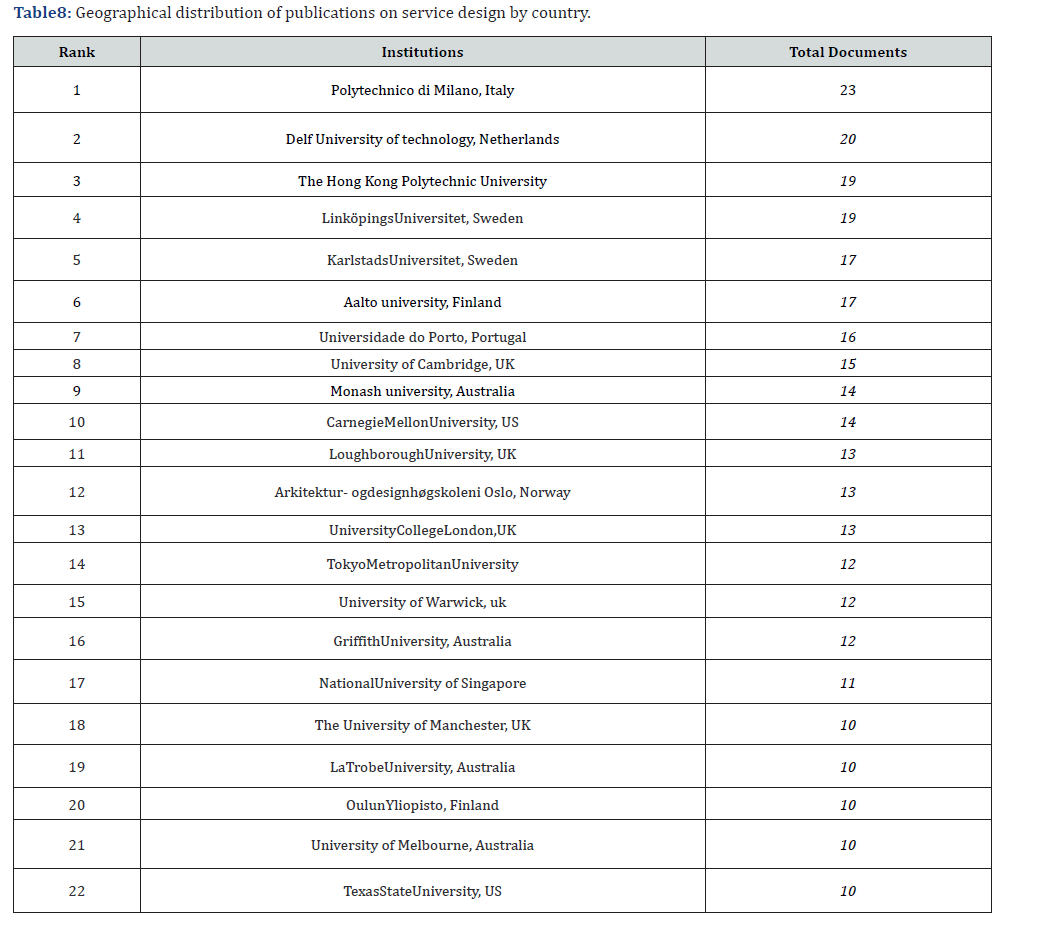
A total of 2,672 institutions from 76 countries were recorded, highlighting the strong presence and synergy of institutions in Europe, particularly in the United Kingdom. Particularly important institutions in this field are the Politecnico di Milano, Delft University of Technology, and Hong Kong Polytechnic University, while notable activity is observed at Linköping University, Karlstad University, Aalto University (Sweden, Finland), Monash, Griffith, La Trobe, Melbourne (Oceania), National University of Singapore, Tokyo Metropolitan University (Asia), and Carnegie Mellon (North Ameri-ca). The geographical dispersion confirms the global nature of the field, with a focus, however, on Europe and the United Kingdom, where there is the greatest concentration of activity and collaboration (see Tables 7 & 8).
Scientific Network
To investigate author collaboration in service design, a coauthorship network was constructed, focusing on authors with at least five publications as indicators of high activity and importance in the field. The analysis reveals distinct and relatively autonomous research groups, with generally limited collaboration between clusters. Authors such as Patricio L., Sangiorgi D., and Lee C.-H. stand out for both productivity and citation impact, while active networking is evident for Kim K.-J., Lee C.-H., and Morelli N. (see Figure 5). Despite their contributions, dense connections between clusters are lacking, suggesting that increased interdisciplinary collaboration could foster greater knowledge sharing and help unify the scientific community within service design research. International collabo-rations, as observed in the red cluster, contribute to integrated approaches with global applicability, whereas predominantly regional partnerships, exemplified by the green cluster, may restrict knowledge dissemination and innovation due to isolation.

Co-citation analysis
Most cited first authors
The co-citation analysis included the authors most frequently cited in the documents studied, with 20 authors receiving at least 160 citations out of a total of 3,415 authors in 1,258 articles. In total, these authors account for 6,031 citations and their citation relation-ships form the basis for the co-citation network, which shows two main clusters.
Cluster 1 (red) comprises authors such as Lusch R.F. (414), Sangiorgi D. (326), Vargo S.L. (573), and Edvardsson B. (364), who are recognized for their contributions to the systems approach and Service-Dominant Logic theory in service de-sign. This group represents the advancement of contemporary and theoretical frameworks centered on value co-creation and the complexity inherent in service ecosystems (see Tables 9 & 10).
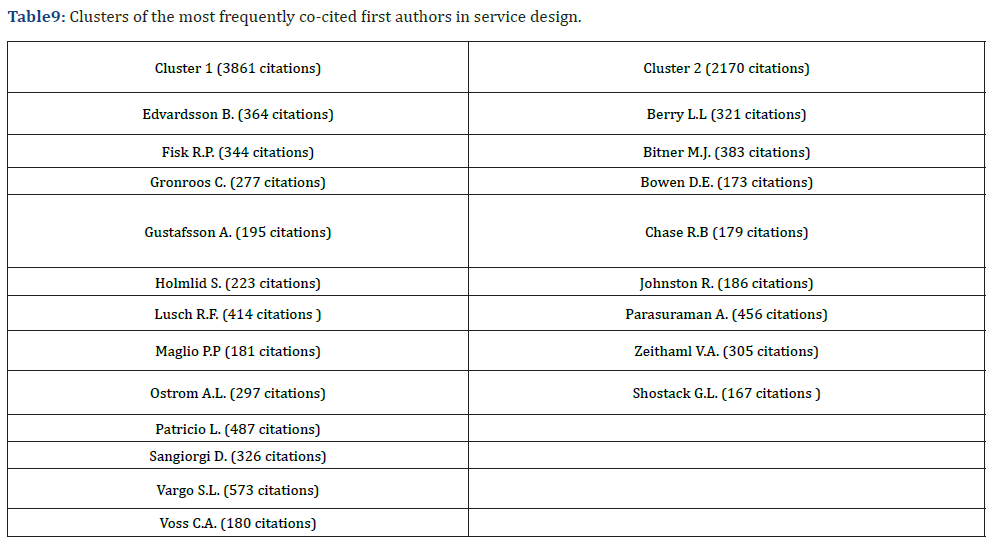

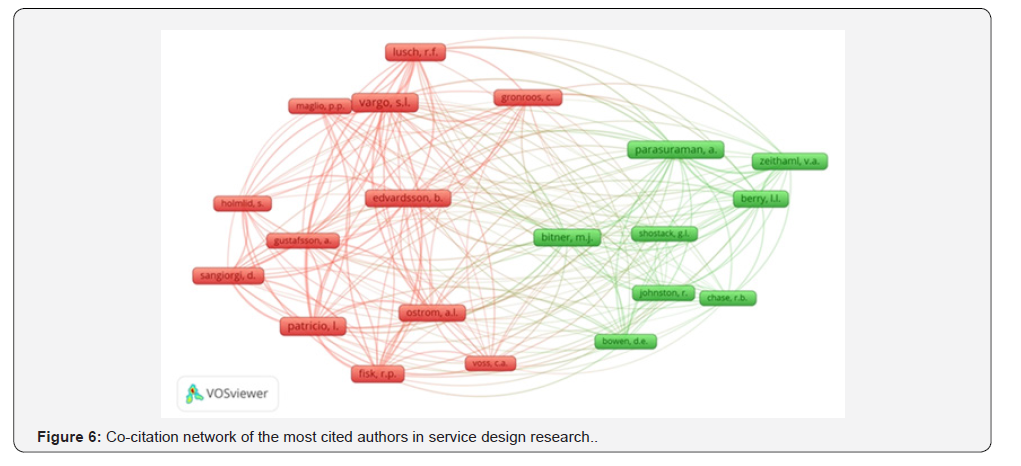
Cluster 2 (green) includes important authors such as Berry L.L. (321), Bitner M.J. (383), Parasuraman A. (456), and Zeithaml V.A. (305), whose work focuses mainly on classic service models and evaluation measures such as SERVQUAL.
The emergence of these clusters reflects the conceptual development of service design research, evolving from a focus on functional and measurable service elements to more dynamic, systemic, and collaborative paradigms. The interconnections observed between authors in both clusters highlight points of theoretical convergence, supporting future interdisciplinary synthesis within the field (see Figure 6).
Co-Occurrence analysis
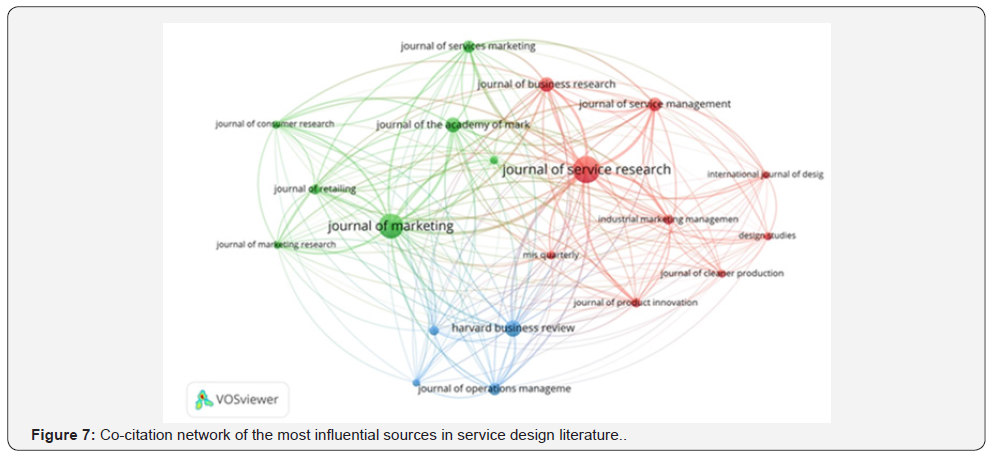
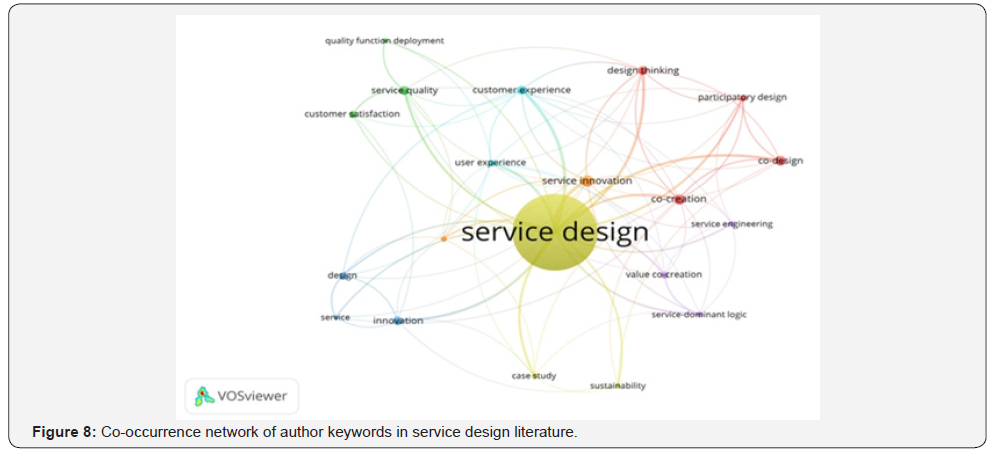
The keyword analysis encompassed 3,482 terms from 1,137 documents, as 121 records lacked author keywords. Setting a threshold of 15 occurrences, “service design” emerged as the most central term (507 occurrences), exhibiting the highest link strength in the network and confirming its role as the dominant concept in the field (see Figure 7).
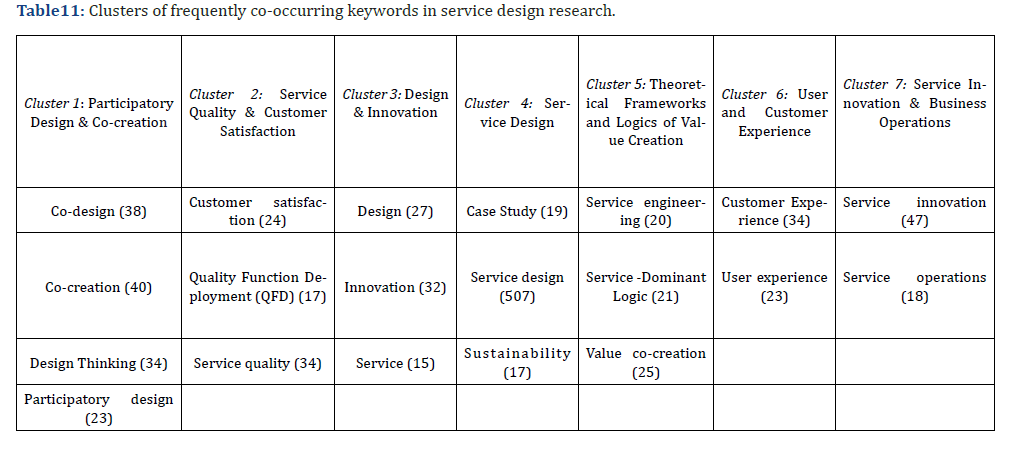
Frequently co-occurring and thematically relevant concepts— such as service innovation (47), co-creation (40), customer experience (34), co-design (38), design thinking (34), and participatory design (23)—demonstrate a persistent research focus on participatory and human-centered innovation aimed at value creation and user experience.
The presence of terms like Service-Dominant Logic, Quality Function Deployment (QFD), and sustainability indicates that service design is conceptually interconnected with both theoretical foundations and applied improvement approaches. Clusters identified by Vosviewer (see Table 11) reflect the multidimensional nature of service design, incorporating human-centered design, customer experience, collaborative approaches, theoretical grounding, and strategic operational elements. As depicted in Figure 8, service de-sign is affirmed as an interdisciplinary field centered on experience, innovation, and collaboration.
Emerging trends in service design literature
An analysis of emerging trends in service design, based on authors’ keyword data from 2019 to 2024, reveals a clear evolution in the field. Previous work prior to 2010 emphasized service quality, consumer evaluation for process improvement (Dabholkar, 1996), conceptualization [66], business strategy [58], and knowledge management [57]. The emergence of the Product Service System (PSS) and service innovation [59] in the early 2000s marked a change that remains a dominant trend.
Over time, service design prioritized structuring and optimizing quality, efficient operations, and expertise integration. In contrast, recent trends since 2019 foreground user experience, sustainability, innovation, business value, and collaborative design, reflecting a multidisciplinary approach that aligns with the evolving priorities of the field and the broader emphasis on value co-creation and user-centered outcomes.
i. Collaborative design
The dominant trends of co-design and co-creation are replacing the traditional trend of “design for users” with “design with users”. The most successful services result from collaborations between end-users, stakeholders, employees involved in the design of a service and this trend is reflected in this recognition. However, this approach has to face some challenges which are managing complex processes and balancing different view-points between participants.
ii. Experience-Centric design
Customer experience replaces traditional customer satisfaction as a holistic customer experience that marks a more mature understanding of service design. Now organizations understand that it is not enough to simply provide functional services but they need to create meaningful experiences that create emotional connections with users.
iii. Service-Dominant Logic
Service design is no longer a set of tools and techniques but a discipline that is theoretically established with clear principles and philosophy. This is evidenced by the existence of the term service-dominant logic indicating the maturity of the field. The natural evolution of this theory is value co-creation.
iv. Sustainability Integration
Sustainability as an emerging trend reflects the increased awareness of environmental and social responsibility. Service design is no longer focused only on economic value but has expanded to include social and environmental awareness. This trend is expected to evolve in the future as all organizations are required to adhere to Environmental, Social and Governance (ESG) compliance and social responsibility.
v. Innovation Driven Service Design
Innovation Driven Service Design is directly related to the digital revolution as it is powered by it. Artificial Intelligence, Internet of Things, Blockchain and machine learning are becoming enablers for creating modern and quality services. Furthermore, Innovation Driven Service Design is also connected to the codesign and co-creation trends as a collaborative ecosystem creates innovative solutions and services.
vi. Design Thinking
The presence of Design thinking in the mainstream trends shows the adoption of a human-centered approach by service design and focuses on empathy, learning and experimentation. The new trends demonstrate the evolution, dynamism, innovation of the field and its scientific maturity over the years. Trends such as sustainability, user experience and collaboration suggest the evolution of the field as a holistic and socially responsible field that can address any modern challenge that arises.
Documents’ Classification by thematic area
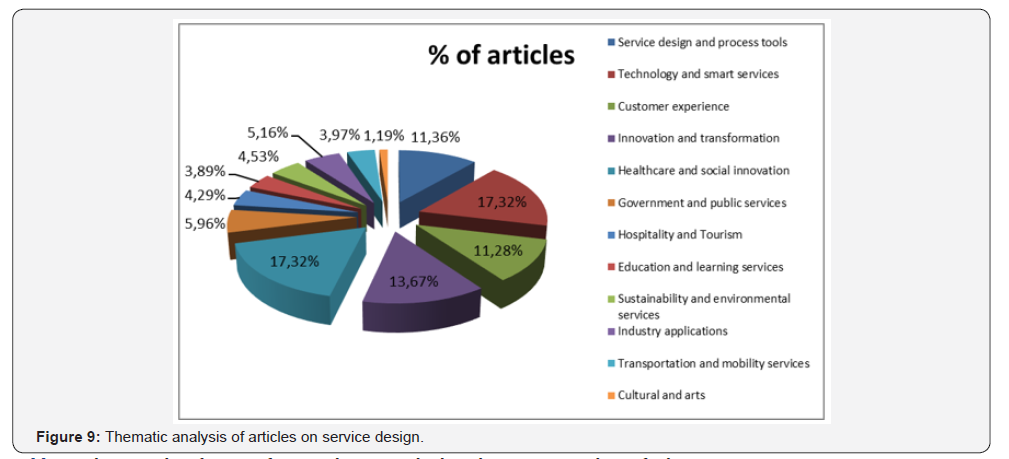
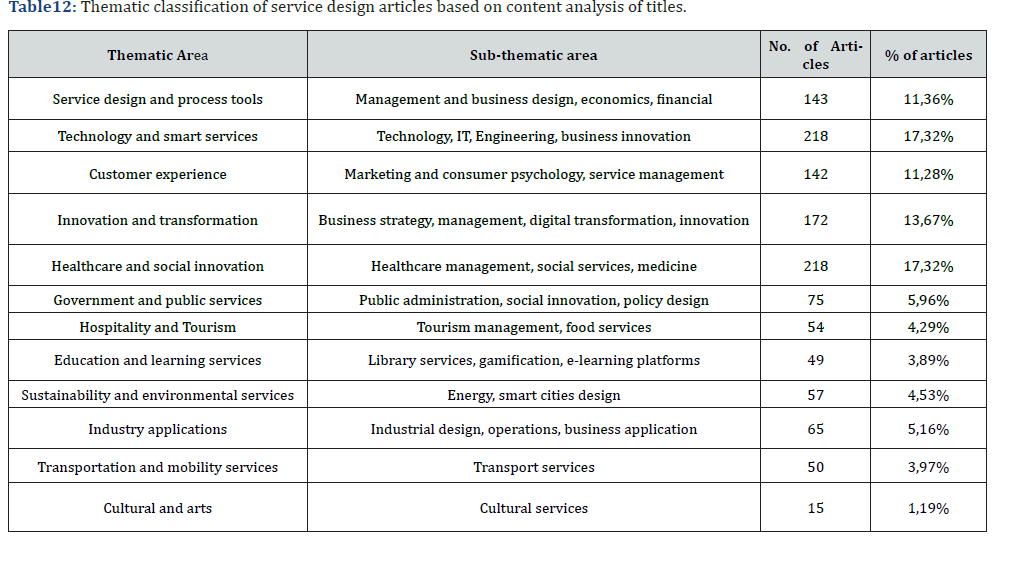
This section classifies articles into thematic areas to highlight the interdisciplinary breadth and research priorities within service design. The categorization was based on a systematic content analysis of document titles, ensuring methodological rigor in identifying the main field of relevance when articles belonged to multiple themes. This approach provides a valid and reliable depiction of the domain’s structure.
Thematic classification confirms the multidisciplinary nature and flexibility of ser-vice design, as evidenced by its broad applicability across fields. The leading thematic areas— “Technology and Smart Services” and “Healthcare and Social Innovation” (17.32%)—demonstrate strong research activity in technological advancement and health-related innovation. “Innovation and Transformation” (13.67%), “Service Design and Process Tools” (11.36%), and “Customer Experience” (11.28%) also show major re-search focus, underscoring the field’s commitment to methodological development and user-centric approaches.
Lesser but still significant representation is seen in “Industry Applications,” “Sustainability and Environmental Services,” and “Culture and Arts,” indicating expansion into modern and specialized domains. Overall, this distribution illustrates the growing maturity of service design as a discipline, balancing social, managerial, and technological priorities, while also defining future research challenges, especially in sustainability and domain-specific applications (see Table 12).
Discussion
The findings of this study reflect the maturation of service design as an interdisciplinary field. The chapter interprets bibliometric data, linking theory with practical application. It highlights the main contributions and opens up prospects for future development.
Theoretical contribution
This bibliometric analysis, consisting of 1,258 selected articles from 292 sources, significantly enriches the theoretical literature on service design, recording the dynamic evolution and maturation of the field from its first appearance in 1982 to 2024. The literature to date, such as the previous researches of Ostrom et al., 2015 and Vargo & Lusch (2004), had laid the foundations for the development of Service-Dominant Logic and the emphasis on value creation through co-creation, but this article deepens and broadens this knowledge through the systematic synthesis and mapping of theories and applications.
It is important to identify service design with the interdisciplinary approach that combines marketing, management, and design, forming a comprehensive framework capable of addressing the complexity and interdependencies of stakeholders, as documented in research by Patricio et al. [24], and Stickdorn & Schneider (2010). Hu-man-centered design and participatory methodologies, such as co-creation and the use of prototyping tools, are highlighted as essential for accurately capturing user needs and translating them into innovative services. Furthermore, research highlights the integration of sustainability and social responsibility as integral elements that enrich the theoretical foundations (Hartono, 2020; Vink et al. 2021).
The combination of theoretical and empirical findings also highlights the role of digital technology and innovation as two emerging trends in service design, helping to fill research gaps. The analysis systematically identifies for the first time the coexistence of digital technologies (AI, blockchain) with the themes of sustainability and social innovation as dominant developments in the field (Bulchand-Gidumal 2023) [24]. Through this synthetic approach, the article offers a theoretical framework that covers multiple dimensions of service design, from the logic of co-creation and customer experience to the integration of new technologies and environmental challenges. This methodological rigor and interdisciplinarity lay the foundations for establishing and expanding the field.
Practical implementation
On a practical level, the analysis identifies service design as a key factor in innovation strategy in the context of digital transition. The emphasis on the application of cut-ting-edge technologies such as artificial intelligence, blockchain, and big data analytics improves the delivery of personalized and effective services in critical areas such as healthcare and the public sector (Bulchand- Gidumal 2023) [24, 63]. The article documents that service design functions both as a tool for simplifying organizational processes and as a means of strengthening customer loyalty through holistic experience mapping and interdisciplinary collaboration between departments [24] (Siebert et al. 2020)./p>
Practical implementation in areas where social innovation and sustainability are crucial, as highlighted by the themes “Technology and Smart Services” and “Sustainability and Environmental Services,” highlights the use of service design as a tool for responsible and sustainable innovation (Vink et al., 2021) [24]. This link to corporate social responsibility and environmental initiatives is a major theme in current practice and a point of reference for integrating service design into sustainability strategies.
Contribution to Bibliography and Innovation
This study contributes as one of the most comprehensive bibliometric analyses exclusively on service design, distinguishing it from related terms and fields such as customer experience [67] and co-creation [68]. To the current date, few studies have undertaken such an extensive mapping from the field’s first academic appearance to recent trends in 2024, combining quantitative biblio-metric methods with qualitative thematic classification [69-75].
This extensive documentation not only confirms and enriches the existing theoretical and empirical body of knowledge, but also opens up new horizons for future research, especially in areas such as digital transition, sustainability, and interdisciplinary approaches. Furthermore, the application of advanced tools (VOSviewer, Python, AI Claude) in data analysis is an innovative element that enhances the accuracy of mapping and highlighting scientific networks, contributing to a more accurate understanding of trends and collaborations.
International Cooperation and Holistic Development
Findings on international collaborations highlight the dominance of countries with mature and innovative ecosystems in Europe, North America, and parts of Asia, which have developed strong and effective networks of experience and innovation [6]. Promoting and strengthening transnational cooperation is expected to accelerate the dissemination of knowledge, incorporating a holistic, inclusive, and sustainable perspective into service design at a global level.
Suggestions for Future Research
This holistic scientific record highlights the need for research that delves deeper into comprehensive and unifying theoretical models capable of linking theory more directly to applied practices. Of course, particular emphasis should be placed on areas such as sustainability and digital transition, while the strengthening of specialized scientific com-munities and platforms, as well as the development of new international collaborations, are expected to play a catalytic role in the scientific and social development of service de-sign.
Conclusion
The bibliometric analysis of the field of service design reveals steady and significant growth in research output from 1982 to 2024, with the last two decades showing a significant increase. The research is strongly international in nature, with the US and the UK dominating, while Europe maintains the highest concentration of publications and collaborations. Important institutions involved in the field include the Politecnico di Milano, Delft University of Technology, and Hong Kong Polytechnic University.
The analysis of references showed that the most influential authors and publications focus on the theoretical maturation of service design, mainly through Service-Dominant Logic, co-creation, and customer experience management. Leading scientific journals demonstrate the interdisciplinary nature of the field, combining management, design, in-novation, and sustainability.
Keyword analyses highlight current trends towards participatory design, user experience, sustainability integration, and the use of digital technologies such as artificial intelligence and blockchain as key drivers of innovation. At the same time, thematic classification highlights the broad application of service design in areas such as technology, health, innovation, and customer experience.
Finally, the research highlights the need to strengthen international cooperation in order to promote innovation and further establish the scientific foundations of service de-sign. Overall, the study provides a systematic overview of the evolution of the field, high-lighting key contributors, dominant themes, and collaboration networks, and offering directions for future research, strategic development, and policy initiatives.
Limitations and future research opportunities
The main limitations of this study include its reliance on a single bibliographic database (Scopus), which may have resulted in the exclusion of relevant articles from other sources. Furthermore, the use of English as the primary selection criterion may limit the representation of non-English-speaking research communities. Bibliometric analysis is particularly effective for systematically identifying general patterns, important contributors, and research trends in a field. Although it does not offer the detail of qualitative con-tent assessment, it provides a strong quantitative basis for mapping the intellectual structure and thematic development of the literature. This approach complements, rather than replaces, in-depth qualitative analysis, ensuring comprehensive coverage of the field while recognizing differences between methodological fields of application. Furthermore, the mapping only covers publications up to 2024, with the result that some more recent trends or developments are not adequately covered.
Future research in service design should focus on exploring the differences and challenges that arise in geographically and culturally diverse environments in order to better understand the role of institutional frameworks and social factors in the evolution of the field. Furthermore, the integration of Artificial Intelligence and digital technologies into service design opens up new perspectives for innovation and personalization of the user experience, which requires further theoretical and empirical investigation. The specialization of bibliometric analysis by field of application will enable targeted practical recommendations. Furthermore, the development of interdisciplinary and crosssectoral approaches, with greater emphasis on collaboration between researchers from different disciplines, is considered crucial for ad-dressing the complex challenges faced by modern services. Finally, organizing periodic bibliometric reviews and strengthening international collaboration can contribute significantly to the collection and systematic promotion of knowledge in the field of service design.
References
- Shostack GL (1982) How to design a service. European Journal of Marketing 16(1): 49-63.
- Wilson NHM, & González SL (1982) Methods For Service Design. Transportation Research Record Journal of the Transportation Research Board, 862.
- Kocur G, & Hendrickson C (1982) Design of Local Bus Service with Demand Equilibration. Transportation Science 16(2): 149-170.
- Scheuing EE, & Johnson EM (1989) A proposed model for new service development. Journal of Services Marketing 3(2): 25-34.
- Pacenti E, Sangiorgi D (2010) Service design Research Pioneers. An overview of service design research developed in Italy since the ‘90s. Design Research Journal 1(10): 26-33.
- Ostrom AL, Parasuraman A, Bowen DE, Patrício L, & Voss CA (2015) Service research priorities in a rapidly changing context. Journal of Service Research 18(2): 127-159.
- Ostrom AL, Bitner MJ, Brown SW, Burkhard KA, Goul M, et al. (2010) Moving forward and making a difference: Research priorities for the Science of service. Journal of Service Research 13(1): 4-36.
- Trischler J, & Scott DR (2015) Designing Public Services: The usefulness of three service design methods for identifying user experiences. Public Management Review 18(5): 718-739.
- Yu E, & Sangiorgi D (2017) Service design as an approach to implement the value cocreation perspective in new service development. Journal of Service Research 21(1): 40-58.
- Johansson‐Sköldberg U, Woodilla J, & Çetinkaya M (2013) Design Thinking: past, present and possible futures. Creativity and Innovation Management 22(2): 121-146.
- Holmlid S (2009) Participative, co-operative, emancipatory: From participatory design to service design. First Nordic Con-ference on Service Design and Service Innovation.
- Intriago VRC, Villaverde DB, & Robles GC (2023) A Bibliometric Analysis of Customer Experience in Service Design from 1999 to 2020. Vision the Journal of Business Perspective.
- Saha V, Mani V, & Goyal P (2020) Emerging trends in the literature of value co-creation: a bibliometric analysis. Bench-marking an International Journal 27(3): 981-1002.
- Kumar R, Saxena S, Kumar V, Prabha V, Kumar R, et al. (2023) Service innovation research: a bibliometric analysis using VOSviewer. Competitiveness Review an International Business Journal Incorporating Journal of Global Competitiveness 34(4): 736-760.
- Cao Y (2023) The application of co-design in service design: a bibliometric analysis of 2018-2022. AHFE International.
- Bhandari A (2022) Design Thinking: from Bibliometric Analysis to Content Analysis, Current Research Trends, and Future Research Directions. Journal of the Knowledge Economy 14(3): 3097-3152.
- Dzikowski P (2018) A bibliometric analysis of born global firms. Journal of Business Research 85: 281-294.
- Chawla RN, & Goyal P (2021) Emerging trends in digital transformation: a bibliometric analysis. Benchmarking an Inter-national Journal 29(4): 1069-1112.
- Patrício L, Gustafsson A, & Fisk R (2017) Upframing service design and innovation for research impact. Journal of Service Research 21(1): 3-16.
- Holmlid S, & Evenson S (2008) Bringing service design to service sciences, management and engineering. In Service science: research and innovations in the service economy, pp. 341-345.
- Saad-Sulonen J, De Götzen A, Morelli N, & Simeone L (2020) Service design and participatory design: time to join forces? PDC ’20: Proceedings of the 16th Participatory Design Conference 2020, pp. 76-81.
- Patrício L, Fisk RP, Cunha JFE, & Constantine L (2011) Multilevel service design: from customer value constellation to service experience blueprinting. Journal of Service Research 14(2): 180-200.
- Stickdorn M, & Schneider J (2012) This is Service Design Thinking: Basics – Tools – Cases.
- Patrício L, Sangiorgi D, Mahr D, Čaić M, Kalantari S, et al. (2020) Leveraging service design for healthcare transformation: toward people-centered, integrated, and technology-enabled healthcare systems. Journal of Service Manage-ment 31(5): 889-909.
- Clack LA, & Ellison RL (2018) Innovation in service design thinking. In Springer eBooks, pp. 85-92.
- Vargo SL, & Lusch RF (2003) Evolving to a new dominant logic for marketing. Journal of Marketing 68(1): 1-17.
- Trischler J, Pervan SJ, Kelly SJ, & Scott DR (2017) The value of codesign. Journal of Service Research 21(1): 75-100.
- Vargo SL, & Lusch RF (2015) Institutions and axioms: an extension and update of service-dominant logic. Journal of the Academy of Marketing Science 44(1): 5-23.
- Jaaron AM, Backhouse CJ (2017) Operationalisation of service innovation: a systems thinking approach. Service Industries Journal 38(9-10): 561-583.
- Sundbo J (2009) Innovation in the experience economy: a taxonomy of innovation organisations. Service Industries Journal 29(4): 431-455.
- Razzouk R, & Shute V (2012) What is design thinking and why is it important? Review of Educational Research 82(3): 330-348.
- Zhao D, & Strotmann A (2008) Information science during the first decade of the web: An enriched author cocitation analysis. Journal of the American Society for Information Science and Technology 59(6): 916-937.
- Zhao L, Yang J, Liu T, Cao H, Liang Y, et al. (2024) Comparison of clinical research trends and hotspots in allergic rhinitis and asthma from 2013 to 2023 based on bibliometric analysis. Heliyon 10(12): e32829.
- Rameder H, Di Angelo M, & Salzer G (2022) Review of automated vulnerability analysis of smart contracts on Ethereum. Frontiers in Blockchain, 5.
- Ullah R, Asghar I & Griffiths MG (2022) An Integrated Methodology for Bibliometric Analysis: A case study of internet of things in healthcare applications. Sensors 23(1): 67.
- Grandbois J, & Beheshti J (2014b) A Bibliometric Study of Scholarly Articles Published by Library and Information Science Authors about Open Access. Information Research: An International Electronic Journal 19(4).
- Linnenluecke MK, Marrone M, & Singh AK (2019) Conducting systematic literature reviews and bibliometric analyses. Australian Journal of Management 45(2): 175-194.
- Frandsen TF, & Nicolaisen J (2022) Defining the unscholarly publication: a bibliometric study of uncited and barely cited publications. Scientometrics 128(2): 1337-1350.
- Royle P, Kandala N, Barnard K, & Waugh N (2013) Bibliometrics of systematic reviews: analysis of citation rates and journal impact factors. Systematic Reviews, 2(1).
- Caviggioli F, & Ughetto E (2018) A bibliometric analysis of the research dealing with the impact of additive manufacturing on industry, business and society. International Journal of Production Economics 208: 254-268.
- Echchakoui S (2020) Why and how to merge Scopus and Web of Science during bibliometric analysis: the case of sales force literature from 1912 to 2019. Journal of Marketing Analytics 8(3): 165-184.
- Zhao D, & Strotmann A (2015) Analysis and visualization of citation networks. In Synthesis lectures on information concepts, retrieval, and services.
- Kirby A (2023b) Exploratory Bibliometrics: using VOSViewer as a preliminary research tool. Publications 11(1): 10.
- Saini S, Burman RR, Padaria RN, Mahra GS, Bishnoi S, et al. (2023) Mapping the research trends of migration behavior in agricultural households: a bibliometric analysis. Frontiers in Sustainable Food Systems.
- Kuroki M (2021) Using Python and Google Colab to teach undergraduate microeconomic theory. International Review of Economics Education 38: 100225.
- Tock K (2019) Google CoLaboratory as a platform for Python coding with students. RTSRE Proceedings, 2(1).
- Lee H, & Park S (2023) Information amount, accuracy, and relevance of generative artificial intelligence platforms’ answers regarding learning objectives of medical arthropodology evaluated in English and Korean queries in December 2023: a de-scriptive study. Journal of Educational Evaluation for Health Professions.
- Mishra M, Desul S, Santos CAG, Mishra SK, Kamal AHM, et al. (2024) A bibliometric analysis of sustainable development goals (SDGs): a review of progress, challenges, and opportunities. Environment, development and sustainability 26(5): 11101-11143.
- Ellegaard O, & Wallin JA (2015) The bibliometric analysis of scholarly production: How great is the impact? Scientometrics 105(3): 1809-1831.
- Martínez-López FJ, Merigó JM, Valenzuela-Fernández L, & Nicolás C (2018) Fifty years of the European Journal of Marketing: a bibliometric analysis. European Journal of Marketing, 52(1/2): 439-468.
- Van Raan A (2003) The use of bibliometric analysis in research performance assessment and monitoring of interdisciplinary scientific developments. TATuP Zeitschrift Für Technikfolgenabschätzung in Theorie Und Praxis 12(1): 20-29.
- Van Eck NJ, & Waltman L (2014) Visualizing bibliometric networks. In Springer eBooks, pp. 285-320.
- Donthu N, Kumar S, Mukherjee D, Pandey N, & Lim WM (2021) How to conduct a bibliometric analysis: An overview and guidelines. Journal of Business Research 133: 285-296.
- Zupic I, & Čater T (2014) Bibliometric methods in management and organization. Organizational Research Methods 18(3): 429-472.
- Gauthier É (1998) Bibliometric analysis of scientific and technological research: a user's guide to the methodology.
- Hjørland B (2013) Citation analysis: A social and dynamic approach to knowledge organization. Information Processing & Management 49(6): 1313-1325.
- Demarest M (1997) Understanding knowledge management. Long Range Planning 30(3): 374-384.
- Baines T, Lightfoot H, Peppard J, Johnson M, Tiwari A, et al. (2009) Towards an operations strategy for product‐centric servitization. International Journal of Operations & Production Management 29(5): 494-519.
- Rust RT, & Chung TS (2006) Marketing models of service and relationships. Marketing Science 25(6): 560-580.
- Magnusson PR, Matthing J, & Kristensson P (2003) Managing user involvement in service innovation. Journal of Service Research 6(2): 111-124.
- Trischler J, & Trischler JW (2022) Design for experience – a public service design approach in the age of digitalization. Public Management Review 24(8): 1251-1270.
- Hartono M (2020) The modified Kansei Engineering-based application for sustainable service design. International Journal of Industrial Ergonomics 79: 102985.
- Hao F, & Chon KK (2021) Contactless service in hospitality: bridging customer equity, experience, delight, satisfaction, and trust. International Journal of Contemporary Hospitality Management 34(1): 113-134.
- Trischler J, Dietrich T, & Rundle-Thiele S (2019) Co-design: from expert- to user-driven ideas in public service design. Public Management Review 21(11): 1595-1619.
- Geels FW (2004) From sectoral systems of innovation to socio-technical systems. Research Policy 33(6-7): 897-920.
- Goldstein SM, Johnston R, Duffy J, & Rao J (2002) The service concept: the missing link in service design research? Journal of Operations Management 20(2): 121-134.
- Gentile C, Spiller N, & Noci G (2007) How to sustain the customer experience: European Management Journal 25(5): 395-410.
- Sanders EB, & Stappers PJ (2008) Co-creation and the new landscapes of design. CoDesign 4(1): 5-18.
- Andreassen TW, Kristensson P, Lervik-Olsen L, Parasuraman A, McColl-Kennedy JR, et al. (2016) Linking service design to value creation and service research. Journal of Service Management 27(1): 21-29.
- Bulchand-Gidumal J, Secin EW, O’Connor P, & Buhalis D (2023) Artificial intelligence’s impact on hospitality and tourism marketing: exploring key themes and addressing challenges. Current Issues in Tourism 27(14): 2345-2362.
- Meroni A, & Sangiorgi D (2011) Design for services.
- Pirinen A, Savolainen K, Hyysalo S, & Mattelmäki T (2022) Design enters the City: Requisites and points of friction in deepening public sector design. International Journal of Design 16(3): 1-19.
- Wetter-Edman K (2014) Design for Service: A framework for articulating designers’ contribution as interpreter of users’ experience. Book.
- Yu Z, Lo C, & Niu M (2021) Developing a Virtual Reality-Aided Learning Space for Secondary Education: The Service Design approach. In Lecture notes in networks and systems, pp. 416-431.
- Zhong J, Lin Z, Jia F, & Schoenherr T (2025) Smooth or sticky? An analysis of service variability. Humanities and Social Sciences Communications 12(1).

























