




 ASM Home



Summary
Coastal and marine ecosystems are relevant due to the numerous ecosystem services they provide. Over a 15-year period (1988-2003), modifications of the coastal environment in the northeastern portion of the Yucatan Peninsula occurred due to several hydrometeorological phenomena, inflicting adaptive processes on coastal communities. In 2003, hydrological rehabilitation and mangrove afforestation were carried out in the Chabihau lagoon, which promoted two important ecosystem services for the community, namely support (mangrove forests) and provision services (shrimp catching).
For this research, qualitative methodology was applied, whereby the community’s stock of social capital was identified, which was based on participatory processes and organization in the usage of natural resources and habitat improvement. The results attest that the shrimp fishing group has remained self-organized and has forged social capital. Within the community, participation in afforestation and environmental education workshops sparked interest in long-term conservation and responsible management of their natural resources.
Keywords:Community Participation; Ecosystem Services; Social Capital; Adaptive Processes; Chabihau Lagoon
Introduction
Ecosystem services comprise tangible and intangible benefits that society obtains from conditions and processes occurring in ecosystems. Human beings directly and indirectly use these services through their functions [1].
Within the context of ecosystem services, social capital is influenced by the forms of social organization used in managing natural resources, which can be evaluated by the users themselves [2-4]. Local users follow sustainability pathways contributing to the sustainability of natural resources amidst a balancing act between uncertainties and risks ensuing from multiple interests centered around common resources [5,6]. The ultimate goal is to achieve long-term sustainability, as demonstrated in a literature review with 600 publications by Garregos-Simon et al. [7] and with over 50 worldwide case studies [8].
The community stock of social capital [9] is crucial for the success of community-based natural resource management by predicting community action, and manifests itself via bonding and bridging factors. Social cohesion concepts within the framework of ecosystem services have been studied by social and natural scientists [8,10], along with norms (formal and informal) as part of social capital [11]. These have become indicators measuring the success of productive dynamics driven by stakeholders working in community-based natural resources management [12].
Aldrich and Meyer [3] identified a third dimension in social capital: vertical ties (linking) with individuals representing institutions or organizations in a position of authority. Inversely, bonding and bridging dimensions are horizontal links with individuals from immediate networks such as families, friends and neighborhoods. Horizontal ties within a community can be strong, considering socio-economic aspects like religion, language or education levels. Social capital is considered multifactorial as it results from interpersonal relationships between people. Thus, it is important to consider all three types of links when measuring social capital, as social relationships and cohesion build trust, foster reciprocity and social exchanges, and enable the establishment of rules, norms, and sanctions for use of common resources [1,13,14].
Strong social ties at the community level can enhance ecosystem service flows by facilitating collective action and longterm adaptive and interactive governance of natural resources [15]. Furthermore, various aspects of social capital are central to human well-being and may be affected by ecosystem change and subsequent adaptive processes [1,13].
From a perspective of coastal human ecology [16], this case study in México analyzed ecosystem services, habitat improvement actions and community participation relevant to the organization of informal and formal groups for shrimp fishing in the Chabihau lagoon taking into account the last two decades.
Site Description: Location and background of the social capital construction process
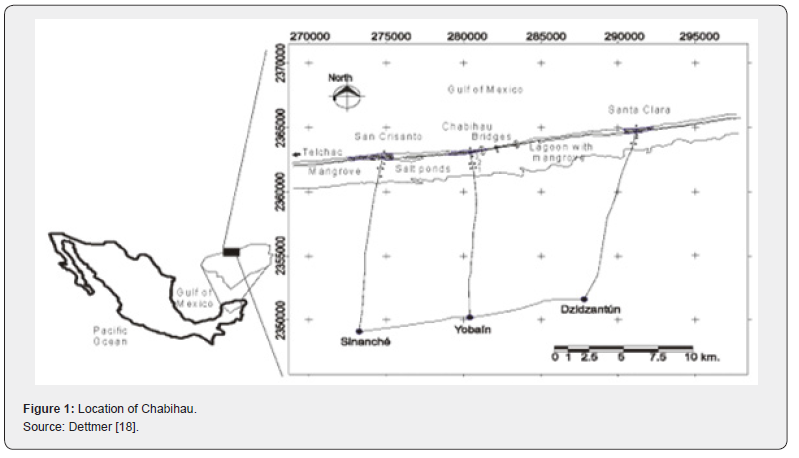
Chabihau is a town of 329 inhabitants in the municipality of Yobaín, located on the northern coast of the state of Yucatán (Figure 1). It belongs to a micro-basin made up of four towns: San Crisanto, Chabihau, Santa Clara and Dzilam de Bravo. The microbasin has a sea front 34-km long, comprising a sandy bar with beaches and coastal dunes that cover a total of 1,020 hectares and provides protection to 18,149 hectares of wetlands. Despite this, more than 60% of the sand barrier shows severe deterioration [17,18].
Residents are mainly dedicated to fishing and salt extraction, both for the population’s consumption and for salting fish and selling it in Mérida and nearby towns [19,20].
In the socioeconomic report by Vallejo et al. [21], 59% of the population in Chabihau is economically active (EAP), out of which 69% engages in finfish and octopus fishing at sea. However, these are of low profitability and contribute to economic instability, due to factors such as overexploitation, access permits, and climatological events such as inbound winds from the north, hurricanes and tropical storms [17,21]. Shrimp fishing accounts for over 70% of the EAP in the season when the fishing fleet is not utilized. It’s worth noting that this activity serves a double purpose, as households perform it to supplement their diet and diversify sources of income. However, this activity often leads to conflict between the community and the Fisheries Ministry at federal and state level due to permanent closure conditions [17,21,22].
In Chabihau, natural events have played a significant role in shaping community dynamics and its coastal ecosystem. Hurricane Gilberto (1988) and Isidoro (2002), caused the fragmentation of the sandy barrier, allowing fish and invertebrate species to enter the lagoon. These events prompted the community to request the construction of a road bridge at the lagoon´s open mouth in 1992 and later in 2003, creating a permanent connection between the sea and the lagoon in the eastern part of the town. This changed the hydrological regime of this ecosystem from a hypersaline seasonal marsh to a tidal-dominated, euhaline/brackish coastal lagoon. Consequently, this change brought social and economic benefits, such as increasing self-consumption fishing, particularly shrimp during the winter season (Febles, Novelo and Batllori, 2008) [23].
Between 1997 and 2003, various programs were implemented with government and NGO funding, along with researchers at the Human Ecology Department at CINVESTAV. Activities undertaken included construction of bridges, road culverts, drainage channels, mangrove afforestation and hydrological restoration of springs, all with active participation of the Chabihau community. The goal was to maintain and enhance the habitat for mangrove development and fishing species, especially shrimp [17]. Initially, the community was strongly encouraged to participate in these activities on a voluntary basis to promote the provision service (shrimp) from which they would benefit during the winter season.
In 1992, with intervention from CINVESTAV, an informal social organization related to shrimp capture was developed, the “Shrimp Task Group”, in response to the need for local shrimp fishing regulations to ensure equitable resource utilization [24]. Initially, the Shrimp Task Group included members such as the Social Solidarity Fishing Society “Yumil Ha” and the “Viento de Oriente” Social Fishing Cooperative, (both belonging to the Chabihau Ejido), salt producers (Social Solidarity Society “Salinera de Chabihau”), ranchers, local women represented by a Women’s Agri-Food Unit (UAIM) and local municipal authorities [25].
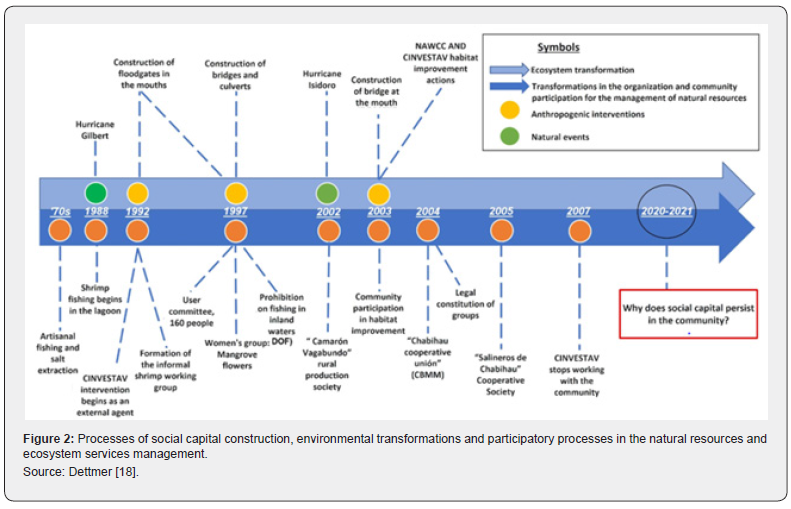
In 1997, the Shrimp Task Group evolved informally into the Chabihau Lagoon Users Committee, which incorporated four new members in addition to the six original groups. This committee, comprising over 160 individuals, included leaders who assessed fishing areas at the beginning of each season (October to February). Results were analyzed during community meetings to determine the season’s opening date and drawings were held to assign groups to fishing areas [25]. Additionally, in the same year, fishing authorities, in response to the collapse of industrial shrimp fishing in the Gulf of Mexico, imposed a permanent ban on shrimp fishing in inland waters (lagoon and estuaries) in Yucatán [26]. Consequently, all individuals engaged in low-scale shrimp fishing operated illegally [25,27]. To address this, the User Committee, in collaboration with CINVESTAV, conducted a study on shrimp fishing in the area, leading to the establishment of the Rural Production Society “El Camarón Vagabundo”. By 2004, the User Committee was transformed into a new network-type organization, driven by actions of the Mesoamerican Biological Corridor Program (CBMM) on the northern coast of Yucatán, with support from the National Commission for Knowledge of Biodiversity (CONABIO) and the World Bank, which facilitated the formation of new legally constituted organizations, including three Cooperative Societies: “Flores de Mangle” (plant nursery), “Mol Sohol” and “Hurich” (managers of chivita snail), along with support groups for tourist services, artisanal work, and maintenance of freshwater springs. These groups were organized under the “Union of Cooperatives of Chabihau” [25]. In subsequent years, external agents working with the community disengaged from Chabihau due to being relocated to other project areas or when funding from international and national sources had been depleted (Figure 2).
In 2002, Levasseur conducted a study in Chabihau, analyzing and discussing the community´s participation in Community Natural Resources Management (CBNRM), particularly regarding shrimp fishing and mangrove cultivation and planting practices, as well as the role of external agents in driving the community´s organizational structure and participation strategies, considering gender dimensions. As a result of this research, significant changes in the community were identified as a direct consequence of interventions by external agents (research centers). This raised the question of whether these changes in the organizational structure, as well as participatory actions and knowledge of environmental education practices, would remain in the community in the long term without external intervention, and whether their continuity would involve younger generations [24].
Rendis [23] acknowledged the community’s appropriation and organization for shrimp fishing, under the intervention of external actors for the rational use of resources. She recognized the community’s self-organizational capacity to identify means of subsistence and noted that the utilization of local resources is governed by a communal property rights agreement and the establishment of community rules.
Materials and Methods
The qualitative study conducted is considered prospective and transversal and is also descriptive and observational [28]. The purpose was to obtain information on participatory processes that are still applied in the community for shrimp utilization, aiming to understand and interpret the human experience and its meanings from the perspective of the individuals involved [29].
Previous groundwork had allowed bonds of trust to be created, along with participation approval from information providers for this research. Because of the sanitary contingency and social distancing due to the COVID-19 pandemic (2020-2021), all interviews were conducted via telephone. Sampling of information providers was conducted using the snowball technique, as this part of the research depended on the willingness of participants to collaborate. The process began with 2 key information providers from the community with whom previous contact had been established. By the end of 2022, a total of 15 providers (n=15) had been found.
Results
Bonding social capital in ecosystem services
The results of this research recognized social capital as binding via perception and management of natural resources that local users have with external or multiple stakeholders in the productive dynamics of coastal wetlands. The results proved, from an ethnographic approach, the existence of collectivity persistence (social capital) in the use and management of natural resources, particularly regarding shrimp resources.
Fishing in the Chabihau lagoon is currently organized by the Shrimp Task Group, which operates during the season of inbound winds from the North. These subgroups are mostly composed of women, since men, young people and children also participate in the groups (usually from the same family). Thus, this has become a family activity with a form of participation and organization that has endured twenty years, despite no longer having support from research institutions, as was first described by Rendis [23] and Levasseur [24].
The main reasons for their permanence and autonomy
described by the interviewees are participation with shared
leadership, consensus decision-making pertaining mostly to
women, family support in activities, as well as the equitable
distribution of work and its benefits. Per the fisherwomen:
“…we have participated equally, everyone participates,
everyone collaborates, sometimes you have to pay for something
or so, everyone collaborates, that’s why it has stayed united.”
(Fisherwoman, 48 years old)
“….they all have to agree for it to be carried out, I feel that’s
the key, but they take into account,…..those who are going to
contribute something, either work, or to say a piece of wood,
a sheet of cardboard, whatever you have you can contribute, so
I feel that has kept the groups together, and well, the support of
our husbands, because sometimes they go to do the things, the
jobs that we as women cannot do.” (Fisherwoman, 48 years old,
November, 2021).
The subgroups are formed by 8 to 12 people, which have grown
because people are integrated because of family or friendship ties.
One-day shifts are organized weekly, allowing fishing in two of the
drains located on the road from Yobaín to Chabihau, completing
12-hour shifts starting at 4 or 5:30 PM (depending on the tide), as
this activity only happens during the emptying of the lagoon. This
form of organization has been preserved since the formation of
the group and is respected by all members:
“…when it’s shrimp season we get together and have several
groups to go fishing for shrimp, I mean the whole community
is part of it, there’s like twelve per group, the day it’s your turn
to go, but us being an association or something, not really.”
(Fisherwoman, 48 years old, November 2021).
Shrimp Task Group operates under informal rules, as they do
not have proper regulations. These were explicitly established at
the beginning of the group´s formation. However, today they are
implicit, allowing healthy coexistence among members:
“Well, what is necessary is that if you´re going to grab the net,
for example, we have a net that the whole group uses, and that
net, for example, if it breaks you have to see how to fix it so that
when the next group goes to grab it the next day, they find it good
condition, and leave, for example, in the space where we fish, leave
it clean, not leave fish or anything else lying around or garbage.”
(Fisherwoman, 48 years old)
This well-organized group gains benefits from the sale of shrimp, but this depends on what is caught during the day, as it is also considered a livelihood activity, where part or all of what is caught is consumed.
Bridging and linking social capital as adaptive processes in ecosystem services
Although the group no longer carries permits for capture and does not have support of research institutions, it has chosen to adapt to the conditions of legal irregularity and develop strategies to avoid being detained by authorities when fishing, as there is a permanent ban in federal waters within the lagoon and estuarine systems of Campeche, Yucatán and Quintana Roo [26].
It’s noteworthy that, alongside these precautionary measures, the cohesion and effective communication among subgroups enables them to navigate such adversities, thus assuring mutual protection from detection or gear confiscation by authorities.
Poor weather conditions are another difficulty faced by the
group, as fishing is carried out in rainy and stormy season. In
addition, the group shows interpersonal problems within each
subgroup. Although this occurs commonly during teamwork,
these problems do not evolve into disintegration or breakup of
the subgroups. Solutions to these problems are typically resolved
independently and swiftly:
“As much as possible, as long as everyone contributes, there are
no problems. However, issues arise when it’s one’s turn to work,
or sometimes husbands are sent by their wives, and they may not
want to work. Working on the small bridges amidst rushing water
requires significant effort, which can lead to friction at times.
Nonetheless, these issues are manageable.” (Female fisher, 41
years old, January, 2022).
It’s important to note that the Shrimp Task Group isn’t the sole fishing party in the lagoon. Both the community and the group respect individuals not affiliated to fishing groups. Fishing within the lagoon is typically conducted through a practice known as “raking,” which involves dragging nets or tripods at ground level, a common technique in swamps and lagoons.
Besides shrimp, other species like crab, corvina, liza, snook, and drum fish are also caught, albeit to a lesser extent. In the year 2020 many interviewees noted an abnormal abundance of crabs. These species are utilized only if they’re of suitable size. Otherwise, they’re returned to the sea to support continued development— an enduring resource management practice. Selling prices of products range from one hundred to two hundred Mexican pesos for raw and precooked products, respectively (an estimated 5 to 10 USD).
Also, in a similar context, alternative forms of social
organization were presented for exploiting natural resources
in this transformed environment, namely the management of
the Chivita snail. This was promoted together with CINVESTAV
by a single group of women called “Hurich,” which introduced
the snails into the Chabihau lagoon. However, hurricane Isidoro
destroyed snail enclosures in 2002, dispersing them throughout
the swamp. As a result, control over access to resources was lost
and over-extraction took place. They also lacked the capacity
to reorganize themselves for the construction of enclosures. In
addition, personal problems arose, which decreased the sense
of membership and caused a reduction in the group’s members.
No solidarity was shown in terms of participation and selforganization,
when facing conflicts and difficulties:
“…when Hurricane Isidoro (October, 2002) came, it demolished
our fences, and the chivita spread, that’s why the chivita right now
is everywhere in the swamp. (Female former member of Hurich,
54 years old, december, 2021)
“…there´s no longer any organization regarding the Chivitas,
groups are no longer there to take care of them….” (Female former
member of the Hurich group, 54 years old).
Unlike the shrimp group, the chivita did not have the necessary support to continue and was in constant conflict over access to the resource with people outside the group. These aspects were also recognized by Atoche fourteen years earlier [30]. However, up until today, the resource is present, which is exploited in the dry season and during low tide, and is thus recognized as a benefit for the community.
Social capital and horizontal and vertical assets in ecosystem services: Participation for habitat conservation and improvement
The natural ecosystems of Chabihau are the main assets for the construction of social capital like mangroves.
The local organization named “Flores de mangle” is composed
of 15 members, although only 9 of them are currently active. This
group remains active mainly because it benefits economically
through annual contracts with the Ministry of Sustainable
Development (SDS) of the State government of Yucatán, being this
their only contract where 20,000 coastal dune plants are produced
annually. They also receive payment for tending after plants if
the delivery is delayed beyond the agreed upon date. The group
stopped cultivating mangrove plants due to demotivation from
physical effort, lack of projects and increased regulatory control:
“The last time we produced was for a project we did. So, after
that last one, they did not give us any more mangrove projects, and
also the ladies got a bit discouraged because it’s more work, you
know, it’s in mud. So, you have to dig out the mud. We looked for
seaweed to dry, grind, and mix it with the mud to make a substrate.
So, they got discouraged because it’s a bit more tiring, but it’s
easier to plant on land.” (President of Mangrove Flowers, 56 years
old, December, 2021).
Mangrove afforestation activities ceased when researchers from the Department of Human Ecology at CINVESTAV stopped carrying out this type of projects with the community due to inclusion of red mangrove in the NOM 056 SEMARNAT, which led to the creation of a Wildlife Management Unit (UMA). Despite this, the motivation to participate in afforestation activities still persists, with 75% of the respondents stating that they would like to engage in such activities again. The remaining 25% would not participate again due to health issues, age and physical effort involved.
Today, they continue to value the importance of these activities and the benefits derived from mangrove planting. Additionally, they still possess knowledge on the species and cultivation in nurseries. Mangrove planting activities were initially considered by the participants as an activity without economic incentives, and the main motivations for participation are specified in Table 1 and were mainly for the improvement and recovery of the swamp after the hurricanes degraded the existing mangrove (25.8%), attracting fish species of interest (16.13%), as a source of employment (12.9%), and recreational and socializing activity (14.8%).
Currently, the group has not worked on organizing itself and
has thus not established working days and hours. However, they
do hold informal meetings depending on the needs of the group.
Per the group’s leader:
“Well, right now there are nine of us who work, when they tell
us that the project is ready, they bring us bags, earth, bagasse, one
day we meet, we gather bags, we divide chores among ourselves
and we set a specific deadline for filling bags.” (President Flores de
Mangle, 56 years old, November, 2021).
Ecosystem services and integrative social capital in local users motivation
The recognition of ecosystem services by the interviewees occurs mainly on those related to a direct economic benefit, such as fishing, species diversification for capture and the potential for tourist attraction. The ecosystem services mentioned by the interviewees (N:14) are shown in Table 1. Each interviewee mentioned 2 to 7 ecosystem services when asked about the benefits they receive from the mangrove.
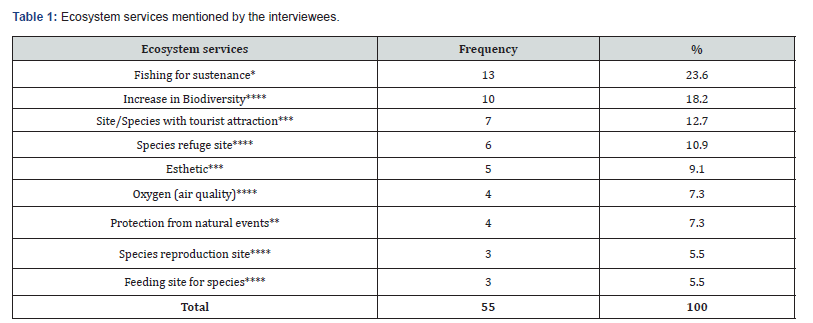
Note: Provision*, Regulation**, Cultural***, Support**** [1]
An increment in bird species was mentioned, such as
flamingos and herons, as well as a greater abundance of crocodiles
and fishing species (18.2%):
The tourism potential of the town was also mentioned as an
ecosystem service by considering organizing walks in the lagoon
area to observe flora and fauna (12.7%).
According to the MEA (2005), the most mentioned ecosystem services in this work were support services (47.3%), followed by provisioning services (23.6%).
Discussion
Based on background research regarding community stock capital construction processes in ecosystem services with an extensive ethnography via interviewees’ narratives [3,4,8,10,11] the community of Chabihau demonstrated persistence despite socio-environmental changes in culture and ecology of communal resources [6].
The relationship between social capital and provisioning services, particularly shrimp, has been forged in the community since the establishment of fishing groups and has maintained selforganization characteristics for 20 years. Use of natural resources has been a key driver for participation in habitat improvement activities, as well as in its maintenance. The importance of several factors is made evident, such as involvement of external agents, investments in conservation, restoration and habitat improvement projects, focusing on community benefits, regardless of how little this may represent in economic capital.
Figure 3 summarizes what has been designated as bonding, bridging and linking capital in strict accordance with adaptive processes [3,12]. Even the formation of cultural capital can be revealed in the relationship of social cohesion [4], and the informal norms with shared leadership and certain vertical negotiation processes are portrayed regarding appropriation of fishing resources denied by authorities at multiple levels. Livelihood activities are the axis explaining the persistence of social capital [3,9], self-organization and group participation, whether continuous or discontinuous, and are mainly related to the economic factor.
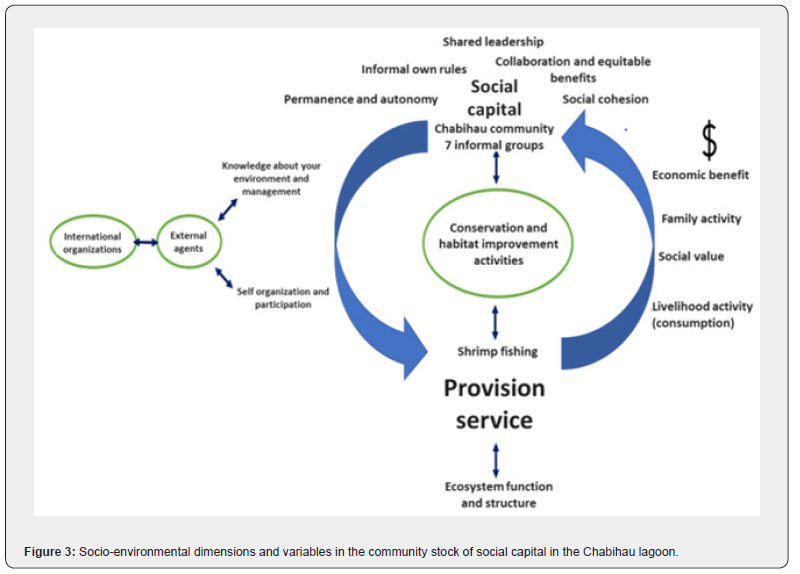
Social capital in Chabihau has been built through communication and interaction, where shared norms, common knowledge, usage rules, behavior patterns and arrangements to solve dilemmas related to collective action and use of common resources have developed over time [31].
In Chabihau, social capital has been formed via participation and self-organization of groups with a common purpose for managing local resources and habitat improvement [3,8,10,32]. By intervention of external agents with particular projects, the community was encouraged to participate, thus learning to organize to access a high-value common resource for the community (shrimp), as it is very important during times of income scarcity [21]. The exploitation of shrimp was the main driving force for many other activities such as mangrove planting and cleanup activities, serving as motivation for habitat conservation. This is complemented by the safety of provision resources derived from ecosystem services.
According to Currie [33], one of the purposes of community participation is legitimacy and empowerment regarding resource management. This is one of the difficulties faced by the Chabihau Shrimp Task Group, as the link with the normative processes to obtain legal permits due to the permanent ban on shrimp fishing on this coast (i.e., legitimacy and legality) [26], is a problem that has been experienced throughout the Yucatan coast for more than 20 years, which violates the fundamental rights of the community [34]. This problem has limited the empowerment of the community and its capabilities of performing activities that help their well-being and quality of life [32,35]. The prohibition of shrimp fishing in inland waters has been a precautionary measure for the protection of shrimp species whose populations have been depleted, especially pink shrimp (F. duorarum). This prohibition is justified, as one of the main causes of their deterioration is the overfishing of juveniles in the coastal zone [27,34,36]. However, studies are needed regarding the effect of using passive fishing gear in inland waters on shrimp populations, such as those used in Chabihau, as compared to industrial gear in the open sea. Similarly, it is important to study the impact of incidental fauna catch, which has been estimated to have an average ratio of 7 kg of shrimp per 1 kg of incidental fauna [22]. This shrimp-catching technique using bridges and drains is also used at other locations in Yucatán, such as Celestún, Progreso and Río Lagartos [27]. It should be acknowledged that, even under conditions of legal irregularity, Chabihau community has maintained responsible practices regarding incidental fauna and catch of development stages since the beginning.
The importance of shrimp fishing in the Chabihau lagoon not only lies in the economic benefit for the community, but also in the strengthening of the social capital formed via participating in using this resource throughout the year. The social value of this form of exploitation relies on this being a family activity, which has promoted participation from generation to generation. This is a responsible practice in resource management involving organizational forms with their own norms, consensus decisionmaking, shared leadership and equitable distribution of benefits. These aspects are considered basic tools of self-organization and participation for community resources management [32,33]. Additionally, it’s necessary to implement productive alternatives within the framework of legality, such as extensive aquaculture activities involving laboratory production of post-larvae and planting in the lagoon, which has been suggested by Wakida et al. [27]. Then again, strong links with Universities, research centers, federal and state authorities are lacking. These could provide alternatives for employment, although shrimp capture for self-consumption and small-scale marketing is practiced by the inhabitants of Chabihau, especially women. The large-scale fishing operations and economies of scale encroaching upon the oceans are impacting the livelihoods of small communities worldwide, and Chabihau is no exception [37]. When engaging in the utilization and access to fishing resources, it is necessary to analyze particular situations for each group and its economic needs, as groups may be vulnerable and/or marginalized. By decreeing permanent bans for macroregions aimed at conservation and sustainable utilization, communities are increasingly forced into informal and illegal activities, hindering good practices in the management of fishing resources, acknowledging that they may suffer directly in the short and long term, regardless of gender roles [38].
Even though studies have been carried out regarding women’s empowerment in the locality [30], the question remains open as to whether gender is responsible for the long-term success of self-organization for utilizing shrimp, or if it is instead related to factors such as gender-specific productive spaces, education level, personal growth opportunities, among other factors. However, in other groups, such as the plant nursery and the management of the chivita snail, various factors have led to decreased membership in the group, including disagreements when problem-solving, imposition of excessive demands, dominant members, restricted participation, limiting satisfactions and competition [39]. Membership sense allows the group to reach its goals more easily, thus generating greater involvement in participation, increased positive interpersonal influence among members, productivity effect and individual well-being [39]. It should be noted that knowledge about ecosystem services provided by the mangrove experience was obtained via environmental education and training workshops conducted during participation in mangrove planting and group formation for community management of natural resources [24]. This represented significant learning for participants in these activities, as knowledge was preserved despite the long timespan after the original training, while continuing to show interest in conservation and responsible management of natural resources in the community. This is the long-term result of knowledge dissemination and exchange along with the praxis and intervention of external agents in the community [40].
The recognition and appreciation by the local community regarding benefits of wetlands and mangroves can depend on many factors besides the environmental education they have received. Perception can also depend on cultural, occupational, educational aspects and local ecological knowledge [41,42]. Likewise, the study by Walton et al. [43] has shown that communities engaged in fishing in mangrove areas have a better perception of mangrove benefits, and they are willing to pay more for them than communities that only engage in deep sea fishing.
The ecosystem services received by the community can be tangible or intangible. Generally, tangible ones are the most appreciated and valued by the population, such as supplies, as they represent a direct economic income to the population, but this does not mean that intangible ones have less relevance [1,42]. In the case of Chabihau, although no economic study was conducted on the benefits of mangrove, it can be inferred from information provided by shrimp fishers regarding the quantity of catch and the cost of sales, that profits per person per night range from $20-$5000 Mexican pesos (USD $1-400). It must be considered that fishing occurs only once a week (per group) from October to January, and there are several factors affecting fishing. This income is highly unstable, yet represents an important source of income for the family economy due to the seasonality, considering that livelihoods are not extensive, diversified, and complementary. Regarding persons keen on cultural services (21.8%), although mentioned to a lesser extent, it is shown that great interest exists in regards to conservation and future potential. As for tourism, this would increase economic income in families. In interviews, information providers from Chabihau mentioned the attractions represented by mangroves and seabirds for domestic and international vacationers [43-54].
Conclusion
The Shrimp Task Group is dedicated to fishing in the lagoon and has remained self-organized and has forged social capital, despite the absence of external agents and the lack of legal regulation through official permits. This level of organization and social capital is traced back to their capabilities, autonomy, cohesion, good relationships, self-imposed norms, and equitable distribution of benefits among families via negotiation and leadership in public spaces by gender.
As for the Shrimp Task Group, it can be inferred that the community shows skills for self-organization. Therefore, if the community were to replicate the strategies used in this group, they could carry out activities that increase human well-being and the flow of ecosystem services. However, applying these self-organizing strategies successfully to other activities with potential was not possible, due to lack of interest, financing, and interpersonal problems. Such was the case of exploitation of “chivita” (a type of shellfish), dredging of springs, or tourism activities in the lagoon. Further in-depth studies will be needed to understand the role played by external facilitators and the mainstreaming of social capital.
In Chabihau, we find a high degree of social capital where two of its three dimensions have been built: bonding and bridging. Yet, the lack of institutional linkage and adapting to informal activities are aspects not easily found in complementary activities. However, the bonding social capital is what strengthens the persistence of the community’s stock of social capital. This is a feature that few communities on the Yucatán coast have proven over a two-decade lifespan, as demonstrated in this study (2003 and 2022).
Finally, the understanding of forms of knowledge is reflected in the participants’ learning, appreciation and good management of ecosystem services. However, it could not be identified whether external agents could recognize popular knowledge in the process. This could pertain to deficiencies in the process and will require further fieldwork, even if just to explore cultural capital.
Acknowledgments
We thank Sophia Nallely Canto Mendiburu, from GESIA SC, for translation and technical support, as well as the women and men from Chabihau for answering the interviews in 2021 and 2022. We thanks CONAHCyT for the scholarship given to Ana Cristina Dettmer for her Master degree in Human Ecology at CINVESTAVMérida (2020-2022).
References
- MEA (Millennium Ecosystem Assessment) (2005) Ecosystems and human well-being: Synthesis report. Island Press, United States.
- Barnes-Mauthe M, LL Oleson K, M Brander L, Zafindrasilivonona B, A Oliver T, et al. (2014) Social capital as an ecosystem service: Evidence forma locally managed marine area. Ecosystem Services 16: 283-293.
- Aldrich DP and Meyer MA (2015) Social Capital and Community Resilience. American Behavioral Scientist 59(2): 254-269.
- Daw TM, Hicks C, Brown K, Chaigneau T, Januchowski-Hartley F, et al. (2016) Elasticity in ecosystem services exploring the variable relationship between ecosystem and human well-being. Ecology and society 21(2): 13.
- Hardin G (1968) The Tragedy of the Commons. In Science, New Series 162(3859): 1243-1248.
- McCay Bonnie and Acheson James (1987) The Question of the Commons. The Culture and Ecology of the Communal Resources. The University of Arizona Press.
- Garrigos-Simon FJ, Dolores Botella-Carrubi M, Tomas F Gonzalez-Cruz (2018) Social Capital, Human Capital, and Sustainability: A Bibliometric and Visualization. Analysis. Sustainability 10: 4751.
- Wagner CL, Fernández-Giménez ME (2008) Does community based collabotative resources management increase social capital?. Soc Nat Resources 21(4): 324-344.
- Agnistsch Kerry, Flora Jan and Ryan Vern (2009) Bonding and Bridging Social Capital: The Interactive Effects on Community Action.
- Brondizio ES, Ostrom E, and Young OR (2009) Connectivity and Governance of Multilevel Social-Ecological Systems: The Role of Social Capital. Annual Review of Environment and Resources 34 (1): 253-278.
- Coleman JS (1988) Social capital in the creation of human capital. Am J Sociol 94: 95-120.
- Armitage DR, Plummer R, Berkes F, Arthur RI, Charles AT, et al. (2009) Adaptive co-management for social-ecological complexity. Front Ecol Environ 7(2): 95-102.
- Barnes-Mauthe M, Oleson K LL, Brander LM, Zafindrasilivonona B, Oliver TA, et al. (2015) Social capital as an ecosystem service: Evidence from a locally managed marine area. Ecosystem Services 16: 283-293.
- Ostrom E, Ahn TK (2009) The meaning of social capital and its link to collective action. In: Tinggard Svendsen G, Haase Svendsen GL (Eds.), Handbook of social capital: The troika of sociology, political science and economics. Edwards Elgar Publishing Limited, p. 17-35.
- Schultz L, West S, Floríncio C (2019) Adaptive governance in the making: People, practices and policies in a UNESCO Biosphere Reserve. Norte Grande Geography Magazine 74: 117-138.
- Asmani S (2020) Coastal Human Ecology. Human Ecology.
- Batllori E, Munguía T, Castillo T and Dickinson F (2008) Municipal organizations, communal participation and decentralization of public policies in coastal areas of the State of Yucatá The case of the Chabihau coastal micro-basin. In: Fraga J, Villalobos GJ, Doyon S, and García A. (Eds.), Decentralization and environmental management Coastal Governance in Mexico. CINVESTAV-IPN; UAC; IDRC, Canada, Plaza y Valdés, S.A. of C.V, pp. 259-281.
- Detmer Ana (2022) Habitat improvement from a socio-environmental and ecosystem services perspective: The case of the coastal lagoon of Chabihau, Yucatá Master of Science Thesis in Human Ecology from the CINVESTAV of the IPN. Mérida, Yucatán.
- Bretón I and Alcalá E (1974) Chabihau: A peasant community of Fishermen. Annals of the INAH 7(4): 262-301.
- Guzmán Noh G, and Rodríguez Esteves JM (2016) Elements of vulnerability to hurricanes. Impact of Hurricane Isidoro in Chabihau, Yobain, Yucatá Politics and culture 45: 183-210.
- Vallejo R, Batllori E, Santos R and Villacís P (2004) General aspects of the economic structure of the coastal town of Chabihau, Yucatá Magazine of the Autonomous University of Yucatán 228: 22-40.
- Leal SA, Cabrera MA and Salas S (2008) Characterization of incidental fauna in the artisanal shrimp fishery in the Chabihau lagoon, Yucatán, Mexico.
- Rendis R (2003) Society-nature relationship in the Chabihau micro-basin, Yucatán: The importance of wetlands and the management of a fishery.
- Levasseur C (2002) Participatory approaches, use of and access to natural resources: the case of Chabihau, Yucatan, Mexico.
- Batllori-Sampedro E, Febles-Patron JL (2009) Adaptive Management Response of a Rural Fishery Community Due to Changes in the Hydrological Regime of a Tropical Coastal Lagoon. Journal of Human Ecology 26(1): 9-18.
- Official Gazette of the Federation of Mexico (1997) Notice establishing an indefinite ban on the capture of all shrimp species in waters under federal jurisdiction of the estuarine lagoon systems of the states of Campeche, Quintana Roo and Yucatá
- Wakida-Kusunoki AT, Rojas-González RI, Toro-Ramírez A, Medina-Quijano HA, Cruz-Sánchez JL, et al. (2016) Caracterización de la pesca de camarón en la zona costera de Campeche y Yucatá Ciencia Pesquera 24(1): 3-13.
- Méndez Ramírez I, Namihira Guerrero D, Moreno Altamirano L and Sosa de Martínez C (1990) The Research Protocol: Guidelines for its preparation and analysis. Thresholds.
- Rodríguez Gómez G, Gil Flores J and García Jiménez E (1999) Qualitative Research Methodology. ALJIBE Editions, Spain.
- Atoche Rodríguez KE (2008) Life strategies and empowerment of women in a coastal community in Yucatá [Master of Science Thesis with a specialty in Human Ecology, CINVESTAV, IPN].
- Ostrom E, Ahn TK (2003) A social science perspective on social capital: social capital and collective action. Revista Mexicana de sociología 65(1): 155-233.
- Ostrom E (1990) Governing the Commons: The Evolution of Institutions for Collective Action. Cambridge University Press.
- Currie-Alder B (2003) Why participation? enhancing our understanding of participatory approaches to natural resource management.
- Batllori E (2003) Artisanal shrimp fisheries and human rights. Mexican Caribbean Magazine. Chetumal Quintana Roo 16: 85-116.
- García Vega JJ and Sales Heredia FJ (2011) Well-being and quality of life in Mexico. Center for Social Studies and Public Opinion, UDEM.
- Salas S, Cabrera MA, Palomo L, Bobadilla F, Ortega P, et al. (2008) Management and operation plan of the scale and octopus fishery administration committee. Final report Cinvestav IPN Merida, Mexico.
- FAO (2018) The state of world fisheries and aquaculture 2018. Meeting the sustainable development goals. FAO.
- Rosales Raya ML, Fraga Berdugo JE (2019) Decision Making in the Campeche Maya Octopus fishery in two fishing communities. Maritime studies. 18(1): 91-101.
- Napier RW (1975) Groups: Theory and experience. Threshers.
- Eikeland O (2015) Praxis-retrieving the roots of action research. In: Bradbury H (Ed.), The SAGE handbook of action research. SAGE Publications Ltd, p. 381-390.
- Haines-Young R, Potschin-Young M, Czúcz B (2018) Report on the use of CICES to identify and characterise the biophysical, social and monetary dimensions of ES assessments.
- Reyes-Arroyo N, Camacho-Valdez V, Saenz-Arroyo A, Infante-Mata D (2021) Socio-cultural analysis of ecosystem services provided by mangroves in La Encrucijada Biosphere Reserve, southeastern Mexico. Local Environment 26(1): 86-109.
- Walton MEM, Samonte-Tan GPB, Primavera JH, Edwards-Jones G, Le Vay L (2006) Are mangroves worth replanting? The direct economic benefits of a community-based reforestation project. Environmental Conservation 33(4): 335-343.
- Álvarez-Gayou Jurgenson JL (2003) How to do qualitative research. Fundamentals and methodology. Paidós Educator.
- Batllori E, Febles JL (2007) Changes in the hydrological characteristics of Chabihau coastal wetlands, Yucatan, Mexico, associated with icane Isidore impact. Indian Journal of Marine Sciences 36(3): 183-192.
- Cabrera Vázquez MA (2003) Evaluation of the shrimp fishery in the Chabihau swamp. In: Batllori E (Ed.), Characterization and Evaluation of the Shrimp Fishery, Accompanying Fauna and Ecological Environment of the Ciénega and Litoral Zone of Chabihau, Yucatá (1-57) Final report. Project 2000-0706021 CONACYT, Mérida, Yucatán, Mexico.
- Creswell JW (1994) Qualitative inquiry and research design: Chosing among five traditions. p. 253.
- Febles-Patrón JL, Novelo López J and Batllori Sampedro E (2009) Mangrove reforestation tests in a semi-arid coastal swamp of Yucatán, Mexico. Wood and Forests 15(3): 65-86.
- Hernández-Félix L, Molina-Rosales D, and Agraz-Hernández C (2017) Ecosystem services and conservation strategies in the Isla Arena mangrove. Agriculture, society and development 14(3): 427-449.
- INEGI (2020) Demographic overview of Yucatá
- Mayan MJ (2001) An introduction to qualitative methods: Training module for students and professionals. (Cisneros Puebla C.A., Trans.).
- Rönnbäck P, Crona B, Ingwall L (2007) The return of ecosystem goods and services in replanted mangrove forests: perspectives from local communities in Kenya. Environmental Conservation 34(4): 313-324.
- Stone K, Bhat M, Bhatta R, Mathews A (2008) Factors influencing community participation in mangroves restoration: A contingent valuation analysis. Ocean & Coastal Management 51(6): 476-484.
- Viga de Alva MD, Dickinson F, Avilés B, and Castillo MT (2001) Participatory research and autonomous culture in community work. Environmental Education Program for the Ria Celestún Biosphere Reserve 2001-2010.

























