




 ASM Home



Abstract
Smallholder oil palm farmers play a central role in global palm oil supply chains, yet their productivity, market integration, and livelihood outcomes remain uneven across regions. Growing attention has been directed toward education and institutional development as key mechanisms for enhancing smallholder performance, but empirical evidence remains fragmented. This study aims to systematically synthesize and analyze existing empirical research on the roles of education and institutional development in shaping productivity, market participation, and development outcomes among oil palm smallholders. This study employs a systematic literature review (SLR) following PRISMA guidelines. Peer-reviewed articles were retrieved exclusively from the Scopus database using structured keyword combinations related to oil palm smallholders, education, institutions, and development. A multi-stage screening process based on relevance, publication year (2020– 2025), language, and accessibility yielded 37 articles for analysis. Data were analyzed through thematic synthesis, integrating qualitative and quantitative evidence to identify dominant patterns and reported outcome ranges across studies. The results reveal five interrelated thematic pathways: education and capacity-building as drivers of productivity and knowledge adoption; extension systems and learning modalities that facilitate practice change; institutional arrangements that enable collective action and market access; governance structures that shape access to resources and certification; and development outcomes related to income growth, livelihoods, and resilience. Across contexts, education is consistently associated with yield improvements, efficiency gains, and managerial capacity, while institutional development mediates the scale and sustainability of these effects. In conclusion, education and institutional development function as complementary drivers of smallholder transformation in the oil palm supply chain. Future research is encouraged to apply longitudinal and comparative designs to further examine how evolving institutional contexts influence long-term smallholder outcomes.
Keywords:Oil Palm Smallholders; Education; Institutional Development; Supply Chain; Systematic Literature Review
Introduction
The oil palm sector occupies a strategic position within global agricultural commodity systems due to its significant contribution to vegetable oil supply, rural employment, and economic development in producing countries. Over the past several decades, palm oil has become one of the most widely traded agricultural commodities, supporting food, energy, and industrial value chains worldwide [1]. Within this sector, smallholder farmers play an increasingly central role, accounting for a substantial share of total oil palm cultivation area and production output in many producing regions [2]. As a result, the performance, inclusion, and sustainability of smallholders have emerged as critical determinants of the oil palm supply chain’s overall resilience and competitiveness.
Despite their importance, oil palm smallholders often face persistent structural challenges that constrain their ability to fully participate in and benefit from supply chain development. These challenges include limited access to knowledge, skills, finance, quality inputs, and institutional support, which collectively contribute to productivity gaps and income disparities between smallholders and large-scale estates [3]. Empirical studies consistently report that smallholder yields remain significantly below potential levels, not due to agroecological limitations, but largely as a consequence of capacity constraints and institutional exclusion [4]. Addressing these challenges has therefore become a central concern within development-oriented research on agricultural transformation and inclusive value chains.
Education and human capital development have long been recognized as fundamental drivers of agricultural productivity and rural development. In smallholder-based farming systems, education enhances farmers’ ability to acquire, process, and apply technical knowledge, adapt to changing production conditions, and respond to market signals [5]. In the context of oil palm cultivation, educational interventions ranging from basic agronomic training to financial literacy and managerial skills are frequently identified as key mechanisms for improving plantation management, input efficiency, and harvesting practices [6]. However, the effectiveness of education is rarely uniform, as learning outcomes are shaped by broader institutional environments that mediate access to information, resources, and markets.
Institutional development constitutes a complementary dimension of smallholder transformation, particularly in commodity-based agricultural systems characterized by complex governance structures and market coordination requirements. Institutions such as cooperatives, farmer organizations, extension systems, and regulatory frameworks play a critical role in reducing transaction costs, facilitating collective action, and integrating smallholders into formal supply chains [7]. In the oil palm sector, institutional arrangements are especially relevant given the technical intensity of production, the need for timely processing, and the growing importance of quality, traceability, and sustainability standards [8]. As such, education and institutional development are increasingly understood not as isolated interventions, but as interdependent pathways through which smallholders can improve productivity, income, and longterm resilience.
Recent scholarly literature reflects a growing interest in examining how education and institutions interact to shape smallholder outcomes in the oil palm supply chain. Studies have explored a wide range of issues, including the role of extension services in knowledge dissemination, the effectiveness of farmer organizations in improving market access, and the influence of governance structures on access to certification and finance [9]. While these studies provide valuable insights, the evidence remains fragmented across disciplinary boundaries and geographic contexts. Differences in analytical focus, methodological approaches, and outcome indicators have made it difficult to draw integrated conclusions regarding the combined contribution of education and institutional development to smallholder transformation..
Moreover, much of the existing research examines education and institutional factors independently, without sufficiently addressing their interconnections and cumulative effects along the supply chain. Some studies emphasize technical training and yield improvements, while others focus on organizational participation or governance mechanisms, often treating these dimensions as separate analytical domains [10]. This segmentation limits understanding of how educational investments are enabled or constrained by institutional contexts, and how institutional arrangements, in turn, depend on human capital to function effectively. A more holistic synthesis is therefore required to clarify the pathways through which education and institutional development jointly contribute to smallholder prosperity
In addition, the rapidly evolving landscape of the oil palm sector, characterized by changing market requirements, sustainability initiatives, and development interventions, underscores the need for up-to-date and systematically synthesized evidence. Policymakers, development practitioners, and supply chain actors increasingly rely on evidence-based insights to design interventions that support smallholder inclusion while maintaining economic viability. However, without a rigorous synthesis of recent peer-reviewed literature, policy and practice risk being informed by partial or outdated understandings of smallholder dynamics within the oil palm supply chain.
Against this background, a Systematic Literature Review (SLR) offers a robust methodological approach to consolidate existing knowledge, identify dominant themes, and reveal empirical patterns across diverse studies. By adhering to transparent and replicable review protocols, SLRs enable a structured assessment of evidence while minimizing selection bias and subjective interpretation. Importantly, SLRs rely exclusively on secondary data from peer-reviewed sources, without incorporating field observations, focus group discussions, or other primary data collection methods. This approach ensures methodological rigor and aligns with internationally recognized standards for evidencebased research synthesis.
This study, therefore, conducts a PRISMA-guided Systematic Literature Review to examine how education and institutional development function as drivers of smallholder transformation within the oil palm supply chain. Drawing on peer-reviewed articles indexed in Scopus, the review focuses on recent literature that explicitly addresses smallholder farmers, educational and capacity-building interventions, institutional arrangements, governance structures, and development outcomes. By synthesizing findings across multiple contexts and analytical perspectives, this study seeks to move beyond isolated casespecific insights toward a more integrated understanding of transformation pathways.
The objective of this study is to systematically synthesize and analyze the existing empirical evidence on the roles of education and institutional development in shaping productivity, market integration, and development outcomes among oil palm smallholders. Specifically, the review aims to identify dominant thematic patterns, quantify reported outcomes where possible, and clarify the mechanisms through which educational and institutional factors interact along the oil palm supply chain.
Guided by this objective, the study is structured around the following research questions:
RQ1: How do education and capacity-building interventions
contribute to productivity, knowledge adoption, and managerial
improvement among oil palm smallholders across different
institutional contexts?
RQ2: In what ways do institutional arrangements and
governance structures mediate the effectiveness of education
in enabling smallholder integration, income enhancement, and
livelihood resilience within the oil palm supply chain?
These research questions provide an analytical framework for the subsequent Results and Discussion sections, ensuring coherence between evidence synthesis, thematic interpretation, and concluding insights. By addressing these questions through a systematic, transparent review process, this study contributes to a balanced, evidence-based understanding of smallholder transformation pathways while maintaining a neutral, development-oriented perspective on the role of the oil palm industry.
Literature Review
The transformation of smallholders within agricultural commodity supply chains has received sustained scholarly attention, particularly in contexts where small-scale producers play a central role in production and rural livelihoods. Within the oil palm supply chain, smallholders contribute a substantial share of global palm oil output while simultaneously facing structural constraints related to productivity, market integration, and institutional access. Existing literature consistently positions smallholder transformation as a multidimensional process that extends beyond yield enhancement to encompass knowledge acquisition, institutional engagement, governance participation, and livelihood improvement. This section reviews and synthesizes prior studies on education and institutional development as key drivers of smallholder transformation, with particular emphasis on oil palm systems.
Education as a Catalyst for Smallholder Capability Enhancement
Education has long been recognized as a critical determinant of agricultural performance and rural development outcomes. In smallholder-dominated systems, education enhances farmers’ capacity to process information, adopt innovations, and respond to changing market and environmental conditions [11]. Studies within the oil palm sector demonstrate that both formal education levels and targeted agricultural training programs are positively associated with productivity, management efficiency, and compliance with recommended practices [12]. The literature indicates that smallholders with higher levels of education are more likely to adopt improved planting materials, follow appropriate fertilizer regimes, and implement effective pest and disease management strategies.
Beyond formal schooling, non-formal education and capacity-building initiatives play a particularly important role in smallholder transformation. Training programs focused on agronomic practices, financial literacy, and farm management are frequently cited as mechanisms for closing productivity gaps between smallholders and large-scale estates [13]. Empirical evidence across multiple producing regions suggests that participation in structured training is associated with measurable improvements in fresh fruit bunch yields, reductions in production inefficiencies, and enhanced farm profitability [14]. These findings highlight education not merely as a human capital input, but as an enabling factor that shapes smallholders’ engagement with broader institutional and market systems.
Knowledge Transfer and the Role of Extension Systems
The effectiveness of educational interventions is closely linked to the mechanisms through which knowledge is transferred and reinforced. Agricultural extension systems are widely identified as critical intermediaries that translate scientific knowledge and policy objectives into practical farm-level applications [15]. Within oil palm systems, extension services facilitate the dissemination of best management practices, provide technical guidance, and support continuous learning among smallholders. The literature underscores that regular interaction with extension agents significantly increases the likelihood of sustained practice adoption compared to one-off training interventions.
Different extension models exhibit varying degrees of effectiveness depending on institutional context and resource availability. Public extension services, private sector-led advisory programs, and hybrid public–private models each contribute to knowledge transfer in distinct ways [16]. Participatory learning approaches, such as farmer field schools and peer-to-peer learning groups, are frequently associated with higher knowledge retention and behavioral change, as they encourage experiential learning and collective problem-solving. Recent studies also document the growing importance of digital extension tools, which expand access to timely information and reduce spatial barriers for geographically dispersed smallholders [17]. Collectively, this body of literature emphasizes that education-driven transformation requires continuous and context-sensitive extension support.
Institutional Development and Collective Action
Institutional development constitutes a central pillar in the transformation of oil palm smallholders. Numerous studies emphasize that individual educational gains are often insufficient to overcome structural constraints related to scale, bargaining power, and market access. As a result, collective institutional arrangements such as cooperatives, farmer groups, and producer organizations have emerged as key mechanisms for enabling smallholders to participate more effectively in the supply chain. These institutions facilitate collective action, reduce transaction costs, and enhance smallholders’ ability to negotiate with downstream actors [18].
The literature consistently demonstrates that smallholders affiliated with formal organizations benefit from improved access to inputs, credit, and technical assistance. Institutional membership is also associated with enhanced information flows and stronger linkages to extension services, reinforcing the complementaritie between education and institutional development [19]. In the context of oil palm, cooperatives often serve as entry points for training programs, certification initiatives, and sustainability schemes, thereby integrating educational and institutional pathways within broader development strategies.
Institutions, Market Integration, and Certification
Market integration represents a key dimension of smallholder transformation, particularly in globally traded commodities such as palm oil. Prior research indicates that institutional arrangements play a critical role in linking smallholders to formal markets and value-added segments of the supply chain. Organized smallholders are more likely to access stable buyers, benefit from price premiums, and meet quality and traceability requirements compared to independent producers [20].
Certification and sustainability standards have become increasingly prominent within the oil palm sector, shaping market access and governance arrangements. While participation in certification schemes varies across contexts, the literature suggests that institutionalized smallholders are substantially more likely to engage with voluntary standards due to shared costs, collective learning, and institutional support [21]. Education and training are frequently identified as prerequisites for effective participation in such schemes, as they enhance smallholders’ understanding of compliance requirements and record-keeping practices. Thus, education and institutional development jointly facilitate smallholders’ integration into evolving market and governance frameworks.
Governance Structures and Enabling Environments
Beyond localized institutional arrangements, broader governance structures and policy environments influence the effectiveness of education and institutional development initiatives. The literature highlights that supportive policies, secure land tenure, and coordinated institutional interventions create enabling conditions for smallholder transformation [22]. Studies demonstrate that fragmented governance systems and weak institutional coordination can undermine the impacts of education and collective action, limiting smallholders’ ability to sustain productivity and income gains.
Public–private partnerships are frequently cited as effective governance mechanisms for scaling educational and institutional initiatives within the oil palm sector. Such partnerships leverage complementary resources and expertise, combining public oversight with private sector efficiency and market access. Evidence suggests that these arrangements enhance the reach and sustainability of training and extension programs while strengthening local institutional capacity. Governance quality within farmer organizations is also a critical factor, as transparent and participatory decision-making processes are associated with higher levels of trust, member engagement, and institutional effectiveness [23].
Development Outcomes and Smallholder Well-being
A substantial body of literature links education and institutional development to positive development outcomes among oil palm smallholders. Income improvement is among the most frequently reported outcomes, with studies documenting gains in productivity, cost efficiencies, and improved market access. Beyond income, educational and institutional interventions contribute to broader livelihood outcomes, including enhanced financial stability, improved risk management, and increased resilience to market fluctuations [24].
Livelihood diversification is another recurring theme in the literature. Improved knowledge and institutional linkages enable smallholders to explore complementary incomegenerating activities and better navigate periods of price volatility. Institutional support networks also provide social capital and access to information, which are critical for coping with environmental and economic shocks. Importantly, the literature emphasizes that development outcomes are context-dependent and mediated by factors such as baseline capacity, institutional maturity, and policy environments [25].
Despite the growing body of research on education and institutional development in oil palm smallholder systems, existing evidence remains fragmented across disciplinary and thematic boundaries. Many studies focus on individual components such as training effectiveness, cooperative performance, or certification outcomes without integrating these elements into a cohesive analytical framework. As a result, there is limited synthesis of how education and institutional development interact to drive comprehensive smallholder transformation along the oil palm supply chain.
This fragmentation underscores the need for a systematic literature review that consolidates empirical findings across contexts and analytical perspectives. By synthesizing evidence on education, extension systems, institutional arrangements, governance structures, and development outcomes, an SLR can provide a more holistic understanding of the pathways through which smallholder transformation occurs. Such a synthesis is essential for informing future research agendas and supporting evidence-based policy and development interventions within the oil palm sector.
Methodology
This study employs a Systematic Literature Review (SLR) approach, structured according to the Preferred Reporting Items for Systematic Reviews and Meta-Analyses (PRISMA) protocol, to examine how education and institutional development are addressed in the literature as drivers of smallholder transformation within the oil palm supply chain. Education-related interventions, including training, learning processes, and extension services, alongside institutional arrangements such as cooperatives, farmer organizations, and governance structures, have been widely discussed as mechanisms supporting smallholder participation and development in agricultural value chains. Within the oil palm sector, these dimensions intersect with broader development objectives related to livelihoods, income generation, and economic inclusion. Although a growing body of research has examined these themes, existing evidence remains dispersed across development studies, agrarian research, and agricultural economics, often with varying analytical emphases. A systematic synthesis is therefore necessary to consolidate current scholarly findings, clarify dominant analytical patterns, and provide a coherent overview of how educational and institutional factors are conceptualized and operationalized in relation to smallholder transformation in oil palm systems. This review relies exclusively on secondary data from peer-reviewed literature indexed in Scopus and does not incorporate field observations, focus group discussions, interviews, or any primary data collection, ensuring methodological transparency and alignment with internationally recognized standards for evidence-based reviews.
Figure 1 presents the systematic review process following the PRISMA framework, which delineates the four main stages of identification, screening, eligibility, and inclusion. The identification phase commenced with an initial search of the Scopus database using the keyword combination “oil palm” AND “smallholder,” which returned 797 records. To refine the thematic scope and enhance the precision of the retrieved literature, a more comprehensive Boolean search strategy was subsequently applied: (“oil palm” OR “palm oil” OR “oil palm sector” OR “oil palm industry” OR “palm oil production” OR “plantations”) AND (“farmers” OR “smallholder farmers” OR “small-scale farmers” OR “agricultural households” OR “rural farmers”) AND (“education” OR “training” OR “learning” OR “extension” OR “capacity building”) AND (“institutions” OR “organizations” OR “cooperatives” OR “farmer groups” OR “governance”) AND (“development” OR “livelihoods” OR “income” OR “economic development”). This refinement resulted in the exclusion of 706 records that did not align with the study’s conceptual boundaries, leaving 91 potentially relevant articles for further examination.
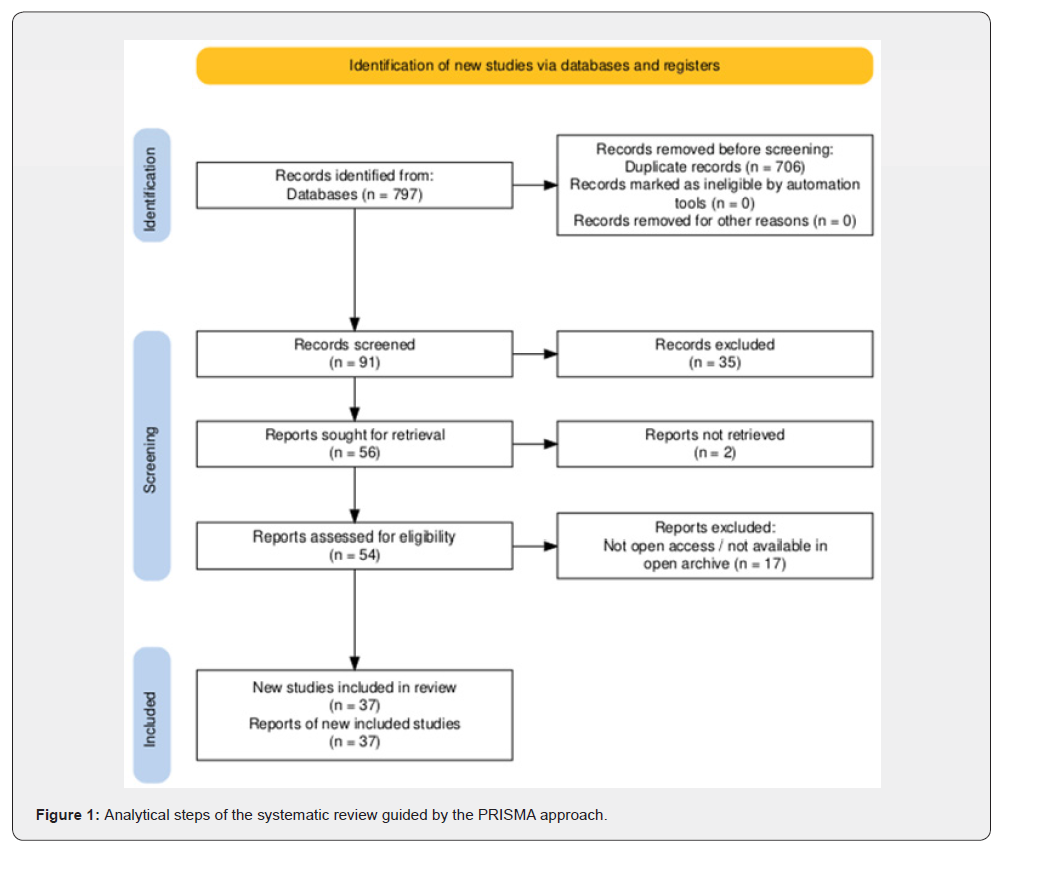
During the screening phase, a publication-year filter was applied to restrict the dataset to studies published between 2020 and 2025, ensuring the inclusion of recent and contextually relevant scholarship. This criterion led to the exclusion of 35 articles published outside the specified timeframe, resulting in 56 eligible records. A subsequent language screening excluded two non-English publications, yielding 54 English-language articles. The eligibility assessment then focused on accessibility, retaining only open-access and open-archive publications to support transparency and reproducibility of the review process. As a result, 17 additional articles were excluded due to restricted access. The final inclusion stage produced a curated set of 37 peerreviewed articles that met all predefined criteria for relevance, timeliness, language, and accessibility. These selected studies provide the analytical foundation for this systematic review and collectively offer a structured overview of how education and institutional development are addressed in relation to smallholder transformation within the oil palm supply chain.
All bibliographic records and reference materials were systematically managed using Mendeley Desktop, enabling accurate citation handling, duplication removal, and full traceability throughout the review process. Each of the 37 selected articles was examined in full text, and relevant information concerning educational approaches, institutional configurations, and development-oriented outcomes was extracted and synthesized thematically. This synthesis offers an evidence-based perspective on prevailing analytical trends and knowledge gaps in the literature, while maintaining a balanced and neutral framing of the oil palm industry within broader rural development and agricultural transformation contexts. By adhering rigorously to the PRISMA protocol and a transparent, reproducible SLR design, this study upholds high standards of academic integrity and contributes a consolidated reference point for future research on smallholder-focused development pathways in oil palm systems.
Results
The systematic literature review conducted in this study synthesized evidence from 37 peer-reviewed articles published between 2020 and 2025 that met the predefined inclusion criteria. The selected literature represents a wide range of geographic settings, institutional arrangements, and methodological approaches, offering a robust empirical foundation for examining the roles of education and institutional development in shaping smallholder transformation within the oil palm supply chain. Despite contextual diversity, the reviewed studies display substantial thematic convergence, indicating shared analytical concerns across regions and disciplines.
Through a thematic synthesis process, five dominant and interrelated themes were identified: (1) education and capacitybuilding as foundational enablers of productivity enhancement and knowledge adoption; (2) extension systems and learning modalities as mechanisms for translating knowledge into farmlevel practices; (3) institutional arrangements, particularly cooperatives and farmer organizations, as platforms for collective action and market integration; (4) governance structures and institutional support systems influencing access to resources, finance, and certification; and (5) development outcomes associated with smallholder participation, including income, livelihoods, and resilience.
The distribution of these themes across the 37 reviewed studies reveals varying degrees of analytical emphasis. Education and capacity-building emerged as the most prevalent theme, addressed in 29 studies (approximately 78%), reflecting its centrality in explaining productivity gaps and knowledge constraints among oil palm smallholders. Extension services and learning modalities were discussed in 24 studies (65%), often in conjunction with education-focused interventions, underscoring the importance of knowledge-delivery mechanisms beyond formal training. Institutional arrangements and collective action mechanisms appeared in 22 studies (59%), underscoring the role of cooperatives and farmer organizations in facilitating market access and service provision. Governance structures and institutional support systems were explicitly examined in 17 studies (46%), while development outcomes related to income, livelihoods, and resilience were analyzed in 20 studies (54%).
The predominance of education- and extension-related themes reflects the literature’s strong focus on human capital constraints as immediate and observable determinants of smallholder performance. These themes are frequently operationalized through measurable indicators such as yield improvement, adoption rates, and managerial practices, making them more amenable to empirical investigation. In contrast, governance and institutional support structures, while widely acknowledged as important enabling conditions, are less frequently examined as standalone analytical dimensions and are often implicitly present in discussions of institutional effectiveness. Similarly, development outcomes tend to be treated as downstream effects rather than primary analytical foci, partly because of the longer time horizons and contextual variability required to assess income dynamics and livelihood resilience
This distribution suggests that existing research has generated relatively strong evidence on how education and institutional mechanisms operate at the farm and organizational levels, while systemic governance dimensions and long-term development impacts remain less consistently explored. The imbalance highlights the need for integrative perspectives that link microlevel capacity-building interventions with meso- and macro-level institutional environments. Building on this thematic mapping, the following sections elaborate on each of the five themes in detail, drawing on quantitative and qualitative evidence reported across the reviewed studies.
Education and Capacity-Building as Foundations for Smallholder Transformation
Education and capacity-building are consistently identified in the reviewed studies as foundational components of smallholder transformation in oil palm systems. A significant share of the literature highlights that both formal training programs and informal learning processes enhance smallholders’ ability to adopt improved agronomic practices, manage plantation inputs more efficiently, and engage with market and institutional actors [26]. Quantitative findings across multiple country contexts indicate that participation in structured training programs is associated with yield improvements of approximately 10% to 35% compared with non-participating smallholders [27,28]. These gains are frequently attributed to enhanced knowledge of planting density, fertilizer regimes, pest management, and harvesting intervals.
Several studies provide detailed productivity figures illustrating the magnitude of these effects. For instance, smallholders receiving sustained training support reported increases in fresh fruit bunch (FFB) yields from baseline levels of 14–18 tons per hectare to between 21 and 24 tons per hectare within three to five years of participation [29,30]. In some cases, yield convergence between trained smallholders and wellmanaged estates was observed, narrowing productivity gaps by up to 40% [31]. Beyond yields, education initiatives were also linked to improvements in input-use efficiency. Empirical evidence suggests that trained farmers reduced fertilizer overuse and labor inefficiencies, resulting in cost savings of 12% to 25% per production cycle [32].
Capacity-building programs addressing managerial and financial skills further contributed to smallholder transformation. Studies report that training in record-keeping, budgeting, and basic financial literacy improved farmers’ ability to track production costs and revenues, leading to more informed investment decisions [33]. In several cases, smallholders who adopted systematic record-keeping practices demonstrated higher net margins, with income increases ranging from 8% to 20% compared with those without such practices [34]. Collectively, the reviewed evidence positions education as a critical entry point that enables smallholders to engage more effectively with both production and institutional dimensions of the oil palm supply chain.
Extension Services and Learning Modalities in Knowledge Translation
While education provides the foundational knowledge base, extension services and learning modalities play a central role in translating this knowledge into sustained farm-level practice change. The literature consistently emphasizes extension systems as key intermediaries connecting policy frameworks, institutional arrangements, and on-farm implementation [35]. Empirical studies indicate that regular interaction with extension agents substantially increases the likelihood of adopting recommended agronomic and managerial practices. Adoption rates among farmers receiving consistent extension support were reported to be 1.5 to 2 times higher than those among farmers without access to extension services [36].
Different learning modalities exhibit varying degrees of effectiveness. Participatory approaches such as farmer field schools, demonstration plots, and peer-to-peer learning groups are often associated with higher knowledge retention and application [37]. Evidence from Southeast Asia and parts of Africa suggests that participatory learning modalities led to adoption rates of improved pruning, harvesting, and fertilization practices exceeding 70%, compared with adoption rates below 45% for conventional classroom-based training [38]. These approaches also foster collective problem-solving and peer accountability, reinforcing behavioral change over time.
The literature also documents the growing role of digital and mobile-based extension tools in supporting smallholder learning. Studies report that access to mobile advisory platforms and digital decision-support tools improved the timeliness of input application and reduced information asymmetries, particularly among geographically dispersed farmers [39]. Quantitative findings indicate that digital extension users experienced yield gains of 5% to 15% and reductions in production delays of up to 20% [40,41]. However, the effectiveness of extension services is closely linked to institutional capacity and continuity. Fragmented or under-resourced extension systems were found to limit longterm impact, whereas coordinated, institutionally supported programs demonstrated more durable outcomes [42]. This body of evidence underscores the need for education to be complemented by sustained extension mechanisms to translate knowledge into lasting transformation.
Institutional Arrangements and Collective Action Mechanisms
Institutional arrangements, particularly cooperatives, farmer groups, and producer organizations, emerge as a central theme in the reviewed literature. Such arrangements are widely recognized as mechanisms enabling smallholders to overcome structural constraints related to scale, bargaining power, and access to services [43]. Quantitative analyses indicate that smallholders affiliated with cooperatives or organized groups achieved price premiums ranging from 5% to 15% compared to independent producers, largely due to improved market access and collective negotiation [44,45].
Institutional arrangements also play a crucial role in facilitating access to production inputs, financial services, and technical assistance. Several studies report that membership in farmer organizations increased access to formal credit by up to 30–40%, enabling investments in replanting, improved seedlings, and yield-enhancing technologies [46,47]. Cooperative-based input procurement schemes were found to reduce fertilizer and input costs by approximately 10% to 20%, thereby improving profitability and risk-sharing among members [48]. Additionally, organized groups often serve as focal points for training delivery and extension outreach, reinforcing the interaction between education and institutional development.
The literature further highlights the role of institutional arrangements in linking smallholders to certification schemes and sustainability initiatives. Although participation rates vary, evidence suggests that organized smallholders are significantly more likely to engage in voluntary certification programs, with participation rates exceeding 60% among cooperative members compared to less than 25% among non-members [49]. These findings underscore the importance of collective institutional structures in enabling smallholders to meet evolving supply chain requirements and access differentiated markets.
Governance Structures and Institutional Support Systems
Governance and broader institutional support systems are identified as enabling conditions that shape the effectiveness of educational and collective action mechanisms. The reviewed studies emphasize that supportive policy environments, secure land tenure arrangements, and coordinated institutional interventions enhance the inclusiveness and sustainability of smallholder development pathways [50]. Empirical evidence suggests that smallholders operating in regions with stronger institutional coordination experienced more consistent access to extension services, credit facilities, and development programs, resulting in higher average productivity gains over time [51].
Institutional support mechanisms, including partnerships among government agencies, private-sector actors, and development organizations, are frequently cited as catalysts for scaling educational and institutional initiatives [52,53]. Public– private partnership models documented in the literature report yield increases of 20% to 30% among participating smallholders, alongside improvements in compliance with quality and traceability standards [54]. These arrangements often combine public oversight with private-sector resources and technical expertise, thereby enhancing implementation effectiveness.
Governance quality within farmer organizations also influences outcomes. Studies indicate that transparent governance structures and participatory decision-making processes are associated with higher member retention rates, often exceeding 80%, and stronger trust among participants [55]. Conversely, weak governance arrangements were found to undermine institutional effectiveness, leading to lower participation and reduced benefits for members [56]. This evidence highlights governance as a critical factor mediating the impact of institutional development on smallholder transformation.
Development Outcomes: Income, Livelihoods, and Resilience
The synthesis of development outcomes across the reviewed studies indicates that education and institutional development are associated with measurable improvements in income, livelihoods, and resilience among oil palm smallholders. Income-related outcomes are among the most frequently reported indicators, with multiple studies documenting income increases ranging from 15% to 45% following participation in training, extension, and institutional programs [57]. These gains are attributed to a combination of productivity improvements, cost efficiencies, and enhanced market access.
Livelihood diversification and resilience also feature prominently in the literature. Improved knowledge and stronger institutional linkages enable smallholders to diversify income sources and better manage production and price risks [58]. Empirical evidence suggests that households engaged in structured capacity-building programs exhibited higher savings rates and reduced income volatility, with fluctuations declining by approximately 10% to 20% over multi-year periods [59,60]. Enhanced institutional support further contributes to resilience by facilitating access to social networks, information, and support mechanisms during periods of market or environmental stress [61].
Importantly, the reviewed studies emphasize that development outcomes are context-dependent and influenced by baseline capacity, institutional maturity, and policy environments. Nevertheless, the aggregated evidence across diverse geographic contexts consistently indicates that education and institutional development function as complementary drivers of smallholder transformation within the oil palm supply chain [62]. These outcomes are framed in the literature as integral components of broader rural development processes rather than isolated sectoral effects, thereby reinforcing a balanced and neutral perspective on the oil palm industry’s role in supporting smallholder-oriented development pathways.
Discussion
This discussion synthesizes and interprets the findings of the systematic literature review to address the two research questions proposed in the Introduction. Drawing on evidence from 37 peerreviewed Scopus-indexed articles published between 2020 and 2025, the discussion focuses on how education and institutional development function as interdependent drivers of smallholder transformation within the oil palm supply chain. The analysis is structured into two main thematic sections corresponding to RQ1 and RQ2, followed by an integrative discussion of the policy and research implications.
Education and Capacity-Building as Drivers of Productivity, Knowledge Adoption, and Managerial Improvement (RQ1)
The reviewed literature provides consistent empirical evidence that education and capacity-building interventions play a pivotal role in enhancing productivity, accelerating knowledge adoption, and strengthening managerial capabilities among oil palm smallholders. Across diverse geographic contexts, education emerges not merely as a transfer of technical knowledge but as a transformative process that reshapes decision-making behavior, farm management practices, and long-term production strategies.
First, productivity gains are among the most frequently reported outcomes of education-based interventions. Multiple studies indicate that smallholders who participate in structured training programs such as Good Agricultural Practices (GAP), integrated pest management, and fertilizer optimization experience yield increases ranging from 10% to 35% compared to non-participating farmers [63]. In Southeast Asia, yield differentials of approximately 1.2–1.8 tons of fresh fruit bunches (FFB) per hectare per year have been attributed to improved agronomic practices learned through extension and training programs [64]. These gains are particularly pronounced in smallholder systems where baseline productivity is constrained by limited access to formal agricultural education.
Second, education significantly improves the rate and depth of knowledge adoption. The literature demonstrates that trained smallholders are substantially more likely to adopt recommended planting densities, certified seedlings, and balanced fertilization regimes. Adoption rates of certified planting materials among trained farmers exceed 70% in several documented cases, compared to below 40% among untrained counterparts [65]. Moreover, education enhances farmers’ understanding of the long-term economic benefits of sustainable practices, contributing to more consistent replanting cycles and reduced yield volatility [66].
Importantly, the effectiveness of education is closely linked to the modality through which it is delivered. Participatory learning approaches such as farmer field schools, demonstration plots, and peer-to-peer learning are repeatedly shown to outperform topdown training models. Studies report that experiential learning methods increase retention and application of knowledge by 20–30% relative to classroom-based instruction alone [67]. This finding underscores that education in the oil palm context functions optimally when it is adaptive, context-specific, and embedded in local farming realities.
Beyond technical competencies, education contributes to substantial improvements in farm management and financial literacy. Several studies highlight that capacity-building programs incorporating basic bookkeeping, cost-benefit analysis, and production planning enable smallholders to better monitor input use and optimize expenditures [68]. As a result, trained smallholders demonstrate reductions in unnecessary fertilizer and pesticide costs of up to 15%, without compromising yields [69]. These managerial improvements translate into higher net incomes and increased resilience to price fluctuations.
However, the literature also emphasizes that education alone is insufficient to guarantee sustained transformation. While training improves individual capabilities, its long-term impact depends heavily on the institutional environment in which smallholders operate. This insight directly bridges RQ1 to RQ2, highlighting the need to examine how institutional arrangements mediate educational outcomes.
Institutional Arrangements and Governance as Mediating Mechanisms (RQ2)
Addressing RQ2, the reviewed studies reveal that institutional arrangements and governance structures play a decisive role in shaping how educational gains are translated into economic and social outcomes. Institutions act as enabling or constraining mechanisms that determine whether enhanced knowledge leads to improved market integration, income growth, and livelihood resilience.
One of the most prominent institutional forms discussed in the literature is farmer organizations, particularly cooperatives and producer groups. Evidence consistently shows that smallholders who are members of well-functioning cooperatives are more likely to apply knowledge acquired through training and to sustain improved practices over time [70].
Cooperative membership facilitates collective access to inputs, credit, and extension services, thereby amplifying the effects of education. Studies report income differentials of 15–25% between cooperative-affiliated smallholders and independent farmers, even when both groups receive similar training [71].
Governance structures also influence the effectiveness of education by shaping access to certification schemes and formal markets. Several studies document that institutional support is critical for enabling smallholders to comply with sustainability standards such as RSPO or national certification programs. Training on certification requirements increases compliance rates, but institutional facilitation through cooperatives, NGOs, or public agencies is necessary to offset transaction costs and administrative barriers [72]. Smallholders operating within supportive institutional frameworks demonstrate certification uptake rates exceeding 50%, compared to less than 20% among those lacking institutional backing [73].
Market integration represents another key dimension through which institutions mediate educational outcomes. Education enhances farmers’ awareness of quality standards and price differentiation, but institutional linkages are required to connect this knowledge to remunerative markets. Contract farming arrangements, for instance, provide structured channels for trained smallholders to supply mills under transparent pricing mechanisms. Studies indicate that contract-linked smallholders experience more stable incomes and reduced price volatility, with income volatility declining by up to 30% compared with spotmarket participation [74].
The literature further highlights the role of governance in shaping livelihood resilience. Institutional arrangements that combine education with access to social protection, credit facilities, and replanting funds enable smallholders to better withstand external shocks such as price downturns or climatic stress. Empirical evidence suggests that smallholders embedded in multi-actor governance networks recover more quickly from income shocks, with recovery periods shortened by one to two production cycles compared to isolated farmers [75].
Nevertheless, institutional effectiveness varies considerably across contexts. Weak governance, limited transparency, and unequal power relations can undermine the potential benefits of education. Several studies caution that without inclusive institutional design, education may inadvertently exacerbate inequalities by disproportionately benefiting better-resourced farmers [76,77]. This finding reinforces the importance of institutional development that prioritizes inclusivity and equitable participation.
Interdependence Between Education and Institutional Development
A central insight emerging from the SLR is the strong interdependence between education and institutional development. Rather than functioning as independent drivers, these elements operate synergistically to enable smallholder transformation. Education enhances individual capabilities, while institutions provide the structural conditions necessary for those capabilities to generate tangible outcomes.
The reviewed studies collectively demonstrate that the highest levels of productivity growth, income enhancement, and livelihood resilience occur when education is embedded within robust institutional ecosystems [78]. For example, training programs integrated with cooperative governance structures yield more durable impacts than stand-alone interventions. This synergy is reflected in longitudinal studies showing sustained yield improvements over five to seven years among smallholders participating in institutionally anchored education programs [79].
This interdependence also has implications for sustainability narratives within the oil palm sector. The literature increasingly frames education and institutional development as complementary tools for aligning smallholder inclusion with broader sustainability goals. Rather than positioning smallholders as passive recipients of external standards, education empowers them as active participants in supply chain upgrading processes [80,81]. Institutional support ensures that this empowerment translates into measurable economic and social benefits.
The findings of this SLR carry several important implications for policy and practice. First, capacity-building initiatives targeting oil palm smallholders should be designed as longterm, institutionally embedded processes rather than shortterm training events. Policymakers and development actors are encouraged to integrate education programs with cooperative strengthening, extension reform, and inclusive governance mechanisms.
Second, investment in institutional development, particularly farmer organizations, should be recognized as a strategic complement to education. Strengthening cooperative management, transparency, and service delivery can significantly enhance returns on educational investments. Third, governance frameworks should prioritize inclusivity to ensure that educationdriven transformation benefits a broad spectrum of smallholders, including resource-constrained farmers and those in remote areas.
Despite the growing body of literature, several research gaps remain. Future studies could adopt more comparative approaches to examine how different institutional configurations influence the long-term impacts of education across regions. Longitudinal analyses are particularly needed to assess the durability of educational outcomes under changing market and environmental conditions.
Additionally, future SLRs may benefit from integrating mixedmethods evidence to explore how informal institutions, such as social networks and customary norms, interact with formal governance structures to mediate educational impacts. Expanding the analytical focus beyond productivity and income to include social dimensions, such as intergenerational knowledge transfer and youth engagement, could further enrich understanding of smallholder transformation pathways.
Conclusion
This systematic literature review synthesizes evidence from 37 peer-reviewed Scopus-indexed studies published between 2020 and 2025 to examine how education and institutional development shape the transformation of oil palm smallholders within the supply chain. The findings demonstrate that smallholder transformation is not the result of isolated interventions, but rather emerges from the interaction between enhanced human capital and enabling institutional environments.
First, the reviewed literature consistently shows that education and capacity-building interventions constitute a fundamental driver of productivity improvement, knowledge adoption, and managerial advancement among oil palm smallholders. Training programs focused on agronomic practices, farm management, and financial literacy contribute to measurable gains in yields, more efficient use of inputs, and improved decision-making capacity. These outcomes indicate that education enhances not only technical competence but also the cognitive and managerial foundations required for smallholders to operate more effectively within increasingly complex supply chains.
Second, the effectiveness and durability of educational impacts are strongly mediated by institutional arrangements and governance structures. Farmer organizations, cooperatives, and contract-based arrangements provide the structural mechanisms through which knowledge acquired through education is translated into sustained economic benefits. Institutional support improves access to inputs, extension services, certification schemes, and markets, thereby reinforcing the application of learned practices and reducing vulnerability to market and production risks. In contexts where governance frameworks are inclusive and transparent, education is more likely to lead to income enhancement, improved market integration, and greater livelihood resilience.
Third, the synthesis highlights the interdependent relationship between education and institutional development. Education strengthens individual agency and adaptive capacity, while institutions create the conditions necessary for these capabilities to generate long-term transformation. Where education is embedded within robust institutional ecosystems, smallholder outcomes are more stable and cumulative over time. Conversely, in the absence of supportive institutions, the benefits of education tend to be fragmented and unevenly distributed, limiting their transformative potential.
Overall, the findings affirm that pathways to prosperity for oil palm smallholders are shaped by the alignment of human capital development with institutional strengthening. Education functions as a catalyst for change, while institutions act as amplifiers, converting learning into productivity gains, income growth, and supply chain resilience. This integrated perspective reinforces the view that smallholder inclusion and upgrading in the oil palm sector are most effectively achieved through coordinated investments in learning systems and institutional governance, rather than through stand-alone interventions.
References
- Snashall GB and Poulos HM (2023) Smallholding for Whom?’: The effect of human capital appropriation on smallholder palm farmers. Agric Human Values 40(4): 1599-1619.
- Wanigasundera WADP and Atapattu N (2019) Extension reforms in Sri Lanka: lessons and policy options. In: Agricultural Extension Reforms in South Asia: Status, Challenges, and Policy Options, pp. 79-98.
- LM Ayompe, Raymond N Nkongho, Ada N Acobta, Kyle Manley, Wesner N Epie, et al. (2026) Does farming oil palm provide more benefits to local communities than preserving forests in Africa?: A case study in Cameroon. Clean Circ Bioeconomy, 13.
- Mashuri M, Zulkarnain Z, Zulfadil Z, and Suwondo S (2021) Green investment model for smallholder oil palm plantation in bengkalis riau. J Environ Manag Tour 12(7): 1766-1773.
- Hendrawan D, Chrisendo D, and Musshoff O (2024) Strengthening oil palm smallholder farmers’ resilience to future industrial challenges. Sci Rep 14(1): 12105.
- Pradipkumar VH and Alagu Raja RA (2022) Automatic Identification of Tree Species from UAV Images Using Machine Learning Approaches. J Indian Soc Remote Sens 50(12): 2447-2464.
- Tee K and Rubbaniy G (2025) Introduction of Palm GreenChain, a blockchain-based framework for enhanced traceability, transparency and accountable green bond financing in Malaysia. Discov Sustain 6(1).
- Siregar AA, Halimatussadiah A, Moeis FR, Anky WAK, and Nainggolan D (2024) The oil palm replanting imperative: Are smallholder farmers willing to participate?. For Policy Econ 169: 103362.
- Arhian VS, Murti SH BS, and Baliarti E (2023) CSR implementation of palm oil plantations through the integrated farming system program in empowering local farmer groups. BIO Web of Conferences.
- Chalil D, Barus R (2021) Sustainable Palm Oil and Landscape Program. In IOP Conference Series: Earth and Environmental Science.
- Tewari JC, Pareek K, Tewari P, Sharma A, and Shiran K (2021) The paradigm shift in Prosopis juliflora use through community participation by developing value chain of value-added products from pods. Prosopis as a Heat Tolerant Nitrogen Fixing Desert Food Legume: Prospects for Economic Development in Arid Lands, pp. 213-230.
- Acciaioli G, Afiff S (2018) Neoliberal conservation in central Kalimantan, Indonesia: Evaluating the approach to environmental education of the transnational conservation organisation Rare1. Indones Malay World 46(136): 241-262.
- Arvola A, Malkamäki A, Penttilä J, Toppinen A (2019) Mapping the Future Market Potential of Timber from Small-Scale Tree Farmers: Perspectives from the Southern Highlands in Tanzania. Small-scale For 18(2): 189-212.
- Abdul I, Wulan Sari D, Haryanto T, Win T (2022) Analysis of factors affecting the technical inefficiency on Indonesian palm oil plantation. Sci Rep 12(1): 3381.
- Jackson TA, Crawford JW, Traeholt C, and Sanders TAB (2019) Learning to love the world’s most hated crop. J Oil Palm Res 31(3): 331-347.
- Fosch A, Ferraz de Arruda G, Aleta A, Descals A, Gaveau D, et al. (2023) Replanting unproductive palm oil with smallholder plantations can help achieve Sustainable Development Goals in Sumatra, Indonesia. Commun Earth Environ 4(1): 378.
- Sukiyono K, Romdhon MM, Mulyasari G, Yuliarso MZ, Nabiu M, et al. (2024) Smallholder palm oil and sustainable development goals (SDGs) achievement: An empirical analysis. Sustain Futur 8: 100233.
- Rohaeni ES, Darsani YR, Qomariah R, Darwis V, Lesmayati S, et al. (2025) Sustainability Index Analysis for Integration of Oil Palm and Cattle Gender-Based in Tidal Land. Sustain Futur 10: 100931.
- Thapa N (2021) Forms of exclusion in the innovation process–an analysis of access to formal organizations by small plantation growers in India. Innov Dev.
- Kannesan J, Keeren RS, Arifin A, Daljit KS, Zamri R, et al. (2023) Assessing Soil Quality Status In Ghana’s Oil Palm Smallholder Plantations. Malaysian J Soil Sci 27: 218-225.
- Sukkum R, Wampfler B, Bunyasiri I, Chervier C, Rival A, et al. (2026) Analysis of oil palm cultivation practices of smallholders in Thailand: environmental sustainability implications. Agroecol Sustain Food Syst.
- Anwar K, Tampubolon D, and Handoko T (2021) Institutional Strategy of Palm Oil Independent Smallholders: A Case Study in Indonesia. J Asian Financ Econ Bus 8(4): 229-238.
- Wong CY and Lim G (2020) A typology of agricultural production systems: Capability building trajectories of three Asian economies. Asia Pac View P 61(1): 37-53.
- Bok CH, Lim CH, Ngan SL, How BS, Ng WPQ, et al. (2022) Life cycle assessment and life cycle costing analysis for uncertified and Malaysia sustainable palm oil-MSPO-certified independent smallholders. J Clean Prod 379(1): 134646.
- Kembaren ET and Sinta I (2022) Prospects for the Development of Coconut and Oil Palm Commodities in Community Plantations in North Aceh Regency. Univers J Agric Res 10(6): 722-730.
- Tham-Agyekum EK, Wongnaa CA, Kwapong NA, Boansi D, Ankuyi F, et al. (2023) Impact of children’s appropriate work participation in cocoa farms on household welfare: Evidence from Ghana. J Agric Food Res 14: 100901.
- Sundawati L, Pamoengkas P, Siregar IZ, Mardhatillah M, Rangkuti AB, et al. (2025) Development of agroforestry oil palm for peatland restoration in Jambi Province: Establishing process and initial results. IOP Conference Series: Earth and Environmental Science.
- Tripathy KK, Wadkar SK, and Goswami V (2025) Charting cooperative pathways to net zero through the IFFDC agroforestry model. Discov Environ 3(1).
- Dhilipkumar V, DineshKumar S, Maheswari S, and Döngül ES (2025) Trustworthy AI knowledge systems for precision agriculture and agribusiness management: Detecting crop health using satellite imagery. Sci Talks 16:
- Wulandari S (2022) Scenario Development of Implementing Cleaner Production on Pepper Agroindustry. IOP Conference Series: Earth and Environmental Science.
- Trejo-Pech CO, Servín-Juárez R, and Reyes-Duarte Á (2023) What sets cooperative farmers apart from non-cooperative farmers? A transaction cost economics analysis of coffee farmers in Mexico. Agric Food Econ 11(1).
- Atangana AR, Zahoui Gnangoh J, Kouame C, Minang P, and Khasa D (2025) Evaluating the determinants of deforestation and approaches to reforestation by cocoa farmers in Côte d’Ivoire. Plants People Planet 7(6): 1674-1683.
- Zhou W and He J (2025) Local Agency in Crop Booms and Busts: Insights from the Walnut Plantations of Southwest China. Mt Res Dev 45(3): R1-R8.
- Yusuf ES, Ariningsih E, Ashari, Gunawan E, Purba HJ, et al. (2022) Sustainability of Arabica coffee business in West Java, Indonesia: A multidimensional scaling approach. Open Agric 7(1): 820-836.
- Wulandari S, Djufry F, Hartati RS (2022) Agricultural Innovation System Development to Support Environmental Management Implementation in Coffee Smallholder Plantation. IOP Conference Series: Earth and Environmental Science.
- Ali A and Rahut DB (2020) Localized floods, poverty and food security: Empirical evidence from rural Pakistan. Hydrology 7(1).
- Ayompe LM, Nkongho RN, Wandum LW, Orang BO, Fiaboe KM, et al. (2024) Complexities of sustainable palm oil production by smallholders in sub‐Saharan Africa. Sustain Dev 32(1): 529-541.
- Pérez-Marulanda L, Jepsen MR, and Castro-Nunez A (2025) Boosting the adoption of sustainable land-use systems for achieving Colombian land-based climate action and peacebuilding goals. World Dev 188.
- Reiss-Woolever VJ, Wakhid W, Muhammad Ikhsan, Jean-Pierre Caliman, Muhammad Naim, et al. (2025) Private, non-profit, and plantation: Oil palm smallholders in management-assistance programs vary in socio-demographics, attitudes, and management practices. PLoS One 20(1): e0304837.
- Djaenudin D and Septina AD (2021) Community social capital in supporting biomass development at the Purwakarta Forest Management Unit, West Java. IOP Conference Series: Earth and Environmental Science.
- Reza M, Noer M, and Satrianto A (2023) Strategies for Optimising Rice Management in New Rice Expansion Areas in West Sumatra Province, Indonesia. Int J Sustain Dev Plan 19(2): 619-628.
- Rizal M, Karmawat E, Siswanto, Trisawa IM, Samsudin, et al. (2024) A sustainable and ecological approach to integrated cocoa pest management in Indonesia. IOP Conference Series: Earth and Environmental Science.
- Alam S, Sahide MA K, and Arif A (2020) Analysis of community sector affected for village forest management in Bantaeng Regency, South Sulawesi, Indonesia. IOP Conference Series: Earth and Environmental Science.
- Jelliani R (202) Analysis of Value Chain and Market Structure of Nutmeg Marketing in South Aceh District. IOP Conference Series: Earth and Environmental Science.
- Köhler S, Bager S, and Pizzol M (2022) Sustainability standards and blockchain in agro-food supply chains: Synergies and conflicts. Technol Forecast. Soc Change 185: 122094.
- Mweta N, Obeng AS, and Ansah JW (2025) Socio-economic benefits and challenges confronting oil palm production among indigenous rural farmers in Karonga district, Malawi. Front Sustain Food Syst 9.
- Mahiswari FN and Ramadhanti DM (2025) Technical efficiency of smallholder palm oil plantations in Indonesia : Evidence from smallholder farm household data. IOP Conference Series: Earth and Environmental Science.
- Wulandari S and Alouw JC (2021) Scheme to support coconut replanting program on smallholder plantation. IOP Conference Series: Earth and Environmental Science.
- Kalischek N, Lang N, Renier C, Caye Daudt R, Addoah T, et al. (2023) Cocoa plantations are associated with deforestation in Côte d’Ivoire and Ghana. Nat Food 4(5): 384-393.
- Middendorp RS, Boever O, Rueda X, Lambin EF (2020) Improving smallholder livelihoods and ecosystems through direct trade relations: High-quality cocoa producers in Ecuador. Bus Strateg Dev 3(2): 165-184.
- Andoh J, Martey E, Obeng EA, Oduro KA, Salimath P, et al. (2024) Safeguarding Local Communities for REDD+ Implementation in Ghana. Forests 15(8).
- Baihaqi A, Romano R, Hamid AH, Indra I, Kasimin S, et al. (2023) Coconut farming development strategy in Bireuen Regency using hierarchy process analysis,” in IOP Conference Series: Earth and Environmental Science.
- Widyaningsih TS, Fauziyah E, Widiyanto A, and Juningsih ER (2025) Women’s involvement in oil palm development in Indonesia. IOP Conference Series: Earth and Environmental Science.
- Fatinsyah E, Baga LM (2025) The Income Difference of Credited and Uncredited Cocoa Farming in Central Sulawesi, Indonesia. Agro Bali 8(1): 80-91.
- Suka AP, Kurniasari DR (2020) Social capital in managing community plantation forest: A case study at kph boalemo, gorontalo province. Indones J For Res 7(1): 71-82.
- Fauziyah D, Rokhani R, Supriono A, Hariyati Y, Raharto S, et al. (2021) Factors Affecting the Participation of Sugarcane and Tobacco Farmers in Farmer Groups, Associations and Cooperatives in Indonesia. Caraka Tani J Sustain Agric 36(2): 340-354.
- Syarbiah S, Rianse U, Fausayana I, Salam I, Rianse IS, et al. (2024) Analyzing the Dynamics of Social, Economic, and Cultural Changes and the Role of Institutions in Oil Palm Agribusiness Development. J Glob Innov Agric Sci 12(1): 119-131.
- Ampofo O, Tsekpo EM, Addico R, and Boateng NA (2025) The adoption of Best Management Practices: empirical evidence from oil palm farming in rural Ghana. J Agric Educ Ext 31(4): 497-525.
- Rusdiyana E, Setyowati R, Lestari E, and Kurnia Ningsih T (2025) The Implementation of triple bottom line to the development of environment-friendly Eco-Agri tourism. IOP Conference Series: Earth and Environmental Science.
- Wardani I and Dewi TR (2021) Environment identification of plantation plant development for competitive in sukoharjo districts, Indonesia. E3S Web of Conferences.
- Ullah A, Mishra AK, and Bavorova M (2023) Agroforestry Adoption Decision in Green Growth Initiative Programs: Key Lessons from the Billion Trees Afforestation Project (BTAP) Environ Manage 71(5): 950-964.
- Yasir Y, Nurjanah N, and Samsir S (2023) Environmental Communication of Corporate Social Responsibility (CSR) in Fire Disaster Mitigation on Peatlands. Anu do Inst Geociencias 46.
- Chandrakumar A, Mohana GS, Adiga JD, Raviprasad TN and Manjesh GN (2025) Analysis of information needs and search behaviour of cashew farmers in non-traditional areas of India: A pilot study. Inf Dev 41(4): 1220-1233.
- Trivedi S, Vinod PV, Rama Subramoniam S, Chandrasekaran B, Nagashree MK, et al., (2025) Assessment of agroforestry land use systems for sustainable agriculture development: geospatial perspective using AI. Sustainable Development Perspectives in Earth Observation pp. 249-268.
- Mukhlis M, Daniswara N, Abdillah A, and Sofiaturrohmah S (2025) The Intersectional Lens: Unpacking the Socio-Ecological Impacts of Oil Palm Expansion in Rural Indonesia. Sustain 17(23).
- Hidayat NK, Offermans A, and Glasbergen P (2021) How farmer characteristics and dimensions of resilience correlate with farmers’ ability to recover from shocks: a case study of Indonesian palm oil smallholders. J Agric Environ Int Dev 115(1): 31-58.
- Barry T, Gahman L (2021) Food system and social reproduction realities for women in agriculture across the Caribbean: Evidence from Grenada, St. Lucia, and St. Vincent and the Grenadines. J Agrar Chang 21(4): 815-833.
- Habib M and Harada K (2023) Alternative Approach for the Inclusion of Local Communities in Forest Conservation with an Increased Local Livelihood Through Local NGOs Project of Arabica Coffee Plantations in Kerinci, Indonesia. Hum Ecol 51(6): 1157-1169.
- Thakur D, Dinesh K, Sharma M, Radotra S, Suman M, et al. (2022) Establishing community fodder banks through public-private partnership: An action-oriented approach. Indian J Anim Sci 92(4): 504-509.
- Iyai DA, Sonbait LY, Siregar R, Sirajuddin SN, and Wambrauw YLD (2023) Local Resource-Based Livestock Development Policy in West Papua Province, Indonesia. AIP Conference Proceedings.
- Dofuor AK, Anovunga SA, Vudoh C, Adamu A, Ayivi-Tosuh SM, et al. (2025) Pharmacological Significance of Tropical Oils: A Comprehensive Overview for Future Directions in Health, Food Security and Economy. Nat Prod Commun 20(12).
- Adiprasetyo T, Irnad I, and Nusril N (2019) Perceived Environment-Economic Benefits and Factors Influencing the Adoption of Indonesian Sustainable Palm Oil Production System by Smallholder Farmers. IOP Conference Series: Earth and Environmental Science.
- Andrianaivoarimanga JN, Bosch C, and Rakotondrabe M (2021) Inclusive Integration of Stakeholders’ Needs to Reduce the Threats on Moramanga Natural Forest. Advances in Environmental Research 84: 207-233.
- Rahman MR CA, Rauf UAA, and Sinniah S (2024) Oil Palm Smallholders Entrepreneurs And Financial Literacy: Technology Adoption. J Appl Eng Technol Sci 6(1): 656-667.
- Leepromrath S, Zhu J, Zhou J, Li T, and Zhou D (2021) Rubber crop diversity and its influential factors in Thailand. J Rubber Res 24(3): 461-473.
- Wang Z, Huan M, Li T, and Dai Y (2023) Access to information on sustainable intensification practices for new agricultural business entities in China. Environ Sci Pollut Res 30(10) : 27683-27697.
- Alwarritzi W, Nanseki T, and Chomei Y (2023) Impacts of Farmers Group on the Technical Efficiency of Oil Palm Production in Indonesia: An Application of Stochastic Frontier Analysis. In Agricultural Innovation in Asia: Efficiency, Welfare, and Technology, pp. 137-147.
- Kumeh EM, Boateng Kyereh, Joseph Asante, Godfred Ohene-Gyan, Valerie Fummey Nassah, et al. (2023) Retooling incentive mechanisms for effective smallholder tree growers’ contributions to global landscape restoration. Dev Pract 33(1): 94-109.
- Kabayiza A, Owuor G, Langat JK, and Niyitanga F (2021) Factors influencing tea farmers’ decisions to utilize sources of credit in nyaruguru district, Rwanda: A multivariate probit regression analysis. J Agric Sci Technol 23(4): 753-765.
- Falgenti K, Arkeman Y, Syamsu K, and Hambali E (2026) Enhancing Traceability and Sustainability in Smallholder Oil Palm Plantations Through Gap Analysis and Machine Learning. Asean J Sci Technol Dev 43(1): 154-165.
- Mohammad N, Abidin EZ, Mubarik NAZ, How V, Praveena SM, et al. (2018) Blood cholinesterase level and its association with neurobehavioral performance due to insecticide exposure among male cocoa farmers in Pahang and Perak, Malaysia. Futur Food J Food Agric Soc 6: 29-41.

























