




 ASM Home


Abstract
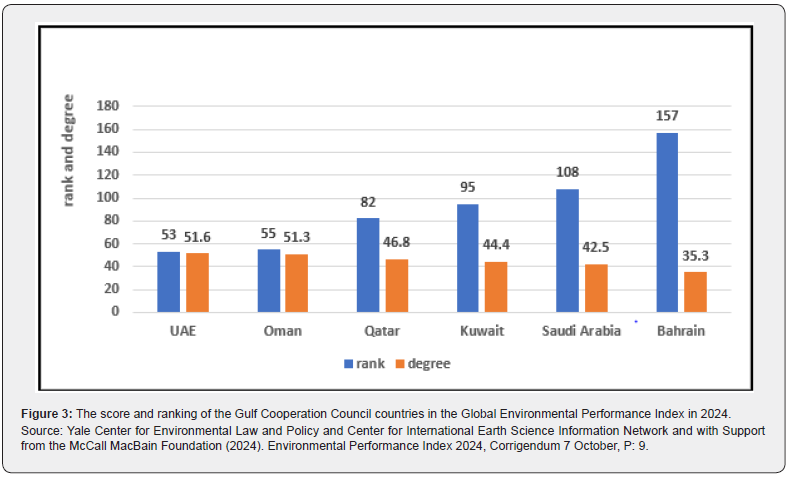
Given the negative impacts of the accumulation and burial of various types of waste, this study aimed to identify the economic and environmental dimensions of waste management in the Kingdom of Saudi Arabia during the period 2000-2023, using econometric analysis. This study revealed that the Kingdom of Saudi Arabia ranked 108th out of 180 countries in the Global Environmental Performance Index, with a score of 42.5 in 2024. It also ranked 59th out of 180 countries in the Solid Waste Management Index, with a score of 37.4 in 2024. The percentage of recycled industrial waste reached 64.85%, while it did not exceed 3.42% for municipal waste, due to the difficulty of sorting municipal waste at source, in addition to the fact that most of it is organic material. It was also shown that an estimated 10% increase in the amount of collected medical, industrial, and municipal waste leads to an increase in carbon dioxide (CO2) emissions by 5.66%, 0.6%, and 6.51%, respectively. A 10% increase in the amount of recycled (industrial and municipal waste) leads to a decrease in CO2 emissions by 4.31%. Finally, this study recommends maximizing the benefits gained (economic and environmental) by expanding the recycling of industrial and municipal waste, in line with the National Waste Management Strategy.
Keywords:Waste; Treatment Methods; Economic Benefits; Environmental Protection; Saudi Arabia
Introduction
Within the framework of the economic and social development of the Kingdom of Saudi Arabia, the number of existing factories increased from 3,578 in 2000 to 11,549 in 2023 [1]. Existing factories are concentrated in several industries, most notably non-metallic mineral products, rubber, plastics, chemicals, paper and paper products, machinery, beverages, and other manufacturing industries. The total relative importance of the number of factories operating in these industries reached 87.54%, while the percentage of factories operating in other industries did not exceed 12.46% during the period 2000-2023 (Figure 1).
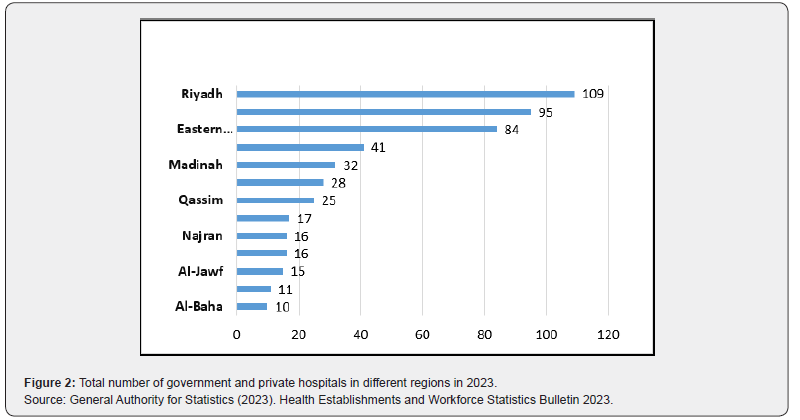
Due to the expansion of industrial activity, the amount of industrial waste in Jubail and Yanbu increased from 181.84 thousand tons in 2010 to 890.61 thousand tons in 2023. As the population of the Kingdom of Saudi Arabia increased to 33.7 million in 2023, the amount of municipal waste collected increased from 8.19 million tons in 2000 to 19.79 million tons in 2023 [2,3]. Healthcare waste also increased from 35.38 thousand tons in 2000 to 60.0 thousand tons in 2023, due to the development of the health sector and the increase in the number of public and private hospitals from 323 hospitals in 2000 to 499 hospitals in 2023, most of which are concentrated in Riyadh (21.84%), Makkah Province (19.04%), the Eastern Province (16.83%), Asir (8.22%), Madinah (6.41%), Jazan (5.61%), and Qassim (5.01%) (Figure 2).
The Kingdom established the Saudi Authority for Industrial Cities and Technology Zones in 2001 as an independent body to oversee the establishment, management, operation, maintenance, and development of industrial cities, while preserving the environment. The Authority’s environmental management system monitors and follows up on the performance of factories in industrial cities and the technologies used to mitigate the effects of pollution, preserve the quality of air, surface and groundwater surrounding factory sites, and properly dispose of hazardous industrial and chemical waste. It has also developed environmental standards and requirements approved by the General Environmental Law and its implementing regulations. The General Authority of Meteorology and Environmental Protection also monitors industrial and development facilities, verifying their compliance with environmental standards, requirements, and guidelines, submitting periodic reports on the state of the environment, and studying citizen complaints [4]. The Kingdom has issued the following waste-related regulations and legislation: (1) Solid Waste Management Regulations and Guides. The following guides have been issued: (a) The Technical Guide for Sanitary Landfill Guidelines and Controls, which includes guidelines for sanitary landfilling of waste and how to dispose of gases and liquids. (b) The Environmental Assessment Guide for Municipal Projects, which includes the environmental requirements governing the licensing of municipal projects with an environmental impact. (2) Hazardous Waste Management Regulations and Guides, which include procedures for controlling solid waste and requirements for waste disposal facilities. (3) Healthcare Waste Management Regulations and Guides aim to control and monitor the processes of producing, sorting, storing, and treating this waste. They are included within the Unified Healthcare Waste Management System in the GCC countries [4].
The Kingdom also developed an integrated waste management program for the Hajj and Umrah seasons. Regarding slaughterhouses and veterinary waste, livestock monitoring has been organized to prevent its leakage into the holy sites. Field visits and veterinary monitoring have also been conducted to detect any epidemic cases among animals. Among the most important efforts of the Ministry of Municipal and Rural Affairs in environmental protection are: (1) adopting an integrated management approach to combat public health pests; (2) using environmentally friendly pest control methods, excluding chemical pesticides; (3) using engineering or mechanical environmental control methods, such as removing weeds and grasses from roadsides, maintaining indoor cleanliness, and using traps, among others [4].
The Kingdom also established the National Center for Waste Management in 2019 to regulate the waste sector, stimulate investment, and develop strategies and plans to achieve its objectives. The center developed the National Waste Management Strategy, aiming to promote the principles of a circular economy by reducing, reusing, and recycling waste to reduce reliance on landfills. Implementing this strategy will achieve environmental sustainability, reduce carbon dioxide (CO2) emissions, and provide a cleaner environment. Waste management will also create new job opportunities and increase the value of investments. The strategy outlined that by 2040, the following benefits could be achieved: (1) treating 1.2 billion tons of waste, (2) avoiding 37 million tons of CO2 equivalent emissions, (3) creating 76,000 jobs in the sector, and (4) increasing the gross domestic product by SAR 650 billion [5].
As a result of population growth, economic and social developments in the Kingdom, and unsustainable consumption patterns of natural resources, the per capita waste generation rate, as well as the quantity of municipal solid waste and natural waste, has increased. Industrial waste has also increased as a result of petrochemical and other industries. Waste poses a concern due to its negative impact on health and the environment, as it leads to the spread of diseases and the proliferation of insects and rodents. It may also contaminate soil, groundwater, and surface water, or cause explosions, spontaneous combustion, and air pollution.
Due to weak compliance with environmental regulations and standards, low environmental awareness, and widespread negative practices, the Kingdom of Saudi Arabia ranked 108th out of 180 countries in the Global Environmental Performance Index (GEPI), with a score of 42.5 in 2024. Comparing the GEPI of Saudi Arabia with the rest of the Gulf Cooperation Council (GCC) countries, it becomes clear that the score and ranking of the Kingdom of Saudi Arabia are lower than those calculated for the United Arab Emirates, Oman, Qatar, and Kuwait in 2024 (Figure 3).
Some studies and research have addressed waste management and treatment. Attia et al. [6] measured the costs and benefits resulting from the environmental impacts of industrial facilities. The study presented a model for measuring the costs of environmental pollution for the industrial sector in the Kingdom, represented by the Saudi Cement Company. The proposed model includes the following steps: (1) identifying the type of damage expected from pollution, (2) determining the extent of the damage or quantitative measurement of the damage, (3) determining the technical weight of the damage unit, and (4) financial measurement of the damage unit. The study also proposed a model for measuring the social-environmental performance of industrial sector facilities in the Kingdom, based on criteria and indicators such as environmental or sustainable profit, environmentally adjusted rate of return on investment, and measuring social costs and benefits. Finally, this study recommended that factories be required to submit detailed periodic reports on the environment within the factory, that environmental agencies monitor factories, and that a position called “industrial environmental monitor” be created, whose mission is to monitor the internal environment of factories and surrounding areas and ensure that these factories are applying environmental rules and regulations.
Waste recycling generates economic, financial, and social benefits for both the investor and the government. The investor can generate relatively high profits by producing and selling organic fertilizers. The government benefits are represented by the savings that can be achieved by the investor bearing the costs of transporting waste to the factory, as well as the material and health costs resulting from incinerating that waste. A study by Lamma [7] showed that recycling is the most effective way to protect the environment, as reusing materials instead of disposing of them reduces the amount of waste and conserves natural resources. Recycling solid waste also has health and environmental benefits, in addition to economic benefits. Under the single-stream recycling program, materials are collected in special containers and then recycled. This system has spread in Western countries, Europe, and Asia, due to its effectiveness in waste collection, especially with political and social pressures that have encouraged the development of environmental legislation in accordance with national directives. Recycled materials may be used, but they have raised concerns about the safety of food packaging. Therefore, it is recommended to implement recycling in locations where it achieves environmental benefits, while taking into account the safety of food.


Studies by [8,9] confirmed that waste recycling entails several economic and environmental gains, including establishing investment projects and providing new job opportunities for Jordanian youth, reducing carbon dioxide emissions, reducing waste volume and energy use, preserving natural resources, and mitigating climate change. A study by Kim [10] indicated that waste management and recycling have gained significant importance in recent years. Therefore, this study focused on recycling and waste management systems in three main sectors: medical, municipal, and plastic waste, before and after the COVID-19 pandemic. This study recommended the need for further research and studies on waste and recycling, how to utilize them, and how to avoid wasterelated problems.
A study by Periathamby and Babel [11] examined solid waste management in Asia over the past five decades. This study found that waste generation has increased in all countries over the past 50 years, although a recent downward trend has been observed in Japan and Korea. Most waste is organic, comprising 45%–50% of the total. Waste management technologies have evolved, with more countries slowly transitioning from landfills to waste-to-energy options. However, landfilling and open dumping remain the primary waste disposal options in most developing countries in Asia. Therefore, issues of concern relate to landfill management, the informal sector, waste collection, open burning, and food waste. Finally, Tabish et al.’s [12] study addressed the circular economy and environmental protection, demonstrating that waste recycling is of paramount importance. There are five critical issues related to the circular economy: waste recycling, followed by technology, transition to a circular economy, plastic waste, and waste management. The study of waste management, comprehensive waste reduction practices, and their distinctive patterns may influence future research areas and constitute a transitional tool to the circular economy (which aims to reduce waste generation).
By comparing this study with previous studies, it becomes clear that most previous studies addressed waste management and treatment using only a descriptive approach, while this study was characterized by its focus on the economic and environmental dimensions of waste management, using the construction and estimation of standard economic models.
Research Objectives
This research aimed to study the economic and environmental
dimensions of waste management in the Kingdom of Saudi Arabia
during the period 2000-2023, through the following objectives:
i. The current status of collected municipal, industrial,
and medical waste and its treatment methods (recycling, sanitary
landfill, and incineration).
ii. Evaluating the proposed model for studying the
economic and environmental dimensions through waste recycling,
environmental conservation, and reducing carbon dioxide (CO2)
emissions.
Materials and Methods
To achieve its objectives, this study relied on data issued by government agencies, most notably the General Authority for Statistics and the National Center for Waste Management, as well as data issued by international organizations, most notably the World Bank Group. This study also relied on the Global Environmental Performance Index (GEPI), whose value ranges from zero to 100. It began in 2006 under the name Environmental Sustainability Index (ESI), an initiative of the World Economic Forum in collaboration with the Yale Center for Environmental Law and Policy at Yale University and Columbia University, through the Center for International Geoscience Information Network and the Joint Research Centre of the European Commission.
This study also relied on the proposed model consisting of four behavioral equations, which can be expressed as follows:

The proposed model includes the following variables:
(1) Four endogenous variables: quantity of hazardous medical
waste in tons (Y1), quantity of hazardous industrial waste in
thousand tons (Y2), total quantity of municipal waste collected
in million tons (Y3), and carbon dioxide emissions in million tons
equivalent (Y4).
(2) Four exogenous variables: total number of public and
private hospitals (X1), total number of factories (X2), total
population (X3), and total quantity of recycled waste (industrial
and municipal) (X4).
The proposed model was estimated using the ordinary least squares method, given that the endogenous variables matrix has a diagonal of one and all numbers above this diagonal have a diagonal of zero, as follows [13] (Table 1):

Source: Compiled and calculated from: (1) General Authority for Statistics (2023). Environmental Statistics Bulletin for the year 2023, (2) World Bank, website, period 2000-2023, (3) Ministry of Industry and Mineral Resources (2025). Website, period 2000-2023.
**Significant at the 1% probability level, ns not significant. Source: Data in Table 1.
Significant at the 1% probability level, *Significant at the 5% probability level. Source: Calculated from the data in Tables (1, 2)
Source: Equations in Table 3.
Result and Discussion
The Current Status of Waste Management in the Kingdom of Saudi Arabia
A study of the current status of waste management (medical, industrial, and municipal) in the Kingdom of Saudi Arabia reveals that the government collects and processes medical, pharmaceutical, chemical, and metal waste generated by the healthcare sector in special facilities run by private sector companies specializing in healthcare waste. Regarding industrial waste, the data presented in (Figure 4) shows that it is disposed of through recycling, landfilling, and incineration. The amount of recycled industrial waste reached 577.56 thousand tons, representing 64.85% of the total amount of industrial waste, which amounted to 890.61 thousand tons in 2023. The amount of waste disposed of through landfilling reached 222.94 thousand tons, representing 25.03% of the total amount of industrial waste. Furthermore, 90.10 thousand tons, representing 10.12% of the total amount of industrial waste, was disposed of through incineration in 2023.
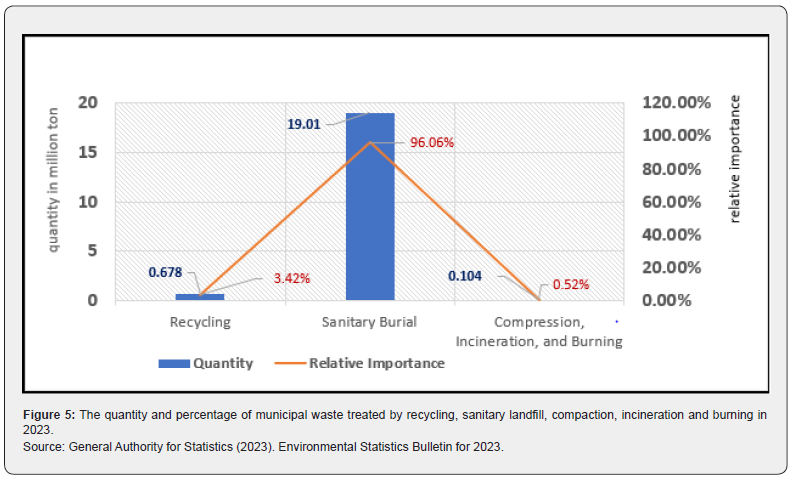
Regarding municipal waste, it has been shown that the lack of segregation hinders the recycling process and leads to the burial of large quantities of biodegradable waste. Evidence of this is that in 2023, 19.01 million tons were disposed of through sanitary landfills, while 103.74 thousand tons were disposed of through compaction, incineration, and burning, representing a small percentage of 0.52%. The amount of recycled municipal waste reached 677.84 thousand tons, representing 3.43% of the total amount of municipal waste collected, which amounted to 19.79 million tons in 2023 (Figure 5).
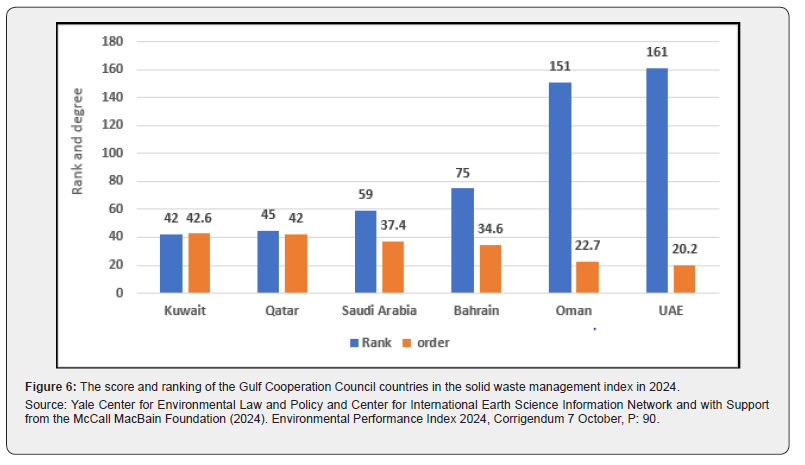
Most municipal solid waste is concentrated in urban areas, most notably Riyadh, Makkah, Jeddah, and Dammam. The municipal waste sector suffers from the lack of a source-sorting system, which results in waste being collected from mixed containers containing various types of waste, predominantly organic waste such as food scraps and spoiled food products. This makes it difficult to sort and collect recyclable waste after transporting it to treatment plants. There is also the phenomenon of seizing potentially useful waste, such as cardboard boxes and metal and plastic cans, which leads to limited investment opportunities in this sector. Landfills designated for municipal waste also suffer from several problems that make it difficult to dispose of waste without affecting environmental health. Landfills do not meet sanitary landfill requirements; most of these landfills lack a system for collecting waste liquids, lack ventilation after the landfill is closed, and meet other basic requirements. The modern landfill of the Madinah Municipality is considered the most advanced and sophisticated landfill in the Kingdom. Overall, the Kingdom of Saudi Arabia ranked 59th out of 180 countries in the Solid Waste Management Index, with a score of 37.4. This places it ahead of Bahrain, Oman, and the United Arab Emirates, while it remains below Kuwait and Qatar in this area in 2024 (Figure 6) [14].
The Proposed Model for Waste Management (Medical, Industrial, and Combined Municipal Waste):
Characterization of the Internal and External Variables of the Proposed Model
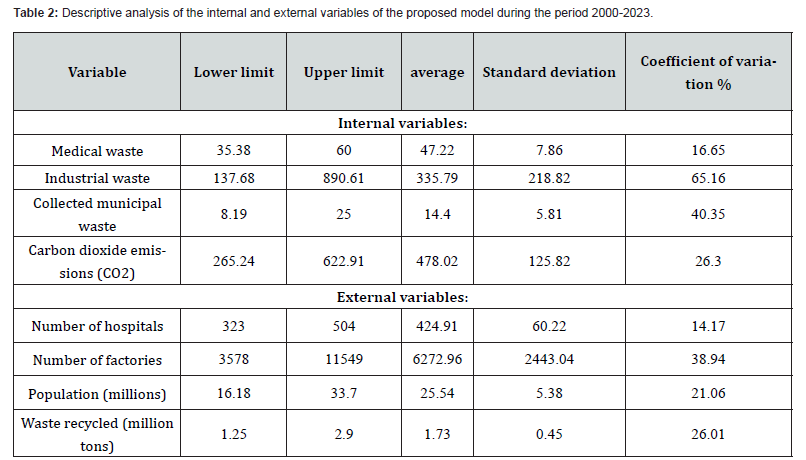
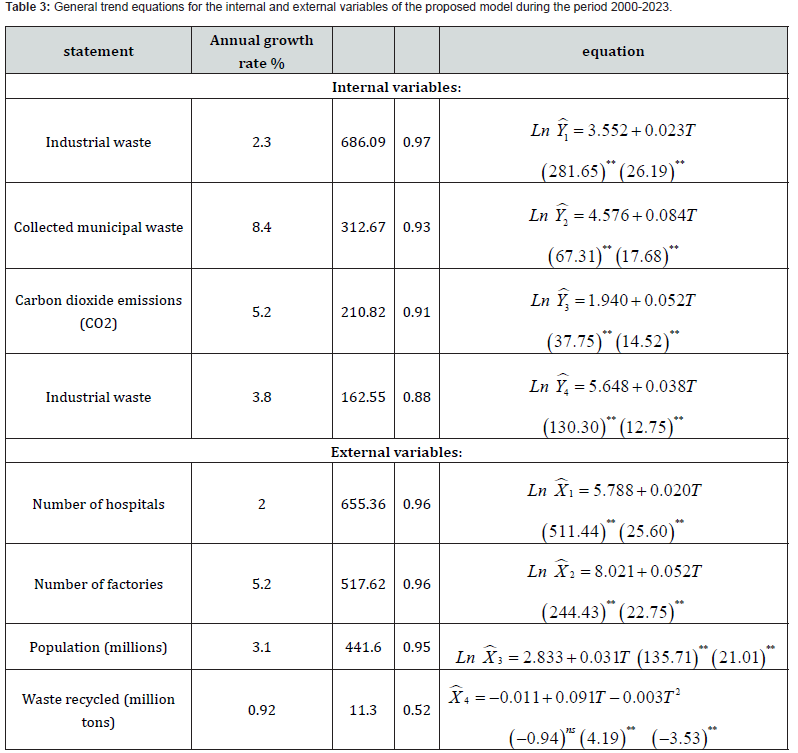
By examining the development of the internal and external variables of the proposed model during the period 2000-2023, the data in (Tables 2, 3) reveal an increase in the internal variables at annual growth rates ranging from a minimum of 2.3% for medical waste to a maximum of 8.4% for industrial waste during the study period. Both the quantity of medical waste and carbon dioxide emissions (CO2) were relatively stable, due to low coefficients of variation of 16.65% and 26.3%, respectively. The remaining internal variables (industrial waste and combined municipal waste) were unstable, due to high coefficients of variation of 65.16% and 40.35%, respectively [15].
Regarding the external variables of the proposed model, the same data in (Tables 2, 3) show an increase in the external variables at annual growth rates ranging from a minimum of 0.92% for the total amount of recycled industrial and municipal waste to a maximum of 5.2% for the number of factories. The external variables (number of hospitals, population, and recycled waste) of the proposed model were relatively stable, due to the low coefficient of variation values of 14.17%, 21.06%, and 26.01% for each, respectively. The number of operating factories was unstable, due to the high coefficient of variation value of 38.94% during the period 2000-2023 [16].
Estimating the Proposed Waste Management Model
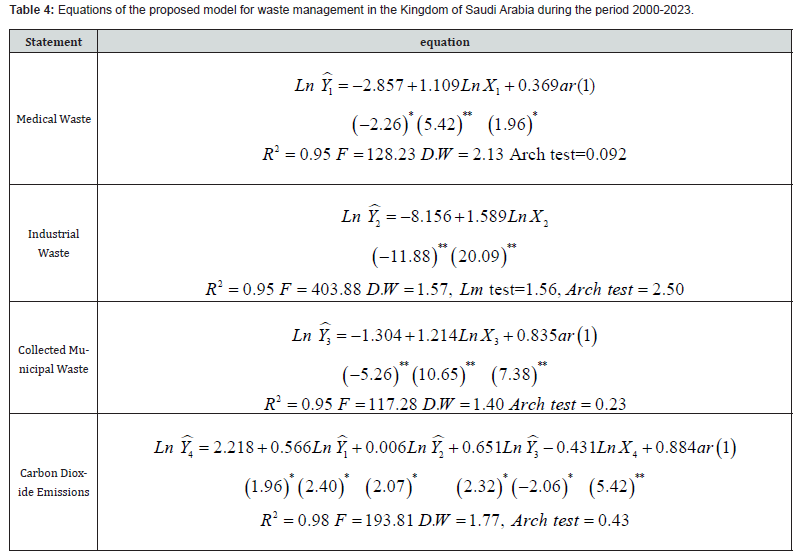
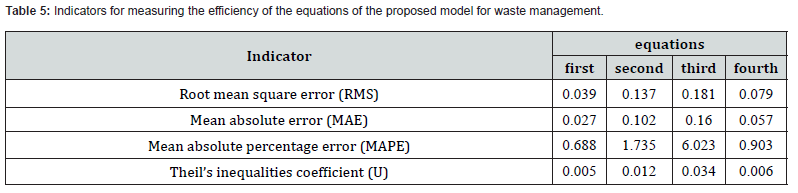
The proposed model was estimated using the OLS method. The estimated equations in (Table 4) show that a 10% increase in the total number of public and private hospitals leads to an 11.09% increase in the quantity of hazardous medical waste. A 10% increase in the total number of operating factories leads to a 15.89% increase in the quantity of hazardous industrial waste. A 10% increase in the population leads to a 12.14% increase in the quantity of collected municipal waste. It was also shown that an estimated 10% increase in the quantity of collected medical, industrial, and municipal waste leads to an increase in carbon dioxide (CO2) emissions by 5.66%, 0.6%, and 6.51%, respectively. A 10% increase in the quantity of recycled (industrial and municipal) waste leads to a 4.31% decrease in CO2 emissions. The equations of the proposed model are free from the problem of autocorrelation of the residuals, according to the D.W. test, the Breusch-GodFrey serial correlation LM test, as the F value is not statistically significant at the 1% significance level, which indicates that the equations of the estimated model are free from the problem of autocorrelation of the residuals. There is also no autocorrelation in the variance of the series, according to the Arch Test. The equations of the estimated model are characterized by good predictive ability according to the indicators measuring the efficiency of the models, the most important of which are the square root of the mean random error, the mean absolute error, the mean absolute percentage error, and the Theil’s unequal value (U-Theil), which is close to zero (Table 5).
Conclusion
Due to the expansion of the number of factories and public and private hospitals, in addition to population growth, collected medical, industrial, and municipal waste increased at annual growth rates of 2.3%, 8.4%, and 5.2%, respectively. Consequently, carbon dioxide (CO2) emissions increased at an annual growth rate of 3.8% during the period 2000-2023. A study of the current situation revealed that the percentage of recycled industrial waste reached 64.85%, while the percentage of municipal waste did not exceed 3.42%, due to the difficulty of sorting municipal waste at source, in addition to the fact that most of it is organic material. Using the proposed econometric model to study the economic and environmental dimensions of waste management in the Kingdom of Saudi Arabia, it was shown that an estimated 10% increase in the quantity of waste (medical, industrial, and municipal) leads to an increase in carbon dioxide (CO2) emissions of 5.66%, 0.6%, and 6.51%, respectively. A 10% increase in the quantity of recycled (collected industrial and municipal waste) leads to a 4.31% decrease in CO2 emissions. From the above, it is clear that expanding the recycling of industrial and municipal waste means expanding the number of projects planned for establishment, thus increasing investments and creating new job opportunities, in addition to preserving health and the environment. This will enable the achievement of the objectives of the National Waste Management Strategy 2040, which include: (1) treating 1.2 billion tons of waste, (2) avoiding carbon dioxide equivalent emissions by 37 million tons, (3) providing 76,000 jobs in the sector, and (4) increasing the gross domestic product by 650 billion riyals (National Center for Waste Management, 2023). Finally, this study recommends maximizing the benefits gained (economic and environmental) through expanding the recycling of industrial and municipal waste in line with the National Waste Management Strategy.
References
- Ministry of Industry and Mineral Resources (2025) Website, 2000-2023.
- General Authority for Statistics (2023) Bulletin of Establishments and Health Workforce Statistics for 2023.
- General Authority for Statistics (2023) Bulletin of Environmental Statistics for 2023.
- Riyadh Economic Forum (2020) A Study of Environmental Problems and Their Impact on Economic and Social Development, Riyadh Chamber, Ninth Session.
- National Center for Waste Management (2023).
- Attia Khaled Abdul Aziz Al-Mahmoud, Saleh Abdul Rahman, Zahran Alaa El-Din Mahmoud (2005) A Proposed Methodology for Measuring the Costs and Benefits of the Environmental Impacts of Industrial Facilities: An Applied Study of the Industrial Sector in the Kingdom of Saudi Arabia. King Faisal University Scientific Journal of Humanities and Administrative Sciences 6(2): 205-281.
- Lamma Osama Asanousi (2021) The impact of recycling in preserving the environment. International Journal of Applied Research 7(11): 297-302.
- Al-Khalayleh Reda Muhammad Ayed (2022) The Importance of Waste Recycling and Types of Recycling. Arab Journal of Scientific Publishing, Tamim Center for Studies and Research. Jordan, Fifth Edition, pp. 781-793.
- Al-Halawi Nisreen Atallah Adhiyab (2024) Waste Recycling and Its Impact on the Environment. Arab Society Journal for Publishing Scientific Studies 62: 194-210.
- Kim Titus (2023) A Review of Recycling and Waste Management Systems through the Lens of the COVID-19 Pandemic. Journal of Student Research 12(1): 1-14.
- Periathamby Agamuthu and Babel Sandhya (2023) Waste management developments in the last five decades: Asian perspective. Waste Management and Research 41(12): 1699-1716.
- Tabish Muhammad, Syed Abdul Rehman Khan, Zhang Yu and Muhammad Tanveer (2024) A thorough overview of the literature on waste recycling in the circular economy: current practices and future perspectives. Environmental Science and Pollution Research 31(52): 61377-61396.
- Gujarati Damodar N, translated and review by Odeh, Hind Abdel Ghaffar and Al-Dash, Afaf Ali Hassan (2015) Basic Econometrics. The Second Part, Marekh House of Publishing, Cairo, pp: 969-997.
- Yale Center for Environmental Law and Policy and Center for International Earth Science Information Network and With Support from the McCall MacBain Foundation (2024) Environmental Performance Index 2024, Corrigendum p: 90.
- Statistical Center for the Cooperation Council for the Arab States of the Gulf (2025) Waste Statistics Report in the Gulf Cooperation Council Countries for the Year 2023.
- The World Bank website 2000-2023.

























