




 ASM Home



Abstract
Coastal and marine ecosystems are crucial due to the environmental services they provide, but they are vulnerable to degradation caused by natural phenomena and human activities. To mitigate these impacts, strategies such as restoration, rehabilitation, and habitat improvement are used, which protect ecosystems and increase goods and services. The study analyzes the health of mangrove forests in a specific area, evaluating parameters such as density, basal area, and species diversity. The results show that; The sites with the highest basal area and density were El Cambio, Siembra Directa, and the Reference Site. The dominant species were Avicennia germinans, followed by Rhizophora mangle and Laguncularia racemosa. The sites with the highest tree mortality were Alfonsina, El Cambio, Canales, and Siembra Directa. The salinity and interstitial water temperature were found to be within the optimal range for mangrove development. The pH and dissolved oxygen in the surface water were also found to be within suitable ranges for shrimp and other organisms. In general, the study suggests that the area requires conservation and restoration actions to protect mangrove forests and promote biodiversity.
Keywords:Habitat Improvement; Ecosystem Services; Socio-Environmental Perspective; Coastal Lagoon; Yucatán
Introduction
Coastal and marine ecosystems are of great relevance due to the large number of environmental services they provide to us. However, these ecosystems are vulnerable to deterioration that is caused by various natural phenomena and human activities that have caused changes in biodiversity and ecosystem processes [1]. To mitigate and compensate for these impacts, different strategies have been used, such as restoration, rehabilitation and habitat improvement projects, whereby it has been shown that such projects protect coastal ecosystems, in addition to increasing goods and services [2].
The Chabihau coastal location is dependent on the municipal seat of Yobaín, located in the county with the same name. There are 329 inhabitants living in Chabihau, out of which 160 are women and 169 men (INEGI, 2020). During summer there is a seasonal move-in by people that occupy the houses along the seashore. Vallejo et al. [3] identified that shrimp fishing inside the lagoon contributes more than 70% of the Economically Active Population/Labor force (EAP) during the northerly wind season, which occurs in autumn and winter, when the coastal and medium-altitude fishing fleets are inactive. This economic activity is carried out by households to complement their diet and to diversify their sources of income [4]. However, this activity constantly causes conflict between the community and the fishing authorities due to the permanent fishing ban for inland waters [5].
An estimated 17.7% of Chabihau’s residents dedicate themselves to providing services and commerce, mainly during the tourism season, which comprises Easter (April), summer (July and August), which are the times of year when they take the opportunity to trade. During this time, restaurant services and various products are offered, including coconut and fishing products, among others (see annual cycle of activities in Figure 1). Additionally, another 13.3% have more formal jobs such as fixing houses for seasonal workers (vacationers), weeding, masonry, plumbing, among others [3]. Regarding salt extraction, this activity was reduced after the impact of the hurricanes, as the ponds were contaminated with garbage, seawater and mud from the swamp [6].
Socio-environmental historical context of the Chabihau lagoon (1988 - 2007)
Natural events in the coastal town of Chabihau have been relevant in the dynamics of the community and its ecosystem. Hurricane Gilberto (1988) and Hurricane Isidoro (2002) caused the breakup of the sandy bar, allowing fish and invertebrate species to enter the swamp. In 1992 and 1997, the community requested that gates be built at the open mouths to encourage periodic fishing [7]. In 2003, the community again requested that a 24-m wide highway bridge be built over the open mouth and along the eastern edge of the urban area. This connected the sea permanently to the lagoon on the eastern side of the town, which changed the hydrological regime from a swamp to a tidedominated lagoon system. After construction of the bridge, new trends appeared in the hydrological system due to greater water turnover/replacement and flow. Lower salinity conditions were recorded in the lagoon, as it switched from a hypersaline system (44 UPS) to a euhaline system (33 UPS) [8]. This situation provided social and economic benefits, such as an increase in fishing for self-consumption in the lagoon, mainly of shrimp in the winter season [9].
In addition, between 1999 and 2007, researchers from the Human Ecology Department of CINVESTAV created a hydrological monitoring network with 22 permanent stations in the microbasin, distributed to the east and west of the coastal roads of San Crisanto, Chabihau and Santa Clara, in the upper, middle and lower part of the lagoon. The results of this monitoring confirmed changes in the physicochemical parameters of the water as a result of hydrological flow modifications related to anthropogenic interventions and natural events [8]. For his part, Rendis [7] assessed the water quality of the Chabihau lagoon and demonstrated that certain environmental and biological parameters, such as salinity, dissolved oxygen and coliforms, were not within the ideal ranges for shrimp development.
In 2003, a program called “Environmental restoration and strengthening of regional development in the coastal micro-basin of Chabihau, Yucatán” came into effect, which had support from the North American Wetlands Conservation Council (NAWCC) and from the State government and researchers from the Human Ecology Department of CINVESTAV. This was carried out via the San Crisanto Foundation (NGO), directing to develop mangrove forestation activities in the lagoon and hydrological rehabilitation of springs with the participation of inhabitants from the community of Chabihau, thus hoping to improve the habitat for the development of fishing species, especially shrimp.
As a result of this program, experimental afforestation was carried out over 7.5 Ha and approximately 10 thousand seedlings of two species, namely Rhizophora mangle (red mangrove) and Avicennia germinans (black mangrove), distributed across 5 sites: Alfonsina, El Cambio, Canales, Victoria and Siembra Directa. The seedlings were produced in the nursery belonging to the working group called “Las Flores de Mangle” in the same town, who also performed direct sowing of propagules collected at the planting site and its surroundings. However, via follow-up and monitoring activities, it was reported in 2006 that only 2,500 individuals at all forested sites had overcome the survival and natural recruitment processes, which represents 25% of the initial planting [9]. The creation of work groups was promoted to take advantage of this resource, and also for starting nursery and environmental education workshops, among other activities.
Parallel to the transformation of the ecosystem, the Chabihau community has adapted formal and informal organizational processes, as well as levels of participation in the management of local resources upon the intervention of external agents, and it is done in accordance with the transformation of the ecosystem itself. The symbiosis between the local community and the supply sources provided by the ecosystem is transforming constantly. It is important to take the valuation and perception of goods and services by local users into consideration, as they are the ones who have direct access to resources every day, which allows them to continuously monitor the situation over time [10]. By 2007, CINVESTAV withdrew from Chabihau and no longer developed any projects, thus reducing the presence of external agents in the area.
Therefore, the main objectives of this work were to determine the environmental conditions at the time (2021-2022) that pertained to the mangrove forest habitat in the Chabihau coastal lagoon generated after habitat improvement actions, and to evaluate the viability of shrimp development based on specific water quality parameters analyses in the same timeframe.
Methodology
Forest structure of the mangrove forest
The variables of abundance, diversity and structure of the mangrove community were determined in situ, via identification of species and its health status, as well as documenting the height and Normal Diameter of each individual found within 5 m x 5 m plots. This was performed at the 5 sites that were forested in 2003: El Cambio, Canales, Alfonsina, Victoria and Siembra directa, to which a reference site was added, based on its accessibility and georeferenced and delimited in the four cardinal points through the use of a compass, measuring tape and stakes. The normal diameter (DN) provides an estimation of the basal area of the mangrove species, whereby their absolute dominance is determined. Density is defined as the number of adult trees per unit area according to Rodríguez et al. (2018)
Quality of surface and interstitial water in the Chabihau lagoon and forested areas
The quality of surface water (water column) and interstitial water (water in the sediment) was evaluated with the objective of determining whether the parameters are within optimal ranges for the development of fishing species, especially shrimp, and of forested areas and of the reference site, to describe the conditions in which the mangrove developed at the time. For this purpose, in situ monitoring was carried out monthly between October 2020 and April 2021 to obtain data pertaining to both drought and northerly wind seasons in a differentiated manner.
The location of the points sampled for surface water quality (Table 1) are those referenced by Rendis [7] and Batllori and Febles [8]. This was done with the purpose of making a data comparison between different time periods a possibility.
Interstitial water samples were extracted from the forested and reference sites at a depth of 40 cm with the help of acrylic tubes (PVC) with perforations along the walls (beacons). A total of 12 beacons were established (2 per sampling site). It is considered that interstitial water provides a measure of the most constant hydrological conditions in the ecosystem, whereby the recorded parameters provide information about the biogeochemical processes of the site, as that is where most of the roots and microorganisms are located (Rodríguez et al., 2018).
Once the sample was obtained, in situ determinations were made with the devices corresponding to temperature (YSI pH100 probe), pH (pHmeter model 8685 AZ pH Pen), redox potential (YSI pH100 probe). The latter was measured only in the interstitial water and was classified according to Cronk and Fennessy [11] (see Table 2). Salinity was measured with an ATAGO refractometer, which uses practical salinity units (PSU). Dissolved Oxygen was obtained using a YSI model 85 probe. This parameter was measured only in surface water. The obtained salinity values were classified according to the systems reported by Mitsch and Gosselink [12] for surface waters in marine and estuarine environments, and by Cronk and Fennessy [11] for interstitial waters (Table 3).
The effect of hydrological restoration and afforestation on the studied mangrove sites was evaluated and compared with the reference site based on the environmental conditions of interstitial water (physicochemical parameters) and forest structure (density, height and basal area), applying a one-way analysis of variance.
The normality of the variables was validated with a significance level α = 0.05. Because the assumption of normal distribution was not met, the data were transformed using the Box-Cox method, so that the variables could show a normal distribution [13]. In the event that p was >0.05, the data would be outside the normal distribution and a non-parametric Kruskall-Wallis test would then be performed. Subsequently, a post hoc Bonferroni test was applied. All statistical analyses were performed using Minitab 18 and STATISTICA V.12 software (StatSoft, Inc., Palo Alto, CA, USA, 1984-2014).
Subsequently, a post hoc test was applied using Fisher’s least significant difference (LSD) method, with a significance level of α = 0.05. This statistical method is the most used for these purposes [14]. With the analysis of the state of the forested sites, the progress at mangrove forested sites was evaluated.
Participatory social processes
Additionally, the participatory and social organization processes among local users regarding the use of natural resources and the improvement of habitat were identified. Following the inductive method, semi-structured interviews were designed to obtain as much information as possible on the topic of interest, using previous information as guidance. Open questions were formulated to obtain enough information to understand and learn about the topic. The sequence of the questions was flexible and adapted to the responses and situation of the interviewees [15,16].
The sampling of information providers was carried out with the snowball technique, as this part of the research was subjected to the willingness of people to participate. In the end, a total of 15 information providers were obtained (n=15). Information providers were selected under two criteria, as described briefly hereafter. Firstly, the participatory processes that they used up to that date in regards to mangrove planting and maintenance of the ecosystem was considered, as well as the community appreciation for the ecosystem services provided after ecosystemic changes. The second consideration was the form of organization and participation for current fishing activities in the lagoon.
Results and Discussion
Structure and physiognomy of mangrove communities
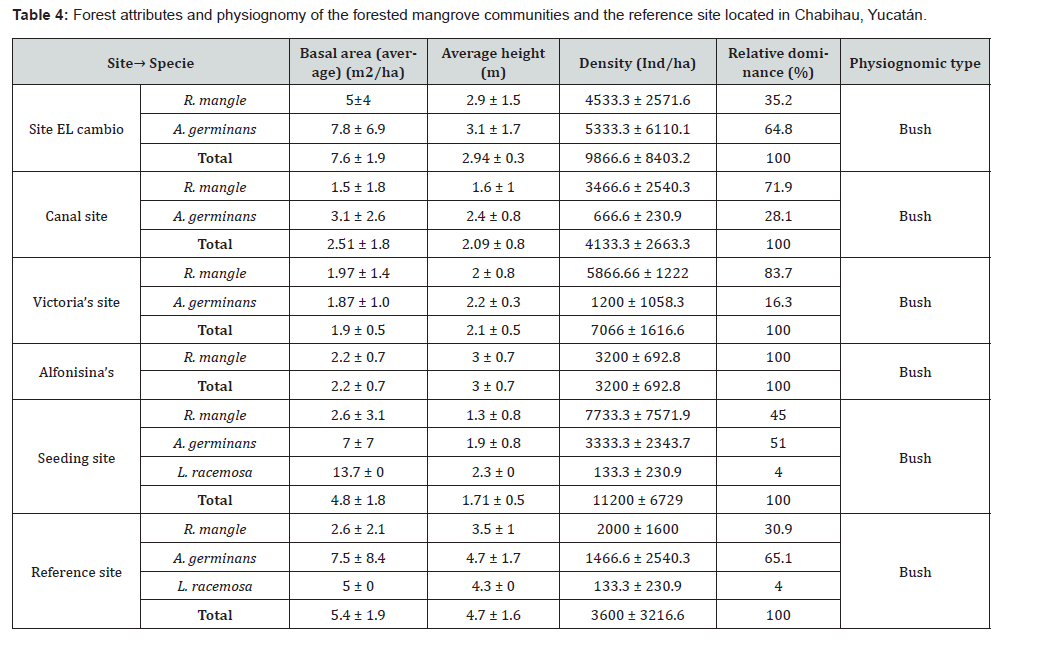
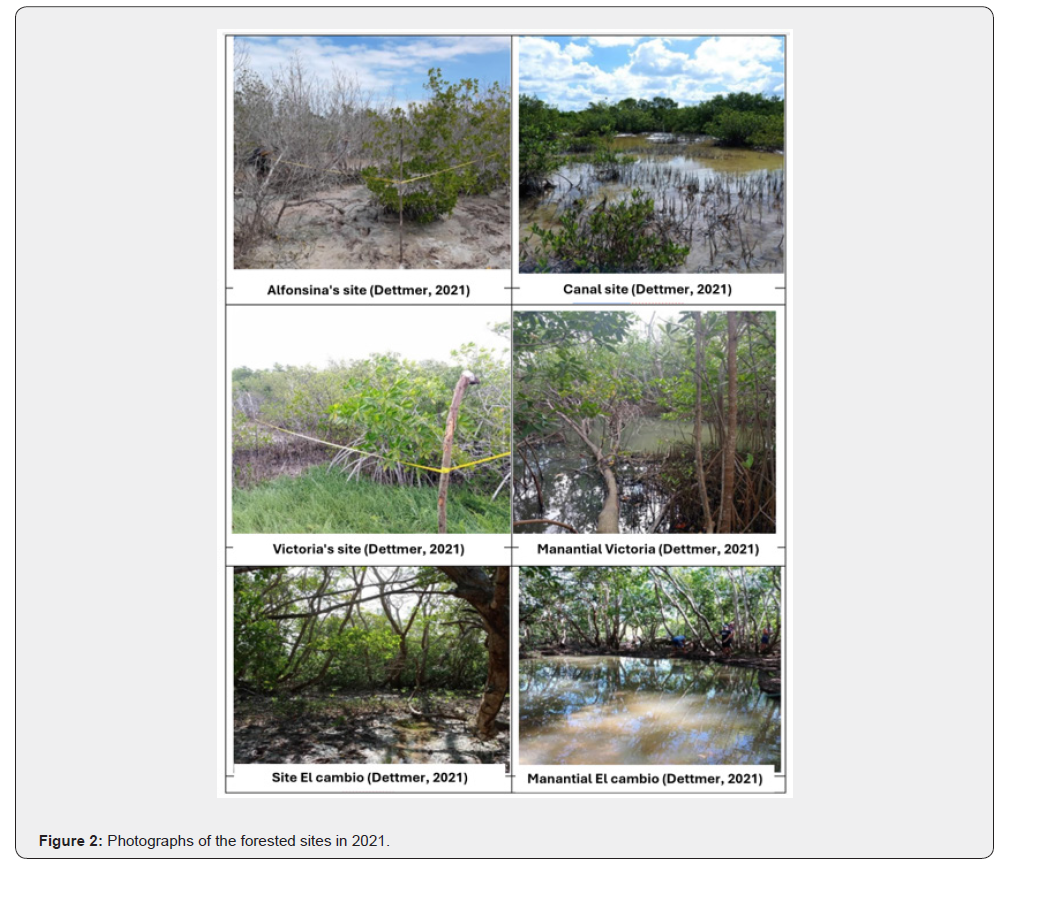
The mangrove forests for all sites located in the study area exhibited scrub-type physiognomies (Figure 2). The greatest forest attributes (basal area and density) could be seen at El Cambio, Siembra Directa and Reference sites (Table 4). A dominance of Avicennia germinans was observed, with Rhizophora mangle and Laguncularia racemosa being present, although this last species was not recorded at the El Cambio location. The Alfonsina site presented a monospecific forest of R. mangle. Likewise, the Canales and Victoria sites showed this species as the dominant one (71.9% and 83.7% respectively), with some records of A. germinans. It was observed that mangrove communities established by habitat improvement actions and natural regeneration were found to have low forest attributes, especially at the Canales, Victoria and Alfonsina sites.
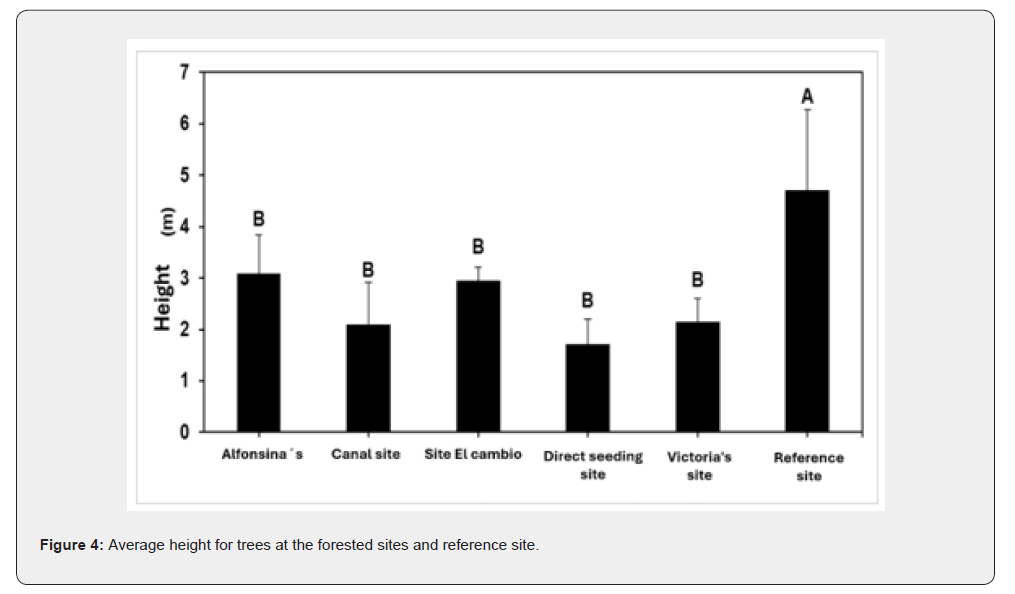
Significant differences were established between the sites at the p<0.05 level. Significantly different parameters were basal area (F5,12= 1.49; p>0.005), and height (F5,12= 1.49; p>0.010). By applying a post hoc test with the Fisher test (p>0.05), similarity was established in the basal area between the Reference site and the El Cambio and Siembra Directa sites (Figures 3 and 4). Alfonsina and Victoria presented similarity amongst themselves. On the other hand, it was determined that the Reference site presented significant differences regarding height, compared to the rest of the sites (Table 4).
The Alfonsina site is strongly deteriorated, whereby 44.4% of individuals are lifeless and 27.8% with a very low level of health, exhibiting defoliation (Figure 2). Similarly, in the El Cambio, Canales and Siembra Directa sites, a mortality of 12% was recorded. In contrast, the lowest mortality rate was seen at the Reference site (2.3%). Similarly, the Victoria site did not present lifeless individuals (0%).

US= Upper Swamp; MS= Middle Swamp; LS= Low Swamp; E= East; W= West

Note: Taken from Cronk and Fennessy (2001)
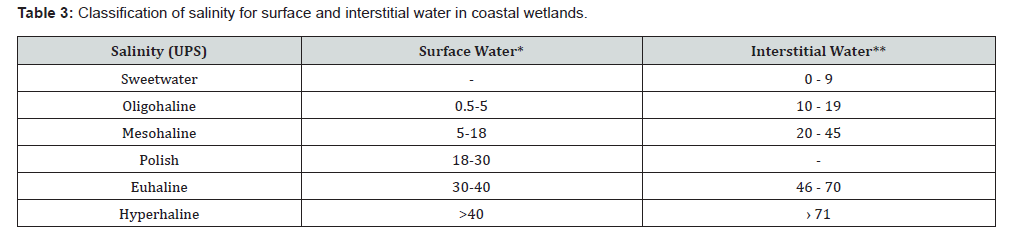
Note: Taken from *Mitsch and Gosselink (2007) **Cronk and Fennessy (2001)
Physicochemical parameters of interstitial water in the reference and forested sites
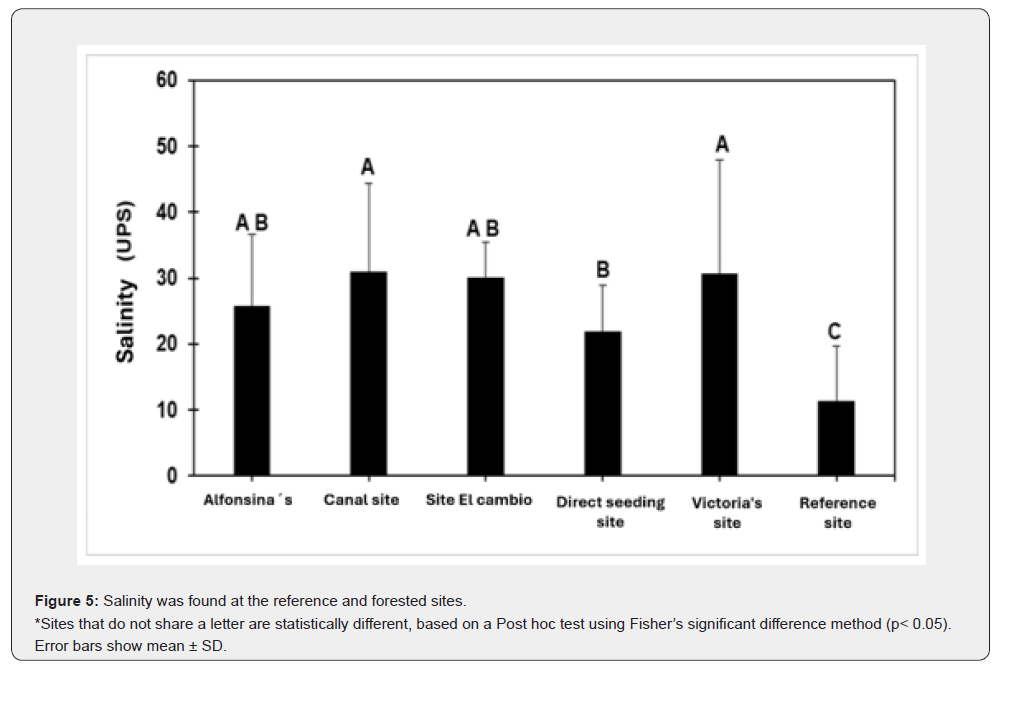
In general, the forested sites were characterized by mesohaline conditions. The highest salinity values were found in the Canales and Victoria sites (31±13.3, 31±17.2 UPS), which were much higher in comparison to the Reference site with oligohaline conditions (11.41± 8.25 UPS). Significant differences were established between the sites in regards to temperature (F5,73= 5.28; p>0.0001) and salinity (F5,74= 5.28; p>0.0001). By applying a Fisher’s post hoc test (p< 0.05), it was determined that salinity at the Reference site is different from the forested sites (Figure 5). As for temperature, it was established that the sites that were similar to the Reference site were Alfonsina, Canales and Siembra Directa. Generally speaking, the pH found at all sites was neutral (7.4 ± 0.1). The maximum pH value was found at the Victoria site (7.63 ± 0.67) and the site with the lowest pH was the Canales site (7.25 ± 0.58). Regarding redox potential, all sites presented oxic to hypoxic conditions, with maximum values found at Siembra Directa site with -106.2 ± 148.5 mV (oxic type). The minimum value recorded corresponded to the Canales site with -336.2 ± 45.1 mV, where conditions were hypoxic with a tendency to anoxia.

By using the Kruskal-Wallis test, significant differences were established for redox potential between sites (H=30.08, p <0.0001). However, no significant differences were established for pH values. When applying a Bonferroni post hoc test (p< 0.05), it was shown that the sites with oxidation-reduction conditions similar to the Reference site were Alfonsina, Cambio site and Direct seeding site.
There was a wide heterogeneity of environmental conditions between sites and sampling months, where salinity and redox potential were the parameters with the greatest variability. Chief risk factors for the development of mangrove in the area are anaerobic conditions and a low concentration of nutrients (Agraz Hernández et al., 2009) [17] in the presence of karstic-type subsoils.
Salinity values found at all sites were within optimal range for the development of mangrove species (Rodríguez et al., 2018). The exceptions that were noted were at the Victoria and Canales sites, where great variability in salinity was observed, and the highest values (> 40 ups) were recorded during March and April. This parameter is related to temperature and evaporation levels, proximity to the sea, tidal exchange, freshwater sources (runoff and precipitation) and microtopography (Rodríguez et al., 2018). In the case of the Alfonsina, Victoria and El Cambio sites, these have a confirmed input of sweet water (springs), but the salinity levels also indicate a degree of sedimentation at these locations. As for the reference site, it was assumed that a spring exists nearby due to the low salinity levels (<15 ups), although it was not located during monitoring. The studies carried out by Teutli [18] and Burriel [19] showed noticeably higher salinity concentrations in the area, the values of which were >50 ups and >35 ups, respectively. Similarly, Febles et al [9] reported slightly higher salinity conditions for the Alfonsina site but lower salinity conditions for the Victoria site, as the spring at the latter was not obstructed with sediments.
This suggested a progressively significant reduction in salinity in the area. Importantly, this can contribute to projecting scenarios during drought season, when a considerable increase in salinity is expected. This highlights the importance of carrying out rehabilitation of springs in the study area with the objective of promoting conditions similar to the reference site, which in turn allow a reduction of stress during mangrove regeneration processes while also increasing ecosystem services.
The interstitial water temperature recorded in the forested sites is within the optimal range for mangrove development, especially for the two most abundant species (A. germinans y R. mangle), where little variability was observed during the seven months of sampling time, which included drought and northerly winds seasons. This parameter is the main regulator of geochemical and biological processes for mangroves, as it influences growth, activity and survival of organisms. It also influences the decomposition of organic matter and the availability of oxygen, as microbial activity accelerates with increasing temperature (Rodríguez et al., 2018).

The pH sampling in the forested sites showed low variability with passing of time between sites, suggesting homogeneity in the area regarding this parameter. Thus, it could be generalized that the conditions of interstitial water are neutral with a light tendency to alkalinity, due to values between 7 and 8 and because of strong bacterial activity during the degradation process of organic matter [20]. Similar values were recorded at the site by Febles et al [9], showing little variability over time.
Rodríguez et al (2018) mentioned that the degree of reduction and oxygenation of interstitial water depends on the frequency, amplitude and time of flooding, and is also dependent on the percentage of organic matter and the degree of exchange in the ecosystem to fresh and salt water flows. For their part, Agraz Hernández et al [21] recorded that the highest values of redox potential occur when there is a shorter residence time of the water, which is influenced by the continuous ebb and flow of the tide. In the case of the three sites that showed reduced conditions (hypoxic), it was due to less influence of the seawater flow, and the sites with oxic conditions are the ones that are closest to the mouth connecting the lagoon to the sea. Also, an inverse correlation was observed between redox potential and salinity, as the sites with the highest salinity were Victoria and Canales, which are also the most reduced sites.
Physicochemical parameters of surface water in Chabihau Lagoon
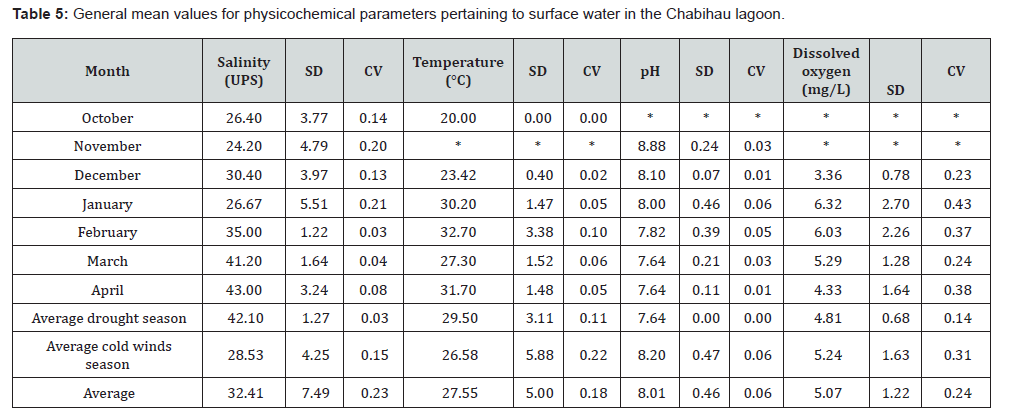
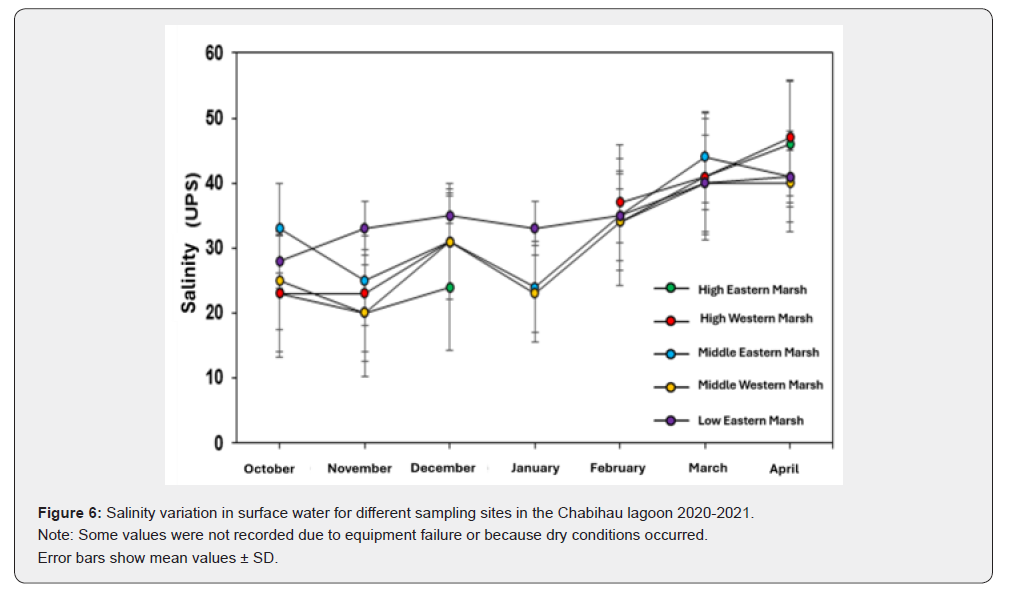
The monthly monitoring of the physicochemical parameters of the lagoon’s surface water was carried out between October 2020 and April 2021, with which the northerly wind and drought seasons were differentiated (Table 5). The overall average salinity was 32.41 +/- 7.49 UPS. The minimum salinity value was reported in November for the sites of EUS and WMS (20 UPS). The maximum value was found in April at the WUS site (47 UPS).
The salinity conditions of the lagoon showed variations going from euryhaline to hyperhaline in the dry season, whereas for the northerly wind season, trends varied between polyhaline and euryhaline (Figure 6). The overall average temperature was 27.55 +/- 4.56 °C. The minimum value (20 °C) was reported in October for all sites. The highest value was recorded in February at the WUS site (38 °C). There was a colder temperature pattern in the northerly wind season and in the deeper sampling points close to the sea (Low-depth swamp). As for pH, the overall average value was 8.0 +/-0.4. The minimum value was reported in February for the WMS point at 7.3, whereas the maximum values (9) were recorded in November for the lower, middle and UWS sites. The lagoon showed alkaline conditions, mainly during northerly wind season, while this trend was reversed during drought season, when there was a tendency towards acidification. The overall average for dissolved oxygen was 5.07 +/- 1.09 mg/L. This parameter was first monitored in December, as the equipment had not been previously available. The maximum value was in February in the ELS (8.61 mg/L), whereas the minimum value occurred in April in the EUS site (1.98 mg/L).
Shrimp are euryhaline animals and it has been shown that the juveniles and subadults that live in estuaries, lagoons and mangroves are the ones that can best withstand greater variations in environmental conditions [22-24]. Reportedly, the shrimp species that have been found in the Chabihau lagoon are: Farfantepenaeus notialis (southern pink shrimp), F. duorarum (pink gulf shrimp) and F. brasilensis (red shrimp). These can be found mainly in their juvenile stages, with greater abundance of the southern pink shrimp, followed by the Gulf pink shrimp [25,26]. In addition, it is possible to identify that shrimp are mainly distributed in the lower and middle area of the lagoon during fishing season. Van Wyk and Scarpa [27] described the optimal ranges of physicochemical parameters that are generally used in aquaculture for most shrimp species.
In regard to salinity, results show that the overall mean value was 32.41 ± 6.94 UPS, showing more marine than brackish conditions. This parameter showed little variability in each season, but great variability in the general average, showing that differences occur between seasons. According to Mitsch and Gosselink [12] the surface water of the lagoon is euhaline. The reported values are within the optimal range for shrimp development. In the case of Gulf pink shrimp, individuals grow better with salinity values of 30 UPS (optimal value), and the growth rate is affected when this value increases or decreases, although they have a wide range of tolerance to salinity [23]. As for red shrimp, it also shows a wide tolerance to different salinities. However, it exhibits greater survival capabilities when salinity is over 25 UPS [22]. In the dry season, especially in the upper part of the lagoon, the highest values (47±0.7 UPS), might affect the survival and development of some organisms found there.
The general mean temperature was 27.55±4.56 °C. Like salinity, there was little variability, even though there was an increase in the drought season (29.5±3.11°C). This parameter proved to be within the necessary range for shrimp subsistence, even for higher areas. It should be noted that the salinity tolerance range of Gulf pink shrimp will decrease as it moves away from the optimal temperature range of 20-30 °C [23].
In the case of the lagoon, a general average pH of 8.01±0.42 was measured. This value is within the optimal range for shrimp development and no extreme values which could put the organisms at risk were reported for any season, especially in the abundance zones (middle and low swamp). Also, a generally alkaline behavior is seen, which is common for marine waters [20,28].
Additionally, dissolved oxygen (DO) correlates well with both water temperature and salinity, as they are inversely proportional. This parameter can also be affected by vegetation-related photosynthesis, increasing its levels in the afternoon. Generally speaking, a higher level of dissolved oxygen indicates water quality is superior [20]. In this study, this surface water parameter averaged 5.07±1.09 mg/L. This value suggests that the amounts are at a minimum level for shrimp development. The seasonal behavior indicates a decrease during drought periods (4.81± 0.68 mg/L), as fresh water supply decreases and there is an increase in temperatures and salinities at the same time. Similarly, this also occurs in EUS and WUS points where the lowest levels were reached (1.98±2.23 mg/L). Despite what is mentioned, this does not necessarily represent a risk for the shrimp species present, as they are not found in that area and in that season, although other estuarine species could be harmed.
Social processes and recognition of ecosystem services
Semi-structured interviews were completed with fifteen people from the community who had belonged to different organized groups in the past, out of which twelve were women and three men. Their ages ranged from 41 to 71 years, with a median age of 51 and a mean age of 53. All women stated a main activity of housewives (100%). However, 23% also had jobs in providing services and commerce, and all of them participate in shrimp fishing when the season arrives. As for the men, all of them are involved in riverside fishing, although some perform salt mining activity. Currently, the organized women’s groups that remain active and that formed in 1997 are known as the “Shrimp Work Group” and the “Flores de mangle” nursery group.
When shrimp fishing groups first started, a squad of men had also formed and was supposed to fish on the main bridge connecting to sea. However, this group did not continue its activities, as it chose to dedicate itself to fishing in high seas and to support the women’s group in the bridges:
“Well, more than anything, they get back tired after fishing and no, no one would go, that is, they all agreed to say that everyone, let them continue, let the group of ladies continue, that only the ladies’ group should go catch the shrimp and every husband should help remove the traps because they are very heavy and the majority of the ladies who go, that is, it’s family members who go, they are the ones who are going to get help.” (Fisherman, 53 years old)
According to descriptions by the interviewees, the main reasons for their permanence and autonomy is based on participation with shared leadership, with consensual decisionmaking that corresponds to women, as well as having family support in their activities. Last but not least, there is an equitable distribution of work and benefits deriving therefrom. Subgroups are formed by family or friendship ties. These are provided with a shift each week (corresponding to a day of the week), allowing them to fish in two of the culverts that lead to the road from Yobaín to Chabihau. Shifts last for 12 hours and start somewhere between 4-5:30 PM, depending on the tide, as this activity is only carried out when the lagoon is empty. This form of organization has continued ever since the establishment of the group (30 years ago) and is respected by all members:
“…when it is shrimp season we get together and have several groups to go fishing for shrimp, I mean the whole community is in it, there’s about twelve per group and on the day that you have your turn that day is when you go, but as for this being an association or something, not really.” (Fisherwoman, 48 years old)
The use of shrimp was the main driving force behind many other activities, such as mangrove planting and cleaning activities:
“…first it was because of the shrimp, that there was shrimp and they said it was good that reforesting happened because the hurricanes were over and they did damage the swamp a lot and well that helped us with the shrimp, planting so that the larvae live there, everything there.” (Woman, 54 years old)
The “Flores de mangle” group is officially made up of 15 female members. However, at the time only 9 of them were currently active. This was because the members left the group due to health problems and issues related to age and family.
In the NOM-059-SEMARNAT- 2010 publication, four mangrove species were placed under the category of “threatened species”, which were Rhizophora mangle, Avicennia germinans, Laguncularia racemosa and Conocarpus erectus. Also, under the Mexican Wildlife Act (Ley General de Vida Silvestre, Conservación y Aprovechamiento Sustentable, 2000), it was established under article 39 that:
“If the owners of a property are interested in carrying out exploitation and conservation activities, they must request that their properties or facilities be registered as Management Units for the Conservation of Wildlife (UMA).” (SEMARNAT, 2018)
This indicates that setting up an Environmental Management Unit (EMU) is essential for the use of these species. Atoche [29] described that the female members were interested in forming a UMA to continue the production of black and red mangrove, and thus be able to sell the plants at a better price to visitors. However, they did not have legitimate property (land) to be able to establish it. To date, the formation of an EMU has not been consolidated. Presently, they are involved exclusively in growing native coastal dune plants. However, they continue to value the importance of this type of activity and the benefits they have as a result of mangrove planting. In addition, they still possess knowledge about the species and how to grow them in nurseries.
Recognition of Mangrove Ecosystem Services
Ever since the forestation activities and changes in the hydrological regime of the lagoon occurred, the change in flora and fauna has been notable. All interviewees perceive these changes in the lagoon as a positive aspect, as it represents prosperity, mainly in fishing:
“Well, I have noticed that yes, the building of the bridge helped, and the small bridges around here as well, it has really helped a lot… because as I say, during these cold seasons, they, the fisherman does not go out to sea because he can’t. But here, you go get your little boat, your skiff, and you go sit down and throw your nets, and look for food and it gives you the good stuff, you fish a lot”. (Fisherwoman, 71 years old)
In addition to fishing, the increase in vegetation in the area is viewed positively, by the community, as they mentioned a change and recovery in the mangroves after the activities were carried out in the area, compared to the conditions in which it was found after hurricane Isidoro:
“Yes, look, when Isidoro came, all of the existing mangroves collapsed, there was destruction, we are talking about 90% of the mangroves were destroyed, and currently there is a lot of mangrove, they were planted and that planting was very good, the truth is that it worked, the mangrove recovered is about 60% of what it was, the planting of mangroves worked, and not just the planting also the cleaning of springs, everything that has been done, the groups, the groups have also been organized.” (Fisherman, 56 years old)
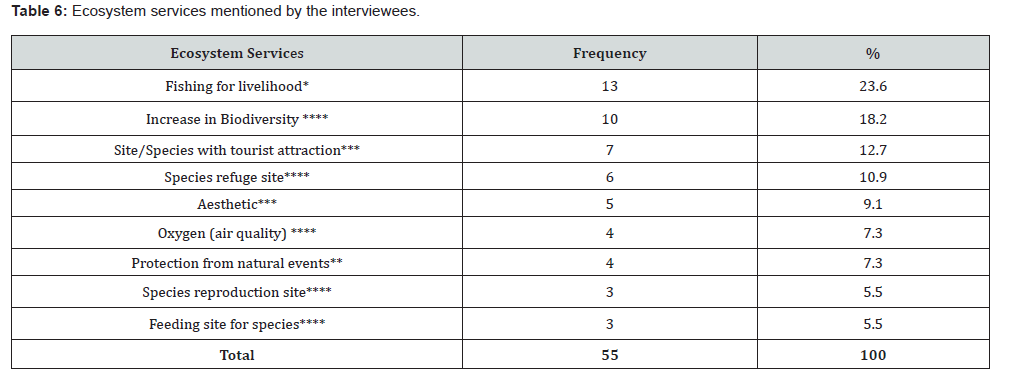
Table 6 shows the ecosystem services that were mentioned by the interviewees (N:14). Each interviewee mentioned 2 to 7 ecosystem services provided when asked about the benefits they receive from the mangrove. The increase in bird species such as flamingos and herons, as well as a greater abundance of crocodiles and fishing species (18.2%) was mentioned:
“…because it is one more alternative for our husbands and also for us when it comes to shrimp fishing, because it enables us to eat, both shrimp and crab,… and well, you throw nets there when there are northerly winds, so they retrieve a little to eat, so it is beneficial for us. And if you come in the morning there are many types of birds, why? Because there is food in the swamp, then there’s the flamingos, the gannets, they are all here because they have food. Those animals didn’t used to be here.” (Woman, 56 years old)
The recognition of ecosystem services by those interviewed revolves mainly around direct economic benefit, such as fishing, diversification of species for capture and tourist attractions. However, according to the MEA [1] classification, the most mentioned benefits were support services (47.3%), followed by provisioning services (23.6%). These results are similar to those found by Walton et al. [30] in the Philippines, by Rönnbäck et al. [10] in Kenya and by Hernández et al. [31] in Mexico. It should be noted that the knowledge about ecosystem services that was provided by the mangrove was obtained via environmental education workshops that were offered during training for participation in mangrove planting and group formation [7,32].
Furthermore, the significant learning by participants in these activities is noteworthy, as they have preserved this knowledge despite the long period of time that has passed since the training, which was over 25 years ago. People continue showing an interest in the conservation and responsible management of the natural resources in the community. This is a long-term result of environmental education interventions along with social praxis and the intervention of external agents in the community [33].
Finally, the recognition and appreciation of the benefits that a local community has from the wetlands and mangroves can depend on many factors. In addition to the environmental education they have received, the perception can also depend on cultural aspects, type of occupation, and local ecological knowledge [34,35]. Likewise, Walton et al. [30] reported that communities that get involved in fishing activities in mangrove areas perceive more benefits from mangroves and are thus willing to pay more for having them than those communities that are only occupied with deep sea fishing [36-38].
References
- Millennium Ecosystem Assessment (2005) Ecosystems and human well-being: Synthesis report. Island Press, United States.
- Palmer MA, Bernhardt ES, Allan JD, Lake PS, Alexander G, et al. (2005) Standards for ecologically successful river restoration. Journal of Applied Ecology 42(2): 208-217.
- Vallejo R, Batllori E, Santos R & Villacís P (2004) General aspects of the economic structure of the coastal town of Chabihau, Yucatá Journal of the Autonomous University of Yucatan 228: 22-40.
- Batllori E, Munguía T, Castillo T, & Dickinson F (2008) Municipal organizations, community participation and decentralization of public policies in coastal areas of the State of Yucatá The case of the Chabihau coastal micro-basin. In J Fraga G J.
- Salas S, Cabrera MA, Palomo L, Bobadilla F, Ortega P, et al. (2008) Management and operation plan of the scale and octopus fisheries management committee. Final Report. Cinvestav IPN. Mérida, Mexico.
- Guzmán Noh G, & Rodríguez Esteves JM (2016) Elements of vulnerability to hurricanes. Impact of Hurricane Isidoro on Chabihau, Yobain, Yucatan. Politics and Culture 45: 183-210.
- Rendis R (2003) Society-nature relationship in the Chabihau micro-basin, Yucatan: The importance of wetlands and the management of a fishery.
- Batllori E, Febles JL (2007) Changes in the hydrological characteristics of Chabihau coastal wetlands, Yucatan, Mexico, associated with hurricane Isidore impact. Indian Journal of Marine Sciences 36(3): 183-192.
- Febles-Patrón JL, Novelo López J & Batllori Sampedro E (2009) Mangrove reforestation trials in a semi-arid coastal swamp in Yucatan, Mexico. Wood and Forests 15(3): 65-86.
- Rönnbäck P, Crona B, Ingwall L (2007) The return of ecosystem goods and services in replanted mangrove forests: perspectives from local communities in Kenya. Environmental Conservation 34(4): 313-324.
- Cronk JK, Fennessy MS (2001) Wetland plants: Biology and ecology. CRC Press.
- Mitsch WJ, Gosselink JG (2007) Wetlands: Fourth Edition. John Wiley & Sons, United States.
- Zar JH (1996) Biostatistical analysis. Upper Sadle River, New Jersey, United States.
- Ruiz-Jaen M, Aide TM (2005) Restoration Success: How Is It Being Measured?. Restoration Ecology 13(3): 569-577.
- Mayan MJ (2001) An Introduction to Qualitative Methods: Training Module for Students and Professionals. (C. A. Cisneros Puebla, Trans.).
- Álvarez-Gayou Jurgenson JL (2003) How to do qualitative research. Fundamentals and methodology. Paidós Educator.
- Zaldívar Jiménez A, Herrera Silveira J, Teutli Hernández C, Hernández Saavedra R, Caamal Sosa J, et al. (2010) Mangroves. In: Durán García R, Méndez ME (Eds.), Biodiversidad y desarrollo humano en Yucatán, pp. 138-139.
- Teutli Hernández C (2004) Estimating the success of hydrological restoration of mangrove areas in northern Yucatan, Mexico.
- Burriel Carranza M (2015) Evaluation of restoration actions on the mangroves of the Chabihau-Yobain basin, North Coast of Yucatan. [Master's Thesis in Ecology, Management and Restoration of the Natural Environment, Universitat de Barcelona Department of Ecology].
- Abarca F (2007) Techniques for assessing and monitoring the state of wetlands and other aquatic ecosystems. In: Sánchez O, Herzig M, Peters E, Márquez R and Zambrano L (Eds.), Perspectives on the conservation of aquatic ecosystems in Mexico, pp. 113-144
- Agraz-Hernandez CM, Chan-Keb CA, Muniz-Salazar R, Pérez-Balan R, Colli L, et al. (2020) Relationship between blue carbon and methane and the hydrochemistry of mangroves in Southeast Mexico. Applied Ecology and Environmental Research 18(1): 1091-1106.
- Brito R, Chimal ME, Rosas C (2000) Effect of salinity in survival, growth, and osmotic capacity of early juveniles of Farfantepenaeus brasiliensis (decapoda: penaeidae). Journal of Experimental Marine Biology and Ecology 244(2): 253-263.
- Browder JA, Zein-Eldin Z, Criales MM, Robblee MB, Wong S, et al. (2002) Dynamics of pink shrimp (Farfantepenaeus duorarum) recruitment potential in relation to salinity and temperature in Florida Bay. Estuaries 25(6B): 1355-1371.
- Fenucci JL (1988) Manual for the breeding of penaeid shrimp. FAO: Aquila Project. Field Document.
- Cabrera Vázquez MA (2003) Evaluation of the shrimp fishery in the Chabihau swamp. In: Batllori E (Ed.), Characterization and Evaluation of the Shrimp Fishery, Accompanying Fauna and Ecological Environment of the Ciénega and Coastal Zone of Chabihau, Yucatá (1-57) Final Report. Project 2000-0706021 CONACYT, Mérida, Yucatán, Mexico.
- Leal SA, Cabrera MA, & Salas S (2008) Characterization of the incidental fauna in the artisanal shrimp fishery in the Chabihau lagoon, Yucatan, Mexico.
- Van Wyk P, Davis-Hodgkins M, Laramore R, Main KL, Mountain J, et al. (1999) Farming marine shrimp in recirculating freshwater systems. Harbor Branch Oceanographic Institution.
- Ayón JMH, Lara JRL, & Castro GG (2017) Ocean acidification: situation in Mexican waters. Elements for Public Policy 1(1): 35-42.
- Atoche Rodríguez KE (2008) Strategies for the life and empowerment of women in a coastal community in Yucatá [Master of Science Thesis with a specialty in Human Ecology, CINVESTAV, IPN].
- Walton MEM, Samonte-Tan GPB, Primavera JH, Edwards-Jones G, and Le Vay L (2006) Are mangroves worth replanting? The direct economic benefits of a community-based reforestation project. Environmental Conservation 33(4): 335-343.
- Hernández-Félix L, Molina-Rosales D, & Agraz-Hernández C (2017) Ecosystem services and conservation strategies in the Isla Arena mangrove swamp. Agriculture, Society and Development 14(3): 427-449.
- Levasseur C (2002) Participatory approaches, use of and access to natural resources: the case of Chabihau, Yucatan, Mexico.
- Eikeland O (2015) Praxis-retrieving the roots of action research. En: Bradbury H (Ed.)
- Haines-Young R, Potschin-Young M, Czúcz, B (2018). Report on the use of CICES to identify and characterise the biophysical, social and monetary dimensions of ES assessments. Deliverable D4.2. EU Horizon 2020 ESMERALDA Project Grant agreement No. 642007.
- Reyes-Arroyo N, Camacho-Valdez V, Saenz-Arroyo A, Infante-Mata D (2021) Socio- cultural analysis of ecosystem services provided by mangroves in La Encrucijada Biosphere Reserve, southeastern Mexico. Local Environment 26(1): 86-109.
- Agraz-Hernández CM, Noriega-Trejo R, López-Portillo J, Flores-Verdugo F, & Jiménez-Zacarías J (2006) Field guide. Identification of mangroves in Mexico.
- Villalobos S Doyon, and García A (Eds.) Decentralization and Environmental Management Coastal Governance in Mexico. pp. 259-281.
- Batllori-Sampedro E, Febles-Patron J L (2009) Adaptive Management Response of a Rural Fishery Community Due to Changes in the Hydrological Regime of a Tropical Coastal Lagoon. Journal of Human Ecology 26(1): 9-18.

























