




 ASM Home



Abstract
Social movements are critical agents of change, shaping political, social, and cultural landscapes. This article explores the defining characteristics of social movements, distinguishing them from other forms of collective action. It examines key theoretical perspectives, including resource mobilization, political process, and new social movement theories, to highlight how movements emerge, sustain themselves, and achieve their goals. The discussion also addresses the role of identity, grievances, and collective consciousness in mobilizing participants.
Furthermore, the article investigates how digital technologies and social media have transformed the landscape of activism, enabling decentralized organizing and global solidarity. While traditional movements relied on structured leadership and institutional support, contemporary movements often leverage online platforms to amplify marginalized voices, bypass mainstream media, and coordinate real-time actions. However, digital activism also presents challenges, such as surveillance, misinformation, and the ephemeral nature of online engagement.
By examining case studies from different historical and geographical contexts, the article demonstrates how social movements adapt to political and technological shifts. It also considers the intersection of social movements with Indigenous struggles, environmental advocacy, and decolonial resistance, underscoring the importance of context in understanding movement dynamics. Ultimately, the study calls for a nuanced approach to defining social movements, one that acknowledges their fluidity, intersectionality, and evolving strategies in an era of rapid global change.
Keywords:Cultural Landscapes; Geographical; Social Movements; Global Change; Social Media
Introduction
Historically, the study of social movements primarily focused on understanding forms of collective action. This traditional view often simplified social movements as straightforward and mere reactions to clear societal problems. However, recent scholarly contributions have shifted from past models towards a more nuanced, non-dichotomous understanding of collective action, by recognizing and integrating the diverse, interconnected nature of social movements. Emphasis is no longer on mechanically identifying tension as the main trigger for movements, but on exploring their epistemological foundations: What is tension, and how does its meaning change within different contexts?
Social movement studies, viewed from a mainstream lens, enable us to understand the human condition, and the “politics of the time and the day”, by revealing the relationships between different social orders: the elite (including kingmakers, politicians, and capitalists), the abeyance class (successful inventors, technocrats, and artists), the middle class (bureaucrats and various authorities), the working class (employed but financially insecure),and the underclass (long-term unemployed and homeless). The term “politics of the time” has a broad scope, referring to the political context over a longer historical period, or to the political climate and issues characteristic of a particular historical period. It encompasses a wider range of political phenomena over an extended timeframe. For example, the politics of the time during the 1960s - and in the context of the United States - were heavily influenced by the civil rights movement and anti-war protests. The term “politics of the day” is more immediate, emphasizing the current political issues, debates, and dynamics specific to the present moment. It suggests a focus on the daily, instant or trendy socio-cultural and political landscapes. For example, the politics of the day – still within the North American context - are dominated by the rise of the Alternative Right and discussions about gender identity and sexual orientation, and how the experiences and identities of marginalized groups, such as women and members of the LGBTIQA+ community are affected by power asymmetries.
From an overlooked yet significant perspective, studying social movements equally enables us to understand the cultural norms, values, and practices that exist both at and within various social strata. This encompasses how culture manifests and is experienced differently across and within the abovementioned societal tiers, revealing the nuances and variations in cultural dynamics based on social position.
It also allows understanding of collective actions through various lenses, such as labor movements1 (e.g. the Fight for $15), civic movements2 (e.g. the Women’s Suffrage movement), revolutionary movements3 (e.g. the Russian Revolution), religious movements4 (e.g. the Protestant Reformation), environmental movements5 (e.g. the Extinction Rebellion), lifestyle movements6 (e.g. Minimalism, Slow Food, Zero Waste, etc.), identity-based movements7 (e.g. Black Lives Matter), peace movements8 (e.g. the nuclear disarmament movement), social justice movements9 (e.g. the anti-apartheid movement), educational movements [e.g. progressive education10 (Montessori schools, Waldorf education), open education11,/ (Khan Academy), free school12 (Summerhill schools, Sudbury Valley schools), charter school13 (KIPPKnowledge is Power Program), resistance movements14 (e.g. the anti-globalization movement, de-influencing) or indigenous movements15 (e.g. Idle No More). Most of these movements originate at the community level, driven by the efforts of ordinary people within those communities, and thus fall into the category of grassroots movements.
1 Advocate for the rights and interests of workers, including better wages, working conditions, and benefits.
2 Aim to bring about gradual change within existing systems and institutions.
3 Seek to fundamentally change or overthrow existing systems and structures.
4 Promote spiritual or religious goals, often aiming to spread a particular faith or reform religious practices.
5 Focus on issues related to the environment, such as conservation, climate change, and pollution.
6 Focus on changes in personal behavior, consumption patterns, daily habits to reflect certain values/achieve social goals.
7 Center on issues related to identity, such as race, gender, sexuality, and ethnicity.
8 Promote peace and oppose war, violence, and militarism.
9 Seek to address and rectify social inequalities and injustices.
10 Focuses on student-centered, experiential learning that encourages critical thinking and creativity.
11 Promotes free access to educational resources, open-source learning materials, and collaborative learning platforms.
12 Advocates for non-traditional, democratic education environments where students have a significant say in their learning process.
13 Supports the creation of publicly funded independent schools that operate with more flexibility than traditional public schools.
14 Oppose and resist changes proposed by other movements or the status quo.
15Grassroots efforts led by Indigenous peoples to advocate for their rights, preserve their cultures, and protect their lands and resources.
In sum, studying social movements is contextual and allows us to understand how both the upper crust and everyday folks often organize themselves to create enough pressure and capital to (a) make collective claims
make collective claims on target audiences, manifesting repeated cloistered and public demonstrations or actions to advocate for change; (b) promote change by challenging the existing activists and social order respectively, notably systems that challenge and oppress them; (c) resist change in society by defending it from perceived threats.
Questioning established definitions
Although it may initially seem like a term closely aligned with the workers’ movement, the historical and analytical evolution of the term “social movement” reveals it to be a flexible, multidimensional, and highly contested notion. It describes and encompasses a wide range of diverse realities, often capturing and defining seemingly opposed social phenomena.
Social movements as “Collective Action”
Literature defines social movements as conscious, collective, and sustained public efforts by ordinary people to effect change outside of traditional institutional means [1-5]. In other words, social movements are often performative and aim to address issues that the community believes cannot be resolved through regular governance channels.
i. Hence, a campaign on a social issue that can be addressed through the courts and legal channels cannot be classified as a movement. Using the normal means of governance to achieve change on a particular issue does not constitute a social movement.
ii. This definition highlights the examination of a social movement from an extra-institutional point of view. For instance, if you have issues with education policies and your local government either lacks the legal means or refuses to give you the necessary attention or platform to change those laws, you might use an alternative mean (e.g. protest) to create awareness or embarrassment for the institution. This social pressure can compel the authorities to change those policies or procedures.
The flaw in this perspective is that a protest is, in itself, a measure of formal institution, and as such, cannot be considered as an extra-institutional action. While protests may appear to operate outside formal institutions, in reality, they function within a broader societal framework that includes laws governing public assembly, freedom of speech, and civil rights.

The distinction between institutional and extra-institutional measures becomes blurred when considering the role of protests. This brings us to the scholars’ next standard definition of social movements as protest.
Social movements as “Protest”
Oftentimes the terms ‘social movements’ and ‘protest’ are wrongly used interchangeably. The difference between these terms is in quantity, variability and temporality
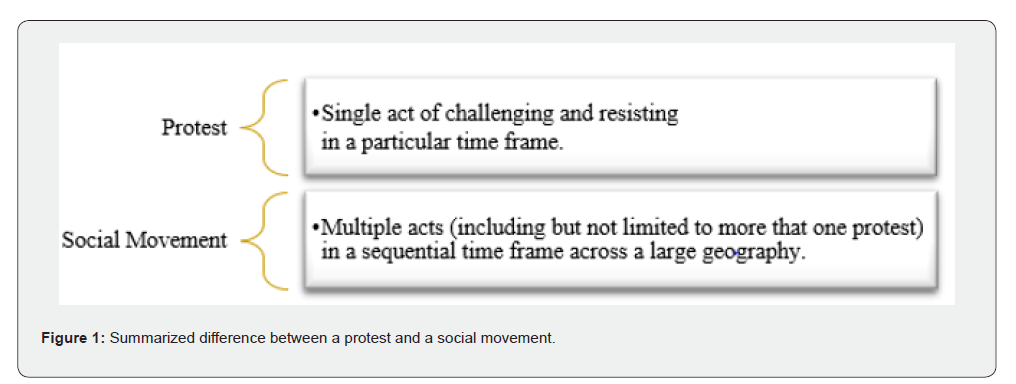
Tracking a social movement involves tracing its multiple moments of protest and organization over time and space. Each individual act of protest represents a snapshot of the time lapse of that particular movement.
i. Hence, an activist group might come to the University’s campus on a particular day, hold signs, pass out flyers, and rally support. This represents a single act of protest within a specific timeframe. In other words, a protest is a short-term manifestation.
ii. If this activist organization multiplies protests + combined with a series of other actions + within that period of time, it transforms from a short-term manifestation into a medium-term movement, also known as micro movement.
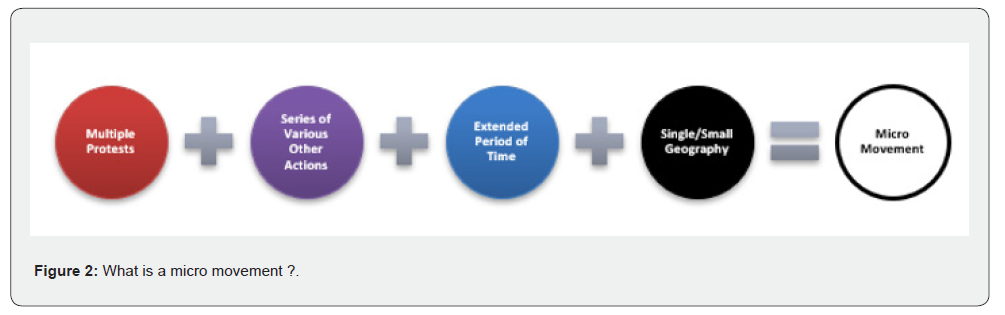
iii. After their initial campus protest, the activist group has held numerous additional protests over a significantly extended period of time. They have organized specific factions across the country and even globally. This difference in scale marks the evolution from a single (mostly spontaneous rather than planned) act into a series of organized actions over an extended and evolving timeframe, shaping into a social movement.
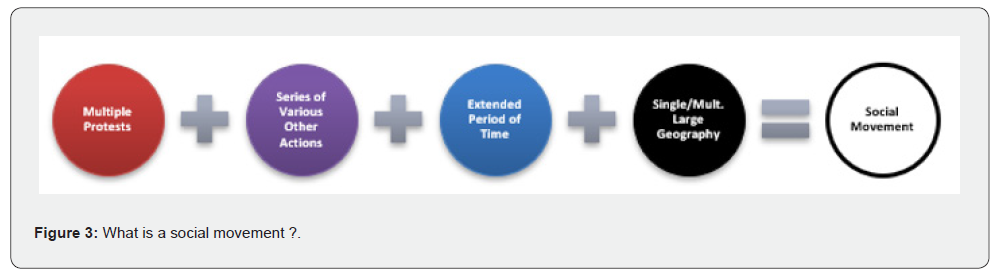
iv. Contrary to spontaneous and often chaotic protests, social movements are organized and coherent. They have a defined and steady structure, leadership, and set of goals. Occasionally, these movements can be chaotic in the sheer size of them, but these would be intentional acts. While protests are finite in time (a day or few) and eventually end, social movements transcend time to survive in the collective memory. They can thus be seen as an expression of collective action driven by a shared identity or a common goal. These movements are often driven by a shared sense of purpose or grievance, and they seek to implement or prevent changes in societal norms, policies, or structures.
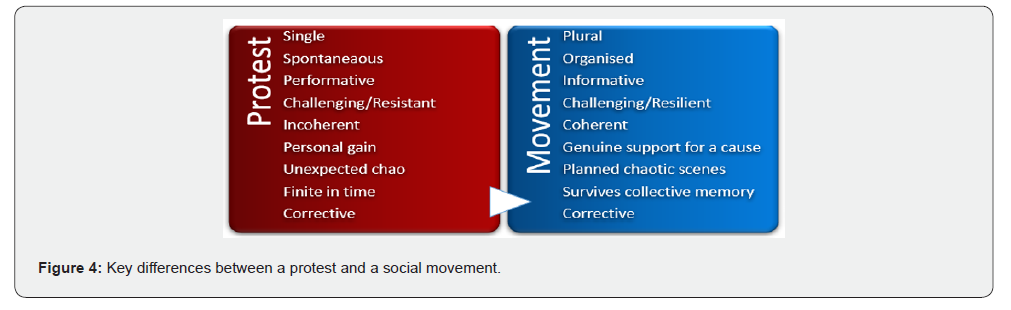
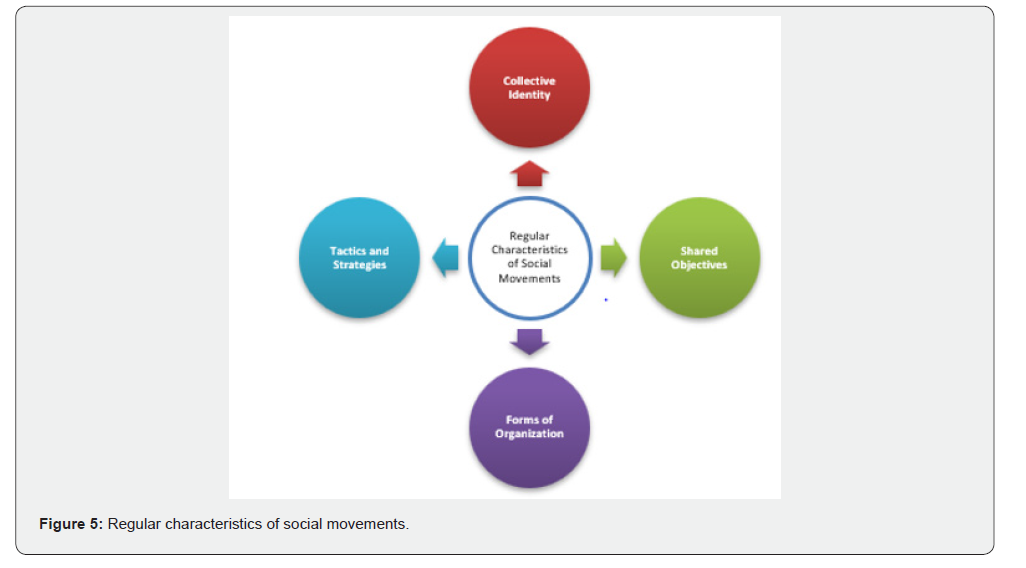
v. Typical characteristics of social movements include collective identity, where members share a common identity forged through shared experiences, common beliefs, and a sense of belonging centered around solidarity. These movements have shared objectives, as they are goal-oriented and seek to bring about or resist change in societal norms, policies, or institutions. Although very organized—with a defined structure, leadership, and set of goals—their forms of organization vary from formal hierarchical structures to fluid and decentralized networks. Maneuvers and strategies employed by social movements include demonstrations, advocacy, public awareness campaigns, dialogue, lobbying and alternative tactics that will be further discussed throughout the text. Based on the aforementioned, the term “social movement” requires a re-evaluation of its definition. A more balanced understanding of social movements should account for the interconnectedness of formal institutions and grassroots actions. Acknowledging that protests operate within and interact with institutional frameworks can lead to a more accurate and comprehensive view of their role in driving social change. They often aim to influence institutional decision-making processes, such as persuading lawmakers or prompting judicial review. Despite existing as measures of formal institutions, they can effectively create social change by coupling aspects of informal institutions to leverage public support and media attention. They can also gain legitimacy through their recognition by institutional frameworks, highlighting the multi-layered relationship between grassroots movements and formal systems. This perspective challenges the simplistic binary of institutional versus extrainstitutional actions and encourages a more integrated approach to analyzing social movements.
Alternative definitions as supplement to mainstream meanings
Social movements as “Rational Action”
It has been established that social movements are a series of multiple acts of challenging, resisting, and issuing demands upon authority.
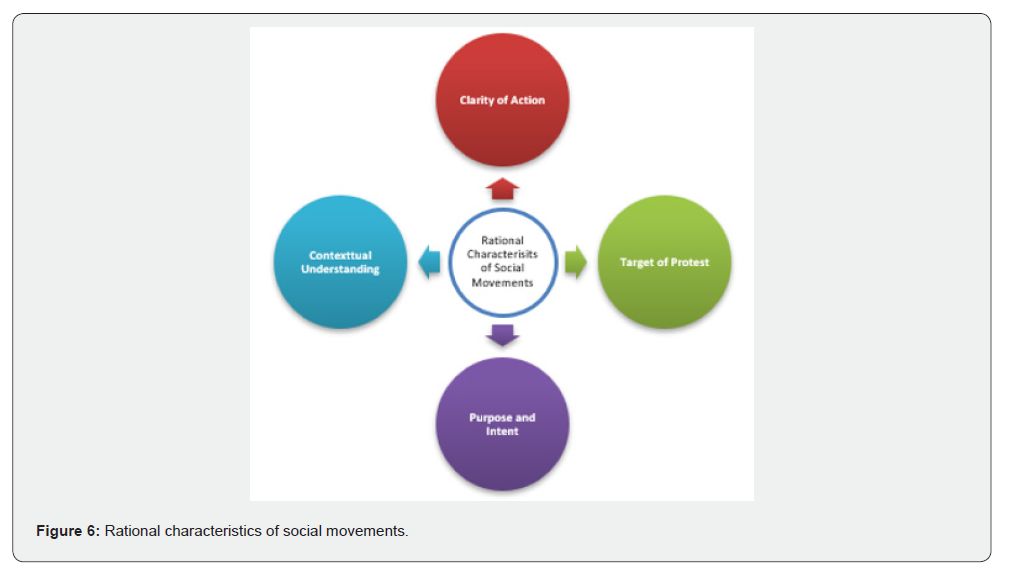
i. The rationality in this understanding of social movements lies in its (a) clear and precise inference as an active engagement—challenging, resisting, or issuing demands. You can only challenge yourself if you are aware of your right to do so and believe in it; resist if you have confidence in your ability; and issue demands if you perceive yourself as equal to the other party. These characteristics help to distinguish social movements from passive forms of dissent or disagreement.
ii. By specifying that (b) the action is directed toward authority, it highlights the power dynamics involved in social movements. It indicates that they are responses to perceived injustices or grievances arising from systemic structures established by those in power. However, if this power is challenged, and thus contestable, it suggests that “authority” is merely a construct that is “absolute” in the minds of the elite, and “conditional” in the imaginaries of the contestants.
iii. “Challenging, resisting, issuing demands” convey that the purpose of social movements is to effect change, rather than merely expressing opposition or voice discontent. This understanding of a social movement as active, targeted, and purposeful actions against a temporary authority reflects the rationality of the activists, who take decisions based on the assessment of trade-offs and stakes within their contexts.
Social movements as “Lexical Action”
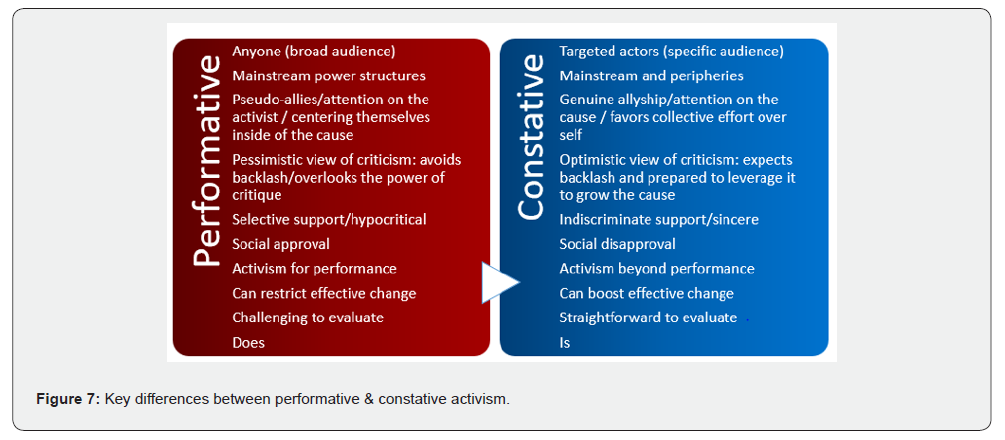
When are words just words, and when do words force action? Social movements can also be explained from a linguistic lens. Linguists divided words into two categories: constatives - words that describe a situation; and performatives - words that incite action [6,7]. A constative “is”, a performative “does” [8].
Protests embody a performative character to bring awareness and/or communicate with target audiences:
i. They are actions taken to elicit a response or reaction, in some cases, irrespective of the audience. They apply an attentionseeking strategy where gaining visibility and acknowledgment is central, potentially leading to broader support and engagement [9]. In other words, it is living for the likes; hoping not only to attract attention but also to maximize it into social capital.
ii. They are one-off actions and on a one basis instance, often used by pseudo-allies for personal convenience, to either sell an image to the target audience or avoid backlash and criticism [10].
iii. Performative activists select aspects of the cause they feel comfortable supporting, especially when the issues do not affect them personally. This can also evolve into victimization and the reversing of the problem on themselves. Selective support instantly suppresses and silences the voices of the people directly affected by the issue, thus restricting effective change from occurring [11].
iv. Evaluating their impact can be challenging, as they involve broad issues that may not have clear-cut measures of success or failure. Social movements are constative. They have clear goals, objectives and statements that are objectively evaluated and specifically channeled with an audience in mind:
v. For example, a movement advocating for a specific policy change, legal reform, or the recognition of specific rights can be assessed based on whether or not these goals are achievable and achieved. In their objective construction, they can consider leveraging elements of performative activism that have the potential to empower their cause [12].
vi. Social movements are also constative in terms of their impact on public discourse. They introduce proven but disregarded perspectives that are perceived as new. The previously-concealed information is injected into the public sphere with the intention of expanding the public’s field of view and shaping the way individuals perceive, think, and discuss specific matters. The constativity in this case lies in the observable changes in public discourse.
vii. The “constativity” of a social movement can also be assessed over the long term. While some movements may achieve immediate and tangible results (e.g. Tech and Covid-induced transformation of the traditional corporate space into its virtual replacement, TikTok phenomenon), others may contribute to more gradual and transformative changes in society (e.g. Civil rights, movement, feminism movement). Even though evaluating these long-term effects can be complex, they involve clear assessment variables such as a cultural, an institutional, or a systemic shift at a considerable scale; contrarily to a protest that would have rather an ephemeral and non-substantial effect.
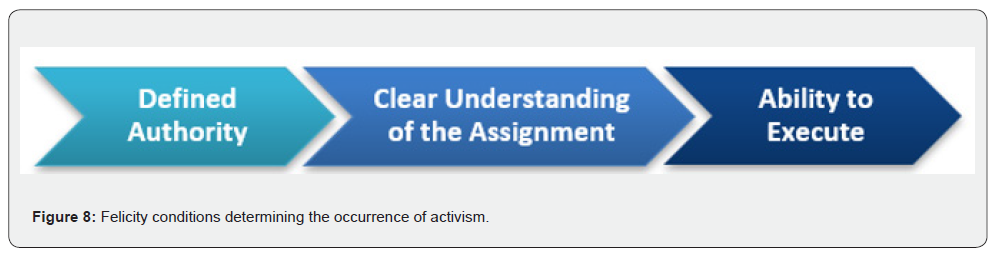
Inferring from the development above, we can therefore define social movements as consciously organized efforts by rational people to convey a message while using a mix of performative and constative tools to inspire action. The gap between performative activism (protests) and constative/constructive activism (social movement) resides within the strength or the quality of what linguist called “felicity conditions”. The latter are the necessary criteria or circumstances that need to be fulfilled for a successful and appropriate action or response: objectives should have proper authority, be clear, understood, and able to be executed [8].
Social movements are constative because their grievances are objective; there is consensus around that objectivity; and that consensus can be measured and is documented.
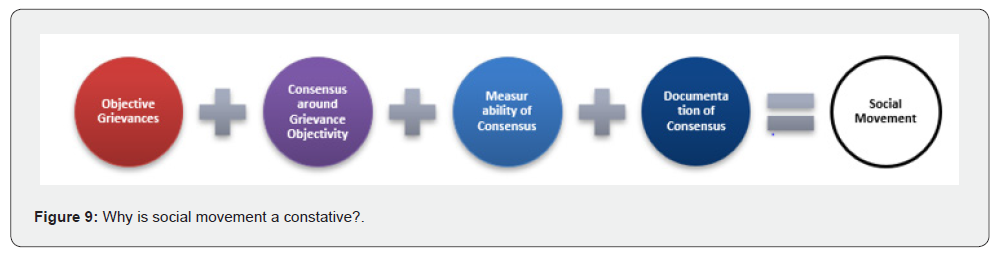
In summary, in activism, the fulfillment or lack thereof of goals/objectives and felicity conditions determines whether the response will be a protest (if unmet) or a social movement (if met).
i. If the felicity conditions are unmet, it leads to a protest. This indicates that the individuals or group feel that their needs or goals are not being addressed through conventional means, prompting them to take action in the form of protests.
ii. If the felicity conditions are met, it results in a social movement. This suggests that the conditions are favorable for organized, sustained efforts to bring about social change, leading to the formation and continuation of a social movement.

Social movement as “Peaceful Action”
Mainstream belief embeds social movements in revolution, the overthrowing of a regime of power. This traditional view of power fails to consider that power is a social construct, and as such, is subjected to varying interpretations. Based on the context, power could look like the state, monarchy, industry magnates, spiritual figures, or other types of stakeholders. Very rarely are movement activities based in overthrowing power, but rather aim at balancing it, through negotiations with perceived power, to get seats at the decision-making table.

Anarchy movements are revolutionary groups actively thinking about the dismantling of organization and structure through riots (form of civil disorder that includes violence) while social movements are organized groups actively seeking negotiation with perceived power. The first are “sites of protests” and the second are “sites of dialogue”. While social movements prefer non-violent mechanisms, anarchy movements adopt violent mechanisms through physical violence (e.g. physically harming people, burning down properties, ungoverned chaos) or psychological violence (e.g. blackmailing, kidnapping, biological warfare, cyberbullying, and other threats).
Social movement as “Top-Down or Counter Action”
Can a social movement emerge from mainstream power? Literature abundantly frames social movements in the context of a relationship between subordinate communities and traditional structures of power. Thus, positioning social movements as bottom-up configurations.
i. For instance, can an education/labor movement be initiated by the school principal or a CEO?
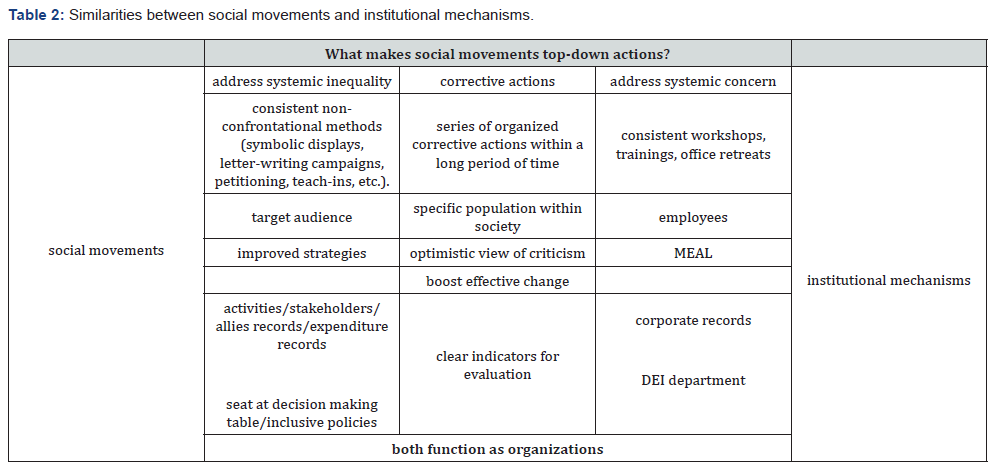
Traditional social movement scholars often would not consider movements initiated from classical places of power as true social movements. This is because these power structures are presumed to already possess regular institutional mechanisms to address their issues. Corrective actions from the top, such as improvements in organizational culture or systemic changes through DEI initiatives, have not been classified within social movements. This is an oversight. Contrarily to mainstream belief, these actions are consciously organized efforts by rational individuals that convey a message and utilize performative tools (e.g. workshops, trainings, office retreats) to inspire action. As such they are social movements.
ii. Social movements are looked at as extra institutional means to make redress happen in society. Organizational corrective actions are seen as institutional means to effect change within an entity. This distinction in definitions reveals scholarly failure in identifying the resemblances between these two types of actions. Social movements and institutional mechanisms are corrective actions by nature, and both encompass series of organized actions within a long period of time. They have a target audience: specific populations within society on one hand, and employees within an organization on the other hand. Social beings by nature, these employees are de facto also a specific population within society. Just as social movements activists expect criticism and leverage it to improve their strategies, institutional mechanisms make room for feedback, through formal tools such as reports and weekly/monthly/quarterly/yearly assessments or informal tools including various follow-up approaches or ‘‘suggestion box’’ styles encouraging employees to submit suggestions, comments, and complaints. These responses are later incorporated into monitoring, evaluation, and learning (MEAL) methods aimed at enhancing the efficacy of the intended change.
Conclusion
To conclude, social movements are defined by three key criteria: organized collective action, shared goals, and a commitment to bring about social or political change. Social movements emerge when the conditions in society are ripe for change. Movement emergence can be compared to various natural or physical processes that are inevitable under the right conditions. It can be likened to (a) magnet attraction: analogous to how a magnet irresistibly attracts iron filings, a social movement emerges when people are drawn together by a strong, common cause or
grievance. (b) seed germination: just as a seed requires water, soil, and sunlight to sprout and grow into a plant, this strong common cause or grievance emerges in response to a combination of societal needs, collective discontent, and opportune circumstances. (c) chemical reaction: when these various societal elements come into contact and interact under suitable conditions, social movements expand, similar to how certain chemicals react inevitably when combined. (d) tectonic plate movement: in the same way that tectonics movements inevitably lead to earthquakes, the shifting societal dynamics can lead to escalation, uncontrollable discharge of tension and major destructiveness. (e) clouds formation: just as clouds form naturally when warm air rises and cools, when societal tensions escalate, social movements reach a peak, until mediation occurs and a resolution is established.
References
- Burns T (1961) Micropolitics: Mechanisms of institutional change. Administrative science quarterly 6(3): 257-281.
- Touraine A (1985) An introduction to the study of social movements. Social research 52(4): 749-787.
- Whittier N (2002) Meaning and structure in social movements. Social movements: Identity, culture, and the state pp. 289-307.
- McAdam D, Tarrow S, & Tilly C (2003) Dynamics of contention. Social Movement Studies 2(1): 99-102.
- Johnston H (2013) Social movements and culture. Routledge.
- Austin JL (1962) Speech acts. In: Mey JL, Concise Encyclopedia of Pragmatics. Elsevier.
- Austin JL (1975) How to do things with words. Harvard university press.
- Boggs CG (2014) Speech acts: constative and performative.
- Rucht D (2023) Social movements: a theoretical approach. Oxford University Press.
- Ira P (2020) The Difference Between Performative Activism and Genuine Allyship.
- Morgan M (2018) Performance and power in social movements: Biko’s role as a witness in the SASO/BPC trial. Cultural Sociology 12(4): 456-477.
- Jenkins J (2020) The blurred lines between genuine allyship and performative activism.

























