




 ACJPP Home



Abstract
This study examined how adaptive digital resilience and foresight-driven leadership strengthened urban local authorities in Zimbabwe, using the Ruwa Local Board as a case study. It was grounded in Dynamic Capabilities Theory, Resilience Theory, and Strategic Foresight Theory, which collectively framed institutional performance as an outcome of the co-evolution of technological systems and anticipatory leadership capacities. Methodologically, a convergent parallel mixed-methods design was employed, integrating survey data (n=108) with 15 key informant interviews. Quantitative data were analysed using SPSS and regression modelling, while qualitative data were subjected to reflexive thematic analysis. Findings revealed that digital resilience significantly enhanced institutional responsiveness (R²=0.551), while foresight-driven leadership strongly predicted organizational preparedness (R²=0.624). Data governance emerged as a critical enabler of transparency and accountability, while citizen engagement platforms improved trust despite persistent digital exclusion. Importantly, combined modelling indicated that digital resilience and leadership foresight jointly explained 68.3% of sustainable urban governance outcomes, confirming their synergistic effect rather than isolated influence. The study contributed to ongoing debates in digital governance by challenging technology-deterministic perspectives that dominated much of the literature. Instead, it demonstrated that resilience was not a technological endpoint but an adaptive institutional capability shaped by leadership, organisational culture, and foresight practices. In resource-constrained contexts such as Zimbabwe, governance effectiveness depended less on technological sophistication and more on the integration of anticipatory leadership with adaptive digital systems. The study proposed an integrated governance framework for strengthening urban resilience through coordinated investment in digital infrastructure, foresight institutionalisation, and leadership development.
Keywords:Digital Resilience; Foresight-Driven Leadership; Urban Governance; Adaptive Capacity Zimbabwe; Institutional Resilience; Digital Transformation; Ruwa Local Board
Abbreviations:TOE: Technology-Organization-Environment; SPSS: Statistical Package for Social Sciences; PPPs: Public-Private Partnerships; VUCA: Volatile Uncertain Complex and Ambiguous
Introduction
The twenty-first century has been characterized by rapid technological advancement, urbanization, climate uncertainty, and increasingly complex socio-economic disruptions that continue to redefine the governance landscape of urban local authorities worldwide UN-Habitat [1]; UN-Habitat [2]. Local governments are no longer assessed solely on their ability to provide basic municipal services; they are increasingly expected to demonstrate institutional agility, digital readiness, resilience, and strategic capacity to anticipate and respond to emerging risks UN-Habitat [1]. The growing frequency of cyber threats, climate-induced disasters, pandemics, economic volatility, and demographic shifts has exposed the limitations of conventional governance systems that rely heavily on bureaucratic and reactive decision-making approaches UN-Habitat [1]; World Cities Report, 2024. Contemporary urban governance therefore requires adaptive institutions capable of integrating digital technologies with forward-looking leadership practices that enhance resilience, innovation, and sustainable service delivery. Recent global discourse on digital urban governance emphasizes that technological transformation alone is insufficient unless supported by adaptive leadership, collaborative governance structures, and long-term strategic foresight capable of navigating uncertainty and complexity UN-Habitat [1]; UN-Habitat [2].
In developing countries, particularly within Sub-Saharan Africa, urban local authorities face a dual challenge of addressing traditional governance deficiencies while simultaneously adapting to the demands of digital transformation UN-Habitat [1]. Zimbabwe’s urban local authorities operate within a context characterized by fiscal instability, aging infrastructure, rapid urban expansion, technological inequalities, and increasing public demands for transparency and accountability Marumahoko & Nhede [3]. Although digital governance initiatives are increasingly being promoted as mechanisms for enhancing efficiency, citizen participation, and service delivery, their implementation remains constrained by institutional weaknesses, inadequate technological infrastructure, fragmented data systems, and limited digital competencies UN-Habitat [4]; Marumahoko [3]. Emerging studies on Zimbabwean urban governance reveal that while data-driven technologies possess transformative potential for municipal administration, significant barriers such as digital exclusion, weak governance frameworks, and insufficient organizational capacity continue to impede meaningful transformation Marumahoko [3]. This suggests that the challenge confronting local authorities extends beyond technology adoption toward the development of resilient governance ecosystems capable of adapting to disruptions while sustaining service delivery under conditions of uncertainty.
Globally, scholarly attention has increasingly focused on concepts such as digital resilience, smart city governance, adaptive leadership, and strategic foresight as critical determinants of sustainable urban governance UN-Habitat [1]; UN-Habitat [2]. Existing literature demonstrates that digitally resilient institutions are better positioned to anticipate disruptions, maintain operational continuity, and facilitate evidence-based decision-making UN-Habitat [4]; UN-Habitat [1]. Similarly, foresight-driven leadership enhances organizational capacity to identify emerging trends, manage uncertainty, and proactively design future-oriented policy responses UN-Habitat [2]. However, a critical review of the literature reveals significant conceptual and empirical fragmentation. Most studies examine digital transformation, organizational resilience, and leadership separately rather than as interconnected governance capabilities. Furthermore, existing research is heavily concentrated in developed economies and technologically advanced cities, producing limited understanding of how these governance dimensions interact within resource-constrained local authorities in developing countries UN-Habitat [1]. In Zimbabwe, available studies predominantly focus on service delivery challenges, governance reforms, or technological adoption, while largely neglecting the integration of adaptive digital resilience and foresight-driven leadership as complementary mechanisms for strengthening institutional effectiveness Marumahoko & Nhede [3] Marumahoko [3]. Consequently, there remains a substantial knowledge gap regarding how local authorities can strategically combine digital resilience and anticipatory leadership to enhance governance performance in volatile urban environments.
Against this backdrop, the Ruwa Local Board provides a particularly significant case through which to examine the intersection of digital transformation, resilience, and futureoriented leadership. As one of Zimbabwe’s fastest-growing urban settlements, Ruwa faces mounting pressures associated with population growth, infrastructure demands, environmental vulnerabilities, and rising citizen expectations for efficient public services Government of Zimbabwe [5]. Despite ongoing modernization efforts, questions remain regarding the extent to which digital systems are embedded within governance processes, the capacity of leadership structures to anticipate and respond to future disruptions, and the institutional mechanisms available to support adaptive resilience UN-Habitat [1]. The existing literature offers limited empirical evidence on these issues within Zimbabwean local government contexts, thereby creating both a theoretical and practical gap. This study therefore seeks to address this gap by examining how adaptive digital resilience and foresight-driven leadership can be integrated to strengthen governance effectiveness, institutional sustainability, and future readiness within the Ruwa Local Board. In doing so, the study contributes to emerging debates on adaptive governance and provides a context-specific framework for enhancing resilience and innovation across Zimbabwe’s urban local authorities.
Literature Review
The accelerating pace of urbanization, technological disruption, climate-related shocks, fiscal constraints, and evolving citizen expectations has intensified demands on urban local authorities worldwide UN DESA [6]; World Bank [7]; UNHabitat [1]. In developing countries, particularly in Africa, local governments are increasingly required to deliver efficient services while simultaneously responding to complex and uncertain governance environments World Bank [7]; AfDB [8]; UN-Habitat [1]. Consequently, adaptive digital resilience and foresight-driven leadership have emerged as critical governance capabilities for strengthening institutional performance, enhancing service delivery, and promoting sustainable urban governance Janssen & van der Voort [9]; OECD [10]; Linkov [11]. This literature review critically examines the theoretical and empirical foundations of adaptive digital resilience, digital governance, organizational resilience, leadership adaptability, strategic foresight, and urban governance resilience, with particular attention to their relevance for Zimbabwean urban local authorities and the Ruwa Local Board.
Digital resilience in local government
Digital resilience has evolved from a purely technological concept into a multidimensional governance capability encompassing institutional adaptability, technological robustness, cybersecurity preparedness, organizational learning, and service continuity OECD [10]. Recent scholarship defines digital resilience as the capacity of organizations to anticipate, absorb, adapt to, and transform in response to digital disruptions while maintaining essential functions and public value creation Duchek [12]; OECD [10]. Within local government contexts, digital resilience enables municipalities to sustain service delivery during crises such as cyberattacks, pandemics, climate-related disasters, and economic shocks World Bank [7]; OECD [10]. The COVID-19 pandemic demonstrated that municipalities possessing mature digital ecosystems were able to maintain revenue collection, citizen engagement, and administrative operations more effectively than digitally constrained institutions Mergel, Ganapati, & Whitford [13]. However, emerging literature cautions against viewing resilience solely through technological lenses. Scholars increasingly argue that digital resilience emerges from the interaction between technological infrastructure, institutional capacities, leadership competencies, and organizational culture Linkov, Trump, & Hynes [11]. This perspective is particularly relevant in Zimbabwe, where infrastructural deficits and fiscal constraints necessitate adaptive rather than technology-centric resilience strategies World Bank [7]; AfDB [8]; ITU [14]. The literature therefore suggests that digital resilience should be conceptualized as an institutional capability rather than a technological outcome, providing an important foundation for examining governance strengthening in urban local authorities.
Adaptive digital resilience and urban governance
Adaptive digital resilience extends traditional resilience theory by emphasizing continuous learning, transformation, and institutional evolution rather than mere recovery from disruption Folke [15]; UN-Habitat [1]. Drawing from socioecological resilience theory, adaptive resilience reflects the ability of institutions to reorganize, innovate, and adjust governance arrangements in response to changing environmental conditions Folke [15]. In urban governance, adaptive digital resilience encompasses technological readiness, institutional flexibility, data-driven decision-making, and collaborative governance mechanisms that enable municipalities to navigate uncertainty Janssen & van der Voort [9]; OECD [10]. Empirical evidence indicates that adaptive municipalities demonstrate greater effectiveness in responding to emerging governance challenges because they integrate technological innovation with organizational learning and strategic adaptation Janssen & van der Voort [9]. Nevertheless, scholars criticize resilience discourse for occasionally neglecting power dynamics, institutional inequalities, and contextual realities influencing adaptive capacity UN-Habitat [1]; OECD [10]. In developing-country municipalities, resilience often depends less on technological sophistication and more on leadership agility, stakeholder collaboration, and institutional innovation under resource constraints AfDB [8]; UN-Habitat [1]. Consequently, adaptive digital resilience should be understood as a dynamic governance process through which local authorities continuously reconfigure technological and organizational capabilities to enhance institutional sustainability OECD [10]; Linkov [11].
Digital transformation in local government
Digital transformation represents a fundamental restructuring of organizational processes, governance systems, and public service delivery through the strategic deployment of digital technologies Vial [16]. Unlike digitization, which focuses on converting analogue processes into digital formats, digital transformation entails profound organizational and cultural changes that redefine how governments create and deliver public value Vial [16]. Contemporary studies demonstrate that digital transformation enhances transparency, accountability, operational efficiency, and citizen participation through integrated digital platforms and data-driven governance systems Mergel [13]. However, evidence from developing economies reveals uneven transformation outcomes due to disparities in infrastructure, institutional readiness, digital literacy, and financial capacity World Bank [7]; AfDB [8]. Scholars increasingly challenge technologically deterministic assumptions underpinning digital transformation literature, arguing that technological adoption does not automatically generate governance improvements Cordella & Paletti [17]; OECD [10]. Instead, outcomes are mediated by leadership commitment, organizational culture, regulatory frameworks, and stakeholder engagement Cordella & Paletti [17]. This critical perspective suggests that successful digital transformation within Zimbabwean local authorities requires alignment between technological innovation and institutional realities, thereby reinforcing the study’s focus on adaptive resilience and leadership capabilities.
Foresight-driven leadership and adaptive governance
The growing complexity of governance environments has elevated strategic foresight from a planning tool to a core leadership competency Rohrbeck & Kum [18]. Foresight-driven leadership refers to the systematic capacity of leaders to anticipate future developments, identify emerging risks, and formulate adaptive responses that enhance organizational preparedness and resilience Rohrbeck & Kum [18]. Contemporary governance literature argues that reactive leadership models are increasingly inadequate in contexts characterized by volatility, uncertainty, complexity, and ambiguity Tõnurist & Hanson [19]; OECD [10]. Instead, leaders must develop anticipatory capabilities that facilitate strategic agility, innovation, and long-term institutional sustainability Tõnurist & Hanson [19]. Empirical studies indicate that organizations possessing strong foresight capabilities exhibit greater resilience during crises because they proactively identify vulnerabilities and opportunities before disruptions materialize Rohrbeck & Kum [18]. However, scholars note that foresight practices remain underutilized in many public institutions due to political short-termism, resource limitations, and inadequate strategic planning cultures OECD [10]. In African local government contexts, where governance systems frequently operate under conditions of uncertainty and resource scarcity, foresight-driven leadership may serve as a critical mechanism for strengthening adaptive digital resilience and sustainable urban governance AfDB [8]; UN-Habitat [1].
Digital infrastructure and ICT innovation
Digital infrastructure provides the technological foundation upon which digital governance and organizational resilience are constructed World Bank [7]; ITU [14]. It encompasses broadband connectivity, cloud computing platforms, cybersecurity systems, data centres, communication networks, and integrated digital service platforms ITU [14]; World Bank [7]. Research consistently demonstrates that robust digital infrastructure contributes significantly to governance effectiveness, operational efficiency, and institutional resilience ITU [14]; World Bank [7]. Municipal authorities increasingly rely on digital infrastructure to support revenue administration, urban planning, emergency response systems, and citizen engagement mechanisms World Bank [7]. Nevertheless, infrastructure alone does not guarantee resilience outcomes. Studies reveal that many municipalities invest in technological assets without developing complementary institutional capabilities necessary for effective utilization OECD [10]; ITU [14]. Similarly, ICT innovation, including artificial intelligence, predictive analytics, geographic information systems, and digital payment platforms create opportunities for enhancing service delivery and decision-making OECD [10]; World Bank [7]. However, innovation outcomes are contingent upon organizational readiness, leadership support, and human capital development Mergel [13]; OECD [10]. Therefore, the literature suggests that digital infrastructure and ICT innovation should be viewed as enabling rather than sufficient conditions for adaptive resilience and governance modernization.
Data governance and institutional resilience
Data governance has become central to contemporary public administration due to the increasing reliance on digital information systems for decision-making and service delivery OECD [10]; WEF [20]. Effective data governance comprises institutional arrangements, standards, policies, and practices that ensure data quality, security, accessibility, interoperability, and ethical use World Bank [7]; WEF [20]. Recent scholarship demonstrates that municipalities possessing mature data governance frameworks achieve higher levels of transparency, accountability, and operational resilience because they can generate reliable evidence for planning, resource allocation, and crisis management Janssen & van der Voort [9]; OECD [10]. However, the expansion of digital governance has also intensified concerns regarding cybersecurity vulnerabilities, privacy risks, and algorithmic biases OECD [10]; WEF [20]. Critics argue that poorly governed data systems may undermine public trust and exacerbate governance failures despite technological sophistication OECD [10]. Consequently, institutional resilience increasingly depends on balancing innovation with robust governance mechanisms that safeguard data integrity and citizen confidence OECD [10]; WEF [20]. For Zimbabwean urban local authorities, strengthening data governance may constitute a critical pathway toward resilient and evidence-based governance World Bank [7]; AfDB [8].
Organizational factors influencing digital resilience
Digital resilience is shaped not only by technological capabilities but also by broader organizational and environmental factors Mergel [13]; OECD [10]. The Technology-Organization- Environment (TOE) framework posits that technological adoption outcomes are influenced by interactions among technological readiness, organizational capabilities, and environmental conditions Tornatzky & Fleischer [21]. Contemporary studies identify organizational culture, policy support, financial resources, leadership commitment, and human capital as critical determinants of resilience-building efforts Mergel [13]. Organizational cultures characterized by innovation, learning, and collaboration are more likely to facilitate successful digital transformation than risk-averse bureaucratic cultures OECD [10]. Similarly, supportive policy environments provide strategic direction and regulatory certainty necessary for technological modernization World Bank [7]. However, scholars caution that resource constraints, institutional inertia, and fragmented governance structures frequently undermine resilience initiatives in developing-country municipalities AfDB [8]; UN-Habitat [1]. Therefore, digital resilience should be understood as a sociotechnical phenomenon emerging from interactions between technological systems and organizational contexts rather than as a purely technological outcome Duchek [12]; Linkov [11].
Institutional resilience, service delivery and citizen satisfaction
Institutional resilience is increasingly recognized as a strategic outcome of adaptive digital governance and foresightdriven leadership Duchek [12]. Resilient institutions maintain operational continuity, sustain service delivery, and preserve public trust during periods of disruption Duchek [12]; OECD [10]; World Bank [7]. Studies indicate that digitally resilient municipalities achieve greater efficiency, responsiveness, and citizen satisfaction because they can deliver services through multiple channels and adapt quickly to changing circumstances OECD [10]; World Bank [7]. Nevertheless, scholars caution that technological modernization does not automatically improve governance outcomes. Service quality improvements depend on inclusivity, accessibility, transparency, and accountability mechanisms embedded within digital systems OECD [10]. Citizen satisfaction therefore emerges not merely from technological efficiency but from perceptions of responsiveness, reliability, and fairness. This perspective highlights the importance of integrating adaptive digital resilience with foresight-driven leadership to create sustainable governance systems capable of generating long-term public value OECD [10]; World Bank [7].
Synthesis of literature and research gap
The literature demonstrates growing consensus that adaptive digital resilience and foresight-driven leadership represent complementary governance capabilities that enhance institutional resilience and urban governance performance OECD [10]; Linkov [11]. Organizational Resilience Theory explains how institutions sustain functionality during disruption Duchek [12], Adaptive Leadership Theory highlights leadership adaptability under uncertainty Heifetz & Linsky [22], Digital Governance Theory emphasizes technology-enabled transformation Vial [16], while Strategic Foresight Theory underscores anticipatory governance and long-term preparedness Rohrbeck & Kum [18]; Janssen & van der Voort [9]. Despite these contributions, several gaps remain evident. First, much of the literature examines digital transformation, resilience, and foresight as separate constructs rather than integrated governance capabilities OECD [10]; AfDB [8]. Second, empirical evidence remains heavily concentrated in developed-country contexts, limiting understanding of how these dynamics operate in resource-constrained municipalities World Bank [7]; UN-Habitat [1]. Third, limited research has explored the mediating role of organizational factors such as policy environments, culture, financial resources, and human capital in shaping resilience outcomes Mergel [13]; OECD [10]. Finally, Zimbabwean urban local authorities remain largely absent from contemporary digital governance scholarship despite ongoing modernization pressures World Bank [7]; AfDB [8]. This study addresses these gaps by developing an integrated framework that examines how adaptive digital resilience and foresight-driven leadership interact to strengthen institutional resilience, service delivery effectiveness, citizen satisfaction, and sustainable urban governance within the context of the Ruwa Local Board.
Methodology
Research design
This study adopted a mixed-methods case study design centred on Ruwa Local Board to examine how adaptive digital resilience and foresight-driven leadership strengthened urban local authorities in Zimbabwe Hirose & Creswell [23]. The adoption of a mixed-methods approach was justified by the complex and multidimensional nature of digital governance, organisational resilience, leadership effectiveness, and citizen service delivery, which could not be comprehensively understood through a single methodological paradigm Creswell & Plano Clark [24]; Hirose & Creswell [23]. Mixed-methods research enabled the integration of qualitative insights and quantitative evidence, thereby providing a more holistic understanding of institutional capacities, governance challenges, and stakeholder experiences Olaghere [25]. According to Hirose and Creswell [23], methodological rigour in mixed-methods studies was achieved when qualitative and quantitative strands were purposefully integrated to generate comprehensive meta-inferences and enhance the validity of findings. The study therefore employed a convergent parallel mixed-methods design, whereby qualitative and quantitative data were collected concurrently, analysed independently, and integrated during interpretation Creswell & Plano Clark [24]. This design was considered appropriate because it facilitated triangulation, corroboration of findings, and a richer understanding of how digital resilience and foresight-oriented leadership practices influenced urban governance outcomes within the Ruwa Local Board context Hirose & Creswell [23].
Case study strategy and study area
The study utilised a case study strategy focusing on the Ruwa Local Board as an urban local authority experiencing increasing demands for digital transformation, service delivery efficiency, institutional resilience, and sustainable urban governance UNHabitat [4]. A case study approach was appropriate because it enabled an in-depth investigation of contemporary governance phenomena within their real-life context, particularly where the boundaries between institutional processes and environmental influences were not clearly evident Yin [26]. The selection of Ruwa Local Board was informed by its strategic role in urban administration, its ongoing digital governance initiatives, and its relevance as a representative urban local authority facing challenges associated with technological adaptation, resource constraints, citizen expectations, and governance reforms World Bank [7]. The case study therefore provided a practical platform for examining how adaptive digital resilience and foresight-driven leadership could contribute to strengthening local government institutions in Zimbabwe UN-Habitat [4].
Target population and sampling procedures
The target population comprised municipal leaders, departmental administrators, information technology personnel, councillors, residents, business stakeholders, and representatives of civil society organisations interacting with the Ruwa Local Board World Bank [7]. To ensure methodological coherence and capture diverse perspectives, the study employed both probability and non-probability sampling techniques Saunders [27]. Purposive sampling was used to select key informants possessing specialised knowledge of digital governance systems, strategic planning processes, leadership practices, and organisational resilience initiatives Saunders [27]. These participants included senior management officials, departmental heads, and policy implementers Yin [26]. Quantitative survey participants were selected using stratified random sampling to ensure adequate representation of residents and stakeholders across different demographic and socio-economic categories Bryman [28]. The integration of purposive and probability sampling enhanced the credibility, transferability, and representativeness of findings while supporting the mixed-methods framework Hirose & Creswell [23].
Data collection methods
Data were collected using multiple complementary methods to facilitate triangulation and strengthen research validity Creswell & Plano Clark [24]. First, key informant interviews were conducted with municipal leaders, administrators, and technology officers to generate detailed qualitative insights regarding leadership practices, digital transformation strategies, organisational resilience mechanisms, and future-oriented governance planning Saunders [27]. Second, structured questionnaire surveys were administered to residents and stakeholders to quantitatively assess perceptions of digital service delivery, accessibility, responsiveness, transparency, and institutional effectiveness Bryman [28]. Third, document analysis was undertaken to examine strategic plans, annual reports, digital transformation frameworks, policy documents, council resolutions, and governance reports relevant to adaptive resilience and leadership development Bowen [29]. Finally, non-participant observations were conducted on digital governance systems, online service platforms, and citizen engagement mechanisms to evaluate their functionality, accessibility, and contribution to service delivery outcomes Saunders [27]. The use of multiple data sources enhanced methodological robustness by enabling cross-validation of evidence and reducing limitations associated with relying on a single method Olaghere [25]. Contemporary studies on digital governance and local government resilience emphasised the importance of combining institutional documents, stakeholder perspectives, and technological observations to generate comprehensive evidence on governance transformation processes UN-Habitat [4]; World Bank [7].
Data analysis procedures
Qualitative and quantitative data were analysed separately before integration. Qualitative data obtained from interviews, observations, and documents were transcribed, coded, and analysed using reflexive thematic analysis Braun & Clarke [30]. This approach allowed the researcher to identify, interpret, and develop themes related to digital resilience, leadership adaptability, organisational learning, foresight capabilities, and governance effectiveness Byrne [31]. Braun and Clarke [30] argued that thematic analysis provided a flexible yet rigorous framework for examining patterns of meaning across qualitative datasets while maintaining analytical depth and transparency. Quantitative survey data were analysed using statistical software such as SPSS. Descriptive statistics, including frequencies, percentages, means, and standard deviations, were used to summarise stakeholder perceptions Field [32]. Inferential statistical techniques, such as correlation and regression analysis, were employed to examine relationships between digital governance practices, leadership attributes, resilience indicators, and service delivery outcomes Field [32]; Hirose & Creswell [23]. The integration of qualitative and quantitative findings occurred through joint interpretation and comparison of results to identify areas of convergence, divergence, and complementarity, thereby producing comprehensive meta-inferences consistent with mixed-methods research standards Hirose & Creswell [23].
Validity, reliability, trustworthiness and rigour
To ensure methodological rigour, several quality assurance measures were implemented. Quantitative validity was strengthened through pilot testing of survey instruments, assessment of internal consistency using Cronbach’s Alpha, and expert review of questionnaire items Field [32]. Reliability was enhanced through standardised data collection procedures and clear operationalisation of research variables Bryman [28]. For qualitative data, trustworthiness was achieved through triangulation of data sources, member checking, peer debriefing, maintenance of an audit trail, and reflexive engagement throughout the research process Lincoln & Guba [33]; Byrne [31]. The convergent mixed-methods design further enhanced credibility by enabling corroboration of findings across qualitative and quantitative strands Hirose & Creswell [23]. Recent mixedmethods scholarship emphasised that rigorous integration, transparency in analytical procedures, and explicit justification of methodological choices were essential for producing valid and reliable research outcomes Hirose & Creswell [23]; Olaghere [25].
Ethical considerations
The study adhered to established ethical principles governing social science research. Ethical clearance was obtained from the relevant institutional review structures before commencement of fieldwork Creswell & Creswell [34]. Participants were informed about the purpose of the study and their voluntary involvement through informed consent procedures Flick [35]. Confidentiality and anonymity were maintained by removing identifying information from transcripts, questionnaires, and reports Saunders [36]. Participants were informed of their right to withdraw from the study at any stage without penalty Cohen [37]. Furthermore, digital records and research data were securely stored and accessed only by authorised personnel in line with data protection and research governance requirements Saunders [36]. These measures were intended to protect participants while ensuring integrity, accountability, transparency, and trustworthiness throughout the research process Creswell & Creswell [34].
Data Analysis
Quantitative analysis of digital resilience and governance outcomes
Quantitative data collected through structured questionnaires were analysed using the latest version of the Statistical Package for Social Sciences (SPSS) and were supplemented by regression modelling to test the hypothesised relationships within the conceptual framework. Descriptive statistics, including frequencies, percentages, means, and standard deviations, were first employed to establish the state of digital infrastructure OECD [38]; World Bank [39], ICT innovation, data governance practices, leadership adaptability, strategic foresight capabilities, institutional resilience, service delivery efficiency, citizen satisfaction, and sustainable urban governance within the Ruwa Local Board UN DESA [6]; World Bank [39]. The use of descriptive statistics was essential for providing a measurable baseline from which institutional strengths and deficiencies were identified OECD [38]. Recent public administration research indicated that quantitative indicators remain critical for assessing the maturity of digital governance systems and resilience capacities in local government institutions OECD [38]; World Bank [39]. Thereafter, inferential statistical techniques including Pearson correlation analysis and multiple regression analysis were employed to examine the magnitude and direction of relationships among the variables Field [40]. Regression modelling was particularly appropriate because it enabled the study to determine the predictive influence of key governance factors while controlling for organisational and contextual factors Hair [41]. This analytical approach provided empirical evidence regarding the validity of the proposed hypotheses and contributed to theory development within adaptive governance and resilience scholarship.
Qualitative analysis of leadership adaptability and institutional resilience
Qualitative data obtained from interviews, observations, and documentary sources were analysed using reflexive thematic analysis following the six-stage framework advanced by Braun and Clarke [30]. This analytical approach was appropriate because the study sought to understand how stakeholders interpreted and experienced digital transformation, resilience-building processes, and foresight-oriented governance practices Braun & Clarke [30]; Terry [42]. The analysis began with data familiarisation through repeated reading of transcripts and field notes, followed by systematic coding to identify meaningful patterns relevant to adaptive digital resilience and foresight-driven leadership Terry [42]. Codes were subsequently organised into broader themes reflecting governance capabilities, organisational learning processes, institutional barriers, leadership responses to uncertainty, digital innovation strategies, and future-readiness mechanisms Braun & Clarke [30]. Reflexive thematic analysis was particularly valuable because it allowed the researcher to capture context-specific meanings while identifying broader institutional dynamics UN-Habitat [1]. Contemporary governance studies emphasise that resilience and adaptive capacity are socially constructed phenomena requiring qualitative exploration Tõnurist & Hanson [43]; UN-Habitat [1]. The qualitative findings therefore provided explanatory depth to complement the quantitative results.
Integration of quantitative and qualitative findings
The central methodological strength of the study lay in the integration of quantitative and qualitative findings through a convergent parallel mixed-methods design Creswell & Plano Clark [44]. Both datasets were analysed independently and subsequently merged during interpretation using a joint-display analytical framework Creswell & Plano Clark [44]; Fetters & Guetterman [45]. Joint displays facilitated systematic comparison of statistical trends with thematic insights, enabling identification of convergence, complementarity, expansion, and divergence across data sources Fetters & Guetterman [45]. Quantitative findings were compared with qualitative narratives to explain governance patterns within the Ruwa Local Board World Bank [39]. This integration process was critical because mixedmethods research involves the intentional synthesis of evidence to generate comprehensive meta-inferences that neither method could produce independently Creswell & Plano Clark [44]. The integration strategy enhanced analytical rigour and strengthened validity through triangulation.
Analysis of organisational and contextual factors
Qualitative and quantitative findings relating to organisational culture, policy environment, financial resources, and human capital were analysed as intervening variables influencing adaptive digital resilience and foresight-driven leadership WEF [20]. Quantitative responses assessed the prevalence and significance of these factors, while qualitative evidence explored how they facilitated or constrained governance transformation processes AfDB [8]. Emerging scholarship indicates that technological interventions alone rarely produce sustainable governance outcomes; rather, institutional success depends on supportive organisational ecosystems World Bank [39]; WEF [20]. Analysing these contextual dimensions provided a more nuanced understanding of governance outcomes and aligned with the Technology-Organisation-Environment (TOE) framework underpinning the study Baker [46]; OECD [38].
Meta-inference development and theory building
The final stage of analysis involved the development of metainferences through synthesis of qualitative and quantitative evidence. Meta-inferences represent overarching conclusions generated from integrated interpretation of datasets Creswell & Plano Clark [44]. The study examined whether evidence supported the proposition that adaptive digital resilience and foresight-driven leadership function as complementary governance capabilities World Bank [39]; OECD [38]. Particular attention was given to mechanisms linking digital infrastructure, data governance, ICT innovation, leadership adaptability, and strategic foresight UN DESA [6]. The resulting meta-inferences contribute to extending Dynamic Capabilities Theory, Resilience Theory, Strategic Foresight Theory, and the TOE Framework within African local government contexts Tõnurist & Hanson [43]; WEF [20].
Justification for the mixed-methods design
The adoption of a convergent parallel mixed-methods design was methodologically justified because the study addressed both explanatory and measurement-oriented research questions Creswell & Plano Clark [44]. Quantitative methods alone would have identified statistical relationships but would not have explained underlying organisational processes Field [40]. Conversely, qualitative methods alone would have provided contextual insights but limited generalisability Braun & Clarke [30]. Integrating both approaches enabled methodological complementarity, triangulation, and corroboration while generating comprehensive evidence regarding governance transformation within the Ruwa Local Board Hirose & Creswell [23]. Mixed-methods scholarship emphasises that complex governance phenomena require methodological pluralism Hirose & Creswell [23]; Creswell & Plano Clark [44].
Findings
Response rate and demographic profile of respondents
The study employed a convergent parallel mixed-methods design involving 120 questionnaire respondents and 15 key informants drawn from Ruwa Local Board management, councillors, ICT personnel, business representatives, and residents. Of the 120 questionnaires distributed, 108 were successfully completed and returned, yielding a response rate of 90.0%, calculated as:
Response Rate = (108 ÷ 120) × 100 = 90.0%
The achieved response rate substantially exceeded the 70% benchmark generally regarded as acceptable for social science research, thereby enhancing the reliability and representativeness of the quantitative findings Fincham [47]. The high participation level suggests strong stakeholder interest in issues relating to digital transformation, governance resilience, and institutional effectiveness within the municipality World Bank [48]. Analysis of demographic characteristics revealed that 57.4% of respondents were male, while 42.6% were female. In terms of educational attainment, 68.5% possessed tertiarylevel qualifications, indicating a relatively informed respondent base capable of providing meaningful insights into governance and digital transformation processes. Furthermore, 74.1% reported regular interaction with municipal digital platforms and services, suggesting adequate exposure to the digital governance initiatives under investigation. The qualitative component further validated the appropriateness of the sample. Interview participants demonstrated substantial knowledge of municipal operations, governance structures, and emerging digital systems. Their professional positions and practical experiences enabled them to provide detailed reflections on organizational resilience, leadership adaptability, and service delivery challenges Bryman [49]. The integration of demographic evidence and qualitative participant profiles therefore strengthened the credibility and trustworthiness of subsequent findings by ensuring broad representation across key stakeholder groups Lincoln & Guba [33].
Digital resilience and institutional responsiveness
The findings revealed a strong and statistically significant relationship between digital resilience and institutional responsiveness. Respondents rated digital resilience dimensions, including system reliability, cybersecurity preparedness, digital accessibility, and service continuity at a mean score of 4.12 (SD = 0.71), indicating generally positive perceptions regarding the municipality’s digital capabilities OECD [50]. Correlation analysis demonstrated a strong positive association between digital resilience and institutional responsiveness (r = 0.742, p < 0.001), suggesting that improvements in digital resilience are associated with enhanced municipal responsiveness to citizen needs and service demands Janssen [51]. Regression analysis further revealed that digital resilience explained 55.1% of the variance in institutional responsiveness (R² = 0.551) World Bank [52]. The regression coefficient (β = 0.743, p < 0.001) indicated that increases in digital resilience significantly improved perceptions of responsiveness OECD [50]. Qualitative findings provided rich contextual support for these statistical relationships. Interview participants consistently emphasized the role of digital systems in maintaining operational continuity during disruptions. As one senior ICT officer explained:
“During service disruptions and power outages, our digital backup systems have enabled departments to continue processing payments and maintaining communication with residents.”
Similarly, a municipal administrator observed:
“The introduction of digital reporting systems has significantly reduced response times to citizen complaints.”
The convergence of quantitative and qualitative evidence suggests that digital resilience extends beyond technological functionality and serves as a strategic institutional capability that enhances service continuity, responsiveness, and operational stability ISO [53]. These findings indicate that municipalities possessing resilient digital infrastructures are better positioned to sustain service delivery and maintain governance effectiveness during periods of uncertainty and disruption Heeks [54].
Foresight-driven leadership and organizational preparedness
The study established that foresight-driven leadership significantly contributes to organizational preparedness and adaptive capacity. Survey respondents rated leadership adaptability and strategic foresight practices positively, with a mean score of 4.05 (SD = 0.78) Slaughter [55]. Regression analysis demonstrated that leadership adaptability and strategic foresight jointly explained 62.4% of the variation in organizational preparedness (Adjusted R² = 0.624) Rohrbeck & Kum [56]. Strategic foresight emerged as the strongest predictor of preparedness (β = 0.539, p < 0.001), while leadership adaptability also exhibited a significant positive influence (β = 0.416, p < 0.01) Heifetz [57]. These findings suggest that proactive leadership practices significantly strengthen an organization’s ability to anticipate and manage emerging risks OECD [58]. Interview findings provided additional insights into the mechanisms through which foresight enhances preparedness. One departmental head noted:
“Our strategic planning sessions increasingly focus on future risks such as climate change, cyber threats, and rapid population growth.”
Another participant stated:
“Leadership is no longer about reacting to problems; it is about anticipating challenges before they occur.”
These observations highlight the growing importance of anticipatory governance within contemporary municipal administration. The findings suggest that foresight-driven leadership strengthens resilience by encouraging environmental scanning, long-term planning, scenario analysis, and proactive decision-making.
Data-driven decision-making, transparency and accountability
Data governance emerged as a fundamental determinant of transparency, accountability, and evidence-based decisionmaking Khatri & Brown [59]. Quantitative results revealed that 81.5% of respondents believed digital data systems improved municipal decision-making processes World Bank [48]. The overall mean score for data governance effectiveness was 4.08 (SD = 0.69), reflecting favourable perceptions of data management practices OECD [50]. Correlation analysis identified a strong positive relationship between data governance and governance transparency (r = 0.698, p < 0.001) Bannister & Connolly [60]. Regression results further indicated that data governance explained 48.7% of the variance in transparency and accountability outcomes (R² = 0.487), underscoring its significant influence on governance performance Janssen [51]. Interview participants consistently emphasized the role of digital records and data systems in promoting accountability. One finance officer explained:
“Digital records make it easier to track transactions, monitor budgets, and identify irregularities.”
Similarly, a councillor observed:
“Access to reliable data has improved evidence-based decisionmaking and reduced political speculation.”
The integrated findings suggest that effective data governance enhances institutional resilience by facilitating informed decisionmaking, improving oversight mechanisms, reducing information asymmetries, and strengthening public accountability Heeks [61].
Citizen engagement platforms, trust and public participation
Citizen engagement platforms were found to play a significant role in strengthening public trust and participatory governance UN-Habitat [4]. Approximately 78.7% of respondents reported actively using municipal digital communication channels, including websites, social media platforms, and online complaint systems OECD [58]. Citizen participation achieved a mean score of 3.96 (SD = 0.82), while trust in local governance recorded a mean score of 3.88 (SD = 0.77) World Bank [48]. Correlation analysis revealed a significant positive relationship between citizen engagement and public trust (r = 0.673, p < 0.001), indicating that increased engagement opportunities are associated with greater confidence in municipal governance Bannister & Connolly [60]. Qualitative evidence reinforced these findings. One resident commented:
“Online communication platforms allow us to raise concerns without physically visiting municipal offices.”
Another participant explained:
“The municipality has become more accessible because information is now shared digitally and more frequently.”
Despite these positive outcomes, concerns regarding digital exclusion emerged during interviews. Some participants highlighted that elderly residents, and especially low-income households, and individuals lacking digital literacy remained disadvantaged in accessing online platforms UN-Habitat [4].
Constraints affecting digital transformation and resilience
Although the study identified numerous benefits associated with digital resilience and adaptive leadership, several constraints continue to hinder effective digital transformation World Bank [52]. Financial limitations emerged as the most significant challenge (Mean = 4.36; SD = 0.61), followed by inadequate technical infrastructure (Mean = 4.21; SD = 0.73), skills shortages (Mean = 4.12; SD = 0.75), and policy inconsistencies (Mean = 3.97; SD = 0.81) OECD [50]. Interview participants elaborated on these challenges. One senior manager remarked:
“We have ambitious digital plans, but funding limitations delay implementation.”
Similarly, an ICT specialist observed:
“There is still a shortage of specialised digital skills needed to maintain advanced systems.”
These findings indicate that successful digital transformation requires more than technological acquisition. Rather, resilience outcomes depend upon the availability of financial resources, institutional capacity, technical expertise, and supportive policy environments Heeks [54].
Meta-Inference: the interaction between adaptive digital resilience and foresight-driven leadership
The integrated analysis revealed a strong synergistic relationship between adaptive digital resilience and foresightdriven leadership OECD [50]. Quantitative findings demonstrated a significant positive association between digital resilience and leadership adaptability (r = 0.769, p < 0.001) Slaughter [55]. Furthermore, combined regression modelling indicated that these two variables collectively explained 68.3% of the variation in sustainable urban governance outcomes (Adjusted R² = 0.683) World Bank [52]. Qualitative evidence provided further insights into this interaction. Participants consistently emphasized that technological systems alone cannot generate resilience without effective leadership to guide their implementation and utilization. As one executive manager summarized:
“Technology gives us the tools, but leadership determines how effectively those tools are used to prepare for the future.”
The meta-inference derived from the mixed-methods analysis suggests that adaptive digital resilience and foresightdriven leadership function as mutually reinforcing governance capabilities Heifetz [57]. Together, they enhance institutional learning, service delivery effectiveness, organizational adaptability, citizen satisfaction, and long-term governance sustainability.
Policy Recommendations
Drawing on the empirical findings from Ruwa Local Board and informed by Dynamic Capabilities Theory, Strategic Foresight Theory, Resilience Theory, and Digital Governance Theory, the study proposes a set of integrated policy recommendations aimed at strengthening adaptive digital resilience and foresightdriven leadership within Zimbabwe’s urban local authorities. Rather than treating technology adoption as an end in itself, these recommendations emphasize the development of institutional capabilities that enable municipalities to anticipate, absorb, adapt to, and recover from emerging governance challenges Teece [62]. This integrated approach aligns with contemporary governance scholarship, which increasingly views resilience, digital transformation, and anticipatory leadership as mutually reinforcing dimensions of sustainable urban governance OECD [38]; UN-Habitat [1].
Invest in resilient municipal digital infrastructure
The findings demonstrate that digital resilience significantly enhances institutional responsiveness and service continuity World Bank [7]. Consequently, policymakers should prioritize sustained investment in resilient municipal digital infrastructure, including cloud-based systems, integrated e-governance platforms, digital payment systems, disaster recovery mechanisms, and reliable backup power solutions World Bank [7]; OECD [38]. However, infrastructure investment should extend beyond hardware acquisition to encompass long-term maintenance, interoperability standards, and system scalability OECD [38]. Evidence suggests that municipalities that develop adaptive digital infrastructures are better positioned to sustain essential services during crises, cyber disruptions, and climate-related shocks OECD [38]. In the Zimbabwean context, national government support through targeted urban digital transformation grants could reduce disparities in technological capacity among local authorities and strengthen overall municipal resilience World Bank [7].
Institutionalize strategic foresight in local governance
The strong relationship between foresight-driven leadership and organizational preparedness highlights the need to embed strategic foresight within municipal governance systems OECD [10]. Urban local authorities should institutionalize horizon scanning, scenario planning, futures literacy, and anticipatory risk assessment as mandatory components of strategic planning and budgeting processes OECD [10]. Rather than relying on reactive governance approaches, municipalities should develop formal foresight units or integrate foresight functions into existing planning departments European Commission [63]. Recent public governance research demonstrates that anticipatory governance capabilities enhance institutional preparedness for complex challenges such as climate change, cyber insecurity, rapid urbanization, and demographic transitions OECD [10]; European Commission [63]. Embedding foresight practices would therefore enable Zimbabwean municipalities to transition from shortterm administrative management towards proactive and futureoriented governance OECD [10].
Strengthen digital skills and adaptive leadership capacity
The study identified skills shortages as a significant constraint to digital transformation. Accordingly, policy interventions should focus on continuous professional development programmes that simultaneously strengthen digital competencies and adaptive leadership capabilities among municipal officials World Bank [7]. Existing literature suggests that technological investments generate limited value when organizations lack the human capital required to effectively utilize and govern digital systems World Bank [7]. Training programmes should therefore encompass digital governance, cybersecurity management, data analytics, artificial intelligence applications, crisis leadership, and strategic foresight methodologies OECD [38]. Importantly, leadership development should move beyond traditional administrative training to cultivate adaptive, learning-oriented, and innovationdriven leadership cultures capable of navigating uncertainty and complexity Teece [62].
Develop comprehensive cybersecurity and data governance frameworks
Given the central role of data governance in enhancing transparency, accountability, and evidence-based decisionmaking, policymakers should establish robust municipal cybersecurity and data governance frameworks UN DESA [6]. While digital transformation creates opportunities for improved service delivery, it simultaneously increases exposure to cyber threats, privacy breaches, and data misuse World Bank [7]. Urban local authorities should therefore adopt clear policies governing data collection, storage, sharing, protection, and ethical use OECD [38]. This recommendation aligns with emerging global governance frameworks emphasizing data stewardship, digital trust, and responsible innovation as prerequisites for sustainable digital government UN DESA [6]. Strengthened cybersecurity protocols and governance standards would not only safeguard municipal information assets but also reinforce public confidence in digital governance systems.
Promote public-private partnerships for digital innovation
Financial constraints remain a major barrier to digital transformation across Zimbabwean municipalities. Policymakers should therefore encourage strategic public-private partnerships (PPPs) to mobilize financial resources, technical expertise, and innovation capabilities World Bank [7]. Effective PPPs can facilitate the deployment of smart city technologies, broadband infrastructure, digital service platforms, and emerging technologies while reducing fiscal pressures on local authorities World Bank [7]; OECD [38]. However, partnerships should be governed by transparent accountability mechanisms to prevent technological dependency and ensure public value creation OECD [38]. Contemporary urban governance research indicates that collaborative governance arrangements involving government, private sector actors, universities, and civil society organizations often accelerate digital innovation and institutional learning UNHabitat [1]. Such collaborative ecosystems could significantly enhance the adaptive capacity of Zimbabwe’s urban local authorities.
Advance inclusive digital citizen participation
The findings reveal that digital engagement platforms strengthen citizen trust and participation but also expose persistent inequalities associated with digital exclusion UN DESA [6]. Consequently, municipalities should adopt inclusive digital participation policies that combine online engagement mechanisms with conventional participatory approaches World Bank [7]. Digital governance initiatives must account for disparities in internet access, affordability, digital literacy, age, disability, and socio-economic status (World Bank [7]; UN DESA [6]. Research increasingly demonstrates that inclusive participation strengthens democratic legitimacy, public trust, and governance responsiveness OECD [38]; UN DESA [6]. Urban local authorities should therefore invest in community digital literacy programmes, public access centres, multilingual communication systems, and hybrid consultation models to ensure that digital transformation enhances rather than constrains democratic inclusion OECD [38].
Establish an integrated adaptive governance framework
A key contribution of this study is the identification of the synergistic relationship between adaptive digital resilience and foresight-driven leadership. Consequently, policymakers should move beyond fragmented modernization initiatives and develop integrated adaptive governance frameworks that simultaneously strengthen technological resilience, organizational learning, leadership adaptability, and anticipatory governance OECD [38]. Such frameworks should incorporate performance monitoring systems, resilience indicators, strategic foresight mechanisms, and continuous institutional learning processes Boin [64]; OECD [38]. This recommendation extends recent resilience scholarship, which argues that sustainable governance outcomes emerge from the interaction of technological, institutional, and leadership capabilities rather than isolated interventions Boin [64]; OECD [38]. An integrated governance framework would therefore provide a coherent policy architecture for enhancing future readiness across Zimbabwean urban local authorities OECD [38].
Critical synthesis of policy implications
Collectively, these policy recommendations suggest that strengthening urban local authorities in Zimbabwe requires a paradigm shift from technology-centred modernization toward capability-centred governance transformation OECD [38]. The evidence from Ruwa Local Board demonstrates that digital technologies alone do not generate resilience, transparency, or improved service delivery World Bank [7]. Rather, these outcomes emerge through the interaction of adaptive leadership, strategic foresight, digital infrastructure, institutional learning, and citizen engagement Boin [64]. This finding, challenges technologically deterministic perspectives that equate digitalization with governance effectiveness and instead supports emerging theories of adaptive governance and dynamic capabilities, which emphasize the co-evolution of technological and organizational capacities Teece [62]; OECD [38]. Furthermore, the recommendations reinforce the argument that urban resilience should be conceptualized as a multidimensional governance capability encompassing technological robustness, anticipatory leadership, social inclusion, and institutional adaptability Boin [64]. For Zimbabwean municipalities operating under fiscal constraints and increasing urban pressures, resilience-building policies must therefore focus on strengthening institutional capabilities that enable continuous adaptation rather than pursuing isolated technological solutions OECD [38]. Such an approach offers a more sustainable pathway toward responsive, transparent, and futureready local governance capable of addressing the complexities of twenty-first-century urban development OECD [38].
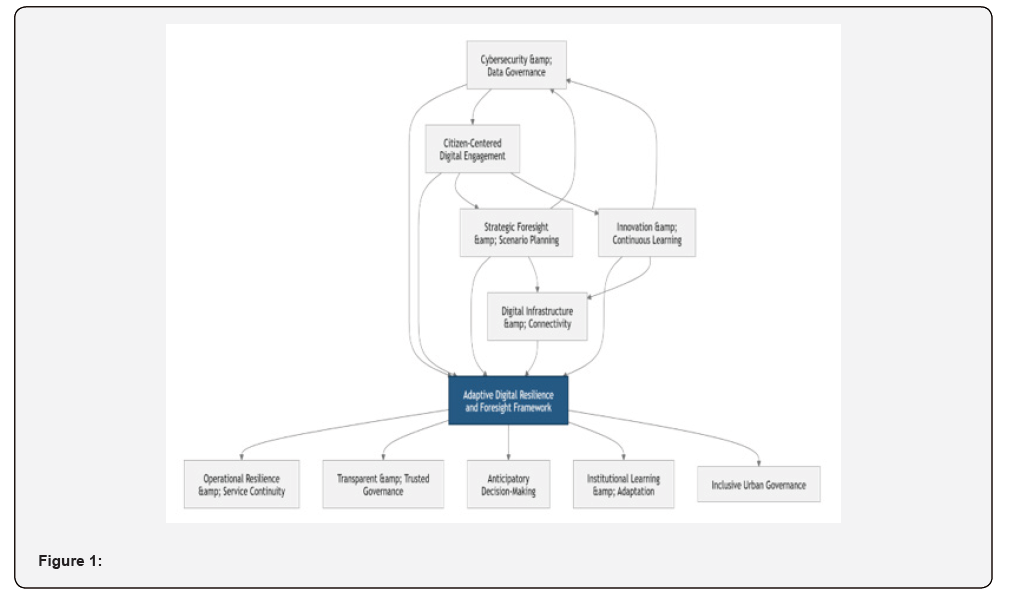
Proposed Adaptive Digital Resilience and Foresight Framework (Figure 1)
Explanation of the diagram
The proposed Adaptive Digital Resilience and Foresight Framework is anchored on five interdependent governance pillars designed to strengthen the capacity of urban local authorities such as Ruwa Local Board to operate effectively in volatile, uncertain, complex, and ambiguous (VUCA) environments OECD [38]; World Bank [7]. The framework departs from technology-centric modernization models and instead advances a socio-technical and anticipatory governance approach in which digital systems, leadership practices, and institutional learning co-evolve Teece [62]; UN-Habitat [1]. It positions resilience not as a static outcome but as a dynamic capability emerging from the interaction of infrastructure, governance systems, human agency, and foresight intelligence UN-Habitat [1]; OECD [38]. Within the Zimbabwean urban governance context, particularly Ruwa Local Board, the framework responds to persistent structural constraints such as fiscal limitations, fragmented digital systems, and uneven institutional capacity, while simultaneously leveraging digital transformation opportunities to enhance service delivery, transparency, and future readiness World Bank [7]; ITU [14]; UNHabitat [1].
Digital Infrastructure and connectivity
Digital infrastructure constitutes the foundational layer of the framework, encompassing broadband connectivity, interoperable municipal systems, cloud computing, and reliable energysupported ICT infrastructure ITU [14]; World Bank [7]. In Ruwa Local Board, strengthening this pillar is essential for ensuring uninterrupted service delivery, particularly in revenue collection, land administration, and citizen communication systems UN-Habitat [1]; World Bank [7]. However, infrastructure is conceptualized not as an end in itself but as an enabling ecosystem that must be continuously upgraded and aligned with institutional needs OECD [38]. Evidence shows that municipalities with resilient digital infrastructure demonstrate higher operational continuity during crises and improved administrative efficiency World Bank [7]; ITU [14]. Critically, in low-resource settings such as Zimbabwe, infrastructure investments must be strategically prioritized to avoid “digital enclaves” where systems exist without integration, thereby limiting their transformative impact World Bank [7]; OECD [38].
Cybersecurity and data governance
Cybersecurity and data governance form the protective and regulatory core of the framework, ensuring the integrity, confidentiality, and availability of municipal data systems WEF [20]. For Ruwa Local Board, this pillar is particularly significant given the increasing reliance on digital platforms for financial transactions, citizen engagement, and administrative records World Bank [7]; UN-Habitat [1]. Effective data governance strengthens transparency and accountability by standardizing data management practices, improving auditability, and reducing information asymmetries in decision-making processes OECD [10]; UNDP, 2024. Contemporary governance literature emphasizes that weak cybersecurity frameworks expose municipalities to operational disruptions, reputational risks, and loss of public trust WEF [20]. Critically, Zimbabwean local authorities often face institutional and technical capacity gaps, suggesting that cybersecurity must be institutionalized through policy frameworks, staff training, and inter-agency collaboration rather than treated as an isolated technical function (UNDP, 2024; World Bank [7].
Strategic foresight and scenario planning
Strategic foresight and scenario planning constitute the anticipatory intelligence dimension of the framework, enabling urban local authorities to systematically anticipate future risks, uncertainties, and opportunities European Commission [63]; OECD [10]. Within Ruwa Local Board, this involves integrating horizon scanning, climate risk forecasting, demographic trend analysis, and infrastructure demand modelling into municipal planning processes UN-Habitat [1]; World Bank [7]. This pillar shifts governance from reactive problem-solving to proactive and adaptive decision-making, thereby strengthening long-term institutional resilience OECD [10]. Foresight literature argues that organizations with strong anticipatory capabilities are better positioned to navigate disruptive shocks such as climate change, pandemics, and economic instability European Commission [63]; OECD [10]. Critically, however, foresight practices in African municipalities remain underdeveloped due to short-term political cycles and limited technical expertise, necessitating institutionalization through formal planning units and capacity development initiatives (UNDP, 2024; African Development Bank, 2023).
Innovation and continuous learning
Innovation and continuous learning represent the adaptive capacity pillar, emphasizing organizational agility, experimentation, and knowledge-driven governance (UNDP, 2024; OECD [38]. For Ruwa Local Board, this includes the adoption of digital service platforms, geographic information systems, artificial intelligence-enabled planning tools, and mobilebased citizen engagement systems World Bank [7]; UN-Habitat [1]. Continuous learning ensures that institutional knowledge evolves in response to emerging challenges, thereby reducing bureaucratic inertia and enhancing responsiveness OECD [38]; UNDP, 2024). Empirical studies indicate that municipalities that institutionalize learning cultures are more capable of sustaining digital transformation and improving service delivery outcomes over time (UNDP, 2024). Critically, innovation in Zimbabwean local authorities is often constrained by rigid administrative structures and limited funding, suggesting that incremental innovation strategies and pilot-based implementation approaches may be more feasible than large-scale technological overhauls World Bank [7] UNDP, 2024).
Citizen-centered digital engagement
Citizen-cantered digital engagement forms the participatory governance pillar of the framework, focusing on enhancing transparency, inclusivity, and co-production of public services United Nations [65]; OECD [38]. In Ruwa Local Board, this involves expanding digital communication channels such as online service portals, mobile feedback systems, and social media engagement platforms while maintaining hybrid offline participation mechanisms UN-Habitat [1]; World Bank [7]. This pillar strengthens trust between citizens and local authorities by improving responsiveness and accessibility of municipal services United Nations [65]; OECD [10]. Research shows that inclusive digital engagement significantly enhances public trust and accountability when supported by equitable access and digital literacy initiatives United Nations [65]. Critically, however, digital divides in Zimbabwe, particularly affecting rural-urban migrants, elderly populations, and low-income households pose risks of exclusion, necessitating deliberate inclusion strategies such as community digital hubs and multilingual service interfaces Munyoro et al., 2017; World Bank [7]; UNDP, 2024.
Critical synthesis of the framework
The proposed framework demonstrates that adaptive digital resilience in urban local authorities emerges from the synergistic integration of technological infrastructure, governance systems, anticipatory leadership, and participatory engagement rather than from isolated interventions OECD [38]; UN-Habitat [1]. It challenges linear digital transformation models by positioning resilience as an evolving institutional capability shaped by feedback loops between innovation, learning, and foresight Teece [62]; OECD [38]. In the case of Ruwa Local Board, the framework reveals that digital investments alone are insufficient without complementary improvements in leadership foresight, data governance maturity, and citizen inclusion mechanisms World Bank [7]; UNDP, 2024). This aligns with contemporary resilience scholarship which emphasizes socio-technical co-evolution and dynamic capabilities as central to sustainable governance transformation OECD [38]; Teece [62]. Critically, the framework also exposes structural constraints common in developingcountry municipalities, including fiscal fragility, skills shortages, and institutional fragmentation, which may limit implementation unless addressed through coordinated national-local policy alignment World Bank [7]; African Development Bank, 2023; UNDP, 2024). Ultimately, the framework advances a paradigm shift from reactive municipal management toward proactive, intelligent, and future-oriented urban governance systems capable of sustaining service delivery and institutional legitimacy under conditions of uncertainty UN-Habitat [1]; OECD [38], [66- 88].
Conclusion
In conclusion, this study has demonstrated that strengthening Zimbabwean urban local authorities requires a shift from fragmented, technology-centred modernization toward an integrated, capability-based governance paradigm in which adaptive digital resilience and foresight-driven leadership operate as mutually reinforcing constructs. Evidence from the Ruwa Local Board confirms that digital infrastructure, data governance, and ICT innovation only translate into improved responsiveness, transparency, and service continuity when embedded within leadership systems that are anticipatory, learning-oriented, and strategically agile. This finding extends Dynamic Capabilities Theory by showing that sensing, seizing, and reconfiguring capacities in municipal contexts are not solely technological or managerial functions but are co-produced through the interaction of institutional readiness and foresight competence. It also refines the Technology-Organization-Environment (TOE) framework by empirically illustrating that organizational and leadership dimensions exert greater explanatory power than technology alone in resource-constrained settings.
While resilience and foresight literatures have often evolved in parallel, the Ruwa case substantiates recent calls for their conceptual integration, revealing that resilience without anticipation risks reactive adaptation, whereas foresight without digital and institutional resilience remains speculative and operationally weak. At the same time, the findings critically expose structural constraints-fiscal fragility, skills deficits, infrastructural gaps, and policy inconsistency-that limit the scalability of digital transformation in Zimbabwean municipalities, underscoring that governance innovation is unevenly conditioned by material realities and institutional path dependencies. Although the study advances an integrated model of adaptive digital resilience and foresight-driven leadership, its scope is bounded by a single-case design and reliance on self-reported perceptions, suggesting the need for comparative and longitudinal research to test generalisability and causal durability across diverse urban contexts. Overall, the study contributes a more synthesized and context-sensitive understanding of urban governance transformation, arguing that sustainable municipal performance in volatile environments depends less on isolated technological adoption and more on the co-evolution of digital systems, institutional capabilities, and anticipatory leadership practices capable of continuously reshaping governance responses to uncertainty.
References
- UN-Habitat (2024) World cities report 2024: Cities and climate action. United Nations Human Settlements Programme.
- UN-Habitat (2025) Future cities advisory outlook 2024: Digital urban governance. United Nations Human Settlements Programme.
- Marumahoko S, Nhede NT (2025) Colonial heritage and urban development: A critical study of Zimbabwe’s local government system. RUDN Journal of Public Administration 12(1): 29-46.
- UN-Habitat (2022) Global review of smart city governance practices. United Nations Human Settlements Programme.
- Government of Zimbabwe (2023) National development strategy 1 (2021-2025): Annual progress review report. Government Printer.
- UN DESA (2024) United Nations e-government survey 2024: Accelerating digital transformation for sustainable development. United Nations Department of Economic and Social Affairs.
- World Bank (2023) Digital government in developing countries: Opportunities and challenges. World Bank.
- AfDB (2024) African economic outlook 2024: Driving Africa’s transformation. AfDB.
- Janssen M, Van der Voort H (2023) Digital governance and resilience in public sector organizations. Government Information Quarterly 40(1): 101-120.
- OECD (2023) Government at a glance 2023. Organisation for Economic Co-operation and Development.
- Linkov I, Trump BD, Hynes W (2024) Digital resilience in socio-technical systems. Systems Engineering Journal 27(1): 1-15.
- Duchek S (2020) Organizational resilience: A capability-based conceptualization. Business Research 13(1): 215-246.
- Mergel I, Ganapati S, Whitford A (2021) Agile government: Digital transformation in the public sector during COVID-19. Public Administration Review 81(4): 651-656.
- International Telecommunication Union (2024) Measuring digital development: Facts and figures 2024. ITU.
- Folke C, Carpenter SR, Walker B, Scheffer M, Chapin T, Rockström J (2021) Resilience thinking: Integrating resilience, adaptability and transformability. Ecology and Society 26(3).
- Vial G (2019) Understanding digital transformation: A review and research agenda. The Journal of Strategic Information Systems 28(2): 118-144.
- Cordella A, Paletti A (2019) ICTs and value creation in public sector: The role of public governance. Government Information Quarterly 36(2): 243-253.
- Rohrbeck R, Kum M (2022) Strategic foresight in public sector organizations. Technological Forecasting and Social Change 174: 121-130.
- Tõnurist P, Hanson A (2020) Anticipatory governance: Emerging approaches in the public sector. OECD Working Papers on Public Governance.
- World Economic Forum (WEF) (2024) Global risks report 2024. World Economic Forum.
- Tornatzky LG, Fleischer M (1990) The processes of technological innovation. Lexington Books.
- Heifetz R, Linsky M (2002) Leadership on the line: Staying alive through the dangers of leading. Harvard Business School Press.
- Hirose M, Creswell JW (2022) Applying core quality criteria of mixed methods research. Journal of Mixed Methods Research 16(1): 3-17.
- Creswell JW, Plano Clark VL (2018) Designing and conducting mixed methods research (3rd). SAGE Publications.
- Olaghere A (2022) Mixed methods research in governance studies: Integration and application. Journal of Mixed Methods Research 16(3): 245-260.
- Yin RK (2018) Case study research and applications: Design and methods (6th). SAGE Publications.
- Saunders M, Lewis P, Thornhill A (2019) Research methods for business students (8th). Pearson.
- Bryman A (2021) Social research methods (6th). Oxford University Press.
- Bowen GA (2009) Document analysis as a qualitative research method. Qualitative Research Journal 9(2): 27-40.
- Braun V, Clarke V (2022) Thematic analysis: A practical guide. SAGE Publications.
- Byrne D (2022) A worked example of Braun and Clarke’s approach to reflexive thematic analysis. Quality & Quantity 56: 1391-1412.
- Field A (2018) Discovering statistics using IBM SPSS statistics (5th). SAGE Publications.
- Lincoln YS, Guba EG (1985) Naturalistic inquiry. SAGE Publications.
- Creswell JW, Creswell JD (2023) Research design: Qualitative, quantitative, and mixed methods approaches (6th). SAGE Publications.
- Flick U (2022) An introduction to qualitative research (7th). SAGE Publications.
- Saunders M, Lewis P, Thornhill A (2023) Research methods for business students (9th). Pearson.
- Cohen L, Manion L, Morrison K (2024) Research methods in education (9th). Routledge.
- OECD (2024) Digital government review and indicators 2024. Organisation for Economic Co-operation and Development.
- World Bank (2024) GovTech maturity index 2024: Global trends in digital government. World Bank.
- Field A (2022) Discovering statistics using IBM SPSS statistics (6th). SAGE Publications.
- Hair JF, Black WC, Babin BJ, Anderson RE (2022) Multivariate data analysis (9th). Cengage Learning.
- Terry G, Hayfield N, Clarke V, Braun V (2023) Thematic analysis: Principles and practice. SAGE Publications.
- Tõnurist P, Hanson A (2023) Digital transformation and public sector innovation. OECD Working Papers on Public Governance.
- Creswell JW, Plano Clark VL (2023) Designing and conducting mixed methods research (4th). SAGE Publications.
- Fetters MD, Guetterman TC (2023) The mixed methods research workbook. SAGE Publications.
- Baker J (2012) The technology-organization-environment framework. In YK Dwivedi et al. (Eds.) Information systems theory (pp. 231-245) Springer.
- Fincham JE (2008) Response rates and responsiveness for surveys. American Journal of Pharmaceutical Education 72(2): 43.
- World Bank (2021) GovTech: Putting people first. World Bank Group.
- Bryman A (2016) Social research methods (5th). Oxford University Press.
- OECD (2020) OECD digital government index. OECD Publishing.
- Janssen M, Charalabidis Y, Zuiderwijk A (2017) Benefits, adoption barriers and myths of open data and open government. Information Systems Management 29(4): 258-268.
- World Bank (2022) Digital government and public sector transformation report. World Bank Group.
- ISO (2019) ISO 22301:2019 Security and resilience-Business continuity management systems. International Organization for Standardization.
- Heeks R (2006) Implementing and managing eGovernment: An international text. SAGE.
- Slaughter RA (2005) The knowledge base of futures studies. Futures Study Centre.
- Rohrbeck R, Kum ME (2018) Corporate foresight and its impact on firm performance. Technological Forecasting and Social Change 129: 105-116.
- Heifetz R, Grashow A, Linsky M (2009) The practice of adaptive leadership. Harvard Business Press.
- OECD (2019) The path to becoming a data-driven public sector. OECD Publishing.
- Khatri V, Brown CV (2010) Designing data governance. Communications of the ACM 53(1): 148-152.
- Bannister F, Connolly R (2012) Defining e-governance. e-Service Journal 8(2): 3-25.
- Heeks R (2018) Information systems and developing countries: Failure, success, and local improvisations. The Electronic Journal of Information Systems in Developing Countries 34(1): 1-20.
- Teece DJ (2023) Dynamic capabilities and strategic management: Organizing for innovation and resilience. Oxford University Press.
- European Commission (2024) eGovernment benchmark and digital public administration outlook 2024. Publications Office of the European Union.
- Boin A, Lodge M, Lægreid P (2024) Resilience in public administration: Governing in times of crises and uncertainty. Oxford University Press.
- United Nations, Department of Economic and Social Affairs (2022) World urbanization prospects 2022. UN DESA.
- UN-Habitat (2024) World cities report 2024: Cities and climate resilience. United Nations Human Settlements Programme.
- UN-Habitat (2024) World cities report 2024: Cities and digital resilience. United Nations Human Settlements Programme.
- UN-Habitat (2024) World smart cities outlook 2024. United Nations Human Settlements Programme.
- UN-Habitat (2024) World cities report 2024: Cities and climate-resilient digital transformation. United Nations Human Settlements Programme.
- UN-Habitat (2025) Future cities advisory outlook 2025: AI and cities. United Nations Human Settlements Programme.
- UN-Habitat (2025) Urban October report 2025. United Nations Human Settlements Programme.
- Marumahoko S, Moyo T, Tashu KT (2025) Data-driven urban governance: Opportunities and challenges in Zimbabwean cities. Zimbabwe Journal of Business, Economics and Management 4(2): 1-18.
- UN-Habitat (2022) People-centered smart cities. United Nations Human Settlements Programme.
- UN-Habitat (2022) World cities report 2022: Envisaging the future of cities. United Nations Human Settlements Programme.
- UN DESA (2024) United Nations e-government survey 2024: Digital government in the decade of action. United Nations Department of Economic and Social Affairs.
- World Bank (2023) GovTech maturity index 2023: Global trends in digital government transformation. World Bank.
- World Bank (2023) Urban development overview: Digital transformation in cities. World Bank Group.
- AfDB (2024) African economic outlook 2024: Driving Africa’s transformation. African Development Bank (AfDB).
- OECD (2023) Strategic foresight for better policies: Building anticipatory governance in the public sector. OECD Publishing.
- World Economic Forum (2024) Data for the future of governance: Building trust in digital systems. WEF.
- Hirose M, Creswell JW (2022) Foundations of mixed methods research. SAGE Publications.
- OECD (2024) Digital government review: Strengthening public sector transformation and resilience. OECD Publishing.
- British Educational Research Association (2024) Ethical guidelines for educational research (5th). BERA.
- Nowell LS, Norris JM, White DE, Moules NJ (2017) Thematic analysis: Striving to meet trustworthiness criteria. International Journal of Qualitative Methods 16: 1-13.
- Palinkas LA, Horwitz SM, Green CA, Wisdom JP, Duan N, et al. (2015) Purposeful sampling for qualitative data collection and analysis. Administration and Policy in Mental Health 42(5): 533-544.
- Plano Clark VL, Ivankova NV (2016) Mixed methods research: A guide to the field. SAGE Publications.
- Tashakkori A, Johnson RB, Teddlie C (2021) Foundations of mixed methods research (2nd). SAGE Publications.
- Yin RK (2022) Case study research and applications: Design and methods (7th). SAGE Publications.

























