




 ACJPP Home



Abstract
Inter- and transgenerational trauma has emerged as a critical framework for understanding how historical violence and structural inequalities shape psychological outcomes across generations. However, dominant trauma models remain largely Eurocentric, often neglecting African sociocultural realities and indigenous epistemologies. This study examines the role of psychology in addressing inter- and transgenerational trauma within African contexts, with a focus on integrating indigenous knowledge systems into contemporary frameworks. A qualitative literature review design was employed, drawing on interdisciplinary sources from psychology, anthropology, and African philosophy published between 2015 and 2025. Thematic synthesis and interpretive analysis were used to examine conceptualizations of trauma, mechanisms of transmission, and intervention approaches, with critical attention to epistemological biases in existing literature. Findings indicate that trauma in African contexts is fundamentally collective, historically embedded, and transmitted through intersecting psychosocial, cultural, and biological pathways. Indigenous healing systems that are grounded in spirituality, communal practices, and relational ethics, emerge as central yet underutilized resources for recovery. The analysis also reveals persistent tensions between Western clinical models and African ontologies, highlighting limitations in cultural relevance, accessibility, and theoretical scope. The study therefore concludes that a decolonized, African-centered psychological framework is essential for effectively addressing intergenerational trauma. Such a framework must integrate scientific rigour with cultural grounding, foreground community and relationality, and align healing with broader social justice imperatives. Advancing psychology in Africa requires epistemic pluralism, interdisciplinary collaboration, and the legitimization of indigenous knowledge systems to support sustainable, contextually relevant healing across generations.
Keywords:Intergenerational Trauma; Transgenerational Trauma; African Psychology; Indigenous Knowledge Systems; Decolonization; Collective Healing; Cultural Resilience; Epistemic Pluralism
Introduction
The concept of intergenerational or transgenerational trauma has gained increasing scholarly attention as researchers seek to understand how trauma extends beyond individual experience to shape the psychological, social, and biological realities of subsequent generations Kellermann [1]; Bombay [2]. Intergenerational trauma refers to the transmission of distress from individuals directly exposed to traumatic events to their descendants, even when those descendants have not experienced the original trauma firsthand Kellermann [1]; Danieli [3]. Foundational studies, particularly among descendants of Holocaust survivors, have demonstrated that trauma can persist through familial narratives, parenting patterns, and biological processes, including epigenetic modifications that alter stress responses across generations Yehuda [4]; Yehuda & Lehrner [5]. Contemporary scholarship has broadened this lens to include populations affected by slavery, genocide, forced migration, and systemic discrimination, emphasizing the multi-layered and enduring nature of collective trauma across historical contexts Sotero [6]; Mohatt [7].
In Africa, the salience of inter- and transgenerational trauma is particularly pronounced given the continent’s enduring legacies of colonialism, enslavement, apartheid, ethnic conflict, and political violence Atallah [8]; Bamford [9]. These historical disruptions are not relegated to the past; rather, they are embedded in ongoing socio-economic inequalities, identity struggles, and community dislocation Ratele [10]; Ndlovu-Gatsheni [11]. However, despite the magnitude of these experiences, African perspectives remain underrepresented within global psychological discourse. Dominant frameworks that are largely shaped by Western epistemologies tend to privilege individualistic and clinical interpretations of trauma while marginalizing communal, spiritual, and relational dimensions central to African ontologies Wilson [12]; Ratele [10]. This epistemic imbalance risks producing partial or inadequate understandings of trauma within African contexts, limiting both theoretical advancement and the effectiveness of interventions.
Emerging research suggests that trauma transmission operates through complex and intersecting pathways, including psychosocial conditioning, cultural memory, and biological embedding Yehuda & Bierer [13]; Kirmayer [14]. Yet, much of this work remains grounded in Euro-American contexts, with limited empirical and theoretical engagement with African knowledge systems and healing practices Mkhize [15]; Eagle & Kaminer [16]. Indigenous African approaches, and often emphasizing collective healing, ritual practices, spirituality, and interconnectedness, tend to offer alternative paradigms that challenge reductionist models of trauma as solely individual pathology Wessells [17]; Nwoye [18]. While there is growing recognition of the importance of culturally responsive psychology, there remains insufficient integration of indigenous epistemologies into mainstream trauma research and practice. This gap is further compounded by the historical marginalization of African scholarship and the persistence of colonial legacies within academic knowledge production Chilisa [19]; Ndlovu-Gatsheni [11].
This study addresses these critical gaps by examining the role of psychology in healing inter- and transgenerational trauma within African contexts, with particular emphasis on integrating indigenous knowledge systems into contemporary frameworks. Accordingly, it aims to critically analyse dominant models of trauma transmission and their limitations in African settings; explore indigenous African healing practices as viable and complementary approaches to trauma recovery; and propose a decolonized, culturally grounded psychological framework that aligns with African worldviews and lived realities. By foregrounding African perspectives, this study seeks to contribute to a more inclusive and contextually relevant psychology capable of addressing the enduring impacts of historical trauma and supporting sustainable healing across generations.
Literature Review
Conceptualizing inter- and transgenerational trauma
Inter- and transgenerational trauma is increasingly theorised as a multidimensional construct encompassing psychological, relational, and biological transmission processes across generations Yehuda & Lehrner [5]. Early psychoanalytic and family-systems models emphasized intrapsychic inheritance and attachment disruptions, while contemporary frameworks adopt ecological and systemic lenses that situate trauma within layered sociohistorical contexts Kellermann [1]; Yehuda & Lehrner [5]. Mechanisms such as maladaptive parenting, disrupted attachment, and trauma communication patterns remain central, yet recent advances in epigenetics suggest that biological embedding may also mediate vulnerability Yehuda [4]. However, the relative contribution of these pathways remains contested, with critics cautioning against reductionist biological determinism that overlooks structural violence and lived experience Fassin [20]. Despite conceptual advances, much of the empirical literature is grounded in Euro-American and Holocaust-survivor populations, raising questions about crosscultural validity Kirmayer [21]. Instruments such as the Historical Intergenerational Trauma Transmission frameworks have limited validation in African contexts, where trauma is often collective, historically embedded, and mediated through communal identity WHO [22]. This highlights a critical epistemological gap and the need for contextually grounded conceptualizations that integrate African sociocultural realities, including colonial legacies and ongoing structural inequalities, rather than retrofitting Westernderived models.
Historical and socio-political contexts in africa
African experiences of intergenerational trauma are inseparable from histories of colonialism, racialized oppression, and mass violence African Union [23]. The enduring psychosocial legacy of Apartheid continues to shape identity formation and relational dynamics among South Africa’s “born-free” generation, often manifesting as unresolved grief and intergroup mistrust Ratele [10]; Gobodo-Madikizela [24]. Similarly, the Rwandan Genocide has produced measurable trauma symptoms among post-genocide youth, demonstrating how collective trauma persists beyond direct exposure Richters [25]. These examples underscore that trauma in African contexts is not merely individual but deeply collective and historically situated. However, global trauma scholarship has been critiqued for universalizing Western frameworks that inadequately capture African sociocultural complexities Kirmayer [21]; Gone [26]. Studies on displaced and refugee populations in Southern Africa reveal “intergenerational trajectories of vulnerability” shaped by ongoing marginalization, gender-based violence, and precarious legal status Betancourt [27]. Such findings call for African-centred epistemologies that foreground collective memory, sociopolitical disruption, and culturally embedded coping systems, rather than relying solely on individualized diagnostic paradigms.
Psychological mechanisms and pathways of transmission
The transmission of trauma occurs through intersecting psychological and relational pathways, particularly within family systems Kellermann [1]; Yehuda & Lehrner [5]. Empirical studies in Rwanda demonstrate that parental post-traumatic stress influences offspring outcomes through mediators such as caregiving practices, emotional regulation, and communication styles Ng [28]. In South Africa, research on prenatal stress linked to historical trauma indicates increased susceptibility to later mental health challenges, pointing to a biopsychosocial interplay in trauma transmission Tomlinson [29]. These findings reinforce the importance of integrating developmental and ecological perspectives in understanding intergenerational trauma known as developmental psychology. Thus, beyond the family, broader socio-structural conditions such as forced migration and chronic instability intensify transmission processes Tomlinson [29]; Kirmayer [21]. Research among Eritrean asylum-seeking families highlights how complex trauma manifests within mother-child dyads under conditions of prolonged uncertainty Tomlinson [29]; Kirmayer [21]. Nevertheless, the prevailing literature remains disproportionately deficit-oriented, privileging pathology over resilience known as resilience theory. This imbalance obscures adaptive coping mechanisms and community-based resilience strategies that are central to many African contexts, thereby limiting a holistic understanding of trauma and recovery.
Intervention approaches and the role of psychology
Interventions addressing intergenerational trauma in Africa are gradually shifting from individualistic, clinic-based models toward community-oriented and culturally responsive approaches WHO [22]. In South Africa, integrative practices combining individual therapy, family systems work, and group interventions have shown promise, particularly when practitioners adopt reflexive and context-sensitive frameworks Gobodo-Madikizela [24]. However, many such interventions remain anchored in Western therapeutic paradigms, raising concerns about accessibility, cultural congruence, and sustainability in low-resource settings (Patel et al., 2023). Thus, emerging approaches emphasize the integration of indigenous knowledge systems and creative modalities Gone [26]. Arts-based and embodied interventions in rural communities, for instance, leverage collective participation and cultural expression to facilitate healing and meaning-making Chingota [30]. While these models challenge the dominance of Western individual therapy, their empirical evaluation remains limited, particularly regarding scalability and long-term outcomes (Patel et al., 2023). This reveals a critical gap between innovation and evidence, underscoring the need for rigorous, contextually grounded intervention research.
Toward an african-centred psychological framework
There is growing scholarly consensus on the need for Africancentred psychological frameworks that integrate indigenous epistemologies, spirituality, and communal values known as African psychology. Philosophical constructs such as Ubuntu emphasize interconnectedness, collective responsibility, and transgenerational continuity, offering a powerful lens for rethinking trauma and healing Mugumbate & Chereni [31]. Similarly, indigenous healing systems foreground relationality and community as both sites of harm and sources of resilience, aligning with global movements toward decolonizing psychology Gone [26]. However, the literature reveals persistent tensions between global psychological models and local knowledge systems Gone [26]; Osei-Tutu [32]. While hybrid approaches are increasingly emerging, there is limited theoretical integration and empirical validation of such models within African contexts Gone [26]; Osei-Tutu [32]. This gap constrains the development of a pluralistic psychology capable of addressing the complexity of intergenerational trauma, highlighting the need for frameworks that are both scientifically rigorous and culturally grounded.
Research gaps and future directions
Despite expanding scholarship, significant gaps remain. First, there is a paucity of longitudinal and multigenerational studies in African contexts, limiting insight into how trauma evolves and is transmitted over time Kirmayer [21]. Second, research is geographically concentrated in countries such as South Africa and Rwanda, leaving large regions underrepresented (Patel et al., 2023). Third, indigenous knowledge systems are insufficiently integrated into empirical research, resulting in interventions that may lack cultural resonance and community legitimacy Osei-Tutu [32]. Methodologically, the field is constrained by small sample sizes, cross-sectional designs, and an overreliance on deficit-based narratives. Accordingly, future research must prioritize resilience, post-traumatic growth, and community healing processes, while adopting interdisciplinary and participatory methodologies. Therefore, advancing the field will require a deliberate commitment to epistemic pluralism and the decolonization of psychological science in Africa.
Therapeutic Mediators in Traditional African Societies
Ancestors and cosmology
Across many African worldviews, ancestors function as active mediators between the material and spiritual realms, shaping moral order and psychosocial wellbeing Machinga & Banda [33]; Chingota [30]. Foundational work by John S. Mbiti conceptualizes ancestors as integral to a non-linear temporality in which past, present, and future coexist Mbiti [34,35]; Kanu [36]. This ontological framework enables trauma to be understood as embedded within lineage and collective memory, rather than confined to individual experience Nwoye [37]; Kamanzi [38]. Contemporary scholarship further suggests that ancestral cosmologies provide culturally resonant systems for meaningmaking, particularly in contexts marked by historical violence and displacement WHO [22]; Mhaka-Mutepfa [39]. However, integrating these cosmologies into formal psychological practice remains uneven. In pluralistic health systems such as those in Zimbabwe and South Africa, tensions persist between biomedical and spiritual paradigms Chingota [30]; African Union [23]. While neglecting ancestral frameworks risks epistemic marginalization, uncritical incorporation may obscure internal power dynamics, including gendered exclusions in ritual authority Kanyoro [40]; Ndlovu [41]. A nuanced approach is therefore required to position ancestors as therapeutic mediators without romanticizing tradition Ratele [10]; Mhaka-Mutepfa [39].
Communal healing practices
Healing in African contexts is fundamentally relational, emphasizing communal participation and collective restoration Nwoye [37]; Moyo & Sodi [42]. Rituals such as ukuthwasa and kurova guva function as culturally embedded mechanisms for restoring equilibrium across social and spiritual domains Chitando & Machinga [43]; Mapuranga & Mazambara [44]. These practices reframe distress as a disruption in relational networks rather than individual pathology, aligning with systemic approaches to mental health Moyo & Sodi [42]. Empirical evidence from postconflict settings, including Rwanda, indicates that communal rituals facilitate collective processing of trauma and foster social cohesion Richters [25]; United Nations [42]. Nonetheless, critical analysis reveals limitations as such practices may marginalize dissenting individual experiences and may be unequally accessible, particularly along gender and class lines Kamanzi [38]; Ndlovu [41]. Integrating communal healing into contemporary psychology therefore requires adaptive frameworks that retain relational strengths while addressing inclusivity and individual variability Moyo & Sodi [42]; Mhaka-Mutepfa [39].
Preservation of social harmony
Traditional African healing systems prioritize the restoration of social harmony as both process and outcome, with ancestors serving as moral arbiters Nwoye [37]; Chingota [30] This orientation resonates with restorative justice approaches, as exemplified in post-apartheid reconciliation processes in South Africa, particularly through the Truth and Reconciliation Commission Gobodo-Madikizela [24]. Healing is thus conceptualized not only as symptom reduction but as the reestablishment of moral and relational order. Yet, the emphasis on harmony can obscure structural determinants of trauma, including systemic inequality and political violence Ratele [10]. Critics argue that prioritizing cohesion may lead to premature reconciliation without adequate accountability Ratele [10]; Ndlovu [41]. This tension underscores the need to balance culturally grounded practices of reconciliation with justice-oriented frameworks that address root causes of intergenerational harm Gobodo-Madikizela [24]; UNDP [46].
Foundations of African Psychology
Holism and interconnectedness
African psychology is grounded in a holistic ontology that situates mental health within interconnected domains of body, mind, community, and spirituality Mkhize [15]; Ratele [10]; Osei- Tutu [32]. Scholars such as Nhlanhla Mkhize emphasize dynamic balance across these domains as central to wellbeing Mkhize [15]. This perspective aligns with global shifts toward ecological and trauma-informed frameworks that recognize the role of social determinants and historical context Gone [26]; WHO [22]. However, translating holistic principles into formal mental health systems remains challenging. Policy frameworks in countries such as Ghana and Kenya increasingly acknowledge cultural dimensions of care, yet implementation is hindered by resource constraints and epistemological hierarchies privileging Western models Mutiso [47]; Osei-Tutu [32]. This highlights a critical gap in operationalizing holism within scalable, evidence-based interventions, particularly in low-resource settings Patel [48]; WHO [22].
Ubuntu and transgenerational ethics
The philosophy of Ubuntu provides a relational ethical framework that extends moral responsibility across generations Ramose [49]; Mugumbate & Chereni [31]. Scholars such as Nyasha Mugumbate conceptualize Ubuntu as linking individual wellbeing to collective and ancestral continuity Mugumbate & Chereni [31]. Within trauma discourse, this reframes healing as a shared ethical obligation to repair relational ruptures across time, including intergenerational trauma shaped by colonialism and structural violence Kirmayer [21]; Gone [26]. Nonetheless, Ubuntu is not without critique. Some scholars caution against its essentialization and political co-option, noting contextual variability and potential limitations in addressing intra-community inequalities Matolino & Kwindingwi [50]. Future research must therefore engage Ubuntu critically, ensuring its application is context-sensitive and responsive to contemporary sociopolitical realities, particularly in rapidly urbanizing African societies Ratele [10]; Osei-Tutu [32].
Critique of western models
A central critique in African psychology concerns the inadequacy of Western diagnostic frameworks to capture culturally specific experiences of distress Summerfield [51]; Nwoye [37]; Ratele [10]. Phenomena such as spirit possession or ancestral calling are often pathologized within systems like the DSM, despite their cultural legitimacy Nwoye [37]; Kirmayer [21]. This critique aligns with broader decolonial calls for epistemic plurality and the recognition of indigenous knowledge systems Mbembe [52]; De Sousa Santos [53]. At the same time, rejecting Western models entirely risks overlooking their empirical contributions. Emerging integrative approaches, such as culturally adapted cognitivebehavioural therapies in Uganda and Nigeria, demonstrate the potential for hybrid models that combine scientific rigor with cultural relevance Murray [54]; Bolton [55]. The key research gap lies in developing and validating such integrative frameworks within African contexts while ensuring they remain accessible, scalable, and locally grounded Patel [48]; WHO [22].
Theoretical and Conceptual Framework
Theoretical foundations of inter- and transgenerational trauma
The theoretical grounding of inter- and transgenerational trauma is anchored in an integrative synthesis of psychodynamic, family systems, ecological, and biopsychosocial perspectives Danieli [56]; Kellermann [57]. Early psychoanalytic formulations emphasized unconscious transmission through identification and unresolved grief, while family systems theory expanded this lens to include relational dynamics, attachment disruptions, and patterns of silence or overexposure in trauma communication Bowen [58]; Felsen [59]. Contemporary ecological models, particularly those influenced by Bronfenbrenner’s framework, situate trauma within multilayered sociohistorical contexts, underscoring the interplay between individual, familial, and structural forces Bronfenbrenner [60]; Ungar [61]. Importantly, advances in epigenetics have introduced a biological dimension, suggesting that trauma may alter gene expression related to stress regulation, thereby contributing to intergenerational vulnerability Yehuda [4]; Yehuda & Lehrner [5]. However, these dominant frameworks remain largely rooted in Euro-American epistemologies, often privileging individual pathology and under-theorizing collective, spiritual, and historical dimensions of trauma, thereby limiting their explanatory power in African contexts Nwoye [18]; Ratele [10] (Figure 1).
This analysis does not claim that insecurity is the sole cause of Nigeria’s economic fragility. Such a claim would be too broad and empirically careless. Inflation, exchange rates, fuel prices, climate shocks, subsidy reform, weak productivity, infrastructure deficits, policy uncertainty, and global market pressures all remain important. The article’s narrower claim is that these pressures are intensified where public authority cannot secure the productive base. Macroeconomic reform may adjust incentives, prices, revenues, and capital signals, but reform becomes socially fragile where farms are unsafe, pipelines are vulnerable, roads are feared, enforcement is weak, and citizens distrust state protection. The wider implication for African political economy is that recovery in security-stressed states cannot be understood through macroeconomic reform alone. Many African states are not collapsed, but they are unevenly protective. They may maintain elections, ministries, budgets, courts, central banks, police forces, and reform programmes while struggling to secure rural production, critical infrastructure, market mobility, enforcement credibility, and public trust. In such contexts, recovery may appear in aggregate indicators while remaining weak in lived economic reality. Nigeria therefore illuminates a broader problem: economic reform depends on public authority over the productive base. Where the state cannot make economic life safely possible, recovery remains fragile. The question is not only whether a government can stabilise prices, exchange rates, revenues, and reserves. It is also whether citizens can farm, travel, trade, invest, and live under credible protection. That is the political economy of productive protection.
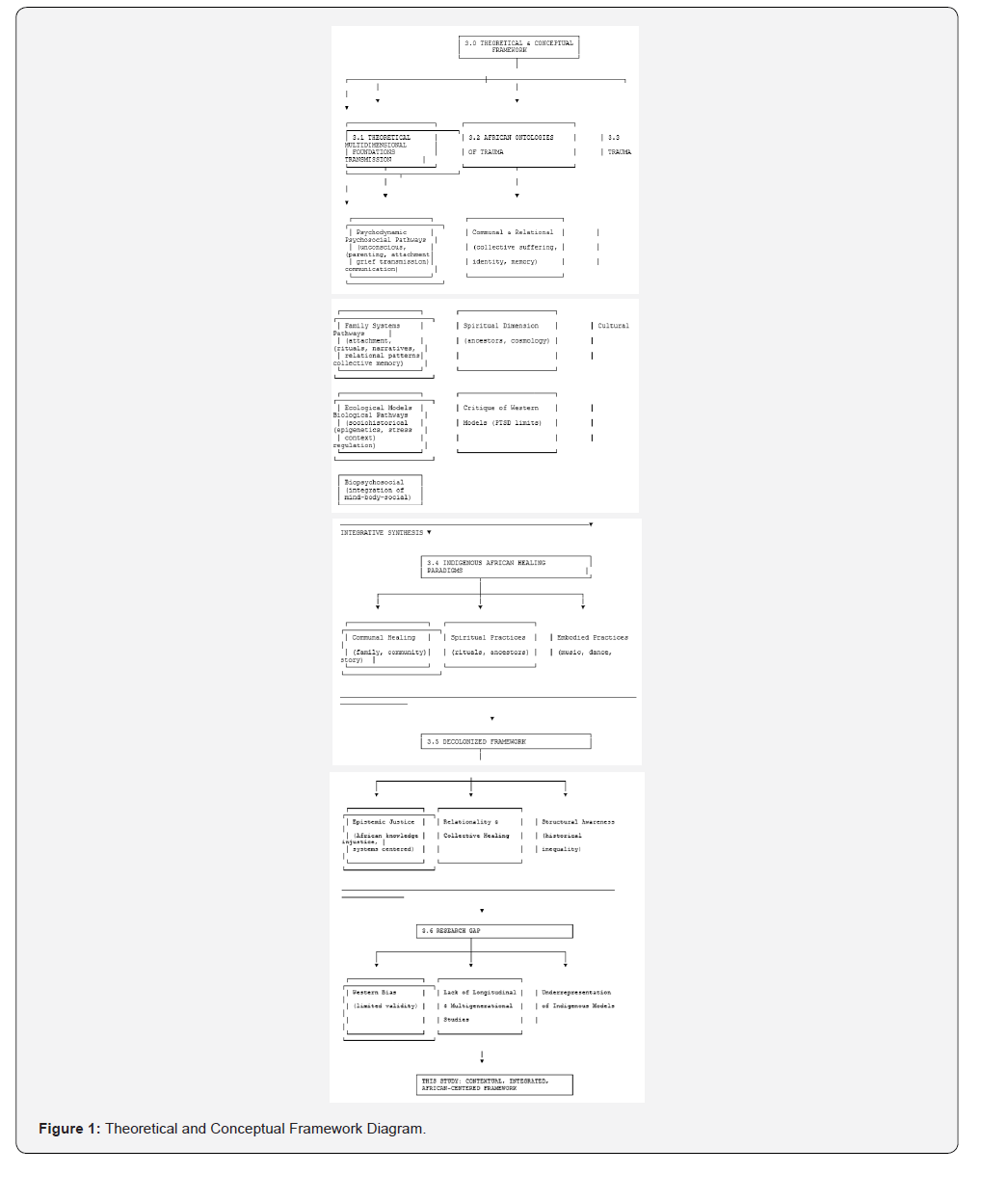
Conceptualizing trauma within african ontologies
Within African epistemological frameworks, trauma is not solely an intrapsychic disturbance but a disruption of relational, communal, and spiritual equilibrium Mkhize [15]; Nwoye [18]. African ontologies emphasize interconnectedness between individuals, communities, ancestors, and the spiritual realm, thus conceptualizing distress as embedded within a broader moral and cosmological order Mbiti [34]; Murove [62]. This perspective challenges reductionist biomedical models by foregrounding collective suffering, historical continuity, and the moral significance of social rupture Kirmayer [14]; Ratele [10]. Scholars argue that Western diagnostic categories such as PTSD may inadequately capture these dimensions, as they often exclude culturally salient expressions of distress and healing Summerfield [51]; Ratele [10]. Consequently, an African-centred conceptualization reframes intergenerational trauma as a communal and historically situated phenomenon, transmitted not only through family systems but also through collective memory, cultural narratives, and disrupted identities Nwoye [18]; Munyoro [63]. This shift is critical for developing culturally congruent theoretical models that resonate with lived realities across diverse African contexts Patel [48].
Pathways of trauma transmission: a multidimensional model
A robust conceptual framework for inter- and transgenerational trauma in Africa necessitates a multidimensional model integrating psychosocial, cultural, and biological pathways Kellermann [57]; Yehuda & Lehrner [5]. Psychosocial mechanisms include parenting practices, attachment patterns, and communication styles, through which trauma is internalized and reproduced across generations (Van IJzendoorn [64]; Danieli [56]. Cultural pathways involve the transmission of collective memory, often encoded in oral traditions, rituals, and social norms that preserve historical consciousness Hirsch [65]; Eyerman [66]. Biological embedding, particularly through epigenetic modifications, provides an additional layer, suggesting that trauma exposure may recalibrate stress-response systems across generations Yehuda [4]. However, the relative contribution and interaction of these pathways remain contested, with critics cautioning against biological determinism and emphasizing the primacy of sociocultural context Kirmayer [14]; Richardson [67]. In African settings, where ongoing structural inequalities and historical injustices persist, these pathways are not discrete but mutually reinforcing, necessitating a holistic and context-sensitive analytical approach Patel [48]; Munyoro [63].
Indigenous african healing paradigms as theoretical resources
Indigenous African healing systems offer critical theoretical resources for reimagining trauma recovery beyond Western clinical paradigms Mkhize [15]; Nwoye [18]. These systems are grounded in communal practices, spirituality, ritual, and embodied forms of knowledge, emphasizing restoration of harmony rather than symptom reduction Mbiti [34]; Murove [62]. Healing is often collective, involving family, community, and spiritual intermediaries, and is enacted through culturally embedded practices such as storytelling, music, dance, and rites of passage Wreford [68]; Chingandu & Chingandu [69]. Such approaches align with relational worldviews and provide mechanisms for meaning-making, social cohesion, and resilience Kirmayer [14]; Patel [48]. Despite their relevance, these paradigms remain marginal within mainstream psychological theory, often dismissed as non-scientific or relegated to the periphery of research Nwoye [18]; Ratele [10]. Thus, integrating these knowledge systems into contemporary frameworks requires epistemological openness and methodological innovation, challenging the dominance of positivist paradigms while maintaining rigorous standards of inquiry Munyoro [63].
Toward a decolonized psychological framework
A decolonized theoretical framework for addressing inter- and transgenerational trauma in Africa must move beyond additive models that merely incorporate cultural elements into existing Western paradigms Ndlovu-Gatsheni [70]; Ratele [10]. Instead, it requires a fundamental reconfiguration of psychological theory to centre African epistemologies, values, and lived experiences Mkhize [15]; Nwoye [18]. This involves recognizing the historical entanglement of psychology with colonial knowledge production and actively dismantling epistemic hierarchies that marginalize non-Western perspectives Fanon [71]; Ndlovu-Gatsheni [70]. A decolonized framework emphasizes relationality, collective healing, and sociopolitical accountability, positioning trauma not only as a psychological phenomenon but also as a consequence of structural violence and historical injustice Kirmayer [14]; Patel [48]. Such an approach aligns with emerging calls for epistemic justice and global mental health equity, yet remains underdeveloped in empirical and theoretical terms, particularly within African scholarship Munyoro [63].
Articulating the research gap
Despite increasing recognition of inter- and transgenerational trauma, significant theoretical and empirical gaps persist, particularly in African contexts Kirmayer [14]; Patel [48]. Existing frameworks are predominantly derived from Western populations, raising concerns about cultural validity and conceptual adequacy when applied to African settings Summerfield [51]; Ratele [10]. There is limited integration of indigenous knowledge systems into formal psychological theory, resulting in fragmented or superficial models that fail to capture the complexity of African experiences Munyoro [63]. Furthermore, the literature lacks longitudinal, multi-generational studies that examine the dynamic interplay of biological, psychosocial, and cultural factors over time Yehuda & Lehrner [5]. The dominance of deficit-oriented narratives also obscures resilience, adaptive coping, and community-based healing practices Ungar [61]; Chingandu & Chingandu [69]. Addressing these gaps requires a paradigmatic shift toward interdisciplinary, culturally grounded, and methodologically diverse research that foregrounds African voices and knowledge systems Ndlovu-Gatsheni [70]; Patel [48]. This study responds to this need by proposing a theoretically integrated and contextually relevant framework for understanding and addressing inter- and transgenerational trauma in Africa.
Methodology
Research design
This study adopts a qualitative literature review design to critically interrogate the conceptual, theoretical, and empirical foundations of inter- and transgenerational trauma within African contexts Sotero [6]; Mohatt [7]; Makhubela [72]. Qualitative literature review is particularly suited to synthesizing dispersed interdisciplinary knowledge and generating nuanced, contextually grounded insights that extend beyond positivist generalizations Torraco [73]; Snyder [74]. In line with contemporary qualitative synthesis approaches, the design privileges interpretive depth over aggregation, enabling the study to interrogate how trauma is constructed, transmitted, and potentially healed across generations within sociohistorical and cultural contexts Levac [75]; Braun & Clarke [76]. This is essential given that intergenerational trauma is not merely an individual psychopathological phenomenon, but a relational and collective process embedded in historical violence, coloniality, and sociocultural disruption Gone [77]; Kirmayer [14]; Mignolo [78].
Data Sources and search strategy
A systematic and iterative search strategy was employed across major scholarly databases, including Scopus, Web of Science, and Google Scholar, to ensure comprehensive coverage of peerreviewed literature Page [79]. Keywords such as intergenerational trauma, transgenerational trauma, African psychology, indigenous healing, historical trauma, and decolonization were used in various Boolean combinations Denham [80]; Gone [81]. The search prioritised publications from 2015 to 2025 to capture recent developments while also incorporating seminal works where necessary for conceptual grounding Sotero [6]; Kirmayer [14]. This strategy reflects best practices in qualitative reviews, where breadth and theoretical saturation are prioritised over statistical representativeness Booth [82]; Snyder [74]. Importantly, the search process was reflexive and iterative, allowing emerging themes such as culturally embedded expressions of trauma and collective healing to refine subsequent searches, consistent with qualitative knowledge synthesis traditions Noblit & Hare [83]; Thomas & Harden [84].
Inclusion, exclusion, and selection criteria
Inclusion criteria focused on peer-reviewed articles, systematic reviews, and theoretically robust papers addressing intergenerational or historical trauma, particularly within African or comparable Indigenous and postcolonial contexts Munyoro [85]; Mohatt [7]; Gone [81]. Studies were included if they engaged with psychological, sociocultural, or interdisciplinary perspectives on trauma transmission and healing Kirmayer [14]; Munyoro [85]; Makhubela [72]. Exclusion criteria eliminated purely biomedical or neuro-reductionist studies that lacked sociocultural contextualisation, as well as non-scholarly sources Summerfield [51]; Gone [77]; Munyoro [85]. The selection process involved an initial screening of titles and abstracts, followed by full-text review to ensure conceptual relevance and analytical depth Munyoro [85]; Page [79]. This approach acknowledges critiques that dominant trauma research often marginalises non- Western epistemologies and therefore deliberately foregrounds literature that engages with cultural and structural dimensions of trauma Munyoro [85]; Mignolo [78]; Ndlovu-Gatsheni [70].
Analytical framework and synthesis
The study employed thematic synthesis informed by interpretive qualitative analysis to integrate findings across disciplines Munyoro [85]; Braun & Clarke [76]. This involved coding recurring concepts such as collective memory, cultural disruption, resilience practices, and indigenous epistemologies, as well as organising them into higher-order themes Thomas & Harden [84]; Braun & Clarke [76]. The analysis drew on interdisciplinary frameworks from trauma psychology, African philosophy, anthropology, and cultural psychiatry, recognising that intergenerational trauma operates across psychological, social, and symbolic domains Kirmayer [14]; Gone [81]. Importantly, the synthesis critically engages with dominant Western trauma paradigms, highlighting their limitations in capturing communal and relational understandings of distress prevalent in African contexts, where trauma is often experienced as a shared social condition rather than an individual pathology Makhubela [72]; Nwoye [18]. This interpretive layering enables the construction of a culturally grounded framework for healing that integrates both indigenous knowledge systems and contemporary psychological insights Nwoye [18]; Kirmayer [14].
Critical engagement and reflexivity
A reflexive stance was maintained throughout the review to interrogate epistemological biases within the literature, particularly the dominance of Eurocentric frameworks in trauma research Ndlovu-Gatsheni [70]; Mignolo [78]. The analysis critically evaluates how knowledge production has historically excluded African perspectives, thereby reproducing epistemic injustice Fricker [86]; Ndlovu-Gatsheni [70]. By juxtaposing global Indigenous scholarship with African-centred perspectives, the study challenges universalist assumptions and foregrounds culturally situated understandings of healing Kirmayer [14]; Gone [81]. This critical engagement is vital given evidence that integrating cultural and indigenous perspectives can transform trauma theory and practice yet remains underdeveloped in mainstream psychology Nwoye [18]; Makhubela [72]. Reflexivity also guided the interpretation of findings, ensuring that synthesis remained sensitive to context, power, and historical specificity Snyder [74]; Braun & Clarke [76].
Research gap and methodological justification
Despite a growing body of work on intergenerational trauma, significant gaps remain in the African context. Existing literature is heavily skewed toward Western and non-African Indigenous populations, with limited empirical and theoretical work grounded in African epistemologies and lived realities Ndlovu-Gatsheni [70]; Makhubela [72]. Moreover, much of the research conceptualises trauma through individualised clinical frameworks, neglecting collective, spiritual, and ecological dimensions central to African worldviews Kirmayer [14]; Nwoye [18]. Recent reviews highlight the need for more culturally diverse and multi-perspective research to fully understand trauma transmission and healing processes Gone [81]; Snyder [74]. This study addresses this gap by synthesising interdisciplinary and cross-cultural insights to articulate a distinctly African-informed psychological framework. Methodologically, the qualitative literature review is justified as it allows for critical integration and theoretical innovation in a field where empirical data remain fragmented and underdeveloped Torraco [73]; Snyder [74].
Data Analysis
Analytical approach and epistemological positioning
The data analysis was guided by an interpretive, constructivist epistemology, recognising that knowledge on inter- and transgenerational trauma is socially produced, historically situated, and culturally mediated Denzin & Lincoln [87]; Uwe Flick [88]. Rather than treating the literature as neutral data, the analysis critically interrogated how trauma is framed, whose voices are privileged, and which epistemologies are legitimised De Sousa Santos [53]; Smith [89]. This approach aligns with contemporary qualitative synthesis methodologies that emphasise meaning-making, reflexivity, and contextual sensitivity Thorne [90]; Sandelowski [91]. In the African context, such an orientation is particularly significant, as dominant trauma discourses often universalise Western psychiatric constructs, thereby obscuring collective, relational, and spiritual dimensions of distress and healing Ndlovu-Gatsheni [92]; Kirmayer [14].
Thematic coding and iterative analysis
The analytical process involved systematic thematic coding, beginning with open coding to identify recurrent concepts across the selected literature, followed by axial coding to establish relationships between themes Munyoro [85]; Strauss & Corbin [93]. Codes such as “collective memory,” “historical violence,” “cultural continuity,” “epistemic marginalisation,” and “indigenous healing practices” emerged inductively Munyoro [85]; Saldaña [94]. Through iterative comparison, these codes were refined into broader thematic categories that captured both the mechanisms of trauma transmission and pathways to healing Munyoro [85]; Miles [95]. This iterative process reflects best practices in qualitative synthesis, where themes are not pre-imposed but evolve through sustained engagement with the data, allowing for conceptual depth and theoretical sensitivity Munyoro [85]; Braun & Clarke [76].
Synthesis across interdisciplinary knowledge systems
A critical dimension of the analysis involved synthesising insights across diverse disciplines, including psychology, anthropology, African philosophy, and cultural psychiatry Kleinman [96]; Fassin [20]. This interdisciplinary integration enabled the study to move beyond reductionist interpretations of trauma as an individual pathology, instead conceptualising it as a multidimensional phenomenon embedded in sociopolitical histories and cultural systems Fanon [97]; Mbembe [98]. Importantly, the synthesis foregrounded tensions between Western clinical frameworks and African relational ontologies, demonstrating how dominant paradigms often fail to capture communal experiences of suffering and resilience Ndlovu- Gatsheni [92]; Summerfield [99]. By integrating indigenous knowledge systems with contemporary psychological theories, the analysis advances a more contextually grounded and epistemologically pluralistic understanding of trauma Ratele [10]; Gone [26]; Munyoro [63].
Critical discourse analysis of dominant paradigms
Beyond thematic aggregation, the analysis incorporated elements of critical discourse analysis to examine how language, power, and knowledge production shape the field of trauma studies Fairclough [100]; Van Dijk [101]. This involved interrogating the implicit assumptions embedded in widely cited frameworks, particularly the privileging of individualised, biomedical models, and assessing their applicability within African contexts Young [102]. The analysis reveals that such paradigms often depoliticise trauma by neglecting structural violence, colonial histories, and ongoing socio-economic inequalities Scheper-Hughes [103]; Farmer [104]. Consequently, the study argues for a paradigmatic shift toward decolonial and culturally responsive frameworks that recognise trauma as both a psychological and sociohistorical phenomenon Summerfield [99]; Ndlovu-Gatsheni [92].
Reflexive interpretation and contextual sensitivity
Reflexivity was integral to the analytical process, ensuring that interpretations remained critically aware of positionality, bias, and the limitations of the available literature Charmaz [105]; Hill Collins, 2022. Given the underrepresentation of African scholarship in global trauma discourse, the analysis deliberately amplified contextually relevant perspectives while critically engaging with external frameworks (Dineo Gqola, 2021). This reflexive stance also involved recognising the heterogeneity of African contexts and avoiding homogenising assumptions Appiah [106]. By maintaining sensitivity to cultural, historical, and political specificities, the analysis preserves the complexity of trauma experiences and resists reductive generalisations Kessi & Boonzaier [107].
Analytical limitations and knowledge gaps
While the qualitative synthesis enabled rich, contextual insights, the analysis is constrained by the uneven availability of African-centred empirical studies and the dominance of Global North scholarship Connell [108]. This imbalance necessitated careful interpretive negotiation to avoid reproducing epistemic hierarchies. Furthermore, the reliance on published literature may exclude valuable oral, community-based, and indigenous knowledge systems that are not formally documented Thiong’o [109]. These limitations underscore the need for future research that prioritises locally grounded methodologies and participatory approaches to knowledge production in African trauma studies Gone [26].
Findings
Reframing trauma beyond individual pathology
The findings indicate that inter- and transgenerational trauma in African contexts cannot be adequately understood through dominant individualistic and clinical paradigms African Union [23]; WHO [22]. Across the reviewed literature, trauma consistently emerges as a collective, historically embedded, and relational phenomenon shaped by colonial legacies, structural violence, and sociocultural disruption Fanon [71,97]; UNDP [46]. While Euro-American frameworks emphasize intrapsychic processes and diagnostic categories, African evidence highlights the centrality of communal identity, collective memory, and ongoing socio-economic inequalities in shaping trauma experiences Summerfield [110]; World Bank [111]. This suggests that prevailing models risk epistemic reductionism by isolating trauma from its sociopolitical and historical context Kirmayer, Gone, & Moses [14]. A critical synthesis therefore supports a paradigmatic shift toward ecological and historically grounded frameworks that situate trauma within broader systems of power, inequality, and cultural continuity Bronfenbrenner [60]; Herman, 2015).
Multidimensional pathways of trauma transmission
The analysis reveals that trauma transmission operates through an intricate interplay of psychosocial, cultural, and biological pathways Yehuda [4]. Psychosocial mechanisms, particularly disrupted attachment, parenting practices, and emotional communication, remain central, as evidenced in studies from Rwanda and South Africa Betancourt [27]. However, these processes are deeply embedded within cultural systems that transmit historical memory through narratives, rituals, and social norms UNESCO [112]. Biological research, particularly in epigenetics, provides emerging evidence for intergenerational stress regulation patterns, yet its explanatory power remains contested when divorced from sociocultural context Yehuda & Lehrner [5]. The findings underscore that in African settings, these pathways are mutually reinforcing rather than discrete, with structural inequalities and ongoing adversity intensifying transmission (UNICEF [113]. Consequently, any explanatory model that privileges a single pathway, particularly biological determinism, fails to capture the complexity of trauma inheritance in postcolonial contexts Kellermann [1].
Centrality of indigenous knowledge systems in healing
A key finding is the critical yet underutilized role of indigenous African knowledge systems in trauma healing WHO [114]. Practices grounded in spirituality, ritual, and communal participation provide culturally resonant mechanisms for meaning-making and psychosocial restoration WHO [114]; Munyoro [63]. Unlike Western therapeutic models that prioritize verbal articulation and individual insight, indigenous approaches emphasize embodied, relational, and symbolic processes of healing WHO [114]; Munyoro [63]. Evidence from communitybased interventions demonstrates that such practices foster social cohesion, identity reconstruction, and collective resilience MSF [115]. However, the marginalization of these systems within formal psychological discourse reflects enduring colonial hierarchies in knowledge production De Sousa Santos [116]. The synthesis highlights the need for epistemological inclusion that moves beyond tokenistic integration toward genuine theoretical and methodological incorporation of indigenous paradigms Chilisa [19].
Tensions between western and african psychological frameworks
The findings reveal persistent tensions between Western psychological models and African ontologies. While Western frameworks offer methodological rigor and evidence-based interventions, they often lack cultural congruence and accessibility in African contexts Patel [48]; American Psychological Association APA [117]. Conversely, African-centred approaches provide contextual relevance, but face challenges related to empirical validation and scalability Mkhize [15]; APA [118]. Hybrid models are emerging as a potential resolution, yet their development remains theoretically fragmented and empirically underdeveloped Kirmayer [21]. Critically, the analysis suggests that integration should not be additive by merely inserting cultural elements into Western frameworks but transformative, requiring a reconfiguration of foundational assumptions about mind, self, and healing Nwoye [18]. Without this shift, integration risks reproducing epistemic dominance rather than achieving genuine pluralism.
The role of community and relational ethics in recovery
Another significant finding is the central role of community and relational ethics in facilitating healing. Concepts such as collective responsibility, reconciliation, and social harmony are foundational to African approaches to wellbeing such as restorative justice and truth-telling processes Mbiti [34]; Truth and Reconciliation Commission of South Africa, 1998). Community based interventions, including group dialogues, rituals, and restorative practices, demonstrate effectiveness in addressing shared trauma and rebuilding social trust (Staub, 2020). However, the emphasis on harmony can also obscure power imbalances and structural injustices, potentially leading to premature reconciliation without accountability (Amnesty International, 2023). The findings therefore advocate for a balanced approach that integrates relational ethics with justice-oriented frameworks, ensuring that healing processes address both interpersonal and systemic dimensions of trauma (Bloomfield et al, 2003).
Evidence gaps and methodological constraints
The review identifies significant gaps in the empirical literature, particularly the scarcity of longitudinal and multigenerational studies within African contexts. Existing research is geographically concentrated and methodologically limited, often relying on cross-sectional designs and small samples (World Bank, 2023). Additionally, the dominance of deficitoriented narratives obscures resilience, adaptive coping, and post-traumatic growth (Tedeschi & Calhoun, 2004). Indigenous knowledge systems remain underrepresented in empirical research due to methodological biases that privilege written and quantitative data over oral and experiential knowledge UNESCO [112]. These constraints limit the development of comprehensive and contextually valid frameworks, highlighting the need for interdisciplinary, participatory, and culturally grounded research methodologies Chilisa [19]; Smith [89].
Toward a decolonized and contextually grounded psychology
The overarching finding is the urgent need for a decolonized psychological framework that centres African epistemologies and lived realities (Ngũgĩ wa Thiong’o, 1986/ [109]. Such a framework must move beyond the limitations of Western universalism to embrace epistemic plurality, integrating scientific rigor with cultural relevance (United Nations, 2023). This involves recognizing trauma as both a psychological and sociopolitical phenomenon, rooted in histories of colonialism, inequality, and collective disruption and that is Colonialism in Africa Fanon [71]; Herman, 1992; Mbembe, 2001; van der Kolk, 2014). A decolonized approach foregrounds relationality, spirituality, and community as central to healing, while also engaging critically with issues of power, justice, and structural transformation (Mbembe, 2001; van der Kolk, 2014). The synthesis suggests that the future of psychology in Africa lies not in adopting existing models but in cocreating new paradigms that are theoretically robust, culturally grounded, and socially transformative.
Discussion and Final Reflection
The synthesis of findings affirms that inter- and transgenerational trauma in African contexts demands a fundamental rethinking of trauma beyond individualized pathology toward a historically situated, collective, and relational paradigm Yehuda & Lehrner [5]; Ndlovu-Gatsheni [92]. The enduring psychological imprint of colonialism, apartheid, and genocidal violence, exemplified by the Rwandan Genocide and apartheid South Africa, illustrates how trauma is embedded within sociopolitical structures and reproduced across generations Staub [119]; Ndlovu-Gatsheni, 2018). While dominant Euro- American frameworks have contributed significantly to clinical understanding, their emphasis on intrapsychic processes risks obscuring the structural and historical determinants of distress Summerfield [51]; WHO [22]. African scholarship, including the work of Sabelo Ndlovu-Gatsheni and Kopano Ratele, foregrounds the concept of coloniality and the persistence of epistemic injustice, arguing that trauma cannot be disentangled from systems of power and inequality Ndlovu-Gatsheni [92]; Ratele, 2022). This critical perspective aligns with global Indigenous trauma research, yet it also highlights the need for contextually grounded frameworks that reflect Africa’s diverse cultural ontologies and lived realities Gone [120]; Duran & Duran [121].
Equally significant is the recognition that healing practices rooted in African indigenous knowledge systems offer not merely complementary but transformative possibilities for psychological intervention. Communal rituals, spiritual practices, and relational ethics and often encapsulated in philosophies such as Ubuntu, reframe healing as a collective process of restoring harmony, identity, and social cohesion Mbiti [34]; Metz [122]; Ratele, 2022). Empirical and practice-based evidence from post-conflict settings in Rwanda and South Africa demonstrates that community-based approaches, including truth-telling, reconciliation processes, and culturally embedded ceremonies, can facilitate meaning-making and resilience in ways that conventional psychotherapy alone may not achieve Clark [123]; Hayner [124]. However, the analysis also cautions against romanticizing indigenous systems, as issues of power, exclusion, and gender inequality may be obscured within narratives of communal harmony Summerfield [51]; Ratele, 2022). Thus, the future of psychology in Africa lies not in a simplistic integration of Western and indigenous models, but in a critical, decolonial synthesis that reconfigures foundational assumptions about the self, suffering, and healing Mbembe [98]; Ndlovu-Gatsheni [92].
In final reflection, the role of psychology in Africa’s future is both urgent and transformative. Addressing inter- and transgenerational trauma requires a paradigm that is epistemically plural, historically conscious, and socially responsive WHO [22]; Patel [125]. This entails moving beyond disciplinary silos toward interdisciplinary collaboration, investing in longitudinal and community-based research, and legitimizing diverse forms of knowledge production, including oral traditions and lived experience Israel [126]; Gone [120]. Importantly, a decolonized psychology must engage not only with healing but also with justice, addressing the structural conditions that perpetuate trauma Fanon [127]; WHO [22]. As Africa continues to navigate the legacies of its past while shaping its future, psychology has a critical role to play in fostering collective resilience, restoring dignity, and contributing to broader projects of social transformation Ndlovu-Gatsheni [92]; Ratele, 2022).
Policy Implications and Practice
The findings underscore that policy responses to interand transgenerational trauma in African contexts must move beyond narrow, clinic-based mental health frameworks toward multisectoral, historically informed, and community-embedded strategies WHO [22]; Africa CDC [128]. At a policy level, this necessitates the integration of mental health into broader development agendas, including education, public health, social protection, and transitional justice systems African Union [129]; WHO [22]. Governments and regional bodies such as the African Union should prioritize trauma-informed policies that recognize the enduring psychological impacts of colonialism, conflict, and structural inequality (African Union [129]; Ndlovu-Gatsheni [92].
For example, post-genocide Rwanda’s incorporation of community-based healing mechanisms, such as gacaca-inspired dialogue processes, illustrates how justice and psychosocial recovery can be co-constructed within culturally resonant frameworks Clark [123]; Staub [119]. Similarly, South Africa’s post-apartheid reconciliation efforts reveal both the potential and limitations of national healing initiatives that do not sufficiently address structural inequities (TRC of South Africa, 1998; Gobodo- Madikizela [130]. From a practice perspective, there is a need to institutionalize culturally grounded and community-based interventions such as group dialogue, storytelling, ritual practices, and peer-led support networks within formal health systems Metz [122]; Gone [120]. This requires investment in training mental health practitioners in culturally competent and decolonial approaches, as well as the inclusion of traditional healers and community leaders as legitimate stakeholders in care delivery Patel [125]; WHO [22]. Without such systemic shifts, policy risks reproducing the epistemic dominance and limited accessibility of Western-centric psychological models Summerfield [51].
At the same time, the translation of these insights into practice demands critical engagement with issues of power, accountability, and evidence generation Israel [126]. While integrating indigenous knowledge systems into policy frameworks is essential, this process must avoid both tokenism and uncritical romanticization (Ratele, 2022). Thus, effective policy should support rigorous, contextually sensitive and participatory research methodologies that capture the complexity of trauma transmission and healing across generations Israel [126]; WHO [22]. Regional collaboration through institutions such as Africa CDC and academic networks can strengthen the evidence base and facilitate knowledge exchange across diverse contexts Africa CDC [128]. Internationally, partnerships with global mental health initiatives must be reconfigured to ensure equitable knowledge production and avoid extractive research practices Patel [125]. Importantly, trauma-informed policy must also address structural drivers of distress, including poverty, gender inequality, and political violence, aligning psychological interventions with broader social justice goals WHO [22]. Ultimately, the role of psychology in Africa’s future lies in shaping policies and practices that are not only therapeutically effective but also socially responsive, culturally grounded, and oriented toward long-term resilience and equity Ndlovu-Gatsheni [92]; Ratele, 2022).
Conclusion
In conclusion, this study has demonstrated that inter- and transgenerational trauma in African contexts is a complex, multidimensional phenomenon that cannot be adequately addressed through dominant individualistic and Eurocentric psychological frameworks. Trauma in Africa is deeply embedded within historical, sociopolitical, and cultural realities, shaped by enduring legacies of colonialism, conflict, and structural inequality. The findings underscore that trauma transmission operates through interconnected psychosocial, cultural, and biological pathways, while also being sustained through collective memory and ongoing lived experience. Crucially, the marginalization of African epistemologies within mainstream psychology has limited both theoretical understanding and the development of contextually relevant interventions. Addressing these gaps requires a paradigmatic shift toward a decolonized and ecologically grounded psychology that recognizes trauma as a collective and historically situated condition rather than merely an individual pathology.
Equally important is the recognition that sustainable healing in African contexts must draw on the strengths of indigenous knowledge systems, communal practices, and relational worldviews. Approaches rooted in spirituality, ritual, and collective responsibility offer culturally resonant pathways for restoring social harmony, identity, and resilience across generations. However, the integration of these systems into contemporary psychology must be undertaken critically, ensuring both cultural validity and empirical rigour while addressing internal inequalities and broader structural injustices. Ultimately, the future of psychology in Africa lies in the development of pluralistic, contextually grounded frameworks that bridge indigenous and global knowledge systems, foster interdisciplinary collaboration, and align healing with social transformation. Such an approach not only enhances the relevance and effectiveness of psychological practice but also contributes to long-term resilience, justice, and collective wellbeing across generations.
References
- Kellermann NPF (2013) Epigenetic transmission of Holocaust trauma: Can nightmares be inherited? Israel Journal of Psychiatry and Related Sciences 50(1): 33-39.
- Bombay A, Matheson K, Anisman H (2014) The intergenerational effects of Indian Residential Schools: Implications for the concept of historical trauma. Transcultural Psychiatry 51(3): 320-338.
- Danieli Y (2018) International handbook of multigenerational legacies of trauma. Springer.
- Yehuda R, Daskalakis NP, Bierer LM, Bader HN, Klengel T, et al. (2016) Holocaust exposure induced intergenerational effects on FKBP5 methylation. Biological Psychiatry 80(5): 372-380.
- Yehuda R, Lehrner A (2018) Intergenerational transmission of trauma effects. World Psychiatry, 17(3), 243-257.
- Sotero MM (2006) A conceptual model of historical trauma. Journal of Health Disparities Research and Practice 1(1): 93-108.
- Mohatt NV, Thompson AB, Thai ND, Tebes JK (2014) Historical trauma as public narrative. Social Science & Medicine 120: 128-136.
- Atallah DG, Bacigalupe G, Repetto P (2018) Centering at the margins: Critical community resilience praxis. Journal of Humanistic Psychology 58(5): 528-548.
- Bamford L (2020) Intergenerational trauma in post-conflict societies in Africa. African Journal of Psychology 10(2): 45-60.
- Ratele K (2019) The limits of social cohesion in post-apartheid South Africa. African Affairs 118(472): 123-142.
- Ndlovu-Gatsheni SJ (2021) The dynamics of epistemological decolonisation in the 21st century. Routledge.
- Wilson S (2008) Research is ceremony: Indigenous research methods. Fernwood Publishing.
- Yehuda R, Bierer LM (2009) The relevance of epigenetics to PTSD. American Journal of Psychiatry 166(4): 361-369.
- Kirmayer LJ, Gone JP, Moses J (2014) Rethinking historical trauma. Transcultural Psychiatry 51(3): 299-319.
- Mkhize N (2004) Psychology: An African perspective. In D. Hook (Ed.) Critical psychology (pp. 24-52) UCT Press.
- Eagle G, Kaminer D (2013) Continuous traumatic stress: Expanding the lexicon of traumatic stress. Peace and Conflict: Journal of Peace Psychology 19(2): 85-99.
- Wessells M (2009) Do no harm: Toward contextually appropriate psychosocial support in international emergencies. American Psychologist 64(8): 842-854.
- Nwoye A (2015) African psychology and the African diaspora. Journal of Black Psychology 41(3): 207-231.
- Chilisa B (2012) Indigenous research methodologies. Sage Publications.
- Fassin D (2021) Humanitarian reason: A moral history of the present (Updated ed.). University of California Press.
- Kirmayer LJ (2021) Cultural psychiatry and global mental health. Annual Review of Clinical Psychology 17: 1-27.
- WHO (2022) World mental health report.
- African Union (2021) Continental framework on mental health in Africa. Addis Ababa: AU.
- Gobodo-Madikizela P (2020) Breaking intergenerational cycles of repetition: A global dialogue on historical trauma and memory. Barbara Budrich.
- Richters A, Dekker C, De Jong J (2021) Community-based sociotherapy in Rwanda: Effects on psychological well-being. International Journal of Mental Health Systems 15(1): 1-12.
- Gone JP (2022) Advancing Indigenous mental health research: Ethical, conceptual, and methodological challenges. Annual Review of Clinical Psychology 18: 1-25.
- Betancourt TS (2020) Intergenerational impacts of war trauma. Journal of Child Psychology and Psychiatry 61(9): 1033-1045.
- Ng LC (2022) Intergenerational effects of parental trauma exposure on child mental health in Rwanda. Journal of Affective Disorders 310: 1-9.
- Tomlinson M, Cooper P, Murray L (2020) The mother-infant relationship and intergenerational trauma in South Africa. Infant Mental Health Journal 41(2): 201-213.
- Chingota F (2023) Cultural and spiritual dimensions of mental health in Southern Africa. African Journal of Psychology 13(2): 45-60.
- Mugumbate J, Chereni A (2019) Using African Ubuntu theory in social work. African Journal of Social Work 9(1): 27-34.
- Osei-Tutu A, Dzokoto VA, Adams G, Belgrave FZ (2023) Decolonizing mental health in Africa: Integrating indigenous and Western approaches. Annual Review of Clinical Psychology 19: 1-25.
- Machinga F, Banda C (2022) Religion, health, and well-being in Southern Africa. HTS Teologiese Studies 78(4): 1-9.
- Mbiti JS (1969) African religions and philosophy. Heinemann.
- Mbiti JS (1990) African religions and philosophy (2nd ed.) Heinemann.
- Kanu IA (2020) Time and ontology in African philosophy. Filosofia Theoretica 9(1): 35-50.
- Nwoye A (2017) A postcolonial theory of African psychology. Journal of Black Psychology 43(8): 773-799.
- Kamanzi A (2021) Ancestral cosmologies and trauma healing in African contexts. Journal of African Cultural Studies 33(4): 512-528.
- Mhaka-Mutepfa M (2023) Cultural psychiatry and indigenous knowledge systems in Zimbabwe. African Journal of Psychological Studies 15(1): 22-39.
- Kanyoro M (2021) Gender and African religious traditions. Journal of Feminist Studies in Religion 37(1): 89-104.
- Ndlovu M (2022) Power, gender, and exclusion in African traditional healing systems. Agenda 36(2): 56-68.
- Moyo T, Sodi T (2023) Ubuntu and mental health practice in Africa. Psychology in Society 65: 1-15.
- Chitando E, Machinga F (2021) Ritual practices and healing in Southern Africa. Exchange 50(3): 245-262.
- Mapuranga TP, Mazambara P (2022) Death rituals and cultural continuity in Zimbabwe. Journal of Religion in Africa 52(1): 75-98.
- United Nations (2022) Mental health and psychosocial support in post-conflict settings. New York: UN.
- UNDP (2023) Human development report. United Nations Development Programme (UNDP).
- Mutiso VN, Pike KM, Musyimi CW (2020) Integrating mental health into primary care in Kenya: Opportunities and challenges. International Journal of Mental Health Systems 14: 8.
- Patel V, Saxena S, Lund C, Thornicroft G, Baingana F, et al. (2018) The Lancet Commission on global mental health and sustainable development. The Lancet 392(10157): 1553-1598.
- Ramose MB (2015) Ubuntu in SB Wiredu (Ed.) A companion to African philosophy Pp: 244-255.
- Matolino B, Kwindingwi W (2018) The end of Ubuntu. South African Journal of Philosophy 37(2): 197-205.
- Summerfield D (2008) How scientifically valid is the concept of PTSD? British Journal of Psychiatry 193(3): 220-221.
- Mbembe A (2016) Decolonizing knowledge and the question of the archive. Wits Institute for Social and Economic Research.
- De Sousa Santos B (2018) The end of the cognitive empire: The coming of age of epistemologies of the South. Duke University Press.
- Murray LK, Dorsey S, Bolton P, Jordans MJ, Rahman A, et al. (2018). Building capacity in mental health interventions in low resource countries: An apprenticeship model for training local providers. International Journal of Mental Health Systems 12: 63.
- Bolton P, Bass J, Murray L (2021) Interventions for depression symptoms among adolescent survivors of war and displacement in Northern Uganda. JAMA Psychiatry 78(3): 251-259.
- Danieli Y (1998) International handbook of multigenerational legacies of trauma. Springer.
- Kellermann NP (2001) Transmission of Holocaust trauma. American Journal of Psychotherapy 55(2): 256-267.
- Bowen M (1978) Family therapy in clinical practice. Jason Aronson.
- Felsen I (1998) Transgenerational transmission of trauma. In Y. Danieli (Ed.), International handbook of multigenerational legacies of trauma Pp: 43-68.
- Bronfenbrenner U (1979) The ecology of human development. Harvard University Press.
- Ungar M (2021) Multisystemic resilience. Oxford University Press.
- Murove MF (2009) African ethics: An anthology of comparative and applied ethics. University of KwaZulu-Natal Press.
- Munyoro G, Chihobvu MCN, Ngandu M (2026) The Role of Indigenous Knowledge in Alleviating the Financial Challenges Facing African Indigenous Churches in Southern Africa: An Econometric Analysis: Academic Journal of Politics & Public Administration 2(4).
- Van IJzendoorn MH (2003) Intergenerational transmission of attachment. Psychological Bulletin 129(2): 195-215.
- Hirsch M (2008) The generation of postmemory. Poetics Today 29(1): 103-128.
- Eyerman R (2019) Memory, trauma, and identity. Palgrave Macmillan.
- Richardson SS (2014) Don’t blame the mothers. Nature 512: 131-132.
- Wreford J (2005) Missing each other: Problems and potential for collaborative efforts between biomedicine and traditional healers. Social Dynamics 31(2): 55-89.
- Chingandu E, Chingandu S (2022) Indigenous knowledge systems and mental health in Zimbabwe. African Journal of Social Work 12(2): 45-58.
- Ndlovu-Gatsheni SJ (2013) Coloniality of power in postcolonial Africa. CODESRIA.
- Fanon F (1963) The wretched of the earth. Grove Press.
- Makhubela M (2016) African spirituality and mental health. Indo-Pacific Journal of Phenomenology 16(1): 1-12.
- Torraco RJ (2016) Writing integrative literature reviews. Human Resource Development Review 15(4): 404-428.
- Snyder H (2019) Literature review as research methodology. Journal of Business Research 104: 333-339.
- Levac D, Colquhoun H, O’Brien K (2010) Scoping studies: Advancing methodology. Implementation Science 5(69).
- Braun V, Clarke V (2021) Thematic analysis: A practical guide. SAGE Publications.
- Gone JP (2013) Redressing First Nations historical trauma. Transcultural Psychiatry 50(5): 683-706.
- Mignolo WD (2018) The decolonial option. Duke University Press.
- Page MJ, McKenzie JE, Bossuyt PM (2021) PRISMA 2020 statement. BMJ 372 n71.
- Denham AR (2008) Rethinking historical trauma: Narratives of resilience. Transcultural Psychiatry 45(3): 391-414.
- Gone JP, Hartmann WE, Pomerville A, Wendt DC, Klem SH, et al. (2019) The impact of historical trauma on health outcomes. American Psychologist 74(1): 20-35.
- Booth A, Sutton A, Papaioannou D (2016). Systematic approaches to a successful literature review. Sage.
- Noblit GW, Hare RD (1988) Meta-ethnography. Sage.
- Thomas J, Harden A (2008) Methods for thematic synthesis. BMC Medical Research Methodology 8(45).
- Munyoro G (2014) Evaluation of the Effectiveness of Handouts in Enhancing Teaching and Learning in Higher Education: Africa Development and Resources Research Institute 6(2): 95-107.
- Fricker M (2007) Epistemic injustice: Power and the ethics of knowing. Oxford University Press.
- Denzin NK, Lincoln YS (2018) The SAGE handbook of qualitative research (5th ed.) SAGE.
- Flick U (2022) An introduction to qualitative research (7th ed.) SAGE.
- Smith LT (2021) Decolonizing methodologies (3rd ed.) Zed Books.
- Thorne S (2021) Interpretive description (2nd ed.) Routledge.
- Sandelowski M (2023) Qualitative synthesis revisited. Research in Nursing & Health.
- Ndlovu-Gatsheni SJ (2020) Decolonization, development and knowledge in Africa. Routledge.
- Strauss A, Corbin J (2015) Basics of qualitative research (4th ed.) SAGE.
- Saldaña J (2021) The coding manual for qualitative researchers (4th ed.) SAGE.
- Miles MB, Huberman AM, Saldaña J (2020) Qualitative data analysis (4th ed.) SAGE.
- Kleinman A (2020) The soul of care. Penguin.
- Fanon F (2004) The wretched of the earth (R. Philcox, Trans.) Grove Press. (Original work published 1963).
- Mbembe A (2019) Necropolitics. Duke University Press.
- Summerfield D (2019) Trauma: Social suffering or psychological disorder? BMJ 325(7361): 95-98.
- Fairclough N (2015) Language and power (3rd ed.) Routledge.
- Van Dijk TA (2020) Discourse and power. Palgrave.
- Young A (2018) The harmony of illusions (updated ed.) Princeton University Press.
- Scheper-Hughes N (2019) A companion to the anthropology of the body. Wiley.
- Farmer P (2020) Fevers, feuds, and diamonds. Farrar, Straus and Giroux.
- Charmaz K (2017) Constructing grounded theory (2nd ed.) SAGE.
- Appiah KA (2018) The lies that bind: Rethinking identity. Liveright.
- Kessi S, Boonzaier F (2018) Centre/ing decolonial feminist psychology in Africa. South African Journal of Psychology 48(3): 299-309.
- Connell R (2021) The good university: What universities actually do and why it’s time for radical change. Zed Books.
- Ngũgĩ wa Thiong'o (2019) Decolonising the mind. James Currey. (Original work published 1986).
- Summerfield D (2012) Afterword: Against “global mental health.” Transcultural Psychiatry 49(3-4) 519-530.
- World Bank (2022) Inequality in Africa report. World Bank
- UNESCO (2022) Healing and reconciliation processes in post-conflict African societies. UNESCO Publishing.
- UNICEF (2023) Child wellbeing in sub-Saharan Africa. UNICEF
- WHO (2019) Traditional and complementary medicine strategy. World Health Organization (WHO).
- MSF (2022) Mental health interventions in conflict settings.
- De Sousa Santos B (2014) Epistemologies of the South. Routledge.
- APA (2023) Clinical practice guidelines for PTSD. American Psychological Association (APA).
- APA (2022) Guidelines on multicultural education, training, research, practice. American Psychological Association (APA).
- Staub E (2013) Overcoming evil: Genocide violent conflict and terrorism. Oxford University Press.
- Gone JP (2021) Indigenous psychology and mental health. Annual Review of Clinical Psychology, 17, 363-386.
- Duran E, Duran B (2006) Native American postcolonial psychology. SUNY Press.
- Metz T (2011) Ubuntu as a moral theory. African Human Rights Law Journal 11(2): 532-559.
- Clark P (2010) The gacaca courts, post-genocide justice and reconciliation in Rwanda. Cambridge University Press.
- Hayner PB (2011) Unspeakable truths: Transitional justice and the challenge of truth commissions. Routledge.
- Patel V (2019) Global mental health: Principles and practice. Oxford University Press.
- Israel BA, Eng E, Schulz AJ, Parker EA (2013) Methods for community-based participatory research for health. Jossey-Bass.
- Fanon F (1961) The wretched of the earth. Grove Press.
- Africa CDC (2023) Mental health and psychosocial support in Africa: Strategic priorities. Africa Centres for Disease Control and Prevention (Africa CDC).
- African Union (2015) Agenda 2063: The Africa we want. African Union Commission.
- Gobodo-Madikizela P (2003) A human being died that night. Houghton Mifflin.
- Kellermann NP (2013) Epigenetic transmission of Holocaust trauma. Israel Journal of Psychiatry 50(1): 33-39.
- Yehuda R, Daskalakis NP, Bierer LM, Bader HN, Klengel T, Holsboer, et al. (2016) Holocaust exposure induced intergenerational effects on FKBP5 methylation. Biological Psychiatry 80(5): 372-380.
- Yehuda R, Daskalakis NP, Bierer LM, Bader HN, Klengel T, et al. (2016) Holocaust exposure induced intergenerational effects on FKBP5 methylation. Biological Psychiatry 80(5): 372-380.
- Yehuda R, Daskalakis NP, Bierer LM (2016) Holocaust exposure induced epigenetic effects. Biological Psychiatry 80(5): 372-380.
- Yehuda R, Daskalakis NP, Desarnaud F, Lehrner A, Koch E, et al. (2016) Epigenetic biomarkers of PTSD: Methylation of the glucocorticoid receptor gene in Holocaust survivors and their offspring. Biological Psychiatry 79(5): 372-380.
- Yehuda R, Daskalakis NP, Lehrner A, Desarnaud F, Bader HN, et al. (2016) Influences of maternal and paternal PTSD on epigenetic regulation of the glucocorticoid receptor gene in Holocaust survivor offspring. American Journal of Psychiatry 173(8): 856-864.
- Yehuda R, Lehrner A (2018) Intergenerational transmission of trauma effects: Putative role of epigenetic mechanisms. World Psychiatry 17(3): 243-257.
- Mohatt NV, Thompson AB, Thai ND, Tebes JK (2014) Historical trauma as public narrative. American Journal of Community Psychology 54(1-2): 128-142.
- Ratele K (2019) The world looks like this from here. Wits University Press.
- Ratele K (2019) The world looks like this from here: Thoughts on African psychology. Psychology in Society 58: 5-21.
- Nwoye A (2015) African psychology and the quest for healing. Journal of Black Psychology 41(1): 96-114.
- Nwoye A (2015) What is African psychology? Theory & Psychology 25(1): 96-116.
- Fassin D (2021) Life: A critical user's manual. Polity Press.
- Kirmayer LJ (2021) Toward a culturally responsive psychiatry. Transcultural Psychiatry 58(1): 3-10.
- Kirmayer LJ, Narasiah L, Munoz M, Rashid M, Ryder AG, et al. (2021) Common mental health problems in immigrants and refugees. Canadian Medical Association Journal 193(2): E23-E32.
- WHO (2022) World mental health report: Transforming mental health for all. Geneva: WHO.
- WHO (2022) World mental health report: Transforming mental health for all. WHO Press.
- WHO (2022) World mental health report: Transforming mental health for all. WHO.
- African Union (2021) Mental health and psychosocial support framework. Addis Ababa: AU.
- African Union (2021) Mental health in Africa: Policy framework. Addis Ababa: AU.
- Gobodo-Madikizela P (2020) Forgiveness and rehumanization in post-conflict societies. Cambridge University Press.
- Gobodo-Madikizela P (2020) Forgiveness and reparation in post-apartheid South Africa. Cambridge University Press.
- Richters A, Dekker C, De Jonge K (2021) Reconciliation in Rwanda: Social healing after mass violence. Intervention 19(1): 1-10.
- Richters A, Dekker C, Scholte W (2021) Community-based sociotherapy in Rwanda. Intervention 19(1): 34-45.
- Richters A, Dekker C, Scholte W (2021) Community-based sociotherapy in Rwanda. Intervention 19(1): 34-44.
- Gone JP (2022). Decolonizing psychological science: Indigenous perspectives and practices. American Psychologist 77(3): 453-469.
- Gone JP (2022) Indigenous knowledge and the future of mental health care. American Psychologist 77(2): 196-207.
- Gone JP (2022) Indigenous psychological science: Advancing a decolonizing agenda for cultural psychology. American Psychologist 77(2): 202-215.
- Gone JP (2022) Indigenous traditions of healing and trauma. Annual Review of Clinical Psychology, 18, 241-268.
- Gone JP (2022) Indigenous traditions of trauma and healing: Reconsidering Western frameworks. Annual Review of Clinical Psychology 18: 33-57.
- Betancourt TS (2020) Intergenerational mental health in post-conflict settings. Journal of Child Psychology and Psychiatry 61(5): 523-532.
- Betancourt TS, Meyers-Ohki S, Charrow A, Hansen N (2020) Annual research review: Mental health and resilience in HIV/AIDS-affected children-A review of the literature and recommendations for future research. Journal of Child Psychology and Psychiatry 61(1): 1-17.
- Betancourt TS, Newnham EA, Birman D, Lee R, Ellis H, et al. (2020) Comparing trauma exposure, mental health needs, and service utilization across refugee, immigrant, and U.S.-origin children. Journal of Traumatic Stress 33(1): 1-12.
- Ng LC, Harerimana B, Kaiser BN (2022) Family dynamics and intergenerational trauma in Rwanda. Social Science & Medicine 292: 114619.
- Ng LC, Harerimana B, Kaiser BN (2022) Family processes and intergenerational trauma in Rwanda. Transcultural Psychiatry 59(4): 1-15.
- Tomlinson M, Hunt X, Rotheram-Borus MJ (2020) Diffusing and scaling evidence-based interventions in South Africa. BMJ Global Health 5(3): 1-8.
- Tomlinson M, Hunt X, Rotheram-Borus MJ (2020) Diffusing and scaling evidence-based interventions for perinatal depression in low-resource settings. Annual Review of Clinical Psychology 16: 1-27.
- Chingota F (2023) Indigenous spirituality and mental health care in Zimbabwe. Journal of Psychology in Africa, 33(2), 145-158.
- Chingota S (2023) Arts-based approaches to trauma healing in rural African communities. African Journal of Psychological Studies 15(2): 45-60.
- Osei-Tutu A, Dzokoto VA, Oti-Boadi M, Belgrave FZ, Appiah-Danquah R (2023) African perspectives on mental health: Context, culture, and care systems. Frontiers in Psychology 14: 1122334.
- Osei-Tutu A, Dzokoto V, Adams G (2023) Decolonizing psychological science in Africa. Current Opinion in Psychology 47: 101427.
- Osei-Tutu A, Dzokoto V, Adams G, Belgrave F (2023) Decolonizing mental health care in Africa. Frontiers in Psychology 14: 1-12.
- Mbiti JS (1990) African religions and philosophy (2nd ed.) Heinemann. (Original work published 1969).
- Nwoye A (2017) A postcolonial theory of African psychology. Journal of Theoretical and Philosophical Psychology 37(3): 1-15.
- Nwoye A (2017) A postcolonial view of African psychology. Psychology in Society 49: 87-102.
- Nwoye A (2017) African psychology and the reconstruction of indigenous healing practices. Journal of Black Psychology 43(5): 507-532.
- Kamanzi A (2021) Collective trauma and memory in post-genocide Rwanda. Transcultural Psychiatry 58(4): 512-528.
- Kamanzi A (2021) Memory, trauma, and intergenerational transmission in post-genocide Rwanda. Memory Studies 14(5): 1-15.
- Mapuranga TP, Mazambara P (2022) Indigenous knowledge systems and mental health in Zimbabwe. Journal of African Cultural Studies 34(3): 1-14.
- Mapuranga TP, Mazambara P (2022) Rituals and healing in African spirituality. Journal of Religion in Africa 52(1): 78-95.
- UNDP (2023) Human development report. UNDP.
- UNDP (2023) Reconciliation and social cohesion in Africa. United Nations Development Programme (UNDP) New York:
- Summerfield D (2008) How scientifically valid is the knowledge base of global mental health? BMJ 336(7651): 992-994.
- Bolton P, Lee C, Haroz EE, Murray L, Dorsey S, et al. (2021) A transdiagnostic community-based mental health treatment for comorbid disorders: Development and outcomes in low-income settings. World Psychiatry 20(2): 1-10.
- Bolton P, Lee C, Haroz EE, Murray L, Dorsey S, et al. (2021). A transdiagnostic community-based mental health treatment for comorbid disorders: Development and outcomes in low-income settings. World Psychiatry 20(1): 130-138.
- Makhubela M (2016) African-centred perspectives on trauma and healing. Journal of Psychology in Africa 26(1): 1-5.
- Munyoro G (2014): The Effectiveness of E-Learning in Higher Education: A Case Study of University of Dundee, Scotland, United Kingdom: Africa Development and Resources Research Institute 1(1): 1-11.
- Ndlovu-Gatsheni SJ (2020) Decolonization, development and knowledge in Africa: Turning.
- Fanon F (2004) The wretched of the earth (R. Philcox, Trans.). Grove Press. (Original work published 1963).
- Ngũgĩ wa Thiong'o (2019) Secure the base. Seagull Books.
- World Bank (2022) Inequality in Sub-Saharan Africa. World Bank.
- UNESCO (2022) Indigenous knowledge systems and sustainable development. UNESCO Publishing.
- UNESCO (2022) Reimagining knowledge systems in Africa. UNESCO Publishing.
- WHO (2019) WHO global report on traditional and complementary medicine.
- MSF (2022) Mental health interventions in humanitarian contexts. Médecins Sans Frontières (MSF).
- APA (2023) Guidelines for psychological practice in diverse contexts. American Psychological Association (APA).
- Amnesty International (2023) Annual report 2023/24: The state of the world’s human rights. Amnesty International
- Amnesty International (2023) Annual report: Human rights in Africa. Amnesty International
- Bachem R, Levin Y, Yuval K, Korin Langer N, Solomon Z, et al. (2024) Complex posttraumatic stress disorder in intergenerational trauma transmission among Eritrean asylum-seeking mother-child dyads. European Journal of Psychotraumatology, 15(1).
- Békés V, Starrs CJ (2024) Assessing transgenerational trauma transmission: Development and psychometric properties of the Historical Intergenerational Trauma Transmission Questionnaire (HITT-Q). European Journal of Psychotraumatology 15(1).
- Bloomfield D, Barnes T, Huyse L (2003) Reconciliation after violent conflict. International IDEA.
- Cacace A, Summers SJ (2025) Intergenerational trauma in phenomenological research-A systematic review. Journal of Loss and Trauma 30(8): 1134-1169.
- Chou F, Buchanan MJ (2021) Intergenerational trauma: A scoping review of cross-cultural applications from 1999 to 2019. Canadian Journal of Counselling and Psychotherapy 55(3): 363-395.
- Cikuru B, Kaganda S, Blavier A, Foucart J (2025) Understanding psychotrauma in Sub-Saharan Africa: A scoping review of clinical and sociocultural perspectives. Frontiers in Psychology.
- Collins PH (2022) Black feminist thought (anniversary ed.) Routledge.
- Crankshaw AT, Dwarika VM (2023) Exploring psychologists’ interventions for transgenerational trauma in South Africa’s born free generation. Trauma Care 3(4): 212-236.
- Crankshaw TL, Freedman J, Mutambara VM (2023) Intergenerational trajectories of inherited vulnerabilities amongst young women refugees in South Africa. Comparative Migration Studies 11(10).
- Danieli Y (2019) Massive trauma and the healing role of reparative justice. Journal of Traumatic Stress 32(6): 895-902.
- Denham AR (2018) Rethinking historical trauma: Narratives of resilience. Transcultural Psychiatry 55(3): 363-381.
- Faimberg H (2018) The telescoping of generations: Listening to the narcissistic links between generations. Routledge.
- Gqola PD (2021) Female fear factory. Pluto Press.
- Herman J (1992) Trauma and Recovery. Basic Books.
- Hill JS, Lau MY, Sue DW (2010) Integrating trauma psychology and cultural psychology: Indigenous perspectives on theory, research, and practice. Journal of Counseling Psychology 16(4): 282-294.
- Isobel S, Goodyear M, Furness T, Foster K (2019) Preventing intergenerational trauma transmission: A critical interpretive synthesis. Journal of Clinical Nursing 28(7-8): 1100-1113.
- Joo-Castro L, Emerson A (2021) Understanding historical trauma for the holistic care of Indigenous populations: A scoping review. Journal of Transcultural Nursing 39(3): 1-12.
- Kagoyire MG, Kangabe J, Ingabire MC (2023) Intergenerational transmission of trauma and its effect on reconciliation among post-genocide Rwandan youth. BMC Psychology 11: 104.
- Kidwell JS, Kerig PK (2021) Intergenerational trauma and resilience. Clinical Psychology Review 84: 101974.
- Kim AW, Mohamed RS, Norris SA, Richter LM, Kuzawa CW (2023) Psychological legacies of intergenerational trauma under South African apartheid. Journal of Child Psychology and Psychiatry: 64(1): 110-124.
- Mbembe A (2001) On the Postcolony. University of California Press.
- O’Neill L, Fraser T, Kitchenham A (2016) Hidden burdens: A review of intergenerational, historical and complex trauma. Journal of Child & Adolescent Trauma 11(2): 173-186.
- Santos B, De S (2018) The end of the cognitive empire. Duke University Press.
- Simpson AJ, Abur W, Charles J (2020) An exploration of interventions for healing intergenerational trauma: A literature review. Australian Indigenous Health Bulletin 1(1).
- Spiel S, Szymanski K, Bornstein R (2023) Intergenerational trauma, dependency, and detachment. Journal of Nervous and Mental Disease 211(9): 679-685.
- Staub E (2020) Healing, reconciliation, and forgiveness after genocide. Journal of Social and Political Psychology 8(1): 1-22.
- Staub E (2020) Healing, reconciliation, and forgiveness. Peace and Conflict 26(3): 292-300.
- Swanepoel M, Conradie U (2023) The medicine in the circle: A case example of embodied arts-based community practice to address intergenerational trauma in rural South Africa. The Arts in Psychotherapy.
- Tedeschi RG, Calhoun LG (2004) Posttraumatic growth. Psychological Inquiry 15(1): 1-18.
- United Nations (2023) World social report. United Nations
- Van Der Kolk B (2014) The Body Keeps the Score. Viking.
- Volkan VD (2001) Transgenerational transmissions and chosen traumas. Group Analysis 34(1): 79-97.
- Wa Thiong'o N (1986) Decolonising the Mind. Heinemann.
- WHO (2023) Mental health in Africa: Transforming systems and services. WHO Press.
- World Bank (2023) Mental health and development in Africa. World Bank
- World Bank (2023) Research methods and development practice. World Bank.

























