




 RAEJ Home



Reinforcement Learning Based Control for Magnetic Microrobots: Simulation
Rono George Roy* and Er. Chinn Mohanan
Department of Electronics Engineering Saintgits College of Engineering, India
Submission:March 26, 2026;Published:May 14, 2026
*Corresponding author:Rono George Roy, Department of Electronics Engineering Saintgits College of Engineering Kottayam, India
How to cite this article: Rono George R, Er. Chinn M. Reinforcement Learning Based Control for Magnetic Microrobots: Simulation. Robot Autom Eng J. 2026; 7(1): 555703.DOI: 10.19080/RAEJ.2026.07.555703
Abstract
A potential option for accurate, non-contact manipulation in biomedical applications including microsurgery, targeted medication distribution, and minimally invasive diagnostics is provided by magnetic microrobots. Under the guidance of external magnetic fields, they may function securely in surroundings that are too small or sensitive for physical touch. However, low sensor accuracy, unexpected hydrodynamic effects, and nonlinear magnetic interactions make it challenging to provide dependable real-time control at the microscale. A neural network motion model and an adaptive control framework based on reinforcement learning (RL) are combined in this study to enable intelligent trajectory tracking of magnetic microrobots in order to overcome these difficulties. The intricate and nonlinear link between microrobot motion and magnetic field inputs is learned by the neural network, which does not require explicit analytical modeling. Using real-time input from tracking mistakes and reward signals, the RL agent improves control policies after being continuously taught in the simulated environment. Under changing circumstances and with variable environmental conditions, this data-driven method allows for flexible, reliable, and effective control. To test the suggested framework, a number of MATLAB simulations were run. The system performs smooth trajectory tracking, low positional error, and excellent resilience across a variety of ambient and field circumstances, according to the results.Comparing the RL-based controller to conventional techniques, it shows better stability, quicker learning, and resilience to nonlinear disturbances. This research establishes the groundwork for the creation of intelligent, self-governing micro robotic devices that can manipulate intricate biomedical and industrial settings precisely and without physical touch.
Keywords: Magnetic microrobots; Reinforcement learning; Neural networks; Proximal Policy Optimization (PPO); Trajectory tracking; Noncontact manipulation; Biomedical applications.
Introduction
Microrobots have emerged as a transformative technology in biomedical engineering, enabling precise operations at micro- and nano-scales for applications such as targeted drug delivery, minimally invasive surgery, microscale diagnostics, and cellular manipulation. Among various actuation methods, magnetic actuation has gained significant attention due to its biocompatibility, deep penetration into biological tissues, and ability to provide remote, wireless control without physical contact. Magnetic microrobots can be steered and manipulated by external magnetic fields, making them particularly suitable for operation in confined and sensitive environments such as blood vessels, microfluidic channels, and in vivo biological systems.
Despite these advantages, achieving reliable and accurate control of magnetic microrobots at the microscale remains a challenging problem. The motion of microrobots is governed by complex and highly nonlinear interactions between magnetic forces, hydrodynamic effects, and environmental disturbances. Fluid–structure interactions, parameter uncertainties arising from variations in fluid viscosity and object geometry, and stochastic disturbances such as Brownian motion significantly degrade the performance of conventional model-based control strategies. Traditional controllers, including proportional integral derivative (PID) schemes, often fail to provide robust performance under such nonlinear and uncertain conditions, especially when non-contact safety constraints must be strictly maintained in biomedical applications.
To address these challenges, learning-based control methods have recently attracted growing interest in micro robotics. Datadriven models, particularly neural networks, offer the capability to approximate unknown nonlinear dynamics with-out requiring explicit analytical formulations. Reinforcement learning (RL), in particular, provides a powerful framework for learning optimal control policies through interaction with the environment, enabling adaptive behavior in the presence of uncertainties and disturbances. Recent studies have demonstrated the effectiveness of RL in robotic control, navigation, and manipulation tasks; however, its application to non-contact magnetic microrobot control remains relatively underexplored. In this work, we propose a reinforcement learning–based control framework for the adaptive trajectory tracking of magnetic microrobots in noncontact manipulation scenarios. The proposed approach integrates a neural network-based motion model to capture the nonlinear relationship between magnetic field inputs and microrobot motion, with a Proximal Policy Optimization (PPO) algorithm to learn optimal control policies. By leveraging real-time feedback in a simulated environment, the RL agent continuously improves its control strategy to achieve accurate trajectory tracking, smooth motion, and robustness against environmental uncertainties. The effectiveness of the proposed framework is validated through comprehensive simulation studies, demonstrating improved tracking accuracy, faster convergence, and enhanced stability compared to conventional control approaches. This research contributes toward the development of intelligent and autonomous micro robotic systems capable of operating reliably in complex biomedical environments.
Literature Survey
Efficient model learning and adaptive tracking control of magnetic micro robots for non-contact manipulation [1]:
Magnetic microrobots offer promising potential for noncontact manipulation in biomedical applications, such as drug delivery and diagnostics, by leveraging external magnetic fields to navigate complex environments. However, existing methods often require direct contact or magnetic modification of target objects, posing risks of physical damage. This paper presents a novel datadriven approach for non-contact manipulation, where a rotating magnetic microrobot generates hydrodynamic forces to push target objects without physical interaction. The primary challenge lies in the unknown and complex motion dynamics between the magnetic field input and the object’s velocity, which involves intricate fluid-structure interactions.
To address this, we propose a neural network-based model learning framework that efficiently estimates the motion dynamics using a small real-world dataset. A radial basis function network (RBFN) is employed to approximate the non-linear system dynamics, enabling rapid and accurate predictions. An adaptive optimal control scheme is then developed to track timevarying trajectories while maintaining non-contact constraints through convex optimization. Additionally, a curvature-optimized path planner enhances navigation in cluttered environments by minimizing trajectory curvature and ensuring smooth motion. Experimental validation demonstrates the system’s capability to achieve precise trajectory tracking with minimal error (e.g., 0.4 μm for curved paths) and robust navigation in unstructured settings. Comparative studies highlight the superiority of our model-based controller over traditional methods, such as proportional control, which fails to prevent contact and adhesion. The proposed approach bridges the gap between macroscale non-prehensile manipulation techniques and microscale applications, offering a versatile and damage free solution for micro-manipulation tasks. Future work will extend this framework to single-cell manipulation and other biomedical applications
Machine learning for automation of 3-DoF control of magnetically-levitated microrobots [2]:
This study presents a novel methodology for achieving three-degree-of-freedom (3-DoF) control for an attractivetype magnetically-levitated (maglev) microrobot using machine learning. Contact micro-manipulation methods face challenges associated with friction, backlash, and maintenance requirements; particularly in delicate applications such as cell injection. The frictionless and low-maintenance nature of attractive-type maglev makes it a viable alternative to traditional methods, but achieving precise 3-DoF control for such systems is not straightforward due to the complexity of their magnetic fields. This research addresses this problem by introducing a machine learning-based methodology that automates the learning of levitation dynamics across the workspace, effectively bypassing a major challenge associated with cross-disciplinary applications of attractive-type maglev. Our presented approach introduces an automated system for generating training data with minimal human intervention, allowing a machine learning model to quantify the levitated microrobot’s physical response to system inputs while ac-counting for position dependent variations in levitation dynamics across the workspace. This model is then used to establish 3-DoF position control of the levitated microrobot. In addition to simplifying the setup process for new and newlymodified attractive-type levitation plat forms, this new datadriven methodology is demonstrated to improve performance over conventional methods, achieving up to a 20% reduction in root mean square error during trajectory tracking and up to a 36% reduction in step response settling times.
The results demonstrate the ability of our automated methodology to significantly reduce the accessibility barriers associated with establishing and modifying attractive type maglev platforms, effectively replacing the usual methods of finite element simulation, precise magnetic field measurements, and/ or analytical calculations while providing enhanced levitation control over traditional methods. This advancement contributes to the field of micro-manipulation and micro-force sensing by offering a more accessible and efficient approach to achieving precise control in attractive-type maglev systems.
Deep reinforcement learning-based control for stomach coverage scanning of wireless capsule endoscopy [3]:
Due to its non-invasive and painless characteristics, wireless capsule endoscopy has become the new gold standard for assessing gastrointestinal disorders. Omissions, however, could occur throughout the examination since controlling capsule endoscope can be challenging. In this work, we control the magnetic capsule endoscope for the coverage scanning task in the stomach based on reinforcement learning so that the capsule can comprehensively scan every corner of the stomach. We apply a well-made virtual platform named VR-Caps to simulate the process of stomach coverage scanning with a capsule endoscope model. We utilize and compare two deep reinforcement learning algorithms, the Proximal Policy Optimization (PPO) and Soft Actor- Critic (SAC) algorithms, to train the permanent magnetic agent, which actuates the capsule endoscope directly via magnetic fields and then optimizes the scanning efficiency of stomach coverage. We analyze the pros and cons of the two algorithms with different hyperparameters and achieve a coverage rate of 98.04 percentage of the stomach area within 150.37seconds.
An Overview of Micro/Nanorobot Swarm Control: From Fundamental Understanding to Autonomy (Jiang J, Yang L, Zhang L [4]:
Micro/nanorobots have gained increasing attention worldwide owing to their promising potential in biomedicine. Benefiting from their small size and controllability, micro/nanorobots are ideal candidates for applications including targeted therapy, minimally invasive surgery, and drug delivery in physiological environments. However, the micro/nano-scale dimension hinders the ability and future application of miniature robots in the meantime. In recent years, swarm micro/nanorobotics has emerged as a rapidly developing interdisciplinary field. By simultaneously manipulating multiple micro/nanorobots, a micro/nano swarm possesses larger delivery dose, better adaptivity to external environments, and better imaging contrast. Unlike macroscale robotic systems, implementing sensors or power supplies on micro/nanorobots is hard to achieve, which brings challenges for the control, feedback, and inter agent communication of swarm micro/nanorobotics. In this review, we summarize state-of-the-art research about micro/nano swarm, including actuation, imaging, and automatic control. Effective driving strategies and feedback methods provide the foundation for practical application.
Learning-Based Auto-Focus and 3D Pose Identification of Moving Micro- and Nanowires in Fluid Suspensions [5]:
Precise manipulation of micro- and nano-objects through visual feedback is challenging because of the difficulty of observing their motion along the line-of-sight of microscopes. This paper presents an efficient learning-based auto-focus (AF) and visual posture estimation scheme for tracking the three-dimensional (3D) poses of multiple moving micro- and nanowires in fluid suspensions under bright-field microscopes. The proposed AF and 3D pose estimation methods integrate convolutional neural networks (CNNs) to precisely identify the focal distances and inclination angles of multiple moving wires through a single region-of-interest (ROI) image for each wire. Furthermore, we demonstrate the versatility of the proposed AF method by adapting it for wires of other materials through transfer learning (TF), using a limited dataset. Extensive experimental results validate the high accuracy and efficiency of AF and 3D pose estimation compared to traditional methods. This work lays the foundation for the automated control of micro- and nano objects in 3D microfluidic environments.
Challenges Before Implementing Adaptive
Tracking control of magnetic microrobots
Limitations of conventional micro-manipulation methods: Traditional micromanipulation techniques rely on either direct magnetic modification of target objects or physical con-tact between the microrobot and the object. Direct magnetic manipulation alters the physical and chemical properties of delicate biological samples, making it unsuitable for biomedical applications. Contact-based manipulation introduces risks such as contamination, adhesion, and mechanical damage. These limitations necessitate the development of non-contact manipulation strategies that can safely operate in sensitive environments.
Complexity of fluid–structure interaction (FSI): In non-contact magnetic manipulation, the motion of the tar-get object is indirectly induced by fluid flows generated by the rotating microrobot. The resulting fluid–structure interaction involves strong nonlinear coupling between the microrobot, the surrounding fluid, and the target object. These dynamics are timevarying and highly sensitive to operating conditions, making it extremely difficult to derive accurate analytical models for realtime control.
Dynamic parameter uncertainty: Microscale environments exhibit significant variations in system parameters such as fluid viscosity, robot–object distance, object size, and shape. These parameters change dynamically during operation, leading to uncertainty in force transmission and motion response. Controllers designed under fixed-parameter assumptions fail to generalize to such varying conditions, reducing tracking accuracy and stability.
Influence of brownian motion and random disturbances: At the microscale, stochastic disturbances such as Brownian motion play a significant role in perturbing the trajectory of microrobots and target objects. These random thermal fluctuations introduce noise and unpredictable deviations, which cannot be effectively handled by deterministic control methods. Robust tracking control must therefore account for these stochastic effects.
Limitations in sensing and data acquisition: Accurate feedback control requires high-resolution sensing of microrobot position and velocity. However, microscale sensing systems suffer from limited spatial resolution, noise, time delays, and restricted fields of view. Additionally, collecting large and diverse datasets for training learning-based models is challenging due to the lack of realistic microscale simulation platforms and the difficulty of conducting extensive physical experiments.
Inadequacy of classical control techniques: Conventional controllers such as P, PI, and PID are widely used in robotics but assume linear or mildly nonlinear system behavior. In the presence of strong nonlinearities, parameter uncertainties, and stochastic disturbances characteristic of mi-cro robot dynamics, these controllers fail to ensure accurate trajectory tracking and stability. Moreover, they lack the adaptability required for realtime compensation of unknown dynamics.
Difficulty in enforcing non-contact safety constraints: A critical requirement in non-contact micromanipulation is maintaining a safe separation distance between the microrobot and the target object. Ensuring this constraint in real time is challenging, especially under uncertain dynamics and disturbances. Inadequate constraint handling can lead to accidental contact, defeating the purpose of non-contact manipulation and potentially damaging biological samples.
Challenges in path planning and navigation in cluttered environments: Microrobots often operate in cluttered and unstructured environments such as microfluidic channels and biological tissues. Conventional path planning methods may generate non-smooth or suboptimal trajectories that are difficult to track accurately at the microscale. This further complicates the design of adaptive tracking controllers capable of handling complex navigation tasks.
Methodology
This section presents the proposed reinforcement learning– based adaptive control framework for non-contact trajectory tracking of magnetic microrobots. The methodology integrates a simulation environment, a neural network-based motion model, and a reinforcement learning controller based on Proximal Policy Optimization (PPO). Mathematical formulations of the magnetic actuation, microrobot dynamics, neural network model, and RL optimization are also provided.
Simulation environment setup
A simulation environment is developed in MATLAB to emulate the dynamics of a magnetic microrobot actuated by ex-ternal magnetic fields. The environment incorporates magnetic force and torque effects, hydrodynamic drag, and stochastic disturbances to approximate microscale fluid–structure inter-actions. The state of the microrobot is defined as

Where x(t), y(t) denotes the planar position and x˙(t), y˙(t) denote the corresponding velocities.
The control input is represented by the magnetic field vector

Magnetic force and torque model
The magnetic force acting on a magnetic microrobot in a nonuniform magnetic field is given by

Where m denotes the magnetic dipole moment of the microrobot and B represents the external magnetic field.
The magnetic torque responsible for robot orientation and rotational motion is expressed as

These expressions capture the fundamental magnetic interactions governing microrobot actuation.
Microrobot dynamic model
The translational motion of the microrobot in a viscous fluid medium is modeled as

where m is the effective mass,p(t) = [x(t), y(t)]T is the position vector, Fd(t) represents hydrodynamic drag, and Fn(t) denotes random disturbances such as Brownian motion.
The drag force is approximated using Stokes’ law:

where γis the viscous drag coefficient. The stochastic disturbance Fn(t) is modeled as zero-mean Gaussian noise
Neural network motion model
Due to the difficulty of accurately modeling nonlinear fluid–structure interactions, a neural network is employed to approximate the unknown system dynamics. The learned motion model is expressed as

where xt denotes the system state at time t, ut represents the magnetic control input, and fθ(·) is the neural network parameterized by θ.
The network parameters are optimized by minimizing the prediction error:

This learned model enables the controller to capture nonlinear motion characteristics without relying on explicit analytical formulations.
Reinforcement learning control formulation
The control problem is formulated as a Markov Decision Process (MDP), where the RL agent observes the system state xt and generates a control action ut. The policy is updated using Proximal Policy Optimization (PPO), which maximizes the clipped surrogate objective:

Aˆ denotes the advantage function, and ϵ is the clipping
threshold ensuring stable policy updates.
i. Tracking error and performance metrics
The trajectory tracking error is defined as

where (pref (t) is the desired reference trajectory. The tracking performance is quantified using the root mean square error (RMSE):

These metrics are used to evaluate the convergence behavior and steady-state accuracy of the proposed RL-based control framework.
ii. Closed-Loop Control Structure
The closed-loop control system is expressed as

 where πθ (·) represents the
learned PPO policy and f (·)
where πθ (·) represents the
learned PPO policy and f (·)
denotes the system dynamics. This closed-loop architecture
enables adaptive trajectory tracking under nonlinear and uncertain
microscale conditions.
System Architecture and Cad Design
System architecture
The proposed system as in Figure 1 follows a closed-loop, learning-based control architecture for non-contact manipulation of magnetic microrobots. The overall workflow consists of five major modules: (i) initialization and environment setup, (ii) motion modeling, (iii) reinforcement learning–based control, (iv) feedback and reward computation, and (v) visualization and performance evaluation.
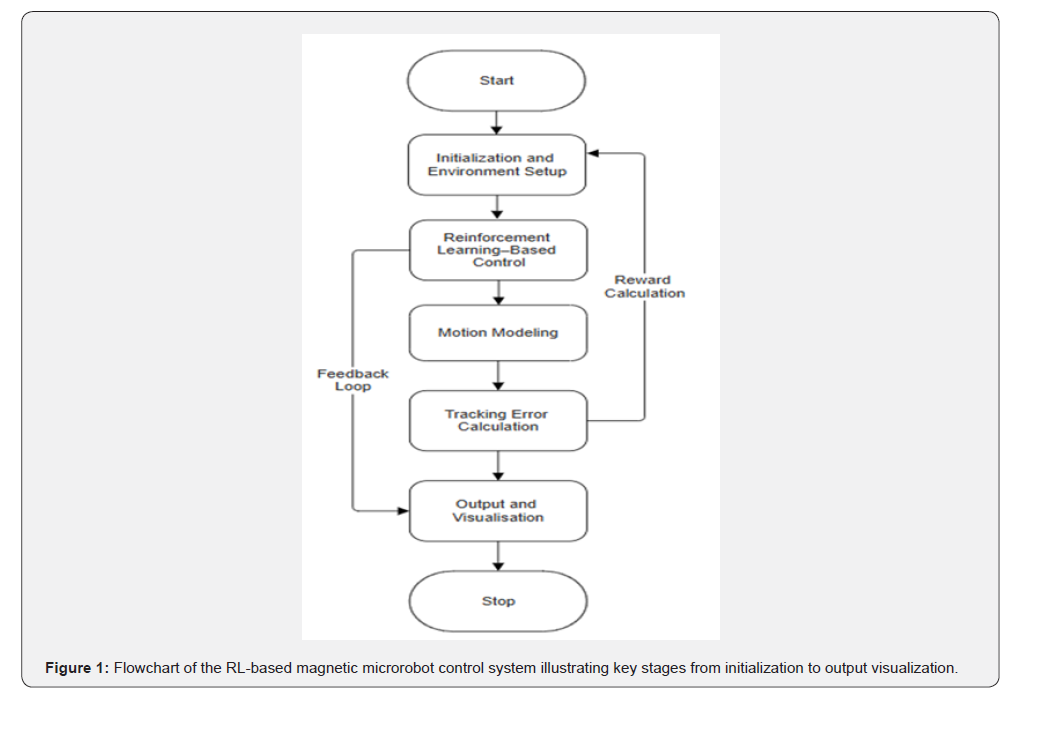
At the initialization stage, the simulation environment is configured with the microrobot’s initial position, reference trajectory, magnetic field limits, and environmental parameters. The microrobot motion is governed by a dynamics block that captures magnetic actuation effects and fluidic drag. Since explicit analytical modeling of microscale fluid–structure interaction is difficult, a neural network–based motion model is incorporated to approximate the nonlinear relationship be-tween magnetic inputs and microrobot state transitions. The reinforcement learning (RL) agent, implemented using Proximal Policy Optimization (PPO), receives the current system state (position, velocity, and tracking error) and out-puts continuous magnetic control actions. A reward function is computed based on trajectory tracking error, stability of motion, and control effort, encouraging smooth convergence to the reference path while penalizing large deviations and unstable behavior. The feedback loop continuously updates the agent’s policy using state–action–reward transitions collected during interaction with the environment.
The output and visualization module provides real-time plots of trajectory tracking in the XY-plane, state responses over time, error convergence, and reward evolution. This modular architecture enables systematic training, validation, and performance analysis of the proposed RL-based controller under varying operating conditions and disturbances.
CAD design of the actuation system
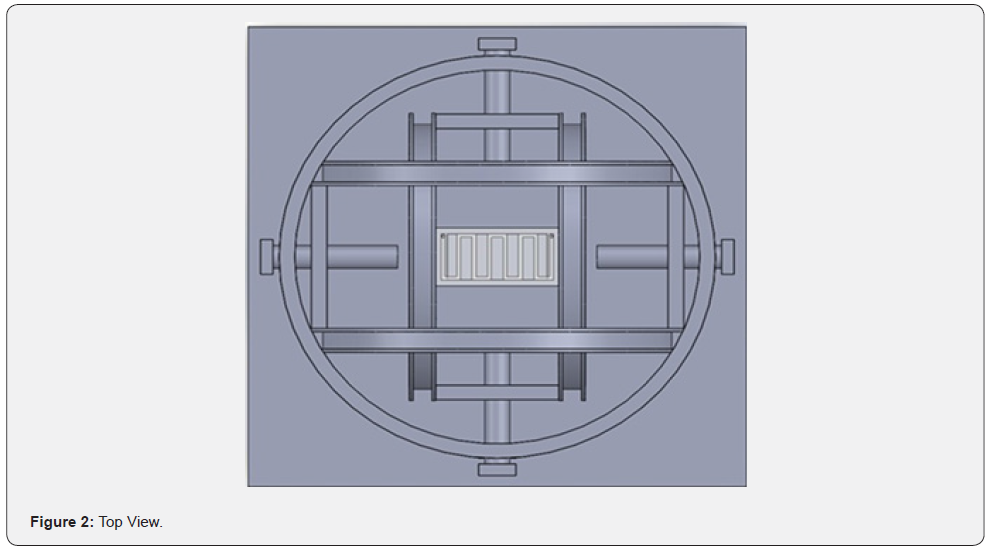
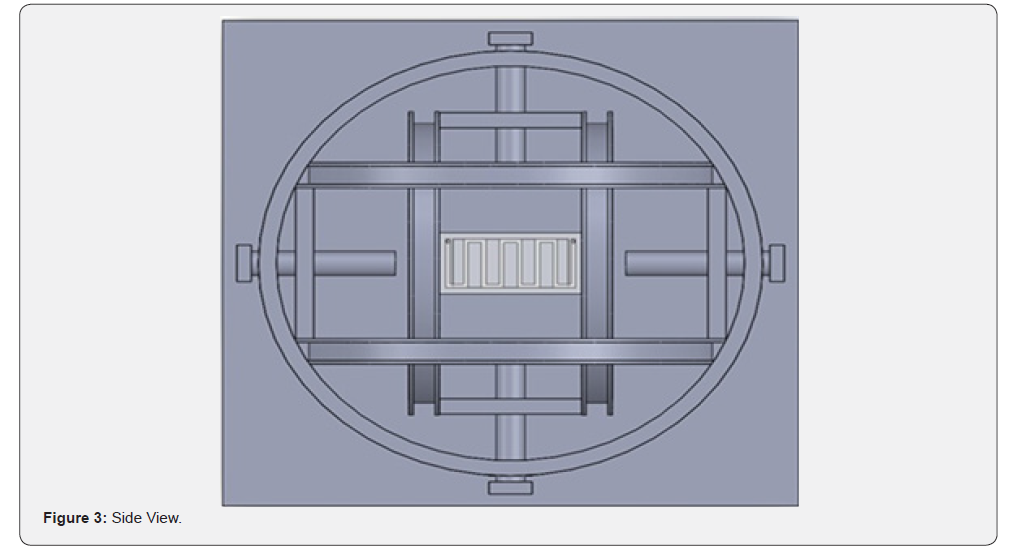
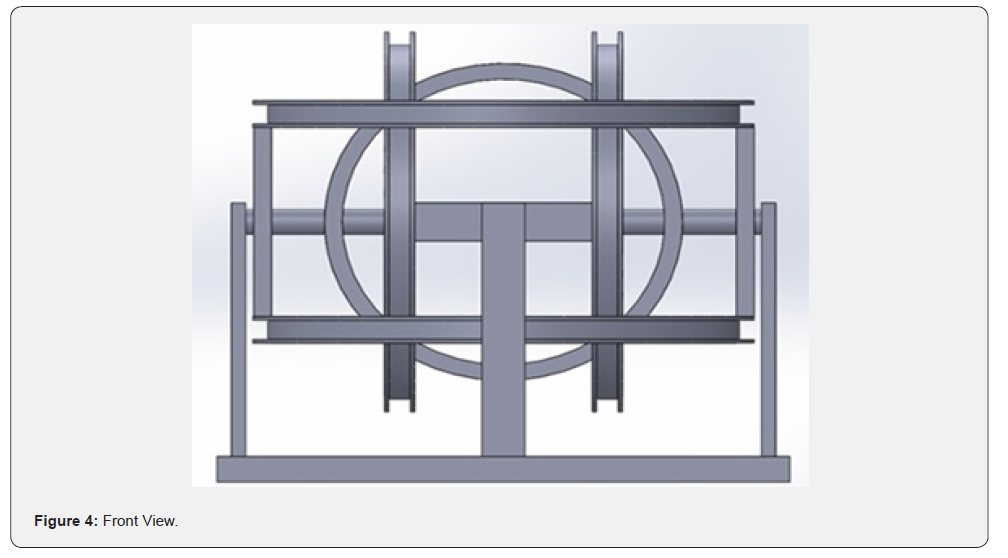
The mechanical and structural design of the magnetic actuation setup is developed using a CAD model to represent the physical configuration of the electromagnetic coils and the workspace in which the microrobot operates. The CAD design provides top, side, front, and bottom views of the actuation platform, illustrating the spatial arrangement of coils around the microrobot workspace. The coil assembly is designed to generate controlled and uniform magnetic fields within the operating region, enabling planar and potentially spatial manipulation of the microrobot. The geometric symmetry of the structure ensures balanced field distribution and minimizes unintended field gradients that could introduce control errors. The workspace is centrally lo-cated within the coil arrangement to maximize field uniformity and actuation effectiveness (Figure 2 & 3).
The CAD model serves two primary purposes:
i. Design validation: It allows verification of mechanical
feasibility, spatial clearances, and alignment of coils with respect
to the workspace.
ii. System integration: It provides a blueprint for
future experimental realization, facilitating the integration
of electromagnetic actuators, imaging systems, and control
electronics.
By combining the learning-based control architecture with a well-defined mechanical design, the proposed framework establishes a complete system-level solution for noncontact magnetic microrobot manipulation, bridging the gap between simulation-based validation and potential real-world implementation. A closed-loop RL-based control architecture integrated with a coil-based magnetic actuation platform is designed to enable precise non-contact microrobot manipulation, supported by a validated CAD model of the electromagnetic workspace Figure 4.
Output and Visualization
This section presents the simulation results obtained from the proposed reinforcement learning–based control framework for magnetic microrobot trajectory tracking. The performance of the controller is evaluated through multiple visualization metrics, including tracking error convergence, planar trajectory plots, state response, reward function analysis, and training progress of the PPO agent. These visual outputs provide quantitative and qualitative insights into the stability, accuracy, and learning efficiency of the proposed approach.
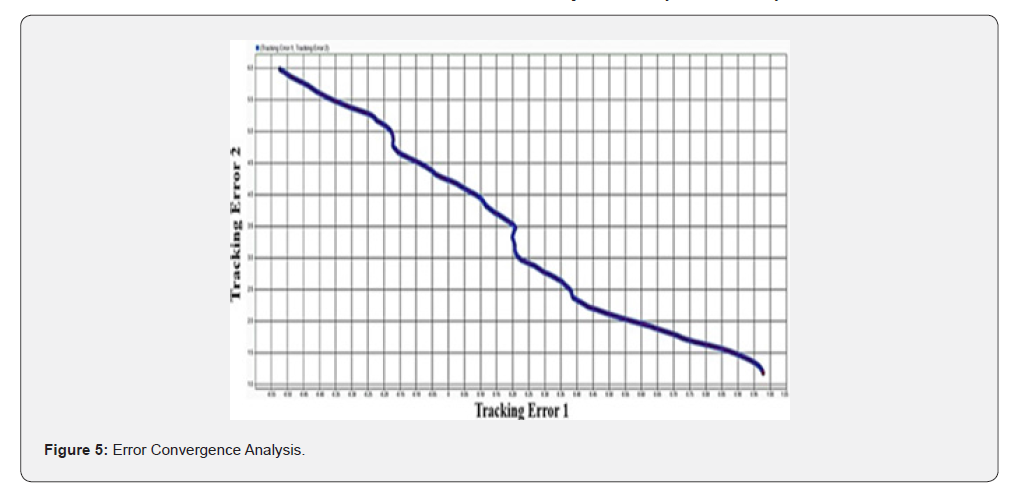
Error convergence analysis: (Figure 5)
The error convergence plot illustrates the evolution of the positional tracking error between the microrobot and the reference trajectory over time. As training progresses, the tracking error gradually decreases and converges to a low steady-state value, indicating effective learning of the control policy. The reduction in error as per the Figure 5 demonstrates the capability of the RL-based controller to adapt to nonlinear system dynamics and environmental disturbances. Compared to conventional control approaches, the proposed method achieves faster convergence and improved steady-state accuracy.
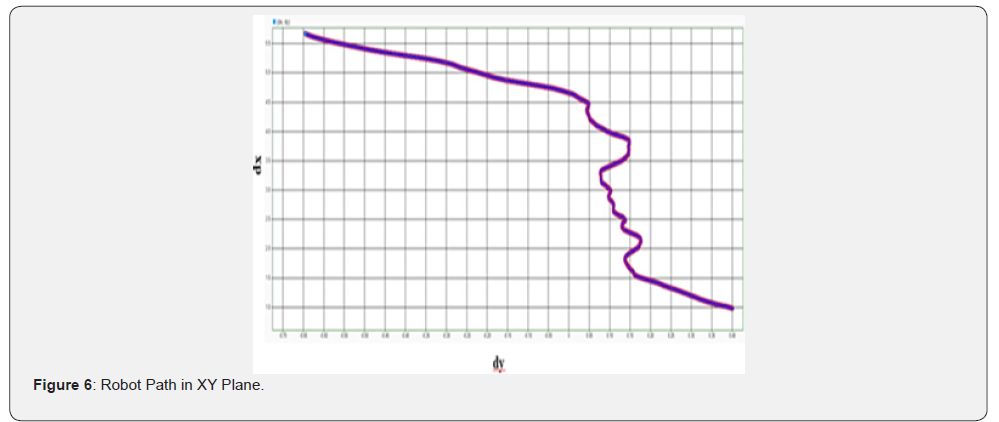
Robot path in XY plane
The planar trajectory plot in the XY plane visualizes the actual path followed by the microrobot compared with the predefined reference trajectory (Figure 6). The results in the Fig.6 show that the microrobot closely follows the desired path with minimal deviation, confirming accurate trajectory tracking. Smooth motion without abrupt oscillations indicates that the controller generates stable and continuous control actions. This visualization validates the effectiveness of the learning-based control framework in achieving precise planar navigation under non-contact magnetic actuation.
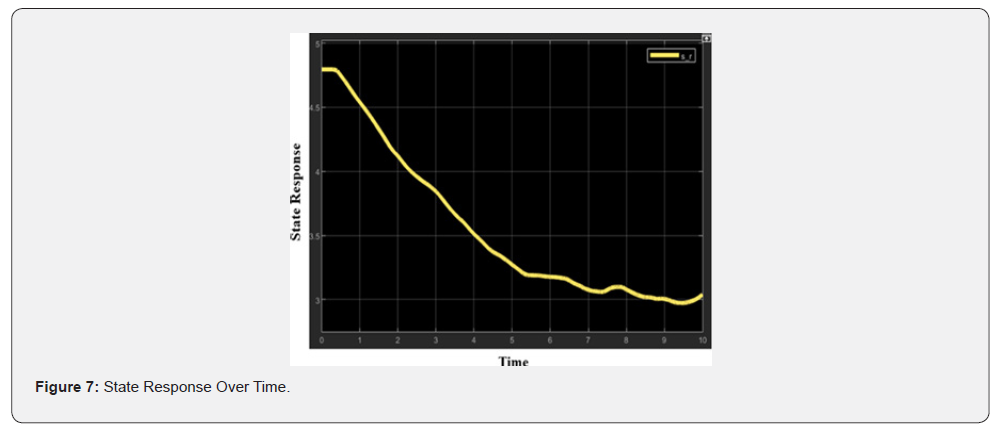
State response over time
The state response plots in Figure 7 depict the temporal variation of the microrobot’s position and velocity components (Figure 7). The responses exhibit stable transient behavior and smooth convergence toward the reference states. The absence of excessive oscillations or instability highlights the robustness of the RL controller in handling nonlinear dynamics and uncertainties. These plots further confirm that the proposed controller ensures smooth motion and stable system behavior throughout the trajectory tracking task.
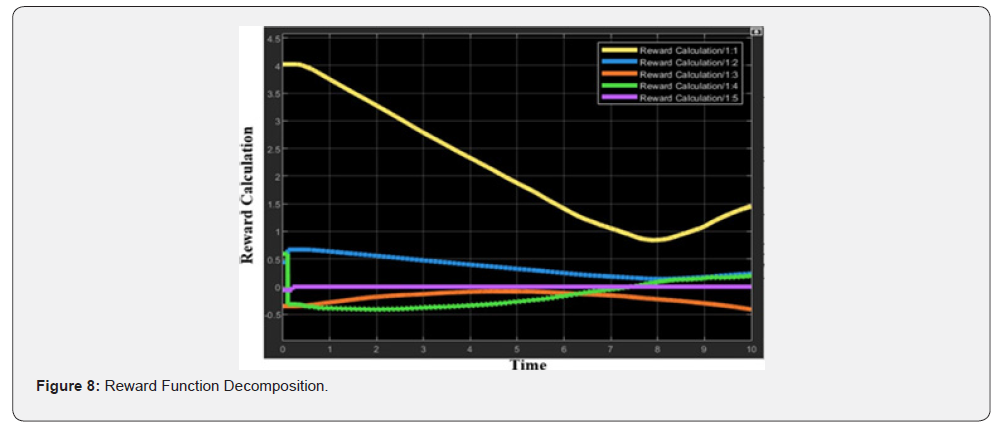
Reward function decomposition
The reward function decomposition in Figure 8 illustrates the contribution of individual reward components, such as tracking error penalty, control effort penalty, and stability-related terms (Figure 8). This decomposition provides insight into how different objectives influence the learning process. The analysis shows that as training progresses, the contribution from tracking error penalty decreases, indicating improved tracking performance, while the control effort remains bounded, ensuring smooth and energy-efficient actuation.
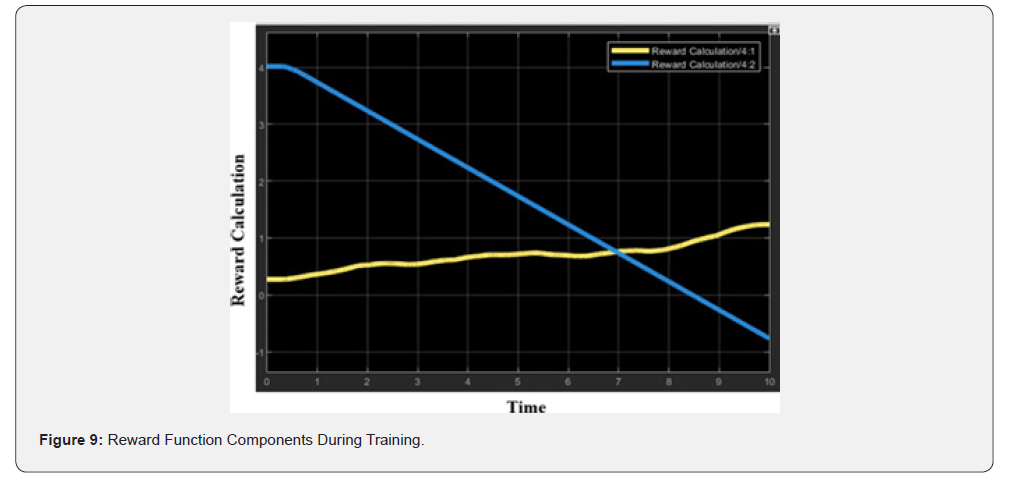
Reward function components during training
The evolution of reward components during training in Figure 9 demonstrates the learning dynamics of the RL agent (Figure 9). Initially, the reward exhibits large fluctuations due to random exploration and untrained policy behavior. As training proceeds, the reward stabilizes and gradually increases, reflecting improved policy performance. This behavior confirms that the RL agent effectively learns to balance tracking accuracy and control smoothness over successive training episodes.
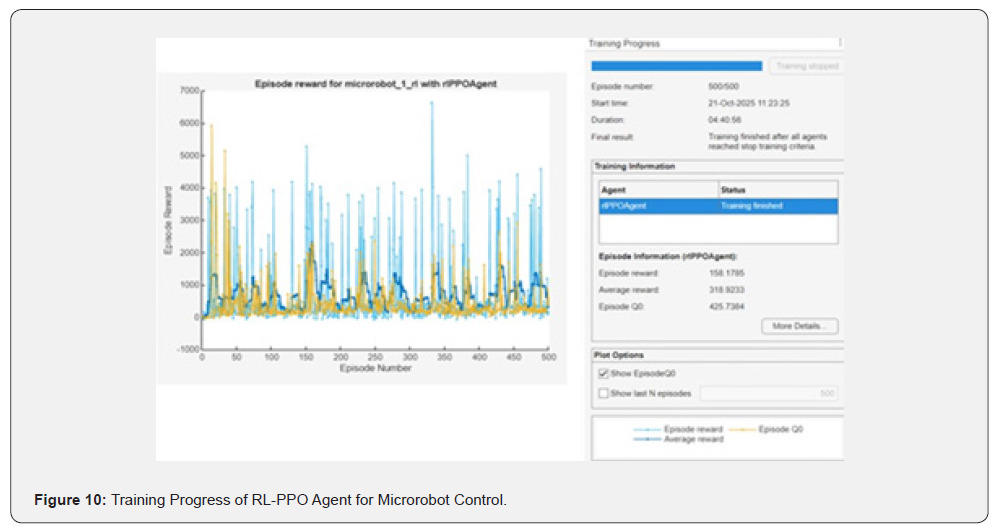
Training progress OF RL-PPO agent for microrobot control
The training progress curve of the PPO agent in Figure 10 shows the improvement in cumulative reward over training iterations (Figure 10). A clear upward trend in reward indicates successful policy optimization. The convergence of the learning curve demonstrates that the PPO algorithm provides stable and efficient learning for continuous control of magnetic microrobots. The results validate the suitability of PPO for adaptive non-contact trajectory tracking tasks in microscale robotic systems [6-11].
Future Work
The promising performance demonstrated by the proposed reinforcement learning–based control framework opens several avenues for future research and development. While the current study validates the feasibility of adaptive non-contact trajectory tracking of magnetic microrobots in a simulated environment, further advancements are required to move toward real-world deployment and broader biomedical applicability.
First, future work will focus on experimental validation using a physical magnetic actuation platform. Implementing the proposed control framework on a real electromagnetic coil setup will enable evaluation under practical constraints such as sensor noise, actuation delays, magnetic field saturation, and hardware nonlinearities. This step is essential to assess the robustness and real-time feasibility of the learning-based controller beyond simulation.
Second, the framework can be extended to three-dimensional (3D) microrobot control, enabling full spatial manipulation and levitation. Incorporating 3D magnetic field generation and depth perception through multi-camera or microscopebased sensing will allow the microrobot to navigate complex volumetric environments, which is critical for in vivo biomedical applications such as targeted drug delivery and minimally invasive microsurgery.
Third, future research may explore multi-robot and swarm microrobot coordination. Extending the current single-robot control framework to multiple microrobots will enable cooperative tasks such as collective transport, enhanced targeting accuracy, and parallel manipulation. This will require the integration of decentralized or multi-agent reinforcement learning strategies to manage inter-robot interactions and collision avoidance.
Additionally, incorporating online learning and sim-toreal transfer techniques can improve adaptability to unknown environments and changing system dynamics. Domain randomization and transfer learning approaches may be employed to bridge the gap between simulated training environments and real-world operation, reducing the need for extensive retraining on physical platforms. Finally, the proposed framework can be tailored for task-specific biomedical applications, such as targeted drug de-livery, localized therapy, and lab-on-chip automation. Future work may integrate perception modules for obstacle detection and biological target recognition, enabling closed-loop autonomous microrobot navigation in cluttered and dynamic environments. Overall, these directions aim to advance the proposed framework from simulation-based validation toward intelligent, autonomous, and clinically relevant micro robotic systems capable of operating reliably in real-world biomedical settings.
References
- Y Jia, Miao S, Zhou J, Jiao N, Liu L, X Li (2024) Efficient model learning and adaptive tracking control of magnetic micro-robots for non-contact manipulation. In: Proceedings of the IEEE International Conference on Robotics and Automation (ICRA), Japan ppp.4534-4540.
- J Nofech MB, Khamesee (2025) Machine learning for automation of 3-DoF control of magnetically-levitated microrobots. Mechatronics 110: 103356.
- Y Zhang, L Bai, L Liu, H Ren, MQH Meng (2022) Deep reinforcement learning-based control for stomach coverage scanning of wireless capsule endoscopy. In: Proceedings of the IEEE International Conference on Robotics and Biomimetics (ROBIO), China p.1-6.
- J Jiang, L Yang, L Zhang (2025) An overview of micro/nanorobot swarm control: From fundamental understanding to autonomy. IEEE/ASME Transactions on Mechatronics 30(3): 2338-2354.
- J Song, J Wu, K Yu (2024) Learning-based auto-focus and 3D pose identification of moving micro- and nanowires in fluid suspensions. IEEE Transactions on Automation Science and Engineering 21(3): 2321-2334.
- M Cai, Z Qi, Y Cao, X Wu, T Xu, L Zhang (2024) Magnetic field-priority force control for automated manipulation in large workspaces with reconfigurable electromagnetic actuation system. IEEE Transactions on Industrial Electronics 71(7): 2321-2334.
- R Van Durme, G Crevecoeur, L Dupre, A Coene (2024) Optimized magnetic particle navigation based on data-driven model for enhanced drug targeting. IEEE Access 12: 71628-71640.
- LE Beaver, M Sokolich, S Alsalehi, R Weiss, S Das (2024) Learning a tracking controller for rolling µ-bots. IEEE Robotics and Automation Letters 9(2): 1819-1826.
- A Kopitca, U Sattar, Q Zhou (2025) Application of large language mod-els in magnetically manipulated microrobots. In: Proc. 2025 Int. Conf. Manipulation, Automation and Robotics at Small Scales (MARSS) p.1-6.
- Y Jia, S Miao, A Wang, C Ni, L Feng, et al. (2025) Non-contact dexterous micromanipulation with multiple optoelectronic robots. IEEE Robotics and Automation Letters 10(5): 4412-4419.
- K Chen, AJ Thompson, B Ahmad (2025) Multi-DoF optothermal microgripper for micromanipulation applications. IEEE Robotics and Automation Letters 10(4): 4061-4068.

























