




 RAEJ Home



The Influence of New Technologies on Leadership and Organizational Agility: An Analysis of Leadership Capabilities in the Modern Technological Context
Raul Ionut Riti*, Mălina Paula Ungureșan Teglaș, Eliza Elena Suciu, Petruța Cristina Bocoș, Adriana Mirela Sava, Laura Bacali
Faculty of Industrial Engineering, Robotics and Product Management, Technical University of Cluj Napoca, Romania
Submission:September 23, 2025;Published:September 29, 2025
*Corresponding author:Raul Ionut Riti, Faculty of Industrial Engineering, Robotics and Product Management, Technical University of Cluj Napoca, Romania
How to cite this article: Raul Ionut R, Mălina Paula Ungureșan T, Eliza Elena S, Petruța Cristina B, Adriana Mirela S, et al. The Influence of New Technologies on Leadership and Organizational Agility: An Analysis of Leadership Capabilities in the Modern Technological Context. Robot Autom Eng J. 2025; 6(5): 555699.DOI: 10.19080/RAEJ.2025.06.555699
Abstract
In the new world of technologies, organizations should be able to change quickly to remain competitive. The current paper focuses on the discussion of the role transformational and adaptive leadership models played in ensuring agility in the organization in the context of digital transitions. It combines the Kotter and ADKAR change management models demonstrate how to approach resistance as well as create adaptive capacity. Also, the question of using digital technologies (Artificial Intelligence, Big Data, etc.) is also examined to help with real-time decision-making and cross-functional teamwork. This is based on qualitative data of three IT organizations that are in the process of digital transformation and serves the findings on leadership capabilities that are needed in the successful implementation of changes.
Keywords: Transformational leadership; Organizational agility; Digital transformation; Change management
Introduction
Due to the increased complexity attributed to technological change, the changing nature of organizations necessitated changes in leadership that stimulate flexibility, learning, and innovativeness in view of the said changes [1-3]. Conventional, control-oriented, and hierarchical leadership is being shelved in favor of transformational and flexible leadership that encourages innovativeness and adaptiveness [4-6]. This paper explores the ways in which these leadership styles can be used in support of agile methods with tools as artificial intelligence, data analytics, and online collaboration tools. The analysis will be based on the findings and observations of three IT companies engaged in the process of digital change that will be applied to existing frameworks, such as Kotter and ADKAR [7-8], to explain how leadership skills change in contemporary environments.
In addition to the new leadership approaches, the working models of Agile and Lean Management are crucial for the organization’s ability to stay responsive [6][9-10]. A structured development cycle focused on customer feedback and lean practices enables faster adaptation and reduced waste [11-12]. Together, these models support business sustainability and profitability in a digitally connected world [4][13]. Due to the insistence on dealing with extensive change programs in the technological world, different structured change management models to help in easing change, including Kotter’s Change Model and the ADKAR model, take into consideration the formal and informal change models as they take both the structural and individual approach [14][11]. These models enable the top managers to involve a variety of employees and minimize the opposing forces so that innovation can be better implemented [13][15].
Artificial intelligence, data analytics, and online communication platforms are some of the digital technologies that are becoming instrumental in defining the mode of operation of leadership and responsiveness of the organizations [4][7-9]. These tools promote decision-making in real time, shared work, and learning. Although such types of leadership, as transformational and adaptive, have been thoroughly defined in literature [1][3][6], the issue of their position in the digital transition process is not sufficiently studied on the operational level. The general strategy or technical systems are the norm of study, thus lacking an understanding of how the leadership styles are to be implemented in a practical approach and applied on a case-by-case basis during technologydriven change [2][5][16]. This paper deals with that gap through the examination of the interactions of leadership capabilities with digital tools and change management strategy within IT organizations as they transform. The key research questions are: how do leadership behaviors meet the requirements of agility in technology-driven settings, and what are the particular enablers to achieve the same? The aim is to make concrete observations of how the leadership styles can be transferred into adaptive practices. In the next section, the synthesis of the literature available regarding leadership, agility, and digital change is introduced.
Literature Review
Various theories of leadership have matured as organizations respond to the issue of technological advancement [1-2]. Traditionally, leadership focused on one’s traits and position of power based on the framework of charismatic authority and transformational leadership [10][12]. However, the digital age has moved leadership to transformational and digital that focuses on flexibility, creativity, and analytical approaches to decisionmaking [3]. Transformational leadership aimed at communicating change visions and innovativeness, in turn, is more effective in today’s VUCA world, especially when equipped with a learning organization and flexibility as key value propositions of the updated knowledge workplaces with supportive technologies [17].
E-leadership is a form of both analytical and situational transformational leadership that utilizes all forms of technological media to improve leadership in electronically connected, geographically dispersed teams [2]. As with the previous arguments, the concept is that current leaders should be able to harness technology to locate solutions in today’s digitally interconnected world [16]. It is against this background that leaders the world over are called upon to embrace and acquire digital competencies coupled with increased use of technologies that encourage openness and accountability.
Due to growing demands in the disruption of modern technology, organizational agility, the flexibility of an organization to adapt to changes, is crucial. Agility refers to an organization’s ability to effectively and promptly adjust parts of the system, thereby improving competitiveness in highly volatile markets [7]. Agility encompasses three dimensions: There are three types of flexibility, including operational, strategic, and structural flexibility. Where operational flexibility and modularity let decisions take place smoothly, strategic flexibility and structural flexibility make it possible to realign resources and redirect them to changing priorities [8].
The importance of pursuing agility in the transformational digital agenda is emphasized, as quick and innovative responses to technology-driven market changes are crucial for organizational survival [9]. Organizations adopting the agile mentality have recurring cycles and decentralized decision-making capabilities to cope with changes brought by new technologies [6].
New technologies are revolutionizing classic leadership skills as they allow leaders to use techniques that are more open, more synchronous, and more dynamic. The use of technology improves communication and involvement and changes the nature of leadership to be more open and collaborative [1]. For example, AI and big data support leadership by supplying the leaders with information, which enables the leaders to make quick decisions and give a more lively leadership style [12].
There has emerged “e-leadership,” under which leaders separately and frequently communicate with their workers through social media interfaces such as Slack, Microsoft Teams, and Zoom while working in different teams [5]. These technologies facilitate a shared leadership style that fosters teamwork regardless of location. Distributed leadership, which distributes leadership responsibilities across various organizational levels, aligns with the shared working aspect of teams, thereby fostering the necessary dynamism in the use of digital technologies [11].
Three critical technologies, namely artificial intelligence, big data analytics, and digital communication technologies, play major roles in the change processes in organizations. Artificial intelligence is defined as a functional transformation capable of enhancing data-based decision-making and boosting validity and speed [4]. Certain examples include big data analytics, for instance, facilitating real-time analyses of massive data on the business environment, enabling a company to predict occurrences that may define its future and assist in making appropriate calls on resource investment [9].
As much as it has always been mentioned that transformational and adaptive leadership are complementary, it has never been noted how the two leadership styles can be used in digital transformation cases. Transformational leadership lays stress on the vision and staff motivation [3][6][17], whereas adaptive leadership is more concerned with handling complexities and uncertainties [7][11][18]. Available literature has not monopolized these models and has not investigated the way these models interact in technologically dynamic organizations.
In addition, although the two models have appeared in conceptual writings, there are hardly any writings able to argue how the two models can be aligned with specific tools or applications like AI or data platforms when such change efforts are being actively undertaken [4][9][12]. The paper is presented as a contribution to the study of the combined use of both in digital contexts and the specification of how technologyenabled practices figure the leadership agility in a real context of organizations.
Leadership Models And Change Frameworks
Leadership Theories in Technological Adaptation
Concerning the current and aspiring leadership types, about challenges, which appear when coping with new technologies, modern leadership theories tend to be rather more volatile, based upon such values as flexibility, learning capacity, and resilience [3][17]. Of all these theories, one of the most suitable is the transformational leadership theory since it avails itself to the leader to encourage change within her crew [2][19]. Transformational leaders ensure that they provide a clear, tenable vision of the organization, encourage employee creativity in the adoption of technology, and practice new experiments [1][13]. It makes it possible to create an adaptive culture, which is important to face the channel’s intensity due to the digital shift, as it engages people in finding solutions [4-5].
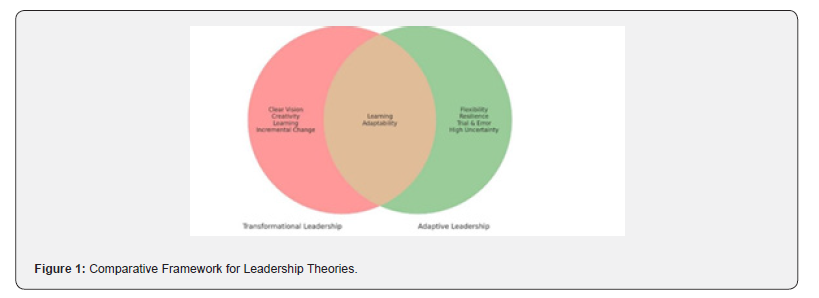
A final concept, adaptive leadership, concerns fit and process in the context of problem-solving when facing complexity [7-8]. In contrast to oppressive leadership, where the performance of activities and the application of solutions are prescribed, adaptive leadership implies that a leader should create a learning environment and a climate for trial and error in unknown conditions [6][11]. This is especially useful in a digital environment where leading and teams operate with constant changes and risks [14][20]. Adaptive leadership prepares organizations and individuals for growth, and the principle allows employees to have the confidence to learn how to embark on changes. Simply, while transforming leadership fosters an incremental, continuous learning culture, adaptive leadership does the same for the readiness to cope with the uncertainties inherent in implementing technology (Figure 1) [15][19].
Digital Transformation and Agility Models
Due to the need for an organization to be strong and always ready to respond to the evolution of its environment, features like the Agile Framework and Lean Management have become invaluable models [6-7]. Founded in the framework of software development, it is now used in many organizations dealing with digitalization [11]. Agile supports short interaction cycles where integrated teams can design and bring them rapidly into action and test them. It means that organizations can adapt approaches faster, contingent on feedback received, which makes the approach particularly effective in technology spaces [10]. Other areas that are also focused on through agile frameworks include the customer and the team, and this is effective in ensuring an organization develops the correct digital products or services to market to adapt to the changing market needs [14]. Due to elaborate constant feedback and communication, as well as a flexible established structure, Agile is capable of addressing and overcoming technological challenges and unpredictable consumer expectations [6].
Lean Management, which has been created to improve manufacturing activities, is also utilized for digital transformation [7-8]. Another element of lean principles is built around the concept of waste reduction, value enhancement, and customer outcomes. In the digital environment, Lean methodology enables organizations to eliminate waste and minimize distortions in terms of digital operations [9]. For instance, Lean principles can be implemented into a development environment, especially within information technology organizations that develop software where testing and constant repetition are used to provide better solutions to clients with low amounts of wasted time between cycles [11]. Operating in compliance with lean management principles, the outstanding business idea can be described as being based on both operational efficiency and customer values, which open the path to an adaptable but result-oriented culture [14]. Combined, Agile and Lean frameworks promote an Agile thinking approach that keeps an organization responsive and relevant in a digital world [6][10].
Technology-Driven Organizational
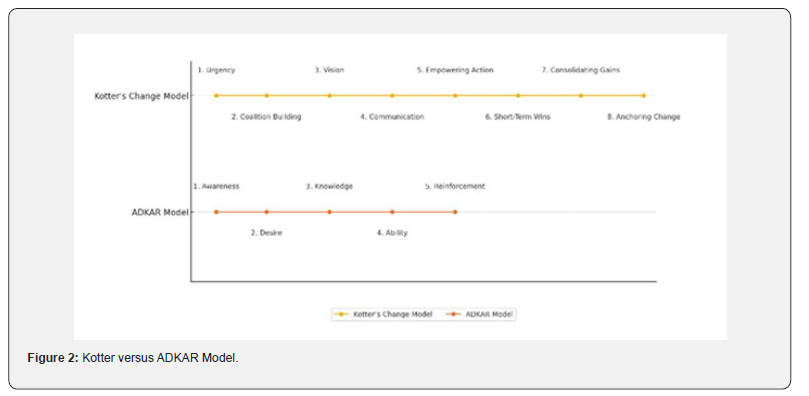
To support a structured approach to implementing new technologies in an organization, the following frameworks are useful in effecting the change. Of these two models, Kotter’s Change Model and the ADKAR model are the two most commonly used models [13][15]. According to Kotter, there are eight key steps by which change management, including digital ones, should be implemented. The model focuses on making change appear necessary, engaging people in change, and generating a clear picture of change [13]. To those organizations that have embraced technological changes, Kotter’s model assists in tying down the employees and/or teams to the change process, viewing change as incremental and overcoming resistance that is inherent within the course of implementing change. This approach is especially useful where the introduced technology is complicated and embraces many procedures that may cause changes in personnel’s behavior [11].
The other model is ADKAR, which is less organizational and more personal and covers Awareness, Desire, Knowledge, Ability, and Reinforcement [15]. The model is aimed at focusing on people’s Change, helping each person to navigate through this process. Based on the reasons for the change, desire, knowledge, and ability, the ADKAR model ensures that organizations’ employees are ready to accept new technologies. In the reinforcement stage, following up is highly encouraged so that there is continuity in the process and people do not go back to their previous behaviors. This model is especially significant for the Digital Transformation (DX) initiatives, where change entails the use of technology by employees [9]. When implemented together, Kotter and ADKAR provide complementary perspectives for embracing the challenges of technology change management by emphasizing the organizational and personal levels (Figure 2) [21].
Research Methodology
The current paper is a qualitative case study that aims to investigate the issue of leadership and organizations adopting new technologies. The method is quite appropriate to the analysis of leadership behavior, digital adaptation, and technological integration in practice [2][5-6][16].
Three IT companies that operate in the sphere of cloud infrastructure, enterprise platforms, and digital consulting were chosen because they have a more developed role in transformation programs. In every organization, ten semistructured interviews were performed with the jobs of digital managers, agile leads, and engineering heads. The aim was to investigate the leadership practices that developed as digital change continued. The levels of capabilities adopted in this paper, ranging between 0 and 4, were inductively produced based on the recurrent trends in the data. They indicate relative scores of integration in three digital leadership areas that include flow efficiency, team adaptability, and cultural responsiveness. Such models existed on the agile maturity and leadership flexibility [6-7][14], but these models were modified to accommodate the situation within observed organizations. They are not suggested as the universal measurement tool but as the interpretive scaffold synthesizing the practices observed in multiple cases.
Thematic analysis and inductive coding were applied throughout the interview transcripts, according to the conceptual framework, which is offered by Braun and Clarke [8]. The questionnaire contained questions that were open-ended, aimed at leadership practices, digital technologies utilisation, flexibility, and team responsiveness towards change projects. Transcripts were anonymized and coded manually to reveal common themes like data-driven quick response to change, transformative role change, and the ability to overcome resistance, collaboration over digital platforms [6-7]. The selection of themes was done on repetition and salience. Data coding was done with two researchers independently and was validated by peer-debriefing. A coder used a memo journaling of a reflexive nature. The data source used triangulation in which interview data, internal strategy documents, and related academic material on leadership, agility, and change frameworks [3][9-10][13][15][17] were integrated. This was warranted to be conceptually consistent with other existing paradigms, including the transformational leadership [1][3], adaptive leadership [6][11], and the Kotter and ADKAR paradigms [13][15]. Although the levels of agility being introduced below (0-4) may be regarded as an exemplification of cross-case synthesis, these are not meant to be quantitative tools, but rather as organized interpretive tools founded on empirical observation.
There are weaknesses to this research. The results could also fail to translate into settings where digital maturity is low, and this includes manufacturing or public provision [4][20]. Further, the qualitative design is less favorable to generalization; on the other hand, it allows one to immerse oneself in the practices and strategies of transformational leadership [5][15]. Some of the findings might also be rendered irrelevant in time owing to the blistering rate of advancement in technology [19].
In a bid to enhance analytical rigor, the research team employed memo-writing as well as peer debriefing when coding. Although being an interpretive one, this qualitative study magnifies the role of leadership potentials and systematic change models to digital agility in a complex manner [6][12].
Case Study: Integration of Technologies In Vital Agile Leadership Spheres
This case study identifies how new technologies can enhance agile leadership abilities in three fundamental areas, which are getting the flow, team, and technical agility, as well as organizational culture [6-7][10]. These areas were also the thematic areas that were obtained after qualitative analysis of interview data. The shown maturity levels (0-4) compose the generalized patterns of observations made in three IT organizations and describe the movement in the digital adoption and leaders-provided agility [1-2][9][13]. Although these levels cannot be attributed to some quantitative scale, they are based on comparative evidence and represented by examples of respondents. All the levels combine features of interview perceptions, repeated actions, and evident input of technological devices, which work as interpretive structures used to differentiate the patterns of management practices shifting in more digitalized and nimble environments. Those results, therefore, do not aim at providing generalizable scoring but at reflecting practice-based transitions that can be realized in organizations that are transforming in response to the digitalization phenomenon.
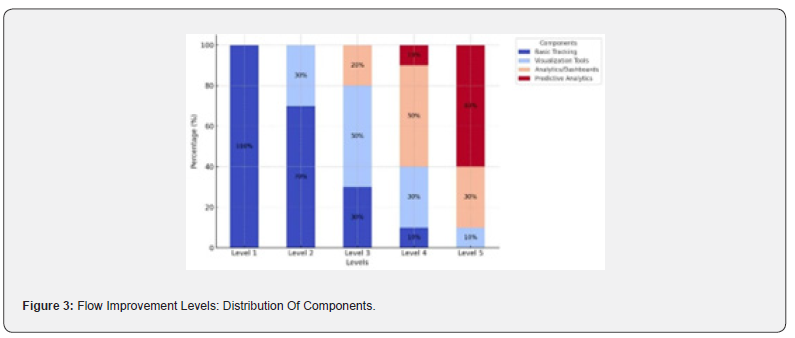
Flow Improvement (Levels 1-4)
Level 1: Flow improvement can be said to refer to the enhancement of functionalities, especially as far as the workflow across the teams is concerned [6]. Leaders at this level use the simplest forms of tracking mechanisms, and even though they are not as complex as the tools at the next level, they can include such items as Excel spreadsheets or to-do lists [7]. There is a low turnover of technological usage, and system blockades are solved when they are observed.
At Level 2 of technical advancement of technologies in an organization, organizations coordinate their work through digital tools, in particular using the Kanban board found in Trello and Asana to manage tasks through visual interfaces [11][13]. Managers can also detect trends with issues affecting the workflow and can tackle recurring problems with more organizational methods. This level enables some proactive process control to be carried out, though inferior to the next level [11].
By the third level, people utilize sophisticated technologies that enable them to monitor the work progression and productivity of individual units [10]. With the help of the workflows and the dashboards, which are implemented in the efficient and effective Warehouse Management System (WMS), the leaders of the organizations can see where efficiencies are lacking and make resource decisions in real-time. For instance, the board employing a tool like Jira, for real-time metrics, reveals the team’s workload and the progress that a leader can make instant decisions [6][15].
The final level, Level 4, is AI-based risk assessment for analyzing the work environment and predicting workflow disturbances before they happen [4][12]. The supervisors can then employ certain machine learning algorithms to predict where there might be a problem by analyzing data from the past and taking measures to ensure that there isn’t one. This level of technologically driven integration is extremely helpful in that no system is ever static; all of the systems are constantly evolving to optimize team output (Figure 3) [22].
Process - Team and Technical Agility (Level 0-3)
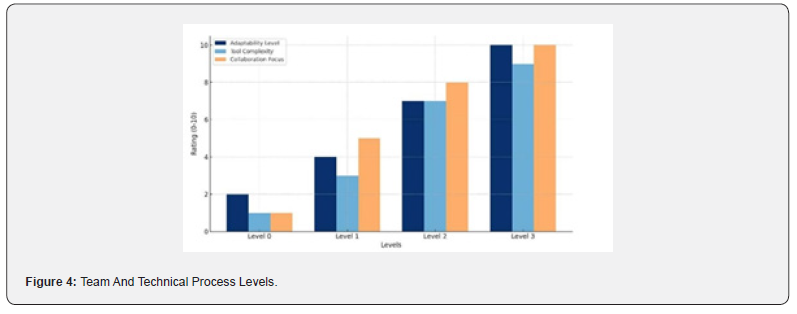
Thus, Team and Technical Agility define how fast and effectively a team can adapt to change, as well as provide an opportunity to analyze how effectively technical skills are being used [6-7].
At level 0, the organization may lack flexibility, where the teams have a great deal of structure and do not interact with other teams [3].
Level one concerns the work introduction of basic digital collaboration tools such as Slack or Microsoft Teams, which foster communication and improve teamwork [5][16]. Managers start to promote technical depth, but adaptability stays moderate in several domains [1].
The Level 2 organizations use more advanced project management tools that facilitate agile working, including integrated and deployment facilities [14]. Managers promote the integration of workers from different functions and focus on receiving technical education that allows an organization’s teams to address new demands as soon as possible [9]. For instance, operation practices used here promote integration and can accommodate quick iterations and frequent deployments, characteristic of the rapidly evolving technological industry [10].
In the third phase, there is a focus based on Agile principles; the organizations’ and teams’ characteristics are adaptive [6]. Sophisticated features and support for interacting with other team members help the separated team members work together regardless of their geographical locations or departments [11]. Managers dedicate attention and resources to building a capable and adaptable employee pool that can easily adapt to change when pulled by market signals or customer judgments while simultaneously maintaining continuous operations (Figure 4) [4] [12].
Organizational Culture (Level 0-3)
In the current study, organizational culture was measured at levels 0-3 following the Organizational Commitment Questionnaire (OCQ) model.
Work Culture involves systems of ideas and practices that define employees’ culture within their working environment [7] [16]. A work culture that promotes flexibility of the organizational structure, creativity, and process improvement enables the organization to respond to the advancing technology and market challenges [1][3][17]. The integrated maturity levels (0-3) indicate to what extent agile principles have been adopted and the role of technology in this context [6][9].
Level 0, Commitment to Tradition and Basic Management: there is still a great emphasis on organizational culture, but its key characteristics can be described as traditional with little regard for agility [21-22]. Process control is strong, decision-making is centralized, standardization of procedural approach is high, and cross-functional integration is limited [5]. There is often a fairly significant degree of hierarchy, and the employees are often not given a lot of say in what they do. This structure also hinders the flexibility that the organization might need to change, since employees are likely to be conservative towards change and avoid presenting new, different strategies [2]. Leaders at this level may occasionally use the simplest of digital tools; these tools are utilized to address operational requirements as opposed to encouraging collective or intricate organizational processes [4].
Level 1, Agile implementation: in an organization, it begins at this level, where the organization begins the practice of implementing agile practices within certain teams or where an organization adopts an agile practice within a certain segment of the organization [14]. Managers engage subordinates in certain functions to promote decentralization and promote new structures that reduce bureaucracy [11]. The use of technologies, including team- and project-sharing platforms and messaging apps, starts to help this openness and communication among these teams [12][14]. For instance, programs such as Slack or Microsoft Teams increase the rate of information sharing and allow employees to offer their ideas eagerly [5]. Executives urge their subordinates to create a culture where cooperative members are obliged to take risks and make occasional errors, yet such practices remain confined to only some departments [13].
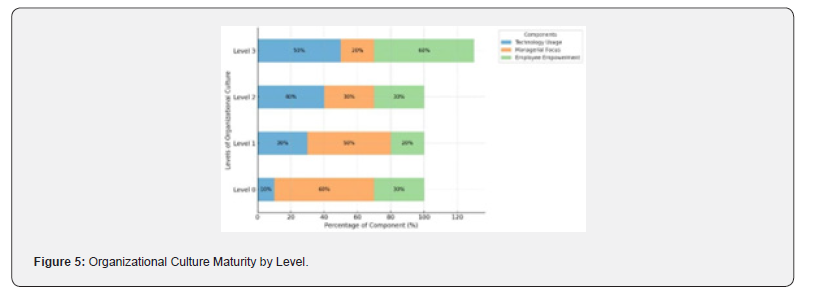
Level 2, Application of Cross-Departmental Coordination and Cultural Flexibility: Agile enters the departments, and the organization uses platforms for cross-departmental collaboration and knowledge management [6][8]. Managers speak about, for example, flexibility and openness as a guiding light, and they turn into organizational values [3]. Application software like Confluence or Jira enables cross-functional teams to cooperate in real-time and be, therefore, aligned on strategic objectives [10]. At this level, cultural flexibility is fostered by leaders, which allows subordinates from all ranks to participate in decision-making processes and bring in ideas [1]. In the interviews, the participants explained how Confluence and Microsoft Teams were used to promote the harmonization of the development and customer support departments. One of the engineers (a senior one) said, “We no longer sync on a monthly basis, we have common live documents, and most of the time we do chat-based reviews.” That made a change of mental paradigm: everyone was now involved in the design of solutions and no longer solely effective in the implementation of solutions” [3][10][16]. Therefore, the employees enjoy a higher sense of identity and better position themselves towards the objectives of the organization, making them more active and flexible in responding to change [15].
Level 3, Agile Organizational Culture: at this level, the organizational culture has been transformed to be agile: The organization is or becomes more decentralized and team self-organizing [17][20]. These tendencies are driven by top management since leaders notice that improvements, innovations, and versatility are the particular cultural commodities, which should be reinforced via digital platforms for collaboration and knowledge sharing [9]. Sophisticated technologies for analytics and cloud-based project management together with AI give leaders and the teams visibility into market dynamics or new technological developments to make adjustments on time, also encouraged employees to be proactive in the course of performing their duties, by coming up with solutions on their own, and this makes the organizational culture very flexible and more resilient to change (Figure 5) [4][10]. The functionality of Jira dashboards helped the team leaders in one of the analyzed organizations to track progress during the sprint and quickly assign more resources when bottlenecks appeared in backlog progress. According to one of the project managers, the availability of live data on blockers, rather than a day later, helped this person to intervene within hours [6][15].
Discussions and Implications
This study has implications for how current leadership theories, values, tools, management dynamism, and digital change models work together to foster adaptability within organizations driven by technology. As presented, organizations must develop a culture that is amenable to change and receptive to employing change-promoting and organizational development leadership styles. By applying principles of transformational leadership, leaders establish a great vision for embracing and adopting technology, and employees get motivated to be active players in change. The theoretical literature on this topic enhances the use of the transformational and adaptive leadership models and their practical implementation, together with digital tools that promote responsiveness in real-time. Although the frameworks available to support the change, including Kotter’s eight-step approach and the ADKAR process, can be referred to as well-organized, the empirical evidence offered here indicates that their influence becomes strengthened when combined with the practice of distributed leadership and the use of AI-enhanced feedback systems. This is an extension of the classical models by explaining how digital mediation enhances leadership decisions and versatility. Findings show that any further implementation of digital leadership must consider, besides technological facilitation, the presence of both the psychological and the structural readiness as preparation to experience a successful transformation. Similarly, adaptive leadership, by supporting experimentation and with its focus on uncertainty, enables the teams to address intricate digital tasks, which are gradually becoming more frequent across organizations.
The use of Agile methodologies also shows their effectiveness in organizations to increase organizational agility and improve operational performance. Originally, agile process frameworks were created only for software development needs, but are now extended to almost all industries to help manufacturers design products with feedback loops and integrated teamwork. These principles let organizations enhance operations, minimize waste, and direct effort and resources to the most valuable. Taken together, these models help organizations to become cost-competitive, robust, and driven by customer needs into the future amidst the escalating technological change. The future explorations of the Agile and Lean approach, as well as its subsequent application, should not remain stagnant but should develop further to include more sophisticated digital tools to improve operational functionality.
Kotter’s Change Model and the ADKAR framework, which relate to change management, support the implementation of new technologies successfully. Whereas Kotter’s highly structured eight-phase process is about managing change and gaining momentum in the organization, ADKAR focuses on individual adaptation at the employee level and provides the tools and motivation to enable them to successfully adopt new technology. Together, these models help provide for a change management framework that facilitates social change from both an organizational perspective and in evaluating the preparedness of persons for the change. Subsequent instances applying those frameworks could consider using AI-based analysis of employees’ progress and use this data to improve support and increase the effectiveness of the digital transformations [4].
Although this study relies on fairly established leadership theories, it offers a useful evaluation of digital agility using categorical qualitative measures. The identified levels of capability presented in the flow, team processes, and organizational culture provide an opportunity to see the manifestations of such leadership attributes as adaptability and responsiveness in ordinary organizational environments. Instead of providing a totally approved model, this framework refers to some of the main dimensions of the transformational and adaptive leadership theories, and relates them to digital instruments and change models like Kotter and ADKAR [11]. The study helps the applied reflection of the interaction of technology and leadership in the evolution of digital transformation by structuring the leadership behavior on the basis of observable levels.
Looking ahead, the implications for organizations are clear: it is especially essential to stress that success in digital environments means that leaders should be flexible, experienced in using technology, and able to cultivate an organizational culture that implies the need for constant improvements and prompt reactions to change. Leadership, both technical and business strategic, is another area that organizations need to ensure they fund in this digital transformation environment. Moreover, due to the increasing rate of digital transformation, the leadership models and change frameworks have to be examined and enhanced periodically to remain more relevant and usable in the future stages of digital transformation.
Conclusion
The study examined the role of transformational and adaptive leadership styles in the transformation of the organizational dynamic in terms of building agility for the digital transformation that has gained momentum. The combination of change management models like the Kotter 8-stage model and the ADKAR framework offers formal approaches to the leaders and company employees to pursue adaptability in technologies.
The frameworks contribute to the minimization of resistance, cultivation of individual preparedness, and strengthening of long-term change. Such digital technologies as AI, big data, and collaboration platforms facilitate this process by making it more responsive, improving the flow of information, and decisionmaking. Wider leadership that is more innovative, having continuous learning, being more decentralized, is in a better position to deal with the complexity and volatility. Meanwhile, due to the reliance on qualitative data from three IT-related organizations, the results cannot be utilized in more digitally immature industries to a considerable extent, since they cannot be assumed to be directly transferable or general.
Moreover, the levels of maturity offered are rather conceptual and need to be proven in practice. Subsequent research can consider bigger samples, longitudinal or mixed-method designs, to help perfect these frameworks and make them more inclusive. To become digitally resilient, organizations are encouraged to invest in developing leaders who can think strategically, be technology-fluent individuals, and break cross-functional silos.
Conflict of interest
The authors declare no conflict of interest.
References
- Avolio BJ, Kahai SS (2003) Adding the ‘E’ to E-leadership: How it may impact your leadership. Organ Dyn 31(4): 325-338.
- Avolio BJ, Kahai SS, Dodge GE (2001) E-leadership: Implications for theory, research, and practice. Leadership Q 11(4): 615-668.
- Bass BM, Avolio BJ (1994) Improving Organizational Effectiveness Through Transformational Leadership. Thousand Oaks CA: Sage.
- Brynjolfsson E, McAfee A (2014) The Second Machine Age: Work, Progress, and Prosperity in a Time of Brilliant Technologies. New York NY: W W Norton.
- Cascio WF, Montealegre R (2016) How technology is changing work and organizations. Annu Rev Organ Psychol Organ Behav 3(1): 349-375.
- Denning S (2017) The Age of Agile: How Smart Companies Are Transforming the Way Work Gets Done. New York NY: AMACOM.
- (2025) The impact of digitalization on organizational agility. Human Behavior and Digital Transformation Nature Publishing Group.
- Doz YL, Kosonen M (2010) Embedding strategic agility: A leadership agenda for accelerating business model renewal. Long Range Plann 43(2-3): 370-382.
- McAfee A, Brynjolfsson E (2012) Big data: The management revolution. Harv Bus Rev 90(10): 60-68.
- Reeves M, Deimler M (2011) Adaptability: The new competitive advantage. Harv Bus Rev 89(7-8): 134-141.
- Hambrick DC, Lovelace JB (2018) The role of executive symbolism in advancing new strategic initiatives. Acad Manage Rev 43(3): 493-514.
- Wilson HJ, Daugherty PR (2018) Collaborative intelligence: Humans and AI are joining forces. Harv Bus Rev 96(4): 114-123.
- Kotter JP (1996) Leading Change. Boston MA: Harvard Business School Press.
- Cui J (2024) Digital transformational leadership, digital strategy and organizational agility: evidence from Qihoo360 and Didi. Journal of Integrated Social Sciences and Humanities.
- Kotter JP, Cohen DS (2002) The Heart of Change: Real-Life Stories of How People Change Their Organizations. Boston MA: Harvard Business School Press.
- Northouse PG (2018) Leadership: Theory and Practice, 8th ed. Thousand Oaks. CA: Sage.
- Yukl G (2013) Leadership in Organizations. 8th ed Boston MA: Pearson.
- Zaccaro SJ, Bader P (2003) E-leadership and the challenges of leading E-teams: Minimizing the bad and maximizing the good. Organ Dyn 31(4): 377-387.
- Zhu W, Avolio BJ, Walumbwa FO (2009) Moderating role of follower characteristics with transformational leadership and follower work engagement. J Appl Psychol 94(2): 417-426.
- Ye Q (2025) Digital leadership enhances organizational resilience by fostering job crafting: The moderating role of organizational culture. Scientific Reports 15 Art. 24640.
- Ciampi F, Faraoni M, Ballerini J, Meli F (2021) The co‑evolutionary relationship between digitalization and organizational agility. arXiv.
- Pandey V (2025) Leadership in the AI Era: Navigating and shaping the future of organizational guidance. IJSRA 2025.

























