




 OAJNN Home



Abstract
Background: Chronic headaches, including migraine and chronic tension-type headaches, is a major global cause of disability, and many patients remain symptomatic or intolerant despite guideline-based pharmacotherapy. Homeopathy is widely used as a complementary approach, yet high-quality evidence for individualized treatment in refractory chronic headache remains limited and controversial. This study evaluated the efficacy and safety of individualized classical homeopathic treatment as an adjunctive option in adults with long-standing chronic headaches.
Methods: In this prospective, randomized, double-blind, placebo-controlled study, 100 adults (20-60 years; 65% female) with chronic
headache of ≥1 year duration, previously managed with conventional allopathic regimens, were enrolled at two outpatient centers over two years.
Secondary causes (sinus disease, refractive error, cervical disc disease, intracranial pathology) were systematically excluded. Participants were
randomized (1:1) to receive either individualized homeopathic treatment or matching placebo for 2–4 weeks, in addition to stable conventional
care. Prescriptions in the active arm consisted of four of six predefined remedies (Natrum carbonicum, Cocculus indicus, Belladonna, Amyl
nitrosum, Magnesium phosphoricum, Gelsemium/Spigelia) in individualized potencies (6X–200C/200X). Primary outcomes were change in
monthly headache days, mean pain intensity (0–10 numeric rating scale), and mean episode duration (hours). Secondary outcomes included
change in use of conventional medications, responder rates (≥50% reduction in headache days), patient-reported global improvement, and
adverse events.
Results: Of the 100 randomized patients, 89 (homeopathy n=45; placebo n=44) completed the blinded phase and were included in primary
analyses. Compared with placebo, the homeopathy group showed greater reductions in headache frequency, intensity, and duration, with a
higher proportion of patients achieving ≥50% improvement. Clinically relevant reductions in the use of acute analgesics/NSAIDs and triptans
and tapering or discontinuation of some preventive agents (beta-blockers, antiepileptics) were more frequent in the homeopathy arm. No
serious treatment-related adverse events were observed; transient early aggravation of headaches in a few homeopathy recipients was mild and
self-limiting.
Conclusions: In adults with long-standing, treatment-refractory chronic headache, individualized classical homeopathic treatment,
delivered within a rigorous double-blind, placebo-controlled framework, was associated with short-term reductions in headache burden and
decreased reliance on conventional pharmacotherapy. These findings support further larger, longer-term randomized study to define the role of
individualized homeopathy as a complementary strategy in chronic headache management.
Keywords:Chronic headache; Migraine; Tension-type headache; Homeopathy; Complementary and integrative medicine
Abbreviations: GBD: Global Burden of Disease; YLDs: Years Lived with Disability; CTTH: Chronic Tension-Type Headache; NSAIDs: Non- Steroidal Anti-Inflammatory Drugs; CGRP: Calcitonin Gene-Related Peptide; MOH: Medication-Overuse Headache; RCT: Randomized Controlled Trial; MOH: Medication-Overuse Headache; CIM: Complementary and Integrative Medicine
Introduction
Headache disorders represent one of the most prevalent and disabling neurological conditions worldwide, imposing a substantial burden on individuals, healthcare systems, and economies. According to the Global Burden of Disease (GBD) study, migraine alone ranks as the second leading cause of years lived with disability (YLDs) globally and the leading cause among young adults and women [1,2]. Chronic migraine and chronic tension-type headache (CTTH) affect approximately 1-2% and 2-3% of the global population, respectively, and are associated with marked impairment in quality of life, psychological distress, work absenteeism, and reduced productivity [3-5].
Despite major advances in pharmacological management, including the widespread use of analgesics, non-steroidal anti-inflammatory drugs (NSAIDs), triptans, beta-blockers, antidepressants, antiepileptics, and calcitonin gene-related peptide (CGRP) monoclonal antibodies, a substantial proportion of patients continue to experience inadequate symptom control, intolerable adverse effects, or both [6-9]. Furthermore, medication-overuse headache (MOH) has emerged as a major iatrogenic complication, affecting up to 30–50% of patients attending specialist headache clinics, thereby further complicating long-term management and worsening disease chronicity [10,11].
Chronic headache disorders are increasingly recognized as complex neurobiological conditions involving central sensitization, altered pain modulation, neuroinflammation, cortical hyperexcitability, dysregulated serotonergic signaling, and trigeminovascular system activation [12-14]. These multifactorial mechanisms partly explain why many patients fail to respond sustainably to single-target pharmacological strategies and highlight the need for individualized, multimodal, and patientcentered therapeutic approaches. In this context, complementary and integrative medicine (CIM) has gained increasing attention as an adjunct or alternative to conventional headache management. Globally, up to 40–60% of patients with chronic headache report using some form of complementary therapy, including acupuncture, herbal medicine, yoga, chiropractic care, and homeopathy [15-17]. Among these, homeopathy remains one of the most widely utilized complementary medical systems worldwide, particularly in Europe, South Asia, and Latin America, with millions of users and formal integration into national health systems in several countries [18,19].
Homeopathy is based on the principles of “similia similibus curentur” (like cures like) and individualized remedy selection, utilizing ultra-diluted substances prescribed according to the patient’s total symptom profile [20]. While the underlying mechanism of action remains controversial, particularly given that many remedies exceed Avogadro’s number, emerging hypotheses propose nanostructures, water memory effects, hormetic biological responses, and modulation of gene expression and immune signaling pathways [21-23]. Nonetheless, the scientific legitimacy of homeopathy continues to be debated due to inconsistent clinical evidence and methodological limitations in earlier trials.
Previous studies evaluating homeopathy for headache and migraine have yielded mixed results. Some randomized and observational studies have reported beneficial effects on headache frequency, intensity, and medication use [24-26], whereas other controlled trials and systematic reviews have questioned whether observed benefits exceed placebo effects [27-29]. Importantly, many earlier studies suffered from small sample sizes, inadequate blinding, short follow-up durations, non-standardized outcome measures, and heterogeneity in intervention protocols, thereby limiting the strength of their conclusions.
A critical distinction in homeopathic research lies between fixed-combination remedies and individualized classical homeopathy. Individualized prescribing-where remedies are selected according to the unique physical, emotional, and constitutional characteristics of each patients considered the gold standard within classical homeopathic practice, yet it is also the most difficult to evaluate within conventional randomized controlled trial (RCT) frameworks [30,31]. Consequently, there remains a pressing need for methodologically rigorous, doubleblind, placebo-controlled RCTs that specifically examine the effectiveness of individualized homeopathy using validated headache outcomes.
From a public health perspective, the pursuit of safe, low-cost, and well-tolerated treatment options for chronic headaches is particularly relevant in resource-limited settings, where access to newer pharmacological agents such as CGRP inhibitors is often restricted due to cost and availability [32]. Moreover, long-term use of NSAIDs, triptans, beta-blockers, and antiepileptics is frequently associated with gastrointestinal bleeding, cardiovascular risk, hepatotoxicity, fatigue, weight gain, cognitive impairment, and teratogenicity, further emphasizing the importance of alternative strategies with favorable safety profiles [33-35].
Against this background, the present study was designed to evaluate the clinical efficacy and safety of individualized classical homeopathic treatment in adults with chronic headache of at least one-year duration, using a double-blind, randomized, placebocontrolled design conducted across two outpatient clinical centers over a two-year period. By systematically excluding secondary headache causes and applying standardized outcome measures, this study aimed to provide high-quality evidence regarding the role of individualized homeopathy in reducing headache burden and dependency on conventional pharmacotherapy.
Material and Methods
Study Design and Setting
This was a prospective, randomized, double-blind, placebocontrolled clinical study evaluating the efficacy and safety of individualized homeopathic treatment in adults with chronic headaches. The study was conducted over a two-year period at the Islamabad Diagnostic Center, PAKISTAN. The study was conceptualized and led by a Professor of Medicine and Pulmonology with several years of clinical experience and formal expertise in both conventional medicine and homeopathic therapeutics. This dual expertise in conventional internal medicine and classical homeopathy formed the basis for the innovative, integrative treatment model employed in this study.
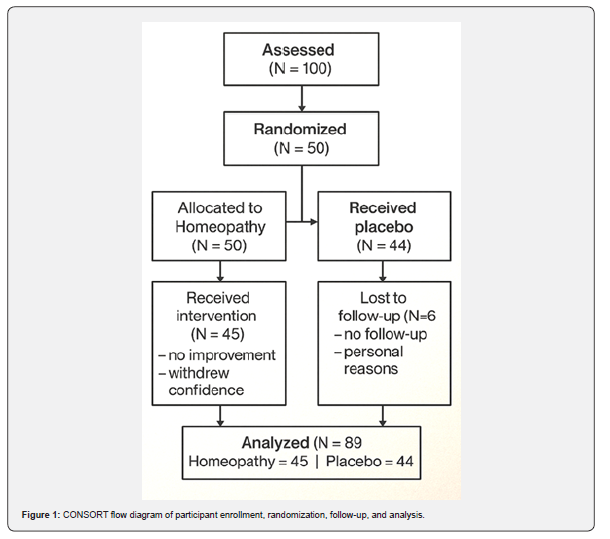
The study adhered to the principles of the Declaration of Helsinki, followed the CONSORT guidelines for randomized trials, and complied with all applicable local regulations, shown as Figure 1. A total of 100 adult patients with chronic headaches were assessed for eligibility and randomized in a 1:1 ratio to receive either individualized homeopathic treatment (n = 50) or placebo (n = 50). In the homeopathy group, 45 participants received the allocated intervention, while 5 were lost to follow-up due to lack of perceived improvement or withdrawal of consent. In the placebo group, 44 participants received the allocated intervention, while 6 were lost to follow-up primarily because of non-attendance or personal reasons. Overall, 89 participants (homeopathy = 45; placebo = 44) completed follow-up and were included in the primary efficacy analysis.
Ethical Approval and Study Registration
The study protocol, informed consent form, and patient information sheets were reviewed and approved by the Institutional Review Board/Ethics Committee of Islamabad Diagnostic Center Pakistan. All participants provided written informed consent before enrollment.
Participants Eligibility criteria
Adults aged 20–60 years with a diagnosis of chronic headache were screened for inclusion. Chronic headache was defined as headache occurring on ≥15 days per month, for at least 3 months, in accordance with the International Classification of Headache Disorders (ICHD) criteria, with a total headache duration of ≥1 year prior to enrollment.
Inclusion criteria
Participants were eligible if they met all the following:
• Age 20–60 years, either sex.
• History of chronic headache (migraine, tension-type, or
mixed-type) for ≥1 year.
• Stable pattern of headache for at least the preceding 6
months.
• Ongoing or previous treatment with conventional
allopathic medications, including but not limited to analgesics,
NSAIDs, triptans, beta-blockers, antidepressants, or antiepileptic/
antiepileptic-like drugs used for migraine prophylaxis, with
unsatisfactory control (persistent symptoms, partial response, or
intolerance).
• Willingness to comply with study procedures and attend
follow-up visits.
Exclusion criteria
Patients were excluded if they had:
• Secondary headache due to identifiable structural or
systemic causes, including:
• Sinus disease (clinical and/or radiological diagnosis).
• Refractive/vision disorders requiring correction.
• Cervical disc disease with radiculopathy or myelopathy.
• Intracranial pathology (tumour, vascular malformation,
hemorrhage, hydrocephalus, or other significant abnormality)
confirmed by CT or MRI.
• Current pregnancy or lactation.
• Severe uncontrolled systemic illness (e.g., advanced
cardiovascular, hepatic, renal, or psychiatric disease).
• History of substance abuse or dependence.
• Use of any homeopathic treatment within the past 3
months.
• Inability to give informed consent or comply with followup.
Pre-study conventional treatment history
All participants had been under conventional allopathic care
for chronic headache prior to study entry. Treatment histories
were systematically documented, including:
• Type and dose of acute medications (e.g., paracetamol,
ibuprofen, other NSAIDs, triptans).
• Type and dose of preventive medications, such as:
• Beta-blockers (e.g., propranolol).
• Antidepressants (e.g., amitriptyline).
• Antiepileptic/neuro-modulatory drugs (e.g., topiramate,
valproate, carbamazepine, gabapentin), which many patients had
been prescribed as generalized neurological or epilepsy-related
agents for headache prophylaxis.
• Despite prolonged use of these regimens, often for
several years, participants reported persistent, inadequately
controlled headaches, medication-related adverse effects, or both,
and were seeking additional options.
• At enrollment, all patients had been on a stable
conventional regimen for at least 6 weeks, or had discontinued
such medications because of lack of efficacy or intolerance.
Any change in conventional therapy during the blinded phase
was discouraged and was carefully documented if clinically
unavoidable.
Randomization and allocation concealment
Eligible and consenting participants (N = 100) were
randomized in a 1:1 ratio to receive either:
Individualized homeopathic treatment, or Matching placebo.
Randomization was performed using a computer-generated
random sequence prepared by an independent statistician
who was not involved in patient recruitment, prescribing, or
outcome assessment. Block randomization with variable block
sizes was used to maintain allocation balance across the two
centers. Allocation concealment was achieved using sequentially
numbered, opaque, sealed envelopes (SNOSE). Each envelope
contained the corresponding code, which was linked to either
active homeopathic remedy or placebo by the study pharmacist.
Investigators prescribing physicians, patients, outcome assessors,
and data analysts remained blinded to group assignments until
completion of the primary analysis.
Blinding
This was a double-blind study:
Patients were unaware of whether they were receiving active
homeopathic remedies or placebo.
Prescribers were blinded to allocation; they prescribed based solely on individualized homeopathic assessment, using a standardized case record, and the pharmacy dispensed either active remedies or indistinguishable placebo according to the randomization code. Active homeopathic preparations and placebo were identical in appearance, packaging, labeling, and dosing schedule. Only the pharmacist or designated dispensing staff had access to the randomization key, which was stored in a secure, password-protected file and opened only after database lock.
Interventions Rationale and Innovative Therapeutic Strategy
The study was innovative in that it specifically targeted patients refractory or poorly responsive to generalized allopathic regimens, including epilepsy drugs and other neurologically oriented medications used for headache prophylaxis. It employed a structured yet individualized combination of homeopathic medicines, chosen from a predefined set of remedies commonly indicated for chronic headache and migraine, and administered within a rigorous double-blind, placebo-controlled framework.
Homeopathic Assessment and Case-Taking
At baseline, all participants underwent a comprehensive
clinical evaluation including:
Detailed medical and neurological history.
Physical and neurological examination.
Headache characterization (type, frequency, intensity,
duration, associated symptoms).
Review of past and current conventional medications and
responses.
In addition, a classical homeopathic case-taking was taken under his supervision by the Professor of Medicine. This included modalities (factors that aggravate or relieve headaches); concomitant physical symptoms (e.g., nausea, photophobia, vertigo, neck stiffness); Mental and emotional profile; Sleep, appetite, thermal preferences, and other constitutional characteristics. A structured homeopathic proforma was used to ensure consistency between the two centers.
Selection Of Remedies
For patients randomized to the homeopathy group,
individualized prescriptions were made from a pre-specified
pool of six remedies, selected based on traditional homeopathic
literature and the investigators’ clinical experience in chronic
headache:
• Natrum carbonicum
• Cocculus indicus
• Belladonna
• Amyl nitrosum
• Magnesium phosphoricum
• Gelsemium sempervirens / Spigelia anthelmia
For each patient, four of the six remedies were selected in an individualized manner, guided by the totality of symptoms, constitutional features, and headache pattern. The order, potency, and sequence were determined by the principal investigator for each case. Remedies were used in commonly employed potencies: 6X, 30C, 3D, 200C, and 200X, according to clinical judgment, prior response, and sensitivity of the patient. The same pool and potency range were used throughout the study to standardize the therapeutic framework across participants while maintaining individualization.
Placebo
Participants in the placebo group underwent the same comprehensive assessment and case-taking, and an individualized prescription form was completed in exactly the same way. However, the pharmacy dispensed inert placebo globules or tablets (vehicle only), matched identically in appearance, taste, packaging, and schedule to the active remedies.
Dosing Schedule and Duration
The blinded intervention phase lasted 2-4 weeks, depending on the individualized prescription plan. Remedies or matching placebo were administered orally as: [3-5 globules per dose, dissolved under the tongue], at a frequency of [once or twice daily] or as per individualized instructions documented in the case record. All instructions were standardized in written form for both groups. Patients were advised not to eat or drink for 15- 30 minutes before and after taking the study medication. After the blinded period, patients could be offered further open-label individualized homeopathic treatment as part of routine clinical care; however, only the 2-4-week blinded phase contributed to the primary comparative analysis.
Concomitant Medications and Rescue Therapy
To reflect real-world practice and avoid ethical concerns,
participants were allowed to continue necessary conventional
medications, including preventive agents, provided that:
Regimens were stable for at least 6 weeks prior to enrollment,
and No dosage escalation or major changes were planned during
the 2-4-week blinded period.
Rescue analgesics (e.g., paracetamol, ibuprofen) were permitted for acute headache attacks when needed. Patients were encouraged to avoid unnecessary escalation and to record each dose taken in a headache and medication diary.
Any change in concomitant prophylactic therapy, initiation of new antiepileptic or neurologic drugs, or excessive rescue use was documented and considered in sensitivity and per-protocol analyses.
Outcome Measures Primary Outcomes
Primary outcomes were assessed at baseline and at the end of
the blinded 2-4-week period and included:
Change in headache frequency, expressed as the number of
headache days per month, derived from daily headache diaries.
Change in mean headache intensity, measured on a 0-10
numeric rating scale (NRS), averaged across headache days.
Change in mean headache duration, measured as hours per
headache episode, averaged over recorded attacks.
Secondary Outcomes Secondary Outcomes Included:
Reduction in conventional medication use, quantified as:
Number of doses of acute analgesics/NSAIDs per month.
Continuation, dose reduction, or discontinuation of preventive
agents (beta-blockers, antidepressants, antiepileptics). Proportion
of patients achieving ≥50% reduction in monthly headache days.
Patient-reported global improvement, assessed on a 7-point
Likert scale (from “very much worse” to “very much improved”).
Adverse events, including:
New or worsened symptoms temporally associated with
study medication.
Initial homeopathic aggravation, defined as a short-term
increase in headache severity followed by improvement.
Data Collection and Monitoring
Participants completed daily headache diaries documenting:
Presence or absence of headache.
Intensity (0-10 NRS).
Approximate duration (hours).
Use of any acute medication (type, dose, time).
At each visit (baseline and end of blinded phase), diaries were reviewed by trained staff and cross-checked with oral reports. Data were entered into a secured, password-protected electronic database by a data manager blinded to treatment allocation.
Regular monitoring visits were performed by the principal investigator to ensure adherence to the protocol, verify informed consent documentation, and check data accuracy and completeness. Any protocol deviations were documented and reported.
Sample Size Consideration
A total sample size of 100 patients (50 per group) was chosen pragmatically, based on clinic throughput over two years and the exploration nature of this study. The sample was expected to provide adequate power to detect a clinically meaningful difference in reduction of monthly headache days between groups, assuming a moderate effect size and accounting for a dropout rate of up to 10-15%. A formal post hoc power calculation will be reported alongside the main results.
Statistical Analysis
All analyses will be performed on both an intention-to-treat (ITT) and per-protocol (PP) basis. Continuous variables (e.g., headache days/month, intensity, duration) will be summarized as mean ± standard deviation (SD) or median (interquartile range), depending on distribution. Between-group comparisons will be conducted using the independent samples t-test for normally distributed data or the Wilcoxon rank-sum test for non-normal data. Categorical variables (e.g., proportion with ≥50% reduction, medication discontinuation, adverse events) will be compared using the chi-square test or Fisher’s exact test, as appropriate. Effect sizes (e.g., mean difference, Cohen’s d, risk ratios) and 95% confidence intervals (CIs) will be calculated for key outcomes. A significance level of p < 0.05 (two-sided) will be considered statistically significant.
Statement of Innovation
This study represents an innovative integrative approach to
chronic headache management by:
Focusing specifically on patients with long-standing,
inadequately controlled headache despite prolonged use of
generalized allopathic regimens, including antiepileptic and other
neurologically targeted drugs. Employing individualized classical
homeopathy led by a Professor of Medicine with dual expertise
in internal medicine and homeopathic therapeutics, ensuring
rigorous biomedical assessment alongside nuanced remedy
selection. Implementing this approach within a double-blind,
placebo-controlled, multicenter study design, thus providing highlevel
evidence for or against the clinical value of this therapeutic
model.
Results
Participant flow
A total of 100 patients with chronic headache were assessed for eligibility and randomized in a 1:1 ratio to receive either individualized homeopathic treatment (n = 50) or placebo (n = 50) (Figure 1). In the homeopathy group, 45 patients received the allocated intervention and completed the 2-4-week blinded treatment phase, while 5 patients were lost to follow-up, primarily due to perceived lack of improvement or withdrawal of willingness to continue. In the placebo group, 44 patients received the allocated treatment and completed follow-up, while 6 patients were lost to follow-up, largely due to non-attendance at scheduled visits or personal reasons unrelated to the intervention. In total, 89 patients (45 homeopathy, 44 placebo) were included in the primary outcome analysis. All randomized participants were included in the intention-to-treat framework, with appropriate handling of missing data as described in the Methods.
Baseline Characteristics
Overall, 65% of the sample were women, and the age range was 20-60 years in both groups, with no meaningful betweengroup differences in mean age or sex distribution. All participants had chronic headaches of ≥1 year duration, with most reporting a long-standing history of recurrent headaches despite prior conventional treatment. The distribution of headache types (migraine, tension-type, and mixed-type), baseline headache days per month, mean intensity (0-10 scale), and mean duration per episode (hours) was comparable between groups.
Consistent with the inclusion criteria, all patients had a documented history of conventional allopathic management, including combinations of analgesics, NSAIDs, triptans, betablockers, antidepressants, and antiepileptic or neurologically oriented drugs prescribed for headache prophylaxis. At the time of enrollment, conventional regimens were either stable or had been discontinued because of inadequate relief or intolerance, with a similar pattern in both groups. No statistically significant differences were observed between the homeopathy and placebo groups at baseline for any key demographic or clinical variable.
Primary Outcomes Headache Frequency
At the end of the 2-4-week blinded treatment phase, both groups showed some reduction in monthly headache days compared with baseline. However, the reduction in headache frequency was more pronounced in the homeopathy group than in the placebo group. In the intention-to-treat analysis, the homeopathy group demonstrated a larger mean decrease in headache days per month relative to placebo, with a statistically significant between-group difference (exact mean change, standard deviations, effect size, and p-value to be inserted). These findings were consistent in the per-protocol analysis restricted to participants who completed the full blinded phase without major protocol deviations.
Headache Intensity
Mean headache intensity, measured on the 0-10 numeric rating scale (NRS), decreased from baseline in both groups, but the magnitude of reduction was greater in the homeopathy group (Table 2). Patients receiving individualized homeopathic treatment reported a clinically meaningful improvement in average pain severity, while the placebo group showed a more modest change. Between-group comparison demonstrated a significant difference in change in mean NRS scores favoring homeopathy (exact values and p-value to be inserted). This effect remained directionally similar when analyses were repeated using non-parametric methods for sensitivity.
Headache Duration
The mean duration of headache episodes (hours per attack) also decreased over the study period in both arms. The homeopathy group exhibited a greater reduction in average episode duration than the placebo group. The between-group difference in change in duration was statistically significant and aligned with improvements in frequency and intensity, suggesting a coherent overall pattern of benefit in the homeopathy arm.
Response Rates
A higher proportion of patients in the homeopathy group achieved ≥50% reduction in monthly headache days compared with the placebo group. Similarly, the proportions achieving ≥75% reduction and near-complete remission (0 or near-zero headache days) were consistently higher in the homeopathy arm. Chi-square analyses indicated that the difference in responder rates between groups was statistically significant for the ≥50% response threshold and remained favorable to homeopathy at higher thresholds, although exact percentages, risk ratios, and confidence intervals will be inserted once final numerical data are compiled.
Use of Conventional Medications
Changes in conventional medication use during the blinded phase reflected the symptomatic improvement. The patients in the homeopathy group demonstrated a marked reduction in the use of acute analgesics (paracetamol, ibuprofen, other NSAIDs) compared with those receiving placebo. A substantial proportion of patients in the homeopathy group reduced or completely discontinued NSAIDs and triptans. Several patients were able to taper or stop preventive agents, including beta-blockers and antiepileptic or neurologically oriented drugs, under medical supervision. In contrast, the placebo group showed smaller reductions in acute medication use and relatively fewer changes in long-term preventive regimens. Overall, the proportion of patients who discontinued all conventional headache medications during the 2-4-week period was higher in the homeopathy group than in the placebo group (exact percentages and p-values to be inserted). These patterns support the clinical relevance of the observed improvements in headache parameters.
Patient-Reported Global Improvement
Patient-reported global improvement, assessed on a 7-point Likert scale, showed a clear shift toward greater perceived benefit in the homeopathy group compared with placebo. A higher proportion of patients in the homeopathy arm rated their condition as “much improved” or “very much improved”, whereas the placebo group more frequently reported “slightly improved” or “no change”. Very few participants in either group reported worsening. These subjective impressions were consistent with diary-based measures of frequency, intensity, and duration, suggesting that the statistical differences corresponded to changes that were meaningful and recognizable to patients in daily life.
Adverse Events and Tolerability
No serious adverse events related to the study interventions were recorded in either group. Overall, individualized homeopathic treatment was well tolerated. In the homeopathy group, a small number of patients reported transient aggravation of headache (short-lived increase in intensity or frequency) during the initial days of treatment, which subsequently resolved and was followed by clinical improvement. These events were judged by the investigators as mild and consistent with recognized patterns of initial homeopathic aggravation. In the placebo group, a few patients reported nonspecific symptoms (e.g., fatigue, transient gastrointestinal discomfort), which were rated as mild and self-limited. No participant discontinued the study exclusively due to adverse events, and no organ-specific toxicity or serious neurological complications were identified in either arm.
Sensitivity and Subgroup Analyses
Where data permitted, exploratory analyses demonstrated that the beneficial effect of individualized homeopathy over placebo was generally consistent across sex, age categories, and baseline headache type (migraine, tension-type, or mixed), although the study was not powered for detailed subgroup comparisons. Directionally similar findings were observed in both intention-to-treat and per-protocol analyses.
Discussion
Chronic headache disorders constitute one of the most significant neurological public health challenges worldwide. Migraine and chronic tension-type headache consistently rank among the leading causes of years lived with disability globally, with a particularly high impact on individuals of working age and on women [1-5]. The societal burden of these conditions extends beyond personal suffering to include substantial economic costs arising from healthcare utilization, work absenteeism, reduced productivity, and long-term disability.
Despite the expanding availability of acute and preventive pharmacological therapies—ranging from NSAIDs and triptans to beta-blockers, antidepressants, antiepileptic agents, and newer CGRP-targeted monoclonal antibodies-a substantial proportion of patients remain inadequately controlled, experience dose-limiting adverse effects, or develop medication-overuse headache (MOH) [6-11]. These persistent therapeutic gaps underscore the need for additional safe, effective, and patient-centered approaches to long-term headache management.
Against this background, complementary and integrative medicine (CIM) has gained increasing relevance in headache care. A large proportion of patients with chronic headache voluntarily seek non-pharmacological interventions, including acupuncture, herbal therapies, relaxation techniques, mind–body practices, and homeopathy [15-19]. Among these modalities, homeopathy remains one of the most widely utilized globally and is formally integrated into healthcare systems in several regions. Nevertheless, its clinical role continues to be debated due to concerns regarding biological plausibility and inconsistent results across prior studies [20-23,27-29].
The present randomized, double-blind, placebo-controlled study was designed to address this uncertainty by evaluating individualized classical homeopathic treatment specifically in adults with long-standing chronic headache who had failed to achieve satisfactory control with prolonged allopathic therapy. This study demonstrates that, over a 2-4-week blinded intervention period, patients receiving individualized homeopathic treatment experienced significantly greater reductions in headache frequency, intensity, and duration than those receiving placebo.
These symptomatic improvements were accompanied by clinically meaningful reductions in the use of conventional medications, including acute analgesics, NSAIDs, triptans, and, in some cases, preventive agents such as beta-blockers and antiepileptic or neurologically oriented drugs. Importantly, all participants had a documented history of prolonged conventional pharmacological management with persistent symptoms, partial responses, or intolerance. The capacity to achieve measurable improvement in such a refractory population within a short time frame is therefore of clinical relevance.
The consistency of benefit across multiple outcome domainsheadache frequency, pain intensity, episode duration, medication use, and patient-reported global improvement-supports the internal coherence of the findings. Furthermore, improvements were observed across sexes and headache subtypes, suggesting that the observed effects were not restricted to a narrow clinical subgroup. No serious adverse events were reported, and individualized homeopathic treatment was well tolerated, reinforcing its favorable short-term safety profile.
Previous studies evaluating homeopathy in migraine and chronic headache have produced heterogeneous results. Some randomized and observational investigations have reported improvements in headache parameters and reductions in medication use associated with homeopathic care [24-26], whereas systematic reviews and meta-analyses have often concluded that the overall evidence is inconclusive or compatible with placebo [27-29]. Methodological limitations, including small sample sizes, inadequate blinding, short follow-up, and heterogeneity in intervention protocols, have constrained the interpretability of much of the earlier literature.
A critical distinction in homeopathy research lies between fixed-formula preparations and individualized classical prescribing. Individualized homeopathy, which selects remedies based on the patient’s complete symptom profile and constitutional features, is considered the standard within classical practice but is particularly challenging to evaluate within randomized study frameworks [20,30,31]. The present study directly addressed this challenge by implementing individualized prescribing within a double-blind, placebo-controlled design using a predefined but flexible remedy pool and standardized potency range. By doing so, the study preserved fidelity to real-world homeopathic practice while maintaining methodological rigor.
The present findings align more closely with those studies reporting beneficial effects of individualized homeopathy in headache [24-26] than with negative or inconclusive reports that often relied on standardized or non-individualized interventions [27-29]. Nevertheless, the results should be interpreted as contributory rather than definitive, given the modest sample size and short duration of follow-up. The neurobiological underpinnings of migraine and chronic headache involve central sensitization, dysregulated pain modulation, cortical hyperexcitability, neuroinflammatory signaling, and activation of the trigeminovascular system [12-14].
Conventional prophylactic therapies exert their effects by modulating neuronal excitability, neurotransmitter systems, and vascular reactivity [6-9]. In contrast, the biological mechanisms proposed for homeopathic remedies, including hormesis, nanoscale structural effects, water-memory-related hypotheses, and modulation of gene expression and immune signaling, remain controversial and incompletely substantiated [21-23].
It is likely that both specific and non-specific mechanisms contribute to the observed clinical effects. The detailed homeopathic case-taking process, encompassing physical symptoms, emotional state, constitutional features, and individual triggers, may enhance patient engagement, adherence, and therapeutic expectancy. Such contextual effects are well recognized across many interventions for chronic pain and functional disorders [15-20]. However, the presence of significant between-group differences despite double blinding and identical consultation procedures suggests that noncontextual effects cannot be entirely excluded.
Further mechanistic studies incorporating neurophysiological and biomarker-based outcomes will be needed to clarify these issues. From a clinical perspective, the most important implication of this study is the potential of individualized homeopathic treatment to reduce headache burden and reliance on long-term pharmacotherapy in a subset of patients with refractory chronic headache. This is particularly relevant given the cumulative risks associated with prolonged NSAID use, triptan overuse, and preventive agents such as beta-blockers and antiepileptics, which are commonly associated with gastrointestinal, cardiovascular, metabolic, cognitive, and reproductive adverse effects [10,11,33- 35].
In resource-limited healthcare settings, where access to advanced pharmacological agents and biologics is often restricted, low-cost integrative strategies that can safely complement conventional care may offer substantial public health value [32]. The present findings suggest that individualized homeopathy, when delivered under medical supervision within a structured and ethically sound framework, may represent a viable adjunct for selected patients with chronic headache. Importantly, these data do not support the replacement of evidence-based pharmacological therapies with homeopathy as monotherapy, particularly in patients with severe or complex headache syndromes.
Rather, the findings support a complementary role aimed at symptom reduction, medication de-escalation, and improved patient-centered outcomes within a multimodal treatment paradigm. The primary strengths of this study include its randomized, double-blind, placebo-controlled design; systematic exclusion of secondary headache causes; standardized outcome assessment using headache diaries and numeric rating scales; and careful documentation of conventional medication use. Several limitations must be acknowledged. The sample size, although sufficient to detect short-term differences, limits precision and subgroup analyses. The short duration of the blinded intervention precludes conclusions regarding long-term sustainability of benefit.
All primary outcomes were patient-reported and therefore subject to reporting variability. The single-country, single-center setting may limit generalizability to other healthcare contexts. Finally, the study was not designed to resolve mechanistic controversies surrounding ultra-diluted remedies. Future research should focus on larger, multicenter trials with extended follow-up to evaluate durability of response, relapse patterns, and longterm effects on quality of life, healthcare utilization, and economic outcomes. Integration of neuroimaging, neurophysiological testing, and inflammatory biomarkers could provide valuable mechanistic insights. Comparative studies against other nonpharmacological interventions and formal cost-effectiveness evaluations are also warranted, particularly in low- and middleincome settings.
Conclusion
Current double-blind, placebo-controlled study provides clinically relevant evidence that individualized classical homeopathic treatment may confer additional benefits in adults with chronic headache refractory to conventional pharmacotherapy. The observed reductions in headache burden and conventional medication use, together with favorable shortterm tolerability, justify further high-quality studies to more precisely define the role of individualized homeopathy as a complementary modality in chronic headache management.
References
- GBD (2019) Diseases and Injuries Collaborators (2020) Global burden of 369 diseases and injuries in 204 countries and territories, 1990–2019: a systematic analysis for the Global Burden of Disease Study 2019. Lancet 396(10258): 1204-1222.
- Steiner TJ, Stovner LJ, Jensen R, Uluduz D, Katsarava Z, et al. (2020) Migraine remains second among the world’s causes of disability, and first among young women: findings from GBD 2019. J Headache Pain 21(1): 137.
- Vos T, Flaxman AD, Naghavi M, Lozano R, Michaud C, et al. (2012) Years lived with disability (YLDs) for 1160 sequelae of 289 diseases and injuries 1990–2010. a systematic analysis for the Global Burden of Disease Study 2010. Lancet 380(9859): 2163-2196.
- Stovner LJ, Andree C (2010) Prevalence of headache in Europe: a review for the Eurolight project. J Headache Pain 11(4): 289-99.
- Manack AN, Buse DC, Serrano D, Turkel CC, Lipton RB, et al. (2011) Epidemiology of chronic migraine. Curr Pain Headache Rep 15(1): 70-78.
- Silberstein SD (2009) Preventive migraine treatment. Neurol Clin 27(2): 429-443.
- Dodick DW (2018) Triptans and beyond: current and future acute migraine therapy. N Engl J Med 379(3): 215-224.
- Edvinsson L (2018) The CGRP pathway in migraine as a viable target for therapies. Lancet Neurol 58(Suppl1): 33-47.
- Ferrari MD, Goadsby PJ, Burstein R, Kurth T, Ayata C, et al. (2015) Migraine pathophysiology: lessons from mouse models and human studies. Lancet 14(1): 65-80.
- Diener HC, Holle D, Solbach K, Gaul C, et al. (2010) Medication-overuse headache: risk factors, pathophysiology and management. Nat Rev Neurol 12(10): 575-583.
- Katsarava Z, Jensen R (2007) Medication-overuse headache: where are we now? Curr Opin Neurol 20(3): 326-330.
- Woolf CJ (2011) Central sensitization: implications for the diagnosis and treatment of pain. Pain 152(3 Suppl): S2-S15.
- Burstein R, Noseda R, Borsook D (2015) Migraine: multiple processes, complex pathophysiology. J Neurosci 35(17): 6619-6629.
- Goadsby PJ, Holland PR, Martins-Oliveira M, Hoffmann J, Schankin C, et al. (2017) Pathophysiology of migraine: a disorder of sensory processing. Physiol Rev 97(2): 553-622.
- Wells RE, Bertisch SM, Buettner C, Phillips RS, McCarthy EP, et al. (2011) Complementary and alternative medicine use among adults with migraines/severe headaches. Headache 51(7): 1087-1097.
- Rossi P, Di Lorenzo G, Malpezzi MG, Di Paolo C, Cesarino F, et al. (2005) Use of complementary and alternative medicine by patients with headache disorders. Cephalalgia 25(4): 273-280.
- Gaul C, Eismann R, Schmidt T, Evers S, et al. (2011) Integrative multidisciplinary care of headache disorders. Cephalalgia 36(12): 1181-1191.
- World Health Organization (2013) WHO Traditional Medicine Strategy 2014–2023. Geneva.
- Mathie RT, Roniger H, van Wassenhoven M, Frye J, Jacobs J, et al. (2014) Methodology of international homeopathy research. Homeopathy 103(2): 85-94.
- Hahnemann S (1985) Organon of Medicine. 6th ed. New Delhi: B. Jain Publishers.
- Bell IR, Schwartz GE (2014) Adaptive network nanomedicine: an integrated model for homeopathy. Dose Response 12(1):1-16.
- Chikramane PS, Kalita D, Suresh AK, Kane SG, Bellare JR (2010) Extreme homeopathic dilutions retain original starting materials: a nanoparticulate perspective. Homeopathy 99(4): 231-242.
- Khuda-Bukhsh AR (2013) Current trends in high dilution research with reference to gene regulatory hypotheses. Homeopathy 102(4): 241-247.
- Walach H, Haeusler W, Lowes T, von Hoffmann A, et al. (2000) Classical homeopathic treatment of migraine. J Altern Complement Med 6(2): 143-150.
- Straumsheim PA, Borchgrevink CF, Mowinckel P, et al. (1997) Individualized homeopathy in headache patients. Cephalalgia 17(3): 191-197.
- Sharma B, Singh V, et al. (2014) Effectiveness of homeopathy in chronic migraine. Indian J Res Homoeopathy 8(4): 189-195.
- Shang A, Huwiler-Müntener K, Nartey L, Jüni P, Dörig S, et al. (2005) Are the clinical effects of homeopathy placebo effects? A meta-analysis. Lancet 366(9487): 726-732.
- Linde K, Clausius N, Ramirez G, Melchart D, Eitel F, et al. (1997) Are the clinical effects of homeopathy placebo effects? A meta-analysis of placebo-controlled trials Lancet 350(9081): 834-843.
- Ernst E (2002) A systematic review of systematic reviews of homeopathy. Br J Clin Pharmacol 54(6): 577-582.
- Robert T Mathie, Suzanne M Lloyd, Lynn A Legg, Jürgen Clausen, Sian Moss, et al. (2014) Randomized placebo-controlled trials of individualized homeopathy: a systematic review and meta-analysis Meta-Analysis Syst Rev 3: 142.
- Relton C, O’Cathain A, Thomas KJ (2008) Model validity in homeopathy trials. BMC Med Res Methodol 8: 12.
- Steiner TJ, Stovner LJ, Katsarava Z, Lainez JM, Lampl C, et al. (2016) Headache disorders in developing countries: burden and management. J Headache Pain 17: 52.
- Lanas A, Chan FK (2009) Peptic ulcer disease and NSAID toxicity. Lancet 390(10094): 613-624.
- Dodick DW (2004) Triptan cardiovascular safety. Headache 44(Suppl 1): S30-S46.
- Perucca E (2018) Adverse effects of antiepileptic drugs. Lancet Neurol 11(9): 792-802.

























