




 JYP Home



Abstract
Keywords: Electromyography; Ground Reaction; Center of mass; Asanas; Yoga; Psranayama
GRF: Ground Reaction Forces; COM: Center of mass; EMG: Electromyography; GRFs: Ground Reaction Forces; MCL: Medial Collateral Ligament
Introduction
Yoga is an ancient mind-body discipline rooted in Indian philosophy, widely recognized for its holistic benefits, including physical fitness, mental well-being, and spiritual growth [1]. Over the centuries, yoga has evolved and been adapted into various styles to cater to diverse practitioner needs, ranging from gentle restorative sessions to dynamic vinyasa-based forms [2]. In modern contexts, a growing body of scientific literature has attempted to unravel the physiological and biomechanical components of yoga, particularly to understand how specific postures (asanas) affect the human musculoskeletal system [3]. Biomechanics, in its simplest definition, is the study of mechanical laws relating to the movement or structure of living organisms [4]. By applying biomechanical principles to yoga, researchers and practitioners alike aim to delve deeper into how asanas produce stress, strains, and adaptive responses in the body.
These responses include muscle activation patterns, joint loading, ground reaction forces (GRFs), and the interplay of balance and stability mechanisms [5]. Such an understanding can help refine alignment cues, minimize injury risk, and optimize the therapeutic and fitness-related outcomes of yoga practice [6]. With the growing popularity of yoga globally, there has also been a concern about potential injuries arising from incorrect alignment, overzealous practice, or lack of proper guidance [7]. Common complaints include wrist strain from weight-bearing postures like plank or downward dog, lower back discomfort in forward folds, and neck issues in inversions [8]. Biomechanical analysis provides an evidence-based framework for instructors to offer safer modifications and for practitioners to develop body awareness that respects individual anatomical differences [9].
A systematic exploration of secondary data on the biomechanics of yogic postures is warranted, synthesizing existing findings to establish an integrated understanding. This paper endeavors to:
•Examine the role of key biomechanical parameters-joint angles, muscle activation, center of mass (COM) distribution, and ground reaction forces-in commonly practiced asanas.
•Discuss how these parameters influence flexibility, stability, and injury prevention.
•Highlight the implications of such knowledge in therapeutic yoga for individuals with musculoskeletal or neuromuscular disorders.
By bringing together traditional yogic wisdom and contemporary scientific investigation, this paper aims to support both practitioners and healthcare providers in harnessing the full potential of yoga as a safe, efficient, and health-promoting discipline [10].
Literature Review
Historical Context of Yoga Research
Historically, yoga was transmitted primarily through oral traditions and experiential learning, with its first textual codifications in ancient Indian texts like the Yoga Sutras of Patanjali [11]. Modern scientific interest in yoga began emerging in the mid-20th century when Western researchers started examining the physiological effects of breathing techniques (pranayama) and meditation [12]. A shift toward biomechanical examination has taken shape more recently, as the field of sports science recognized the parallels between yoga and other athletic movements, especially concerning alignment, joint integrity, and muscle function [13].
Biomechanics and Its Relevance to Yoga
Biomechanics typically involves quantitative and qualitative assessments of movement, using tools like motion capture systems, force platforms, electromyography (EMG), and sometimes even wearable sensors [14]. Translating these methods into yoga research involves analyzing static poses (asanas) and dynamic transitions (vinyasa flows) to determine how muscles and joints interact underload and to identify areas prone to strain or dysfunction [15]. Several studies have sought to quantify muscle activation levels in common asanas. For instance, an EMG-based study on downward facing dog (Adho Mukha Svanasana) revealed significant activation in the upper extremity muscles (deltoids, triceps) and the core (rectus abdominis, transverse abdominis), suggesting the importance of stabilizing synergy across multiple muscle groups [16]. This underscores why instructors emphasize “drawing the navel toward the spine” to engage core muscles and reduce strain on the shoulders and wrists [16,17].
Applications in Therapeutic and Rehabilitation Settings
A growing body of evidence supports the therapeutic use of yoga in rehabilitation contexts, including chronic low back pain, neck pain, and shoulder instability [18]. From a biomechanical standpoint, yoga postures can be tailored to correct postural imbalances, enhance proprioception, and strengthen underactive muscle groups [19]. Furthermore, certain modifications—such as using blocks, straps, or chairs-help distribute mechanical loads more safely, making yoga accessible to individuals with restricted mobility [20].
For example, a systematic review by Cramer et al. [21] found that yoga interventions focusing on alignment and controlled transitions significantly reduced pain and improved functional outcomes in patients with low chronic back pain [21]. The biomechanical explanation for these outcomes includes the gentle strengthening of spinal extensors, hip stabilizers, abdominal muscles, alongside improved lumbar-pelvic alignment [22].
Gaps in Current Research
Despite the increasing volume of research, several gaps remain. First, many studies employ small sample sizes, limiting the generalizability of their findings [23]. Second, measurement tools are often inconsistent across studies-some use force plates while others rely on subjective clinician-based assessments [24]. Third, there is a need for more longitudinal research to understand how sustained yoga practice over months or years modifies biomechanical variables such as muscle strength ratios, ligament tensile properties, or tendon elasticity [25]. Moreover, cultural and stylistic differences in yoga practice-ranging from gentle Yin Yoga to physically demanding Ashtanga or power yoga-mean that biomechanical data cannot be uniformly applied across all forms [26]. There is thus a need for a more nuanced categorization of yogic postures and transitions, factoring in the diverse ways they are practiced in different lineages and traditions.
Methodology
Study Design
This paper is designed as a secondary data analysis or narrative review, synthesizing the biomechanical aspects of yoga practice from existing scholarly works. The approach aims to integrate findings from peer-reviewed journal articles, systematic reviews, meta-analyses, and authoritative texts on yoga and biomechanics.
Data Sources and Search Strategy
A comprehensive search was performed on databases such as PubMed, Scopus, Google Scholar, and ScienceDirect, covering publications up to 2023. Search terms included “yoga biomechanics,” “joint angles in yoga,” “EMG in yoga,” “ground reaction forces in yoga,” “yoga injury prevention,” and “therapeutic yoga for musculoskeletal disorders.” Articles not available in English or lacking clear biomechanical metrics were excluded.
Inclusion and Exclusion Criteria
• Inclusion:
1. Studies involving healthy adults or clinical populations
performing structured yoga postures.
2. Research employing tools like EMG, force plates, motion
analysis, or wearable sensors to quantify biomechanical variables.
3. Articles focusing on alignment, injury prevention, or
therapeutic applications in yoga.
• Exclusion:
1. Studies with insufficient description of posture
technique or measurement methods.
2. Purely theoretical or philosophical yoga articles without
biomechanical data.
3. Conference abstracts or non-peer-reviewed sources
without access to detailed methodology.
Data Extraction and Synthesis
Information was extracted regarding study design, sample demographics, types of yoga postures analyzed, measurement instruments, and key findings related to joint angles, muscle activation, center of mass shifts, and ground reaction forces. These data points were then compared, and recurring themes were identified, such as:
• The effect of alignment cues on joint loading.
• The role of muscle co-contraction in achieving postural
stability.
• The importance of controlled transitions in preventing
abrupt changes in joint forces.
Synthesized findings were organized into categories of asanas (standing, seated, backbends, inversions, transitions) for clarity and practical relevance.
Limitations of Methodology
As a secondary review, this study is limited by the quality and heterogeneity of available literature. Discrepancies in measurement techniques and participant skill levels also affect the comparability of results. Furthermore, potential publication bias must be considered, as positive or significant findings on yoga are more likely to be published, potentially skewing the synthesized evidence. Nonetheless, the integrative approach allows for a broad understanding of current biomechanical knowledge in yoga practice and identifies directions for future empirical research.
Biomechanical Principles Underlying Yogic Postures
Joint Angles and Alignment
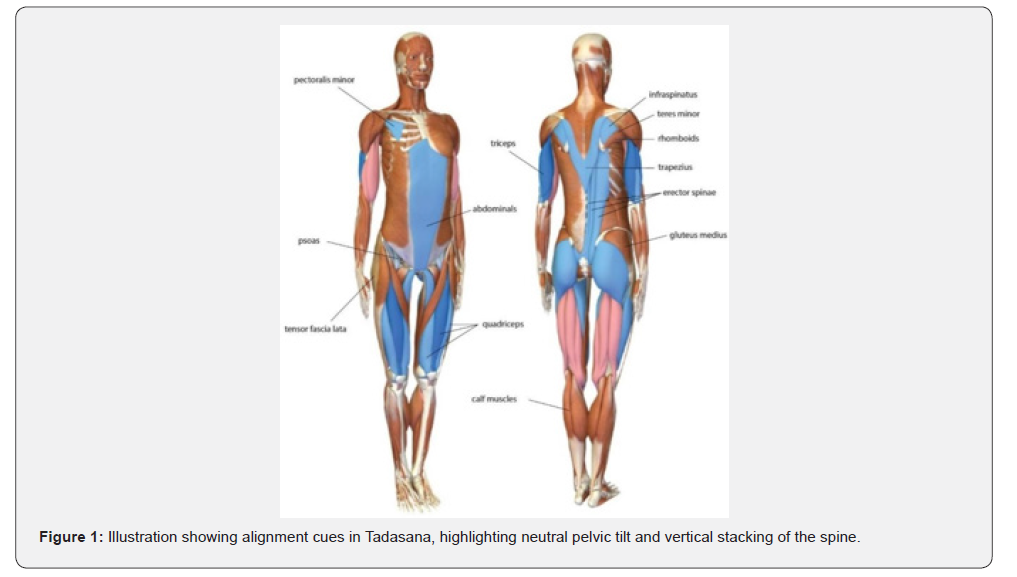
One of the core tenets of any biomechanical analysis is quantifying joint angles during movement or static posture. In yoga, the alignment of joints-whether in the spine, shoulders, hips, or knees-is crucial to distributing forces evenly and preventing localized stress. For instance, in Warrior II (Virabhadrasana II), maintaining a 90-degree bend in the front knee and ensuring the knee tracks over the ankle helps reduce strain on the medial collateral ligament (MCL) [27]. Misalignment may shift excessive force to the knee ligaments, predisposing practitioners to injury [28]. Similarly, spinal alignment is a focal point in poses like Tadasana (Mountain Pose), where the vertical stacking of cervical, thoracic, and lumbar vertebrae fosters an even distribution of gravitational forces [29]. Overarching the lower back in Tadasana may lead to increased compressive forces on lumbar discs over time, emphasizing the importance of maintaining a neutral pelvis and engaged core [30].
Muscle Activation
Electromyography studies have shed light on which muscles are most active, particularly asanas [31]. For example, bridging poses (Setu Bandha Sarvangasana) show heightened activity in the gluteus maximus and hamstrings, indicating their pivotal role in hip extension [32]. In contrast, plank-like postures (Phalakasana) primarily recruit the transverse abdominis, rectus abdominis, and oblique muscles for trunk stabilization. Understanding muscle activation patterns allows practitioners to target specific muscular weaknesses or imbalances. In individuals with chronic low back pain, for instance, the emphasis on core engagement in certain yoga asanas can aid in strengthening deep stabilizing muscles of the spine [33].
Center of Mass Distribution
The center of mass (COM) in the human body is typically located around the pelvic region, but it can shift depending on limb position and overall posture [34]. In yoga, balancing postures like Tree Pose (Vrikshasana) or Half Moon Pose (Ardha Chandrasana) demand precise positioning of the COM over the base of support, challenging the practitioner’s proprioceptive and neuromuscular control [35]. Small deviations in the COM can lead to loss of balance, underscoring why advanced balancing asanas require progressive training and sometimes the use of supports like walls or blocks during initial practice [36]. By deliberately manipulating limb placement, yoga systematically trains the sensorimotor system to accommodate shifts in COM, thereby improving static and dynamic balance [37].
Ground Reaction Forces (GRF)
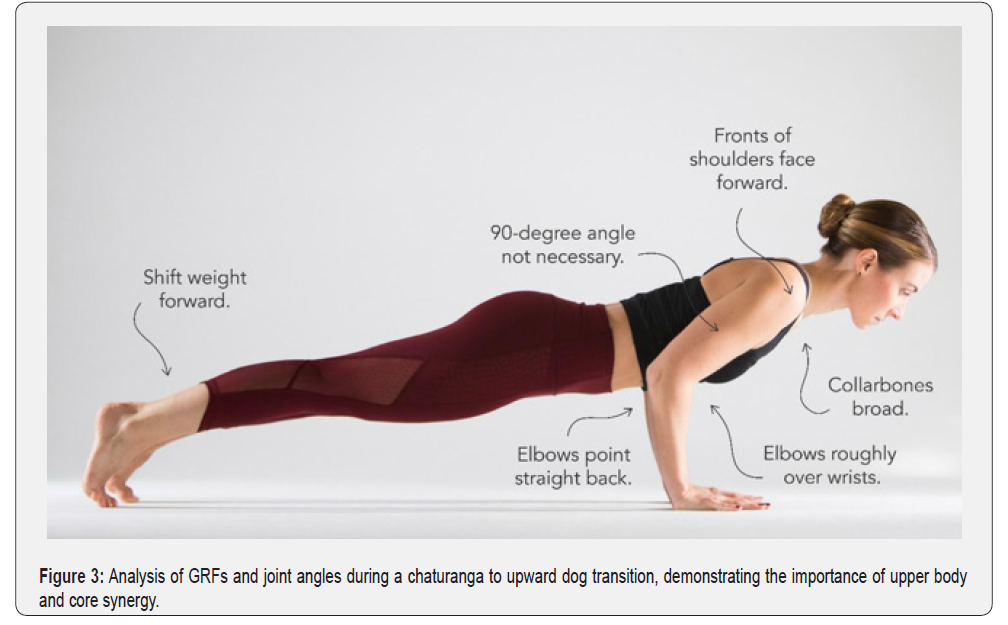
Ground reaction forces are the equal and opposite forces exerted by the ground on the body when standing, walking, or holding a pose 444. In yoga, GRF measurements reveal how weight-bearing is distributed in different asanas. For instance, in Downward Facing Dog, a higher proportion of body weight is transferred to the upper extremities compared to standing postures, thereby strengthening the arms and shoulders [38]. Quantifying GRFs can also be invaluable in understanding how transitions (e.g., Chaturanga to Upward Dog) might generate peak forces that could stress the wrists or elbows if performed too rapidly or without proper engagement of stabilizing muscles [39]. Hence, practitioners are often advised to move slowly and mindfully between postures, so that force development is controlled and joint integrity is preserved [40].
Detailed Analysis of Key Yogic Posture Categories
To present an in-depth perspective, the following sections categorize and analyze common postures that illustrate the interplay of biomechanical principles in yoga.
Standing Postures
Tadasana (Mountain Pose)
• Alignment: Feet hip-distance apart or together, with
weight evenly distributed across all four corners of the feet.
• Key Biomechanics:
A. Joint Angles: Neutral alignment in ankles, knees, hips,
and shoulders.
B. COM: Centered through the midline, supporting upright
balance.
C. Muscle Activation: Subtle engagement of quadriceps
and core musculature to maintain posture [41] (Figure 1).
Virabhadrasana Series (Warrior Poses)
• Alignment:
o In Virabhadrasana I, hips face forward, front knee at 90
degrees, and rear foot angled at approximately 45 degrees.
o In Virabhadrasana II, front knee at 90 degrees, arms
extended at shoulder level.
• Key Biomechanics:
o Joint Angles: Maintaining knee over ankle minimizes
medial/lateral knee stress.
o Muscle Activation: Gluteus medius and minimus assist
in stabilizing the pelvis, while the quadriceps and hamstrings cocontract
to maintain knee position [42].
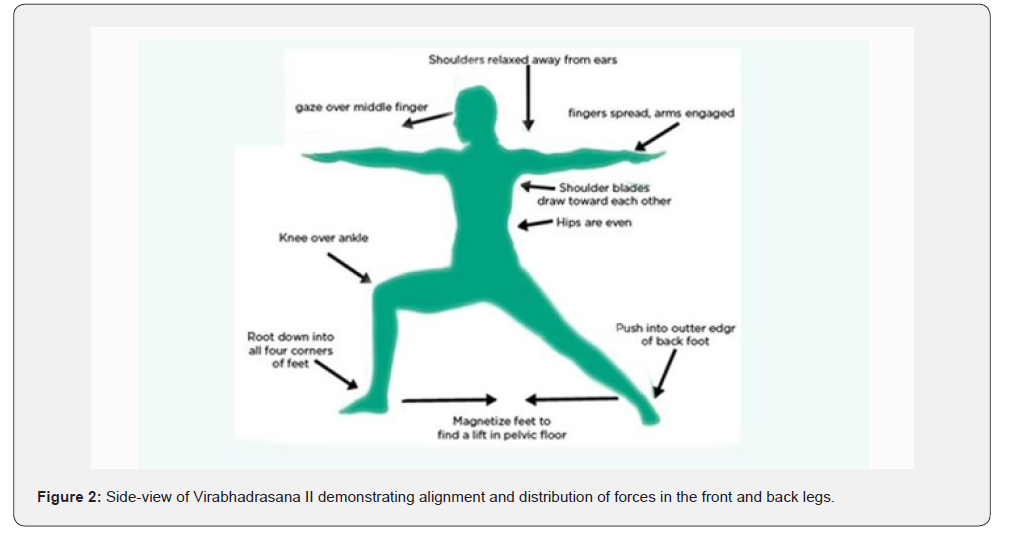
o Ground Reaction Forces: The front leg bears a significant portion of body weight, enhancing lower-limb strength and stability [43] (Figure 2).
Trikonasana (Triangle Pose)
• Alignment: Feet positioned approximately one leglength apart, front foot facing forward, rear foot angled slightly inward.
• Key Biomechanics:
o Joint Angles: The side-flexion of the trunk requires
lengthening of the lateral oblique muscles while ensuring the
spine remains elongated.
o COM: Shifts laterally over the front foot, challenging
stability.
o Muscle Activation: Eccentric contraction in the obliques
and isometric engagement in the quadriceps [44].
• Injury Considerations: Overreaching the torso can
compress the lower side of the torso and compromise spinal
alignment, necessitating mindful extension rather than mere
lateral flexion [45].
Seated Postures
Dandasana (Staff Pose)
• Alignment: Legs extended forward, spine upright,
shoulders relaxed.
• Key Biomechanics:
o Joint Angles: Neutral pelvis with a slight anterior tilt to
maintain the lumbar curve.
o Muscle Activation: Activation of the core, hip flexors,
and back extensors to prevent the spine from collapsing [46].
• Therapeutic Value: Often used as a foundational pose
to assess and improve posture in seated positions, beneficial for
people with tight hamstrings or lower back issues.
Padmasana (Lotus Pose) and Its Variations
• Alignment: Legs are crossed with feet placed on
opposite thighs.
• Key Biomechanics:
o Joint Angles: Extreme external rotation of the hips;
caution required for individuals with limited hip mobility [47].
o COM: Centered in the Pelvic region, essential for an
upright spine.
o Muscle Activation: The pose relies on hip joint range of
motion more than forceful muscle activation.
• Injury Considerations: Vulnerable to knee strain if the
external rotation is forced at the knee rather than the hip [48].
Forward Bends (e.g., Paschimottanasana)
• Alignment: Spine elongates forward from the hips,
minimizing lumbar flexion stress [49].
• Key Biomechanics:
o Joint Angles: Primarily hip flexion with controlled
spinal flexion to avoid excessive disc pressure.
o Muscle Activation: Eccentric lengthening of the
hamstrings and back extensor muscles [50].
o Therapeutic Value: Can help improve hamstring
flexibility and pelvic tilt control, but caution is needed for
individuals with lower back pathologies.
Backbends
Bhujangasana (Cobra Pose)
Alignment: Hands placed under shoulders, elbows
close to the rib cage, and spine extending upward.
• Key Biomechanics:
o Spinal Extension: Emphasis on thoracic extension
rather than lumbar hyperextension [51].
o Muscle Activation: Erector spinae and latissimus dorsi
facilitate spinal extension, while the gluteus maximus stabilizes
the pelvis [52].
• Ground Reaction Forces: In the early phase of the pose,
the hands press into the mat, generating upward force through
the arms into the thorax [53].
UrdhvaDhanurasana (Wheel Pose)
• Alignment: A full backbend with hands and feet on the
ground, arms and legs extending [54].
• Key Biomechanics:
o Joint Angles: High degree of shoulder, hip, and spine
extension.
o Muscle Activation: Strong engagement in the gluteals,
hamstrings, and shoulder girdle (deltoids, rotator cuff).
o COM and GRF: COM elevated as the body arches upward,
distributing weight across hands and feet, creating a significant
GRF [55].
• Risk Factors: Excess lumbar compression if thoracic
mobility is insufficient, highlighting the importance of a warm-up
and progressive spinal extension.
Salabhasana (Locust Pose)
• Alignment: Prone position with both legs lifted and
arms extended back [56].
• Key Biomechanics:
o Muscle Activation: Emphasizes posterior chain
muscles—erector spinae, gluteus maximus, hamstrings.
o Injury Prevention: Strengthens the posterior chain,
which can mitigate chronic low back pain by balancing anterior
and posterior torso strength.
Inversions
Sirsasana (Headstand)
• Alignment: Forearms and hands create a stable base,
with the crown of the head lightly resting on the ground.
• Key Biomechanics:
o COM: Dramatic shift as the body inverts, requiring
precise control of trunk and hip positioning [57].
o Muscle Activation: Shoulders, triceps, and upper back
muscles engaged to protect the cervical spine [58].
o GRFs: Force is transmitted through the forearms and
head, cautioning against excessive cervical loading [59].
• Injury Risk: Potential for cervical spine compression
if alignment is not maintained or if there is insufficient shoulder
strength [60].
Sarvangasana (Shoulder Stand)
• Alignment: Body is supported primarily on the
shoulders, with arms bracing the lower back.
• Key Biomechanics:
o COM: Located near the upper back, requiring strong
shoulder stabilization [61].
o Muscle Activation: Upper trapezius, deltoids, and
triceps help maintain the inverted position; core muscles stabilize
the spine.
o Cervical Considerations: Over-flexion of the neck may
compress the cervical vertebrae, emphasizing the need for props
or blankets under the shoulders [62].
Adho Mukha Vrksasana (Handstand)
• Alignment: Full inversion balanced on the palms of the
hands.
• Key Biomechanics:
o COM: Aligned vertically over the base of support formed
by the hands [57].
o Muscle Activation: High involvement of the shoulder
girdle and core, especially the serratus anterior for scapular
protraction [63].
o Injury Prevention: Progressive training is critical; abrupt attempts can lead to shoulder or wrist injuries [64].
Transitions Between Postures
Transitions or vinyasas are dynamic sequences linking static poses. Common examples include moving from plank (Phalakasana) to chaturanga (low plank), and then to upward dog (Urdhva Mukha Svanasana). Rapid or poorly executed transitions can generate abrupt increases in GRFs, particularly at the wrists, elbows, and shoulders [65]. This is why many modern yoga teachings emphasize slow, controlled movements synchronized with the breath, facilitating neuromuscular coordination and reducing injury risk. A study using motion capture and force plates found that transitioning from chaturanga to upward dog produced peak forces nearly twice the body weight on the upper extremities [39]. Proper scapular stabilization, elbow alignment, and core engagement were crucial factors in mitigating these forces (Figure 3).
Discussion
Synthesis of Findings
The biomechanical principles underlying yogic postures underscore the complexity and depth of this ancient practice. From standing poses that cultivate foundational stability to inversions that challenge proprioception, each asana interacts with joint angles, muscle activation, COM shifts, and GRFs in unique ways. Controlled alignment ensures forces are distributed across multiple joints, mitigating the risk of focal stress. EMG findings highlight how core engagement synergizes with upper and lower extremities to maintain equilibrium and protect vulnerable structures like the wrists or neck.
Injury Prevention and Alignment
Incorrect alignment or overextension in a pose like Trikonasana can place undue stress on the lower spine or knees, just as forcing hip rotation in Lotus (Padmasana) can strain the knee joint. Across multiple studies, mindful practice-characterized by gradual progression, appropriate use of props, and awareness of physical limits-emerges as a key strategy for injury prevention. Furthermore, transitions performed with awareness and muscular control minimize peak forces that could otherwise lead to chronic overload in the shoulders or wrists [66].
Relevance to Practitioners and Instructors
Yoga instructors can benefit from biomechanical research by providing precise cues on alignment and muscle activation, thereby guiding practitioners to engage the correct muscle groups and avoid hypermobility or forced joint positions. For instance, in backbends, directing the practitioner to “lengthen the spine” rather than simply “bend backward” can facilitate a safer distribution of spinal extension forces. Instructors who understand COM shifts can also assist students better in balancing postures, using external support or body positioning strategies that gradually build proprioceptive awareness and strength [67]. Similarly, the knowledge of which muscles are predominantly recruited in each pose can help practitioners target areas of weakness or tightness.
Therapeutic and Clinical Applications
Biomechanical insights have a natural intersection with physical therapy and rehabilitation. Given that many musculoskeletal issues-such as chronic low back pain or rotator cuff dysfunction-stem from poor posture or muscular imbalances, yoga can serve as a supplementary intervention when practiced with proper alignment and progression. For populations with limited mobility, seated or modified postures using chairs and props can ensure that mechanical loads remain within safe limits. Studies on therapeutic yoga consistently show improvements in functional mobility, pain reduction, and quality of life, particularly when the practice is tailored to individual anatomical and biomechanical constraints. These findings suggest that bridging the gap between yoga teachers and rehabilitation professionals could foster more integrative care models for patients with chronic conditions [68].
Limitations and Future Research
Current research faces limitations such as small sample sizes, inconsistent methodologies, and a focus on shortterm interventions. Future studies would benefit from larger, randomized controlled trials incorporating standardized biomechanical tools (e.g., motion capture, force plates, EMG) to allow meta-analyses and systematic comparisons. Additionally, exploring the long-term adaptation of connective tissues, muscle strength, and neuromuscular coordination would offer a more comprehensive picture of yoga’s biomechanical impact [69]. Emerging technologies like wearable sensors could enable real-time feedback on joint angles and forces, potentially revolutionizing the way yoga is taught and self-practiced [14,66]. This could open avenues for interactive apps and virtual platforms that provide biomechanical cues to practitioners worldwide [70].
Conclusion
This paper reviewed the biomechanical underpinnings of yogic postures through the lens of secondary data, highlighting how alignment, muscle activation, COM distribution, and GRFs interplay to influence flexibility and stability. Each posture category-standing, seated, backbends, inversions, and transitionspresents unique biomechanical challenges, which, if navigated carefully, can yield substantial benefits in terms of muscle strength, joint integrity, and overall physical function. A key finding is that correct alignment and controlled movement not only optimize the musculoskeletal benefits of yoga but also significantly reduce injury risks. By applying biomechanical principles, practitioners and instructors can refine technique, adapt practices for therapeutic needs, and enhance the safety and efficacy of yoga.
Moreover, integrating traditional yogic wisdom-centered on mindfulness, breath control, and holistic well-being-with scientific insights underscores yoga’s unique position as both a spiritual discipline and a biomechanically robust physical practice. As research tools become more sophisticated, future studies can delve into longitudinal analyses, exploring how sustained yoga practice remodels tissues, refines neuromuscular control, and contributes to comprehensive health outcomes. Ultimately, this synergistic approach between age-old practices and modern science holds promises for advancing yoga as a crucial component of rehabilitation, sports training, and preventive healthcare.
References
- Iyengar BKS (1966) Light on Yoga. Schocken Books.
- Feito Y, Burrows E, Tabb L (2020) A 12-Week Yoga and Meditation Program Improves Functional Fitness in Older Adults: A Pilot Study. Journal of Bodywork and Movement Therapies 24(1): 59-64.
- Woodyard C (2011) Exploring the therapeutic effects of yoga and its ability to increase quality of life. International Journal of Yoga 4(2): 49-54.
- Hall SJ (2014) Basic Biomechanics (7th ed.). McGraw-Hill Education.
- Mangal V, Telles S (2020) Biomechanical Perspectives in Selected Yoga Postures. Journal of Complementary and Integrative Medicine 17(3).
- Shirey M (2019) Understanding Biomechanical Alignment to Prevent Yoga Injuries. Journal of Yoga & Physiotherapy 6(2): 555-685.
- Lauche R, Cramer H, Haller H, et al. (2016) My Back Has Improved! Changes in Low Back Pain-Related Pain Intensity and Disability Following Yoga Interventions: A Systematic Review and Meta-analysis. Complementary Therapies in Medicine 25: 173-183.
- Birkel DA, Edgren L (2000) Hatha Yoga: Improved Vital Capacity of College Students. Alternative Therapies in Health and Medicine 6(6): 55-63.
- Tran MD, Holly, RG, Lashbrook J, Amsterdam EA (2001) Effects of Hatha Yoga Practice on the Health-Related Aspects of Physical Fitness. Preventive Cardiology 4(4): 165-170.
- Kaminoff L, Matthews A (2011) Yoga Anatomy (2nd ed.). Human Kinetics.
- Saraswati S (1996) Asana Pranayama Mudra Bandha. Yoga Publications Trust.
- Swami Kuvalayananda (1933) Pranayama. Kaivalyadhama Institute.
- Polsgrove MJ, Eggleston BM, Lockyer RL (2016) Impact of 10-weeks of yoga practice on flexibility and balance of college athletes. International Journal of Yoga 9(1): 27-34.
- Zheng X, Wang L (2021) Wearable Sensor Systems for Movement Analysis in Yoga Practice: A Literature Review and Research Agenda. Sensors 21(4): 1-18.
- Fomin S, Johnson E (2017) Biomechanical Assessment of Vinyasa Flow Yoga. Journal of Bodywork and Movement Therapies 21(2): 345-352.
- Fredericson M, Jennings F, Beaulieu C, Matheson GO (2021) Biomechanical Analysis of Yoga Postures Using Surface Electromyography. Journal of Orthopaedic & Sports Physical Therapy 51(12): 590-597.
- Herman DC, Smith DT (2008) Four-week core stabilization training program and its effect on core activation during dynamic balance testing. Journal of Strength and Conditioning Research 22(4): 1259-1268.
- Galantino M, Bzdewka T, Eissler-Russo J, et al. (2004) The Impact of Modified Hatha Yoga on Chronic Low Back Pain: A Pilot Study. Altern Ther Health Med 10(2): 56-59.
- Telles S, Naveen KV (2008) Yoga for Rehabilitation: An Overview. Indian Journal of Medical Research 127(1): 43-47.
- Fishman LM, Saltonstall E (2008) Yoga in the Management of Osteoarthritis. Rheumatic Disease Clinics of North America 26(1): 105-115.
- Cramer H, Lauche R, Haller H, Dobos G (2013) A Systematic Review and Meta-analysis of Yoga for Low Back Pain. Clinical Journal of Pain 29(5): 450-460.
- Miyamoto GC, Costa LOP, Cabral CMN (2013) Effectiveness of the Pilates method in the treatment of chronic low back pain: A systematic review with meta-analysis. Physical Therapy 93(5): 670-677.
- Posadzki P, Ernst E (2011) Yoga for Low Back Pain: A Systematic Review of Randomized Clinical Trials. Clinical Rheumatology 30(9): 1257-1262.
- Gothe NP, McAuley E (2015) Yoga and Cognition: A Meta-analysis of Chronic and Acute Effects. Psychosomatic Medicine 77(7): 784-797.
- Wieland LS, Skoetz N, Pilkington K, Vempati R, D’Adamo CR, et al. (2017) Yoga treatment for chronic non-specific low back pain. Cochrane Database of Systematic Reviews 1(1): CD010671.
- Hauth JM, Stephens TE (2016) Effect of Bikram Yoga on Physical Fitness in Healthy Adults: A Pilot Study. Journal of Sports Medicine and Physical Fitness 56(7-8): 734-740.
- Corliss J, Brody LT (2013) Knee Biomechanics in Standing Yoga Postures. Journal of Yoga & Physiotherapy 2(4): 1-6.
- Saper RB, et al. (2016) Comparative Effectiveness of Yoga, Exercise, and Education for Chronic Low Back Pain. Annals of Internal Medicine 165(9): 569-578.
- Fields KB (2011) The Role of Yoga in Sports Medicine: A Review of the Literature. Clinics in Sports Medicine 30(2): 349-367.
- Kendall FP, McCreary EK, Provance PG, Rodgers MM, Romani WA (2005) Muscles: Testing and Function, with Posture and Pain. Lippincott Williams & Wilkins 86(2): 304-305.
- Cowen VS (2010) Functional Fitness Improvements After a Worksite-Based Yoga Initiative. Journal of Bodywork and Movement Therapies 14(1): 50-54.
- Youdas JW, Krause DA, Hollman JH, Harmsen WS (2016) Surface Electromyographic Activation Patterns and Elbow Joint Angles during Performance of Push-Up Variations. Journal of Strength and Conditioning Research 30(10): 2846-2855.
- Tekur P, Singphow C, Nagendra HR, Raghuram N (2008) Effect of Short-Term Intensive Yoga Program on Pain, Functional Disability, and Spinal Flexibility in Chronic Low Back Pain: A Randomized Control Study. Journal of Alternative and Complementary Medicine 14(6): 637-644.
- Winter DA (2009) Biomechanics and Motor Control of Human Movement (4th ed.). John Wiley & Sons.
- Paillard T (2017) Plasticity of the postural function to sport and/or motor experience. Neuroscience &Biobehavioral Reviews 72: 129-152.
- Oliveira AS, Silva PB, Lund ME, Vieira TM (2017) Center of Pressure and Force Measures to Quantify Postural Control in Yoga Postures. Gait & Posture 57: 223-229.
- Gonçalves BT, Pinto CL, Albuquerque MR (2019) Effects of Balance Training on Stability during Single-Leg Balance in Yoga Practitioners. Journal of Bodywork and Movement Therapies 23(2): 306-310.
- Clay CC, Lloyd LK, Walker JL, Sharp KR, Pankey RB (2005) The Metabolic Cost of Hatha Yoga. Journal of Strength and Conditioning Research 19(3): 604-610.
- Schenck RC, Avcin L, Kohrs R, Rodriguez J (2020) Kinetic and Kinematic Analysis of the Yoga Push-Up Transition (Chaturanga–Upward Dog). Journal of Orthopaedic & Sports Physical Therapy 50(5): 275-282.
- Stephens T (2010) The Use of Props in Modern Postural Yoga: A Guide for Safe Practice. Yoga Therapy Today 6(2): 20-25.
- Holmstrom L, Mori G (2018) Analysis of Standing Posture in Yoga Practitioners Using 3D Motion Capture. Journal of Bodywork and Movement Therapies 22(2): 391-396.
- Chaudhary B, Bidinger E (2017) The Gluteus Medius and Minimus Activation in Common Yoga Postures. Journal of Yoga & Physiotherapy 4(3): 555-639.
- Frederick A, Frederick K (2008) Stretch to Win. Human Kinetics.
- Hegedus EJ, Goode A, Campbell S, et al. (2014) Physical examination tests of the hip: a review of the literature. Sports Health 6(2): 133-140.
- McCall T (2007) Yoga as Medicine. Bantam Dell.
- Coulter D (2001) Anatomy of Hatha Yoga. Body & Breath.
- Tri HH, Kumar S (2013) Knee Joint Stress in Lotus Posture: A Case Study. Physiotherapy Research International 18(2): 113-117.
- Fishman LM, et al. (2009) Understanding Knee Injuries in Yoga: The Importance of Anatomy and Body Awareness. International Journal of Yoga Therapy 19: 33-41.
- Weldon SM, Hill RH (2003) The Efficacy of Stretching for Prevention of Exercise-Related Injury: A Systematic Review of the Literature. Manual Therapy 8(3): 141-150.
- Barreto TD, Sousa CS, Nunes LA (2020) Range of Motion and Muscle Activation in Forward Folding Yoga Postures. Complementary Therapies in Medicine 52: 102458.
- Mehling WE, Gopisetty V, Daubenmier J, Cynthia J Price, Frederick M Hecht, et al. (2009) Body Awareness: Construct and Self-Report Measures. PLos One 4(5): e5614.
- Chuter VH, Spink MJ (2020) Biomechanics of the lumbar spine in extension. The Spine Journal 20(9): 1375-1379.
- Gluck GS, Bendo JA, Spivak JM (2008) The lumbar spine and low back pain in golf: a literature review of swing biomechanics and injury prevention. Spine Journal 8(5): 778-788.
- Krishnamacharya T (1934) Yoga Makaranda. The Mysore Palace Press.
- Schöndorf G, Schube C (2019) Biomechanical Analysis of Urdhva Dhanurasana in Experienced Yoga Practitioners. Journal of Bodywork and Movement Therapies 23(4): 851-856.
- Mohan AG, Mohan I (2004) Yoga Therapy. Krishnamacharya Yoga Mandiram.
- Boulware L, Crow E (2016) Analysis of Handstand Balance Strategies: Implications for Practice in Gymnastics and Yoga. Sports Biomechanics 15(2): 223-234.
- Saper RB (2017) Safety of yoga: An update. Journal of Alternative and Complementary Medicine 23(10): 663-668.
- Sergueef N (2007) Cranial Osteopathy for Infants, Children and Adolescents: A Practical Handbook. Elsevier Health Sciences.
- Carrière B (2021) Headstand: A Prospective Analysis of Cervical Spine Loads and Injury Risks. Journal of Yoga & Physiotherapy 7(3): 555-768.
- Kolanowski J, LaBella C (2020) Shoulder Stabilization Requirements in Shoulder Stand. Orthopaedic Journal of Sports Medicine 8(6): 232-243.
- Fishman LM, Saltonstall E (2017) Yoga for Osteoporosis: A Pilot Study. Topics in Geriatric Rehabilitation 33(2): 108-117.
- Kibler WB, McMullen J (2003) Scapular dyskinesis and its relation to shoulder pain. Journal of the American Academy of Orthopaedic Surgeons 11(2): 142-151.
- Elovic EP, Gellman H (2022) Joint Hypermobility and Yoga: Considerations for Safe Practice. American Journal of Physical Medicine & Rehabilitation 101(4): 355-365.
- Kotwal N (2017) Wrist Injuries in Yoga: Biomechanical Considerations. Hand Clinics 33(1): 121-133.
- Bird J (2018) Kinetic Chain Evaluation in Vinyasa Flow: A Biomechanical Perspective. Journal of Bodywork and Movement Therapies 22(4): 1030-1036.
- Gopal K, Bailey J (2020) Using External Supports for Balancing Postures in Elderly Yoga Practitioners. Complementary Therapies in Clinical Practice 39: 101-143.
- Field T (2011) Yoga clinical research review. Complementary Therapies in Clinical Practice 17(1): 1-8.
- Thomas M, McLean L (2021) Investigating Neuromuscular Adaptations in Yoga Practitioners: A Systematic Review. Physiological Reports 9(1).
- Santos D, Figueiredo P (2018) Virtual Reality-Based Motion Tracking in Yoga. Applied Sciences 8(10): 1930.

























