



 JYP Home



Abstract
Introduction: This study aimed to determine if Enneagram types were different for physical therapists (PTs) who completed either a pain or
orthopedic fellowship. In healthcare, Enneagram personality typology has shown to influence communication styles used by providers, stress
and depression levels, empathy displayed by providers and tied to clinical areas of specialty.
Materials and Methods: The study represented a convenience sample of pain and orthopedic fellowship graduates. For this study, a crosssectional
survey was designed consisting of two sections that collected data on participant demographics, Enneagram typology, and beliefs
regarding pain and orthopedic care in PT.
Results: Forty-eight fellows (pain = 29 [60.4%]; orthopedic = 19 [39.6%]) completed the study. Overall, half of the participants represented
two Enneagram personality typology – type 2 (helper) (n = 13; 27.1%) and type 3 (achiever) (n = 11; 22.9%). For pain fellows, the dominant
Enneagram personalities were type 2 [n = 10; 34.5%], type 9 (peacemaker) [n = 5; 17.2%] and type 3 [n = 4; 13.8%]. For orthopedic fellows
Enneagram typology was dominated by type 3 [n = 7; 36.8%], followed equally (n = 3; 15.8%) by type 1 (reformer) and type 2.
Discussion: The results from this study show that overall PT fellows are represented primarily by Enneagram personality typology 2 and 3.
Additionally, pain fellows are better represented by type 2, whereas orthopedic fellows are better represented by type 3. To the best knowledge
of the authors, this is the first published study report on Enneagram personality typology in PT.
Conclusion: The majority of PTs in the study identified with type 2 and type 3 Enneagram personality typology. The study showed that
Enneagram personality typology is different for pain and orthopedic fellows in PT. Future studies are needed to validate these results, expand
the findings beyond just fellowship and study PT in general.
Keywords: Enneagram; Physical Therapy; Fellowship; Pain; Orthopedic
Introduction
The Enneagram is a prominent personality typology frequently utilized to enhance self-awareness [1,2]. Its central objective is to elucidate the underlying mechanisms of personality to assist individuals in transcending the constraints imposed by their characteristic patterns of thought, emotion, and behavior [3- 5]. Beyond offering descriptive profiles of nine distinct personality types, the Enneagram provides a comprehensive framework for understanding the habitual cognitive, affective, and behavioral tendencies associated with each type [1,2].
Moreover, it serves as a tool for fostering self-transcendence by cultivating a heightened state of present-moment awareness [3-5]. Within this model, personality is conceptualized not as an innate essence but as a constructed system of internal defenses and conditioned responses to one’s environment and sense of self [2]. Through engagement with the Enneagram, individuals may gain insight into their essential qualities and move beyond the confines of personality structure, thereby enhancing their capacity for presence and self-realization [2]. Although everyone predominantly aligns with one of the nine personality types, all nine types are represented to varying degrees within the broader personality structure [3-5].
In medicine, interest in Enneagram personality types has been explored to understand patient responses to treatment [6,7] medical provider communication with patients [1], medical provider’s stress [3], depression in nursing students [8], predictive models for disease [9], empathy of healthcare providers [2], and areas of clinical specialty [10,11]. It has also been proposed that certain personality traits, according to the Enneagram, may explain why medical providers gravitate towards a certain area of clinical practice [10,11]. For example, type 2’s (helper) may prefer patient-facing roles, while it is proposed type 5’s (thinkers) may lean towards research or diagnostic specialties [10].
Ozen, et. al. [10] recently showed that senior medical students’ pathway choices could be correlated with their Enneagram [10]. Overall, enneagram type 2 (helper) was the most prevalent (39.3%), followed by type 1 (reformer) (13.3%) and type 6 (loyalist) (11.8%). Specific to specialty, statistical analysis showed differences between type 3 (achiever) [cardiovascular surgery, orthopedics and traumatology], type 4 (individualist) [pneumology, psychiatry], type 6 (loyalist) [infectious diseases, neurology and microbiology], type 7 (enthusiast) [cardiology], type 8 (leader) [pediatrics and biochemistry] and type 9 (peacemaker) [family medicine, radiology, psychiatry and medical pathology] [10]. Bacik, et. al. [11] studying medical residents found that the “achiever” and “challenger” types were significantly more likely to pursue surgical specialties, compared to other roles [11].
The research implies that certain personalities may migrate to or away from specific areas of medicine, or patient care, to align with strengths, comfort levels and personality traits. To date, the studies have focused on medicine, with no such studies in other healthcare disciplines, including physical therapy (PT) [10,11]. Physical therapists (PTs), like medicine, can specialize in different areas of clinical practice, including orthopedics, sports medicine, pediatrics, neurology, geriatrics and more. Anecdotally, the choice of areas of clinical expertise must be driven by various factors, yet empirical data is lacking in PT to show what factors drive PTs to migrate to different areas of clinical practice. In a study discussing the importance of clinical instructors in PT student clinical rotations, Cole and Wessel imply that these clinical experiences powerfully shape the clinical experience, as well as the future of the student, and imply the direction of their area of clinical practice [12].
Specific to PTs treating chronic pain, it can be argued that empathy and compassion is much needed for this patient population, given the complexity of chronic pain, including the interplay between biological, psychological and social factors [13,14]. In contrast, it can be argued that less complicated, orthopedic cases such as acute, non-radicular low back pain, require lower levels of empathy and compassion, with likely a bigger focus on technical proficiency of a technique to alleviate pain, i.e., high velocity thrust technique or dry needling procedure [15]. Implied within this argument, and the data on personality traits driving physician areas of clinical practice [10,11], it can be hypothesized that certain personality traits in PTs may indeed align them closer to a certain type of practice. To date, no such studies have been explored in PT. The goal of this study was to determine if Enneagram types were different for PTs who completed either a pain or orthopedic fellowship.
Methods
The study was a cross-sectional survey of PTs who have completed either a pain or orthopedic fellowship. Before the study, approval was obtained from XXXX University’s institutional review board. All procedures followed were in accordance with the ethical standards according to the Helsinki Declaration of 1975, as revised in 1983.
Subjects
We developed, piloted, and delivered an electronic survey to fellowship graduates. A post-professional education provider in PT offering both pain and orthopedic fellowship consented to the study and distributed the survey to its graduates. Inclusion criteria were a PT who graduated from a post-professional pain or orthopedic fellowship and completed an Enneagram test, the exclusion criterion was declining to participate for whatever reason or not knowing their Enneagram allocation. Participants had the option to complete a free Enneagram test if they chose to do so. No personally identifiable information was gathered, and participation was entirely voluntary.
Survey Development
A new survey was conducted by the study’s objectives. Previous studies exploring Enneagram personality traits in medical providers were consulted and mirrored to ensure a similar experience [1-3, 8-11]. The questionnaire consisted of two main sections. Section one gathered non-identifiable demographic data, including Enneagram type, age, gender, ethnicity, state they practice in, highest academic degree, possession of a Board Certification, completion of a clinical specialty certification, completion of a pain or orthopedic fellowship, years since completing the fellowship, years of clinical experience, current clinical role and current teaching role. Section two, using a Likert Scale anchored between -2 (strongly disagree) and +2 (strongly agree), assessed participant’s agreement with various statements regarding their beliefs related to orthopedic and chronic pain care:
• I am very good at manual therapy
• I am very good at pain science
• I am more of a manual therapist than a pain therapist
• I am more of a pain therapist than a manual therapist
• To be a manual therapist you must be technically
proficient with technique delivery
• To be a pain therapist you do not need to be as technically
proficient with technique delivery
• Clinicians who specialize in manual therapy and those
who specialize in chronic pain management likely have different
personalities
To establish face and content validity, the draft questionnaire was sent to a panel of ten fellowship graduates, asking them to provide feedback on the content and completion of the questionnaire and return comments in 2 weeks. After two weeks, a reminder e-mail was sent to the panel if they had not completed the accompanying checklist for the survey. If the expert panel obtained 70% agreement, the survey was deemed ready for the next phase [16]. After expert review, minor grammatical punctuation and spacing were made, deeming it ready for use. The survey took an average of 5 minutes to complete.
Data Collection
The final survey was loaded into an online tool (Microsoft Forms™), and survey links were sent to fellowship graduates. Students received an explanation of the study’s intent and were invited to participate. Participation was voluntary. Participants agreed to participate signed a consent form and completed the online survey. To ensure a higher response rate, a reminder was sent to participants 1 month and 2 months later, asking those who had not completed the study to please consider doing so and thanking those who had already completed the survey.
Data Analysis
Survey data was downloaded from Microsoft Forms™ and exported to SPSS Version 29; SPSS Inc, Chicago, IL. Statistical analysis included means, percentages, counts and standard deviations for demographic and descriptive data. Within-group repeated measures and between-group analyses for pain and orthopedic beliefs were done using a two-way mixed ANOVA on complete-case analysis. The level of significance was set at p<0.05.
Results
Participant Demographics
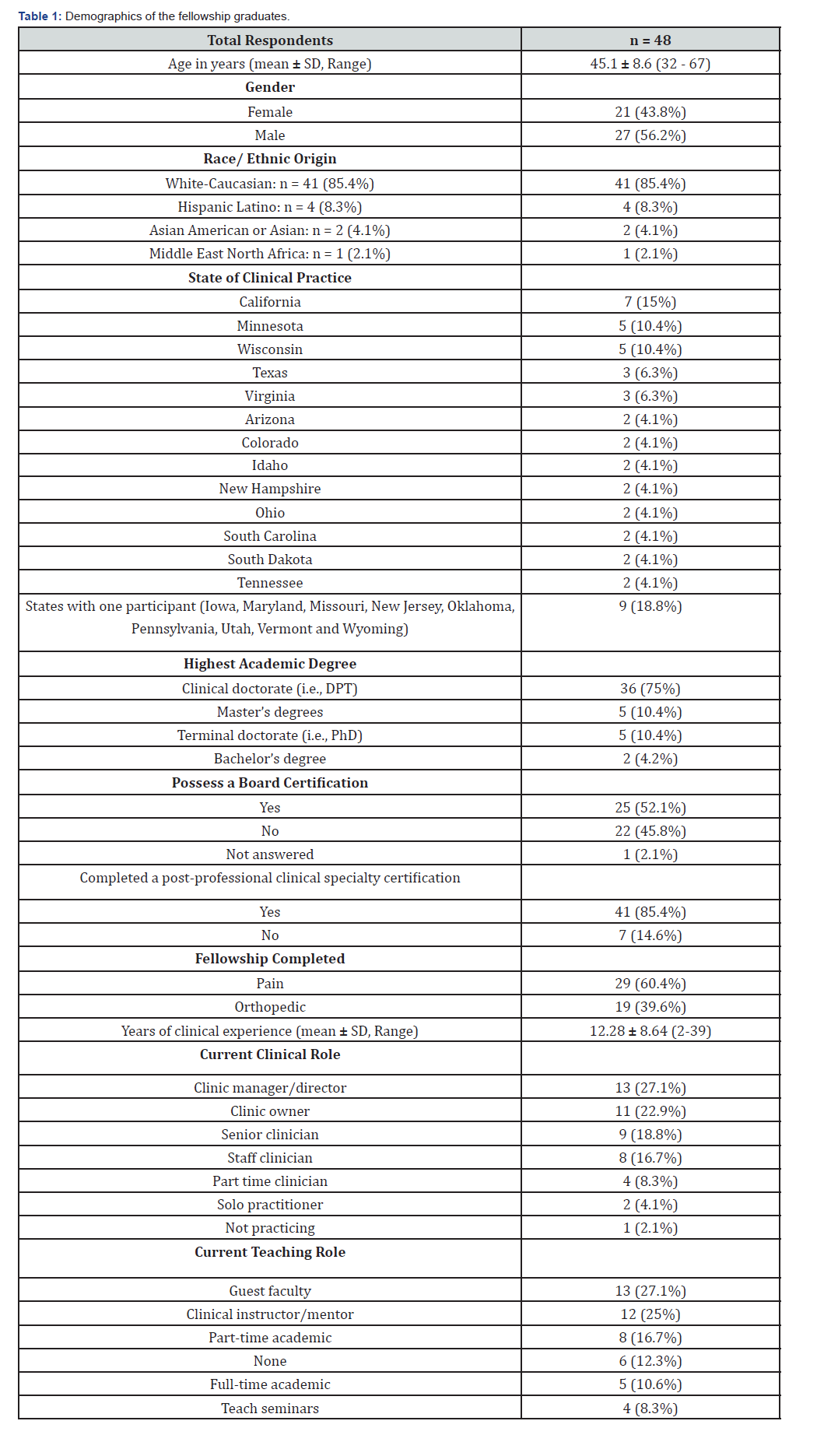
The survey was available online through Microsoft Forms™ from July to September 2025. In all, the survey link was sent to 340 fellows (282 orthopedic and 58 pain). After the initial link, 25 emails were returned with delivery failure, leaving 315 emails with survey links delivered to fellowship graduates. At the completion of the data collection phase, 48 fellows completed the survey (pain n = 29; orthopedic 19). A true response rate was impossible to calculate, given data was not collected on what number of fellowship graduates have completed the Enneagram personality typology or know their Enneagram personality typology. Table 1 shows the demographic data of the study cohort.
Enneagram Personality Typology
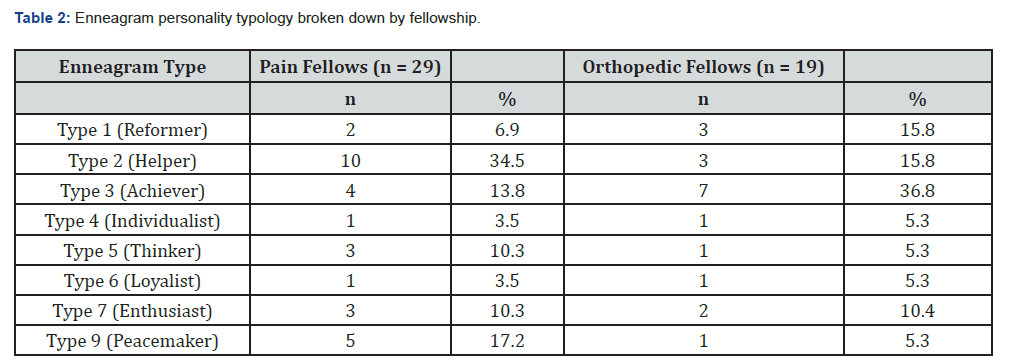
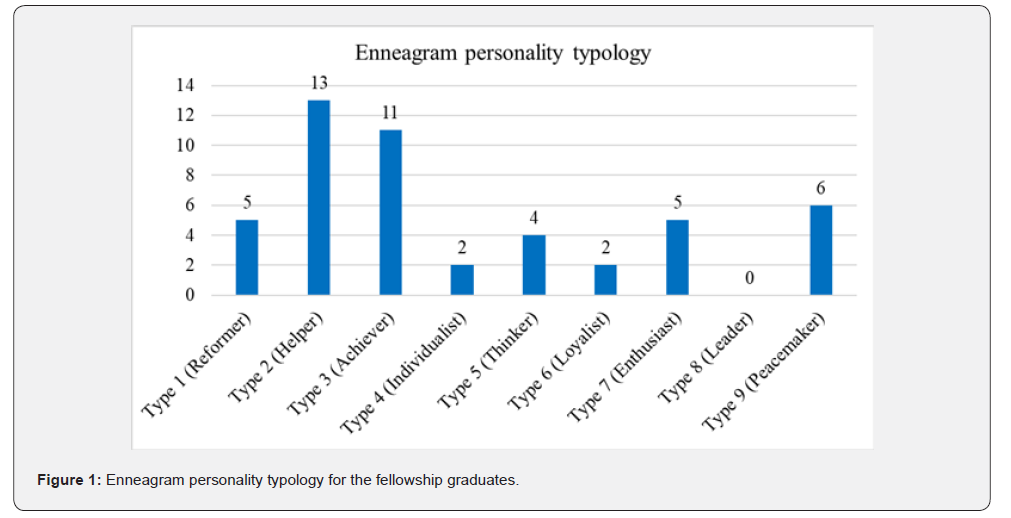
Two Enneagram personality typologies dominated the overall fellowship graduate cohort with type 2 (helper) (n = 13; 27.1%) and type 3 (achiever) (n = 11; 22.9%) accounting for 50% of the represented typologies (Figure 1). Table 2 shows the representation of the Enneagram personality typology between pain and orthopedic fellows. For pain fellows, the dominant Enneagram personalities were type 2 (helper) [n = 10; 34.5%], type 9 (peacemaker) [n = 5; 17.2%] and type 3 (achiever) [n = 4; 13.8%]. For orthopedic fellows Enneagram personality typology was dominated by type 3 (achiever) [n = 7; 36.8%], followed equally (n = 3; 15.8%) by type 1 (reformer) and type 2 (helper).
Beliefs Regarding Pain and Musculoskeletal Care/ Practice
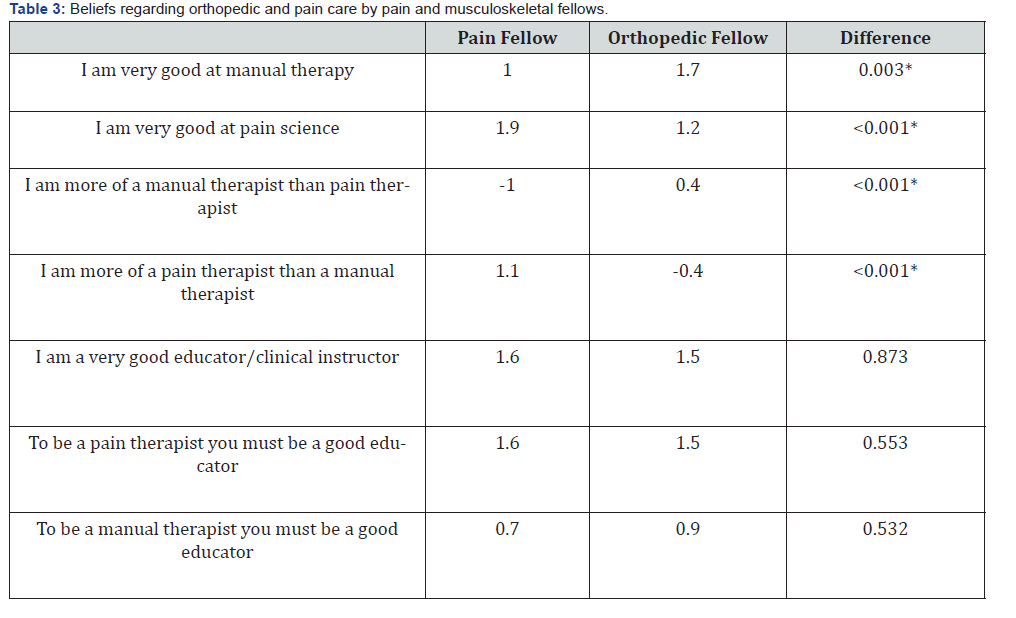
Table 3 shows the responses to the various belief statements regarding pain and orthopedic care. As expected, orthopedic fellows perceived themselves very good at manual therapy versus pain fellows (p = 0.003), whereas pain fellows perceived themselves as good at pain science, compared to orthopedic fellows (p < 0.001). These beliefs regarding clinical proficiency transferred into orthopedic therapists identifying themselves more as a manual therapist than pain therapist (p < 0.001), whereas pain fellows identified themselves more as a pain therapist (p < 0.001). Regarding education skills and the importance of education skills for orthopedic and pain practice, no difference was found between the different fellows.
Discussion
The results from this study show that overall, PT fellows are represented primarily by Enneagram personality typology 2 (helper) and 3 (achiever). Additionally, when comparing pain and orthopedic fellows, pain fellows are better represented by type 2 (helper), whereas orthopedic fellows are better represented by type 3 (achiever). To the best knowledge of the authors, this is the first published study reporting on Enneagram personality typology in PT, including differentiation in clinical specialty based on the personality typology assignment.
The results of this study concur with the studies in medicine showing that areas of clinical specialty can possibly be explained by Enneagram personality typology [10,11]. In this study, musculoskeletal fellows were more likely to be represented by type 3 (achiever). In medicine, type 3 is more associated with need for precision and technical proficiency, i.e., cardiovascular surgery, orthopedics and traumatology, which align well with the results of this study [10,11]. In manual therapy (orthopedic fellows), it has been reported that fine sensorimotor proficiency, eye-hand coordination, discriminate touch and manual joint assessment are critical skills for manual therapy [17], which aligns well with skills associated with surgeons.
This argument is further strengthened by the fact that additional studies have shown that fine motor skills are essential in orthopedic PT [17-19]. A key aspect of orthopedic manual therapy is the ability of a clinician to use skilled palpation and physical assessment techniques, i.e., special tests, to help aid in the development of a diagnosis [20,21]. In contrast, given the complexity of chronic pain [22], palpatory skills and results from palpation findings play a smaller role in clinical diagnosis, which may explain why this study found difference in personality typology. Pain fellows, specializing in the assessment and treatment of chronic pain will, for example, see more patients presenting with nociplastic pain, which often includes allodynia and hyperalgesia, which limit interpretation of palpation and special tests, which is a cornerstone of manual therapy [23].
In this study, pain fellows were more associated with type 2 (helper) Enneagram personality typology. A key aspect of the helper typology is empathy [2], which has been shown to be a core characteristic of healthcare providers specializing in the examination and treatment of chronic pain [24,25]. For example, Licciardone, et. al. [25] showed that empathy displayed by healthcare providers, a key aspect of type 2, is associated with decreased self-reported pain, disability and increased quality of life [25]. Linton, et.al., showed that active listening, another key aspect associated with type 2 Enneagram, is a key psychologically informed competency as part of the “future” pain clinician” [24]. Specific to PT, an emerging evidence-based treatment for chronic pain in the last two decades have been pain neuroscience education [26], which teaches patients more about the underlying biology and physiology of their pain experience [22,26].
Zimney, et. al. [13] recently showed that a key factor in the success on pain neuroscience education is trust developed between the provider and the patient [13]. This is important, since provider empathy, a key component of a helper (type 2) Enneagram has been shown to powerfully impact trust [14], a key aspect in the efficacy of pain neuroscience education, a large part of the pain fellowship curriculum. Even with the differences between the two sub-specialties of PT regarding Enneagram typology, it is important to point out that the results indicate that PTs tend to be represented by type 2 (helper) and type 3 (achiever). For pain fellows, helper was the most prevalent, yet achiever was third highest, whereas in orthopedic fellows, achiever was most prevalent, yet helper was ranked second most common along with reformer (type 1).
This result is exciting, since the 2 key aspects of type 2 (empathy) and type 3 (technical proficiency) are highly valued by patients when encountering PT and a core aspect of their expectations when coming to PT [27-29]. Enneagram studies are lacking in PT and a lot more research is needed in this space and the fact that both fellowships were heavily represented by two personality typologies may have some potential interesting implications for the PT. First, recognizing that PT maybe be heavily represented by type 2 and 3 typologies, may be used to assist in the recruitment of future PT students, or even sub-specialties in PT. Second, as PT explores which traits are more favorable towards hybrid versus in-person entry-level education [30,31], Enneagram personality typology could be used as an additional tool to assess prospective students to maximize potential success during entry-level education.
For example, higher self-efficacy and resilience has been tied to increased comfort with hybrid and online learning environments [32], whereas in-person learning is more associated with students needing more clarity, structure and less ambiguity, which aligns with type 3 Enneagram personality typology [33]. This study contains various limitations. First, the study only reports on a convenience sample of pain and musculoskeletal fellows, and not representative of other or all fellows, let alone PT. The sample size is very small, and future studies should explore larger sample size to validate these preliminary results. The results are focused on Enneagram personality typologies and do not include or explore other factors associated with choice of fellowship.
Conclusion
The majority of PTs in the study identified with type 2 (helper) and type 3 (achiever) Enneagram personality typology. The study showed that Enneagram personality typology is different for pain and orthopedic fellows in PT with pain fellows represented more by type 2 (helper), whereas orthopedic fellows better represented by type 3 (achievers). Future studies are needed to validate these results, expand the findings beyond just fellowship and study PT in general.
References
- Roh HR (2010) Applying the enneagram to enhance self awarenessin medical communication class. J Enneagram Stud 7(7): 143-157.
- HyeRin Roh, Kyung Hye Park, Hyo Jeong Ko, Dong Kyu Kim, Han Bin Son, et al. (2019) Understanding medical students' empathy based on Enneagram personality types. Korean J Med Educ 31(1): 73-82.
- Hur Y, KH Lee (2011) Analysis of medical students' enneagram personality types, stress, and developmental level. Korean J Med Educ 23(3): 175-184.
- Hayley M Everett, Kevin N Harrell, W Heath Giles, S Dave Bhattacharya (2024) The Enneagram as a Tool for Resident Wellness and Correlation with Accreditation Council for Graduate Medical Education Milestone Achievements. J Surg Res 296: 337-342.
- Taylor M Blose, A Corey Yeates, Mousumi Som, Kelly A Murray, Matt Vassar, et al. (2023) The Enneagram and its application in medical education. Proc (Bayl Univ Med Cent) 36(1): 54-58.
- Haynes C (1994) The Enneagram: perspective on ourselves, each other and our clients. Beginnings 14(3): 1, 4.
- David Daniels, Terry Saracino, Meghan Fraley, Jennifer Christian, Seth Pardo (2018) Advancing Ego Development in Adulthood Through Study of the Enneagram System of Personality. J Adult Dev 25(4): 229-241.
- Lee JS, JA Yoon, KJ Do (2013) Effectiveness of enneagram group counseling for self-identification and depression in nursing college students]. J Korean Acad Nurs 43(5): 649-657.
- Saeid Komasi, Ali Zakiei, Seyed Ramin Ghasemi, Nader Rajabi Gilan, Anis Veisi, et al. (2019) Is enneagram personality system able to predict perceived risk of heart disease and readiness to lifestyle modification? Ann Card Anaesth 22(4): 394-399.
- Ozen B, et al. (2024) Explanation of the personality factor with the Enneagram in the selection of the specialty branch of intern doctors. European Psychiatry 67(S1).
- Bacik F, TE Yilmaz, K Tastan (2024) The relationship between doctor's personality types according to enneagram typology and their choice of medical specialty. Ankara Med J 4(1): 346-355.
- Cole B, J Wessel (2008) How clinical instructors can enhance the learning experience of physical therapy students in an introductory clinical placement. Adv Health Sci Educ Theory Pract 13(2): 163-179.
- Zimney KJ, et al. (2022) The relationship between trust and outcomes during physical therapy care for chronic low back pain. Physiother Theory Pract 2022: 1-8.
- Wu Q, Z Jin, P Wang (2022) The Relationship Between the Physician-Patient Relationship, Physician Empathy, and Patient Trust. J Gen Intern Med 37(6): 1388-1393.
- Jedidiah Farley, Lisa Taylor-Swanson, Shane Koppenhaver, Anne Thackeray, Jake Magel, et al. (2024) The Effect of Combining Spinal Manipulation and Dry Needling in Individuals with Nonspecific Low Back Pain. J Pain 25(8): 104506.
- Powell C (2003) The Delphi technique: myths and realities. J Adv Nurs 41(4): 376-382.
- Phillip S Sizer, Virginia Felstehausen, Steven Sawyer, Lanie Dornier, Pamela Matthews, et al. (2007) Eight critical skill sets required for manual therapy competency: a Delphi study and factor analysis of physical therapy educators of manual therapy. J Allied Health 36(1): 30-40.
- Hanney WJ, Rachel A brown, Emily L, Geogria N, Payne S, et al. (2025) Defining Skill in Manual and Manipulative Therapy: Perspectives from Physical Therapists. Healthcare (Basel) 13(17).
- Ziyi W, Z Supo, M Bialas (2024) Development of a basic evaluation model for manual therapy learning in rehabilitation students based on the Delphi method. BMC Med Educ 24(1): 964.
- Walsh J, T Hall (2009) Reliability, validity and diagnostic accuracy of palpation of the sciatic, tibial and common peroneal nerves in the examination of low back related leg pain. Manual therapy 14(6): 623-629.
- Michael Schneider, Richard Erhard, Jennifer Brach, William Tellin, Frank Imbarlina, et al. (2008) Spinal palpation for lumbar segmental mobility and pain provocation: an interexaminer reliability study. Journal of manipulative and physiological therapeutics 31(6): 465-473.
- Zimney K, W Van Bogaert, A Louw (2023) The Biology of Chronic Pain and Its Implications for Pain Neuroscience Education: State of the Art. J Clin Med 12(13): 4199.
- Jo Nijs, Eva Kosek, Alessandro Chiarotto, Chad Cook, Lieven A Danneels, et al. (2024) Nociceptive, neuropathic, or nociplastic low back pain? The low back pain phenotyping (BACPAP) consortium's international and multidisciplinary consensus recommendations. Lancet Rheumatol 6(3): e178-e188.
- Steven J Linton, Peter BO'Sullivan, Hedvig E Zetterberg, Johan WS Vlaeyen (2024) The "future" pain clinician: Competencies needed to provide psychologically informed care. Scand J Pain 24(1).
- John C Licciardone, Yen Tran, Khang Ngo, David Toledo, Navya Peddireddy, et al. (2024) Physician Empathy and Chronic Pain Outcomes. JAMA Netw Open 7(4): e246026.
- Louw A, V Riera-Gilley (2024) Pain Neuroscience Education: Teaching People About Pain. J Pain Palliat Care Pharmacother 38(3): 292-301.
- Subialka JA, et al. (2022) What do patients referred to physical therapy for a musculoskeletal condition expect? A qualitative assessment. Musculoskelet Sci Pract 59: 102543.
- Verbeek J, et al. (2004) Patient expectations of treatment for back pain: a systematic review of qualitative and quantitative studies. Spine 29(20): 2309-2318.
- McRae M, MJ Hancock (2017) Adults attending private physiotherapy practices seek diagnosis, pain relief, improved function, education and prevention: a survey. J Physiother 63(4): 250-256.
- Marlena Calo, Belinda Judd, Lucy Chipchase, Felicity Blackstock, Casey L Peiris (2022) Grit, Resilience, Mindset, and Academic Success in Physical Therapist Students: A Cross-Sectional, Multicenter Study. Physical Therapy 102(6): pzac038.
- Sophie Paynter, Ross Iles, Wayne C Hodgson, Margaret Hay (2023) Do personal and behavioural characteristics of physiotherapy students predict performance during training and course completion? BMC Medical Education 23(1): 97.
- Kelly Reynolds, Maggie Horn, Karen Huhn, Steven Z George (2024) Personal characteristic differences among Doctor of Physical Therapy students with unique sociodemographic factors. BMC Medical Education 24(1): 1057.
- Siby T, et al. (2024) Does Students¡¯ Learning Environment Choice (Online, Hybrid, In-Person Options Within the Same Course Offering) Influence Academic Stress and the Learning Experience During the COVID-19 Pandemic? American Journal of Educational Research 12(12): 503-516.

























