



 JYP Home



Abstract
School-based yoga programs have expanded rapidly, with more than three dozen initiatives now implemented across the United States. Despite this growth, prior reviews consistently highlight significant methodological weaknesses in the existing research. The present review evaluates the readiness of school-based yoga for large-scale implementation using key prevention science criteria, including effectiveness, acceptability, participant responsiveness, implementation fidelity, and maintenance. Programs developed by Pure Edge, Inc. are used as illustrative examples, as the organization has supported research that highlights important challenges associated with scaling school-based yoga as a universal intervention. Overall, the current evidence indicates that school-based yoga remains in an early developmental phase and would benefit from additional research before being widely disseminated as an evidence-based practice. Before large-scale evaluation and implementation are pursued, studies should first demonstrate successful small-scale pilot implementations. In addition, longer and more intensive interventions are needed to examine cumulative effects and skill acquisition, along with research addressing program acceptability, implementation quality, and long-term sustainability.
Keywords: Yoga; Disease Control; Prevention; Effectiveness; Depression
Abbreviations: CDC: Centers for Disease Control; FOF: Fidelity Observation Form; PEI: Pure Edge Inc; SEL: Social-Emotional Learning; RCT: Randomized Controlled Trials; GPA: Grade Point Average; EUSD: Encinitas Unified Public Schools District
Introduction
The US Centers for Disease Control and Prevention (CDC) defines yoga as “a combination of breathing exercises, meditation, and physical postures, of Hindu origin, used to achieve a state of relaxation and balance of mind, body, and spirit.” [1]. In the past two decades, there has been remarkable growth in the practice of yoga among children and adolescents aged 4–17 in the United States. According to the National Health Interview Survey (NHIS), conducted by the CDC in five-year intervals, in 2007 about 1.31 million (2.3%) of school-aged children reported practicing yoga. This increased to about 4.5 million (8.4%) in 2017 [1] and then jumped to about 7 million (12.3%) in 2022 (National Center for Health Statistics) [2]. CDC staff noted that the integration of yoga into physical education classes was one of the important factors contributing to this growth.
As school-based yoga has expanded, the number of programs has grown to more than three dozen nationwide [3]. However, literature reviews consistently note substantial methodological limitations [4]. This review critically examines the readiness of school-based yoga for scale-up using prevention science standards: effectiveness, acceptability, participant responsiveness, implementation fidelity, and maintenance [5,6]. To illustrate these standards, programs by Pure Edge, Inc. (PEI) were selected, as PEI and its predecessor, the Sonima Foundation, have supported research highlighting key issues in scaling school-based yoga as a universal intervention. Consistent with the principle that effectiveness should be established before scale-up, a brief overview of the evidence on school-based yoga effectiveness is provided below.
Effectiveness of School-based Yoga
School-based programs teach four core elements: physical
postures, breathing exercises, relaxation, and meditation, often
alongside educational and social-emotional learning (SEL)
components [3]. These programs vary widely in form and
targeted outcomes [7]. Given the ecological contingencies of most
schools, their sustainability depends on credible evidence that
yoga improves key school outcomes such as grades, attendance,
and behavior [8]. According to Gottfredson et al. [9], key criteria
for establishing intervention effectiveness include studies that
1) Use comparison groups not receiving the intervention.
2) Employ psychometrically sound measures.
3) Control potential biases.
4) Apply appropriate statistical analyses.
In addition, developers should provide an implementation manual and, when needed, training and technical support. A critical indicator of effectiveness is replication in rigorous studies, ideally by independent research teams. Although randomized controlled trials (RCTs) provide the strongest evidence, high-quality quasiexperimental studies can also offer valuable evidence, particularly in school settings where RCTs are not always feasible.
In general, the US-based RCTs report positive results on heart rate variability, executive functioning, fatigue, resiliency, and school detentions [4,9,10]. However, findings are inconsistent across research teams for outcomes such as mood, negative affect, aggression, social behaviors, school attendance, grades, emotion regulation, intent to use substance, anxiety, depression, selfregulation, stress reactivity, attention, school behavior problems, and academic behaviors like assignment completion [4,9,10]. Although qualitative studies with adolescents indicate perceived benefits [7], the effectiveness of yoga relative to control groups on these outcomes remains unclear. And positive school-relevant outcomes such as executive functioning, resiliency, and reduced detentions require replication by independent research teams before being considered strong evidence of efficacy.
A notable concern is that several studies report no significant effects on outcomes such as stress, impulsivity, substance use, social-emotional competencies, life satisfaction, mindfulness, working memory, positive affect, externalizing problems, interoceptive awareness, self-compassion, self-esteem, coping with stress, school relationships, and hyperactivity [4,9,10]. One study also reported increased negative affect [11,12], though its small sample (N = 30) limits interpretation. These findings do not refute potential benefits, given the lack of replication, but they suggest that claims about the benefits of school-based yoga should be limited to a small number of outcomes. Similar patterns appear in studies supported by PEI.
PEI Programs and Their Effectiveness
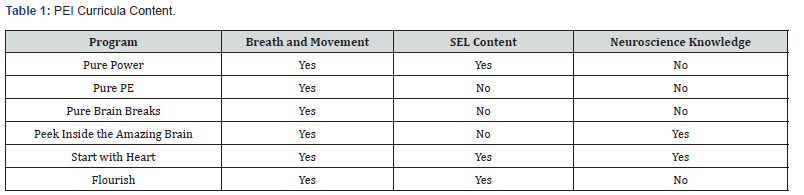
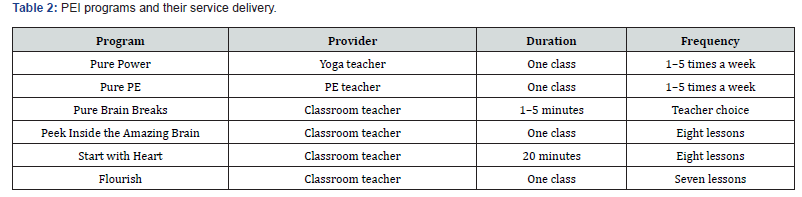
The PEI website (https://pureedgeinc.org/) endorses the importance of research as the foundation’s highest priority. At the time this paper was written, despite substantial investment in empirical research, none of the curricula met key effectiveness criteria of controlling for potential biases and replication by independent research groups. PEI offers six programs that vary in intensity and scope (Table 1,2). Four use classroom teachers as facilitators, creating a microsystemic benefit by enabling teachers to practice yoga themselves. Programs such as Peek Inside the Amazing Brain, start with the Heart, and Flourish contribute to research by manualizing brief, easily replicable practices, an advantage from a public health perspective [13].
PEI Research Findings
The PEI website mentions ongoing partnerships with Stanford University and the University of Virginia; however, the number or nature of ongoing studies were not clarified. In preparing this paper we found relevant research funded by Sonima or PEI that are not cited on the PEI website. Additionally, based on the second author’s experience receiving research funding from the Sonima Foundation and attending multiple Yoga in Schools Symposia, where Sonima-funded investigators presented their findings, there is direct knowledge of RCTs that were conducted but whose results have not been published. Greater transparency regarding the scope, design, and dissemination status of funded research would strengthen the evidence base and better inform stakeholders and scientists. Organizations seeking to scale up yoga-based interventions should provide clear, current, and comprehensive information about the empirical support for their programs.
RCT of Yoga versus PE in a NYC High School
Hagins and Rundle [13] conducted a group-based RCT with a diverse group of high school students. The intervention program was an early version of PEI Pure Power. The outcome variables were self-reported stress reactivity (rumination, intrusive thoughts, physiological arousal, emotional arousal, and involuntary action), positive coping (emotion regulation, problem-solving, and emotional expression), executive function (behavioral regulation and metacognition), wellbeing (positive functioning), mindfulness, and grade point average (GPA). No differences were detected between these groups regarding the outcome variables. There was a slight negative impact on the stress reactivity variable concerning the yoga condition, which could be related to measurement error, or regression to the mean [14]. Hagins and Rundle [13] interpreted the nonsignificant increase in stress reactivity as a possible result of increased selfawareness.
The data were further explored to analyze the moderation of participation to explain this result [13]. On average, students were rated as actively participating (at least partially) in 67% of classes in the intervention group and 90% of classes in the control group. When analyses were restricted to a subset of students who participated in 49 or more classes, a moderate advantage in GPA emerged for students in the yoga condition relative to those in the PE control group.
Accordingly, although the title of Hagins and Rundle’s [13] article states that “yoga improves academic performance compared to PE in urban high school students,” the findings require careful interpretation. The primary intent-to-treat analysis revealed no significant advantage of yoga over PE across several outcome variables. Moreover, only 40% of the eligible student pool was recruited for the study, and among those recruited, only 67% were partially or fully engaged in the intervention classes. These participation patterns raise concerns regarding the acceptability and feasibility of this PEI program in urban high school settings. Taken together, these findings underscore the importance of conducting formative research (e.g., studies assessing acceptability, feasibility, and implementation workability) prior to implementing RCTs.
Studies with Elementary Students
Carman and Parrott [15] studied the outcomes of the Sonima Health and Wellness Program curriculum administered in five of the elementary schools in a large, urban public school district in Houston over a two-year period. The intervention was implemented by yoga instructors trained by Sonima. The outcome variables were self-reported stress reactivity (rumination, intrusive thoughts, physiological arousal, emotional arousal, and involuntary action), positive coping (emotion regulation, problem-solving, and emotional expression), and achievement (end of year standardized math and reading test scores). Overall, no statistically significant differences between the intervention and control groups were found, except the Intrusive Thoughts subscale being lower at post-test of the 4th graders (β = –0.10, t = –2.306, p = 0.022).
To further explore possible effects, each school was compared to its matched control. Three out of the five pairs of matched schools had some mostly positive significant results. However, these statistically significant results obtained through one-toone comparison of schools are open to criticism for a variety of methodological and statistical reasons. Furthermore, these comparisons resulted in some significant negative findings. For example, academic achievement was lower in the intervention school in one of the pairs, explaining 23 percent of the variance (β = –0.549, t = –4.738, p = 0.000). This was a quasi-experimental study with limited measurement and statistical control for confounds, so there are many alternative explanations for students doing worse at the treatment school other than yoga somehow interfering with learning.
Another more recent study evaluated the Pure Power curriculum in a non-randomized comparison study with elementary students [16]. Outcomes included school-related stress experiences, emotion regulation, emotion expression, problem solving, primary control stress reactivity, spelling and math scales of the Wide Range Achievement Test-Revised (Jastak et al., 1984; Reading scores were not reported), internalizing symptoms (i.e., anxiety and depression) and externalizing problems (i.e., attention and hyperactivity). Significant time and study group interactions were reported for emotion regulation [F (2, 1026) = 3.15, p < .05], spelling [F (1.93, 825.92) = 15.82, p < .001], and math [F (1.79, 797.48) = 4.06, p < .05]. Given that academic achievement is a very complex outcome with numerous contributing variables, academic achievement should only be studied in the company of robust methodological or statistical controls including measuring mediating variables such as executive functioning, time on task, and homework completion. Thus, the lower academic achievement [15], or the higher achievement [16] observed in the intervention schools could not directly be attributed to the yoga intervention.
No significant effects were observed for school-related stress experiences, emotion expression, problem solving, primary control stress reactivity, anxiety, depression, attention problems, or hyperactivity. Importantly, McCurdy and colleagues [16] stressed the difficulties experienced in implementation fidelity, as the variation was a major limitation of the study. Most recently, Tolan and colleagues (2025) conducted a longitudinal groupbased RCT examining the effects of the Flourish curriculum with elementary school children. A broad range of outcomes were assessed, including emotion recognition, choice delay, frustration tolerance, attention control, social problem solving, social information, teacher-rated social-emotional competence, self-efficacy, emphatic concern, sense of peer community, conduct problems, prosocial behavior, academic achievement, and suspension rates.
Overall, only few outcomes demonstrated statistically significant intervention effects. Subgroup analyses indicated that older students in the intervention condition exhibited greater gains in choice delay and attentional control relative to controls. In high-poverty schools, small but statistically significant improvements were observed in social information processing (B = 0.04, SE = 0.02, p < .05), reductions in conduct problems (B = −0.04, SE = 0.02, p < .01), and increases in prosocial behavior (B = 0.08, SE = 0.03, p < .05). In addition, self-efficacy scores improved modestly in the intervention group (B = 0.06, SE = 0.01, p < .01), with gains significantly different from the control group.
The results of the PEI studies highlight the difficulties of conducting research on full-length school-based yoga classes, paralleling the rest of the school-based yoga literature. Other methodological issues include the need to have a successful rollout or pilot program (i.e., a successful formative evaluation) prior to conducting a controlled trial. Finally, to make attributions about school-based yoga, it is important to study the yoga component for its unique effects. The curricula implemented in PEI studies were very complex and included body movement, meditation, and SEL. Thus, any results found cannot be solely attributed to the impact of yoga. The omnibus treatments that include a variety of procedures without a clear picture of which components made the difference creates problems for citing the evidence [6]. This flaw is unfortunately pervasive in school-based mindfulness and yoga interventions [17].
School-based Yoga and Acceptability Concerns
Acceptability is the perceived appropriateness of a program that reflects the cognitive and emotional anticipations of both the facilitators and the participants [18]. In the wake of lawsuits and anticipated opposition to the religious and spiritual aspects of yoga, there has been a strong tendency to modify schoolbased programs into a secular mind-body intervention [19]. Consequently, there are two major differences in contemporary school-based yoga relative to traditional yoga. First, schools tend to use English names for poses instead of traditional Sanskrit terms and avoid any mention of Hindu gods or religious figures. Second, school-based yoga refrains from teaching yoga as a spiritual practice. Accordingly, specific moral lessons that are associated with the traditional yoga practice, Hinduism, Buddhism, or even generic multidenominational spirituality are omitted [19].
Delivering school-based yoga as a spiritual or secular activity is a matter of contention that has strong implications for cultural inclusiveness. Some argue that the Westernization of yoga diminishes its authenticity, and is a manifestation of colonialism and cultural appropriation [20]. And, some worry that failing to address the spiritual aspects of yoga lessens its impact because there is a loss of synergy in a limited practice (i.e., mind-body approach) as opposed to a complete practice (i.e., mind-bodyspirit approach) [21]. On the other hand, the spiritual aspects of yoga rooted in Buddhism and Hinduism has provoked opposition among people who perceive universal implementations of yoga in schools as a proselytization act [22]. Thus, cultural inclusiveness is an important aspect of interventions that need to be addressed thoroughly for yoga to be considered for scaling up as a universal intervention. This has mostly been addressed by making schoolbased yoga a nonreligious, and nonspiritual activity.
The Encinitas Experience and Acceptability Modifications of PEI Yoga
One of the early versions of the PEI yoga curricula was provided in the Encinitas Unified Public Schools District (EUSD) in Southern California. A well-organized group of about 30 parents sued the school district and managed to draw a lot of media attention to their lawsuit. Although the San Diego Superior Court ruled in Sedlock v. Baird that the program did not promote religion in public schools; this did create considerable strife and ongoing rancor [23]. Thus, the Sedlock v. Baird case has become a cautionary tale about acceptability of school-based yoga. In a 2017 overview of this topic, Butzer and Flynn offered multiple recommendations to avoid the strife encountered in Encinitas. First, before starting a new program involving yoga or meditation, it is important to engage with the community and pre-emptively address concerns they may have about imposing religious values on students. Second, it is important to avoid “red flags” such as cultural artifacts or religious terms during teaching that may raise concerns from various stakeholders.
Third, providing a transparent explanation about the cost of the programming is crucial to prevent any unwarranted objections. One of the objections to the EUSD was that yoga program might divert funding from other activities when it was, in fact, provided at no cost to the school district with the modified universal intention of improving student wellness and school performance [24]. Furthermore, to improve support for school-based yoga, providers need to clearly communicate the specific outcomes targeted by their interventions to stakeholders at multiple levels of systems, for example improving behavior or grades. In fact, the acceptability and maintenance of school-based yoga largely depends on finding meaningful and cost-effective improvements in school-relevant outcomes.
School-based Yoga and Participant Responsiveness
Responsiveness refers to the extent to which participants actually participate in the activity when it is offered. Even the best planned and delivered yoga classes will not be effective unless students participate. The concept of participation can be addressed in multiple ways, including being physically present (i.e., attendance), physical engagement (i.e., overt participation), and emotional engagement (e.g., enthusiasm, liking, or perceived relevance). Importantly, participant engagement affects the enthusiasm of the service provider, increasing the likelihood of adherence to the intervention program. Indeed, school-based health promotion studies found that teachers omit components if students did not respond or seem uninterested [25]. Although student participation and enthusiasm have been identified as critical issues in school-based yoga research [26], this topic has received minimal attention in the published research literature. For example, in a comprehensive review of 44 school-based yoga studies [10], only two of the studies (less than 5%) reported any data on engagement.
PEI-funded Studies on Student Engagement
Two PEI-funded research teams have looked at the moderating effect of engagement in school-based yoga on outcomes. As mentioned in the review of PEI effectiveness studies, Hagins and Rundle [13] measured engagement with a dichotomous measure of student participation. They found no main effects of random assignment to yoga class on GPA, but when the authors examined participation as a moderator of class assignment, they found a significant benefit of yoga on GPA. This suggests that failing to measure and statistically control for participation might mask benefits of yoga. Wang and Hagins [27] examined students’ attitudes and beliefs surrounding school-based PEI yoga using qualitative data collected from six semi-structured focus groups. The school populations consisted of predominantly African American and Hispanic students. The major themes in the qualitative data indicated that students thought they benefited from the school-based yoga program in several ways, such as through improved self-regulation, mindfulness, self-esteem, physical conditioning, academic performance, and reduced stress.
However, these results need to be interpreted in consideration with the limitations such as social desirability was not controlled (e.g., facilitators and coders blind to hypotheses). Second, the focus groups of this study were not audio-recorded, and the notes of the graduate assistants were not compared for reliability. Third, the participant selection procedures, and the gender and ethnic background of the participants, were not reported, so it is not clear how representative the sample was of the larger study population. It was mentioned in the published manuscript that the school staff selected the participants for the focus groups, and it can be presumed that the most positive and cooperative youth participated in the study. Despite the limitations of this qualitative study, it is an important advancement in this neglected area of engagement and student responsiveness. More quantitative and qualitative research on engagement in and enthusiasm for schoolbased yoga is needed to understand the potential of this universal intervention.
Implementation Fidelity in School-based Yoga
The fidelity of program implementation is a complex and critically important variable that has a major influence on the effectiveness of the intervention. Carroll et al. [28] identify three key elements of intervention fidelity: specification of essential components or active ingredients, dimensions of adherence, including the content, coverage, frequency, and duration of the intervention and moderators of implementation fidelity, such as intervention complexity, facilitation strategies, quality of delivery, and participant engagement. Measuring intervention coverage should capture the extent to which these critical ingredients are delivered [28]. However, limited information is available regarding the presumed mechanisms of action underlying the schoolbased yoga curricula examined in the literature. This omission is consequential, as theory and empirical research on mechanisms are essential for effective implementation and evaluation of interventions [29]. Consequently, the active ingredients of schoolbased yoga programs remain insufficiently specified, and fidelity is typically assessed in a relatively crude manner, often limited to indicators such as session frequency and duration [4].
Encouragingly, there is growing consensus that improving the conceptualization and measurement of implementation fidelity should be a priority for future research on school-based yoga interventions [4,7].
Pure Power Yoga Fidelity Observation Form
Consistent with recommendations to measure the fidelity of school-based yoga, PEI-funded researchers have developed and tested the Fidelity Observation Form (FOF) for the Pure Power curriculum [30]. The FOF was originally developed by Hagins and Rundle [13] and further refined as part of the Stanford University-affiliated, three-year longitudinal study of the PEI Pure Power yoga curriculum. Espil et al. (30) conducted a principal components analysis and found three factors. One was curriculum delivery, which included several items related to instruction skills, maintaining order, student engagement in lessons, and being prepared and supportive. The second factor was didactic content including visual outline, inclusion of content, and introduction of content. The third factor was a single item about avoiding inappropriate behaviors, which is related to session management and professional decorum. Pilot tests of this measure in 91 observations suggested that the FOF was feasible to implement. Additionally, comparisons of 17 observations for interrater reliability found that 13 out of 18 items were significantly reliable. Further analysis found that instructors achieved acceptable fidelity on 5 of the 13 reliable items (40%).
While the developers of fidelity measures for the Pure Power Yoga PEI should be commended for their pioneering efforts, preliminary findings by Espil et al. [30] suggest that the Pure Power fidelity FOF had mixed success and remains a work in progress. Importantly, it is unclear whether the reliably measured items capture the program’s core components or presumed active ingredients. The finding that instructors did not achieve acceptable fidelity on most items is concerning, though its significance depends on whether those items reflect the intervention’s essential elements. As Espil et al. [29] note, these fidelity issues may stem from the limited size and nature of the sample. Nonetheless, their study highlights the importance of careful development and validation of fidelity measures.
Maintenance of School-based Yoga
Maintenance of an intervention can be evaluated at two levels: the individual level, reflected in continued use of skills learned during the intervention, and the institutional level, reflected in the sustained delivery of the program. In the case of school-based yoga, maintenance at both levels remains understudied. Research with adults suggests that yoga benefits are dose-dependent, with continued practice necessary to sustain gains [30]. Accordingly, ongoing practice is likely critical for the long-term success of school-based yoga interventions. Although longitudinal followup studies are scarce, the limited available evidence suggests weak maintenance at the individual level. For instance, in a oneyear follow-up of 112 students who completed 32 sessions of school-based yoga in 7th grade, approximately 38% reported never practicing yoga after the program, and about 42% reported practicing less than once per month [31]. These findings suggest that for school-based yoga to produce enduring effects, it may need to be delivered on an ongoing basis. Even if annual effects are modest, benefits could accumulate over time, provided that practice is maintained or generalized beyond the intervention period.
Maintenance of PEI Yoga Programs
The empirical literature on institutional maintenance of PEI programs is limited. Some large initiatives, such as the program implemented in Houston, have not persisted; however, it is unclear whether this pattern is representative of PEI programs more broadly. At the individual level, Carman and Parrot [15] reported findings relevant to the maintenance of the HWP and Pure Power curricula. In their study, 50–60% of 4th- and 5th-grade students in the HISD sample reported using HWP practices at home, although only 23–29% indicated that they practiced frequently. A second analysis showed that students who received school-based yoga for two years demonstrated more robust outcomes than those who participated for only one year. These findings indicate the importance of maintaining PEI yoga at the institutional level, either as an ongoing school-based activity or through booster programs that encourage home-based practice.
A common limitation of grant-funded initiatives is that they often lack the structural support necessary for continuation once external funding ends. Another consideration is that, children and adolescents in universal programs may lack the motivation, resources, or self-regulatory skills to initiate or sustain yoga practice. Universal delivery may therefore yield different effects than self-selected participation, yet this distinction has not been directly examined. One promising direction for future research is to identify programs sustained through local, recurring resources and to conduct formative and summative evaluations to support their long-term maintenance. As suggested by Carman and Parrot [15], sustained participation may yield cumulative benefits over time.
Conclusion
Interest in school-based yoga continues to grow, and this review provides a careful appraisal of its current readiness for universal scale-up at the school or district level. Drawing in part on experience with the PEI curricula, the available evidence suggests that school-based yoga remains in a developmental stage and would benefit from further research before broad dissemination as an evidence-based intervention. Rather than diminishing enthusiasm, this perspective highlights the opportunity to strengthen the empirical foundation necessary for large-scale implementation. Organizations such as PEI are well positioned to provide leadership and infrastructure in this process, particularly when scientific efforts emphasize systematic inquiry and continuous improvement. Prior to large-scale outcome evaluation and dissemination, schools and funders should require successful small-scale pilot implementations that meet key formative benchmarks. Most existing studies are short-term (e.g., less than one semester), low-frequency (once or twice weekly), and involve students with minimal prior exposure to yoga. Longer and more intensive studies are needed to assess cumulative effects and skill development, alongside research examining program acceptability, implementation, and sustainability.
Given the influence of program complexity on feasibility and sustainability, comparative studies of different delivery formats are also needed. Brief, classroom-based practices may be more scalable and cost-effective than full-length classes, although higher-dose programs may potentially offset complexity-related limitations.
From a social-ecological perspective, greater attention to systems-level factors is essential. Classroom-based delivery by regular teachers may strengthen microsystem processes, including dyadic and group interactions. Future research should examine ecological validity and the generalization of skills from yoga sessions to classroom functioning, potentially moderated by teacher involvement and buy-in, factors largely unmeasured in the studies reviewed. Ultimately, long-term sustainability will depend on administrative, policy, and political support, as well as demonstrated cost-effectiveness. Stakeholders will require evidence linking yoga to school-relevant outcomes such as grades, standardized test scores, retention, disciplinary referrals, and attendance. Without such evidence, school-based yoga risks being displaced by interventions with stronger demonstrated returns.
References
- Black LI, Barnes PM, Clarke TC, Stussman BJ, Nahin RL (2018) Use of yoga, meditation, and chiropractors among US children aged 4-17 years. NCHS Data Brief No. 324. November. US Department of Health and Human Services, National Center for Health Statistics.
- National Center for Health Statistics (2022) National Health Interview Survey.
- Butzer B, Ebert M, Telles S, Khalsa SBS (2015) School-based yoga programs in the United States: A survey. Advances in Mind-Body Medicine 29(4): 18-26.
- Miller S, Mendelson T, Lee-Winn A, Dyer NL, Khalsa SBS (2020) Systematic review of randomized controlled trials testing the effects of yoga with youth. Mindfulness 11: 1336-1353.
- Glasgow RE, Vogt TM, Boles SM (1999) Evaluating the public health impact of health promotion interventions: The RE-AIM framework. American Journal of Public Health 89(9): 1322-1327.
- Gottfredson DC, Cook TD, Gardner FE, Gorman-Smith D, George W Howe, et al. (2015) Standards of evidence for efficacy, effectiveness, and scale-up research in prevention science: Next generation. Prevention Science 16(7): 893-926.
- Dai CL, Guo Y, Sharma M, Chen CC, Rodriguez J (2025) Evidence‑based review of yoga interventions for adolescent health and well‑being in US schools. Int J Yoga 10: 4103.
- Smith BH, Esat G, Kanojia A (2020) School-Based Yoga for Managing Stress and Anxiety. In C. Maykel and M. A. Bray (Eds.) Applying Psychology in the Schools: Promoting Mind-Body Health in Schools: Interventions for Mental Health Professionals pp: 201-216. Washington, DC: American Psychological Association, USA.
- Andermo S, Hallgren M, Jonsson S, Petersen S., Solveig Petersen, et al. (2020) School-related physical activity interventions and mental health among children: A systematic review and meta-analysis. Sports Medicine-Open 6(1): 1-27.
- Khalsa SBS, Butzer B (2016) Yoga in school settings: A research review. Annals of the New York Academy of Sciences 1373(1): 45-55.
- Haden SC, Daly L, Hagins M (2014) A randomized controlled trial comparing the impact of yoga and physical education on the emotional and behavioural functioning of middle school children. Focus on Alternative and Complementary Therapies 19(3): 148-155.
- Smith BH, Lyons MD, Esat G (2019) Yoga kernels: A public health model for developing and disseminating evidence-based yoga practices. International Journal of Yoga Therapy 29(1): 119-126.
- Hagins M, Rundle A (2016) Yoga improves academic performance in urban high school students compared to physical education: A randomized controlled trial. Mind, Brain, and Education 10(2): 105-116.
- Linden A (2013) Assessing regression to the mean effects in health care initiatives. BMC Medical Research Methodology 13(1): 1-7.
- Carman J, Parrott A (2018) Yoga in United States urban schools: Outcomes for student response to stress and academic achievement. International Journal of Health Sciences and Research 8(3): 1-10.
- McCurdy BH, Bradley T, Matlow R, Rettger JP, Espil FM, et al. (2024) Program evaluation of a school-based mental health and wellness curriculum featuring yoga and mindfulness. PLoS ONE 19(4): e0301028.
- Gould LF, Dariotis JK, Greenberg MT, Mendelson T (2016) Assessing fidelity of implementation (FOI) for school-based mindfulness and yoga interventions: A systematic review. Mindfulness 7(1): 5-33.
- Sekhon M, Cartwright M, Francis JJ (2017) Acceptability of healthcare interventions: An overview of reviews and development of a theoretical framework. BMC Health Services Research 17(1): 88.
- Cook-Cottone C, Childress T, Cohen Harper J (2019) Secularity: Guiding questions for inclusive yoga in schools. International Journal of Yoga Therapy 29(1): 127-133.
- Antony MG (2018) That’s a stretch: Reconstructing, rearticulating, and commodifying yoga. Frontiers in Communication 3: 47.
- Freeman H, Vladagina N, Razmjou E, Brems C (2017) Yoga in print media: Missing the heart of the practice. International Journal of Yoga 10(3): 160.
- Brown CG (2019) Debating Yoga and Mindfulness in Public Schools: Reforming Secular Education or Reestablishing Religion? Chapel Hill, NC: The University of North Carolina Press, USA.
- Cook-Cottone C, Lemish E, Guyker W (2017) Interpretive phenomenological analysis of a lawsuit contending that school-based yoga is religion: A study of school personnel. International Journal of Yoga Therapy 27(1): 25-35.
- Cook-Cottone CP (2017) Mindfulness and Yoga in Schools: A Guide for Teachers and Practitioners. New York: Springer Publishing Company, USA.
- Carroll C, Patterson M, Wood S, Booth A, Rick J, et al. (2007) A conceptual framework for implementation fidelity. Implementation Science 2(1): 40.
- Serwacki M, Cook-Cottone C (2012) Yoga in the schools: A systematic review of the literature. International Journal of Yoga Therapy 22(1): 101-109.
- Wang D, Hagins M (2016) Perceived benefits of yoga among urban school students: A qualitative analysis. Evidence-Based Complementary and Alternative Medicine.
- Kazdin AE, Nock MK (2003) Delineating mechanisms of change in child and adolescent therapy: Methodological issues and research recommendations. Journal of Child Psychology and Psychiatry 44(8): 1116-1129.
- Espil FM, Rettger JP, Weems CF, Neill EL, Carrion VG (2020) Measuring the fidelity of a school-based yoga and mindfulness curriculum for youth: A transdisciplinary feasibility study. Child & Youth Care Forum 50(1): 57-75.
- Cook-Cottone CP (2013) Dosage as a critical variable in yoga therapy research. International Journal of Yoga Therapy 23(2): 11-12.
- Butzer B, Flynn L (2017) What can we learn from the Encinitas School yoga lawsuit: A new summary. Yoga 4 Classrooms, Blog, September 17.

























