




 JYP Home



Abstract
Objective: Neck pain and headache are common issues among the working-age population. Recent studies have shown that sleeping position, pillow and mattress may have a significant role in neck symptoms and headaches, highlighting the importance of considering sleep ergonomics for improving sleep quality and reducing discomfort. The objective of this cross-sectional general population survey study was to assess the correlation between neck pain, headache, and sleep quality and various sleep-related factors, including sleeping position, pillow type, and mattress choice, within the adult population.
Design: A cross-sectional general population survey study.
Settings: Department of Physical Medicine and Rehabilitation, NOVA, Central Hospital of Central Finland, Jyväskylä and Tampere University of
Applied Sciences, Tampere.
Methods: Subjects were invited to take part in the sleep ergonomic survey by an announcement in a nationally daily newspaper. The study was
completed using Webropol® survey and reporting platform. The survey questionnaire comprised 24 items covering demographic data, sleeping
position, mattress type, neck symptoms, sleep comfort, and vitality.
Results: A total of 10,116 participants (6 422 females and 3 694 males) aged 18 years or over answered the questionnaires. Analysis revealed
that individuals sleeping in the supine position experienced significantly less frequent occurrences of neck pain, stiffness, and headaches
(p<0.001). Furthermore, they reported more peaceful sleep and better vitality upon awakening compared to those adopting other sleeping
positions (p<0.001). Compared with those using an ordinary pillow, respondents using a memory foam pillow exhibited significantly lower
incidences of neck pain, stiffness, and headaches (p<0.001). They also reported a greater frequency of easily finding a comfortable sleeping
position and enjoying restful sleep (p<0.001).
Conclusions: Adoption of a supine sleeping position was linked to a lower incidence of neck pain, stiffness and headaches. The use of both a
memory foam pillow and a mattress correlated with a diminished frequency of neck symptoms and headaches. These findings underline
the importance of considering sleep-related variables in addressing musculoskeletal issues and promoting overall sleep quality among adults.
Keywords: Working-Age Population; Epidemiologic Study; Memory Foam; Spring Mattress; Pillow Type; Sleeping Position; Sleeping Ergonomics; Cephalgia; Cervicalgia
Abbreviations: XS: Extra Small; S: Small, M: Medium; L: Large; XL: Extra Large; NRS: Numeric Rating Scale; SD: Standard Deviations; ANOVA: Analysis of Variance
Background
Neck pain, a ubiquitous phenomenon globally, represents a considerable challenge to individual well-being and poses a strain on healthcare systems [1]. The prevalence of neck pain, ranging widely from 0.5% to 41.5%, underscores its multifaceted impact, with a distinct predilection in high-income countries and among women [2]. Sleep accounts for one-third of the human lifespan and is not merely a passive state but a dynamic process crucial for both physical and psychological recovery [3]. Studies have shown weak to moderate evidence for an association between sleep parameters and chronic neck pain, with more severe pain accompanied by more disturbed sleep [4]. The pillow plays an important role in providing support for the neck and shoulder areas to support the neutral position of the cervical spine posture and prevent stress on cervical spine structures [5]. A Korean sleep survey of different pillow types suggested that a lack of proper pillow support for the neck can induce neck pain and affect sleep quality by disrupting the alignment of the cervical spine [6]. In a systematic review, Radwan et al. [7] found moderate evidence that several pillow parameters could improve spinal alignment and decrease sleep-related neck pain; a latex pillow material, a contoured pillow with higher sides to accommodate the shoulder of side sleepers; and a lower middle area to accommodate back sleepers and a cooling surface. Chun-Yiu et al. [8] concluded that cervical alignment is not affected by the pillow material but rather by the pillow shape and height. Additionally, Lei et al. [9] reported that the most important parameter is the pillow height, which should be adjusted according to the physique of each patient with chronic neck pain.
Exercise therapy is generally recommended as a first-line treatment for chronic neck pain. However, utilizing an ergonomic pillow alongside exercise therapy has been proven to be more effective in reducing neck pain and disability than using these treatments separately in randomized studies [10,11]. A supportive mattress has been suggested to promote healthy spinal alignment during sleep and help the muscles relax. Hong et al. [12] reported that an increased craniocervical height when lying supine on a soft mattress led to significantly increased cervical loading. Thus, a softer or thinner pillow with a soft mattress was recommended. Previously our survey study evaluated associations of low back pain with habitual sleeping positions and mattress types in the general population [13]. The aim of this study was to investigate the links between neck pain, headaches, the quality of sleep, and aspects of sleep ergonomics, including the effects of sleeping positions, pillow varieties, and mattress types in the same population.
Methods
Study Design
This cross-sectional general population survey study aimed to investigate the relationships between sleep ergonomics, specifically sleeping position, pillow type, and mattress choice, and the occurrence of neck pain, headaches, and overall sleep quality in adults. Participants were recruited through a national daily newspaper advertisement. The only inclusion criterion was 18 years of age [13]. There were no exclusion criteria to confirm that the study population corresponds as closely as possible to the normal population. Ethical approval was not needed, as this was a survey study without a treatment intervention. Informed consent was given by the participants who completed the survey. The procedure of the study was performed according to the relevant guidelines and regulations of the Declaration of Helsinki [14].
The Data were collected through the Webropol® survey platform. The participants were asked basic demographic information [13]. Participants self-reported whether they suffered from neck pain and stiffness and headache. The survey included assessments of neck pain, headache and vitality using the Numerical Rating Scale, ranging from 0 to 10. Otherwise, the questions were asked to be answered with straightforward yes or no. The participants were also asked about their sleeping, position, pillow and mattress type. Pillow types were categorized as ordinary (cotton or polyester-filled), memory foam, or other. Mattresses were classified as foam, spring or memory foam, which was subcategorized as memory foam A (several brands and unbranded) or memory foam B (Tempur®). The research data were collected and deposited by the Tampere University of Applied Sciences and analysed by the Departments of Physical Medicine and Rehabilitation, NOVA, Jyväskylä and Kuopio University Hospital, Kuopio, Finland.
Statistical Analysis
The descriptive statistics were presented as means with Standard Deviations (SD) or counts with percentages (%). Statistical comparisons between the groups were made using a chi-square, t-test or analysis of variance (ANOVA), as appropriate. Correlations were estimated by Spearman’s correlation coefficient method. A level was set at 0.05 for all tests. Stata 13.1 (Stata Corp LP, College Station, TX, USA) statistical package was used for the analyses.
Results
A total of 10,116 participants aged 18 years and older completed the Webropol survey questionnaire. The participants’ demographic data and sleeping position by sex are presented in (Table 1), which is similar as reported in our previous study report added with shoulder size information, which affects sleeping position while sleeping on side [13]. Women were the dominant group among participants (63%), and middle-aged participants were the most represented. Side and combination of side and supine were the most frequent sleeping positions in all age categories, regardless of mattress type (Table 2). Men were more likely to sleep in the supine position compared to women, while women showed a small but statistically significant preference for sleeping in the side-lying position, reflecting a sex-related difference in sleep habits. The purely supine position was the least favoured among all age groups except for the elderly group, which was aged older than 65 years and showed the least preference for the prone position. Supine sleepers reported significantly less neck pain, stiffness, and headaches than people in other positions.
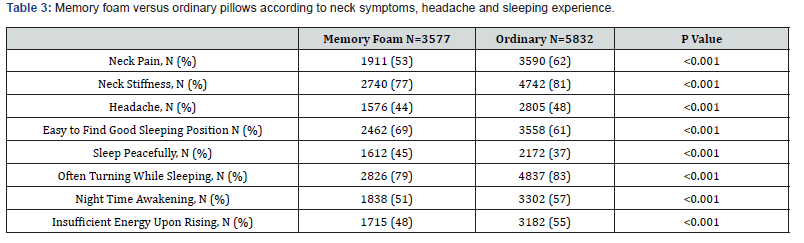
The ordinary pillow was the most common choice, comprising 58% of the total amount. It was predominant among prone sleepers and individuals who are likely to alter their sleeping position. The memory foam pillow was chosen by 35% of the surveyed population. This approach was preferred, especially for those who slept on their side or were in the supine position. Over half of the participants who slept on the side and/or in the supine position felt that the pillow supported their head and neck well, but those who were prone to sleep or who often changed their sleeping position were less likely to be satisfied. In these positions, participants also more commonly supported their head by keeping their hand under the pillow while sleeping. Only a few participants preferred to sleep without any pillows. Participants who slept with a memory foam pillow had significantly less frequent neck pain and stiffness as well as headache than did those who slept with an ordinary pillow (Table 3). They also felt significantly more often that it was easy to find a good sleeping position and that they had restful sleep. Those sleeping with ordinary pillows were more likely to turn while sleeping and to experience nighttime awakening and insufficient energy while rising.
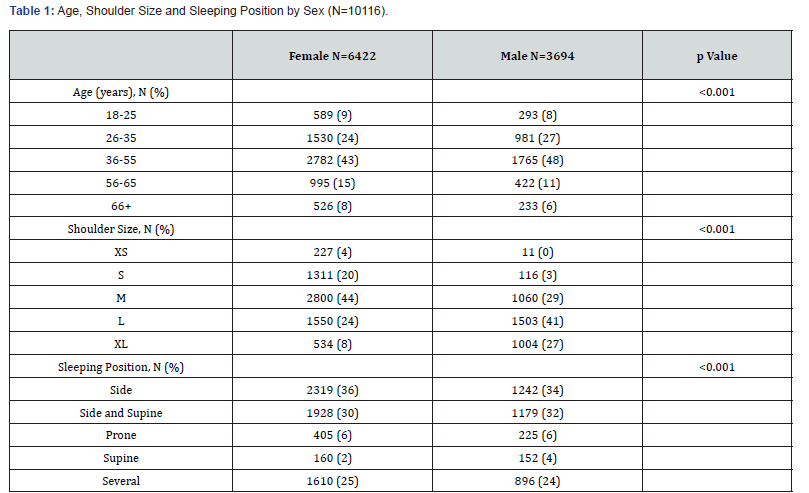
XS = Extra Small, S = Small, M = Medium, L =Large, XL = Extra Large
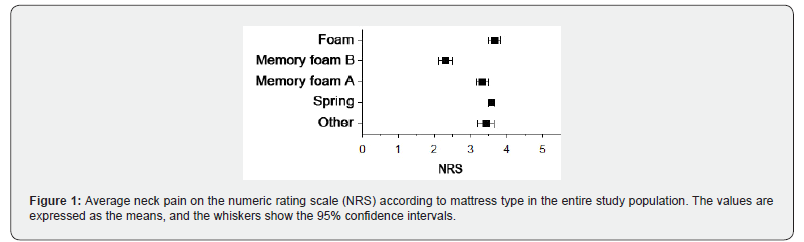
The spring mattress was the most common mattress type, comprising 58% of the total amount, followed by the memory foam, accounting for 22% (Table 4). Neck pain and stiffness and headache occurred significantly less often in those who slept on the memory foam B mattress. Additionally, the amount of average neck pain and headache were significantly lower in the memory foam B group (Figure 1). Participants who slept on memory foam mattress B experienced finding sleeping position easily and slept peacefully significantly more frequently (Table 4). They were less likely to turn while sleeping, and they felt less frequent powerlessness after waking. Participants sleeping supine awakened due to an uncomfortable posture or numbness less often than those sleeping in the other positions. They also reported better vitality and feeling powerless less often. Memory foam B mattresses were the most common in the foam category, comprising almost half of the total. This mattress type was also more frequently associated with peaceful sleep and a feeling of powerlessness less often after waking compared to other mattresses.
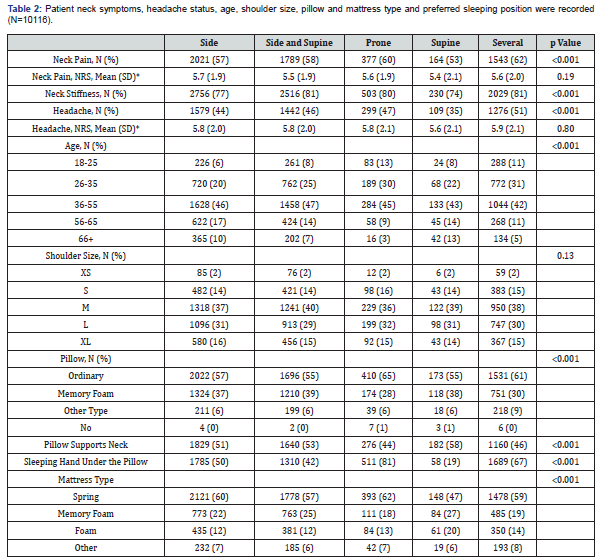
*Average for those with pain
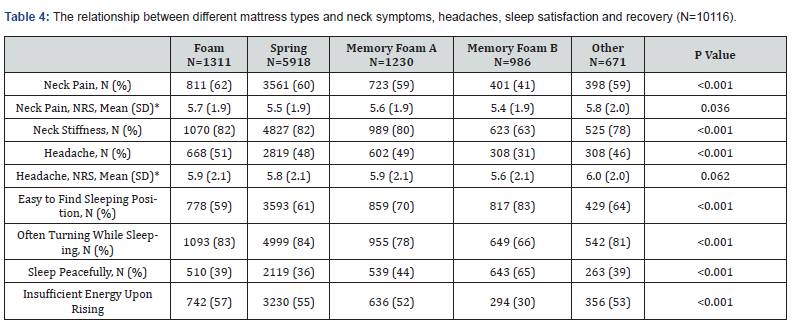
*Average for those with pain Memory Foam A (several memory foam brands except Tempur), Memory Foam B (Tempur)
Discussion
The study confirms the results of previous research showing that sleeping position, pillows and mattresses may be important for neck symptoms, headaches and general well-being. The prevalence of neck pain was at the same level as reported in previous epidemiologic studies [2]. In the present study, neck pain and stiffness as well as headache were experienced less often among those participants sleeping in a supine position than among those sleeping in other sleeping positions. In contrast low back pain did not correlate with sleeping position in our previous report of this study, although subjects sleeping in the supine reported sleeping peacefully and better vitality more often than those sleeping in the other positions [13].
This is presumably related to the fact that the cervical spine is more likely to remain straight aligned while lying in a supine position than in a side-lying or prone position. The prone sleeping position was associated with often changing sleeping positions and the need to keep one’s hand under the pillow for support while sleeping. Sleeping in the side lying position will cause side bending and rotation of the cervical spine if the pillow is not at the right height [9]. In the prone position, the head is turned even more, and passive rotation may cause excessive static stretching of the cervical spine. Long-term static stretching of the cervical spine while lying has been shown to cause neck pain and restricted movement even in healthy subjects [15,16]. As a person ages, the static stretching of connective tissues in the cervical spine becomes more prominent while the cervical spine is twisted or bent because the range of motion becomes increasingly limited [17]. Moreover, neck pain with or without a history of trauma, has been linked to decreased mobility in the cervical spine [18].
It is widely believed that an optimal pillow for appropriate neck support maintains cervical lordosis during sleep [19]. Jeon et al. [5] compared three different pillows for cervical lordosis by measuring the Cobb angle on a lateral cervical radiograph in the standing and supine positions. They found that the angle significantly increased with the use of an orthopedic pillow, but there was no significant change with the use of a memory foam pillow, and the angle decreased with the use of a feather pillow. However, individually, the degree of cervical lordosis can differ and may even be flat or kyphotic. The degree of lordosis of the cervical spine does not depend primarily on the type of pillow but rather on its height, which varies among all types of pillows. The correct thickness of the pillow is therefore important regardless of its type [8]. Gordon et al. [20] reported significant differences in the segmental slopes of the cervical spine between feather, latex, foam and polyester pillows in the side-lying position. Thus, changing the pillow may alter the posture of the cervical spine while sleeping. However, they found that the contour foam pillow does not support the cervicothoracic spine any differently from a regular foam pillow. In the present study, participants most often slept on their side or/and supine, as reported previously [21].
Men were more likely to sleep only on their backs than women, which has also been reported previously [22]. This is presumably due to wider shoulders in men, which cause greater pressure in this area in the side-lying position [23]. Wide shoulders also mean that the distance between the head and the mattress increases, which causes side bending to the neck if it is not supported by a sufficiently high pillow [9]. However, the height of the pillow does not directly correlate with the shoulder width because the sinking of the mattress may compensate for it and depends on its type. Memory foam mattress type 2 was connected to lower neck pain frequency, better sleep comfort and functional capacity recovery. The spring mattress and ordinary pillow were used most frequently, which probably reflects the greater supply and current pricing of pillows on sale than perceived comfort or health benefits. In the present study, memory foam mattress 2 was associated with feelings of peaceful sleep and good vitality after waking.
The present study has several strengths, including the large number of participants and the use of an internet survey, which eliminates the possibility of interviewer bias. Recognizing that sleep is not a passive state but rather a dynamic process involving intricate biomechanical interactions, we posit that a deeper understanding of sleep ergonomics holds the potential to unveil targeted interventions. This knowledge, in turn, may contribute to the enhancement of overall well-being and the mitigation of burdens on healthcare systems attributed to sleep-related discomfort. This study has some limitations. The participants were adults, and the study therefore does not apply to children and adolescents. The results may not be generalized to countries where different types of pillows and mattresses are used compared to Western industrialized countries. While the study aimed to be general population survey, there were no inclusion and exclusion criteria. The survey was conducted by recruiting volunteers through an advertisement to target people, who read the newspaper and were interested in participating.
However, selection bias of this type is difficult to avoid even when using random population sampling, as a large proportion of the population is unlikely to respond to surveys. Unfortunately, we were unable to differentiate all brands of mattresses and pillows due to the participants’ difficulty in remembering them.
Besides neck pain and headache several musculoskeletal disorders have shown to be associated with sleep position and poor sleep like arthralgia, dental disorder, low back pain and myalgia [24,25]. Poor sleep and pain interaction share a complex and reciprocal relationship: pain can disrupt sleep and poor sleep can exacerbate pain [26]. Moreover, disturbed sleep has shown to be associated negative health effects such as cancer, cardiovascular disease, defective immune system, mental health, obesity, obstructive sleep apnea and type 2 diabetes, and the impact has shown to be again reciprocal [27]. Hence, the findings of the present study may not be relevant to people with particular conditions.
The etiology of chronic neck pain often remains obscure, as specific conditions e.g. ankylosing spondylitis, torticollis spasmodica, trauma or tumour are found only in a minority of cases of working age individuals. Systematic reviews of the literature have identified several physical and psychosocial risk factors for neck pain [28,29]. Neck strain is not always a result of forceful trauma, but it may be due to long lasting stretching with low force. Stress to ligaments and capsules, during prolonged stretching of joints has been shown to cause pain in healthy subjects, when the cervical spine in healthy individuals was hold in an extreme position while lying [15,16]. Receptors sense abnormal stretching in tissues and respond by activating motor neurons, which produce an intense static muscle contraction. This may lead to vicious cycle as long-standing muscle contraction causes muscle oxygen deprivation and increases pain. Static stretching may occur especially during sleep, because neck is often in a side bending and rotation position for long periods of time and people may not react to an uncomfortable position like in the waking state.
The cause of neck pain has been shown to be multifactorial, and thus various treatment approaches may need to be incorporated into patients’ care plans. In large systematic review of the European Clinical Practice Guidelines concluded that there is strong evidence for exercise for both neck and low back pain, additionally advices to be active and return to daily activities favor the good clinical outcome [30]. In general many of nonpharmacological therapy modalities may have consistent effect. Guidance regarding sleeping position may be a good addition to treatment. The good quality pillow and mattress supporting the whole spine may include this consistent category making less painful sleeping position.
Conclusions
The findings of this study highlight the intricate relationships between sleep ergonomics and neck symptoms, headaches, and overall sleep experience in the adult population. A supine sleeping position was associated with less frequent neck pain and stiffness as well as headache. Both a memory foam pillow and mattress type B were associated with less frequent neck symptoms and headache.
References
- Shin DW, Shin JI, Koyanagi A, Jacob L, Smith L, et al. (2022) Global, regional, and national neck pain burden in the general population, 1990-2019. An analysis of the global burden of disease study 2019. Front Neurol 13: 955367.
- Hoy DG, Protani M, De R Buchbinder R (2010) The epidemiology of neck pain. Best Pract Res Clin Rheumatol 24(6): 783-792.
- Chaput JP, Dutil C, Featherstone R, Ross R, Giangregorio L, et al. (2020) Sleep duration and health in adults: an overview of systematic reviews. Appl Physiol Nutr Metab 45(10 (Suppl 2)): S218-S231.
- Van Looveren E, Bilterys T, Munneke W, Cagnie B, Ickmans K, et al. (2021) The Association between Sleep and Chronic Spinal Pain: A Systematic Review from the Last Decade. J Clin Med 10(17): 3836.
- Jeon MY, Jeong H, Lee S, Choi W, Park JH, et al. (2014) Improving the quality of sleep with an optimal pillow: a randomized, comparative study. Tohoku J Exp Med 233(3): 183-188.
- Son J, Jung S, Song H, Kim J, Bang S (2020) A survey of Koreans on sleep habits and sleeping symptoms relating to pillow comfort and support. Int J Environ Res Public Health 17(1): 302.
- Radwan A, Fess P, James D, Murphy J, Myers J, et al. (2015) Effect of different mattress designs on promoting sleep quality, pain reduction, and spinal alignment in adults with or without back pain; systematic review of controlled trials. Sleep Health 1(4): 257-267.
- Chun-Yiu JP, Man-Ha ST, Chak-Lun AF (2021) The effects of pillow designs on neck pain, waking symptoms, neck disability, sleep quality and spinal alignment in adults: A systematic review and meta-analysis. Clin Biomech 85: 105353.
- Lei JX, Yang PF, Yang AL, Gong YF, Shang P, et al. (2021) Ergonomic Consideration in Pillow Height Determinants and Evaluation. Healthcare (Basel) 9(10): 1333.
- Helewa A, Goldsmith CH, Smythe HA, Lee P, Obright K, et al. (2007) Effect of therapeutic exercise and sleeping neck support on patients with chronic neck pain: a randomized clinical trial. J Rheumatol 34(1): 151-158.
- Jamal AN, Feldman BM, Pullenayegum E (2016) The Use of Neck Support Pillows and Postural Exercises in the Management of Chronic Neck Pain. J Rheumatol 43(10): 1871-1873.
- Hong TT, Wang Y, Wong DW, Zhang G, Tan Q, et al. (2022) The Influence of Mattress Stiffness on Spinal Curvature and Intervertebral Disc Stress-An Experimental and Computational Study. Biology (Basel) 11(7): 1030.
- Ylinen J, Kautiainen H, Multanen J (2024) Sleeping Position Associated with Well-Being and Mattress Type Linked to Low Back Pain. J Yoga Physio 11(2): 555809.
- World Medical Association (2013) World Medical Association: Declaration of Helsinki Ethical principle for medical research involving human subjects. JAMA 310(20): 2191-2194.
- Dalenbring S, Schüldt K, Ekholm J, Stenroth U (1999) Location and intensity of focal and referred pain provoked by maintained extreme rotation position of the cervical spine in healthy females. Eur J Phys Med Rehabil 8: 170-177.
- Harms-Ringdahl K, Brodin H, Eklund L, Borg G (1983) Discomfort and pain from loaded passive joint structures. Scand J Rehabil Med 15(4): 205-211.
- Salo PK, Häkkinen AH, Kautiainen H, Ylinen J (2009) Quantifying the effect of age on passive range of motion of the cervical spine in healthy working-age women. J Orthop Sports Phys Ther 39(6): 478-483.
- Stenneberg MS, Rood M, De Bie R, Schmitt MA, Cattrysse E, et al. (2017) To What Degree Does Active Cervical Range of Motion Differ Between Patients with Neck Pain, Patients with Whiplash, and Those Without Neck Pain? A Systematic Review and Meta-Analysis. Arch Phys Med Rehabil 98(7): 1407-1434.
- Chen HL, Cai D (2012) Body dimension measurements for pillow design for Taiwanese. Work 41(Suppl 1): 1288-1295.
- Gordon SJ, Grimmer-Somers KA, Trott PH (2011) Randomized, comparative trial: does pillow type alter cervico-thoracic spinal posture when side lying? J Multidiscip Health 4: 321-327A.
- De Koninck J, Lorrain D, Gagnon P (1992) Sleep positions and position shifts in five age groups: an ontogenetic picture. Sleep 15(2): 143-149.
- Gordon S, Grimmer K, Trott P (2007) Sleep position, age, gender, sleep quality and waking cervico-thoracic symptoms. Internet J Allied Health Sci Pract 5(1).
- Werner CM, Ossendorf C, Meyer DC, Blumenthal S, Gerber C, et al (2010) Subacromial pressures vary with simulated sleep positions. J. Shoulder Elbow Surg 19(7): 989-993.
- Husak AJ, Bair MJ (2020) Chronic pain and sleep disturbances: a pragmatic review of their relationships, comorbidities, and treatments. Pain Med 21(6): 1142-1152.
- Ylinen J, Häkkinen A, Kautiainen H, Multanen J (2024) Preferences and Avoidance of Sleeping Positions Among Patients with Chronic Low Back Pain: A Cross-Sectional Study. Cureus 16(5): e59772.
- Whale K, Gooberman-Hill R (2022) The importance of sleep for people with chronic pain: current insights and evidence. JBMR Plus 6(7): e10658.
- Vorster APA, Van Someren EJW, Pack AI, Huber R, Schmidt M, et al. (2024) Sleep Health. Clin Transl Neurosci 8(8).
- Ariëns GAM, Van Mechelen W, Bongers PM, Bouter LM, Van Der Wal G, et al. (2000) Physical risk factors for neck pain. Scand J Work Environ Health. 26(1): 7-19.
- Ariëns GAM, Van Mechelen W, Bongers PM, Bouter LM, Van der Wal G, et al. (2001) Psychosocial risk factors for neck pain: a systematic review. Am J Ind Med 39: 180-193.
- Corp N, Mansell G, Stynes S, Wynne-Jones G, Morsø L, et al. (2021) Evidence-based treatment recommendations for neck and low back pain across Europe: A systematic review of guidelines. Eur J Pain 25(2): 275-295.

























