




 JYP Home



Abstract
Hip is the largest and most pivotal joint, connecting upper and lower body forming the core of physical and emotional well-being. Hip disorders are associated with poor posture, body pain and emotional instability due to their role in regulating fight-or-flight response. However, less research and funding on women’s hip health compared to men, while women’s hip influences more on whole body health. Furthermore, existing treatments and prevention often fall short in integrating both physical and mental aspects, highlighting the need for comprehensive approaches. Among all the features of treatment and prevention from literature review, yoga stands out as a highly suitable and integrative approach. A protocol has been arranged to help understand the processes of yoga asanas including emphasis on breathing and meditation for potential use in prevention and treatment of hip-disorders.
Keywords: Hip; Women Health; Treatment and Prevention; Body and Mind; Yoga; Protocol
Abbreviations: OA: Osteoarthritis; BMD: Bone Mineral Density; SIJ: Sacroiliac Joints; SIJD: Sacroiliac Joint Dysfunction; DKV: Dynamic Knee Valgus
Introduction
Why Yoga for Hip Health?
Yoga has been practiced as a holistic tool to regulate the functions of the mind and body since around 1400 BC. In the 20th century, its effectiveness for physical and mental health was recognized and it began to be used as a therapeutic tool for various ailments in humans [1-2]. The hip is the body’s largest and most central joint, linking the upper and lower body and playing a key role in both physical and emotional well-being. Hip disorders are often linked to poor posture, chronic pain, and emotional instability, as the hips are closely involved in regulating the fight-or-flight response. Yoga effectively reduces the stress response by influencing the adrenal glands, which in turn can affect the iliopsoas muscle, a key structure in hip function. Consequently, hip-opening yoga poses can help alleviate stress-related tension stored in the body.
Yoga Asana and Body Alignment: A Therapeutic Approach
Yogasanas improve endurance, flexibility, and strength while promoting proper alignment, reducing discomfort, pain, and injury risk [3]. High-intensity, acute, and prolonged exercise can sometimes lead to injuries and negatively impact health. Proper body alignment is essential for optimal movement efficiency. Misalignment creates restrictions in movement and increases the risk of injury, particularly when stretching or shifting weight improperly. Yoga is not solely about achieving the final pose; it encompasses breath control, meditative movement, and a quiet mind. Research supports the integration of yoga into exercise and sports sciences to prevent and manage musculoskeletal injuries and associated mental health conditions [4].
Body and Mind as One: A Holistic Perspective
Research shows that posture and breathing are closely link to emotional well-being. For example, women often struggled with deep abdominal breathing, a pattern associated with increased anxiety and poor postural stability, while men show greater benefits from it [5]. Body psychotherapy uses movement-based to address both physical and psychological distress. Integrating yoga into its interaction cycle supports self-expression, motivation, and connection, highlighting how bodily experiences shape mental states [6-8]. These findings suggest that yoga, by targeting both posture and breath, can be an effective tool for addressing the root causes of health issues, especially in women. This supports the development of tailored yoga protocol for women-specific needs, and as proposed in a commentary article in 2025 [9].
Yoga Specifically for Hip Health
(Figure 1) Review in Hip-/Women-/Yoga-Related History. Yoga has a 5,000-year history and has been widely studied for its benefits in both physical and mental health. The 1970s marked a growing focus on women’s hip health, largely influenced by the rise of the feminist movement [10,11]. Funding for women’s health research increased by the 2000s with a wider range of topics and around the same time, studies on yoga’s impact on women’s hip health also began to emerge. Since 2010, interest on hips, women’s health, and the role of yoga in these areas has continued to increase. However, research specifically addressing women’s hip health through yoga remain limited, revealing a significant gap in the existing literature.
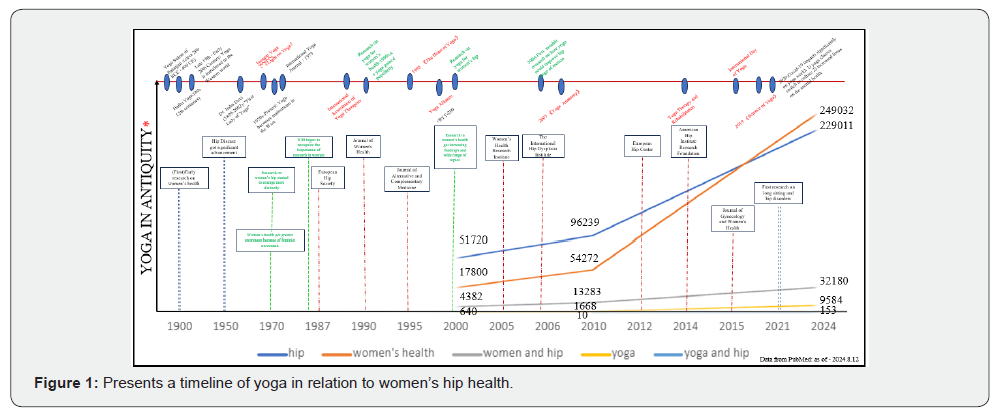
Yoga has been shown to be beneficial for individuals with osteoarthritis (OA), helping to alleviate joint pain and stiffness while improving flexibility and overall quality of life. Exercise is widely recommended for managing OA and among various exercise modalities, yoga, particularly its isometric postures, has been found effective in strengthening major muscle groups [12,13]. Additionally, yoga may contribute to increased bone mineral density (BMD) in the hip, femur, and spine. However, some studies do not provide detailed analysis regarding the selection of specific yoga poses for these benefits. To optimize the effectiveness and safety of yoga interventions for hip health, it is crucial to establish evidence- based yoga protocols by reviewing existing research and consulting with yoga experts [14].
Challenges and Strategies to Enhance the Practicality of Yoga Research
Yoga research lacks standardized protocols, teaching methods, and scientific rigor, limiting its integration into modern healthcare [15]. This study contributes by designing a structured yoga protocol for women with hip disorders and related mental health issues. To enhance yoga’s practical value in health sciences, key strategies include [16]:
1) Analyzing yoga components individually
2) Developing a theoretical framework for its mechanisms
3) Aligning yoga with medical and rehabilitation goals
4) Creating simple, universal prototypes
5) Studying long-term adherence
6) Moving beyond proof-of-concept studies
7) Evaluating yoga as a health tool apart from its cultural
roots. Addressing these gaps can help establish yoga as a credible,
evidence-based therapeutic approach.
Review On Protocol Design
Foundation
Breathing
Yoga addresses musculoskeletal issues by considering both physical and internal factors, with an emphasis on treating root causes rather than symptoms. Breathing exercises are often more effective than purely muscular training [17], especially in managing stress, a key contributor to muscle tension, poor posture, and limited mobility in the hips and lower back. Breathwork activates deep core muscles like the diaphragm and transversus abdominis, enhancing spinal stability and relieving lower back pain, which is closely linked to hip dysfunction [18,19]. Many people exhibit dysfunctional breathing patterns [20], which can lead to postural imbalances, motor control deficits, a higher risk of musculoskeletal injuries, and negative psychological effects [21,22]. Proper breathing mechanics are essential for physical performance and musculoskeletal health. Diaphragmatic breathing which is considered the most efficient, enhances deep core strength, spinal stability, and pulmonary function [23-25]. In yoga, nasal breathing with prolonged exhalation is used to activate the parasympathetic nervous system, fostering relaxation and restoring balance [26- 30]. Controlled, slow exhalations improve nervous system regulation, mental clarity, and overall well-being. Ultimately, effective breathing should be three-dimensional, expanding through the belly, ribs, and back, rather than confined to a single area.
Pelvic Floor Muscles
The pelvic floor muscles are closely associated with the hip adductors and play a vital role in women’s health. Awareness of these muscles is particularly important in a yoga protocol for hip function, as pelvic floor engagement can support hip stability and overall core function [31].
Core Stability
Core stability is primarily crucial for maintaining load balance within the pelvis, spine, and kinetic chain. Strengthening the core has been shown to improve physical function and activity levels [32]. Fostering awareness of core stability helps overall body alignment. Tadasana (Mountain Pose) serves as a fundamental posture for establishing postural awareness and alignment, making it an essential component of the protocol.
Sacroiliac Joints (SIJ)
Sacroiliac joint dysfunction (SIJD) is often overlooked and may serves as an early indicator of hip disorders [33]. A key emphasis in yoga for SIJD should be on cultivating body awareness and postural alignment rather than relying on external adjustments. When individuals develop an understanding of their own body mechanics, they can manage their practice more effectively and prevent potential dysfunction.
Spine Flexibility
Research indicates that in the sagittal and horizontal planes, spinal and hip movements occur in phase, whereas in the coronal plane, spinal movement typically precedes hip movement [34]. This indicates that spinal movements directly influence hip function, addressing spinal mobility is a prerequisite for restoring optimal hip function [35]. Furthermore, the spine is a crucial component of the central nervous system (CNS), serving as a direct connection to the brainstem. A healthy CNS is essential for optimal training quality and physical performance [36]. This highlights the importance of integrating spinal flexibility exercises into a yoga protocol for hip health [37].
Whole Body Alignment
Pelvic Alignment
Pelvic alignment plays a key role in hip function and lower- body mechanics. Neuromuscular training has proven more effective than standard exercises in improving hip flexibility and stability, highlighting the need to assess hip dysfunction in relation to pelvic posture [38]. Effective yoga therapy should consider the sequence of muscle activation to restore neuromuscular awareness. Clinical tests like the side-lying femoral-acetabular adduction test and Ober’s test can help assess pelvic alignment.
Lower Limb Alignment
Since the femur connects the hip, knee, and ankle, misalignment in one joint can affect overall gait mechanics. A hip-focused yoga protocol should address:
1) Hip-knee-ankle alignment and
2) Ankle flexibility and strength [39].
Patients with total knee arthroplasty often show greater alignment deviations and deformities compared to those at risk for osteoarthritis [40], highlighting the need for early intervention [41]. For lasting impact, static yoga alignment must translate into dynamic movements like walking, otherwise, issues such as dynamic knee valgus (DKV) may persist.
Ankle Strength
Ankle flexibility and strength should also be considered in yoga for hip protocol, as the ankle plays a crucial role in influencing hip stability. Proper hip strength and stability contribute to optimal gait mechanics and correct foot positioning during heel strike. Research shows that individuals with unilateral chronic ankle sprains tend to have weaker hip abduction strength and reduced plantarflexion range of motion on the affected side. Therefore, rehabilitation programs for ankle sprains should incorporate exercises aimed at strengthening the hip abductors [42].
Restore Hip Function
Restoring hip function requires improving both mobility and strength by positioning the femoral head as close to its natural alignment as possible, especially during key movement patterns: flexion, extension, abduction, adduction, external rotation, and internal rotation. Among these, hip abductor strength plays a crucial role in maintaining balance. Many women have weak hip abductors, which can lead to improper positioning of the femoral head and contribute to hip pain [43,44]. The gluteus medius, a primary hip abductor, is essential for stabilizing the pelvis and supporting the trunk. Proper hip muscle activation requires engaging the feet, as force and torque are transmitted from the ground up to the hips. For instance, engaging the small toe can help activate the gluteus medius effectively.
Abdominal and Back Balance
Core stability, which includes abdominal and back muscle balance, is essential for maintaining proper posture, spinal alignment, and overall movement efficiency.
Injuries
While yoga can alleviate musculoskeletal pain, it may also cause pain due to ego-driven practice and inexperienced instruction. Certain yoga poses involve extreme hip rotations, potentially leading to hip displacement if they place excessive stress on the hip joint. There is a documented risk of late hip dislocation associated with yoga, particularly in individuals with total hip replacements [45]. Nevertheless, yoga remains safer than many other forms of physical exercise [46]. A significant proportion of yoga practitioners experience mild and transient injuries, with risks comparable to those seen in non-yoga practitioners. Therefore, yoga should not be discouraged for healthy individuals. It is essential for participants to disclose their yoga practice to healthcare professionals and inform instructors of pre-existing injuries. Individuals with serious acute or chronic illnesses should seek medical advice before practicing yoga [47]. Yoga teachers should actively discuss injury risks with students [48].
Post-Protocol Guidance
1) Individuals with hip disorders may experience mental health challenges and struggle to follow yoga guidance [49]. Understanding their unique circumstances is crucial. Yoga practices that enhance body awareness and emotional well-being can be highly beneficial.
2) Practitioners who have a difficulty in doing specific yoga postures are encouraged to use tools for alignment correction [50,51].
3) In addition to yoga practice, patients should engage in gait training, as walking is a fundamental daily movement. Studies show that improving mobility post-hip fracture is beneficial in both hospital and post-hospital settings compared to conventional care. Effective rehabilitation interventions focus on gait restoration, balance improvement, and functional recovery [52-54].
Gap In Research
Research on women’s health remains underfunded and less studied compared to men’s health [55,56]. There is a strong need for increased investment in hip health research for women [57]. Additionally, the lack of standardization in the yoga field including protocols, teaching methods, and research frameworks, creates a need for clearer guidelines to support both practitioners and scientific studies [58].
Methodology
Study Design
This study employs a mixed-methods approach:
1) Incorporating a scoping review to delineate previous
research
2) Qualitative insights from the author’s practical experience
and expert’s consultation
Method-1: Scoping Review
A scoping review of 164 research papers (GOOGLE; https:// www.google.com/) was conducted to identify hip and hip-related disorders and injuries in women, analyze the current treatment and prevention approaches, and assess the role and value of alternative approaches such as yoga (Unpublished data, to be published elsewhere).
Method-2: Practical Insights and Expert Consultation
This study also integrated insights gained through the author’s 7-year experience as a yoga instructor. Observations were made regarding the needs of women attending yoga classes with direct interactions helping to identify their concerns beyond visible physical symptoms (Figure 2). The study acknowledges that:
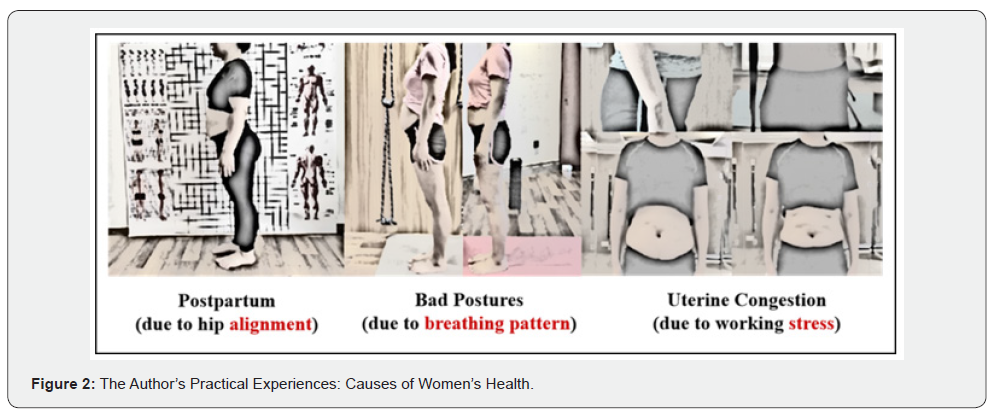
1) A holistic approach integrating body, breath and mind is
crucial for effective intervention.
2) Yoga, as part of the ‘Complementary and Alternative
Medicine’, helps prevent the need for hospital visits by fostering
awareness of the body’s signals from the very beginning.
Additionally, expert consultation was conducted with a senior yoga specialist with 60-years of experience in both physical and mental aspects of yoga. This expert contributed to the development of an appropriate yoga protocol for hip-related injuries.
Findings
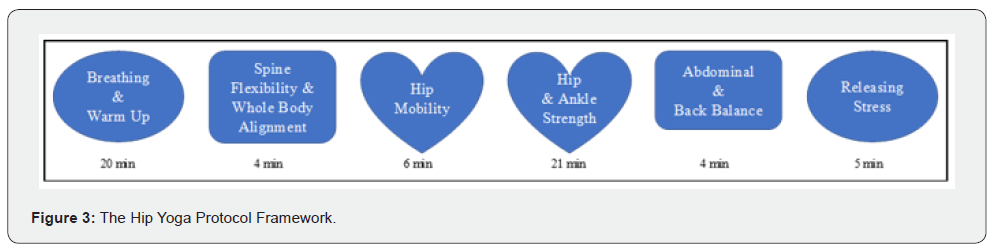
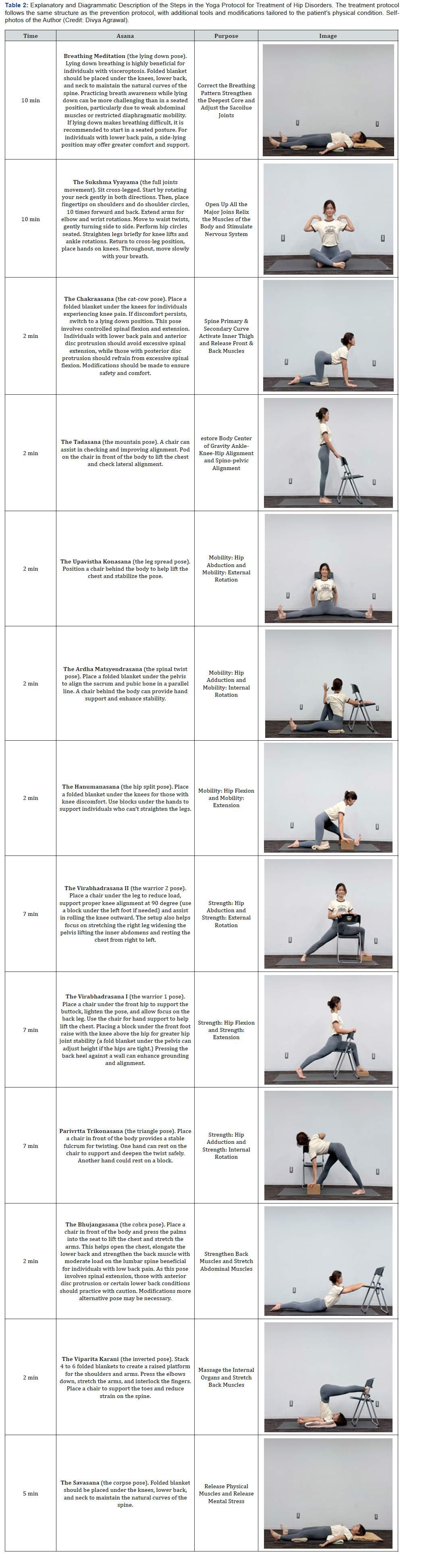
Framework of Yoga Protocol for Hip. A 60-minutes session was designed (Figure 3).
The Aim of Each Step in the Protocol
Breathing & Warm-up (20 min) - Preparing the body and mind
Spine Flexibility & Whole-Body Alignment (4 min) - Establishing
postural awareness
Hip Mobility (6 min) - Enhancing range of motion
Hip & Ankle Strength (21 min) - Building stability and support
Abdominal & Back Balance (4 min) - Core integration for hip
function
Releasing Stress (5 min) - Relaxation and recovery
Rationale for Structure & Time Allocation
Breathing & Warm-up (20 min)
1. This extended warm-up period allows for a gradual/
mindful preparation of the body, focusing on breath awareness,
joint lubrication, and gentle activation of key muscles.
2. The hips are closely linked to the breath and diaphragm,
making pranayama or controlled breathing beneficial for both
mobility and relaxation.
Spine Flexibility & Whole-Body Alignment (4 min)
1. The spine and pelvis work in coordination, so before directly
targeting the hips, spinal mobility and postural alignment
are addressed.
2. This segment ensures that the body is properly stacked
before moving into deeper hip work, preventing compensation
patterns.
Hip Mobility (6 min)
1. Focuses on active and passive hip movements to increase
joint range of motion.
2. Controlled dynamic stretches and slow, mindful movements
help reduce stiffness and prepare the joints for more
load-bearing postures.
Hip & Ankle Strength (21 min)
1. The longest and most intense part, as hip stability relies
on hip and ankle strength.
2. Strengthening exercises target the glutes, hip flexors,
and adductors, promoting balanced muscular engagement.
3. Ankle strength is integrated to support weight-bearing
postures and dynamic movements, ensuring functional lower-
body strength.+
Abdominal & Back Balance (4 min)
1. The core and lower back stabilize the pelvis, essential
for hip function and injury prevention.
2. This segment ensures that the core muscles are engaged
to support the lumbo-pelvic complex, enhancing movement efficiency.
Releasing Stress (5 min)
1. The session concludes with restorative poses and deep
relaxation, allowing the nervous system to shift from activation to
recovery.
2. Helps prevent post-practice tension, ensuring the hip
muscles fully release and integrate the work done in the session.
The Prevention Protocol
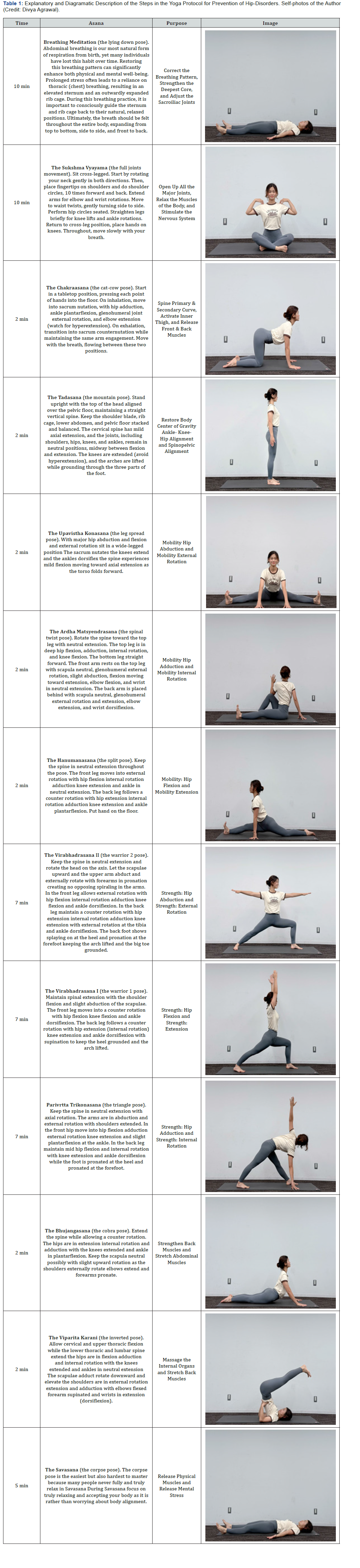
(Table 1)
The Treatment Protocol
(Table 2)
Discussion
This research designed a yoga protocol specifically for preventing and addressing hip-related issues in women based on literature review and expert consultation. This research contributes significantly to the development of a yoga protocol specifically for hip health, offering a model that could be applied to generalized yoga therapy protocols for other physical areas. These guidelines will benefit yoga therapists and instructors in providing targeted interventions for specific area issues. With further research, yoga has the potential to play an even more significant role in offering applicable, affordable, accessible approach for hip-related diseases and holistic health.
Limitations
This protocol does not distinguish between specific types of hip disorders. In yoga therapy, conditions are often approached holistically rather than as isolated issues, as many physical dysfunctions share common underlying patterns. Therefore, the protocol was designed to support general hip health rather than targeting specific diagnoses. However, future users of this protocol are encouraged to adapt it based on individual patient needs, for example, by modifying, omitting, or emphasizing certain postures to suit specific conditions. Additionally, while scientific frameworks offer valuable guidance, they may not fully encompass the experiential and integrative nature of yoga, which includes emotional and spiritual dimensions often overlooked in conventional research [59].
Comparison with Previous Research (Protocols)
Although no such study was identified in which a detailed protocol has been presented, the author would like to acknowledge two notable studies as comparable studies. The first is “Āsana for Back, Hips and Legs to Prevent Musculoskeletal Disorders among Dental Professionals: In-Office Yóga Protocol” by Gandolfi and co-workers [60]. This study developed a yoga protocol for both prevention and treatment of physical stress, addressing issues such as lower back, hip, and leg pain. It was created based on the author’s ten years of experience teaching posturology and was approved by a regional ethics committee. The study incorporated biomechanical rationales and detailed anatomical explanations. Compared to this research, our study lacks a detailed theoretical framework, while on the other hand, it demonstrates strong practical relevance, especially combining the author’s practical experiences on one-on-one yoga therapy experiences in yoga studio and guided by a skilled yoga expert Genboku Takahashi. This suggested that embodied experiences, paired with expert mentoring, can be equally valuable in designing functional interventions.
The second study, “Twelve-Minute Daily Yoga Regimen Reverses Osteoporotic Bone Loss” by Lu Yi-Hsueh and co-workers, focused on increasing bone mineral density in the spine, hips, and femur [12]. The protocol consisted of a 12-minute DVD featuring 12 yoga poses. In contrast, our study involved longer sessions and the more in-depth explanation of asana selection, and included breathing and meditation components, which potentially enhances not only physical but also emotional well-being.
Future Works
Future studies should aim to refine this protocol by incorporating a more detailed biomechanical framework and validated assessment tools to measure changes in hip function. Key considerations include:
1) Larger sample sizes
2) Longer intervention durations (e.g., 3-6 months)
3) Diverse participant groups, including both healthy individuals
and those with diagnosed hip disorders.
Including a control group and testing in varied populations, such as older adults or sedentary individuals will help evaluate long-term effects. Applying the protocol in clinical or occupational settings (e.g., rehab centers, workplaces, hospitals) would further demonstrate its practical value. To advance the field of yoga therapy, future efforts should focus on:
1) Establishing regulatory bodies for therapist accreditation
2) Integrating yoga into clinical care
3) Promoting AYUSH (Ayurveda, Yoga, Unani, Siddha, and
Homeopathy) system exposure in medical education [61].
References
- Tolahunase M, Sagar R, Dada R (2017) Impact of yoga and meditation on cellular aging in apparently healthy individuals: A prospective, open-label single-arm exploratory study. Oxid Med Cell Longev 2017:7928981.
- Dutta A, Aruchunan M, Mukherjee A, Metri KG, Ghosh K, et al. (2022) A Comprehensive Review of Yoga Research in 2020. J Integr Complement Med 28(2): 114-123.
- Ishwar VB, Lakshmi KS (2018) Yoga and body alignment. J Yoga & Physio 6(3): 555689.
- Halappa NG (2023) Integration of yoga within exercise and sports science as a preventive and management strategy for musculoskeletal injuries/disorders and mental disorders - A review of the literature. J Bodyw Mov Ther 34: 34-40.
- Tassani S, Chaves P, Beardsley M, Vujovic M, Ramírez J, et al. (2024) Breathing, postural stability, and psychological health: A study to explore triangular links. Front Bioeng Biotechnol 12: 1347939.
- Shapiro L (2013) Yoga-based body psychotherapy: A yoga-based and body-centered approach to counseling. Int Body Psychother J 12(1): 42-55.
- Krishnakumar D, Hamblin MR, Lakshmanan S (2015) Meditation and Yoga can Modulate Brain Mechanisms that affect Behavior and Anxiety-A Modern Scientific Perspective. Anc Sci 2(1): 13-19.
- Gothe NP, Khan I, Hayes J, Erlenbach E, Damoiseaux JS (2019) Yoga Effects on Brain Health: A Systematic Review of the Current Literature. Brain Plast 5(1): 105-122.
- Sumei H, Genboku T, Yuka A, Randeep R (2025) Yoga as a Comprehensive Alternative Medicine (CAM) Approach in Prevention and Reversal of Hip Disorders in Women: Role and Possibilities. J Yoga & Physio 12(2): 555832.
- Nichols FH (2000) History of the Women's Health Movement in the 20th century. J Obstet Gynecol Neonatal Nurs 29(1): 56-64.
- Al-Gailani S, Davis A (2014) Introduction to "Transforming pregnancy since 1900". Studies in History and Philosophy of Biological and Biomedical Sciences 47: 229-232.
- Lu YH, Rosner B, Chang G, Fishman LM (2016) Twelve-Minute Daily Yoga Regimen Reverses Osteoporotic Bone Loss. Top Geriatr Rehabil 32(2): 81-87.
- Wieland LS, Moonaz S, Shipper AG, Cogo E, Bingham III C (2021) Yoga for osteoarthritis of the hip or knee. Cochrane Database of Systematic Reviews (9): CD014563.
- Haaz S, Bartlett SJ (2011) Yoga for arthritis: a scoping review. Rheum Dis Clin North Am 37(1): 33-46.
- Yatham P, Chintamaneni S, Stumbar S (2023) Lessons from India: A Narrative Review of Integrating Yoga Within the US Healthcare System. Cureus 15(8): e43466.
- Patwardhan AR (2017) Yoga Research and Public Health: Is Research Aligned with The Stakeholders' Needs? J Prim Care Community Health 8(1): 31-36.
- Csepregi É, Gyurcsik Z, Veres-Balajti I, Nagy AC, Szekanecz Z, et al. (2022) Effects of Classical Breathing Exercises on Posture, Spinal and Chest Mobility among Female University Students Compared to Currently Popular Training Programs. Int J Environ Res Public Health 19(6): 3728.
- Anderson BE, Bliven KCH (2017) The use of breathing exercises in the treatment of chronic, nonspecific low back pain. Journal of Sport Rehabilitation 26(5): 452-458.
- Shi J, Liu Z, Zhou X, Jin F, Chen X, et al. (2023) Effects of breathing exercises on low back pain in clinical: A systematic review and meta-analysis. Complement Ther Med 79: 102993.
- Sikora M, Mikołajczyk R, Łakomy O, Karpiński J, Zebrowska A, et al. (2024) Influence of the breathing pattern on the pulmonary function of endurance-trained athletes. Sci Rep 14: 1113.
- Leon C (2004) Breathing pattern disorders, motor control, and low back pain. J Osteopathic Med 7(1): 33-40.
- Ma X, Yue ZQ, Gong ZQ, Zhang H, Duan NY, et al. (2017) The Effect of Diaphragmatic Breathing on Attention, Negative Affect and Stress in Healthy Adults. Front Psychol 8: 874.
- Bradley H, Esformes J (2014) Breathing pattern disorders and functional movement. Int J Sports Phys Ther 9(1): 28-39.
- Fernández-Pardo TE, Furió-Valverde M, García-Arrabé M, Valcárcel-Linares D, Mahillo-Fernández I, et al. (2023) Effects of usual yoga practice on the diaphragmatic contractility: A cross-sectional controlled study. Heliyon 9(10): e21103.
- Amiri B, Zemková E (2023) Diaphragmatic breathing exercises in recovery from fatigue-induced changes in spinal mobility and postural stability: a study protocol. Front Physiol 14: 1220464.
- Singh K, Bhargav H, Srinivasan TM (2016) Effect of uninostril yoga breathing on brain hemodynamics: A functional near-infrared spectroscopy study. Int J Yoga 9(1): 12-19.
- Komori T (2018) The relaxation effect of prolonged expiratory breathing. Ment Illn 10(1): 7669.
- Jung JY, Kang CK (2021) Investigation on the effect of oral breathing on cognitive activity using functional brain imaging. Healthcare (Basel) 9(6): 645.
- Lin L, Zhao T, Qin D, Hua F, He H (2022) The impact of mouth breathing on dentofacial development: A concise review. Front Public Health 10: 929165.
- Yu S, Wang D, Guo Y, Shen S, Wang J (2023) Numerical study on the distribution of nitric oxide concentration in the nasal cavity of healthy people during breathing. Nitric Oxide 130: 12-21.
- Blagg M, Bolgla L (2023) The relative activation of pelvic floor muscles during selected yoga poses. Complementary Therapies in Clinical Practice 52: 101768.
- Kim B, Yim J (2020) Core stability and hip exercises improve physical function and activity in patients with non-specific low back pain: A randomized controlled trial. Tohoku J Exp Med 251(3): 193-206.
- Nejati P, Safarcherati A, Karimi F (2019) Effectiveness of Exercise Therapy and Manipulation on Sacroiliac Joint Dysfunction: A Randomized Controlled Trial. Pain Physician 22(1): 53-61.
- Lee RY, Wong TK (2002) Relationship between the movements of the lumbar spine and hip. Hum Mov Sci 21(4): 481-494.
- Soydan Z, Bayramoglu E, Altas O, Şen C (2023) Revealing the effect of spinopelvic alignment on hip disorders. Clin Med Insights Arthritis Musculoskelet Disord 16: 11795441231191790.
- Thau L, Reddy V, Singh P (2022) Anatomy, Central Nervous System. Treasure Island (FL): StatPearls Publishing, USA.
- Di Martino A, Geraci G, Brunello M, D'Agostino C, Davico G, et al. (2024) Hip-spine relationship: clinical evidence and biomechanical issues. Arch Orthop Trauma Surg 144(4): 1821-1833.
- Nourbakhsh MR, Bluestein A, Power R, Underwood S, White L (2018) The effects of pelvic alignment versus hip joint mobility on shoulder internal rotation deficit and torque production - A blinded randomized controlled study. Phys Ther Sport 34: 164-173.
- Sahabuddin FNA, Jamaludin NI, Hamzah NA, Chok CL, Shaharudin S (2022) The effects of hip- and ankle-focused exercise intervention on lower limb mechanics during single leg squat among physically active females. Phys Ther Sport 55: 70-79.
- Ramazanian T, Yan S, Rouzrokh P, Wyles CC, O’Byrne TJ, et al. (2022) Distribution and Correlates of Hip-Knee-Ankle Angle in Early Osteoarthritis and Preoperative Total Knee Arthroplasty Patients. J Arthroplasty 37(6S): S170-S175.
- Wang J, Hall TAG, Musbahi O, Jones GG, van Arkel RJ (2023) Predicting hip-knee-ankle and femorotibial angles from knee radiographs with deep learning. Knee 42: 281-288.
- Friel K, McLean N, Myers C, Caceres M (2006) Ipsilateral hip abductor weakness after inversion ankle sprain. J Athl Train 41(1): 74-78.
- Malliaras P, Hogan A, Nawrocki A, Crossley K, Schache A (2009) Hip Flexibility and Strength Measures: Reliability and Association with Athletic Groin Pain. Br J Sports Med 43(10): 739-744.
- Santamaría G, Rodríguez I, Rodríguez-Pérez V, Cobreros-Mielgo R, Lantarón-Caeiro E, et al. (2023) Effect of Hip Muscle Strengthening Exercises on Pain and Disability in Patients with Non-Specific Low Back Pain-A Systematic Review. Sports 11(9): 167.
- Adrados M, Myhre LA, Rubin LE (2018) Late total hip arthroplasty dislocation due to yoga. Arthroplasty Today 4(2): 180-183.
- Cramer H, Quinker D, Schumann D, Wardle J, Dobos G, et al. (2019) Adverse effects of yoga: a national cross-sectional survey. BMC Complement Altern Med 19(1): 190.
- Cramer H, Ostermann T, Dobos G (2018) Injuries and other adverse events associated with yoga practice: A systematic review of epidemiological studies. J Sci Med Sport 21(2): 147-154.
- Campo M, Shiyko MP, Kean MB, Roberts L, Pappas E (2018) Musculoskeletal pain associated with recreational yoga participation: A prospective cohort study with 1-year follow-up. J Bodyw Mov Ther 22(2): 418-423.
- Henke AM, Billington ZJ, Gater DR (2022) Autonomic Dysfunction and Management after Spinal Cord Injury: A Narrative Review. J Pers Med 12(7): 1110.
- Williams K, Abildso C, Steinberg L, Doyle E, Epstein B, et al. (2009) Evaluation of the effectiveness and efficacy of Iyengar yoga therapy on chronic low back pain. Spine (Phila Pa 1976) 34(19): 2066-2076.
- Michalsen A, Jeitler M, Brunnhuber S, Lüdtke R, Büssing A, et al. (2012) Iyengar Yoga for Distressed Women: A 3-Armed Randomized Controlled Trial. Evid Based Complement Alternat Med 2012: 408727.
- Thirthalli J, Naveen GH, Rao MG, Varambally S, Christopher R, et al. (2013) Cortisol and antidepressant effects of yoga. Indian J Psychiatry 55(Suppl 3): S405-408.
- Boukabache A, Preece SJ, Brookes N (2021) Prolonged sitting and physical inactivity are associated with limited hip extension: A cross-sectional study. Musculoskelet Sci Pract 51: 102282.
- Fairhall NJ, Dyer SM, Mak JC, Diong J, Kwok WS, et al. (2022) Interventions for improving mobility after hip fracture surgery in adults. Cochrane Database Syst Rev 9(9): CD001704.
- Temkin SM, Noursi S, Regensteiner JG, Stratton P, Clayton JA (2022) Perspectives from advancing National Institutes of Health research to inform and improve the health of women: A conference summary. Obstet Gynecol 140(1): 10-19.
- Carneiro MM (2024) Women’s health in 2024: Change now for tomorrow will be too late. Women Health 64(1): 1-4.
- Lewis CL, Shefelbine SJ (2024) Lost in research translation: Female athletes are not male athletes, especially at the hip. J Orthop Res 42(9): 2054-2060.
- Karri RR, Bhavanani AB, Ramanathan M, Mopidevi VG (2023) Methodological issues in yoga therapy research among psychiatric patients. Indian J Psychiatry 65(1): 12-17.
- Pradhan B (2015) Yoga: Original Concepts and History. In: Yoga and Mindfulness Based Cognitive Therapy. Springer, Cham, Switzerland.
- Gandolfi MG, Zamparini F, Spinelli A, Prati C (2023) Āsana for Back, Hips and Legs to Prevent Musculoskeletal Disorders among Dental Professionals: In-Office Yóga Protocol. J Funct Morphol Kinesiol 9(1): 6.
- Gangadhar BN (2023) Evidence-based integration of yoga in psychiatric practice. Indian J Psychiatry 65(1): 5-11.

























