




 JOJMS Home



Abstract
A laboratory and field study was conducted during the 2022/2023 season in the laboratories of the Plant Protection Department and the fields of the College of Agriculture / Tikrit University. The study dealt with evaluating the efficiency of biosynthetic silver nanoparticles from the food fungus Pleurotus ostreatus A2019 in combating wheat root rot disease caused by the fungus Pythum. aphanidermatum, laboratory results showed all efficacy The concentrations of the prepared silver nanoparticles had an effect in inhibiting the pathogenic fungus P. aphanidermatum compared to the control. The highest rate of inhibition was reached at a concentration of 1.5 mM in the filtrate of the fungus P. ostreatus A2019, as it reached 0.68% compared to the control in which no rate of inhibition was recorded. While all concentrations and types of prepared silver nanoparticles showed the highest activity for nitrate reductase enzyme Compared to the control, the highest effectiveness was reached at a concentration of 1.5 mM in the filtrate of the P. ostreatus A2019 fungus, as it reached 0.68 units/ml compared to the control, which reached 0.068 units/ml. While the field results for estimating the percentage of mineral glutathione concentration in the plant showed that there was no significant difference between treatment with silver nanoparticles and the control, as the percentage of glutathione concentration was 0.6 and 0.63 mg/ml, respectively.
Keywords:Silver nanoparticles; Pleurotus spp; Pythium aphanidermatum; Glutathione
Introduction
Wheat (Triticum aestivum L) is one of the most economical crops in the world in terms of productivity and high nutritional value and is widely grown because it provides about 20% of calories and 21% of protein for variable dietary patterns [1]. The wheat crop is exposed to many pathogens, including fungal diseases that attack the shoot and root system at all stages of growth, causing root rot disease in wheat Given the extensive and repeated use of chemical pesticides, it has led to soil pollution, damage to the environment and human health, and the emergence of resistance in pathogens and the massive losses they cause to crops [2]. In recent years, researchers’ efforts have been directed to finding alternative methods for managing pathogens, and nanotechnology has been among the most accurate and widely used techniques in many different fields of science [3]. Nanotechnology in the agricultural field is one of the most important mechanisms that lead to modern agricultural methods, which is represented by the low economic cost resulting from the absence of the spread of epidemic diseases that affect various crops such as grains and vegetables, as well as an increase in the efficiency of manufactured fertilizers with their low material cost and the resistance of the agricultural product to unsuitable environmental conditions [4]. The application of nanomaterials in the agricultural field in particular aims to reduce plant protection applications, reduce nutrient losses and have no effect on oxidative/mineral stress in the plant [5]. It proved that 2.5 mg of silver nanoparticles per kg of soil did not have a negative effect on the growth of wheat plants and that silver nanoparticles did not have negative effects on the beneficial organisms of the plant [6]. Therefore, the study aimed to
i. Evaluating the efficiency of silver nanoparticles in
combating root rot disease caused by the fungus Pythium
aphanidermatum.
ii. Estimating the effectiveness of the nitrate reductase
enzyme using concentrations of silver nanoparticles prepared
from the food mushroom P. Ostreatus A2019.
iii. Evaluating the effect of silver nanoparticles on the
oxidative/mineral stress of the studied wheat varieties.
Results and Discussion
Isolates of the pathogenic fungus P. aphanidermatum and the food fungus P. ostreatus A2019 were obtained from the laboratories of the College of Agriculture, Tikrit University, Department of Plant Protection.
Silver Nanoparticles
Silver nanoparticles were obtained from the laboratories of the College of Agriculture, Tikrit University, Department of Plant Protection, and prepared by.
Studying the Effect of Concentrations of Silver Nanoparticles on Mushrooms P Aphanidermatum
The effect of concentrations of silver nanoparticles on the growth of the pathogenic fungus P Aphanidermatum. was studied. This is done by placing a piece of pathogenic fungus (1 cm in diameter) in the middle of a plate containing solid nutrient medium (PDA) using a cork culture and then. The mushroom colony reached a distance of (1cm) from the middle of the dish. The dishes were treated with different concentrations of silver nanoparticles (0.5, 1, 1.5, 2 mM) by making four holes 2 cm away from the fungus colony. The concentrations were placed in the holes at 0.1 ml and incubated at a temperature of 25 °C. When the mushroom growth was complete in the control treatment (distilled water) to the end of the dish, it was measured. Distance from the end of the edge of the colony to the pits containing the silver nanoparticles (mm).
Nitrate Reductase Enzyme Solutions
i. Preparation of solution (A): Prepare the solution from
30 mM AgNO3 with 25 ml propanol, 5% concentration, in a liter of
phosphate buffer.
ii. Preparation of solution (B): Prepare the solution from
(58 mM sulphanilamide and 0.05 mM N-(1-naphthyl ethylene
diamine dihydrochloride (NEED) [7].
Estimating the Effectiveness of Nitrate Reductase Enzyme
The activity of the nitrate reductase enzyme was estimated by following the method approved which is summed up by [8]. adding 2.5ml of the concentrations of silver nanoparticles prepared for each of (the fungal filtrate, the hot extract, the cold extract, and the mushroom biomass) to 2.5ml of the previously prepared solution (A) at pH 7.5 and incubating the mixture at a temperature of 25°C for 60 minutes, then1.25ml of the previously prepared solution (B) was added to it to stop the reaction, observing the color change to dark pink. After that, the absorbance of the solution was measured at a wavelength of 540nm using a spectrophotometer, and the units of enzyme activity were estimated based on the absorbance and according to the following equation [9].
(units/ml) Enzymatic activity Activity) = (Nano meter 450 wavelengths based on absorbance) / (60×2.5).
60 = reaction time (minutes)
2.5 = Added enzyme solution (ml)
Klazer Pesticide
The pesticide Klazer was used as a chemical fungicide for the purpose of comparison with silver nanoparticles in field experiments, at the concentration recommended by the pesticide production company.
Estimation of the Percentage of Glutathione
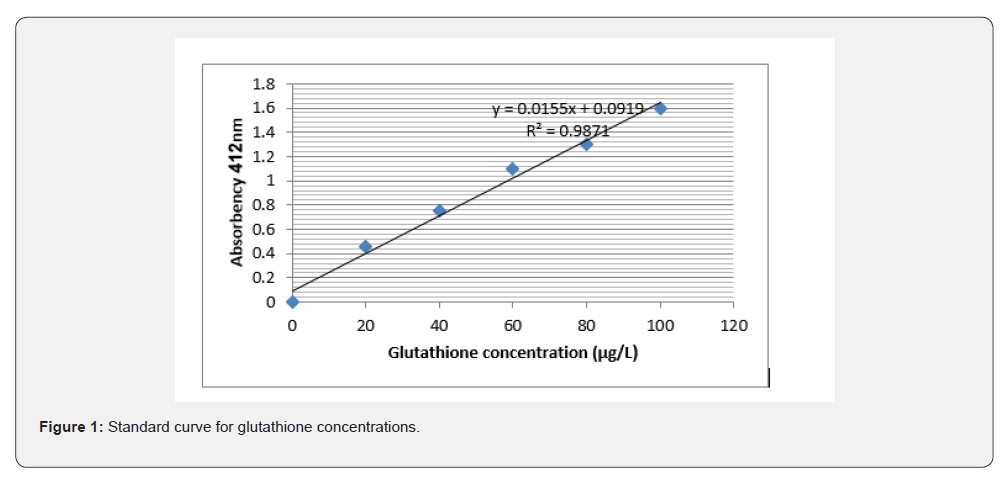
The percentage of glutathione to express plant mineral stress was estimated using the method used by [10]. from the root zone after the plant persisted and reached the flowering state. The reaction mixture consisted of 0.5 ml of plant extract prepared by (crushing the roots of plants for each individual replicate of wheat varieties using a ceramic mortar at a ratio of 1 gram root/2.5 ml water). Distilled) added to 0.25ml of phosphate buffer at pH 6.8 with 0.5 of DTNP prepared by dissolving (0.8 g/L phosphate buffer). The mixture was left for 5 minutes, after which the absorbance of the mixture was measured at 412 nm using a uv-vis- spectrophotometer. The concentration of Glutathione was extracted from the standard curve from the concentrations of Glutathione reacted with 5,5-dithiobis-(2-nitrobenzoic acid) DTNP) in the same manner above as in Figure 1.
Statistical Analysis
The research experiments were applied according to a completely randomized design (CRD) with a factorial experiment, and the results were analyzed using the Statistical Analysis System -SAS (2012). The averages were compared according to the least significant difference (LSD) test under the 0.05 level [11].
Results and Discussion
The effect of concentrations of silver nanoparticles prepared from the fungus P. ostreatus A2019 in inhibiting the growth of the pathogenic fungus P. aphanidermatium.
The results of the effect of concentrations of silver nanoparticles prepared from the fungus P. ostreatus A2019 on inhibiting the growth of the pathogenic fungus P. aphanidermatium in Table 1 show that there is an increase in the percentage of inhibition when the concentration increases up to the concentration of 1.5. Millimolar in the treatments. The results also show that the mushroom filtrate treatment was superior to the rest of the treatments, as it reached 0.43mm, with no significant differences with the cold extract of biomass treatment, which amounted to 0.40mm, compared to the two treatments of mushroom biomass and hot extract of biomass, which amounted to 0.28 and 0.17mm, respectively, with significant differences with the two treatments of mushroom filtrate. And the cold extract of biomass. As for the concentrations, the concentration of 1.5mM showed the highest rate of inhibition, reaching 0.50mM, with significant differences with the concentrations (2, 1, and 0.5), as each of them reached 0.44, 0.40, and 0.28mmM, respectively, compared to the concentration of 0 mM (control treatment), which did not record any rate of inhibition. With regard to the interaction, the concentration showed 0.5mM. In the treatment consisting of hot extract of biomass, the lowest rate of inhibition was recorded, reaching 0.20mm.
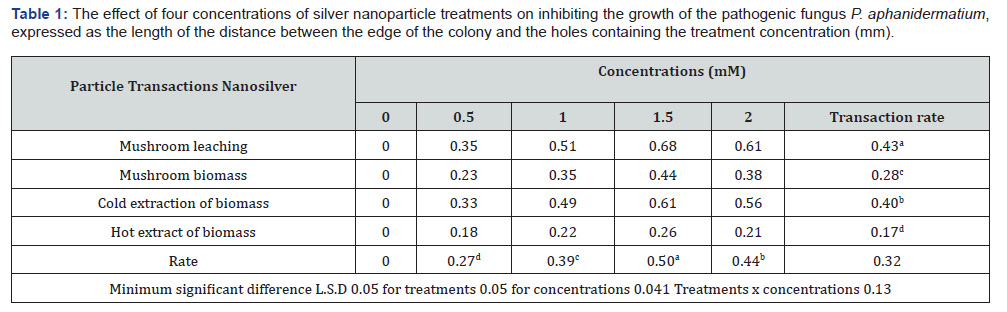
Table 1 The effect of four concentrations of silver nanoparticle treatments on inhibiting the growth of the pathogenic fungus P. aphanidermatium, expressed as the length of the distance between the edge of the colony and the holes containing the treatment concentration (mm).
The reason for the inhibition of fungi by concentrations of silver nanoparticles is that silver nanoparticles have the ability to affect the DNA of the pathogenic fungus by causing the DNA to lose its ability to copy and multiply, which leads to a defect in the process of cloning the DNA strand. They also have the ability to penetrate the cell walls of the fungus. This is because silver nanoparticles have the ability to Adhering to the fungal cell walls, then penetrating, analyzing and absorbing the cell walls through interaction with the metabolic and biological processes within the fungus, which leads to influencing the regulatory processes of the mushroom’s proteins and enzymes and thus inhibiting the fungus [12]. It also has an effective role in damaging the proteins, fats, and nucleic acids of fungal cells. Nanoparticles can also bind directly to the fungal cell membrane, which leads to the destruction of spores, fungal hyphae, and reproductive structures of the pathogenic fungus. The reason for the decrease in enzymatic activity at a concentration of 2 mM is due to the presence of Compounds within the filtrate, hot and cold extract, and mushroom biomass have the effect of interfering with high concentrations of silver nanoparticles, leading to a decrease in the effectiveness of the enzyme and such compounds (alkaloids, phenols, enzymes, and fungal products), and that The materials resulting from enzymatic activity are determined by two factors: the first is the enzyme and the second is the concentration of the base material with some reaction conditions. The more silver ions increase to the maximum amount of the enzyme in the samples, this means that the enzyme is unable to convert higher concentrations and with change Reaction conditions (time + pH) negatively affect the enzyme’s work as well, and this leads to a decrease in enzymatic activity at a concentration of 2mM [13]. Estimation of the effectiveness of the nitrate reductase enzyme using concentrations of silver nanoparticles prepared from the food mushroom P. Ostreatus A2019.
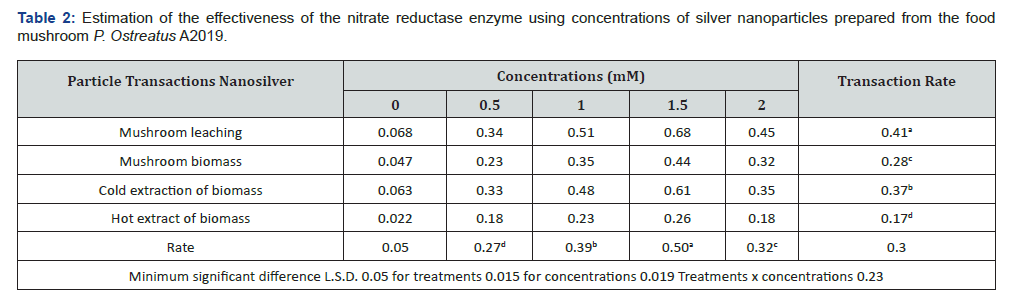
The results are shown in Table 2 for the effectiveness of the nitrate reductase enzyme using concentrations of silver nanoparticles prepared from food mushrooms P. Ostreatus A2019 units/ml indicates a significant superiority of the mushroom filtrate treatment over the rest of the treatments It reached 0.40 units/ml compared to the hot extract treatment, which recorded the lowest enzymatic activity, reaching 0.17 units/ml. The results also show that the concentration of 1.5 mM in the mushroom filtrate treatment was superior to the rest of the concentrations of the treatments, as it showed the highest rate of enzymatic activity, reaching 0.66 units/ml, with significant differences with the concentration that followed from the same treatment and concentration, reaching 0.61. Unit/ml compared to the concentration of 0 millimolar from the hot extract treatment of biomass, which amounted to 0.022 units/ml. The results also show an increase in the effectiveness of the enzyme for all treatments by increasing the concentration up to a concentration of 1.5 millimolar, then the effectiveness decreased at the concentration of 2 millimolar.
The enzyme nitrate reductase, released by microorganisms, is one of the most important factors in the synthesis of silver nanoparticles. Studies have shown that NADH and NAD-dependent enzymes, especially nitrate reductase, are important factors in the biosynthesis of metal nanoparticles. During the reduction process, nitrate is converted into nitrite, which in turn transfers electrons to silver ions. As a result, silver ions are converted into silver nanoparticles [14]. The reason for the superiority of the mushroom filtrate as having the highest enzymatic activity is that the fungus produces the enzyme in its extracellular form at a higher rate than the inside of the cell. As for the cold extract of biomass, the cooling conditions preserved the effectiveness of the enzyme, which led to the enzymatic activity of the cold extract being higher than that of the hot extract, which in turn affected its enzymatic activity by heat because the enzyme consists of a protein and a mineral part [5]. The reason for the decrease in the enzymatic activity of the biomass is that the enzyme production of the biomass is limited in the presence of different concentrations of silver nitrate compared to the mushroom filtrate in which the enzyme is produced by the fungus throughout the incubation period [12].
Effect of silver nanoparticles prepared from the fungus A2019 P. ostreatus on glutathione concentration (mg. mL-1).
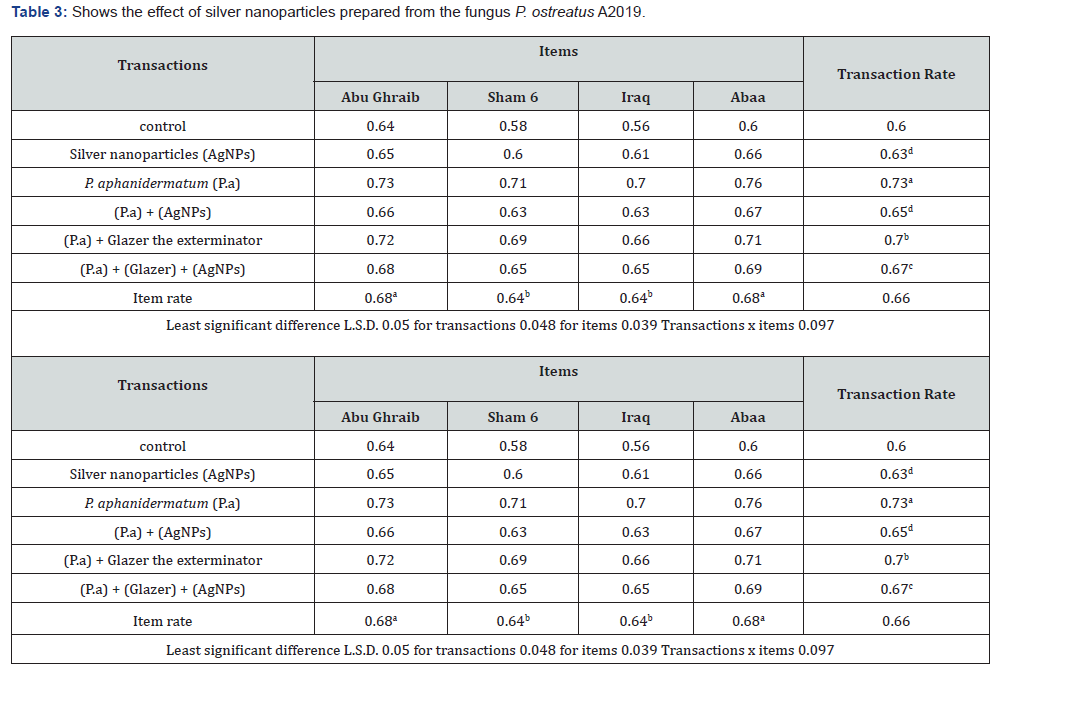
The results in Table 3 show the effect of silver nanoparticles prepared from the fungus P. ostreatus A2019 on the concentration of glutathione (mg.ml-1) under conditions of infection with the pathogenic fungus P. aphanidermatum to the extent that all treatments exceeded Treatment of pathogenic fungi. The control treatment showed the lowest glutathione concentration, which amounted to 0.6 mg. The treatment consisting of silver nanoparticles had the lowest glutathione concentration, which amounted to 0.65 mg.ml-1, followed by the treatment consisting of the chemical pesticide Clazir and silver nanoparticles, which amounted to 0.67 mg.ml-1, with no significant differences compared to the pathogenic fungus treatment, as the highest percentage of glutathione concentration was recorded, reaching 0.73 mg.ml-1. As for the varieties (regardless of treatments) The Iraq and Sham 6 cultivars showed the lowest glutathione percentage, reaching 0.64 and 0.64 mg. There were no significant differences with the treatment of silver nanoparticles, as it reached 0.6 mg.ml-1 in the Sham 6 variety Figure 1.
The increase in the percentage of glutathione in the treatment of pathogenic fungi is attributed to the biotic stress caused by the pathogenic fungus P. aphanidermatum through its direct effect on the formation of activated oxygen radicals and the impact on the electron transport chain and an increase in the breakdown of membranes and an increase in lipid peroxides, which instructed the plant to increase the synthesis of compounds and materials. Antioxidants as well as antioxidant enzymes, including glutathione, to withstand biotic stress, which leads to a high percentage of glutathione in the plant. The process of inhibiting pathogenic fungi by silver nanoparticles through their effect on mushroom proteins and DNA, which works to prevent the replication and duplication of the fungus’ DNA strand, has contributed positively to preventing the occurrence of any biological stress, which has led to a balance in the percentage of glutathione in the plant. In addition, low concentrations of silver nanoparticles do not cause any negative effects on the plant, which leads to mineral stress, while concentrations higher than this percentage have an effect in reducing plant growth. Therefore, the accumulation of Agnps in both the root and shoot systems of wheat will lead to oxidative stress on the plant, and this in turn. It leads to the accumulation of oxidized glutathione. High concentrations of nanoparticles may have negative effects on plant growth [13].
Conclusion
i. The 1.5mM concentration of silver nanoparticles from the filtrate of the studied mushrooms is the most efficient in inhibiting the pathogenic fungus P. aphanidermatum in the laboratory and the most effective for the nitrate oxidation enzyme compared to the rest of the concentrations for the other treatments.
Treating wheat seeds with a concentration of 1.5mM of fungal filtrate alone or with the pesticide Klazir did not record any negative effects on the oxidative/mineral stress of the wheat varieties studied.
References
- Al-Janabi AH, Hassan SS, Al-Bayati HA (2025) Evaluation of genotype performance, union ability, and degradation of the second generation (F2) hybrids using factorial mating system in ten varieties of Iraqi bread wheat (Triticum aestivum L.). Arabian Journal of Scientific Research 6(2): 8.
- Lauris J, Inese K, Ilona P, Marija J (2022) Impact of Different Nanoparticles on Common Wheat (Triticum aestivum L.) Plants, Course, and Intensity of Photosynthesis. Scientific World Journal. 3693869.
- Abdullah AS, Hassan SS (2024) Evaluation of the effectiveness of biopesticides, chemical pesticides, and safflower seed (Persian lilac) on the black bean aphid (Aphis fabae) - in laboratory and field settings. Arabian Journal of Scientific Research 5(2): 9.
- Töros T, Áron B, Andrea KB, Dávid S, Aya F, et al. (2025) Production of Myco-Nanomaterial Products from Pleurotus ostreatus (Agaricomycetes) Mushroom via Pyrolysis. Pharmaceutics 17(5): 591.
- Hassan SS, Hassan AA (2020) Effect of Bio-Synthetic Nanoparticles of pleurotus eryngoes on Inhibition of Pythum aphanidermatum that Caused Damping off Disease. Syrian Journal of Agricultural Research 7(4): 422-432.
- Nazma S, Sudha T, Biradar DP, Krishnaraj PU, Chandrashekhar SS, et al. (2025) Effect of Biosynthesized Iron Nanoparticles on Wheat Production (Triticum aestivum L.). Indian Journal of Agricultural Research 3(1):1-6.
- Heikal YM, Shweqa NS, Abdelmigid HM, Alyamani AA, Soliman HM, et al. (2024) Assessment of the Biocontrol Efficacy of Silver Nanoparticles Synthesized by Trichoderma asperellum Against Infected Hordeum vulgare L. Germination. Life 14(12): 1560.
- Pestovsky YS, Agustino M (2017) The Use of Nanoparticles and Nanoformulations in Agriculture. Journal of Nanoscience and Nanotechnology 17(12): 8699-8730.
- Malik MA, Wani AH, Bhat MY, Siddiqui S, Alamri SAM, et al. (2024) Fungal-mediated synthesis of silver nanoparticles: a novel strategy for plant disease management. Front Microbiol 15:1399331.
- Al-Rawi KM, Abdul Aziz MK (2000) Design and analysis of agricultural experiments, Ministry of Higher Education and Scientific Research. Mosul University Press. Iraq, pp. 1-4.
- Hassan SS, Hassan AA (2021) Assessing the efficacy of the enzyme nitrate reductase using silver nanoparticles biosynthesis by an edible mushroom pleurotus pulmonarius and Pleurotus ostreatus var ostreatus and its effect on Pythium aphanidermatum. Arabian Journal of Scientific Research 2(1): 3.
- Hassan SS (2025) The efficiency of the reductase enzyme in producing silver nanoparticles (AgNPs) and its role in inhibiting the pathogenic fungus Fusarium solani. Journal of the Faculty of Economics and Administrative Sciences 5(1): 123-144
- Dhage SS, Vidyashree BS (2022) Agronomic biofortification of iron and zinc through nano-fertilizers: A review. Agricultural Reviews 46(1): 133-137.
- Bilal IM, Nahla JK, Zian HA (2025) Effect of soil treatment with pathogenic fungi on the growth and production of wheat (Triticum aestivum L.) Kirkuk University Journal for Agricultural Sciences 2(1): 115-121.

























