




 JOJMS Home



Abstract
Purpose: Silver nanoparticles might have an influence on growth, hematological, biochemical and enzymatic parameters of the zebrafish if given in low concentrations. The present work aimed to investigate the disparate quantity of silver nanoparticles incorporated into the feed on growth, biochemical, hematological, and enzymatic studies on zebrafish Danio rerio.
Keywords:Silver nanoparticles; Growth; Hematology; Enzymatic; Zebra fish
Abbreviations:AGNO3: Analytical Grade Silver Nitrate; NA3 C6 H5 O7: Trisodium Citrate; NAOH: Sodium Hydroxide; EDAX: Energy Dispersive X-Ray Spectroscopy; XRD: X-Ray Diffraction; HB: Hemoglobin; HCT: Hematocrit; AST: Aspartate Aminotransferase ALT: Alanine Aminotransferase; ANOVA: Analysis of Variance; LDH: Lactate Dehydrogenase; GNOC: Groundnut Oil Cake; RBC: Red Blood Corpuscles; WBC: White Blood Corpuscles
Introduction
Nanotechnology is revolutionizing science and technology, promising solutions that were once thought to be unattainable. The continuous advancements in this field underscore its importance in shaping the future of innovation and global development. Nanotechnology is a multidisciplinary field that involves manipulating materials at the nanoscale, typically between 1 and 100 nanometers. The physical, chemical, and biological characteristics of the material at this size are distinct from bulk equivalents. Nanotechnology requires measurement, prediction, and fabrication of matter on the scale of atoms and molecules, and the process of creating physically, chemically, and physiologically stable structures of one atom or molecule at a time is known as nanotechnology [1]. These properties have led to innovative applications across various fields such as medicine, agriculture, aquaculture, and energy. Nanotechnology can also improve the food items, packaging and storage, which could also make food tastier, healthier, and more nutrient-dense [2]. Nanotechnology also has the potential to improve aquaculture by helping in disease prevention, water purification and delivery of nutrients [3]. Nanotechnology guarantees the civilized defense of farmed fish against disease-causing microorganisms by offering innovative methods for drug management as well as vaccine release [4]. Nanoparticles can be categorized based on their composition, such as metallic, ceramic, polymeric, and biological nanoparticles [5]. The progress in nanotechnology has made the development and use of nanoparticles critical for addressing complex challenges in science and technology. However, increasing usage also necessitates careful consideration of its potential environmental and health impacts, highlighting the importance of responsible research and application [6].
Among various nanoparticles, silver nanoparticles (Ag NPs) are tiny particles with sizes typically ranging from 1 to 100 nanometers. These particles have gained immense attention due to their unique properties, such as high surface area, optical versatility, and effective antimicrobial capabilities, sensing and therapeutic application, sensors, pollution degradation, water treatment, food, and agriculture [7]. Silver nanoparticles also enhance wound healing. Despite its promising potential,challenges such as the environmental impact and possible toxicity of Ag NPs require careful study. Addressing these concerns will be crucial to fully unlocking its applications in various fields. Various methods, including physical, chemical, and biological techniques, are employed to synthesize Ag NPs [8]. Among these, the chemical co-precipitation method was used to synthesize the silver nanoparticles [9].
Aquaculture is the controlled farming of aquatic organisms, including fish, crustaceans, molluscs, and aquatic plants, in freshwater, brackish water, and marine environments. It has emerged as a vital component of global food production, addressing the increasing demand for protein-rich food while alleviating pressure on wild fisheries. This practice ranges from small-scale traditional systems to highly sophisticated industrial operations, employing techniques like pond culture, cage farming, and recirculating aquaculture systems. In addition to food production, aquaculture supports industries such as pharmaceuticals, ornamental fish trade and ecosystem restoration, including efforts like mangrove reforestation and breeding of endangered species [10]. Despite its importance, aquaculture faces numerous challenges, including environmental degradation, disease outbreaks, genetic concerns, and socio-economic implications. Therefore, achieving sustainable aquaculture practices is paramount to ensure the long-term viability of this industry.
Zebrafish Danio rerio are small, freshwater fish native to South Asia, commonly found in slow-moving or stagnant water bodies like rivers, ponds, and paddy fields. Zebrafish are widely recognized as an important model organism in scientific research, particularly in genetics, developmental biology, and toxicology. Key features that make zebrafish valuable for research include small size, rapid generation time, and optical transparency during early embryogenesis [11]. Zebrafish share approximately 70% of genes with humans, making it a valuable system for studying human diseases, including cancer, cardiovascular disorders, and neurodegenerative conditions [12]. Furthermore, zebrafish were widely used in genetic research and drug discovery because of their cost-effectiveness, small size, and prolific breeding capabilities. Its contribution to modern science continues to grow, providing insights into genetics, toxicology, and regenerative biology. Silver nanoparticles have improved wound healing in zebra fish [13] and have various antibacterial effects. It might have an influence on growth, enzymes, and tissues of the zebrafish if given in low concentrations. The work related to the disparate quantity of silver nanoparticles incorporated into the feed on growth, biochemical, hematological, and enzymatic studies on zebrafish Danio rerio.
Materials and Methods
Materials
Analytical grade Silver Nitrate (AgNO3), Trisodium Citrate (Na3C6H5O7), Sodium hydroxide (NaOH) and the glassware were collected from the Department of Biology, The Gandhigram Rural Institute- Deemed to be University, Gandhigram, India.
Zebrafish is a freshwater ray-finned fish that belongs to the order Cypriniformes and the family Cyprinidae. It is one of the popular ornamental fish natives to South Asia. Commonly found in freshwater rivers, streams, ponds, and paddy fields with slowmoving or stagnant water. Its preferred temperature is around 20- 28°C, and the pH range is between 6.5 and 7.5. It is usually around 2.5- 4 cm in size but can grow up to a maximum of 5cm. It has blue and silver horizontal stripes along its body, which are very distinctive of the species. Zebrafish have become an important model organism in scientific research due to their numerous advantages, including rapid development, transparency during early stages, genetic tractability, and regenerative capabilities.
Synthesis of silver nanoparticles (Ag NPs)
1mM Silver Nitrate solution was prepared by dissolving 0.017g of AgNO3 in 100mL of water. 1% of Trisodium citrate was prepared by dissolving 1g of Trisodium citrate in 100 mL of water. 20 ml of Trisodium citrate was added to 80ml of AgNO3 solution and kept stirring in the magnetic stirrer for about 2 hrs at 40°C and at an rpm of 300-400. The mixture is then centrifuged at 9000rpm for 10 minutes, and the sediment is air-dried.
Characterization of silver nanoparticles
UV-Visible Spectroscopy (Thermoscientific GENESYS 180), Scanning Electron Microscope (VEGA 3 TESCAN), Energy Dispersive X-ray Spectroscopy (EDAX) (BRUKER Flash 6130), Fourier Transform Infrared Spectroscopy (FT-IR) (Jasco FTIR- 4700), and X-ray diffraction (XRD) (PANalytical Xpert 3 powder model) were used for characterization.
Collection of zebrafish
Zebrafish Danio rerio (1.30±0.5g and 0-1.5 inches) were collected from Aqua Gardens, Kadachananthal, Madurai, Tamil Nadu, India and transported to the laboratory, Department of Biology, The Gandigram Rural Institute, Tamil Nadu, India. Polythene bags filled with oxygenated water were used for the transportation of the fish. Fishes were acclimatized in plastic trays for 15 days at 28°C. During the phase of acclimatization, the fish were fed with trainee feed containing groundnut oil cake, fish meal, wheat flour and rice bran in the form of dry pellets.
Selection of feed ingredients and experimental feed preparation
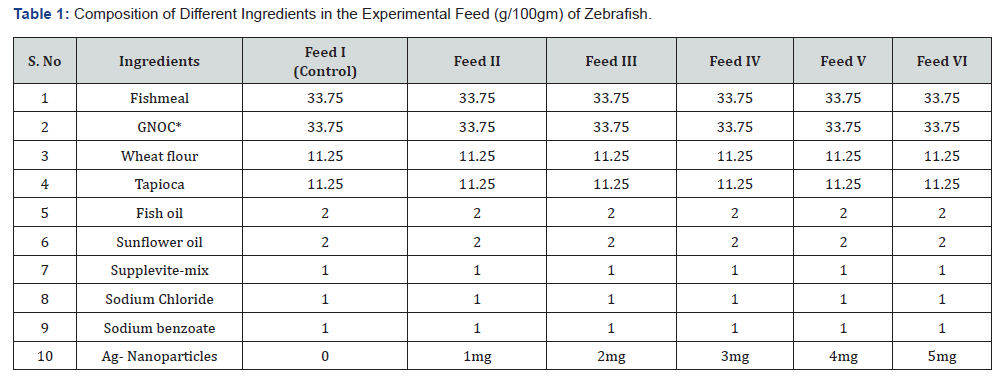
The materials for feed preparation were selected based on their capacity to supply an optimum amount of nutrients such as proteins, carbohydrates, vitamins, and lipids at a fair price. The protein sources used were Fish meal and groundnut oil cake, and the sources of carbohydrates were wheat flour and tapioca flour. The lipid source and the binding agent were the fish oil, Suppletive mix (Virbac Chelated Agrime ® Forte), vitamin and mineral source; sodium chloride and sodium benzoate were used as preservatives. After knowing the protein content of major ingredients by the Micro Kjeldahl method [14], the feed was prepared using the Pearson Square method of ration formulation [15]. The components were dried, powdered, and sieved through a 450-micron sieve. The major ingredients, such as fish meal, groundnut oil cake, tapioca flour and wheat flour, were weighed and mixed with 130-150mL of distilled water. The mixed feed stuff was autoclaved for 30 minutes (at 121°C and 15 psi pressure) and cooled. Then the minor ingredients, namely fish oil, sunflower oil, suppletive mix and sodium chloride, sodium benzoate and silver nanoparticles (1, 2, 3, 4, 5mg/100) were mixed with the feed, and it was extruded with the help of a pelletizer. The pellets were dried at room temperature in the shade. The feed was stored in an air-tight container at -20°C until use, to prevent microbial contamination (Table 1).
Design for growth studies
For the growth study, uniformly sized Zebrafish Danio rerio (1.30±0.5g) were selected, and the fish were introduced into a rectangular tank with the dimensions 45cm L X 22cm B X 22cm H and had a capacity of 18 liters. Five fish were introduced into each tank. For each treatment, triplicates were maintained. During the study, the fish were fed an ad libitum diet of the prepared feed twice a day for an hour (9-10am and 4-5pm). The unfed were collected from the tanks after an hour without disturbing the fish. The unfed was dried to measure its weight. The faucal matter was collected daily before changing the water with minimal disturbance to the fish and dried in a hot air oven at 95°C. Around 70% of the water was replaced in the tank with tap water. The experiment was continued for 28 days. On the 28th day, the length and weight of the live zebrafish were measured for the calculation of growth parameters.
Feed utilization parameters such as condition factor (K), feed consumption, feed conversion efficiency, feed conversion ratio, growth, percentage growth, relative growth rate, assimilation, metabolism, gross and net growth efficiency, hematological parameters such as RBC, WBC, Platelet count, Hemoglobin (Hb), Hematocrit (Hct), biochemical parameters such as protein, carbohydrate and lipid in muscle, gill, and liver of Zebrafish and protein metabolic enzymes such as aspartate aminotransferase (AST) and alanine aminotransferase (ALT) [16], and carbohydrate metabolic enzyme namely lactate dehydrogenase (LDH) were estimated from the collected fish blood serum [17].
Results and Discussion
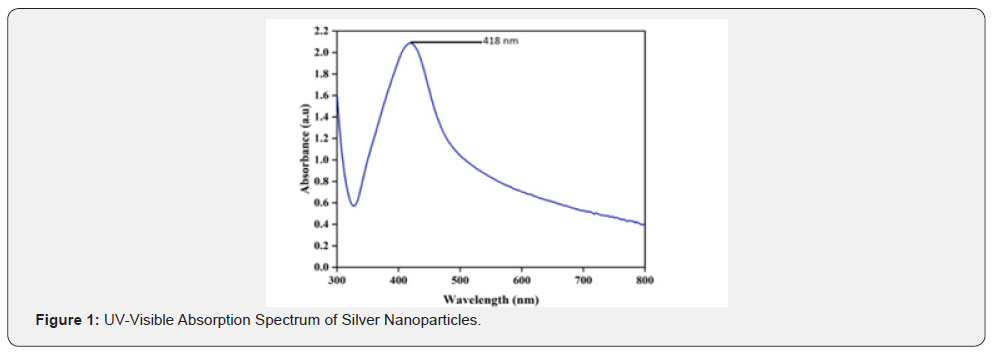
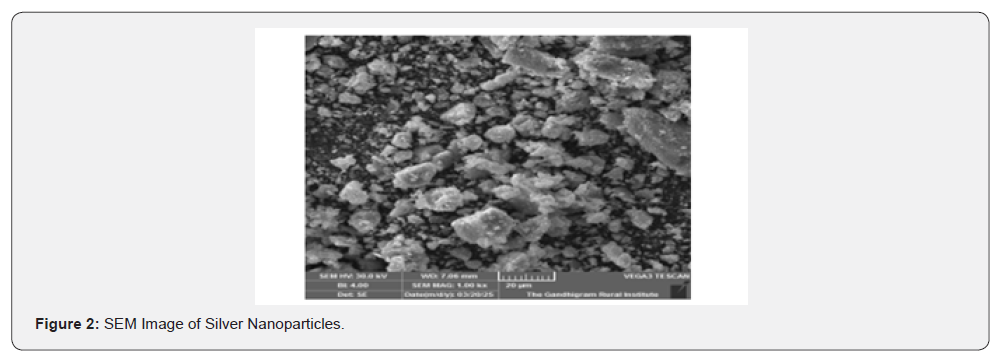
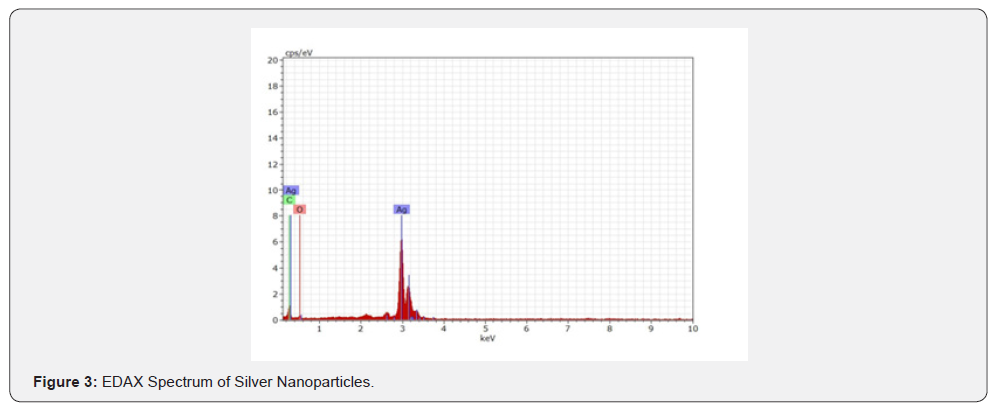
UV-Visible spectroscopy is a commonly used analytical tool to analyze the optical properties of the nanosized particle. The absorbance spectra of silver nanoparticles were measured in the range 400 to 500nm. It exhibits the strong absorption band at 423nm, as shown in Figure 1. Similarly, [18] reported a peak at 440nm, and [19] reported a peak at 400nm, which indicates smaller and uniformly sized nanoparticles. Scanning electron microscope shows that nanoparticles formed are in clusters with distinct boundaries, and the high contrast SEM images show that the particles are rectangular and cubical shaped, with some particles showing well-defined facets, and the particles seem smooth with some granular surface features, and the size ranges between 15-150nm (Figure 2). Similarly, [20] reported that the size, size distribution and morphology can be obtained by performing SEM imaging. The EDAX spectrum recorded on the silver nanoparticles is shown as 4 peaks located between 0.2keV and 8keV (Figure 3). The maximum is directly related to the silver characterized line K. The maximum peak located on the spectrum at 3keV clearly comes from the silver nanoparticle.
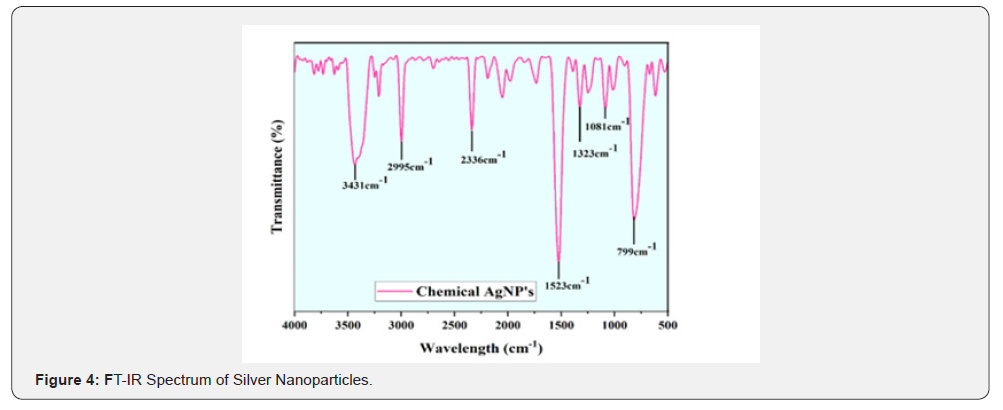
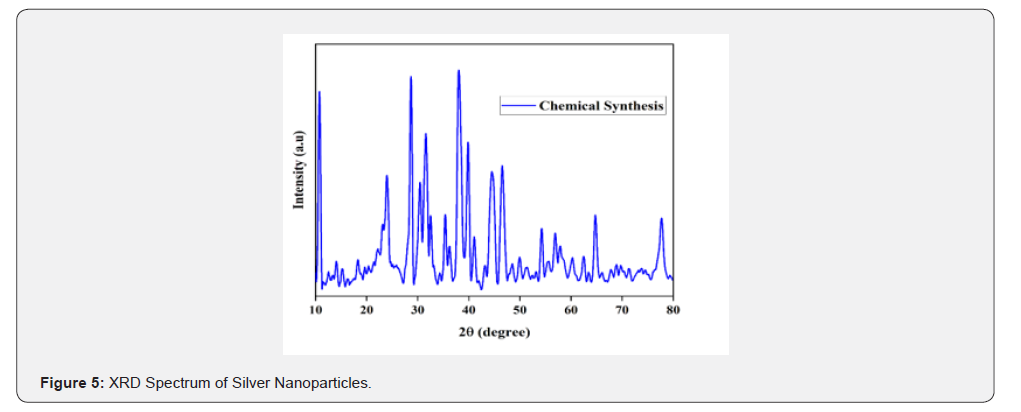
The maximum peak located on the spectrum at 0.3keV and 0.2keV clearly comes from oxygen and carbon, respectively. Similarly, [18] also reported the presence of silver using EDAX. The FT-IR spectrum of silver nanoparticles was analyzed at the wavelength range of 500-4000cm-1. The FT-IR analysis was carried out aiming to identify the functional groups of active compounds based on peak value in the region of infrared radiation. The peaks found were at 3431, 2995, 2336, 1523, 1323, 1081, and 799, were associated with O-H stretching, C-H stretching, C triple bond stretching, COO- symmetric stretching, COO- anti-symmetric stretching, C=N stretching, and C=C bending respectively (Figure 4). [21] reported the peaks at 3451, 1592, 1384is due to O-H stretching, symmetric and anti-symmetric stretching of COOrespectively. The XRD technique is used for structure and phase analysis of all compounds. The XRD diffraction peaks of silver nanoparticles are indexed as 11, 24, 28, 32, 38, 44, and 46, which are represented in Figure 5. The clear and sharp diffraction peaks confirmed that the prepared compounds are pure with a high degree of crystallinity. Similarly, [22] reported XRD peaks on 111, 200, 220, 311 for silver nanoparticles, which were synthesized by means of inert gas condensation. [23] reported XRD peaks at 38.23, 44.54, 64.48, 77.41, and 81.61 by silver nanoparticles.
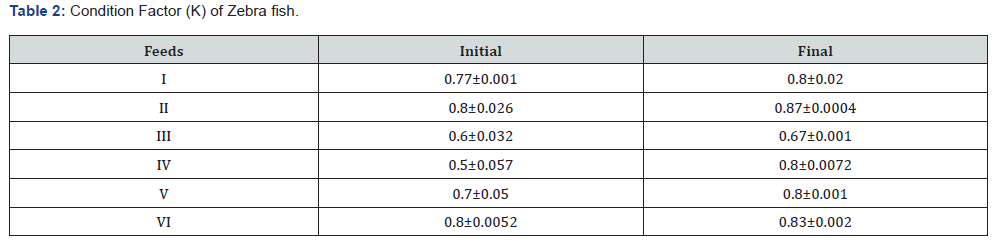
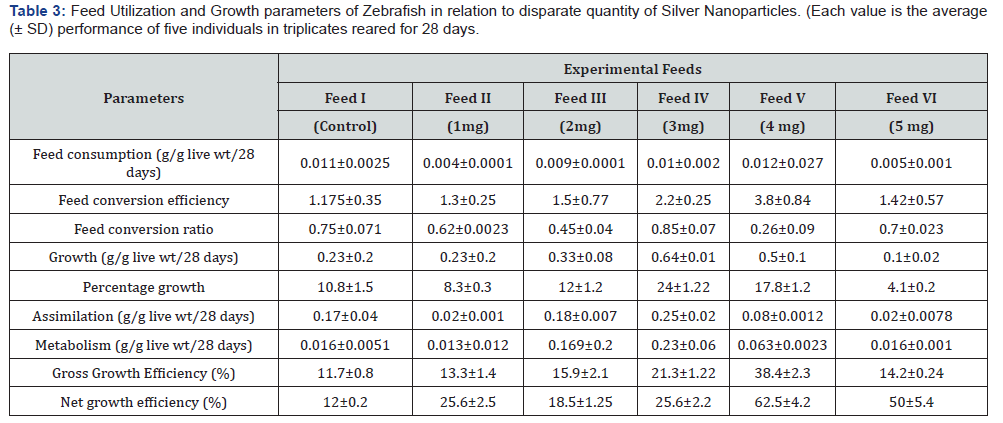
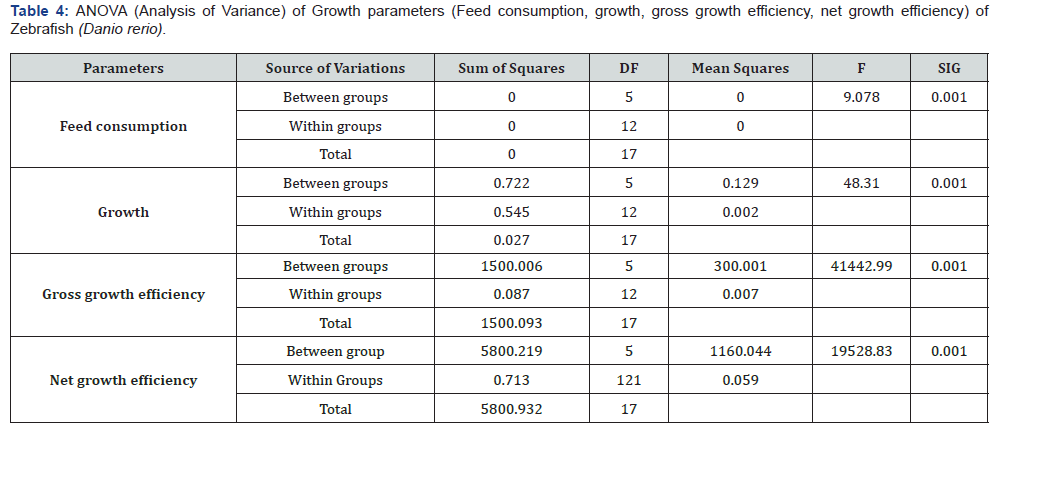
The condition factor is a measure used to assess the health of the fish. Condition factor was estimated before (initial) and after the study (Final) for a comparative study. The final condition factor value was greater for most of the fish which was fed with silver nanoparticle-incorporated feed (Table 2). [24] reported an increase in condition factor of Freshwater prawn Macrobrachium rosenbergii post-larvae fed with 40g/ kg-1 of iron oxide nanoparticles in the feed. The different feed utilization and growth parameters are presented in Table 3. The ANOVA (Analysis of Variance) of growth parameters (Feed consumption, Growth, Gross Growth Efficiency, Net Growth Efficiency) are presented in Table 4. [25] reported that selenium and zinc oxide supplementation enhanced growth performance in zebra fish. [26] reported that iron oxide-supplemented feeding at different concentrations resulted in higher growth performance than that of the control in rohu fish. [27] reported that the maximum weight gain (%), PER, and SGR were observed in the group fed with 13mg/g of ZnNPs in the iridescent shark. [28] reported that there was a significant decrease in the growth performance of gold fish after being exposed to silver nanoparticles for 6 months.
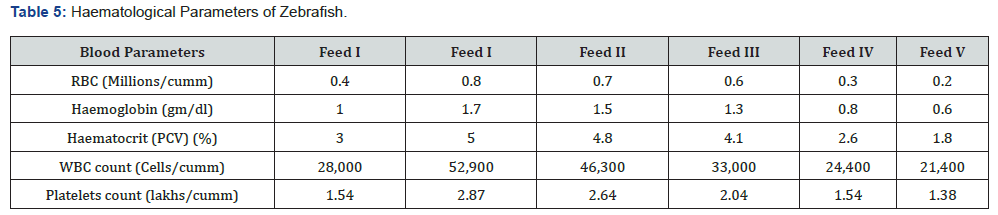

Hematological parameters are important factors that help in understanding the health conditions of the fish species. The WBC and RBC count of the zebrafish gradually decreased as the concentration of the Ag NPs in the feed increased (Table 5). [29] reported that the hematological parameters of Zebrafish were decreased with increased quantity of biosynthesized silver nanoparticles. [30] reported the use of Nano-Fe as a feed additive to improve the hematological and immunological parameters of fish. [31] reported that there is a significant decrease in the number of RBC, Hb, and Hct due to ZnO nanoparticles.
The biochemical parameters showed a significant increase in the levels of protein, carbohydrate, and lipid in Feed IV (3mg) fed fishes compared to other feeds (Figure 6). Similarly, [32] reported that Quercetin nanoparticle has a positive effect on Nile tilapias’ biochemical parameters. [33] reported that the impact of magnesium oxide nanoparticles on biochemical characteristics, such as protein, carbohydrates, and lipids in Mrigal, is higher in T3 and T2 compared to the control.
Enzymatic parameters play an important role in understanding physiology, development, disease mechanisms and responses to environmental conditions in zebra fish. The enzymes analyzed were AST (Aspartate Aminotransferase), ALT (Alanine Aminotransferase), and LDH (Lactate Dehydrogenase) (Table 6). The maximum amount of enzyme activity was found in FI (1mg), and the activity decreases with an increase in the silver nanoparticle concentration. Similarly, Deilamy [34] reported the decrease of Lactate dehydrogenase and Alkaline phosphatase enzyme in selenium nanoparticle incorporated feed fed Asian sea bass. [35] reported that ALP and LDH enzymes showed a decreasing trend in ZnO and SeNPs-supplemented rohu fish. The highest activity of ALT, ALP, and AST was observed in the 48mg/l NiO nanoparticle-treated group of Heteropneustes fossils. [36] reported that ALP and LDH concentrations showed a decreasing trend in ZnO and SeNPs-supplemented rohu fish.
Methods
Silver nanoparticles were synthesized by the co-precipitation method and characterized using UV-Visible spectroscopy, SEM, EDAX, XRD and FT-IR. Disparate quantities of silver nanoparticles (1, 2, 3, 4, 5mg) were incorporated in fish meal, groundnut oil cake, wheat flour, and tapioca flour. Feed utilization parameters such as Feed Consumption, Feed Conversion Ratio, Feed Conversion Efficiency, Growth, Percentage Growth, Assimilation, Metabolism, Gross Growth Efficiency, and Net Growth Efficiency were estimated after 28 days. After the experimental period, hematological, biochemical, and enzymatic parameters were estimated.
Results
The UV-visible adsorption spectra exhibited a strong adsorption peak at 418nm. The SEM image was observed at a wavelength range of 7.06nm. EDAX spectrum showed 4 peaks located between 0.2 and 3 keV. FT-IR was observed at the wavelength range from 500 to 4000cm-1. The XRD image showed that the diffracted peak is indexed as 11, 24, 28, 32, 38, 44, and 46. The feed utilization parameters, such as feed consumption (0.012±0.027), feed conversion efficiency (3.8±0.84) of zebra fish, were higher in Feed V. Growth, percentage growth, assimilation, and metabolism of zebra fish were higher in Feed IV. All the hematological and enzymatic parameters were higher in feed II.
Conclusion
From the results, it is concluded that the growth of Zebrafish is higher in Feed IV, and hematological and enzymatic parameters are higher in Feed II.
Data Availability
The data are available from the corresponding author on reasonable request.
Acknowledgement
The authors thank Department of Biology, The Gandhigram Rural Institute- Deemed to be University, Gandhigram, India for offering facilities to carry out this work.
References
- Nasrollahzadeh M, Sajadi SM, Sajjadi M, Issaabadi Z (2019) An introduction to nanotechnology. In Interface Science and Technology 28: 1-27.
- Sekhon BS (2010) Food nanotechnology an overview. Nanotechnology, Science and Applications 3: 1-15.
- Shah BR, Mraz J (2020) Advances in nanotechnology for sustainable aquaculture and fisheries. Reviews in Aquaculture 12(2): 925-942.
- Eldahan SN, Adam AN, Shreadah MA, Maher AM, Ali TES (2021) A review article on nanotechnology in aquaculture sustainability as a novel tool in fish disease control. Aquaculture International 29(4): 1459-1480.
- Kulkarni SK (2015) Types of nanomaterials and their properties. Nanotechnology: Principles and Practices, pp. 199-239.
- Nowack B, Bucheli TD (2007) Occurrence, behavior, and effects of nanoparticles in the environment. Environmental Pollution 150(1): 5-22.
- Dawadi S, Katuwal S, Gupta A, Lamichhane U, Thapa R, et al (2021) Current research on silver nanoparticles: synthesis, characterization, and applications. Journal of Nanomaterials (1): 6687290.
- Iravani S, Korbekandi H, Mirmohammadi SV, Zolfaghari B (2014) Synthesis of silver nanoparticles: chemical, physical and biological methods. Res Pharm Sci 9(6): 385-406.
- Nande A, Longadge N, Sheikh N, Raut S (2018) Synthesis of silver nanoparticles using the coprecipitation method. International Journal of Current Engineering and Scientific Research 5(1): 480-482.
- Naylor RL, Hardy RW, Buschmann AH, BushSB, Cao L, et al (2021) A 20-year retrospective review of global aquaculture. Nature 591(7851): 551-563.
- Lawrence C (2007) The husbandry of Zebrafish (Danio rerio): A review. Aquaculture 269(1-4): 1-20.
- Howe K, Clark MD, Torroja CF, Torrance J, Berthelot C, et al. (2013) The zebrafish reference genome sequence and its relationship to the human genome. Nature 496(7446): 498-503.
- Seo SB, Dananjaya SHS, Nikapitiya C, Park BK, Gooneratne R, et al (2017) Silver nanoparticles enhance wound healing in Zebrafish (Danio rerio). Fish Shellfish Immunol 68: 536-545.
- Aguirre J (2023) The Kjeldahl Method. In The Kjeldahl Method: 140 Years. Cham: Springer Nature Switzerland, pp. 53-78.
- Ali SA (1980) Feed formulation method manual of research methods for fish and shellfish nutrients. CMFRI special publication 8: 89.
- Reitman S, Frankel S (1957) A colorimetric method for the determination of serum glutamic oxaloacetic and glutamic pyruvic transaminases. Am J Clin Pathol 28(1): 56-63.
- Mukundan MK, Ramasamy A, Kumar RV (1985) A study of chemical and microbiological changes in mussel (Perna viridis) during ice storage. Fishery Technology 22: 1-5.
- Vishwajeet Singh VS, Ankita Shrivastava AS, Nitin Wahi NW (2015) Biosynthesis of silver nanoparticles by plant crude extracts and their characterization using UV, XRD, TEM and EDX. African Journal of Biotechnology 14(33): 2554-2567.
- Khan Z, Thabaiti SA, Obaid AY, Youbi AO (2011) Preparation and characterization of silver nanoparticles by the chemical reduction method. Colloids Surf B Biointerfaces 82(2): 513-517.
- Marín Gamboa SM, Rojas ER, Martínez VV, Baudrit JJV (2019) Synthesis and characterization of silver nanoparticles and their application as an antibacterial agent. Int J Biosen Bioelectron 5(5): 166-173.
- Sreelekha E, George B, Shyam A, Sajina N, Mathew B (2021) A comparative study on the synthesis, characterization, and antioxidant activity of green and chemically synthesized silver nanoparticles. Bio Nano Science 11: 489-496.
- Raffi M, Hussain F, Bhatti TM, Akhter JI, Hameed A, et al. (2008) Antibacterial characterization of silver nanoparticles against E. coli ATCC-15224. Journal of Materials Science and Technology 24(2): 192-196.
- Das R, Kumar P, Singh AK, Agrawala S, Albukhaty S, et al (2025) Green synthesis of silver nanoparticles using Trema Orientalis (L.) extract and evaluation of their antibacterial activity. Green Chemistry Letters and Reviews 18(1): 2444679.
- Sankar TM, Bhavan S, Periyakali, Seenivasan C, Srinivasan V (2016) The effect of copper nanoparticles Supplementation on freshwater prawn Macrobrachium Rosenberger post larvae. J Trace Elem Med Biol 34: 39-49.
- Fasil DM, Hamdi H, Al-Barty A, Zaid AA, Parashar SKS, et al (2021) Selenium and zinc oxide Mult nutrient supplementation enhanced growth performance in zebra fish by modulating oxidative stress and growth-related gene expression. Frontiers in Bioengineering and Biotechnology 9: 721717.
- Thangapandiyan S, Alisha AA Anidha K (2020) Growth performance, hematological and biochemical effects of iron oxide nanoparticles in Labeo rohita. Biocatalysis and Agricultural Biotechnology 25: 101582.
- Kumar N, Krishnani KK, Singh N P (2018) Effect of dietary zinc-nanoparticles on growth performance, anti-oxidative and immunological status of fish reared under multiple stressors. Biol Trace Elem Res 186(1): 267-278.
- Vajargah MF, Imanpoor MR, Shabani A, Hedayati A, Faggio C (2019) Effect of long‐term exposure of silver nanoparticles on growth indices, hematological and biochemical parameters, and gonad histology of male goldfish (Carassius auratus gibelio). Microsc Res Tech 82(7): 1224-1230.
- Rajan MR, Thiloth Jenifer J (2024) Impact of Biosynthesized silver nanoparticles on growth, hematological and biochemical characteristics of Zebrafish. J Emerg Technol Innovative Res 11(10): c249-c262.
- Behera T, Swain P, Rangacharulu PV, Samanta M (2013) Nano-Fe as feed additive improves the hematological and immunological parameters of fish Labeo rohita H. Applied Nanoscience 4: 687-694.
- Suganthi P, Murali M, Bukhari AS, Basu H, Singhal RK (2015) Haematological studies on freshwater Tilapia treated with ZnO nanoparticles. Journal of Advanced Applied Scientific Research 1(1): 41-67.
- Farag MR, Abo-Al-Ela H G, Alagawany M, Azzam MM, Saadony MTEL, et al (2023) Effect of quercetin nanoparticles on hepatic and intestinal enzymes and stress-related genes in Nile tilapia fish exposed to silver nanoparticles. Biomedicines 11(3): 663.
- Vyshnav G, Sudha Bose S, Rajan MR (2023) Impact of Magnesium Oxide Nanoparticles on Haematological, Biochemical and Antioxidant Levels of Mrigal Cirrhinus Mrigala. Journal of Material Science and Manufacturing Research 152(4): 2-8.
- Deilamy Pour H, Mousavi SM, Zakeri M, Keyvanshokooh S, Kochanian P (2020) Synergistic effects of selenium and magnesium nanoparticles on growth, digestive enzymes, some serum biochemical parameters and immunity of Asian sea bass (Lates calcarifer). Biol Trace Elem Res 199(8): 3102-3111.
- Samim AR Vaseem H (2021) Assessment of the potential threat of nickel (II) oxide nanoparticles to fish Heteropneustes fossils associated with the changes in hematological, biochemical and enzymological parameters. Environ Sci Pollut Res Int 28(39): 54630-54646.
- Swain P, Das R, Das A, Padhi SK, Das CK, et al. (2019) Effects of dietary zinc oxide and selenium nanoparticles on growth performance, immune responses, and enzyme activity in rohu, Labeo rohita (Hamilton). Aquaculture Nutrition 25(2): 486-494.

























